How to Shift Your Identity & Become Instantly Magnetic | Dr. Kim Foster
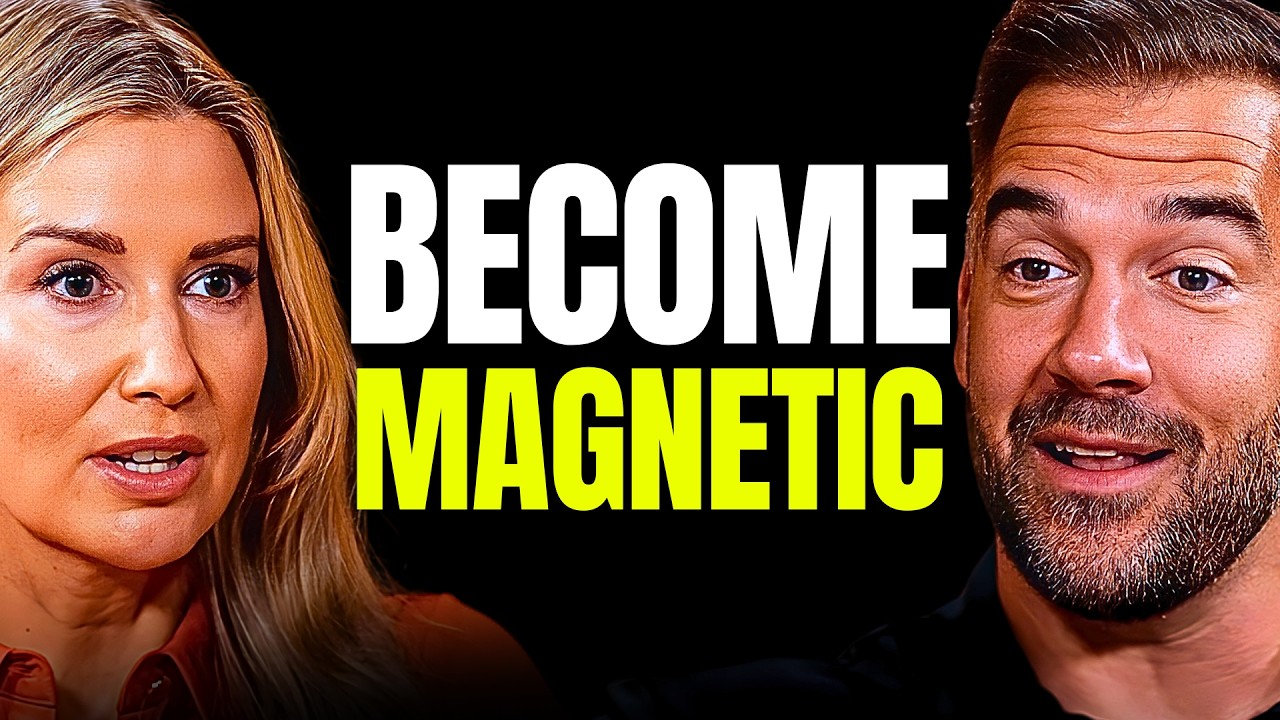
Dr. Kim Foster, a family physician turned creator, argues that lasting change requires shifting your identity, not just gathering information. She shares a framework called Recognize, Redesign, Ritualize, and explains why a "bridge identity" that stretches you just enough to feel believable works better than shaming or grand affirmations.
Chapters
There was one patient, late 40s, a little bit overweight. Her blood pressure was going up, and she knew that she wanted to exercise. I was supporting her on this, so we were talking about different things that she could do. I made some suggestions. At one point, she said, "This is great, Dr. Foster. Thank you." But the thing is, I'm just not an exercise person. I never have been. It's just not me. And at that moment, I thought, "Oh, this is not an information problem. This is an identity problem." She's a formally trained.
She's an author and one of the clearest voices on why lasting change starts with identity.
Today's guest is Dr. Kim Foster.
This is one of the key reasons why it's so hard to change our identities, because up until this point, your brain has had a whole lot of evidence that you are this kind of person. So you can look at yourself in the mirror and say, I'm very confident, but your mind is like, interesting, based on what?
What's the framework for creating a new identity?
So there's 3 parts. So recognize is the first, and And that, for many of us, is the hardest part.
You spent 2 decades as a physician telling people essentially how to improve their lives, but you also observed very few people that changed their identity in this process. Why is it so difficult for so many of us to shift our identity, even though we know what to do, but how to shift our identity seems so challenging?
Yeah, well, you're right. I mean, the identity piece is the key there. So I did spend 2 decades working as a family doctor, and I saw people come in all day long, and I would give them advice, the, the stuff that I had been trained to do. So trained to tell people what they needed to do, how they needed to do it, give them the evidence, give all of those pieces, and then they would walk out motivated. So these are people who are intelligent, they're motivated, they have a lot at stake, And they're in pain or something, right? They're in pain. They're scared for what is coming for them or what has already happened or what their family history would tell them is coming for them. So they would really be very motivated to change. So motivation was not the problem and information was not the problem. And they would walk out and then I'd see them months again later and nothing had changed.
Okay.
Or maybe they had changed something for a short time. They tried and then they kind of, It stopped, they fell off, they went back to old habits, old patterns. And I became really curious about that because, you know, I like to think that I was pretty good at giving explanations and, you know, helping people to understand. I liked that piece of it to educate them and help them understand why it was important and what they needed to do. So regular exercise and getting more sleep, and we know all of the stuff, we know vegetables are involved, all of that stuff. So I became very curious about that gap. So what is that gap? And over time, well, I remember actually there was one patient who, she was late 40s, a little bit overweight, her blood pressure was going up, and she knew that she wanted to exercise, get started exercising. And I was supporting her on this. So we were talking about different things that she could do. And I made some suggestions, you know, you could, doesn't need to take, or she, had objections, right? The usual objections, like, I don't have much time. So I said, well, that's no problem. 10 minutes even at a time can make a difference. There's research on that, giving her all the information, right?
There's all these excuses of why we can't do something that's better for us.
Yeah, yeah. There's always reasons and they sound very rational.
I've got 3 jobs, I've got 3 kids, I've got no time, I'm exhausted already. How could I find more time to do this? Struggling in these areas. It all sounds, Yeah. Rational, I guess, right?
Exactly. And then it was like, oh, I don't like going to the gym. And I was, no problem, you can do all kinds of things at home.
Yeah.
And so, I had all these things. And then, at one point, she said, this is great, Dr. Foster, thank you, I really appreciate this. But, the thing is, I'm just not an exercise person. I never have been, it's just not me. And, at that moment, I thought, oh, this is not an information problem. This is an identity problem. She just really does not see herself as someone who exercises. And then she went a little bit further and said that her sister was always the one who was the sporty one and she was the bookish one, right? So she had, it had come from what her family had told her, the roles that she'd played, all of that that she'd accumulated. And then she just really didn't see herself as someone who exercised. So it didn't matter how bite-sized I made it or how easy I made it or lay your workout clothes out the night before. night before, all of that, if she just ultimately did not see herself as someone who exercised, it was just never really going to stick. She was, it was friction every time she was trying to enact that behavior. And so once I saw that though, I could see that that applied across the board for so many things that we tried to change, not just, you know, so exercise or eating well. I had a guy who many people who would say, no, I'm not a health nut, so don't talk to me about like lentils and things like, and, but if you have this identity of you being this kind of person or not that kind of person, then it is absolutely going to just be your instruction manual for how you live your life.
Mm-hmm.
The choices that you make. And when people say these identity statements, it sounds like fact. It sounds like it's the truth, like it's a neutral fact, like eye color or your height or something. Like, I'm not an exercise person, I'm a night owl, whatever. You know, we have all these identity statements. And once I started hearing people saying these things, it really, it just, I heard it all the time and I began to recognize it as that's the difference maker, that's the thing. Because I certainly also had patients who had more empowering identities. Hmm. I had this 70-year-old guy who was very fit and like a big strong guy who had been active his whole life. And I, 'cause in your, you know, 60s, 70s, that's when you really start to see the differences in how you have lived your life. 'Cause there, I certainly had many patients who were in those decades who were not looking quite so robust and fit and strong. But he was, and he was waiting for a knee surgery, but he was a skier and he was frustrated because, it was meaning that he was losing out, missing out on the ski season being on this waiting list. And because I was curious about him and I was curious about what had made it so that his life, he had chosen this particular trajectory. But the way the language that he used was, I'm a skier, I'm an active guy, I need to get back out there. I've always taken care of myself. So he had these empowering identity statements that he has volunteered for how he saw himself, what his self-concept was, and that had dictated his choices through his whole lifetime.
So if we have an identity that says, I'm just not a workout type person, or I'm just not a healthy eater type of person, but then we know we're supposed to start eating healthier if it's gonna solve a health problem we have or something, an ailment we have, eating better, sleeping better, moving more is gonna help that pain. But if we have an identity that says, no, you're not that person, you're this person, and we start taking those actions that we know are better for us but go against our identity, what ultimately happens when we go against our identity, even for good?
Yeah, when we go against our identity, even though we know cognitively it's for our own good, it's going to lead somewhere that we want it to go. But every time you do that action, it creates friction and it creates like an identity mismatch.
Mm-hmm.
Because then, and our brains do not like that kind of, you know, disconnect or this incongruence. So we are, we have a belief about ourself on one level, and then we have what we're doing, what the actions and behaviors that we're doing on another level. And that feels uncomfortable.
Mm-hmm.
So our minds are looking to resolve those kinds of conflicts. And that kind of cognitive dissonance. And there's 2 different ways to resolve that conflict. Obviously, you can stop going to the gym or you can start considering yourself to be an athlete and change your identity. And the easier thing for us to do is to just stop doing the behavior that feels uncomfortable and just to go back to what feels comfortable, what feels safe.
Familiar.
Familiar. What gives us, because we can get a lot out of identities that aren't even particularly positive.
Mm-hmm.
If it, sometimes it gives us a feeling of safety or a feeling of belonging. If it's especially, it's in your social circle.
Yeah.
Everybody is kind of the same. So you feel like you belong there. You know who you are in that role, in that identity. So even though you might know that it is better for you, it's not what feels right. It doesn't feel safe. And our, our brains, you know, our job, the, our primitive brain job is to, help us to survive. So if something feels like this is not safe, this is not right, this doesn't— I've never done this before, so it's not guaranteed with my survival because this is new. So our brains are going to want to default to patterns that feel safe, normal, new, familiar, what everyone else around us is doing, even though we know it would be better.
Isn't it interesting? You could be in the worst situation of your life or the worst relationship of your life or the worst body of your life, but the unknown of taking the actions that will support you are more frightening than the actual fear of the familiarity of the environment you're in right now. It's like, it seems crazy when you're not in that situation to be able to see someone else's situation and say, just leave. Just start working out. Just get rid of that career if it's driving you crazy. If that relationship is killing you, literally get out. It seems easy to tell someone else, but when you're in that identity, it seems so scary of the unknown on what's the other side, right?
Yeah, exactly. Because our mind's job isn't to be like, oh, what would be really great for my growth or my development? What's inspiring? Like, our primitive brains just want us to survive. And so, yeah, I mean, you can, you you can, for a while, right, convince yourself that this is better. But it's ultimately, you're gonna, when you're busy, when you're tired, when you're stressed, you're going to start to default back. So, you know, you can be motivated on a good day and feel inspired to do a particular thing that you know is better for you when you are well rested and don't have a lot going on and all of those pieces.
Sure.
But when it rains, when it's, you're cold, tired, sick, have a super busy week, then it's so much easier just to default back to what is safe.
I mean, so how does someone actually change their identity and how quick can you change your identity? Does it take months, years, decades, or can you change your identity in a moment?
Yeah, this is a great question and this is the key because it sounds really simple. Just change your identity. Just decide to be somebody different. And You can make that decision quickly and overnight once you become aware. And really that's kind of, that is a big key is becoming aware because like I said, most people just report these identity statements like it's just fact. Once you become aware of it and once you realize that you want to change and adopt a new, more empowering identity, you can make that decision right away. But it's the stabilization that takes a while and that process requires proof. So your mind, because this is why it is, this is one of the key reasons why it's so hard to change our identities because up until this point, your brain has had a whole lot of evidence that you are this kind of person. So, you know, let's say that you are, you don't feel very confident, you wanna be, 'cause it's not just health, right? Of course this applies to so many different realms. You want to be socially confident, but you've always identified yourself as really awkward.
Introverted, shy.
Introverted, shy. Yes. me as a kid. But so you can decide that you want that, but your brain has got so much evidence to the contrary. So you can look at yourself in the mirror and say, I'm very confident, but your mind is like, interesting, based on what?
There's no evidence yet.
Yeah, no evidence.
So it's like one day at a time.
So you need to start to gather proof. You need to start to log actual evidence that you can do things in a different way. However, it can be very difficult if you just try to leap straight from like, I'm super awkward and shy.
To confident.
To I am like a socially confident social butterfly. That's just, and your brain is just gonna reject that completely. And that's often why affirmations like big grandiose affirmations do not work for people. But if you can choose what I call a bridge identity, so—
Bridge identity.
Bridge identity, yeah. So something that is, it's a bit of a stretch, but it's not the farthest stretch full way. It's one step away. So if you're, let's go back to the socially confident. So instead of saying, I'm super socially confident in all environments, it could be, I'm somebody who is embracing the challenge of starting one new conversation each day. I'm somebody who can start up a conversation even when I feel uncomfortable, or something like that, right? Like it's just one little step off of And it's believable, but it's also a stretch. And then you go out and gather some proof for that. So then you put yourself into a situation and you just do that one little action, even though it feels really uncomfortable. And then you have to, to really make that, pay attention to that piece of action. And so that you can internalize it and say, okay, that's what I did. I made, I kept that promise to myself. And then you keep going and eventually—
You call that the stabilization time?
Yeah, that's when you have to, you're stabilizing the identity so that it actually becomes real to you and so that your mind actually starts to believe it. And importantly, believes it even when some contrary evidence shows up. Like even when maybe something didn't go so great that you wanted it to. Because that's another key is that when you have a particular identity of yourself as somebody, In particular. And then, you know, something happens that is in accordance with that. You're like, see, not me, right? So like—
It goes back to the old belief.
It goes back to the old belief. Yeah, I knew that, that I knew that I wasn't somebody who could do that. That's whatever. But it's when you have an identity that is upgraded from that, those contrary pieces of evidence can, you can still have a bad day, you can still skip a run, but it doesn't, shake who you actually fundamentally believe yourself to be. If you still believe yourself to be a runner, it rains, you decide not to go, it doesn't mean you're not a runner anymore. It just means that you just decided to give yourself a break that one day. But somebody who doesn't think of themselves as a runner is gonna be like, oh yeah, see, I skipped that run. I knew that it wasn't for me. I knew that's never been me anyway.
She calls the bridge.
Yeah, bridge identities.
Bridge identities. What's the framework for creating a new identity then? You have this 3-part framework: recognize, redesign, ritualize. What is that and how do we use that?
Yeah, so exactly like you said, so there's 3 parts. So recognize is the first, and that for many of us is the hardest part because like I said, we have just believed a certain thing about ourselves and we've been logging proof for our whole lifetime. And so it just sounds like a fact. So you have to really start to Recognize, well, what is the identity that I have been operating as? And then start to call that into question. Is that true? Does that have to always be true? Where did that come from? Who told me that that was true?
Mm-hmm.
You know, those kinds of questions. Just really recognizing that it's not the truth, it's just an idea, just a story that you have been telling yourself about what's possible for you, what's not possible for you. And then once you have kind of detached yourself a little from the stone-cold truth of this identity story that you've been telling yourself, then it's redesign. So then you get to really identify, okay, what is the— who do I need to be for my next chapter? I have this goal, I have something that I would like to achieve. Who is the person who achieves that?
Yes.
Who is the person that becomes that acts like that, has that life. And then, and that's the fun part too, is to really start to redesign.
Imagine a dream.
Mm-hmm, yeah, yeah. And you get to redesign a new identity for yourself. But then the third part is the key that's ritualized because then that's really what I was talking about is you have to go out there and log proof because it's not just a thought exercise. It's not good enough to just choose a new identity and just be like, okay, job done. You really have to go out there and, Start to collect proof in tiny, small, probably uncomfortable ways in the beginning. And then you start to, it becomes part of who you are. And then eventually you wake up and you're like, actually, I am this kind of person now.
Now, for 2 decades you worked as a family doctor. When did you realize that you didn't wanna be in that practice anymore, or you wanted to reimagine your work? And how hard was it to let go of an old identity of being a doctor?
I mean, I had been practicing for 20 years, and I mean, ultimately I ended up practicing for 20 years. It was, it was a few years before that that I started to feel called to help people in a different way, because as a doctor, so much of my work happened after something had already gone wrong. So somebody had developed heart disease, Diabetes, chronic pain, or they were so exhausted and overwhelmed that their health was really starting to suffer. And I kept thinking, I want to get further upstream here. I wanted to help people to change their choices and their behavior and how they thought about themselves. Yeah, when there was still possibility ahead. And at the same time, I started to feel an increasingly strong. pull, like a creative pull. So I wanted to create stuff of my own and write and speak and, um, you know, do things like that. And, uh, so I started dabbling a little. I started making some YouTube videos on the side. I started writing, I started coaching, and I got to a point where I realized that this thing that I was doing on the side was really That was the work that I wanted to do.
Yeah. You loved it.
I loved it. I loved it. And it was, it was meeting all of my, you know, inner needs for that sense of meaning and helping people upstream, all of those pieces. However, just knowing what I wanted to do again was not enough because I had a very ingrained identity as doctor.
How many days does it take to go from total beginner to reasonably proficient at a new skill? Well, if you practice for a focused hour a day, then about 250, which also happens to be the number of reasons to choose T-Mobile. Here's an excellent reason. They have the fastest 5G home internet according to Ookla speed test, which you can test for yourself worry-free with their 15-day money-back guarantee. Another great reason, it's fast and easy to set up too. Plug it in and you're online in practically no time. With no appointment or technician needed. Those are just a few reasons. Find yours at t-mobile.com/homeinternet where you can check availability and try it for yourself. They're so sure you'll love it, you get your money back if you don't. Fastest according to Ookla Speed Test Intelligence data, second half of 2025. All rights reserved. Redeem money-back guarantee within 30 days of cancellation.
You know, probably since you were a teenager, you're in college, you're like, I'm gonna go to med school and I'm gonna be in residency and then I'm gonna be a doctor. And it's like your whole adult life.
Yes.
Was around an identity.
Yes.
You talked about being a doctor. You met with patients every day. You, you got your credibility from this as well. You got so many things from— you got your money from this. All these things came from being a doctor.
Yeah.
So leaving that identity must be challenging.
It was incredibly challenging. It took me a long time to actually realize that, that so much of my identity was wrapped up in this. And yes, exactly. I decided when I was 17 that I wanted to go to medical school. And so everything from that point onwards was, 'cause being an achiever, good student type, I was like, okay, that's the goal. Now what do I need to do to get there?
Yeah.
Then it was just a matter of execute. So I needed to get the grades, I needed to write the MCAT, like I needed to do all the things and then get into medical school. And now, okay, get through med school. And so I really adopted— what I realized later is that I adopted a survivor identity.
Really?
So, yes, because I—
Survived this, survived the test, the 5 med schools, survived the residency.
Stick it out no matter what, no matter how hard things get.
16-hour days, no sleep, whatever it takes.
Yeah. There were times in the hospital when I'd be like, in residency especially, I'd be so exhausted. I'd been working so many hours. It's middle of the night, the pager goes off again, and I just wanted to ignore it.
Just go to sleep.
Go back.
Yeah.
And I'd put my head down, cry for a minute, and then pull myself together, walk out, and do the thing that needed to be done.
Survive.
Survive.
One more call.
Yeah, just keep going. So when I reached point in my medical career where I was like, I need to, I need to make this move. I need this new chapter. I need to go. My survivor had a lot to say about that. My survivor was like, this is hard. No problem. We can do hard. Keep going. And so I really had to understand that endurance isn't a virtue in all situations. Sometimes you need to know when to make a choice. Just because you can keep going, it doesn't mean that you have to keep going and that the strength can come from making a choice, especially making an unconventional choice and walking away from something that I get a lot of validation from, status. Like, you know, it was very confusing for a lot of people why I would actually—
Why would you walk away from this? This is what you worked for your whole life.
Yeah. Oh, and the sunk cost.
This is who you are.
The sunk cost was huge.
Medical school or this, the investment.
Why would throw this all away? Why would you throw it all away?
Yeah.
And I was asking myself that too. Like, it wasn't just people external to me saying, why would you throw it all? Although I certainly had that, but it was, yeah, that feeling of, I invested so much and now I'm just gonna walk away. That's crazy. Who does that? And so that was really hard. And what I came to realize, the permission that I gave myself on that is that I didn't get that education to limit my life. I didn't get it so that I could only do this one thing forever and ever until I die. I gave it to my— I gave myself that education because I wanted to have a meaningful life. And I couldn't have foretold when I was 17 that I was gonna reach a point that it didn't feel like it was giving me—
Wow.
That meaningful life anymore. But I had to give myself permission to just let that go. And it also didn't mean that none of that stuff mattered. It didn't mean I didn't have to pretend that it didn't happen or consider it all a waste. Just because you're not continuing on in something doesn't mean that the years that came before were a total waste of time. I learned so much. I mean, all of those years deeply shaped who I am and how I think and the patterns that I recognize and how I relate to people. So I get to bring all of that with me. I'm just doing a different thing now. And it's okay. It's not a loss.
Wow. So what was like the last day you, I guess, had your practice or before you moved on? What was that like and why did you decide to say now's the time to move forward into a new identity?
Yeah, I had 2 days that, that were significant. One was the day that I decided to go and one was the day that I actually did go.
How much time was in between?
There was a solid year in between those 2.
You made a decision like, I'm gonna do this. All right, I'm done.
Yeah.
Done with this. I'm gonna go create this new thing.
Yes.
And take a leap.
Yeah.
Within a year, when you said, did you say, I'm gonna give it a year, I'm gonna wait until this moment, or you were just waiting until you knew the right time to leave?
Yeah, I, well, the day that I decided, I was working in a university clinic and I had just finished suturing up a patient's hand, which is something that I really like to do. Stitching? Stitching, yeah. And I like to think I was pretty good at it, but it was a pretty intense repair. It was just a little bit more complicated than usual. Anyway, I did a good job, but I wanted to kind of decompress a little bit. And out the back of the clinic, it was on a university campus, so there's woods out there. So I walked out, just put my earbuds in and listened to some things and went for a walk out the woods before my next patient. And as I'm walking, I realized I don't wanna go back.
You don't wanna go back in?
Don't wanna go back.
Ooh.
And it wasn't—
Nature was calling you. Yeah.
What I—
I wanna stay in this woods.
Well, what I realized is that I didn't wanna, it's not that I wanted to go, didn't wanna go back that afternoon, I didn't wanna go back at all.
Wow.
I wanted to keep walking through the woods and go emerge the other side. I had this vision of like emerging the other side into a completely new chapter of my life. And it wasn't because I had come— the interesting part to me when I think back about it is it wasn't because I had had a really bad thing. Like I'd just done a really good thing. I just sutured somebody's hand and did a good job. I was doing what I had trained, been trained to do and was quite capable of doing at that time. But I still didn't want to go back and keep doing it. So I did go back though that afternoon. I didn't walk through the door and throw my stethoscope across the room.
Oh God.
It wasn't like that because I still had, I knew that I still had some work to do because that's when I realized, 'cause the other thing is, I mean, I'd started dabbling with YouTube and coaching and all of that and I was I was starting to make money enough that I knew I could actually support myself and my family. We wouldn't have to sell our house. And I was like, okay, so you actually logistically could leave now. So why aren't you?
So you were making enough, maybe it wasn't exact amount you were making as a doctor, but it was enough to like—
It was enough that I could go.
So what was it that was holding you back?
Well, that was when I really had to get intensive and intentional about addressing that identity piece. About who am I here? Like, what, why, who will I be without being a doctor? 'Cause I just couldn't let it go. I just, it had been so wrapped up in my entire adult life that I just couldn't, I couldn't walk away yet. So, I needed to really think about, well, what is that gonna be like? Like, what do I write on forms when they ask me, what's your occupation? And, you know, what do I say? I just needed to really—
YouTuber.
Well, that's it actually. I did. It's actually funny. I did have, the first time that I introduced myself as a YouTuber was pretty crazy. Because that is strange.
Oh, you're just a YouTuber, you're not a doctor anymore?
Right.
Yeah.
Yeah. Like, at dinner parties, your uncle isn't like, so, you're a doctor? Well, what are you really going to do with your life? But, they do have that response when you tell people that you're a YouTuber.
Interesting. That's so funny because do you know Ali Abdaal?
Yeah. I met Ali last summer.
Really?
Yes, yes, yes.
So, I've known him for a while and I was— or maybe he was interviewing me. That's what he was doing. He was interviewing me, I think. And, he was still a doctor. like 2 days a month or something.
Yeah.
But he was making more or just as much as a YouTuber. And I go, what are you waiting for, man? And he was holding on to this identity of, well, how are people going to look at me?
Yes.
Without me saying I'm not a doctor anymore, you know, I'm not practicing. It was tied into his identity. He's like, but then he finally took the leap, I think a few months later. And then he made millions of dollars, you know, pretty quickly after that being a YouTuber.
Yeah.
Right, just a user.
And but I think there's a for him it was challenging for you was challenging. But when did you finally come to grips with like it's going to be okay if I'm not identified as a doctor? I'm not getting this validation or this credibility that I've had for so long.
Well, I finally came to terms with it, and I actually had written up my resignation letter, and I was I was feeling really at peace with it, and I was good to go. And in the new year, like in January, I was gonna just And I needed to, I had obligations to make sure that everything was going to be taken care of, all of those things. And the new year was 2020 and COVID happened. And I thought, this is not the moment when I can walk away.
You can't abandon this now.
I can't abandon the healthcare profession at the absolute worst moment.
You can't abandon them, but did they abandon you?
Well, yeah.
Did the healthcare profession abandon you in some ways?
Yes, possibly. But I just felt like in my core, I was like, this is not how I wanna leave. This is not what I wanna do. And so I stayed through the first wave of COVID And really, I mean, it was terrifying personally, absolutely terrifying professionally and personally terrifying time to be practicing medicine, but especially primary care frontline. And, but it was beautiful. And like the banging pots and everything, like that's for me.
Mm-hmm.
And my boys were proud of that. They were terrified for me too, but, It was a really nice sort of end. And then we went through the summer and then it was October, my birthday month, and things were really quieting down.
2020.
2020. Things were very much quieting down in our area anyway.
On the island.
On the island, yeah. The wave had passed. And so I was like, okay, this is my time. So October, my birthday month, I sent in that letter and then I was done. And on my last day that when I was finished seeing my very last patient, So last day, last patient.
5 o'clock.
Yeah. I walked out of the clinic and I got into my car and I ugly cried for 15 minutes.
Wow.
Solid. I just cried. It just all came pouring out. Mm-hmm. 'Cause I knew I wasn't going back and I knew that that was the end. And I just had visions of my 17-year-old self who had all like starry-eyed, I wanna be a doctor. got into medical school, had worked so hard, and it was all over. And I wasn't gonna see patients anymore, and I wasn't going to be Dr. Foster anymore. Like it was all at a chapter end. So, so clearly, and so that was identity grief for me. What I recognize now is that it was like a cathartic moment of letting that old identity go.
Mm-hmm.
And it was huge.
How long did it take for you to step into the new identity after leaving being a doctor?
The next 5 minutes.
Really?
Yes.
So you cried out, you're like, ah. I cried out. But you'd also processed for a year before that.
I had been processing for—
You were ready to leave.
All of my stuff on that. I was ready. And then I had actually been ready and then was sort of held back by the world global crisis. And so, yeah, so then I stopped crying. And I turned on the music, I put the windows down, and it was a beautiful day. And I drove home and I felt so free.
Freedom.
Total, complete freedom. I own my day. I own my life again, and I can do whatever I want. I mean, I knew what I wanted to do because it was already very much in play. I didn't—
You're already doing it.
I mean, I did in some ways. I think of myself as leaping out of an airplane without a parachute, but I knew what Sure. Who's going to do it. Yeah.
Now you also disagree with the self-help advice that some people give where they focus on shaming people into becoming a better person or a new person or changing their beliefs or habits. Why does shaming people to improve who they are not actually help them?
It's a really easy thing to think, and we all kind of do this. So we want to make a change because we, I mean, its weight. We catch a photograph of ourselves and we're like, oh, is that what I look like? I'm disgusting. I need to make a change now. So we do this as kind of a knee-jerk reaction. And it is quite normal, I think, to initially want to make a change out of that feeling of kind of self-loathing. But we know that self-loathing is never how you're going to actually make a longstanding change. It is so much more helpful To make a change because you love yourself. I mean, cliché it sounds, but it's absolutely true and backed up by research is that you want to, if we just stick with the weight loss example, for example, lose weight and become fit and healthy because you love your body, not because you hate your body. It's just so much more effective long-term. It's, you're going to be able to stick with it because— Again, the idea is sustainability, right? So as I said, when I was practicing, people would do stuff temporarily and then they'd come back and they're like, oh yeah, I went back to the way that it was. And so if you're making a change because you hate yourself or you're so mad about that you've let yourself fall into this pattern or that you are so useless or whatever, whatever negative thing that you're telling yourself, it's, that's not a sustainable way of staying motivated.
Yeah. Some of the people in this personal development space talk about stacking habits. A lot of people say, you know, just stack these habits. You know, if you're running, also listen to something or also do this or whatever it might be or drinking water. It's like, how do you stack 2 or 3 habits at a time in order to shift the person you want to become? So your approach is a little bit different though. You say we should be putting belief before ritual. Why is that?
I love habit stacking. Like, I love those tactics and those strategies. And I think that there are a lot of great techniques and approaches that you can take in order to help to facilitate the change that you want to make and make the actions that you wanna take easier. But if that's all you're doing, you really are just addressing things on that one surface level. You're not really So you can maybe like make some changes and stack some habits onto something that you're already doing. But again, like we were saying before, if you on a hard day, a tough week, if you fundamentally don't believe yourself to be that kind of person, then it's just so much easier to be like, I don't really, that's not me anyway.
Yeah.
And then, you know, it, yeah, sure, it's, I have a stack of habits, but maybe if I just lop off the top couple stack like this, who's gonna, it just feels more comfortable anyway. So yes, absolutely do all of those bite-sized habits.
Yes.
Stack your habits, create a trigger, create a reward. All of those things are so great, but you also at the same time need to be addressing that deeper foundational identity level. It's like the example that I often, the metaphor that I give is like your operating system and your apps. So the apps are like your goals and your habits and habit stacking and all that stuff. But when you, so you can download all kinds of fancy new apps, But you open up your phone and those apps are glitching or they're not loading or they're crashing or whatever is happening. What you realize is that the operating system is, hasn't been updated in a couple of years. You need to update that operating system so that the apps can run correctly.
Mm-hmm.
In your actual life on a, not just on your best day, but on a random Tuesday when things are really tough otherwise in your life, or you're busy or you're tired or the kids need you or, Yeah.
If someone listening or watching right now is stuck in a pattern that they find hard to break, where do they actually start today that you think will help them to become a better person?
Well, the very first thing, of course, is that recognize step. So that's when you really need to, rather than blaming the habit or blaming yourself or blaming external circumstances or genetics or whatever it is that, you know, you're blaming on the outside, is to really recognize the story that you have been running underneath. Really recognize that, oh, I've not really been thinking that this is available to me. I have really been thinking that I am this kind of person.
Yeah.
Not that kind of person. And those kinds of statements, that's just stories that we, we don't just make them up randomly. I mean, it comes to us from a whole bunch of accumulated evidence and sources as we're growing up and going through life. So, It's not just random, it came from somewhere, but it still is a story. And since it's a story that was written means it can be rewritten into something else. And so that's really the starting point is to just get curious and question and detached curiosity is so key because we can beat ourselves up, be like, why do I, why have I always believed this? Oh, I'm such, I'm the worst. And that's not helpful either. So, you know, it's a matter of becoming It's just granting yourself some grace and saying, well, of course this is what I've been thinking because there's been a whole lot of proof that I've been accumulating for, you know, how I'm going to live and exist in the world. Yeah.
What's the biggest thing you struggle with today still after knowing all that you know from creating your content and coaching people, writing the book? Where do you struggle around identity?
My favorite lab currently for personal development and identity is golf. So I've become completely obsessed with golf.
Really?
Yes, completely obsessed. And that's because, and one of the things that I absolutely love about it is that it is such a pure personal development lab. It shows all of your stuff. If I am distracted, if I am not trusting myself, it shows up in the flight of the ball immediately. And I love that. So committing to my shot, But then being totally detached from the outcome is the key that I have learned, and that's what I'm practicing all the time. And that applies not just to golf, obviously, but to life. So making a decision, being fully committed to the swing, to the action, whatever it is that you're taking, but then not making it mean something if it catches a bad bounce, if the wind catches it, like whatever. These are life circumstances. And so, But not making that mean that I didn't do my job of making the decision, being committed, and doing the thing, and then detaching from it. Wow.
What do you think most people get wrong in the self-help space about motivation and goal setting?
I think that people do focus excessively on the goal. Like, what is this goal that I need to achieve? Actually, I mean, honestly, as boring as it might be to go back to the golf example too, right? So the goal clearly is to get the ball in the hole, right? There's a lot of different ways that you can get there. And, and it's a matter of, like I said, detaching from that goal. But who are you being in that whole process is so much more important than whether you actually achieve that goal. You know, you can have a great committed swing and then it ends up in the rough and you are, you can be all mad about that for a long time, but ultimately you have to walk over and be like, okay, this is where we are. And that's where the hole is. And so how am I going to get there now? So it's, but who are you being in that moment? How are you handling the adversity? So that's why who you're being, like your identity is so much more important than just achieving the goal, which is just one metric. It's just one marker, but there's so much more that goes into it.
The School of Greatness is brought to you in partnership with Airbnb. One of my favorite parts of travel is when a trip gives you a feeling you can't really plan for. You're walking through a new city in the morning, you're grabbing coffee, you're talking to someone local, and suddenly the place feels a little bit more familiar. These are the moments that stay with me. They're the things that I crave, not just the photos, but the feeling of being somewhere new and still finding meaningful connection. And that's what I love about Airbnb. When you're away having your own adventure, your home doesn't have to just sit empty either. You can share your space on Airbnb and give another traveler a chance to fall in love with your city the way that you fall in love with the places that you visit. And maybe there's a big game coming up, or maybe people are coming in for a once-in-a-lifetime concert. They need a place that feels comfortable and inviting, and the income from sharing your home can help pay for your own trips. Your home might be worth more than you think. Find out how much at airbnb.com/howes.
What's a mental reframe that people need to apply when they have self-doubt?
Self-doubt is a fascinating kind of thing, and I think it kind of gets a bad rap because we think that we shouldn't have self— I think that a lot of people feel like, if I'm feeling self-doubt, that must mean something about my capability or about what's possible. Maybe this is the wrong thing. Maybe I can't really do this. So, for me, the goal isn't to never have self-doubt, it's to manage to figure out how to work through it. The story that I think of most when I think about self-doubt in my own life was when I was a resident and the very first time, like, so I'm working in the hospital and it's very tough and on call that night and it's the middle of the night and we get called to a code. So, that's when somebody's having cardiac arrest.
Wow.
So, and I'm in, so I'm first year. So I'm very new on the team.
They're having a heart attack in the hospital?
They are in the hospital, yeah. Cardiac arrest in the hospital. So we have to do the resuscitation and the defibrillation, everything.
That's a lot.
Yes.
Quite intense.
Oh yeah. But it happened all the time. This was quite normal.
Every week?
Almost every shift that you're on.
Someone's having a heart attack every shift?
Almost, yeah.
Wow.
Yeah, typically. If you're on the call sheet—
You bring the defibrillator, you bring the whole thing in?
Yes.
Wow, that's intense. Yeah, yeah. Your adrenaline must always be on edge.
Always.
Because, because mostly you're getting woken up out of them.
Oh my gosh.
Out of a dead sleep and then you're running before you're even fully awake.
In the hospital?
In the hospital, yes.
That's intense.
Yeah.
That is like survival energy constantly, right?
Constantly, yes.
You're surviving to make someone else survive.
Exactly, yeah. Holy shit. Yeah, yeah. We get called to this code. It's my first. So I'm, like I said, junior. And so— You're what, like 20-something?
This is the senior resident.
How old was I? 20—
Wow, okay.
Something like that. And my senior resident was running the code, so he's interpreting the rhythms and he's looking at and deciding what medications need to be given, what needs to happen next. And he tells me to take over chest compressions. So chest— so I'm fine.
You're like, right, 8 years of studying, now it's ready. Here we are.
Yeah, go time. So I climb up onto the bed to do the chest compressions and But up until this point, I've only ever done them on a mannequin, you know, practice. So I start doing the chest compressions, and they're like, no, more deeper, because you really need to compress the chest enough to squeeze the blood through the heart so that they can start to see a blip on the monitor that you're actually pushing blood through the body. So I start going deeper, and then I feel the ribs crack.
No! Oh, no.
And they say that's normal?
And I flinched, of course, because I just cracked a guy's ribs.
Oh, God.
And I looked up and my senior resident, his eyes met me and he just nodded. He's like, keep going.
Keep going?
Because that's what you had to do.
Oh, gosh.
Right? So I just had to keep going. So that was a pure moment of self-doubt. I'm like, of course—
He said, yes, go. And you're like, uh-huh, crack, crack.
And every few thrusts, they would just— I'd be cracking more ribs. And this is so anathema to what you're supposed to be doing as a doctor.
Trying to save someone, not break their bones.
Yes, breaking their body. So anyway, but I think about that because in that moment of doubt, like, I don't, I can't, am I supposed to keep doing this? Is this right? This feels wrong. My resident was there to look at me and say, yes, keep going. In life, we rarely have the equivalent of a senior resident who's like, It's fine. I know you're uncomfortable. I know this feels weird and wrong, but you have to keep going because you're doing the right thing. And so I often think of like, okay, well, I'm feeling this self-doubt. Is it still the right thing that I am doing to keep going here and keep pressing forward? Even though I don't have my resident there nodding at me to keep going, but we can create that for ourselves.
Wow. Just out of curiosity, did you always break someone's ribs or was it like sometimes it was like—
Well, he was particularly elderly, this guy. So yes, he had very fragile bones.
But was he younger?
It's not uncommon. It's not uncommon.
Oh, no.
Yeah.
Gosh, that's not fun.
Yeah, but it has to be done.
Man, that's not fun. Yeah, because it's life or death, I guess. It's like you have to do whatever it takes to save a life.
Yes.
Even if it means cracking up your ribs. Oh, my gosh. I broke 3 ribs twice back-to-back years, and I just— I just know the pain of that.
It's so painful. It is exquisitely painful. There's a lot of nerve endings in your rib cage.
You can't breathe.
Yeah.
For months.
Yeah.
You're just like, you can't move. So I wanna know how someone can become more magnetic. Someone doesn't feel like they're energetically attractive, like they don't create opportunities for themselves, like they're not developing luck every single day for themselves. What are a few small habits that can make you instantly more magnetic?
Yeah, this was actually quite a popular video on my YouTube channel. A little unexpectedly. I mean, we make these videos and then—
You never know.
You never know. Yeah. But I really had a lot of fun with this one. And the core of it certainly is, I mean, it's the stuff that we've been talking about is your identity. So you first of all need to stop telling yourself that you're not magnetic or that you're not confident or any of that kind of thing. Because when you carry that energy, that does a couple of things. First, it limits what you even put yourself out for. You don't even see opportunities because you've already pre-decided that that's not for you. So that's the first thing really is to decide that it's just find a more empowering identity. And again, maybe like the big, I'm a super attractor, like that might be too far.
Create a bridge.
A bridge identity. Yeah, you can absolutely do that and then start to gather proof for that. But then the other sort of more A more practical thing would be, and this also comes from having a disempowering identity, is to stop monitoring yourself so much.
What does that mean?
So you are checking in like, I'm, see, how am I coming across? How do I look? How do I sound? Am I, what am I doing with my hands? Am I awkward now? That kind of thing, which pulls you right out of the energy of actually being present in the room and present with another person and listening to what's happening. Because you're just all entirely in your own head.
Self-focused.
Self-focused.
Be outward-focused, not self-focused. Okay. What's the next tiny little habit?
Another one is pause, slow down. So rather than rushing into a thing and just blurting something out because you need to fill that silence or fill that awkwardness, just pausing, taking your time, And again, that's a present, being present kind of thing. And the first time that I learned that was actually also in medical residency. See, this is the thing is that I actually learned a ton about myself and life and people going through that training 'cause it's so intense. There's so much going on. So, and again, I get to bring that all with me.
Yes.
Even though I'm not practicing clinically anymore. But yeah, I was doing a radiology rotation. So it's like X-rays, reading images and films and things. And so the attending physician would put a film up. This is when we used film, not digital, but anyway, put a film up and he'd say, okay, so Dr. Foster, what do you see? And the impulse of course is just to like immediately just grasp at something because it's awkward. Everybody is there. It's like a large group. It's not just a scene, we're doing rounds and it's a big group. group of people, I trained myself to not immediately grasp for the first answer, to just look and be okay with there being silence as I'm processing and read it and then start to come with my initial thoughts, my initial impressions, that kind of thing. And it was really tough, but I trained myself to do that and it made a big difference, I think. And that one of the senior residents on the team actually pulled me aside and he's like, really, you've got great composure. You really, it's like impressive how when they ask you a question, you're not just like babbling and blurting something out. And that—
It probably feels like a lifetime, but if it's like 5 to 10 seconds when everyone's waiting for you to answer, you're like just pausing, observing, and you're like, Okay, now I'll answer. It seems like a lifetime.
Right. And it feels like it looks like on the inside, it looks like you're uncertain and you don't know and you're too new. But on the outside, it actually reads as composure and confidence that you're gathering yourself, you're assessing the situation properly and taking your time so that you're not rushing into an answer.
Interesting. Was there another tiny habit that you liked?
I like eye contact.
Mm-hmm.
I think that eye contact, and especially, my goodness, now eye contact, like everybody's looking down. It's crazy how we are becoming so not used to looking at people. And yeah, I mean, it's, I think it makes a huge difference. Like even an extra couple of beats of eye contact with someone, like with a stranger, the barista at the coffee shop or somebody that you pass by or anybody. And it really, It— that even just like 2 extra seconds makes that extra connection. And I think that makes a huge difference.
Makes you more magnetic.
Yeah. I love those.
Those are easy things that people can do every single day. What would you say is the difference between being magnetic and being performative?
It can be very tricky in the beginning to distinguish those things. And that's because in the beginning it can actually be a little bit of a performance, right? Like, because it's not You're not used to it yet.
It's not natural yet.
It's not natural. But I think we can confuse something feeling comfortable with something being inauthentic. It's not necessarily inauthentic. You are working, you can work towards inhabiting a new identity, a new presence for yourself, a new way of being. And it's okay that it feels uncomfortable. It doesn't mean that something has gone wrong in the beginning. And so it's over time things start to, every new action or behavior, feels uncomfortable to people in the beginning. It's after it's over a period of time and with reps that it starts to feel more like, yeah, this is actually just how I operate.
You're 6 years removed now from being a full-time doctor.
Yeah.
If you could go back to the, you know, the morning of the last day when you were a doctor, your last day of practice before you ugly cried at the end of the day and were free and could finally walk out in the forest like you wanted to a year before that, What advice would you give her right now, 6 years ago, the day you were about to leave being a doctor?
It's kind of interesting. I would tell her it's absolutely going to be okay. You are absolutely doing the right thing. Except at the time, I actually knew that.
But you didn't know what you'd create.
I didn't know what I was going to create. So yes, I mean, now the validation has come. Now the proof has all And so yes, it would've been nice to have received some extra reassurance that like, it's gonna be completely fine. You are 100% making the right decision. You're gonna be so happy on the other side of it and it's gonna be all worthwhile.
Do you feel like it's, it's all been worth it?
Yeah.
Really?
It's all been worth it. It's all been worth it. Not just the walking away, but also the doing. the training, deciding— people have asked me if I regretted going into medicine, and I absolutely don't. It made me who I am.
Mm-hmm.
And again, I don't have to abandon that. I don't have to pretend that I didn't go to medical school, that I wasn't a doctor. It does require some explanation afterwards. And even now, people still don't really understand. I think I met somebody last month who didn't really understand why I'd stopped practicing medicine. And it's a pretty long story, and we didn't have 90 minutes to get through it like we are now. Sure, sure.
Well, 'cause most people don't become a doctor and then stop.
Most people don't.
They just do it forever, right?
Yeah, yeah. And I do catch actually quite a bit of criticism on my YouTube channel for that. Whenever I do actually address the fact that I left medicine and maybe talk a little bit about that, there are definitely some people who don't appreciate it and don't understand.
Why?
There's various criticisms. I mean, one that does come up quite a bit is that I took spot in medical school away from somebody who would practice forever. And I'm like, well, I did practice for 20 years.
That's a long time.
That's actually quite a bit of time. I didn't just abandon it immediately and I didn't go into it thinking I'm going to stop doing it. I mean, that would have been a different story if I had done that.
Exactly.
But still, I— but as with all YouTube commenters, I think, okay, well, this person, maybe they had actually wanted to go to medical school and they didn't get in. So I totally understand that there could be other things that I do not understand about their lens.
And it doesn't mean you can't still help people. In a doctor mindset, you know, if someone's sick or hurting, you could give them, I guess, some type of treatment that you're aware of. Maybe you can't prescribe something, right? But you can say, oh, we need to get you stitches, we need to do this, you should go see someone to get you this medicine. You can give them insights based on what you know to still help people.
Totally. And the— yeah, the knowledge is all still there, and I think the reassurance is there too. I remember I was working in a clinic and a guy fell down on the sidewalk just outside of the clinic, and So somebody said, oh, you know, come out and see this guy. And I went out and saw him and I said, it's okay, I'm a doctor. And the relief on his face, in his eyes, I mean, I wasn't going to do anything other than he needed to get his— but just to know, just to go from being a guy on a pavement who just hit his head and was very confused to suddenly having somebody standing over him saying, I'm a doctor, that relief. And then I— and so I get to— I'm not going to practice medicine. Yes, obviously. But that, that role— I mean, those are the sorts of things though, that kind of role in society was part of what kept me in it for a long time.
Of course. Yeah. And if you're on a plane, if someone's going through something, you can go and support them or whatever.
Yeah.
And it's, it's not—
If someone faints, if someone has an issue or whatever.
It's so much more about the reassurance and support, not necessarily like exactly technically what I would do. So, I still get to inhabit that role.
It's exciting. You've got this book out called Redesigning You, which is about how to change your inner story to transform your health. And, I want everyone to go get this book because for me, from all the information that I've learned on this show, I truly believe that identity is at the root of so many things. And, when we have an identity or a belief about ourselves, That is limiting us. It's going to be hard to create an abundant, free life. But when we learn the tools on how to shift the identity and the story and the beliefs about who we are, and we start living into them with new evidence and start building the identity brick by brick with new evidence, it unlocks a whole new world of possibilities for us. It unlocks better health. Better relationships, more financial freedom, better opportunities, better relationships with friends, whatever it might be that we want. Shifting our identity creates better opportunities. So for me, I want people to get the book Redesigning You by Kim Foster. There's a lot of great content in here, a lot of great mindset strategies, information, and tools that will support you in shifting out of the things that block you into the things that help you create breakthroughs. So I'm very excited about you having this book, and people can check out your YouTube channel. You got a lot more great content there. Before I ask the final couple questions, I want to acknowledge you, Kim, for taking that leap, because that's not easy to do. And for, you know, where a lot of people might have criticized you for leaving, I want to acknowledge you for leaving because you were stepping into who you believed you were meant And you stepped into— not that you weren't helping a lot of people as a doctor, but now you're able to help more people with what you love in a new level, in a new identity. And I think it's a beautiful testimony to what's possible for people. So I want to acknowledge you for being on this journey, for constantly evolving and helping people, even though it's not what your 17-year-old self set out to do. I think it's what she truly wanted to be, which is how you can serve the maximum number of people. And your videos and your coaching and your book are able to reach more people at a time rather than you one-on-one. And so there's no right or wrong, but I feel like that's truly what your heart desired and you're doing it. So I acknowledge you for that.
Thank you so much for that, Lewis. I really appreciate that.
Yeah, it's inspiring to see, and I can't wait to see more of your stuff online. Um, this is a question called the 3 Truths. I ask it towards the end. Imagine you get to live as long as you want, uh, and create whatever you want, but it's the last day for you and you have to take all of your work with you. So the book, your content, it's all gone from this world and you only get to leave behind 3 final lessons to the world. That's all we would have of your content. What would those 3 truths be for you?
Truth number 1 is that you're not fixed. I think that we really underestimate how much we can actually change and evolve over the course of a lifetime. And yes, your history absolutely influences you, but it doesn't dictate what's possible for you. And I like to say your past is not your prophecy.
Mm-hmm.
So that's truth number 1. And then truth number 2 is don't confuse who you had to become with who you have to remain. So like the story that I was telling you about the survivor in me, so I had to become the survivor to get through what I was doing.
Yes.
And that, I am very grateful for that identity. It wasn't a bad identity. It helped me achieve things and get through. And, but I don't have to remain that. That doesn't have to be what I stay doing forever. You are allowed to, Evolve beyond something that once served you beautifully. And then number 3 is your life is happening right now. Because I think that it's really easy to spend, I know I spent a lot of time preparing for the next thing. Once I achieve this, once the kids get older, once I get more clarity.
Mm-hmm.
And it's a bit of a, it can be a trap for people who are ambitious to spend so much of their energy and time building the future, but forget to inhabit the life that you're in right now. So, you know, take the trip, take the risk. Yes. Be here for it.
That's beautiful. And final question for you, Kim, what's your definition of greatness?
So my definition of greatness has actually changed quite a bit over the years. And I think that my younger self would've said that greatness is a lot about excellence.
Mm-hmm.
So discovering what you're capable of and then proving it and achieving really hard things and becoming exceptional at something that is ideally measurable and visible to other people. And, but now I think that just greatness is much more about discernment. So meaning, Becoming really deeply discerning about what deserves your life. Because just because you're capable of doing something doesn't mean that you are obligated to do it.
Mm-hmm.
And of course that's my story too. And, but I think that it's really important getting clear on what actually deserves your effort and your precious life and the years that you have. And then Going all in on that, like giving yourself fully to that, becoming discerning and giving yourself fully to that.
That's beautiful. Kim, thank you so much for being here. Appreciate it.
Yeah, it's my pleasure. It's a great conversation.
Yeah.
When we're not something positive, the compensation is do more of that. If I'm not loved, what am I gonna do? Try and become lovable. But there's a shadow side that came into my work maybe a decade ago. Like it was like, I was like, how come I'm talking to thousands of people and some of their conditions seem so much more macabre and dark and destructive? And I realized
More from Lewis







Secret Service Agent: Your Neutral Face Is Making People Distrust You (Here's How to Fix It)



