If You Feel Stuck In Life, This Is How To Fix It. | Arthur Brooks
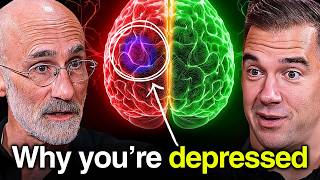
Arthur Brooks, a Harvard professor, explains how the right side of your brain handles meaning and purpose while the left side handles tasks and facts. He argues technology has hijacked our attention and offers practical fixes: tech-free times, tech-free zones, and finding meaning through service and transcendence.
Chapters
Your brain is designed to ask all the big why questions on the right and then to solve how-to and what questions on the left. And the reason people are depressed today is because they're avoiding the big right-side questions. The whole culture of technology and hustle and grind and online presence is all about staying in the left hemisphere of your brain. That's the reason that people don't know the meaning of their lives.
He's a Harvard professor, international keynote speaker, New York Times bestselling author. He spent the past two decades studying and teaching the art and science of happiness to millions of people. Dr. Arthur Brooks. Brooks in the house.
Here's what's crazy about when you're living in the wrong side of your brain, because you're living in the Matrix, you're living in the simulation of ordinary life. Your great-grandfather never came home and said to great-grandma, I had a panic attack behind the mule today. It's laughable.
How could someone start going to the right side of their brain to find more meaning and purpose in their life rather than stress and chaos?
Yeah, so to begin with We have two kinds of dilemmas as human beings. We have complicated dilemmas and complex dilemmas in life. Two kinds of problems. Complicated problems are the how-to and what problems that we're dealing with all day long. Like, how do I get from Orange County to Los Angeles, which I was dealing with this morning, right? Or how do I, you know, how do I, you know, think about the next 5 years of the School of Greatness podcast, which we were talking about. Such an interesting, complicated problem. How-to and what problems? But those aren't the problems that you care about, because what are we really talking about? We were talking about your babies and your marriage and your faith. Those are complex problems which are impossible to solve. They're easy to understand, impossible to solve. You only live with them. And the reason is, believe it or not, these two types of problems are processed in different hemispheres of the brain. This is a theory called hemispheric lateralization, which is a fancy way of saying the right side and the left side do different things. The left side does complicated problems like, how do I get to LA? How do I build a toaster? The right side says, why do I love my wife? Who's God?
What's the meaning of life?
What's the meaning of life? Yeah, the mystery and the meaning. And you'll never come to a conclusion. And part of the reason is because that's not how your brain is designed. Your brain is designed to ask all the big why questions on the right And then to solve how-to and what questions on the left. And the reason people are depressed today is because they're avoiding the big right-side questions. They're not even asking meaning questions because the whole culture of technology and hustle and grind and, you know, online presence is all about staying in the left hemisphere of your brain. That's the reason that people don't know the meaning of their lives. That's this whole book. How do you find the meaning of your life? It's go to the right side of your brain. How do you do that? That's the challenge.
How could someone start going to the right side of their brain to find more meaning and purpose in their life rather than stress and chaos?
Yeah. So to begin with, most people don't realize that that's the problem, that they're using their brains in the wrong way, not the way that our brains have not been designed. And again, whether you believe in God or not, our brains have unambiguously been designed with two halves. For a reason. The why half and the what and how half. And they don't realize that our culture, our technology, our economy have ruled out the why half systematically over the past 2 decades. So, I'll give you an example of this. I started seeing this when I was out of teaching for a long time. I went and I ran a company for 11 years. And I came back in 2019 and it was a different world. And when I left academia in 2008, academia was happier than the rest of the world. People are falling in love and they're making— remember college? Sure. Falling in love, making friends, exploring big ideas, moving out in the world.
Yeah.
Having your mind blown.
Yeah.
2019, triple the rates of depression, double the rates of anxiety.
Why?
Exactly. So I start asking them and they start talking about meaning. It's like, I don't know what I'm meant to do. I mean, I'm going through, I'm studying this and doing that and trying to get a good I have a great job, but my life feels meaningless. And saying my life feels meaningless is the best predictor of depression and anxiety for people under 35.
Saying that.
Saying that. That's the predictor. So then you start talking to them and figure out how they live. And it turns out that life dramatically changed after about 2008.
Social media?
Yeah. Well, social media, but devices, the screens, the technology radically changed it. You talk to young people, they're like, it's like I'm living in The Matrix.
You know, it's interesting you say that. Not to cut you off here, I saw a video recently, speaking of being on my device, but I saw a video talking about a guy who's probably in his 40s, probably around my age, with, I don't know, 8, 9, 10-year-old son having conversation. And he said, you know what our punishment used to be growing up, you know, back in the '80s and '90s? Staying inside.
I know.
Not being able to go outside was our punishment. And the son was like, what do you mean?
I know.
Like, I want to be a punisher for me because I want to be on my phone or computer or on like video games all day.
We're living the punishment voluntarily. Here's the weird thing about it. Here's what's crazy about when you're living in the wrong side of your brain because you're living in the matrix, you're living in the simulation of ordinary life. Your great-grandfather, like great-grandpa Howes, never came home and said to great-grandma, I had a panic attack behind a mule today. It's laughable because his brain was working the way it's supposed to work.
They might have had hard days and stress, but not this type of stress.
But, and here's the weirder part, his moment-to-moment life was actually pretty boring because he was behind that mule. But his life wasn't boring. A lot of young people today who are living in the matrix, living in the left hemispheres of their brains, moment to moment they have zero boredom, but their life is grindingly boring. Yeah, see, that's the thing. There's the microboredom and the metaboredom.
Interesting.
And that's the way to think about it, to say, have I eradicated boredom from my life but my life is actually boring? Then you know you're on the wrong side, and you'll never find meaning until you can break out of that.
Because no one's actually bored anymore is what I'm hearing you say. Because we solve the problem. They can find, you know, all day long getting a dopamine hit on something, watching something entertaining or funny, or what's next, or gambling, or whatever it might be, some type of hit that they don't allow for space, right, to listen to what they're meant to do.
I have a colleague at Harvard, a guy named Dan Gilbert. You ever had Dan Gilbert on the show?
I haven't, but I know that you know him, right?
Yeah, he's the world's leading expert on boredom. He's a visionary social psychologist. He's the best in the business. And he's done these experiments where you bring people into the lab, young people like undergraduates, 'cause they do anything for $20, right? Yeah, yeah, yeah. And he makes them sit in a room where there's nothing on the walls, nothing to do, completely silent. They have one choice besides sitting there quietly, whether they have a little key fob with a button on it. And if you touch the button, you self-administer a painful electric shock. I don't know how he got through this to the internal review board, right? Eh, ooh, right? That's all they can do. 'Cause he wants to know whether they choose boredom or shocks, boredom or pain. A quarter of the women shocked themselves. Wow. Two-thirds of the guys.
She was like, "I can't take it anymore.
Give me something to do." That's all you need to know, men and women, right? But altogether, more than half the people gave themselves pain over boredom. We solved the boredom problem. Your iPhone is the solution to your boredom problem, your device. The problem is that it makes your brain work wrong because when you're never bored, you don't use what's called the default mode network set of structures in your brain. And you won't find meaning. You'll be in the wrong side of your brain all day long. And so if you wake up and the first thing is your phone next to your bed— big mistake— and you look at your phone, then your brain is programmed to that for the rest of the day. And so you're looking at it while you're having your coffee and breakfast, and then you go to work, which is in your guest room, which is a Zoom screen, and then you're gonna date by swiping right, right? And then your friends are a lot of them mostly on social media, and then you do a lot of gaming because, you know, that's how you get your sense of fun and accomplishment and connection. And then you're 12 hours a day online And guess what you don't have? There's one thing— that's a simulated life. That's The Matrix. That movie was popular— I'm going to shock you— years ago, right?
20—
'97, 1998, 1999. I know, I know, I know. But that movie said that there was a great artificial intelligence, a mechanical artificial intelligence, that was subjugating the human race. It was sucking energy out of them in the form of attention, keeping them in these pods and giving them a simulation of real life that was pleasant. And the reason that there's a rebellion against that is because Neo, Keanu Reeves, wants meaning. Lewis, we're in the Matrix, and the one thing you can't simulate is the meaning of your life. And that's what's actually happening.
So how do we start to simulate the meaning of our life?
We got to live like Granddad Howes, right? Now, the first thing that we need to do is get clean. The first thing that we need to do is to actually break out of the addictive cycle, like a cleanse. Yeah, like detox actually is what it comes down to. And the problem is, you know, you can't just recommend abstinence because, you know, if somebody asks you, "Dude, I drink all the time," you're going to say, "Stop drinking completely," obviously. But you can't do that with your technology because you can't get into your bank account and that ship has sailed completely, which means you need moderation. It's a much harder thing to do. But there's a lot of data, there's a lot of research, neuroscience research that shows how you can actually moderate your device use that will revolutionize your relationship to the the devices. You can solve this problem with basically 3 steps: tech-free times, tech-free zones, and tech fasts. That's all you need to do. And the tech-free times are first hour in the morning, meal times, and last hour at night. Yeah, that's all you need, just those tech-free times. Why? Because of the neural programming that's going on first hour of the day, the, the, the neurochemistry of what's actually happening while you eat which is that you're looking into other people's eyes while you're having a conversation. We're evolved to do that over the last 250,000 years since the beginning of the Pleistocene. Homo sapiens have actually communed with their kin while they shove pieces of yak meat into their mouths around the fire.
They put it in there. Yeah, yeah, exactly.
If you see your phone on the table, it cuts off the neuropeptide that is occurring to bond you to others called oxytocin. You cut the oxytocin flow by looking at your phone. Literally, there's experiments that show this.
So what you said, first hour mealtime, and it was the last hour. Last hour.
Last hour, because that's when you should be communing with your babies and your wife. And also, you don't want to interrupt the functioning of the pineal gland, which, which, as you know, melatonin, etc. You won't be able to wind down, you'll be stressed out.
So that's the times. You said zones.
Zones. There are certain zones. This is physical zones. Number one is a bedroom. No devices in the bedroom. And you don't just say, I'm going to stop scrolling, leave it downstairs plugged in in a closet and take a book to bed. I get crazy idea. You got two things, a book and an alarm clock. Nuts, right?
Challenges. I listen to the Hallow app at night. That's the challenge. No, it puts me to sleep. But it's like in the morning too. I listen to it. I know.
So you got to figure out a way to get around this. And there are ways to do it with notifications off. Yeah. And then the second zone is there shouldn't be a classroom in the world from kindergarten through PhD that has a phone in it.
I don't understand how teachers could teach today. I don't know how teachers can do it. Allowing kids to have a phone at their desk.
They weren't really teaching when I was a kid either, but they didn't have phones.
I mean, still, but it's even harder now, I feel like.
There's 27 states that still don't, that have completely unfettered access to telephones in public schools. It's craziness that we do this, and it's complete lack of will, of imagination, and moral will on the part of politicians and educators, for sure. And then the last is tech fast. Everybody should have, I recommend, spiritual retreats to people all the time. You know, Buddhist retreats, Hindu retreats, Jewish retreats. I go on a Catholic retreat 4 days a year, silent retreat. No, no devices. Oh, it's— man, it's like magic. It's a total cleanse.
Yeah, I've done it a few times where I've put— gone on vacation and I've left the phone at home.
It's hard.
First time was like, what do you do? I was like, how do I get to the hotel? How do I get my car?
I was like, I don't know. I know, it's like your brain doesn't work.
The other day, it was such an adventure. I was like, I had to stop at a gas station and ask for direction. How do I get here? It was like, I know, oh man, I'm in the 1990s again. You know, it's like, let's go.
I feel like Lewis and Clark. And so the other day when that big Verizon outage, you just, were you aware of this? I was in New York and, and I came out of a, you know, taping a show and my phone didn't work. It was the SOS thing.
Like what happened?
And I had to call an Uber and get to the Newark airport and fly back to LA.
How'd you do it?
I, and so I had to find a, a wifi network and actually call the Uber. And there was no phone calls and there was no text. And then I got to the airport and got on the plane and there was no Wi-Fi on the plane for 6 hours.
What do you do?
I had the monkey on my back. I felt like I was like— What do I do?
You have to be bored.
I know.
You have to be on a plane and read a book or—
I was like a heroin addict detoxing in jail or something. Like reading from— Sweating. So that's really helpful. The first day is hard. The second day is— easier. The third day is good. The fourth day is bliss.
It's like I never want to go back.
I know, 40 days, right? 40 days. So these are the 3 things to do. The first thing you do is you get clean.
Yeah.
And you get clean by doing those 3 things, and then you start living in a new way that systematically opens up the right hemisphere of your brain. That's really what this— my research is about, is the 6 ways you can do it. And I mean, again, it's, it's in a way it's gimmicky because there's 6 big ways that you can do it. But if you do this in 6 months, you'll know the meaning of your life.
100%.
Yeah.
We're talking about your book, The Meaning of Your Life, which I think a lot of people are struggling to figure out these days. And I'm curious because you are such a devout— well, you've been 45 years, you've been all in on Catholicism.
Yeah, right.
45 years.
Yeah. I'm practically a cradle Catholic, right? Because I'm 61. But yeah, so people can do the math, right?
So you've been doing this for a long time, all in. You go to Mass every morning, 6 a.m., or almost every morning, you know, maybe once in a while you miss or something. But you're like in it. Yeah, but you're like best friends with the Dalai Lama.
Yeah.
And other spiritual leaders. And you actually invited me to go.
I know I wanted you to go.
Next time we'll go, please. And so how do you navigate being all in as a Catholic, believing what you believe, but being very close to other spiritual leaders of other faiths that don't believe what you believe at all? How do you commingle find connection and not judge others' beliefs, but also be close with them and find fulfillment and meaning from those relationships and those spiritual practices as well, which are different or maybe aren't in alignment with the Catholic faith.
Yeah. So it's one thing to think that you're right. It's something else to think that somebody else is wrong. And we want to solve every problem. The left brain solution is always, let me figure it out. And once I figured it out, then I know that this is right and everything else is wrong. I have a right-brain orientation toward my faith, which is I believe that this is what God wants for me. I don't know what God wants for others. I don't know. And I can't know. I believe that people— that God puts people in my life for a reason. I believe that you and I met for a reason. We met at a thing in Idaho. It was awesome. I was like, oh man, I feel like I've known this guy for years. The first time I met you. There's a reason that you meet people, that people are actually put into your life. And for you to adjudicate that on the basis of whatever beliefs that you have, that's hubris a lot of the time. You know, it's— God put you here for a reason, for me to learn and grow. And the Dalai Lama, boy, oh boy, he told me, I want you to be a better Catholic. Really? I want you to be a better Catholic is what he said. Really? Because he believes that that's God's will for my life. That's what he actually believes. And I learned so much, you know, from my Hindu teachers, from my Jewish teachers, from my Muslim teachers, people that I've talked to that have made me so much stronger in my own faith. I believe my faith is what God wants for me. I don't know what's right. I don't know. I just know that I believe that this is right for me. And I'm not a universalist, you know. Good. I mean, I want everybody to be Catholic. I want everybody to go to Mass with me. Absolutely. That's the world that I want, but that's not the world that I find. And I believe that there's a reason that I'm finding the world that I am.
But isn't part of the Catholic faith to preach the gospel and invite and recruit, but convert others to Catholicism, to the faith?
Yes. And there's different ways to do that. There's different ways to be a missionary. One good way to be a missionary, like I teach at Harvard University, which is not known as a big Catholic institution.
Boston is, isn't it?
Kind of, except, you know, it's the Northeast. It's post-Christian, man. The way that I actually bring people closer, I believe, to my faith is by how I live my life and the excellence that I bring to things.
But is that enough? Just being a good person?
I think that that opens the door because people will see— there's two things to do: be impeccable and great at what you do and have people know that you have a strong belief. That's really important. So people watching this are like, Lewis is on a spiritual journey and he's going to Catholic Mass, and he's literally the best in the world at what he does. That's missionary work right there. That's the mission field, right? I mean, it's like— it's a Mormon missionary told me this one time, a guy who worked for the RAND Corporation. I was a military operations research analyst early, early, early on in my career. I was doing math modeling for the Air Force, and this guy was an old school applied mathematician. He was Mormon and Latter-day Saint. And he told me about his mission in France. I said, you have a missionary in France? Because they all go on a mission, right?
2 years.
Yeah. And I said, how many people do you convert? He said, precious few. And there's a lot of French, you know.
Yeah. And he doesn't speak the language. He has to learn the language while he's there.
Yeah. And I said, so how did you maintain a good attitude about it? And he said, I would say, Lord, have him not shut the door all the way, because he figured out that his job was getting the door open an inch, and his beliefs were that God would do the rest.
Wow.
So here's the thing, people— you meet people at different points in their own journey. You're at a different point in your journey. I'm at a different point in your journey. A lot of people watching us are at different points in their journey. And all we can ask them is to not close the door completely, to open the door 1 inch. And if we believe what we say we believe about God and his goodness, God will do what he's supposed to do in their lives. Our job is to not close the door. And if you go in and you say, repent or die, door's closing, right? That's going to close the door, not open the door. Your excellence will open the door.
There's nothing that frustrates me more than when things don't move with speed. And when it comes to building a strong daily routine for your life, The tools that you rely on at home should make things run more smoothly without interruptions. And that's the thinking behind T-Mobile's 5G Home Internet. And big news, T-Mobile now has the fastest 5G Home Internet according to the experts at Ookla Speedtest. Setup is so quick and simple, no technician needed, and you're online in 15 minutes or less. And the price comes with a 5-year price guarantee, so you don't have to worry about unexpected price hikes down the road. And when I'm working from home, my internet does a lot of the heavy lifting. It's prepping for the next show on The School of Greatness, uploading files. I'm doing Zoom calls, I'm doing meetings. All these different things are all happening and I need them to happen fast. And with T-Mobile 5G Home Internet, things move fast and stay smooth. Pages load quickly, files upload successfully, and I can stay focused without constant interruptions.
It makes a big difference.
Visit t-mobile.com/homeinternet to check availability today. Price guarantee exclusions like taxes and fees apply. Fastest based on Ookla Speedtest Intelligence data, second half of 2025. All rights reserved.
How do you navigate in your soul and in your mind? That if you're with the Dalai Lama or another spiritual teacher or anyone who's on their own journey of life, that if they don't convert and baptize and become Catholic, like, they're not going to heaven, essentially. Like, how do you understand? How do you reconcile with that, knowing that you care deeply and love this person and you want them to live a beautiful life here, right? And after here? How do you navigate that world?
Well, part of that is that there's a kind of a— there's a fundamentalist version of that that a lot of people learn in the United States, which is literally, if you're not this, then this, right? But the truth is that Catholics in particular, they don't believe that. I mean, there's a lot— we believe that there's a lot, a lot of people going to heaven who are not Catholics or even Christians. On the contrary, they have a different set of experiences from different parts of the world, and they're implicitly baptized effectively, and they have have a lot to teach us. You know what that says is that if you were raised as a Catholic, then the standard is different for you. The obligation is different for you. The woe be unto you if you're not living up to it.
Right.
But that the Dalai Lama has a, you know, has a— there's a— God had a different plan in the Dalai Lama's life. And there's a, there's a different trajectory for what he believes. And so I think that it's, it's fair to say that there's a lot of ways to interpret that. And it doesn't have to be literal in this way.
Do you think it's possible for someone to find meaning without having some type of faith or belief in God?
Yes, I do. And that really comes from this idea of transcendence, which is one of the 6 ways of finding the meaning of your life, is transcending yourself. My path isn't the only path to meaning. It isn't. Now, religion is really, really good for this. Yes, spirituality is really, really good for finding meaning. But what you really want is to transcend yourself, because, you know, left to your devices, you're going to be in a psychodrama— me, me, me, me, my job, my car, my money, my It's so tedious, Lewis. It's so boring. But Mother Nature wants you to be the star of your psychodrama. I mean, think of all the dreams you had last night. You were the star in every one.
It's like, ah.
And one of the great truths that we find in all of the experiments in social psychology, if I can get you to think about others and stand in awe of something bigger than yourself, you will find meaning. Why? Because that's what illuminates activity in the right hemisphere of the brain. You'll start using your brain in a more meaningful way. There's two ways to do that. One is to stand in awe of something greater. Our mutual friend Ryan Holiday, right? He talks about Stoic philosophy. Yeah, that's a great way to actually be looking down at or looking at standing in awe, walking in nature before dawn. The Hindus call that the Brahma Muhurta, which means the creator's time in Sanskrit without devices.
Yeah.
Let the sun come up as you walk, to start a Vipassana meditation practice, to listen to the fugues of Johann Sebastian Bach, to do what you need to do to stand in awe of something that's not just my little psychodrama. The other way is to transcend yourself by serving, serving other people. So, one of the weirdest things is that we always want to serve ourselves, but when we're induced to serve other people, then meaning pours into the vessel that is your life.
So much. And you've told me about this.
I mean, you've been doing this. People watching the show, they don't know all the service stuff that you're actually engaged in. And you think, well, Lewis Howes, what a great guy. Truly, truly is true. But, but it's also— you need it. You actually need it to feel fully alive. I'm—
every day I wake up and I just say, thank you, God. Thank you, God. And I really reflect on the beauty, the abundance, the relationships, the health, the opportunities, because they weren't always there. You know, there was times when I didn't have those things, and I really suffered for years and decades. I had an internal suffering because I was thinking of self so much, right?
Oh, it'll make you suffer, baby.
Suffering. Why me? Why this? Why that person? Why am I experiencing this? Why me?
Me, me, me, right? Right. No.
And I had a big wake-up call around 30 where I was like, man, I am a selfish egomaniac. You know, I wasn't really— I was still a happy guy. I wasn't—
yeah, I wasn't.
But like, to myself, I was like, I'm beating myself up constantly. Focusing on myself. Sure, I was still giving and adding value to the world. I wasn't— and I was like loving and happy and joyful outwardly, but inwardly, I know I wasn't.
No, no, because you're doing something that's good. So this is, this is a distinction that William James, the father of psychology in 1890, he called the me-self versus the I-self. Human beings are, you know, what the Homo sapiens advantage neurocognitively is the existence and size of the prefrontal cortex. That's the bumper of tissue behind your forehead. That's 30% of your brain by weight. That is the supercomputer of the ages. There's, you know, AI is never going to come close to that. It just isn't. I mean, people who say that it's going to become more human, no. The prefrontal cortex does amazing things. Among other things, it allows you to be two people and time travel.
Isn't it fascinating?
Oh, it's amazing. So you go, you think about, you know, I did that thing and I feel I really regret it. And what if it had turned out differently? Then the present would be different. You're practicing to be better in the future.
Yes.
By time travel, I think I'm going to do this tomorrow, but maybe I'll do this, maybe I'll do this. You know, you and I were talking about all the cool things that are happening in your business and 5 different things that could happen in your business. We were time traveling 5 years into Lewis Howes' future.
Imagining the world.
Exactly. And then we come back to the present and say, which one of the paths do we want to take? That's time travel. It's amazing how that works. We also can think about me looking out or me looking in to understand myself. William James said, The more time you spend in the me self looking in, the less happy you're going to be. And the more time that you spend in the I self— you need both because you got to know what you're doing in the world and what's going on, but you also have to understand your place in the world.
Yes.
So you need both. The problem is that Mother Nature wants you to think me, me, me, me, me. Happiness comes by looking out at the world. I had this really interesting experience with this guy who did physical therapy for me because my back hurts a lot. My— that's wear and tear, man. That's, that's like, kids, when you're 61, you'll understand. And, and, but he's the— a beautiful person, and, and he was a loving person. Physical therapists are funny because you notice that the best ones, they're full of love.
Sure.
And that's their actual super strength. Yeah, listen to you. And okay, they want to know you, they want to heal you. Yes, is what it comes down to. And this guy was a classic. He did acupuncture and physical therapy. And he was really helping me with my back a lot. I said, you know, you have, you have, you have crazy gifts. And, you know, how did you get here? He's a young guy, he's your age. And he said, oh, it's a long path. I said, tell me more, because now I'm a behavioral scientist, I want to know, right? He says, yeah, no, I used to be a fitness influencer. Really? He says, yeah, he says, me, me, I was selling my body. I was selling pictures of myself with my shirt off. Yeah. Diet plans, exercise routines, etc. And he said, I realized I was just completely— I was miserable. He said, I hadn't eaten what I wanted to eat for 10 years.
Chicken and rice every day.
Because you gotta— he's trying to stay at sub-10 body fat.
Hard.
Uh-huh.
So hard.
Under— yeah, 10% body fat. Either you got weird genetics or you're unhappy. Yeah, I mean, I got weird genetics, right? You train hard, and I could stay 7, but that's because of my genetics, not because I'm making myself miserable, because nobody wants me to take my shirt off on the internet.
So you should though, that would go viral.
Put it on.
Anyway, so Huberman did it, it exploded the internet.
I know, I know, he broke the internet. But I know, but, uh, somebody took a picture of him and he allowed it to be posted, but probably, I don't know. But, but, you know, he said that he realized that he was thinking about himself too much. He needed to fix it. So he's a smart guy. So the first thing he did is he's got rid of his social media accounts.
Wow.
Step 2 is he enrolled in physical therapy school so he could serve others, learn something new. The third thing he did was— this is gonna blow your mind— he took every mirror out of his house.
I love that.
Every mirror gone.
God, I was just thinking about how mirrors, that invention of mirror, has probably ruined awful human psychology.
I know, because it basically, it torqued I, self, me, self.
Yes.
And then, and then, and then he showered in the dark for a year so he couldn't see his abs.
You didn't see the water rushing down. It's like, look at my abs.
Yeah, but he couldn't see it because he was so attuned to criticizing himself and belittling himself, shaming himself. Yeah.
What is this little fat? I gotta eat more. I gotta, I gotta whatever.
Yeah, the me self does this to you.
Wow.
It makes you crazy. It makes you completely nuts. So, the whole point is that you need to look out more. Look at— that's self-transcendence. Standing in awe, serving others puts you into the I Self and you find the meaning of your life because your brain works right. So, this comes from the philosophy, the theology, the neuroscience. It all works together. You want to find the meaning of life? Stop looking at yourself.
So true, man. Around 29, when I was 29, 13 years ago, I guess, almost 14 years ago. I, I'd gotten off my sister's couch where I was like suffering and broke and had no purpose. I started building a business, I started pursuing these things, and 5, 6 years later, I'm 28, 29, 30, and I make my first million dollars, and I'm building a little personal brand, and I have some influence, and I'm like making a name for myself in this online marketing world. And I feel like I'm the most miserable I am after about 5, 6 years of this because I was like So focused on me, right? And more.
And well, there was also another error that people make that really hurts their search for meaning, and it's very common. It's not— it's not— you never cast aspersions for people making this error. This is what I say on my first day of class. I teach MBA students at the Harvard Business School. They want to be unbelievably successful, and they're gonna be, right?
They want to make millions of dollars, they want to raise a bunch of money, they want to sell companies, all this.
They want to be masters of the universe. They want to be rich.
Power. Rich.
Here's what they think. If I get the money, if I get the power, if I get the fame, then I'll be happy. Right? And I say this on the first day of class and it makes them panic. And you're going to see why, because you're a striver par excellence. I say, go for the happiness and I'm going to teach you how, and then you'll be successful enough.
And the rest doesn't matter.
But you know what makes them panic?
What?
Enough. Because at the Harvard Business School, there's no such thing as enough. And for all the strivers who— look, why do you watch the School of Greatness? You want more because there's not enough. And I admire strivers. I admire strivers. But this is the key thing, and this is what you were experiencing. If you think that the money and the power and the honor, but mostly the money for what you were doing with direct marketing, right? And all the stuff that you were doing, you thought that that would bring you, that you would arrive at some level, that first million dollars would help you arrive at some level of happiness, some level of peace. But now look at your life. Your life is full of love.
Enough.
You have a friendship with God. You have a— you have a— you're living with— you're living with your guru.
Yeah.
You got your babies.
It's crazy, man.
We're the future you. That's, that's really the, the source of happiness and makes you successful enough. Yeah. That's the beautiful thing. That's what people need to actually focus on. And that's what will happen when you take the mirrors out of your life. Yeah.
Whether that's literal mirrors or, you know, other metaphoric mirrors like notifications on Exactly. Because, you know, or view counts or whatever it might be. Because I remember reflecting at this time, I had a kind of a big breakthrough, and I'm like, maybe over a 3 to 6 month window of my life during that time where I had it all, but all my relationships were falling apart. Business relationships, I was with a girlfriend that was falling apart, friendships, like things were falling apart, and I was at the center of all those.
Yeah, yeah.
So in the beginning, I'm like, like, this person's doing this, and she did this, right? He did, and they don't. And then I go, oh, but it's all happening. I'm at the center, right? I'm the common denominator.
The me self was saying something is happening so that I'm not being loved enough. The I self says I need to go love more.
And that's what I started doing. I said— I went through my own healing journey around that time. I started opening up about the different things that I was going through, from childhood sexual abuse and other things that I've talked about.
You were very public about that.
Yeah, very and I realized I need to serve more. I was like, I felt my first big calling was like, you got to serve those that can't serve themselves. And I thought about what is something that's meaningful for me. I struggled in school my entire life. I struggled at learning, sitting in a classroom, reading textbooks. It didn't work well for how—
are you dyslexic?
Very.
Yeah, yeah, yeah.
And I was always in the bottom of my class. I was always like— and they used to rank us on our grade cards back in the day. I don't know if they still do it. So I was always in the bottom 4 from middle school through high school, and I just struggled, and I just felt like, man, I'm never gonna be smart enough.
You felt stupid, right?
Very stupid. Every day, not enough, stupid. The way I learned was through sports, through mentors, through coaches.
And because you're super athletic. Yeah, I mean, you're a professional athlete.
I leaned into that, and I was like, okay, I can find value here. But I I was like, I need to start serving. What is the thing that I care about? I care about education and I care about kids. Yeah, because I struggled as a kid.
Right.
So I said, I need to find ways to serve children to have education. And that's something I did. I launched my first school with an organization called Pencil of Promise. It was 14 years ago, and I don't know how many schools I've built over the last 14 years and brought others to serve and travel the world in these communities and seeing the joy of these children having a place to go to learn. At least I had a school, you know, even though I didn't feel like it worked well for me, I had somewhere to go. Yeah. So many kids that don't have that.
And I'm—
it's something I'm doing through this mission now. Instead of just selling something to make money, I was like, how can I build something that serves? How can I do both?
And yeah, and it was— is intensely satisfying. Intense, because it, it just jams you into the I self.
Yes.
You're loving outwardly constantly. Notwithstanding anything that comes back.
Exactly.
Without expectation of return.
Yeah.
That's what we're built to do.
Serving. The more I think about that, how can I continue to serve at the highest level, use my gifts and talents and serve people at the highest level? It's the most rewarding feeling. I know, I know. It's the most rewarding feeling.
That's transcendence.
It is.
That's what people want. That's what they need. But Mother Nature and the current environment and the culture and the technology will force you away from that. And that's why we need to live in a very propulsive way. We need to live in an entrepreneurial way where we're living the startup of our own lives, doing something that— people are very, very, and very positively interested in a lot of content on the internet that urges them to do uncomfortable hard things. Right? I mean, all the bro podcasts are out there like, grind it out harder, work harder. And tons of dudes are like, yeah, give that to me. I mean, it's interesting because Jordan Peterson, my friend Jordan Peterson, I mean, he's very, very, very successful giving hard advice. Yes, giving really hard advice. And I understand why, because people have this, this sense that there's something bigger, there's something better. They're looking for meaning. And so they're willing to walk towards something that's incredibly uncomfortable. By the way, this is a second avenue toward meaning, is understanding suffering.
Do hard things.
Is doing hard things, but understanding suffering. Because when you understand the way that suffering actually works and you're no longer resisting it, you will find meaning. Your brain will work right, is the bottom line. And that's what a lot of people are grasping toward. A lot of young people on the internet are grasping at this, this kind of thing. And that's the kind of thing that we're talking about here, that, that when you're doing something that's an uncomfortable thing, it's a morally uncomfortable thing, it's an emotionally uncomfortable thing, it's a spiritual uncomfortable thing, or yeah, it's a cold plunge or whatever, right? You're doing this thing, so you're exploring the space, you're transcending yourself, you're exploring the space of actually non-resistance towards suffering.
Yes.
And you're saying, I don't know why I feel better. Because the right hemisphere of your brain is illuminated and you're— and you have an understanding, an inchoate understanding, a wordless, ineffable understanding of the meaning of your life.
I mean, you work with a lot of high achievers. I feel like a lot of people that watch and listen to this show, they're consciously trying to achieve something greater in their life. That's why they're here. And I love this kind of like speech that I heard Jim Carrey give. I think it was at the Golden Globes one year where he said, you know, I'm two-time Golden Globe winner Jim Carrey. If I can become three-time Golden Globe winner Jim Carrey, then I'll be enough. It's like this kind of anecdote of like, I know how many—
he was making a joke and people laughed.
They laughed.
Yeah.
But it's like, how— you know what I'm talking about, dude?
I do. I know that's very— he's a very profound guy.
I want to interview him.
So he's a very—
I bet he—
what, hey, Jim, come on the show.
I know, I want to interview him so fast. I think it'd be fascinating. But I love his thought process around that, and I'm sure he struggled many years because he never— maybe didn't feel enough for a long time.
But I think he's— I think he's talked openly about his struggles, actually. Yeah.
And there was another interview he did where he said he was going to retire a few years ago, and someone said, no, you can't retire, like, you're too talented. The journalist was saying, like, please don't retire. And he goes, I'm going to say something that most celebrities will never admit to. And he said, I've done enough, I have enough, I am enough. And most celebrities will— won't admit to that right now.
Easy for him to say at his age and his career, but it's not You know, it just gets harder and harder, right? It just gets harder.
And that need for validation, that need for being in the game, being talked about.
The more famous you are, the more famous you need to be. Gosh, the richer you are, the richer you need to be. That's just— and the reason is because you're, you're on the hedonic treadmill. There isn't enough. There isn't enough in the world. It's these rewards, these worldly rewards. This is what St. Thomas Aquinas, he called the world's idols. And, and the world's idols are the things that beguile you, and they have a kind of a divine feel to them, but they lead you away from what you truly want, which is the mission and meaning of your life. They lead you away from it because they look like they're going to bring you to it, but they actually don't. So they're like drinking salt water— the more that you drink, the thirstier you get. And, and actually, every single one of all the strivers watching us right now, and you and me, there's one that beguiles us more than the others. And if you have information, if you have knowledge about which is your idol, you got power. You want to play What's My Idol?
What's your idol?
Yeah, I want to play with you.
What's your idol?
So let's find out. Let's find out. So kids, you can play along at home. I played— so I play this game with my students because if they know their idol, they have power. Your idol is what will always lead you astray. And when you look back to the times of your life where you suffered the most, it's because you were beguiled by that idol the most. And it's always one of four things. Yeah, money, power, pleasure, or honor. And honor means like internet famous, maybe, or something. Yeah, prestige, admiration of the right people, or admiration of lots of people. Success-addicted people who get famous when they're young, they seek the admiration of strangers. That's the honor idol. And we can talk about that one because that one's super dangerous.
What was that third one?
Pleasure.
Pleasure, money. Pleasure, money.
Power, pleasure, honor. Those are the four. Now, this comes from Aristotle via Thomas Aquinas in 1265 and his Summa Theologiae. He was an unbelievably adroit behavioral scientist way before his time. And all this stuff that we're talking about here has been completely validated by modern neuroscience and behavioral science. Okay, perfect. But it was the 13th century.
It's crazy.
The School of Greatness is brought to you in partnership with Airbnb. Now, I'm a big fan of Airbnb, and whether you travel a little or a lot, time away always brings a fresh perspective.
And for us, that often means visiting family, taking a short trip to recharge, or just heading somewhere new for a few days.
And every time we leave, I notice the same thing is that our home sits there completely empty.
And that's why we've started hosting all of our properties on Airbnb while we're away.
It's a practical way to make use of the space instead of just having it sit there alone by itself. And at the same time, it gives travelers a place to create their own memorable experience in our city. From our experience, hosting has always been easy and straightforward. It's not something that takes over your life. It's simply a smart way to earn a little extra income while you're already traveling. And when you're gone, instead of just leaving your place empty, you can host your home on Airbnb. Your home might be worth more than you think. Find out how much at Airbnb.com/host.
Okay, so here's how it works. Here's how—
what's my idol?
So what I'm going to do is I'm not going to ask you what it is. I'm going to ask you what is not.
Okay. Before we do that, what is the idol of most Harvard Business School students coming in? What is most of their—
is there— they think it's money and it isn't.
What is it?
We'll see.
Okay.
Okay. Okay.
Gosh.
So we're going to take the idols away. And one of the reasons is because this is an elimination technique that's the most accurate way for you to figure out all kinds of things in life. This is cognitively a very powerful technique for finding something. So I want you to look at these things, and I want you to get rid of one you care about the least, which doesn't mean you don't have it.
Doesn't—
what it means is, what it means is you have the population average, which, you know, you take away money, for example, you're the population average in the United States. That's pretty darn good. But the problem is this, you're not extraordinary in it, which means it sucks if it's your idol.
Gosh.
Okay, so money, power, pleasure, fame. Which one do you got to get rid of first? Which one do you care about the least?
What if you feel like you have all four? Because you do have all four inside it, because you're Mr.
Big, and of course you care about all four of them. But which one would you— could you take away most easily? I can make a prediction for you already. What's not your idol? Um, power means influence over other people.
I guess power is going to be the one because I'd rather have honor than— yeah, I don't want to look—
with your honor is kind of power, or—
no, no, no, no, it's power, respect.
It's like, oh, power is influence over other people so they do what you want.
Now, how do I know that about you? Yeah, because you're highly intelligent. Yeah, you'd be a CEO of a big company right now, and you're not. You're running an enterprise that's an idea enterprise. It's not on a skeleton crew. I mean, there's a bunch of people around us right now that are doing good work, but the whole point is you'd have a big company, you'd be running a big public company, and you'd be the chairman and CEO. And Lewis Howes could absolutely have that gig if power were the thing. Okay, good. So you got 3 left. Money, pleasure—
I already know what my—
What's that? Well, let's eliminate a little bit more.
Okay.
Which one do you get rid of next? It gets harder.
I feel like— gosh, this is interesting because I was just telling Martha last night, I go, you know, I could live in a 2-bedroom apartment and be fine.
Yeah.
You know, it's actually not money. Yeah.
I mean, money's great.
I like having it like as a security, I guess.
But I don't— the thing is, security—
I don't buy stuff.
Security isn't— security isn't a money idol.
Yeah.
Security is a pleasure idol.
Yeah. Okay.
What it is is If you— and one of the things that people my age, they'll say, well, I can't, I'm not motivated by pleasure. How often do you check your stock portfolio? Every day, right? Yeah.
So I don't know.
Every day. Yeah. And so comfort, security, and feeling good are all the same idol.
That's interesting because money, I know it's not— I mean, listen, I'm a driven business entrepreneur that needs to make money to pay for people's lives and my livelihood, but I just— I turn down money all the time.
Yeah.
Like, the reason I know it's not my own is because I get sponsorship and deal offers all the time to pay me. I'm like, no, I don't want to. I don't want to make money to do that.
I get it.
And so for me, it doesn't mean I don't want lots of it, but I want to do it the right way.
I get it. And it's nice.
It's nice.
It's nice. But the 2-bedroom apartment wasn't—
I was living the dream in a 2-bedroom.
It wasn't a lot worse than a huge house.
Living the dream. And I had less things to manage. Yeah.
No. And when you—
I'm grateful for my home, but I was— I get it. Still living the dream.
Okay, we've got number 2 is gone. Now it gets real hard because there's pleasure. Mean versus on pleasure means there's 3 things that pleasure could be. Number 1 is feeling good. Feeling good. Number 2 is comfort. Number 3 is security. That's the pleasure idol. And then fame is— there are very many different kinds of fame. One is, you know, they're internet famous, which Yeah, there— which, by the way, you are. Um, there is prestige in the, in the eyes of the right people, and there's the admiration of people. Those are different kinds of fame, but they're all the same model.
And so what's the difference between pleasure and honor?
Pleasure and honor is— honor is the reflection of other people's feelings toward you. Pleasure is how you feel, man. So you got to get rid of— that doesn't mean— I know you want both. Yeah, yeah, but I want to feel good, and I want And you want other people to— you want other people's feelings about you. You care about a good life.
Yeah, yeah.
So you got to get rid of one of them. What really is motivating you more? And again, this is not that— this is not to live a life of vice. And yeah, no, this just means you're trying to find what actually would lead you astray.
The one that I care about the most.
Like, no, no, not the one that actually kind of— the one that drives you a little bit more.
The one that I want more? Yeah. Or the one that I want to— that's less holding me on? Um, I feel like it takes work. I know. Yeah, I mean, I might need to dive deeper on this because they're— in some ways I'm working more and more to care less what people think about me. That's why I'm taking the—
you know, the reason, right?
Tell me.
Is because it's your idol.
Maybe. That's probably— that's probably it. In the last 4 years, I have done so much work, and maybe I talked about this with you when we were at the mastermind. Where I've had to create so many boundaries with influential people, billionaires, celebrities, or just everyday people that want things or that expect something from me. Right. They expect me to be the good guy that always delivers, that's like willing to do whatever it takes to help them.
Yeah.
The fact that you're concerned. Yeah. Indicates that you're self-aware. But that is the tendency. Yes. Here's the deal. When you were a kid, when you were a kid, you learned something about yourself, which is that you got attention and affection when you did stuff. And you felt crummy about yourself when you didn't, when you weren't able to do so. Why? Because you had a learning disability, which made it hard for you to do things and made you feel crummy about yourself. But then when you achieved, especially as an athlete, that adults gave you attention and affection. And what you learned from that is that love is earned. You learned that love is earned. That, that's actually wrong, by the way. Martha doesn't love you because of what you give her. She loves you as a grace. Love is a free gift, freely given. Yeah, it is.
Yeah.
The problem is that when you wire that in, when you have the programming as a child
More from Lewis







Secret Service Agent: Your Neutral Face Is Making People Distrust You (Here's How to Fix It)



