If You Only Watch One Money Video, Make It This | Sharran Srivatsaa
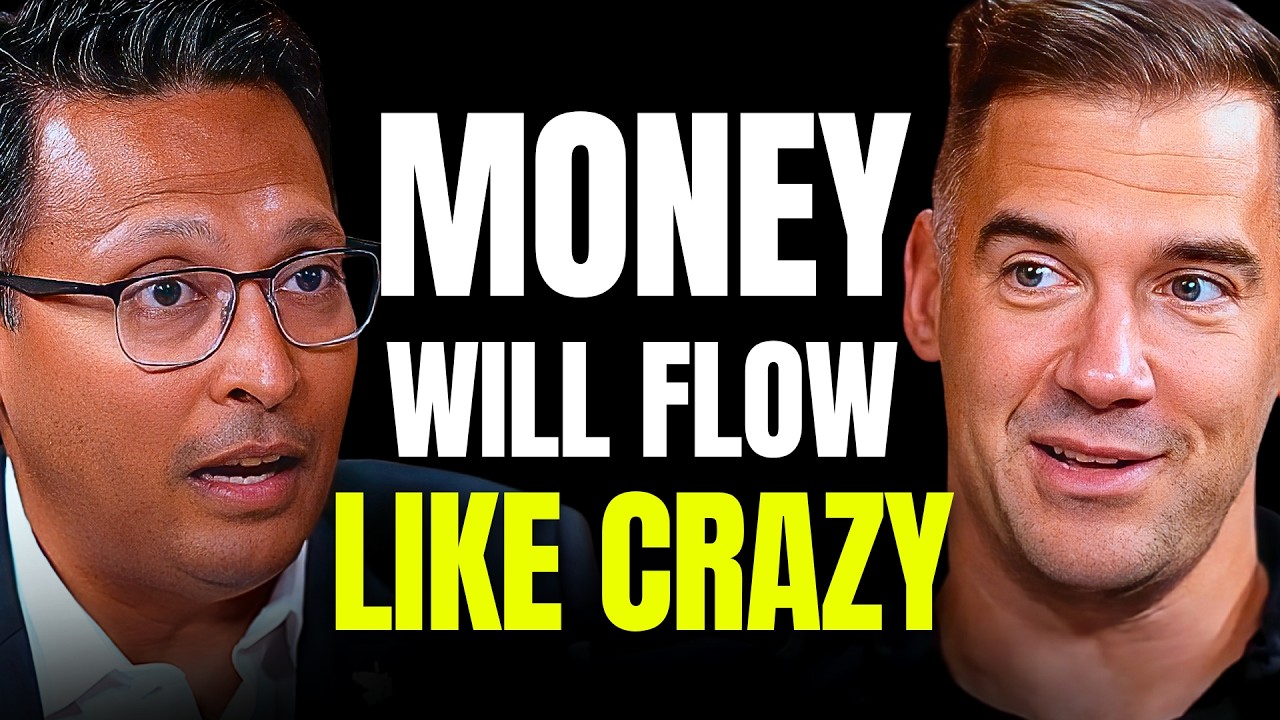
In this interview, Lewis Howes talks with Sharran Srivatsaa, CEO and managing partner of Acquisition.com, about his life story, money mindset, and practical wealth‑building principles. Sharran recounts his immigrant upbringing in India, the hardships of arriving in the US at 16, a mugging incident, and his rapid rise from a $100‑in‑the‑pocket college student to a $5‑million‑exit at age 21. He explains how a misunderstanding of a contract (a ratchet) taught him that money is governed by legal structures, prompting him to study finance and later work on Wall Street. The conversation covers his "money framework" – a decision‑making process (context, issue, risk, next steps) – and the "7 laws of money," highlighting the key law that "money loves speed, wealth loves time." He shares stories from teaching tennis to billionaires, using debt strategically to acquire real‑estate, and the importance of defining clear money goals with concrete plans. Sharran introduces the "4 money monsters" (inflation, taxes, interruption, fees) that erode wealth, and categorizes investors into active, thematic, and passive types. He stresses financial literacy, especially around debt, tax strategy, and passive‑income assets (Vanguard VOO, VNQ, TIPS). The interview ends with advice for young people on risk assessment, asymmetric deals, and using debt to acquire assets rather than consumer goods.
Chapters
When I first met Alex Hormozi, he was in the process of selling his business. And so in my first conversation with Alex, we talked for 4 hours and he showed me everything. 8 years later, I'm the CEO of that business. Fastest way to get in great rapport with people is to give them the gift of going second and actually share on the money side because it's the most vulnerable thing and it allows you to get deeper in the conversation.
He's the CEO and managing partner of Acquisition.com alongside Alex and Leila Hormozi. Today's guest is Sharan Srivatsa. He's going to break down the laws of money and what you need to start thinking about right now to make money easier for you. What were the greatest lessons you learned about teaching tennis to billionaires and celebrities?
The amount of risk that we can take is based on how much pain we can handle as well. I think it's really sad that people are being taught that debt is bad. Everything runs on the access to to money overall. So the fact that we have to go cut up our credit cards, that's like saying don't ever drive again.
What is the money framework you wish everyone knew sooner?
I think it's evolved over time. In my 20s, I thought it was about—
You grew up in not around the most wealth in the world, right? You grew up without in kind of a middle, lower class environment financially. And I'm curious, now that you've been a part of multiple billion dollar companies, were the rules of money that you learned growing up much different than they are today? Were there certain rules that you thought of that money is about one thing that now that you've learned it's a much different thing?
I think that's a natural evolution, Right. Because money's tied so much to the environment that you're in. If you take someone that grew up middle class versus someone that grew up wealthy, why does the wealthy person believe that they can achieve more?
Hmm.
Because they just see that other people have achieved more. I think there's such an environmental effect to money overall. And I never realized that growing up. All I thought was, the greatest thing would be for me to come to the US and at some point make $100,000 a year. My dad sold his scooter to get me a plane ticket. My parents sold everything that they had to send me to the US. And at the airport, I remember my dad telling me, it's like, hopefully one day when you're in the States, you can make $100,000 a year. That was the dream. That was the dream. That was the upper limit. That was like, you need to hit that.
You've made it.
Yes.
Hell yeah.
But I also think there's some humility to that because you realize that the goal is not that far off. There is a line of sight to actually getting to that thing. And then once you get there, you see where the next mountain is. Sometimes I have friends who have this, hey, I need to have a $55 million net worth before I'm 55. And I go, you have a minimum wage job. You're so far removed from reality that you can't even see the next step in getting there. So yes, the dichotomy was definitely there, but that was what my dad said to me before I stepped on that plane.
What was your big belief system around money when you were growing up?
That only rich people are evil. That if you had money, you probably got it by some kind of scam. If your family was wealthy, then you were wealthy. Everyone else could never become wealthy again. If you had, you may win the lottery, but you should keep trying. But all of us were just destined for a work hard, be mediocre life.
Really? Who taught you those beliefs?
I think it came from the general environment because that's all that I saw.
Really?
And I saw my parents work so hard to make ends meet. And we lived in a 1-bedroom apartment. I remember sleeping with my parents in the same bed till I was 15 years old. And I knew no different life. And looking back, that feels strange, but that is the only life that you know.
Yeah. It felt normal for you at the time.
Yeah.
And how old were you when you moved to the US?
I was 16 when I came to the US. Wow.
So how did your views around money change the moment you landed in the US from India?
Tell you a crazy story. I landed in Chicago O'Hare Airport. And I had a ride that was supposed to pick me up. And I waited in the airport. It took 1 hour, 2 hours, 3 hours. This was before there were cell phones. And my name got called on the public address system. It says, Shiran Tribhatsa, please report to a white courtesy phone. So I was like, this is not fun on your first day in the US. So I go answer the phone and he says, hey, your ride, his car broke down. So he wants you to take a bus and meet him in Moline, Illinois.
Wow.
I had no idea where Moline was.
Like an hour away?
Yeah.
It's kind of far. Yeah, I've been there.
So I was like, sure. So I grabbed my bag and I left the airport and I figured out where I needed to go, grabbed the bus, and I jumped on this bus to go to Moline, Illinois. Well, we were— it was supposed to be an hour, hour and a half away, and hour goes by, 2 hours go by, 3 hours go by. Finally, it's dark and we pull into a bus depot and I'm the only one on the bus. And the bus driver comes up to me and says, hey kid, where are you headed? And I said, Moline, Illinois. And he goes, well, we are in La Crosse, Wisconsin.
Oh, wow.
So I'm in a completely different state. I don't know anything about the geography of where I am. He says, well, if I were you, I would get in, rest for the night, and figure out what you're going to do the next day.
Wow.
And I didn't have a lot of money. I had $100 in my pocket, maybe some loose change, tennis rackets in a bag, and that's it. So I grab my stuff and jump out of the bus, and out of nowhere, this guy with the hoodie jumps on and pulls a knife on me.
Wow.
So this is 7 hours in the US. I get a knife pulled.
You're 16, you're alone.
I get my knife pulled on me, and he says, give me everything. So I just hand him my bag, and he starts to rummage through my stuff. And then he says, you're the worst person I ever mugged. And I go, what do you mean? How many times do you do this? Then I was afraid for my life because the last thing I wanted was to me bleed out in La Crosse, Wisconsin, my parents not know what had happened. So I pulled a $100 bill out of my wallet and I said, hey, I have $100 and I'm trying to get to school. If I gave you this $100, would you give me $50 back? And he looked at me weird and he opened up his ratty wallet and he dishes me out a $20, a $20, and a $5. grabs the $100 and walks away. And if you put me in that situation—
He shortchanged you $5.
But if you put me in that situation today, I would not have tried to negotiate with a mugger.
No, take the money.
Take the money.
Yeah.
And I think that when you're put in tough situations, you start to figure out how to negotiate your way out of things. And I think that was the big mindset, which is, wow, if that was the lowest of low I could go and I could still find a way to have a conversation human to human with somebody, because I knew that he didn't want to, hurt me in any way. And I think even in the tightest of money situations or the tightest of life situations, there's probably a conversation to be had. And that probably changed. That was a low. That probably changed a lot of things for me.
Interesting. So when did your beliefs around money start to change? How old were you? When do you start to notice that money wasn't the root of all evil or people that had money were bad? When did that shift?
When I graduated I graduated from college with a computer science and math degree. This was during the technology boom. And I was an early engineer in a startup and we raised $27.5 million. And the company got bought for $550 million. And so I thought as an early employee, I was supposed to get a big fat stake, just shy of $50 million.
Yeah.
And this was before we had mobile phones and apps, et cetera. So the only way you could check your balance was to go to a Bank of America, ATM and hit receipt and it will tell you your balance. So we were supposed to get our wire that day and I went and got my wire and I looked at the account and it was a whole zero off. I was like, this can't be right. I thought I was gonna get a lot more than this and I would've made it. So I called the CEO of the business and I said, could you help me understand why this says $4.97 million, not $47 million? He says, well, you have something called a ratchet. And a ratchet is a massive dilution based on how this acquisition happened. All my rules around money changed when I realized that everything was a contract, everything was structural. If you did not speak the language of money, you're probably not going to make a lot of it. And that was the big shift for me. It was not a, did someone tell me something or me see the world differently? I just realized that I got a 10x cram down on what I was going to get. And that was because of a contractual issue that I did not know how to read. And that was the entire reason why I decided to go to business school. It was the entire reason why I decided to go to Wall Street. Just learn that thing. Because if I learned how the contractual aspects of money work, because everything's a contract. And when you learn that, things get significantly easier.
Interesting. So how old were you when that exit happened?
21.
21. That's pretty young.
Yeah.
Man. So from 16 to 21, 5 years, you had no money, $100 into, I guess, a $5 million exit for you at the time, roughly. It's pretty good still.
Yeah. Yeah. I got to pay off all my debt, buy my grandma house, and then decide to be like, well, what am I going to do with my life? And so I spent 5 years traveling the world and teaching tennis. And I got—
Were you a tennis pro or something or something before or something?
Yeah, I played pro tennis before and then I did not know what I wanted to do with my life. So I was like, hey, I'll go travel and teach tennis. And I knew that money would last me for roughly 5 years. So I spent 5 years teaching tennis. I was in the Caribbean, Dubai, and on Maui for 5 years and taught tennis to Richard Branson, Alan Alda, Bill and Melinda Gates, Michael J. Fox. It was a fascinating experience.
What were the greatest lessons you learned about teaching tennis to billionaires and celebrities?
They are just like us when you get them to doing raw things like working with their hands. Because on the tennis court with Richard Branson in Necker Island, I was better than him. He had paid me money to come teach him tennis, and I was going back and forth with him. And I said, I have to ask this guy some advice. I'm here, but I don't want to be that guy. How do I actually— He's paying you to actually give him advice.
Right. Please do this.
And so I actually asked him a question. I said, hey, you've run so many companies, you've done so many different things. How do you make decisions? And in Branson's own way, without having a single line of advice, he tells you like 4 stories. And I said, this is so unhelpful that you gave me all this advice in the form of stories. And net-net, he said, if you don't have a framework for making decisions, you'll always get left behind. And that really stuck with me. And so I said, well, I need to come up with a framework for making decisions because you are the cumulative sum of all the decisions that you've made in your life. So if you don't have a framework for making the decisions, you probably should come up with one. So I came up with a framework, which was understand the context, isolate the issue, accept the risks, and map the next steps. And so if you take any decision that you have to make and say your team comes to you and you say, hey, can we do this? You're like, hold on, back up. What are we talking about? Understand the context. The second, isolate the issue. So you want to do blank? Third is, okay, if we did blank, we probably can't do A, B, and C, accept the risks. And the fourth is map the next steps, which is, all right, so if we're going to do that, we should do A, B, C. And so now that's become a natural part of what I did. And so even though Branson gave me those 4 stories that were extremely unhelpful, at least it drove me down the path of saying, I probably should have some kind of framework for making decisions so that I don't do dumb things.
Right. So after 5 years of teaching tennis, you'd already made millions before then, and then you were on the road teaching tennis. When did you decide to get back into the business world again?
Yeah. My mentor said to me, No one is going to hire a teaching pro. So you have to use the ultimate career switcher in the world, which is going to business school.
Hmm.
And so I went to business school at Vanderbilt, and because they had a really clear path for going from Vanderbilt to Wall Street. And so I got an MBA in Vanderbilt, and then I was an investment banker at Goldman Sachs and at Credit Suisse on Wall Street. The craziest story was I had 39 one-on-one interviews to get the job at Goldman. And this is not including dinners, lunches, informational interviews, et cetera. This was 39 one-on-one interviews to get a job at Goldman.
Wow.
And of those, the craziest interview of those was I walk into this managing partner's office, and this was when the great financial crisis was happening. And he walks in frazzled with a briefcase and a leather notebook, and he sits down. He's like, you're a hotshot. I see hotshots like you all the time. He drops a notebook. He goes, that's my prospect list. Here, here, set me some appointments. And he pushes the book towards me and I have no idea what to do. So I grab the book, I look at it and it has Lewis Howes and a phone number on it. I said, would you like me to call that? He goes, yeah, set me an appointment. And I said, sir, I don't want to misrepresent you. Could you give me a script so I can actually have this conversation?
Mm-hmm.
He looks at me, he smiles, he wraps up the book. He stands up, he shakes my hand, he says, you'll do great, kid. And he walks out. And so I see him at the cocktail party that night and I said, that should have gone really bad or really well. Like what happened? He says, I've interviewed MBA grads for the last 20 years. I do the same exact routine with all of them. Only 2 of you in the last 20 years have actually had enough humility to stop and say—
Oh.
Give me a script. so I can actually make the call on your behalf because you're not even allowed to make the call. You're not even licensed to call this person, but everyone wants to show off that they are brave enough, courageous enough to do it. And he's like, that taught me that you were coachable. And that was like a— I did it out of pure survival, but it came across as humility, I guess.
Oh, that's cool. From all the things you've learned, on Wall Street and building businesses. What are the 7 laws of money that you think are the key to building wealth?
Of all the 7 laws, I think that there's one single one that means so much to me, and that is money loves speed, but wealth loves time. I'll tell you a great story here in LA. I was running a real estate business not far from here in Beverly Hills, and I had access to so much deal flow. from all these real estate agents. These real estate agents would come across a great deal and they'd say, hey, Shaun, do you want to buy this? Hey, Shaun, do you want to buy that? And I said, if I was getting all these deals, I should just spend all my time and all my money just buying this. I didn't even care about the business. I'd spend more, I'd get more kind of lucrative results just buying these deals. And so for 5 years, I just flipped homes, Lewis. So I would buy the deals and the agents would sell them. I'd buy the deals and the agents would sell them. I did roughly 50 flips a year, a flip a week. For close to three to five years.
So you weren't you weren't rehabbing them or anything? I was rehabbing them. Oh, you were okay.
So buy them, rehab them, put them on the market.
Take a few months, rehab them, then put them on the market.
And I did this over and over again. And from the outside looking in, it feels like oh, that's a great idea. But when you have multiple going at a time, you're extremely cash strapped. But you make the money, and then you recycle it. You make the money, and you recycle it. But I was making the money. Money loves speed. But at the same time, I had a friend who had bought a duplex in Silver Lake, and then the markets went up. He traded that. He stayed in one unit and he rented the other unit out. Then he refi'd that duplex into a fourplex. Then he refi'd the fourplex into a 12-plex in the same amount of time that I had been doing these deals. And at the end, his net worth was 5 times that of mine.
Really?
5 times. I had made the cash, paid the taxes, but I was always cash-strapped. So I felt like this money loves speed, but wealth totally loves time. I don't know if you're familiar with the Arnold Schwarzenegger story. So Arnold got his first big role, Terminator, when he was 37.
Then he would buy property in Santa Monica or something. Correct.
But he was a millionaire when he was 25. He had $27,500. His real estate agent told him that if you want the staying power of being in Hollywood, We need to give you time in this business so you can find the best role. So he took his first $27,500, he bought a duplex, and that duplex grew. He got a fourplex, and the income from that is what allowed him to sustain and wait till he got the Terminator script. And now, and after that, he was able to become governor and do all of the other things. So people don't realize that you want to make the fast buck, you want to make the affiliate commission, you want to make the crypto deal, you want to make Whatever I can do super fast. But you don't realize that wealth loves time.
Wow. Okay. So that's one of your favorite laws. What are a few of the others?
The thing that I think about often is every money goal needs a money plan. Most people just are like, hey, I want to buy a jet. Well, okay. If that is a money goal to actually get there, well, what is the money plan to getting there overall? Most people don't realize that if you can just say, if this is my goal, what are the steps that I need to do to get there? And I don't think the world teaches us that money goals are okay goals to have. The acceptance, you wrote this in your book, the acceptance that it's not wanting what you want. I always tell my friends, he's like, if you want a yellow Lambo, say you want a yellow Lambo. Don't say I want a yellow Lambo because. Because it's irrelevant. If you want the yellow Lambo, that's for you. Go ahead and have the yellow Lambo. But if you have a money goal, what is the money plan that allows you to get there? I think as soon as people realize that, hey, to do this, I have this plan, it allows them to actually put that plan into place. And I think that's such a big law because otherwise you're trying to do The Secret or some kind of woo-woo or manifestation, which is fine, but it takes—
You still need a plan.
Right.
You still need a plan.
Even the manifestation needs a plan at some point.
Yeah. So every money goal needs a money plan.
Yeah.
When did you learn that? Did you make a mistake that you were like, oh, I just had this goal, but I didn't really have the plan to go with it and I lost time, energy, money along the way? When did you learn that?
My mentor of 30 years now is a real estate tycoon. He'd be walking around LA and you would not know who he is. And he had made so much wealth in real estate that I one day asked him, I said, There is no way I'm going to be able to do this. You've got to give me some insight, some secret on how to do this. And then he said, he goes, hey, if you don't have, you got to host the meal for this to happen. And I said, what do you mean if you don't have, if you're not invited to the table, you have to host the meal? I don't understand what that means. Rich people say things and you have no idea what these things mean. They're like, follow your passion. I'm like, what does that mean?
Right.
And then, so the next day I sent him a text message. I said, hey, I know you're doing these real estate flips. I know you hate doing them. I know they're so hard for you to do. What if I was able to do all the work A to Z? Would you be open to sharing 10% of this deal with me? And he was an attorney, so he responded, write it up.
This is your mentor?
My mentor.
Yeah.
And that was the first time I had a chance to actually Have a have a shot at owning something in LA. I would have never been able to own something in LA, to put money down and buy a three million dollar house and then flip it. No, no way. And it's easy to say, well, Sharon, that's ten percent. What could that have ever done? Well, he did sixteen deals in eighteen months. I got ten percent of every deal for eighteen months, and that was the money goal that I had, which was if I can't do this myself. who can I partner with to allow me to do that? And I would've never been able to create that wealth for myself at all. That was a huge switch for me.
Really? How much did that bring you in 18 months for all those deals?
Yeah, we sold a few of those, probably $1 to $2 million worth in 18 months. And I still own 3 or 4 of them right now.
Wow.
But 10+ years later. And there were—
That's a lot of cash.
Yeah.
Yeah, yeah.
There was so much money. And I didn't put any money down. And I did it all on kind of sweat equity.
Yeah.
Wrote the check to be able to do that.
Wow. At work, greatness sometimes starts with a pile of meeting notes here, follow-up questions there. But that's okay because ChatGPT Work, a new way to work in ChatGPT, can organize multi-step projects and help you make progress while staying in control. ChatGPT Work can use your apps, connected tools, and files to create things like landing pages, Trackers, internal tools, even web apps. Say your team has a new product concept. Use ChatGPT Work to review customer feedback, pull themes, and draft a prototype. Maybe there's a planning doc that ChatGPT Work can organize into owners, next steps, and a shareable status update. Make it even more specialized by installing specific plugins like Google Drive or Microsoft Teams. The big picture? ChatGPT Work helps you get unstuck between thinking about your work And actually making progress on it. Put ChatGPT to work on your most ambitious ideas and projects. Get started at chatgpt.com by selecting work mode available on Plus and Pro plans. Every money goal needs a money plan. How do you know how to create the plan?
Yeah, there's this big misnomer of financial freedom. If you Google the topic of financial freedom, it goes everything from how to invest in your 401 to let's buy crypto, right? Like the range is everywhere. And I asked myself this question, what is financial freedom? And I realized that it was when you have to stop trading time for money.
Mm-hmm.
There's financial freedom, which is you wake up in the morning and you say, what would I like to do today? Because there's some other source of income that is covering your monthly expenses. So the definition I have is financial freedom is where your passive income is greater than your monthly expenses. Well, those are 2 really interesting definitions, passive income and monthly expenses. Well, we know what monthly expenses are. Say we're making $10,000 a month and those are your monthly expenses. They're not changing. But what is passive income? Well, passive income is not a scam. Passive income is prefunded income, meaning it's either you actually have to prefund it with some effort, You have to pre-fund it with some money. Effort. I'm going to do all the work in my real estate company's deal, or I'm going to build an affiliate product, or I'm going to be a part of a network marketing organization. I'm going to do some effort upfront. So hopefully it'll pay me down the line somewhere else.
Yes.
Or I'm going to write a check and buy a piece of real estate just like Arnold Schwarzenegger did, and it's going to pay me. But the problem is most people don't know how to generate passive income. And they're like, No one's going to wake up in the morning and say, well, I'm going to send Lewis $50,000 a month. You got to do something for it.
Right, right.
But I think America has failed the hardest working people because they have said that you only have one road to retirement, and that is to put 3% in your 401. And that 3% in your 401 has 3 people associated with it, which is you putting 3% in, which is your employer getting a deduction for matching it in some way. And then it's Wall Street. for getting all the fees for 30 years sitting in that account. And I think the big question we all have to ask is, for the average person working so hard, what if the 401 was not an option? How would they change and live their lives?
If people weren't allowed to put money in their 401, where should they be putting their money to create passive income long-term?
Right. Right. I think that if that's the question that you ask, because now people are, they don't have to say, I'm going to wait till I'm 65 to retire. They say the definition of passive income is the financial freedom is passive income greater than monthly expenses. Let me do that today. And if they can do that, your entire world starts to change.
So if you're coaching someone who's in their young 20s, what would you tell them to do?
My son's 14.
Okay. What do you tell him to do? Yeah. Yeah.
And he hears me have this conversation often. And he says, Dad, I'm not gonna be able to buy a company that pays me a dividend or gives me cash flow or a check every month. I'm not gonna be able to buy a piece of real estate yet.
'Cause he doesn't have the money. Correct.
And he says, what do you think I should do? So I think whatever applies to my 14-year-old probably applies to everyone else. And my advice to him is you still need to invest in the same asset class. which is there's what I call the golden stairways. There's only 2 ways in the modern world where you're guaranteed to make money. And that is investing in companies, investing in real estate. Nothing else exists. Did you know that 1%, the top 1% of the world own 40% of all stocks in the world?
Wow.
That is insane.
That's crazy.
Right? The Forbes 400, is littered with people that are business and real estate tycoons. The US real estate tax code is engineered for investors. And we don't think about that. We think about putting another 3% in our 401. So I explained to my son, I said, if the golden stairways are companies and real estate, what should you invest in? He's like, companies and real estate. I said, yes. Well, let's start with that. Let's start with the Vanguard ETF, VOO, that owns the companies. And let's start with VNQ that owns real estate. And now he gets dividends from both of those because now he knows as he puts his $50 birthday contribution or whatever in this, he actually can see it invested in the right asset classes. And if not anything else, if he just started doing that over time, he'll start to realize that, wow, I'm still invested in this asset class, but I'm not getting the return right now. I call that a TIGA, a tiny income generating asset. Everybody wants the big apartment building, but they don't realize that you can just buy VNQ, And still be invested in North American real estate and get a piece of that.
And you don't have to manage it. You don't have to deal with tenants. You don't have to deal with fixing stuff. It's like you're investing in a fund that does that for you.
At least when you start. And then hopefully that number grows and then he can say, wait, I have $100,000 in this over time. Now I'm going to take that and put it into a multifamily syndication. That makes perfect sense. But he's already invested in that asset class in some way. The crazy story of my son, Alex, Leila, and I bought 3 apartment complexes at the end of last year. And my son's listening to this story in the car while I'm driving and negotiating the loans. And he says, Dad, this sounds like a great deal. Can I invest in this? And I said, sure.
Yeah.
But where are you going to get the money? And he says, well, I'll talk to the bank. I said, you're 14, but I appreciate the enthusiasm. He's like, well, why wouldn't the bank lend me money? I said, well, you're under 18, but more importantly, they just don't trust you because you don't have a track record yet. He looks at me with these puppy eyes and says, do you trust me? And I said, I see where he's going with this. He says, oh, why would you not loan me the money?
Mm-hmm.
And so I said, well, I'll loan you a part of it. So I loaned him a part of it. He borrowed some from his life insurance policy. He conned his sister and saying that he would do chores for her.
Wow.
And, or the responsibilities in the house. And he made his first investment by borrowing money from me and his life insurance policy and investing in the deal with us.
That's pretty cool.
It's amazing. Just, but, and I think that goes to the environment of he was in the car listening to me negotiating the loans, talking about this. And so I think it opens up the possibilities of what is happening and what is possible in the world. I never had those growing up. I had no idea that you could do any of this. I just thought that the ultimate goal was to make $100,000 a year.
Do you think someone in their 20s today, if they only invest in a 401 and they make no other investments in the stock market or real estate, do you think they can become financially free?
I think it's very difficult for 2 reasons. Reason number one is they're now defining financial freedom as this big nut that they are going to have at the end when they're 65.
In 40 years, whatever. Yeah.
Right. You have no idea what's going to happen between now and then.
Or they get lucky in their job or they launch something that makes them a lot of money, maybe. Right.
We also have no idea what the tax code is going to be back then. The question becomes is, do you tax the seed or do you want to tax the harvest? And Give you the craziest story. Just take, no one talks about just fees, right?
Mm-hmm.
Easy example. If you put $1 million into just a straight S&P 500 today and you let it ride for 20 years, it roughly gives you $6.6 million. Awesome. That's at a 10% return. Well, if the advisors charge a 1% fee, so cut that return down to 9%, guess How much is paid in fees in that period?
Oh, I don't know. Probably a million bucks.
A million dollars?
Oh my gosh.
You're right.
Is that right?
A million dollars.
Oh gosh.
A million dollars. So if you— I was a banker at Goldman Sachs. This is one of the most crucial reasons why it broke my heart, because that's why I think people struggle big time. I'll ask you an even crazier question.
So how do you invest then where you minimize all those fees? Do you do it on your own? Do you find like a fund that has the minimal fees? Do you— You know, and especially if you know nothing about money, right? And you're like just starting, you don't want to make money mistakes.
Yeah.
How do you invest with minimal fees?
Before we choose to invest in something, we have to figure out what type of investor we are. And that allows you to make a much better decision. So I believe that there are 3 types of investors: an active investor, a thematic investor, and a passive investor. All right, let's define them. Who's an active investor? Someone that wakes up in the morning and actually does this for their job. Yeah, right. They're actively real estate investing. That's all they're doing. They're not doing anything else. They're actively trading. They're actively working on crypto. They're actively working on real estate. That is their job. They're active investors. And I love active investors 'cause they know that, like, you know, that is their work. Most of us are not active investors.
No.
Then you have thematic investors. And thematic investors are essentially saying, hey, I believe that in the next 10 years, AI is going to do great. Therefore, I'm just going to make a bet on AI today. Hopefully the theme carries in the future and creates that result. I think most of us are thematic investors. I'm probably one. You're probably one. You have a bet of the future. that you know that technology's probably going to be better in the next 10 years than it is today. So you're probably, you're okay handling the volatility over time. And the third one I struggled a lot with, which is who is a passive investor? And then I realized a passive investor is just somebody who invests in active investors. So you and I just say, hey, there's a multifamily syndication. You are going to go work on that.
They're doing all the work.
Exactly.
I'll invest in you.
I think the issue becomes—
There's still a fee to that. Correct.
The issue becomes—
There's a management fee, there's a this fee, there's a—
Yeah, but that's okay because they're actively managing the asset.
Yeah.
The issue becomes when, if it's passive for you and it's passive for John, it's passive for Lisa, it's passive for Jimmy, it's passive for everybody along the way. Who's actually doing the active work? So I always say, if it's passive for you, it has to be active for someone else. The issue I have with all of this, especially the fees, is imagine you were hiring a CFO for your company. Would you hire a CFO who was a fractional CFO that was also a CFO for 300 other companies?
Probably not. I mean, it's—
Right?
You'd be spread thin. Yeah. Yeah.
But we do that with our financial advisors. He's a CFO for our family.
Right.
We have no problem working our tail off in our day-to-day work. And then we say, hey, Mr. Financial Advisor, You are— show me your track record of work with all these other people. How many families do you have? 300? Sure. I'll be 1 out of 300 of your attention. Manage my money. That is insane from a financial literacy perspective. We will go to seminars, we will do role play, we will hire coaches to get better at our active income, but we will take our entire nest egg and give it to somebody whose core attention is not on our nest egg.
So what's the solution?
The solution is, first, is to define financial freedom, just so we feel good about this. Second is, I think our financial literacy needs to go up. There is no way, you know, unless people start to read your book, watch the podcast, there's no way that people actually realize that they have to take control over their finances. You don't need to know everything, but you at least need to know enough to have a legitimate conversation with somebody overall. There's a great Charlie Munger quote where he says, it's all about being less stupid. You don't have to chase brilliance. And I thought about what does that mean? And that is if you can just make fewer mistakes, you probably don't have to chase the big returns. And I think these fewer mistakes come in 4 forms. I call them the 4 money monsters. Number one is inflation is a massive drag on wealth creation. Most people don't realize that. They think that, oh, I just have my money in my Bank of America account that makes 0.1%. It feels safe. I can wake up in the morning and I can look at it and I feel better about myself. But they don't realize that $10,000 that's in their account today, at the end of the year, is worth significantly less than the $10,000. I remember this. I've been drinking the same coffee order from Starbucks.
What's your order?
It is a venti, decaf Americano.
Wow. With dirty.
Dirty?
Man, you're going big.
Decaf, 2 pumps of sugar-free vanilla.
How many calories is that?
Oh, it's like 12.
That's not bad.
But from 2020 when I started using the app till today, I make the same exact order.
How much have you spent?
I don't know how much I've spent. I know what I spend every single day. So my order every day today is $3.85. When I actually started ordering it, it was $1.80.
Really?
So in the last 5.5 years, it's gone from $1.80 to $3.85. Now, inflation is a silent tax on purchasing power. It is, you pay more for the same coffee. That's what it is. And what people don't realize is that they just think that $10,000 is their $10,000 and they just don't even think about putting in simple things like a high-yield savings account or something like that just to manage inflation. If we just manage inflation—
At 3%, right? It's like, yeah.
Right. If you're keeping cash from a tactical perspective, there is a security called TIPS. I don't know if you're familiar. It's called Treasury Inflation Protected Securities. And all it does is most treasury bonds, they pay out a certain interest rate. What TIPS does is it actually takes the interest rate and ties it to the CPI, ties it to inflation. So based on what inflation changes, it pays you that as the interest rate. So worst case scenario, what most Americans should do is if they don't at least put it in the high yield savings account, they should just put it in TIPS. And you can go buy TIP, which is the ETF, and it'll at least keep pace with inflation. So number one money monster is managing inflation.
Okay.
Second money monster is taxes. Taxes are the number one drag on wealth creation. And if you think about it, for us, we are very brave souls that live in the great state of California.
Because we spend so much on tax. Man.
You take the 37%, then you add another 13%, then you add whatever else you need to add to it. But what people don't realize is they'll chase a 7% return in the market, but they won't learn the tax code to just reduce their taxable income.
Are we dumb for living in California based on a tax standpoint?
Yes. But you wake up in the morning and are so eager to read it.
Oh, it's a joy, right?
It's a joy. The crazier part is this. Did you know that there's roughly 5,800 pages in the US tax code, of which only 30 pages actually explain what taxes to pay?
Wow.
5,770 pages of the US tax code explain how you can avoid taxes. We just don't spend any time doing that. And I think that's the problem. Now, there's no way that someone's gonna go get the US tax code and leave it on their nightstand and read about it. That makes no sense. But the switch that I found, Lewis, was that most of us have CPAs and tax advisors. They are tax preparers. They just wanna make sure that our taxes get filed. Tax strategists are somebody completely different.
Yeah.
And in today's world with AI, You can ask, you can upload your documents. You can say, hey, where are my tax savings?
That's interesting.
Rummage through the tax code, find me the deductions. You can do so much more related to that. And a 1% savings in taxes is an instant 1% drop to the bottom line. You don't have to go then create a 1% return in the market. You've already made that overall, which I think is amazing. So the third is interruption. Hardworking families work work and then put their money to work. And then they get stressed reading the headlines. They're like, wow, straight-up Hormuz. Wow, there's a war here.
Take my money out.
Take my money out. I'll put it back in when it's okay. I need to take my money out. And they just interrupt their growth. And the interruption, there's only 12 days in a year on average that if you miss those 12 days, you lose the entire return for the year. But you have no idea what those 12 days are. So you're better off leaving it in there and not interrupting it anyway. And the last one is fees. And you and I talked about $1 million in fees going away. It's the entire principal sometimes. So if we can just, as Charlie Munger said, eliminate inflation and taxes, interruption and fees, you almost don't even have to create any returns in the market. This will create you more returns because it's not what you make, it's what you keep.
Wow. Yeah, that's powerful. 4 money monsters. I like that.
It's the way to teach our children these things. As your children, as your twins probably learn that. I have my 10-year-old who'll now say, oh, Dad, that's a money monster.
Wow, that's cool. That's cool. Remember, what's another law of money that you learned once you came to America?
There was— tell you a crazy story. My first day When I got to college, I show up at financial services, I hand them a check. My dad had written a check for the entire school year of tuition, room, and board. And that's all my parents gave me. And they said, if you don't make it in a year, come back, was their gift to me. So I handed it to them and the lady said, hey, this is an international check. It may take 7 to 10 days to clear, but here are your dorm keys. but your meal plan will not activate for another 7 to 10 days. So I'd already traded. I only had $45 back from the muggers, so I didn't have that much. And so I hit, Lewis, I hit every rush party. I hit every student athlete party. I hit every pizza party on campus. And then one Sunday morning I was hungry. There's no parties left. I'm walking by and I see—
Pizza Hut.
A couple of guys throw 2 pizza boxes into a dumpster, and I had not eaten for a day. I wait till sundown and jump in the dumpster, grab the pizza boxes, and I run to my dorm room to shame, but I was hungry. Sausage, by the way.
Tasty.
It's great. And I was like, wow, this is the lowest of lows. I cannot Tell my parents this. They would break their hearts that their son is dumpster diving. Well, the next day I was still hungry, veered back by the same dumpster, and this time I saw a couple folks tossing in Subway sandwiches into this dumpster. And I'm talking like party sub. I go, wow, this is jackpot. And so I wait till the sun goes down, jump in the dumpster, Grab the bag of Subway, and I see an All-American box of Pop-Tarts, strawberry, by the way. And the streetlights are streaming in. I grab the Pop-Tarts, and suddenly out of nowhere, something hits my face and I'm bleeding. And I look in the corner, it is a raccoon.
No way.
In the dumpster.
Scratched you?
Just whacked me in the face.
Wow.
But I don't remember any of this. It's just fight or flight kicks in. I'm in an 8 by 8 or whatever with this. I kick the raccoon, grab my stuff, and I run. I sit on a park bench crying, not knowing why I'm crying, and realize that I bottomed out. That was the lowest of lows. And sometimes you have to hit those to actually realize how much more there is in life.
Hmm.
The amount of risk that we can take is based on how much pain we can handle as well. The craziest part about that story is 22 years later, I was invited back to be a commencement speaker.
Mm-hmm.
I stand on stage with thousands of people and I tell the same exact story because that dumpster was right on top of the hill. And the crowd is laughing. When we were done, the dean walks me up there. He's like, hey, let's go back up there. Let's look at the dumpster.
See if that raccoon's still in that seat.
We get back up there and a tear just comes down my eye. And that, because I see on the side of the dumpster a poster that was with Aquaman on it. And it says, not giving up is the most heroic thing you can do. I read that again. I took a picture and I sent it to my wife. I said, that 22-year arc was that phrase.
Mm-hmm.
Like, not giving up is the most heroic thing you can do. I think the lesson, the money lesson from that is we all don't know what our risk profile is. And the only way we can test ourselves is deeply tied to our personal experience is, can we be honest? Can we be open? Can we say, can I actually handle that risk? I honestly believe that if that was what I am ever having to go to again, I can do that again because I've experienced that and I've been okay.
Sure.
But most people are, They don't want to risk something because they don't want to get something, but you have to risk something to get something. So when you realize that money is a risk-adjusted reward game, it gets very powerful. I tell folks that the greatest deal that you can make is where it's heads I win, tails I tie. And that's asymmetric risk reward. What are the deals that you can get in your life where you're like, man, If this wins, this goes big. But if this does not go big, but I just get my money back. The more deals you can get like that, the better, because you just lose fewer times.
Wow. What's the biggest money myth that people are buying into these days that they see online or on social media that when you see, you're just like, that is a big mistake? Besides crypto.
Oh my goodness. The sad part is I think there are so many, and I'm thinking through what would be a very important one. I think it's really sad that people are being taught that debt is bad.
Hmm.
Now, the reason debt is bad is essentially telling somebody driving is bad. You have a car, you have to get a license to be able to drive the car. We give people credit cards, we give people home equity lines of credit, and we say, have at it, Jimmy. And I think that's why, because we give people this powerful instrument and don't teach them how to wield it. And then we berate them for being irresponsible with their money. If debt as an instrument was paused in the world, the entire world would pause.
Hmm.
Everything runs on the access to money overall, including our consumer finances, including our credit cards, including everything that we do. So the fact that we have to go cut up our credit cards, that's like saying don't ever drive again. And I think that we should help America like use these vehicles well. And for most people, it's just, they just don't know how to, budget. They just don't know how to plan. They just don't know how to say, well, I've got these monthly expenses, I've got this debt payment. Can I actually convert this debt payment to these monthly expenses? And if there's any course that I wish I could teach at high school or college, it would just be how to just manage debt because we are being thrown debt so much in the face. Did you know that the most recent Coachella event, over 47% of people bought their tickets on Afterpay. They took a $180 ticket and they were willing to finance that payment for a completely discretionary entertainment-based expense. And they just don't know what that means overall.
So— Well, they're probably also paying double, I guess, over time, right?
Of course. And so it really bothers me when The only advice to people is cut up your credit cards as opposed to saying, hey, let me teach you how to use this.
So what is the best way to use debt to create financial freedom for yourself?
You want to use debt to actually buy an asset. When I first came to the US, I was— and I graduated from college, I was living in my aunt's basement and I read Rich Dad Poor Dad and it said, oh, you should buy real estate. I had no money. I was living in my aunt's basement. And I got an offer for an American Express student card in the mail. And it said 0% cashback for 12 months. So I called and I said, well, what does this mean? She said, well, we will wire you $19,000 just like you spend $19,000 in your card for a 12-month period at 0%. I said, awesome. So I took that card. And then I waited a week, I got a second card. So I got 2 cards and then I took both the— I got $19,000 each and I bought my first rental property in Mount Shasta, California.
Wow.
Off 2 Amex cards. Now that was all because I was able to take the debt. And people would've said, well, you borrowed from American Express to buy your first real estate property? Yes, I got 2 years of 0% financing and I was able to buy a piece of real estate to be able to go do that. I've never seen this property in Mount Shasta. I invested in it. And then over a 2.5-year period, I got the money back. I paid off my loan and I made like $12,000, $13,000 from this entire deal. But all because I read this thing that said 0% financing to be able to—
Wow.
For 12 months. Folks just don't know how to manage their debt. Now, I also believe that since you, and once you're in the hole, the only way you try to get outta the hole is to dig deeper to get in the hole. So a lot of these baby step programs are good to get people outta the hole, but I would offer that people should not even be in the hole in the first place if they just knew how to manage this process overall.
I mean, how do you manage it emotionally knowing that you've spent whatever, $30,000, $40,000, $50,000 in debt or invested it in an asset, but maybe the money's not coming back yet, or maybe now you've got to go work 2 jobs to pay this off in 2 years or whatever it might be. How do you manage it emotionally and psychologically or spiritually knowing that you owe someone Money, and maybe you don't have it yet?
That's tough. Anytime I get into a tough situation, I think about a 3-frame approach, which is past, present, future. My past self thought this was a good idea, therefore it made this decision. My present self is struggling with this heaviness of that I owe somebody something and I have to work 2 jobs to make it. But am I doing the right thing because the future is good because this asset's value is going up. I think the dichotomy happens when one of the selves are not in congruence with each other.
They're not aligned. They're not aligned.
And so the reason why most people who are in credit card debt that took the $10,000 loan from their credit card and bought 3 big screen TVs and went on a vacation to Cabo, they're struggling is because Their past self made the decision.
There's no asset. Correct.
Their present self is now feeling guilt and shame.
And they're paying the price.
Correct. And their future is like, man, I'm going to have to continue to work these 2 jobs to pay what I should have made a better decision on. And the way to make a better decision is just say, well, am I doing this in service of my future self? Because if I am, then I'll be able to actually put in the hard work today because I know that, hey, I will be okay in 18 months.
Yeah. So just making sure you make the, I guess, wise enough investment that your future self is saying, this is what you should invest in because it's going to pay dividends rather than some experience that you're going to have to pay off eventually that's not paying dividends.
I will tell you a decision that I made that my future self would've thought very highly of me on and actually completely bombed.
Really?
I invested $1 million into a company and lost it all.
Mm-hmm.
And I thought I was being very strategic about it. So a CEO contacted me for a potential investment. I said, hey, I don't know you, but I'm happy to get to know you. We're gonna do a 2-part process where I'm gonna work with you for a 6-month period and you're gonna pay me a consulting fee. And at the end of that period, if we are a good match, I will roll my full consulting fee in and I will make an investment as well.
Wow.
So I worked with them for 6 months. I met with him, I met with his management team, I went to his offices, I worked on their operations. I saw they took the advice, they did a good job with it.
They got some growth or results.
They got some growth. It was working. I was really impressed with the guy. And then at the end of the 6-month period, I rolled a $300,000 consulting fee plus a $700,000 investment into this company. 3 days later, Lewis, he vanished.
Come on.
Not only—
Come on.
Not only did he vanish.
Gosh.
Not only did he vanish, I was not even able to serve him because I had to hire a private investigator to find him.
Shut up. That's crazy. And you spent 6 months with him and his team.
I found out it was all a sham.
Come on.
He had hired actors.
No way.
He had 2 sets of books.
Oh my God.
This process. And I thought I was the man. I was like, I built $2 billion companies. I was the banker at Goldman Sachs. I've done 6 months worth of diligence.
Wow.
I've worked with this guy. It was a massive ego hit for me. Wow.
He conned you?
Yes. I still haven't been able to find him.
Really?
I was shaking at night because I didn't know what I would tell my wife. Now, yes, How did he have the money to pay you a consulting fee?
From some other LC Condor or something?
Correct.
Wow, this is crazy.
And then what happened was that was the first time I didn't know how to manage my emotions. And so I started therapy. And 2 questions that my therapist asked, she said, what are you telling yourself about yourself? Which I was like, what does that even mean? She goes, what are you telling yourself about yourself? We would sit there and she would just ask me that question over and over. She's like, until you can answer that question, you have no self-awareness of this at all because you're just projecting it out to everyone else. And the second thing is, what did you learn?
So what were you telling yourself about yourself?
That I should have known better. I'm too— I was too good. I can't believe I didn't see this coming.
Wow.
The, how can the world do this to me?
I'm a good guy. I work hard.
I'm a good guy. I worked hard. I walked into this with the best intentions. Why me? Why would you do this to me? What lesson are you trying to teach me? It's all everyone else's fault. Yeah.
Yeah. Why do they screw me over?
Why do they screw me over? I approached this with the best intentions. And just articulating that was extremely helpful. I'd never done that. But the biggest fear that I had was my wife trusted me and I had to somehow tell her what had happened. Now, the one thing that my wife and I do is every month I show her a P&L of everything, and that has been a really great practice for us. And so I told my therapist that I don't know what I'm going to tell my wife. And she said, well, what do you think she'd ask? I was like, I don't know, but I need to have a learning here. So we worked through our learnings and I came up with a framework that I said, wow, if I learn nothing from this, I at least should learn how to make a better investment.
Yeah.
And so I came up with something called the 4 goods. Good people, good intentions, good rationale, good contracts. So what is good people? Good people is, hey, I trust you, but I'm gonna trust but verify. I should have run a background check on this guy. I never did. But why would you run a background check on somebody? The thing that we do now is, so if we were talking about being in partnership, I'd say, Lewis, I'm super excited to work with you and partner with you. I would love for you to know who you're getting into partnership with. I would love for you to do a background check on me.
Yeah. To make Henry feel comfortable.
And I'd assume that you'd have no problem if I did a background check on you.
Yeah.
Call it the mutual background check. So trust would verify. The second is good intentions. The question I ask is, hey, if everything went to hell in a handbasket, what would we do? Walk me through it. When has something else gone down this way? So now it allows me to say, what are your true intentions? Are you willing to stay? Are you willing to fight? Are you willing to actually do the right thing even when everything goes wrong?
And people usually will say, yes, I'm willing to stick it out and this and this, but—
But show me. When have you done this in the past, right? The third is good rationale. Finally, let me see the deal on a spreadsheet. And the fourth is good contracts. People are like, well, I'll just have my lawyer draft it up. I'm like, lawyer drafting it up means nothing if you can't even find the guy. I can't even serve him. So when I met my wife, I walked her through it, knew that I had finally married the right woman. And she said, what did you learn? And I said, well, I learned that it is not about a good investment or a bad investment. It's about a good investor or a bad investor. And she goes, what does that mean? I said, I've learned a process for making better investments. And I walked it through the 4 goods, good people, good intentions, good rationale, good contracts. And she said, seems like a really cheap million-dollar lesson.
Right.
And I think that even in our relationship, that made us closer. That it's easy to talk about the wins, but when you can work through the losses, and she's like, is that why you've been weird? Is that why you've been like, your teeth have been chattering at night? Is that why you've been shaking under the covers? She didn't know about this?
No, she didn't know about anything.
Wow. And so don't keep things, don't keep records from your spouse.
Wow, man, that is crazy. That must have felt like such a betrayal.
Yes.
Because you were building a relationship with this person and they lied to you and then ran away.
But I think as professional investors, it's going to happen. It happens in friendships, it happens in relationships, it happens in business. We have to put a process in place to at least increase the likelihood that that doesn't happen.
Yeah, I probably made, I don't know, a dozen angel investments when I kind of first started making money. So I was like, oh, I have all this cash. Like, what do I do with this? And maybe over a few years I was making, you know, $25,000 to $50,000 checks or whatever. And I have made zero of all that money from those early stages. And, and I put a lot of time and energy and, you know, promotion behind certain things as well.
Yeah.
Because I was like, I want to help these companies. And I realized I didn't do any of those, or maybe the people were good, but I didn't have any of this. Maybe there was good intentions, but I didn't really do the background checks. Not that these people were bad or nothing. No one ran away with my money, but it was probably more like 3 and 4. It's like I didn't know that it was a good deal or good contracts involved. And what if it doesn't work out? So it was just kind of naive and thinking, oh, this is what you do. You just make bets on different companies.
Yeah.
It seems like it's all going to work out, but what happens when it doesn't? And are you willing to make that investment if you don't know what's going to happen when it doesn't?
I think that having seen things go wrong allows you to figure out how to make more things go right. And most of these processes are not complex. It's just a, hey, I'm just going to slow it down just a second. And if it's a good partner, they're going to be very happy to run through this process to do this anyway.
They don't need to rush it.
No, not at all.
If they're rushing it, that's a red flag.
That's a red flag.
Let's just get this done. We'll figure it out later.
Yeah. No, the figure it out later is very difficult. I think that's like, we can also fund it later.
Yeah, exactly.
Yeah. And taking the— I've been talking to my wife about this concept of risk. Well, what is risk? Risk is the probability that something goes wrong. Well, what is luck? Luck is the probability that something goes right. Well, aren't they the same thing? So the reframe for me was, oh, wow, to reduce my risk, I just have to ensure that the likelihood just goes up of me just running a simple process so that I can just minimize doing dumb things.
Yeah.
And the great There's a great Warren Buffett quote, which he says, if you can, from the day you graduate from high school till the day you die, if you only had a punch card and the punch card had 10 punches in it and you could only make 10 investments in your life and that's all you could make, how careful would you be make when you did that?
Wow.
And he talked about the idea of in baseball, what if you never had to swing? What if you only could swing at the best pitch? You can just wait there forever and swing at the best pitch. He's like, that's the gift that we've been given as investors. You only have 10 punches that you can punch. And so I was at this mindset that I just want to spread my risk out. I want to take a ton of deals, et cetera. When I realized that, don't put all your eggs in one basket. Well, I think that us as entrepreneurs, we put all our eggs in one basket and we watch that basket closely. That's our job. The average person is diversifying. So I think a lot now about, To do great things, we must do fewer things. And we just watch those fewer things much more closely.
And put more attention and energy into building those things.
Correct. And you can actually grow something much bigger. If you put your brand, your love, your promotion behind 2 things, that is significantly better than behind 20 things because you can't even keep track anyway.
Exactly. Where are you putting your money these days?
I think about the money monsters a lot. And the number one thing that I want to do is dramatically reduce taxes.
You're in the wrong state.
On the investment side, we're spending a lot of time on multifamily.
Are you buying them yourselves? You're buying syndicates? Are you buying funds or what's the process?
We're buying properties directly and we have an operating partner that manages the property. So we control everything from the purchase all the way till the operation. So we control the full stack. And we do it for 2 very important reasons. Important reason number one is that it gives us a physical asset to own for, to manage during inflation. And the second is that multifamily is the only asset class that actually trades like a business. So let's say our homes, right? If the person next to us sold their home for $400,000 less, now our home is worth $400,000 less.
Yeah.
But in a multifamily apartment complex, you could have 4 apartment complexes in a row, and one may trade for $300,000 less, one may trade for $800,000 less, one may trade for $1 million less. But at the apartment complex that you own, if it's operated well, it trades on EBITDA or net income. So it can be in the middle of all the other underperforming properties, but it trades as a business.
That's cool.
And that one thing allows us to say, hey, if we operate that better, we can actually generate significantly better returns. So now beating inflation, getting the tax advantages, and actually getting the responsibility to operate that better allows us to say no matter what environment, we have to take full responsibility for delivering on this asset. So I'd say right now close to 70% of my net worth is in Carlos Kenly.
Multifamily real estate. Wow. What's another money rule that you had to learn the hard way or the law of money that you had to learn the hard way?
When people are rushed, They make decisions out of peer pressure.
Mm-hmm.
I've realized that when I don't know something, the answer is not to do it. It's very easy to say, well, I don't know much about that, I shouldn't do that. What I've realized instead is, if I don't know much about that, who can I partner with who knows a lot about that? My first investment was my college friends. We all didn't have a lot of money. And I got something called a commitment fund. I said to them, hey, my goal is to have each of us contribute $100,000 for a total of $1 million. And I know that all of you don't have $100,000.
Yeah.
But I know you have at least $10,000. What I'm going to do is I'm going to put my $10,000 in. Each of us are going to put $10,000 in. And I'm going to take the responsibility to invest this. I will never call more than $10,000 at a time, and I'll never call it in a 6-month period. So no more than 6 months apart. That was the first fund that I created for myself with my friends. I still have that fund going over 25 years later. Wow, that's cool. And the crazy part is, if you don't know how to do something, get people around you that you can actually invest in groups and that dramatically reduces your risk. Because money is such a personal thing, people want to keep it behind closed doors, keep it very, very close to their chest. I think if you talk more about it—
Yes.
It gets significantly easier to work through. And you actually make much better friends when you talk through money. I call this the 5 levels of relationships. I'll walk you through it. The bottommost level of a relationship is when people talk about the past. So you're like, hey, you remember that time when we used to do that? They just talk about the past. The second level of relationships is when you talk about other people. You're like, wow, you know, Lewis did that, Siobhan did that, Alex did that.
Yeah, yeah, yeah, yeah.
It's the gossip. The third level of relationships is when you talk about ideas. You go to random events, maybe a mastermind group, and you're like, oh, that's an idea to do that. That's an idea to do this. But you don't do anything with it. The 4th level of relationships, when you talk about execution, you're in a very tight circle. You're like, hey, Lewis, what do I actually invest in? What do you actually do? Did you actually talk to that active manager? How much did you put in? What questions did you ask? You're talking about execution. But the 5th level of relationships is when you talk about money. If you and I got together the first time and within the first 20 minutes, we actually started talking about money, you automatically get the entire scope of everything else. The crazy story is about 8 years ago, 9 years ago, when I first met Alex Hormozi, he was in the process of selling his business. And I got introduced to him to help him sell his business. And so my first conversation with Alex, we talked for 4 hours and he showed me everything. And because he showed me everything, I then met with Leila. And because of that, I knew everything about their lives and I was able to actually be their personal advisor through their first exit. 8 years later, I'm the CEO of that business. And without that actually accelerated how fast you get the relationships going. So I often think about the fastest way to get in great rapport with people is to give them the gift of going second and actually share on the money side because it's the most vulnerable thing and it allows you to get deeper in the conversation.
Yeah, that's beautiful. What is the money framework you wish everyone knew sooner?
that you don't have to wait till you're 65 for retirement. Financial freedom is available to you today. And if you can just decide that passive income is greater than monthly expenses, you can actually create a really great life for yourself. I talk about this little thing called the wealth ladder. The wealth ladder is anyone can use it. The first rung in the wealth ladder is, can we get our active income to be greater than our monthly expenses? Can we just get the active job that we're doing to pay for the lifestyle that we have? Because if the job that we're doing is not paying for our lifestyle, something dramatically is wrong. So the focus there is, wow, can I actually improve my skills? Can I work harder? Whatever I need to do, can I get that going?
Or drop expenses if I'm overspending.
Exactly right. Exactly right. So the first level for me is, can I get my active income greater than monthly expenses? As soon as you're able to do that, now you can say, well, maybe I can get a better job. Maybe I can do something else. The next step ends up being, how do you manage the surplus? So let's say your active income is greater than monthly expenses. You have a little bit of a surplus. Well, what do you do with that surplus?
Yeah.
Before people do anything with that surplus, I believe that you should create a money factory, some way in which the money automatically manages itself. Because if it comes into your checking account, mechanically speaking, it's just going to sit there because that is the easiest thing to do. Instead, if you're like, hey, for every dollar that comes in, I do 70% in my expenses, I do 20% in my savings, and 10% in my investing. You can use a 70/10/20/10 rule, whatever it may be. You have a way to distribute your money. From a football analogy, I'd say that is your quarterback.
Yeah.
The job of the quarterback, it's just to distribute, not to just have the money sit there. So to manage your surplus in some way. The third is how do you actually get your first tiny income generating asset, TIGA? Like my son is 14, invested in a VNQ, got the tiny income generating asset. And then the fourth level finally becomes, hey, can I start to get my passive income greater than my monthly expenses?
Mm-hmm.
When you start to look at opportunities where you can actually generate passive income, you'll realize that, wow, I made my first $50 passive income check today. Like, wait a minute.
Feels good.
I didn't do anything.
I didn't have to work for it.
Yeah. I didn't have to work for it. I invested in this and I actually got that. How can I do more of this? Can I stack more in this thing?
It gets exciting.
Yes. And you also realize that you're working towards something specific, not something that is 30, 60 years away. And so if everyone just follows the active income greater than monthly expenses, manage the surplus with the money factory, invest in my first tiny income-generating asset, and then do passive income greater than monthly expenses, it dramatically takes out all the noise of, should I have debt? Should I use a 401? Should I use a credit card? Should I use a Roth IRA? Should I invest in multifamily? It doesn't matter because everything is in the service of only one thing, which is going to get my passive income greater than my monthly expenses. And if you can do that, you can wake up every morning and say, what would I like to do today?
Yeah, yeah, yeah. That's beautiful. I got a couple final questions for you, Shiran. This has been powerful, so thank you for sharing this. And I want people— before I ask them, I want people to follow you on Instagram. I know your YouTube is starting to take off. So if they go to Sharon on YouTube or on social media, they'll find a lot of your information there. What's your main place that you're going to right now and creating the most content? Is it YouTube? Is it Instagram? Is it your website?
I've realized that all the adults are on YouTube.
Yeah.
And for—
not kids.
For 2 reasons. One is Because I have children now, I'm starting to realize how much short form is just scrambling their brains. After my daughter, who's 10, has a short form video session, I have to not talk to her for 10 minutes just to let the snow globe calm down.
Yeah.
But I think that changes dramatically with the long form videos. I've also realized that long form is very hard to AI fake. And so the best creators, the people that are spending a lot of time, spend a lot of time on YouTube. So we only started a YouTube channel less than a year ago and we've had some pretty good success so far growing it. So spending all my time on YouTube right now.
Wow, that's great. Well, we'll probably collab on this video. So if you're on YouTube right now watching this, make sure you subscribe to Shiran as well on his channel and check it out because you got a lot of great lessons there as well. This is a question I ask everyone towards the end called the 3 truths. So hypothetically, imagine it's your last day on earth, many years away, but you get to accomplish all your dreams and build and exit and have all the life memories you want to have. But for whatever reason, on the last day, you have to take all of your work with you. All your content, work, everything's gone. This conversation's gone. But you get to leave behind 3 lessons to the world. What would those 3 truths or 3 lessons be for you?
Truth number 1, Average is the punishment for the weak. As a greatness guy, we realize that to do great things, we must do fewer things. And the world has taught us that being average is okay. They talk about average income, average person, average weight, the average job, and they've made average be okay. But To really get great, I think we have to set aside average and know that average is the punishment for the week. Second is probably my favorite, which is it's okay to suck, but it's not okay to skip. There's so much that goes into self-discipline that we can easily not keep our promises to ourselves.
Mm-hmm.
We say we're gonna go to the gym, but we say, ah, not today. We say we're gonna go for a run, we'll say, not today. We say we're gonna give our wife a hug, but not today. But I don't have to do a perfect gym session. I don't have to go for a perfect run. I can still give my wife a hug. It's okay that I suck doing that, but it's not okay to skip doing that.
Mm-hmm.
The last thing I would say, truth number 3, would be assume every single person that you meet was sent to teach you something. I think when we were children, we go to the park and we start playing. We say, hi, I'm Lewis. Hi, I'm Sharon. You want to play? We're so much more open to people. And as we get older, we get more skeptical. We say, well, what does he want from me? What does she want from me? What is their ulterior motive? In a lot of ways, I think that we are just our 10-year-old selves in adult bodies. So if we could just assume that every single person that we meet was sent to teach us something, I think it changes the world very quickly.
Yeah. Those are cool, man. I like those. How old are you now?
46.
46. So if you go back, I guess, what was it, 30 years ago to your— is that right? 30 years ago to your 16-year-old self? Is that 30 years? If you go back to your 16-year-old self right after you got mugged, And had to give away your $100 and you got $45 back, I guess. What would you say if you were staring at yourself in the camera? What would you say to your 16-year-old self with all the wisdom and all the knowledge you have now to help that younger version of you get to where you are now?
Become the person that deserves the goals that you have for yourself. Meaning the pivotal word is deserve. What is deserve? Does Kobe Bryant deserve that, all the trophies? Why? Does Tiger Woods deserve that? Does Oprah deserve that? Does Lewis deserve that? Why? I've realized that how I define deserve is you put in unreasonable effort, but you have reasonable expectations.
Mm-hmm.
Kobe just wanted to win a ring, but he put in the extra reps to get that result. Same with Tiger, same with Oprah, same with you. So, I think about how do I deserve my goals? And, the answer just becomes become the person that can do unreasonable effort so you can get that reasonable result.
That's cool.
That's cool, man.
Sherron, I want to acknowledge you for everything you're creating. I feel like you've been putting yourself out there the last year, couple years since you Joined with Alex and Layla, and it's been cool to see your content and how you're serving people and just sharing your wisdom. So I want to acknowledge you for all of that, and I really hope people check out your content. So keep it up, man.
It's awesome. Thanks so much for having me.
Yeah. Final question: What's your definition of greatness?
I think it's evolved over time. In my twenties, I thought it was about the destination. In my thirties, I thought it was about the journey. And in my 40s, I've realized it's about the company, the people that you work with, the people that you share with, the people that you build with.
Not the company you own, but the—
Yeah, the people that you're with. The people that you're with. And I think that a lot of it comes down to the reward is not in the outcome, but the reward is in the work. And I say that, I don't know if you've heard of Sisyphus. Sisyphus is a Greek god, a Greek king that was condemned by the gods. And he was condemned to roll a boulder up a mountain.
Hmm.
And then every time he got up to the mountain, the outcome, it would roll back down. And they wanted to mock him for playing pranks on the gods. But Sisyphus, this Greek king, said, wow, if the goal is not the outcome, maybe the goal is the work. Maybe I get all the joy pushing the boulder up the mountain. So I want this boulder to roll down every time. So I really believe that this idea of greatness comes in where we tie it to the reward being the outcome. But if you can just tie it to the reward being the daily work, you get to push the boulder up the mountain with a big smile on your face every single day.
Yeah. Awesome, man. Sharan, thank you so much, brother. Appreciate it. Awesome, man.
Appreciate it.
Powerful, man. What is at the top? What is number one above all? Is it being the richest Man in the world? No. Is it being a billionaire? No. Is it being the smartest? No. It's one thing. And by the way, when I figured this thing out, my life changed.
Patrick Bet-David.
Money and success is not attracted to people that talk down to them. Money wants to be
More from Lewis







Secret Service Agent: Your Neutral Face Is Making People Distrust You (Here's How to Fix It)



