If You Only Watch One Video About Grief, Let It Be This One
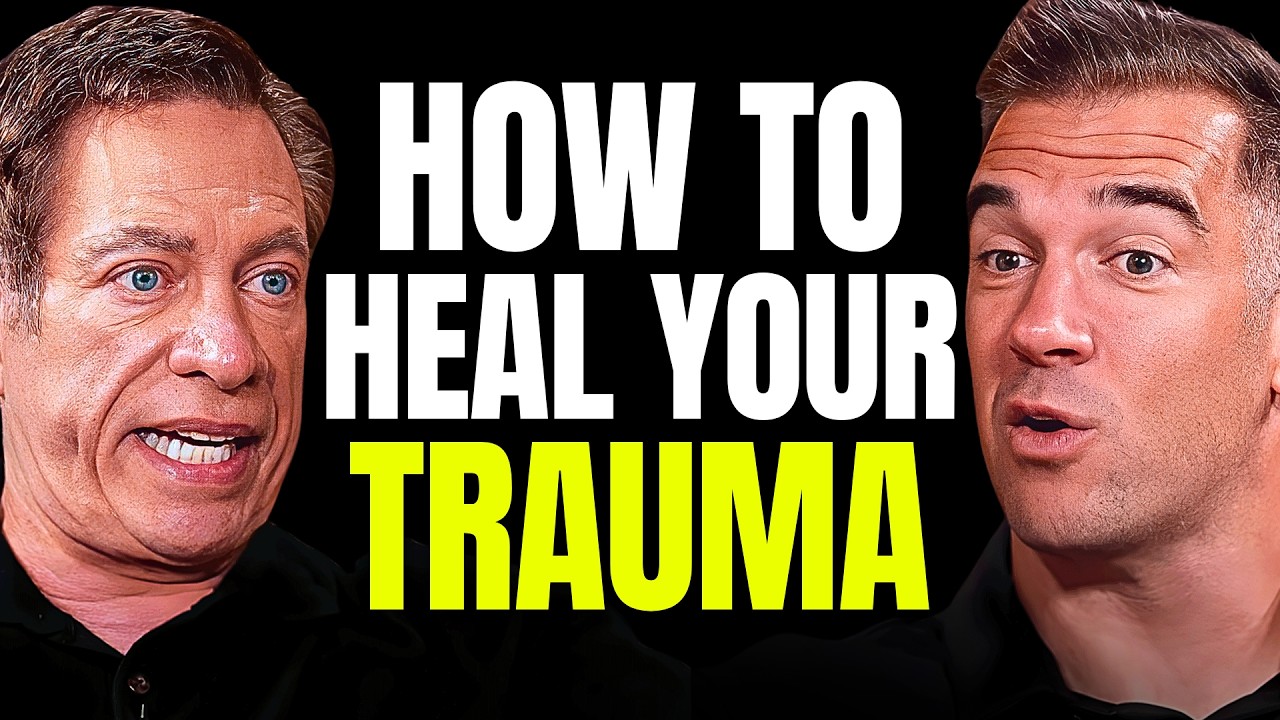
In this YouTube interview, host Lewis Howes talks with grief expert and author David Kessler about understanding and working through grief. The conversation begins with an overview of the classic five stages of grief and Kessler’s proposed sixth stage—finding meaning. They discuss practical tools such as a grief workbook designed for personal reflection, and a suite of free and paid resources hosted on grief.com and aboutgrief.com, including the Tender Hearts online grief groups (26 groups covering various loss contexts, time‑zone specific, free of charge) and a grief‑certificate program that helps participants turn their pain into purpose. Kessler explains the rationale for online versus in‑person groups, noting that emotions do translate across media and that virtual groups can match people by age, relationship to the deceased, or specific loss type. The group format runs four times a week: two sessions where Kessler works with a volunteer while others observe, and a Friday themed discussion covering topics like guilt, happiness, and cruelty. Personal stories illustrate common grief paradoxes: a widow feeling guilty for being happy again, and Kessler’s own struggle with loyalty to his deceased son and the decision to live fully after loss. The interview culminates with Kessler’s “Three Truths”—love is paramount, actively absorb the good, and be authentic—as his lasting legacy, and his definition of greatness as “showing up for others and yourself.” Throughout, both speakers emphasize meaning‑making, the importance of community, and the ongoing choice to engage with life after loss. The interview blends educational content, actionable resources, and heartfelt narratives, offering viewers a comprehensive guide to navigating grief, accessing support, and finding purpose beyond pain.
Chapters
If you grieve well, you live well. Mm-hmm. Grief is about change. Those of us who can manage change well actually are happier in life. Mm. If you get stuck in the breakup, the job loss, whatever it is, you're not gonna do well.
He's one of the world's foremost grief experts and bestselling author who has helped millions of people learn how to heal after loss. Please welcome David Kessler.
Grief must be witnessed.
What does that mean?
It means if you're in grief, you need another person to go, "That job meant a lot. I'm so sorry that happened to you." Why does that need to happen? Because we need to have our pain and our love and our attachment witnessed in someone else's eyes.
A lot of people have heard about the 5 stages of grief. You've added a 6th stage of grief. Can you briefly share what these 6 stages of grief is?
Sure.
So A lot of people have heard about the 5 stages of grief if they've gone through something and they've studied this. You've added a 6th stage of grief. Can you briefly share what these 6 stages of grief is?
Sure. So Elizabeth Kübler-Ross, who did hospice and grief and loss, she's the one who came up with them. And what was amazing that she did is she didn't invent something. She observed something in people. And she was like, you know, the sun always comes up in the east, it sets in the west. People seem to go through this denial. I can't believe this is happening. Anger, pissed about this. Bargaining, if only I had done that, if only we had tried this. Then depression, the sadness, and acceptance. And people thought like there's one big acceptance. There's a million acceptances that we're always going through. So those are the stages. And what's remarkable is they work when someone dies, but they work in a breakup, divorce, job loss, big changes. In fact, I always define grief as a change we didn't want. It's interesting, you know, sometimes I'll be talking to someone and they know, like, I maybe have did a lecture at Coca-Cola or General Mills or Dow Jones, and they're like, why are you lecturing to grief with them? Do they have a lot of grief? And I'm like, no, companies want to learn how to manage change. Grief is about change. Those of us who can manage change well actually are happier in life. So I always want people to know, if you grieve well, you live well. If you get stuck in the breakup, the job loss, whatever it is, you're not going to do well. So I was really honored to work with Kübler-Ross. She taught me, and I was able to do a couple of books with her and adapt her stages of dying to stages of grief formally with her. And about 9 years ago, I thought my grief was long behind me and my younger son, David, died unexpectedly.
Mm.
And as brutal as you would imagine, I was on the floor. And I remember back then that at some point I thought, I have to find a way through this. What do I do for other people?
Now you're the grief expert.
Expert.
You've written books about it.
Helped a million bereaved parents. Yes. And now I'm in it.
Oh my God.
In the epicenter.
Now how long were you in it? Were you— and did you beat yourself up for being like, I'm the expert. Why am I still feeling anger, sadness when I know these steps? I've taught this for years and yet I'm still in this.
There was an observer in me.
Uh-huh.
And there were moments that were really— those two got separated. Like I used to tell people, go see a counselor, go to a grief group. I handed that out like candy at Halloween. Yeah. When I had to go to a grief group, Took me 3 times. I was like, there's traffic. There's always traffic in LA. I can't find a parking place. Finally, the 3rd time I went into this grief group and I was like, grief group, I shouldn't be here. And which is a feeling we have in grief. This shouldn't be happening to me. And literally I had to sit down in a chair with these other parents with a table of books, and my books were on that table.
Wow.
And I couldn't say, oh, that's me, I'm that author. I had to be the father that buried a child. Oh. So brutal, brutal, brutal. And I eventually would notice, yep, you're in denial. Yep, you're trying. And then I thought, I got to accept this someday. And that wasn't enough. I'm like, it can't end with acceptance. I need more.
Because if you just accept something, then what?
Well, it felt like a low baseline. All right, I accepted it.
Yeah. Life sucks.
I accept it. Life sucks.
This happened.
My life sucks. And there were a lot of people who were like, this shouldn't have happened to you. And it's like, why? Well, why not me? Like, I'm not exempt from human life. And so it was really, I looked at this and I was like, I know I've been teaching for years, no matter what you've been through, you can find joy and happiness again. Even though I couldn't see it when I was in it, people would remind me. And I eventually thought about, I wanna— there has to be more. Could it be meaning? And I went back and read Viktor Frankl's book, A Man's Search for Meaning. And meaning didn't always jive with people in grief because it would be like, there's no meaning in a horrible death. There's no meaning in a murder. There's no meaning in the— and I realized, and the work became to understand, The meaning is not in the horrible event. The meaning is in us. Who do we become after the horrible event? And I also thought back to my son David, who loved my work, and he would not have wanted his death to constrict it. And I thought, then I have to expand it. Wow.
If you could go back and think about who were you before his death and who are you now after his death, what is the meaning you've given that in your life?
I appreciate it even more, life. I get this, how temporary this is even more, how we don't live and how we don't know who's going to live and who's going to die. What's going to happen. You know, we've talked about control. I had to manage a new layer of digging out some control to realize, oh, I have no control. I have illusions of control, but I have no control. No control. And what do I have control over? Oh, how I experience this moment, how I experience today, what I say yes to, what I say no to. Then it all shifts. Then I have real power to make the most of my life. And I try to be like evidence for people when I hear the horrific things they've gone through. I get it and I have hope for you. And they'll go, "I don't." And I go, "That's all right. I'll hold hope until you can find it." Wow.
How long did it take for you to find hope?
I had a moment like at Christmas. I was with my older son at my son's grave. And he said—
The first Christmas after?
First Christmas after. And he said to me, "We are never doing the holidays again." Oh. And I had to go, "I feel that way too." But I said, You are still alive and I'm still alive and this Christmas is not happening. Next Christmas might not happen. Next Hanukkah, all those might not happen. But I said, I would hate to think you and I don't get any more holidays together. So I said, we're going to have to work on this.
Yeah. Wow. What was the step that you were in the most? Was it anger, bargaining, depression, denial?
Like, a lot of bargaining.
A lot of I could have done this differently.
Or what-ifs and if-onlys.
Really?
Yeah.
What does that do to someone when they're going through a grief? It doesn't have to be a loss of a person.
It could be a divorce.
It could be a break.
It could be a job loss.
What does bargaining do? Saying, oh, if I just would have not gone here that day a year ago, if I would have done this decision differently, or if I would have whatever. What does bargaining do to someone when they ruminate on it consistently after loss?
It is the mind's way, and I want to just put a caveat on this, we have to do that early on. We're going to bargain. It's okay. Allow yourself to bargain. But eventually it is the mind's way of avoiding reality. It is the mind would always be guilty than helpless. I'd rather have a Rubik's Cube going, they shouldn't have fired me, I shouldn't have been let go, da, da, da, da, than to sit with those feelings and get my resume together and get back out there. This, my mind doesn't want to live in a world that, wait a minute, I can be for years at a company and be fired. Wait a minute, we can be happy and then you want a divorce? Wait, wait, everything's good and then someone dies? Who wants to live in that world? None of us. But our mind's trying to regulate our nervous system.
So you were in bargaining phase a lot.
I still go back and visit from time to time.
Really?
Yeah.
When did you feel like you got to a place of meaning?
Began to do the dance when I was working on the book and the Kubler-Ross family were saying, we'll allow you to call it the sixth stage. Probably around 2 years, I was getting glimpses of I'm going back to life. Really? Slowly, slowly.
How does someone find the meaning in loss?
Well, to realize it's not in it, It's in us after the loss.
What does that mean?
And it means things like, what is there to find after the loss? It could be you realize the brevity of life, like this isn't forever. Let me make the most of this. It could be, I want to make sure no one dies that way. I want to create change. It could be, I need to find some gratitude for this. It could, you know, it's a million things that we can personalize to the loss. Like one of the things I remember, and a lot of people have said this experience that like, my gosh, my son's funeral was packed. He did not know how loved he was. Let me try to take that in now. Let me help other people feel loved now. I don't want to express my love for my friends at their funeral. I want them to know today. Things like that change us.
Why do you think it's so hard for people to express how they feel about their friends, family, and loved ones when they're alive rather than when they pass?
Here's the thing. We can't order feelings. We can't go, all right, I want to take love in, but I'm going to suppress all these feelings. You're either a yes or a no to your feelings. You don't get to order them like you're at the restaurant. So if we want love, we're going to have to allow everything else in. I'll give you a quick one on this, that when I was, before all my, most of my work was online, I was going from hotel meeting room to hotel meeting room. There'd be, you know, 200, 300 people in my room. Next door would be the realtors, down the hall would be the nurses. After we were done, after doing a day, the staff would go, "Hey, what were you teaching?" And I go, "Why do you ask?" And they'd go, "Your group was laughing the most." And I would go, "Grief?" And they would go, "What kind of grief?" And I go, "Yeah, that kind of grief." What it's hard for people to understand, the people in my room cried harder but laughed harder. Yeah. Grief and feelings and allowing the range, all the colors of our feelings expands our life. Like, I didn't think I'd be here talking to you about, oh, like loving people more and telling them, but it expands and it's a fuller life.
There's something you said, like, if you're unwilling to experience the grief, then you're unwilling to fully love deeper.
Absolutely. To live life fully. You can't do one without the other.
Can someone fully experience love at the greatest levels if they're unwilling to go through grief at the deepest level?
Grief and love are a package deal this lifetime. You got to take both.
Really?
And if I play safe, it's not as much joy. And plenty of people play safe. I've played safe. I'm sure we've all played safe. And I don't want to play safe anymore. I mean, to me, playing safe is the scariest thing I could do. What a waste of life. My gosh. We always want to play your full game. Don't leave anything behind. And I think because I also work with people who are dying and being at end of life, I mean, People have lots of regrets around not living fully and how scared they were.
Really?
And it becomes an illusion. We don't regret the things we did often. We regret the things we didn't do.
Is there anything you regret right now?
Not in the moment.
Yeah, yeah.
Not in the moment.
Or in the last, I guess, 10 years, do you feel like it's not forced you but allowed you to say, "I'm going to really risk and go for it," whatever it is? Saying what I want to say.
It is a constant process. It is constant to play the bigger move. That's hard to play the bigger move constantly.
Yes.
But it's also the powerful move.
When someone has experienced grief and it doesn't have to be a loss of life, right? But they have experienced a change that was unwanted.
Right.
And then they've ruminated on that. Change happening or been frustrated on that change for, let's say, a year or a couple of years. They continue to be frustrated about the person, the event, the experience that happened that they did not want to happen. What are they robbing by doing that in their relationship to other people? By staying stuck in the grief and not transforming it, what are they stealing? Within relationship to other people.
Grief, whatever that change is we didn't want, takes us off one road and puts us on another. And many times we'd rather just stand there quietly on the new road because the unfamiliar road is too hard. Mhm. And it does rob us of the possibility of living again. And It becomes that playing small. And I think about the energy that's spent. People go, "I'm gonna avoid." I have people in my life, in my family, one person in my life has turned that frown upside down, like, "Let's not talk about anything negative." I see the energy. I think of our feelings as like, If you've got a little balloon and you just need to push it down, the air comes out slowly. But imagine a big beach ball that you're holding underwater constantly. Like, it takes a lot of energy to not feel your feelings. And here's the thing I tell people. Feelings aren't facts. It's just data. It's just information. You have a feeling, let it pass. And I think something folks don't understand about feelings is we're the first generation that has the luxury of a feeling on a feeling.
What does that mean?
That means I'm angry. Oh, but I shouldn't be angry. Oh, I'm sad. Oh, but I don't have it like people overseas have it. And we have all these half-felt feelings that we stopped ourselves from feeling the anger, the sadness, and we live with this bag of unfelt feelings.
It's like guilt of having the feelings because someone else has it worse or—
Has it worse. And so if we just allow a feeling, it's going to pass. Now, the illusion that feelings have, especially around loss and change and those big things, is when you're in a bad feeling, it's like there's a voice that goes, this feeling's forever. This loneliness, this pain.
Gosh, I know that.
It's forever.
Yeah, I felt that, especially in like my teens and 20s.
Oh my gosh.
I felt like—
Forever.
This is never going away.
I felt that like in my childhood. I am damaged forever. And to understand No feeling is final. No feeling is forever. Your feelings are always going to change. And sometimes what we need is a little nudge to move again. That's why I love doing grief groups online. We find ourselves in each other's stories. You know, and I think the other thing is So many people are all about these days. And, you know, one of my lines that I tell people, it's so, you know, connected to me is grief must be witnessed.
What does that mean?
It means if you are in grief, you need another person to go, that job meant a lot. I'm so sorry that happened to you.
Why does that need to happen?
Because we need to have our pain and our love and our attachment witnessed in someone else's eyes. Grief is a severance. It is a separation. And connection heals it. Like everything we know, what helps grief and trauma is connection. So part one is I say to people, "Oof, that's horrible. I see the pain. You love that job. You loved your wife. It's so unfair. That's so—" It shouldn't have betrayed you. I need to witness folks. We're a little bit getting really good on the witnessing and leaving people there.
What's the next step after the witnessing?
The next step is for me to witness your capacity. That sucks what you— I mean, I can't believe they find— that sucks. I know you though. I know you can turn this around. You might not see it right now, but I know who you are. And I witness your capacity. I need to witness your pain and witness your capacity for turning it around. We need that.
The School of Greatness is brought to you in partnership with Airbnb. One of my favorite parts of travel is when a trip gives you a feeling you can't really plan for. You're walking through a new city in the morning, you're grabbing coffee, you're talking to someone local, and suddenly the place feels a little bit more familiar. These are the moments that stay with me. They're the things that I crave, not just the photos, but the feeling of being somewhere new and still finding meaningful connection. And that's what I love about Airbnb. When you're away having your own adventure, your home doesn't have to just sit empty either. You can share your space on Airbnb and give another traveler a chance to fall in love with your city the way that you fall in love with the places that you visit. And maybe there's a big game coming up, or maybe people are coming in for a once-in-a-lifetime concert. They need a place that feels comfortable and inviting, and the income from sharing your home can help pay for your own trips. Your home might be worth more than you think. Find out how much at Airbnb.com/home. Host. From my personal experience, I held on to a lot of different grief for many years, but one was around sexual abuse, right? And I've spoken about it many times on the show, but for 25 years I didn't tell anyone about the experience of being sexually abused when I was a kid. And when I finally did, it was in a group setting. And I didn't know I was going to open up about this, but I felt almost inspired, like if, if I don't do this now, I'll probably continue to carry this anger and resentment and pain around this thing that I really didn't know was kind of running my nervous system for so long. And I did it in a group setting with maybe like 40 or 50 people in the room. And it was an emotional intelligence workshop that had kind of that context of allowing for that to happen. I didn't go there with that intention of like, oh, I have grief, but it was more around growth. And I don't think I would have been able to process that without others witnessing that experience, where I felt safe, right, in the witnessing, right? And it really unlocked the ability for me to start healing that unresolved grief, which didn't happen overnight. It took a process, and there was ups and downs and a mess in it all.
In those years before you talked about it, uh-huh, did you think about it once? Almost daily.
Daily. For like 25 years, almost daily. I mean, or I'd stuff it away.
How much energy looking back now did it take to manage that? So much.
So much energy. So much wasted.
Wasted. And I also believe nothing's wasted. Sure, sure. But I understand that concept. And the moment you, my guess is someone before you spoke And you were like, oh, if they can say that, ooh, I could say that one thing I haven't thought about saying.
They didn't talk about sexual abuse, but they were opening up and I was like, wow, they've been through some stuff. Wow, they've been through some stuff.
Oh, this might be safe. We find ourselves in each other's stories and we find our healing in each other's stories. So one more piece on this. All grief does not have trauma. But all trauma has grief. So, you know, our 100-year-old grandfather who's had a great life, it's grief. Yes. Pure grief. Sexual abuse that you've had, sexual abuse that I've had, there's trauma and grief. And we're a society that knows how to talk about the trauma, but we also have to remember, wait a minute, There were years lost. There was an innocence— Gone. There was an innocent childhood we deserve this lifetime we're never getting. And we have to do a little grief work on that.
And when you're an adult, it's hard to reconcile with that. Right. You're like, "Oh, my whole childhood gone in some ways." Absolutely.
And that is recognizing that is the beginning of the grieving process. We gotta be willing to face it ourselves.
That was probably the scariest moment of my life, was speaking it out loud, speaking in front of people that I'd, you know, not strangers, but essentially I just met it for a few days, right? And in some ways it might have— it was easier that it was easier that they wasn't like friends and family because I— part of it was, oh, if my friends or family knew this about me, no one would love me.
And they have so much energy around you. Oh, yeah. You know, it's interesting. When my son died and I had to eventually go back to work and I had to think about which lecture is going to be my first back, I wanted something that I felt I could manage. My first lecture back was to the LAPD. Okay. I wanted people who were just going to sort of be there, but like, they're not going to therapize me. They're not going to go into like, da da da. I just needed to like, have that first talk and say it, you know? So it's interesting how sometimes the strangers don't have all the baggage that our loved ones do. Yeah.
It was interesting. I finally got the courage to tell friends and family. And thank goodness everyone received it well. Right. And had the capacity to experience it and share that sadness for the experience or the sadness for my, you know, the little boy in me that had this experience. And, and in some ways it felt like it made the connection stronger with each one of those individuals, which I was grateful for. But I also have heard heard people say that they've shared grief or trauma tied with grief to friends, family, loved ones, and it was not received well. So what happens if someone shares their grief with someone where it says, ah, suck it up, or, well, it's tough that that happened, but move on, or whatever they did, you know? Maybe they didn't have the tools or the skills to communicate effectively because they are repressing their grief or trauma or something, or it's just not in their capacity. But what happens when you open up to someone who doesn't receive your grief well and it almost traumatizes you more?
That's why there's been grief groups since the beginning of time, because we need to find those people who know. The truth is, look, most people in grief could look back and go, oh, I didn't, I didn't do this as well as I could have with someone before I knew. Once grief comes to you, you understand it. But, you know, if you're having a horrible divorce and all your happily married friends, they're not going to get it. Your divorced friends might get it. So one, we have to pick our audience. And the thing is, I love that line about no matter how— like, people always want, I got my sisters got to get it. My spouse has to get it. My— like, help me have the right words to convince them of the pain I'm in. And I often say that line about no matter how many times you go up and down the aisle of a hardware store, you're never finding milk. You're not changing your sister. Yeah. So let's transplant you to a place with people you can talk about it. It's a grief illiterate world. It's a grief illiteracy.
No, it's until you've gone through it and you say, oh, I'm gonna learn about it. And a lot of people have gone through it and don't learn about it. They stuff it.
Or get stuck in it. They get stuck in it.
They don't wanna do the work to heal or transform it because in some ways it's scary, it's hard, it's unfamiliar. There's some sense of control and feeling angry or resentment or whatever it is.
And it's feelings that are bigger than us and feel like they will take us outta control. Or we're gonna start crying. You know, and I tell people, I'll go, "I've been with thousands of people. Everyone stops crying." You get tired at some point. Right. Or, you know, men who goes, "I can't cry. It's not—" And I'm like, "Really? I worked at 9/11. I was there with firemen who were digging for their brothers crying. You want me to tell them they're not being manly?" Like, dude, we got to redefine manhood here.
When someone says they don't have the ability to cry, what are they really saying?
I'm judging my feelings. People will say to me, I can't cry. And I go, you can't cry or you're judging yourself for not crying? The thing is, if we're judging ourselves about we should be crying, and this happens all the time, I'll say, you're judging your feelings. And people go, no, I'm not. And I'll go, Well, but you're telling me you should be crying, which means you're not okay feeling what you're feeling now. There's a should here, which means you got a judgment. Judgment demands punishment. You're going to punish yourself or others, and you're clearly not going to cry. We have to get to a point where we go, you know what? I'm going to accept my feelings. If I cry, I cry. If I don't, I don't. Let me just accept. It's a weird paradox that to feel your feelings, you have to accept them and then you begin to move through them.
If someone says, "I haven't cried in years," what is it that they're blocking?
I would say to them, I think that wisdom is in you and I think you might want to put some effort into getting curious about it. Versus judgmental. What would it look like if you weren't blocked? What would your life look like if it wasn't being blocked? What are the obstacles that's keeping you that way? And a lot of us get this learned helplessness that we're like, there's no way out. And that's when we need someone to go, yes, there is. Give me your hand. Yes, there is. We're going to look. I can't take you all the way, But I can open the door and show you some stuff.
Because most people don't have the tools to navigate grief well, it seems like they haven't learned it at an early stage or they weren't taught it or they didn't learn how to discover it. You know, as a, as a parent to twin girls now, right? How could I demonstrate how to move through grief when they're, you know, 5 years old and someone doesn't want to play with them or something and they feel like they had a friend that doesn't want to hang out with them or whatever it is, how can I teach it early with something small so that they understand how to navigate it through life's challenges when they're older?
Absolutely. Think of what we said around feelings. So just treat it as their feelings. What mistakes do we do? We, you know, I can't believe they don't want to play with me. And your daughter starts crying and your other daughter's fine. What do we say? You should be more like her. Shutting down the feelings. Or, "That friend's not worth it. Don't have that feeling." Or, "That's a silly thing to—" Shaming them. Instead, going back to the witnessing. Wow, it is really sad when someone doesn't want to play with us. Then going to the capacity. You know, it's sad, and I bet we could still have some fun this afternoon. Knowing you and me, we could have some fun. But don't shut those feelings down. Just allow them.
So how do people learn to teach how to communicate your feelings when a lot of people feel like feelings are bad or they don't want to deal with the feelings of another person, or it's hard for them to watch someone cry or scream or whatever it might be? How do we teach that specifically in men who I think have never been taught how to navigate feelings?
Listen, I got into this work because my mother died when I was young. There was a horrible shooting, and the only advice I got was in the hallway, the stairwell of the hospital. Someone said to me, "Be strong." That was it. That was it. Which is no feelings. Take care of everyone. Suck it up. Suck it up. Just another version of suck it up. And the problem is, like, let's fast forward to what it's like being with people who are dying. What do we do when we suck it up? The other half is suck it up, be productive, go do something. Then we get to our deathbed and go, oh, I did. I performed. I did. I performed. But I missed the love. I missed the presence. I mean, the thing is, you know, you and I could have a completely inauthentic discussion. Like earlier, we didn't have an inauthentic discussion. We had an authentic discussion and we talked about real things. That didn't separate us. I hope it made us feel more comfortable. And that's an illusion that those feelings are going to ruin something. Vulnerability, you know, Brené Brown, who's like, just, she's been amazing with this. Just, you realize vulnerability is a superpower.
It's a superpower. Yeah. You worked with a lot of different individuals over many years. From your clinical perspective, who has a harder time truly expressing their feelings? Men or women?
Men. And a lot of times when I work with men, men who aren't comfortable don't know how to do this. They don't know how to do face-to-face. And a lot of times our spouses and people will like sit men down and go, let's do it, which is like the worst thing. When I'm working with men and they don't traffic well in feelings, I'm like, let's take a walk. Men do better sometimes shoulder-to-shoulder talking. Yeah, not staring at themselves, right? How do you feel about it? You know, it's like, no, I don't want to hear what you think, I want to know what you feel. Well, if you can't go there, I'll hear what you think. Your thinking's going to reveal your feelings.
It's fine.
Yeah, I got to meet people where they are. I mean, we all, you know, one of the things that I say to people so much, friends, colleagues, whenever we're in disagreements with the world and the people around us, I'm like, you're in confrontation, argument, war with who you think they should be. If you take all these tools and realize that's what you're projecting, just see them, meet them for who they are.
What if they're not happy with who they are?
Then we've got some power to do something because I'll tell you, we have the power to stay, we have the power to go, we don't have the power to change other people. I've tried. I've spent a life trying. Really? They don't change and we get frustrated. Doesn't mean we can't encourage, There's little things we can do. I'm going to get further with people if I say, I really like what you did and name the things you do well versus naming the things you don't do well. That's going to help the other person grow. But I've never nagged anyone into change or judged them into change. That's not going to work. Not working. Not working.
They're not going to be happy. Gotta meet them where they are. You talk about this idea of unintended grief, grief that people carry around without realizing it. Yeah. Can you explain how that shows up in someone's daily life and how it impacts their relationships or their ability to succeed?
We could say, look at really famous people, look at successful people, look at people in your family who have had a horrible acting out situation. Any celebrity sports figure, like they just act as something, oh, I don't understand with all their money, how'd they do that? Unattended grief and feelings. Yes, they blew up in that moment because they couldn't manage the bigness of what was going on instead of learning how to manage it in all these small moments. We see it all the time. People self-sabotage in the big ways because they don't learn how to just deal with the disappointments, the changes, the griefs of everyday life. Like the question you asked about your daughters is— there's people who we've all seen them implode who never asked that question. And no one asked that question about them. Their feelings weren't attended to. Right. When people say to me, like, why should I feel these feelings? Well, look at what happens to the people who don't. Turn on the TV. They're about to blow. That's what happens. And it's devastating that you see really good people damage their careers and their lives or use substances or all the other things we do Because we don't know how to manage our feelings.
How does someone know if they have unattended grief?
Your actions become automatic. I don't know why I reacted that way. I don't know why I'm so sad. I don't know why I'm so angry. Like, people don't understand anger is often grief. You know, I talk about anger is pain's bodyguard. The anger shows up. But it's about the pain it's protecting. And so a lot of time that pain is unattended grief.
That was the trigger for me when I got me to a place to, to go to this workshop and start opening up is because I felt like for a few years I was getting so easily triggered by the littlest things that would make me angry and it would just get bigger and bigger, kind of like reactions that were automatic. Like, I wasn't even able to stop myself from reacting until afterwards. I was like, what am I doing? You know, it's just like, who am I? Why am I reacting this way? And my best friend Matt, who's actually here, we got in a basketball fight in West Hollywood on the mean streets of West Hollywood, you know, next to Beverly, next to Beverly Hills. And I was getting in multiple, like, altercations on the basketball court. Probably weekly for like months until I got an actual fistfight. And the guy ended up being okay after all of it or whatever. But it was a big wake-up call where my friend Matt was like, I don't want to hang out with you anymore. You keep reacting in this way, right? And he was at a lot of these games with me. There was nothing on the line. There was no big stakes. These were just friendly pickup games. But I was getting easily triggered by the littlest things. And that's when I was like, oh, if my best friend is calling me out on this and doesn't want to hang out with me, like, it's not these people, it's me. You know, I'm the one who needs to work on this, not trying to control everyone else in my life to be a certain way to make me happy. And that was a wake-up call that got me down this whole path of learning and navigating and developing myself. And I think it's an— it's going to be an ongoing journey for the rest of my life. That was unintended grief, me automatically getting angry really over nothing.
I would love to talk about triggers for a moment. Let's do it. And before we go there, I just want to say, when we're talking about the sixth stage in finding meaning, I'm just in awe of that story that you have taken this worst event, probably one of the worst of your life, and you are talking about it and helping millions of people who you're not even going to know how much you help them. That's you making meaning. That's you making meaning. I mean, it's remarkable. Thank you.
I appreciate it. Take that in. I appreciate it. And it's, you know, I remember I launched this show, School of Greatness, 13 and a half years ago, And I went through this kind of workshop before, right before I launched the podcast, maybe 6 months in. And it's funny because I had a small following back then, but after I launched this, after I did the workshop and started releasing this kind of grief, I guess, I don't know if you call it releasing it or integrating it or whatever. It dissipates. Yeah. I would start getting these emails from people saying, I I really liked your show before, but like something's different about how you respond and how you interact and the, and the questions you ask. And people were noticing me transforming by just my energy on the show. And I waited maybe 6 months after this workshop and me starting this process and after kind of talking to my friends and family about what, what I went through, sexual abuse. And I realized, oh, okay, I've opened up to a group of strangers. I've opened them up to my friends and family, but I'm still afraid of kind of my audience or the— or others knowing this about me. And I realized that like, oh, it still has control over me. Correct. And I'm not saying everyone should open up publicly about what they've been through. I don't think that's necessary. But I felt like I was living a lie to my community, that I was communicating about so many things, but I wasn't willing to open up about this. And for me, I felt like it wasn't maybe the final stage, but it was like a big stage of me and kind of learning how to heal because I was so afraid of the opinions of others. I was so afraid of what are people going to think about me? Are they going to stop listening to me? Are they not going to like me? Are they going to judge me? Whatever it was, I was living in fear. And then I, I opened up about it publicly on my show. And I remember I recorded it and I waited months to post it. I was so afraid.. But I was like, man, this fear is essentially holding me back. It's kind of controlling my, my life. And so I, I posted it and it's still 13 years later, the most downloaded episode I've ever done. Yeah. A whole book came from that years later called The Mask of Masculinity because I had never seen a man open up about sexual abuse publicly. I'm sure it was out there, but I never witnessed like a a big athlete talking about this or it being a thing. Right. And then later, I think Oprah did a whole segment where all these men talked about sexual abuse, but I hadn't seen this. And so I was like, I felt like I was the only one had been through this because I never talked about it. I never heard anyone else talk about it. So it was the most terrifying thing, even though I learned that 1 in 6 men have been sexually abused, 1 in 4 women have been sexually abused. And, but for men, there's usually nowhere to talk about it. You know, it's horrible no matter who it happens to, but most men never open up about it, never talk about it, never have a safe space or feel like they're able to. And so for me, it was a very healing experience knowing that others then came to me as a safe space to share their story. Right. And I think that's where the meaning— I think you were talking about the meaning came from for me was like, oh, me sharing it. And now I get messages so frequently where people say, you know, I went through a similar thing that you went through in childhood. And I already know what they're meaning. They might be afraid to say it, right? But they feel comfortable saying to me, I've been through some similar stuff as you. I see myself in you from what you've been through as a kid. And I already know that this man has probably never spoken about this. And to be a sacred space for them in that moment. So they can start hopefully the process of healing.
And that's such a hallmark of grief and shame and trauma. You know, even I remember that in my childhood, I was sure I was the only one that had a parent die. Really? Wow. Like, well, I had a formula. My friends' parents were alive. Yeah. I mean, I, you know, and it's that feeling of it's only me. And I often get asked what my definition of healing is. And to me, healing is when the event no longer controls you. Yes, that's exactly what you did. You were no longer going to be controlled by that event. Mm-hmm.
And I realized I still was because I was afraid to talk about it to certain people, which is controlling you. Exactly. So I was like, okay, I need to release this fully. I need to have so much courage. Right. And talk about this no matter what the consequences might be. Right. Like, if everyone unfollows me, at least I'm free. Right. Because I didn't feel free.
And listen, I mean, I remember seeing you years ago and seeing how you've changed. And, you know, the thing is, you and I casually sitting here discussing sexual abuse that we both had, I promise you, 10, 15— I couldn't imagine, like, we're just gonna— that's just going to be a casual— just brought up. But It doesn't control us.
No, it doesn't.
It doesn't.
Yeah.
I want to get to triggers for a moment. Yes. So triggers, you know, we live in a world now that it's all about trigger warnings. And it is a version of let me control the outside. My loved one died. I can't go by that part of town. She divorced me. I can't be with those friends. Whatever it is, we have those triggers. And the game now is sort of trigger warning, you know, please don't wear white shoes. That freaks me out. It triggers me. And the problem is I'm under the illusion that the problem is out here and I'm trying to control my environment. You thought you were going to beat those guys up enough to control, you know, you're trying to fix it all on the outside. And the The problem around that is when people come to me and say, "I don't know where to start with grief and trauma." I go, "What triggers you?" Your triggers are a map to your pain and they are a map to your healing. Your freedom. We come with a map. Each of us has a map right now. I don't know what to work on. You got a map. You got a map. And for us to realize, if I start going, all right, no one wear white, you know, tennis shoes, what's going to happen is I'm going to be in emotional avoidance and I'm teaching emotional estrangement. I'm going to begin to live in a world where nothing can upset me. And going back to what we talked about, I want to help people build capacity. Yeah, those white shoes are fine. It's good. Someone in white shoes years ago was a jerk, but I'm in the moment now and I can see you are not. So to understand, sometimes when I was doing events and conferences, someone would run out of the room and they'll go, it's too painful in that room. And I'd go, I get that. Take care of yourself. Leave if you need to. Don't have the illusion you're leaving the pain in the room. It's running out with you. So the dance is there whenever you're ready.
Until you face the trigger, you're always going to be, I guess, a prisoner of that trigger. Of that trigger. It's going to chase after you or be with you no matter what your addiction you're chasing or connected to or How much sex you have or how much sugar you eat or how much whatever drug of choice, how hard you work, you know, being a workaholic or whatever it is, that trigger and pain and trauma or whatever it is, the association around that is going to continue to follow you, right, until you turn around and face it.
Well, here's my thought. Whether we're talking about triggers or feelings or grief, trauma, what we run from pursues us. And what we face transforms us. You and I have been transformed by our pain. Yes. And we also spent years running from it.
Oh man, years. We know both roads. Years, man. And it was, it's funny because I thought the more I accomplished, the better I would feel. But it was almost like the more I accomplished externally, the worse I felt because it didn't take the pain away.
Success is a great deodorant. Yeah. Kind of covers it all up, you know?
But it's even stinkier when it's like— Yeah, yeah.
And we know we smell. Yeah.
And it's the problem. And it's like the shame grows.
Right. The shame grows.
Because you're like, oh, I still don't feel like I'm good enough. I still don't feel like I matter or I'm worthy, even though I'm accomplishing or I have whatever marker to say that I'm accomplished something. And I still don't feel lovable, or I still don't feel enough. It's like, what is that in us when we chase something so big, we accomplish it, and we still don't feel enough?
What is that? Because we're trying to outrun our past, our feelings, and we think, oh, that award, that game, that success, that amount of money in the bank, whatever it is, And it can even be, you know, all the things we talk about, drugs, sex, da da da. It can be success. It can be service. It can be, you know, there's plenty of people I know that are like these amazing volunteers who couldn't take care of themselves if they tried. You know, and the reality is to allow ourselves to say it to one other person. And then all of a sudden we just need someone to go, oh, you're still okay. You're not the first and unfortunately you're not going to be the last. And we all have struggles. Yours looks different than mine, but we assume the people we see on social media or TV or in sports, they don't have them. And then we see something go wrong and we're like, what? How can that be?
Yeah, they have all the money and success. Right, right. Yeah.
And I'll tell you, there's a line that Freud said. Freud was once asked, would he rather work with someone who's poor or someone who's rich? And he said, always rich. Why? And they said, why? And he said, because the rich person knows that happiness is no longer in the money. The poor person— I used to convince the poor person—
Thinks that when I make money, I'm gonna be happy.
It's gonna be the key to everything. It's going to be the key to that hole, the emptiness, all of that inside of us.
I know that feeling too. Once I started making money, it didn't take the pain away. Yeah. It didn't make me feel like I healed the hurt boy in me or I was less angry or frustrated or resentful.
But you couldn't have told that to your poor, unsuccessful self growing up. No, no, no.
I was like, this is going to solve my problem. Solve it. Right. It doesn't solve. It almost amplifies your problems.
It does. The stakes become higher.
I'll speak from personal experience. When I didn't feel like I was in a healthy space internally and I had money, I was heightened, like anxiety around me and I didn't want to lose it. And I felt like people were trying to take it or use me in some way. It was like, oh, now they know that I've made some money. Are they really my friend? It's all these other interpretations around the triggers that I still had.
Because think about here we have unlovableness, unfairness, no one will love me, I'm not worthy, da da da. If I just get money, that's going to help. And we get money and then we go, they're still here. They're all still here. The success, the money, the whatever didn't do it. And that's when you need someone to work with you who's going to go, all right, Since you've done all this, could we just talk about those?
Josh, of all the people you've worked with in grief groups, uh, from high-profile individuals to people who are completely unknown going through their own experiences, what is the number one thing that most people struggle with within themselves that they believe they're not?
What? Worthy, whole. They're not worthy and they're not whole.
Why are so many— why do so many people believe they're not worthy and they don't feel like they're whole?
Because I think we're raised to do more, to be more, to become someone, forgetting you are someone. Like, your worth is not by the doing. Your worth is just because you're here on the planet. Money's not bad or good. It's kind of neutral. Yeah. Success isn't bad or good. It's neutral.
How does someone separate, you know, being in a relationship and needing to provide for that relationship and that family versus not performing well or not getting the results they wanted? How do you— how do you not interpret, oh, I'm not good at this yet, but I'm still a worthy person? How do you navigate both those worlds? Like, I'm not performing, I'm failing, I'm struggling here, but I'm still whole. How do you know that?
Hopefully we have people in our life that love us no matter what. I know a million people that I've— a million's exaggeration, but a lot of people over the years who like literally are out doing with someone at home going, I wish you were home more. And they're like, well, when I get successful, I'll be home more. And I always say, if you're not home more now, when you get success, you're going to be gone even more. Then it's just going to be another country you're going to instead of across town. It's about realizing this is what matters. Our loved ones matter. To really understand This is all we got. It's just a Monopoly game. It's a Monopoly game. Play well. I'll talk strategy with you around playing well, but let's not believe we're the game. We're just playing the game. We're not the voices in our head. We're the one listening to them. And sometimes we might not want to listen to them so well.
If someone's in a relationship with a and they've been married for a while and they're, you know, they both got married for good intentions, but 5, 10, 20 years down the road, they start waking up to some of this information and they start going through a self-discovery, start processing grief, start healing some. But they realize that their partner is stuck in the past, stuck in unattended grief and are triggered constantly. They're reactive a lot. They're not willing to speak or open up about their past. They don't want to go there to the hurt places. They have these unresolved feelings that they stuff, and then anger comes out at different times, or control comes out. What can that person do to not— obviously they can't fix their partner, they can't change their partner, but how can they meet their partner in a place where they can still have a beautiful relationship, even if that partner doesn't want to change or address the unresolved grief?
Invitations and boundaries. What if they don't like boundaries? Well, well, if they don't like boundaries, you're not doing boundaries for you— for them. You're doing boundaries for yourself. Yeah. The people who cross boundaries are ourselves. You can't cross my boundaries. I can only break my boundaries by allowing it to. Yeah, by allowing it. Don't go over there. I told you, da da da, I'm going to lecture you. No. Hey, dude, if you want to be in my presence, we don't do that. Yeah. So there has to be a gentle, you know, I'm learning, I'm growing, I'm changing to your wife, to your husband. I'd love you to come do some of these things with me. Could we go to therapy? Lots and lots of invitations. At a certain point, we have to go, they're different from me. And is that still workable? You know, in the old days, I think in relationships, we had this belief that we should be exactly the same. We both need to love this. We both have to, you know, we can't have different interests or that's spells trouble. Well, you know what? Maybe you do like those things and I'm going to like, love that you're you, and I'm going to do these things and we can have our together things and we can have some separate interests and that's okay. And there's a time some people could outgrow a relationship. I just want to make sure they've really done the invitations and done the work and things like that.
Yeah. You wrote that you can only avoid grief by avoiding love. What do you mean by that? And avoiding life.
And avoiding life. I'll tell you, some people, I've heard, "Your son dying must have been the worst tragedy." It's actually not. Really? The worst tragedy would've been to have come to this world and not met him. Mm, my gosh. Yeah. That's the worst. Wow. I got to know him. Mm. And I get to know all these people in my life now. And, you know, it's one of the things that I think— so I ran into a neighbor who I hadn't seen, actually was my boss 30 years ago. And she said to me, oh my gosh, you live so close. I'd be friends, but it would be too depressing to be friends with you. And I said, you'd be surprised, my life isn't that depressing. I'm actually a really fun-loving person and I have a great time in life. And I think—
Just because she says you speak about grief all the time or something.
Yeah, yeah. She's like, okay, I must want to sit around going, seen any good deaths lately? I don't know what she imagined, something crazy. But it's that idea. That I no longer have those needs, that pick-me, that let's do that, let's find our way, like that. Life is okay. And do you want to walk together? Let's walk for a while. Oh, you want to go? All right, I'm going to go this. I mean, it just becomes this adventure we're on. And one of the things that I've learned is because I see so much death, it doesn't make me go, what's the point? Instead, it makes me go, let me take this in. You know, like, in the worst scenario, today could be my last day. I mean, I'm with people all the time that were doing something and then they died. If today's my last day, I have a couple of choices. If I haven't been current, I can dart out of here and start saying, "I apologize, I'm sorry," and make amends and blah, blah, blah. But if I've been current, I can go, "Wow, if today was my last day, this is my last podcast. Wow, let me go deeper. Let me not waste this moment. Let me not waste their time. Let me truly show up for life." And then it'll die today and I get to have a great day because someone's going to die, someone's going to divorce, a breakup's going to happen. I mean, shit's going to happen. And let me be present for the moments when it does and the moments when it doesn't. How many of us have ruined good moments when nothing bad was happening because of all the moments we didn't attend to?
Right. How does someone know the difference of them going through grief or being depressed?
You know, it's interesting. I always say that is really a question for a psychiatrist, and I encourage people to see a psychiatrist who knows grief. Like, we even have a grief educator certificate program, and I'm so proud when psychiatrists come through because you can become a psychiatrist, a therapist, a coach without 1 hour of grief education. Crazy. And so it's important to know there's different markers. You know, when you're clinically depressed, that's one state that is very different from the sadness of grief. But we also live in a world that we don't use the word sad anymore. Oh my gosh, Lewis, we were so depressed at lunch yesterday. But you're not now? Did you go through a drive-through depression center? What did you do? Yeah. I mean, we don't go and think about it this way. If someone said, I'm so depressed, my sister died, go see a doctor. You need to get something done about that. But if I said, I'm so sad my sister died, of course you are. That's your sister. Notice there's less to fix when we allow our feelings. But depression's very serious. See a psychiatrist. A good psychiatrist can tell you grief versus clinical depression. Yeah.
For anyone that feels afraid of the future, whether it be their relationship, their health, the economy, wars, any number of things that could cause uncertainty or fear in someone. How can they use this information that you have in your work and your books to navigate the uncertainties of the world for the future, the uncertainties of loss, of anything?
So the biggest thing that I think about is anxiety, fear of the future, really challenging, and you're in the future. Now, why are we in the future? Because something bad has happened in our past. We're not fearful, we are predicting. We are trying to manage what's going to happen here because if the shit hits the fan, I need a plan. That's why we're catastrophizers. We're this, we're that, da da, all that. We're protectors. And If you're in the future, I have enormous compassion because something bad happened that's asking to be attended to. Yeah, to prepare. And that past needs attention. And if you're in your future, do you know what you can't be? In your present. And loving and connecting. If love and connection helps us, and we're in our future, we're in trouble. So many times I'll be working with someone who's saying they're really anxious and they go out and they see their friends and it doesn't work out well. And I'll go, what happens? Well, I sit down with my friend, I tell them how anxious I am. And I go, and then? Eventually they say nice to see me and leave. And I go, so here's the plan. You got to go we're going to be together for an hour today. I'd like to take a chunk of that and just tell you what's going on with me. And then really keep me accountable. And then I want to hear what's going on with you. And I want to be really present for you too. Then we suddenly have a connection. And instead of one person living in the future, Two people have brought themselves into the present. Changes everything. Yeah. Loving connection only can happen in the now.
If someone is always stressed and worrying about the future, what is that signaling about that person? Is it that they have a pain from the past that's unresolved?
There's something from the past. Really? That's asking for their attention. And they're playing it out that way. Listen, and it doesn't mean you can't be like really productive and really successful and really doing amazing things in the world. It's how do we do it? I mean, I've been successfully doing things in unhealthy ways and in healthy ways, and it feels different on the inside. And I know that. Yeah. And I mean, we're all struggling. I mean, believe me, I'm sure I could say it about— whatever you think, we got stuff going on. Yeah, we always do. And if we don't today, it's coming tomorrow and we'll be able to manage it.
What's your biggest fear for humanity over the next 10 years based on what we've been through with COVID and wars over the last 6, 7 years and the predictions of the future with all the changes of AI and financial currencies and wars and conflict. What is your worry on humanity's ability to be loving and in the moment?
We will give away our power. We'll give away our power, whether it's to our government leaders, whatever it is, we're going to give our power away or to AI. Listen, I got an AI. I really made sure it didn't say generic stuff that you can find anywhere. I created it just from my work. It's better for the environment. It helps people in so many ways. Look, I can be up in the middle of the night if I happen to be scrolling and seeing there's a woman in Serbia whose child just died. I can get on WhatsApp and call and talk to her in Serbia. For an hour right after her child died? Can't do that often. AI helps me help people at 3:00 AM because grief's 24 hours a day. So that's a really wonderful thing about AI if it's curated and safely done. On the other hand, you know, it can take over the world and, you know, we're in an Arnold Schwarzenegger movie. Because we gave our power away to the people who are managing it. Find your own power and use it to change something.
If you could prescribe that every person watching and listening master one skill to have more love, harmony, peace for the future, no matter what happens, as they're going to go through different challenges in life, they're going to go through different grief and losses and unmet changes. What's the one skill you would prescribe everyone to learn or master to be able to navigate the uncertainties of what will happen in the future?
Get support. Get support. You know, it's a strange thing. I had a flat tire, and when I got new tires, I bought a tire plan. I bought a plan for my tires in case I hit a pothole. Do you know that sometimes I don't treat myself well, but I protected my tires. So if we can get support, doesn't all have to be a therapist or a grief group or divorce group or whatever it is, just talk to a friend, share, find a way to connect with someone else. Mm-hmm. Connection is everything. Yes. Just connect with one other person. And if you can't connect, go help, go volunteer.
Mm-hmm. That'll help you a lot. Your book's called Finding Meaning: The Sixth Stage of Grief by David Kessler. I want you guys to check this out. For me, when I learned how to navigate grief and loss and heal, it created such a level of peace and abundance inside of me. And it didn't mean I was like perfect overnight and it didn't, you know, I still have stresses. But when I learned how to navigate these skills, it gave me, it unlocked my life in ways I never knew were possible. Right. So I want people to get your book.
And I also did a workbook with it.
I saw that.
Yes. Because I want people to go, what's grief work? It's like, This is like me sitting down with you at your kitchen table. We're going to do it together. Yeah.
And I think the workbook is probably the best place to start because if you're afraid to speak in front of other people, then it's almost like you have a, you know, you working with them through a workbook where you can be introspective rather than in a group setting. But like you said, the best place to go next is with a group, whether you're paying for a therapist, you're meeting a small group somewhere. And you have aboutgrief.com has Tender Hearts online grief groups. We have—
aboutgrief.com is a free video that just teaches you about grief. My website is grief.com. You can find our Tender Hearts grief group there. We got 26 groups around people dying, whether it's a brother or sister. We've got a faith group, an afterlife group. We even got an anticipatory grief group for people whose loved ones are sick. And these are all online? All online. And we've got like a time for Australia, a time for Europe. You know, we've really honed that really well to help people. No one's turned away for lack of funds. We make sure everyone has access to that. That's cool. And the other thing you can find on grief.com is we got an amazing grief certificate program. People who want to turn their pain into purpose. You know, not everyone can do books or podcasts, but maybe you could be the person in your neighborhood that people know how to come to, or maybe you could be the therapist or the coach that becomes really good and understands the changes we can make when we get this part of our life. Wow.
Okay, so that's all at grief.com? Grief.com.
You can find it all there.
That's amazing. And what's the difference between online grief group versus in person?
You know, I was the first to say when that whole thing started, I was like, I don't know that emotions will translate. And someone said to me, have you been to a movie? Like, emotions translate. But it's great because I watched the struggle for years of people who went, I want just a suicide group, but I'm in a group of widows, or My local one doesn't have a group for siblings, or, you know, I'm a young widow. It's hard for me to be with older widows. We can do them. Wow. We can just do them online in your time zone.
So easy. And does someone, when they join one of these grief groups, do they go once a week, once a month? What is this process?
We have it where it's 4 times a week that they have the options to attend. Wow. And it's like, you want to go into a group? Great. 2 times a week you can see me working with one person. Someone volunteers to work with me. Everyone else watches. And people go, why would that help? That person asks a question you didn't know you needed the answer. Mm-hmm. And it changes you. Mm-hmm. And then on Fridays we have a different topic because there's not one voice in grief, not mine, not yours. And it's like, let's take a topic and discuss it. How did you handle guilt? How do you handle being happy? How do you handle the things that people say that are cruel?
You know, it's interesting. I was coaching someone at an event a few weeks ago, and it was a widow, a woman who had lost her husband that she was in love with. And I think it was about maybe 10 years ago. And she's remarried, she's got a blended family, and I think new kids as well in the remarriage. And she was like, one of the hardest things for me has been like feeling good, like accepting that I feel really good where I'm at now. I feel guilty being happy. Yeah. When other people are not happy, they're still grieving, they, they feel like You're never gonna be able to find someone again. You're not allowed to have love and joy and happiness again when you've lost your husband or, or someone close to you. And she goes, it feels really good to finally start to be able to say I'm worthy of feeling happy again and love again, even though I lost a great man that I loved as well.
That's a story we often play in our mind of disloyalty. Mm-hmm. Look, really, I'm going to be happy again after my son died? That doesn't sound like a good parent. But I had to really think about who my son is. And am I being loyal to him by not living again? Is that really what he would want? And I'll tell you, I can imagine— I don't know what the afterlife's like, but I could imagine Whatever it is, how many years from now, decades, I arrive in the afterlife and I meet my son. It's great. We finally see each other again. And he says to me, "Oh my gosh, tell me about Earth. Wasn't it incredible?" And I go, "Well, I grieved." "Yeah, yeah, no, I'm sure you did. That had to be hard. It was really brutal. I get it. And what about like, I missed the food. Was the food— what else did you go places? Did you travel?" And I'm like, No, I just grieved. My son would be like, dude, life's too incredible to miss. And here's the thing, it's a decision. She made a decision. You know, I live in a cute little neighborhood with these little small houses, and I can imagine, I knew there was a moment where I could have been the grief guy that never left his house again. And I could imagine the teenagers driving by going, "Is that a haunted house?" No, it's a grief expert whose son died and he never came out again. Oh my gosh. I could have seen that, but it was a decision to live again. Wow. And each of us in small ways and big ways not just around death, have that decision every day. Do we show up? Do we live again? Do we sink? Every one of us is deciding that constantly, no matter what your circumstances are.
Lewis, I've got a couple final questions for you, David, but I want to acknowledge you first for not being stuck in your house after grief and coming out and finding ways to expand and live even with more joy, more love, more acceptance, and continue to be of service to so many people who are going through this and ultimately finding meaning in the process. Because I think that's, that's what makes life richer. And when I can look back on my life, you know, I don't like that the 5-year-old in me had to experience sexual abuse, but I can find meaning now and not say I wish it happened again, but I can find meaning saying it did happen. And because I'm able to process it now and find meaning, hopefully I'm able to help other people by being able to sit with them or being able to share this story with you without it crippling me like it used to. Right. And so that meaning that you've created is really powerful. And I acknowledge you for that. I have two final questions for you. This is called the Three Truths. Hey, so imagine hypothetically you get to live as long as you want, but on the final day you have to take all of your work with you. So this book, this podcast, everything you've ever created, everything you create from now until that day is gone. Not from this world anymore. But you get to leave behind 3 final lessons with the world that we would get to keep. I call it the 3 truths. What would those be for you?
Love is all that matters. Let the good just saturate in you. Take in the good. We know how to take in the bad. Take in the good and be you. It's a strange thing. Like those of us who have really done this work know being you sounds like the easiest thing in the world to be your authentic self. It's the hardest thing to let go of all the who we think we should be. Just be ourselves. I still work on that all the time. I'm going to not only leave that behind for everyone, I'm going to try to continue to take it in.
That's beautiful. Final question, David, what's your definition of greatness?
Showing up for others and yourself. Showing up fully for others and yourself.
David Kessler, thanks for being here. Appreciate it.
Thank you for having me. Amazing. I don't think there are a lot of parents who wake up and maliciously try to screw up their kids or hurt their kids or belittle or shame their kids. I think we're doing the best we can with what we have. And so I think to let go of the idea that if I have done something that I could have done better or that I could learn from, that I have to just come down— people defend their parenting
More from Lewis







Secret Service Agent: Your Neutral Face Is Making People Distrust You (Here's How to Fix It)



