James Altucher: In Order To Be Successful You Must Do This | Lewis Howes
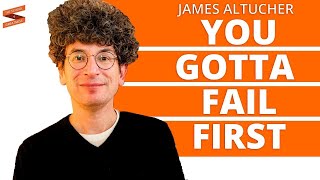
This is a YouTube video titled "James Altucher: In Order To Be Successful You Must Do This | Lewis Howes" published in March 2020. It features a conversational interview between Lewis AI (Lewis Howes) and James Altucher, discussing life challenges, personal growth, resilience, fatherhood, and reflections on major events such as 9/11. The dialogue covers topics like emotional vulnerability, financial struggles, and the importance of skills over formal education, providing an intimate and motivational insight into Altucher's experiences and mindset.
Chapters
In this century, skills are more important than degrees. You need skills, you don't need some institution validating you like a parking validation. Here's your degree. We are here.
Welcome back to the School of Greatness podcast. We've got my man James Altucher in the house.
Thanks for having me on. I'm gonna take over the podcast for a second. We met early 2013. We were at that one talk, that mastermind talks. Remember it was a competition. So whoever provided the most value to.
The audience-- 125 grand or something, right?
Yeah, seems like huge amount for just winning a contest. And the audience would vote. And you gave a really-- it was you, me, Ryan Holiday, Tim Ferriss, AJ Jacobs. A couple other people in our universe and you gave this really inspiring talk about your football career, your injuries, your sister's couch, you're late building your first, getting your first dollars from your first business and kind of the happiness they gave you and the validation they gave you and how you built up from there. It was a really good talk and I went up there and just said, Entrepreneurship sucks and blah, blah, blah. So I lost clearly. Neither of us won though.
Neither of us won.
Neither of us won. You know why Joey Coleman won? So Joey Coleman won. Smart. He put everybody's picture from the audience on the wall. So of course, if you see your photo, it's like a natural cognitive bias. You vote for the person who put your photo, your kid's photo up there. So he was, and he used it.
As part of like, connect with your customer. Like, yeah, that's, and they told a story about a few people in the audience.
Yeah.
And he, it was smart because he.
Spent like 10 hours of research and did the extra work and he deserved to win. But that was seven years ago, almost to the day. And we remember that. That was a very interesting conference, the way they structured that contest. And I could feel I could pick up the phone any day and call any of those speakers. Somehow there was a bonding thing that happened at that one conference.
Yes, that's right. And you've been on the show, I think this is your fourth time, I think now.
And you've been on mine probably just the same amount.
Yeah, exactly. And here's a question. I think you started your podcast shortly after mine. I started seven years ago. A month ago.
Yeah, so I started mine, I started filming the episodes in like December 2013 and then I launched in January 2014.
2013. Gotcha, okay, yes. So I was, yeah, January 2014.
So I was a little after you.
Yeah, yeah.
Yeah, my first guest was, I think either Tim Ferriss or Tucker Max or one of those people.
Now here's a question I asked everyone before they jump on, so pre-interview.
I did shave before, yes. Oh, thank you for asking.
No, but the question I, the question I, asked before, but I wanted to ask you during so people actually know the questions I ask beforehand since we're podcasters and you've come on before. The question I always ask is, is there anything off limits? And I already asked you that. You told me what kind of was and what wasn't.
Yeah, I'll describe my answer, which is that I never mind hurting myself. I just don't say things about others that could potentially hurt them.
Of course.
So I'm always fine saying how stupid and idiotic I am on any one area. Yes.
And then that's And the second thing that I always ask, which I didn't ask you yet, but I'm gonna ask now, is since you've done so much content, so many interviews, what would make this the most powerful interview you've ever done?
Wow, that's interesting actually. No one's ever asked me that.
Because if we're gonna take people to spend their time listening to this, asking them to spend on however long we're gonna do this for, ask them to share it, If we're asking people to do this, for me, I feel like it's a duty, it's a responsibility and obligation to get the most out of this moment. Well, so that's why I always ask that question, 'cause I'm like, we gotta really get in there.
I think if we both end up getting value out of this interview, then that's a real powerful interview. Because if you're asking me questions where you wanna learn the answers for yourself, and then I'm asking back, and we're both, learning, then that's, if we're elevating each other, chances are it's gonna be good for the audience. And that's usually a good goal for me. So if I'm able to help you because of the questions you're asking, and you're able to help me because of our back and forth and stuff, and the way you're asking the questions and so on, then I think it's a great podcast.
I've got a good first question then.
Sure.
So you've had, I think you're one of the most brilliant writers I don't.
Know about that, but thanks.
-Our time in terms of captivating attention and constantly hooking with your storytelling.
-Oh, thank you.
That's high praise. Yes, and especially on Facebook. And we were talking before how I hope you do solo episodes like you rant on Facebook and telling these stories because they're amazing.
-And I'm sorry to interrupt. -Yes. -But I've been, so we just, as we discussed before, I've been thinking about that somewhat. What if instead of every episode being an interview, and I always admire all the people I interview, and they're always great, but sometimes I do wanna just tell stories. And I think a lot of people who have listened to my podcast, they haven't necessarily read the 3,000 plus art, nor should they read the 3,000 plus articles on my site or whatever. And I do see in podcast world, storytelling is kind of moving up. I don't know if you've seen, even true crime stories are moving up, all sorts of storytelling. And so, I just-- you- could be great at it, man. I think it'd be fun, but I'm not sure yet.
Plus, you're a comedian and you have a comedy store that you bought in New York City. So you've been practicing. I feel like you would just be able to make it amazing.
So that's my goal for you, is that after this, you start doing solo episodes.
All right, I'm gonna do it.
Do one.
Yeah, do one. Start next week.
Yeah.
Just do one of the stories that you posted on Facebook and just read it out loud.
Yeah.
And add them. So anyways, here's my first question. You have gone through so many different life challenges. I feel like every time you write.
A story, it's been since I've known you.
I mean, in seven years, but even just before that, you have so many crazy stories that you write about on Facebook. I'm curious, when was the last time you cried? Because you go through a lot of these pain and adversity, but I don't think people ever know if you actually show emotion or cry.
I think about two weeks ago, I was thinking of my daughters. So I have two daughters. My lovely wife, Robin, has two daughters and one son. So together we have four daughters, one son. And I was thinking of my two daughters. They don't normally live with me, and it's been a long time since they've lived with me. And so sometimes I miss them. And I wonder when they're going through a hard time, Sometimes I wonder if it's because it haven't been a more steady presence for them and that made me sad missing them in that sense. And you know, they're both going through their individual hard things because one's 17, one's 20. And sometimes it's hard when there's distance. And like I see them as much as I can. They don't live that far away, but they have school, they have responsibilities, they have other things. And so I was missing them and I felt sad about that and that encouraged me to cry. Really? Yeah.
Do you cry often or is it.
Like, maybe like, once a year? Every few weeks.
Really?
Yeah.
Oh wow.
So everything could be.
That's great, man.
Yeah, I didn't know you were that vulnerable.
I think expressing emotion, whether it's privately or publicly, doesn't matter, but expressing, allowing ourselves to feel is a powerful thing as opposed to numb.
Yeah, I mean, I agree, 'cause I'm generally an optimist. Like if you ask me, How's the world gonna be a year from now? I'll usually think it's gonna die a better year. I'll usually think it's gonna be better a year from now than a year ago.
Even with the election coming?
Well, I'm actually most worried about coronavirus, but that's another topic. But we could talk about any of these things. Right. Because I go, okay, the election, I don't even, how much does the president of the United States or any politics in the world affect me?
Zero, zero. It affects me if I allow the negativity to take over my mind. But otherwise it doesn't affect me if I have to spend a little more on taxes or whatever, like unless something drastic changes, I don't know what would change. There's no really power they have to change.
No, but unless it's a war, then.
It would change my life.
Okay, so like January 3rd, my kids came up to me and instead of the usual bantering they do and annoying whatever they say to me, they were like, Dad, are we gonna get drafted? 'Cause that was when, oh wow. You know, that guy Iranian was, you know, Soleimani was just killed? Is there gonna be a draft? Is there gonna be World War III? And so it kind of inspired me to call up a military expert and do a podcast, what's actually happening? Because one thing I noticed with social media and that kind of the kids get swept up in that is that basically everyone's a spectator arguing with each other about meaninglessness. Like, there's so-- Wasted energy. Yeah, so wasted. And I try to explain to kids, they're just, you have to know the difference between a spectator and an expert. And the experts are not arguing with tweets, except for the president. Or you might not be an expert. But, so I wanted to calm my kids down, but in a sense calm everyone down and actually find out what's going on.
Here's what's going on.
And so I do feel when there's, I do get sad when there's like painful things happening or when my kids are worried or when I see a horrible situation, But in general, I'm an optimist. Although for myself, I kind of, you know, I think about lots of things. Very, very emotional person.
Now, you have two kids, right?
Two of mine, but then five altogether.
Yes, yes. And your two biological daughters are 17 and 20.
So right now we have literally, their ages are 17, 18, 19, 20, 21.
Oh gosh, that's crazy.
Yeah, and four girls, one boy.
Wow.
So many, I feel like my period now is starting to synchronize with their periods.
You're crying and eating ice cream the same day as they are.
I wake up in the middle of the night, I'm watching Friends and crying.
When Ross and Rachel break up. Oh man. It's painful. Okay, I'm curious about this now. As a father of two daughters, what's something that you're really proud of yourself that you did really well as a father over the last 20 years? And what's something that you really regret? that if you could go back and relearn, do something differently that you would do differently with your daughters as a father.
Yeah, the regret is easier to say, which, and by the way, a lot of people say, oh, I have no regrets. Also, I wouldn't be here where I am today. That's always BS when I hear that. Of course, everybody has regrets. So I wish I had just hugged them a little bit tighter. I remember getting off, you know, for a while I lived upstate in New York. I remember getting off the train. My oldest one was a little kid then and she was just running and she jumps right into my arms and I just wish I had held her like a microsecond longer. And those moments like that. In terms of what I've done well, it's hard to say because they're very good kids in general and I love them. But what I've done really well recently is my oldest daughter dropped out of college and I'm very proud of her.
She chose herself.
She chose herself and I kept telling her, you know, everybody-- She skipped the line. She skipped the line completely because that's just it. She's majoring in like acting in theater or she was majoring in acting in theater. And I would say to her, you know, you're in your school in the middle of wherever, and there's, you know, two teachers and a little acting program, or you could be in New York City auditioning for things and getting a huge head start on everybody. And she's like, real life experience.
Real life experience. Networking. Trying little mini things.
Yeah. Networking, by the way, she could still take classes. There's plenty of acting studios in New York City, and there's things to audition for, and then there's the lifestyle, and you network, you make connections, And if she wanted to learn things, you know, the other things, there's online courses where you'll learn just as many skills. And she said, But don't you need a degree to get a job? And I said, I don't even know if anybody working for me has a degree. Like, I have nobody asks anymore. And now maybe they ask sometimes for the very first job, but skills, in this century, skills are more important than degrees. You need skills, you don't need some institution validating you. like a parking validation. Here's your degree. And you paid, every school by the way has the same tuition now. Yes, there are community colleges that are cheaper, but all the other schools, tuition has gone up 10 times faster than inflation over the past 40 years, every single year. And so it's just, it's putting an entire generation into poverty because they're all in debt. 30 million kids in debt. It's horrible.
Yeah, and I care more about, I don't even know if I would ever look at a resume with the degree in mind, I would look at the results they've created and the energy they bring to the table.
Absolutely. What ideas are they able to go back and forth and like, maybe you should try this, maybe you should try that. Like that's the only thing really.
Exactly. Now I'm curious, is there a moment in your life, again there's so many crazy moments I feel like you've written all these books about this and all these posts on Facebook and tons of podcasts, but is there a moment in your life that drastically changed the course of everything from the direction you were going. I feel like this probably happens every year for you. It does happen. It always change. But is there one thing that you're like, okay, if this one thing didn't happen when I was 20 or 30 or whatever, that I would be nowhere close to where I'm at without this one thing?
I mean, there's a lot of things.
I think losing the company, whatever it be.
Yeah, I think a lot of people could probably say a lot of things. I could say, getting married, I could say having kids. But, and this almost sounds like a cliche, I almost hate to say it because it was much more important for so many, this one event was much more important for many people other than me. But I was in the World Trade Center on 9/11. And there was a-- you- were in it. Yeah. So not up high. There was a Dean and DeLuca where I had breakfast every morning. I lived three blocks away. So I had breakfast at the DeAnza's like-- 8:00 a.m. 'cause it wasn't like 8:00 a.m. yeah, yeah, yeah. you- know, I was a day trader, so I would go out around 7:30 with my partner, my investing partner, and we would go to DeAnza Deluca, kind of figure out our strategy for the day, have breakfast, and then walk to my apartment where I had my day trading stuff set up. And we're walking back, and we were walking down Church Street, which is the main street that goes into the World Trade Center at that time, And my business partner, he turns to me and says, hey, is the president coming into town or something? Because that looks like Air Force One maybe, 'cause it was really unusually low. And then, of course-- you- saw the plane. So a split second later, we see the plane come in. It's 600 feet directly above us, like right above us. And there's other people in the street all kind of wondering, what is that? And then it goes so fast over your head and everybody just ducked. It was like an instinct. Everybody went to the ground. You couldn't even not do that. And then we're all like, it only happened within a second. We're all watching. It goes right into the building. So regardless of 9/11, which was this political momentous event, we all watched with our own eyes an airplane crash and people die instantly. So just the act of watching an airplane crash is something you never expect. Everybody watched them. you didn't even watch it on TV later because it's not like that moment was filmed. But just seeing a plane crash is something that has never happened to me before and I hope never happens to me again. And then everything, and then I lived right there. So, you know, then just all the events of that day, you know, and again, everybody who lived there, who was obviously people in the building and the families of people in the building had it much worse. But like for instance, My business partner and I, we ran straight to the fire department on my street and we said, Hey, can we help? And they were-- Really?
Yeah.
And they said, okay, they threw us two suits. Can you put these suits on?
Shut up.
They gave me suits? Yeah. And I said, I just want to make sure, you know, we're not-- I don't know how to put this suit on. We're not firefighters.
We just want to help with whatever you need help with.
So is this like five minutes within a crash? Yeah.
Hours or-- no, it's right away.
It's clearly-- It's crash, you're seeing stuff, there's chaos, people are running around and you're like-- so my initial reaction was, this is weird what happens to the brain. Like my business partner, he was right away saying we're being invaded. And I said, no, no, no, this is me being crazy. This is me being like a kind of a crazy optimist. I said, no, no, no, it's too early for anyone to be in the building. It was 8:45 a.m. Right. so clearly people were in the building, but like my brain was saying, no, there's nobody. And I said, that was probably some remote control accident. That's exactly what I said. And then, so we actually stood there a little bit while longer, and then you couldn't see the second plane because it came from the other side, but suddenly we see this other huge explosion and everybody's like, we're being invaded. And we're just, we're right next to the building. And that's why we couldn't see the other plane come through, but we saw the massive explosions from the second plane hitting. And I said, no, no, no. My partner said, it was a second plane. And I said, no, no, no. It was just a kind of explosion from the first plane still happening. So I'm still being connected to the building. Yeah, yeah, yeah. And he's like, no, we're being invaded. And that's when we went to the fire department, 'cause clearly there was a fire. So he said, Can we help? And everyone's running around, and they threw us the two suits. And I said, and they asked us, Are you firemen? And they threw us the two suits. And I said, no, no, we're not, but we'll help in any other, we'll help in any way we can. We'll wear the suits if you want. And they said, no, no, only firemen. And so 100% of those people died, 'cause they were the first ones, the first response.
Firemen.
Yeah. They were the first responders into the building because they were running around.
They ran into the building. Yeah.
Before it collapsed.
Right.
That was like right then. Oh man. And they ran all the way up and we went back to my door. You didn't follow that. No, because they wouldn't let us. Because they said, if you're not firemen, you're not going into the building. Wow. And we were like, well, where can we give blood or whatever?
And they're like, I don't know. And we got to go.
It was too much chaos. It was just like we got to. Yeah. And so, so, you know, and then I was on the roof of my building and you saw it, like the buildings collapsed and the black cloud just went over the building.
Because you're a few blocks from it.
Yeah, we were just a few blocks away.
There was debris everywhere.
Oh yeah, debris, asbestos, everything. And I remember my daughter who was, I guess, three, she had been, doesn't normally do this, she even sent something bad was happening, like she peed on the floor.
She was three.
Yeah, she was three. But she had stopped doing that, but she did it. And I was still not convinced it was an attack. And then the Pentagon, we saw on the TV, the Pentagon got hit, and then the TV shut off. And then I'm like, okay, this is probably an attack.
And so that's what, an hour, two hours later?
Is that a-- yeah, that was all within the first hour. And then they evacuated the whole area. I don't mean to go on about nine o'clock, but they evacuated the whole area, and there were, bullhorns like you must evacuate. But my wife at that time was pregnant and we had heard that there was asbestos in the black cloud. So I was saying we're not going to evacuate. There's a whole bunch of people in our apartment. I didn't none of us wanted to go. And so we all stayed up all night listen, you know, taking turns listening to Rudy Giuliani was saying what buildings were shaking because we didn't know if there were any other buildings coming down. There was potential for another World Trade Center building. could have fallen on our house. So we were just keeping track, but I didn't want to take the risk of a pregnant woman with asbestos, just six months pregnant. And the next morning, I get up and I go outside, and it was the most beautiful day. It was sunny, not a cloud in the sky. There were ashes everywhere. Literally, cars were overturned, and there were just guys in hazmat suits walking around in tanks. And that was the neighborhood. That's so weird. And then I went down to the corner and you look and there was no World Trade Center. I had grown up with that and there was nothing there. And again, this is nothing, I'm not like telling history here, just my story. And then we decided, okay, it's clear enough, we'll leave. And there's three checkpoints along the way out because no one was supposed to be in that area. We were so close. And so at each point they're like shining these huge flashlights. What are you guys doing here? And like what's, who's in your car? IDs. And then at the Canal Street, everyone's peering in, like, why is this car driving out of the area? And the police are yelling, the guys in tanks, the military guys were yelling, Guns, yeah. Who are you? Why were you here? And then that was just, so that.
And then the other guy, She finally.
Evacuated and he went somewhere else. I went somewhere else, but then I came back a few days later, because I was just an idiot, and I figured, okay, I need to be here when the stock market opens. But my mind was not, Correct, yeah, your mind gets scrambled. And so I decided, you know what? The market's gonna go down a little bit and then I'm gonna buy as much, I'm gonna borrow and buy as much of the stock.
It's smart thinking, I guess.
It was smart thinking, but I did not know anything about investing at the time. Of course, this is 20 years ago, I had no clue what I was doing. And so I put all my money in the stock market at the open And the market went down huge. And then the market went down huge the next day. And I then borrowed triple the amount and put it all in. And it went down huge again, huge again. And finally, I'm like about, I had just made, I had made millions selling a company a few years earlier. And now I was like just about at zero because I had borrowed and the market had fallen 10-15% and I borrowed like, 500% at this point. And then I remember it was, I think it was the Friday morning, it opened up on a Tuesday, the following Tuesday, and then it was the Friday morning or the following Monday. By Friday morning, I was so broke, it was like 10:20. I said, I can't take it anymore. Just sell everything. I need like a few thousand dollars left, 'cause I'm gonna die. And then four minutes later, the market went straight up for the next eight years. Shut up. No, I would have made so much money if I just held on to the end of that day. which is a classic kind of story, but I went broke. And I remember I immediately had to put my apartment up for sale, couldn't really sell it because it was an FBI quarantined area for the next seven months and couldn't sell it. And I just went, that was the first time I went absolutely dead broke, was starting from those events. And of course again, I just want to qualify, many people had it far worse, families, people, I mean we were right there, we saw the people jumping off buildings.
You saw people jumping off buildings?
Yeah, yeah, you had to back off because they were landing.
Oh my gosh, man. What does that do for you when you watch someone jump and kill, essentially, suicide? Forced to commit suicide. I think because of the fires.
Yeah, I mean, by then, my mind was already scrambled. Like, this is the plane. It was weird, because I never saw an image of this. The plane went into the building, and what was weird was, it's like you saw this little edge of the plane on fire, but still sticking out. and the building itself looked jagged, like it's still up there, but it looked like it was, it looked like a bad scissor had tried to cut through the building, and so it was off somehow and blurry because of all that heat. And so that was the image that really, it took about six years before I stopped at least once every week or so, you know, dreaming about that, not pleasant dreams, but really horrible dreams. And that was really affecting me much, much more. And then just then just all the calamity for months and years that happened to me afterwards, it happened to everybody, it happened to that whole area. But, you know, ultimately had to start from scratch with everything because, again, I always have to say I don't really tell the story because everybody else had it much worse than me. So, I don't like to say-- you-.
Got to witness and experience it from the ground level, from your own experience.
Yeah, and again it was more, it was It was now in retrospect, I see how my brain was so just, I should not have been functioning for a good long while afterwards and I tried to. And then that's really the first time I went broke. I lost my home. I mean, I was sometimes so upset, like the police had to be called and I had to be medicated. And I mean, it was really, yeah, it was really an upsetting-- your wife.
At the time would call the police?
Yeah.
And-- Crazy manic?
Not quite manic, just like I was suicidal. Really? I didn't know what I was going to do because you had no money.
And you had these kids and you had to take care of everything.
I had two kids, I had no money. I was living in, you know, I just had a lot of money. So I was living, you know, I was an idiot. Whatever you make a lot of money, you should, this is what I tell people now, is you should let the money kind of marinate your soul a little bit. Like get used to it. Instead, the first thing I did was I bought like the biggest apartment I could find and ramp up my expenses beyond any level. imaginable. And so I had all these expenses and I had no, and by the way, also there was this internet recession happening, like the internet bubble had burst. I was an internet guy, so nobody was returning my calls. I had no opportunities. I had no skills at that point, nothing going for me, no money. I couldn't sell my place, I was losing it, and every day I was watching myself lose it. I didn't know what my kids were gonna do, so I thought I had failed them. I had this life insurance policy for them, but I was kind of I really, I say I was suicidal, but ultimately I really didn't want to kill myself. I didn't want to do it. And it's actually really hard to kill yourself without hurting yourself. I didn't want to do that. And I just didn't know what I was gonna do.
Wow. And you're just kind of like manic stressed. Like, yeah.
Yeah.
Wow.
So that was, there was definitely a before and after in that, because that changed my life in a bad way for a long time. But I needed it because. that's when I learned a lot of things about myself and recovering and bouncing back from that. And I wouldn't. I don't want to say I don't regret what happened, because I do. But I also know that there was. I learned a lot about myself coming back from that, and I learned about bouncing back. And I learned not quite, not quite anti-fragility yet, but at least resilience. Later on, I think I learned how to turn negative events into something positive. But back then, I was just. miserable and barely treading water until I started to get a glimpse of the sun and how I could maybe come back. But that took a long time.
Would you say that was the most fearful moment of your life or was there another time that was?
Yeah, no that was definitely the most fearful. Yeah, yeah, 'cause a plane crash right over my head and then also I thought the world was over. Like you get that feeling, once my optimism washed away, I instantly Thought that was it, the world's over. Like, it's ending. 'Cause my brain was so messed up. And so that was, I was definitely afraid. And then a week later, a week and a half later, I was afraid 'cause I was going broke. And then I was miserable because then if I had waited like three and a half minutes, I would have made all the money. You would have seen the money going up a little bit, yeah. It was like such a cliche that it happened that way too. And, but it happened.
Would you change it? if you could go back and change these things.
Absolutely, 100%. Although I would change it for the sake of myself then, but for the sake of myself now, I don't think it would be a good thing because I really did sort of come out of literally those ashes a much better person in so many ways. And I learned so much, not from those events, but learned about myself from the events that happened afterwards of coming back and how to come back from disaster. And again, it was disaster in the sense I had no family at the time other than my family that I was taking care of. And I had zero cash, zero possibilities, no one to take care, I couldn't call anybody and say, hey, wire over some money or lend me some money. I had nothing. And I was ashamed because people knew me in one context, oh, he's this old company, he made this money. And now I just had nothing. So I was more ashamed than I'd ever been before. And so I had to figure out how do I, I didn't even think it was possible to bounce back. I thought I was just gonna fake it until I was just praying to die every day. Wow. So that was definitely the moment. I was most afraid throughout the next few years. I never stopped being afraid from that moment until many years later.
Do you feel afraid now?
Sometimes. Like by what? Well, I always tell my wife now, I almost have a PTSD about, not about that, about looking at my bank account. Because I remember there was one time shortly after this, a few months after this, I hadn't looked at my bank account. I was too afraid. So one time it says, Do you want to check your balance when you need the ATM? And I said, Sure. Now, it's going to sound crazy, but Two years earlier it had said over 15 million.
Oh my God.
The exact same account. Now it said $143. Holy. And that was it. That's all I had.
That messes with your brain.
Yeah, and look, I was very privileged and blessed to have built up a company, but I thought I had won the lottery. I wasn't really a natural businessman. I didn't think I was and I wasn't really interested in business. And so I think that's it. And I can't get a job. I don't know what to do. And nobody was hiring. It was a recession anyway. So I had this fear of always looking at my bank account after that. And so just a couple years ago or recently, I would go years without looking at the balance or looking at my bank activity, which is what normal people should do. And one time I looked at my bank account and saw, oh, I really need to start looking at my bank account more because I saw someone had been stealing from me on a monthly basis and I didn't know. And so, and I'm good with, I now realize where my skills are in terms of making money and bouncing back and so on, but this one childlike behavior of not looking at my bank account, that was a wake up lesson.
How often do you look at your bank account now?
Now I look at it every couple of days.
Every couple of days.
Yeah.
What does it do for you when you look at it?
I mean, now I'm more neutral about it. Now it doesn't really-- It doesn't affect you either way. I mean, it'll affect me a little bit, like if I'm I'm just nervous, but it doesn't really affect me the same way.
Do you feel like you used to attach a lot of your self-worth to how much money you had in the account?
100%. Yeah, that was my self-worth. My net worth was my self-worth.
What do you attach your self-worth to now?
Well, now, I mean, I have a whole, and this is when I, as I bounced back, you know, and it took years, then this didn't happen just once. losing all my money, having a good four times, but where I would just make a lot of money and then lose everything and think, how can I do this again? And then make it again and then lose it again and on and on. And so I started to build a skill set of things that were important to me so that it doesn't happen again. So I get to have a more balanced life. Because I think when you attach, when you're only metric of your self-worth is something that's so non-important for yourself worth, which is money. Money is ultimately an ancillary effect of living a good, healthy life. And if you say money is more important than that money is my life, then you're gonna lose, at least for me, I'm gonna lose my money. So I just train myself to say, okay, I'm gonna, my self-worth is more a function or I don't even say that. At the end of the day, I say, today, what did I do? to work on my physical health, which doesn't mean be an athlete like Lewis Howes. It means, you know, did I eat well, move well, sleep well, eight hours. Emotional health, did I am I good with the relationships around me and my friends and you know, am I removing toxic people from my life? Emotional health is very important because if you're arguing with a spouse or a girlfriend or even kids or whatever or business partners, you're not going to be creative to do the things you're meant to do in life. And same thing with physical health. If you're sick in bed, you can't be creative. And then creative health, every day it's the most important exercise I do every day, which is I exercise what I call the idea muscle. So I take a pad and I write 10 ideas down every single day, and I've been doing that forever. Like, I don't, not one day goes by, I don't do that because-- New.
Ideas or same ideas?
New ideas. So, and they don't have to be good ideas.
About what?
Just, it could be business ideas, it could be ideas for guests for Louis Howes, like I'm just exercising. It could be book ideas, it could be the other day, the other day I came up with 10 game ideas, ideas for games I can create, and then the next day I took one of those games and like, okay, I came up with ideas for how to make the game, 10 ideas, you know, what I call execution ideas, which help you with, you know, people say ideas are dime a dozen, execution is everything. They don't realize execution ideas are, there's a range from bad to good, and you have to have good execution ideas. That's a muscle too. So sometimes I'll exercise, I'll write down 10 execution ideas. So it's about nothing, and I'll never really use them, and sometimes I will. But if you have 3,650 ideas a year, most of them are horrible, but you want to just keep, you want to just keep the wheels turning. It is a muscle, and it atrophies super fast. Yeah. And then The fourth leg is, I don't like, it's sort of like a spiritual health, but that just means, do I acknowledge what is, what I have no control over and just focus on the things I have control over? 'Cause most things we have no control over. So.
It seems like there's two groups of people from my perspective, where people are obsessed about money, making money, they talk about it, they put their attention towards it, they love it, and it seems like there's a group of people in the world that are afraid of money, They don't know how to make it. They're scared of it. It's bad and evil type of thing. Why do you think that is? There's kind of two groups. Maybe I'm wrong.
Maybe it's not those two groups.
No, I think you're right. I feel like it's kind of, people are obsessed about it and they love it or they hate it and they kind of reject it because they think that money is bad or whatever.
Yeah, I think for the first group, they mistakenly think money is the only way to get freedom. And so they obsess on, they want to be free, and so they obsess on how much money they can make, and the irony being, of course, they work 100 hours a week for 40 years, and then life's over. Yeah, so what did you spend your freedom on? Nothing. So that's an extreme, right? So that's the extreme of one type. And so they think the pursuit of money is everything. And I kind of was in that category, you know, sort of. And then there's the other type where I think they want to have an excuse in place just in case they don't make a lot of money. So they say, well, I didn't make a lot of money because you have to do something bad to make a lot of money, which is really not true. Like as you know, and I'm sure many of your guests express this as well, is that relationships are really important when you're making money and you can't have relationships if you're a bad guy, if you're a bad woman. You know, if you're, if you're a bad player in this game of life, no one's gonna want to do deals with you. So now I make 99.999% of my money off of relationships I've built up over the past 16, 17, 18 years, sometimes even 30 years, sometimes people from my childhood. If you have good relationships and you're a good person and they trust you, you do deals together. It's really hard to find somebody to work with. if you could find people you know and trust and you can get in the trenches with, then that's a valuable resource. And so if you're a good person and a good player in this game, it's important.
I feel like you've been on probably both sides of the spectrum where you obsessed about money and you attach your net worth or your self-worth to your net worth. And it was when you didn't have it, you were afraid.
Yeah.
And you're freaking out. And there's also times where you're like, Screw it. I don't need anything. I'm gonna live with like five possessions or whatever you did and doesn't matter if there's lots of money or no money because I'm fine with nothing and I'm gonna be happy either way.
It's like you've kind of had both sides. Yeah, I mean, I was always originally like that. Like I worked at HBO, the television company. I just wanted to write, I wanted my dream was to write novels and make TV shows and I was working on a TV show for HBO and I got this call It was my sister and my brother-in-law. He was in the CD-ROM business. And it's like, oh, you gotta see this new thing, the World Wide Web. It was just kind of starting up. And I was kind of an expert. There was only maybe five people in New York City at the time who knew how to make a website. So I said to my brother-in-law.
What year is this? 1994.
Wow. And so I said to him, I'll show you how to make a website. I don't want to help your business, but I'll show you how to make a website. You should do this. You should start pitching this to your clients. but he didn't speak English so well. So he said, can you, he agreed with me, this web thing is interesting, because it was like what they were doing for CD-ROMs, but connected to the whole world. And CD-ROMs, of course, were going away. And so he's like, can you help me write the proposals? He didn't really speak or write English. It was French, and they don't feel it's important to learn English. I don't know why. And so I would start writing these proposals for him, and then he's like, I can't really go to the meetings because I can't sell. I don't speak English. And so I would go to the meetings and then I realized something. Here I am. I was working on this weird TV show idea for HBO. I was writing a novel. I was living in a little one-room place with just one single foam futon on the floor in Astoria, Queens, which is near Manhattan. And then I would leave HBO in the middle of the day, sneak into a suit, and go across the street to American Express. And then I realized, oh, I'm good at selling something, anything. And I believe in this. I said to them, you,'re gonna need, and every company is gonna need this web thing to interact with all their customers eventually. And so they said, well, all right, let's do it. And so we started- American Express? Yeah, American Express. You built a website for them? I built americanexpress.com, I built- no way. I built sites you would not believe at this point. No, I built americanexpress.com, kindofa.com, timewarner.com, Site. Yeah, yeah.
How did you build them? I mean, you coded them or you-.
Yeah, I coded them. My original background is I'm a computer science and, you know, a technical guy. And I did hundreds and hundreds of websites.
Did you have a team also or was it just like you coding and designing yourself?
So I was a full-time employee at HBO and in the middle of that, I'd break out and go to these meetings where I would sell the hell out of our services.
Then you would build them yourself.
And then, well, then I would build them myself. Our first, like, let's say, dozen or so, and then we started hiring people. We were profitable from day one. And so I had about 20 or 30 employees by the time I quit my job at HBO. So then I was the CEO of the company, and my brother-in-law, he was like the designer or whatever. And we had employees, we had programmers, we were renting new big office space, like 10,000 square feet of office space. And at HBO, my title was Junior Analyst Programmer. And then at-- By night-- yeah, by night I'm talking to-- I remember when we were doing mirrormax.com and the movie studio that Harvey Weinstein ran. And it was like midnight and the people on their side in the marketing department, they were like, you,'ve got to get this finished by 1:00 a.m. because Harvey Weinstein's coming in and he will eat us alive. He's like the worst. So we would do that and we did the, you know, in terms of movies, we did the Matrix, we did the Scream movies. The websites for them. Yeah, the websites for them. That's pretty cool. The Matrix website and American Express.com were.
Both a quarter million dollars.
Oh my God. So just the Matrix website. It was so much.
Yeah, it was a lot.
So you guys were making money back. We were making money. I was, I was, and my salary was 40,000 a year at HBO.
But they were all custom sites because there was no like, WordPress plugins, there was nothing to build on.
This is why I was a stupid business person because I didn't really understand the difference between, I didn't really understand the nuances in business. People think, oh, I'm good at business or there's a skill at business. There's no such skill called business. There's a bunch of skills in a bag. There's negotiating, there's marketing, there's sales, ideas, yeah, sales, leadership, execution, and then there's more nuanced skills like valuation, raising money, selling a company, selling a company is very difficult, so I didn't understand valuation. So I'll tell you a quick example. Americanexpress.com was an enormous website, it's like 60,000 pages. So I wrote software to basically automatically generate all the pages, and I put a little bulletin board to the side of every page, so in every department of American Express, They could comment and I would get emails from all the comments from every department of American Express. I essentially built like a WordPress in 1999. Sounds like WordPress. Yeah, and I was thinking to myself, I remember telling one person who wanted to intern and learn, and I said, Don't tell American Express I'm doing this, because I don't want them to know how few hours I'm working on this. And here I built software that was much later could have been maybe a multi-billion dollar thing. And I was like, no, no, I just want to be profitable. And I didn't realize that sometimes you want to build something. I didn't understand the difference between scalability and profitability. I thought, oh, of course it's good to be profitable. I don't care about scalability. I just want to make money. Did you end up selling that company? Yeah, we sold that company for the 15 million that I had in my bank account.
Went broke.
And then I went a couple of years later, dead broke.
Now, what do you think after all these lessons from making money, being around billionaires, losing it, making it, all this like 20 times you did over in your lifetime? What is the pathway towards becoming financially free without making money, making you become a prisoner of the money you're making? So, how do you... We want freedom. Typically, money will help us give us resources to provide certain things. but how do we not let it control us? And how do we make a lot of it while not letting it control us?
I think it's a hard question to answer because all the time you're thinking, okay, what activities am I involved in that are making money? And so on. But I realized, and this took me a really long time to realize because I was so afraid after that 9/11 moment for the next 10 or in fact nine years, all I was focused on was I better not go broke again. And so my mind was so focused on money And then I finally was like, I can't do this anymore. I'm wearing myself out. I'm unhealthy. Nothing's going right. I'm in bad relationships. I'm not being creative. And so finally I said, finally I moved out of the city. I gave up. I moved out of the city. I moved upstate New York. And I just focused on things I love doing, like writing and that was it, writing at the time. I just loved writing and relaxing and being more creative. And then I also had made enough in little pieces here and there that I would always turn over, I would always invest the money in private companies, not public companies, but private companies that I trusted. And where I trusted the CEO, I knew the CEO had done it before, I trusted his vision and I put money with them. Because then it's like, Is if you started a company, but you outsource all the work to someone better than you.
You don't have to do the work.
And you don't have to do it. So yes, the CEO will make a lot more than me, but that's fine. He's doing, he's traveling all over the world. He has 300 employees and managing them. And I get to just sit by the river and write a book or whatever.
Get some advice once a month.
Yeah. And so, so, so I ended up writing and focusing on that. And through my writing, I was tell all these stories. And I think vulnerability, when you're writing, a good writer is going to be vulnerable. And you do this in your books. And a good writer is going to be vulnerable. And vulnerability actually is what buys freedom. Because if you say, oh, I've been through this, this, this, this, how can people ever affect you? You've been vulnerable about many things in your life. And someone says, yeah, Louis, you, this. Yeah, okay, bring it on. I've already said that.
Eight miles on yourself.
Yeah, exactly. It's the last song on Eight Mile. And so I just was writing and building this trust and freedom and building a whole new subculture of connections and networks and my books were best-selling books. And look, ultimately that's how we met, that's how I met a lot of our mutual friends. and then what happened was very interesting is that more and more opportunities because people saw, oh yeah, this guy is smart about business because believe it or not, I actually developed some skills in business over this time. I started a whole bunch of businesses and some of them worked, some of them didn't, but I was always very honest about my lessons that I learned and I would write for all these business blogs and the Financial Times and so on. And I was also honest about myself so people would Trust me and I would see more and more opportunities and then I started networking people like you should meet this person you should meet this person and that would get me youe know opportunities and so gradually I built together this portfolio of private companies that I really believed in and then some of them started to exit and that was really the most of and still ongoing like this is what I do for but I never have to think about it so all day long as you know, I'm a podcaster. I'm a writer. I'm working on TV shows I'm working on all the things I dreamed of working on 20 years ago. And now I actually get to do it.
You're doing it. What is the best investment you've made in the last five years? That's paid the biggest dividends.
Sure, yeah, and then this is actually an ongoing, so your best investments, you almost never exit. Because if a company is doing well, your worst investments, you know right away. They go bankrupt immediately. And they'll happen. But your best investments, you never really, it takes a really long time for them to exit because if a company is doubling every month, or every year, where else are you gonna get that return? You're not gonna get it in the stock market. So most companies that are really good don't exit for a really long time. So this is an ongoing one. But a few years ago, this was during a period where I threw out all of my belongings and I was just moving from Airbnb to Airbnb. I wasn't renting and I wasn't owning. And so one of my friends who I had helped, again, this is relationships, 10 years earlier I had invested in this guy's hedge fund. I helped them make a lot of money. And he's like, why don't you just stay with me? And he had this huge, enormous 10,000 square foot apartment, whatever, in New York City. And so we would just hang out and talk every night. And this was during the, there was this big movement, BlackLivesMatter, you know, people were getting killed, both minorities and mentally ill people. There was a lot of, definitely not, there was a lot of problems in law enforcement. And it wasn't on one side or the other. There's nobody to blame. The real blame is the fact that there was only guns and tasers, and these weren't non-lethal weapons. Like, people, we were getting videos from friends who were police officers. Here's another video of someone accidentally killed with a taser. It was usually a mentally ill person, or it's really sad. And so we started thinking, well, what could be a solution? and we brainstormed and he had worked with another company when I had invested in his fund. The guy had made a sonic gun. It could shoot at you and blow your eardrums out. So we called him. My friend actually called him. I'm not gonna take credit for that, but my friend called him. He couldn't do it, but he said, well, how about this? How about a gun that shoots a steel velcro. I forgot the actual material, but it's a steel wrap. that shoots at the speed of sound and wraps around the potential criminal. So this way, if someone is mentally ill or anything and is within a 21-foot radius of the law and they don't respond to a verbal command, now you have a choice. You don't have to harm them. You don't harm them.
Yeah, you don't have to harm them.
You could just, it's almost like mobile handcuffs. And so it shoots at the speed of sound, it wraps really tight around you, but it doesn't hurt you. I mean, I've been wrapped plenty of times, It doesn't hurt. You've been shot at with it? Yeah, yeah.
Really?
Yeah, the-- Is it hurt? No, no, zero. If you-- so like a rope, is it like a-- yeah, it's a steel cable, but it's so fast, it's just instantly.
And if you try to struggle, it tightens up.
So you can't struggle that much. Yeah, I've been in this flat trap type of thing. And so lots of law enforcement firms are now, it's a relatively uncommon, this was just a few years ago, we had the idea, and then this inventor, made it and then I wasn't involved except after that just as an investor but I was an investor in the initial startup capital so before even like the initial round and now hundreds, I don't know how many police departments but everybody's testing it out at the very least. We're doing this in LA, LAPD is testing it out and all over the world, police departments from every single country are testing it out. We went public and so I'm not trying to push or anything so I won't say the symbol, but we went public, it's been doing very well and that's probably been one of my best investments. So that's done well. But I have a lot of, I'm in like 20 different companies right now, but that's number one at the moment.
If there's a millennial in their 20s or early 30s who only has $1,000 to their name, what should they invest in to help them multiply their wealth in the future?
Well, absolutely, invest in themselves at that point. So you're not going to have the network yet to invest in other things. Don't invest in the stock market because why do you have an ad? You always have to ask yourself, why? Nobody wakes up and says to themselves, I can't wait to make James Altucher rich today. Like there's not mysterious opportunities that you, a young 23 year old, are going to suddenly find that nobody else out of the 7 billion people found. So opportunities like that don't exist. But where you do have an opportunity is you can take $1,000 and take, I don't know, a photography course and buy a camera. Then you get a wedding gig from one of your friends who doesn't have a lot of money. You say, oh, I'll just charge you $2,000. Now you just got 100% return on your money. You could do it again and again and again. That's kind of what I did with websites initially. I didn't have any money and I just had a skill. Skills Giving yourself more skills is the key. That's the key to any success. While at the same time being healthy. You can't get skills if you're not healthy in these various ways. I love the energy. Yeah, but if you invest in yourself, that's how you double, double, double for the first 20 doubles. And that's the first 20 doubles, $1,000 is a million dollars. So do the first $20 of 20 doubles just on your skills.
And skills are fun to learn. You might as well learn a lot of skills.
You just started learning comedy in the last three years.
What's the skill you want to learn next?
Well, I'm still- you-'re doing stand-up comedy. Yeah, stand-up comedy is a very hard skill. That's kind of been a fascinating thing to learn. And I'm doubling down on my podcast. I'm writing a lot. And look at yourself. Look at how many skills you've learned. You went from football to handball to, okay, I'm gonna learn the basics of business building with LinkedIn. Okay, now podcasting so I can spread the message in this scalable way. and you build skills as you grow. That's, you know, it's not like, you know, that's really where you've made the money from. You made the money. I just went to your movie premiere last night of an excellent movie, Chasing Greatness. That's these skills exponentially grow. You couldn't have made that movie even six years ago. You learned a bunch of skills to make that movie. And so I just want to continue building my creativity in different directions. Very important for me is and which I didn't know how to do earlier, is how to do little experiments. So I always say, what's an experiment I can do that doesn't cost me much time, doesn't cost me any or little money, that will-- and the upside of what I could learn and maybe benefit is enormous. So for instance, the very first time going up to do stand-up comedy, it didn't take me-- it only takes five minutes to do that. didn't cost me any money to do that. And the upside in terms of is this an interest of mine? Can this help other skills? Can this have benefits? And it's just fun? That was a great little experiment. And then I'm always doing like maybe a dozen or more experiments at any given time that are just fun for me. And I get to learn things, I get to try things, and if one thing succeeds then it's enormous. This rap thing was a little experiment. Let's call this guy and see if we can if he could come up with something and then we'll put money with him. So just little experimenting is like very key.
I'm always, for me, skills is everything and I think when you're in your 20s, you should learn as many skills as possible because it's like a tool belt that you can always whip out at any moment when you need something.
And it never stops. It never stops. You always read about the 10,000 hour rule. You need to put 10,000 hours to really learn a skill. But it's not true. If you're really good at constructing these micro experiments in the things that you love doing.
Challenges.
Yeah, challenge yourself. So this was like four or five years ago when I was first learning, as an example, stand-up comedy, I went onto a subway car and did stand-up comedy there. That sucks. That sucks so much. Nobody wanted to hear me, everybody was like, what is this guy doing? It's not like they paid a cover charge and they all come in to see a comedian. And then I would just start telling jokes and that was a way to challenge myself. I knew in a way that would help me skip the line compared to people who didn't do that. And I was always doing many experiments push myself in a weird way that would cost me nothing.
That's great.
And so that that works.
I've got two questions left for you. This question is, is there anything that... I feel like you may not have an answer for this because you expose yourself so much. Is there anything that you're really afraid of people knowing about you, who you truly are, that would make them not like you or love you anymore? if they truly knew something about you that you were afraid of?
You know, the other day, I was thinking this question. So if you had asked me three days ago, I could have answered this, but then I wrote it up because it was like, There you go. I always have a rule, I'm not gonna publish something unless I'm afraid of what people will think of me. So I've been dealing with-- so when.
You'Re afraid, then you publish it.
Yeah, I ask myself right before I hit publish, Am I afraid, is there something in here that I'm afraid what people will think of me before I hit public, you know, after I hit public?
Why do you do that? Why do you?
Because if I'm not afraid, then probably someone else has written this already and so it's not unique. If I'm afraid and I've been so vulnerable and I've been, you know, and there's reasons in my life that I would be afraid of this, then it's probably something that's unique and has I don't know, it's probably something that's going to be interesting both to me and maybe the reader and it's a little more freeing for me. Again, the vulnerability buys freedom. And so in 2010, I was super stressed out again about money. Or 2009, I was again going broke and stressed and whatever, and kids and blah, losing the home, all the same thing. And to deal with my anxiety, I start, the doctor recommended this pill called Klonopin, which is kind of like a long lasting Xanax, and it didn't work. So I took a large dose, didn't work, took a large dose, didn't work, took a larger dose. So I was on this huge dose, and it worked. It was like a miracle drug, I have to say. I was not anxious at all after that. It was incredible. After three or four weeks, the reasons for my anxiety had died down, or maybe like a month or so, the reasons for my anxiety had died down. and I went to the doc and I tried to get off. I said, okay, I don't need this anymore. So I got off. One day passes, no problem. I'm like, Superman, I'm great. The second day, I couldn't sleep at all. And it was like, and then I was sitting in the middle of the night just sitting up and it's like the whole world was like rushing past me. And then I found out this is like one of the most physically addictive drugs you could possibly take. And so, and I was taking this enormous dose that I had gotten after a couple months. I had gotten used to and it depended on. And I go to the doctor and he's like, yeah, yeah, nothing bad will happen, but you have to get off, if you get off too quickly, you could have epileptic seizures. There's all these things that could happen. And he lists, and then I looked it up and there's like 50 bad things that could happen. Heart attack, early Alzheimer's, strokes, dementia, blurriness, seizures, And so he said, you, got to get off a quarter milligram every three to six months. And so I'm like, it's like nine years later, I'm still in the final stages. No way. Yeah.
You're still weaning off of the stuff.
Yeah, still weaning off. Because there were times also where I got afraid bad things are happening in my life, you know, relationships or this or that, bad things are happening. I better maybe not, maybe I should slow down. the weaning off. And it wasn't doing anything for me because my tolerance was through the roof. So it actually wasn't, after those first few months in 2010, it wasn't curing my anxiety.
Placebo or something.
Yeah, it was not even, it wasn't even a placebo, it was just purely physical dependence. Like if I stopped taking it, I would go insanity. Yeah, because I had nothing left, I had no chemicals left in me to manage it. Yeah, I had no infrastructure. the pill had taken the infrastructure away to deal with anxiety. So I had to rebuild. That's what going into withdrawal, I had to rebuild that infrastructure and it's been taking, I'm like in the final stages of this and I wrote about it and I wondered, and A, I said I was scared actually going completely off of it because it's been in my life for all of these years, even if it hasn't been working, who knows what it's been doing. Maybe it has been helping me. And then before I had published, I asked myself the usual question, am I afraid of what people will think of me? And of course I was, because I never call my books self-help, but other people do. I always just write my own stories and my own experiences, but people who had kind of looked towards some of my advice, would they question advice if they knew I had this addiction? And Of course, business advice or any advice had nothing to do with the addiction, where people could think it. And I was addicted. And so that was a scary thing. And that was three days ago I wrote that.
Perfect, I love it. Before I ask the final question, you've got a podcast. Where can we find your podcast?
The James Altucher Show. And I'm gonna take your advice. I'm gonna start telling stories.
That's it, man. I think your podcast is gonna grow in a big way when you start telling these stories yourself.
Yeah, personally. Well, it's something I wanna, we could talk about. I'm curious, like the podcast landscape has changed so much since 2014. That's crazy. And you really have to stay up with it and formats have changed and ideas have been tried and I think I've really been in that interview format, you know, in the trenches there with you since the beginning. And we both interviewed the most amazing people in the world, but after a while you wanna, what's next? Yeah, yeah, I think what's next.
And I think for me is the storytelling. I think it'd be great at it, man.
-You gotta do it.
I hope so. You gotta do it. And always when you guys, when you get the clips of your stories and do those little cartoons within your interviews.
Those always do amazing. -Yeah. -So just do the whole thing, you know? -Yeah.
No, I'm gonna do that. And I've only just recently started doing video, so in that context, I think it's interesting. -That'll help you a lot. So get the podcast, James Altucher Show. I follow this guy on Facebook. You're like the funniest writer I know. Crazy vulnerable stuff. Here's a question. I've asked you your definition of greatness. I've asked you these other things before. for us, so I have a new question for you. Imagine this is the last five minutes of your life and hypothetical question. And you get to leave a message behind to only your daughters. And you can only share three pieces of advice with your daughters. And this is all they would have of you to remember for the rest of their life as they go on and get married or be in relationships or have kids or not, but they go on to live their life and you can only share three things with them that they would have to remember their dad by, what would you share with them?
I think, you know, I wouldn't tell them to do anything I wasn't already doing. So it's the same thing I said earlier. Stay physically healthy, emotionally healthy, no toxic relationships, only, you know, and keep improving your good relationships and be creative every day. And then you're gonna have a mostly happy life. The goal is not happiness, but you're gonna have a mostly good, expansive, life if you do that. So again, it's the same advice I had to tell myself and train myself to live by. There you go.
James Altucher.
All right, sir. Appreciate you so much. It's been so long since we last podcast. It's been like two years. Has it been? Yeah, 2017 I think was our last podcast.
I had my last book.
Because I came to the studio, right? Well, and then I came to you, I came to your apartment, the old place, and then yeah, you came to my place. We were always trading back and forth.
So it was good to do it again. Thank.
You.
More from Lewis







Secret Service Agent: Your Neutral Face Is Making People Distrust You (Here's How to Fix It)



