Joel Kinnaman Opens Up on Panic Attacks, Eating Disorders & Going From Rock Bottom to Hollywood
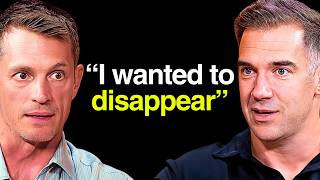
Actor Joel Kinnaman talks about panic attacks, eating disorders, and climbing back from rock bottom. He landed Suicide Squad after aggressively auditioning when agents stopped sending scripts, and now uses meditation and breath work to manage vulnerability. His three core truths: face fears, recognize that we are love, and live generously.
Chapters
I was having a panic attack in front of the whole school. I like blacked out on stage and then I started stumbling on a word and I was like, I couldn't quite like latch on. And then finally like I like stood up and I went like, "Fuck this!" And then I walked off. The whole school was just sitting watching me like, "Oh, he's having an emotional breakdown." He is an actor who has starred in some of Hollywood's biggest films.
Franchises. But behind the action hero exterior is a man who has had to do the inner work in order to achieve the level of success that he has achieved. We have the inspiring Joel Kinnaman in the house.
I was in the abyss. Something in me is telling me that I can't do this. I can't eat, I'm throwing up, and now I'm having like panic attacks. My constitution can't handle this.
How have you been able to navigate eating disorder stage fright and panic attacks while also being at the top of Hollywood.
So I, I started thinking about like these like forces in me, what would provoke them the most? Like, let's go to fucking war.
You've been a massive star and you've had an incredible career, and right now you have 3 different shows on TV. You've got multiple shows and productions. You are one of the most in-demand actors out there, but You've also talked about a few different things with me and also publicly. One, an eating disorder that you've had in the past.
Yeah.
Debilitating stage fright, which I wasn't even aware of that. And panic attacks.
Yeah.
But you have been able to be so like on top of your game and accomplish and achieve and perform so well under pressure. But how have you been able to navigate eating disorder, stage fright, and panic attacks while also being at the top of Hollywood?
Yeah, I think, I mean, a lot of those issues were stuff that I was like dealing with earlier on, and it was sort of coming into my own, coming into like adulthood. And, and I think I was— I'm, I'm, I'm also sort of still unpacking a little bit of what I was going through. And I mean, I think some of it was like youthful insecurity, some of it was like a lot of bad habits. I was drinking a lot, doing a lot of drugs, And, um, and then, and then just I hadn't learned how to deal with like the chatter and the negative voices in my mind and how I had, you know, all these like different conflicting feelings about myself and, you know, dealing with self-loathing and not letting myself have success, you know. So really, whenever, when, you know, when, whenever I would get close to something that was would potentially be like a big step or something that was— anything that was scary, you know, I would have these voices in my head that would really like trip me up and would like speak to me in the most harsh way.
And what would the voices say? Like, you're not deserving of this success, or this is too big for you, or you're not ready for it, or it would just—
it was kind of just be like chatter and just negative. Yeah. Yeah. It's hard to put words on the exact words that it was saying, but it was like negative energy that, you know, that I would fail, that I wouldn't succeed, that I'm not worthy. And yeah, so I had really bad, like, it actually started earlier, even before I was acting. It was, I have and still have like a, it's called pectus excavatum, where I have like a small indentation in my chest. I used to have like a much bigger indentation in the chest. I did a sort of a corrective surgery about 10 years ago. And after that, I just wanted to be— you couldn't catch me with a shirt on after that. When I grew up, I had this indentation in my chest. And it was pretty— they grade that from a 1 to 10 severity. And I think I had a 7.5. So it was pretty—
Your chest was like—
It was like sunken in. And it affected my posture. So I was like forward and inward rotated. And then I think also my shame around it made that— I had like this kind of a posture and so I would like in a thuggy way.
Right, right, right, right.
I felt like I was deformed and I was very ashamed of the way I would never take my shirt off.
Was this 10 years ago?
No, this was longer ago. This was like when I was like 18, 19.
Okay, okay.
Gotcha. Even earlier, like 17, 17, 18.
And were you in the acting world back then?
No.
This is when you were in Sweden, right?
So then this was back in Sweden. Yeah. And then I was kind of living a pretty negative life. I was partying a lot, getting into trouble, doing a lot of drugs, kind of aimless, pretty lost. And then I found acting, and it was the first time I really felt like there was something like— there was a potential that life could be positive and life could be good and life could even become maybe special. And it really caught on to me. And I had a couple of experiences early on where I had the courage to apply for theater school. And while preparing for that theater school, I was working with a professional actor and had an experience while I was preparing this monologue from Long Day's Journey into Night. And it clicked in in a special way. And I realized later it was the first time I experienced flow. And all these emotions came out and the words came out in a way that I hadn't really planned it. And it connected to my relationship with my own father. And it just became something explosive. And this teacher or actor, he sort of was the first one to really encourage me in the way where he said, look, you could do this for a profession if you want to. And then it just like, it caught on like a virus in me and I became completely obsessed.
You're what, 18, 19, 20?
21.
Really? So you really didn't do any theater or acting?
No. I was in a TV series when I was 10 years old.
Okay.
So I had a childhood experience of acting and then that kind of fell to the wayside. I just did that and had a childhood experience of it and then that kind of disappeared. But I did have a relationship to the profession in a way. And I think that's why even in this kind of low state that I was in, the idea of acting, the seed had been planted even at an earlier stage. Yeah. So then I started applying for this theater school, and then eventually I didn't get in right away. I think I got in the 4th attempt.
Wow.
Then this nervousness just caught on again and attached. And this kind of chatter and these negative thoughts latched on to that with a vengeance. And then I was dealing with it every time I went on stage, every time before. As soon as I heard the audience chatter, like the audience murmur, my mouth would fill with water. And I was like, okay, here we go. And I would actually— I would have a bucket prepared and I would like, come on, buddy.
Before— well, this is stage theater, huh? This is like on-stage theater.
Yeah, but it could even be like, you know, just a, you know, 10 people in the audience, you know.
Really? You throw up almost every time?
Every time.
Come on, before every live performance?
Yeah, the first 3, 4 years of doing theater. It was—
Was that— I mean, that can't be enjoyable after the first year. You're like, okay, is this going to ever end?
It was brutal. It was brutal. And then I started getting like panic attacks too. I like blacked out on stage in front of—
In the middle of the audience?
Yeah.
No.
This was in front of the whole school. Like all the students and all the teachers. We were doing this like storytelling project. It was like 3 years in. And I— Yeah, I hadn't prepared properly. And it was just a storytelling thing. We were going to tell a part of a novel, like 100 Years of Solitude of Gabriel García Márquez. And I was telling this one segment of the story, and we were 4 actors on stage, and I was number 2. So 3 and 4 had to wait until I was done to tell their story. So it was like everyone was dependent on each other. And I started out, and then I started stumbling on a word, and I was like, ah. And then people kind of laughed a little bit in the audience. They thought that, like, oh, this was kind of baked in. He meant to do this. But I couldn't quite latch on. And eventually, yeah, I just completely lost my shit. Did you just blank and walk off the stage? I kept saying this one sentence over and over again, like, Donna Maria. Donna Maria. And it was just like— and then it was this empty void. And I realized later, I was having a panic attack in front of the whole school and all the audience. And it went on for, I think, in real time, about 3 minutes.
But it felt like 3 hours.
I mean, that felt like 3 years. And it was like— And there was a lot of, you know, because in school, you know, those in theater schools, like the, when you're playing up for the other students, everyone is like laughing extra much. So there was a lot of people that were like, ha ha ha. They still thought that it was like part of it. And then that slowly started to die out. And there was just this one like crazy Polish teacher. He was like, ah, ah, ah. He thought for a good 2 minutes and 50 seconds, he thought that it was still like, The rest of the audience, it had settled like, oh, he's having an emotional breakdown and we're watching.
Wow.
And then finally, I stood up and I went like, fuck this. And then I walked off. I walked off across the whole stage and there was a door on the other side. And I opened the door and I just get like, fuck. And I slammed the door, kicked the closed door. And then I just stood there for a couple of seconds. Everyone in the whole school people just sitting watching me, like watching this unfold. And then I walked back down, I sat down, and I think I said again like, fuck. And then I was like, fuck this book. And everyone was like, wow. And then I started over, and then I told the whole thing mechanically like a robot. And then I was done. And then I'm like, I'm done. And then I looked over to the person after. And my friend who was in the class just looked at me and was like, after this whole thing, she was like, now you want me to continue telling the story of the book? Like, like anyone is listening to the story of the book. Like, thanks. Best layup ever. Um, yeah.
Oh my gosh.
Yeah.
I mean, that seems like a— I don't know how I would be able to rebound from that, like emotionally, specifically if you're 23 or something and you're with your peers in school and professors.
Yeah.
It feels so much bigger than it actually is.
Yeah.
It feels like my world is over type of mentality.
Yeah.
Maybe it didn't for you, but—
No, no, 100% it did.
Like total humiliation, embarrassment. How did you learn how to have the career you have with that not holding you back to the next step?
Yeah. I mean, it became like the seminal moment for me and I sort of like trace back like whatever kind of set my career apart from some of the people that I grew up with and came up with and people that I thought were way more talented than me. And it sort of traces a little bit back to this and how I dealt with this. It really was the moment for me and how I dealt with it.
Wow.
Because for me, that sent me into an abyss. It was like the darkest period that I can remember. It felt like I was in an abyss because I'd been living this sort of negative, empty life without really any real hope for the future. And I actually didn't finish Swedish high school. I was there, but I didn't get my final grades. Last year of school, I was there 40% of the time. So it was— I was already kind of like—
You're like a troublemaker.
I was not doing the right things. At best, I was like, maybe I'll be a bartender, and then maybe at one point I'll have my own bar or something like that. That's sort of as far as my dreams went before this sort of acting thing. And then the potential of this whole other life and this feeling of connecting with a text and then seeing the effect that it had on people that saw it. Feeling like something that felt like respect and promise. So it was this whole potential of a world, of a life that was there. And then when I was— and getting into this National Theatre School, that was a huge deal.
In Sweden?
In Sweden. It was very difficult to get in, actually.
What's it called?
It's the National Theatre School. Okay. And it's like, that is the, like, When you go there, you study for 4 years. I think now it's 3, but then it was 4 years. After that, you are an actor. That is your profession. You actually have a PhD in acting.
And you're getting booked for gigs in Sweden or you're getting opportunities.
I mean, it's still not an easy life. I think the average thing is like 2 years after that school, like 50% are unemployed. But so it's still like, it's not like your life is set, but you, in the eyes of society, you are an actor, which actually means something different. In Scandinavia and in Europe than it does here. Because here, like, any waiter at a restaurant is an actor because they did a couple of voiceover things in a commercial. It's different. You feel the essence that it's an old profession that demands respect. And it's like—
It's looked at with more respect there.
It is. And it's also you don't say that you are an actor. Unless you are. And it's like, and being an actor is like, then you're working in the theater and you're regularly like doing jobs. It's like it just has a different weight to say that you are.
Sure.
At least it did 20 years ago.
Yeah.
I don't know. Maybe things have changed.
Sure, sure, sure.
So to get in there and it was like, you know, every year it's like 10 spots.
Oh, that's it.
And it's like about, you know, 1,000 to 1,500 people applying. And the tryouts go for over 2 weeks. And actually 3 weeks. And the last 2, like tryout 3 and 4 are a week each. And you're there like, you know, 12 hours a day for a week for each. And you're like doing all these different tests.
And so you were 1 of 10 out of 1,000.
Yeah.
That applied.
Yeah.
Wow.
And so like getting in was like, it has begun, you know, like I was on this path and I like things were— I was feeling good. Like, there were, there were times when we were doing stuff, I was like, I crushed it pretty good. Like, I felt like— I, I genuinely felt like some of the, the stuff that I'd gone through when I was a kid and in my teens and, um, and my personality that, you know, I'd hung out with a lot of guys that then ended up becoming like career criminals. And but at the same time, I sort of came from a household with a lot of women and Mom was a therapist. I was used to talking about my feelings. I had this little blend in my personality that I was already noticing. I can be a little intimidating and dominant, but I'm also like, it's pretty easy for me to be vulnerable and sensitive. And then I could just feel like it's lending itself, these qualities. I can find myself in all these different kinds of characters. Anyway, so I was in the abyss there because I was feeling that something in me is telling me that I can't do this. And it's like I'm not being able— I can't eat, I'm throwing up, and now I'm having panic attacks. It's like my constitution can't handle this. So I guess I should quit, you know? And that idea, or the notion of that, was just like so devastating. It was like, that was literally like giving up on life. It was like, I've never been suicidal, but that was like the closest to like, you know, that just felt like giving up on any promise of life. So it was so devastating to me. And I think that because the stakes of that was so big, I was able to challenge myself in the way that I've— so I started thinking about, I can't do that. I can't do that, but I can't continue. I can't continue like this. I'm having panic attacks. I'm throwing up all the time. I'm throwing up every— It's unbearable. It's unbearable.
So what do you do?
So I started thinking, like, what is the worst thing that these voices, these, like, what would provoke my demons the most? Like, what is the scariest thing that I could possibly do? And then right after the storytelling exercise, we had this, uh, the next sort of block in our school was we got to do our own projects. And we had a month to prepare for whatever we wanted to.
Like a monologue show or something.
Yeah, scenes or whatever. But most of basically everyone kind of took it as an opportunity to take a little bit of a break. And they did, like, people got together, like, 4 people doing 2 scenes from a big play and just really worked on those. People weren't challenging themselves that much. I was like, I need to figure this out, and I'm going to use this time. And so I started thinking, what is the worst thing that these voices, these forces in me, what would provoke them the most? Let's go to fucking war. And then the scariest thing that I could imagine would be to do a monologue a monologue on stage with no scenography, nothing. Just me on an empty stage. No support, no nothing. And there was this one play called Howie the Rookie that I'd seen, and it's written for two actors where the first storyteller is also a character and the second storyteller is also a character. And the first storyteller tells the story up until a certain point, and then the second storyteller takes over. And you realize that the second storyteller was a character in the first one, and the first storyteller is a character in the second one.
Interesting.
So they're both like characters in the story. And I did both. And I started, I was really obsessed with like old stand-up. I was obsessed with Richard Pryor and the way that he told stories. And he would, you know, he would put like voices and life on like inanimate objects, like He, you know, like the car went, you know, like, yeah, yeah, yeah. And then he would be like, the dog came up and he was like, why, why don't linger on that too long, it'll fuck with you. And he had this way of like looking, you know, it was like this sort of monologue way of, you know, talking, you know, talking to himself but embodying different characters. And for some reason I had a friend who was like, suggested that maybe I do it a little bit like that. And then I dove into that and I just started working on this play like a lunatic, like madman. And I did nothing but work on this play.
You know those moments when you're ordering everything to your house from groceries, gear, random things you didn't even realize you needed until the last minute? It just makes life a little easier. And now you can add internet to that list. Get same-day delivery for T-Mobile 5G Home Internet powered by DoorDash. No store visits, no waiting around for technician. It shows up, you plug it in, and you're online in about 15 minutes with one cord. T-Mobile has the fastest 5G home internet. Work or stream a favorite show with fewer interruptions. For me, working from home on the podcast, that simplicity matters a lot. I'm on video calls, uploading episodes, researching guests, and sending emails. And when everything just works and I don't have to think about it, I stay focused on what actually matters. It fits right into my workflow and it keeps things moving throughout the day. Visit t-mobile.com/homeinternet to check availability and get your home internet delivered today. Same-day delivery for most internet eligible customers. See if it's an option during checkout. Fastest according to Ookla Speedtest Intelligence data, second half 2025. All rights reserved.
I ended up creating 16 different characters.
Oh my gosh.
That all had a different body language, different movement, different voice, and they would all talk to each other. And, but then I would do like slight variations of them based on the different storytellers. Because it was in two versions. And then the storytellers were also characters. Wow. And I started working on this like a psychopath. And 10 days in, and the monologue ended up being like an hour 45. 10 days in, I was completely off book. I was completely off book. I was just running it, running it, running it, doing it, doing it.
Off book, meaning you're not reading it anymore.
I'm not reading off the script.
You had it memorized?
Yeah, I had it memorized.
Holy cow.
Yeah. And it's funny actually how memory works because when you're an actor, people often say like, how do you memorize things? But it's almost like memory comes like this. It's like on top over. It's not like you start remembering from A to B and then C and then D. It's like all of a sudden you remember everything from like A to D and then you remember like K to P. And then all of a sudden you like, like it's just like sinks down and then you have all these blocks. And then when we played it up for the school, like, I murdered it. You were like, blah. I annihilated it. It was— I didn't have a stumble. I was like, I was so laser— because it literally felt like my life was depending on it. And, and I worked so hard on it. I worked. It was like day and night. I worked on it. I didn't let it out of my mind. It was like there was no distractions because there was nothing else. So nothing could distract me. It was like I was in this bubble, like trying to save my life.
You became the characters.
Oh, it was like beyond that. It was like— but it was like, it was very— it was just like hard work. Like, I mean, honestly, it doesn't feel like work when you— especially not when your life depends on it.
Yeah, yeah, yeah.
Didn't throw up before I went on stage.
Interesting. Your first time.
Yeah.
Before the, the 3 years prior to that where you were throwing up constantly before— yeah, performance— were you thinking, I'm worried about what everyone's going to think about my performance, or I hope I do well, or I hope that I don't mess up? Did you have those thoughts at all?
I think all of them, you know, afraid, like any, any kind of like fear would like— I would let take hold.
But this time, did you have that same fear, insecurity, or worry?
It actually, like, I didn't entirely defeat the throw up there. It was the first time, and then I think I threw up like a couple more times after that. Yeah, after that, there was one other, another project that happened that had its, its own sort of psychology that ultimately like killed that for me, like killed the throwing up thing. But, but this was like, it was a success in terms of the throwing up. It was like It was a big step forward.
What happened for your, your mindset of belief after that, though? Did you start to believe, oh, I can take on any acting challenge there is and I know I can crush it as long as I commit to it? Did others start to say, oh, we, we're looking at him differently than the rest of his peers?
I'm not aware of how other people perceived it. I wasn't thinking, or at least I don't remember about that. But for me, it was I really got out of my own way and my confidence, like, really boosted. And but it was so much of my confidence about how I dealt with adversity. And it's actually like that stuck with me ever since. That's still like if I'm feeling like afraid, I've learned how to face my fears. Through that. That was like— it was the first time it taught me how to like face my fears head on.
When you have a big, a fearful moment now, whether it's a big scene or, I don't know, a big actor you're working with that you like really respect or whatever it is.
Yeah.
How do you think and approach fear so that it doesn't take over you?
Prepare. Preparation. It's all about preparation to just like do everything that I can to prepare. Control what I can control. Like, it's like you can't control if a director is going to have a bad day and don't like you, or if your co-star is like a narcissistic egomaniac and feeds off of other people's insecurity and is going to try to push you down. You know, you can't control those things, but you can control how prepared you are to face everything. And so, like, to come in, like, so— like, because that's like your armor. Like, the preparation is your armor. And, um, and then especially as an actor, like, the number one thing. But it's like, you'd be surprised how often you face actors who like don't quite know their lines.
Really?
Yeah.
It's like, it's like, even when you're— you mean like right before the scene or like in the scene?
In, like, like on the day, you know, like you see them like studying their lines like, like, you should have done that a while ago, buddy.
So preparation, I'm hearing, is what helps you overcome fear and make you feel more confident.
Yeah.
But we were just talking beforehand, you know, during the workout that for a shoot like For All Mankind, which is in its fifth season now, is that right? Fifth season?
Yeah.
You're playing an older character, so you have to do 5 hours of makeup. You have a 1 a.m. call time. Yeah. You're in a chair. You know, with makeup on you for 5 hours, then you're going into shooting at 7 a.m., then you do a 12-hour day. How do you prepare for the next day when you're exhausted? How do you learn and embody the lines and the character scenes and the emotions of tomorrow when you've given everything for the day and you're barely going to sleep?
Well, I've had a lot of real jobs, so like, I know how lucky I am that I get to do this for a living. Yes. So like when, when things can be a little mentally challenging in in my, like, pretend job. It's easy to go to that and just, like, kind of find gratitude. And for me, gratitude helps my discipline. But, you know, it's about finding time. For me, it's like I have a structure of, like, just— especially when you're on a series, you know, you don't get that much time before to get the scripts often. And often there's, like, revisions and stuff. So, but I always make sure that I have at least, and there's a minimum, that I'm working on a scene for 3 nights.
Before the scene.
Yeah. And the memory is like, it's not so important how long I work, but it's that I work, sleep, work, sleep, work, sleep. Because it's like in the sleep that the memorization happens.
Interesting.
So I have to have 3, minimum 3. So I'm always like at least 3 nights ahead on everything that I'm working on. But I like to be 5 nights ahead because that's when it's like really solid. And for me, it's like the preparation, the more prepared I am, the deeper in my bones the text is, the more freedom I have to improvise and play with it and to go away from the text. Because if you're really prepared, then you really know the scene and you know the other person's lines. And so then if you start improvising, or something happens like a mistake, someone stumbles and you can roll with it. And then because you know the scene, it's going to be much easier to find a creative way of using it than getting back into the scene. So you can actually use it and you actually be able to use that little moment of reality that happened, you know, that can like infuse a scene with life that just, oh shit, didn't feel like it was rehearsed at all. Right, right. So all that is preparation. It gives you the freedom and the looseness. If you're trying to remember your line or thinking to remember your line in any way, then there's a little tenseness that builds up. There's a little tension in you that takes away from the presence and the relaxation. And I think everyone, even if you're playing a character that's tense, There's a way to be tense but loose, you know? And I think— and when I, when I watch things, you really want to see someone that's loose.
Mm-hmm. You probably feel even more pressure because you've got whatever, 50 people counting on you for that, those hours that day in production. And if you don't remember your lines, you might have more stress on yourself. I don't want to mess this up to waste the time.
And yeah, and then it just becomes like getting one that works. Instead of having 5 great options, you know? And, and it's also like when you're leading a show, you know, you set the, you set the tone and you want to lead by example.
When did you get kind of your first big break or the first few breaks where you're like, oh, maybe I can do this and actually make a full-time living, not just be considered an actor in Sweden, but really make an abundant life for myself?
Yeah. Well, after that thing that happened in school and my first big job that I got, but my first job out of school was, would've been like a nerve-wracking thing for anyone. It was one of Sweden's great, maybe greatest playwrights. He had just taken the helm of a new national theater, the National Theater of Gothenburg, and his opening statement, his opening play, he had done a complete new rendition of Crime and Punishment. And then he asked me to do Raskolnikov, which is incredibly demanding and incredible role. And it ended up being 3 hours and 45 minutes, and I was on stage for the entirety of it.
Holy cow.
So as an opening of a new national theater with that kind of— it was like— as big as a play can get in Sweden. But after my monologue, it felt like a—
Easy.
Like cakewalk.
Really? Yeah.
I have other actors here to talk to. I mean, I shouldn't exaggerate that, like a cakewalk, but it was manageable. The nerves were manageable, and I was more just enjoying it. I'd broken through that sort of kind of shimmer of fear and anxiety that I was living in. And before that, I broke through every now and then and like, oh, I felt the light and the sun on my face. And now I'd kind of broken through and I was really enjoying my work and enjoying it, living in it, being there. And I could focus on the actual work.
What was the psychology then that broke the the throw-up nerves? Because you said, like, later I found out the psychology of what that was.
Yeah, it was actually like it was with the same director. So he was working— he, after the OWN projects that we did, we were allowed to go out to a theater and do 6 months at a theater. And usually you'd get like these small parts, you know, you'd come in and say, the king is dead, and then you walk out, you know, it was like the the semester where you got to sort of practice of being in a real theater. But very often the students didn't get substantial work. He had this play where the lead actor had gotten sick and had to bail. And it was right before, like the week before opening, he had to stop. He had an issue with his brain. It was tragic. He recovered later and he's doing great. So they were in this limbo. They needed a replacement. But that was the lead role. And so I went to Gothenburg and he auditioned me for it. And it was a cold read, but I was reading it and I felt like I connected with the material. I was playing a 12-year-old. And even at the cold read, I found in me a little bit how to be a kid in my body. And so then I got that. I got the gig. And then it was supposed to be after the summer. I had like 4 weeks. And then after the summer, I had a 3-day rehearsal. And then they said, and it's fine if for the first couple of weeks, if you have the script with you, you're more there as a placeholder to make it flow because we don't have proper rehearsal time for you.
But this would be for a live audience.
Yeah.
They're saying you can have the script with a live audience?
Yeah. It was like, I don't know.
Interesting.
Yeah. But I mean, I was never going to do that. So I had like a month. So I learned the whole thing. And I was— so I showed up at the first rehearsal and—
No script.
No, no, no. And it was a really good vibe, you know, with the— everyone was very happy. Yeah. And I think that because I was like the replacement, that nobody had any expectation on and then exceeded everyone's expectation, I didn't have any nerves. Like, the pressure was kind of off of me. And because I'd also prepared so hard, and then I had this experience of like— so this like sort of this thing of like preparation is gonna be my salvation, uh, had sort of like— that had like sort of sunk in. So I think I still have that, like I'm And I don't always live up to it enough for myself anymore. But there's something with— I love to come and show the people I'm working with what I've been cooking up. And that sort of makes it more fun than nervousness. But that was the play that after that experience, then the throwing up was gone. I haven't done it since.
Wow, that's great.
Until today.
Now you're starting to like build a name, I'm assuming, in Sweden. Now here's this college kid who's now crushed this, you know, new theater thing. And yeah, I'm assuming you got some other gigs after that. But when did you finally feel like, oh, I'm actually starting to make this thing work financially and oh, Hollywood's calling and, you know, other things are happening?
Yeah, I had like a crazy period after I I was doing this play and it got a lot of attention, and then I got my first lead role in a film at the same time. But it was shooting in Stockholm and I was doing this play in Gothenburg, and it was the lead in both at exactly the same time. But for some reason, the film agreed to try to figure out the schedule. And so the way that we did it was we I shot in Stockholm during the nights, and then I would sleep on the train.
Come on.
And then do the play.
Next day? You did not.
Daytime. So I would go back and forth.
And then you'd drive back at night after the play?
I had a couple of weeks where I slept 8 hours per week. But I would never do that again. I almost lost my mind.
You're 24. You're free. I can do anything.
Yeah. I don't know. It was like hormones. And it was also, there was, you know, I was playing Raskolnikov too, who's also like, he's schizophrenic. Oh my God. That's an interpretation of Raskolnikov. But Raskol in Russian means divided. And so that's how I interpret him, that he had like schizophrenia. And the way that I was playing it in the theater was that, because I really like the idea of like kind of when you're playing theater, you know, there's a fourth wall, right? And you— but you sort of ignore everything that happens in the audience. So it's the fourth wall there. But there's something that is fake about that, right? It's like, because you're in the same room. And one of the beautiful things about doing theater is that you're in the same room. And then, of course, there's theater where you break the fourth wall and you take in the audience and all that. But then that can kind of pull you out of the story, too. But I found this way because we were playing this We had a bunch of daytime shows where we would play for high school students. Some of them, they were on their phones and they didn't ask to come there. They were like, Jesus Christ, fucking 3 hours of fucking Dostoevsky. It's not what they asked for. And so what I would do is because I was sort of hearing voices in the character—
Which is distracting also.
So if I heard someone talking in the audience, I would be in a scene and we rehearsed for 4 months. I was like, I was so deep in it. I knew the material and the text so well. I had such confidence in the material. So I could be in the middle of a monologue, and then I'd hear some kids talking. I'd be like, what? What did you say? And then I'd walk up to them, and I was like, what? What? And then they'd be quiet, and I'd be like— and I would play it as if it was my voices in my head. And then it gets everyone's attention. And also then— all the kids stop talking because like they don't want to be called out, you know. And then, and then I would just be able to like fold back into the, the, um, the monologue or the, the conversation.
This message is brought to you by Apple Card. Now spring always feels like a reset, clearing things out, simplifying what you don't need. And Apple Card is built with that same idea in mind. There's no annual fee, no late fees, and no foreign transaction fees. No fees, period. Get started and apply in the Wallet app on your iPhone today, subject to credit approval. Variable APRs for Apple Card range from 17.49% to 27.74% based on creditworthiness. Rates as of January 1st, 2026. Existing customers can view their variable APR in the Wallet app or at card.apple.com. Apple Card issued by Goldman Sachs Bank USA Salt Lake City branch. Terms and more at applecard.com.
But then when I was doing this back and forth, um, and not sleeping, you really became schizophrenic. Like, like my patience was getting like a little bit like low. And sometimes these kids were like annoying and they'd be like, so I'd be like, what? And then they'd keep talking and then I'd be like, shut up, shut up, shut up. And I'd go up and like almost confront them. But in my mind I was doing it like I'm confronting my inner demons. But sometimes I was wearing an axe, or not wearing, I was holding an axe in my hand.
Oh my gosh.
And then I would be standing, and there was these kids that were talking, and at first they were laughing. And I'm like, you think that's funny?
I'm going to fucking kill you.
Oh my God. And I was standing with an axe. And after we had a couple of crisis, we had crisis meetings within the theater after, and they were like, Joel, you cannot threaten the children in the audience. You cannot tell them that you're going to kill them. That is unacceptable. This is like—
You're like, I'm an actor.
I was like, you need to sleep. You need to sleep. I mean, I thought it was great because it was like— I thought I never, like, broke character. I was always— But yeah, it was— some kids were a little traumatized, I think. And then when the play was done, then I ended up doing 6 feature films.
Holy cow.
In 16 months. And in Sweden, we do like 20 films a year in the whole. So I was like really— I was just like working so much. For me, success prior to that looked like working in theater and then occasionally getting a job in front of the camera. That was success. And then without really having thought much about it, I had exceeded my own expectations by A long shot.
Within a year.
So I think that's when I was like, huh, you know, maybe I could do something else, you know.
Was Hollywood or like the big screen in LA ever an idea or a dream, or was it more like, I just want to be in Sweden, I want to crush it here and make money and be respected?
It was never like a real— it wasn't a thing, you know, because for me it was like not being a loser was like the— that was like the first That was the first dream. And then it was like, okay, I'm an actor. That was such a victory. So then it was like being a working actor. That's victory. Being able to— because also a lot of actors, even they go through the arduous task of getting into the National Theatre School, a couple of years later, they're really struggling. So it's not like it's a guaranteed thing. No. So for me, to be someone that gets to work and I'm in the theater and every now and then I get to do a part in a TV series or part in a movie. And then it was like I smashed that without really— the things were happening without me setting the goal for it. It was more like I was winning against my own demons and then all this other stuff kind of just came. And then they were casting for Thor, like the first Thor movie, right in the beginning of the first wave of Marvel movies. And when was this?
What year is this?
2008.
Okay.
Something like that. Yeah. And then, of course, they were looking in the Scandinavian countries. He's a, you know, he's a Norse god.
So you're around, what, 30 now? 28, 30?
Yeah, 28, 28, 29. And then I got this from my Swedish agent. They were like, this is like, they want you to put your stuff on tape. I was like, what's that?
Like, never heard of that before.
No, like, what do you mean, put myself on the tape? They're like, oh, record. I was like, with the video cameras, I got to record.
Okay.
Okay. So I did it. And then I got this text and I think Kenneth Branagh was the director of it. Had like a little Shakespearean feel to it. And I'd never really played in English, but my father was American, so I was loose with English. English was an emotional language for me. A lot of people that learn a second language, it's hard to express your emotions or own it. Yeah. But for me, that was never the case with English since I grew up speaking with my dad. And then I put myself on tape for this, and I had a friend film it. It was all dark in my living room. My old studio apartment on the South Side. And, and we sent it in and, and then I didn't think much more about it. It kind of, it was like a novel exercise, but I didn't, you know, pay much mind to it. But I felt like I kind of put, kind of put my stink on that one.
Yeah, crushed that one. Yeah.
And I had like a tear coming down. It was like, oh, it's not too shabby. You know, I sent it off. I didn't think, think much more about it. And then my, my, my, one of my sisters, she was like, hey, it was 2 weeks later. She was like, hey, there's like a picture of you in The Guardian.
I was like, The Guardian?
What's The Guardian? She's like, the British newspaper. I was like, what? For what? She's like, it says something about Thor.
It's like, Thor?
But they're posting pictures of people that like send in tapes. Yeah.
And like, what's going on?
It's like strange. And then, and then she sent me the article and it was like, Oh, the 4— like, it's now down to like 4 people to play Thor.
And you didn't even know.
I hadn't heard anything. So I was like, what?
That's crazy.
So I was like, so it was like me, like Chris Hemsworth, I think Tom Hiddleston, and then some other guy. I was like, oh, that's so weird.
Like, your agent—
what does this mean? Yeah, no, no. So then I called them. I was like, hey. They were like, yeah, we heard something about that. I was like, so what does this mean? And And I was still— oh, that's right. I was still shooting the movie, and I was doing another movie.
Right.
I was shooting another movie, and I was doing a new run of the play. So I was like, I didn't have a day off in the upcoming 2 months. It was like I was doing Easy Money. That's what it was. I was shooting Easy Money. And then we started up a new run of Crime and Punishment. So it was all, again, one of these schedules where I was working every day for 2 months. And they were asking me to come to New York to do a screen test with Natalie Portman. And then I couldn't do that.
Really?
Sent in another tape. And yeah, I didn't get it. But that's when that, like, huh. Maybe this isn't so hard. Maybe it's not that far away. And then, and then my manager, Shelley, who I still work with, she came to Sweden and sat down and had a meeting with me and was like, I really think you should come over here. And, and then I was like, yeah, I'm open to that. And then a few months later, I decided to, like, give it a shot. And then I moved over.
Really? So that's when you moved to LA?
I moved to LA.
And now when you move there, are you thinking, okay, she's going to put me out on auditions or I want to meet people or what's the mindset? Yeah.
So I did a couple of more like self-tapes. I did like a self-tape for Mad Max and was like apparently like in the mix for that as well. So I was like, I think this is going to be pretty easy, you know? Yeah. I was like, I think I got this. And, um, and then, then I came to the— I came to, to LA and, and I got like set up with an agent. So I kind of came, I got like a whole setup right away, which, which is like, makes it so much easier.
And you're like, yeah, yeah, you have a team.
I have friends who like come over that didn't quite make it in Sweden, and then they come to LA and try to— I'm like, I think you should like focus on Sweden first and then like try to be a big fish in a small pond first. But then I really struggled.
Really?
Yeah. I mean, for me, that's how I felt. And I think it was like 4 or 5 months I didn't get anything. And for me, that was like the most rejection I had ever gotten in the acting because I was doing auditions like weekly and getting nothing.
And I mean, back in Sweden, you were doing work constantly. Yeah.
Yeah. And sort of like blowing up there. When I'd moved to the US, then all of a sudden, all the stuff that I'd done came out in Sweden. While I was in the US. And then I became really famous in Sweden. Really? Like, really famous. But I was in the US, so I was like—
No one knew who you were.
Yeah.
Still here.
I was like, looking at this Facebook page, like, half a million? And it wasn't even mine. It was like someone else.
Fan page or something.
Yeah, exactly. It was a weird experience to follow it from afar.
You have all this success in your home country.
Yeah.
You're here for 5 months.
You're on crickets. I was just like bombing on every— really, you know, I just couldn't— I couldn't even get a callback.
When did the opportunity finally break for you then?
And then— and it was actually— I went home to Sweden for Christmas break. I had this movie like Easy Money come out that became like a big hit in Sweden. And then I got this audition for The Killing, and I did that at my friend's apartment. So I think like the mojo of like doing the tapes in like apartments in Stockholm was better than—
Yeah, yeah.
I sent that in and then they wanted to see me again on The Killing and did it a couple of times and then, and then I got that and then that's when it sort of started in the US. That was my first job in the US.
That was what, 2009, 2010?
Yeah, I moved to LA end of 2000, like in September 2009, and I think I booked The Killing in like January 2010. Something like that.
So it's been 16 years of success now, just 16 years. And has there ever been any down seasons in the last 16 years? Because it seems like every year you're doing a few things that come out.
I mean, a career has like, you know, like these little— I mean, I've been working consistently, but it was like I was doing The Killing and I was not grateful enough to that, what that was. I was like, I want to be a movie star. I was like, there was a while there where I was like, I was getting a little too cocky. Really? Yeah, for sure. And I was like, I want this show. I want to be a movie star.
But now TV shows are like the big thing.
Oh, yeah, yeah. But that was still like back in the day where there was like movie stars was like doing movies was like a level up. And then I got RoboCop. And then I understood how this whole sort of like value system in the industry works. And it's like you're like a stock.
How does that work?
Well, it's like, so I got this, you know, this was like, you know, very well-known brand. Sort of, um, potential franchise. You know, everyone thought that was going to be, be a franchise. And RoboCop, or— yeah, RoboCop. You know, like it was new rendition of RoboCop. And I got that off like, uh, you know, cool series. And, uh, then everyone is kind of like placing bets on you as if RoboCop is going to be a hit, you know, before it comes out. Because in the interim— yeah, so that's like the hot period, right? Like after you've done it and it had pretty good, like, internal buzz. Like, it was looking good, but it hasn't come out yet.
It hasn't come out yet, but they're selling you.
So then people are, like, placing bets on you. So you get a couple— like, you get a, you get a couple of chances there regardless if it hits or not.
Uh, interesting.
Yeah, you got to get something in there, you know.
Interesting.
What kind of— it's like, uh, the next vine, you know. You got to grab on to the next vine that will swing you along.
What did you get during that season when they were editing RoboCop and they're Oh, this is going to be a big thing.
So I had— I got Run All Night, which was this movie with Liam. It was like a Warner Brothers movie with Liam Neeson. There was another one I could have done, this Guy Ritchie movie that— but I had already said yes to this other director, so I was going to honor that. But yeah, and then, and then RoboCop, it didn't really— it did okay. Like it was like it wasn't a bomb. It ended up making money, but like, it took a while.
It wasn't a hit.
It was not a hit. It like, and it didn't— I remember The Lego Movie like opened above it.
Oh yeah.
And it was also, it was a little bit bad luck because it was like the whole Eastern Seaboard was shut down on the opening weekend because it was like this winter storm. These like little things that like, you know, that probably took like $5 million off of it. And $5 million on that opening would have probably made it a hit.
You never know. You never know.
You know, it would have been a moderate enough hit that they, you know, greenlit a second one. But so they didn't. And then, and then all of a sudden, that was the first time in my career where I felt like it was, it was like went down a little bit.
Your stock went down?
Yeah, my stock went down a little bit. And it was still like, my stock was still way better than it was like 2 years ago. But it was a little bit down from that.
This is it. This is what I want to know then, Joel. How do you When your work goes down in the eyes of the industry, how does your self-worth navigate that? Does your self-worth go down, or how do you keep confidence when you're not getting the external results that you desire?
Yeah, that was actually an interesting time because I think that was— it was a period where I started partying. I started doing a lot of blow.
L.A. life, huh? Yeah.
I was living in Hollywood. A lot of cocaine. Really? Like cocaine. 2, 3, sometimes 4 times a week.
Come on.
Yeah.
So you're in the Hollywood life.
Yeah, yeah, yeah.
You got caught up in the scene. Yeah.
You know, so.
Wow.
And then, and then I felt like, and then I was in that and then I felt like the career was going a little bit down. I was like, whoa, whoa, whoa, whoa, whoa. And then I had a moment with myself. I was like, okay, let's like take a step back here. Like, what's going on here? And then I was like, the scripts I was getting sent to me were like, mm, like, this is not as good. Like, this is not— I'm not getting the things that I want to do at all. And this is a big difference from what it was just a year ago and like the level of the scripts and like how interesting the characters are. So then I like kind of shaped myself up, like stopped partying. And then I said to my representation, I was like, I just need to go out and audition because I wasn't really auditioning because I was getting sent scripts. I was like, I want to audition for everything.
Really?
I want to show people what I can do, remind people what I can do.
Before, all you did was a couple of self-tapes, you got some gigs, and then you just kept getting sent.
Yeah. And all of a sudden it was starting to roll and I was getting scripts sent to me, which is like, so much nicer.
Right, right. So you didn't have to do the L.A. thing where a lot of actors have to go and audition constantly.
Well, I did that for the— before The Killing.
Gotcha.
Yeah. And then, and then, and then that kind of changed it. So then I was getting offers for things. So then I went out and just started like auditioning for, for things. And how long was that?
Like 6 months or something or?
No, it wasn't. It wasn't that long. It was like a few months. Yeah, a few months.
But you got back in the reps. You got, let me prepare.
Let me like— And then I was like, I was approaching the auditions like with a chip on my shoulder. I would be like, I would— So I sort of went back a little bit to the same. I was like over-preparing for these auditions. And like, I was like, I'm going to do like incredible scenes out of these auditions. That was sort of my mindset.
You're just murder.
You're just crushing it. I thought it was some pretty cool stuff. Like, I was— and it's kind of got me fired up.
And what was the response?
And the thing was that it did create— I sort of had a gut feeling that that would create some positive momentum, and it did. And it was like it showed my work to a couple of, like, casting agents that maybe weren't, like, that familiar. And then that led to auditioning for Suicide Squad. And then And then I got Suicide Squad, and then, and then that was kind of the next vine that kind of swung me to the next.
What do you feel like was the biggest show or project or movie that you did that really kind of took you to the biggest level?
I mean, I don't think I've had that like one thing, you know, really. I think I've had—
it's more kind of like consistent work, but it's the collection of just hit after hit.
Yeah, yeah.
What was the highest grossing project then, and then what was the one that you felt like you did your best work?
I think the highest grossing was probably the first Suicide Squad. It was like close to a billion. It's pretty big. But it was like the critical reception of that was pretty muted. And then, to say the best or the least, and then the second Suicide Squad, the James Gunn Suicide Squad, I mean, that one would have smashed at the box office, but it opened right as the Delta wave hit during COVID So it was one of those things where it was like, had we known that it was going to come, they would have pulled the release and waited for, you know, but so it was like really bad. It was like they went ahead with the whole like launching campaign because things were opening up and then the Delta wave hit and right the weekend before we opened, like everything shut down. So it like had a— it didn't have— but I think it had like a cultural impact because people saw it.
Where do you feel like you did your best work? You've done so many different projects, theater, TV, film.
I think definitely like Raskolnikov play was— I think that's really up there. But it was— I mean, that's such a long time ago, so hopefully I've gotten better than that. I really enjoyed the killing. For All Mankind. I feel like in the fifth season of For All Mankind, that's like playing 80 years old. When I look at that, I feel like that's some of the best— that might be some of the best work I've done for sure. I really love playing this like full-throated sociopath in the Detective Hole. On Netflix.
Is there a scene or a line or a phrase that you've read and played, whether it be on stage, TV, film, that you feel like has spoken to your life up until now, that's really resonated with you as a human being?
Of the same cloth that dreams are woven of, we are made. And our short lives are embraced by sleep.
What's that from?
From The Tempest.
Okay.
Shakespeare. I have that as a tattoo.
Really? Okay. That was easy to remember.
To me, it's just like it wraps around some existential truth of our existence in this universe and what happens when we die. We carry on, we go back to— I don't know. Yeah.
Wow, that's beautiful.
It's like it's poetry. So it's not like— yeah, it's not— it doesn't mean anything exactly, but I feel like the words kind of give some sort of meaning to how I look at life and death.
I've been just so enthralled by your storytelling of everything right now. But the thing that I'm curious about is You just told me, you know, off camera beforehand that you're going through your own transition and transformation right now. And I know you've talked about in the past and other places, you talked a little bit about here, you grew up with women in your family, but you also had a challenging relationship, I guess, psychologically with your dad. And you've talked about that, that the men— you said the men in your family communicate through rage and you're actively been working on breaking that pattern. And it's not easy for you to admit that, let alone in public. So I guess I'm curious at this season, You know, you've been in LA for 16-ish, 17 years. You've had a lot of success externally. What is this season of unpacking more of your psychological and emotional life giving you? And what are you learning to take on to the new season of your career and life?
Mm. I think I'm fine trying to find the balance of not letting go of my youthful spirit, but, but still becoming a little bit more of an adult and, and, and being like a good leader in my relationship. And I think I've found it easier to be a leader at work than maybe in my relationship and in my private life. And I think I've shied away from difficult conversations in my family and not, you know, taking, taking that space that I know many around me are like waiting for me to sort of take. And I, and I do it in a different way, you know, where I create things for my family and provide and And particularly in my relationship of, uh, for me, like my, my, the key word that is, is like consistency, that, that's what I'm like aspiring consistency and like in my good habits and the habits that help me build patience. I'm a little too susceptible to outside the outside affecting me and even changing me. So which, you know, makes me a little bit of an unreliable entity because I can be so affected by outside stimuli or inputs. You know, I'm so much of like going with the flow and, hey, when in Rome, let's try this out, let's do this.
Yeah.
And I think, you know, I've had very much of like a traveler's mindset where I love coming to a new place and figuring out how people live here and then trying to kind of become one of them and live the way they do. And it's a little bit of like an actor's mentality too, of trying on different versions of myself. And so how does this feel? How does this fit? This is fun. This is a good experience. Been, you know, like in pursuit of collecting experiences and, um, and not necessarily thinking so much about sort of being reliable and dependable and, uh, in relationship, in relationship to, you know, because your career, your career, you're like reliable, dependable, you show up. Yeah, for sure.
If you book a gig for 4 to 6 months, it's like You're, you're 100% reliable.
Yeah.
Yeah. Why do you feel like you've been more reliable for 20 years in your career than in relationships?
Part of it is priority. You know, I really prioritized— or earlier I didn't even think of it that way. It was like, you know, I gave everything to my career and then everything else was kind of, you know, fallen. You know, it would, it would it will be what it will be. But nothing touches my work. And to me, that's not a recipe for happiness. So you have to find a balance. And I also definitely have a much better balance now. Before, I was much more destructive in my approach to work. If a character was smoking meth, then I want to know what that feels like.
I need to be the character. Yeah.
And I I think a lot of it was also sort of stemming from insecurity, insecurity of, like, will I be able to, like, perform in the way that I want to? And will I be able to, like, be vulnerable in the way that I want to? Will I be able to, you know, show the darkness of that character?
If what?
If I didn't, like, go into those territories and get firsthand experience of all that stuff. But now it's like, for me, being vulnerable, and that is not hard at all. And even being vulnerable on camera is not hard for me. I've created those pathways neurologically.
You can open up in the moment.
I can just start breathing in a certain way and then kind of do a little meditation around the circumstances. That I'm in, and then those channels are sort of open now. It's a technique based on experience.
Personal and career.
Yes.
You can drop into vulnerability at any moment. Yeah.
I mean, I don't think about dropping into vulnerability, but I'm not afraid of it. But then just technically for my profession, it's like I know how to do that. To go on a 3-day bender to feel fragile.
You can take a 5-minute meditation and get there. But in your personal life, do you feel like you're open and receptive and vulnerable?
No, I'm a disaster. Yes. I mean, it's not hard for me to be vulnerable, but then I kind of let myself down by not being consistent enough and not being dependable enough. And it's a little like, you know, I kind of just need to man up a little bit in my life and be a stronger constant.
I'm not disagreeing with you, but why do you think you need to? Like, why do you think you need to man up or be consistent or do these things in your personal life versus how you are in your professional life? Is it because you think you'll have more peace and joy and happiness, or do you feel like that's what you're supposed to do at this age?
I mean, part of it is to be more compatible with my partner.
Yeah.
But when I do that, I'm also happier. It definitely makes me happier. And I feel like I have more self-respect.
When you're consistent and reliable and leading rather than— For sure. Just kind of go with however.
Yes. And yeah, definitely. Definitely. I'm much happier with myself and a lot of these things and the healthy habits that I need to create to do that, they are great for me.
And they help you in work as well, I'm assuming.
Delivering.
The more consistent you are in your personal life, you'll probably deliver better results in your professional life.
Yeah, it's like this Buddhist expression called shampa. Have you heard of that?
What's it mean?
The shampa is like the space that you create, like before you get triggered or emotionally affected. And it's like to create these habits to create more space, more shampa, like that is so good for me.
I don't know if this is every man. I can definitely speak for me that I think I've— I was always afraid of full commitment and going all in, in intimate relationships, because it was almost like I would have to let go of a world of all these other things that I could potentially do, or these activities or adventures, or the idea of freedom to go anywhere and do anything at any moment without having to rely on or communicate with anyone else. Yeah. Or letting anyone down. It's just like I can be fully whatever I want to do and I don't have to call anyone.
Yeah.
And I think for a long time I lived in fear of letting go of that.
Yeah.
And I'm not saying it was easy. It was extremely challenging. And it took me until I was in my late 30s. You know, it's probably like to fully be able to say, okay, is this life I've been living going to give me what I want in the future, which is to be in a harmonious relationship, which is to have a family eventually, and all these things that my future self really wants. I know that I can't keep living this way, but I think for like 15 years I was pulled with this. But this is so fun and interesting and freeing, right?
Yeah.
That you really have to let go of an older identity and step into this leadership role for yourself. And what I'm hearing you say, correct me if I'm wrong, is like you still love that idea to be able to do those things and you don't want to lose the boyish, childish in you, that energy while you step into full commitment, full ownership, full leadership in your personal life. Yeah, because kind of that child, that childlike in me, I think is what generates a lot of my life. Yeah, the childlike energy, the wonder, the adventure, the creativity, the spontaneity. It's what created everything I'm building.
Yeah.
And it's what attracts opportunities to me. Yeah. So if I'm just like, I'm this responsible, like, you know, leader, it's— you're not— you're not attracting like the creative energy, the flow.
Yeah.
And so it's the dance between ownership, responsibility, and leadership while keeping the childlike wonder and like meshing the two is what I'm hearing.
You put that really well. I love the way you put that because I think that's like, it's so important to be able to blend those worlds and not like just become like a boring dad.
Rigid. Exactly.
Exactly.
This rigid, like, okay, now we're— Yeah.
No, that's like scary. Yeah.
And with more responsibilities, there is more weight and pressure and bills.
Yeah.
It's like you have to do things differently in order to take care of those responsibilities. You have to be a leader. You get to be a leader, and you don't want to lose that little childlike boy who's like, let's just go play and let's have fun and let's adventure and have no responsibility and just create.
Yeah. And I think, you know, for me, that's like a little bit of a metaphor for art and for even for acting. It's like You have to create the structure that is really strong. And then within that structure, you have to be able to lose control a little bit. But to lose control and not spin out, you have to have that structure. Boundaries.
Yeah, exactly.
Structure, boundaries. And I think in a relationship, it's like, yeah, I'm sure you can find— you can structure your life where you have a partner that will let you do anything. There and say that they're— I'm fine with it, but you know that they're not. And it's like, if you're honest with yourself, then you're most likely hurting the person you're with. And, uh, you know, it's like, it's like, who do you want to be, you know? Um, and I want to be like playful and have like a childlike spirit, but with a framework where my kids, my future kids will be really proud of me. And where my wife feels that she can rely on me. My word is bond. And if I say I'm going to do something, I will.
Did you grow up in a household where your parents' word were bond and they created safety and structure?
Yes and no. They're still together and they're close. It wasn't a very passionate I didn't see that. I love my dad to bits. He's not the most romantic guy, you know, he's like— I don't think he was good at like creating adventure either. He's a little too like holding on.
Rigid.
Yeah, rigid. And—
but I'm hearing you say the vision for your life is you want to be free but also create structure for your future kids.
Yeah. The freedom is not hard to create.
You are free. Yeah. You need to like—
it's like— but it's like harnessing it. Like it's harnessing it. And like growing up in certain areas, you know, like just I've let too many things get in the way and I said I was going to do this or I like, you have my word I was going to do this, but then this happened and that happened. And, you know, and it's like, no, it, it, you know, that, that's where, that's where I need to like really make a big shift.
If you could, you're about to turn 47, I think, right? Later this year. If you could go into the next 3 years into the end of your, you know, 40s.
Yeah.
And you're—
oh God, I'm so immature.
I'm just saying you're an actor, you know, it's okay. But let's just say, you know, the next 3 years before you hit 50.
Yeah. I feel like I lived my 20s for, for 20 years.
Yeah, exactly. It's okay. But the thing I think is really cool is you're starting to, like, open up about this. You know, I've known you for— we're not like the closest of friends, but we've been in friendship for many years. Yeah, we've gotten closer. And I feel like I've heard more of this story and you've heard me share my stuff and all these things. And what I think is really cool is the awakening that you're having. And I think a lot of people look at actors and they just don't know what's really behind the scenes and they think it's very glamorous and life is perfect. Or if you're getting all these shows, like you're making all this money, but there's also challenges that you've had to face. And the things that have gotten you there may also be things that hurt you in other areas, you know, because you're so talented at like saying yes and doing these things. Maybe it's hurt you in your relationship as well, which you've talked about. And I think it's really cool that you're starting to share more about this. And I'm curious, if we're 3 years in the future, if you could time travel and imagine you know, the character you're going to be living in 3 years, that in real life, what is it that you want him to say to you right now that will support you in having everything you want at the top of your career and the top of your personal life?
Yeah, like, what the fuck took you so long?
And but not even like shaming you about the past. Like, he knows where you're at now.
Like, you have all the answers. Like, you know, you know all the answers. You have all the answers. You, it's just about implementation. So hopefully he'll say good job. Good job. Like that's exactly it.
That's it. So he'd be saying, so if you're 50 in the future talking to you now, that's what he would say to you now about the next few years?
I hope he's going to say like, good job. That's what we were doing.
Gotcha. Got to the right point. Gotcha. And what do you feel like it's going to take from you to hold yourself accountable to integrating these things that you've been learning? Because it's easy to slip back. Yeah, I've done it a ton of times. You've done it. You know, it's like, yeah, okay, we make a new commitment, but then that old boy just wants to play.
Yeah, I want to go out to play.
Yeah. This other big opportunity. I said I committed to you here on this thing, but now this thing happened.
I got to go do this.
It's easy to slip back into old ways of being.
Yeah, it's finding the right way to play. For me, it's really like having more of a consistency in my habits regardless of where I'm at and regardless of who's around me. And to not be so like, do my thing, do yoga 2 to 3 times a week, meditate every day. You know, get up early and take my dog out before sunrise. It's like these things that I know that also make me more compatible in my relationship. And then when you're two actors in a relationship too, and you have these periods that you're away from each other, you have to think these kind of the sort of things that I do become extra difficult because It's really difficult to be my partner where I go off and do a movie, and it's hard enough to be away from each other for a month. We try to keep it not more than 3 weeks, but sometimes it's a month. But then I've gone off and become a different person for this month, and I've created all these new habits. And all of a sudden, I'm smoking cigarettes and I'm drinking wine every day. So that is also not something that's creating safety and stability. It's enough that I'm going off and becoming a different character with every character I'm playing, because I don't think about it myself and I don't experience it that way. But apparently I change quite a bit based on what character I'm playing at the moment.
Is it hard for you to cleanse after the scene and get back into who Joel is?
I have a sort of little ritual. Sage, and especially when I'm playing like a dark character or something. Yeah, I do this little sage ritual where I was kind of like try to leave the guy there. And then, but of course it's like you're with those kind of thoughts for a whole day, so you know, it does affect you in some way. But yeah, it's, you know, so it's enough with all that stuff. So I need to be much more consistent in like the way that I live my life and, and have my sort of routines and my consistency in the things that are good for me. And then also like is more compatible with my, my wife.
I think since the first probably time I met you, I think, or at least pretty soon after that. So I guess we've known each other for almost 8, 7, 8 years, maybe something like that.
Yeah.
I've heard you say over and over again, dozens of times that you really want to have a family. You really want to have kids. Like your dream is to have kids. Yeah, that's what I've heard you say multiple times. I'm just curious, when you have kids, what is the thing you want your kids to be proud of you the most?
That I'm like a, uh, a good, honest person that's kind to other people, that makes other people feel good, that I'm like a, a, um, positive influence in my family and in society. But I think that also those things that, like, someone that you can trust and is consistent all the things you're trying to do right now.
Exactly.
I'm gonna get ready.
That's good, man.
Get ready, Lewis. Trying to be like you.
That's good, man. There's so many things about like just the human psychology of an actor that I have no clue what you go through. I mean, I have some clue from like being with Martha and understanding a little bit, but I haven't really experienced that of how to take on a character and obsess over a character and not let that imprint on you in some way. I'm assuming every character you've played, you've had to have compassion or understanding or empathy or anger towards them. And then somehow not letting that affect you or imprint on you for the rest of your life. I don't know how you do that. And maybe you can't.
Characters that you play for a long time, they kind of leave a little trace, you know, puts a little dent in you in some way. It's an exercise in empathy. And because you really have to find a way to understand and have love for that person, even though—
even if you hate them.
I don't think that people are born evil. And, and I think that, and even if, you know, we're all to some degree shaped by society and of course there are like exceptions, but, you know, we have, but even like even with psychopaths, you know, not, not all psychopaths are like always bad people. You know, it's maybe you don't find love for every character, but an understanding. You find an understanding of where it comes from. And then sometimes the answer is like, they're just not aware. This guy that I was playing on this Netflix show, Detective Hole, who's like, I sort of, it doesn't have to follow the psychology ABCD, but I sort of was playing around with the framework of him being sort of a malignant narcissist, which is on the sort of psychopathy spectrum, it's like the station right before a narcissistic sociopath.
Okay. Yeah.
They have sociopathic traits, but they have ability to feel empathy. Still. Yeah. And even though sometimes they can act completely without empathy. So it's a little in between. I thought that was more interesting to play with. And this guy, it was someone that was really like, uh, you know, he was definitely damaged in, in his, uh, in his upbringing and by his father. And, and also he doesn't know what's going on inside of him.
Yeah, he's just doing— he's just reacting.
Yeah, it's like there's just like— he's driven by his sexual confusion, and, and sex is more about power than anything else. And he's driven by his lust for more power and games. And it's, you know, so there's all these impulses that are coming to him that he's acting upon. And he might have a strategy of how to play this power game to make this person feel weaker and take his spot and to keep climbing up. But it's not someone that is aware of what's going on inside and that my actions here are because I'm hurt in this way or So it's fascinating to kind of create the sort of framework of a character. And then you're just like, but in here, he's like just going, you know, based on impulses and things that are happening. And it's not like— it's not a rooted person, but he's broken. So that's why there's potential for so much chaos.
I always hear about this thing called the hero's journey for acting. Yeah. What does that mean, the hero's journey?
For me, it's more about like about 5 to 7 grams of psilocybin.
But there's like a hero's journey arc, right? When you take on a role, yeah, are you thinking about that hero's journey arc based on this?
Well, so it, it's like, it's a type of story, um, and, and it's a type of, of, you know, it's like Luke Skywalker's a classic like hero's journey. And it has all these different steps.
Do you think about that when you take on a role of like, okay, what's the arc of throughout the whole season or the movie? Or are you thinking about how do I deliver this best scene?
Yeah.
For this moment and worry about the rest of it later.
Well, you know, like a hero's journey is interesting because, you know, and it's a cool framework for a story because that character goes through so much change, you know, and So you're always trying to— I'm always trying to find a role that has an evolution and changes a lot over the course of the story. That's interesting to play. And if you're the lead, you know, but, but then and then of course you want to kind of COVID your tracks a little bit. So you— so the performance doesn't become formulaic.
I see what you're saying. Gotcha.
Yeah.
You've got 3 different shows out right now. You've got multiple projects in production that are coming out soon. If anyone just Googles your name, Joel Kinnaman, they'll see where they can find all of your work, your TV, film, everything you've been working on. You know, I originally— I think I originally saw you in a small part you did with one of my— a film that I really like, The Girl with the Dragon Tattoo.
You have to have good eyesight to catch me in that one.
You were a quick moment in there. But then I remember seeing you in House of Cards, which I thought you were incredible in. And I think it was one season you're in that or a half season. Two seasons.
Yeah. Fourth and fifth.
Incredible on House of Cards. Altered Carbon is where, you know, the synchronicity really lined up with, which I thought was a fascinating show. And a lot of people that meet Martha who have seen Altered Carbon, they're like, that was one of my favorite shows. I wish you and Joel did the next season. You know, everyone's always like, I wish you guys would do the next one. But you've done so many cool projects. And, you know, I think what I acknowledge about you, Joel, is just you being so open in your journey and being in the mess of it, being willing to, like, continue to transform. I just think it's really cool because I think there's a lot of successful actors or business leaders that I'm aware of or I've met who aren't willing to work on themselves because what got them there, they don't want to lose that. Yeah, they don't want to lose the thing. Well, now I'm successful. And the thing, the way I was being got me here.
Yeah.
So I don't want to change who I am.
Yeah.
Even if it's destructive in my intimate relationships or my business partnerships, even if I'm a jerk, like, this is what's got me here, so I'm going to hold on to it. And I think it's really cool that you are on this journey and you have been for many years since I've known you of awareness. Like, you're very open about, yeah, I know I've been this way and I've been this way and it's been challenging and I got to figure it out.
Yeah.
And I, and I see this internal struggle you've been dealing with and I feel like it's really cool and inspiring that you're sharing with others, your friends, and also publicly because it gives other people perspective on, on they can continue to grow, to improve the quality of their relationships, their career, their business, their goals, and hopefully get back to harmony.
Yeah.
And everything I talk about in the School of Greatness is how do you live your own best life and how do you have— and really what that means is how do you have inner peace with who you are?
Yeah.
On your path.
Yeah.
And you've had a lot of success and a lot of fun, a lot of adventure, but you haven't fully had that total peace and harmony inside of you from what I've heard.
No.
But I'm glad to hear that you're starting to create that because I believe you The Joel Kinnaman with more harmony, more peace, and more structure is going to create even bigger abundance when your career opportunities and however that looks for you, whether that's big hits or more indie stuff you want to, whatever you want to do, it doesn't matter.
Some babies would be nice.
Babies. I think maybe that's your greatest adventure, right? And so I'm just, I acknowledge you, man. It's really cool that you're on this journey and Anything I can do to serve and support you, you know, let me know.
I'm trying to be like you, Lewis.
You know, one day at a time, man. But y'all got stuff we got to deal with. So this is called the 3 Truths. It's a hypothetical scenario. Imagine you get to live as long as you want to live and you get to accomplish everything and live the life you want to. But it's the last day on Earth, many years away. You get to live as long as you want. But for whatever reason, in this hypothetical scenario, all of your work has to be taken with you. So every project you've worked on, this conversation, —any movie, TV show, any recorded content that you've been on is gone. Hypothetical. But you get to leave behind on the final day 3 truths, 3 lessons from your life that you would want to leave behind. What would those 3 truths be for you?
Face your fears head on. Mm. We are love. Mm. Live in generosity.
Mm-hmm. Joel Kidderman, my man. Appreciate it, brother.
Thank you. If I had felt blissed out peaceful and just content with who I was at 24, would I have striven the way I did? Would I have struggled and clawed my way from, you know, unemployed actor in New York City to, you know, Emmy-nominated, you know, television show and, and lots of money? Like,
More from Lewis







Secret Service Agent: Your Neutral Face Is Making People Distrust You (Here's How to Fix It)



