Jon Bon Jovi REVEALS His Only REGRET And Life Lessons As A FAMOUS 24-Year-Old!
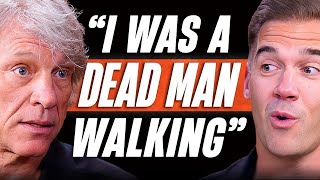
This is a YouTube video titled "Jon Bon Jovi REVEALS His Only REGRET And Life Lessons As A FAMOUS 24-Year-Old! 2024-04-29 14:02" containing an English interview conducted in April 2024. The content features a conversational interview between Lewis AI and Jon Bon Jovi, where they discuss Jon Bon Jovi's music career, personal life, leadership, emotional growth, and reflections on success, fame, and legacy. The interview also touches on his innovative approaches in the music industry, his long-lasting marriage, and insights into his creative process and life lessons.
Chapters
The industry said, you,'re out of your mind. You're a dead man walking. You're the biggest band in the world right now. You can't fire. You're a big shot manager. Give me a good reason why. The word on the street was, this is career suicide. But the band trusted me, and we did it. I did it.
One of the most famous names in rock music. They sold over 130 million albums. Please welcome Jon Bon Jovi.
Welcome, Bon Jovi.
You brought in, yes, a mediator, a therapist, a coach, someone to kind of like say, hey, tell everyone how you feel.
Oh, it wasn't easy. Nobody was receptive to it. I was receptive to it. The guys fought it. And then after a couple of sessions of it, we committed to it. Wow. I can absolutely, positively guarantee you, you will never see me given 50. That's out of the question. Don't think for a moment that Richie and David and Tico didn't give everything they had. They gave everything they had, too. Everyone's always looking over the shoulder, and they've got that. who's the bigger guy in the room? I gave that up so long ago. I could give a about it. And I have very few regrets in my career. One of my few regrets.
Welcome back, everyone, to the School of Greatness. Very excited about our guest. We have the legendary John Bon Jovi in the house. Good to see you, sir.
Thank you, brother.
Thank you so much for being here. My fellow Pisces.
Yeah.
Arena football lover. and so many other things. You have this incredible docuseries that's out right now as people are watching this. And there's so much about it that I didn't realize about you as a human being and your heart and your vision. I think everyone sees the accolades, the success, the platinum records that you've sold, and the four decade career. of hit after hit. But what they really get to watch when they watch this series is your incredible vision for making all this happen and manifesting this into your life and building and creating it for a decade after decade and your beautiful heart. So I want to acknowledge you for your heart because I feel like that love and that passion is what allowed this to come to fruition, this life you've created and the impact that you've had with your music around the world. My fiance, she's Mexican. And I told her I was having you on today. And she was almost in tears because she said when she was a teenager, she bought a CD of yours. And it was one of the first music that she heard where she started to learn English.
Oh.
Was because of your music.
Right.
So you make impact on so many people's lives in so many different ways that you're not even aware of. So I want to acknowledge you for that, John. And there was a moment in, I can't remember if it was episode one or two, because I got to watch the the whole thing, where you talk about success and greatness. I don't know if you remember this, but you mention about success and you mention greatness in almost the same sentence. And you give a definition kind of what they both are for you. Since this is the School of Greatness, I would love for you to talk about what the difference is between success and greatness for you.
Well, I honestly can't remember the instance in the film, especially because it's been filmed over the last couple of years. But I guess my reaction to it would be this. Anyone can have success. You could write a jingle that becomes a hit song. And for five minutes, that's called success and it's fleeting. Or you could strive for greatness, which means you got to do it again and again and again and again and again and again. And you have to work hard because it just doesn't happen. You know, greatness is something to strive for. And it is given to nobody. Even the most gifted of musician or athlete or business leader has to work at it in order to, you know, strive to achieve greatness. That's my opinion. Yeah.
Do you feel like, when did you feel like you were able to reach greatness in your musical career?
I don't know that I ever felt that way.
Really?
I think that that's sort of that chip on your shoulder that keeps you going. I do think that I've gotten quite good at it. I think that given the opportunity physically, I can do it with the best of them at this point. But I think that with every song, with every song, let alone every album, it's, can I do it again? Can I do it again? Can I do it again? How can I do it better? I don't think you ever think you've achieved greatness. It's just striving.
Did you ever feel like when I think it was the third album you guys had that went like, I don't know, 14 times platinum or whatever it did, it was like all over the world.
Slippery When Wet.
Is that the biggest of ever of all time?
No, no, no. I mean, for us, it was huge. But it was thriller. It was like a virgin. It was born in the USA. It was one of those. It was huge.
It was massive. And it was everywhere. When you have that big of a hit, at that young woman age, I think you were like 24, 25 or somewhere around there. How do you, and it surpasses so many other records or accomplishments of almost every other artist. How do you come with the mind of this isn't my best work and I can keep reaching this type of success? Or do you think maybe my best work is behind me? No. At 25.
No, no, no, no, no, no. Absolutely not. if anything, I didn't. My only regret, and I have very few regrets in my career. One of my few regrets is that I didn't take a little more time just to enjoy it because you could have, should have taken the time to really enjoy it. I think that part of the Journey of Life is that in your 20s, when you've got a, that chip on your shoulder and there's There's all kinds of new surprises around every bend. You don't really sure how to navigate this journey. You look to mentors and, you know, in some form or another to sort of guide you and they do the best they can. But it doesn't mean that they had the answers either. Anyhow, you're on this journey and all we could think of, at least all I could think of, was, I gotta do this again. I gotta make sure that nobody thinks that was a fluke, that we can do this again, we can do it again after that. So it was nose to the grind. And a year after the Slippery Tour concluded, and it was 240 shows and massive success for the band, we were back on the road with the album New Jersey, which had five more top 10 singles and another 240-250 shows.
One year later, just back to back.
Just went right back in the ring.
You know, there's one part of the Docu-Series where the band-- I think you guys are together for, I don't know, five years in a row, it seems like, with very little time off. And there's this beautiful journey that you guys created this incredible family and these incredible relationships and brotherhood and team mentality, but then too much of a good thing can turn into a bad thing is kind of what you guys talk about in this series. How did you not allow too much tension to actually break this band apart after so many years of success when there was just more frustration and resentment and egos? How did you keep it together emotionally, mentally, spiritually, physically when everyone's got more money than they can think of now, when everyone's got more fame and success and their egos are at an all-time high? How did you keep it together?
Well, everyone has their own unique perspective and everyone's the hero of their own show, right? So I'm sure anyone in the band or the organization will have told you their point of view and it may differ from mine. But having been the leader, namesake, whatever you want to call me, I'd always had a certain vision and asked others to follow. their opinions and their input was very welcomed. But obviously somebody had to be the quarterback. And so I treated this like a team and I was the quarterback, but I knew I couldn't play without a receiver in the line. Okay. So I wasn't ego driven, but I had to. have a plan, stick to the plan, and sink or swim, make the decision. So when I did see that the burnout was happening after those two back-to-back records, and this was our first foray into that kind of territory, because it has happened to me other times in my career, in this instance, There was a moment in time where I would, in retrospect, blame agents, managers, lawyers because they were supposed to be the mentors that said, we believe in you, take your time, get it right. And they allowed us to keep going to the point of burnout. What I wouldn't allow was it to fall apart because I knew better than to think, wait a minute, nobody physically harmed each other, nobody stole money, nobody stole a girlfriend, nobody was dead, nobody was, you know, car crash. this was burnout. So you go back to team, you go back to, you know, what is it that got us here collectively? Let everybody go out and gather their thoughts, get new information, bring it back to the fold, which in turn could make us stronger. And I really, by that point, went out on a limb because at that point I'd fired the managers, agents, and lawyers. and said to the guys, I've got this vision. I believe it still works. And not only do I need you guys to come along, but I'm doing it without the rest of the apparatus now. And they put their faith in that.
There's three things that I've gotten to learn about you through this series that's really inspired me that I feel like you innovated and you led the way with in terms of anyone that I'm aware of in the kind of the music industry at this high of a level. And I'm gonna share these three things. One is during that time where I guess the band was kind of in a lot of friction, at least from the story of the documentary, you brought in, as a mediator, a therapist, a coach, someone to kind of like say, hey, tell everyone how you feel. Let's open up all of the emotions, the frustrations, the pains, the joys, and share it all. and this was, what, 30, 20, 30 years ago?
30 years ago.
30 years ago, when this wasn't a popular thing to say.
35 years ago.
That was like looked down upon 30 years ago. But you said, I'm gonna have the courage to say, we need to bring a coach, an expert, a mediator, a therapist to come in and let everyone express themselves. Would you say that really helped?
Oh, yeah.
Bringing people back together.
Oh, yeah. And boy, was it met resistance.
Really?
Oh, yeah. you know, I'd heard about these therapies, especially in alcoholism and mental illness, you know, and where you go to rehab or, you know, and you're, you're dealing with issues. But like I'd said, we didn't have those issues. We had naivete and youth and this rocket ship to success that was confusing because we went being from being the children of our to the parents of our parents. And the parents of we were now these CEOs, you know, we were now these decision makers. We were now these money makers. We were the gravy train, you know, life changed for everybody in the organization. In your 20s, in my 20s. And that's me being a I don't know, I don't want to see a visionary, but a different thinker. I thought differently. I just always thought differently. The way I got a record deal, nobody gets a record deal the way I got a record deal. I went knocked down a DJ's booth. Right now we think that there's millions of people are going to watch this interview, which is nothing but ego. But in truth, it just could be you and I, Lou, and nobody may ever see this or hear this.
Right?
And we don't know. The loneliest man in the music business was a DJ talking to no one, preaching the gospel of music. And I said, that man loves music more than anyone I know. We're going to go knock on his window and play him a song. It was the same kind of visions I've had throughout the process here, where I said, self-management the industry said, you're out of your mind. You're dead man walking. You're the biggest band in the world right now. You can't fire. you're a big shot manager. I said, why? And I wasn't being egomaniacal. I said, why? Tell him, give me a good reason why. There wasn't a good reason why. And from 1991 to 2016, it's a lot of commission checks I didn't pay any of them, you know? But the band trusted me and we did it. I did it. I built Bon Jovi Man.
That's the second thing that I was gonna talk about.
But the therapist, Lou, Lue Cox, he come in and he had nothing to win or lose. He wasn't on anyone's salaries. He wasn't on the payroll. He wasn't even in the music business. Wow.
What was the one thing that he taught you through that experience about mediation.
Therapy, communication, that every, well, little silly, you know, elevator bumper stickers, like, you know, everyone's the star of their own show. It's five different opinions in this story. It's, it's five different points of view. But it was about listening in order to learn. It was about, you know, giving the floor to others when necessary. It was about being a shoulder to lean on when somebody, you know, needed that shoulder to lean on. There was a lot of that that There was no... It was just, it was all based in truths. It was looking into someone's eye and saying, I love you and meaning it. Wow. You know, understanding what the words meant. Not just, oh, we're performing on the stage together. Hey, dude. I was never a dude. We weren't dude. I wasn't interested in that. I was interested in cutting to a deeper place. Our music got lumped into a genre of music because of when we came up and the kind of stuff that I was 21 and 25. I look like every kid in the mall. That's the way the kids looked in the mall. So we were thrust into that, but that's not who I was. We were put into that.
But you were, I mean, again, this is the thing that surprises me. You're in, this is what, the late.
80S, early 90s, right? Mid 80s. 86, 87, 88. But when the therapy sessions- oh, 90, yeah.
90, 91, yeah. 90, 91, it's what, five to seven of you guys in a room together?
Yeah.
And you're talking about love, and you're talking about your emotions, and you're talking, I love you, and you're looking in each other's eyes, and you're being vulnerable. When I grew up in the 80s and 90s, you weren't allowed to do that stuff. So I'm saying you innovated this ability to like, how are all of you able to be so receptive to connect openly, lovingly, vulnerably?
It wasn't easy. Nobody was receptive to it. I was receptive to it. The guys fought it. And then after a couple of sessions of it, they had their private time with Lou and then they would come back into group and then, you know, and, and, and we committed to it. Wow. We committed to it.
How many sessions you guys all do?
Oh, I don't know. Together in it. Let's just put it this way. Over the course of time that started in 90, and I was talking to Lou, you know, a year ago. It's amazing. So we still, you know, I, I would still touch base.
That's incredible.
Over time. Yeah. We needed him anytime.
How important was it for you to tap into your relationship skills? and your emotional skills, you know, over your singing and songwriting skills in order to be successful as a group and as a band.
I just looked at it like a family is always going to have its issues. A team is always going to have their issues. But having been a sports fan, I could see the inner workings of a team and think, I could see that the ego is prohibiting them from winning championships.
Oh, man.
And that a family can't get away from each other, you know, because of blood, but they could have nothing more than a common last name. So there had to be a way to take the strength of a name and the strength of a team and take the best of those things and maximize them. So, you know, if it's based in truth, you can get over ego.
Wow.
It worked for me.
That's incredible. And it sounds like if you didn't allow, if everyone didn't join in that process, you guys want to be where you are.
Well, somebody could have quit easily. Yeah, it sure would have been easier way for somebody to quit. But nobody ever quit the band until Richie, you know, in 2013, but that's much later. Right. But no, no, everybody was committed.
It's incredible, man. That's cool. So I loved, you know, one of three things that I really think you innovated. The second thing you mentioned it, 1990, you're 29, you're 30 years old, and you say, okay, everyone in the music industry has a manager or has agents and all these different things. I'm gonna do it differently.
Yeah.
You hear about that now of like independent artists and starting their own thing and launching their music through the internet, but in 1990, like that never happened. So you really innovated and led this way for artists 30 years before they started doing it. What was the biggest challenge you had to overcome in starting your own management company, navigating the landscape of ticketing and venues and commission?
What happened was, is we let go of the old agent and got a new one. Okay, so it wasn't that I didn't have one. We got a different one, right? the manager, God bless him, you know, we're still friendly, but he said it was about him. We went, no, it's definitely not about you. And then you have to think, like, what does he bring that is so unique? And granted, in that first chapter of my career, I learned a lot and it was great. But when it was time to move on, I was glad that it was time to move on.
I never see him.
And then the word on the street was, this is career suicide. But I had an incredible representative, and I use that word endearingly. It was way more than a lawyer. He was the godfather to my daughter.
He was, yeah.
My father and my best friend and my brother all rolled into one. He never, ever, you know, took advantage of me. He represented he he taught me everything I know about business. Wow. And he's passed. He had frontal lobe dementia. He's passed about seven, eight, nine years ago now. There's a huge black hole in my life because he's not in it any longer. But he's what made me learn everything that I know now. and in turn also made me realize we didn't need all that glitz and glamour. You know, we had an amazing right hand in a guy named Paul Corzilius who was doing the day to day in the office. Jerry was doing all the paperwork and I was making all the decisions. We could do this. Right. And we did it in a big way. We had the biggest tour in the world three times in that period. I did six number one albums. I had, you know, six number ones. It's like.
Crushing it. Yeah, it's incredible. But how did you have the courage to do that when no one else had done it?
I met with a half a dozen managers. I remember at the time, or did, you know, like meeting with managers again and going through that process and just not clicking with any of them. There was none of them that moved me. And I needed somebody that was gonna dedicate their life to this the way that we dedicated our lives to it. And I wasn't getting that.
Wow.
So I just, why? Why? Do it ourselves. Wow.
It's beautiful. The third thing that I feel like you've really innovated in this industry of, you know, music and rock star and fame and all these different things. is you got married at the peak. I think you were in your late 20s, right? 28, 29, when you got married to a high school sweetheart. And for me, I don't know how you're on the road constantly with that much fame, that much success, that much money, and that much options, let's say, and you're able to enter a marriage and have a, what looks like on the outside, a healthy relationship for decades.
35 years.
That's incredible. I feel like you've innovated this in a space.
No, I can't take that credit.
Well, I feel like, you know, not.
Many people- Fewer and far between. Bob is married, is long. Bruce is married almost 30 years.
Very, very few. How were you able to have a healthy, successful, thriving marriage and relationship while all the other, you know, ego stuff and fame and just travel and success?
That one was easy. That didn't take a genius. We grew together. Wow. We went to high school together. Yeah. So we came through this whole roller coaster ride together. So no matter my highs or my lows, she's seen them. Wow. And that was integral. She didn't meet me at the pinnacle of my successes or the, you know, the low points in my career and picked me up out of a gutter somewhere. So we grew up in the same hometown with the same kind of values, same kind of family background, middle class upbringing.
She saw you doing cover band stuff.
Back in high school, you know what I mean? So that one I just was, thank God, fortunate enough to get right the first time. And we held on, you know, we never really had any kind of difficulties.
Really?
Hit rock bottom for 35 years.
What do you think is the key, and I'm not sure if anyone asked you about relationship or marriage advice ever, but what would you say are the three keys to having a long-term successful relationship? Wow. thriving at the top of your career as well?
I don't know. I mean, the relationship thing, like I said, is mutual respect.
Okay.
Admiration and mutual respect is, I think, is at the top of this for me. To be a good listener and know it's not all about me, it's about we. You know, it's about both of us. It's about all of us. It's about the family dynamic. So of course, I'm always going to be the you know, the narcissist, the lead singer in the house, but there's no platinum records hanging in my house, you know? I mean, like, we left that long, long, long time ago in our home. So mutual admiration society, being a good listener, growing together, you know, just finding her, in a way that, like, I get excited in the morning when I see her every single day. 35 years later, I get excited every single day.
What's the thing you love about her the most?
That she absolutely knows that she loves me, like, with all of her heart. Wow. You know, I mean, there's just, there's no question, there's no doubt, there's not even a glimmer of doubt, there's not even a, hint of a glimmer of doubt that this is it. There is no, that's it.
And wow.
Yeah, I got this one right.
When you're coming off stage in front of 80,000 people and you're the man and you're selling out the biggest tour in history back to back and people are screaming every word and chanting your name and then you go home and someone's upset at you or they want you to listen to them. How do you get over your ego of being John Bon Jovi and saying, I'm gonna be a great Parnell, it.
Might take a minute to walk it off, you know, when you're on the on the road for a long time, especially in those younger years when we would be on the road so long that you you could carry the lifestyle home. And but I haven't even seen that guy in a long time.
Wow.
So it's it's of it's of no interest to me to even see that guy. It really isn't. Boy, I'm really trying to be honest with you because even if it was 10 or 15 years ago when we were just still, you know, a little.
More.
Wild, and I don't mean this in a way that we're subdued now, but it's just in a little more ego-driven way.
Yes.
Even that wasn't a big deal. Really? Yeah.
Where did you learn that though? Did your parents teach you? Where did you learn it?
It's who we are, where we come from, what we did. I was never a big drug guy. I was never the big drinking guy. I was never the big, you know, one thing we learned on this journey, we're doing this interview right now in Los Angeles, California. I had a house out here for years on the beach in Malibu with all the beautiful people. and the first thing after owning that house for four or five years was we got to sell this house.
Why?
We got to get the hell out of here. This. This is not conducive to a great relationship and a great life and a great career and a great grounded who we are, what we are, where we come from. Wow. And I. It was the same thing when we went home and. rode slippery when wet. It was like we are being lumped in with these kind of bands that it's not our thing. And I was just like, I said, I don't want to be a part of this scene. This is not who we are. It's not who I am. I don't give a right. Go back home, take that picture in the inner sleeve in our driveway, you know, in our cars, you know, with blue jeans and t-shirts on and. sell that Malibu house and you come out here and everyone's always looking over the shoulder and they've got that who's the bigger guy in the room? Who can I go and work? Who can I get something from? I gave that shit up so long ago. I give a fuck about it. I think I'm not impressed. You know, I don't give a fuck. It's just that shallow shit will ruin you. And I know Grown men who still are playing that game. Wow. You know, and it's just sad. Yeah. And shallow.
What do you wish everyone knew about money, fame, and success?
Money doesn't make you smart, it just makes you rich.
Doesn't make you happy.
Does not make you happy. Now, can it pay for the bills so you can get, you know, the doctor and the insurance and those things? It can, it solves some problems. But absolutely does not make you happy and it doesn't make you smart. It just makes you wealthy.
What do you wish people knew about fame and accomplishments?
Accomplishments are all fabulous, especially if you worked hard for them and you deserve the opportunity to accept the accolade in and of the moment. and enjoy it. And then, you know, then you move on from it and don't measure who and what you are based on any kind of championship ring. Right.
It's not your identity.
It is not who you are, it's just what you do. And I, too, I live by that credo. It's not who I am, it's just what I do. But I've met many a billionaire who They're not smart because they're missing out on the good things in life. Being a part of their community, on touching the lives of their wives and their children, on sleeping on their pillow at night and knowing that they did something good instead of for a buck. Yeah.
And what do you wish people knew about fame?
It's really an interesting question to ask at this juncture, right? It's 2024 and I remember having a conversation with my kids maybe 10, 12, 15 years ago. And I'm telling me about that the internet and ways to make money. And I would say, but you gotta write a song to make money. You have to learn how to act. You know, we're not talking about, I'm.
Like a sketch by the arts.
I'm saying, you know, referencing the art. We have to be an athlete and put in the 10,000 hours. I've been proven wrong, obviously, now, right? There's a whole world of people making a buck, and that is very confusing for me and my generation. It's very confusing for me and my generation. We were told that we could go to the moon because President Kennedy told us we could. But we had to go to school to learn how to do the science to get to them. We didn't just, you know, snap our fingers and get lucky on the internet one day. So it's a very confusing time. But I don't think anything is a substitute for hard work and dedication and commitment. And, you know, not every day you're going to win, but every day is an opportunity to, to participate in the process and measure your progress.
Absolutely. Well, you won a lot though consistently, which was pretty impressive.
Yeah, it's all good.
You won, you've been winning, yeah.
More and more.
Championship after championship. And again, we're talking about Thank youk Good Night, the Von Joey story, which is on Hulu at the time of watching this.
And.
I'm curious about, You know, you put in a lot of reps. Speaking of 10,000 hours, when you were a kid, you were doing cover band stuff in Jersey, and there's an amazing scene of, like, Bruce Springsteen coming up on stage while you were singing his song and him singing it with you. And I can only imagine the, like, electricity and the excitement in your body as a 16, 17 year old, seeing someone who is, you know, bigger than you on, on stage, who is singing with you. And you talk about, like, you could almost touch it. You're explaining how you could almost reach out and touch this opportunity. And you just want to get closer and closer to that by being in the production studios and being on stages and being around these great artists and talent. I'm curious, where did your creativity come from? How did you, and when you ever felt blocked creatively or burnt out, how did you get into a creative state?
I was never the great singer, the great guitar player, the great poet. I was the hardest working singer, guitar player, and poet. And so that was a big part of how I became me. If I was going to drown, it was going to be of my own doing. So that was integral to the story. Also, what was integral to my personal story was that the drinking age was 18. And it sounds comedic, but it's true. Because at 16, you could slip into a bar. Every 16-year-old thinks he's gonna be a pro athlete, a rock and roll star, or an astronaut. So you could go in there and say, I'm gonna do this, Golly Gee, you know? And any little spark was enough to think that you could go to the next level, and the next level, and the next level. I was then fortunate enough that by 2021, I did write the song and knock on the DJ's booth and the creative guy in me said, how to get a record deal, how to then hire a band. That was unique to the guy that was the harder worker.
Right.
You know, because you could go down in the Jersey Shore when cover bands were making $3,000 a night. in 1979, 80-81.
It's real money.
We were making 100 in an original band to split between everybody. If you were lucky. Wow. If you were lucky. If you were lucky. Because all the time you'd play for free because it was original music. So I never made any money, but I didn't need it because I was 16, 17, 18. I was able to live at home.
Yeah.
And for me, that, that, that is a big part of the Success was right time, right place, born at a certain time. You know, not privileged, but food on the table, shoes on my feet, and two parents, and they were supportive. All good things. So all of those things helped.
Yeah, of course. The way you're explaining yourself, not the best at all these different things, but the hardest worker, you kind of sound like the Tom Brady of rock and roll. You know, it's like, you're like the Tom Brady of rock. You're like, not the best at all these things, but you, you willed yourself to become the best and championship after championship after championship. I don't know if that resonates with you.
It does resonate with me because Tom, Kobe, LeBron, you know, guys of, of this era that that's kind of the work ethic that I think that I have or always had. You know, yeah, yeah.
I mean, we had Kobe, I got to interview Kobe on the show before he passed and just learned so much from him in that short interview. You know, I know you have a relationship, a lot of the great athletes, you owned a sports team at one point, the RanA football team, but I think you said you have a relationship with Tom as well or you've interacted with him over the years. -No, no, no, no, no.
-Sure.
What would you say is the greatest thing you learned from Tom Brady about how he pursued his craft and how it applied to your craft?
I've observed Tom closely and I would like to think that I could call him my friend. I mean, he's been to my house many times and I go to practices and we talk on the phone and stuff. Here's a guy that's, you know, much younger than me that I'm learning from.
Wow.
Which I really appreciate too, because, you know, 199 in the sixth round and all that kind of stuff and the audacity to tell Mr. Crafty, I'm the best thing you've ever done. And to have a coach like Belichick, you know, on him and never giving him, All the accolades he could have easily, you know, let go to his own head kept him working. But I think that we carried that being from New Jersey as a band for the longest time. It was like, even with the accolades, we'll show you. And like Dorothy would say that I would just will things. And by sheer will, People would follow you if you led by example. And I didn't ask, you know, that, that this had to be this way or, you know, my way or the highway, but nobody ever said, I'm out of here because of hard work. Oh, you know, they, they just did everything too and gave everything they had to. Don't think for a moment that Richie and David and Tico, you know, and didn't give everything they had. 'Cause they did. Yeah. Yeah, they did.
You have this amazing quote in the docuseries that I want to just read back to you that you said. At 25, all I was thinking about was fun and success.
Yeah.
At 30, I got married and looked at success differently. By 40, start to measure if you're accomplished what you set out to. By 50, you start to think about a legacy. By 60, as the Chinese proverb says, You are the man you're meant to be. So at 60, when I look back, did I become the man I wanted to be? I'm curious, do you feel like you've become that?
I think it's a work in progress, but I'm not disappointed by anything that I've done. And I've had very few regrets, which I'm really proud to be able to say. Yeah. You know, I've had loss. I've had physical ailments, I've had victories and I've had defeats. But I'm very proud of the legacy thus far. I haven't done anything to f*** it up. As I said, I'm only here to sell the truth. And it's blemished, but it's real.
If you could go back to your your younger self in your 20s or early 30s, and you could only give yourself three pieces of advice. And you know everything that you know now. You're just going back in time and you're speaking to your younger self, late 20s, early 30s. With everything that you've experienced, what three things would you say to that younger John?
I think there's, I don't even know that there's three. I would say, Take time to enjoy it more. Don't lose faith in yourself even when you feel like you're baby down for the last time, you know, and the eight count is going to nine. And to believe in the power of we. I think that those three things is probably what I would say.
If you could jump in time 30 years from now and imagine you would get to accomplish everything and live the life that you want to live for the next 30 years, and just imagine you're in that state of wisdom, what three pieces of advice would you give your younger self as you are today from that future self? If that makes sense.
Well, 90 looking back on 60, you know, I guess I would probably say, did you live up to the code that you set, you know, for yourself and for others and now for the next generation? So with my kids, you know, that if I could see them becoming members of society that were contributing something positively, then that will have been a victory. Because it's not about fame or fortune or anything else that goes with it. I think it goes back to, did you leave something behind worthy of having been here?
Wow.
So that to me right now, as I sit here and I think about where my kids are because they're all grown, I'm not thinking about me anymore. I sort of feel like I've, I've achieved the highest highs. What I hope with this record and this film is that it's going to say, hey, good mile marker, the 40th. And by the way, this new album is pretty darn good, but it's not going to be slippery when wet again. You know, I'm 62 years old. It's time for the Next Generation to have their slippery one. But I would like to think that my next slippery when wet could be, you know, did my kids make any kind of contributions to the world?
Wow.
That would be neat.
That's beautiful. What is being a father tell you about life?
You don't know.
Man.
From the minute that we were, I remember you know, our first child was our daughter, and I didn't have sisters, let alone a baby. When the door closed on that first night, we were like, there's no owner's manual that comes with this. Wow. So you figure it all out. Okay. Step at a time, and you get it and you work hard at it. And with every child, and then with every chapter of every child, the Playbook changed. Wow. and with their girls to boys and then toddlers to teens and then teens to adults and adults getting married, nobody told me about these chapters in the book. And I'm like, you would think that by now somebody would have warned me about these chapters. But no one had told me about these chapters. and they're all different. So, you know, we're just trying to navigate it. And now all my friends that are my age go, oh, yeah, yeah, yeah. Didn't we tell you?
I'm like, you, man.
No, you didn't tell me.
What is a lyric from one of your songs that you've written that really speaks to you of your season of life right now?
Oh, my God. You're catching me off guard. I'm not usually good at this, but there's no way. It's on the new album. It's called Hollow Man. And it says, what do you sing when the song's been sung? Hey. Who do you fight when the war is won? What do you write when your book is done?
Wow.
What do you sing when the song's been sung? Here I am, the hollow man, telling stories about the promise of a promised land. I feel like a cheap bouquet of flowers in a one-night stand. With my heart in my hand, I am the hollow man. And it's saying, I'm an empty vessel. I'm here looking up at the sky and saying, okay, Lord, what's next?
Wow.
And so that's just a song on the new album.
That's on the new album. That comes out June 7th. June 7th.
Wow. Yeah, Hollow Man's a story of me today.
Did you find their answer for that?
No, I'm living it. Every day is an opportunity to write a song, but I don't often take every day and turn it on. And as a matter of fact, at times I have to turn it off and just acknowledge that it'll be there next time I want it. turn the faucet on. But because it becomes so overwhelming, if you run the course of a cycle, like with the joy that I've found with this record, it was time to say, okay, it's being repetitive. It's time to shut off the faucet. Okay, here's a new album. It's called Forever. These lessons won't be manifest. They're manifested, but they won't be fully learned for the next two years.
Wow.
And then I'll look back on them and then I'll know where I was.
That's large for you. You know, 40, four decades plus of doing music. You've had to kind of like reinvent your identity almost every decade or every couple of albums or every few years while keeping, you know, your roots, but innovating, you know, music and things like that. But recently you went through surgery on your vocal cords. And it's throughout the documentary series when people can watch it. And, you know, I can relate to this in my own way of being an athlete.
Right, you can.
And getting injured.
Right.
And my whole identity be, my entire life being tied into, Good, let's talk about this. Being talented and being valuable and being able to use my skill sets. to go make something happen of my dreams and my vision, right? But then when I got injured, playing in a sport that you were an owner of, of another team, playing arena football, that vision of my identity and my future became shattered, literally and emotionally and spiritually. And it was a year and a half of recovery and trying to figure out, okay, what do I do next? Who am I of this next season of life? What is my next chapter? What is my next song? what is my next play if I'm not able to play that game anymore? In your journey of, you know, your vocal cords not being the exact same in your 20s at 60, how have you mentally and emotionally dealt with the identity shifts and changes as an artist and as a man?
You and I were talking off camera about that period between when you Stop playing the game that you loved and determining that you were going to be here, which probably was not in the cards.
Was not.
In 2008, you never dreamt of this. But I got a guesstimate that you're pretty satisfied with where you are right now.
Very satisfied.
So look at that.
And it needed to happen in order for me to get on this trajectory.
The trajectory is the way, right?
Exactly.
And I get that. I trust there was a period of mourning for you.
Big time.
Right? Because from the time you were eight until you were 20.
23, 24.
You were identified by the game.
Yes.
And then there comes that morning in confusion. I haven't had to quit doing what I'm doing, nor would I ever have to stop writing a song or making a record. But if I chose not to go out and tour again because I couldn't be at that level I am accustomed to performing at, I do wonder how I'll behave.
Interesting.
But I haven't come to that crossroad.
I hope you don't have to.
I hope I don't have to either. If, God forbid, that is my future, the one thing I will know is I've exhausted every possible way back onto the playing field at the level that I'm accustomed to playing at. So when Kobe had the injury, when Tommy had the injury, when Michael Strahan ripped his pack off of his chest, you know, when every athlete goes through this, the question is, okay, I can get back on the playing field. Can I play in the Super Bowl? You know, can I win a level.
Of what I'm capable of? Yeah.
And I don't know the answer. So I'm a work in progress.
How is that uncertainty? How are you dealing with that right now?
It's better than it was because I'm a really analytical guy when it comes down to it and I look at pictures of the chords and the progress and I'm optimistic about it. Of your actual- yeah, I see them all the time.
So you see there's improvement. Yeah.
But if it's not up to speed, let's- say this, you know, and I hate to even put it out in the world.
Yeah.
Yeah. That I don't tour. I could promise you, Louis, that I, I will be able to say I did do it at the highest level.
Wow.
For the longest time. And I'm good with that. Because one thing that I know that I've told myself there since I was 25 was I will never be on the where are they now tour, you know, playing in the train station at the, you know, diner in the buffet on Friday evening. It's just not gonna happen. So I will be more than okay with that aspect.
You'll be at peace if you don't get the tour again.
If I don't have the opportunity, which I really would enjoy the opportunity, I'll live with it because I'm still capable of writing a record. I'm still capable of recording a record.
That's cool.
I just need to be able to do two and a half hours a night, four nights a week. And if God forbid that doesn't happen, I can absolutely positively guarantee you, you will never see me given 50%. That's out of the question.
Wow. Well, I hope the world gets to see you perform on stage again. And if you're coming to LA, I gotta go. So I'm gonna, find a way to get there for sure and check it out. I've only got about five more minutes with you to be respectful of your time. And I want people to watch this docu series. It's called Thank youk Good Night, the Bon Jovi Story. It's on Hulu. So make sure you guys go watch this. It's fascinating. If you love art, if you love music, if you love John, if you love just creativity, you know, ups and downs of success stories, you're going to love this series. So make sure you watch this. And if you really want to study your mind and the vision that you had and the drive that you had to will your vision into existence, it is a beautiful story. So make sure you watch this. Even if you don't like music, you'll be inspired by this story and your vision of bringing your heart and putting it on for the world to see. So I really am inspired by that. You got the new album as well. June 7th that people can get. What's the best place for them to get that?
It's streamed everywhere these days. Press a button. Okay. You know, so any. Go listen anywhere.
Spotify, Amazon and everywhere. Okay, perfect.
Awesome.
Before I ask the final couple questions.
What else can we do to be of service to you today? I don't know, unless you have a magical mystery cure for the high C's of the vocal cords.
One of the things that you do, which I think is really cool as well, is you're all about service. You've got a charitable foundation as well. You want to give back. So many things you'll see in the docuseries about you wanting to be of service with your music, with your platform, with your fame. And I think that's really cool so people can learn more about that as well. This question, final two questions, This one is called the Three Truths. So I've already asked you a couple hypothetical questions, but this is another one for you. Imagine you do get to live as long as you want to live. You get to keep performing as long as you want to perform. You get to do it all. You see your kids grow up even more, all the different things that happen in life. But for whatever reason, it's your last day on earth. Many years away. Live as long as you want. And in this hypothetical scenario, you have to take all of your music with you, You have to take all of your writing with you. This conversation is no longer here. Any piece of content you've put out into this world, it goes with you. It's a hypothetical scenario.
It goes with you.
It goes with you or it's just not-- Take it with you. Take it with you or it's not in this world. It goes somewhere else. We don't have access to it.
Okay.
Hypothetical. Okay. So we don't get to hear your music anymore. Okay. But on this last day, you get to leave behind three truths. And that's what we do get to keep from you, are these three lessons. They could be lyrics from a song, it could be something on your heart right now, it could be something simple, something, whatever it might be. But if it's the last day and you only get to share three lessons with the world, three truths, what would those three truths be for you? Wow!
Live your truth and without compromise. Be of service and take the time to see the world around you, to be one with the world around you. You know, see the clouds in the sky, see that the sun is shining, see that the waves are crashing, see that the traffic is rolling by. You know, just take the time to smell the roses. Yeah, that's really important. Too many of us run through life missing every sign of what was there for your pleasure. And so many of us were all self absorbed and consumed and didn't serve anything other than self. And so many of us lived a false life of what others wanted us to do and be. And I think that all of those things are just a waste of this moment in time that we were all given here.
Yeah. Well, before I ask the final question, John, I would acknowledge you again for being of service to humanity through your talent, your art, and your heart. And, you know, I love what you just said about not making it all about self, but also making it about service. And I think that's a beautiful life. So I want to acknowledge you for speaking that and sharing that with people, because I think a lot of people today just want to be successful and be famous and make it about them. So I think it's really cool that you're making it about service and that's one of your truths. My final question for you, John, you mentioned this a little bit earlier, but I love to hear that it's evolved. What is your definition of greatness?
Boy, with my brain spinning in my head, what is my definition of greatness? Greatness is being comfortable in your own skin. Greatness is leaving something that is worthy behind.
Yeah.
I think I'll just leave it there.
John, thanks so much for being here.
Thanks, man.
I appreciate it, man.
This was a joy.
I think it's being concerned what other people think and a feeling of that the people who make great things are somehow special and that they're not special and that's just not true. We're all, everyone has the capability to make great things.
More from Lewis







Secret Service Agent: Your Neutral Face Is Making People Distrust You (Here's How to Fix It)



