Kerry Washington: “They Lied About Who My Parents Were”! How I Turned Betrayal into New Purpose!
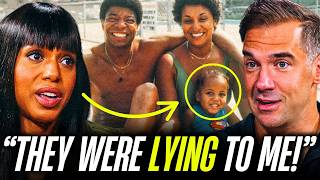
This is a YouTube video titled "Kerry Washington: “They Lied About Who My Parents Were”! How I Turned Betrayal into New Purpose!" featuring an in-depth interview between Lewis AI and Emmy-winning actress Kerry Washington. Recorded in 2025, the conversation explores Kerry Washington's personal journey including her discovery of being conceived via sperm donor, her struggles with self-worth and anxiety, her spiritual and therapeutic growth, and her experiences in marriage and career. The discussion also touches on her new movie "Shadow Force" and the themes of love, family, and healing. Lewis AI conducts the interview, engaging Kerry Washington in a candid and reflective dialogue about vulnerability, truth, and empowerment.
Chapters
I was conceived with the help of a sperm donor. I didn't find out until I was in my 40s. I entered the world in a lie, right? Like the moment that I got here, like they were lying to me about who my parents were.
When did you start to feel like you were enough? Was it before the lie was revealed or after?
I feel like-- Our first guest tonight is an Emmy-winning actress. She's an absolute powerhouse of the silver screen. Now she's opening up in a moving and very revealing new memoir. Kerry Washington. The story I'm telling myself is that my job is terrible. The story I'm telling myself is that the world is on fire. The story I'm telling myself is that I'll never be in the body I want to be in. I don't have to give my entire existence over to that message and that story. I can kind of have some distance from the thought and to say like, I see you, I understand where that belief system is coming from, but it doesn't have to be the truth.
For someone watching and listening who maybe is really struggling or they just feel like things are just keep knocking them down. What advice would you give them on how to start the process of truly loving and accepting yourself even when you feel really low?
For me, part of why therapy is so important is because it has taught me to...
Welcome back everyone to the School of Greatness. Very excited about our guest. We have the inspiring, the talented Carrie Washington.
Good to see you. Good to see you.
I'm so excited about this.
Thanks for having me.
Yeah, our mutual friend, Gabby Bernstein, was texting us this morning, saying that we're excited that we're coming on together. I've been researching more about you lately, obviously, knowing that you were coming on. I've seen your talented career as an actor, as a writer, director, all these different things. But hearing your spiritual journey is what really excites me. And what you were just talking about before we started rolling is that you're very excited about your new movie, Shadow Force, which is coming out in a few days after this launches. and you said the reason you're excited about it is because after your memoir, you started to fully open up about your truth, about all the different lessons, the pain, the tragic moments of your childhood, and the stressful things that you dealt with, the anxiety, the kind of sexual stuff that happened when you were younger that you opened up about with your book, your father opening up and sharing this kind of lie that was held onto for a long time. So much that I've researched about you is fascinating because you now get to step fully into your truth, into a character, and embody ultimate power.
Yes.
And so I'm curious, and we'll dive into some of this after opening up and starting to heal a lot of these things from your past. How did it feel filming Shadow Force and stepping into fully who you are, How did that process feel in that character?
You said it perfectly. Shadow Force is like this big splashy action adventure where I play this badass mercenary. But at its core, it's really a story about love. It's about parents, these estranged lovers, played by myself and Omar Sy, and we have this son, and we are willing to go to the ends of the earth to protect this son. So I wrote this memoir about my family, about my mother, father, and me. I'm an only child, and kind of the dynamics that unfolded when we got to step into our truth. And my mom said something really beautiful when we were presenting the memoir to the world. She said, it's like we're not afraid to hurt each other anymore, because there's a new strength in our family. And I felt like in making Shadow Force, I got to bring that new strength that new fearlessness into a character. I got to really embody power and fearlessness and be in a way that I never had before. And I've played really strong characters throughout my career, but this was a new level of embodiment. This was like, what does it feel like to train really hard to, you know, the physical training, the fight choreography, the weapons training, all of that was like a very, very physical manifestation of feelings that I felt like I had been cultivating over the past few years. So it was really exciting for me to like get out there and kick and just act as if there was nothing I couldn't do or wouldn't do to protect my family.
Interesting. But you said before you played, you know, obviously a lot of characters and roles before. And I don't think anyone ever felt like you weren't embodying your most authentic self. I mean, you were crushing it in all these roles, winning awards and just at the top of your game. But was there something missing inside that was different from the past.
I think there are lots of different kinds of strength. And I think, you know, the exciting thing for me as an actor is I get to explore some of those dynamics of how we express who we are in our lifetime. And Olivia Pope, for example, is a really strong person in her brain. Like, intellectually, she's really strong. Emotionally, she's strong. But I have never thought of myself as a fighter, as a warrior, you know? And so to To get up every morning and train with these incredible martial artists and stunt coordinators to, like, really put my body in a place where I'm wearing that strength in my cells was just a crazy journey. It was so exciting to, to, like, let the strength not just exist mentally. Because Kyra, the character I play in Shadow Force, she's smart and she's emotionally strong, but she's also got guns, like, guns and guns. And so, like-- yeah, like, to be become that person and to, you know, it's such a wonderful relationship. The mind-body connection is so interesting. You talk about it a lot on this show. And so for me to get to, to really, really commit to trying to be as strong and fearless physically, as I had become emotionally and spiritually, was very cool.
Yeah, I love learning about your spiritual journey. I think there was some interview where you talked about, or maybe it was in your memoir where you talked about in college being on your knees, kind of going through anxiety and stress and overwhelm where you were starring in the plays and you looked like you had it all put together on the outside, but on the inside you were dealing.
With anxiety, a total mess, and a.
Lot of other things that were just happening. And you were on your knees praying and you didn't, and I think it was, you didn't really feel like you had a spiritual connection at that moment, but that opened up a spiritual channel.
Yeah, I mean, that's another great example, right? Is when you get on your knees in prayer, again, I'm a physical embodiment of an emotional dynamic because on there is inherent humility for being on your knees. So sometimes I like I'm a person who prays all the time, like I pray in my car, I pray when I'm walking down the street, I pray when I'm cooking dinner. But I do feel like there are times when it's really important for me to take that submissive posture and get on my knees, just to remind myself that I'm not in control, that I'm not the ultimate power, that there's something bigger than me, that I can ask for help that's outside of me. So again, For me, that relationship between how we think, how we feel, and how it lives in the body is such a huge part of how I work as an actor and how I try to live my life.
Yeah. When you started praying after that moment, what did you start to hear?
So, like you said, I was in college and I was really struggling. I have throughout my life struggled with an eating disorder. And that was the worst of it. That was the turning point where I really was like, I need help. I can't fix this body. by myself.
Is this like starving or it's just like...
So, you know what? For me, I was, I knew that eating disorders existed and I think I tried to play this game where I didn't want to fit into any easy diagnosis. So I was always kind of like transforming it and morphing it and it would be like days of binging and then days of starving and then days of over exercising and just kind of like, I felt like if I kept moving it, then I wasn't any simple sick person. I was just like trying to be my best me, but I was controlled and obsessed by feeling like I wasn't enough.
-Really?
-Yeah. So the prayer for me was really, I think what I started to hear was that it was okay to ask for help and that it was okay for me to seek healing.
-Why do you think you didn't feel enough?
-I think for me, that journey started really, really, really early. And I talk about this a little bit in my memoir, but You know, I was conceived with the help of a sperm donor, and that was something I didn't find out until I was in my 40s. Oh, man, that is crazy to me. It was pretty wild. I think my parents would have taken this secret to their graves if they could have. Gosh. And luckily, they weren't able to. They were kind of forced to tell me, to share this with me. And it wound up being transformative for our family because it was the thing that they were most terrified to tell me because they thought that it would destroy our family, that I would be angry with them, that I would no longer see my dad as my dad, that it would fracture this kind of perfect facade, this image that we were portraying to the world. It, of course, as with most things in life, had the opposite impact. It was so healing for my family to sit in that truth and to have the courage to be honest with one another actually made me feel closer to my dad. It made me so grateful to my parents. I understood so many of the confusing Dynamics of our household growing up, suddenly I understood, you know, I often say, like, I entered the world in a lie, right? Like, the moment that I got here, the moment that I emerged from my mom, like, they were lying to me about who my parents were. And so I think there was a disconnect very early on. And like most kids, I decided, like children to make sense of discomfort and unease, we will they will blame ourselves, right? Like, I must be Because you can't blame your parents because they're responsible for your survival and well being. So you blame yourself. And so for me, I think I decided, well, I must not be enough like this weird disconnect that I have or this way that they hold me at arm's length or this kind of slight veil where I feel like I'm not getting 100% of the truth. And I couldn't have articulated any of that as a child, but it was a feeling, right? I thought, well, maybe if I'm better, they'll be closer to me. If I'm better, I'll have their full presence. So that's why I think I interpreted it as I have to be more, I have to do better, I have to be better in order to get presence and love and acceptance.
-But you had love and acceptance from them, right?
-I did. I mean, my parents did such a beautiful job. And even their choice of not to tell me was a choice that came out of love, right? They were trying to protect me in a time when, I mean, this was, you know, I'm in my 40s, so there weren't like sperm banks where you could go through a catalog and carefully pick your donor. This was the Wild West. People weren't doing this. Nobody they knew had done this. And so they thought not telling me was the best way to go.
Oh, my gosh.
And I think for my dad not telling me was really because he really was in denial. I mean, he was-- he believed the myth of our family.
What was the myth of your family?
That I was his. Ah. He believed that. And so his not telling me, I think, was really-- he was sharing as much of the truth with me as he could. My mom, I think, had a more awareness of the reality. And so her not telling me, I think, was really protective. Yeah. I know it's pretty wild. It's so complicated. But I know it's so funny as I look back on it because I feel like-- When you're able to look back on your life, you can see, or for me, I'll speak for myself, as I look back on my life, I can see how everything happened for a reason. And the things that are our greatest challenges, this sounds so cliche, but they have become my strengths, right? Like this feeling of I have to do better and be better is what allows me to lean into greatness. It's what makes me seek excellence. It's what what makes me train for four hours a day in stunt training and a workout on top of that and learning the fight choreography. And, you know, it's like, I want to be great in the things I do. The trick for me is, as an adult, seeking that excellence and greatness without the attachment that I'm not enough. Like waking up and saying, like, I am enough and I still have a right to chase greatness.
That's what I was going to ask you. Can you achieve greatness and feel enough at the same time?
I think you can. For me, that's what I'm really trying to do. It's the walk that I'm trying to walk is like, Can I love myself and also seek more? Is it okay to like, to want to be excellent, to be great, to be a champion, to be a master at my craft, and not have that come from a place of deficiency? Have that come from a place of joy and seeking?
-When did you start to feel like you were enough? Was it before before the lie was revealed or after the lie was revealed?
I feel like from the moment that I went into therapy in college, those days of like getting on my knees and being like, somebody help me, I feel like I've been on this journey of trying to feel like enough, of like picking up tools throughout the decades of like, I know I should feel like enough. And so I like, I know that that like, we're all perfectly imperfect, we're all children of God, like I wake up in the morning and not hate myself. We all deserve that. And so I've been trying to cultivate, what does that take? What will that look like? What do I have to do? Different healing practices, different modalities in yoga and Pilates and therapy and group therapy and introspection. And so I have been on that walk, but I do think, and it's gradual, right? It's not like you wake up one day and you're like, I'm healed now. But I do think my parents offering me this deeper truth about who I am and where I come from, It like gave me permission to relax into who I am and to be like, I'm good. I'm okay.
Now, do you feel like before that truth was revealed that you were able to fully relax into your relationship with your parents, even though they were loving to you and supported you and encouraged you?
No.
You don't feel like you were able to?
No. And again, I've always had a really loving relationship with my parents. I have incredible parents. and they have given me so many tools, consciously and unconsciously, they have, they've been a tremendous part of the story of me getting to where I am today. I'm not where I am despite my parents. I'm mostly where I am because of my parents. And then there is a little bit of, despite those dynamics, I wound up here. So I do, I think I've, I had a really good relationship with my parents, but I have a great relationship with my parents now because of the gift of truth that they've offered us.
You always felt like something was off.
Yeah, I felt like something was off. Intuitively.
Did you ever ask them, like, Hey guys, what's going on? Like in your 20s and 30s, like.
No, but- Is there something off?
You know, you guys not sharing something with me?
What's funny is that there were these kind of smaller revelations throughout my childhood. Like I talk about in the book how my dad was kind of involved in this investigation. And so when I learned about that, I was like, oh, this is what it was.
They were hiding this.
Yes, there were these, I think the culture of my family was kind of hide the truth to look good. And like, we should do whatever it takes to look good in the world. So as I would learn these smaller truths along the way, I kept waiting to feel the revelatory feeling that I had when I got the big truth.
Interesting. Did you have any resentment or anger once they opened up after four decades of hiding this lie?
I did. I did. It was like a roller coaster. I feel like I've had every possible feeling that you could have about this news that I got, any possible feeling you could have, I've had. I've had gratitude, I've felt elated, I have felt I have felt anger, I felt anxiety, I felt fear. So it was, I mean, I think when they first told me, I felt really compassionate because I could see when they told me how afraid they were to tell me. And I remember saying to my dad, and I do not know where this came from, but I am so grateful that this dropped into my brain to say to him, I said to him, you know, our whole lives, I have told you that I love you on the pretense of a lie. Like, every time that I have said, I love you, there's been a tiny filter that my dad was thinking like, oh, she loves me because she thinks I am her father. And so in this revelation, I actually got to say, I love you unconditionally. Like, I got to say, I know the full truth of you, and I'm not going anywhere. I still love you. And to me, that's a much more powerful love, right? A love that's rooted in absolute vulnerability and honesty, when you get to like show all all your dirty laundry to somebody and your greatest fears and admit the things that you're scared to admit and they don't go anywhere, that is real love, right? So that's what we got to give each other. When they gave me the truth, I got to give them that return of unconditional love. And them giving me the truth was a way of loving me unconditionally because they were saying, we know you might be mad, we know you may not want to be in relationship with us, we know this might change the dynamic of our family forever, but we're going to give you this truth anyway. Wow.
It must have took a lot of courage for them.
Yeah.
Because maybe they're thinking, ah, we're never gonna say this, but now she's in her 20s. Yeah.
Oh, it's... I can't do it now. That's right. My mom was like, when was I supposed to tell you when you're in the throes of an eating disorder? Like, what was I supposed to say.
When you're totally depressed or then, you know, you're in a broken relationship or.
She was like, there was never a good time. Yeah. Or now your career's taking off. Yeah. We're gonna bring you back down. Yeah.
It's like, let's let her succeed and just keep it... It's a, there's never a, an easy.
Time to tell the truth when there are hard truths to tell.
But you also, I mean, you have kids and so they're grandparents as well. So I wonder what that dynamic was like now that they're lying to generations.
Yeah.
You know, they were lying to generations. It's like, I wonder how, I mean, your father must have gone through so many emotions himself. I'm not saying it's okay that they lied.
Yeah, but we're all doing the best we can, right? And again, especially as parents, I think it is really powerful and important, I think, in our journey They told me at the right time, right? Because it's when they told me. So whenever it happened is when it was supposed to happen. And I do think there's something beautiful about the fact that when they told me, I was myself a parent, because I had a different level of understanding of how hard it is to parent and how you can try to do everything perfectly, but nobody gets it perfect. It's just there's no such thing. And actually, the ways that our parents are imperfect, that's part of the journey of how we become who we are. That's how we fill in those cracks and become The adults that we are. Yeah.
And they were trying to protect you and they loved you and they wanted to keep you guys together.
Yeah.
It was part of their journey.
Yeah.
He must have let go of a huge weight.
Yeah.
Like, does he seem lighter and younger? Just like emotionally?
You know, it's so funny when I think about it. It was a very important lesson for me and also how to metabolize fear and how to run toward the things that we think will destroy us. Because initially, he wouldn't even take a genetic test. You know, he was like, I don't want to I don't wanna know. I don't wanna know. I don't want anybody else to know. He literally said to me, if you do this, it will kill me. Oh my gosh. He didn't want me to write a book. He was like, nobody should know. Why do we have to talk about this? Nobody needs to talk about this. Nobody needs to know. Then I think about moments in my book tour where he's like standing in an auditorium getting a standing ovation. Oh my gosh. Where people are celebrating his presence as a dad and the fact that Despite the fact that I wasn't genetically his, that he has been such a force in my life and has loved me so fiercely. And, you know, he got that in like several cities standing ovations cheering him on and celebrating him and on national television, people saying like, what an amazing thing you did. And even the fact that, that my parents made this choice to use a sperm donor in the 70s when nobody was doing that, that in itself is a testament of how much they wanted me. Oh, man. -Right? -It's so beautiful. So that journey for my dad, to see him go from being somebody who he thought would lose all respect and credibility and masculinity and identity, to see him be so celebrated and held up, it's a really important lesson, right?
It's so powerful.
It's the thing that we think will destroy us could be our greatest gift.
100%. I can relate to that. I mean, you've heard me talk about opening up about sexual abuse, and I held on to the lie. or the story for 25 years. Because I thought, if anyone knows this, shame about me, no one will love me. No one will accept me. People will think I'm less than, whatever it might be. I won't be enough, right? Goes back to that feeling. He probably felt like he would die because everything would be taken away. Everything emotionally, spiritually, physically.
But you can't take away that he's been my dad. It's like he's, you know, he's my dad. Nothing changes that. You know, and it's funny because my kids grow up in a world where like, yeah, you can have two dads and two moms and step parents and they like the village is big. And so that was one of the things I said to him was like, it's not gonna change anything for your grandkids. Like it, even if we know who this other donor is, that's just another parent. It doesn't take away from you. You hold your space, you hold your throne. You are who you are in this family.
Let's go.
I like it. It's so funny, 'cause when I first read Shadow Force, it was one of the things that really drew me to the script, because Omar Sy, who people love from Lupin, he's amazing. He's, like, an incredible actor. And he plays my husband, and he's the dad in this film. And in the script, the dad is the primary parent. As the mom, we both used to be mercenaries, and we broke the rules and fell in love, and I got pregnant. We have this child, and then we have to leave this highly trained group of mercenaries that we were in. to be on the run. And I disappear, 'cause I'm like, Everybody's gonna be looking for a mother and a child. Nobody, because of how we think about parenting and culture, nobody's gonna be looking for a man and a son.
Interesting.
And so he takes on the primary parenting. And Omar is such an extraordinary dad. He's got a bunch of kids of his own. And it's so beautiful to see this man parent this child in this film. And the mom kind of on the outskirts being like, Protecting them, like taking people down so that they don't get hurt, but not being able to be there to do the day today in the way that the dad is. And I really loved that about this script because I feel like we need those stories and culture, we need those images. And this couple, you know, they sort of learn to lean into partnering again in order to parent. And I think that's also just such an important story to be telling in culture right now that being a part of being a great mom is also, if you're lucky enough to have a great partner, leaning into that partnership and allowing that. And maybe the partner is the dad, maybe the partner is, you know, every kid takes a village, but like leaning into whoever those partners are and knowing that you don't have to do it all yourself. You can be part of the village that raises a child.
Gosh, that's so cool. Yeah, we're talking about spiritual partnership is something I've heard you say before.
Yeah.
When you met your man, how did you know that you guys were building a spiritual partnership and connecting from a spiritual space, even though you had this kind of, you know, you had a great relationship with your parents, but there was something missing still with your father. How did you learn to trust your intuition in relationship when you had a broken partial relationship, fractured.
That's such a good question. You know, relationship with your dad.
How did you trust your intuition?
Yeah.
With the man you have now.
So there are a couple of things. I mean, one is my parents, the fact that my parents are still together is a real gift and a miracle. And I remember, right, like, it's not that common. And there were times, I talk about this in the memoir, where I would be like, you guys should break up. Like, what, what, you are not happy.
Interesting.
And I remember my mom saying to me, like, I know that you think you know everything. I was like 16. You know, she was like, you, for you, your 16 years are the full picture. But your 16 years are a fraction of our marriage, right? Like we were together long before you got here. So we have had good times and bad times. We've had ups and downs. Like your little window into this is not the full story. And that was a really important lesson to me in what marriage is that there are highs and lows. It's a journey. It's a path. And if you're committed, you have to be committed for the journey. and that's not to say that I don't agree with divorce, that I don't think divorce isn't right for some people, that, you know, some relationships are meant to be forever, some are for a season. Like, I, all of that is true. But I think I, I had an understanding that marriage as a commitment, if you're going to make the commitment, it has to be about something deeper than ego. Like, it has, something has to keep you, if you're going to do it with love, and joy and... I mean, I don't know if I need to say any other word other than love. If you're going to do it with real love, then having something deeper to commit to that's bigger than just the two of you is really important. So I think that's where the spirit comes in.
How did you guys create that commitment then, from something bigger? What did you talk about? And when things are tough, because, you know, you're talking about Shadowforce, the role of the father in the movie, he's kind of taking on the father role and taking care of the kid with you kind of running away and escaping or whatever. I'm not saying this is a parallel to your life, but there are times where you're really busy. You're on set all day, 10, 12 hour days for months at a time, where I'm assuming you have to have extra support or your husband's taking the lead in certain areas of parenting, making assumptions there, but correct me if I'm wrong, where he has to step up as well. How did you guys communicate the alignment with your guys' careers, separating ego? Because I know he's very successful and what he's done in the past as well and what he's doing now. How do you separate ego and make spirit and love the center when each one of you are evolving in career as well?
So, I mean, one thing is I'm always careful to talk too much about like the us when he's not in the room. Because I feel like it's interesting. It's sort of like with my kids. Like, I don't post a lot about my kids or talk a lot about their inner lives or their journeys because I feel like their story is theirs and they have a right to tell their story in their way. And I feel that way a little bit about my marriage too. Like, if we were both sitting here, we could kind of agree and co-sign on it. But I would say the first thing I thought about when you asked me that question is the importance of therapy. Because, yeah.
Let's go.
Let's go. Right? Like individual therapy, couples therapy, like being willing to have spaces where you do the work. And I remember my dad one day being like, you guys are in couples therapy. Like, what's wrong? And we were like, nothing. Like nothing's wrong. It's, it is a place where we go to take care of our marriage. In the way that I go to the gym to take care of my body, or I go to the dentist to take care of my teeth. I feel like as a couple, we deserve and therefore we cultivate a place where we care for our relationship.
Beautiful.
And it doesn't come out of crisis, it doesn't come out of things that are bad. I mean, in fact, we spend a lot of time in therapy consciously talking about what we're doing well and acknowledging that for each other.
That's so cool.
Because it's really important to not take for granted that there are I mean, good things to celebrate and acknowledge about each other, right? And so that's, I mean, I feel like therapy is a big part of that spiritual commitment. So one of the things I remember my, one of, one of my many therapists saying early on to me was a healthy relationship is not just about like give and take, like I do for you, you do for me, that actually it's important to think about the relationship almost as a third entity that you're both pouring into.
Yes.
It's like a bank account, it's like a spiritual or emotional love account where like, I'm not just doing for him and then he owes me. It's like we're both pouring into this thing that matters to us, us, which is the marriage.
That is beautiful.
Right.
I'm so glad you said this because I haven't heard a lot of people in your position talk about therapy and marriage.
Oh my God.
And one of the things that Martha, my wife and I committed to her.
Congrats on your marriage. Yeah, it's been a long time. Do you like saying wife?
It's so weird, I have to say it every time, 'cause first it was girlfriend, then it was fiance, then it was wife. It's like, okay, I'm getting used to it.
I love, I mean, I just love the word husband. I like add multiple syllables.
Husband. Husband.
I love it, yeah.
I'm still stepping into it, but it's been a great experience. But one of the things, when we were dating, non-exclusively, before we became committed exclusively, we were having an amazing time, but there was still some, like little fear or anxiety or worry about getting fully committed because in every previous relationship I was in, it all ended badly in therapy.
Oh, because you went to therapy when things got bad.
Yes, and I always wanted to get into therapy sooner, but the partners I chose resisted therapy. And I was always thinking, what woman would not want a man to go to therapy with them? So I was always like, What world am I living in right now?
But I kept repeating this cycle. But then you learned to choose a partner. Yes.
Who was willing to walk that walk with you. And I said, I want to start, if we're gonna get committed, because we're having an amazing time, I want to start in therapy. Amazing. And so we started right away within the first few months.
So smart. Not because something was wrong. So smart, because then when you have something that you need to unpack, you're not like, oh, we gotta step in the ring. and battle it out in therapy. It's like, no, you know what? Let's talk about that this week.
Exactly. And it's been the greatest gift that we've given each other because in the first year, we just went and we got alignment. We got spiritual alignment.
And a shared language.
Shared language. We got to talk about past fears or future concerns up front. We got to address all the things that we were afraid of. and come together and be like, oh, we're teammates. We're building a team.
That's right.
We're investing in courageous conversations.
Yeah.
We're allowing for imperfections in both of us. No one needs to be perfect.
Yeah.
And we're stepping into a process of unity and alignment around shared values and a shared vision together.
It's so funny because I hadn't really thought about this. I mean, I know it's, sometimes when you're doing press for a movie, you're like, oh my God, this is why we're doing this. like, Should we have known this earlier? But I think-- I think a big part of what pulled me towards Shadow Force was that you get to watch this couple that sort of start out as adversaries because they are like-- their marriage is fractured, and they actually become a team, right? And like, literally, one of the hardest, most exciting, most fun fight scenes in the film is early on, Omar and I fighting each other. It's like a crazy-- Really? It's like your worst couples therapy, yes. Like, drop kicks. Yeah, 'cause we're both highly trained mercenaries, right? So he's this big guy, he's really strong. He's done lots of stunts in big action movies. And we trained for a long time together to be able to do this dance. And we talked about how his character fights differently from my character, our different fight styles, and what that says about our relationship, and how this couple is kind of competitive, and they challenge each other. And there is a real, friction between them. He's angry that she's disappeared. She's angry that she hasn't had access to the child. And there's heat between them, right?
Who's the dirty fighter? Who's the low blow? Is that you?
I mean, I have to be more strategic. He's a big guy. Yeah, you know, I mean, I gotta use what I have. And as the film progresses, you get to watch them become a team. And so then it was fun for us to learn how to train together. Like, well, what are your strengths? Like, I'm a better shooter than him. but he's a stronger fighter, right? And so, like, how do we lean into that in the film so that we're an unstoppable team? And I think that is so much what marriage is, right? Like, it's like figuring out, okay, this is your fighting style. This is my fighting style. Here are the things I'm upset about. What are your resentments? I don't recommend, like, hand-to-hand combat for most couples. It's not okay. Not okay. This is the fifth season. Exactly. But to figure out how to lean into the strengths and how to speak the same language and how to have a shared, whether you call it spiritual alignment, shared goals, shared priorities, they come together for their son where they're like, this child means everything to us. What do we have to do to protect him?
Would you say therapy has helped you not only in your, I guess, marriage and your family dynamic relationships, but also in your career and stepping into owning your power and your worth, even though you're excelling and succeeding so much, do you still have any doubts or insecurities?
Yes.
Really?
Absolutely.
To Carrie Washington.
Yes, so what?
What type of, for someone watching and listening who maybe is really struggling and they don't have much going on in their life, or they just feel like things are just keep knocking them down, their career isn't working the way they want to, they don't feel like they're living in love, they don't feel like they're living their dreams or in the pursuit of their dreams, they feel like relationships are kind of off, and they really lack self-worth. What advice would you give them for anyone watching or listening who might be in that space on how to start the process of truly loving and accepting yourself even when you feel really low?
For me, part of why therapy so important is because it has taught me to pause. It has taught me to take a pause and to not believe every single thought that I'm having, to not get caught up in the negative self-talk, to create a little bit of distance between the stimulus and the response. There's a saying that I love that pause Jaws stands for postpone action until serenity emerges.
Amazing.
Like just take a beat. And for me, in the way that life moves so quickly, sometimes therapy is that beat where I get to go like, hold on, the story I'm telling myself is that my job is terrible. The story I'm telling myself is that the world is on fire. The story I'm telling myself is that I'll never be in the body I want to be in. The story I'm telling myself is that I'll never find the person I want to find. like maybe I can just pause that for a moment and unpack it and figure out how to walk toward healing.
Yes.
So for me, therapy is a place to like pause, to pause and be reflective, take responsibility for the thoughts, be honest with myself, and then try to cultivate some tools. Because some of it could be that I'm not sleeping enough, right? Like sometimes what I realize in therapy is like, I don't think I'm getting enough sleep or I don't think I'm eating right or my hormones are off. I need to support myself better or or this relationship isn't working out, or I don't know if I'm happy on this job, or the job is good, but I think maybe I need a hobby. It just gives me... And so maybe for some people it's therapy, for some people it could be meditative walking or journaling, but it's like, what are the practices that allow me to pause and get in the present moment and be more honest with myself? Yeah.
When you're stepping into a role like you are in the new movie, Is there any moment you're feeling insecure at this stage?
Every single time.
Really?
Every single time. Because here's the crazy thing of your career. Yes, yes. But you've received so much excitement. It's excitement though, right? Like it's that fear that also, I have to remember that the physiological experience of fear is the same physiological experience of excitement. So that fear is like, Holy s*** I've never done. Because every time I play a new character, I'm doing something I've never done before. Like, I do have a toolbox of, like, I know how to memorize the lines, and I know I I I. But I'm becoming a new human being every time I start a new project, a new person with new desires and new fears, and she walks.
More from Lewis







Secret Service Agent: Your Neutral Face Is Making People Distrust You (Here's How to Fix It)



