Kevin Bacon on Overcoming Self-Sabotage, Manifesting His Dreams, and the Key to His 35 Year Marriage
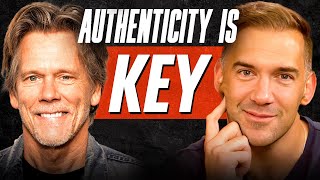
Kevin Bacon talks about overcoming self-sabotage and staying grounded through 35 years of marriage and a long career in Hollywood. He discusses how family shaped him, the toll of fame, and what it takes to keep your identity intact when the industry tries to remake you.
Chapters
When you're an actor and you've been out of work and you are living paycheck to paycheck as we do, and you're self-employed, you've seen the bank accounts go from zero and back down to zero and up and down. I think you always kind of feel like it's about to end. There's that, and then there's also trying to get better and trying to get another part that's even more challenging. I think you gotta have a dream.
The School of Greatness. Really? Yeah. Please welcome Lewis Howes. Welcome back, everyone, to the School of Greatness. I am very excited about our guest. We have the inspiring, the iconic, the legendary Kevin Bacon in the house.
Good to see you, sir, and thank.
You so much for being here. Thanks so much for having me. I, I live in Los Angeles, and I've been here for about 10 years. And I remember when the first year I moved here, it's been 12 years now. The first year I moved here, I saw you. I saw you. We were eating at some restaurant in, I can't remember, West Hollywood somewhere. And I remember seeing you and I remember thinking, this is one of the most connected men in the industry, in this city and probably in this world.
And I was probably connected to my pasta at that moment.
Exactly. You were connected. I can't remember. You were, you were with someone having a meeting or something and. you know, no one interrupted you, which was nice to see. But I remember saying, this guy has done a lot of amazing things as a musician, as an actor, as an artist, as a creative human being. But beyond that, you've really built incredible relationships with people. And for over three decades, you've been extremely successful because, in my opinion, not only that you have this incredible talent and gift as an artist, but because you treat people well, people speak highly of you. you connect people, you're of service to people. And that's one of the things that I really respect and appreciate about you. Obviously, I don't know you, but that's your reputation of being a good, kind human being while also being an iconic superstar. I think it's really hard to find. And so I'm just grateful that you have led that way and led that path. And I'm curious, did you always think about Building relationships and connecting early on before you got into your career? Or was it more like, let me drive my talent, become the best musician I can be, become the best artist I can be, and then realize that relationships and networking and actually being kind and generous to others was going to help me in my career?
Well, I guess I would say that it's a little bit of a combination, although The being kind part is not something that I actively think about or pursue. You know, my mother was a very kind person and I think my father was also, while he was an intensely self-involved person, and I got that from him, he also, you know, was fundamentally a a kind person and was kind and respectful to the people that he would meet. So it's not even something that I go, I wake up every day and go, Hey, you know, let's try to be compassionate. And understanding of what other people's positions may be. It's not something that I think about. It's just something that was kind of inherently there from my parents. And, you know, that being said, listen, you know, I have moods, I reach my limits, I've blown people off, you know, in another situation, you know, someone will say, come up to me and say, you know, I remember once, you know, in an elevator and, you know, you were really nice to me. And, you know, I think to myself, well, I'm so glad that they remember that, but I'm sure there's a lot of people that often remember, you know, you were a real I mean, you know, or people have a different perception of that or whatever. You know, somebody once said, this is a kind of a corny showbiz thing, but if you are famous and you run into somebody, you know, you won't remember this, you'll remember this interaction for 10 seconds and those people remember for the rest of their lives, which I find happens a lot. I mean, a lot of people come up to me and say, you know, we were once whatever, in a steam room together or something, you know. Sometimes, by the way, these are completely hypocritical stories. There's some guy that had a story about me, like getting mad at him because I was having a haircut and he looked at me the wrong way. I mean, it's some kind of crazy stuff I don't even understand. The drive really was there from a very, very young age. I'm the youngest of six and I was really lucky. I was actually literally just talking to my wife about this today. I was the youngest of six and there was a big age gap between my closest sister and me, eight years. So I'm kind of a mistake in a family of five, you don't wait eight years and then have another one. I mean, you'd have to be out of your mind. And so I had this amazing, audience. And I had a group of... With.
Your siblings you mean?
My siblings. Yeah.
Yeah, yeah, yeah, yeah.
And, you know, nature or nurture. I remember from my earliest days that when I walked into a room, I wanted people to look at me and I wanted to entertain them. I wanted to either make them laugh or make them listen to me or put on some kind of a show for everybody that I would interact with starting with my siblings. But not only that, they were incredibly supportive of whatever I would do. They were like, that's so funny, that's so great. Yay, cav, yay, cav, yay, cav. You know what I mean? Like, you know, like I had it right away, I had an audience that would really enjoy what I was doing and parents that were supportive of what I would do. So a lot of people, a lot of artists, that reach a certain level of success, you often hear about how they rose out of their artistic creation and expression came out of pain and tragedy. And I'm not saying that I didn't have painful things. I do and have had tragedies and loss and all that stuff. But I also think that it's possible to that in my situation, a lot of what I got to was because I had a ton of support for the thing that I was doing and wanted to do. And I think that's something that I really feel a tremendous amount of gratitude for. But hand in hand with that, was for sure a drive, a strong drive to become successful. Actors don't like to admit this. I wanted to be rich, famous, get girls, have a big house. I wanted my face on magazines, on billboards. I wanted all that stuff. It wasn't until I started studying and understood that there was a craft to this thing that I figured out that it was something that I had to work hard at being good at. But the thing that drove me to it was just, you know, treasure.
The external, the fame, the success, the acknowledgment, the money, the opportunities that come from it. Were you. Were you more driven to be an artist then early on and to master your craft and. And Inspire or entertain people like your, you know, your siblings or. the local school or whatever it might be that you were performing at? Or were you more like drawn to the billboards and the magazines and the fame and you said, oh, this could be the path to getting there?
I think I was more drawn to the magazines, the billboards, and the fame. I didn't think so much about the past, but the artistry was when I made the decision to become an actor and I walked into an acting class and or I picked up a guitar and I went, both of those things are hard, right? It's not, it's, you know, yeah, I guess there's people who are quote unquote naturals, but all of this stuff takes work. You gotta work at it. And I knew that right away and I was blessed with very strong work ethic. I was never looking to cut corners. I was never I wanted all this big stuff, but I was never looking for the easy road in. I always have thought you gotta put it, this is another thing I got from my parents. This I should, you know, they would love this pocap if they were alive they would love hearing this. I They, both of them were like, go through the steps, go through the steps, whatever it is, you know what I mean? If you get a, you know, a toy that you have to build, you know, a model airplane, you just don't just try to put it together because you want to look at the picture and make it look like that. Go through the steps and learn how to do it the right way. and I realized when I walked into an acting class that, well, two things. One was that this was something that I was meant to do and something that I felt even before I knew even what the word therapy was, I found it very therapeutic.
One of the things I was, you know, hearing you say just a moment ago is about how your parents are around. They would love this, this episode, this podcast, this interview. And i'm hearing kind of the lessons that you've picked up from them and from your family. I'm curious, what's the biggest lesson from both mom and dad that still stick with you today and that made a massive impact on you growing up?
Yeah, I mean, I think we kind of touched on it before, but I would say that my mother really taught me lessons about being a, at least attempting to be a good person and compassionate and to , you know, live your life and think about people that, you know, are not as fortunate as you are, or try to understand someone's point of view, not judge people by the way that they look or the color of their skin or what they're, you know, the way they talk or, or where they're from or whatever these, you know, things are. She was, she was very much like that. My mother was an interesting character. because she was raised as a Park Avenue socialite. Wow. Her family was wealthy. By the time I was born, all of it was gone. She really? Yeah. And and and I think that she also somehow felt a sense of, I think, shame about the, we, nobody really used the word privilege, but the privilege that she had come from. So by the time she met my father, she was working with the poor, with poor people in, in Flint, Michigan, and really devoted her life both to early childhood education. but also to the poor and people in the prison system. For instance, she went into the Philadelphia prison system and built a playroom that could be utilized by the children and the prisoners on a visiting day when the kids would come, there would be stuff for the prisoners to interact with their children, which is kind of like a crazy idea, but they had all kinds of games and things that they could be be doing together. She started nursery schools and housing projects and all that kind of stuff. And she really completely pushed back any kind of consumer. She went the opposite direction of anybody that was in pursuit of wealth or nice clothing or Private schools or good food or restaurants. She just, it horrified her.
She went the opposite of that.
She went the opposite of that.
But that's what she wanted to go towards, right?
Exactly. No, exactly. That's exactly true. That's exactly true.
So when you were asking saying, hey, I want to be rich and famous and, you know, on magazines and billboards and awards, was she saying, hey, that's not the way?
Or was she saying, I would never tell her that. I would never have told her that. That's something that I never would have even begun to mention to her. But I can tell you that she also had very, very strong activist kind of political ideas. And she was very anti-war and very into the civil rights movement. Used to take me to marches on Washington as a little boy and marches against the Vietnam War. And in about probably 19, '74 or so. We were just starting to kind of, I guess, get out of Cambodia. I don't remember how long we were stayed in Cambodia, but the Vietnam War was essentially over. But I think we were still bombing Cambodia. And I got an offer as a, as about a 14 or 15 year old kid to do a commercial. for the ROTC or to do a recruitment, a military recruitment commercial about a kid doesn't know what he wants to do with his life. It was just gonna be used in Philadelphia where I grew up. And it was maybe like, I don't know, a couple hundred bucks or something like that for the day. So this is more money than I ever dreamed of.
As a 14 year old, yeah.
Yeah, I was like, this is amazing. I'm doing it. I told my mother she didn't speak to me for a week. She thought that I had crossed a moral boundary from which I would never return because I was supporting the industrial military complex and I was profiting from it. And as a 14 year old kid, you know, it was she was very angry with me. She really was. And it was, it's, it's interesting, but it's also interesting in that I believe, there's a whole other discussion, but I believe that children and certainly boys have to have a moment where they break away from their mother. You know what I mean? I think it's kind of essential that it happens in some way at some point. And that was the moment for me. My father, on the other hand, was not a wealthy person like my mother, but he was very, very drawn not to fortune because they almost both kind of looked down on the pursuit of money as being not really worthy, but he was very into being famous and, or let's put it this way, he, he, he got a lot, he was a, he was kind of a big deal in Philadelphia because he was the, the, the chairman of the, of the Philadelphia Planning Commission. So as, and, and a pretty well-known city planner. So as a result, he was often, you know, in the papers when they decided to whatever, you know, revitalize a neighborhood or move an expressway or, you know, whatever happened to be in terms of city planning. And he was, I could tell right from the beginning that he was totally into his own press, you know what I mean? And his own, like, notoriety. And people would stop him on the streets and say, Ed, Ed, you know, either I hate what you're doing or I like what you're doing or, you know, whatever it was. But he was kind of like a, you know, a little bit of a celebrity in that pond of, you know, Philadelphia. And so from him, I think I got that drive to be well known. And I definitely think I wanted to be more well known than him.
Well, you made that happen, that's for sure.
I did.
When was the, I wanted to make sure I go back to what we talked about just before this. When was the moment for you when things started to transition from wanting to be well known and modeling kind of what you saw from your father, to fame and riches and success into, let me actually just focus on also mastering the craft, the artistry that you have done so beautifully over the last three plus decades. How old were you? What was that moment like?
Yeah, I mean, I was living in Philadelphia and I was in high school and I wanted to study acting. So I started to find theaters where I could take acting classes. Oftentimes in situations where people were a lot older than me, they weren't even really like kid classes. They were like, you know, I was apprenticing at this theater and they were also, you know, teaching and acting to people in their 20s and 30s, you know. And so I would take acting, I would take scene study and all of a sudden I went, okay, this is really about getting better at the things that I'm doing. And, and also the content that I started to absorb entertainment wise moved from the monkeys and, you know, I dream of Genie, you know, to Brando and Montgomery Clift. And then a little bit later on, the films of Scorsese and Dustin Hoffman, I remember seeing a double feature when I was, when I was young. It was like a theater, a dollar theater in my neighborhood where they would do second runs. And it was a double feature, or maybe they were spaced out over a week, but it was Midnight Cowboy and, and the Graduate, both of which starred Dustin Hoffman. And I looked at these two performances, and when I saw Midnight Cowboy first, and I thought to myself, I looked at him and John Boyd. I thought, Whoa, where'd they get the homeless guy to be in the movie? And where'd they get the cowboy to be in the movie? I didn't understand that, and then when I saw the graduate, I thought, oh my God, that's the same guy playing like a preppy kid. And I thought, wow, okay, this is what the art is about, and that's the thing. that I want. So by the time I moved to New York when I was 17, by the time I moved to New York, it was Mean Streets. It was Sidney Lumet. It was, you know, De Niro and Al Pacino and Meryl Streep and Jon Cassell's and Voight and Nicholson, you know what I mean? All the 70s, edgy movies and edgy, what were kind of thought of in some ways as like the New York actors. These are the people that I aspire to. And right away, I was in acting school in New York. And I realized that, you know, this was something that was that you could get really good at if you worked really hard.
Interesting.
Theater too. Theater, because, you know, I didn't, when I was younger, I didn't really think that much about theater. I mean, I was like, well, it's just a way to get it on TV or something like that, you know? But all of a sudden, I was like, okay, I want movies and I want theater. I don't want TV. I want nothing to do with TV.
Interesting.
This is like the 70s. It was different. TV was different. I just want movies and I want theater.
Was it as competitive then as it is now that it seems like more and more people are getting into entertainment, acting, TV, movies? There's so many different mediums and platforms to share your art now, or was it less competitive back then?
I don't know. I don't know, more or less. It seemed competitive to me. I mean, I, I, I feel like I would go to open calls. I was able to get into the stage actors union, Equity, when I was pretty young. And you could go down to the Equity office and they would have a bulletin board that would have open calls, or you could get There were two newspapers, one was called Backstage and one was called, I can't remember what the other one was. And you look in the back and there would be these open calls and, you know, go to it. They say, we want a guy, you know, in his teens, and there'd be, you know, whatever lines around the block. So, yeah, it definitely, it felt competitive. And I don't know, more or less, I'm not sure.
Sure. When was the moment where you felt like, oh, this thing that I've wanted for a long time, this fame, this recognition, this, you know, everyone aware of who I am, the success, the money, when did that actually hit you where you said, oh, it's happening.
It hasn't hit me yet.
Really?
No, you know, I don't ever think I'm there, you know?
Come on. Really?
No, I really, I'm, and I'm not just, you know, being silly. I just. There's always something else to kind of aspire to. There's places that I want to go. I mean, I'm gonna have to start to at some point accept that I'm, you know, the, like, I'm good with what I've done. I mean, it's. I kind of go back and forth on it, you know, but. But I think that when you're an actor and you've been out of work and you are living paycheck to paycheck as we do, and you're self-employed, you've seen the bank accounts go from zero and back down to zero and up and down. I think you always kind of feel like it's about to end and that there's that. And then there's also, you know, trying to get better and trying to get another part that's even more challenging.
Wow.
And, you know, there's, you know, I mean, I guess that being said, I think that I'm at a point now where I've hung in there long enough that people are going to cut me a little bit of a break and they'll probably just keep me around just because I've hung in there so long.
Well, they're not going to keep you around because you've hung in. They're going to keep you around because you're talented and you're good to people and you're hard working and you show up, you're a professional.
I know. I do think that there is something about longevity though. I mean, people say, what's the secret to longevity? And I say, that is the secret. Because at some point, It gets to that thing where you do something that somebody likes and then they kind of go, you know, I always liked them or even though up until that point they never did, you know what I mean? It's kind of, but, yeah.
So you never felt there was a moment when you were on billboards and at the COVID of magazines is, no.
I mean, I think there's moments of, excitement. I think that, probably when I was younger, I didn't have the ability to enjoy them or to even flag them or to even sort of embrace them because a couple of things about that. One is that I really don't have a rear view mirror. I'm like always with my pedal to the metal, looking down the road at what the next thing is going to be.
If you could go back to, you know, 23, 24. And if you could give yourself a piece of advice about what's about to happen and how to manage the success, the fame, the self-sabotage that you started to do afterwards and everything in between, what would you say to your younger self?
I think I would have said embrace it as much as you possibly can, because the thing that you learn after being in my business for a long time is that if you're associated with things that make money, then you get more opportunities. It's kind of a, it's, I mean, it's kind of an obvious notion, but I was less interested in being associated with something that made money as I was to be associated with something that people considered as artistic excellence. and I think that if you at least for a while, embrace the idea of something that makes money, that then within that framework, you will get more and more opportunities to show this artistic excellence. For a lot of years, I think I kind of self-sabotaged and squandered them. I mean, the choices that I made were not great, and the, and the movies started bombing, like left and right and center, just one after another, after another, after another. And so I started to feel myself, you know, kind of slipping away both from the financial side of it, but also from the artistic side.
Interesting.
I also think if I could have given myself a piece of advice, and this is about a lot of stuff, it would be to take advice, because honestly, I was a kid even before I started who just thought he knew that knew everything. You know what I mean? It's like, I, I didn't want advice. I didn't want, I didn't want advice from people that knew a lot more about this business or even about life than I did. I just was somebody that thought they knew everything and. I didn't, you know, so if there had been somebody at that point in my life saying, you know, Schmuck, don't do this. Do this. This is the, this is, this is going to be a good one. You know what I mean? And if I had put myself in the hands of someone that was, you know, willing and able to do that, but I really was like, people got the got the impression very much. I'm talking about, you know, first off, I didn't have a manager for a really long time, but really talking about agents and, and, and lawyers, you know, I just was like, no, no, no. I got this. Yeah. Yeah. You know what I mean? Don't tell me. You know. So I think that, you know, I mean, I probably could have used some.
Help, some more coaching advice, some wisdom. Why do you think you, I mean, you mentioned that you were just making kind of poor choices that was, you know, I think you said in your word, it was like a bomb or flop. It was going downhill in some of these movies. Did you know, like in your mind, oh, this is going to be a hit? Or did you feel like, oh, I'm just going to go against what everyone's telling me to do because they don't know. So I'm going to go after my own, you know, thing. And I think this is cool or I think it's artistic.
Yeah, I think all those things. I think all those things. I and also, you know, there's a lot of decisions that go into making a movie. And some people are probably, first off, choosy or choosier. If you look at the amount of movies I've made, you know, you probably could never accuse me of being choosy. And I think that Some people have the ability to kind of create a certain mystery around themselves and their career and their choices, which I was never really able to do. And I also think that, you know, my, I would see things that I thought were interesting, but I really didn't, and to this day, probably, don't have a real eye on the commercial. And some people have a real sense of that and also a real sense of our industry. You know, for I'm much more industry savvy or, and I've taught myself like everything else it takes work, but I've taught myself and started to read and, and think about, you know, the entertainment industry. as something that is my bread and butter and something that I do. But when I was younger or for many years, I mean, probably way into my 40s, you know, I was like, I'm not a businessman. That's not what I do. You know, I'm not a brand, right? This is the word we use now all the time. I'm not a, I'm not a guy in a back room smoking a cigar, making a deal. I'm, I'm an artist, you know, I, I don't, I don't, I can't think about, I don't want to think about these things. I want to just do my work. I don't want to be associated with a product or, you know, try to, you know, sell something. I would, back in, back in the days when I, you have to remember back in the days when I started, if you were a movie actor, you would never do a commercial. Never, never, never, never. you would do a commercial only in Japan or where no one saw it.
Here in the industry.
And it had to be, and you could, and back in those days, if it really was there, you really wouldn't see it. You wouldn't see it because there was no, you know, YouTube, there was no internet. There was no, there was, we really wouldn't see it. You know, they was, and you would put that in your, in your contract and, you know, now whatever that's completely turned on its, on its end.
Wow.
So I was, I didn't think that way. And, you know, again, I mean, I think that if there had been somebody, you know, in my life that I, you know, really, you know, trusted, then, you know, I, it probably would have helped. Right.
Wow. Um, I'm curious about the, the whole fame and success stuff because, I'm going to butcher this quote, but I remember hearing Jim Carrey talk about something like he wishes everyone becomes rich and famous and realizes it's not the key to happiness. I'm paraphrasing this. I'm not sure if you've heard this quote from him. What do you, what do people need to know if they're chasing a goal or dream that is about money, fame, success? What do they really need to know? about how to navigate still feeling happy, fulfilled, loved, and not just, oh, I'm successful and famous, but I'm also fulfilled.
What I would say about, well, first off, I think that fame and celebrity and wealth are kind of two different things because there's a lot of people that have a lot of money that would never somebody would never ask for a picture in a restaurant. Right? So does that money make them happy? No. I mean, obviously not. You know, people are unhappy all the time. You know, marriages don't work. Whatever. The addiction or. Or personal misery. I don't think it hurts necessarily. I mean, I know people who have said to me, they've been at some point in their life where they've had some kind of windfall, and they say, yeah, I'm genuinely happier because I got some money in the bank. And listen, I think it's important the pursuit of wanting to provide or to feel comfortable is not something to be ashamed of. That, you know, that's, that was really part of, that was the, that was the biggest thing that I think I broke away from when it came to my parents. Right.
Because your mom had shame around that.
Both, well, both of them, I think, in their own ways did. They really did. But I don't think that money is the key to happiness. I think that it is a, you have to find something outside of your money to, to, you know, to, to enjoy time, whatever that is. Time with your family, obviously, is the one that I like, or with animals or, or with, or with nature or with friends, with good friends, you know, with, with with friends that are friends, whether the money is there or not, you know what I mean? Now, when it comes to fame, nobody can really understand it until you've actually had it. And I think there's two kinds of actors, actors who want to be famous and liars. You become an actor because you want to be famous. You want people to look at you. you want to perform to people. Otherwise, you would do something where you would just stay in your room.
We got no attention. Yeah, we didn't get attention.
We got no attention. Right. Now, that being said, there's a lot of people that work hard, get there, and then go, whoa, I don't like this at all. You know what I mean? What I will say about it is the thing about Fame is that. Is it weird? Yeah. It's weird. I mean, it's every time you're going to step outside, if you're not in your room, you will be looked at related to, you know, judged as something of a novelty, of a, you know, it's almost like a being like a, like of a freakish nature, you know, where, but the thing I will say about it is that it's 99 good. Like all day long, you talk about being loved, and I know that it's not true love, but all day, all day long, people say, Kev, oh, I love you. It happened, you know, 20 minutes ago, we were on the road and someone's, you know, I've stopped at a rest stop and, and, you know, the one, this one goes, I'm sorry, but I just love you. Now, when you think about that, if that happens to you a lot in the course of your day, it's a good feeling. People are nice to you for reasons that you don't deserve. You know, I mean, it's just, it so to complain, I would never complain too much about being famous. Number one, because I have no one to blame but myself. I busted my ass my whole life so that I could be famous. And number two, because it's mostly good.
Right.
Yeah. People give you freedom all the time.
They give you hugs, they give you high fives. They say, I love you.
High fives. Exactly.
It's probably 95, 99% amazing, and then 1% inconvenient at certain times is what it sounds like for you at least. What's the dark side of fame that you've either experienced personally, maybe from the last three plus decades, or from what you've experienced of friends, acquaintances, you know, people that you've worked with.
Yeah. Oh, yeah. I, I think that there is, there certainly are very, very serious risks to it. And I think all you have to do is, is, you know, look at someone who started at the same time that I did. And, and there's a lot of, when I say, you know, the terrible word, but there's a lot of Road kills. A lot of people that have just gone off the rails or disappeared or gone into drug addiction or gone into you know, some kind of scandals or, or, or depression or, or whatever or not even alive, you know? I mean, there's a lot of, it's, it, there's a lot of people that have a, have a real kind of difficult time with it. But for, for those reasons, I think, because partly it's, it's, it's not, it's, it doesn't, it's just a weird life and, and you start to wonder if any of these things that people are saying to you, like, I love you or whatever are real, and if you don't have the real stuff going as well, you can just kind of get caught up on it. I mean, I think that, you know, you even the world of movies, we live in this, while we're making a film, we live in this kind of fantasy world where we're trying to exactly create another world. The sets are made to feel as real as possible. The props are made to feel as real as possible. You're holding something that feels like a gun in your hand. You're kissing a beautiful woman that that, you know, probably in life never would even look twice at you. You know, you're, you're, you're, you're riding a horse, you know, across the, the desert, and it's an actual desert and an actual horse. And I think that you can get really kind of confused about what life is when you go from one fantasy situation to another, to another, to another, you start to believe that you know, the person that plays your best friend actually is your best friend with no idea that, that the movie is going to end someday. And then when that movie ends and when that friendship ends, you start to feel like, oh, like, who am I? Like, that's kind of weird, right? That, that I, that I went that far. Am I that shallow a person? But then you're on to the next movie. and then, you know, you got another world and then you got, you know, somebody else is, is, are playing your parents and you, you know, you feel like, you know, they, they feel like your parents and then you go, wait a second, my parents, you know, so, so I think that you, it's very easy that, and also, I think that once the fame kicks in, a lot of people start to, you know, you imagine those inconveniences that they start to isolate themselves from, from everyday people. You know, the gates on your house get bigger. You're no longer taking the subway. You're jumping in and out of limousines. You start to hang out with other famous people because you, because you have a shared experience. Therefore, you, you, you you know, you feel more comfortable, like, like being with them. You can look around the room and, and, you know, hypothesize that nobody is there because they want something from you. And I think that as a result, you can just fall into traps and, and just kind of lose touch. I also think that can be, be very detrimental to your acting because, you know, what we are tasked to do is at least this, what I am tasked to do is so often is to play an everyman. I don't get, I don't play movie stars. I mean, once in a while I do. I don't, you know, once in a while I play somebody famous. Once in a while I play somebody rich, but, but mostly I, I, you know, I play regular guys. So if I, if I, if I don't have any chance in my life, to interact with, you know, regular people. I think you can lose touch with what that is.
That's probably why I saw you at that deli one day 12 years ago, just out, out with the people, you know? This is, this is fascinating. Everything you just shared for me is really fascinating to hear your perspective. I'm so, so glad you're opening up about this. And one of the things I heard, I heard in this was kind of around identity. because you're always shifting or morphing identities. And the more successful actor you are, you've gotten three movies a year or whatever it is. So over the last three plus decades and all the roles you've played, you've had to step into a fantasy world, like you mentioned, and play a character and have a different identity than your own core identity. How do you and how have you kept your core values and your core identity even while playing other parts over the last three plus decades and not let it diminish your light, diminish your confidence, diminish your values, diminish your connections, your family relationships, all these different things.
You got to learn how to leave your work at the office for one thing. I mean, I completely agree with you that is part of the challenge. I mean, the one thing I will start with is that the reason that I became an actor, a big part of it, once I got into the kind of skill and craft piece of it, was so that I could walk in another man's shoes. Like, I didn't want to put Kevin up there. I still don't. I don't think. It's, I mean, it's kind of fun, like in the, in the social media piece of it, even though it's still at its essence is still kind of a performance. Like who I am once, you know, we end this conversation is not exactly who I am even in this conversation.
Interesting.
It's just there is an element of of being a performer that you have to, and so when it comes to characters, I always wanted to play somebody that was different than me, someone that was from a different cultural kind of background or socioeconomic upbringing or had a different political point of view or was in a different sort of gig than I had. I mean, I've played bunch of Marines, and I couldn't make it through 10 minutes of boot camp. But the, but, but the idea to, to be able to embody that and understand what that is and make it believable when I put on that uniform has always been the challenge. Not, not to be, to be me. And when it comes to my own, my own. image, I don't really think about that that much. Like, I don't, in a perfect world, I would only let the work ever speak for itself. There's a necessity to promote the things that you're in. You know, in this case, podcast, you know, there's a necessity to stay, especially in this day and age, you know, to stay relevant and have people kind of be aware of who you are. But in a perfect world, I would only just play character after character after character. And when it comes to figuring out and holding on to who you are, I wish I had real specific tools. But I would say that I got extremely lucky by meeting a woman who is able, whether she tries to or not, to keep me aware of that, to not believe too much of my legend, but also not beat myself up too much when things aren't, I don't feel are going my way. And to be able to connect on ways that have nothing to do with the part that I'm playing, or that she's playing, or with the industry, or with whatever to connect on things like children and are, you know, or animals or conversations over, you know, politics or nothing. Taking a walk and holding hands, cooking a meal together. You know, we, we cook together all the time. At least, I mean, it was, you know, during the lockdown, Jesus was like, we're cooking like three meals a day. After a while, I was like, oh, my God, if we have to cook another meal and clean up another meal, I think I'm gonna jump out of a window. But we really love to do that and to share. And we don't even, you know, we, it doesn't even need to be cooked for somebody else. It's just, just for us, you know, but to, and I don't, I'm just, I just feel so grateful, you know, I really think that you have to have other stuff outside of, you know, your work, that whatever it is, a good book, yoga, meditation, horseback riding, exercise, you know, just whatever Wordle, I mean, watching reality TV, just, you know, whatever it happens to be something that that takes you away from what the daily thing was. And that's the same thing as being an actor. I also have to say that it does get to you, the parts that I play.
Really?
I can't, yeah. If I'm doing a dark, dark story, I have dark dreams. I sometimes can come home and not be able to completely shake off the day's work. I know that it's always kind of there because I know that in the morning I have to, you know, I played, for instance, I've played pedophiles, you know, and I'm, I know that in, that in, then in, in, that the next day I have to do that again, you know, and, and that definitely will mess me up. But the one thing that I'm very, very good at is when, when the When the film is wrapped, I can say goodbye to that person, that character, and they can leave my life forever, which is part of the reason why I don't really look back at the movies, you know, because I just feel like that was that guy, that guy's gone. You know, a lot of people keep, like, props and, and, you never keep anything? No.
Really?
I really don't. I have some. The one thing I have is, like, some crew t-shirts like. Like. Like a t-shirt or a hat or something that somebody. But I don't even have that many. But I do have a couple of those, but only because, I don't know, give them to you and you just throw them in the basement. Sure. In a box. And. And, you know, so there's some of that lying around, but I. yeah, I wanna.
You move on. You move forward.
Yeah. Yeah. Move forward. Yeah.
I love this conversation about your. Your wife. How long have you guys been together now?
September 4th. It will be 35 years.
Holy cow. That's incredible.
35 years. Yeah. And 30. Yeah. And. And, you know, I think we're both super grateful to have each other.
What is the thing you love the most about your wife?
I would say the thing that is most impressive to me that I've tried to try to learn a little bit. I'm someone who makes a decision and just like, like, stays. I don't like to change the plan, right? It's like, if I make a plan, then I don't like to change it. My wife is very happy to change. She's, she embraces change all the time. Like she changes her clothes like eight times a day. Like she'll have on countless outfits. Not because she has that many clothes, but just because she's got a sleeping outfit, then the, I'm gonna have the coffee outfit, then I'm gonna work out outfit. The lunch outfit is definitely not the dinner outfit. wow. And, and it's, then it's also, then, then there's this thing that her, her and my daughter call the grout fit, which is when you put on a gray, like, gray sweats. So it's a gray outfit. So they call it a grout fit. And it's for watching television. And that's not the same as the sleeping outfit. Then it's back to sleeping out. So, so she, that's just a metaphor. for change. She changes her mind. And, you know, at first I was like, wow, she changed her mind a lot. But I really think it's a good, I think it's a good quality to have. You know, when you look at politicians, there are a lot of times someone goes after them because they've had one opinion and then they have a different one. You know, you didn't have the same opinion about this, you know, in, in in, you know, 2013, you said this. I think to myself, that's great. I mean, I don't want somebody in office who's not going to change their mind. The information is changing all the time. You get new information, you change your mind. I mean, that, like, like, that's just lunacy to me, that that's that, like, that that's a negative. I think that, you know, learning over the last few years, Me too. Black Lives Matter. A lot of things that a lot of information that has come to us is information where you go, oh, okay, I kind of thought this, but now I have a different point of view. Now I've kind of started to see things through somebody else's eyes and maybe I don't feel in the same way that I would about that. Maybe I'm going to stop. you know, saying things in that way. Or maybe somebody reads something and they decide to stop eating meat or they decide to start eating meat or, you know, whatever it is. It's like, okay, you know, change. Change is good. And, and, and, you know, if you don't, if you're not changing, then you're dying. you know, that's what I think. And I think that my wife is very, very. She's constantly. I mean, she's constantly working on herself.
Yeah, that's beautiful.
And that's not something that I, you know, that I. That comes out easily to me, you know? And so I. I admire that a lot about.
That'S beautiful. I've got two final questions for you, but before I ask them, I want to talk about some of the projects that you've got working on right now. You've got a, you've got a new podcast that you're coming out with where you're going to be interviewing some other friends of yours, some other people that have done some incredible things. Can you share a little bit more about this and.
Sure. Yeah. 6degrees.org was, was a foundation that I started. many, many years ago, based on the game Six Degrees of Kevin Bacon, it was really about connections between people. It was about trying to highlight celebrities and the good work that some of them are doing. And this podcast is something that we eventually, you know, is just a recent kind of extension of this organization that's been raising money and doing all kinds of things for all kinds of charities across the board for many, many years. and I thought that it would be interesting to sit down with people who I, many of whom have worked with or have crossed paths with, but some of whom I haven't, people from acting and, and music and sports and all kinds of that, basically famous people who also have organizations or charities or causes that they care very, very deeply about. and to spend the first part of the podcast discussing just their lives and the second part of the podcast bringing in the unsung heroes that run these foundations for them and talking to them both about the thing that they're involved with, whatever it happens to be, but also talking about what inspires somebody to not pursue a life of fame and fortune, but to pursue a life of giving back. Wow. I mean, that, to me, is fascinating because it's so far from my, my, what, what drove me into this, you know, and, and a life of service. Yeah, a life of service. Exactly. Exactly. So, so that's, and, and, and, and what you find out in these things is that, you know, I think we write off celebrities often because you think, well, if they're doing anything of a charitable nature, it's just a make them look good or make their brand look good or whatever that happens to be. But that's not really true. There's a lot of people that care very deeply about a lot of the things that they're doing and are involved with. And I think that in some way, I kind of wanted to highlight that. So it's lively and it's fun, but it also has a kind of a serious piece to it.
That's cool. And they can listen, watch, hear it, where can they go to hear all that?
It'S on iHeart or wherever you get your podcasts. Yeah.
6Degrees.Org as well.
Yeah. 6 degrees with Kevin Bacon. Yeah, that's great. Or, and 6degrees.org, yeah, probably 6degrees.org will.
Also have links to, yeah, for sure. 6 degrees with Kevin Bacon. I'm excited about that. And I saw that you've got Matthew McConaughey on there, and we've had him on the show a couple of times, and I asked him about, I asked.
Him about relationships, and I asked him about some of these similar questions, so I'm excited to see what you guys.
Talk about as well.
He's a great interview, isn't he, Matthew? He's great.
Yeah, he's so much fun. You remind me a lot like him, though. You guys are very open-hearted. You're very generous with your stories, your knowledge, your wisdom. So, you know, you remind me a lot.
He's got a great turn of phrase, though. He really does. He was a lot of fun to talk to. That's awesome.
I'm excited to listen to that one. I want everyone to go check it out, subscribe, listen as well. this is a question I asked. So I got my two final questions for you. Again, I appreciate your time. This is a question I ask everyone at the end. It's called the three truths. So imagine a hypothetical scenario. You get to live as long as you want. You know, the longevity experts have figured out how to extend our lives for as long as we want, but for whatever reason, it's the last day, and you get to create and experience and make anything you want to continue to make for the rest of your life. But for whatever reason, in this hypothetical scenario, you've got to take all of your work with you. This conversation is gone. Your podcast is gone. All the movies you've made and music and content, for whatever reason, we don't have access anymore. But you get to leave behind three lessons or what I like to call three truths from all of your experiences. And this is all we have to really be remembered of you. of this content. What would those three truths be for you?
Take care of each other. Take care of the planet. And floss.
You know what's interesting? You're the second person who said floss out of 10 years of interviews, you know, over a thousand interviews. You're the second person that said floss to me.
Who was the other one?
It was a doctor actually, and I'm forgetting his name right now, but he's written a couple of New York Time bestselling books. It's gonna come to me, but he said to floss. And that was one of his three final things to leave to the world if you could not remember anything else. I'm curious, why floss for you?
Oh, I don't know. It's just dumb. I mean, it just, you know, they just say that it is very, very important for health. I mean, I guess it's actually just a, It's just kind of a metaphor for taking care of your own self.
It is, it is.
Yeah.
That's great. No, I wish I would have flossed much younger. I think I waited until I was like in my 20s and I regretted it. And now I do it like religiously and I feel the difference. So I think it's smart. Kevin, I want to acknowledge you for the incredible career you've had, the incredible gift you've given to the world with 30 plus years of artistry with your energy, your passion, your ability to connect with people, whether it's with me in this interview, whether it's on screen, on stages, you know, on social media, your command, your charisma, your charm, and your confidence, even when things aren't going your way, is inspiring to watch. And I appreciate and acknowledge you for constantly showing up with your artistry with all the different ups and downs in your life and giving with your talent. So I'm really grateful for you and for being here. I want people to go again, check out Six Degrees with Kevin Bacon. Make sure to check that out, sixdegrees.org to learn more about that as well. And my final question is, what is your definition of greatness?
I think staying true to who you are, you know? And hanging in there, you know? There's a lot to be said for just surviving, I think. Keep a high eye. Keep the high eye. It's third eye. It shows up in all the religions too. It shows up everywhere. It's a way of perceiving the truth, I think, which lives in the paradox. Paradox is a word that some people go, oh, don't get into paradox. That's too, I don't know.
More from Lewis







Secret Service Agent: Your Neutral Face Is Making People Distrust You (Here's How to Fix It)



