Kim Kardashian’s Trainer REVEALS Amazing Habits That Changed Her Life & Built Her STRONGEST Self!
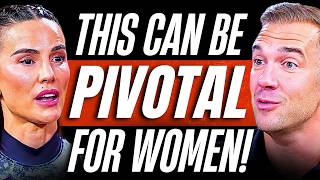
In this extensive interview on the School of Greatness podcast, personal trainer and founder of ZentOa, Senada Greca (also spelled Sonada) shares her life story, mental‑health struggles, and the transformative power of strength training. She recounts immigrating from Albania as a teenager, the pressure to translate for her family, and how those responsibilities sparked anxiety, depression, and an eating disorder. After years of extreme calorie restriction and cardio‑focused training, she discovered that strength training restored her self‑esteem, physical health, and longevity outlook. Senada explains scientific findings on age‑related muscle loss in women, the importance of building muscle before the 40s, and how strength training improves confidence, injury prevention, and quality of life in later years. She discusses her work with high‑profile client Kim Kardashian, emphasizing that the partnership aims to model strength as health rather than aesthetics. The conversation also covers societal body‑image trends, the impact of social media, the pros and cons of weight‑loss drugs like Ozempic, and the necessity of a solid nutrition and sleep foundation before considering pharmaceuticals. Senada describes her holistic approach—combining strength training, nutrition, habit coaching, therapy, plant medicine, and a personal relationship with God—to serve women worldwide through her WeRise app and clothing line. She stresses consistency over perfection, the value of habit formation, and the three core lessons she would leave behind: act from love, become the fullest version of yourself, and treat others with compassion. The interview concludes with reflections on purpose, service, and the importance of spreading the message that strength is beautiful and essential for women’s health and longevity.
Chapters
You look in the mirror, you see, you know, I am fat, I'm big, I'm this, I'm that. You're just breaking yourself down. You have such advanced body dysmorphia, looking at yourself. I didn't love myself at that time. I felt weak, I felt frail, versus now I feel strong, I feel confident, I feel, I'm gonna say invisible.
Sonada is the founder of ZentOa, and we rise, and she is incredible.
Sonada Grecha. The way I looked at myself, bunched from not thin enough to like, I want to look as strong as I possibly can. That's where you step into your power, into your true strength. You're born to have muscle definition. Strength training is queen.
You're also a trainer for Kim Kardashian right now. How do you navigate your work with someone like that?
For me, there was an opportunity to help her, but also help other women.
What do you feel like is your biggest insecurity or fear now?
I guess I'm always.
Hey everyone, Lewis Howes here. I'm excited about today's episode. We have an inspiring guest, Sanana Greca, who is Kim Kardashian's personal trainer, but she is teaching and inspiring people all over the world about building muscle for longevity and mental health and fitness, not just for aesthetics or for appearance. And in a world where women and men are craving attention, craving the need to be liked, and never feeling good enough about their health and their physical appearance, her approach to building muscle, to building mental strength is what's going to help you actually build more self-confidence no matter how you're looking. And when you're training in this specific way and when you're thinking and developing habits in the way she talks about in this episode, you're also going to feel better and look better as well. Super excited about this. Make sure to subscribe to our YouTube channel, click the like button, and leave a comment on your biggest takeaway from this episode. Let's dive in. Welcome back, everyone, to the School of Greatness. Very excited about our guest.
We have the inspiring Sanam Blakar in the house. So good to see you and congrats on everything.
Thank you so much. It's a pleasure being here. Thank you for having me. I've seen you just kind of like take over the Instagram feed, you know, and the explore page for years of your content of just inspiring and empowering women to see what's possible for their health, their bodies, and really their strength. And to show what is possible. You've been an inspiration for so many women around the world. You reach millions of women and lots of people on a daily basis. But it wasn't always that way for you, it seems like. I've read some of your backstory. You deal with some challenges, some anxieties, some depressions, body issue challenges as well. What would you say were the main challenges you faced either earlier in your life or your teen years before you got into a healthy body image and healthy lifestyle for yourself? What were the main challenges you faced?
Yeah, of course. Yeah. Well, so coming into the United States as a teenager, Presented a lot of issues with fitting in and I think that was kind of the first if you want to say foreign to like the issues that started at that point is how does this foreigner fit in and integrate and look like you know the other the other kids and the popular kids so I think that's where.
You speak English too or no?
I was an English speaker at the time I had taken private courses back in Albania and and in preparation of either coming to the States or it's like the main foreign language at the time in Albania, so started on that path. And the opportunity presented itself for my family to come here by winning the lottery and the green card, so were legal, basically, citizens instantly, pretty much, which was super fortunate to be able to come here at a time of unrest in Albania. civil wars and just a chaotic atmosphere. So it was great to escape that and be able to come legally into the United States. But that presented the issues of like, now, okay, I'm a teenager in a new country with new challenges. And on top of that, I was the only English-speaking person in my family. So now I had to carry the load. Yeah, I had to translate everything. I had to basically become a parent.
Yeah, go get a grocery store and ask questions.
Yeah, go to the doctor's office when my parents go to whatever office, go fill out paperwork. To this day, I don't want to fill out paperwork because I was so traumatized by that at an early age. And, you know, but it had to be done. It fell on my shoulders and that, I believe, coupled with, again, being a teenager in a new country, trying to fit in, so that's where depression, anxiety, and even an eating disorder came to the surface.
Really?
Eating disorder wanting to fit in, depression, anxiety, because there was so much of an overload of, you know, my day-to-day school things and then family issues that I had to help with. And coupled, I found out later in life that I have a genetic predisposition to anxiety and depression.
Interesting.
So that was a more recent revelation, even though I've known because my mom has dealt with it and hearing from her my grandfather has dealt with it. So you kind of create that link that it has existed, thus I'm experiencing it. But then to kind of know from genetic testing that, wow, I am predisposed to all of these things and now how do I work through them? Yeah, so that was kind of the back story coming to the country and kind of experiencing some of those issues that then led me to where I am today. The desire to combat those in a natural way and not saying that I did take antidepressants, like I was on medication to help with that, but it never gave me the relief or the long-term relief that I needed.
You knew it wasn't the long-term solution.
It wasn't the long-term solution. It was just a cover-up of the symptoms. But how, you know, always think of with anything, like if it gets taken off the market, if suddenly you don't have no access to pharmacies, or how are you innately going to deal with these issues? So I'm always for start with the things that you're able to do and achieve in a natural way by yourself. And if you need, not against pharmaceuticals and obviously not against therapy, but can you start with the basics or can you utilize them in conjunction with each other and then hopefully it'll carry you to a point where you're able to maybe back off from pharmaceuticals because it is known that they have side effects. and what is the side effects of exercise and eating healthy? None, really. It's actually just benefits from it.
How long, you know, since you moved to the country, you had this kind of emotional weight that you had to carry with the family, also fitting in at school. What state were you living in? What city?
New York, Upstate New York.
You're trying to fit into a school in New York, a new culture. Different type of, I guess, girls and how they communicate versus what you're used to in Albania. You're also getting into puberty. All these different things are happening all at the same time.
Exactly. All at the same time.
When did you realize you had signs of an eating disorder and how long did it take until you were able to break that habit?
It was, you know, when you have an eating disorder, you're blind to it. Right? It's more the people that are outside of you that notice it. So it was teachers and parents that started noticing it, that I was losing weight drastically. But when you have this body dysmorphia, you could be the thinnest that you've ever been, that you could possibly be that, you know, you're risking serious health problems. You don't see yourself as that.
Really?
When you look in the mirror, you see, you know, I am, I'm fat, I'm big, I'm this, I'm that. You're just like the most negative. You're breaking yourself down. You're just don't sing that because you have such advanced body dysmorphia and looking at yourself from a different lens that you don't recognize that.
What do you think is the main cause of body dysmorphia for most people? Is it an emotional trauma? Is it a hyper criticism they get from parents or peers? Is it a pressure from seeing marketing in society that like, oh, I'm not enough, and so I need to become like that thing. What is that?
I think it's a combination of all of what you mentioned. It's hypercritical parents. I love you, Mom, but if I didn't get the highest grade in class, if I wasn't first in class, if you're not first, your last kind of mentality, which comes with amazing side benefits when it comes to drive and achieving and overachieving in life, but it comes with a huge weight on your shoulders to be the best. and that is not always required to be successful, to be the best, to look the best. So I think it's a combination of all those things. I think there is the societal pressures that weigh on young people that are in their formative years and the comparison of unrealistic beauty. for me at the time was all of those factors as well as trying to figure out how to fit in in a new place, new country, new culture, you know, trying to control something that felt controllable amongst uncontrollable, an uncontrollable situation.
So is that a common theme that you've heard from other women that have had, you know, an eating disorder or body dysmorphia in the past that they felt out of control and the way you feel a sense of control is with your body or foods?
It is one of the main things that leads to that is trying to control something that feels controllable in your life.
Because you can't control anything around you.
Right, exactly. Control, yes.
Interesting. So how long did it take until you started to, I guess teachers were telling you or peers or friends or family, but when did you start to say, oh yes, this is a problem I need to take care of?
It took a couple of years. It took a couple of years and therapists. and being prevented from being in sports because sports was something that I was really interested in. So I was stopped from participating in sports. Really?
Because you got so skinny.
Because I got so skinny and unhealthy. That, yeah, that was kind of one of the beginning sort of wake-up calls that, you know, I couldn't do one of the things that I absolutely loved. But but again, like that voice of like, you know, you're just, you don't look the way that you're supposed to look, like persisted for a while, for a few years. And then I was utilizing working out again while understanding that, hey, you have to nourish yourself. So I started to increase the caloric intake, but still not to the degree that was needed. And then trying to outweigh that with working out. Still, really.
So what was a caloric intake that you would take if you could, you know, guess at the times where you were at your lowest with body dysmorphia or, or eating disorder?
Anorexia.
Anorexia.
Anorexia. Yeah.
With anorexia, what was, what do you think?
It was very minimal. And I don't want to because I don't influence anybody to even consider doing anything like that because it was Very unhealthy, but it was very minimal.
Like under a thousand calories a day or?
Way less. Like 500 calories a day. Yeah, a few hundred calories a day. It's very unhealthy, very unhealthy.
When a woman thinks I want to eat less because I want to lose weight today, maybe they don't have body dysmorphia or anorexia or eating disorder, but they're just thinking I want to lose weight. And so I'm gonna go into extreme calorie deficit. What is happening to a woman's body when they, for long periods of time, do 1000 calories or less, or 500 calories or less a day? I'm not talking about like 24 hour fasting here and there, but like long periods of time. What happens to a woman's body?
Yeah, your body goes into a shutdown mode basically. So your hormones start to go off their regular cycle. your body literally goes into shutdown mode because now it needs to protect what it has and not produce the unnecessary things that a normal functioning body would require. So you start losing your period, you start losing hair. So basically it's just your body shedding all what it considers to be unnecessary functions. Even though they're super necessary, but to the basic survival. Preserve energy. To preserve the basic, super basic needs of a human, it starts to shut down all of those other functions of the body. Yeah, I did at that point I did lose my period. Really? And then I had to, yeah, work on gaining it back.
How long did it take to kind of gain back your normal hormone function?
It wasn't that long. It was within like a year, if I remember correctly. It was a long time ago. Still. Wow. But yeah, no laughing matter because it is an important part of being healthy, physically and mentally.
100%. Yeah. Where is the Where is the level of self-love? Like how much self-love did you have during that season of life? And I don't want to speak for other women or other men who maybe you're going through anorexia, but where is that typically seem to be or where is that for you? Did you have a low self-esteem and low level of self-love? And then how did you learn to believe in self, love self, to kind of course correct.
Yeah, I mean, I think there's almost like no self-love because if you, if I were to have any self-love, I wouldn't do that to myself, right? Because now you're basing your self-love and self-esteem on an image that you can't even see clearly. So if you can't see yourself or who you are, and you're wanting to diminish that image, I would say that there was almost no self-love because you don't have a clear image of yourself. And you're focusing that love on an idealistic image that's outside of you.
A perfect image that's outside of you.
A perfect image that's outside of you that you can't attain. And you could attain it, but in your eyes, you know, like you're saying, let's say you've lost a certain amount of weight, but you're still not able to see that. you're still, that's why it's like that. You're never able to grasp for that image because you're not able to see yourself realistically.
So you had very little self-love at that season, right?
Yeah.
When did you start to have a lot of self-love and self-compassion and see yourself differently? To treat yourself differently?
I mean, I wasn't, I was doing all these things. I was trying to be the thinnest that I possibly could, and I still wasn't happy. So there was like a you know, miscommunication there between, like, you're, you know, you're gonna be happy, you're gonna be satisfied when you're this weight. And that wasn't happening. And I was constantly depressed and not happy. So then that came into question, like, where, when, how are we gonna do this? Like, how are you gonna reach that level of happiness? Because obviously this is not working. So then I did a turning point for me was When I saw a physician, a primary care physician, that she was running marathons. And she was running, and she was like, I think in her 50s and running one, I don't want to exaggerate and say every month, but it was at least every three months she was running a marathon.
Consistently.
Consistently. So she got me into running, into working out for the right reasons, for that mental aspect, and started to shift nurturing my body to fuel the runs and to fuel the working out. So that was like the first shift.
You're like what 17, 18, 19 or something?
I was like early 20s, yeah. Early 20s, yeah. During that whole period from like 15 to 20, early 20s, it was a struggle of like a push and pull of wanting to look a certain way and dieting and over working out and just trying to like You know, I went from actually, I went from under-eating anorexia to like binge-eating. I never did fully go into like bulimia, but like I did struggle with those two extremes because it's a, you know, you can only take so much when you're constricting, constricting, constricting, and then you're going to go the opposite way. Literally, you need to like, yes, exactly. Wow. It was that and it was actually a cousin to also saying that's not a like you're not like really leaning into one of the joys of life, which is eating and experiencing, you know, the food that you're eating. And your constant thinking is around what I should be eating, should not be eating so that I don't gain weight versus sitting with what you're eating and enjoyment of it. So that was kind of a little bit of a light bulb moment. that eating doesn't have to be like such a chore, such a, you know, a weighing factor, but more of a joy of life, an enjoyment. And I know nowadays that we've, there's so much information out there and so much stress around, like eating, what to eat, when to not eat, fruit is suddenly controversial. I'm like, really? So, it just, you know, taking it back to the basics, you know, and going back to have food is actually a joy of life. Yes, it feeds our ability to function, but it's also, at least for me, a joy, you know.
That's beautiful. When did you start to feel like, oh, I've started to get these things under control. My perception of myself, My weight, my food, my working out, I'm not too extreme in one way. I have a good sense of self-image and I feel like I'm in a consistent healthy place. What years was that?
I mean, in my early 20s, it was when I started to make that shift. If I can remember the book that Overcoming Overeating, because that's what I was doing at that point. which is one and the same kind of, you're just not restricting, or you are restricting because you are thinking this food is good, this is bad, and now you're maybe overeating the things that you think they're good, but nothing should be in excess, right? So that was kind of a turning point in my early 20s. I was realizing that I could eat, nourish my body, and get the physical activity that I needed, and being a stable physical weight and function properly, right? And I think it was then.
Later.
On in my early 30s that I shifted from cardio and running and marathoning to more weightlifting.
Interesting. So for almost a decade you were like cardio running, that's a lifestyle. What did your body, I mean, not that we should focus on body image, but what was your body? What did your body look like in your 20s then when you were in cardio mode, running, did long distances versus weight training, lifting mode?
It shifted. It's interesting because I was doing cardio and that during like my 20s and my weight would drastically shift, you know, so I would go into being super thin if I was running, if I was training for a marathon, then not a lot of muscle definition to then when I was not training as hard, kind of being a little bit rounder and softer. But then when I started the strength train, I've never been so consistent in how I looked and how I feel looked. Look. It's been years of actually being super consistent in the physical aspect then.
What is the difference that you feel emotionally, spiritually, psychologically between almost a decade of cardio training mostly versus years of strength training?
Yeah, there's a draining aspect with that much cardio. And while you can look a certain way that maybe the society thinks that it's feminine, thin and not a ton of muscle definition. But when I shifted into strength training, I leaned into my confidence and my self-esteem skyrocketed.
Really?
Because that's where you step into your power, into your true strength and occupy space and utilize what you're born with. You're born to have muscle definition. Otherwise, it wouldn't be there, the ability to do so. so when I fully leaned into that, it just completely shifted my self-confidence the way I looked at myself, went from I'm not thin enough, you know, I don't look thin enough to like, I want to look as strong as I possibly can. I want to develop as much muscle as I possibly can. And then, you know, we can talk about that too, like, and how that feeds into to health and longevity.
Sure. I mean, there's been a huge wave of research and science and people like Dr. Gabrielle Lyon and Dr. Marie Claire who are talking about the importance of protein, specifically for women, protein and muscle building for health, for longevity, for also managing kind of the menopause phase of being a woman and just like being able to navigate that with more balance, I guess. And it seems like in the last year or two, that has been the primary focus of many female experts speaking to women. Start building muscles.
Absolutely.
But I don't feel like I ever heard that before because a lot of women don't want to look bulky, they don't want to be too strong or too muscular or less feminine. So how have you learned to navigate the psychology of you going from what society or what maybe you thought was a more feminine, skinnier look for a decade of cardio versus a more strong feminine look in these past years? How have you navigated that when maybe society... So a lot of women say, well, I don't want to look bulky or strong.
Yeah, for sure. Yeah, I do get that comment a lot.
Really?
Or I have... Not a lot. I should not say that. Every so often there will be a comment of like, too masculine or, you know, things Things like that and then it doesn't bother me honestly because it's that person's perspective of me and that's not a perspective that I have of myself. That's great. And how I made that shift was organically because I know what feeling that gave to me. I know how I feel when I lift, when I feel stronger versus when I try to diet myself to my skinniest version. I didn't love myself at that time. I did not feel strong. I felt weak. I felt frail versus now I feel strong. I feel confident. I feel, I don't wanna say invisible, but there's points, yeah, when you know, it's like that when you do lift and when you're pushing yourself that you do feel invisible.
You feel unstoppable.
Unstoppable.
I can take on anything.
Exactly. Exactly. Exactly.
You didn't feel that all the time when you were in the cardio world?
No, not really. I mean, you do get some endorphins from running. You do feel some of those good feeling endorphins when you're on the runners high is real. Not in the same fashion, I would say. Not in the same fashion. It's not strength.
It's endurance.
Exactly.
You can run long distances. Exactly. And there is strength in endurance.
Absolutely. Absolutely.
There is confidence in that and overcoming hard things, but it's not as strong as muscle.
And at the end of the day, yes, you can get those similar sentiments from a lot of modalities, from cardio, from running, or from strength training, or from Pilates or yoga, whatever, you know, that does it for you. But for me, I think of longevity. It's come to that point where I'm like, quality life, quality longevity, being able to live unassisted, when you're later years in the 70s, 80s, 90s, hopefully. And beyond.
The commercial that I remember seeing a lot in the, I guess, 90s on TV was I've Fallen and I Can't Get Up. You see all these old grandparents, grandma, grandma, pa on TV who are like, I've fallen and I can't get up. Literally fell over and they can't push themselves off the ground. They don't have the muscle strength to just stand up.
Exactly.
And it's so funny, you don't think about it as a kid. You're like, yeah, I can get up. But when you're older, if you don't build muscle in your youth, it's gonna be so much harder to build it when you're older.
Absolutely.
Do you know any of the research out there about how much harder it is to build muscle after 40, 50, 60? 60 years old versus before?
I think it's different for men than women. And in some situations to the higher end, it's almost when men are almost twice as able as women to build muscle. So I think for women it's even more important to try to build that muscle when you can. I think it's so funny because I wrote the, I think in the, I'm like, I'm not gonna remember all of this.
What's the stat?
So, if you're going to your 40s, it's basically 2.2 to 0.7 pounds of muscle per month, and then double, and then 2.4 to 8.4 per year. So, on the low end is 2 pounds per year, 8 pounds per year. going after it, like true intense maximal strength training.
You should try to be gaining two pounds of muscle per year.
That's your ability to.
That's your ability.
Your ability to.
If you went all in.
If you run all in. You could only gain for women in their 40s.
And how easy is it.
And it drops, you know, in their 50s is like 1.2 to 6 pounds of muscle per year.
That's if you're training like three to five days a week, hard, heavy.
I mean, you know, made genetically sometimes some people can be a little bit more, but on average that's, yeah.
And how easy is it to lose muscle? Like if you get sick for a couple weeks or don't train for a month, like how easy is it for a woman in their 40s and 50s to lose muscle?
It starts within like two weeks. You start to lose muscle and you start losing muscle in your 30s. You start to lose muscle about three to some studies say five, some studies say eight on the higher end percent of muscle mass per decade. You could start it in your 30s.
Yeah, so that's- that's fighting that natural, if you're sedentary for your life, you're just gonna lose muscle.
You're gonna lose muscle. So that's why it's so important to start early on to build as much as you can so then you can kind of offset the muscle that you will and eventually lose.
Yeah. When you're 80, 70, you're gonna lose it.
Exactly. Yeah.
Wow. That's interesting. Have you tracked how much muscle you've gained in the last 10 years?
I'm not huge on, like, numbers on, like, all right, let's draw. I don't want to get in my own head. This is. There are some people that benefit from that, but there are some people like me who have suffered through some of these eating disorders that stay away from. I stay away from weighing myself. It doesn't have. that effect on me anymore. Sometimes if I want to hop on it just to be like, hey, I knew that was going on. Cool. And it doesn't have that effect on me. But, yeah, I try to stay away as long as in my heart I know what that I'm doing everything that I can to strengthen, train as hard as I can to eat the right way, getting the right amount of protein, carbs and fats, Etc. If I know that I'm doing that, I don't need any measurements to tell me how I'm doing.
I guess it's interesting if we think about it, like, I don't know, we didn't have scales back in the day. There was no scale a couple hundred years ago, I guess, to like weigh yourself. It wasn't a priority, but now everyone's got a scale and they check it every day, a lot of people. What is the, I guess the negative for a woman who wants to weigh themselves and see a number every single day? What is the downside to weighing yourself for women versus the pro of having that number that they see every day.
It's gonna dictate how you feel on that particular day. And do you really want your mood and your day to be dictated by a number on a scale? That's why I always say, why do you want your day to be dictated by that? You know progress. Like we lie to ourselves. We're good at lying to ourselves, but we know when we're progressing, when we're regressing, when we're stagnant, right? so I don't want my day to be dictated by a number. Now, granted that there is, if you are able to remove that aspect and somehow not allow that number to dictate your day and simply utilize that as a way to, to track progress, but not every day, because you're not going, your, your, your body fluctuates within a day from day to day. But if you're measuring yourself maybe in like at the most like weekly increments.
But even then if you're like if your number if the number doesn't hit your expectation Exactly one week of hard work and you're like exactly I didn't see the results exactly defeated and then start binge eating Exactly yeah, and feeling like what's the point?
What's the point? Because progress takes time yeah, it takes a long time to put muscle on Easier when you're a beginner, right? Because your body is gonna respond right away because it's something new and then a little bit harder if you're more advanced lifter or person that works out. But progress takes time, whether it is gaining muscle or losing weight. And that's the thing. I think that that's why most people quit because they don't see the progress in the short term. And it takes three to six months to see true results. And people mostly drop a new program within the first like eight weeks. I think there's statistics like 50-65% of people will quit in the first three to six months of starting a workout program. And then if it's like New Year's, it's like 80% of the people will quit.
I have this, it says a study show that 88% of people who set New Year's resolutions fail within the first two weeks. I'm curious, what do you think is the biggest barrier to maintaining goals then? so that people don't fail so quickly when they start.
I think the first thing it is like those unrealistic expectations. Set realistic goals. For me, if you are just starting out, if this is something completely new, is set that goal of just showing up. Show up every day. Create that consistency. Consistency is the primary goal that maybe somebody should aim for in my eyes, aim for that consistency every day, day in and day out to then bring you to carry you to that point where you have created a new habit. And it takes time to create habit. I mean, there was a misconception of like taking 21 days. Actually, it's much longer than that. I mean, 21 days is a starting point because it's a little bit more than the two weeks. But if you're really wanting to solidify a habit, especially when it comes to working out, it's like a little bit over two months. Some people say 66 days.
Yeah, I love what you're saying about this because if everyone could focus on making the goal, making the process the goal as opposed to the results the goal, they would live a better life.
Exactly, exactly. Process is the goal. Process is the goal.
It's so hard though. I've been in that, I've probably been on it, I don't know, two years, almost two years ago, COVID hit. I was training a lot before then, then COVID and breakup, emotional stress, all that stuff, just life happened where I gained a lot of weight for myself, right? And I was like 255 at my heaviest. But just didn't feel good, right? I'm 6'4 so I'm a big guy. It doesn't look obese, but it just didn't feel good, right?
Yeah.
And then two years ago, I really got consistent in the training and I'm down to 225-ish. So I've dropped a lot of weight, but I'm still not where I want to be, but I'm training so hard. And even me knowing as an athlete that it just takes time. But kind of like letting go of the expectation or the goal of like, this is where I want it to be. Yeah, I can still have that vision in my mind, but a lot of it is the acknowledgement of showing up and just say, did I do the right thing today?
Exactly.
Did I do the right things for my health, for my mind, for my future self today?
Exactly.
And the results will eventually come if I keep showing up for me.
Absolutely.
And, but it's, it's, it can take a while, you know, to get the results you want. And so I love what you're talking about, make the process the goal, not the result.
And are you comparing yourself to this image that you had or you were at some point, you know, what?
Yeah, I was like 22 and I'm like an elite athlete, yeah, yeah.
Can you be the best version of yourself that you could possibly be now? It is hard, it is hard because we unfortunately have, my body has changed from a year ago, from two years ago. Absolutely, and it happens. But am I in my power, can I honestly say to myself that I'm doing everything that I can with regards to working out, strength training, with regards to nutrition, with regards to sleep, recovery, you know, all of the components that will bring you to that optimal self at this point in time. So that's where I'm at. That's where I'm at, yeah.
That's interesting. There seems to be like, I don't know if this is the right terminology, but there seems to be trends with women's body sizes and types and structures since I was like, you know, I grew up in the 80s and 90s. It was all about being super skinny. Then it was about, you know, curvy and voluptuous. Then it's like, it seems like it's going back to skinny. It seems like there's these trends in the culture. Why do you think that, first off, is that accurate that there are trends for women in the way that their body is supposed to look? If so, why does that change for women over the years?
There is definitely trending. There's been, like you said, I agree with you that there's been the trend of being skinny and then curvaceous. And I don't know that it's necessarily being Thin again? I hope not. I don't want to be... I think there's a movement, there's a true movement with being...
Being like strong.
Being strong. And I love and appreciate all the doctors that are coming forward and sharing their data on how strength and having as much muscle as possible is healthy for a woman. not just quality of life now, but in their later years. I think, yeah, I think a lot of these studies and these doctors that are coming forward with women-specific, because I think a lot of the studies have been done on men, but with women-specific studies that show that importance. So I'm hoping that that's the new trend and that's here to stay.
Well, it's interesting because, you know, as you mentioned, when you moved to America and there was you saw pressure from other teen girls in your school. You saw media marketing, you know, whatever it might be campaigns of like celebrities that you see look a certain way.
Yeah.
But you're also a trainer for Kim Kardashian right now and you have been for a while. And I'm sure I'm assuming you're around a lot of top celebrities as well in that world.
Yeah.
How do you navigate knowing that you're working with a very influential woman that women look up to, women want to look like, women want to emulate, maybe they feel comparison to or a lack of comparison that they can't live up to the way she might look or something like that, or just other celebrities in general? How do you navigate I guess your work with someone like that. Also understanding that there's a 15 year old out there who was once like you that maybe sees her and wants to be like her and then does that help her inspire her to eat healthier and train or is it like, let me go extreme food deprivation? I don't know. How do you navigate just that in your mind?
Honestly, that was one of the main reasons why I accepted to work with Kim is because she does have this influence and she decided that she wanted to step into her strength and build muscle and maintain that muscle because also she realized that muscle is important for her health and longevity, not just aesthetically speaking. And for me, that was an opportunity to help her but also help other women that she is influencing. Obviously, her reach is way bigger than mine is. So that was one of my biggest driving factors for working with her and other celebrities that I have is to send that message of strength to the women out there that strength is beautiful, strength is health and quality longevity. So that's to me, that was, yeah, I see that as a positive. having a positive effect on women.
Because you see Kim leaning into strength training more.
Absolutely.
That's what you're working with her right now.
Absolutely. She loves it. I mean, that's not-- Did she always do that before? No, she didn't. It was more cardio and Pilates and things like that, which again, everything has a place and a space and a time, but in my opinion, humble opinion, and I think research backs it up, strength training is Queen.
Right.
That's the other part of the list.
If you're, I mean, we don't have to speak about her that much, but what have you noticed in, I guess, over a year of strength training with Kim Kardashian about maybe just confidence levels or things like that? Has anything changed? Because she's been a pretty confident person already. She's got, you know, massive businesses, she's got a lot of success. Like, has she shared that? Anything you're allowed to share or. we noticed something like that or.
Yeah, I mean, she, she, with all the confidence that she already has, she feels definitely more confident, and she can't wait to train with me.
Really?
I mean, yeah, it's, it's amazing. You know, if she, per chance, happens to not be training for a few days because of her very demanding schedule, you know, she's like, I can't wait to train. So that to me is like music to my ears to hear that somebody has has made that leap and has leaned into strength training. And I've seen her, and I, you know, to me again, it's not as much about aesthetics, but about, you know, form, like, you know, walking around and doing things with great form. Injury prevention. Injury prevention and all of that. So it's beautiful.
I mean, we're here in LA, and it seems to be kind of like a hub of extremes here. And specifically with like weight loss drugs or these Ozempic type drugs and things like that. And it seems to be it's popular in LA. You know, I don't know. I don't know people who are on them or not on them. I don't like know these things. But I see extreme weight shifts in certain women after a few months. And I'm like, maybe that's drug free. Maybe that's Ozempic. I have no idea. What's your thoughts on the pros and cons of something like Ozempic or these weight loss drugs specifically for women?
First starting point for me is always have you tried doing it naturally? So are you able to? Because some people are just not able to get to that point. So for me it's like starting with the attainable things that you can naturally like nutrition and working out. And if that hasn't worked and you are, as a matter of fact, somebody that is a candidate for that drug, then there's more and more research that shows that that can be helpful in a lot of aspects, not just losing weight, but health-wise. So, as with any other therapies, pharmaceutical therapies, I'm not necessarily opposed to them, but there's a place and time for them. So for me, it's like, have you tried the foundation, which again, we know is eating right and working out, getting enough sleep, exactly. Meditating for me, meditating is huge. Did I mention everything? Yeah, so like if you are, if you're focusing on having that foundation and you still are struggling, then maybe it's time to talk to a professional to see if that is something that is, that would be of benefit. I know that again, there has been studies out there with drastic weight loss, I'm not on board with that. So if it's happening, even with the Zempick, if you're utilizing it and you're experiencing drastic weight loss, that is not healthy because you're losing not just fat, but you're losing lots of muscle in that process.
Really?
But if it's done to with kind of micro dosing, again is what studies show is that you're able to maintain muscle mass while slowly losing weight.
That's interesting. Yeah. Is, I mean, yeah, it just seems like a lot of people just have lost weight really quickly is what it seems like.
Exactly.
I don't know who's using it or who's not using it. It's like It's hard for me to tell, but it seems like that's what's been happening. And that scares me.
It is super scary. That is scary. The drastic weight loss, no matter what way it's done. If it's a drastic weight loss and if it's done because you're restricting your food intake and you're working out like crazy or whether you're doing something like GLP-1, like Ozempic, then that's not good. That is not good.
This is a interesting question I have for you, Senada. I'm curious, when you know, when you know that also, like, women, I don't say all women, but there's a tendency that women may compare themselves to other women. And you have content out there that may seem unattainable for a lot of women. I don't know if that's what you're hearing or maybe someone said that, but I can only imagine some woman is scrolling who's not healthy or not fit or maybe not confident themselves and they see some of your videos and they're like, this woman is a superwoman. Someone may be really inspired by that and say, Awesome, that's an example that I can lean into and I can follow her programming and I can maybe one day be like that in my own way. Whereas other women might say, Gosh, David, she's too good looking or she's too fit or she's too shredded. How is she even? I could never do that. How do you navigate the uncertainty that women might have to feel like they'll never be as strong or fit or lean as you or be able to do the workouts the way you do them so effortlessly based on what it may look like for them versus I'm here to empower and inspire women, not show them that they're not enough. How do you navigate that personally?
It's to me that my intention is to never have anybody compare me to them and have them feel bad about themselves. Like that would absolutely, that is not my intention. Like my goal and my desire is to empower women to step into their strength, to feel the strongest that they possibly can, to embrace their their musculature, their strong bodies to embrace that. So for me, that's been my desire to kind of embody this strong person with muscle so that women feel empowered to aim to build muscle and to look in the best way a version of themselves, not me. Obviously, I I have a different genetic makeup than somebody else. We were genetically and bio, we're biodiverse. We're genetically diverse. So it might be unrealistic for some women to aim to look exactly like me, but nobody should want to aim to look exactly like somebody else. So I always, and I say this in my post, I aim to be the strongest version of yourself, the best version of yourself, and not utilize me as a comparison, but rather as hopefully an inspiration of a woman that was struggling throughout her entire life and now has embraced her strength and my abilities. And it took years, you know, it took years. I didn't suddenly wake up. lifted a couple of weights and I'm here. I never, I didn't always have great form. You know, that's one of the things that people always praise, like great form. How are you able to do that? I, I didn't wake up doing that. It was just years of practice, years of kind of perfecting my craft to be able to do that with this.
Much awareness and attention about who you are now from the last, I guess, eight years, I think you've been on social media that you said, like, and just the following and the views you get and the attention you get.
2019, actually.
2019.
Okay, so six years.
Six years. I mean, it's been, no one knew who you were in the last six years. A lot of people know who you are. And you're working with one of the biggest celebrities in the world. What has that been like for you psychologically or emotionally to deal with now everyone's critiquing you, whether it be positive or negative. and you're working with big celebrities, how has that been for you as a human?
I think the biggest, the threshold that scared me the most was hitting 100,000 followers. That was like, whoa, there's 100,000 people that are looking at what I do. And then for some reason it kind of normalized after that. It doesn't really- Every million, it's like, okay, another million.
Yeah, yeah.
No, not that I take it for granted by any means. I'm so grateful for the platform, for my audience. I never take it for granted, but it doesn't have that, you know, fear correlated with it. You know, it's not, because I know what I'm doing, I know what I'm saying, I feel to a certain degree. So it doesn't, when I was just first starting out, obviously you're still kind of building your confidence and navigating that. So, but to kind of go back to, I think what you were asking, like how has that affected me personally? In the beginning, you do deal with a lot of this person said that, so now, you know, am I really that? And then you just learn, at least I have learned to see that as not a reflection of who I am. I know who I am. I know the message that I'm trying to portray, and I know that I'm there for service. You know, that's what makes a purposeful life. is being of service to others. And that's, I don't get emotional, but that's what fulfills me is like being of service and providing as much service as I can to as many people as I can, especially women, because I'm a woman and was, you know, I'm in a household of women. I have two younger sisters. So that always has been kind of keeping in mind what my goal is and who I am and not being affected by people that will try to speak negatively in the process.
When did you start to think about your life of being in service to help others?
When did I start to think that?
Was that something earlier in your life or was that in the last six years? I want to start really adding value and trying to serve people.
I think that's always been, I think it came within the territory of experiencing depression. I think that's, you know, I think that sense of purpose is linked to depression somehow. So I was struggling with that for a while, you know.
How old were you or what?
I mean, I went to business school. I got a master's in business. And, you know, I did this, all of this accomplishment, graduated summa cum laude with the highest honors in three years, and then in one year for my business degree. I was accumulating all of these accolades and it just wasn't adding up. It wasn't fulfilling to me because it didn't feel like it was coming from a sense of purpose or of service rather to the greater good. And now where I am at, knowing what strength training and nurturing myself in all aspects health, nutrition, like we were talking sleep, meditation and recovery, like knowing what that has done for me, for my mental health. That's been kind of my driving factor to bring that to the world.
Wow. How long did you feel like you were experiencing depression for or your mental health was struggling?
It started when I was in my teens, you know, like I said, with dealing with with the eating disorders and then realizing that there was like a sense, there was depression that was going hand in hand with that and anxiety. And, you know, as I say, those monsters in the closet never go away. You just develop better tools to, to, to, to manage them. To manage them. So for me, working out is one of my main tools in my tool belt that, you know, feeling a certain way, I know I'm gonna go get a workout, and it's going to to shift my day.
Everything.
So there are those moments where I absolutely don't feel like working out, but I know what I will achieve on the other side of that. So that's, I think, one of my main motivating factors, along with wanting to be independent in my later years, wanting to have a quality of life and longevity that I can rely on. I think the other one is I don't want to feel depressed. I don't want to feel anxious. I don't want to deal with those things that I know I am predisposed to deal with. You can override those. That's just like the hand that you're dealt. But it's like what tools in your tool belt do you utilize to best deal?
Absolutely. Wow. What do you feel like is your biggest insecurity or fear now?
I guess I always think, am I giving my best self to my audience, to the people that I influence? That is always my, the thing that, if there is one thing that keeps me up at night, it's that. It's, am I providing the best value that I possibly can out there to the world? so that's the one thing that I always strive to do better. That's why I launched the WeRize app. So I had an app prior to that and I relaunched and rebranded last January. So we're coming up on a year and I'm always striving to make it better, whether it's like with the latest research and what it will be, it will be light years ahead of what it is now because we're really aiming for it to be a female empowerment and development platform, not just a fitness app. And yeah, that's what we strive every day to perfect that.
How do you navigate not falling back into an obsessive perfectionist critical state versus progress, consistency, and a healthy balance? When you have that type of older personality, how do you make sure you don't go into that in extremes with work, body perfection in a different way?
Yeah, you're just more conscious of that self-talk, you're just more conscious of those patterns. I think that's with everything, you just become conscious of the way that you talk to yourself, conscious of negative past patterns, and then you of course, correct. And it is good enough. It is good because as we were talking about earlier, you know, great and perfection can be the enemy of good. So I'm always conscious of that to not aim for perfection, but to aim for value and good.
Have you ever done like therapy also, emotional therapy, instead of, you know, workout therapy?
I have. I have.
What's been the biggest takeaway from that for you or Lessons.
I'll be honest, therapy for me has been... It's gonna work for you. Not as much as working out.
Sure.
But it works for a lot of people. It has, it has, it's been a long time, honestly, since I've been in therapy and I definitely promoted like, yes, do therapy. It's definitely great. Like I said, all of these are just tools that we accumulate and then we use and whatever works best for you. For me, it's been more self-therapy. I read a lot of, I've read a ton of self-help books. I've read, you know, books that you'd read at a collegiate level, you know. And that's how I self-educate and that's how I self-help and self-actualize and analyze. Maybe it's a good time to say I've also done plant medicine. And that has been huge help for me and kind of being my own therapist, because that's the best way that I can describe plant medicine is being your own therapist, seeing yourself from the outside and looking at your patterns and looking at everything from a different perspective, kind of removed from that ego self.
Do you have a relationship with God or a spiritual practice?
I have a relationship with God, yeah. I don't know that if it's in the context of the religion in a sense or maybe it is inclusive of all of that. I just believe in the Creator being the Creator for all of us. one loving Creator that is good and wants what's best for us and that is not judging, but that is loving.
What do you think God wants for you moving forward?
To continue doing this work and to really actualize that I am of of help and service to others, you know, because I do at times struggle with that. Like I was saying before, am I doing my best? Am I really being of service to humanity, to others? So I think really leaning into that, that yes, you know, if I actually help just one person, then that is a life fulfilled. If I've changed, course corrected, somebody's path even by a small percentage, then that is an accomplishment.
That's beautiful. Where do you think you'd be? Do you think you'd be as happy and healthy if you didn't have a relationship with God or a spiritual practice?
I think it's good to have somewhat of a relationship with whatever you believe kind of that higher power to be. I think it's It's something to lean on. I think it's something to lean on. And for people, it's different. For everybody, it's different what that could be or look like and what image you have in your mind. But whatever gives you that comfort that you're here for a reason.
Did you have a spiritual relationship or when you were In your teens and early 20s and struggling with the depression and things?
I had, my grandma raised me to be religious and say prayers every night. And I think I lost that a little bit. And now I'm back at saying my prayers every night.
You feel more peace now?
Yeah, absolutely. Yeah. That's beautiful. Yeah.
That's beautiful.
Yeah.
Your parents still around?
Yeah, they are. They are. My parents, I have two younger sisters. They're all in New York.
They're all in New York.
Yeah, yeah, yeah. They're still around.
What's the biggest lesson both your mom and your dad taught you?
My dad taught me to be strong and to persevere and to Yeah, he never complained. He never complained. He went from being a doctor back in Albania to being a janitor when he came to the United States, even though we're legally here and everything. But that's what he had to do. You know English, but he knew to put his ego aside and just do what needed to be done to support his family. from my mom is to make that compassionate spirit and also, even though it led to some things that weren't so positive in my life, like that striving to be the best also led to where I am today, I believe. So yeah, I thank her for that.
Wow, that's beautiful. What's the biggest lesson Kim's taught you?
She's a hard worker sometimes. I thought I was a hard worker. So, yeah, she inspires me in that way to be a hard worker. And beautifully balances that with having a family and having four children, and spending quality time with them. So having that balance, that's inspirational.
That's cool. You've got an app called the We Rise app. How many women are in this community right now in this app?
Oh my gosh, I need to know where is everybody? Thousands of women, yeah, thousands of women, tens of thousands of women are all over the world. All over the world that are achieving their best, strongest selves and I'm so excited for it.
What do they get in the app? What are they working on?
What they're working on, where they get a lot. Yeah. So whatever experience level that you're in, so if you're beginner, intermediate, advanced, if you're working out from home or the gym, there is a program that is for them and whether they want something to get started, like a 20-minute follow along that I'm with them every step of the way and kind of guide them through. They got that on there. So I think for every kind of walk of life, there is something in the app and there is a meal planning and recipes and macro tracking. Right now we currently have an expert nutritionist and expert habits. She actually is one of the four PhDs in the world that works with habits to just help people establish good habits, get rid of habits that don't serve them anymore. And then on the nutrition side, you know, speaking about like, what are macros? And then how do we ensure that we intake enough protein and all of that? And that's just the beginning. We have huge plans.
That's great. Where can they go to sign up for that?
We Rise.xyz. Okay, awesome.
I'm sure it's in your bio.
It's on my bio. It's on my bio. Yeah. I'm not wearing the clothing, but I also have a clothing line called Zentoa.
Okay.
Making women slightly a little bit more motivated by wearing some cute workout clothes to work out. There you go. Yeah.
That's great. What can we do to be of best service to you moving forward with this community or people watching or listening right now?
Spread the word. Spread the word of strength. Spread the word that Aesthetics will come as long as you put in the work to aim for health and longevity. Yeah.
And what's the best place to find you on social media? What's your Instagram?
For people to find you. Sonatadagreca. Sonatadagreca. Yeah. See, you see how much I love self-promoting? You know, in this whole conversation, this is probably like the most just kind of slightly uncomfortable I've felt because I don't like self-promoting but, yeah, without self-promoting I guess what is of service, then you don't get people to take advantage of that.
That's true. Yeah, that's true. Where do you think you'd be if you didn't start putting content online six years ago?
If I didn't.
If you did not. I.
I don't want to think about, like, the past jobs that I've done because it was not, not. not fun, but I would do something. I would be in this space. I would be in this space somehow because I'm so passionate about it. So if I didn't have a presence, such a large presence in social media, I would probably do it in a small fashion, even if it was outside of the 9 to 5, which I was doing actually before my I was teaching yoga classes and I was training on the side while having my nine to five. And then, you know, I love that aspect so much, which is what led me to kind of start doing this and putting myself out there, putting my workouts out there, and one thing led to another. Here we are today.
So you were doing it on the side. You had a full-time job.
I had a full-time job, but then I was teaching yoga classes and... You.
Weren'T teaching strength training?
And a little bit of strength training as well, yeah. It has advanced from that point, that starting point, to where it is now. But I was doing that on the side and obviously doing my workouts and then I decided, let's just put it out there, like whatever I'm doing every day. And you could see probably things have shifted from earlier on till now, but just put it out there every day. Get up in the morning, do my workout, film it as I'm doing the workout and to see where it leads.
When did you start to notice that like, oh, this is starting to take off? Like the content I'm posting daily, like, oh, it's actually getting out there and it's resonating with women.
Yeah, I mean, pretty fast it started to happen. I mean, it didn't shift from like, I think I had like 2,000 followers in 2019 when I started, if I remember, one or 2,000 when I first started and It started to happen gradually and then exponentially.
Really?
After that, I think that first period of like getting to a few thousand was probably like the hardest. Because it's like working out, you know, it's consistency and you don't see a ton of results. But then you stay with it because you don't, you know, you just can't tell the future. You can't predict it from just that short period of time. So like with anything else, consistency, consistency, consistency.
So now we've got a couple of final questions for you, but this is powerful. Thanks for sharing and being so open today. I appreciate it. Of course, of course. This is a question I ask everyone towards the end. It's called the three truths. So it's a hypothetical scenario and question. Imagine you get to live as long as you want to live and you get to accomplish every dream you have. But for whatever reason, you have to take all of your content with you when you die. So we don't have access to the videos you posted, this interview, it's all gone. Anything you create from this moment moving forward, it's gone. Your app, it's gone for whatever reason, hypothetically. But on the last day of your life, you get to leave behind three lessons to the world. And this is all we would have to remember your content by. Call it Three Truths. What would those be for you?
I think the biggest thing for me is to do everything from a place of love. So whatever you're trying to achieve, achieve it and aim for it from a place of love. Aim to be the fullest version of yourself and not that of somebody else, but the fullest version of yourself. And the third would be to treat everybody in a way that I don't know if necessarily you want to be treated yourself, but in a way that I believe in a higher self. In the higher self would want you to treat or God, if you will, will want you to treat the fellow man and woman with just compassion and love and understanding. stepping aside from judgments and what you have been taught to perceive.
That's beautiful. Create from love, aim to be the fullest version of you and treat others with your highest self and mind. That's great. That's beautiful. I want to acknowledge you, Sonata, for your transformation and your ability to be consistent. and it sounds like it's very challenging leaving one country, coming to this place, and just having to deal with all the pressures of society, of school, of parents, and you needing to be the parent as a teenager. That's a lot of weight emotionally and physically. So I want to acknowledge you for overcoming that challenge and overcoming the depression and the sadness and the anxiety and the stress that you faced and for Starting to tap into the healthiest version of you and being consistent with that version of you, letting go of your old comparison ways and stepping into how can I just be my happiest fullest self? So I acknowledge you for putting yourself out there also, you know, six years ago deciding to say, Hey, I'm gonna put my content out there and start to serve people the best way I can. And if it helps one person or millions of people, I'm just gonna do it consistently. So I acknowledge you for all of it. And I appreciate you for opening up so honestly during this conversation.
Thank you so much. I appreciate you saying that. Of course. I appreciate you having me here today. It was a very enjoyable conversation. Thank you.
That's beautiful. One final question, Sanath. What's your definition of greatness?
I think it's embodying again the true fullest version of yourself while being of service. to others to the fullest capacity that you are able to.
That's beautiful. Thank you so much for being here. I appreciate it.
Thank you so much. I appreciate it. Thank you for having me.
Of course. Thank you so much for being here. I hope you got some value from this episode as much as I did. If you did, please do me a favor and click the like button right now. If you like this, it's going to help share it out into the YouTube world even more for us. Please click that like button. and leave a comment below on your biggest takeaway or if you have any questions that you want me to follow up with. Also subscribe to our channel because when you do, you help us book even bigger guests and I want you to have the best information out there in the world because that's what the School of Greatness is all about. So make sure to subscribe right now, like this video, share a comment below on your biggest takeaway and also I've got some big news. A new book. If you're looking to create financial freedom in your life and you want more abundance and you want a richer life, then make sure to check out my new book, Make Money Easy. I think you're gonna love this and it's all about creating financial freedom. The link is below in the description or you can go to makemoneyeasybook.com and check it out. Grew up very poor so it was scarcity mindset. And, you know, my mom worked so many jobs. My dad worked so many jobs, and it was like, no matter what, there was never really enough. And money, it was always like a stress around money, probably. Always, always a stress around money.
More from Lewis







Secret Service Agent: Your Neutral Face Is Making People Distrust You (Here's How to Fix It)



