LeBron James’ Agent: How I Built a Billion Dollar Empire with Rich Paul
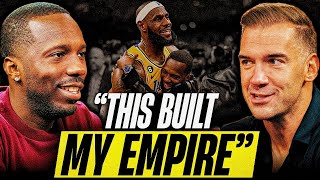
Rich Paul, LeBron James' agent, talks about building his billion-dollar agency from a difficult childhood. He discusses emotional intelligence in business, his relationship with LeBron, and how vulnerability shaped his leadership approach in sports management.
Chapters
In my environment, we weren't allowed to be vulnerable because I have to be mancho. I have to be tough. I can't be vulnerable. When you talk about the pitfalls of the streets, you definitely can't be vulnerable.
Because.
When LeBron was first drafted, I'm a part of the crew. At that moment, I could be totally satisfied. But you got to remember, that's not who I am. I'm a natural-born hustler.
You've chosen one in your own right.
I'm trying to live. I'm trying to survive. Bye.
I didn't have a plan.
This wasn't a plan of mine. Really?
No.
You've spent a lot of time with LeBron.
What's the thing you love and appreciate the most about him that maybe a lot of people don't know about? I think you gotta have a dream. The School of Greatness.
Really?
Yeah.
Please welcome Lewis Howes.
Welcome back everyone at the School of Greatness. Very excited about our guest. We have the inspiring rich Paul in the house.
My man.
So great to see you.
Great to see you as well, my fellow Ohioan.
Let's go, baby. I love this. I just want to do a quick little bio about you for people that don't know who you are. But Rich Paul, you started Klutch Sports Group, one of the most influential sports representation companies in the world. Represents some of the biggest pro athletes and you've done billions in negotiated deals. Obviously, you work with LeBron James. You are UTA's head of sports, from what I read. You were also on the COVID of Sports Illustrated. They called you the King Maker. GQ called you the Power Broker of the Year and Time called your company 100 of the Most Influential Companies. And it's amazing to watch your journey from behind the scenes as a fellow Ohioan watching these things over the last 10 plus years when I started to be aware of you. And I'm really grateful for how I've heard about your reputation. This is our first time meeting, but the way I've heard about you, the things I've seen about you and how you respect people and how you do business differently in the sports world, which is not about I've heard you say this multiple times. It's not about the money. It's about the meaning behind the relationships. It's about the connections you create with people and valuing relationships first. And I really respect and appreciate that about you. And the story, the mythology goes, and LeBron James wrote the forward to your book, that you guys met in an airport. Yes. And he talked about, if I'm paraphrasing what he mentioned in your book, but he talked about how you gave him and you give people things that most people in your community don't do, which is giving people vulnerability, the ability to be vulnerable. and that's something I talk a lot about on the School of Greatness. And I think it's really the essence of connection, allowing for space for vulnerability. And I'm curious, how did you learn about vulnerability early on? Or were you not a vulnerable child? Where did you learn that lesson? And have you always kept it consistent?
You hit it right on the head. I think in my environment, we weren't allowed to be vulnerable. And so I had to learn that through emotion. And so it's kind of like wavelengths of humans.
Right?
I can stand next to you and I can feel that wavelength and I can feel that emotion through that wavelength and I can look in your eyes and understand that you and I have, we share some of the same issues, we share some of the same interests, we share and oftentimes young, especially men, all men, and then when you break it down to young men in the black community, communication is one of the hardest things there is to do, right? Because I have to be Mancho, I have to be tough. I can't be vulnerable, right? And then when you talk about the pitfalls of the streets, you definitely can't be vulnerable because the mindset has to forget. but not really ever forgive. It's a difference. Most people say forgive and forget, but when you're in the streets, it's a different mentality. You have to forget in terms of not in his existence, but for that moment to get through. But you don't never really forgive, right? And so when I started to.
You.
Know, interact with people and be around people just in my community, I started to see a consistent behavior across the board of belittling people, you know, just being mean to someone just because that's what made people laugh, right?
Being cool or funny, yeah.
That's so you thought that, right? And What it was, I started to realize is these people are deflecting pain, right? They're deflecting that pain. Their body's a mirror. And when they look at themselves, they're looking in the mirror of themselves. All they see and all they feel is pain. And so their behavior causes them to deflect that. That's not who they really are. But they also don't know who they really are and the person that they think they are, they're not happy with that person. But there's no therapist to talk to. There's no parental structure in place that I can, you know, bounce things off the wall with. And so my mom was struggling with her addiction and I decided to take a different approach at a very young age. And over time, that consistent behavior allowed people to gravitate towards me, right?
And-- what was that change that you had early on then?
I think the change was in conversation or in that playful, we called it ranking, in St. Louis they called it joning, in other places they called it different places, playing the dozens back in the day and older things. It got to a level to where people would start to say a hurtful thing or what they thought was hurtful to you. And it was hurtful in some aspects, but I processed it different. And so at a very young age, when you read inside the book, Lucky Me, I talk about I had to bottle this up, and then I had to decide, okay, how am I going to react? and if more people in the world did this, there would be less people dead. There would be less people in jail. There would be less, you know, it's just. And so as a young man, I'm sitting there, I'm laying on the floor, and I'm saying, okay, the next time this person says this, I'm going to have to do one of two things. Either I'm going to have to fight or one of three things. Fight, walk away, or. figure out a way to where I don't exude violence, but I'm killing them with kindness and then ultimately having the ability to. To befriend that person because I understand and help them understand that you and I are one and the same. Wow.
Right.
And so that's what I did that, you know, when the guy said to me, that's why your mom smokes crack. My comment back to him was, yeah, but who looks as if their mom smoked crack, me or you? And so that caused the crowd to now have a different response.
Zing.
Yeah.
Right? Wow. There's no fighting words. There's no, you know, no physicality. It's just a simple thing. But then that caused me to also, you know, 'cause everyone has observer's paradox. Social media today is Observers Paradox at its highest form, right? Kids are reacting based upon a social media response and feels as if I have to kill this person now because they embarrass me and everybody's seen it. But if me and you get into an altercation and we're the only one that know about the altercation, you have your story. I have mine. no one else seen it. It's only based upon the crowd of people around to where you've, and there's been so many instances like that growing up in this inside this book of Lucky Me that I had to navigate through to get to the point that I am today. So this was a learned behavior.
I mean, emotional intelligence, I feel like is one of the most powerful things that any leader or entrepreneur or agent can have to truly be successful for the long term. you've seen, I've seen a lot of people, you know, make money or build a business or become successful in something, but fall quickly without emotional intelligence. What do you feel like is the biggest skill you've learned in the last decade? Plus, it's 11 years of clutch sports group. Now, I think it's 11. In the last decade, what have you, the biggest skill you've learned to take your leadership skills to the next level, to take your connection to the next level, to take that has allowed your business to grow so much.
I think it starts with not sitting your success. Can't sit there. I think the next thing I would say would be be a willing listener because it's important to listen to the people that's helping you get there. Also, third would be know what you don't know. one of the first things I did was I went and I got a guy who was very helpful to me named Mark Termini. And Mark Termini was an agent prior to never had the success that I had as an agent, but also focus on something very specific. And the one thing I knew that people would say about me was that I lacked I lacked a negotiation experience. Really? Right. And because they would just need something to say. And so that was one of the first things I did. And then I would say, so know what you don't know. And then the fourth thing I would say is being willing to invest in others.
What does that look like for you?
I have people that my company that came off the street pretty much. You know, there wasn't, they didn't, they didn't need a resume prior to. I believe in our platform. I believe in our infrastructure. I believe in our brand. I believe in our culture. So anyone is coming in, the first thing you need to be willing to be is a teammate, a good teammate. you can start there. Everything else, you can be developed just like a basketball player, just like a football player. You know, if you're a receiver, understanding how to run routes, if you're a basketball player, understanding what you need to work on, coming off a pick and roll, coming off a screen, reading the pick and roll, throwing up, you know, the pocket pass or seeing the man in the corner, those different reads, it's the same thing in our business, but if you fall in love with the headlines, if you fall in love with, well, what's in it for me? And this is what most athletes do. And then most people around the athlete, they're not helping them make the best decisions because it's on the basis of what's in it for them. So now in the sports business, you get this, this pyramid of entitlement or this infrastructure of entitlement around the athlete. and it stunts their growth.
I'm curious about this. I want to make sure I get the story right, so correct me if I'm wrong. But you met LeBron early on at an airport.
Yes.
In Akron. But you didn't start your agency until-- 2012. You know, was that a decade later or 12 years later?
10 years later, right?
10 years later. So you became friends with LeBron 10 years before you launched your business. But you decide not to launch a business sooner than that. You wait a decade, even though you're potentially could have launched something with him or around him or in connection to him sooner. If I'm, correct me if I'm wrong.
Probably not. I think if I would have tried to do that then, it would have failed.
Gotcha.
And I think that's what people have to understand. I wasn't able to feel that entitlement because I was next to him. Nor did I want to, right? You have to allow things to evolve.
Yes.
And people count the years, but don't count the years. You have to count the minutes within the hour, the hour, within the day, the day, within the week, and the weeks, within the months, and then the months, within the year, and then the years. You get what I'm saying? Mm-. And so, For me, I was already somebody when we met. I was what people would deem to be the LeBron of my neighborhood.
Really?
Already?
Why is that?
You know, because I was the chosen one, no pun intended, you know? And through all my journeys, you know, all my ups and downs, the roller coaster of life, everything I did, the good, bad and the ugly, I did it best in class.
Interesting.
Right?
And so, so you were the go-to guy in your neighborhood?
Yeah, for sure. And everyone knew that, right? It was like a secret thing, but everyone knew that. But I was also, when I say the go-to guy, not just for bad things, I'm talking about for like, I help kids with their homework if I see them doing math, you know, just My friend has a child early and Don't really know how to handle it. So we talk about it, right? I was the young man coming home from school and I'm seeing my brother, his older siblings, I mean his older friends and you know, his friends are doing something and I'm talking to me, my brother, my brother and I just had this conversation the other day and my brother is somebody that I really respect wholeheartedly and I appreciate him because he sacrificed a lot for me, a whole lot and was willing to loot and was willing to do anything to make sure that I was successful. Wow.
Right?
And so when you, that's why the title was Lucky Me. There's so many different components to the luck. The average person in America would think, Oh, of course you're lucky. You met LeBron and you went on to do this and you wouldn't be able to get in these rooms if it wasn't for LeBron, blah, blah, blah. And they're partly correct as it pertains to, yes, I did meet LeBron prior to him becoming LeBron. But I also had the ability to understand my position and my role at that time. roles change. There's a chapter in the book, there's a rule in the book that's called star in your role.
Star in your role.
And there's a rule in the book, right? And when you think about the evolution of a person and you think about the evolution of positioning, allow yourself to be a part of that evolution by managing the transitions within. Like you said, when we first started, LeBron didn't need, what does he need? He's a rookie. His exact words to me when I was hired is, I have nothing for you to do.
I already got my contract.
I don't have a title. I don't have anything for you to do. And at that time, I wasn't looking to be an agent.
You weren't?
No.
Not at that time.
So you're what, 22, 23?
22, 23.
Yeah.
At that time, you know, I'm looking to make it out of the ghetto. I'm looking to be on the side of the mountain that there are no sirens, there are no deaths at young ages, there are no-- every time I get in my car, I have to look in my rearview mirror to see if it's the police, if it's the jackers and robbers, whoever it may be, if it's a rival crew, whatever the case may be. People don't understand how much pressure you grow up under in the Black community. And I say the Black community predominantly, but today it's in these minority, poverty-stricken communities. There was no such thing as planning ahead, survival mode. Yeah, and I think sometimes people get it misconstrued because it's like, well, you have a choice.
Well.
We'Re, this is the, this is the, this is the School of Greatness, right? But you take this young kid growing up in Cleveland, Ohio, who has the same capabilities of any student at the Stanford Business School, at the Harvard business school. Now, I said capabilities, but the opportunities aren't there. And that's the difference. My brain works just as good as anybody's in the world.
But.
If I'm sitting in sanitation, then how do you expect me to evolve? because I'm dealing with two things. I'm dealing with the lack thereof opportunity and the lack thereof discovery to even obtain an opportunity. So this is some deep stuff if you want to get into it. And so when you read the book, these are all the things I'm going to explain to you. Despite all of this, I've been able to land across from Lewis, right? And we're having this conversation. But when we, when, when, when LeBron was first drafted, I'm a part of the crew.
Right?
At that moment, I could be totally satisfied. I get to hang. We go in here, we go in there. It's this, it's that, it's bright lights, things is popping, so on and so forth. But you gotta remember, that's not who I am, right? And you'll see from the first chapter, I'm a natural born hustler.
Right.
You weren't just trying to latch on or just hang out and just get- Latch nowhere. Yeah, you were trying to, you were the chosen one in your own right.
I'm trying to live. I'm trying to survive. Like you said, you sold your company, you had enough money to last you a couple years. Well, I also had enough money to last me a couple years, and then.
Some.
Based upon my lifestyle at that moment. The thing I was able to give him was, like he said, we would have these conversations, and through my dialogue, he understood that I understood him and there was no judgment.
Wow. You know, at the time, I mean, growing up in Ohio, you know, LeBron was well known in Ohio, I think at 14 or 15 at that point. But then it was like 16, it was like national, right?
Exactly.
Okay. Now he's starting, who's this high school kid or people to show up to this game? Now it's on TV.
Yeah.
So I remember growing up being like, oh, LeBron, 'cause it was Maurice Clarett, you know? Well, that, and then LeBron, right?
Well, if you really think about it, and if you talk to Maurice Clarett, I used to talk to Maurice Clarett when he was incarcerated. I would send Maurice Clarett money to his girl that he had called me when he was incarcerated. Maurice Clarett was a great guy. I went down to Maurice Clarett's mom's house in a townhouse down in Columbus. When that happened to Reese, it was just upsetting. But you got to remember, think about the pressure. He is trying to align himself with LeBron because LeBron can go right out of high school. Why can't I do, why do I have to play him? You understand what I'm saying? And in a lot of ways, he was not wrong. In a lot of ways, he was not wrong. But at the same time, here's where that understanding and with no social media back then. It was very little player empowerment.
There was no NIL back then.
No NIL back then.
Everyone's monetizing off of him except for him.
Exactly. And so now you have this frustrated young man and rightfully so. Now we understand why the limit is what it is. I actually think it should be a year less. but we understand it because of the physicality of the game and things like that. But that's not the only reason. Now there's NIL, so you can, you.
Know, you can develop more, make money and in college a little more.
Yeah, but, but we have to fix that, too.
Yeah.
Because nil is broken.
Right.
It's, it's, it's, it's fixed on the front end, but it's broken on the back end.
Right, right.
And so, but it was only LeBron.
And, I mean, they were both from.
You know, I mean, it was, it was unbelievable. It was an unbelievable time in sports.
It was unreal.
Yeah.
I remember being so Proud of being from Ohio. He's an unbelievable time. Big Ohio State fan and just like, this is amazing. Yeah, a huge Ohio State fan. It's like, I was at the Michigan Ohio State game last year, was so sad to watch them lose. But seeing Maurice and then LeBron, like, take over the country was so inspiring to watch.
And I can only imagine it on social media.
Imagine that. Oh my gosh. But I can only imagine the pressure both those guys had.
A ton of pressure.
16, 17, 19. a ton of pressure. And trying to break all these rules, I mean, in a good way, breaking the different rules of sports and business and all these things, trying to do new things, trying to build their brands in certain ways, but just the pressure of everyone wanting something from them and everyone trying to put them in a box at the same time, all these different things. But you were able to be there for LeBron, and it sounds like Maurice, I didn't know this, as well, in ways that others weren't. You were able to give, you know, console, you were able to be vulnerable with them is what it sounds like to me.
Yeah. And again, I think that when you look at the dynamic, we all were.
Pretty.
Mild mannered, right? We were all raised a certain way. Whether it didn't matter what we didn't have, we were raised a certain way. So that foundation as a human being and its character mattered. So when we started to push forward, I think the one thing that he knew was, I don't have anybody around me that's going to make a decision for them. I mean, he seen it. It's very clear. And the one thing that I knew was this isn't my brother. This isn't my, you know, it's just like when I was in my neighborhood, you get, you know, whether you're in the streets doing what you do, whether you're running with people that can cost you your life or freedom, et cetera, get one time. And for me, it was the same thing. Like, I had zero entitlement. and so I also had zero ego, because I know who I am, and I know what my capabilities are. So I don't mind doing does the.
The the groundt work.
People would think it be the grunt work. It's not really grunt work, though. It's what shapes you and mould you I worked in my dad's store, from six AM starting at six AM My dad never took A holiday. There was no such thing as Thanksgiving and Christmas and the stores closed and.
It'S like- you- gotta make money.
We're open 24/7 365 rain, sleet, hell or snow, school's out, we're open. You know, it's a blizzard, we're open. You know, it's like all those things. And so watching, I had the best example in front of me, hence why I'm so lucky. I learned math and marketing from cash register and products within the store and how people bought it. I learned customer service dealing with people. I'm dealing with all types of people, older men and women, younger men and women, drunks.
Yeah.
You know, drug addicts to, you know, people who work in jobs, teachers, mechanics, everything. And so I had this world around me, and I'm this young kid that my dad has thrown into the fire with an expectation of, you know what to do and what not to do. And that's how we live. Wow. And so it wasn't, I didn't grow up in a world where my dad had to say something more than once.
You heard it, you did it.
You heard it, you did it.
Yeah.
Be back here at such time. There was no iPhone. There was no FaceTime.
Yeah, but you're on time. Yeah, you're there. But the thing is, you know, I would think that most 21, 22 year olds today, if they met some up and coming influencer on social media or some superstar or whatever, and they became friends with them, I would think that most of them would be thinking, how do I get the most? from this person? Maybe I'm wrong. Maybe people aren't thinking that way, but I would think, okay, I'm in the friend group, I'm in the circle, I'm getting a building relationship. What can I do to build with this person and monetize or financially grow as well? But it sounds like you just said, I just want to be here as a friend and contribute and add value. I got my own thing and I'm not trying to monetize anything right now. That wasn't something that was on your mind.
Well, the thing was is, My own thing came on the back of dead or in jail. So that I don't even want that. But what I have is what's the opportunity cost of me not staying in the fray? And, you know, we're boys, we're friends, we're enjoying it, you know, sometimes people just need support.
Yes.
Without you gouging to try to get something all the time.
Right.
Sometimes it's okay for the athlete to be able to just do for themselves and not have to do for everybody else and not feel entitled to have to support everybody else. See, there's only in the black community where that I'm not gonna say only majority of this transpires. transpires within the black community because if one person make it, then nobody else is really doing anything. And so now your mentality becomes what? Oh, I'm good. I'm good. Well, no, no, no. He's good.
Right.
We have the ability to be okay given that we value him to the point to where we're not going to do anything detrimental to his career.
Right.
And while doing so, hopefully we make relationships that allows us to then detach ourselves from this person and know I'm not going to get rich. But what I am going to do is getting position. And if I can get in position and I value that position, then I can manage the transition.
Wow.
And if I manage that transition and I'm able to evolve, then I can do what? Become repositioned.
Interesting.
And that's how my mind worked. My mind didn't work. Let me jump in front and let me show my song and dance. that's not what I'm into. And the only reason why I was able to think that way is because of the silly line that I was raised up on. The average person can't get here and think that way. It just doesn't work like that.
Right.
And even today, right now today.
I.
Talk to young men and women all the time. I talk to young people trying to start companies and next to athletes and you know what they're saying consistently? The bag, the bag, the bag. It's all about the bag, the bag.
Well.
There'S a lot of bags with a hole in the bottom of it.
Mmm. Right?
And your guy that you're standing next to It's only going to be able to do what they do for the next 10 to 12 years max. You gotta hope they last that long. Very few is gonna get to year 21. You can forget that.
Right.
And so very few make it past.
Two or three years.
This is my point. And so what I try to explain to them is, no, you're looking at this all wrong. Don't use your position next to the player. to gouge and get the most for you. Use your position next to the player to evaluate and understand where you can fit in. And when you get to that, when you get there, then try to continue to add value so that you can stay there.
Man, this is the most important thing I think people need to hear right now. And it's about starring in your role.
Have to star in it.
And your role may evolve over time and whatever position you're in.
It will evolve over time.
And it, yeah.
But if you, but, but if I'm a role player and I jump out and I try to, the coach didn't call to play. You come out to huddle and you doing your thing. That's not what the, the coach drew up.
Right. Right.
You have to understand the importance of executing out of a timeout. That is what separate Great coaches from good coaches, from bad coaches. It's not the full 48 minutes of the game because half the time they're not even coaching. When you have the top talent, but what do you do after a timeout? It's the same way in life. If I see something transpire, let me go in, readjust, draw up a different play, and then I come out of that time out. It's important for me to execute, right? That's in the relationship, that's in a personal or business, that's in planning, that's in anything you do in life. But these young people today, between social media and the bag, they're called no man's land. And you know what happened when you caught no man's land? what happened? It's a back door cut and layup.
Yes. Yeah.
You know, you get beat. You get beat. You get beat when you play the game.
This is fascinating, though, because, I mean, I remember watching the, I think it was the documentary or it was a series, more than an athlete.
Yeah.
With you and Maverick, you know, and who's one other guy in that?
Right.
Randy.
Randy, yes. But it just seems like you guys had a level of wisdom and forward thinking that most don't in that type of dynamics in relationship. When you have a friend, family member, whoever that you're close to, who is making it. When I think about Mike Vick and his friends kind of taking from him and what happened there, and think about someone like Tyson who had to learn his lessons from giving money to people that weren't adding value and certain things like that, Most people seems like they're trying to get without adding value or knowing their role.
Yes.
But you and Maverick, you guys were like, no, we're just gonna be friends and help our friend make it and know our role.
You know why? Because we also would challenge each other. Really? Oh, yeah. And that's the thing I think that made it become what it has become today because there was no such thing as us being in a room and happen to be and just shut up. That didn't exist, right? That didn't. I mean, we had challenging times amongst each other for the right reason.
We. We.
Inspired and motivated each other for the right reason. We listen to each other for the right reason. And when you think about all these things, I remember it plain as day. When we first started LRM, there was a conversation, well, who's going to lead it? There was no certain qualifications from nobody to be able to lead it. But this decision made the most sense. And so that's what we're going with. And at that time, the decision was for Maverick to lead it, which is fine. That made the most sense. Great.
Did that hurt your ego or were you trying to push and say, I should lead this?
No, not at all.
Right?
Because you don't push, you support. So now when it was my time and my, because again, the only one that ever had a real opportunity was, I mean, not a real opportunity, out the gate was LeBron. LeBron and then Randy, who was LeBron. Right, right. So Randy had a job to do.
Did a job.
24/7, 365. Right.
And you guys didn't have jobs from LeBron.
No.
He was like, you're my boys.
Yeah.
Well, hang. I want you guys to hang out with me.
But that also didn't feel good for us either.
'Cause you're like, we don't wanna just.
Hang out and not. Right, we wanted to make sure that, We came up with things to where LeBron supported, but we didn't necessarily want to be totally dependent.
Right.
You understand what I'm saying? And it's a different time now. And the problem is, and I used to not say this, but today everyone wants to duplicate that and you can't do it.
You can't tell me why.
Duplicate. number one, timing. Timing is so important. Timing is so important. Number two, the Stars have to align. They just do. Number three, those people, if you come with the entitlement, then you well better come with the capabilities.
Better back it up.
You have to come with the capabilities. And it has to be a two-way street. The athlete and the supporting cast have to be aligned. That athlete has to be able to become a business. Most athletes aren't businesses.
They're just talent. They're getting a talent fee.
Right. Right.
Very few athletes actually become businesses. But to most people around the athlete, what do you mean? He makes a lot of money. Yes, he makes a lot of money. But that doesn't make him a business to where you can make a lot of money. Yes, his contract, his marketing deal is in the LLC. He's a walking corporation. he is. But for that walking corporation to have an infrastructure to where the CEO and the CMO and the CFO and this and that can actually make money that don't exist.
Yeah. And if he gets injured or gets cut or doesn't perform, there's no more money coming in.
Right.
But it just doesn't exist. And the problem is everyone thinks that because this person makes a lot of money, that they should be making a lot of money. without a business to support, you making a lot of money.
And without contributing or adding value. Just being someone's friend doesn't mean they should pay you.
No. But again, if they chose to do that, great for the moment, not forever. Because when you talk about evolution, this person has to evolve too. Today they can hang out with the boys and play the video game all day and it's all good. What happens when they get a girl? Now you upset. What happens when you get a family? What happens when you get married? You know, these are all things that myself and Maverick were thinking about this.
Wow.
In our apartment that we shared, that we flipped a coin for who got the master bedroom or not.
Really?
Right. And I had already was I was a homeowner when I did this.
Really? What city was this in?
Cleveland.
Cleveland, yeah.
But it was important to be there and to be present and to have these conversations because again, nobody thought we would be in the position that we're in today. Nobody thought that I would be standing here in front of you today. You read off that list. Nobody thought that. Wow.
Right.
The NBA world didn't think it. The agent world definitely didn't think, well, that is the NBA world. Society didn't think that.
Yeah, who are you? You're just this 22 year old.
Yeah.
Right. And that's why some of the articles that came forth what they were, but I didn't use that to exude the hate. Those articles is just like the kids saying that your mom smoked crack.
Interesting.
Okay, great. I'll digest that and we move on. I'll use that for fuel to keep driving my journey.
Right.
You gotta keep driving your journey.
Wow, man, this is fascinating. But I mean, again, For you to know timing and to be living in Cleveland during that time, just to be close and to be available in essentially a supporting role at that time, right?
A supporting role, but not scared to speak the truth. Wow.
See, did you ever get pushed back?
Yeah, but there was no such thing as, being late to something or there was no such thing as, oh, we're gonna do this just for the sake of doing it. There was no such thing as we're gonna close the club down. There was no such thing like we had things within our inner circle to where this is what it was and this is non-negotiable.
Wow.
Really? And we respected each other to know that. Oh, yeah, absolutely.
So you guys really thought about this like a business, even though it wasn't at that time, it sounds like we got to show up on time. We got to make sure we're being responsible.
We're gonna be and everybody followed the lead when you think about it. When you think about the impact and influence that not just us, that LeBron, but also us, have had on the entire ecosystem of sport. You know, there's a famous, there's a line in a Jay-Z record called I Did It My Way. It's a Frank Sinatra song.
Yeah, Frank Sinatra.
But it was a sample. But he says we came in this game, you know, demanding our respect, you know, like that's what it was. And people seen that as, Our peers seen that as who they think they are type of thing. And, you know, it was all the chitter chatter and et cetera. And society seen it as the entourage that's gonna fail.
Right?
And so you hearing all this, but the reality of it was we just really wanted to support somebody and also be dependent, independent enough to where we maintain a relationship from a place of truth and never put anybody in harm's way to benefit for yourself.
That's fascinating.
Because that's what takes down the family. It does in most cases, right?
That's fascinating.
That's why Michael got so mad at Fredo.
Right.
It wasn't that he made the mistake talking to Johnny Ola and Johnny Ola gave the information to Hyman Roth. It wasn't just that. It was that that thing you thinking about yourself is going to take down everything that our father built. And then some goofball. And this is what transpires all the time. So now, today, Louis, around the athlete, you got the guy next to the athlete. That guy is not looking to do anything but make the best deal for himself.
Right.
That's. That's not good.
No, when I lost a player, we. Well, I'm not gonna say I. Our company, you know, we separated from a player this year, but it wasn't because of anything that we done wrong or anything. It was strictly because. there was a guy next to him that wanted to make the best decision for him, not the player, because it wasn't the best decision for the player, but for him. And disguise of this is what's best for you, right? And this is going to be our thing. And they're going to do this for you and blah, blah, blah, blah, blah. And they did the same thing they did for them. They're going to do for you. But they, what they don't know is they haven't really done anything for us. Right, you know, despite being on a client list, but they ain't really done nothing for us. And so they were able to, they was able to sell that. And quite naturally, you know, when there's not, I mean, there's, I can't sit here and say there was just great relationship because it wasn't, it was kind of inherited, but that's the mentality versus that person coming saying, hey, we want. This is how we Envision things. We're willing to listen and, and hear the truth because coming from somebody who built it and done it. And if there's a shortfall, where do we fall short at?
Right.
And it's just a conversation to have.
But.
That never works when that person wants to be you.
Mm-.
See, that's a whole nother element that people don't understand that that that lies under the belly of the beast, right? People understand that. So when you talk about, you know, just business and, and the school of greatness and, and all these different things, you cannot have that without collaboration and without communication. right. You cannot have that without a willingness to check your ego at the door, whether you're the talent or the person entitled to the talent or next to the talent. That's very important. And this whole, you know what we deal with? We deal with the. There's a. There's a masters or there's a course called outdoing. I can guarantee you. There's more people taking the course of outdoing than there is of macroeconomics.
Mm-.
Because they don't want to understand that part. They just want to outdo. How do I outdo the next person? How do I outdo him? And you know who's teaching it? Nobody. You're in class.
Right.
Just no professor. Mm-. so in your mind, this is just how you think it's supposed to go.
Yeah.
And you also don't get no credit for that.
You don't get credit for that, man. When you. So you're around 29, I think 29 or 30 when you launch clutch, I.
Believe, 2012, September, I'm 31.
31.
Okay. Yeah.
So what was the biggest lesson in your whole, in the decade of your 30s then? as you're now launching this sports agency and no one really wants you to do it in the industry. They're kind of against you. Of course. They're like, oh.
Not kind of against me. They were really against me.
They're against you. They're creating rules and you can't make articles. All this stuff.
Well, that came later.
Right.
The rule actually came after I've had a little bit of success. Success.
Yeah.
Previously and still currently, but previously even more so then the agency I left from, those people were just putting out all type of nonsense.
So when you had, it's hard to launch a business, even if you have success and opportunities. It's still hard to launch a business.
But I believed, I believed, super thankful for the guys that believed in me, Tristan Thompson, Corey Joseph, Eric Bledsoe, and LeBron. Because those guys I started the company with first, those are your first four athletes. And I made no money because all those contracts were at a previous ages. Now, the good thing is, wow, three of those guys were a rookie deal, so it didn't matter anyway.
Right.
And their next deals were coming up.
Right.
Their next deals were coming up.
Next deals were coming up and they would come to me and.
Wow.
I didn't have it planned. This wasn't a plan of mine.
Really?
No. you know, they would say, oh, he had this all planned out to save face for themselves of my previous agency that I had left, but I didn't have it planned at all. I had a falling out with somebody.
At the previous place.
Yeah.
And I'm like, you know what? I'm already, I know, like, I'm being an ultimate team player while there because I know what my capabilities are and I'm doing it despite all the BS that's going on. I'm like, okay, if that's. If that's how it's going to be, great. I'll leave. Wow.
So you weren't even thinking about launching your own thing?
No.
There was no thought. But I'm an impulsive guy. Like, there was no. There was no. There was no thought of, like, oh, this is all gonna be planned out. I'm gonna do this like this. No, I was actually recruiting. at that time, I was recruiting Kevin Durant to where I was at.
Come to that agency.
Yeah.
Wow.
Yeah.
So you were there thinking, hey, I'm going to go learn this business, work in this agency and build with this agency.
And I was doing all this without even being a registered agent.
Wow.
I was getting all this talent without even being a registered agent. And I didn't have the I didn't care about the business card. I didn't have the office. I barely had meetings.
Right.
It was, my man, I'mano.
Right.
It was a relationship.
They believed in me and they saw, and another guy who really believed in me was a guy named Johnny Flynn. And Johnny Flynn, he was a six, he was a six pick in the draft. Today he's known for going ahead of Steph, but when Johnny Flynn came out, you know, I think all of his, at that time was a great guard class. It was, Drew Holiday, Johnny, Brandon Jennings, Steph, and I want to say Ricky Rubio was in that class and Tyreek Evans was in that class. And it was just a great, Ty Lawson was in that class, too. It's a great group of guards. Great group of guards. And, you know, I I was able to recruit Johnny and bring it home.
But you were never thinking, I'm gonna recruit these guys and go launch my own thing?
Never.
You were just trying to support him.
I never thought that.
So it was more of an impulsive thing because you had a falling out?
Because going back to the lucky me, respect matters more than anything. I don't give a sh*t about your Hollywood agency. I care about respect and when I felt disrespected, it was time for me to go.
Right? Right.
And that should be any situation. If you're in a relationship, male or female, at the point you feel disrespected, it's time to go. It don't matter what the guy has or what he's purchasing you. I tell my daughter, it doesn't matter. And I would tell my son the same thing. My son's the same thing. and it's the same way for me. That's why I give people the ultimate respect. There's nobody in my business that can tell, that can never say, oh, Rich is disrespectful to me. There's no one in this business that can ever say, Rich is disrespectful to me. That's never going to be that. And when I had the, the point I was trying to make when I made the point on Gil's podcast, when they was asking me about the situation with Stephen A. The point I was trying to explain to them, and I should have explained it this way in addition to how I explained it, because I was truthful with that, that's all cap. But what I'm saying is, it's cap because of when you read Lucky Me, the one thing you're going to take away from it is I dealt with an environment. that every day, this energy that existed, man, that's a different type of energy. And if I, the kid on the COVID of that book, can navigate through that to get to this point, you think I'm getting here with that energy from there? So I'm never going to put myself in a position for you to ever tell me to get the out your face. That's never gonna happen. I'm for peace, I'm for profit. That's never gonna happen. And so that's what my point was. It's not about playing a tough role, it's that no. It's about understanding my role, starring in my role, knowing my position, and knowing that I'm not getting to this place that I'm at today. with that energy, right? When I was in that environment, I had to carry that energy with me because it was on site, right? And so. But today I don't live that life today. So I'm never gonna have that. I come with respectful. Hey, how you doing? Nice to see you, blah, blah, blah, to my enemies. The same way I did when I was running the streets of Cleveland. And I'm in a neighborhood that I know may not like us or like. somebody around me and, you know, in that situation, you know, you're guilty as charged. You know, that's how it comes. You with them, then you ain't with us. That's how it works. And so that's just always been my mentality. And so that's what really, it wasn't, that's what made me leave. And I've always been a confident person. So it wasn't a matter of if, it was a matter of when.
Right.
But when you left and you weren't, you knew you had four guys, but you weren't making any money for it.
No.
Sounds like a year or two.
Yes.
So how did you have the faith that, hey, this is gonna work out, even though I'm not bringing in a lot right now?
And because I was able to. I made something out of nothing. The same Faith you have when you haven't seen your mother in six months, that face, that Faith is built. within that same faith you have when you have to, it's dark outside and you don't know who's coming down the street in that black hoodie and you have to know someone's silhouette. That's the difference between you being here today and going tomorrow. How I grew up or that's the worst case scenario. The best case scenario is your pocket has rabbit ears. You know what I'm saying? And so that, but that's, that's, that's why I'm so lucky.
Yeah.
You know, and, and most people would think I'm talking about, you have to read it to understand it. And when you read this book, because I know you're going to read it, when you do read it, you're gonna call me, you're gonna say, rich, I get it now. And so everything I've ever done in life is based upon principle. And, and that's why when I was able to get around LeBron, everything was about principle for me. I didn't need nothing per se, but what he gave me, and that was an opportunity, which going back to how we started this conversation, when you're sitting in sanitation, you don't get that. It just so happened that he was also in sanitation too. And he understood that it's okay, you know, to give this person an opportunity because he felt that emotional connection, the ability to trust me, and to know, look in my eyes and to know, oh, this guy is built off something different, right? So this is more of me putting this wall around myself of protection between these guys I got around me. I mean, think about it. I mean, how talk about a lucky guy. I mean. I mean, obviously he created his own luck, but how do you pick rich and Maverick?
Yeah, that's, I mean, what you got? That's pretty great. Yeah, it's amazing.
And Randy doesn't get, doesn't get the accolades.
But.
It don't happen without him.
He holds it all together.
He can't be us without him. Exactly. And so our ability to be one and to be separate, I have my own separate business. Maverick has his own separate business. you know, LeBron is a player. Randy works with LeBron every day on his stuff, and we collaborate on things that we can and things that we can't, we don't. And I'm not always in something that they do, and they're not always in something that I do, but that's the maturity amongst us all. We've grown to that place in our lives to where it's okay and we understand business more now than ever before. Yeah. And so clutch was a thing in which it was very impulsive. I believed in it.
You got, you know, Jay-Z left an amazing review on the back cover.
What do you say?
He said, one of the greatest stories of growing up in America's ghettos and overcoming adversity is what Jay-Z said on the back of your book, Lucky Me. I'm curious, you've built a relationship with Jay-Z. What's the biggest lesson he's taught you?
Jay, I mean, again, I think he's one of the better examples of someone who continued to evolve and managed to transitions and reposition himself. Right, right. And Jay's birthday is December 4th, mine's December 16th. We're both sages and we both come from similar backgrounds. Similar to LeBron and I, Jay and I have a different relationship, but where we share the same journeys. Different times, same journey. We align same principles, same morals. We call it a G-code. It's just certain things that despite what you got to stand on that business, you have to stand on that decision. You have to hold yourself accountable. and I think it's important that we continue to collaborate with each other, unite with each other. Like, I didn't have to do this book with Rock Lit. I was actually down the road with a totally different company.
Right.
I didn't know that Jay was launching this arm. I happened to see it on Twitter, and I called him, and I said, yo, I just saw something, is that, you know? He's like, yeah. I was like, well, you know, I'm doing the book. He's like, no, I didn't know you was doing a book. And I said to him, I said, well, look, the book is called Lucky Me, you know. It's my favorite Jay-Z song too, as well. I said, because of, it's my favorite Jay-Z song because it's something that hit home to me from the beginning to end. If you listen to that song, you'll understand. The hook is powerful. and the third verse is forget about it. But what I said to him was, But I'm down the road with this deal. Here's where the deal is at. I'm more than willing to do the deal with you, but you have to be able to match the deal. Now, think about that. We're friends, we're brothers. He said, Let me call you right back. call me back. It's done.
There you go. Right.
But that respect for each other. Simple. My respect for him. Because I don't want my book to come out on a publishing company. It's not like we have one. If we had one, then great. I'll do it on our publishing. But we don't have that. So who does? Oh, my man has it. Okay, great. I'll do it on yours. I have no problem with that. And so it's been great and the book is, it's a lot of emotion, man. I haven't been able to make it through the forward.
Forward is powerful, man.
Forward is extremely powerful, man.
What LeBron says about you?
It's extremely powerful. And when I was reading, it took me four times, I had to stop. And it's not just what he's saying about me. 'cause as he's talking, I'm thinking about us. And when I say us, I'm thinking about that young kid in the community.
That.
You know, it's just take a lot to get here, bro. Like it does. You know, I don't have. I didn't have a. I didn't. My uncles were my heroes as well, but for different reasons. They taught me how to box, take taekwondo, tumble. you know, gave me $30 if I was $30 short on a new shoe or whatever the case may be and taught me how to hustle and so on and so forth. But imagine if they were, you know, the COO of this company, how easier your path becomes, right?
Yeah.
That don't exist in our world.
I know.
And not just in my world.
Yeah.
Nowhere.
Right. I love what he says about you in the forward and I want people to get the book called Lucky Me, a memoir of changing the odds, extremely powerful. LeBron says about Rich, he didn't care whether I was a future pro or the kid across the street. He just knew I needed help and he gave me what I needed the most, the space to be vulnerable. And that is a beautiful thing. I'm curious, what is the thing you've spent a lot of time with LeBron from before he was pro to where he's at now and everything in between. What's the thing you love and appreciate the most about him that maybe a lot of people don't know about?
I think the thing I love and appreciate most about LeBron is his willingness and his ability to empower. You know, because let's be frank, He don't have to. Everyone was telling him, why would you do that? Even the people that we put in position that never would have been in that position if it wasn't for us, we allowed them to play a role. They wasn't going to be his agent. We gave them that. You understand what I'm saying? And so then for you to turn around and have the audacity to ask him, why would he, after being given something yourself, that just shows you about us as a whole America. Like, this is crazy, right? Right. And despite all of that, and again, it's so hard, right? And they were just hoping that we failed. Because if we fail, then forget anybody else trying to do it. If we fail, it's not even a thought. for the other athletes. The only reason why today other athletes even consider is because of us, right? Which is great, but the likeliness is very unlikely due to all these different things. But that doesn't mean you don't have to duplicate it, but you can take a page out of the book and do it. Maybe you collaborate with somebody and do, you know, like, there's more than one way to skin a cat is what I've been trying to explain to everyone. Yeah, right. You don't necessarily. I wish I can make the next Instagram.
Right.
I probably won't.
Yeah.
But, you know, like when you talk about duplicating things, you don't think I want to duplicate the model that Coca-Cola had. Or how about Microsoft Windows? You want to duplicate that? Let's duplicate that. You It's all these different things that I wish we can, I can do for sure. And it's okay that I can't, but at the same time, it's okay to take a page.
Yeah.
And for me, and we'll end it here, if people can just take a page out of this book and apply it to their everyday life, and if that helps them not, not take a step forward, take a inch of a step forward in life.
Yeah, man.
I'll be so happy.
Man, I've got two final questions, but I want people to get the book. It's called Lucky Me. Make sure you guys get this. A lot of wisdom, a lot of lessons and incredible stories about how you've overcome so much and to get inside the mind of one of the most powerful business leaders in sports today to learn about the lessons is extremely valuable. So I want people to get this book. Before I ask the two final questions, I want to acknowledge you Rich for everything you've done, everything you've overcome, and the value system that you've had your entire life and how you continue to show up for people in relationship to serve them. Not always thinking about you and what you can get from the relationship. So I really want to acknowledge you for that because I just think so many people try to get quickly and you really did everything you talked about in this book and you talked about today, which is I was a star in my role, then I learned, then I repositioned, then I set myself up for the next thing. And it's really cool what you've done. So I acknowledge you. I love seeing people, you know, from Ohio crushing it and making a big impact. OH, baby. I love this. So I want to acknowledge you for that. These two questions, I'll keep them quick. This is a question I ask everyone at the end of my conversations. It's a hypothetical scenario. Okay. So imagine you get to live as long as you want to live, but it's your last day on earth and you get to accomplish and create everything you want to create in your life. But for whatever reason on this last day, you've got to take all of your content with you. So this book is gone, this interview is gone, no one has access to the words you've said or written ever. It's gone for whatever reason. But on this last day, you get to leave behind three truths. to the world, three lessons that you've learned, and this is all we would have to remember you by. What would be those three truths for you that you would leave behind?
Oh, man, this is a tough one.
I know, sir.
Especially on the spot. You know, I don't know if it's three, but what I will say is I would just valuing, I think, valuing family, you know, throughout life, as you, as you become older, you, you start to understand how important that is.
Right.
I would say, you know, just pouring out and really, really, really making a huge investment in others. Well, hope really making a huge investment in others.
And.
I would probably say it's not my last thing, but another thing.
For.
Me, just really having a better understanding of the value of time.
Good truths, man. Final question. What is your definition of greatness?
Wow. I think my definition of greatness, honestly, is you know, consistency and consistency in development of habits that allows you to better position yourself and others because I just think it's hard to be great without having consistent habits. And I think people put, you know, oh, I'm great because I did these things and because I got this accolade.
Yeah.
But they never talk about what allowed them to be great at its core. And when you go back to every great person, whether it was an inventor, an athlete, you know, I think it starts with their, you know, just that consistency of habits.
Yes.
It's very important.
Right.
And I don't know, I don't know anyone great at doing anything that doesn't have the consistency of habits.
Amen, man. You know, lucky me.
Lucky me, baby.
Thanks, sir, Thank you, man.
And that's why I say, you know, the new rich is peace. It is, you know, because, you know, you can have a billion dollars, you know, like my other used to say, you can put somebody in the Rose Royce. He still had the same problems. He's gonna have those problems in the Rose Royce. And I think once you become to.
This place where you just at peace.
With who you are and who you're becoming, and like I said.
More from Lewis







Secret Service Agent: Your Neutral Face Is Making People Distrust You (Here's How to Fix It)



