Male Loneliness Is At An All Time High. Here's How We Fix It. | Scott Galloway
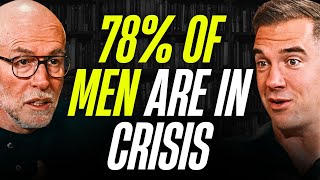
This content was created by Lewis Howes. This content was uploaded by Lewis Howes. This is a YouTube video titled "Scott Galloway: '78% Of Men Are In Crisis' How To Solve The Male Loneliness Epidemic" created on November 24, 2025. It features a conversation between Lewis Howes and Scott Galloway discussing the challenges faced by men in modern society, including issues of loneliness, economic viability, and societal roles. They explore topics such as the impact of remote work, the importance of relationships, and the evolving roles of men and women.
Chapters
Men are struggling four times as likely to kill themselves, three times as likely to be addicted or homeless, 12 times as likely to be incarcerated. You go into a morgue and there's five people that die by suicide and four men. If it was any other group, I think we'd weigh in with programs and empathy. I think more and more of them are going to be alone in a room with a screen. Scott's the host of the Prof. G Pod and co host of the Pivot and Raging Moderates podcast.
He's a best selling author in his.
Latest book, Notes on Being a Man is now the number one bestseller at Amazon. Please welcome Scott Gallagher. My biggest fans are young men, my biggest surprise supporters or mothers because they see what's going on. The greatest alliance in history is the alliance between men and women. Why would you go through the effort, the expense, the potential rejection, humiliation, effort when you have synthetic lifelike torn at.
Home, how do they survive if you're not doing anything except for consuming all day?
Just having men in your life that can give you a little bit of advice and not only that, just give you the sense you have value. I've been investing in stocks since I was 13 because of Cyra. Wow. I've made tens of millions of dollars investing in stocks. It taught me this incredible life skill around investing.
What would you say are three things you would leave behind if this was the last day on earth for you? Many years away?
The biggest unlock of my life was the following.
Welcome back. Everyone in the school of greatness, very excited about our guests. We have the inspiring Scott Galloway in the house who is the number one New York Times bestseller of notes on being a man. Welcome to the show, Scott.
Thanks. It's good to see you, man.
Excited that you're here. Congrats on the book.
Thanks.
We were talking beforehand about that I wrote a book called the Mask of Masculinity seven years ago that I think was ahead of its time. But I think people really need to hear what you're talking about today because there's so much confusion with men in society. And so I'm going to give you a layup question to start. What is the role of men in society today?
Well, I think that's the issue. I think that the role was pretty clear. It was sort of provider and procreator. And now that a lot of the on ramps into a middle class lifestyle, a lot of the traditional jobs, we've basically torn up the script for women and said you can be anything and women are ascending and that's Fantastic. Twice as many women have been elected to some sort form of parliament globally in the last 30 years. More women are now seeking tertiary education globally than men. Women in urban areas in the US are making more money than men own. More single women own homes than men. And these are all amazing. We should do nothing to get in the way of that. But I think sometimes the role of men is a little bit confused now. Like, what is my role? And men, you know, there's just no getting around it. Men are struggling four times as likely to kill themselves, three times as likely to be addicted or homeless, 12 times as likely to be incarcerated. So I think the, the question, what is a man's role in this society? Is a little bit up in the air right now. And I think that's part of the issue is a lot of men don't feel like they have a code.
They're not clear.
Yeah, I think they, some of them lack purpose. And that is, you know, a lot of the natural attributes they would lean into, whether it's vocational work, whether it's being the provider, whether it's initiating romantic interest. I don't want to say being the aggressor, but the initiator. A lot of those things are either not available, harder to attain, or being frowned upon. So what is their role? And I mean, what happened to Otto Metal and Wood Shop? Gone. Right. If you think about what people are looking for in terms of more women in medical school, more women in law school, and those are wonderful things, but typically the job. Remember that guy in high school who was never going to go to college, or a lot of them, but could fix your car?
Sure, yeah.
And would go on and make a pretty decent living. We've essentially replaced all those classes with computer science. We've kind of gone all in on the guy who goes to Harvard, drops out and starts a tech company. Kind of the nation's been optimized for that person. And the majority of men aren't that dude. In addition, fewer men are going to religious institutions, playing sports, connecting to work, remote work, I think has been terrible. Connecting to relationships. And then they're up against the deepest pocketed companies with godlike technology really trying to sequester them from the offline world and relationships. And as a result, I think you have a cohort of young men who feel a little bit untethered. Their path is not as clear as it once was, don't have the same level of opportunities than my generation had. And some of it, to be clear, was unearned advantage I had too much opportunity relative to other groups. But if, you know, if any other group was. If you go into a morgue and there's five people but died by suicide and four men, if it was any other group, I think it would weigh in with programs and empathy. But because of the under advantage of my generation, there's a lack of empathy. And the stat that I remind people of, I understand the gag reflex when I talk about this, and that is from 1945 to 2000, a third of the world's economic growth was registered by the 5% of the population in America. So we had six times the prosperity of the rest of the world. So 6x and then you take all that prosperity and you cram it into the 1/3 of the population that was white, male and heterosexual. If you were. I was kind of born on third base. You know, my rap till I was about your age was check me out. I've overcome, you know, I didn't have some of the same advantages as my peers. But what I've acknowledged now is that I really was born on third base. My kind of identity, demographics and when and where I was born. But unfortunately, I think society is holding young men accountable for my unfair advantage. And they just don't face the same opportunities.
They don't have the skills also. Right. It's like they don't have the skills to face that unfair advantage, I guess.
Or to manage it all 100%. So, you know, I had to go into work, I had to put on a tie. I had, you know, I had guardrails set up for me. And I think that, I think remote work has been an absolute disaster for young people, especially men who quite frankly mature later. And my first job was in downtown LA at Morgan Stanley. If I didn't have to get up at 7am, put on a tie, act a certain way, learn to behave. I was constantly pulled out of meetings by my boss who was a real mentor. And he would say, just like, don't say that. And I needed that. And I learned how to interact with people senior to me, more successful than me, learned how to interact with a boss, learned more about how to interact with a woman in a professional environment. It was great seasoning for me. And while I think remote work is an unlock for people who are caregivers, I think it's really a negative for young people and something we don't talk about. One in three relationships begin at work. So where do people meet and develop friendships, mentorships and romantic relationships? And the reality is men need Young men need romantic relationships or benefit more from them than women. If a man hasn't been married or cohabitated with a woman by the time he's 30, there's a one in three chance he's going to be a substance abuser. There's this cartoon of a woman in her 30s who never found romantic love. The reality is she's okay. Women, when they don't have a romantic relationship, oftentimes pour that energy back into friends and their professional life. Men tend to pour it back into more negative things or less productive things. Online gaming, porn, oftentimes, unfortunately, conspiracy theory.
So quite frankly, gambling or something else.
Gambling, drugs, whatever it might be that it takes on and manifests itself in worse ways. So a woman in a relationship lives two to four years longer than a man. I'm sorry, than a woman not in a relationship, but a man lives four to seven years longer. Widows are happier after their husband dies. Widowers are less happy after their wife dies. So, oddly enough, men benefit and accrete more advantage in a relationship than a woman does. Which isn't to say nobody owes. It's no one's responsibility to service men or provide them with romantic comfort such that they don't become poor citizens. But the reality is, I do think society and men of my generation have a debt to pay, and that is to try and get emotionally, logistically, and economically involved in young people's lives and level them up such that they have some of the same opportunities that my generation had.
Yeah. It's interesting because I saw this. This article on Vogue. The headline says, is having a boyfriend embarrassing now.
Yeah.
And, you know, hearing these stats, if I'm a woman, hearing these stats that essentially I live longer without a man in my life, you know, who knows the context of all these things? But I also. I'm fine without a man in some ways.
Yeah.
Why should women get in a relationship with a man if there's also benefit for women being single?
Yeah. So there's. Unfortunately, I think that there's.
Besides having a family and raising children and, you know, providing for society in a different way, obviously, and not being alone your whole life.
There's, I think, in online media especially, but all media, there's a romanticization of the independent, feminine, strong woman. And I think a lot of that is really positive. But I also think it's created a culture where it's sort of women are encouraged to kind of be one striker out as a man. Oh, he doesn't get along with his parents. Red flag. Like every yellow or magenta flag is a red flag, and you're the strong, independent, beautiful woman, and you don't need a man. And whenever I ask for dating advice, the advice I give to men is the first thing I ask is, would you want to have sex with you? Are you in shape? Do you have a plan? Are you kind? Do you demonstrate artisanship and interest in different things? You know, how do you demonstrate excellence? And the advice I would give to women is what I call a second coffee. And that is, I think women are celebrated for exiting relationships. You know, inspiring Carly Simon songs about walking out on that man and you don't need a man. And when surveys, when men are said, when men are asked, if a woman had 80% of everything you want, would that suffice for you? 75% of men say, yeah, that'd be great. When women presented with the same metric, 80% of everything you want, 75% say, that's not enough.
They need, like, 95% or 100% of what they want.
Well, and again, I think that let me go straight to the solve. The solve is for men to level up. But if you look at kind of the content of what algorithms like, it's a lot of women saying, like, a basic standard metric is because. And I think it's happened because of online dating, where the metrics get distilled down to some very basic, crude things. Six feet, six figures. Like, that's not a lot to ask, right? Six feet, six figures. If you take out married men, obese men, men under the age of. Over the age of 50, it's 2% of the population. And if you talk to people who've been married longer than 30 years, 80% of them say one was much more interested in the beginning than the other, and it was almost always the man. The reality is, Liz, we're less choosy. If you have a room with 100 people, 50 men and 50 women, and there's alcohol involved, the majority of the men would agree to have sex with the majority of the women. The majority of the women would sleep with none of the men. Women are choosier. And typically, what's happened in these relationships where people end up together is the woman says, I wasn't initially that interested, but I liked the way he treated his parents at church. We hung out with the same friend group, and I found he was funny. I liked the way he danced. I liked the way he smelled. I found that he was really kind. I was so impressed with him at work. He was outstanding at what he does. And where does a man, what venues now does a young man have to demonstrate excellence? Right? If they're not going to church, they're not going to school, they're not going to work, where do they have the opportunity to develop the skills and then demonstrate their strengths and skills over time? And instead it's kind of been consolidated now to the one medium where most people are mating or finding dates, and that is online. And anytime you digitize any market, it does become a winner take most environment. And then they're up against this almost indomitable foe. And that is 40% of the S and P by market value now is related to AI the Magnificent 10. And their objective, they're not malicious, but unwittingly the algorithms have figured out for every second we can take someone out of the organic mammalia world and put them on a screen, we can monetize it. And the person who is most susceptible to arbitraging their real life to an online life is a young man because of a less mature prefrontal cortex, executive function, the susceptibility to addiction around constant dopa. So ground zero for our economy right now, or monetizing our young people to drive trillions of dollars in value is essentially trying to sequester young men from their relationships. So I worry that at the hands of this godlike technology regulated by Paleolithic instincts and medieval institutions, that we're evolving a new species of asocial, asexual males. And my prediction is, unless we weigh in with programs and regulate big tech. When you go to malls. I'm doing a live podcast tonight with 2,000 people. I think you are going to visibly see fewer and fewer young men. I think they are going out or.
Going to events, going out in the real world.
I think more and more of them are going to be alone in a room with a screen. And why go through the pecking order of trying to establish friends when you have Reddit and discord? Why put on a tie, show up, try and navigate the difficulties and complexities of the workplace when you think you can trade stocks or crypto on Robinhood or Coinbase? And why would you go through the effort, the expense, the potential rejection, humiliation, effort, perseverance, willingness to endure rejection involved in establishing a romantic or a sexual relationship when you have synthetic lifelike porn at home. So I think we're going to have essentially, I mean, there's now one out of seven men are called neets. They're neither in education, employment or in training. They're literally doing nothing. And 63% of men under the age of 30 aren't even trying to date.
How do they survive? If you're not doing anything except for consuming all day.
Yeah.
And you're not developing skills offline or even online skills to create value in the world, how are you surviving? Is it just you're getting checks from the government or your family or people paying for them or how does this work?
It's a really good question. There are government services, you know, everything from SNAP to unemployment to welfare to Medicaid. They, you know, they got, they, you know, had stimulus checks during COVID One out of three men under the age of 25 is living at their parents. One out of five under the age of 30 at 30, one in five men are still living at home. So I think that some part time work, some government assistance, their parents. But yeah, a lot of men. And I won't even say men because kind of my Yoda around all of this is Richard Reeves. If you had Richard on your podcast. So Richard brings like the data and the actual rigor, I'm just louder than him. But he has this great litmus test for when a male becomes a man. Because I do think a lot of males die never really having become men.
When does a male become a man?
I love this term used as surplus value when you approach relationships from a generative viewpoint. So growing up, I say to my boys, you're negative value. Right now you got a school spending a ton of time and resources on you. Your parents are giving you more love than you're giving us. Society is providing you with roads. If you call 911, something's going to pick up. You're not generating any tax revenue, you're not adding value, you're negative value everywhere. And at some point, I think when you become a man, it's not when it's not age, it's not some sort of religious ceremony. It's when you are generating more economic value than you're absorbing. It's when you're noticing people's lives and absorbing more complaints than you're making, quite frankly. It's when you're giving more love and more cloud cover for other people than you have received. You're adding surplus value is the term that Richard uses, right?
Yes.
And I think a lot of males never get there. Never get. I still have, I still know people who call their parents and complain when their parents are 80 and it's like, okay, at some point it needs to flip where you're taking care of your parents. And also I Came to this conclusion, recognizing I didn't really, by that standard, become a man until I was in my 40s. Because I used to be that guy that approached every relationship of if I wasn't getting more joy and camaraderie from a friend than I was giving, it was like, I'm on the wrong side of this capitalist trade. And I'd exit the friendship.
Interesting.
If I spent time with my girlfriend's parents when they were in town, I would expect her to spend as much or more time. If I felt an employee wasn't giving me a lot more value than I was paying them, I'm thinking, okay, this isn't working. And I'd let them go. I was all about this mindset of relationships as a transaction. And then what I've come to realize is that's the opposite of what it means to add surplus value and be a man. That. That. The ultimate kind of litmus test is, first you gotta take care of yourself. You gotta fix your own oxygen mask. Then you take care of your family. Then you take care of your community. Ideally, take care of your country or protect your country. And then the ultimate expression, I think of manhood is you plant trees, the shade of which you'll never sit under. So it's been kind of a journey for me. But I like the idea, this notion of surplus generative value in relationships.
I love that. I used to think that you become a man, and maybe it's more emotionally or spiritually when you have a child and when you lose your father, like, you have to step into some type of spiritual breakthrough. But then I was like, okay, well, anyone could have kids. They could just have lots of kids, but not really be there as a father. As a dad. And when I lost my father a few years ago, I really felt like, oh, something shifted in me and I almost. I lost him mentally 20 years ago when he went through a brain injury. He had an accident, and he. He was alive physically, but emotionally, he wasn't available.
Yeah.
He wasn't a provider anymore with spiritual, emotional, or financial support. Yeah. So it was more like I had to support him and our family had to support him. But then when he fully passed physically, it's like something also shifted at a whole nother level of like, oh, I really need to step into this spiritual or psychological way of being now because I can no longer rely that my father's going to rescue me.
Yeah.
Even though he was here, like, maybe he could have bailed me out some way, but no longer can my father bail me Out.
Yeah.
And now having twins, it's like, oh, I have to. I get to continue to step up as a man. Continue to step up as a leader to myself, a leader to my spouse, a leader to our extended families and provide emotionally, spiritually, physically, financially.
Yeah.
And continue to evolve. I can't be, I don't know, I don't have the ability anymore to act like a child.
Yeah.
You know what I mean? I can be childlike energetically, but I have to be able to provide a space to serve and serve beyond me. Obviously I need to take care of me, but the goal that I'm hearing you say is how can we add way more value than we're taking? And I think that is part of it. So I don't know what my definition now is like or when you truly become it. I don't know if you can truly step into like manhood if your father's still alive and if you don't have kids. I don't know if there's still some like childish boy energy until one of those things happen, but I don't know. What are your thoughts on that? Today's show is brought to you by Apple Watch. Knowing how you sleep is a game changer when it comes to overall well being. But for many, sleep and sleep quality are a mystery. The new Apple Watch Series 11 provides an easy way to track and better understand the quality of your sleep. The sleep score on Apple Watch helps you better understand your sleep routine and help to make it more restored. Dive into factors like sleep duration, bedtime consistency, how often you wake up and time spent in each sleep stage. Apple Watch takes you from not knowing to knowing. Find out more@apple.com AppleWatchSeries 11 iPhone 11 or later required.
Yeah, I think there's a lot of people become men who never have kids. So the way you talked about kind of birth and death are tremendous points of inspiration to kind of grow up and start behaving in a way that makes you men. But I think a lot of people have kids and never become men.
That's true.
And a lot of people, you know, who have parents live well into their 50s or 60s, never, never become a man. But what you say resonates in the sense that I think of kind of the two. I would say what motivated me to be a better man or get to manhood. And they both involve women and once more virtuous than the other. And that is when my mom, I was kind of sleepwalking through life, didn't get my act together until I was about 25, 26, and my mom got really sick, and I didn't have the money. She called me from graduate school. I was in graduate school. She'd had her second mastectomy and got discharged early from the hospital because hospitals are expensive. And she was at home. And she called me and said, you need to come home. I'm really in a bad way. My mom was not dramatic. So I got on a flight back from Berkeley, and I walked into the situation, Louis, that I just didn't know how to deal with it. And there's just certain things a son can't do for his mother. And I remember thinking, I need to get her a nurse. And I called. The nurses were $35 an hour, and I had about $700 in my name. And just the shame. It's like, okay, I'm the only son, the only child of a single immigrant mother taking care of me my whole life. She's really vulnerable right now, and I can't live up to my expectations.
Yeah, that's tough.
That was really upsetting. And at that moment, I decided, look, you can't decide to be economically secure, but you can decide to kind of go all in. And that's when I really got my act together and said, okay, you can't control the market. Trumps individual dynamics. And there's some exceptionally talented people that work really hard their whole life and take risks and never get there. So you can't control that. But the things you can't control. I decided I was gonna work really hard. That was very motivating for me. And then the other thing is less virtuous. I noticed early that guys who had their together professionally and economically, they attracted more women, seemed to be attracting a broader selection set of mates. And I even saw it through ucla. The freshmen were interested in guys that were funny and cool and dressed well. And by the time they were seniors, they were very interested in that guy going to medical school. And we don't like to talk about this, but women are attracted to men for three reasons. The first is to signal resources, and you don't have to show up with a Range Rover or Panerai. You can just be someone who has shit together. It's like, this guy's going to be a good provider. The second is humor. We talked about this in the last one. Or intellect. And then the third, and this, I think, is the most underleveraged secret weapon in mating for a man, is kindness. And that is women instinctively believe at some point they'll be vulnerable because of gestation or they're physically smaller. So they're very drawn to men who demonstrate kindness, and that is acts of generosity with no reciprocal expectation.
So.
And that's the most people, Most men understand 1 and 2. But what they don't understand is they need a kindness practice. Because I do think you can learn kindness. It starts with manners. But if you try to, you know, small acts of generosity every day, I do think it starts to become second. Second nature. But I wanted to take care of my mom, and quite frankly, I wanted more dates. And that was those. Both those things were very motivating for me to try and be a better man. And then what? You talked about having kids.
How old were you when you had kids?
I started late. I was 42.
Yeah, me too. You're 42?
Oh, you're 42?
Just. Just had kids.
Yeah. You at 42 is a different look than me at 42. Anyways, I. But when my kid came marching, or had the poor judgment to come marching out of my girlfriend, it was 2008, and I had lost everything right at the housing crisis. Yeah, I had gone, always gone all in. I. I kind of came a professional agent, San Francisco, where you're supposed to go all in, borrow money against your stocks. And I. You were kind of taught if you're really talented, you're in it to win it, and you can. You know, I'm so awesome that if I throw myself at something 100%, it's going to win. Not recognizing again the power, diversity. So I've been wealthy three times, which means I've lost it twice. And I lost it in 2000. Then I crawled my way back, had a kid, and literally at that moment, lost everything because I was too stupid to diversify. You written a book on money. I hadn't learned the power of diversification. And when my kid entered the world, it wasn't bright lights and angels singing. I literally felt anxiety and shame. I'm like, not only have I screwed up for me, but now I've screwed up for someone who is totally dependent upon me. And granted, I struggle with depression, so I have a tendency to see dark things as black. But I remember I was so nauseous and so anxious that I had to sit down. They were more worried about me, I think, than the mother of the kid at that point. And I couldn't say I feel failure. I feel like I've already let this thing down. You know, this. So for me, that was very motivating. I think having kids is stressful. I'M not saying it's for everybody, but it definitely has made me a better man because I want to model good behavior. I take being a provider and a protector much more seriously now. So I do think this kind of the three legs of the masculinity, stool, provider, protector, procreator, I do think those are decent legs of the stool. And the skills and strengths and attributes you want to develop to be all three of those things are, loosely speaking, what I believe it means to be, quite frankly, masculine. But the book is really more about where I screwed up and what I learned from it and tried to evolve around it. But, yeah, my first encounter. I know you just had twins. You're doing much better than I was at that moment. But I felt a ton of stress and anxiety. But it also is very productive for me. And one of the things I worry about with my kids is that I didn't grow up with a lot, at least not economically. And I always say, if I had what my kids have, I wouldn't have what I have. And a lot of what I think about is, how do you instill that sense of grit and a little bit of fear is probably good in kids? Because the things that really motivated me, if I had what my kids have, the only things I know I would have engaged in is like, a Range Rover and a cocaine habit. I'm a fundamentally lazy person. When I was younger, I didn't want to save the world. I wasn't kind. I wasn't trying to add value. I wanted economic security because an absence of it had caused so much anxiety in my life. And I think that if you grow up with money. Did you grow up with money?
No.
If people have money, I think they can sympathize with people who don't. But I don't really think they can fully empathize because it's as if, like, my mom and I had this ghost following us around saying, you're not worthy. Like, you screwed up. You and your mom screwed up. When I didn't get into UCLA down the road, they had a 74% admissions rate, and I was one of the 26% that didn't get in. I remember people. I went to my friend's parents, and they knew I hadn't gotten. They're like, you should get on a plane tomorrow and go to Michigan and show up at the admissions office, and you're so smart. And I'm, like, listening. I'm like, go to Michigan. I don't have a credit card. I've been on a plane like twice. We don't have that kind of money. I can't afford to spend two or three hundred dollars to go and show there's just a lack of confidence, a lack of contacts, a lack of, quite frankly, a sophistication that people with money can't even relate to. And the anxiety I remember like this. I don't call it trauma. People have worse trauma. I'm one of those people that's always five minutes away from losing your keys. I lose everything. And my ex wife used to say, if my dick wasn't attached, we'd find it on a card table in soho next to a Goodfellas script and a Nirvana album. And I lost two jackets in one week. And jackets were 30 bucks. For some reason it was like a monopoly or a cartel. And jackets. And I remember just the fear and anxiety. I purposely spent the night at my friend's two nights in a row because I just couldn't face telling my mom I'd lost another jacket, you know, because I knew she was going to melt down. My mom was in a very vulnerable place and she would just lose her. And that was very distressing. So I've been so focused. And some of the critiques of the book is that. And it's actually an accurate critique. It's that I'm too focused on money. And then I think money will solve a man's problems. And that's actually a really accurate critique. But that comes from a place of not having it. And things just got so much easier and better for me once I had economic security.
Well, I think it's part of it for sure, like you said. But also, if you're not kind and you have money, you're going to just ruin people's lives if you're just like, mean. Okay, I have all the money. I have resources. I'm funny and I'm intelligent, but I'm mean. That is a disaster for any person coming into a relationship with them, whether it be a business partner or a team member, if they're running a business.
Or the president.
The president or a finance.
I say that I don't know the political leanings of you or your audience, but I find that some of the role models for masculinity that we should naturally look up to the wealthiest man in the world. He's won capitalism and the president. And I don't think they're very strong role models for young men. I think they've conflated masculinity with coarseness and cruelty. You know, being sued concurrently by Two women for sole custody or child, because you haven't seen that child. That couldn't be any less masculine. Cutting off aid, HIV positive mothers. I just can't think of anything less masculine than that. It's like these guys have recognized tremendous prosperity. That's really impressive. But the whole point of prosperity is you can move to protection. That's the whole shooting match, right? What's the point of prosperity if you can't get off your heels and onto your toes and protect others after you've protected yourself? And I think some of the most powerful men in the United States have just missed that whole part of their journey towards manhood. I think it's really disappointing. Even if you look back at the Gilded Age, some of these men who were just rapacious kind of once they got there, they did feel a real obligation, a civic obligation. And that's where I think some of the individuals in big tech and in our government right now, I feel as if they've kind of skipped that whole protection part of the masculinity. Stool, if you will.
Procreation, protection and providing of those, the three stools. Provider, provider.
And then move to protection operating system around os. Protecting. Not just physical, you know, guys like your size, breakup fights at bars, they don't start them. Right.
But emotional protection, psychological protection, all these things. Right.
When you hear someone talking about someone behind their back, your default. Your default operating system should be to weigh in and at a minimum, not participate and ideally protect them. You may not agree with the transgender community. You may be like me and think it's ridiculous that firms have to have legally mandated third bathrooms. I don't think that makes any sense. I think it's ridiculous that we allowed a transgender woman who's 6 foot 5 to show up to an NC2A swim meet. I think that's just irrational. It starts from a good place, but I think that's irrational. But at the same time, I just don't see any reason why people want to demonize this community and start kicking them out of the military when they're served honorably. When we start passing laws in states that say there can't be any transgender athletes in high school, and then someone actually says, are there any transgender athletes in high school in South Dakota? And they can't find one, that's just demonizing a community. This is less than 1% of the American population. So, yeah. Have Democrats or people on the left gone way too far? Yeah. But then to weigh in with just being mean and demonizing a community. So women should be able to cross the street because they see men on that side of the street, not avoid them. That's really. That's heartbreaking that women say they don't feel safe around men. Right. I think we have to teach our young boys from a very early age, yes, protection is really a key component. And then the last one is more controversial. It's procreation. And that is, I think men wanting romantic and sexual relationships has been pathologized and demonized. And I think it's a feature, not a bug. Because if men want to have relationships and quite frankly, sex. I didn't see my partner at the pool at the Raleigh hotel in south beach and think, I would like someday to have a relationship with her to get lower rates on auto insurance. I saw her and thought, quite frankly, I would really like to have sex with that woman. And that desire, that fire can be destructive.
Yes.
But most of the time it's fire that's captured in an engine and creates progress. Progress towards being fit, being a better dresser, having a rep, being a provider, having perseverance. And developing what I think is the key skill in life across multiple dimensions. And that is the ability to endure rejection. You know, all this that you built here, this didn't just happen. The only thing I know that was involved in this was a lot of no's. And the ability still today, the ability to get hit in the face, beamed in the face, get up, dust up, and get back to the plate. And I think a lot of the skills men develop pursuing relationships are not only informative and educational, but really key to developing skills across the rest of their lives. And if you ever see someone who you think, oh, they're talented, but they seem to have made more money than I would have guessed, or they're with someone higher character and more attractive than them, I can almost guarantee you they have one skill set, and that is the ability to get out a spoon and eat. And every great yes in your life, every great yes in your life will involve one thing, and that is a ridiculous number of no's that come before it. And there's a scary stat that just came out that 40% of men 18 to 24 have never asked a woman out in person.
Really.
So if you're a dude that's willing to go up to a woman, figure out a way to express romantic interest while making her feel safe, you're almost already in the top half of men. But men aren't approaching women. And this is anecdotal evidence. I don't have data on this. But when I go out to places on a regular basis, when I speak to single women, they'll say, I'm here, I'm single, I'm ready to mingle, look at me, I look amazing.
They're signaling it.
Yes and no. Men approach me. And regardless of what the Atlantic, the New York times will say, 80% of women still say they want the man to make the approach. They don't want to be approaching men. It just doesn't feel natural for four out of five women. And I worry that men are being tempted, have been getting mixed messages. No guy wants to be that guy, right? Makes an approach in artful, doesn't go.
Well, gets laughed at or gets rejected.
Or it ends up we both work at Google and now I'm that guy. And there's actual professional ramifications. I mean, the moment a woman says at work, fairly or unfairly, oh yeah, that guy, he hit on me at a bar, he's a creep. That is not so. I think that men wanting to pursue romantic and sexual relationships is a feature, not a bug. And we demonized and pathologized it. And I think we're now getting to a point where people realize that men being initiators, and I don't want to say aggressive because that has negative overtones, but when I coach young men, one of the things I tell them is they need to put themselves in the agency of strangers. And then we have a practice called no get to know express platonic friendship. Hey, do you want to grab a beer and watch the game? And then also maybe romantic interests, would you be interested in grabbing coffee first? You got to open, establish some sort of rapport, where are you from, et cetera. And then the key is no, because what you're going to do is you're going to call me the next day and I'm going to say, how are you? And they're going to say, oh, I'm fine. And that's the key, is developing those calluses.
I'm alive.
Yeah, I'm fine, I'm alive. And by the way, she's fine too. She's fine too. And if you don't know the difference between expressing platonic and romantic interest and harassing someone, you got much bigger problems. But where do men even have the venues to do that right now? So provider, I think you gotta be economically viable in a capitalist society. I think your own self esteem, the way society judges you is unfairly. It's unfairly based on the economic viability for men. And it's unfairly based on the aesthetic qualities of women. And I'm not saying this is the way the world should be, but it is the way the world is. And then two immediate move to protection. I think that's the most rewarding thing about having some prosperity. That's when I feel most at rest and most of purpose. When I feel like my kids are safe, my partner feels noticed, I feel I can get involved in great charities. I'm doing a lot of virtue signaling right now, but it's true. But that gives me a sense of purpose and makes me feel strong. And then finally, I think we've got to celebrate young men's desire to be in relationships. I think it's a feature, not a bug.
Well, I think society is better when men learn to improve themselves so they can attract a female partner or a partner where they can be a better human being. They can provide to that partner. They're less selfish, hopefully, they're more thoughtful about how they can serve their friends, their family, their community. If you find a man like that who can improve their life to attract a healthy, conscious woman that wants to be with them, you're going to have less war, less suffering, less pain, less aggression, less anger, and less men hurting other people. And I think that's what we need as society. And I saw you go on the View and there was a reaction video that someone said, you know, okay, Scott, so you need women to come rescue men because, you know, unless men are with a great woman, then they're going to be, you know, going around the world hurting people and just like causing a mess. And now we have to go and save men.
Yeah, yeah.
You know, when they've been oppressing us or hurting us for years and pushing us down, like, that doesn't work for me. So what are your thoughts around that? Where it's like, women feel like they're already working so hard. Why do they have to come rescue the man now? To be a better man.
Yeah. So it's not. Nobody has an obligation to service or, or save men, especially women. I don't. You know, men have to level up. Women don't have. I don't think women need to lower their standards. You know, I tell women to agree to a second coffee because traditionally, as we referenced before, sometimes it takes time to. To find that you're interested in this man. But I've never ever in any way connoted or intimated and I think feel like somebody's. Some of these comments from Farah, they say these men are just Entitled and feel like. And women are, as you said, supposed to come save them. I think unless men level up and unless we put in place fiscal programs that restore more economic viability to all young people, you can't tell women to lower their standards and save men. I get it. I 100% get it. So my. I have three parties that I think need to weigh in here with help. One is a society. I think we need to stop the transfer of economic power from young to old. We transfer $1.2 trillion every year. The biggest transfer in history of money from working age people to old people. Who are the wealthiest generation in history? My generation. People my age are 72% wealthier than they were 40 years ago. People under the age of 40 are 24% less wealthy. This has a disproportionately negative impact on men who are falling behind women because men are still disproportionately evaluated based on their economic viability. Beyonce could still marry Jay Z if she worked at McDonald's. The opposite is not true. And the reality is men are evaluated as romantic partners disproportionately based on their economic viability. So men need to. We need fiscal policies that put more money, I don't think in men's pockets, but in young pockets.
But is that women who are looking that they don't. They don't feel safe if a man doesn't have money? Or is that women who are attracted to men with money? Is that.
I don't know if it's. They don't feel safe. But 75% of women say economic viability is key to a partner. Only 25% of men, I mean, you've seen the state men made socioeconomically horizontally and down, women horizontally and up. And when the pool of horizontal and up. Because women keep getting taller economically, which is wonderful, don't do anything get in the way of that. The pool of horizontal and up keeps shrinking. And so what do you do? I don't think we want economic affirmative action for men. I think what we want is to stop the transfer of wealth from young to old. The two biggest tax deductions in America are mortgage interest rate and capital gains. Who owns homes and stocks? People my age. Who makes their money from working current income and rents? Young people. And when a young group of people does not have money, you end up with a group with women who are two and three women under the age of 30 in a relationship. One in three men. Now why is that? You think that's mathematically impossible? It's not because women are dating older because they want more emotionally and economically viable men. So I think that we need to weigh in with policies that level up young people again. Raise minimum wage, more progressive tax policy. Corporations are paying the lowest tax rate since 1939. The 25 wealthiest families are paying about 6% tax rate. We just transfer. Massive economics. There's a sucking sound from young people to old people. I think it's taken an especially damaging toll on young men. And then the second group is, I think men my age really need to lean in and get involved in a young man's life or boy's life because.
We have a debt to mentor young kids.
Young men, we had unfair advantage. And I understand the gag reflex because they see a guy of my skin color, sexual orientation, gender and age and think, dude, you had a 3,000 year head start and you're complaining about men now. And I'm like, I get it. But should a 19 year old male pay the price for my advantage? So we have an obligation, especially men of my generation, to get involved and try and lift them up. And then I also think women play a role because I do think there's an unhealthy zeitgeist in our society where women and progressives say to young men, you don't have problems, you are the problem. And the answer is you need to act more like a woman. And I don't think that's the answer either. I don't think it is. But I feel like sometimes, and I hate this term, people take this stuff out of context and say, you're expecting now women, after finally getting some progress, are responsible for saving men. No, they're not. Our society is responsible for creating a healthy next generation, which means continuing the progress of women and also lifting up our young men who by any standard are really struggling. And empathy is not a zero sum game. We can still acknowledge the huge obstacles women just face. Your wife just had twins. When women have kids, they go to 77 cents on the dollar. We have not figured out a way to maintain a woman's professional trajectory when she has kids. That's a problem. Black and Latino families have an average household net worth of 22,000. White families 160. There's still an economic apartheid in the US but we can acknowledge those problems still exist and work on them. But at the same time also realize the country and women are not going to continue to flourish if young men are flailing full stop. So again, empathy is not a zero sum game. Gay marriage didn't hurt heteronormative marriage. Civil rights didn't hurt white people. Helping some of our young men and specifically with programs for young people, economically, that's not going to hurt women. It doesn't come at the cost of women. And one of the things I hate about the manosphere, what people traditionally think is the manosphere, is they believe there is an inverse correlation between women's ascent and how men are doing. And the reality is without women's ascent, we wouldn't have won World War II. Hitler wouldn't let women get into the factories. He thought they needed to stay home. And we let women build P51 Mustangs and we sent a lot of them overseas to be near the front lines. That literally won the war was a big contributor to the war. Women entering the workforce in the 70s and 80s in the United States is probably the biggest driver of economic growth for the United States. And in a capitalist society where our expectations keep going up, you know, having dual income households is really important. So I think women's ascent has been accretive to men. I think it's been great. And we need our young men to recognize that when they really lose the script is when they start blaming women for their romantic problems and immigrants for their economic problems, that women's success is great for them. At the same time, I do think that we need to stop this demonizing of. There's this thing online, this trend where women talk, say they're not dating any longer because they could be unalived, which I guess is a political term. Killed, murdered.
This episode is brought to you by Facebook. Thanksgiving is one of those times when everyone comes home. It's busy, it's nostalgic, and full of moments that remind us of the people that really matter to us. Facebook is the platform built for real, meaningful human connection, helping you find your people, pursue your interests, and create new memories together. It's when old friends, neighbors and classmates come back into your life, sparking new stories that feel both familiar and fresh. And whether it's reconnecting through a Facebook alumni group, joining an event in your hometown, or finding something special on Marketplace, Facebook helps bring people closer, both online and in real life. It's a space for meaningful connections that enrich our lives, especially this time of year, and actually have a Facebook group for everyone who's ever attended my Summit of a Greatness event. And it's one of my favorite parts of our community because people share photos, they celebrate their wins, they ask for support, and they keep that same energy alive long after the event ends. And it's amazing to see friendships and collaborations that started at summit of Greatness continue to grow throughout the years with the help of Facebook. Let's reconnect this holiday season. Explore more with Facebook today.
Unalived.
Unalived.
Unalived. Yeah.
If they were dating someone, they would be killed.
Well, no, that one of the reasons they're no longer dating is they feel like they're taking physical risks being in a man's company, because men are violent.
Okay.
And 2,500 women every year are murdered. That's a huge problem. 70%, by the way, by people they've known for a while. But if you look at the actual data, if you go on a date with a man, he's 16 times. 16 times more likely to go home that night and hurt himself than hurt you.
Why is that?
I think men sometimes get very. Look, men are engaging in a lot of self harm. You go into a morgue and there's five people die by suicide, four are men, and you're four times more likely to get hurt on the drive over or choked during dinner. So we've decided. I think the algorithms have decided, let's portray young men as, quite frankly, as a danger to society. And the reality is men who are dangerous, and the vast majority aren't, but the small minority that are, are dangerous towards themselves, they're much more likely. The majority of gun deaths are suicides.
Yeah.
And so I think that we also need. My biggest fans are young men. My biggest supporters are mothers because they see what's going on. They see I have two daughters and one son. One daughter at Penn, one daughter in pr, and my son's in the basement playing video games and vaping. So I think that recognizing what I call restoring the alliance, and that is the greatest alliance in history is in NATO or between democracies. The greatest alliance in history is the alliance between men and women. I think a combination of masculine and feminine energy in a household makes the happiest, most productive households. And by the way, sometimes two women can bring that chemistry or two men can bring that alchemy. Right. But that combination of masculine and feminine energy, I think is a wonderful mix. And what the genders have done a great job of is convincing themselves that it's the other gender's fault. Right. Men gotta stop blaming women. That just doesn't hunt. Right. And at the same time, I do think that some women and feminists. It's actually not feminists. I'll call it progressives. Liberal versus illiberal thoughts. Just need to look at the data and think, okay, lifting up our young men is going to be good for everybody.
Yes, it is. Do you think, you know, I'm here, you share that it's great that women are earning more and are constantly progressing in their careers and getting more opportunities than ever. And we want to continue that thriving. We also want to see men continue to improve, especially young men who maybe don't have the skills anymore, the tools to become financially successful or they haven't figured it out yet. Do you think is there any data around the majority of women being able to earn more than men and still be attracted to them in a long term romantic relationship? Is there any data that you've seen around that that women can make more and still be attracted to the man they're with long term?
So 17% of households now the woman is the primary breadwinner. And so I do think over time society is becoming.
But are they attracted to their partner still?
Well, okay, so this is.
Just because they're together doesn't mean it's happy.
And like the data is not. I'm gonna. There's the way the world should be and the way the world is. The way the world is is the following is that when the woman in the relationship starts making more money than the man, the likelihood of divorce doubles.
Really?
The use of erectile dysfunction drugs triples because the man feels has less self esteem and has problems. So the honest answer is I don't know how to get past. We're going to have to figure out things and we're going to have to train our.
Is that biology is that like psychology around that that causes these things, these challenges to arise when women earn more than the men they're with.
I think it's very anthropological and that is women feel innately that their job or one of the things they need to be focused on is how to protect offspring. And they need to partner with someone who's strong and can protect them in their offspring. And in a capitalist society, strength is conflated with economic power. So there's just no doubt about it.
So if a woman is stronger financially, emotionally, physically, then it's like, why do you need the man then? Right.
Well, so 70% of divorce filings are by women. And actually the increase in divorce rates is probably a good thing because women no longer feel economically indentured or dependent.
Upon men trapped anymore yet from that.
But there's just no getting around it.
So men need to continue to figure out how to earn more than the partners they're with. In Order to have a happier marriage, it sounds like, based on the data.
But also at a minimum, if a woman ascends economically, relationships at the end of the day are somewhat of a transaction. If a woman is ascending economically, what you see is men aren't stepping up logistically and emotionally and domestically. They're not keeping pace without ascent. And so at some point, the woman in the relationship does the math and says, okay, I'm the provider, I'm the procreator, and you aren't stepping up at home, then I'm definitely out of here. So there's a difference between, I think, working on the relationship and trying to evolve the relationship, which I think a lot of couples where the woman is the primary breadwinner, I think they can work through it. There's no reason they can't have happy marriages, but there's just no getting around it. The data shows that innate sexual attraction is at risk when the woman is the provider. Wow. And I'm not saying that that can't work, but there's just a lot of data that women lose sexual interest in a man when he fails as a provider or diminishes as a provider. The cocktail or the afterburner, the fuel on top of that division or dissent is that when men don't step up in the other parts of the life.
They don't own their role. If they're not generous, if they're not kind, if they're not supporting her relationship, whatever it might be. Yeah.
Sometimes I think being part of a provider is, quite frankly, sometimes getting out of the way and being more supportive of your partner who might be better at that whole money thing. And I think we're going to have to figure this out and train our boys to step up emotionally and logistically and domestically, because the reality is more women are in medical school, more women are in law school. We're probably gonna have two to one female to male college grads in the next five years. And so women more and more, that 17% number is gonna grow. So we have to figure out a way to train our boys to say, okay, wow. Part of being a provider is contributing on a lot of, you know, a lot of different dimensions. But also there are a ton of mainstream main street jobs in vocational programming. 13%. 11% of LinkedIn profiles in the UK and Germany say Apprentice. It's 3% in the US we don't have an apprentice culture, and we have shame vocational jobs. I don't know if you've seen all these articles, but there's now A bunch of juniors and 17 year old men in high school who are learning how to install H Vac energy efficient heaters and making 80 or $90,000 a year by their senior year.
It's great for them.
There's actually a lot of vocational jobs ready and we hate to admit this, but men seem to enjoy and quite frankly on average not always be better at this type of vocational work that requires sometimes strength or working out, menstrual, later, outside.
Yeah.
And so we need to help men level up because I don't think it's what I don't think it is. I don't think the descent or the anxiety or the lack of sexual chemistry, the sexual diffusion, if you will, necessarily happens once the woman is making a dollar more. It's quite frankly when the guy okay, economically, maybe you're not there with me, but you're not contributing, you're not adding.
That surplus of value.
In many ways you got to bring something to the table. Right. And traditionally the roles were very defined. The female offered, kind of more empathetic, understood how to create a healthy, loving household better than the men. Kind of what we call the emotional labor that they. That's been undervalued.
Yes.
Men aren't stepping up around that. So it's a very honest conversation. It's like okay, your wife's doing great, you want to be supportive of her because you need money, you need economic household, but quite frankly, boss, what are you bringing to the table?
Do you feel like in some ways I'm going to give an example, and this is just one example, but do you feel in some ways that women have been lied to around the need to be career driven and earn as much as possible and delay having kids and delay getting married as long as you can until you're financially stable? And I'll give you context around this and maybe it's just case by case there's someone I know, I'm not going to call them out, but there's someone I know who is very career focused and driven on their career for probably the last 12 or 13 years and since college and just always seemed a little frustrated, always seemed a little unhappy, just always seemed like a little, I don't know, something was always off around the energy of this person. And they just had a child, you know, maybe six months ago and I've never seen them happier. Every time around it's like something transformed.
Yeah.
And there's, and it's like she loves being a mother. She, she's like it is just changed her world in a positive way, energetically. It's like. It's like she's on purpose. And she hasn't stopped working. She's gone back kind of part time, but it's like I can just see her come alive and. Do you think there's in any way women have been lied to about. Delay having kids as long as possible. Make as much as money as you can. Be financially stable. First, develop yourself in your career. Don't rely on the man to do this. Otherwise you get it screwed over. Where I just saw someone have the most joy in the last six months of stepping into this role as a mother. Maybe that's just one case, but what are your thoughts on that?
I think this sort of, you've been lied to. You worked hard, you became a baller professionally. Now you're miserable because you didn't take the time to find a man or have a family. I think that's a little bit of this trope or this myth from the far right that wants to take women back to the 50s and 60s because, okay, what if that woman also wasn't able to find a romantic partnership and was also economically insecure?
True.
So I don't. I find sometimes that's an excuse to try and take to regress and repeal women's rights. Now, I think now the reality is if a man focuses on his career and is out of shape, not especially nice, but a baller professionally, he's still going to find a mate. And that's not as true for women. A partner at a law firm who's a male, who's maybe just modestly attractive and not that nice and not that nurturing, he's going to find a wife. I'm not sure. I mean, it's just a little bit unfair, quite frankly, because we put the same economic responsibilities on women and the same expectations, but we don't reward them romantically and sexually with the same currency as we reward a man for that focus. So quite frankly. But I don't think. I think women wanting to be economically independent and enjoy having strangers applaud for them on a stage, financially and professionally, I think we need more of it. I do think that both men and women need to make a real effort to approach people, be approachable. Say, yes, put yourself in situations where you might meet somebody. Maybe if there's not sparks on the first date, give a second coffee a chance. But this notion. I don't like the rights trope or this narrative around women been lied to and they should be home barefoot and pregnant. I just think that's kind of inadvertently saying.
This is not me politically saying these things. I'm just curious about.
Like quite frankly, this is what Charlie Kirk said, that women are miserable. And here's the data flies in the face of that because you know who's really miserable is the dude that wakes up in his 30s and isn't in a relationship. The data is pretty clear. Men need relationships more than women. One of the things I say in the book that's gotten some pushback is, and I try to be very honest, I tell my boys that if they're ever in the company of women, they pay. People say, well, that's sexist.
I think it's sexist. I think it's generous, it's adding value, it's being courteous, it's being thoughtful. That's right. It's like, why is that sexist?
Well, the way the land offer to.
Pay, if they say no, then okay, you don't have to, I guess.
No, you offer, I think you just pay and I'll get my land. Acknowledgment now. So the rationale that I try and propose is that men benefit more from relationships than women. There's just, you know, widow's happier after their husband dies, widower is less happy. A woman's fertility window is much shorter than a man's. The downside of sex for a woman is much greater than a man's.
Bigger risk.
Yeah. So when you look at the fact that on average a man's going to benefit more from the relationship, that the woman is taking more risks in terms of downside or risk when her fertility window is shorter, and when you also acknowledge that almost every mammal has some sort of courtship ritual, it makes sense for one way that you recognize that asymmetry. One way you step up and say, I value your time, I value this situation, if you will. One easy way to recognize and acknowledge that asymmetry is to pay. And also innately, regardless of what someone might say, what I've told my 18 year old son is anytime you split the check with anyone, it means they are never going to kiss you and you are never going to kiss them. That's the bottom line. And I think those genes are wired into us for thousands of years and regardless of what we say, well, it's who asked who out. I'm just saying to my boys, in my view, that if you're in the company of women, you pay.
Yeah.
To guys like you who are in great shape is not necessarily because of.
The aesthetics of being A great shape, the discipline.
It says you show up. It says you can commit to something.
Yes.
It says that you're on your game. It says you're not up every night. It says that you know how to show up every day and do something and commit to something. So. But anyways, my point is that going back to the. I don't think. I think women's professional ascent is great for them. I think over the long term it's great for society and great for men. But we also have to recognize there's just some externalities and some knock on effects when we're in a society where men are falling behind. Women economically don't get in the way of this. Right, Fix this. Get men back on track. And I don't even like any program that specifically targets men economically other than investing more in vocational programming, expanding freshman seats. What I'm suggesting is a series of public policy programs that would lift all young people up because it's not about the guy making. If the woman's in the relationship is making 80,000, it's not about the guy needing to make 81. But the guy needs to be sort of in a weight contributing. He needs to be in that weight class where he's contributing. And I think a lot of, unfortunately a lot of men right now, young men are seduced by having a reasonable facsimile of life online and then show up with no skills, no ability to contribute to a relationship. And I think that's. And again, when a woman doesn't have a romantic relationship, she pours that energy into her friends and her professional life. When a man doesn't have a relationship, not always, but often, he pours that energy, destructive things right into. Yeah, you know, into conspiracy theory Online goes extremely online. You know, all these mass shooters. I did some research on political violence and the far left wants to bring the far right. Far right wants to blame the far left. And it's a totally hollow argument. 98.6% of mass shooters are men. Almost all political violence is committed not only by men, but young men. And these guys are less politically engaged than probably you or me. What do they have in common? They're young men. Not attaching to work, not attaching.
No relationships.
No relationships. Economically strained. They go extremely online. Find these conspiracy theories, they get radicalized online and then they have access. Then they have access to guns. And again, I feel I have to do another land acknowledgement. I'm not suggesting that it's women's responsibility to solve this problem. I'm suggesting it's a society, if one group is struggling, we can focus on lifting them up.
Yeah. And that's why I love that you wrote this book, Notes on Being a Man. And it's one of the reasons why 8 years ago I wrote the Mask of Masculinity because I went down my own path of realizing and coming to the awareness that all of these shootings, most of the domestic violence in the USA and the world and just any destruction happening in the world is typically from men who haven't healed their traumas or haven't created a healthy, conscious respect about themselves and having more tools on how to navigate society in the world better. And the mass shooters that you're talking about, they have a lot of traumas that they haven't healed yet. They haven't processed the wounds of whatever they've gone through. They don't have good relationships, they're isolated, they're alone. Or at least that's how probably they're feeling. And they don't have the tools on how to navigate their mind or their emotions, on how to get beyond those things that are destructive.
Yeah.
And I think that's what you've been talking about in Notes on being a Man is how to overcome the loneliness, feeling the sadness, the lack of resourcefulness and having the courage to be in the world, dealing with failure over and over and over again and not going back into a cave in your parents basement saying, this girl rejected me or this guy made fun of me. I'm worthless now. I'm traumatized and I'm going to go destroy the world around me. And I think when men, especially younger boys, because I was very internally destructive most of my life, I said a lot of mean things to myself. I'd physically hurt myself. I was never like cutting myself or like going into alcohol. But it was more like, how can I get into as many fights as possible to be destructive, to inflict pain on myself and other people? Thankfully, sports gave me a safe outlet to do that where I could do it in a constructive way. But I was still destructive in the process of wanting to inflict as much pain on myself and others because I just felt like I was bad and wrong. I felt shameful growing up dealing with sexual abuse from a man that I didn't know. I felt like I was worthless. Yep. My brother was in prison for four years when I was eight. So just the stress of that on the family dynamics, my parents going through divorce. Listen, I was a white man born in Ohio and America, so I was born on third base in some ways, but that doesn't hold back the psychological stress and mess that I had to deal with and a lot of people have to deal with. So I could have been completely destructive. But there was different moments in my life and different mentors. Like. Like you mentioned, there's a lack of. Now that. That came to me and gave me a high five that put their arm around me emotionally, spiritually, physically, and said, why are you so destructive? Why are you trying to hurt yourself so much? Why. Why are you reacting this way? Like, why are you getting so angry? Of the littlest things.
Yeah.
Like, come over here.
Yeah.
And I had mentors, and I allowed myself to be coached by mentors. I didn't push them away. I. I seeked it out as well. And there were different seasons in life and stages that I had to fail over and over again and realize, oh, this behavior is not supportive to me or other people. It's hurting people around me, friends, family, girlfriends, whatever. It. And I never physically hurt anyone. But just like my behavior, my reactions when I was younger, it wasn't conscious, it wasn't healthy, and it was based on a wound or multiple wounds that I didn't know how to navigate. I didn't know how to heal. And it wasn't until I was 30 when I opened up about sexual abuse for the first time to anyone.
Yeah.
And I finally was able to release some of the shame. And then I went down the rabbit hole of studying why I was behaving this way most of my life, how I could start the healing process and how I could be a better person in the world. It's the same time when I launched the School of Greatness, because I was like, I need to humble myself. I need to learn from great men like yourself who have mastered this or understand the science of this. And how can I start to apply this to myself? How can I be a student of life? And I feel like that's where a lot of young men are struggling. They don't know how to manage the emotional, psychological, spiritual, physical traumas that they've been through. And listen, it may not be as traumatic as what a lot of people are going through in the world, but still, you've got to learn how to overcome it. And when we have the tools, like your book on how to navigate the wounds that we've all been through, men and women, I feel like we can become more peaceful internally. And when we're peaceful internally, were usually better externally. But most men don't know how to have peace in their heart.
Yeah, a lot there.
So what are you hearing me? What opened up for you there?
Oh, no, there's a lot of, I like a lot of that. So I would reverse engineer a lot of the world's problems to old men who won't leave, really. And they're clinging to power and they move to autocracy and then they weaponize young men who have a lack of economic or romantic possibilities. The middle class in America, which I think is the greatest innovation in history, is an accident. The natural state of being in our species is that a small number of men, through luck, inheritance, brute strength, accrete a disproportionate amount of power and then get a disproportionate amount of the economics and the mating opportunities. 80% of women have reproduced through modern history. Only 40% of men. And what happens to the 60% of men who can reproduce is that the older men who won't leave weaponize their anger for war or for nationalism. Right. The most unstable, violent societies in the world have a disproportionate amount of one thing, and that is young men with a lack of romantic or economic opportunities. They're very easily weaponized.
Interesting.
And we're producing way too many of them in the United States. So you have. And then going back to your experience, you've been, I think, very brave and really helpful to a lot of men because you've been very open about your own abuse. But. So two 15 year olds, both abused. Right, Both sexually abused. A girl and a boy. Neither crime is any less or more heinous. But the studies I've read is that the boy, when he gets older, is seven to 10 times more likely to engage in self harm than the girl.
Because men, those men don't usually have a forum of sharing. You know, it's one in six men have been sexually abused. One in four women, I believe, unless I'm reversing the stat.
But just going back to. So what it ends up is that while boys are physically stronger, they're emotionally and neurologically much weaker than girls. The moment a boy loses a male role model, at that moment, through death, divorce, abandonment, he becomes more likely to be incarcerated than graduate from college. What's interesting is that in single parent homes, girls have the same outcomes as dual parent homes. They're a little bit more promiscuous because they're looking for male attention in the wrong areas. Same rates of college attendance, same income. A boy, wham. So we just have to acknowledge that boys are weaker and we need to create a Societal norm where the moment a boy clearly doesn't have a lot of male mentorship in his life. Even saying the boys needed men was triggering five years ago.
This, they do need the men.
Those, this dialogue has gotten so much more productive and it's mostly been led by women who recognize.
Single mothers without a man in the, in the home. It's. They can probably see their young boy struggling.
They struggle. But also men aren't stepping up because in New York, and I think at the same approximately the same numbers in la, there are three times as many women applying to be big Sisters as men applying to be Big Brothers.
Why is that? Are just men more selfish and just don't want to be as generous with mentorship?
I think naturally they're not as nurturing. And two, I think there's a taboo that say you're a guy in your 30s and you like the idea of hanging out and helping a young boy. You could provide paternal and fraternal care. You're worried that people are going to suspect you of being a pedophile. That's true and that's interesting. So when I was on Bill Maher, I said, you know, we have an obligation to get involved in teen's life. And Bill said, oh, if I get involved in a 15 year old boy's life, you know, no, no, no. And the whole audience laug I'm like, that's exactly the problem. Because there are a lot of men out there that think, well, one, I don't want anyone to be suspicious of me and two, I'm not an adolescent psychiatrist. I'm not a baller. I can tell you as someone who mentors young men, it is so easy to add value.
Just showing up and playing basketball at the rec club like for an hour, you have value.
Yeah. No, no, no. You can't survive on pineapple juice and creatine, you know? No, you got to spend less time gaming. No, your mom is not your enemy. Come on, man, she's on your side. She may not get it right all the time, but she's on your side. Like, oh, you feel like. What did you eat today? Right. Are you exercising?
Yeah. You're up till 4am on the right.
Oh, you're really upset you're not going to your prom. Did you ask anybody? Did you ask anybody? All right, well then you're choosing not to go. This is your choice. Right. So it's so I have found the easiest job I've ever had was mentoring young men. They make so many stupid decisions. Louis.
I made A lot of stupid decisions.
I mean, you just start asking them questions.
Why?
You got a good job. You just got a job, Your mom is sick, but you're gonna move to Alaska. Why? I saw this amazing documentary on Alaska. I'm like, have you ever been. Why don't we do this? Why don't you save a little bit of money, take a trip there and then decide if you really want to move to Alaska from Maryland right now? Is that a good. I just a couple questions. And not only that, they will listen to you. They don't listen to their mom. And what's weird is sometimes or a lot of times, a boy who's a teenager will listen more to his dad's friends than to him.
Yeah.
So I just think we need. We as men need to get involved in a boy's life. That's the single point of failure, is when a boy loses a male role model. And there's a lot of really wonderful men out there who maybe don't have their own families yet, who have a little bit of spare time and think, you know what? I'd be pretty good at this, and I would enjoy it, and it's really easy. Big brothers, there's a ton of mentorship programs, but for some reason, men aren't stepping up.
I've got a few final questions for you before we get you out on Bill's show here today. But what was your relationship like with your father, and what was the biggest lesson he taught you that you still apply today?
Generous question. Look, my dad. My dad wasn't very sophisticated. He got pulled out of school at the age of 13. I think he got a lot of validation from attention and affirmation from women. And I jokingly say, and. But there's some truth in it that being a handsome man with a Scottish accent in 70s California meant that he could not only think with his dick, he could listen to it. My dad was married and divorced four times.
Wow.
He started his. That we know of. He started his third marriage while he was still with my mom. So my dad, quite frankly, was just really had a really tough time with monogamy. And that wasn't the worst of it. The thing that really strained my relationship with my father is that he was not kind to my mom. And when my parents got divorced, my dad.
How old were you then?
I was nine.
Okay.
My dad could have made mine and my mother's life much easier with a little bit of money, and he didn't. And. And not having your dad around was bad, but a mom who was financially insecure and felt emotionally very damaged. Was just created a household of constant sort of you. It was like you always had high blood pressure.
You were wondering fight or flight. Always.
Yeah. And she was just very easily upset. She was a strong woman, but she was dealing with. With a lot. So I resented my father for a long time. I used to go for long periods without speaking to him. And then the big unlock for me and what I would recommend for anybody, the biggest unlock of my life was the following. I was constantly keeping score. My dad wasn't a very. Wasn't. He was an okay dad, not a very good dad, but I'm not. So I'm not going to be a good son. And then what I realized is I would get a lot of joy and reward from having a good relationship with my father. So the unlock is the following. Look at your relationships and rather than having a scorecard, put it away and say, what kind of partner do I want to be? What kind of boss do I want to be? What kind of son do I want to be? What kind of brother do I want to be? And maybe your sister didn't show up when your dad was sick, but do I want to be a loving, generous brother? Yeah, I do. So put away the scorecard and just hold yourself to that standard. And I decided about 20 or 30 years ago to put away the card it resentment of my dad and say, I really want to be a loving, generous son. And I have been for the last 20 or 30 years. My father passed about four months ago and my dad mellowed as he got older, he got more generous. Couldn't get off the phone without saying a couple times that he loved me. And the first time I heard that when I was 40, I'm like, wow. I'm like, dad, I don't need that now. I could have used it when I was eight, but then I leaned into it. And so what I would say is the big learning is people are flawed. Put away the scorecard, decide what kind of person you want to be in that relationship. And the other big learning was my dad evolved. My dad was a better dad to my half sister, his daughter, by his third marriage than he was to me. And that's evolution.
That's cool.
He got much more loving and kinder as he got older. And you know, I also just little things. I've gone entirely the other way. My dad was so traumatized by money. He was so cheap. I've gone the other way. I don't go out unless I can pay for everybody. Not that I do, because, you know, I'm at a point now where all my male friends are trying to show how big their dick is and we're all fighting over the check, but. But I also am very affectionate with my boys. My father wasn't very affectionate with me. I decided I'm taking affection back. You know, I kiss my boys on the lips, which they stopped doing when I was 15. But my best friend, Lee, his father was this guy, Lee Lotus Sr. Who was this. The guy who looked like Burt Reynolds. And when he'd come pick up Lee at college, ucla, he'd walk in to the fraternity or to Lee's apartment, and he'd roll up this big, handsome guy, and Lee was a big, handsome guy. And they'd kiss, and it just seemed so natural. It's Italian. Yeah, just real quick. And I'm like, wow.
I like to. Whoa.
And I remember thinking, if Burt Reynolds can kiss his kid, his son, so can I. So I'm really. One thing I got going the other way was I got a lot of affection. I decided to be very affectionate with my boys. And two, that's cool. I make my living like you, telling stories. And a lot of that is not my fault. I got a lot of that DNA from my father. My father can hold a room like nobody. And so there's no reason not to be grateful. Like, you're big and huge and good looking. Like, there's no reason not to be grateful to your parents. Even though they didn't go out of their way to give it to you, they did. And so there's no reason not to be grateful. Like God, I got this skill from my father.
They're alive because of him.
There you go.
You want to be here.
Life helps. But the big unlock for me was, put away the scorecard. Just be the man in the relationship you want to be and hold yourself to that standard.
Is there anything you wish you would have said or he would have said or any interactions you wish you would have had with your father?
No. The nice thing about my relationship with my father, my father lived to be 95. Nothing went unsaid.
That's beautiful.
We were very emotional with each other. Very emotive. He was constantly. Couldn't stop telling me how proud he was of me.
That's nice.
Yeah, it was really nice.
It may have been a rough childhood. See him go with different women and abandon your mom in that way.
Were your parents together or were they divorced?
They were together. They got divorced when I was a Teenager, but they never showed each other love. So they were there. They showed us kids love. I was the youngest of four, but they were constantly fighting and it was very. Emotionally, it didn't feel safe at home. I left home at 13. I begged them to send me away to a boarding school. They didn't want me to leave.
Right, you wanted.
My brother just got out of prison from four years. It was very traumatic going to a visiting room of a prison every weekend. I didn't have any friends for four years. Because you're in a small town in Ohio. Everyone knew in the neighborhood that my brother had been to prison. So the parents wouldn't let their kids hang out with you? Yeah, my parents were financially struggling, stressed. They weren't showing, you know, affection or love. It was just anger. It was sadness.
That's rough.
So we had a home. It's not like I was homeless. I was going to school, but it was like it was just not emotionally safe feeling. I didn't feel physically like I was an under harm, but emotionally it just didn't feel safe.
Yeah, look, they were doing their best.
You know, it's like they only had the tools they had. So.
Yeah, and it's good, at some point you just forgive them. Right. If they tried. I think the box every parent needs to check is to be a better dad or mom to you than your father, your mother was to you. And my dad checked that box. And you know, there's a lot, you know, that I took from that relationship. And also when your parents get divorced, as mine did, you have a tendency to sanctify once and demonize the other. You have a tendency to go, one was wrong, one was right. And what you realize is neither is perfect. But the reality is Louis is in my dad. And it was a different age. My dad kind of left it. When I was nine, he moved to Ohio. I didn't see him a lot. And that was not ideal. Fortunately, I had a lot of men. I'm doing this live thing tonight downtown in la and I've invited two of my mentor two men who got involved in my life randomly when I was a kid. And I reached out to them, they're in their 70s and 80s, and said, will you come to this thing tonight? That's cool, you know. One was a stock bro. My mom's boyfriend gave me 200 bucks and said, go to one of those fancy. I started asking about stocks and he said, here's $200 going to those fancy brokerages in Westwood. And I walked in with $200 at the age of 13. Like, what do I do into Dean Witter? And I said, hi, I have $200. And they said, wait here. And this guy with this Jufro came out named Cyro, and he goes, I'm Cyro. And he took me back to his cubicle, and he gave me my first lesson in the stock market. And he said, when there's more buyers and sellers, the sellers raise the price until there's fewer buyers. He gave me a first lesson, and then I came back the next day, and he said, all right, let's look at some stocks. He's like, what are you interested in? I'm like, well, I love the movies. And Close Encounters of the Third Kind would just come out. And he said, okay, Columbia Pictures is the company that made it. It's a stock. We bought 16 shares of Columbia Pictures for like, 12 bucks a pop. And every day for two years, I used to go into the pay phone booth at Emerson, put in my two dimes, and call to check in on my stocks. And once or twice a week, I'd go into the Dean Witter Reynolds office in Westwood, and he'd give me another lesson on stocks. And he used to call my mom, and it wasn't trying to sell her. We had no money. And he would just say nice things about me to my mom. I used to hang out with this guy at his office for a couple years until I went to high school. And this is a flex, but I'll make it. I've made a lot of money starting and selling companies. I've made tens of millions of dollars investing in stocks. I've been investing in stocks since I was 13 because of Cyra.
Wow.
So in addition to giving me some confidence that this nice, impressive man liked me, it taught me this incredible life skill around investing.
So is he coming tonight?
Yeah, he's coming tonight.
That's cool.
Yeah. First time I've seen him in 45 years.
No way.
Yeah. We stay in contact over text.
You haven't seen him?
I don't see him in 45 years.
That's incredible. You're gonna see him tonight?
I'll see him tonight. Yeah.
That is cool. Send me a photo of it.
But I was really lucky. I had. I had this. This guy and his girlfriend noticed that my mom and I. You know, it was just my mom and I one day knocked on our door, and he said, does your son want to come horseback riding with us? And he and his girlfriend used to take him to horseback riding. And just having men in Your life that can give you a little bit of advice. And not only that, just give you the sense you have value. Yes, I think is huge. But anyways, back to it sounds like. When did your dad pass?
Three years ago. Yeah.
Yeah. So look, I think as you get older, you try and focus on the good things. You try and forgive your dad and whatever you think he got wrong, you try and course correct around for your own boys. I think that's the basis of trying to be more human, evolve. But the one thing, the one thing I would. I mean, I've had five one things. But the thing I really took away from my father, his real flaw that quite frankly was not great for me and took some time to repair. I think the best thing you can do for boys is just treat their mother really well. They just see it. I really go out of my way. I take some real arrows from my wife sometimes. In front of the boys, I really try to demonstrate emotion and affection around her. I defer to her judgment. In front of the boys, I just try to make sure the boys know that their mother is really valuable and they see it by the way I treat her. And I think that's going to create much more healthy relationships for them. I think that's the best thing you can do for your boys is just treat your. Even if you're divorced, just be really good to the mother. Because my dad wasn't. And I think it really, quite frankly damaged my relationship probably with women or maybe, maybe I'm just like a lot of people looking for trauma from my parents. And I'm just a selfish person, but I think I could have been kinder to women when I was a young man. I don't think my dad was a great role model for that.
You mentioned earlier, and we got to wrap it up here in a few minutes for you, but you mentioned earlier that your dad used to watch Bill.
Maher all the time.
All the time.
Favorite show.
Favorite show. And you're gonna go on there here in a couple hours, right down the street. And you said every time you go on there, you get a little nervous, but also excited because you feel like he's watching.
I almost get a panic attack every. I do a lot of tv. I do a lot of speaking in front of, you know, I'm flexing thousands of people. I freaked the out on that show, Louis, because I think my dad's watching.
Wow.
And my dad watched Premier league football and Bill Maher. That's it. What is the.
What is the message? You know, you're about to go in there, so I'm going to ground you for a moment. What's the message that you really want to make sure you land no matter where Bill takes you all over the place? What would you really like to land that if your dad's watching, you feel like will be really special, that you get to share a specific message?
Well, the message I would want if I could wrap my arms around all young men and just give them a mission and just trust me on this. Trust me. You know, search your feelings. You know this to be true. It would be really try to resist the temptation to live your life on a screen with an algorithm. And that at the end of your life, or Even in your 20s and 30s, the anxiety and loneliness you're going to feel without establishing relationships and taking those risks is going to be so much greater than any fear you might have around what lays beyond that room. And that is there is an enormous correlation between the amount of the ratio of time you spend in the presence of other people versus the time you spend on a screen. I don't think we've really come to grips with the fact that young men are up against an indomitable foe, a big tech that literally makes billions for every additional minute they can get you on your phone and away from friends, mentors, and mates. Get out of the house. Take risks. Express friendship. Express romantic relationship. Apply for jobs you're not qualified for. You know, take as many shots as you can, but get. For God's sakes, get out of the house.
Yeah, get out. Notes on Being a Man. Number one New York Times bestseller. Make sure you guys grab a copy right now. Follow you on all of your podcasts. You're all over the place, but you've got podcasts on money, on everything. Life, politics, all these different places. What's the best place to follow you specifically?
I'm like AOL in the 90s. You put your hand into a cereal box, you're gonna grab me. So to resist is futile. I am overexposed at this point. I have, as you mentioned, I have podcasts. I have a newsletter called no mercy, no malice, profit. Galloway.com you'll see if you're interested. A ton of ways to get my content awesome.
This is an awesome book and you got a great show and great content. I would acknowledge you, Scott, for taking on this subject because I know it's not easy and there's a lot of pushback on talking about vulnerability and masculinity and all these things. I felt it for years when I started to open up about this stuff. So I acknowledge you for doing it, because I think we're even more at risk now than we were seven, eight years ago with younger boys not having the tools to be out in the world to develop relationships, to look other people in the eye and just have a conversation, let alone build a relationship. And so I acknowledge you for speaking up, for taking on the criticism you take, for sharing these things as well, because we need more great male leaders sharing this information so younger men can be inspired and hopefully take action. And I hope everyone gets a copy of this book and gives it to a young man in their life as well, or an old man who needs some lessons and learning as well. I asked you these two questions before. I'm just going to ask one of them. I asked you before the definition of greatness, so I'll have people go back and watch that from our previous episode. But this is a question I asked you as well called the Three Truths. After writing this book now and being at this stage of life where your father has recently passed, what would you say are three things you would leave behind if this was the last day on earth for you, many years away, and we would not have access to any of your content, but you got to leave behind three lessons to the world. What would those three lessons be that you would leave behind?
Well, it's sort of an indirect way of answering, but I think of the tombstone test. What three words would you want on your tombstone? I'd want to be known as a generous person who created more value than I absorbed. That's the whole point. If you leave the world having provided more love, more economic opportunity, noticing people more than maybe you absorb through your life, that's the whole point. You once I'd want to be known as generous, I'd want to be known as patriotic. You know, smartest thing I ever did, Louis, was to be born in America. I want to reinvest in America and help make sure that many of the amazing things that help me, state sponsored education, Pell grants, I got assisted lunch. You know, America loved unremarkable people when I was growing up. And I worry it's falling out of love with the unremarkable. So I would like to be hopefully seen as someone who's patriotic. And then the final thing, I just want to be seen as, you know, a dad. I was that I was really into my sons and that it was clear that later in life I saw my purpose as raising patriotic, loving men. That that was, you know, so generous, patriotic dad. That's what I aspire to. I love it. I still got some work to do.
Oh, man.
Thanks, brother. Congratulations on everything.
Thank you, brother. Appreciate it, man.
I had this mentor, John. One of the things he did to me that was really strange. He says to me, dan, you're going to be on my sales team. You need to be making 100 grand a year, or I'm going to fire you. So I had this kind of, like, weird look on my face. He goes, you're not going to make 100 grand a year. You're not going to succeed. You think 50 grand is out of your reach. So 100 grand is like, you haven't even considered that you've got.
More from Lewis







Secret Service Agent: Your Neutral Face Is Making People Distrust You (Here's How to Fix It)



