Novak Djokovic on Manifesting Success & Winning Olympic Gold
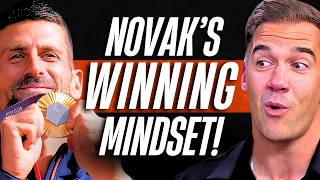
This is a YouTube video titled "Novak Djokovic on Manifesting Success & Winning Olympic Gold" created in August 2024. It features an in-depth interview and conversation involving Lewis Howes, Lewis AI, and Novak Djokovic. The discussion covers Djokovic's mindset, his journey overcoming adversity including war during his childhood in Serbia, his tennis career, and his humanitarian work. The content includes multiple speakers with Lewis AI participating in the dialogue alongside Lewis Howes and Djokovic, focusing on themes of resilience, mental strength, and personal growth.
Chapters
Novak Djokovic just won the gold medal here in Paris. And it's incredible to see what he is able to do at his age with all the years of his career after just having knee surgery a couple of months ago, losing, getting runner-up at Wimbledon, then coming back and winning Olympic gold here in Paris. He is an incredible leader. He is one of the top athletes in the world. And it's amazing to see how his mindset continues to allow him to manifest and achieve success at the highest level. And this is something he's been trying to accomplish for many years. He's never won a gold medal, and he's tried many times, and he finally accomplished this. In this interview, we talk about his mindset, how he thinks about manifesting the future, how he lives in the moment as well while dreaming about the future. This is going to be a powerful episode that you're going to watch, and you're going to hear a four minute clip that I did behind the scenes talking with Novak after one of his games five years ago, talking about how he thinks and prepares, how he overcomes challenging moments when he's behind. And it's amazing to see how his mind thinks in the game. He talks about his breathing strategies and techniques. So pay attention during this entire interview. Make sure to share with your friends. And I can't wait for you to enjoy this entire episode with the one and only Novak Djokovic. And I want to know what the...
I just asked you about how you.
Have so much power.
You're like a buck 65. It looks like right now you're...
It's all in the chi, baby. It's all in the chi.
So tell us about how do you manifest Bruce Lee?
How do you get it? Be a water. Be like water. Be like water. Yeah, it's... Yeah, I've been pretty lean.
How did you relate so much power though through chi?
I truly believe in that. You know what I mean? I believe in balance. And in our sport, obviously it's quite different. We don't have a contact. with another guy. But I think it's all about knowing how to balance the speed, agility, strength, and get the most out of every segment of yourself. And then surfacing the warrior, I guess that's the, you know, at least what it works.
How do you channel the warrior in your mind or in your spirit in the middle of the match when things aren't going your way? How do you get back on track? Because you were down at one point in this match.
You came back. Yeah. First thing is breathing.
I could hear you breathing right before.
You'Re about to hit.
You're just like, yeah, conscious breathing. I mean, that brings you back instantly in the moment. I think it can, I mean, it works on any level for anybody in any field of life. Just be conscious of the breath, be in the present. And, you know, I love the quote, you know, we can't It can't affect, you know, what happens, but we can affect our reaction to it, right? Powerful. So it doesn't work always, but most of the time it's at least important to have a tendency and intention to be conscious of that. So, you know, tennis is an individual sport. You don't really have anyone to save your ass, pardon my language. So it's just you, so you better prepare yourself for that. you know, most of the, probably 80 of the victory or the job done is done before you actually come on the court. Wow. So the way you, do you have.
A mantra that you say before you walk on?
I do, I do have, I do have several things. I, I do like to be expressing gratitude. For me, that's a big thing. Every, every, every morning throughout the day, every time I get on the court, I try to connect, you know, connect with my higher self, so to say, and with the higher force that allowed me to be where I am. I believe in universal law of attraction and the force that guides us all. And so I try to connect with.
That.
And guide that power and strength and energy from that force when I need it the most. And it works. It's not anything that is you might say, well, it's not real, but it is real once it becomes your routine. You believe like anything that becomes becomes a routine, it really becomes part of you. So repetition is very important to kind of tap into your subconscious and just kind of start reprogramming yourself, your life. And for me, I have repetitive life in a way, because every day I get on the tennis court and I kind of have to go through the same things. But that's life, you know, and what you make out of it is, is what you get out of it as well. So then you're, what you, what you put in, you get out, and it's, it's always like that. So I try to have that in the back of my mind. I get into, into doubtful moments every single day. But I, I, I, I try not to be too hard on myself, even though I am, you know, on the court, but you quickly get out of it. And that's, that's the point. That's the point. It's okay to get, you know, get, get tough on yourself, but it's, get recovery is something that you train. And so I, I, you know, breathing, being in a moment, just focusing on the next point, it is a cliche, but it really, really works.
That'S the key.
Yeah.
The greatest. Make sure you follow him.
Greatest man. Inspiration, buddy. Thanks for coming to watch me, buddy. It's amazing, man.
First time, huh?
First time, baby.
Not bad.
I'm coming back. It's not like handball. It's not like handball. But it's okay. It's amazing, man. Congrats, brother. I grew up in one mountain resort in Serbia called Kopaonik. My parents had restaurant business there, and they were building three tennis courts actually in front of that restaurant when I was four. It was a lot of interest for tennis because tennis. Tennis is a sport that was born in France and in England in more aristocratic environments. Tennis is sport of gentlemen. So I fell in love with it right away. And then the rest of it is history. Ladies and gentlemen, the number one player.
In the world, Novak Djokovic, the greatest player in the history of our game.
Novak Djokovic, ladies and gentlemen. Somebody tapped my shoulder and he was one of the people from UNICEF. And she came with the mother of a child that I was playing with. And she was a girl that was probably not even two and a half years old. And she told me her mom came to pick her up and it's time to go. I thought to myself, where are they gonna go? You know, what's gonna happen? Sorry, it's even today it's just so emotional. We have the nature is there, the universe is there. There is something and nobody can deny it. There is something that is watching for us, supporting us, loving us, but if we close our doors and we are living in a shell, how can we receive help? That's why just be authentic, be original, pave your own path. Welcome back to the School of Greatness podcast.
We have the legendary Novak Djokovic.
That's great.
In the house, man. You pronounced it very well.
I pronounced it the way you told me to.
Thank you for having me.
I'm super excited about this.
This is your first podcast. First podcast, yes. and we had lunch a couple of days ago. Your wife, Elena, introduced me to you. She had found, I guess, some of my information somewhere, a podcast somewhere, and reached out, asked me to do an interview with her. We had a great conversation. She was like, you have to meet my husband. You're gonna love him. And I said, okay, I don't really know much about you. And then she was telling me all these things about you, about how you really are here Yes, to be the best tennis player that you can be, but to make a massive impact in the world. And that you constantly want to give back and you want to spread love and joy and bring humanity together. And I said, okay, if he's more than just an athlete, then I must meet this guy.
She gives the best introductions of me, I must say.
Exactly, man.
Yeah.
I'm very grateful to have her in my life. And I think it starts from there, really, emotional stability, the love, First towards yourself, of course, but then being able to share, you know, love and share everything that you experience in life with your partner is something that, you know, brought a lot of joy, a lot of inner peace, and a lot of success later on in my life. You know, we've, she's probably the only, you know, serious relationship I ever had. Yeah, I was standing here the other day in the lunch and you know, but she. She'll probably not agree with that. She's like, yeah, but you had the girlfriend three and a half months before me. Okay. Yes, I had. But, like, you know, she. I. We started dating. I was eight, I think, 18. She was 19. And now we've been, you know, married for three years. No, four years.
No.
What is it? Three. Oh, my God, I'm gonna get in trouble. I I have the ring on, darling.
Yeah.
So.
But we. We have two. beautiful children and it's amazing. It's great to be able to share that, share my life with her.
Yeah, it's amazing. Now you started tennis when you were four, is that right? Started playing a four?
I started when I was, yeah, started when I was four years old and the story goes like this. Basically, nobody has touched the racket before me in my family, so I don't have any tradition that I inherited to play tennis. Tennis was never a big sport in our country. before that we did have Monica Seleš, for example. I don't know if you remember her. And she came over to States and she played for Yugoslavia at that time. And then she played for States as well. So she was our biggest star. We had Slobodan Bobo Živković, who was top 20 of the world, singles and first in doubles. But that's as far as we go in Serbia. Croatia, on the other hand, had more success. They had Goran Ivanišević and the Pilic and all these guys that were you know, top three, four, two in the world and winning Grand Slams and so forth. So. But tennis was never a big sport. You know, we're more a nation of team sports, basketball, you know, soccer, soccer and handball, volleyball, water polo. I mean, we had, you know, huge amount of success in those sports and water polo. You guys are Olympic champions.
Water polo.
I mean, what these guys, these guys are, I mean, they're one of the most dominant teams in all, you know, all sports and ever, ever. I mean, these guys haven't, haven't lost them. a game, like, in 10 years, you know, they're amazing.
So.
So, yeah. And then I, I grew up with, with my family in one mountain Resort in Serbia called copaonic. My parents had restaurant business there. So we, we used to go commute between the capital city Belgrade, where I was born and where we basically lived and went to school and copaonic. often because of the business that was, you know, we lived out of.
Yeah.
And the restaurant was in Belgrade.
No, no, restaurant was on the mountain. So, so. And, and, and we had, the mountain was quite popular in those days with, you know, summer and winter and all. Yeah, exactly.
Snowboarders.
But then as, as the worst Wars came after that, you know, unfortunately became only very seasonal thing just to go. you know, get a couple months of skiing and that's all. And, and they were building three tennis courts actually in front of that restaurant when I was four. It was 1991. And it was just, I think, the year before the war started, actually, when Yugoslavia broke apart and, and we still had a lot of foreigners coming and so forth. So there was, it was a lot of interest for tennis because tennis is a sport that was born in France and in, and in England in more aristocratic environments. So it's, it was tennis. Tennis is sport of gentlemen. It's not a very easily accessible sport, affordable sport, like maybe basketball, soccer, football, you know, those type of sports. So I fell in love with it right away. I mean, I, I helped workers, you know, kind of create, make the court and return. You know, I was bringing some beers to them. I was four years old. Yeah, I was, you know, right. I was, I was, I was eager. I was, you know, I was this. curious as any other child, you know, what is going on here? So finally, you know, I found out it's tennis. You know, I just became aware that I'm alive, you know, four years old, I mean, I was that young. And I was like, okay, dad, I would like to, you know, see what's going on here and maybe eventually get a record, you know? And so I started asking and then begging and then please, you know? So eventually he he said, great, here you go. Racket, ball, and, and then tennis camps started to come over and, and from Belgrade and different cities in Serbia. And so I, I joined, you know, right away, the first Camp that I saw, there was, like, a bunch of kids coming from different cities in Serbia, and it was like a program for a week, and, uh, so I because it was so close to the restaurant with, you know, where, which my, my parents had. I I just kind of walked there and, and hang on the fence and just try to understand, you know, what the sport is. And I started watching it on TV, and then rest of it is history. You know, I I really was very fortunate to meet that same year, I think, or the year after my, I like to call her my tennis mother. and, you know, she has greatly influenced my tennis career, my life as well. My parents were really kind and they trusted her so that she can have influence off the court on me as well, which is, you know, it's, it's tricky to do as a parent, you know, I mean, especially if you have a child that is, that is that young, you know, you you as a parent, you believe that you have everything that the child needs in order to, you know, I guess help him develop into a mature and healthy human being. And so, you know, as a parent, you always think like, okay, who is going to be the mentor of my child? So both my mom and dad were really, really happy with, you know, with the quality of person that Jelena Gajic was. And she used to train also with Monica Seleš and so so forth. So she was probably the best person I could have at that stage. And she saw me right away. She said, okay, you have, you have great talent. She told my parents, she said, okay, this, this kid can be number one of the world. And I mean, five years old. And, and that was, exactly. And that was, no, it was at six or seven.
After you're playing for a little bit.
For a few years. But, but she said, you know, right away, she said, okay, it was something different because I came to the practice first. tennis practice ever. You know, I came in with a little bag and a little, I had an extra t-shirt. I had a little bottle of water and whatever. I prepared that. I was very, very much into it. I wanted to be ready. And so she found that very odd and she found that very, very special. And, and so she said there's something about him, you know, that, that is, you know, different. And, and I think, and she was telling my parents that, that she, they should support me and, and, you know, bear in mind that those were 90s and we had two wars and we're all this bunch of of different, you know, difficulties that were in adversities in life that we were facing, which was making it as difficult, as much difficult for my parents to support me and to become a tennis player and to pursue my dream. And it was, as we talked about it five minutes ago, I mean, it's an expensive sport, you know, you gotta afford a racket, coach, all this stuff, you know? And, but, you know, we went through all this stuff and my father saw that spark in my eyes and said, okay, you know, this is what you're going to do.
Amazing, man. This is crazy. So do you think that if she didn't say that you could be number one in the world, do you think you would have actually become it without having someone else believe in you?
Or.
Was that belief early on?
You know, I usually don't like to play with these questions. What if, what if, what if? Because I believe that everything in life happens with a reason and for a reason. So I think if we have to think about it, yes, I think it would be... I don't know if I would actually pursue the career of a tennis player if it wasn't for the belief and support that I had from my parents and her.
Really?
Yeah, because I mean, of course, I fell in love with the sport. but, you know, when you're that young, you know, kids are curious. So we play different, you know, different sports. You engage yourself and who knows where the, I guess, the path takes you, you know? And I did play other sports as well. I mean, I did skiing because it was mountain. My, my father was a professional skier. My aunt, my, my uncle, they were all com, you know, competitors, and, and, and they're all competing on a high level in, you know, Regional level and European level. So that's actually how my, my parents met as well. My father was an instructor and she was skiing and saw the whole thing, you know, and then here I am, you know, and so skiing was and still is today a great passion of mine. Really? Yes. But you're right, if I haven't had her and my parents saying, okay, really, there is something that, you know, you should pursue here in this sport. I probably would play other sports and probably the sports that were more popular, you know, with friends.
Sports, yeah.
You know how it is. I mean, when you're that young, you want to play sports and you want to belong to a group, you know, to a little community, whatever. So nobody was really, there were not many kids playing tennis because it was expensive, it's not affordable, it was isolated. It was not maybe as much fun as some other team sports because, you know, when you're playing soccer or basketball, it's more fun like this. Exactly. You're more isolated, more individual. You do play, you know, of course, in groups and so forth, in camps and stuff like that. But, you know, they're, you know, half of the time you're spending it by.
Yourself on one side of the net and that's, that's all you got. That's crazy. Now, the first war, you went through two wars in Serbia, right? The first war, you were six, seven.
Yeah, yeah, I was five, I think, 1992. Yeah, that's when, yeah.
And that one was the lesser of the two wars, is that right? It was still, you know, bombs everywhere, but it wasn't as hard as the second war.
So the first war, the first war was more in Croatia and Bosnia. It was between, you know, Serbs and and Bosnians and Croatians and that, and then the whole, you know, the whole Yugoslavia, there was once a big country with, you know, six, seven states that, you know, fall apart. And so it was, the war lasted for a long time, I think, three, four years. And it was, you know, of course, a lot of victims, nobody wins in war. I mean, it's a terrible thing. But it wasn't, it wasn't, I didn't feel it. My family didn't feel it in Belgrade, in Serbia, as much as people, you know, in these areas of Bosnia and Croatia.
Gotcha. The second war was the one you felt the most, right?
Yes.
And you were around 12?
I was 12. And I remember actually I celebrated my birthday during those two and a half months of bombing and I was turning 12. And I still remember that scene actually we were having this like a little birthday party at this tennis club. So us kids, we of course we frightened, we were scared, we didn't know what tomorrow brings. But at the same time, as a child, you don't really have the worries that adults have. So you were living in the moment. And for us, it was great that we get to spend more time playing tennis, having fun, than in school. So it was like, oh great, we get to do that and that, we don't get to sit for hours and hours, but we get to actually play.
So you didn't have school during that time?
Sorry?
There was no class during that time?
Absolutely not. No, no, no.
It was canceled.
Canceled. Everything, you know, it's just many people fled and just.
Wow.
Yeah. I mean, it was, you know, it was one of these things that, you know, it's not, it was not like from one day to another. We were kind of warned about it months prior to when it happened, but we, I think, you know, super majority of people really didn't believe that that's going to happen.
Really.
You know, like, I mean, imagining that, you know, you sit here and you see planes, you know, dropping bombs here and there. I mean, it's, and everything is trembling and, you know, the windows are breaking and everybody's screaming and the whole city, I mean, the whole country was basically bombed. And, and it was because of, you know, the part of Serbia at the time, and it was Kosovo that was, you know, and the whole thing, I mean, not to get into politics because it's, it just gets ugly, but. but it was, you know, it was one of these things where, you know, you, you, you just don't know. And, and I think that, that feeling of insecurity, you know, the feeling of helplessness, just, it's, it's terrible because, you know, we as human beings, we like to have a control of, you know, environment of where we live, what we're gonna do, you know, of our experiences. And, and this was completely taken away from us. And there was this higher power from above that could do anything, you know, to anybody. And you could be a collateral damage any minute, basically.
So... Did you see bombs dropping everywhere? Oh yeah, every day.
Yeah, yeah. I didn't see it myself. I heard it, of course I felt it. I've seen, actually, you know, I have this image still in my mind where I think it was the first week when it actually started and we were still very, very much, you know, of course, afraid and we were running to shelters and my father's sister, so my aunt, she lived with her family about, you know, 300-400 feet away from our building. So we lived in one building, she lived in another building and her building had underground you know, shelters and our didn't. So so we literally for every night for first couple of weeks we we ran like around 2 3 a.m. that's when it started to to, you know, the bomb started to come. Yeah, exactly. That's when we we were going there, right? So we just wake up, you know, pack our things, cry a little bit, scream, whatever, and then just take our whatever the necessity necessities and just go there. So we'll spend two weeks, mostly nights in those in those underground shelters and and I remember, I think, one of the first nights, I, and you see, it's, you know, it's obviously middle of the night, it's, you know, pitch darkness, and all of a sudden, you know, you see these flashes of light everywhere, you know, explosions, and you feel the ground trembling, and it was a devastating experience. And then I remember us running, it was one night, it was, I think, the third night, second or third night of bombings, and I was, you know, of course, my mom, I was 12, I have two younger brothers. The middle brother was eight. The youngest brother was four. So the middle brother, he was running as well with our dad and my mom was carrying the youngest one. So I was behind and something, I dropped something. So I picked it up and then I was losing my footing. So they didn't hear me because of the noise. So it was this distance and I was frightened that I'm going to be left alone. So as I was running, I trembled, you know, on the rock. you know, I fell down and I turned around and then I could see this, I don't know, it's F-16 plane or something like this. They call it the invisible one. So just like huge pitches flew and just dropped something there, which was very close. It was a military hospital I was thinking about. No, I mean, just those, those, those kind of images are stuck in your mind forever. But at the same time, as I was telling you, I, I feel like that experience has shaped me into the person I am today, has helped me to be, you know, more appreciative of life. I, you know, I give more value, I'm more grateful. And just because of everything that has happened in those, you know, in those 10 years, actually, because after the first war to the second war, the whole country was, we had embargo, so we, we, there was no import, so we had there was a lack of, you know, lack of gas for cars. There was, you know, bread and milk. You had lines of people, you know, accused, like, you know, very long ones. So you had to wait, like, hours to get bread.
Yeah.
And all these different, different things that have happened, you know, made me and my family and all the people, Serbia, more resilient, you know, and just more, just tougher, you know, for whatever challenge, challenges that we face in life or whatever adversity is out there. And, and, and I think that, you know, some people maybe are stayed stuck in that emotion of maybe hatred and just revenge type of feeling. I am not and I don't believe that's the right thing to do because then you feel like you're a prisoner of your own emotions in your life because you can't blame anyone. You can't blame people. of any country for what has happened because it's not their fault, you know, it's some maybe decisions of some head of states or militaries or whatever. I mean, but in the end of the day, if you carry this for all your life, I mean, does it really make any change for you? It's going to enrich your life. I mean, it's not. So you might as well let it go and learn how to... You cannot ask people to forget. and that's one thing that I realized because I mean I was fortunate not to lose anyone that is close to me. You know my family, my brothers, everyone is good, is healthy, also the cousins and so forth, everybody is okay. But you know I know people that lost their parents, they lost somebody very close and you know they lost homes, they lost lives and they had to start over. from scratch, I think almost half a million refugees and even more. I mean, God knows how many people died. And you can still see, and then one day I hope you'll come to Belgrade. Yeah, I would love to. And you still see the traces of that. You still see buildings that are ruins since '99. Wow. And it's funny, but they use it as a touristic attraction today, you know, as well, whatever. But, you know, it's hard to ask people, hey, just forget about it. You cannot forget about it. You cannot. You know, it's just it's one of these things that is deeply, you know, I guess ingrained, engraved into your subconscious, into your emotions, into your memory. But I think you can get over it and let it go. And that's something that I felt like I've managed to do it myself and many people did. but, you know, many people also didn't, so. But it's, it's, it's still, the wounds are fresh. You know, it's, it's, it happened. I mean, what is 99? It's, it's almost, you know, not even, you know, 20 years ago.
So, so it's still, it's still relatively fresh. It was in your childhood. I mean, it was a, yeah, a.
Time in your teens, I guess, right before you became a teenager.
Yeah.
Yeah. So, yeah, it was intense, man.
It was, I couldn't even imagine.
Yeah, it's intense, you know, and, and I guess, you know, when Two and.
A half months, you said, every day, right?
That's why, I mean, it hurts me every time I hear about refugees, every time I hear about bombings, about war, and what's happening in Syria and Middle East. It's just the amount of people and Syria, let's take Syria, for example. I mean, I had one incredible experience that I think I've never cried that much in my life. I became a UNICEF ambassador of goodwill for the region. back 10, about 10 years ago. And then in the meantime became the global ambassador. And as I became, as I become Global Ambassador some years ago, I, they, you know, I start to, you know, do different things for UNICEF and my foundation because UNICEF and my foundation are, you know, collaborating. And, and, and I remember it was, was it was a year, you know, and a half ago. It was just recently, I mean, when the whole Syria war started. Yeah, it was, it was, it was a huge thing in Europe because probably third or, or quarter or third of the country just left. Can you imagine 12 million people in Syria and it was three or four million people left the country. Crazy, you know, and probably even more now today because they lost homes, they lost their lives. they lost their, you know, close ones, what they're going to do. So they want, they want to, you know, search, they want to go to some place that will offer them roof above their heads and social help that they don't have in their country because it's completely devastated. It's completely destroyed. So, so, you know, many, many, like thousands and tens of thousands, hundreds of thousands of, of refugees have went to, through Serbia to go to Germany, Austria, you I guess the bigger countries in Europe. And so we were on their trajectory.
So.
I went to visit one of those kind of locations that was offered from the city as a resting place, shelters, homes, like temporary homes for the people that are passing through. And it was one of the hotels in town in Belgrade. And they they gave them the whole lobby area, the whole, you know, kind of floor. And as I came over, I, I already start to feel this, you know, and I, I hadn't, you know, I, obviously, I do a lot for my foundation and, and so forth, and, and it touches your hearts because we have, we're going to talk about it in a minute, but we, we focus a lot on the education, and it's, it's a different thing. You know, you don't get to, you know, see the devastation, the, the hurt, the pain, uh, as much. you know, you see that, but not as much as you see it here. So I, I knew kind of could predict what's, what's going to, you know, happen and what awaits me. So I start to feel all of a sudden these emotions because I've, I, I've been, I've been fortunate. I haven't been a refugee myself, but I know many of my friends and people around me that, that are refugees of, of the wars during 90s. So as I, as I come in, And I'm supposed, there's a camera, I think it was CNN and, you know, a couple other cameras and they wanted me to record a message, you know, for people being there, you know, to ask for help, to raise funds, you know, to help, you know, refugees and to build homes for them and so forth. And as I came in and then you see, you know, you know, different rooms, there is a playroom, then there is a resting room and so forth. and the look on these people's faces was something that was, you know, wow, boom, right away, first impression was like pain, insecurity, devastation, sadness. It's just all this, all these emotions and just they were flat, you know, literally they were flat. They were like, they didn't know what's happening. I mean, they're like, okay, we're here now, but where are we walking? Where are we going? What's going to happen? Where is our life tomorrow? So as I'm walking into this small play area for children. There are plenty of children there. So I observe them for a little bit and then one of the volunteers there tells me, why don't you join them? So I didn't know how to react. Honestly, I was there, I didn't want to be with them, but at the same time, I don't want to be in their space because I could feel the emotions. I could feel what they're going through.
Through.
So I started playing around and 10 minutes later, I really got into it, children, and it was a couple of children around me and we started playing with toys and measuring things and whatever. It was really cool. And then somebody taps my shoulder and it was one of the people from UNICEF and she came with the mother of a child that I was playing with and she was a girl that was probably not even two, two and a half years old.
Yeah.
And, and, and she told me, she told me her mom came here to pick her up, and it's, it's time to go.
And.
And I thought to myself, it's still, still today. I thought to myself, where, where are they gonna go?
Right.
You know, what's gonna, what's gonna happen? I mean, it's sorry, I just it's even today it's just so emotional, you know? Because I don't know where they went, you know? It's like having this girl and mom taking a boy who was six, seven years old and this little girl and they're, you know, they're traveling God knows where by foot no home, no nothing behind them, you know, and then in front of them. So it was just. And then I was supposed to tell something in the camera. I'm like, guys, like now, I mean, I can't speak, you know, I can't speak because it's just one of these things that breaks your heart, you know?
Right.
And it's just. Sorry. That's. That's what. That's what. That's what war does. That's what war does. But at the same time, you know, at the same time, I'm really. grateful that I've been through that, through this experience, through, you know, Wars and 90s and, and all these things, because it made me more human. It made me more connected with, with other people. Because I, I, you know, whatever happens in the world, I know that, I know that we are all going through that, through that experience of trying to live, trying to take the best out of this life experience for ourselves. And, and, and I think going through, through, through, through those emotions and those experiences and past just allowed me to, to, to be more just warm-hearted towards people. And, and I, and I feel that, that I get the same and, and, and, yeah, I mean.
Yeah.
Wow, man.
Yeah.
Thanks for sharing that.
Yeah.
I'm sorry. I just, it was one of these things that is, that is really you know, it just stays with you and stays with you and I like to look back to it as much as it hurts me. I like to go back to it and then understand that what I have in life and how fast I can lose all of that if I don't appreciate it, if I'm not living in the present and knowing that there are people like that even today going through all of this and us being in this incredible you know, life and, and, and having this Fortune to be successful and to be, to be heard as well. You know, everything that we say, you know, there are thousands of millions of people following you, myself, you know, children that they're looking up to us and then saying, okay, I mean, this is something that I can use to, to be better, and I want to be like him. So I think having, having this in my subconscious, you know, all these experiences in the past and never forgetting about that keeps me grounded, keeps me aware that everything I say is heard. you know, in these places that really need your advice, that need your help, that need your light. So, you know, it's all about sharing that light and sharing that love.
Yeah. Wow, man. What would you say is the biggest lesson you learned from war, from that whole experience personally?
The biggest lesson that I've learned.
Is.
Probably that I should be always kind. to anyone and everyone no matter what experience they go through because you never know. You never know what one person goes through and you just always be kind because there is something you know that we call God, Universe, Angels, there is this higher force above and here on this planet that is going to help us. to live a prosperous life, to be happy, to be healthy, to be joyful, to have that peace in if we truly respect and appreciate ourselves and others in that process as well.
Wow. Now, were you able to even think about tennis? You know, you had this dream of being number one at four, five, six, and then during the wartime, were you still thinking, oh, this is something I still do or I have no clue where I'm going to be tomorrow because these bombs are right around me within miles. Were you able to practice? Were you just not sure? Were you just trying to, you know?
Oh, I was practicing big time. I was. Yeah, I was. As I, as I told you, you know, I, I've, you know, that was your time.
We were school.
Exactly. No school. Which, I mean, I enjoyed school. I think it's great, but at the same time, I, I, I I'd like to be on the tennis court more, you know, because I was completely, completely in love with it and, and just, you know, it was huge passion of mine. And I started to do better and better and start to win some, you know, local tournaments. I was, you know, 11, 12 years old. And, and during, during those two and a half months of bombing, we actually spent after the second week was on because in the first couple weeks, we were like, okay, let's just survive, you know, and let's just figure things out. We don't know what's gonna happen. And then after the second week, we're like, okay, this is gonna happen. God knows how long it's gonna go for. So we might as well continue living our, so to say, normal, everyday lives, whatever that, whatever that, that is, you know? And, and so I spent a lot of time on tennis courts, and we had a lot of tournaments, and I actually remember I haven't been part of it, but because I was, I was still young, it's too little, but there were people that were organizing this so-called target group activities. So they would, they would, because they were bombing our bridges as well. So they would go out on one of like, you know, most important bridges that connects the two important parts of the town. So people would go there literally more or less every day with t-shirts that would have, like, a Target drawn on them.
And.
And also on their faces, they would, like, draw targets or on their, you know, top of their heads.
And.
And that would be. And they would sing songs. They would go, you know, they would be together United. And that was, like, a message out there. Okay, we are the target. Try to do something now. Like, wow, this is. This is us. We're here. So thankfully, nothing happened there. But that was how powerful this whole experience was for people to get together. It was devastating, it was all these things that we talked about. But if there's something positive out of it is that people survived because and we got through it as people, as country, because we were together, we were united. And we talked about it the other day on the lunch, is that I was a bit as complaining to you a little bit about Serbian people that we are not united when we are supposed to be. We are united. I tell you that joke. Yeah.
Yeah.
But it's, you know, I think especially younger generations at that time, they were like, okay, this is our time to be rebellious. Because when you're younger, you're rebellious. You want to be part of those activities and whatever, and it's fun. So we try to turn it into fun. Yeah, you know, as much as we could.
During bombings, correct?
Exactly.
Now, when did you start to fully believe in yourself that you were able to achieve what you wanted to do in tennis? When did the belief fit in where you're like, yes, this is possible for me?
Oh, very early. I knew already I'm gonna become, I will become number one of the world. Like, I was seven, I think I was probably first, was the first TV Show I had, like, I was guest in one of these kids shows and national TV.
TV shows or something.
Whatever, something like that. And I said that, you know, tennis is my commitment, is my obligation, is something I have to do. I mean, I was already, I was so disciplined, you know, at that time. And, you know, they say that there's a great quote about this one, is that discipline is the bridge between goals and accomplishments, right? So whatever in life you envision to do, You got to be disciplined, you know, disciplined spiritually, disciplined in sports, in whatever, in your family, in your relationships. So very early, I think, and my parents and my tennis mother, Jan Nagyenthi, they've deeply ingrained that discipline in me. And then I knew, I mean, already seven-eight, I was like, okay, you know, this is what I'm going to do for the rest of my life. I knew it was very clear. and what is strange about it is that, you know, if you take in consideration all the circumstances in which I've grown up as, you know, as a child, it was very odd. And there was many people, it was many people that were laughing at it. And it was just, my parents, I mean, my father had to, you know, he went through so much. I'm eternally grateful to both my parents and my father has borrowed money from people that were chasing him in car. I mean, you would not imagine the experiences that he had and we had in order for me to travel to United States, for example, for the first time in my life. And during those 90s, I mean, and because of embargo and all the things, the criminal rate raised. So there was a lot of, you know, kidnapping and, you know, different stuff. And it was, it's not, it's not even close like that now. Now it's great. It's, it's fantastic. It's safe and it's all fine. But, but during those, those seven, eight years, it was really tough. you know people are scraping and people are fighting for their lives basically surviving you know it's a matter of like if you take one bread or two breads it makes a difference you know you need to stay in the line and God knows if you're gonna have a bread in a week time you know so it was literally that kind of survival mode for everyone you know and so I think from very early stages of my life, I knew what I wanted to do but not just what I wanted to do but what I wanted to achieve, what is going to be my accomplishment in what I do and I think because I had these objectives in life I managed to have the mental clarity. I managed to, so kind of in tennis and Andre Agassi is my coach now and I'm proud to have him in my team. He always says, you know, in tennis you work from top backwards, you know, from basically setting up a goal and then you work your way back and it's just you know exactly the whole season how it's going to look like because you know, okay, this is what I want to, this is my season goal. So, and then I let me work my way back to this moment. And, and so this is probably a definition of, of, of how I felt at that moment mentally and what, you know, the plans that I had, the visions that I had. I was, I was seven. I already, you know, I was making, like, out of, you know, like plastic or like a little paper materials. I was making the Wimbledon trophies, you know, and stuff like this, so. It was very, very clear in my mind that that's going to be my mission.
Have you ever doubted yourself going on to, you know, being a professional and going against some of these top players for the first time? Did you ever have doubt? Or were you always like, I can beat them, I can be the best?
Oh, yeah, I had plenty of doubts and plenty of doubtful moments. Probably the one that stands out the most was back in 2010. when I was already, you know, number three of the world, I was already a Grand Slam winner. I was established player in, you know, top five in the world, you know, from already three, four years before that. So, so I was already into it. And, and I've won my first Grand Slam in Australian Open in January 2000, 2008. And I was 20, 20 years old. Wow. And, and it was, it was a dream come true. The whole, I mean, I was very successful in junior days and everything. It was just, I had this upward kind of spiral and trajectory in my tennis career in my life, and everything was great doing, you know, it was, everything was great. And, and then all of a sudden, I had this period of two and a half, three years where I didn't win a slam.
Really?
I was, I was managing to be, you know, three, four in the world, but I just, I struggled a lot. And, and then, and for me, being number three of the world wasn't enough. I was not satisfied with that. And I always go back, say, okay, when I was, you know, seven, eight years old, my dream, my life goal was always to be number one and win Wimbledon. That's it, you know? And I need to achieve that no matter what. But then I reached the kind of mentally low point in my career. I think it was after Roland Garros, one of the four Slams, and I lost. I was two sets to love up. I lost in five sets in quarterfinals. against a guy called Jurgen Meltzer. He was top 10 in the world, very good player. But I had him, I mean, I had a match and I just lost and I had, and just, I just had a breakdown and I remember going first to my parents and, you know, so, you know, talking about this and that and I just, I cried and I like, I don't know if this is worth it. I don't know if I should keep going and they're like, and my father was like, tough enough, tough enough, you know, no, no, no, you know, this kind of things and I'm like okay, but it wasn't enough. I felt I needed to think about it more. I felt I needed to share more. So I went to my coach at that time, Marian Vaidean and one of my best friends in life and my former physiotherapist, Milian, and I was in their room and I remember sitting on the floor and I just again I had another breakdown and I was saying I don't know, you know, da-da-da-da-da-da and they were like okay you know, take your time and, and just, let's, let's first, okay, breathe and let's come down and then let's, let's look back, you know, and, and they were really, really wise for telling me, like, let's go look back first, you know, you know, why did you start playing the sport and, and the whole thing, you know, and do you, do you love it, you know, do you still feel, you know, leave aside what you want to achieve.
Yeah.
What you want to do. Passion for it, you know, but let's, do you, do you really like holding record in your hand and then like, actually, I do, I really, I love holding a record in my hand, whether it's a grand slam, you know, center court finals, whatever, or, or it's just a normal, you know, public court. I, I still love, like playing for the sake of playing. They're like, well, that's, that's your source. That's, that's what you need to tap into. And that's, and it's take a little bit of time. And literally, you know, they thought it's going to take a few weeks. Next day, I'm like, okay, I'm back on track. Let's go. Let's keep going. And I never looked back ever since that moment. And, and I remember the next term was Wimbledon probably played semi-finals and then after that I won Davis Cup with my country with my guys end of that 2010 that was one of the highlights of my career and then after that I went into having 43 matches win in a row and I had that streak I became number one.
How long is that for?
It was like almost six months.
Six months you didn't lose one match.
Yeah, yeah, yeah, it was a set.
But not a match right? Not a game.
Yeah, no, yeah, no, that was, that was, that was one of the, it was McEnroe and myself, we hold the record for longest streak of, of history. I, okay, so this is, if you go, if you go, if you go online, so wait, wait, so if you go online, you'll say, John McEnroe 42, Novak Djokovic 41. Oh, now, why? Because they didn't count the two matches of the guys that retired the matches to me, so they didn't count them as wins, and I would have the fourth, but, okay, John, okay, John, you.
Have it, you have it.
John, okay, you have it. So it's John, yeah, so that's how I feel, man.
You were just in the zone.
No, it was unbelievable and it just gave me wings. I mean, I felt all of a sudden that I started to play and play freely. I didn't, you know, between winning the first slam and that moment, it was three years and I felt like I was playing for the wrong reasons. I was playing because I wanted to achieve, I wanted to do this, I wanted to lift trophies, I wanted to do this and that. And that's okay, but that's secondary. The first, the primary, so to say, motivation needs to be what inspired you to start playing, what made you fall in love with the sport. And that is the love, the joy, the passion for it, to play it. And so I all of a sudden became the kid that I was when I started. And that's, I felt so much power and energy. and I just. Exactly. So I never looked back after that.
Amazing, man. We have a few minutes left, and I want to ask, like, a thousand more questions. So I'm going to be very mindful of this.
Yeah.
The thing you're most proud of that maybe a lot of people don't know about. Maybe that's not this big public announcement, but something you've done recently or any time in your life that you're most proud of. And maybe it is something people know about.
Okay, so. I usually don't like to praise myself. I don't feel like that. I usually leave this to other people. And also, I don't feed myself out of someone else complimenting me. Of course. Because I find my happiness inside. I find that working on my own.
Character.
Virtues and features is something that you know, is essential to me. And, you know, being able to establish this, this kind of inner peace and, and happiness in life, regardless of what's happening externally, is essential because it keeps me connected to myself, to other people, to, to planet, to universe, and, and then, and then, so I, that's the starting point. So what I'm, you know, things, things that I have done, I've done with, with my pure heart and intention, so I It's hard to pick one because I remember during the bombings, right? So I remember I was going in our neighborhood and kind of sharing the food, you know, with other families, without children, giving clothes away, you know, because, I mean, it's not something that is very special, but it felt very special at that time for me. I've done things after many, many other things and, you know, with philanthropically with, you know, myself individually and also with, with, with, with our foundation. But again, going back to the times of, of, of the war, I think that's something that, that, you know, probably would stand out and, and something that I, I was very proud of and I'm proud of my, and I'm really grateful to my parents that they were able also to give me this kind of education and, I guess, Consciousness about, about the fact that we're not alone in this world and that we need to share because sharing is caring and vice versa. And so I remember going around the neighborhood and just offering my warmth and my friendship and my love and whatever I had at that moment. And I felt more love than I probably ever felt. I mean, it's one of those moments where you know, and in the biggest of adversity, that's where your pure self surfaces. Yeah. You know, and so that I would probably mention that. That's cool.
The thing you love about your wife the most.
Honesty and compassion. And, you know, she, I mean, I mean, we can't even, we as men can't even imagine what women goes through, especially women that have experience of becoming a mother and all of that and going through the pregnancy. It's another level. It's another level of sacrifice. It's another level of pain, but it's another level of love and dedication. you know, to family and what matters the most. And so having her in my life is one of the biggest blessings I could ever ask for, to be honest. And to this day, I am trying to always remind myself, you know, what I have and what we have and how grateful I am.
That's cool. This is called the Three Truths. So if this was the last day for you many years from now, and for whatever reason, all the videos and interviews you've done and stuff you put out there is gone and no one has access to your information anymore. But you had a piece of paper and a pen to write down three things you know to be true or the three lessons that you've learned that you would share to the world. And this is all they have to remember you by, these three truths. What would you say are yours?
Does it need to be like a single word or I can just be a sentence. Sentence.
Okay.
All right. so I'll probably say three lessons. Yeah, I'll probably say live freely.
Okay.
Breathe deeply and love fully.
Simple.
And it really comes to that. It comes to you, you know, being one with yourself and others and. And just being present. And I. If I have to pick one of those three, which. which I guess is probably the biggest and most simple and odd lesson that I've learned in my life is to breathe deeply and to learn how to breathe because when you learn how to breathe, which is something that we take so much for granted today, is you learn how to live in the moment, to be mindful of yourself. You all of a sudden observe things from a different perspective. You are not as maybe impulsive. Yeah you know and all of a sudden everything opens up because we talked about it a minute ago. You have help. We have the nature is there, the universe is there, there is something and nobody can deny it. There is something that is there that is out there watching for us, supporting us, loving us but if we close our doors and we are living in a shell, how can we receive help? You got to open some windows, right? Doors and then eventually have no and that's why, you know, live with no shell. Just be authentic, be original, pave your own path. Don't just follow the paths that society is telling you to. We need more creativity in this world. We need more innovations. We need more people that are free. And today's society is shaping us to be a bit of robotic beings, you know, just got to do this, you got to pay this, you got to do that, you got to follow this, you got to take that, you know, just try to try to understand what's the best experience for you, what's you know, and but at the same time, live freely and share it.
Powerful. How can we best support you? What's the thing we can do to best support you? Make sure we follow you on social media, but is there a way we can support the foundation or a big cause that.
I leave this completely up to you. The thing that you can do best for me is to do best for yourself.
There you go.
That's all.
There you go. Well, before I ask the final question and get you out of here, I want to acknowledge you for a moment, Novak, for your incredible ability to live for your dreams, but also make sure that you're inspiring the world in your dreams and not making it all about yourself. You're truly a global citizen of love. And for me, it's really inspiring to see that someone like yourself is in the world right now because when there is so much hate that's happening specifically in America, you've been through the worst of the worst and come out on the other side with such a giving heart. So, I acknowledge you for all that you do for your country and for the world. You're an incredible human being. Yes, my brother.
Thanks, brother. Thank you. And I need to, before you continue, I need to also say thank you for sharing that love as well. Thank you for bringing people that with inspiring stories. Thank you for sharing passion for life and for greatness with people because that's what we need to inspire people to dare to dream. you know, because today we need it more than ever. So thank you for that.
Yes, exactly. Final question is, what is your definition of greatness?
I thought you never gonna ask me that. I was like, okay, I'm gonna get away with this. No, my definition of greatness for me is purpose. If you find your purpose, you're going to give purpose to others. And you and me, as public figures, we have this responsibility. you know, even more. And I think that, you know, on whatever level, you know, of society you are or whatever experience that you go through, you are going to maximize your, you know, life's experience only if you find a purpose. And people will find their purpose because they will relate to the very same purpose that you are defining and that you are radiating and that you are portraying.
Make sure you guys follow this man all over the place on social media. We didn't even get into, like, the tennis mindset, the habits, the rituals routine. That's gonna be for another time. When you're back in La, we'll do that. Or when I'm in Serbia, man, I'll come back to Bell grade.
Special invitation right here. I appreciate it.
Yes. All right. So next time we'll have to have Novak back on to talk more about that. But this was a powerful story, man, and I think it's gonna help a lot of people, so make sure you guys follow. No Becky, thank you.
You're a champion.
Thank you, appreciate you. What were you thinking about the moment you walk from backstage on stage for the most important part of the Olympia? What are you thinking of knowing that you've spent a year of training and preparation, knowing you've documented daily your lifting, your nutrition, your sleep.
More from Lewis







Secret Service Agent: Your Neutral Face Is Making People Distrust You (Here's How to Fix It)



