Olympic Athlete REVEALS How To DESTROY NEGATIVE Thoughts IN MINUTES! | Lindsey Vonn & Lewis Howes
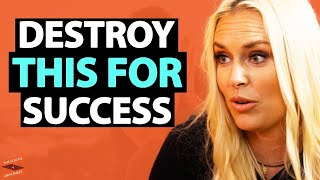
This is a YouTube video titled "Olympic Athlete REVEALS How To DESTROY NEGATIVE Thoughts IN MINUTES! | Lindsey Vonn & Lewis Howes" published in July 2021. It features a conversational interview between Olympic skier Lindsey Vonn and host Lewis Howes, discussing Lindsey's athletic career, mindset, overcoming injuries, mental health struggles, journaling, and her transition from professional sports to post-career life. The dialogue includes insights into her competitive nature, mental resilience, and personal growth.
Chapters
Yes, I love winning and that's always what I wanted to do. But you know, at the end of the day, you know, when I'm in, when I'm putting myself through everything that I did, you know, all the rehabs and everything, I always remembered...
I think you gotta have a dream.
The School of Greatness. Really?
Yeah.
Please welcome Lewis Howes.
I'm always curious about the most influential person in your life growing up because I think that has a big influence in our life. So who was the the most influential person and what was the greatest lesson they taught you?
Well, I mean, the person that really inspired me was Peekaboo Street because she was like the only person that we had really in skiing at that time that was like, you know, really in the spotlight. And I met her at an autograph signing in Minnesota. You were 10, right? Nine. And so like as soon as I met her, I was like, that's what I want to be. Really? Yeah, because I mean, I skied for fun before that and I mean, I trained and all this stuff and I loved ski racing, but I never really had a concrete goal until I saw her and then, you know, It was suddenly an attainable goal. And then, you know, I ended up being on the Olympic team with her in 2002. And she said the only thing that-- she didn't say much to me, because I mean, I kind of followed her like her shadow. And she was probably pretty annoyed, because I was, you know, 16. But she said, you know, I asked her when she was inspecting, I said, what are you looking at? And she said, I'm trying to find the fall line. I said, well, where is the fall line? She's like, you have to figure that out yourself. It's like an instinctual thing. And so I always thought about that and it stuck with me.
But yeah, so... You mean when you're inspecting the...
The course.
You always look at the course and you find your line, right? And I was like, I'm just like, what are you... I just want to pick your brain because she was my idol. I'm like, what are you doing?
She wouldn't really teach you that though.
She was kind of like, She didn't really want to teach me that. I like, you know, tried to force it out of her, but it was.
A good piece of information nonetheless.
When was the first time you beat her? I actually don't think I did because, oh no, I might have beaten her in some of the World Cups that year, but she retired after the 2002 Olympics. So I didn't really get a chance to race against her very much.
She went out on top, like, top of her game, I guess.
Yeah, definitely above me.
Right. Yeah. And she was like, this girl's coming for me, so I might as well get out while I can.
Yeah, I mean, she had had similar to me. She had a lot of injuries and she was just kind of the same thing, like beaten up.
So.
What do you think made you such an instinctual, dominant athlete? Where did the mindset come from, like, needing to or the desire to win? all the time at the highest level.
I don't know, I'm a really competitive person and I'm always kind of like, I'm like a perpetual one-upper yeah. so, you know, it's like if I, and you know, I think one of the things that most people said about me is when I started to succeed, they said, well, you know, now she's got this, she's gonna, you know, relax and it's not gonna happen again. And that's the exact opposite way that I think, you know, I'm like, if I get this, I need to get this, and if I get this, I need to get that. And then just kind of like, I always, try to get better and better because that's the fun of a challenge, you know? And I think as time went on, too, then I started to hit these, you know, marks of, you know, records and. And that then excited me. And then, you know, it's just, like, finding constant motivation in becoming better.
Right.
Did you ever doubt yourself?
There's only one time I doubted myself. I was. I was thinking I was right after the Olympics. Which one? 2002. I was still young, you know, I was 17 then. 17, 18. And I just, you know, I kind of got demoted from the ski team. I was on like the Europa Cup team, which is one level below. And I was kind of crawling my way back and yeah, I just, I kept crashing and I wasn't sure if I was going to make it. And then I just decided to double down on what I was doing. I hired a trainer with money I didn't have. I asked for an advance on my contract. And I spent the whole summer with a new trainer in Monaco and I got my first podium the next winter.
So when you doubted yourself, how did you get out of it though? Was it just let me find people to help me get out of it?
I think like a reset, you know, because you get stuck in a rut and it's like what I'm doing is not working. So if I need to get to the next level, what is there that I can change? You can't change everything obviously because then you can't figure out what was wrong. but I needed to find something that I could drastically improve on to get better and fitness is one thing that I had obviously worked hard at but not hard enough.
Really?
And so I made that change and it worked.
Now when you had all these, you had like what, I don't know, so many crashes and injuries right? Throughout so many years.
A lot, yeah, just a couple.
I mean you tore your knees like 50 times, I mean everything is crazy. You got plates in your arm and your back, I mean it's nuts. How do you have confidence after a crash and come back and say well, I'm gonna go back and do this course or the next course Better faster.
Stronger short-term memory really? Yeah, I mean it's part of the job.
The concussions I guess help because you forget.
You're like oh wait, I don't even remember that. Shoot. Yeah, you know it's like that's crashing is part of the job description. So if you're not ready to do that then you know you should probably not do that. But for me, you know, I always use it as a learning tool. You know, what did I do wrong? What can I do better? You know, I always analyze my crashes. A lot of people can't watch their crashes because they're like, you know, they.
Don'T wanna watch their crashes.
It's painful to watch your crashes, especially when you're scrolling through them. I was like, what's my style point? It's like, oh my gosh. And every time my coaches, I would crash, they would stop videoing because they're like, oh shoot, you know, they stop videoing. I'm like, you have to keep videoing. I wanna see the whole thing. And so yeah, I mean, I just would analyze my crashes, what I did wrong, and I think for me, you have to push the limits in order to find your limit. And I always wanted to be right up on the limit, and then obviously you go past it sometimes, which you crash. But if you're not pushing yourself that hard, and you're never crashing, you're never gonna find your limit. That's how I think.
But some of these crashes, they would take, what? It's three to six months to recover, right?
Yeah. Yeah.
So how do you get to, do you feel like you could have done it without crashing or do you feel like you need to crash?
I mean, not for me. That's just kind of how I raced was always 110%. So I think that's the reason why I was able to be, you know, as successful as I was and downhill for as long as I was, but that's also the reason why I crashed a lot. So it's kind of a double-edged sword, but I don't know, I wouldn't change it. I think every injury taught me something. I think I became a stronger person, maybe not physically, but mentally I definitely got a lot stronger. I think when you go through those kinds of setbacks, you also have a different perspective and appreciate what you have so much more. So every time I crashed or I had injuries, I became more hungry. Come back because I realize how much I miss it and how much I love it and you know just I wouldn't change it.
Yeah Can you walk me through when you're going down right before you're about to go off what is it called? Starting gate the starting gate yeah right before you're about to go off what does that five minutes before look like in your mind?
I Mean hopefully it's really pretty empty really yeah, I mean because up until that point you do all the preparation right? You know, I'm I've analyzed the course I've visualized it a thousand times in my head. I've done all the physical preparation I can do. I've warmed up in the morning. I've warmed up right before I'm in the starting gate. And at that moment, that's when you kind of automatize everything. Like everything should be automatic. You should be in the starting gate calm and like ready to go. Because if you're thinking about, you know, certain things that you could have done, you know, you have to be so in the moment. You know, when you're racing at 80 miles an hour, you have to be only thinking about what's Right here, you know, if you're thinking about this and that and the other thing, then, you know, that's a dangerous recipe.
Do you know what your fastest speed was ever?
Um, the fastest I've ever been clocked at was 84.
Oh my gosh.
But, you know, I don't know. That's fast. That's fast.
The men have gone 100.
That's nuts.
Yeah.
You crash on that, you're...
It's awesome. How do you survive that? I don't know.
Good question. We have back protect, and they have airbags now.
No way. You didn't have that when you were 17, did you? No, I wish I did.
Airbags.
Yeah, airbags in your back protector. And like if you are inverted in any way, it'll shut up. Yeah, it's great.
That's amazing technology.
Yeah, I know it's awesome. I really needed that.
20 years. Now, you said you were nine when you met your hero, your idol, right? If your nine-year-old self was standing in front of you right now, what would you say in terms of advice or.
I wouldn't say anything. Because you know, like you can't correct the things you've done in the past and I think that, you know, again, everything that you experience teaches you something whether it's good or bad and so I wouldn't be here if I had done things differently. So I wouldn't go back and say, you know, do something differently. I would maybe just say enjoy the ride. Yeah, that's about it.
Do you feel like you enjoyed it?
Yeah, I did. I mean, I definitely think sometimes I took myself a little too seriously, you know? I mean, but that's That's also part of it, you know. When you want to be the best, you have to give up a lot of things. And you can't always enjoy everything as much as everybody else, but I think it was well worth it.
For me, one of the hardest transitions in my life has been from when I was done playing football into what's next in my life. And you've been transitioning for the last few years now. Has it been hard for you or do you feel like you've set your brand up so well that it's been easy to kind of move past the sport in a sense?
I mean, I tried as hard as I could to set myself up, you know, and I had plenty of work and plenty of things to do, but, you know, as you know, it's, you know, one day to the next, your life is completely different, no matter how prepared you are. And it definitely took me until probably, Yeah, a few months ago.
Really?
Yeah, COVID was the best thing for me because I actually had time to slow down because what I do, I always overwork. So if there's something going on in my life, no matter what it was, I had skiing. I could always really focus on skiing and kind of push the other stuff out. And so work is just a great way to band-aid everything as well. And so with COVID I had to slow down. I had to like think about things, like think about retirement, which was horrible.
When did you officially retire?
February 2019.
Okay, so a year before COVID So almost two and a half years.
Yeah, so it took me, I mean, the year after, you know, before COVID was, yeah, it was really hard. And then COVID was like, okay, slow down, think about things, process things, and now I'm finally at like a really good place where I'm not, you know, working to, you know, forget that I used to ski race. Really?
Yeah.
It's weird, huh?
Kind of weird, right?
It's really weird.
Now, when your last race was, was that in February then?
Yeah.
Your last race? Uh-huh. When was the last, like, big medal that you won? Cause didn't you have, like, the last race? That was it. Didn't you have a big crash, like, five days before or something or, like, two days before? Two days before. You had a big crash.
Yeah.
Now, Brad Slater asked me, asked me this question. Cause it was a big crash. This was 2019, huh?
Yeah.
How did you decide to be like, okay, I'm gonna come back after demolishing your body?
I mean, there's really no other option.
It's like, not race.
Go big or go home. I didn't wanna go home.
Really?
Yeah, I mean, I don't know. I've always been the person that if, If I can walk, like if I can be out there, I will be out there, you know, unless you have to, like, the doctor physically stops me.
Right.
Or you can't walk. Right. Like, I'm gonna be out there. I mean, I was pretty close to, like, you know, not being able to walk at that point, because I was, I had torn my LCL, so I was racing with no LCL. I had braces on both knees.
Shut up.
No, I was, it was definitely, I felt like I was being held together by duct tape.
Okay.
And so like my last race was literally, I was like, well this is it. This is all I got. So I'm just gonna lay everything on the table and see what happens. And it was hard because I didn't want to crash in my last race. There's no do-overs.
You knew this was gonna be your last race. Oh yeah, it was like, I'm done after this.
Yeah, it was 100%.
My body is falling apart.
Literally. And so, you know, it was like, there's no do-overs, is this your last chance? And Yeah, I just literally threw down and gave it everything I had and then, you know, third place.
It's crushing it. So how did you get your mind right though? Like, I know in your body, you're like, okay, I'm just gonna toughen it up and just make it happen. But how'd you get your mind right?
Well, I actually talked to my coach that I grew up with in Minnesota the night before my race and he's like, what is 60 seconds in your whole life?
Wow.
Like, what is 60 seconds? I'm like, wow, it's a really good perspective. I'm like, it's nothing. It's like, exactly, it's nothing.
So who cares?
Just go. I'm like, all right, yeah. I mean, that was my mindset anyways, but it just kind of like put everything in perspective in that moment. And he made a great point. He's 96 years old and he made a great point. Wow.
That's a great point. Isn't it crazy that, I mean, how many Olympics did you do?
Three.
Four. Four Olympics.
Yeah. That's nuts.
Just Masochi. Only four times the Olympic. Isn't it crazy that so many athletes, I'm sure you know as well, train decades for 60 seconds, 10 seconds, 30 seconds.
It's nuts. And especially, you know, qualifying too. You have cold, you're a track and field athlete, your competition is 60 seconds, 45 seconds, and you're a little bit off and you're done. Yeah, it's crazy.
A decade, two decades of your life.
Yeah.
Over.
Over.
Luckily you never had to deal with that because you won a bunch of medals. But how do you think people could deal with that mindset, that mentality of, I gave my whole life to something, whether it's a relationship, a career, a project, whatever, business, and it doesn't work out. How do we bounce back from that?
I mean, it's hard. I think everyone has their own process. I always felt like if I worked hard enough, things would turn around. Like whenever I had really bad moments, I said, The good guy's not gonna finish last. I'm going to come back. I just have to double down, reinvest everything in myself and come back. Sometimes you just need a little bit of a reset. Sometimes you need to take a break and come back to it. Sometimes it's more of just a mind over matter. There's a lot of different ways to get from point A to point B. But I think the biggest thing is just believing in yourself, which can be very difficult to do, obviously, especially if you have multiple setbacks in a row. But that's why I always journal.
Really?
You know, I did a lot of journaling from like a general day-to-day to when I was racing and training. I would write everything down.
Really?
Especially when things are going well.
Hmm.
Because everyone thinks when things are going well, like this is great, it's so easy, and they forget about what they're doing, and then all of a sudden one day things aren't going well. Like, sh*t, how do I get back? You know, so it's good to keep I always kept notes of everything, like what runs felt good, what skis felt good, what boots felt good, and then I always had a reference point to go back to.
Was that daily or is that just most days?
No, daily.
Every day.
I have stacks of books, yeah.
When did you start?
Probably 2005.
So you were what, like 21 or 23 or something?
Yeah.
Okay. So for 13-14 years, 14 years you were journaling consistently?
And I also, on and off, I journaled my workouts because that got a little bit excessive. There's only so much journaling one can do, but I occasionally did do my workouts as well.
Was it more like, here's what I did, here's the feeling I had, here's what worked, what didn't work though?
Yeah, like every run, I would write down, I tried a different line, it didn't work, I felt good, this boot felt good, this setup felt good, this felt bad, I tried to do this line, it didn't work. As much detail as I could give myself, I felt like the better because it's only helping me.
Where do you think you would have been if you never journaled?
I think I would have lost my way a couple times because looking back definitely gave me confidence. and thinking about, you know, remembering, you know, like how it felt to have a good run and what I was doing in that moment, you know, my own words helped me visualize that, which then translated into me finding my way again. So, you know, I don't know. I feel like.
So you would read back your journals.
Yeah.
Okay.
Yeah.
Interesting.
Yeah.
You talked about believing yourself. How did you learn to believe in yourself consistently with all the setbacks, though? How do you stay in belief when it's like, okay, crash, failure, didn't make the Olympics here, whatever. I'm going through personal struggles in my life. Whatever it might be, how do you stay in belief with yourself?
I kind of always went back to, especially when I had multiple injuries, I always went back to why am I doing this? You know, I'm doing it because I love it. I'm passionate about it. And, you know, even if I have setbacks, I still am happy every time in the starting gate. So it's kind of like always going back to the root of why I'm there. Yes, I love winning and that's always what I wanted to do. There's no going to lose about that. Yeah, but you know, at the end of the day, you know, when I'm putting myself through everything that I did, you know, all the rehabs and everything, I always remembered I loved it and I wanted to go fast again. Whether I won or lost, I wanted to go fast again. Kind of keeping things in perspective, which again is like, you know, one of the reasons why I think being injured, you know, not so many times, but you know, having injuries is just a good way to have a different perspective on things.
Reflect and see, do I still love this or not? Do I want to keep going? And it sounded like you did so many times. How important was mental health for you, you know, throughout your entire career? Because it wasn't really talked about until like the last five years, mental health, the importance of self-care and taking care of your mindset. How important was that for you? And did you ever feel like you lost it at times or were overwhelmed or stressed or depressed at certain points?
Yeah, definitely. I mean, I definitely struggled with depression for a long time and I was vocal about it not until 2012 maybe. And at that time, no one was talking about it. I hadn't told my parents, I didn't tell anybody and then I just was like, this is something I really need to do. It definitely helped me kind of process everything and feel more comfortable about it. But I mean, you know, being on the road is really hard. You're always in a hotel room. I'm always on myself. And a lot of times, you know, people just see the athletes on the podium and happy and in the media, but when the cameras go off, you go back to an empty hotel room and it can be really, really hard, again, especially because you're doing it for so long. You know, and at the end of my career, I think thankfully I got my dog Lucy. So she was like my companion and always was with me and definitely helped a lot. But it's like the loneliness really gets to you.
It is lonely. If you're training that hard for something, I mean your team is there and I'm sure your family are there, but at certain points you're just alone with the dog.
It's isolating.
It's very isolating.
Yeah.
There's not many people that can probably relate to you. You have a couple peers, there's a couple other athletes you can talk to and kind of understand your coach maybe.
But Then also, you know, it's, if you want to talk to somebody about it, they're not really going to have any sympathy for you.
Right.
Because you're doing well.
Because you're making money and complaining about something.
So, you know, success doesn't equal happiness. I mean, everyone says that, like, money doesn't equal happiness, success doesn't equal happiness. You have to find that, you know, on your own. But, yeah, it's just because you're successful doesn't mean you're happy. And there are definitely a lot of times where I was not happy. Really?
Do you feel like you're happy now?
Yeah, I'm actually the happiest I've ever been.
I love that. You do have a great energy about you right now. Not that I knew you before, but you have a great energy right about you right now. What brings you the most joy in your life?
I think just waking up every day and being excited about something new, new challenges, new experiences, meeting new people. I think I was so focused on skiing that I had, you know, blinders on and I didn't see, you know, a lot that was around me. And I mean, you have to do that if you want to, you know, be successful. But I just, I get so excited every day because I'm like, what am I gonna do today? You know, am I gonna wake surfing? Am I gonna go mountain biking? You know, all these things that, A, I haven't been able to do just because of my sport. And like, B, I just have never experienced. So I just, I'm excited. It's a very exciting time. I'm very, very happy.
So it sounds like it only took you two years to kind of transition from the sport to feeling at peace about moving past it now, right?
Yeah.
Kind of letting it go. That's pretty quick though. Most athletes hold on to a sense of loneliness or depression or the glory days.
I mean, don't get me wrong, I miss it.
Yeah.
And it's easier in the summer 'cause no one's racing. You know? Like, ask me again in February when the Olympics are going on. Oh man. Yeah. This past winter was the World Championships in Cortina, which is literally one of my favorite places.
And I was commentating for NBC. Oh, how was that?
Watching and commentating at the same time? I commented for the, yeah, I could only do a couple of races and I preferred to only do, I preferred.
The men because, oh right, yes, yes.
You know, it's, you know, like I could beat these girls right now. Let's go. Let's go. But, you know, it's like, it processes it as a death, you know, like a death, you know, like it's gone, it's never coming back. 'Cause the second you think, oh, well maybe I could do a comeback.
Oh man.
It'll really mess with your mind.
How important has rituals been in your life? Do you do a lot of rituals beyond journaling to, when you said this is like a death, have you ever like put your skis in a coffin and buried it to like allow you to process or something like that?
Yeah, I actually did the opposite. I always had like my Olympic medals in my sock drawer. I never had them out. Like, I never, I mean, I had, like, a nice trophy case for my other, other, you know, trophies, but I.
Never, you probably had a whole room for all your trophies.
I've been so many of them. I had a nice display case in Colorado, but now I moved to Utah, so I don't have, literally, everything is in storage. But you got your, but I have my Olympic medals. So my Olympic medals, I, for the first time, like, got my, my gold medal framed, and I got all my world championship medals framed. That's what I was thinking. And it was like, this is a big moment. Of course. And it kind of was like, this.
Is what I did. You know what I mean?
It's not what you're doing.
Right.
Ooh. 'Cause it was kind of like, it's put away now.
You know what I mean?
Yeah, right? There's a lot to celebrate, but my heart hurts.
Right?
Gosh.
So it was like, it was an interesting moment to do that. It seems weird and, you know, slightly vain, but I just felt like it was like, this is what I did, and it's done now. And I can look back and be happy about what I did, but it's not what I do. That's not who I am, certainly. Who are you?
I'm just a nice girl from Minnesota.
You're from the Twin Cities, right?
Or a small town near there? Yeah, I played football in Marshall, Minnesota for a season. Oh, no way. I played in the Metrodome like four or five times. Metrodome. Yeah, it was the old school. Crazy. The Astro turf. Oh man, I still have like turf toe from the Astro turf, from the Metrodome.
Yeah.
It was a good time. I was in Minnesota for Three months, I came from my freshman year to play football at Southwest Minnesota State, and I left after the winter. I was just like underground tunnels to get to the classroom. I was like, this is nuts. Remember the first day I went to training camp in football in the summer? It must have been in August. Remember stepping on the field and literally, I've never seen this in my life. The field moved with me every step. Millions of mosquitoes moving with me to the next step, I was like, what am I doing? For weeks, I'm just swatting mosquitoes. Yeah, it's Minnesota, it's mosquitoes, a state bird. It's crazy.
Yeah, it's gross.
It's probably not as bad in the Twin Cities, but like in the farmland, it was nuts. Yeah, I mean, actually when I grew up racing, it would be so cold sometimes they wouldn't let us take off our jacket and pants. We would have to race with everything that we had on. It was like, my dad would have like the car sitting like ready and warmed up.
It would literally go straight through the finish.
And into the car.
I'm curious about mental health now, 'cause you talked about when you were lonely and kind of had some depression during the traveling time. What is it like now that you've hung up the awards, that you've gone through different challenges in your personal life, and I'm sure you're having career stuff up and down. What are you doing to stay mentally strong post-career?
I mean, similar things. I started working with a new psychologist, which was really good. He kind of focused on more like athletes and, had worked with other athletes that have retired, which was, I think, really helpful.
What's his name?
Dr. Armando.
Dr. Armando.
Yeah, he's awesome. And again, we're with a lot of athletes, and he kind of also had a different technique of like processing things, which is really good.
What was the technique?
It's called brain spotting.
Okay.
But it's also, it's kind of hard to explain, but basically you sit there and you really focus on the thing that really makes you emotional, whatever that is, like retirement or, you know, whatever. And your brain has to actually process it to be able to unload it. Otherwise it's just gonna sit there because he has a theory that, you know, you're like your body keeps score. Absolutely.
It's a great book called the Body Keeps the Score.
Oh, really?
It's amazing.
Yeah.
It's called the Body Keeps the Score. It's called the Body Keeps the Score. Okay. It's true.
Physical, emotional trauma. It's like stored in the body until you process it. Healing.
But he did say that I don't.
Store my trauma from my crashes.
You don't.
No, I don't.
You don't physically or emotionally?
Both. I mean, physically I do obviously.
Right, right.
But you don't keep it emotionally.
No, I don't know.
How'd you do that?
I don't know.
Short-term memory. Short-term memory. Concussions. I always watched my video. I always, like, I processed it. I was like, this is what I did. This is what I need to do better. And I just moved on. the more you don't address it, the.
More it becomes a problem.
Absolutely.
So, yeah, so he was like one of the best things that happened to me.
Brain spotting. So you think about the moment of sadness or frustration or... Yeah, like the.
Emotional trauma or whatever it is that is really causing you anxiety or emotional.
Frustration or sadness or whatever. So you think about it, how long do you think about it for? What's the process then?
It could be a couple hours, you know, it's, he usually comes to my house for a few days, like we have good sessions and kind of work when we have time, when we can. And it's really different, but it's really great. And, yeah, he's awesome.
We should look at my Instagram.
I'm gonna check him out.
Yeah.
So what happens at the end of the the 30 to 60 minutes when you're thinking about, are you supposed to put your attention on the feeling, on the event, on everything?
Like visualizing what happened, how you feel, and like the more you think about it, it's weird. I start, you know, with something that's emotional and it's very triggering and then by the end it becomes less triggering and less triggering and then by the end it's like, Okay.
You let it go.
Yeah.
It's when we resist something where it continues to kind of fester and be suppressed inside of us, but the more we actually pay attention to it and go through different scenarios and process it, then we can let it go. It's not as scary anymore.
Right.
So brain spotting, what's another strategy you've used to help?
Surrounding myself with people that, you know, really support me and for me, who I am, like my sister and my family and like really good friends. I have a very small group of friends, you know, I mean, I travel all the time. I have a crazy lifestyle, but I have really like a couple friends that I grew up with in Minnesota since I was seven years old and like we're solid. And it's just, you know, spending time with those quality people, allowing yourself to be you and not having, you know, any fear of judgment. I think that really helps, you know, I don't know, be yourself and then be around other people is easier.
Did you feel the fear of judgment when you were competing, ever?
Not really. I think when I was competing, I had the most confidence.
Right.
You know, like I felt like on any given day if I was healthy, I could win. It was totally different than what I am in like real life.
Really?
Yeah.
So in competing mode, you were super confident.
Yeah.
You're talking about, but then you walk up.
I missed all of my confidence that I ever had and I put it right in the game.
Okay, but you're saying you weren't as confident in your normal life outside of computer?
No, not really, yeah.
What did that look like?
I'm more shy, like I'm not really, I feel like I'm more right now this is like media mode.
Yeah, yeah.
You know, and which is still me, but I'm just, I don't know, it's different when I'm at home or like I'm at a dinner or I'm at a function. I'm not the person that's like overly, you know, talking to people. You know, I'm like, I hang back. I'm waiting for someone to come to me. Interesting. I don't know.
Well, the next time I'm at an event with you, I'll make sure to come up to you. I'll give you a hug.
I'll say, what's up, Lizzie? I swear, I'm not like trying to be my way. Like, you know, some people think that I'm just, you know, they don't want to come say hi. I just, I'm not trying to be, you know, negative.
I just, you know, shy in my corner. Do you feel like you've been able to translate that confidence into your life now? Or do you feel like there are more times where it took me a while?
Really?
But yeah, I feel like finally I've kind of spread out the confidence.
Really?
So it's not solely in one place, but it's like sprinkled everywhere.
What do you do on a daily basis to build confidence?
Honestly, I think working out is one of the best things as a human being.
Yeah.
I thought for a while, you know, I don't want to work out. I'm retired.
Really?
I want to, you know, enjoy it because I've been working out my entire life. And I stopped working out. I was like, wow, I really feel like sh*t. You know, like I felt miserable. And then I got back into it and the more I did it, the better I felt. And so now it's like I prioritize working out because it makes me feel so much better. And I like working out first thing in the morning because then it sets my day up for success and I feel confident and, you know, better and clear-minded and it's just, it's awesome.
It's the greatest feeling ever.
Yeah.
And when you can look yourself in the mirror, completely naked, stripped down and be like, at least I'm proud of the process. Maybe I'm not proud of the result right now, but I'm proud of like showing up for myself today. That feels good.
Well, I feel like no matter how you look, as long as you like, you're putting your best effort forward, like when I work out, you know, six days a week, you know, and, like, the scale says something other than what I feel like I put in. Like, I. I mean, sometimes it still bothers me, but, you know, I feel like that's not a testament to, you know, the effort that I felt like I gave and also, like, how that made me feel from a confidence perspective. And so you always got to keep that in mind. It's really more about. I don't know. I feel like it's more about mental.
Absolutely. Mental confidence.
Yeah.
And physical confidence. What would you say are the non-negotiables? You've been living this life for a while now at a top level. 20 plus years you've been competing and now transitioning. What would you say are the non-negotiables? Three to five things that have helped you become successful and that will help you to continue to be successful. If you had three to five habits or things that you must do, non-negotiable in your life, to support your success. What would those be?
I mean, work ethic is general, but at the same time, you know, if you want to succeed at anything that you're doing in life, you know, you have to be willing to put in the work.
Yeah.
You know, and make those sacrifices. I honestly feel that the most successful people aren't the most talented. They're not the smartest. They're the people that are willing to go the extra mile that the other people are not. What else? I think rituals are habits that help you get to the place where you can work hard, so whether that's working out or journaling or going on a walk or meeting your friend once a week or whatever it is, finding habits like healthy habits like that put you in a mental place that allows you to then work harder and again, then be more successful.
Right.
And then surround yourself by people that believe in the same things that you do. So that will help, you know, facilitate your success and not bring you down. You know, I think it is oftentimes really hard to actually find people that want you to succeed.
Really?
I think.
Why is that, you think?
That's just human nature, I think.
Or jealous or... Yeah, I mean, and.
Honestly, I haven't experienced that a lot, but sometimes it like creeps up on you and you're like, wow, you really didn't want me to succeed.
Really?
Yeah, so it's just kind of... Like.
People you've hired on your team or friends or the peers.
My internal teams were tight, you know, they've been with me since I was 16. Wow. I'm a very loyal person, like, We're a very tight-knit group and I like to keep it that way. But yeah, there's peers or friends or people coming in that pretend to be one thing and they're not. And so it's good to make sure you keep yourself surrounded by people that want to see you succeed and will help you get there. And if you have to make your sacrifice, they're gonna pick up the slack for you. Because you can't do everything alone. you know, that's the other thing.
Right.
What were your coaches and your team like when you were competing? Do you have, do you think you could have been as successful on your own or without the team? You need a team.
Yeah, absolutely need a team. And so it goes with everything that you're doing, whether it's in business or sports or whatever, you know, you can't do everything by yourself. So surround yourself by people that will help you. And, you know, my coaches were amazing. I had the best ski technician in the world, Heinz he literally was just as invested in my success as I was. I mean, if I, when I won, he would cry, you know?
That's beautiful.
It was great. And, you know.
Did you cry too?
I cried because he was crying. I was like, hey, why are you crying? You're making me cry. And, you know, he would, he was so nervous when I crashed. And, you know, like, it just feels really good to know that someone's that invested in what you're doing and they're putting just as much effort into what they're doing to make you succeed as you are. It's like me working in the gym, you know, he's in the ski room tuning my skis for hours on end. And a lot of people don't know that about ski racing. Your equipment is a huge part of your success. So if I didn't have him, if I didn't have my coaches, if I didn't have my physical therapist, Lindsay Winniger, who helped me get back from all my injuries, you know, if I didn't have, like, all those people, I couldn't do what I did.
Right. So team is everything. What's the greatest lesson your coach taught you?
It was my coach from Minnesota, the 96 year old. He said, I think it was like 10 or 11. He said, I'm fast the way I am, so don't change it. Because a lot of people at that time in my career tried to change my technique. And even my dad was like, you know, this isn't She's not gonna succeed if she stays like this. And he's like, no, this is her natural talent. Stay with what you have. Don't try to be someone else. You're fast the way you are. And so I kind of morph that into life as well. It's like you are who you are and that's what makes you special. So stick with it.
That's a good lesson.
Right?
It's a beautiful lesson. And how do you deal now and how did you deal with negative thoughts? Did they fester for a while? Did you have a technique that allowed you to get out of it into more positivity? What did you do?
I mean, I think journaling helped, you know? Honestly, skiing was the best outlet for me.
It's therapy, huh?
Yeah.
And which was why it was so hard to retire, you know? Which is why then, you know, COVID sitting there with your thoughts, not ideal, but ended up being great. Yeah, I mean, I think social media was at times really difficult, you know, because other people would say negative things about me and that would kind of creep in. And I wouldn't necessarily always believe it, but it's still kind of, it's like there, you know, it's like little mosquito and it's like, Annoying. People actually think that about me, you know, and it kind of adds a little bit of doubt in there. And it's not always easiest to get rid of those negative thoughts. but I try to focus on again, like, what makes me happy? Why am I doing this? I'm not doing it for other people. I'm doing it for myself. And, you know, everyone's going to judge you. Everyone's going to sit. There's always going to be people that say bad things about you. But, you know, when the lights are off and you go to bed, you know, it's just you. And are you happy with yourself? And I think that's the ultimate question. If you can be happy with that, then you're good. Who cares what he thinks?
Amen to that. There's a great speech by Matthew McConaughey where he talks about his hero is 10 years away from him. He's always chasing his hero when he won the Oscar, I think it was. He said, I'm always chasing my hero who's 10 years away from me. We've talked about your 10-year-old self. You've had a couple of years of transition now. I'm curious, in 10 years from now, Where do you see yourself being and what advice do you wish your 10-year-old, your 10-year away self would give you right now?
I have no idea where we'll be in 10 years. I don't know where we'll be in 10 days.
I know it's crazy.
I.
Really like not knowing. I used to really try to, I'm a planner and I like organizing and knowing what's gonna happen and planning as far out as I can.
You're always scheduled. You got a vax, you got training.
It's always a schedule. I kind of really like not having as like, you know, as tight of a schedule as I used to have. And so I don't know. I have no idea. I mean, hopefully I'll have kids and, you know, 10 years is a long time, you know, I'm 36 and that's, you know, I don't know. But I know that I have a lot more to do and, and that's really exciting.
What do you think advice you would want to hear from your 10? Yeah, 46 years old.
I think the same as, you know, when you ask me, what would I tell my 10 year old or 16 year old self? I wouldn't say anything because I have to have those experiences and I'm excited for them, you know, good or bad. I think, you know, it's just a part of the journey. And so far it's been great.
So I feel like just keep it one day at a time.
One day at a time. Keep it simple.
And when do you feel the most loved? When you're doing what?
Hang out with my dogs.
Yeah.
They love me no matter what. Isn't that the best feeling ever? Isn't it incredible?
So I have three.
I'm the crazy dog lady.
Oh my goodness. It's not crazy.
Well, I have one cat, so I'm.
The crazy cat dude. Oh, that's where I draw the line. Because I travel so much. I travel some lunch. And cut. She's a good cat. She just relaxes.
She's like a little dog. She like lays next to me.
She just like purrs on me. I think I'm scarred for my mom's cats. Crazy cats. No, you need a chill cat. You need a cat that's like a dog. They like plays fetch.
Yeah, no, no, no. Yeah, so my dogs are the best. Like, nothing like, well, you know, having a Ben and Jerry's. Oh, my three dogs watching Law and Order.
Pizza.
Ideal.
Oh my gosh.
Yeah, that's when I feel the best.
What is something about yourself that you're most proud of that most people don't know about?
I don't know. I feel like everyone knows everything about me sometimes way too much that I'm most proud of. I don't know. I'm most proud of my family. Just like, you know, I think I'm really lucky to have siblings that are, you know, as great as they are. And, you know, I'm really proud of you know, where everyone's, how far everyone's gone. And I guess that has nothing to do with me, but at the same time, I don't know, I feel like we're all units, so I'm proud of them.
It's beautiful, yeah. What about your biggest fear right now?
I mean, I had a lot more of them a couple months ago, but.
I feel like... What were they a couple months ago?
Well, you know, I hadn't really processed, like, you know, retirement. So I guess now I'm, I don't know, I'm just kind of happy not knowing what's gonna happen, you know, where I was a little bit nervous, you know, it was gonna happen before, like, you know, where's my career going? You know, what, what's life? What's gonna, you know, just. Because, you know, as much as I have things planned, nothing's really planned.
Right. Right.
So I don't know.
And your fears now?
I don't know. I kind of, it's, I guess it's similar to skiing. Like I don't really, I try not to think about any, like I don't, I never had fear when I was skiing. And I think I'm finally in a place where I am like very present in the moment and not thinking about, you know, what could go wrong. I'm just thinking about what opportunities are there.
That's beautiful. And what is the question you wish more people would ask you, but they don't ask you?
How are you doing?
How are you doing?
Yeah, I'm great. Thank you.
How are you? People don't ask you that enough?
Like in a general way, like, you know, it's like, how are you feeling? Like, I don't know. People, it's like, there's greetings. We're like, hey, what's up? You know, how's it going? But it's like, actually, how are you feeling? Like, are you happy? You know what I mean? Like, I have a few people that say that, and those are my friends.
Not many people ask you how you're feeling.
No.
Again, next time I'm at an event and you're by yourself, I know what to do. I know what to ask you. I'm coming up to you, I'm gonna.
Ask you how you're feeling. I'm pretty simple.
Yeah. Yeah, I think those are really important things.
Who is the person in your family that has taught you the biggest lesson? I'm sure they've all taught you something, but what's a lesson that really stands out?
I mean, everyone's taught me something. I think You know, my grandfather and my dad taught me about toughness and what it really means to sacrifice and work hard. I think those are incredible traits that not a lot of people have. I have a really good understanding of what it means to sacrifice because they had such a good example for me. But I mean, I think my sister Karin really kind of has been.
She.
Just helped me be like a person.
I'm not a human being.
Yeah, I'm like, that's been great.
Not the athlete and not the competitor or the personality.
Right, and that's the one thing I love about my family, which you know is why I talk about them so much is because they're, I'm always me, you know, so they always, you know, it doesn't matter what I do, I'm always you know, gonna be me and they always treat me like that and it's just kind of nice to always have that to go back to.
What was that like coming from such a small, I guess, Midwest town, I guess, Northwest town, but I think of Minnesota's a Midwest town. Midwest. I'm from Ohio, so I think it was all.
Ohio.
Oh, yeah. We had little bunny hills that I'd ski sometimes when I was a kid. What was it like transitioning from small town, you know, Midwest values into the spotlight? and into the scene and into everything that comes with that. How did you stay grounded?
I think there were moments where I kind of like, you know, especially when I was like 18, 19, where I didn't really 20 and you kind of got into the hype a little bit.
You did get into it a little bit.
A little bit. And then, you know, my family was.
Like, what are you doing? Chill out.
Yeah, like, what are you doing?
Just because you went to two Olympics doesn't mean anything.
Doesn't mean anything or anything special. And so again, family kind of always has been the equalizer. And I always go back to Wisconsin and see my relatives. And it's like, and we just had a big celebration for my grandma's 90th birthday. And everything's the same. We're in the garage celebrating.
Playing cornhole, wake surfing.
Exactly. Right? Definitely cornhole, s'mores.
It's amazing. The best.
Yeah, so it's just you know, that's normal for me and so I don't ever get I don't know.
I don't that's actually Hollywood take over.
Yeah, that's something else.
Yeah, that's beautiful Sounds like a good life. This is a question I ask people towards the end of the interviews. It's called the three truths.
So that sounds really intimidating. I'm scared.
So it's a hypothetical question. I'd like you to imagine, I've had you imagine your childhood, your older self. I'd like you to imagine that many years away from now, it's your last day on Earth. And you get to live and accomplish and do everything you want to do. All the ups and downs and the beauty of life. You get to live as old as you want to be, but then eventually it's got to be your last day. Hypothetical.
Okay, so this is your last day.
It's your last day. You've accomplished everything.
Yeah.
But for whatever reason, All of the words that you've said, all the content, this interview, your books, anything you create goes away. Goes to the next place. So no one has access to your information anymore.
Okay, so you're blank slate.
Blank slate. No one's got your message to the world.
Okay.
If you could leave three lessons behind, and this is all we would have to remember you by, three lessons. I call it-- It's really intense. You know, it's called the School of Greatness, Lindsay. It's not School of Average. Oh, wow.
If you have three lessons you can.
Leave behind, I call it Three Truths.
Yeah.
Based on what's in your heart right now, what would be those three truths?
I don't know. Always stay true to yourself. Like, never give up on your dreams, which is cheesy, but very true. And I don't know. Third one. I don't know. I feel like maybe you can't make anyone else happy. You can only make yourself happy.
That's so true. You can't make anyone else happy.
Yeah.
Did you have to learn that the hard way?
Yes, I did. I have. Really?
Yep.
Many times. Yep. It's. I cannot make anyone else happy no matter what I do or how hard I try. So I can only make myself happy and I can make someone else happier. But I can't make someone happy.
I think I saw Will Smith share a quote about this recently. He was like, Happiness, I think he was talking about his wife, happiness is her responsibility. I can contribute to the happiness.
I've seen that one.
But it's not my responsibility to make someone happy. It's my responsibility to make me happy. There's something down.
Yeah, which seems like really kind of narcissistic in a way, but it's true because if you're if you don't know who you are and like you don't know what makes you happy, like how are you supposed to make someone else happy? It's like you have to focus on yourself and if everyone focuses on making themselves happy, like we'll be a lot better.
I feel like up until recently, I have been in the pattern my entire life of wanting to please and make others happy.
Yeah.
Especially like in intimate relationships and close dynamics. And it hasn't been until up until recently when I started to really.
Not.
Abandon myself in those settings, make sure I stand up for what I want, say what I need to say, and not just boundaries give in and do something to make someone else happy.
Yeah.
Because I've done that my entire life up until recently. And I tell you what, it's exhausting trying to move that way.
It's very exhausting.
It's exhausting, right, Lindsay?
Very exhausting.
What made you realize that that's one of your truths? When did you realize like, okay, this is...
I mean, trial and error.
Yeah.
You know what I mean?
Do you feel like you were that way in multiple relationships? You feel like you were like that with family or intimate relationships and business? A lot of things. Really?
I think, you know, personal stuff, but also like, you know, with media stuff, I had to learn to say no. Like, I can't please everybody. I can't do everything that everybody wants me to do. I can't sign, I can't physically sign every autograph, even though it kills me when I see little kids. And I'm like, I literally physically have to go to the start right now. I can't, I literally have to race. I literally cannot sign your autograph.
That's tough.
And that's really hard, but that's the reality. And, you know, I can't live my life, you know, upset that I didn't do something or I didn't make somebody happy or one person doesn't like me or, you know, I mean, you can't live your life that way. And, you know, sometimes it really ate at me. Really? Yeah, but now it's like, you know, I can only do what I can do.
Right?
I can't do more than that and I can't make other people happy again, to the point.
How have you learned how to disappoint people and be okay with it? Because I feel like I'm gonna need to learn how to just be comfortable.
With- I'm disappointed in myself. Like if I can, again, turn the lights off, go to sleep by myself and say, I did the best I could today, then that's what it is.
What if you disappoint millions of people? How do you feel?
I mean it sucks.
Right.
But that's, you made either you made a mistake and you gotta live with it and just own it or, you know, people just don't like you. Right. But if, you know, if that's, if it's like something that you really believe in, then that's what it is.
Yeah.
You know, I mean, you can't change who you are. You can't change what you think or, you know what I mean? It's like, Some people, no matter how polarizing have opinions and as long as that's what you believe and you're true to it, then that's, you know, who am I to judge someone else's opinion? That's the thing, I never judge anyone else. No matter what it is, whatever you believe, that's you. I'm not going to criticize that. I don't know.
What would you say has been the biggest emotional challenge for you to overcome in your life? You talked about depression and mental health. Is it people pleasing? Is it staying true to yourself emotionally? Is it trusting yourself? What's been the biggest emotional challenge?
I think people pleasing.
Really?
Yeah.
You've been like me your entire life, too?
Working on myself.
Yeah.
I'm very, I'm selfish when it comes to skiing because you have to be focused on yourself in order to make gains and to be in that position. But, you know, I was very selfless when it came to, you know, other people around me and, like, wanting them to be happy. And that takes a lot of energy and it's like very, it's very draining.
Exhausting.
Exhausting.
So why do you think People live in that way in that space. Like why do you think me and you have done that and others tend to do that?
I have a question for Dr. Mondo.
There you go.
I can call him after this.
Ask him.
What is the answer to this question? You know, I don't know. I've always been like that. You know, I'm the oldest of five. I always try to take care of my siblings. I, you know, change all their diapers. Like, you know, I just, I help when I can. I, you know, try to make everybody happy and I don't know.
It's so tough.
It's like, some of you gotta ask Dr. Mohan, like, ask some psychologist, 'cause that's a deep question I don't have the answer for.
I will ask him. I've got one final question for you and a statement. Before I share the statement and ask the question, I want people to follow you, 'cause I love your content around social media. So check out Lindsay Vaughn with two N's. around social media. You got LindsayVon.com as well, right? Or what's your website?
I don't really use a.com anymore.
Your website? Yeah. It's there. Gotcha. But social media is your main thing.
Is it Instagram or Twitter or Facebook? Which one to use most? Probably Instagram the most. But yeah, all those platforms, I'm not.
Really on Tik Tok. I'm gonna get you on there. I feel like I'm too old.
I don't know.
I'm 38 and I'm on Tik Tok. Oh, come on.
The generation is getting older, you know?
Yeah.
Remember when Facebook was just for college kids?
There's so many platforms.
It's nuts.
It's really overwhelming.
But you got a great team, don't you? I do it all myself.
Oh, you gotta build your team. Everything I do, just like you had in sports. That's not me. That's not authentic.
This is me. This is everything that's on there. That's all me.
I know. Of course.
But you can have teams support you. Just like everything on the- I don't trust anybody. So I mess it up. Everything on the slopes is all you. But you had a team to support.
You with the tuning the skis and doing this and making your schedule good. Yeah, but would I have my team come in here and do an interview for me? No, so you got to there. You can still post your content, take.
The content you want to do, and make sure they support you in other ways. It's actually an extra step. It's actually an extra step.
It's easier for me to post it than to send it to somebody. I get it. You know what I mean? I get it. It's like, also it's like, what's the point? I say what I want to say. Very authentic.
Yeah, it's very authentic. Very inspiring.
It's just me. If you wanna follow me, great. If not, I'm sure there's a lot.
Of people out there. There's millions of people. It's great. And you got a book coming out next year, early next year, which I'm excited to share out as well. So be on the lookout for that.
People can pre-order it, hopefully soon.
I don't know if they can pre-order it now. I don't think they can now, but.
In a few months, I think it's gonna be available.
Pretty soon, yeah. It's called Rise. It's gonna be inspiring about all these lessons and more. Yes.
I really should talk to you for all the books. But I'm assuming you're sharing a lot of these insights and more philosophies and stories lessons, right? Yeah, it's kind of like all of the things that I've experienced in my life and what it taught me and like how it overcame it and you know like more the mental side of it and it's meant to be you know inspiring because you know we all face obstacles and you know we all have to overcome certain things and so yeah my life as a roller coaster written down.
Beautiful, beautiful, it's exciting. So when that comes out make sure you guys pre-order that. My statement Lindsay is I want to acknowledge you for a moment for the incredible life you've had up until now. For the ups and downs and for being so mentally and emotionally tough to continue to show up for your dreams even when you had so many injuries. I've been surgeries and injuries myself and I know how hard it is sometimes to come back after the first time but then after 30 times for you to keep showing up for your dreams and for your heart is so beautiful and inspiring. and also for you to know when it's time to transition. I think it's inspiring as well, even if you didn't maybe want to. But showing up authentically where you're at now, healing in the process of the transition, being a positive force for your fans, your followers and your family, which is most important. It's really inspiring to, to meet you, to connect with you and to hear about these stories and kind of know more about your life. So I acknowledge you for all this that you've created and accomplished. And I'm excited to see what you create moving forward. And when I'm at an event that you're at, I know exactly what I'm gonna do.
Hi.
Coming right up. I'm nice.
I'm gonna ask you, how are you feeling?
How are you feeling, Lindsay?
Thank you.
Yes, that'd be great.
Yes.
I'm very excited. My final question. What is your definition of greatness? My definition of greatness is like overcoming all obstacles. I mean, I think The greatness isn't just, you know, a perfect run on a perfect day, you know, it's when you're at your absolute limit and, you know, you're scratching and clawing to get to the finish and, you know, you make it and you push yourself past where you, you know, think you could ever go.
Right.
Because, you know, like Tom Brady, you know, his best, he always says, like, his best performance isn't you know, winning this or that Super Bowl, there's like certain moments where he felt like he overcame a lot. And those are, those are like really great moments. And again, to each his own. So not everyone has the same experience and everyone's greatness is different.
That's beautiful. Were you in Greatness Code also?
Yes, I was. So many greatness.
That's right. That's because I remember...
So many greatness.
Well, I remember that story from that of Tom Brady talking about that. I was like, I think you were in that too.
Yeah, it was a great series. I always watch stuff like that because I think it's so cool. Yeah, it's really cool to see and to hear and, you know, again, everyone has their own experiences and it's interesting to learn from that.
Yeah.
Yeah.
I think it's all very inspirational.
Love it. Lindsay, thank you for being here. Thank you. Appreciate it. If you're looking for more greatness in your life, make sure to check out this video right here. Is that like when you're qualifying and you're just like, I'm gonna get better every year and then all of a sudden, I don't qualify after a year of pain and struggle and training?
Honestly, right now I can look back and say that it's the best thing that ever happened to me. In the moment, it was the hardest thing that ever happened to me. I think I kind of, I was born very competitive and it didn't really matter what it was, whether it was, you know, swimming when we were in school or you know, running around the playground, you know, with the boys, I was always in a competition. And I did gymnastics until I was 16, and I was kind of, I was never really good at gymnastics, but I think I loved the conditioning part, and I loved the dedication. I trained four hours a day, six days a week, and I liked that structure. And at 16, I kind of, I I didn't want to do it anymore and I was trying to find something, you know, I was playing around with track and I was playing with, you know, I'd go to a Global Gym and I was always missing that like, you know, waking up in the morning and working hard towards something and, you know, having a purpose. And in 2011, Annie wins the Games. She's one of my best friends now and she's from Iceland. But that was all over the news, all over the media and they were showing you know, clips from the CrossFit Games and saying that she won that. And I remember my mom and my grandma's kind of lost that summer. They've been doing, like, two years of kind of, like, back and forth with gymnastics and track.
You were in high school at the time?
Yes.
Yeah.
And my mom, my grandma, were like, why didn't you try that? And in my head, I feel like it was the day after that I went to the gym that she was at. Yeah. And I signed up for boot camp, I signed up for CrossFit, and that was literally it.
Right away from day one you knew?
Yeah, I think I'd been doing it for about three weeks when I remember talking to my mom and I was like, I was like, Mom, I want to make it to Regionals. Which is like the qualification process or used to be for the CrossFit Games. And that was probably in September and then Probably around the new year, I remember that goal kind of shifting to I want to make to the games.
No way. That quick.
That quick. And that's a little bit dangerous because I was so good right away.
So that was 2012?
This is, yeah, this is the end of 2011 and 2012, I actually make it to the games.
Your first year.
My first year training.
Six months.
Yes.
Of training.
And no one could do that today. I mean, the sport was so much younger. but I really progressed very fast and I got good right away. And when I say good, I actually think that's so dangerous because I think I got kind of content, you know, it was good. I was a young one. I was the one that made it right to the games. And honestly, when I got to the games that year, I didn't really belong. I was very starstruck by everyone that was there. I didn't have a coach. I hadn't trained for that amount of volume. I didn't have the headspace to be there and honestly didn't enjoy it at all. But I got to call myself a games athlete. And then again in... Would you play.
His top 30, right?
It was somewhere 30... I might have been 30, yeah. And then I have another year of kind of doing the same thing. Like I would show up every day and I would train and I love training. And then I was a full-time student and I was coaching and and show up again 2013 and kind of just same story. Like, I'm good enough that I'm a games athlete. I get to call myself a games athlete all year. But as soon as I get to the games, it's a whole other level and a whole other playing field and it's so many days and so many things to think about. And again, I didn't really have a coach.
And no one came with you to support you in coaching wise.
I had some people from my gym.
But they weren't like coaches.
They weren't my coaches. They were very supportive and I couldn't have done it without them. But we hadn't worked together and I didn't have the mindset and I didn't have the preparation that needed for the games.
You didn't have a strategy mentally, yeah.
That's kind of just like kept going like that until 2014. I didn't make the games. And right in that moment of not making it to the games, I remember there was a workout that had 10 legless rope climbs in. And legless rope climbs were a weakness of mine. And that was the workout, 10 legless rope climbs. There was nowhere to hide. And for weeks leading up to it, I had been so nervous for that one workout. I was at that point in the best shape that I'd ever been in. and I'd always made it to the games, but I was, couldn't stop thinking about that workout. That was the workout I was like, it could throw me out. Like, maybe I won't make it to the games. And that was on day two of regionals, of three days. And day one, I was crushing it. I was in first by so far. And I remember, they were asking me, and it was like, wow, you've improved so much, like how do you feel about this workout? And I could never be happy with what I was doing because I was so nervous about that workout. I'd be like, yeah, happy that, but I really just gotta get to that rope climb workout. Like so crazy that I couldn't just be in the moment. And I was constantly like, I don't know, like projecting forward to that one and my potential failure in that one. And sure enough, we get to that workout. I think I was on my seventh one when I fail a rope climb. And I immediately start crying. I'm sorry, I ball my eyes out and I'm on the field and there's minutes left on the clock and I didn't make a single rope climb more. And it did throw me out and it's kind of like I was right, you know?
What you say, you created, yeah.
I think I created that for myself and it wasn't my It wasn't my physical ability because I was fit enough that year. It was my lack of mental toughness that year. And I was just projecting forward that I could possibly not make the games. And then instead of getting, we fail rope climbs all the time.
Right.
Just get back up.
You fail lifts, you fail rope climbs, you just stand back up and you try again.
So you tried again or you just.
Like, I did try again, but I was just I was just falling down the rope and, you know, I wasn't collected.
You could have taken, you know, more time of rest. You could have, you still had tons of time.
And I was just rushing it because I was so, like, I needed to make that rope climb instead of resting until I was ready. Like, I was just jumping back up and failing. And in that moment, that was, I had nothing planned that summer. All I wanted to do was train for the games. So he wasn't my coach at the time, but I'd done training camps with Ben Bergeron, who is now my coach. And I remember getting a text from him. So every morning, probably like a week or two, I would wake up in complete shock. Like, you know, when you're just like.
Oh, after you did that.
Yeah, did that actually happen? And a couple days later, I get that like, text from Ben being like, I know that this is tough for you right now and you might not see this in this right moment, but this could be the best thing that ever happened to you. And I remember that I was so mad that he would say that. Like, why would he say that to me? You know, like, does he not understand? Like, this was so hard for me right there and then. That was all I wanted. That was my biggest goal was to make it to the games. and that summer I remember I took some time off and I went with my dad and my siblings to Morocco. And when I came back, I hated the fact that everyone else was training for the games and had that purpose and I was just going to the gym. So I kind of like, I think I just kind of tricked myself in my brain that I was training for the games and that summer was probably the summer that I started training so much more with Annie. So she was training for the games.
You were essentially training with her for the games.
Yes, so I was, you know, the best workout buddy that she could have at that time because I would push her and push her and push her. Yes, but at the same time, yeah, but I wasn't like, I don't know, I guess like for her, she was training to win the games. So for me, I'm actually training for the Games too and pushing with her so that kind of she really pulled me through that summer and at the same time as I got to push her and that year, I remember I didn't really watch the Games. I remember watching the final workout and it was really late in Iceland because of the time change and I remember watching it and the final was done and I remember just closing my computer, going to bed, and I wake up the morning after it was like a million pounds were lifted off my chest. I felt like such a clean slate. It was like no one had made it to the games. And honestly, in that moment, I think it was such an advantage for me because everyone else had just finished the games and have to recover. Yeah, and here I am. fired up and fresh.
Wow.
So, and that- Focused. Focused. And there are so many things that kind of clicked that year that I think, I always think things happen for a reason. You are where you're supposed to be for a reason. And I was supposed to go through that. And then I never read, I never really liked reading. I just have a tough time like sit, I need to be doing things. But that summer when I went to Morocco was the first time I really picked picked up a book and I remember picking up Michael Johnson's book. It's called Gold Rush. And he was the absolute favorite for the 90, like leading up to the 92 games. He had won every single race that he ever entered in 100 and 200. He has these chapters in the books where he describes 100 meter race and it takes less than 10 seconds for him. or about 10 seconds. But this could be a whole chapter of him describing what he's feeling when he's on the starting mat or his, what do you call this? Starting line?
Yeah.
And then he describes it like what's going through his mind and what he's thinking like right before the gun comes off and then it's his reaction and then like the whole dry phase where he's literally like facing down and he'd be like after like 40 to 60 meters he starts it's like, you know, raising himself up, and then he would always do like a right-left, and he would never see anyone because he was so far ahead. And he gets sick in the Olympics, or right before, and he ends up, it's terrible Olympics for him, and he doesn't even make the finals. And what a failure for him in that moment when he himself knows that he can win. Instead of, I don't know, instead of giving up in that moment or thinking he's not good enough or what a failure, he comes back in '96, he wins gold in 100, 200, and he added 400.
Crazy.
And it's just crazy to think that, I don't know, I needed to read that story in that moment, because it would be easier for me to think that I had failed, or I was a failure, or that I wasn't good enough, or I'm not as good as those girls. but it just showed me that I had failed at those regionals and I wasn't as good as I needed to be in that moment, but it wasn't a destination. You know, it was a point for me to pass through and I could use it. And then I started reading some sports psychology and I started working a lot more with Ben and he talks to me a lot about what I should be focusing on and what I should not be focusing on and what should be going through my head in workouts. And he, it was at the end of 2014 that I was training in Boston and I asked him to be my coach and he was like, let's try it, let's try a month. And we'll take it from there and did that. And I remember the new year, he was like, okay, I'll be your coach.
Why did you come to Boston in the first place?
That's just kind of like a long story. It was one of his athletes used to do some programming for me. So before the 2013 games, I came for a week, and that's kind of like how I met everyone. And then early 2014, one of his team athletes that they, they won the games. They've won the games before. They've podiumed, I think, one or two times. He had a phenomenal team, and a couple of those individuals on the team, one individual that year, and I went and trained with her. Her name was Rachel. And so I kind of went over there. I was gonna go for, you know, just a week or two and train with them. And I don't know, there was something about training there that kept me wanting to come back for more. Like I say, like, I'd always kind of just been good. So it was. I just kind of did the training. I'd be like, yep, done that check. Yep, done that check. And I remember when I got to Boston. I'd never been in a place where there was a coach. Like, I love being coached. And I've been coached my whole life in gymnastics.
What did you have in Iceland? Were there no coaches?
No.
It was more like you're taking class. And I'd never experienced having a coach in CrossFit. And when I come here, and Ben kind of like has his whole team and some individuals, and you know everyone would show up at 9 a.m. and they're all all waiting to hear what he has to say, just like in gymnastics, you know? Like, I think I just loved that. And they, whenever he spoke, like, everyone wanted to listen to what he had to say. And he honestly didn't say much, which I think taught me a lot because he's not out there shouting, good job, or you should do better or this or that. He would more, you know, I remember doing these Hell Sprints once, and he'd be you know, it'd be like Jeff 50, Kat 54, Rachel 57. And it was like, you're not getting a good job where you should be going faster. He's just giving me my time and very neutral. Yeah, but it made me internalize. It made me be like, I know if I worked hard enough or not. I know if that 54 seconds, I know if it was my best or not. He doesn't have to tell me. And it really, it showed me. I started paying attention to what really was my best. And I think I really learned what hard work was. There's a difference between working hard and working really hard. So those weeks whenever I would come to Boston, I think I accidentally put myself into this professional athlete.
Bubble.
Because when I was in Iceland, I was a full-time student. I was a coach. I was trying to train. I have all my friends in my family that you're hanging out with, they're going out for lunch. But when I was in Boston, I would stay with Ben and Heather. Heather is Ben's wife and their family. And I would go with Heather in the morning to the gym. and we would work out and then I would have lunch and, you know, take a little break and then would work out again and I'd probably be done by like three or maybe like three or four. But Ben never went back home until it was like 5:30 that's like when he leaves the gym every day. So I had all this time that, you know, I just had at the gym and I would read, I would do all this recovery stuff. Yeah, I would sit in the NormaTech, I'd use muscle stretches, all these things that I've never used the time to do before. So it's kind of like accidentally living this professional athlete life and sleeping more and eating better and you know all these car rides and dinner time talks with the Bergeron family. I learned so much.
And you were like, I can't leave this.
Yeah, so...
I don't have to be here full time. This is the way.
Absolutely, and I think every time I left I felt so so much better that I just like it kept me wanting to come back for more.
It sounds like that structure was what you really loved.
Yeah.
Because when you go back home, it was kind of like on your own time, you have a lot of different things, but it's not a core structure with one focus.
Absolutely.
Where do you think you'd be if you qualified for the games that year?
Wow. I don't know.
I... Do you think we would have won those last two back-to-back years?
No.
I don't think I would have won the games. I think I needed to not make it the games. I think it showed me how bad I not only, how bad I wanted to be there and how much I was willing to work for it. And I think I really needed that. 'Cause I think if that wouldn't have happened, I would have been content with what I was doing.
Qualifying.
With qualifying. And I, you know, I'm 100% sure I would not have won the games. that that wouldn't have happened.
Wow.
Yeah.
Yeah.
Huh.
That's interesting. Where would I be? I'd probably be in school. I'd probably be. Yeah, I wanted to be a doctor.
Still in Iceland.
I used to love, and I still do, I love learning and studying. It's just, I don't have time for that right now with what I'm doing. And I know school will wait for me. Like school will always be there, and I can always learn and study, and I love reading.
Now.
But the sport doesn't wait for me and this is what I'm doing right now. So I need to give it everything that I have.
What do you think it takes to be the best in the world?
Everything you got. If you're not giving it everything that you have, I always think this. I remember everyone likes balance. Like talking about balance. So you need this and you need that and you need to have this in your life. I always felt very conflicted because that's not what I wanted. And I remember Ben was having a presentation once and it's the first time I ever heard anyone say champions don't have balance. And I was like, he's right. If it's not right or wrong, it's, you know, for most people it's probably the right thing to have balance.
Right.
But if you want to be the best in the world at something, you just can't. Because if you're spending, you know, if you're spending your time on something other than your craft or something that other than something that's not gonna make you better, someone else is spending their time on getting better.
Yeah.
And I always think that someone else is gonna be spending their time, so I better be doing it too. Wow. And there's a time and place for everything, like hanging out with your friends and getting your nails all is done, but that has to be the right time and when you've already put in all, when you've slept enough and when you've eaten the right things and when you've done your training and then sometimes it's good to get that little bit of break, but that has to be the right time. Yeah, I hear you. So yeah, it takes everything you've got and a lot of hard work.
Wow. Do you balance it ever? Do you take like a day off once every three months?
Yeah, yeah, yeah, absolutely.
Your coach would be like, okay, today just rest. Has that ever happened?
Yes. I have one day a week that I have a full rest day. Like I say, like you can only work as hard as you recover and all of that. But you better be doing everything of that 100. But then there are times that you have. For me, it's normally Sundays. Sundays are my day off. That I take completely off.
Recovery, swimming, little jog, sometimes a three miler.
Sometimes I I actually perform a lot better the day after if I move. I like just getting some blood flow in, getting light, but it has to be very light. It can't be, I'm not getting lactic, I'm not getting any extra soreness. My favorite thing actually to do is sit in the sauna. That's a great, that's my favorite recovery thing. It's very, it's like me time. I bring in a book and I sit in the sauna for like 30 minutes and it gets really hard. It's actually hard to sit in the sauna sometimes when it gets really You die. But I feel really good after.
Yeah, that's good.
Yeah.
What's your biggest physical weakness right now that's holding you back from being the best at all times?
So.
2015, actually coming back from that year of not qualifying. Not qualifying. We win the games.
It's crazy. It's amazing.
That is crazy.
Crazy.
But at the same time, when you look at the things that we did, it's not crazy, but it's just crazy looking at it like that. In 2016, repeating, and it's like.
When.
You know that you can win, and when you know what it takes, you want to win. And I am ready to do whatever it takes. and I am ready to give it everything that I have and work as hard as I possibly can every single day. There is no better feeling than showing up at your competition and knowing that you, knowing you did everything you could. That's what gives me confidence. It's not, you never know that you're better than someone else or that you never know that you're gonna win or where you're gonna place. But if you know that you did everything that you could, you can stand there, you can be confident, and then you go out there and give it your best. You know that you're going to come out there and it's going to be your best result.
It's the worst when you know you didn't train enough.
Exactly.
You could have done this differently. I should have done it more, but I didn't.
That's when you become the absolute worst.
Worst.
So coming back in 2017, of course, I want to win.
And... Back to back to hopefully back.
Yeah, and I was tired in 2017, mentally tired. And I think I kind of lost my sense of why I do this and my purpose and my joy in the sport. And I think... Why were you tired.
From the emotional pressure you put on yourself?
Yes, I think I was... Now I've.
Got a three pee, now everyone's... Yeah.
I think, yeah, I I had a lot of things in 2015. I truly fell in love with the sport and the process of just getting better and of working hard. And every day would show up to the gym and I was learning so many new things. I was reading all about, you know, that's the year that I really.
Kind.
Of got what it meant to be the best version of yourself. It wasn't, when I used to compete, I used to constantly be on the leaderboard and the outcome would matter to me so much. But then like starting to read about sports psychology and Ben talking to me about like, I can only control a couple things. Like I can't control an outcome. I can't control the weather. I can't control the judges. I can't control my competitors. But what I can control is myself. what I eat, my effort that I put into any kind of workout, my mindset, my outlook on a problem that's happening or whatever is in front of me at that time.
And.
It'S just like we were just kind of like loved the process. We worked really hard. We got to the games. and it was an advantage, but no one was looking at me. You know, you didn't have pressure. You didn't have people, I didn't have people interviewing me, and suddenly we come out and talk.
Crazy.
And because of that reason, I think people thought it was a fluke. And I took that very personally, because I knew what we had done, and we had worked so hard. So that whole year, year, I wanted to prove that it wasn't.
And.
In 2016, very suddenly, my grandmother passed away. And she was my best friend and my rock and my everything in this world. she was a light. And that was, that's definitely, it's, it just happened fast.
And.
That year I did everything for her. Everything. And every training session, everything that I did, I wanted to win for her.
Wow.
So you had a deeper purpose.
So I had a deeper purpose that year. So when I get to the 2016 games, it was really weird, but I honestly, like, I would come off the floor and I somehow just, like, I would make a lift that I have no clue how I made, or I would be, like, focusing on, like, it might be a five round thing, and I remember, like, I would always pull through right at the right second. And I somehow just like every time I got off the floor I was.
Like.
I never knew how I did it. And I would always just be like, it's her. And right before the final event, both of us had this necklace that it's actually my grandparents that gave it to me and her best best friends gave it to her for her, it was either her 65th or 70th birthday, but it was the same necklace. And she used to use it a lot. And when she passed away, I got a little protection angel. And I put one on hers and one on mine, and hers is buried with her. So I always have this necklace with me. And right before the final event, I took it out of my bag, and I was wearing this high neck sports bra. so I was able to actually, so I tucked it in and I was wearing it for the final event. And it was a really, I was in the lead, but this was a really hard workout for me. And this is probably one of the proudest competition moments that I've ever had because how easy is it to, it was pack boards and thrusters. And how easy is it to, like with the rope climbs, just go up before you're ready because, you know, that's the win on the line. But at the same time, I just took everything, you know, a moment at a time. And I'd do another pegboard when I was ready, and I would do the thrusters when I was ready, and actually get my best result, even though there was so much on the line. But I remember I'd walk over to the chalk bucket, and I'd go over, and the necklace would always fall out. And I think it kept reminding me, like, she's there with me. And that year, I remember just holding the necklace. It felt like an eternity before he announced who had won.
Because you didn't know.
Because I didn't win that last event, but then it was like, what's the point spread? You know, and I came out a couple points ahead. Wow. And I was like holding it, and I wanted it nothing more than to win for her. And I think I had that that year, and then that 2017 year, you already had a back-to-back win, I didn't know my purpose anymore. And I mean that was-- you- purpose was now pressure.
It's like how to deal with the pressure, how to overcome this pressure.
Exactly. And I think I just kind of lost that a little bit. I don't think I realized it until I was at the games and I never had one of those magical moments, which I talk about, like when you come off, you're like, whoa, like I I love competing. It's my favorite thing in the world. When I'm out there on the floor. And I didn't have that. And it wasn't until that Sunday morning after games, I had one of those workouts. And I had that magical moment.
After the games?
No, it was right at the end. But it was just too late. Too late. You know? And I didn't even podium. I took fifth of the games. And I know that's a tremendous, it's very good. It was just not what I wanted and not what I'd worked so hard for.
How did it make you feel?
Terrible. I think it took me such a long time to acknowledge that I wasn't happy with it. And to acknowledge that I wanted to win the CrossFit Games and that I wasn't happy with that placement. And honestly, like the longest thing took me to acknowledge how I was feeling. Like I was missing the joy, I was missing my spark, I was missing my purpose.
All 2017.
I don't, this is all after the 2017 games that I think I was kind of realizing these things. And there was a moment in time where I was like, you know, do I love competing in this sport anymore? Like, do I want to do this? I was like, why do I want to do this? And I got this email from, there's a doctor at our gym who saw someone post this, that it was like his little cousin that she was 15 or 16, she posted this essay. She was talking about how she had.
Been.
She'S very down, very depressed. she would go to school and she would do enough to get by. And after school, she would go home and she would do nothing. And this one May, it was before Memorial Day, her aunt comes and she was so excited. She was raving about this CrossFit exercise and she wanted her to come with her to the gym. and she was like fine, you know, whatever, it'll go with her. And it was Murph, which is like a mile run, 100 push-ups, 100 pull-ups, 200 push-ups, 300 squats, and then another mile run. It's a tremendously hard workout. It's long and it's grindy. And there was all these people, they all showed up to do this workout. And they're all working so hard like some of them until their hands are ripping and they're all sweaty and like, but they're all there doing it together and they all made her feel so welcome and she decides that she wants to join this CrossFit gym. And she had been in CrossFit for a couple weeks when she then like starts looking at videos, she gets more interested and she watches the documentary Fittest on Earth.
When you want, right?
Yep. And she says she saw Katrin David's daughter talk about being the best version of herself.
Wow.
And she was like, and something clicked with me. And she was like, and so I'd go to the gym and, you know, she couldn't do pull-ups and she'd start working on pull-ups until she could do one. And, you know, she had to work so hard and, you know, sometimes she would tear and she'd have to wait until her hands healed. And, you know, it's such and when you work so hard towards something and you're able to do something that you previously didn't think that you could do. And she then took it from there and she like, I started working harder in school and she would be like, and that to me, it's like she now has, she's happier. She has a better life. And what if her friends see that and see how inspired she is and a better version of herself and inspire them to get better?
And.
It was like an immediate flip in my head. That is probably the thing that means the most to me out of everything that I've ever received or anything that I've ever done or gotten that someone could. I get to go to the gym every day and do what I love.
Yeah.
Work hard towards that. And I am lucky enough to be in a position that the cross became and Mars and Heber, they want to tell my story. And you, you know, thank you for having me on here, but I get to tell my story and I get to show what I love and how hard I work. And if that can inspire that girl, that one girl, and imagine who she goes on to inspire, I was like, that is my purpose. And that really That's why I started working at Heart again. I want to do it for that girl. I want to do it for those people that need it, for the opportunity that I can then inspire someone else.
So that's the mission now.
So that was, yeah, it still is. And that's what I, and that was leading into my 2018 games or the season. And that's actually the season that I can honestly say that I've I've never worked harder in my entire life.
Yeah.
Did you feel like you brought the joy back too, and the passion and the love?
Yeah, I do. I do. In a different way. It's more, I feel like with anything, like when you start out in anything, there's always a lot of excitement and everything is fun and it still is. It's like it was a lot of hard work. Like this year we did, I've never worked out so so much in my life. And I was doing two, three days. Like, yeah, like a lot of them were three days, and some of them would be like, you know, one of them might just be 90 minutes of just running or biking, and it's just a lot of time to just sit in your head. And I had to tell myself so many times how much I wanted this and why I was doing this. So it's not always fun and games, but I will say in the, the big picture, this is the thing that I love the most, and I am so that I get to do every single day.
You gotta tell your coach to let you listen to podcasts during those 90-minute bike rides.
I do that.
I do that.
Thanks for getting me through that.
Good.
Yeah.
That's good. So you got third this year at the Games, 2018. How did you feel again now? Right.
That's why we were talking about this. It's because of my weakness. How did you feel? I just started rambling on. Yeah, it's all good. So that was, anyway, yes.
How did you feel placing third and not being on the podium? top, which you wanted.
Yes.
But working harder than you've ever worked in your life and having a deeper mission and a purpose. How did you feel? Because when you got fifth, you were unhappy even though you were kind of faking like, okay, this is good but not. How did you receive it?
Very, very mixed feelings. And I still have those mixed feelings. I want to win the CrossFit Games. I want to come out on top, and I know what it feels like to come out on top. Yeah. And I worked as hard as I could this whole year and as hard as I ever have in my entire life.
And.
That'S very scary to do that, because if you do that, if you actually work as hard as you can and you still come up short.
Oh man.
You have no excuses. That's tough. You have no excuses. And that's really tough, but at the same time, I was like, I woke up the morning after and my initial reaction, it's like it's done. There's nothing you can do about it. And I didn't want it. It's like, like it's like... And you.
Knew you gave everything in every event.
You're like... So it is hard and it's not what you want, but at the same time, at the same time, I'm so proud of the work that I put in. I'm so thankful for how much my coach coaches me and teaches me every single day. My family, my friends, they're so incredibly supportive. The amount of support, like Christmas, it's like I was late for Christmas dinner, my mom didn't even like, blink an eye. She was like, I'm stressing trying to, like, you know, shower and get ready, and my mom was like, it's okay. Like, she knows how hard it was working, why it was doing it.
Yeah.
You know, and it's like, it just.
Means the world to me.
And so it's like all those things that I'm so thankful for, and I have to celebrate that I did take third. It's incredible.
It's amazing. But at the same time, I want more.
Yeah. So what's your, what's the big weakness then? The big weakness back to it. It's like raw strength and power output.
Raw strength?
Yeah, like- Don't you have raw strength?
I mean your freaking legs are strong, your arms are strong.
I know, I know, you would think. But when I say I have a weakness or strength, it's compared to my competitors. So I know I'm strong and I'm fit and I'm all these things, but compared to my competitors, I'm not strong enough. and it's crazy to say that I want to be the best in the world and I want to win the CrossFit Games and then I'm out there on the field and it's a it was a CrossFit total so we did a one rep max back squat, one rep max press and then a one rep max deadlift. And if you'd asked even before the games if you would have asked me I mean I just didn't expect it to show up but we should be ready for anything.
Anything.
But if you would ask me what would be the worst things to show for me, it'd be like, it'd be the one rep back squat and the one rep deadlift. Give me a 10 rep and I'm good. But the one rep. So I'm out there on the field and I'm not having a good time. And I'm literally, and I try and be very in the moment and engaging to what I'm doing, but I remember, like, Literally in my head, I'm like, I'm never going to show up and have a weakness. I'm never going to show up and not be able to play with the girls. I want my worst finishes to be 10th place, not 36th. So right there and then, I've decided that I'm not going to show up and not be strong enough ever again. There's no reason that I can't be as strong as they can.
Is this at the beginning of the event or at the end of the event?
This is during. I knew it was coming. I knew that.
So now you've been training.
So now I've been working so hard on my strength.
There you go.
Yeah.
And we're getting stronger.
That's good. That's good. What's the, it sounds like over the last four years now since with your coach, right? Four years that you've been developing your mindset at an extremely high level of being more neutral, reactive, less reactive, less hard on yourself, all these different things, and really just training and preparing the mind to win. What is the element of your mind that you still need to work on that would take you from here to a whole another level? Mindset training. I don't want to call it a weakness. Yeah, in your mind, but what's the thing that you can't?
I don't know. I'm constantly working on something and I think it really depends on, you know, the the mood I'm in or what I'm going through in that time or you mean you're not a robot? You mean a workout? I know I'd love to be no, but it's I think it like fluctuates and something that I've realized that I used to be a lot better at and I think I got better pulled away from is trusting, so there's a big picture process and trusting the process and every day just doing the little things over and over, doing them right, knowing that you got better that day and trusting that you're on the right path. And it's kind of like that process in the middle of a workout. You know, like if you're doing something that's five rounds, ten rounds, and everyone goes out so hot, like in the beginning, and and they're off, but you know, like, what is it? How are you going to do your best in that workout? How am I going to get my best time? And it might not be go out really hard. It might just be like, get in at a good pace, hold that pace and be able to, like, come through at the right time. Like I said, like, like I did in 15 and 16, and I feel like sometimes I get so caught up in that I should be the best at this workout or should be so good in this and that you start competing with other competitors and then. you might go out too hot and then I might crash and burn and someone else passed me at the end. And just like trusting the process and trusting my gut instinct and my pacing and kind of bringing it back in a little again and not being so much in like, because it really is, it's an individual sport and no one is touching, it's not a contact sport. No one's playing with you, no one's gonna tackle you. It's just, it's you and your Elaine, you know?
I think it was at Einstein who.
Said comparison is the thief of joy.
How true is that? Right, and so the more you compare to everyone else's times or whatever it may be, I think that's good to train maybe that way to be like, okay, I know I need to like chase this person and this person, but.
Also just chasing your own best times and your own best. I do that a lot in my head. I put a competitor next to me to make sure that I'm pushing and pushing and pushing and pushing. But yeah, at the same time, you have to like, was it my best? And if it was like high five and move on. And if not, then you can like, all right, we gotta change that.
Yeah.
What's the part of your daily routine that you love the most?
My mornings.
What's involved in the mornings?
I don't know. I actually like working out too, but I'd say my mornings, I love a slow morning. And I probably said that because if I have a good morning, it sets my day so good. But if you're rushed, if I'm rushed, everything goes backwards. My days, my days are like ruined. I'm kidding, but it's not.
But kind of.
It's harder. It's harder.
Yeah.
It's like, it's weird if my morning starts weird. But I love just like, I try and I set an alarm like two hours before I have to be anywhere. And when I'm in like a great routine and it was probably my favorite like this summer, like leading up to the games when Every morning I would wake up and just make my coffee and then bring my coffee out and just read a little bit. Just like have time to just, yeah, just sit and read and then I would journal after. And whatever chapter I'd read about, I would try and pick something out of it that I thought applied or my favorite part of the book and I would write about it. and after I'd written about it, I would write down three things that I'm thankful for for that day. And I love starting my days thinking about, because there are so many things. Like, sometimes you'd be on number three and I can't pick what I want to put there, you know, because I have so many things. And you're like, oh, like, what am I most thankful for this? And after that, I would always write down, like, you know, 30 days until the games. And that really got me to think, even though there is there's a month left or even if it's, you know, two months left, it always seems like such a long time until I feel like you put down the actual days and you see how much every, like, how much can happen in two months. Like, so many things. But then if you put down, like, 60 days, and it's like, today is one of those days, and you realize how much every single day counts.
Every day matters.
Every day matters. And I loved putting that down there and it showed me, how many days are left and so much can happen but this day matters so much. And then at the end of that I would put down my own thoughts or how I try and link what I was reading to something that I would do that day. It really got me just in the right mindset and I love going into the day with that.
That's great.
And then I go make breakfast, normally over breakfast just because of the time change I love calling my mom or my dad or my grandpa, my best friends, I'll try and FaceTime with someone in the morning, just talk a little bit, and then I'll go get ready and go to the gym. That's when I'm like, I'm ready for the day.
You're ready. I'm curious, I don't know if you've talked about this, maybe you have, but do you think being intimate partnerships and relationships support someone's drive to becoming the best in the world? Or do you think that that could hold you back?
Both. I think it depends on the person.
Yeah.
Yeah, like both people.
Yeah.
You know, I think if you're with the right person and if you look at Matt Fraser and Sammy, for example, they're so good for each other. And Matt is so so focused and so driven to be the best in the world.
He's a machine.
He is. And then Sammy is, she loves taking care of all the little things and taking care of the food and she's such a bubbly personality but so on it at all times that I think they really, they're a very powerful couple. But then I also think like if you're dating someone that might not be the right or doesn't live the same lifestyle, you're probably pulling you away.
Right, right.
So I think it's just a, it's a good mixture of both and I think it really depends on who it is.
Yeah. How do you feel about it personally?
I'm not dating anyone and that's kind of like, I think that scares me a little bit. I think if I were dating someone, I think I'm scared that he would be pulling me away from what I'm doing or if I'm not very excited then I feel like it might not be the right thing for me to do, but at the same time I'd be open for it. And if it was the right person or someone that is living the right lifestyle, it's like, of course, the option's always there. Yeah, but I don't know. It's like, you've been with someone in.
The last few years where you've been training full-time and been in a relationship too, or? No, I don't know.
Extended relationship now? No, I've dated someone in like my recovery period after the games when I have enough time. For a couple months. But then yeah, But then suddenly my focus all goes in. Yeah.
Okay, interesting.
Mm-.
I won't go into that anymore. I'm just fascinated to see.
I know, everyone is so curious.
Well, I think it's just like when.
You obsess over something, I just don't have an answer.
Well, when you obsess over something that much in a good way, I think it's hard to do it when this is like your time and your moment. And I was talking with another friend of mine, Nick Simmons, who's an Olympian 800-meter runner, American champion in the 800 and all these things. That's a great event. And he was like, you know, for six, seven years, he's like, I didn't have a relationship because I knew I wouldn't be able to give them the time. And I knew I needed to be selfish because this was my time. Now, I'm sure there's ways you can do both, you know, and you can have both and have it all. But he knew with his personality type, he was like, I don't think I'd be, it wouldn't be fair because I need to be selfish 100% of the time and do what I want to train, recover, like unless someone's on board with that, it's not going to be fair.
He's right.
It's interesting. What are your thoughts on body image and femininity? What does that mean to you? Do you ever feel like you're this fierce competitor in your industry, but then do you ever feel like, oh, maybe I'm not as feminine as what other people are.
--Absolutely.
And do you feel insecure about that?
--Yeah, I think it's something that ever since I grew up, I was tall. --Like 5'7.
Come on. It's not that tall.
--Okay, so I know, I know, but I wanted to be a gymnast.
--Yeah, so tall in a gymnast world.
--I always wanted to be smaller. I always wanted to be skinnier. I always wanted to be lighter. You know, I look at pictures of myself when I was a kid and I was so skinny. I was taller, but I just wanted to be smaller. And I think that's the way that I kind of grew up was always wanting to be something different and I wanted to have curly hair and I have straight hair and it's like it's all these little things. And after starting CrossFit, it's when you work really hard towards something and, you know, like I always had big shoulders or I had the big biceps or this or that and now it's like look at what they can do. Look at what my shoulders can do. Look at what my biceps can do. Like it's amazing what our bodies can do. And I think if you look at it that way and you look at, you know, I have a six pack because I work out and that six pack can do this and I don't know, I think it can make you more proud of the body that you have. But of course, of course I struggle. I'm in different shapes, different times of the year and of course I love to always just be shredded and look like a Viking, you know, like I do at the games.
Yeah, right, right.
But at the same time, it's like, I'm not gonna look like that and get stronger, and you just have to put things into perspective. And I think we all struggle with it, but I think it's just cool that we all have these different body types. And I think you see a lot of the games that, you know, that we're all, we're different heights. We have different shoulders and legs. But there are all these amazing bodies that can do all these things and every single one of them beautiful.
What does it mean to be a beautiful woman?
I think I always go kind of back to the confidence thing, you know? I think that always shines through. If you're happy with who you are, if you're happy with what you're doing, if you're living your life and kind of like in line with what your goals are. And you're confident in that and that you're doing that and you have healthy relationships. I think that always shines through.
That's a great answer.
Thanks. Great answer.
And do you have a message for young girls or women who maybe don't believe in themselves or don't think they're pretty or don't think they're short enough or tall enough or whatever their insecurities are. Do you have a message for them?
Something that I actually have this on as a bracelet. I'll show you. It's here. I love blue and it has little gold sparkles in.
Yeah.
Just be the best me.
Ooh, okay.
I think there is only one of each and every one of us. And like I've talked about a little, it's like, you only have control over so many things. And we have control over ourselves and what we do and how we treat others and what we do and how we act. And I think if in each and every moment we focus on becoming a better version of ourselves, I can always, I can be a better daughter. I can be a better friend. I can be a better athlete. and all these little things. In each and every moment we make the right choice to become a better version of ourselves. And in return, it's like if you're being a better daughter and you're treating other people well, and you're getting better in your craft, and I think that can only push the world upwards.
That's good. What's the greatest lesson your grandmother taught you?
She was always the light in the room. She was, I think the biggest thing that I take away is how she made other people feel about themselves. She was always a light, how she presented herself. But the biggest thing is, and this is something that I really try and do, Things like how she says good morning to someone that she doesn't know or when she'd meet someone in an elevator, it made them feel important. And they could leave that room or that little, you know, it might not be a big interaction, but they could leave it and they could feel good about themselves. And they could feel seen and feel important. And that's I always want people to feel like I can give them, you know, the attention that they deserve. And that's something that I try and live by.
That's great. And your coach, Ben, if there were three things that he says to you on a consistent basis, that if there's someone who just needs coaching in their life, they could be a crossfitter, they could be a basketball player, they could just be anything their life.
Yeah.
But there's three lessons that he shares with you on a consistent basis that you would share with everyone else. What would be those principles that he constantly instills in you?
That's a great question. I don't know how to put that into three things. Or even just two.
One or two. Yeah.
No, I think there are way more.
The top three things.
The top three.
To coach someone.
It's focusing on the right things. you know, it's the probably that you can't control others or the outcome, but you can control your sleep. Make sure you get enough sleep. That's like my number one recovery thing. Sleep. Like if for nothing else just like get your eight hopefully 10 hours of sleep every night. Wow. And it's your diet. It's you know, it's the effort that you put into to what you're doing, whatever your craft is. It's focusing on the right things. And I feel like when you do that, and you focus on the things that you actually can control, I feel like your mind is like, it's like a windshield wiper. It's like, you see things clear, and you're not constantly like fussing about little things or getting aggravated. Like, if you can change it, just change it. And if you can't, then move on, you know? And you're not, I don't know, it at least gets my mind so much clearer. I think number two is probably focusing on details. I think there are so many little things that you think are little things, you know, like that a little accessory thing at the end of your day that you could just skip or, you know, just having that one cookie. You can just have that one cookie or, you know, watching one more.
Yeah.
Don't we all? And then, you know, watching one extra. episode at night because it's only one more, but you're losing that hour of sleep. You're losing that hour of sleep. It's washing your hands so that you don't get sick. Because a sick day can set you back a couple days. It's taking care of all the little details that seem so little in the time and they're like, oh, it's just 1% or 1%, but they're really quick. 1% add up really fast. so something that's really big. And the third thing is relationships. It's developing great relationships around you. And I see that with the way that he treats his family and his friends and who he coaches. It's like you create a great life with the relationships that you create around you.
What's your greatest fear?
[Forged].
Losing the people I love.
Why is that?
I think that's the only thing that I can't see anything good about. Like I said, not making the games, anything terrible that happens, I always believe that we are where we are for a reason. And I think it's gonna teach you something valuable, or you're going through something because you can help someone else along the way. But when you lose someone that you.
Love.
I don't see it. That's the only thing that I can ever see anything good come out of.
Well, we're all gonna die, right?
I know. I know.
That's the challenge. What's your vision for your life moving forward in the games and then or with the sport of CrossFit and then after CrossFit, whenever that is?
I have so many things that I want to do that I sometimes feel like I will do nothing because I want to do everything.
Oh, yeah. So I call that the passion dilemma. You have so many passions that you don't take action on any of them.
It's terrible. So out of all the things that even now, like I'm constantly like, I want to do this, I want to do that. I want to write a book, I want to be, I want to work on TV, I want to do this, this, this, and you want to have like all these things that you want to do. And at the same time, I'm like, I have to realize that being an athlete doesn't wait for me. And all of these opportunities that I am so lucky that I have are because the foundation is that I'm a good athlete and I want to be a great athlete and I have to continue building that right now and all the messages that I want to spread, the better athlete, the bigger platform I will have. So that's something that I tell myself every single day that that's, you know, what I'm doing right now. it will only, it will just give me bigger and better opportunities later to share what I want to do. So it, it helps me have patience with everything that I want to do. Yeah. I know. Like, own it now. Yes. So that's good.
I think Focus for now.
Yeah.
The things that I really want to do is I'm writing a book and that has, we talked about it a little earlier, but that is a challenge. It's very, yeah, it's very very challenging, but it's something that I really want to do. I.
Our whole community will support it when it's out. Buy a copy.
I know it's exciting whenever it will come out. Hopefully next year.
Yeah.
Hopefully early next year.
Okay. You have a title for it or.
No.
Working title.
I'm working with it. Okay. I have one, but I'm pretty sure that I'll change it. I don't know. We'll see it.
I'll What's the thing you're most proud of in your life that maybe most people aren't aware of? That's not winning the games.
It's my work ethic. I'm very proud of that and that's something that I get inspired by with other... I love hard work. I love seeing other people work hard and I love working hard whether that's in the gym, whether that's, you know, I worked very hard when I was in school. I worked really hard when I was in gymnastics, even though I was never a great gymnast. I was good on the conditioning side. So whatever it is that you're doing, whether, you know, whether it's my book, whether it's working towards a future career that I want to do, like, I just love hard work.
Why do you love it?
'Cause I think we can all do it. I think some people are smarter than other people. Some people have more talent. Some people are stronger. Some people are this or that. But we can all work hard.
And.
I truly believe we can do anything we want in this world. I honestly believe that. But you gotta be willing to do the work. the hard work. It doesn't matter how good you are or not. If you put in the work and you put in enough of it, I think you can do whatever you want.
It's interesting you say that because a friend of mine, Jay Shetty, was giving a speech recently at an event that I was hosting and he was saying, you know, a lot of us are told a lie that we can do anything we want. He said, I'm going to probably butcher it, but he said, you can beat everything that you are. He said you can't do anything you want, but you can be everything that you are.
Huh? So, I don't quite understand that.
So, it's like, and I might be butchering it, but it's like, you know, I can't go be, I don't know, a gymnast in the Olympics. Like that's not gonna happen for me. Yeah. You know, it's just not. But I can be everything that I am. I can be everything my best self. Yeah, I can be that through hard work.
Yes, absolutely.
You know, so maybe you weren't gonna be an Olympic gymnast. Yeah, because you were too tall or because you didn't have certain things, but you can be everything that you are, which is the greatest Crossfitter. Like once you find the thing that you can be, you can be everything that that is. And I think that's, that's inspiring.
Yeah.
To know that. But, yeah, because I do believe we can We can do a lot of things.
Yeah, I think you're right. I think not everyone is gonna make it to the NBA or you say you're not being a NBA player.
But you can be the coach of the team. You know, you might have that. So you can be in the passion.
In the place you're supposed to be. The thing that I think about that though is you probably don't want to be an Olympic gymnast. No. Like gymnastics probably doesn't make you feel good about yourself.
No.
If it's not something that, I can't even do a cartwheel.
It's like, I think the things that you love and when you find something you love and you were car-towards and you start getting better, I think it fuels you and that's when you want to become the best at something. So I think it takes a lot of things to want that. So I think what you want will naturally kind of align with what you can be, what you are. Exactly, yeah. So I think that's kind of how it works.
Where do you think this came for you in your life where you said, I love hard work?
Work.
When was this moment where you realized you loved it and what triggered you to become obsessed with working hard? Was it something that your grandparents said, parents in school? What was the moment you were like, I obsess over this?
I've honestly, it's not long ago since I was thinking about this. I was like, why am I like this? And I've been such, I've been so competitive since I a tiny little kid.
Did you get picked on?
Did you get like... No, it was... I was asking my mom, I was like, where does this come from? And a part of it... So my mom was 16 years old when she had me. She was very young. So I mean she was pregnant when she was 15 and I think she got told a lot that she wasn't ready to be a mom. She couldn't do this. And so she was like... She had... She bought all the books, she read all the things. She was like, if I was supposed to know how to say, you know, five words when I was, you know, 10 months, I was gonna know how to say 15. If I was supposed to be able to walk at nine months, I was gonna do it at eight months, you know?
She pushed you.
She's not a push, like, I, 'cause I can't even remember this. She's not like a pushy, she never, I think she's very supportive and I think it's like from her that I, she's very, and this might just be Icelandic females too, but like believe that we can do anything. And where does that come from? I don't know. It's like a mentality in Iceland and it's my family and it's... Got it. I think I was just raised that way. And then a lot of things are, you know, my dad is very academic and at the same time he's not like pushy either, but he's a teacher. So there's ever anything that I didn't understand completely, he's like, oh, that's easy, come here, I'll show you. so it's like I always just like, I've had a lot of support and I was, I've always been such like a grandparents little girl and I would spend my summers with them and I loved making them proud. I loved showing them my report card and having my results and having tens. I was very result based as a kid. Like I said, even starting CrossFit, I wanted the results and it's not the right things to focus on. I think you should really focus on your efforts. But at the same time, I think realized that if I did study harder, I would get a higher grade. And if I did do more conditioning, I would be stronger and better at gymnastics. It's like I think I just, I think because I, I'm an oldest child. I'm a people pleaser. I want to make people proud. I want to make them happy. And I think early on, I wanted to make everyone proud. I wanted to make them happy. I wanted to be good in this and that. And I think early on, and I realized that if I studied harder, I would get a better grade. If I did this, and I think it just like... Snowballed, yeah. I think it snowballed like that, and in addition to me being very compet-- I enjoy competition. That's just something that I was born with. To win, yeah. In addition to that, it's like, I want to be the best. Wow, okay. Yeah, so I think that's how it... That's the way I am.
I love it. A couple final questions for you before I ask them. I'm curious, is there a question that you wish more people would ask you?
Do you know what I love? I love a good conversation like this. I love where there's, you don't know where it's going or where it's going to take you, but if you can be honest and have a great conversation, I think it takes you in places that, I think when someone has made up questions beforehand or if it's an interview and they're very like, if they know the questions they're going to ask before, I probably know them too.
So is there a question you wish more people would ask you?
No, I normally just get surprised by where a conversation goes and I'm like, oh, I like where this is going, but no, I normally don't know.
Yeah, okay. I was curious if you wanted me to ask you something that you've never been asked.
Yeah, I'm actually gonna think about this.
Yeah, let me know that.
Yeah, we'll do that.
This question that I ask is for everyone one at the end called the Three Truths.
I don't know if you've heard of it. I have. It's so funny when people get surprised by this. I'm like, do you even listen to this podcast? But then last night, I was over at Ben and Heather's, and Heather goes.
Have you decided your... Three Truths? I was like, I would have been.
One of those people.
It would have been like, I'm a liar. A lot of people are like that. They listen to it and then they don't think about it. It's all right. So, you know, you know the question. It's, if this was the last day for you, many years from now you got I picked the day, but we all die, you know, at least for now we do. Unless we figure something out through science. And you've achieved everything, everything you want. You've won 50 times in the games.
You'Ve done anything you wanted to do.
You'Ve written the books, you've been on TV, like all the stuff, you've had a family if you want to do that, whatever it is, you've done it. But you gotta take it all with you. and no one gets access to your content anymore, or your videos or your message. Just memories, right? But you got to share three final lessons or truths that you would share with the world, that this is all they would have access to. What would be your three truths?
Number one. I did get you thought about this? I did get to think about this. The first thing would definitely be gratitude. and it's to be thankful for the people that you have around you and what you have and the opportunities that you have. And I try and be very thankful for, you know, everything, every day, you know, I remember what I have. And I am. I'm so incredibly thankful for the opportunities that I have and that I get to wake up every day and do what I love and work. heart's what it's like. That is amazing. And every day that, you know, Ben coaches me. He has so many things on his plate, but he takes his time every day to coach me and my family being supportive. It's like, if everyone just take a little bit of time, be thankful for what they have, you can't not smile. You know, your day is better. Some days are hard. I know that. Even in those hardest moments, you realize how many good things are around you. It makes any day so much better. So number one, gratitude. Number two is hard work. It's work hard because I really believe that we can achieve what we want to. And with hard work, and I hope that everyone works extremely hard towards what they love. I know there are a lot of people that just work really hard eight to four, but It's, I hope it's towards what you love and I think as soon as you love something you do things better and you achieve more and anything is possible with that hard work. And number three, it's surrounding yourself with great people because we really get to choose who we surround ourselves with and I hope it's with people that really lift you up and support you in what you're doing. and inspire you and challenge you. You know, I hope it's people that really make you better and make you want to be better, you know?
Yeah.
And laugh a lot.
That's it.
I got four things and laugh. You do a great job.
Thanks.
Thanks.
I think laughter is a key to happiness. I think so. If you're not smiling, if you're not joyful, how are you gonna be happy? And I think it brings a lot of peace to people's lives too.
I think it's medicine.
It is.
Yes.
It's healing.
Yes.
It's therapeutic. I'm glad you did. You always, I love that you always smile at the end of an event. At least the ones you do well.
Most of them. The ones you do well.
I wasn't laughing after my deadlifts. Yeah, yeah, yeah. But I love like in all the two documentaries that I've seen, there's been maybe there's been three documentaries of the fitness stuff, but both the ones that I saw, you're just like always smiling, you know, and I love that. It's you work hard and you're focused and then you're like, you're happy, you're smiling, and I really appreciate that.
That.
It's really fun to watch. I think a lot of people can just finish something and be so exhausted and have like a negative face on too. I think you bring this level of like joy and like proud, you're proud, and so you smile, which I think is cool. How can we connect with you online? I know you're on Instagram. Where do you spend most of your time on social media?
Instagram, definitely.
Yeah.
Drug of choice.
Yeah. I think I've tried to do it all. I do my social media myself and I do enjoy it. Because I want it to be me and I just want it to be whatever I'm thinking that day and just be authentic and true to myself.
And what's your Instagram handle?
It's KatrinTanya. So K-A-T-R-I-N and then T-A-N-J-A. Okay. It's my Middle name too. I don't use it as much, but I use it all the time in Iceland. And I've tried to do Facebook and Twitter, and I don't think I'm funny enough for Twitter. Instagram is where it's at. Instagram is kind of like what I've settled with is I love the most. And so instead of trying to do lots of things okay, I just want.
To focus on that one. Yes, so if you're listening or if you're watching, make sure to take a photo or send Catrin a message what you enjoyed the most about this interview and tag her on Instagram stories so she can get the feedback as well. I want to acknowledge you for a moment, Catrin, because I love your spirit. I love your energy. I love your heart. I love your commitment to the people in your life, the level of passion you have for your coach, for your family, for your grandmother, for all the people in your your life is really inspiring to see that you're not just in it for yourself or your dreams, but you're in it with the people around you. And that's really inspiring. I also want to acknowledge you because I don't think it's easy to be a woman in general on social media period. With the comparison and the pressure and insecurities and anxiety that's happening in the world right now. And I think you're doing an incredible job owning who you are, owning everything about you, that you are different and that it's inspiring. And I don't feel like there's any insecurities about you when I'm spending time with you, with your postings online. I think you're a great example because there's a lot of women or girls, young girls who are constantly insecure and comparing themselves to every other girl.
Or a woman.
So, I really acknowledge you for your beauty of who you are and owning all of it. It's inspiring.
-Thank you.
-And I also acknowledge you.
-I appreciate that a lot.
-Of course. And I also acknowledge you for your champion mind and the mindset. Because I think it's really hard to qualify for something and then fail and not do it and then come back and win back to back. That's like unheard of. And hard work can only get you so far, but the way that you think is evident to me that it's unbelievable. Because it's really hard, and all those days of the games and all year long leading up to it, to keep your minds in the right place. So whatever you're doing, keep doing it. It's really inspiring.
I'm gonna walk out of here like a foot taller. Thank you.
Yeah, of course. Everyone make sure you guys pre-order the book when it's out, follow you on Instagram because we'll see when that's coming out and everything else that you're up to. Final question for you is what's your definition of greatness?
My definition of greatness is... It's hard to put this into words but it's when you're happy with what you've done.
And.
If I think about this in terms of like when you've worked so hard and you have no regrets, when you did everything that you possibly could and like you show up at game time and then you give it your best and you know that's your best. It was the best you possibly could. There wasn't something that you should have done or you could have pushed harder here. And I think that applies to life. And I think that's when you know that, I guess we have to put in the present. Because I also don't want to say that you're then content and happy. I hope that we are always striving towards something better and towards becoming better. But I hope that in every moment of our lives we can look back and know that we're doing our best and know that we're giving it everything that we have. And that to me is greatness.
What I had to do was work on the basics and the fundamentals. While they relied on their athleticism and their natural ability. And because I stick to the fundamentals, it just caught up to me. And then my body, you know, my knees stopped hurting. I grew into my frame. And then your athleticism, once you have the fundamentals, the hard work.
More from Lewis

The Ancient 4-Step Method That Clears Your Mind and Unlocks Manifestation | Shi Heng Yi







Secret Service Agent: Your Neutral Face Is Making People Distrust You (Here's How to Fix It)