PSYCHOLOGIST Reveals: How to HEAL Your LIFE (THIS Will Change EVERYTHING!) | Dr. Nicole LePera
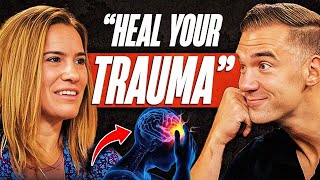
This content was created by Lewis Howes. This content was uploaded by Lewis Howes. This is a YouTube video titled "PSYCHOLOGIST Reveals: How to HEAL Your LIFE (THIS Will Change EVERYTHING!) | Dr. Nicole LePera" featuring a conversation between Dr. Nicole LePera and Lewis Howes. The discussion, created on November 15, 2023, explores topics such as self-love, self-worth, emotional connection, and healing from past traumas. Dr. LePera shares insights on breaking cycles of behavior and the importance of self-awareness and self-care in relationships.
Chapters
I think self love is for many of us, it's something we have learned that is a selfish idea. I spent very many years, decades even putting the world before me. I think the byproduct of that for a lot of us is we become increasingly resentful. There was a time where we couldn't zoom out and we personalized all of it. We were the cause of our parents absence or explosivity or whatever it was. In adulthood there's still that wounded part of us that feels unworthy of having needs, unworthy of being connected to or of having a loving, attuned parent. And that part still lives. Most people do not have a safe and secure attachment because the reality of it is I'm not safe in my body first and foremost. And then when I'm able to be safe in my body, then the byproduct of that often is developing that safe and secure relationship with someone else where they feel calm and grounded.
You've had a number of different relationships in your life, from family dynamics to the relationship to yourself to intimate relationships. How has what you've learned been put to the test?
So.
I think you gotta have a dream.
The school of Greatness.
Really?
Yeah. Please welcome Lewis How.
Welcome back everyone to School of Greatness. Very excited about our guest. We have the inspiring Nicole Lapera in the house. Good to see you, very excited. You are a number one New York Times best selling author. You have helped millions of people that follow you online heal, deepen their relationships and create peace and love better. And I'm so glad that you're here. I love your content. We've been friends for, I don't know, five, six years now it seems like and it's been amazing to see the impact you make on so many people's lives. And you've got a new book called how to be the love you seek break cycles, find peace and heal your relationships which is going to be so powerful for people to get. Make sure you grab a copy. Nicole, I want to ask you about this. The difference between self love and self worth. And what is the difference first off and should we focus on self love first or is that a selfish idea?
Really great question. First and foremost. Thank you Lois for having me back. Thank you for so many years ago. Seeing something in my work and having me on your platform so meaningful. Self love, self worth. I think self love is for many of us it's something we have learned that is a selfish idea. I think many of us have learned that any focus on the self having needs Having space to meet our needs, sometimes having, you know, things that we're caring for. Even when someone else does want or need something from us, support from us. And I very much am that person. I spent very many years, decades even, putting the world before me. I think the byproduct of that for a lot of us is we become increasingly resentful when we don't have space to express. Whether it's our perspectives, our feelings, our wants, or our needs. Over time, the anger that builds up in that, I think, turns into resentment. And at least my journey of that was projecting it outward, blaming the relationships I was in or the people around me, only to realize that it was my lack of creating that space for myself. And as I often do, I like to talk about the science of things so I can make a case for the importance of self focus. Because if we're not caring, especially for our physical body, if we're not taking care of those needs, actually when we think we're serving other people, we're actually operating quite selfishly really. Because when I think about self love, I think about the concept of actually connecting to our organ, not to sound cliche, but our organ of love, of compassion, which is our heart. And if we're not in a calm, grounded state in our nervous system, to even turn inwards, even attune to what it is that my heart wants me to do in any moment, while I might think I'm on the surface showing up in service of loving someone else, in reality I'm probably just operating on some conditioned habits and patterns. So I think to build self love means to build space for the self, to recommit to caring for ourself. So that over time we can actually attune to our heart and be what I do think is intrinsically possible for each of us, being a compassionate, caring individual. And I think self worth gets wrapped up in there too. The messages we send when we create space for ourself, right, is for many of us, unlearning this idea of being unworthy of having our needs met and actually beginning to create through action and lived experience, the feeling, the embodied space of living in worthiness.
This is interesting, you know, because I don't know if this is going to empower or upset some people watching or listening to this, because I know, you know, my mom put everyone in front of her needs for decades. And finally, it's beautiful to watch her fully take care of her health first. Her, she's dancing, tango dancing, she's doing knitting classes, she's doing all the activities that she wants to do for her for the first time, really fully owning it. And I notice her even being uncomfortable sometimes, being like, oh, am I doing too much for me? Because I'm so used to doing everything for everyone else. And from my perspective, there tends to be some women in the world who want to put everyone else's needs before theirs. And they've been doing this for years, if not decades. And maybe they modeled this from someone that they saw it, or they got benefit from being that person in some way. What I'm hearing you say is when we do that for a long period of time, there builds up a lot of resentment, anger, frustration and a lack of worthiness in ourselves if we're not working on self love.
Absolutely. And that I think that habit, and I love that you're kind of even picking up on the identity that some of us have created out of this endless act of service. I talk about actually neurobiological, what I call conditioned selves, or literally these ways of being that become wired into our biology, our neural networks, again, that originated at a time and a place, so to speak, to a very beautiful point, right? What a lot of our parents, our caregivers, our mothers in particular, likely were modeled was this maybe endless service or the way they had us safely and securely connect with whatever caregivers were available. And whatever access point they were available to them might have been to modify or to attune to someone else's wants or needs. So if you had that eruptive, explosive parent, a lot of us gained safety by becoming so attuned or aware of what might cause that explosion. So if we can minimize, right, saying the things, doing the things, expressing the emotion that would cause that reactivity, we can gain safety in doing that. Same goes for if you had a parent like mine, which wasn't so. My mom wasn't so explosive with her emotions, but she was really disconnected with them. And it became clear to me the things that my mom would pay attention to me around usually acts of achievement, and then the things that she would become disappointed and disconnect from me. So whether it's what's modeled, this act of service, or what we had to do to attune to someone else, I think a lot of us begin to wear this identity. It becomes not only who we are, it actually becomes neurobiologically how we feel the safest and the most familiar to ourselves. And I think that is then continuing to be in that cycle of giving, doing, and before we know it, it's at our own expense.
What is the thing we need to heal first, the brain, the mind, or the heart?
I think that the body plays such a larger role than we give it credit for, especially in my field. We like to praise the power of the mind, of the prefrontal cortex, our very empowered space that can imagine this incredibly different future and create all of this incredible change and even affirmations, I think that they're, you know, grounded in this reality, that to think differently, we can create a shift, a shift in how we feel and ultimately a shift in how we do. And that's half of the journey, though. The other half of it is really first attuning to what signals my body is sending. My mind, my heart being included in that body, specifically, what is my nervous system? Is my nervous system telling my mind that I'm safe in this moment, that I can be grounded maybe in that internal presence that we were just kind of talking about, right? Tuning inward? What is my heart saying? What is my heart wanting? Or what is my heart needing? What do I want to do? To act in compassion in that moment? And if I don't feel safe in my body, and I know I spent decades with my body, sending my. My mind, my brain signals of lacking safety, of threat, of endless stress.
Your body was sending your brain this or your mind this.
My body was sending my brain this. I think this is why a lot of us, we can't sit in stillness. We feel endlessly distracted by the world around us or endlessly agitated, because all of those are signals that our body is in stress ultimately.
Now, is it the body or is it the nervous system in the heart? Like, is it the skin, the blood, the bones, or is it, like, more the nervous system and the heart in reaction to an environment or memory?
The nervous system and the heart we can think of are the control center for the rest of what the body is doing. We're like a sensor, an energetic sensor. Our nervous system is sending out electromagnetic waves. Our heart is actually sending out electromagnetic waves at a greater distance. And we're sensing the world around us. And then how we register what's happening in our external world is through changes in our skin. We get sweaty, we get clammy, changes in our musculature, tension. They get tense or they get relaxed, whatever it might be, changes in our heart rate. So those sensors and that kind of command center of the heart and the nervous system is always outside of our awareness, assessing and scanning. And even more so than taking in information from just the external environment, it's taking information from your nervous system, stressed or non stressed you are. And then like dominoes, we kind of ping against each other. The more stressed you are, the more I feel you're stressed, the more likely my body is to become stressed.
And also, and opposite that probably the more relaxed I am. When you're stressed, it can help you calm and regulate as well in certain ways. Right.
Beautiful. I have a whole couple chapters dedicated to and a big premise of the book is to attune to our body to that second subtitle, create and find peace within ourself. So that those signals that probably historically were stressed out signals, you know, threatening quite literally the world around us and other people in relationship, that when we shift that, when we come into that calm ground at presence, in my opinion, that is the embodiment of being this love. Because I think one of the most loving things that we can do is create a safe environment, a relational environment for someone else to be who they are, to express their thoughts, their perspectives, their emotions, and really just to be themselves. So a lot of the science within the book is harnessing the power of the heart, harnessing the power of CO regulation and actually teaching us to quite literally be in that energetic state of love so that we can actually, in my opinion, heal those relationships.
I love this Martha and I, she does a great job. If I'm feeling like, you know, a little overwhelmed or something, she does a great job of bringing calming energy to me. She can notice it and bring calm and then I can get calm pretty quickly and vice versa. If she's had a long day or something and she's just having a overwhelming moment or she's feeling sensitive, I can notice it and just hug her for 10 minutes and then she feels better, you know, she can relax and calm down. Now. Both of us have a pretty good awareness of taking care of ourselves, doing the inner work, you know, so that it's usually not both of us at the same time and break down for a moment.
Right?
But when two people have traumatic nervous systems or who haven't healed their heart or their nervous system and they are in a relationship and neither of them know how to regulate their emotions, what tends to happen in that relationship if they don't know how to heal their hearts?
We tend to, I think, engage in cycles of endless conflict, of endless disconnection, of endless coping strategies that we've learned. We rely on the things that we do, whether it's, you know, using substances or just distracting ourself by scrolling endlessly online. We are then the living byproduct. Sometimes it's in these explosive cycles of conflict. I call this patterning that I think is pretty common in most relationships. I know Lale and I, when we began our relationship now near a decade ago, we were very much in a dysfunctional patterning of what I call trauma bonding.
Really?
Absolutely.
What is trauma bonding?
So trauma bonding, again, I like to provide a more expansive definition than I think some could define it online. But it's all of those dysfunctional habits and patterns that again, once kept us safe in childhood that we continue to recreate. Whether it's these cycles of explosive conflict, maybe that some of us are even defining as right. Love and intensity and passion and all.
Of the things chemistry we're looking for.
In chemistry or the just dysfunctional habits and selves that we're playing, where we're just one of the partners is always the caretaker of the other partner who's always in need of the care. And no matter what relationship you're in, you see yourself kind of engaging within that same dynamic. Or for me, the most prominent one is cycles of emotional disconnection. No matter who I was with, and I was always in a relationship. I was somewhat of a serial monogamous. Since I started dating when I was 16 years old, I was more or less always in a romantic partnership. Definitely had friendships and social engagements and things to do. But I was really the living embodiment or the feeling embodiment of alone in a crowded room, really. And the number one complaint that would usually end to the demise of the relationship because I would be so frustrated or resentful or so passive aggressively acting out that before I knew it, the relationship would end was I don't feel emotionally connected.
Your partners would say that.
I would say that.
You would say that.
I would complain about not feeling emotionally connected, though. I can share a story. My first boyfriend ever in high school. To this day, it sticks with me. When we broke up, we were nearing graduation. We were going to separate colleges very far away. And so we broke up on logistics of, you know, it's college or. He also lodged a statement complaint, if you will. And he labeled me as being emotionally unavailable. And I was really struck by that because I was like me, emotionally unavailable. What do you mean? I feel so loving. I fell in love with him. I was kind of devastated when he broke up with me. So I was like, that's unusual to hear. I think he's obviously wrong. Flash forward a couple years, I discovered I was attracted to womans. So now I was like oh, well, it's because I'm interested in women that I'm emotionally available. Of course I am. Flash forward even a more couple years. I was in a psychoanalytic training program in Philadelphia right before I was licensed. And one of the aspects of the training was to sit in group therapy around a room of other analysts, where essentially for an hour and a half, we just analyzed.
Analyzing each other.
We just analyze each other and our experiences with each other and our perceptions and how we feel, interacting with.
This was part of your training?
This was part of my training to get my license. It was. I selected to go into that style of training because I thought it would be beneficial. And it was, though, very difficult. And one of the things that I heard from a colleague there one time in the group, she decides to share her experience of me and described me as cold and aloof. And I'm like, okay, that is so interesting. Like, now you're reflecting back, right? This idea of me being distanced, but I didn't have any language to understand. I still thought that she was a little bit inaccurate, though.
Now, looking back, you don't really know me.
Yeah, looking back, I'm like, oh, this is making complete sense. The reason why I was so emotionally disconnected, that was real for me in my relationships. It was because I was emotionally disconnected from myself. So I wasn't attuned to how I was thinking or feeling. I wasn't sharing that. So of course I was creating a cycle of disconnection in my relationship. So as much as I wanted to not agree with those two assessments, I mean, a lot of ways they were quite accurate.
When did you get to a point where you said, okay, this. Even though. Even though I don't think I'm emotionally disconnected, the pattern is showing up that I am. Others are letting me know I'm in breakdown. Relationships don't work. You know, whatever disconnection I have from people, the pattern is following me. So, okay, I'm going to take a look at this. Seriously. What did you do to break that cycle? You know, in your book how to be the love you seek, you talk about breaking cycles. How did you break that cycle? How did you know you had something to break and that you needed to find solutions or tools to improve that emotional connection as opposed to disconnection?
I started to look for myself. Because, yes, other people's feedback can be absolutely helpful, but I never would suggest that you just defer to what someone else assesses you to be or says of you. So I finally started to take it in I started saying, okay, if I continue to hear this and feel this way from that conscious perspective, I will always kind of acknowledge consciousness or learning how to observe ourself in the context of this conversation within our relationships to be that first point of action. So I started to look, I started to pay attention and to assess really simplistically, Nicole, how connected are you? How present are you in any given moment? And as I began to check in with myself throughout the day, whether or not you want to set an alarm on your phone to do it or put some post it notes on, you know, wherever you walk by regularly, or maybe even set a designated time during the day, you know, over morning coffee or when I'm reading the newspaper, this is going to be my moment to check in. And the more regularly I checked in with where my attention is, the more I noticed that it was a million miles away. Really, I could be in conversation with someone and while like I'm here and I'm being talked at right, I'm thinking about maybe what I'm going to respond to next, or I'm just somewhere else entirely. And the more I checked in and noticed that disconnection, the more then I built on that consciousness step and began to. Because there's always two steps to change me. Becoming aware that I'm disconnected was only half the journey. Then I had to begin to make that choice to reconnect with myself.
Wow.
To shift that focus of attention time and time again from the thoughts that, you know, they were consumed in or even just worrying about someone else. Am I more attuned to the person across from me than to how I feel being across from the person? And the more I kind of flex that muscle, the more then I was able to reconnect with what my body was doing in any given moment.
How long do you think it took for you then to practice that? You know, because it was probably most of your life where you had this type of emotional disconnection. What it sounds like as a safety mechanism to create safety from childhood, whatever may have been that you were being safe from. So how long did it take for you to feel like, okay, I'm not having to think about this, it's more automatic. I am emotionally connected. You know, did it take months, years? Or is it still something you have to focus on?
It's still a daily intention, commitment, conversation. What has become automatic is the awareness of the importance of checking in with myself. Consciously, though, there are still moments as my stress level goes up, as I become busy with endless obligations that Overachiever, conditioned self in me likes to prioritize all of the things that I have to do to show up in service of someone else. And that begins first thing in the morning when I know I have emails to answer. I know I have a whole membership that I can tend to. I know I have a book to edit or whatever it is that I'm working on. So it's a daily commitment to. Instead of prioritizing all the things we do or all the things I could do to really create time beginning in the morning, to attune to my physical body to how it feels in any given moment, to giving it what it needs, whether it's movement or stretching or rest or, you know, just a conscious moment to be with me. And there are moments when I'm not doing that, when I don't prioritize what I know I consciously, you know, and benefit it to prioritize that I do find myself being much more detached, much more dissociated. It becomes still easy for me to travel down that older pathway.
Wow. So how to be the love you seek? It sounds like we first need to figure out and pay attention to what cycle we need to break is What I'm hearing is like we need to figure out, okay, why am I in struggle, suffer, fight or flight mode? Why am I, you know, reactive? Why is there a breakdown? So there's. We gotta figure out what the cycle is. Are there a number of different cycles to be aware of or is it kind of one cycle that we all follow?
I think we can become aware of our habitual pattern of relating these conditioned selves. I overview several of them.
Conditioned selves, Conditioned selves.
These kind of typical ways, roles I play to really simplify it in our relationships, it can look like me, right? The overachiever. On the other side of that, it can look like the underachiever. I have something called a caretaker. A yes person who kind of just defers and pleases the environment around them. A hero worshipper. So what am I doing habitually in my relationships? Who am I? What is my identity? Even you can begin to.
How many conditioned selves are there? How many of these kind of archetypes?
I mean, there's many more than I list. I think I give about seven or eight. Just common examples. But so any. If listeners don't relate to any of them that I just said or that are in the book is what is just. Who are you in your relationships? What is that very state?
What's your main role? What's your role? You're playing primary role that you play. I'm an overachiever, I'm an over giver. I feel helpless, whatever the role is, right?
Yes. And you could be on that side, Right. I'm the person who's always receiving someone in care of me. I'm the person who's in that kind of helpless cycle. I think another really important thing to observe outside of the conditioned way that we typically are or the role that we play is begin to really create a relationship with our nervous system and beginning to learn when we're in those moments of a stress reaction. Because there are interpersonal things that happen for many of us when say we're in that sympathetic fight mode, you know, we can feel very agitated with our muscles being tense all the time, our jaw being clenched, our heart always pounding out of our chest. Interpersonally that can look like being in active conflict, screaming, yelling, really shameful. I think behaviors I know that I've often said and did things that I don't mean that are very mean in relationships When I'm in that cycle of stress reaction. It's not that I don't care about the person aside of me. And this even brings back in this concept of the heart. When my nervous system is telling me that I'm in a threat state, it actually doesn't matter who the person is across from me because they become just the threat between me and safety. Which is why we can become very combative and mean. Other moments look like outside of the fight response is the flight response. If we're always distracting ourself, we're never available for the difficult conversation because, oh, I have that email to answer, or I'm endlessly scrolling on my phone or I'm distracting myself with tv. Again, these are coping mechanisms of my nervous system trying to find safety.
What is usually beneath that? If someone is in a relationship watching or listening to this and they have a partner that is more reactive, Maybe they scream sometimes or they react in an unconscious way or just disrespectful sometimes because they're in a fight or flight state or they're trying to feel safe, but it may seem irrational to the other person. Right? This is irrational. Nothing's wrong. But they're reacting. What is usually underneath that reactiveness?
Some feeling of being threatened. And again, it might not be logically present what the fear is. I mean, you could be sit in your living room seemingly in a very calm circumstance in that moment, but something even perhaps interpersonally is similar enough to a time and a space before Usually in childhood where that was the only option. I mean, think about children, screaming, yelling, you know, kind of all of those are that moment of reactivity, usually because something is feeling unsafe. The person is feeling some fear around being threatened.
Wow. I heard this. I don't know who originally coined this, but I heard someone say that if there's hysteria, there's history. If someone's being, you know, overreacting about something when they don't need to, there's a history behind that. There's a wound, there's something that's triggering the fear. Like you just said, what can someone do who've been conditioned for years or decades in that state to actually address it? How do they start addressing that to find peace, to heal that hysteria that's causing them pain?
Yeah, I really want to focus, too, on the history aspect of it, because I want to affirm that those feelings, even if they are out of proportion, disproportionate, you know, over the top, whatever we want to label or maybe have had them labeled or believe them to be, if it's in our partner, they're real. Even if it's from our past, that physiology is real, is active in that moment. It's present, it's present, it's. It's alive. It's as if we're back in time as that younger child, right when kicking and screaming was the only thing that we could do in that environment. And I just want to say that to not only normalize the experience, but to try to avoid the tendency to shame it in ourselves and in other people, or the idea of kind of just bypassing it. Oh, we'll just get over it. Because it's not actually what's happening in the moment, because according to our body and our physiology, it's actually very much happening in that moment, which then opens the door for many of us to begin to make new choices in that moment, to deal with that elevated physiology, to actually be with those uncomfortable emotions. Because what has happened is kicking and screaming or yelling and, you know, fighting whatever it is, or fleeing has been the only way that we've been able to cope. And it's still very much what we need to do in that moment, because we don't yet have other tools. So what's really difficult is when we try to shame it away and then we don't leave ourselves with something else to do with how we're feeling. So it really is the kind of shifting and expanding of energy and of attention in that moment to create the opportunity to begin to Practice new habits to learn new things to do when we're feeling overwhelmed. Because until we embody a consistent practice, we will be overwhelmed by our emotions and our nervous system will kind of travel down that well worn rut because it will need to do something to create safety for ourself in that moment.
Yeah. And I guess people respond and react in different ways based on the history they have or the trauma they have. Where some, you know, some partners may scream and kick and yell, whereas others may shut down and be distant, right. There's different types of responses that we might have from the history of our pain. If someone watching or listening is in a relationship with someone for a long time that they really love, they care about, and they have this pattern of distancing themselves emotionally, shutting down or kicking and screaming, what can they do to support them in discovering tools, creating awareness around it, finding a therapist or a coach to support them in growing? And what if their partner doesn't want to address it ever, isn't willing to be vulnerable about the past, and doesn't want any help from anyone else? How do they manage that?
I think one of the most complicated things is you have two individuals trying to navigate a relationship where we both have our stuff from the past. Because what often happens in those moments when someone's kicking and screaming or detaching, chances are it could be activating my old lived experience. Right? So if someone removes themself distanced, just like my mom once did, to navigate whatever it is that they're feeling, a difficult conversation that we're having something not to do with me at all, difficult experience they're having at work or with their family inherently in their distance. It's going to activate me, right? It's going to bring me right back to in childhood when my mom was emotionally distant or when she was giving me the silent treatment to express her, you know, disappointment at whatever I was doing in that moment, and it's going to then activate the way I deal with it. So what happens is we have two people kind of ever kind of cycling through these threat based responses and neither of them are able to kind of return to that grounded state of presence. So the best thing I think that we can do is, and I have a lot of tools not only to begin to self identify which state of nervous system activation you're in so that you can begin to regulate yourself. Really helpful. And this is outside of even romantic partnerships for your friends, for your family members can be really helpful to have the awareness of signs and signals that they're in a state of emotional system or nervous system activation because sometimes when we understand that, oh, this person is, you know, fleeing the room and can't have this conversation right now, not because it's not important to them, but because they're having their own threat based reaction that can give us a moment of compassion, it can maybe give us access to do something differently, not to allow it to activate our own threat response which is going to perceive it probably differently. Oh well, they're leaving because this isn't important for me. And then of course, going back to this idea of co regulation, the more grounded we're able to remain in those moments and the more open our partners or our loved ones are to co regulating with us. I mean, we can actually help them calm down from those stressful, reactive moments so that then they can shift their focus, they can actually shift the point of the brain that they're operating from and hear us and speak to us and negotiate what's happening in a much more calm and rational way. But I like to add that point in because sometimes we want to shake our partners and just get them to hear us in this moment where they're, you know, a million miles away or they're screaming and yelling and unfortunately those aren't the moments where they're going to be able to hear us. Until they're in a calmer brain state. Quite literally, they're not going to be focused on what we're saying. They're going to be locked and loaded in their perspective and their nervous system is going to be locked and loaded in their habitual way that they need to do right then to find the safety.
This is fascinating because people watching or listening typically are the type of people that want to improve their life. They want to grow, they want to find tools to have more awareness, more personal power, more, you know, progress, all these different things. So I'm assuming people watching and listening might resonate with this. Why is it so challenging for an individual who has been in a trauma bonded relationship and now they're aware of it, or they're in a family that has maybe had some stagnant behaviors and patterns that doesn't want to grow? Why is it so hard for one individual in a family or a relationship to try to improve and grow and develop new habits and transform themselves and think differently and talk differently and act differently? Why is it so challenging in a family dynamic or an intimate relationship to grow when others aren't willing to grow.
While we all are evolving creatures? I mean, I think it's Kind of intrinsically what the experience of being human is. It's a process of evolving, becoming process of movement. Yet at the same time, our nervous system is wired to prefer the familiar. Simply, we don't like change. While we can change and we can create incredible change and transformation, our nervous system actually prefers to stay the same. It finds change and movement very stressful. So when faced with change, often in ourselves, even how to do the work was really around that concept of the resistance. And the reason why we're so stuck in these habitual patterns. Because anytime we set the intention to do different, and then more so when we follow through with making new choices, we do meet that pullback to that familiar through the thoughts in our mind, the discomfort in our body. Before we know it, we're right back in those habitual patterns. So we struggle to change, even though we can change, but our nervous system prefers us not to. And our relationships equally struggle when we begin to experience someone anew or when we're the person making new choices. Especially in a family where dynamics and roles have been repeated and practiced and validated for so long, then really like dominoes, right? Here's someone new that's maybe putting a new perspective on the family experience. Might be really difficult to hear, right? A different truth about how it was. And we have our own rehearsed story of how the family is or isn't or whatever it is. More so, when someone begins to act in a new way, then chances are there's gonna be some impact on that dynamic.
Interesting.
There's gonna be a challenge to the individual identity. Sometimes it's the challenge to the family identity. What we thought we were. Now maybe we're not as much. And then there's gonna be a reorganization of the different roles within the family. So again, it comes down to change. How equipped is each individual in whatever relationship dyad or family unit to deal with the stress of change? And as far as I see it, a lot of us who are raised with past generations were not yet equipped. We didn't have the tools, we didn't have the resources. We didn't have the attuned caretaking in our childhood to learn how to navigate the stress of change.
I know you've talked about this before in here, but how did you, for those that didn't hear this in a previous interview, how did you navigate this as you were evolving, changing, growing, developing in your 20s, 30s, with your family dynamic, not in your intimate relationship, although that has evolved and changed as well. But let's start with the family Dynamic. Before we talk about intimate dynamic.
Yeah, it was really challenging in my family, coming from a family that was very boundaryless, codependent. We had a very unified family identity. I was kind of taught growing up that family is everything. With this idea of putting family, family needs first, even going back to this concept of selfishness. So all of that was, you know, kind of ingrained in my belief system and very dynamically, like I was sharing when we began, showed up in how I showed up or how little I showed up in my relationship. So as I started to become aware and see all of the moments where I wasn't giving myself space, and it was glaringly present in my relationship with my family that I was living actually in quite close physical proximity. By this point, I had moved home to the Philadelphia area. They were living right outside of Philadelphia. So I endless opportunity to be at family dinner on Sunday or my mom's standard doctor's appointment with a lot of health issues that continued with my mom until her old age. So saying that to say there was a lot of the same dynamic happening at home and I was awakening to the possibility of, and necessity for me of creating some more distance, of not being endlessly available, of beginning to set new boundaries. And for the better part of several months, I would try. I would try to decline invitations, I would try to decline phone calls and not be immediately available. And I say try because it was always met with a running theme in my family was when there was distance, especially contact immediately because there was so much health trauma that happened, health concerns and worry and anxiety. The immediate belief or worry would be when someone was out of contact for an unpredictable amount of time. It must be because there something terrible happened.
Interesting.
Are they in the hospital? Are they sick? Is something wrong?
So there was a history of fear.
History of fear, which would create this hyper vigilant monitoring of contact. When I didn't call, for instance, on the regular, you know, weekly phone call, it was, you know, is everything okay? Just tell me everything is okay. And I would call at a very particular time frame up until this period of time where I was like, well, wait a minute, you're only doing that, right? To placate this kind of anxiety cycle. You don't actually want to be calling in those moments. Yes, I wanted contact with my family, but I didn't need to have regular contact every three days to tell them that I was alive. Right?
Right.
So saying that to say I tried to put up boundaries, to create separation, to create distance and space for me to begin to honor What I wanted and needed. By this point, I was building a practice. I was in a committed relationship. I had other things that I wanted to be putting my time and attention to. It was always met with this fear, this worry that would escalate into. I mean, I would get texts like, Jesus Christ, Nicole, just tell us you're okay. You know, we're getting worried, we're going to call hospitals, like endless. So I came to the really difficult decision to make a break and to take. I always kind of start to say, ask for space, but I didn't really ask for space. I more or less told my family that I was going to take space away from the family unit, that I would be unavailable for any sort of obligation or, you know, anything that for the foreseeable future. And because I wasn't, I didn't trust myself to communicate to them in person. I was so afraid that when my mom started to cry or my dad became upset because my mom was upset, or my sister was devastated because her and I were very trauma bonded in a codependent relationship trying to navigate my mom's health. I didn't trust myself to stand in my boundary. So I took the opportunity to write a very long email expressing things that I hadn't fully been able to share with them in terms of what I was coming to realize and how things in the past had impacted me. And end it with that statement that I was taking time away. And I didn't know how much time I would want to take or need to take, nor did I know how they would react to my request. I mean, I was very much aware of the possibility that they would be so devastated and hurt that the door wouldn't be open on the other side of it. But at that point I knew I'm probably from that deeper intuitive place my heart was telling me that I did need more space than I was able to create. So it ended up being the better part of, I think, 18 months before I started to, you know, really get curious about what they were, where they were at. I had built a lot of self trust in that 18 months. Meaning I was getting more confident that I could engage with them again. And if the dynamic was exactly as I left it, I was gaining more confident that I could continue to maintain my boundaries and to, you know, live into the relationship dynamic that I wanted, regardless of what they were unable or able to do. And very gratefully, not only did they email me back near immediately, they let me know that they had been in family therapy and individual therapy and all the different types of therapy since I had, you know, ended contact with them. While it was very devastating, they on some level were appreciative of the opportunity that it gave them and us to kind of look at things newly. We reengaged contact over several family therapy sessions, which felt very safe to me because I wanted to have a contained conversation not knowing essentially what I was walking into. And I signed online for that first ZOOM session and I saw my mom, my dad and my sister for the first time in eight months.
Wow.
We had some difficult conversations and had some future based conversations and where I was able to kind of acknowledge what I wanted and needed in the relationships moving forward and intended to create for us. And since then it's just been really a gift in a lot of ways. We've been able to not only reorganize as a family, we've been able to separate. That has actually allowed us to deepen and build like deeper, actual, real, now authentic connections, which has been really beautiful.
That's pretty cool. But it's really scary to get to that place. It sounds like because what some of your family were thinking of, like, okay, I'm going to create, I don't know, hyper safety was actually unsafe for you and didn't feel healthy. Right. This idea of I want to make sure everything's safe and okay is actually an unhealthy or unsafe feeling. And so you had to kind of break the cycle which you talk about in the book. But that's scary too. What if. How are they going to react? What if they disown me? What if they never want to speak to me again? How are they going to talk about me to my friends? Like this idea of being outcasted in a sense is also scary. But it sounds like for you, you guys were able to come back and create a more meaningful relationship. But. But I think it's so scary for us to think about whether it's family or friends or intimate partners. Like having a boundary that might seem so extreme for a while. For a while. Because you need it to come back to loving yourself, the way that you seek that love and then reconnecting with that partner, family or friend. Right. It can be extremely challenging.
Oh it actually, because we're social creatures and we've evolved to connect in groups, to physically survive, to emotionally gain the support that we need. Any thought of any actual experience of rejection, any imagined rejection or fear of it activates actually the pain center in our brain. So we physically feel. Feel pained.
And your heart feels this pain too.
Like Clenching. And then so for me, complicating that with my mom increasing in age, having very real health concerns, I mean, in the back of my mind, I was like imagining the possibility that I might not have an opportunity, depending on how long I decided to stay, stay, disconnect it. I was entertaining the possibility that something could have happened to my mom. She could physically die in that period of time. And then how would that be? But my commitment at the same time, my commitment. And that in our knowing that that is what we all need, it was so strong that I was able to make that a really, really difficult choice.
In terms of relationships, I'm curious, what is the healthiest attachment style that we should be seeking to have? And what is the most common attachment style that most people have in relationships?
Yes, most people do not have a safe and secure attachment. This feeling of inner safety and security, peace, the ability to be yourself, and the curiosity to allow someone else to be curious of who someone else is, right? Not to be demanding, domineering, manipulative, so that they're the person that you need them to be, to actually allow them the space to be themselves, express their wants, express their needs, and just be who they are. Very few of us have that, of course, because we didn't have that in childhood, we didn't learn our body. For a lot of us, a lot of this book is about unlearning, peeling back all of the definitions of love and relationship we've been taught, all of the embodied ways that we've habitually related to other people so that we could actually teach ourselves, not just read a book and be like, oh, this is what a safe and secure attachment looks like. Actually teaching our mind and body how to be safe and experiencing and feeling.
It, experiencing it, living it, and not just analyzing it.
And for a lot of us, that living and that practice begins with ourself. First, do I feel safe and secure in who I am? Can I explore my perspectives, whatever they might be? Do I know what they are? Can I explore my emotions? For decades, my answer was no. You would ask me what I wanted to do for dinner. I couldn't tell you. I didn't know what I even wanted to. How I wanted to spend my time on a Saturday, let alone how I'm feeling, right? So a lot of this reconnection begins with creating space or a practice in our world to introduce ourself. And that was a big reason why I even wrote the workbook how to Meet Yourself is because we don't have that connection to us. Yet we're not safely and securely connected. I'm a million miles away on my spaceship. Someone else is endlessly distracting through work or achievement. Right. Or whatever it is, or I'm always agitated, interrupting at the world around me because of the reality of it is I'm not safe in my body first and foremost. And then when I'm able to be safe in my body, then the byproduct of that often is developing that safe and secure relationship with someone else where they feel calm and grounded and like someone is interested in valuing them for who they are. And you're able to, like I always say with the clients I would work with in couples therapy, sit next to each other on a couch and. Right. Vision a future and negotiate, kind of making sure that each of your needs and wants are factored into that. The large majority of us fall into a more dysfunctional attachment style. Whether it's avoidant, where you're emotionally shut down and like me for many years, there's no emotional connection. I'm a little bit more anxious avoidant, where there's anxiety around distance and a pursuing pattern, there could be a disorganized attachment. I'm just giving some of the standard ones. But there's many ways I focus a little less on what box category do I check and a little more on just individually exploring. Right. How you show up in relationships and how does it feel for you when.
You do it sounds. I mean, I was probably, I don't know, all these attachment styles of the past at one point that were anxious, avoiding. I probably had it all. And I attracted certain individuals who also had, you know, anxious or avoidant attachment styles, too. I never attracted, like, a safe, secure individual. And maybe because I was too insecure to attract that, or they would have not, you know, attracted me because they would have seen, oh, he's got issues. I don't want that in my life right now if they're safe and secure. But it's interesting, you know, once I started to create that safety and security within me, and it's a constant process and a journey. It's not like it's perfect, but once I started to do that, I started to see others and be like, wow, this is a healthy person. I started to see and be like, okay, let me explore more about this person. So the person, I don't know, they just got something where, like, their heart is out of coherence. I know what that is because I used to experience that constantly. I don't think I want that dysfunction anymore. Let Me lean more into the safe, secure. And it was unfamiliar when I got into this current relationship with Martha that I'm now engaged to. And it was unfamiliar, but it felt safe. And I was just like, man, this is different. This is weird. Like it's just never experienced this. But do people. Have you ever seen people who have an anxious or an avoidant attachment style get in a relationship with someone who's safe and secure? Does that ever happen? Or is it typically you attract something you have a similarity to or. Or something you're lacking in?
I think often you're. You are attracting kind of particular dynamics though if and when you meet a safe and secure individual, I think often what you'll feel, especially if you are more of the anxious type or the high emotions you come from a chaotic, stressful childhood, typically you might start to see them as boring. Right. There's no passion. Is there anything even here, is it worth continuing? So I would not say it's that you don't attract them or you can't find your way into meeting a person. I don't think the relationship would be something that you would pursue or would be pursued for very long. And those are typically the languages.
Interesting.
And how it registers. Oh, there's a passion here.
Interesting.
Maybe we're just friends. Friendzone this person. This is boring. Or it's not what I'm looking for. And then on to the next.
So what are the different types of relationships interdependent? Is that kind of like what might seem boring when there's like interdependence? Is that. Would that categorize that or.
I think maybe if you're, if you're not. If you're in that more chaos cycle, the emotional addiction cycle, that likely could. Though I think the reality of it is maybe there is a little bit of a boring nature when you're living calm and grounded, peaceful, safe and secure.
You know, there's no stress in time.
I think to some extent, in absence of those highs and lows for a lot of us, I do think that even as I too am moving toward a much safe, secure partnership, I do think that we, on some level that expansive part of our mind is right, is always seeking more or bigger or what's next. So it's interesting to consider if there is intrinsically a kind of boringness and stability for all of us.
For me, it's like what I think about is when I am on my purpose and I have a vision that I'm excited about, there's going to be challenges and Ups and downs. When I'm on my vision in my life and my relationship, I want us to have fun. I want it to be like a safe, fun environment where we can connect about our lives independently and share our lives together. For me, that's exciting. That is like the highs of it, I guess not making the relationship the battlefield. Your life is like, okay, you got to go out and hunt or provide or create or make music or art. That's going to have its ups and downs. Let's make your relationship healthy. Let's make it fun. Let's make it enjoyable. It doesn't have to be so heavy and dark and high at the same time. It's like out of the out. That's where I find a lot of peace now is creating and experiencing that.
Yeah, that's beautiful. And what you're kind of highlighting in there is the kind of aspect of interdependence that honors the unique individual that has passion, has purpose, you know, has those deeper things that I think we are absolutely driven. And I think again, this is sometimes where we set up an expectation of relationships that it's somehow shared. I mean, a partner has all the same interest as me or, you know, isn't interested in anything or I don't know what my interests are yet. I think the more we create space for individual, you know, exploration of unique passion and purpose and hobbies and all that comes along with that, and it might be outside of the relationship in some other, you know, realm or other, some other relationship entirely where you go and pursue whatever your hobby is with other people. I think if we can expand that, that is still part of an absolutely healthy relationship, then I do think we create the space for that kind of each person being self actualized, as Max put it. Right.
You've had a number of different relationships in your life, you know, from family dynamics to the relationship to yourself to intimate relationships. You know, you had boyfriends in high school, you married a woman, and now you have. You've been talking about this new relationship with. Did you coin this word? Or someone else coined this?
I googled it. I google it.
And so you're now you're in a new relationship that's extended from your current relationship and a throuple. So there's three of you now. How has what you've learned been put to the test? By adding to a current relationship and creating a new relationship.
Yeah. So as Lale and I, my first relationship, my longest tenured one, her and I are currently married. We've been together for almost A decade. And from the beginning, as we both started to become aware of our past and how that was playing out in all of our past relationships, our shared vision of our relationship for the future was always one of honoring each other and our self expression and our wants and our needs, both having come from past where that was not the case in our homes and in the relationships we that pursued. So.
And did you guys have a codependent relationship to start and then it evolved or how did it.
Yes, I was absolutely 100% codependent. She was too, but was more of the kind of anxious, avoidant, right. That she liked some aspects of being close and then there was too close and then there was. She would move far away, which was triggering, make you anxious, and I would chase after her. So it was this cycle or this kind of endless dance. And so as we both became very aware of our patterns and we're both committed very gratefully on the journey of, you know, unpacking them, peeling back all the onion, doing all the nervous system work, we continued in our relationship until we crossed paths with Jenna. Jenna is someone that I connected with actually in the community. I remember her handle from the very early days, interacting with the Instagram account. And when we decided to open up a membership, the day of the membership, we actually had a huge tech issue and ended up putting up a story letting members know essentially what was happening and that we would get back to their emails in a timely manner. Meanwhile, behind the scenes we're like, oh my gosh, we're freaking out. Long story short, within seconds of putting up that story, Jenna pings a DM over and acknowledges that she, you know, has been seeing what we're doing and celebrating what we're doing and in her own journey has been kind of working and wanting to create a similar community and was available to help if we were to need help in any way. So that at that point was a no brainer. Not only did we need help, here was someone, through my interactions with her, you know, within the community, was feeling like she could be someone that was capable of doing that. Long story short, we jumped on a call. She integrated into the team and became very much an integral part of the circle and the business from the beginning. Flash forward in time, her and I are living, we're living in Venice separately. I was with Lale, of course, she was there. And as time progressed, spending, you know, outside of business hours together, we started to develop personal feelings for each other, though none of it was being spoken, of course, because I'm in A committed marriage. I had no idea that this even type of relationship had a name was possible. I probably wouldn't even let myself even think about the possibility because it's just not something right that you do or that you think about, though. Meanwhile, we were starting to notice breakdowns in our communication in terms of our work relationship and moments of conflict and snarky remarks and just upset feelings. So in service actually of the business, we kind of had very direct conversations with each other. We're like, what is going on? Like, things were so collaborative and great. Like, this business is a number one priority. We need to talk about what's happening. And long story short, after Jenna did some kind of connecting with her heart, she's always someone that's very driven to be very heart led. She sat both of us down one particular morning and disclosed that from her perspective, one of the things that was creating her own internal conflict that was leaking out is agitation and nitpicking. And all of this communication breakdown was that fact that she was realizing that she had feelings for both of us. Obviously no idea how I was even. She was like, I have no idea how you're reacting to this right now. And I'm telling you this. My commitment is to the business. This is what I want to be able to continue to move forward. I know this is a big part of what's getting in the way of and what's coming up for me. I don't know what you're going to make of this, but I just wanted to have this conversation and to honor what it was that is on my heart. And she urged me to take some time, knowing that I typically need a minute, a minute to process things like that or things in general. And I took a minute and Lale and I had a conversation shortly thereafter and were able to acknowledge that beneath the surface for both of us, there was developing feelings and interest. And so no jokes or jokes aside, we literally sat down online. Lolli loves to research things when she's unsure. So she's like pinged in Google, like, what three person relationship is this possible? And we discovered the word throuple and saw very limited examples of it at that time though, since I think that there's been a ton more visibility around different types of relationships. So we embarked on it. We were curious, we followed that curiosity. So I think so much of that journey is really symbolizes all of the work in general, the work in the book of really connecting to what the truth in your heart is. Of course, for listeners, this might not be to expand or open a relationship up. But I think there's a million things that our heart tells us in any given day that we don't hear because we're distracted elsewhere that we override. We're afraid maybe to tell our loved ones what is actually coming up for us. And I do think the byproduct is, you know, discord and conflict and agitation and more so a lack of that heart based connection.
So what was the thing in your book, in this book that gave you a tool to be able to navigate this new uncertain experience and relationship that has supported you in having more peace over problems with this new dynamic?
All of the work, right? Just remaining committed to me as a participant now with two others, now that I have two people to distract me with from the time I wake up in the morning, right. That doesn't mean that my body and my physical self is any less important, right? Of course, introducing another person into a dynamic adds kind of relational moments of conflict. Interacting with two different people brings up two different aspects and sides of me and my self expression which can on the one hand be very beautiful and expansive and on the other hand can be very challenging. They both challenge me in different ways and touch different kind of aspects of my older wounding.
Interesting.
Then I have the opportunity to view upon their relationship. And of course there's moments of comparison and of jealousy and of trying to make their relationship fit into the box. And my relationship with each of them does so from top to bottom. I mean it's a daily practice of staying committed that I am a separate individual even though I share my life with two other ones and continuing to be connected with me and my heart so that I can open. And then there's that complicated aspect. Now I have two people to love me, right? To receive love from. There's still that wounded girl inside that feels so vulnerable asking and opening my heart to someone else to connect with. Not used to doing that in childhood. So even though in any moment, right, I have two individuals that are more than willing to show up in support of me, one of which, both of which might be actually energetically available in any given moment and there's still times where I'm screaming and yelling from the bedroom and not letting them come close to me and then telling them that they don't care really because that is so alive for me still, where the vulnerability of being seen and of receiving love and support is still unfamiliar in my mind and in my body.
It's an ongoing healing journey. The healing doesn't stop, I guess.
No, it doesn't.
It's interesting. I mean, listen, this is something I'm completely uneducated about, but I'm assuming I've never been in the throuple and I'm assuming I never will. But I mean, I know that you got a lot of support, but you also got a lot of frustration, sadness, loss, you know, criticism. Right. And I'm not here to, to criticize or judge anything because in history we have seen people of different socioeconomic classes get together and get married. When everyone was against marrying or being in a relationship outside of financial class. We've seen that be looked down upon and now more acceptable. We've seen people of different cultures or religious backgrounds not supposed to be together now in relationship and marriages. We've seen same sex relationships that was criticized for so long now more acceptable in most places around the world. We've seen same different races now coming together, you know, interracial relationships now being more acceptable when 10, 20, 30, 50 years ago weren't as acceptable. Right. Or looked down upon or judged or criticized. So I think we got to be open minded to different styles of relationship dynamics in general because things that were once looked down upon are now more accepted. And as long as people are finding peace, harmony, breaking cycles and developing more heart coherence in their relationships, that's for me, what matters the most. So I'm inspired by what you're doing. I don't know if I could do it, but I'm inspired that you're allowing yourself to heal, you're trusting your heart, you're leaning into your heart and what you feel is right for you. So I acknowledge you for the journey.
Thank you.
And I hope you're able to heal throughout all this as well. It's inspiring, but it sounds like did you get more love or support from your online community since you are a public figure talking about your relationship? Because there's pros and cons to sharing any relationship publicly and because you're a public figure, how did you navigate that?
So the choice even to go public when we did it was probably more than a year ago now, was really born out of the commitment to be authentic to myself. Because at that time Jen and I were regularly running the circle together. We had events where one of the events every month is a community check in, where very much we just have a discussion and oftentimes our current struggles in our own healing journey are coming up or our relationships being a point of that topic. We then were co hosting a podcast together. So oftentimes again in conversation, I was noticing both she and I that we were censoring. Right. I had to kind of sub out or not use a particular example because I was with Jenna. And, you know, no one necessarily knows that we are in a different type of relationship now. And as the community continues to grow, there's just many more opportunities where I meet community members out publicly, where they see me shopping or walking through the airport and come say hi. And oftentimes Jenna's with me. And I was starting to worry that I was gonna you know, either have to not be, you know, physical with her when we were in public or be physical with her in public. And people, you know, as they start to see more visibility and compare her to Lolli and some of them might know what Lolli looks like and that's not her. And then what message does that send? So it was really a exercise in my own authenticity, knowing full well that or being unsure, but having an idea that not everyone would be equally as receptive to it. And while it was one of our most unfollowed days on Instagram, we did lose a lot of followers. People did share some of their opinions and, you know, I welcome anyone's opinions. And if, you know, my content is no longer aligned because of this aspect of my personal relationship, then I can accept that. So much more though was support. Support of people just celebrating the choice to be authentic, even if it was something that was not anything in their own world or realm of possibilities. And then many more that we're supporting because they too were exploring for themselves or living in a more non traditional relationship. And I think that very globally, like you're saying, the natural tendency is to. Right. Criticize what we don't understand and ultimately.
Resist something that's new. Yes.
And then ultimately it becomes more common. I think that it is much more common now. Different types, even in monogamous relationships. I hear from a lot of the community that live in different ways don't share the same bedroom with their partners. Some don't share the same home with their partners. I think that there's a lot more that we're kind of doing uniquely in our relationships that isn't so unique. I even think too about just our evolutionary times. And you know, while there might have been some version of monogamy, I do think that we were kind of wired ancestrally to be more group oriented. I mean, children, babies were raised by the community. It wasn't as structured as like two parents and however many children in one separate home. I think we've really come from a more communal roots. And I would be hard to believe that that didn't involve maybe less of a monogamous kind of arrangements too, for some. So again, I think what is happening more so is it's not even necessarily new. It's just more visible, really old dynam that are just now coming out in a clearer way. That of course, as all new things will be challenging before that. I do think that in time they will be accepted.
Absolutely. Yeah. It's funny, I was. I was on a trip in Turkey a number of years back and I met this guy. He was. He was kind of like showing me around, I guess a tour guide and just asking him personal questions about his life. We were spending a few days together, so he was showing me around and I was like, are you married? He goes, yeah, I'm very happily married. And I go, is your wife here or what's the deal? She goes. He goes, no, she lives in the United States. And I go, really? How does that work? Long distance, different countries? She goes, this is why it works for us, because I'll spend three months with her and I'll spend three months away. And it's why it's amazing. So it's just, you know, and I was like, I don't know if I could be that long away from someone, but for them it seemed to work. So it's just like, okay, whatever works for you to bring you the most joy, the most peace, the most love, and I welcome it. So as long as you're not hurting me or anyone else in the process, then it's all good to go. This book, how to be the love you seek, break cycles, find peace and heal your relationships, is extremely powerful. Make sure you guys check this out again. Lots of useful tools, research, science to support you. I am all for love and peace and healing. And I see the benefits of my life. The more I tap into those things, the more I deepen my relationship with self and self love. Not in a selfish way, but in a selfless way to myself. Because then I'm able to have more energy and make better decisions, be kinder and more compassionate to others. Intimately, friends and strangers. So how to be the love you seek? Make sure you guys get a copy. Break cycles, find peace, heal your relationships. It's not going to be easy to do these things, but I'm telling you, it's worth it. Where can we connect and follow with you beyond the book, Nicole?
Absolutely. At this point, I have a presence on pretty much all of the social media. Platform. Of course, it all began on the Instagram account, the Holistic Psychologist. Though there is a Threads account now a TikTok account, Twitter Twitter account.
You're all over the place. YouTube podcast.
Yep. I'm going to say there's a YouTube channel that's I'll be dropping some new video content so soon. The Holistic Psychologist. I also have a book webpage up, how to be the loveyou seek.com for any information on book retailers and book tour opportunities as they become available.
I'm glad you're starting to do more events, so make sure you go follow her, go online, see where your events are, say hi to you live. You're getting more courage to be out there and doing bigger events. So we got to got to get you doing more of those. Nicole, appreciate you for always showing up, for always being in service and really acknowledge you for making sure over these last 10 years you're showing up more for your authentic self and you're healing the parts of you that didn't used to be seen and you're allowing yourself to be seen in new ways. And that's big for you. So I acknowledge you for the entire journey. I'm proud of you for this book. So inspiring and thank you so much for being here. I appreciate it.
One of the most counterintuitive, you know, spaces to use or consider this question is why it is so difficult for many of us to be in stillness, right, to be in peace. We do on some deep level create and prefer the stress, those patterns, the negativity even of it.
More from Lewis







Secret Service Agent: Your Neutral Face Is Making People Distrust You (Here's How to Fix It)



