Steve Aoki Reveals the 3 Keys to Massive Success (NO ONE Talks About THIS!)
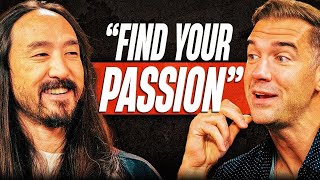
Steve Aoki talks about collaboration, competitive self-improvement, and health routines like biohacking. He discusses how to maintain relationships while touring constantly and why he focuses on what he contributes to every project.
Chapters
I think the magical dust in this whole thing is to elevate them. It's not about me. The power of collaboration to get the best output for what you're doing is really about giving more. What is it that you really want? Do you just want to live that day young, that kind of style, and you will be hurting later on? I promise you that. Or you're going to just be burnt out and not want to do this. I'm learning how to play the long game. How do you play the long game? Because you love what you do.
I'm curious about relationships. How do you keep friendships, business partnerships going, intimate relationships? How do you manage to navigate that when you're always on the go?
Yeah.
I think you gotta have a dream. The School of Greatness. Really?
Yeah. Please welcome Lewis Howes.
Welcome back everyone to School of Greatness. Very excited about our guest. We have the inspiring Steve Aoki in the house.
My man.
Good to have you back again.
Yeah, it's a good time.
The thing that I really appreciate about you is the way you think about your life, your career, your business through the lens of art and collaboration. Something I really admire about you. I've seen your stuff a decade ago. I've watched documentaries and seen things evolve and a lot of it seems to have this artistic expression along with collaboration. And obviously, drive and hustle is moving all these things forward. You're one of the most booked DJs in the world, right? And I'm curious, did you always think that collaboration was going to be a big part of your success and learning how to build great art with other people and lifting others up as well? Did you feel like that would always support you in this career, in this endeavor?
Yeah, I think when I think of collaboration, I think of your contribution. And so this brings me back to day one for me. So, When I got, when I found music as like, okay, this is gonna be my life, my lifestyle, my culture, everything, but like when I was like 15 years old, that's when I understood this term collaboration, but more this idea of like, how much can I contribute to something I love, to this community? And then it's a collaboration, 'cause you have to come to the table with something, right? So if you're gonna collaborate, if we're gonna collaborate, it's not like, oh yeah, I'm just gonna be just chilling and you're gonna do all the work and it's a collaboration. Like the best collaborations is like the premium contributions from everyone in that group and then you get a 1 plus 1 equals 100. But if everyone's too passive, then you're gonna get 1 plus 1 equals 2, you know? So it's like, luckily I learned this this idea of contribution and how important that is to my community when I was so young. Really? Because. Because in the punk hardcore scene, which is what the music genre I got involved in, it was so small that everyone's. Everyone had an impact, and we felt the impact.
You know, how did everyone have an impact? Because you all had to, like, bring, like, two friends, and you had to create the experience and the whole thing, right?
Like, so you think about, like, this, like. the way religion works, way like, you know, sports work, whatever communities are that have like, you know, strong sense of like, oh, I, you know, I want to be part of it, this kind of feeling of bonding. It's all based on like, how do you spread the message? How did you get people to understand what you believe in is so strong? Like, I believe in it so strongly, I'm gonna knock on every door and tell everyone about the word of Jesus Christ or whatever it might be. So very similar to that with this scene, our scene's so small, there's only like a few kids. I remember there's like five kids in my high school that listen to this music and no one gets it 'cause it's screaming music and it's like, you can't hear the words. But like once you feel, you're like, oh, this is like, this is changing my life. I just wanna like figure out how do you get the message out? You have to write a zine, you have to interview bands, you have to put on shows in like abandoned warehouses. you have to start a band because you can, because there's no one else doing it. You have to learn music. It's all these things. It's like you're no longer a passive participant. And this is the main differential, I think, is when I listen to music before then, I was a passive participant, like listening, oh, this is cool. I love these lyrics. I'm gonna sing the songs. I like this band. or this group to, like, being a Creator in the space, because you now have an impact. Like, when I make a zine at Kinko's and I'm, like, putting my stuff together and my poetry and putting this in and I give it to someone, it actually people are going to care about it because there's not many people doing it. Right. So it was like, at that point, I was lucky to have this kind of onboarding into. contributing and then that essentially that's collaboration. So like the more you contribute, that's actually a quality service or quality thing that's like actually impacting your little culture. You once you feel it, it resonates with you, then you want to do it again in a different means. You know, like I first started doing Xena, then I see a band, I'm like, oh, I can do that too. I want to like pick up guitar and and with my friends that don't know how to play, and we're gonna thrash around and all of a sudden, like we get good by the nature of just doing it, you know? And then that same philosophy has transcended in every single industry and every single evolution of my identity. Wow. Like everywhere. It doesn't matter what it is. It's like I have this ability to just, as long as I have this passion to contribute whatever I know my toolbox, I'll bring it to the table. And then also, when you go into a collaboration, when you contribute, you can't be running the show and trying to be the big man.
But it seems like a lot of people just want it to be easy. They want someone to collaborate with them and them to do all the work, the other person, as opposed to also contributing. Have you always had that mindset of, I want to add maximum value to this collaboration or partnership, Where did that come about?
Whenever you add the maximum value, your output is gonna be greater than what you think. So that's like, it's just, this is the kind of thing you learn early on. So once you put in all the time, then, you know, at least for yourself, you know, there's obviously like records that I've spent like a lot of time, way more time than records that just naturally flowed in. It was a very quick process and they blew up.
And they.
And these ones don't happen. You know, you spend more time on stuff.
It doesn't blow up.
Yeah.
Yeah, exactly.
Other things, it's like one day, and.
It'S, like, the biggest thing ever. Yeah. So what? Like, to manage that. Okay, this is like, I'm gonna digress. To manage that, I I. Once I started seeing that, and it, like, kind of hurts your ego a bit, right? You're like, I spent so much time on this, and it just didn't pop off or make the impact you expect it to make. You just have to. you have to, like, level the whole field of your expectations of, you know, I mean, back then it wasn't streams, but, you know, download. Yeah.
Whatever.
Yeah. Whatever it might be, how you indicate a success of a song. I have to. I just, like, at this point, I don't even think about. I mean, we have this managerial conversations, which, like, that's what the managers do, is like, how do you. How do you make this record get more visibility or, you know, listenership? Yeah. But for me, it's like, I just need to know, like in my heart, like genuinely, I'm happy with it, whether it gets like, you know, whatever billion.
Streams or a hundred streams.
Exactly.
Yeah. And then you gotta love it.
Yeah. Like that's, that's the core of it for sure. And then like in the, then I look retrospectively, okay, then I could be strategic. But like in the moment it, I don't want to affect my creative process.
Yes.
But retrospectively, I'm like, okay, this didn't work and now I have to learn to pivot and I have to learn to try things. And that's the nature of being, I guess, an entrepreneur in many ways or an innovator is that you need to learn how to pivot and with culture being so unforgiving and so fast paced, constantly changing. Yeah, and how fast the attention spans are going. and how, you know, you have to be ahead. You have to constantly reinvent yourself and, and pivot fast.
So.
And it's like, it's why it's never, it's a very tiring, it could be very tiring as a Creator because you can't just, like, rest on your Laurels or you can't do the same wheel that you've already created. You have to, I mean, you have, like, this General, like, General wheel of how you do things, but you have to constantly, like, changed the parts. This is fascinating stuff, man.
I want to continue on this conversation about collaboration, 'cause I feel like there's a lot of people, and I grew up in the sports world playing sports, and it was a lot about competition. It was like, you need to win in order to succeed. There's a winner and there's a loser. Sure, you need to collaborate with your teammates, but you're always trying to beat someone. And I took that into my kind of entrepreneurial journey after sports in my mid-to-late 20s. where I was very competitive, win-lose. And I realized that that got me success, but it left me feeling very unfulfilled. And about 10 years ago, I realized that's not how I want to be anymore. So everything became about collaboration, became about how can I interview someone else and make it about them, not make it about me, how can I elevate other people and collaborate. But it seems to be like a lot of people in business, in music, in the arts are still There's still a competitive mindset in the world for a lot of people. Not everyone.
Yeah.
Why do you think so many people are still in a competitive mindset in different industries as opposed to in this collaborative mindset like you've been?
So before we get to that, I do like this thing you're saying, like how you would like to elevate who you're interviewing. It's like this collaboration is more about elevating someone else. so that really is the magical sauce in the studio. So when I'm in the studio with, with an artist that comes, you know, now they end up coming to my house or because my studio's in my house. And I have a studio here in LA. Actually, I did, I did some legendary sessions here in LA and it's still here. So I have a studio here and I have studio in Vegas. But in any case, the, I think the magical dust in this whole thing is, is is like to elevate them. You know, it's not about me. Like they, they're already coming to me. That's already enough. They already know that like that, that they were like, I want to work with that Steve Aoki, like power production or whatever it is that they come for. So I like, I don't need to, I don't need to flex or do anything. I'm gonna do it anyways. Right.
You're gonna have your moment.
I'm gonna do it. I'm like, I don't need to show it. It's about, like empowering them.
Yes.
And giving them center stage and giving them this feeling of, well, you're talking about this, this, this, like, like, this is about you letting them shine.
Yeah.
I want to let you shine. And then we could decide how we want to take it, what direction, what emotion, what, like, you know, are we going to go more in your lane? Are we going to go more in my lane? Are we going to take a whole new different lane, you know? And that's that, that you find out later on. once the creative process is going, you're like, oh, actually we're gonna go more this direction because that flow is more reminiscent of this. And now what we want it to resonate with people here. So it's like, I think that's like the power of collaboration to get the best output for what you're doing is really about giving more and also learning and becoming more of a student and listening. so, yeah, I mean, it is a power of contribution, what you're contributing, but when you've already kind of made it, you don't need to show that because you're going to contribute anyways.
Yes.
So by the track record, you'll like this, this particular person, you could tell they contributed plenty. They, you know, that their pattern is to contribute, contribute at the maximum level.
Right.
You want to work with those people.
Yeah.
Because you've already seen the track record. Yeah. So like I want to work with them and then when you're in the studio then you then the human to human Connection starts right and if you're like overpowering youg're gonna you're gonna take away their creative space Like I'm here to like let you shine and the more and more they feel that and the more environment I give them to be in that zone as it's them. That's beautiful then then the magic will happen. But you have to, like, it takes time to get there sometimes. Yes. Sometimes it takes a whole, like, two sections, right? Sometimes it's, like, immediate, you know, it just.
You just don't know because everyone's different.
Yeah.
Different process for everyone. Do you feel like if you had more of a competitive mindset for the last, you know, since you started in this industry, if you were more like, I'm gonna hoard my secrets and my talents and my skills, and I'm gonna make it all about me, and I'm gonna try to. you know, build this thing about me and only me. And kind of, you know, work with some people here and there, but really working with people to build my platform more as opposed to shared collaboration. Do you feel like you'd be more successful financially or have more of an audience if you made it more about you this way?
I don't think so. I think, yeah, I think if you hoard too much, I mean, the world loves, like, this transparency, you know? It's like, and like now, the way the way the world is, it's like, like they want to see all of it, you know? So if you're hoarding and you're like, I mean, there's like, there's no real secrets though, you know? Of course, like, yeah, yeah, like, you know, the secret sauce to pizza and like the sauces and the secret, you know, like, yeah, of course it tastes a little different, but like, the ingredients are all the same. Yeah. you know, music's music. That's. It can be made differently, you know? So at the end of the day, it's, you know, it's like, I I don't care to hide any of that because it's. There's nothing to really hide. There's no, like, secret in the cakes. You know, there is. There's a six-page cake writer that. That goes. Gets sent to, like, promoters so they have to follow because I need that cake to explode all over someone's face.
Sure, sure.
And there's no secrets in my production. And. And honestly, my music. I want it to evolve and change. So the secret or whatever, the ingredients of my production is always gonna innovate and change anyways. And the more people I work with, it's gonna change even faster.
And you'll pick up ideas, you'll learn something.
Yeah. Right. And I bring in not just like singers to the studio or other producers, I bring in instrumentalists, musicians. I'm like, I wanna hear a sax player this time. I wanna hear. Someone else, I play guitar riff. I'm like, I need to get that played better and different. But here's the base of what I want. And I'll bring in it like a guitarist that's going to like, you know, take that to the next level. Wow. Because at the end of the day, I have to remember, I'm the producer. So as a producer, you're listening for what is the best of all the takes. And so the best of all takes, Yeah, you can't be selfish and be like, they're all my takes. No. You know, it's gonna be a better singer. I've seen a line. I'm like, I need someone else to sing it better, you know? Or I have like a bunch of different people come into my house. We do writing camps and take different rooms and we build like the kind of like the mood board of what we're going for over the day, but with freedom to kind of expand and then, you know, just allow everyone to be free and then as the producer, the a r, the ear, which I trust that, then I kind of pick my favorite parts and then go, we're gonna Frankenstein or cop and Stein all these together.
Compass. That's cool.
And comp these, like, ideas into one thing, you know, and. And then. And go, oh, this fits these five different artists I'd like to hit up, you know? And then. Then I do some. Outreach. Right. And then, you know, and like, you know, it's like most of the time it's like you can't, if you hit up like, Hey, manager, can you hit up their manager? And like, yeah, they can, but like that usually falls on deaf ears. Reach out to Racks. It's usually artist to artist that starts the conversation. Cause they have to really want it too. And then they'll go, all right, team, you guys do the work that, that, we started this.
Yeah, yeah, moving forward. It's like with me and podcasting, it's, you know, probably 95% of the bookings are through me having a relationship, sending someone a message, a DM, commenting on it, saying, Hey, I'd love to have you on, and then figuring out the timing with our teams of when this is gonna happen. You know, most of the time that's the way it goes down. So what I'm hearing you say is that if you were more in a competitive mindset this whole time and hoarding your talents and information, you wouldn't be as successful as if you were been collaborating this entire time.
So I'm absolutely competitive. Right. Absolutely competitive. I like everything is a competition. Not necessarily with other people though. Right. Okay. So that's like, I think that's a major difference.
Interesting.
So, and I compete with myself with everything, you know? And this is not just like for music. This is like my health.
I know.
Biomarkers.
Sleep scores, everything.
Everything. Yeah. Like, you know, I got my, I got like all kinds of data. Like data is everything, right? So, I love data in this regard because that's how you truly can better yourself, compete with your previous self. And, you know, I do my my my blood draws and just check all my levels and go, okay, I need a little bit more here, a little bit less of this. How do I tool this? That's a fun game to gamify how you compete with yourself is actually fun. and it engages you more. And I'm a big, I'm really big into gamifying. I like gamifying everything I do, 'cause it makes it more interesting. And then, of course, you do something consistently over time, it's no longer a chore.
Right?
So I already know, understand that.
You do that for lifestyle.
Yeah. In the beginning, if you don't gamify it, it makes it more difficult. Whether it's like stop eating certain carbs, working out a certain amount of time to doing something that you need to do consistently that takes a lot of time or doesn't like meditation, whatever it might be, or reading a book or something like that, where you could easily disregard it and carry on through your life and feel satisfied, but you could always be more enriched. So, I gamify competition with myself on all levels.
But to collaborate with others. Yes.
I mean, collaboration is part of this competition.
Tell me more about that.
Yeah, so like, like to be, to be more, like, like at the end of the day, I think one of my goals is just one of my consistent goals. I don't, I don't say it out loud. It's like unconscious. I care deeply about being a global artist because I love touring the world. I love playing in front of fans from all different, like aspects and parts of the world. Right. So I love that. I love that I've been consistently touring and playing in front of you know, playing all over the place for, you know, for 15 plus years. I want to continue doing it. So with that intention, the collaborative process is a huge part of that, you know? You know, if I, if I, like, go to Australia, I'm, like, booking myself in a studio, you know, whether it's not, you know, I remember I did that. I worked with Trippy Red there, but I didn't, you know, I didn't work with Australian artists, but, like, my intention is to work with artists in of that region. to learn, to collaborate, to try to build bridges and make new kinds of music and new kinds of art.
What I'm curious about is health and relationships with you. Because I remember years ago watching the documentary you had talking about this new obsession of health. I think it was like five years ago or something. And you've really dialed in the data, the measuring and tracking things with your health over the last, I guess, five years, you're deep in nutrition, sleep, sauna, ice baths, all these different things. You've set up your life to really optimize Health. But with 250 plus tours a year, how do you maintain that with all the travel? For me, when I travel, I'm like, man, it's like hard on the body.
It is a big guy.
And yeah, even if you got a private jet, it's still like, oh, man, just being up in the air and.
Yeah.
Feeling bloated or whatever it is. How do you stay healthy? Is the first part. And then I want to talk about how do you keep healthy relationships in life while you're always on the go?
Yeah. So the health part, I think it's about eliminating certain things. So when as an artist, you're pampered, you're a spoiled little brat. So you get whatever you want, really. I mean, it's like you can just get whatever. So like, you could become a gluttonous human and just be like, just feed me everything I want. You know, like, you can get to this point. So it's about not, you know, having discipline. Discipline is a really important key aspect of, of survival. One. And, and figuring out what, like, you know, what is healthy for you long term, the long game, because, you know, we all want to have that. dopamine rush. We all want to have that, you know, luxury, you know, of not being comfortable, whatever it is, because we have the means and we have the finances, we have the access to be comfortable. Right.
And there's alcohol and desserts and food and you're throwing cakes at people and you have every type of sugary, alcohol, gluttonous thing you could have at your fingertips every day.
It's just easy to have it all. But it's just, it's a discipline game. So like it's about like what's more important to you. So I think that question, you need to answer that question and have a firm understanding of your answer early on and be very clear. I think like a lot of these like self affirmations and things like that are really important for any artist to be like, what is it that you really want? Do you just want to like live fast die young that kind of style and just like be gluttonous and just go through life and then But you will be hurting later on, I promise you that. Or you're gonna just be burnt out and not want to do this.
'Cause you're gonna have that lifestyle early on, right? Where it's like, I'm just gonna go hard and I'll just run it to the end and burn the candle on both ends. Wasn't that kind of like early on?
That was early on, yeah.
And then what was the switch for you to be like, actually, I want to live a long, healthy life and not die young?
I think it was after my father passed away in 2008. A lot of these questions about life and death and, you know, dealing with tragedy in a way where, like, death is as real as it gets. And then seeing, you know, friends of mine pass away, other DJs pass away, artists pass away. It's like you could have it all and just die, you know? And then, like, that's it. Life's over, you know, or your career is gone. you know, like, and you're like, how do these careers just disappear? It might be of their own accord as well, too. You know, you know, you don't, you know, it could be for any reason, but I love what I do, and I don't want to see that end. And I also don't want to die. And I also want to make sure people around me have that same kind of knowledge base that I'm learning on how to play the long game. You know, how do you play the long game? Because you love what you do, for one. I love my life. I love the fact that I can do what I love to do. And so then it becomes an easier answer for me once I start putting those questions in front of me. And then because of, you know, where I am, I was lucky to get the access to, like, find out not just what everyone already has the access to, because the internet is open, it's free to learn so much about health. I mean, a lot of what I learned about health is just like going on like Huberman Labs podcast or Joe Rogan or whatever these different like avenues are that are free. And there's different people interviewing these experts, you know, you know, giving tips on like, oh, this could help. Okay, let me try that. It's like in my means, you know, I, you know, sitting with Brian Johnson, it was like, you know, really studying his body on a daily, weekly, monthly basis on what works, what doesn't work. And it's interesting because he's like in his own space, like always. I'm not, I'm moving. So we had a really interesting conversation of, you know, how, what are the applications I could take from what you're doing that, that, like that, that for, for someone that's moving as much as possible, right?
He's in the same environment every day.
You're in a different environment every day. So he's going always have perfect air.
Temperature, perfect water, perfect food, all these different things. Like, yeah.
So his, his, like, his biological age might be 20 or 21 or something. Mine's 33, which is pretty good, being 45, you know, and I want to reduce that further by tooling and tooling and tooling and then keeping check, check up on my metrics, on my analytics on, on, on my blood, on, on. my whole levels and everything. So that's where I really spend and I gave a fight and I have fun with it. Yeah. And I spent a lot of time on getting the diagnostic checks. I always tell my mom that she's 80 now, like, you have to have a really true sense of your diagnostics because that's the only way you know what was working, what isn't working, how to, like, you know, stop yourself. you know, you now with AI, you can have these predictive models to, to, so that you don't get the cancer, you don't get certain things that, you know, will debilitate your energy levels or debilitate you and, and, and, and kill you.
That's fascinating, man. I love this. And I'm curious about relationships again. Health is challenging enough being in one environment, but you've gamified it and you do the tracking and the measurements and then Diagnostics, which is powerful, which helps you stay aware of where your health is at. what about relationships? How do you keep friendships, business partnerships going, intimate relationships going? How do you manage and navigate that when you're always on the go?
Yeah, friendships is tough as far as like, you know, these long-term friendships, like, you know, and, and luckily I have a few that always keep tabs on me, which, like, encourage myself to make sure that I am consistently building, you know, those long-term relationships and keeping finding time for. For them. That's difficult. That's like a very small piece of the pie chart as far as my time. And then the majority of my. My friendships are people I work with. I think this, like, generally just how.
You'Re around them all the time.
Yeah, I'm around them. So the people I work with, I have to make sure that they're great people.
But you like them.
Yeah. They're not just, like, great for what they do, but they have to be great people because, like, that energy is going to. sinking to just me, whether it's my business or whatnot, it doesn't matter, it's just about me. At the end of the day, we have to always work with people that are just healthy for you. And then intimate relationships, I'm single, which is probably the big deficit as far as my relationships go. I've somehow held on to some long-term relationships through my really intense schedule. but I'm like, as you get older, you. You're. You're. You're kind of like, what you're looking for becomes a little bit smaller, and there's a certain. It's. The window is small, so more and more selective. Yeah, exactly. So, like, it's like they have to fit in your world as much as you fit in their world, which makes it even tighter for someone like me. But I don't mind being single right now. It's. I'm not like. lonely and desperate to find someone. I'm very fulfilled in all these other categories that I think I'll let time eventually just let it ride itself to the right person.
Unfold it, yeah. Because you mentioned the amount of love that you feel doing a massive show is overwhelming, emotionally overwhelming. You feel it in your body, you're emoting and expressing yourself in beautiful ways. and you mentioned the only other thing that you get that from is love.
Yeah.
Potentially, right?
Yeah.
It's like the only way I could feel that more on a consistent basis would be love or in a relationship with that loving feeling.
Yeah.
Do you feel like you're missing out if you're not having that love also with one person to celebrate all these things with?
It's true. It's true. Like, I do think about that, but I'm not rushing it.
Yeah.
You know, I think when I was, if I was younger, when I was younger, if when I was younger for sure, I was like, I really need this, have this person. But then that becomes more of this codependent thing that that I've learned to, you know, I understand what the codependency looks like, feels like in is.
It's not healthy.
Yeah. And like in a lot of my relationships, they were codependent. Yeah. And it felt so good. But I didn't understand what codependency meant until my last relationship where we got to, go to couples counseling and really understand what makes our relationship healthy, how do we sustain through that, and what codependency feels like, because I always ended up becoming that way. So once I realized that, then you have more self-love and you don't need to fall or rush for something that might be unhealthy for you. And luckily, I have an immense love and relationship with my my mom and my sister, my brothers and my, my, my, all my siblings. We have a great, loving, bonding relationship that I get fueled from that. And I see them consistently, like, knowing that my mom is around the corner for me and for my house. I see her. We have lunch together, dinner. We, we, we hug, we talk, and we just, and we, we feel the Embrace like that. That's already. I'm so lucky to have that. That's, like, a really big part of I was like really big core of my love bank. So I'm so fortunate to have that consistently. That's beautiful, man.
That's really beautiful. This is inspiring stuff, man. I'm excited about everything that you're working on and everything that you're doing. I'm curious. This is a question I've been asking some of my guests because you've had a wild last 15 years. I mean, you've had so much success. We haven't even talked about the entrepreneurial mind that you have and the businesses that you've built and the IP you're building and the fashion lines and all these other things that you're doing as an artist. not just in the music, but art and business and lots of other ways that you've done. But I'm curious, if you could go into the future, 15 years, you've had a wild 15 years, an incredible run, but if you can go 15 years in the future, you said you're 45 now, is that right?
60.
60, right? You turned 60. And if you could just put yourself in that emotional mind space for a moment, and if your 60 year old self could give you three pieces of advice for today for everything you're about to experience over the next 15 years. And again, I've seen behind the scenes a lot of the things that you've done just in the last three years, you know, being in text threads with you and WhatsApp groups and seeing all the things that you've been doing. The speed of your acceleration in the last three years has been astronomical. You're also going planning to go to the moon at some point, which I want to talk about that as well, but I can only imagine what the next 15 years look like if you keep with this speed of acceleration. If that is your vision, I don't know what your vision is. But if you're 60 and you go through everything that you know you're about to go through over the next 3, 5, 10, 15 years, what would be three things that you would say to your current self to prepare you for what's to come so that you create the best experience possible?
Okay, so the first one is, is, is a, you probably wouldn't expect, but this is what I'm going back to what I would say when I was 15. Which is a big one for me.
What's that?
Wear earplugs, like, and, and actually protect your hearing. Because my hearing, we talk about, like, biohacking and having, like, a slowing down the aging process and, and, you know, like, My obsession with health.
Hearing is a big one.
My hearing is like old as dirt. Like it's probably a 60 year old hearing at this point. I have tinnitus. I can hear ringing right now.
Wow.
Consistent, constant, forever. So, and I've done neurofeedback and I understand like my markers and my brain, there's two areas of problems. One is hearing because it's like dominating my whole brain. It's so loud, like all the time, 24/7. And it just gets louder. How do you sleep when it's always ringing? I'm used to it at this point. So it's like I live with constant ringing in my ears forever. So it's just- There's no way to heal it. There's no way to- no, there's no way to heal it. Maybe in the future, I'm hoping, but at this point, I accept that it'll be this way forever because this is how it is. And I'm okay with it. Once you accept it, It's like being in COVID. Like once you accept that you're stuck at home, you're actually okay with it. Like I love being home. So I'm almost like you have to accept and like love it. Like, hey, ring in, you're cool.
Yeah, sure. Okay.
Yeah.
So protect your hearing though.
Yeah. So here's another thing with neurofeedback that I learned. So the hearing is an issue. My memory is also an issue. and I did a spec scan on my brain as well with Dr. Aman. Yeah, me too. Yeah.
Fascinating, isn't it?
Yeah. So my.
My.
What do you call it? My temporal lobes. You know, they're actually right near my inner ear. Like, they're like. They come down like a helmet. You know, that area that's, like, kind of messed up. And, like, you can see in the video near the ears, huh? Yeah.
So I think that has a lot.
To do with, like, the damage to the temporal lobes is. the, like, loud music. And the problem I have is when I'm playing shows, I need it loud. I want to feel it from inside. Like. Like, it's so important. I can't just be like. It's not like I'm playing, like, you know, music listening to while I'm cooking or something or whatever, you know, and I don't cook, by the way, but you know what I mean? It's not like, can you play it.
Loud to the audience but also have headphones and still be loud enough but not damaging?
I I'm like, blasting my monitors so you can hear. Yeah, and I have earplugs in. So like, like, I know there's some level of damage that's happening, but I need to feel it. So I'm blasting and putting earplugs in. So I'm like cutting out the highs and lows. So that's like issue one, but my memory is being affected. I think, I mean, if I'm not mistaken, memory, a lot of your memory is in the temporal lobes, possibly. Gotcha.
I think, I think that's what he said. so number one, you'd say to yourself, protect your hearing. Protect my hearing.
And as a 60 year old.
Yep.
Yeah. Number two, protect my memory, which. Because, like, those are two aspects of my brain that I have issues in.
Of Aging, too.
Right.
When you lose memory, you age more.
Right. Or. No, just for. I mean, your life is memories.
Yeah, it is. Your brain is an art. Actually, your memories. Your brain is an artifact of your.
All your experiences and memories. Yes. And I'm, like, neurotic about. this idea of losing my memory, it's like, you know, kind of unconscious reason why I started my foundation to focus entirely on brain health. Because I want to find cures for degenerative brain disease, for Alzheimer's, also to do some really interesting, like science fiction kind of stuff. Because a lot of that stems with For one, our imagination. And two is a lot of it's like, if we can understand how the brain works, we're going to be able to do things that are extraordinary. And we're doing it right now. There's certain things that are happening in the labs and in real life that aren't really being discussed that are very science fiction based. But regardless, I'd say like those two, okay. And the third protect my brain, my memory as much as possible by doing whatever I need to do that. So at 60, I'm still, I can remember everything. I'm 45. Because memories are so important to life. They are so important to life. And like, it's just like those movies you watch, you're like, the science fiction movies, like, okay, hey, I'm gonna zap your memory of your wife. And you could feel the dread you feel when, like, someone's gonna do that to someone as like a torture mechanism. I remember seeing that, I forgot what movie it was, and he's like, if you don't give me this information, I'm gonna zap your memory of your wife and or your daughter or something. And you're like, you're like, no, I'll give you everything. You know, it's like such a big part of, you know, and then that could just naturally happen.
Right?
Right. And you're, you don't want that to happen. You don't want to lose memories of things that that give you love and make you who you are. So hearing memory are very important. And I think the most important is quality time with the people you love. Because when I really break down what are the highlights of your life, they're spending time with my mom, my family, my sister, like, and I, and I limit that because I'm touring so much. you know? So when I, when I, like, I talked to my, my sisters on the phone, my brother's on the phone, and we're all traveling, doing our things. Like some, like, a lot of things we say is, like, we have to spend more time together because life goes by so fast, you know? So I, I think, like, that is the number one is quality time with family because 'Cause life is finite.
It is.
You know, in this understanding of what life is, it's finite until we reach this technological breakthrough point. But as it is now, it's finite and anyone of us can be gone. And like, we're like, God, the first thing you say is, I wish I had more time. So the quality time with the people that you love is the number one thing. and then memory and then hearing. Wow.
That's good advice from 60 year old.
So because I think that, I mean, career, you're gonna, you're gonna, you're gonna Excel, you're gonna succeed, you're gonna fail, you can do all these things and that you're gonna do. But that's not really gonna be like, if I win a Grammy, I was like, you know, it's like a career highlight, a goal of mine, get a Grammy. You know, it's not going to change anything emotionally for me that I'm like, oh, like, I If I can say Grammy or like having more and more like amazing memories with the people I love, I'm going to be like, the Grammy. Who gives shit about this award? You know, like it's clear that you need, like the time you spend with the people you love is by far, you know, exponentially greater.
You've got some new music coming out pretty soon.
Yeah.
Can you share more about that?
Yeah, yeah, yeah. so here.
And your touring as well. And all these different things.
Yeah, exactly.
Yeah.
So this is the second part of my new IP called Hero Quest.
Okay.
And it's called Double Helix, and it's a full list of collaborators on there. Like I said, Paris Hilton's on there. We're gonna drop our single next month. I have a song with a country singer named Ernest is incredible. It's a really great song. Really excited to drop that new song with Dana Paula from Mexico. We're dropping that on the 29th, right before the Canelo fight. Very cool. I think she's gonna be out there too. So we're gonna be able to do some fun stuff around our single. Okay. In Vegas. Every album I do is just tons of different collaborations. Latin. They got Gracie on the album too. She's a Colombian artist. You know, like I dropped a bunch of singles already. and it's a continuation to the Hero Quest story. So what's exciting to announce with this one is for the first album, I dropped a CD, which, I mean, no one does CDs anymore. Right, correct. But I. I put inside a Hero Quest card that you open in a pack. People got so excited to get these packs that the CD sold 30, 000 copies in five hours.
Wow.
Which is ridiculous because, you know, like, most CDs just don't sell. So people were obsessed with these Hero Quest cards. And then I dropped like a second series of cards around the remix album and we sold 30,000 packs there. So like there's this real interest in collecting this IP and, you know, cards of the IP. Right.
Is this the same business that you launched recently?
Yeah.
The card business.
Yeah. So I launched this company. I co-founded this company called Metazoo. And it's, we create our own world based on cryptids. So like, you know, like Bigfoot, Loch Ness monster, Chupacabra, you know, grizzly, like Smokey the Bear, you know, like, things that are made up by human lore. Like we just make up because we see a ghost in the corner. Like, oh, that's the ghost of Christmas Past. Yeah, yeah, exactly. That's, that's a cryptid.
Wow.
So we made a whole world of all cryptids.
That's interesting.
It's all public domain.
That's so cool.
And then we, like, you know, people that are like obsessed with Bigfoot. Now we have 20 million of the people that are obsessed with Bigfoot. We might capture like 5 million of them or 1 million of them and they'll collect those cards. And we started in February 2021 with a Kickstarter box. with Kickstarter. And by December 2022, we already grossed like $40 million in selling cards and building community. Once again, the community is this collaborative process of how you can just need to enrich and grow and really believe in what you're doing. That's consolable. That's MetaZoo. And then Hero Quest is its own IP that I've created, which combines music culture, like my music culture, with, with, like, collectible card culture and creating a whole new IP of characters. And this new album, I'm dropping a book I wrote with Jim Kruger, which I'm still finishing up. So, like, the album's gonna drop, and then this, you know, what's becoming to be around 250 to 300 page book that. that me and Jim are writing right now. And Jim I work with, he's an Eisner award-winning writer for DC, Marvel, Hero, Neon Future for me and Tom Biliu. So we wrote this together, the story of Hero Quest, and it's also coming with cards and the CD and like all kinds of fun stuff. And, you know, that's gonna be like the entree or the onboarding into the world of Hero Quest now. It was all like pre IP, you know, what I was doing before, and now I can drop the story.
That's incredible, man.
Because I want people to read the story of Hero Quest. You get the album, the musical story, the musical album and how it ties to the story. And then you get the cards that people love to collect. So that's exciting to be able to finally do all that.
This is amazing. Where can we get access to all this stuff?
So the, obviously, when the album drops, you can just listen to it everywhere, you know, on streaming, but the book and the cards and all that and the CD, that's gonna, I mean, we're gonna have links everywhere on steveaoki.com.
It'S like, you know, steveaoki.com will have all this stuff.
Yeah, basically, once you know, once you've followed me, it's, it's, I'll see it. I'll be, it's gonna be out there.
You're everywhere on social media. I love your social media content. Steveaoki on Instagram, Tik Tok, YouTube, all these places, but steveaoki.com For tour dates, the album drop, for everything that you're working on, the cards, the fashion. I mean, you got 30 businesses, it feels like you're everywhere. But that's the main hub where they can find everything.
Exactly.
Get on the newsletter, see everything.
Yeah.
And how many tour dates are you doing the rest of this year? Or nights are you doing?
Well, like this year, I'll probably do about over 250 shows. So, yeah, it's interesting, like since COVID I thought I was gonna slow down. because.
When it's TV, okay, slow down. Come on.
Yeah.
I mean, I was doing 300 at one point, and then I. It was just literally, like, no time off. But two 200 or 250 is like my. My sweet spot, because then I have at least a hundred, 75 to 100 days at home, which I love being home. So what I've realized, it's a mindset thing. It's a mindset shift. So once I. I put my mindset into treating the road as my home, and my home is my vacation, then it all works. That's cool.
That's beautiful, man.
Yeah.
I'm excited for you, man. This was very inspiring to hear about your creative process, your collaborative mind, and just the way you think about all these things as an artist. It's really beautiful, man. Thank you. And hopefully I can get out to Vegas one of these days and just come watch a show as well.
Yeah, we do the Cold Plunge Sauna. I'm gonna do it.
I'm gonna do it. I don't know if I could stay out till 3 a.m. I'm about to take a nap. They come from part of it. But make sure if you guys are in Vegas to go watch Steve. I think you're there with 50 nights a year. Yeah, 50 shows a year right now. So if you go there, look up if he's doing a show there for sure and go support him. Follow him everywhere on social media. I've got two final questions for you before I ask them. Is there anything else we can do to be of support to you today?
No, I mean, I think, you know, it's just, I guess check out my social media. I guess I don't know.
Yeah, check it out. The album, all these different things. I want to acknowledge you before I ask these final two questions. I want to acknowledge Steve for your consistency and your commitment. Because I think you mentioned this, there's a lot of artists or just people in different industries, whether it's business or writing or music. There's a lot of people that don't stay consistent over time. They might have big moments, but then they fall off or they treat people poorly and people don't want to work with them. but I really acknowledge you for, you know, 15 plus years of consistently showing up and adding value to your communities, to other artists, to other business partners, and saying, how can I provide value as opposed to only take? And I think in the world of, you know, at least what it seems like in the world of social media and the world of celebrities or big artists who are on social media, you can't always tell if they have the best intentions in mind. And I really appreciate how you show up for people. I know you're not a perfect human being, but I appreciate your consistency over 15 years and just constantly showing up saying, how can I collaborate? How can I add value? It's really cool, man. So I acknowledge you for that. This is a question I, these last two questions. I asked you about your 60 year old self on the advice you would give your current self. But I have another hypothetical scenario, I love for you to imagine that you get to live as long as you want and accomplish everything you want to accomplish. But it's the last day on earth for you at some point. Live as long as you want. And for whatever reason, you've got to take all of your work with you. All of your art, your music, this conversation, anything you create, it's got to go with you to the next place. So we don't have access to your content anymore. All your IP gone. But you get to leave behind three lessons to the whole world. Three things that you know to be true from all the life you've lived. And this is all we would have to remember you by are these three lessons. What would be those three truths? What would be those three truths for you?
I love sci-fi. I was like thinking to myself in this, this, there's a whole new world of what, where things would be.
What would be those three, those three lessons of truth. That's all we have to, I, I.
Well, one is, is to, is going back to what I was saying, though, the most important thing is, is you have to really give your, the best quality time to the people that you love. When you, when you give, it's so much more powerful than receiving. And because, like, I, I think it's very selfish to give.
'Cause it feels better.
It feels incredible. You know, when you give something, you could see someone's face light up with like genuine joy and happiness. It's the greatest feeling, especially when you love them and you wanna just continue this feeling. 'Cause at the end of the day, that's like life. You wanna feel amazing in that regard. 'Cause if you can go to sleep and wake up with that same feeling every day, you're like, what could be better? Yeah. And that's free, you know, that that feeling of gift is it's a it's like it doesn't cost any money so anyone could do that you know just by just you know helping and being being part of someone's life in a positive way that's fulfilling so that's that's that's like one for sure I, I think, I think that's, they're all, they're all there. It's like one is that and then two is, in going back to what we're talking about, the contribution, like, always give the most. Because, like, at the end of the day, when you think about, you know, reputation, things like that, whenever I think about people that have great reputations, they're transparent. They always, they always like, offer more. And, and, you know, like, you know, like, of course, we all, we get, we get greedy, we get selfish, and we're like, oh, but if, if I just take right now, then I'll have more. But if you keep doing that, like, you're, you're gonna lose all, like, all your relationships, right? You know, I I, that's, that's a hundred percent certainty. If you think short term only for yourself, you will 100% have like no future in with those people. That's just unless it's like a unconditional like mom that's like I have to take care of my son. It's like always just taking, taking, taking, taking, taking, taking, you know, even the mom might get a little leggy for you. So I think you have to give maximum level of like, you know, give as much as you can on contribution. So I think it's about maximum value of what you put out. Whatever you do, don't be passive. Don't give the bare minimum. If you're gonna do it, you have to give as much as possible.
Yes.
And the more you do it, you're always gonna be someone that people want to work with. You know, someone that people will remember, like, oh, they're great to work with. They're great that they give, because they always do more. And they don't want anything else in return. So that's actually a big thing to remember. The people that give a lot and they don't want anything returned consistently, they're like, they don't, they actually do it just to do it. You know, those people, like you want to work with those people, you want to be those people. Right. That is like a powerful one, is like giving as much as you possibly can if you are going to do it. If you don't, like you don't have to do it all. like saying no is just as important too. Like I can, I can't give as much time, so I'm not going to do it.
Right.
So you have to make that decision. So I think how you contribute has to be the best that you can. So that's two.
Yeah.
And, and three, I think three would.
Be.
On the idea of collaboration. Let's stay within the box here. Three is having an open mind.
To.
Try many different things and to learn and always be a great listener and always be a great student to learn, you know, to receive, you know, and like really truly be present in the receiving side of things. Yeah. And be grateful in that. This is where like gratitude will help you be a great listener. Because the more grateful you are, you are going to be more present. Because the second you're like, oh, I'm so honored to be here. I'm so grateful to be here. You are 100% going to be present and you're going to receive everything coming to you. The people that go to school and they have to pay for it are usually the ones sitting in the front of class. And they're like, I paid so much money to be here. I have to listen, I have to learn. I need to learn this. And the people that like, like their parents will pay for their education a lot of the time, they're like, oh gosh, serve me here. Oh my God. You know? So it's like, if you, you have to be grateful just to be in the room to receive. And then you're gonna be able to use that information to go to number two, you know, to contribute that.
Absolutely. To give the most maximum value. Those are powerful, man. I love this. Final question, Steve. What is your definition of greatness?
That's you. That's your whole thing, right? Oh my God. I'm winging it right now at this point.
I love it though, man.
It's great. Yeah. So I have to like stop and think. I don't even like things. Yeah. What's the definition of greatness?
For you, what is it?
God, I wasn't doing these are great. It's like, you know, this is a go one. This is a go one. I feel like I said it already, you know? But I know this is like, you. You need this one. You need this one. This is all you. The definition of greatness.
It can be simple. It can be short. It doesn't have to be long.
Yeah, I know. I'm trying to think because it's like, it is like a important one, you know? I mean. the definition of greatness is very similar to the definition of success. What is success to me? It's not up to someone else to define that success. That's really important. I think it's a little bit complicated because I think what we think of what's great is always what other people think is what's great. Success is always what society deems is what's successful or what's great. So it's really about like how do I feel about myself? Do I feel great because I was able to accomplish these things? So it's more about how I feel like did I do something where it made me feel great for myself? You know, whether it's finishing a song or it could be as simply just having lunch with my mom. you know, like these are things that they make me feel great today. Yeah. So it's, I think it's all more subjective and, and, and, and it's always, it's always like, it's always a new challenge.
Yeah.
I think that the, the, the idea of greatness is a challenge. It's always a challenge. It can never be within your comfort zone. It has to be not, it's got to be outside the comfort zone, but not impossible. so in this, like, kind of like this. This area where it's. You need to go beyond what's comfortable and into this zone of. That's. What's. What's, like, attainable, but it's difficult. Yeah.
There you haven't. Stevie. Okay.
My man. Thanks for doing it, brother. Yeah. Yeah. The hard course music scene that I. That got introduced to that became my life, that became my lifestyle to the, you know, every decision that I made. was all based on the fundamentals of this hardcore scene. Even the food I ate, I became vegetarian because that's what they did. They were talking about animal rights and I got into that. And it was all really based on passion and community.
More from Lewis







Secret Service Agent: Your Neutral Face Is Making People Distrust You (Here's How to Fix It)



