The 6 Ways To OPTIMIZE Hormone Health For LONGEVITY | Dr. Kyle Gillett & Lewis Howes
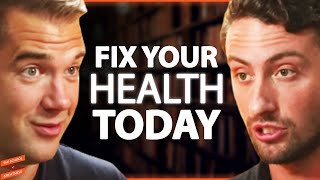
Dr. Kyle Gillett and Lewis Howes break down six pillars of hormone health: exercise, diet, sleep, stress, sunlight, and spirituality. They cover hormone testing, nutrition timing, and how alcohol and daily habits affect longevity.
Chapters
When you begin to have hormone dysfunction, one, without realizing it, your partner or your family might notice changes in your mood or changes in your behavior, which might be disconcerting to them. And then on top of that, I.
Think you got to have a dream. The School of Greatness. Really?
Yeah.
Please welcome Lewis Howes. What do you think is the thing that holds most people back in their health? Is it hormone optimization or is it something else? that they're missing.
The most common thing that holds people back is that many people have metabolic syndrome. They don't diet, they don't exercise, they don't control their sleep or their stress or their spiritual health even. And they don't control their collective health or social health as well. So the health of their family, the health of people in their household. And it's almost like you're trying to get into a fraternity or a sorority. if one of those things is off, then you're not going to have optimal health.
So you talk about these main six things, which is exercise, diet, sleep, stress, sunlight and spirit or spiritual. When did you realize that if one of these six things are out of alignment, that you're probably not going to be feeling as good as you could? When did this come about?
During medical school and residency, there's a a process of learning about the importance of the body and the mind and the soul.
Really? The mind and the soul.
The medical school. Yep. And residency as well. During the third year of medical school, you usually start your clinical rotations and that includes working in the ICU and working with the end of life care team, the hospice team. And often you see families and individuals that have never been spiritual their whole life. And by spiritual, You could just define that as the self-actualization on Maslow's hierarchy of needs, the pyramid, and individuals that have never considered themselves spiritual or religious are requesting to talk to chaplains, and they also want to talk to their doctor about spiritual health.
At the end of their life, they're thinking about this. That's some of the requests they have with the doctors. Can I find a chaplain or a pastor or someone to talk about... What are they asking to talk about? is it like with them? Is it about the reason of life or forgiveness? What is the thing they're looking to learn?
Often they're just scared and they have a terminal diagnosis and they've been given days to weeks to live.
Oh man.
And they want to figure out, well, everything I've done in my whole life, perhaps they have regrets, perhaps they're glad that they've done things, perhaps they want to talk to their family members earlier rather than just at the at the very, very end, but they want to find meaning, that self-actualization on the pyramid of the hierarchy of needs.
So when you were in residency and you were witnessing this, what was a big eye-opener for you? Were you a spiritual person before this, or did you say, oh, there's something to this health thing to optimizing, you know, living a longer, healthier life with this spiritual component?
Yeah, I'm a Christian, and I am spiritual. I would not consider myself religious. but I do think that every human has a soul and also that every human has a purpose. So often I would pray with my patients and I would talk to them and ask them what they think even among, like, let's just take a group of people, say Christians, many people in the United States are Christians, there is a huge variation in what people believe about God or even Jesus, and there's also a wide variation of what people feel like they benefit from being a Christian. Some people feel like they benefit, some people feel like they certainly don't.
Right, right. How much does the soul or the spirit play into optimal health? And how does a soul become unhealthy?
This is obviously a particularly difficult question that many theologians discuss back and forth via, I believe it's called apologetics. what I do know is that when the soul is not healthy, often the entire household suffers.
Family members. Wow.
Especially if, and there's obviously exceptions to everything. And the answer to everything is it depends to.
Sure, sure, sure.
But if, let's say there's a household and they're all Christians and one individual perhaps they're at the end of their life, perhaps they're not, they switch their worldview and their spirituality completely. and often you see physical and mental health, sequela, deleterious, so negative sequela, just from that.
From switching your spirituality or your beliefs around spirituality. Correct. Interesting. But what if one spiritual belief hasn't been supporting you in an emotional or mental or physical way, and you switch it to find something that gives you more meaning and purpose? Would that also hurt it in the family dynamics because there's now a break in a belief into a different belief?
In the long run, it might be a beneficial change, but in the short run, it's almost always quite difficult.
Yeah, because you're shifting your beliefs around something you thought was the word of the universe or something, right?
Yeah.
You have this identity or this belief that you've had your whole life and now you think it's a lie.
Right. It's like changing any other lifestyle intervention or even a medication. If you don't exercise at all and then all of a sudden you start exercising and you're going hardcore for CrossFit, you're going to have a lot of.
Pain in those first few weeks. Yeah, absolutely. Fascinating. So the spirit is something that you started, well obviously you grew up studying it but then in residency you started realizing this is a massive part of what people think about when they're terminally ill at the end of their life. How did you start implementing that or integrating that into your medical practice?
It first started just with the request of patients. So patients very often ask their doctor, well, what do you think? Or will you pray with me? Or will you do X? And you do your best to meet those requests. That's actually how I started getting into hormones as well, is because hormone pathology is very rare and often patients would request help or even just labs with it. and if you run a lab on someone's hormones, they're very, very thankful. Likewise, if you just simply pray for a patient, I say, I'm not an expert, but I'm happy to do that with you. They're also very thankful.
So when you test for hormones, what is the type of tests that people do to get results back about their hormones and how many different hormones are there to test?
So a general synopsis of hormones is there's Several different types, but there's peptide hormones, which are hormones made up of chains of amino acids, for example, growth hormone. There's also sterol-based hormones, so estrogens, progesterone, and androgens like testosterone. And then there's also hormones just based on amino acids. For example, thyroid hormone is based on tyrosine. And hormones are just signaling molecules. There's nothing magical about them. But they do talk between organ systems and even within organ systems. So talking amongst organ systems is called endocrine hormones. Talking within the same organ system is called autocrine or paracrine nearby.
And how does someone know without taking a test that they have pretty good healthy hormones? How would we know?
In general, and how you feel in general, I call that biofeedback. So if you're feeling very well and you have good energy and vitality and libido and mood, and you're not sleeping too much and not sleeping too little, then perhaps you have a pretty normal hormone profile. A lot of individuals feel like, you know, I'm just not focusing quite as well as I used to. I'm not as motivated as well as I used to. My libido has changed slightly. My athleticism or even my body composition. And when that happens, it is extremely difficult to guess your hormone profile without getting a blood test.
Really? So you got to do a blood test, do all the samples, and see where the deficiencies if one sector of hormones are deficient, is it impacting the other hormones in the body as well? Do they come down or can you have really healthy hormones in one area and then unhealthy in another area?
It's possible to have healthy hormones in one area and unhealthy in another area, but the process of talking to each other is called feedback inhibition. So, you can have negative feedback where they decrease whatever hormone is produced. For example, estrogen can have negative feedback for testosterone production, and it can also have positive feedback where it actually increases it in a cycle.
Interesting. But it sounds like if you're not exercising, if you're eating poor diet, if you're getting very little sleep, if you're overly stressed in a negative way, not with the positive stresses, if you're inside all day, you don't get any sunlight and your spiritual compass has no moral direction, then probably it'll affect all of your hormones at some point. If one of those things is off, it'll probably hurt the hormones, right?
Yeah, likely so. And again, the answer to everything is it depends. But it's very common to fix whichever one of those modalities is off. And that's why I write prescriptions for lifestyle. a nutrition prescription or an exercise prescription. I truly believe that food is medicine and the original medicines were all food and herb-based anyway. And exercise is also medicine.
Is sleep medicine? Is sunlight medicine?
Yeah, I would say so. Likely to a lesser degree, diet and exercise have a slightly more powerful effect because your diet is rebuilding every cell in your body continuously and how you exercise is how the machine works. So, if you sit a car in a garage, maybe I could think of a sports analogy as well. I guess racing is a sport too, right?
Yeah, of course.
But if you sit a car in a garage, then it's not going to function well.
Right, right. What are the five foods that you would recommend to optimize your hormones if you eat them consistently, moderately, these would support the growth of the health of your hormones.
For individuals in developed countries, which I assume most of our listeners are, I would say fiber would be the number one. Only a small percentage of Americans get enough healthy fiber.
5%. Only 5% get that. Wow. How much fiber would we need for it to be a good amount?
I'm not sure how many how much fiber you would need for a healthy amount. But there's three main types of fiber. They have what's called an RDA, which is a recommended daily allowance, which is basically that's what you need to prevent deficiency. And on most nutrition labels, there is soluble and insoluble fiber. And it's total fiber and dietary fiber. So dietary fiber is the same thing as soluble fiber. And that is one of the types that very few Americans get enough of.
So what does that include? What types of foods?
One example of dietary fiber is psyllium husk or psyllium powder. L-methylcellulose is another type. But there's a lot of, most foods have a combination of both soluble and insoluble fiber. You also have a special type of fiber known as prebiotic fiber and think of that as the fish food for your gut microbiome. It's what the good bacteria in general, the good bacteria like to eat. And, they basically, you can't just throw fish into your microbiota tank of your gut and your oral microbiome as well. You need to feed them.
Really? Okay. So, these different types of fiber, what would be the top fiber foods that you like to eat or prescribe?
I like root vegetables quite a bit. You have to be a little careful because a lot of root vegetables are high in what's called FODMAPs, but FODMAPs are not necessarily evil. An example would be garlic. Another one could be leeks, ginger, chicory root for some individuals, although chicory root oddly has some interaction with ragweed allergy. So some people can cross-react with that and have an allergic response.
So those are some of your favorite fiber foods, right? Okay, so what's the second thing you would recommend of the five top foods? Fibers.
I would say a protein source and then three would be an omega-3 source. One of my favorite protein sources is red meat. There are plenty of good protein sources that are not meat, but you certainly want a good protein source, especially if you're trying to optimize your health span or your physical function. It is certainly possible to get all of your necessary vitamins and nutrients without having meat in the diet. And it's also possible to get enough omega-3s without having fish in the diet, but it can be difficult.
Really? So how much meat protein do you eat and then how much do you recommend a person who's maybe not as fit and athletic looking as you?
Personally, I eat almost, probably not quite one gram, but almost one gram per pound of body weight. per day.
Per day.
Which is extremely high, but I also like protein quite a bit, and I try to eat sources that are relatively lean because most people, if you just tell the average person to go out and say, go eat one gram per pound of body weight, which is a ton, and most people do not need that much, and they will just consume too many calories. Gotcha, yeah.
So how much do you weigh? 200 pounds.
200 pounds.
So 200 grams of red meat or protein per day? Oh, protein.
I was gonna say that's a lot.
Of red meat, right?
Yeah.
So 200 grams of protein, about a pound per body weight, that makes sense. And how much of that protein is red meat daily?
About two to three times per week. So not every day.
Not every day. Two, three times a week. And it will be how much of a percentage of the 200 grams will be.
Will be from red meat?
Yes. How much?
Oh, on a weekly basis, probably only 5 to 10%.
5 to 10%. of the 200 grams per day of the three days a week. Gotcha. And what are some of the other top proteins you recommend?
Salmon. Salmon is one of my favorite protein sources. Salmon's almost more of an omega-3 source in the third category than a protein source.
But it's also high in protein too, right?
Correct. I'm a fan of beans as well. So there's a lot of different types of them. Some are relatively low in protein. There's also garbanzo beans have a source of protein. Beans like brown beans or black beans also have protein. They are not near as high quality, but they can be complementary to help make up the other half.
Dr. Gabby Lyon also talks about this. Why is the high protein so important for also hormone optimization in the diet?
A lot of the ancillary hormones, for example peptide hormones or amino acid hormones are literally synthesized based on the protein that's in the diet. So a lot of proteins like meat proteins are high in sources of methionine or cysteine or carnitine, which is just a peptide with two different amino acids in it. But your thyroid hormone is tyrosine that's changed over and changed into the thyroid hormone with iodine. And, your dopamine is also tyrosine. Tryptophan, another amino acid common in many meats, but also just a lot of protein sources. And, of course, some people do take tyrosine and tryptophan as a supplement, enforcing the idea that food is medicine. But, tryptophan can form both serotonin and melatonin and many other hormones as well.
What happens if you, let's say, did 20% of the protein intake per day? So you only did 40 grams of protein a day, I guess, as opposed to the 200. What would happen to your hormones.
Your.
Muscles, your body and your overall health with 20% as opposed to, you know, a gram per pound of body weight?
Yeah, and even compared to 0.4 or 0.5 grams per pound of body weight per day, 40 grams, and you know, that's not, that's pretty low, but if you have a decent amount of muscle mass stored up, and let's say you're intermittent fasting or you're on a fasting mimicking diet for fatty liver disease, in a short term, then it will have mild effects, but in a long term it will have significant effects, not just because that there's building blocks, but there is a, think of it as the cascade of aging. And whether or not aging is normal or pathology doesn't really matter because this cascade still looks. Dr. Pataki with the Mayo Clinic wrote an excellent article about two years ago and you can see a chart in there and at the top you have, you know, increased calorie consumption, decreased protein consumption, sarcopenia and osteopenia, which is loss of protein in the muscle and loss of bone mass. And then you have a decreased metabolism, then you have metabolic syndrome and insulin resistance, diabetes and hypertension, and then you have all the diseases, the end diseases of aging like cancer.
So, what I'm hearing you say, high-calorie diet, low-protein diet, is susceptible to having longer-term health risks, is what I'm hearing you say. So, if you're having just lots of sugars and calories consumption and you're having a lower percentage of protein in the diet, it could cause potentially diabetes down the line. It could shorten your lifespan. Is that what I'm hearing correctly?
Yeah. Along with that, you have metabolic syndrome and diabetes. And, I would consider that the most common cause of hormone dysfunction that affects your insulin and your IGF-1, which is kind of a marker of growth hormone. It affects your SHBG, which binds all of your sex hormones. Well, actually it just binds estrogens and androgens, not progestogens. But still you're going to have a lot of downstream effects. On top of that, high carb, low protein diets are usually highly processed as well. Right. Call these foods high glycemic in product foods like chips, crackers, and cookies.
Stuff's in bags and boxes, right?
It's really easy to eat. I don't really think. Yeah, I don't really think it's anybody's but it's just so darn convenient that people over consume them.
It's quick, it's fast, it's cheap, it's easy, tastes good, at least it tastes good in the moment, but it doesn't necessarily feel good long term, because then you start to feel sluggish, stressed, anxious, low energy, you're gaining the pounds, you're not burning your metabolism as much. So how does someone increase growth hormone? in the body in terms of the healthy growth hormone, not the cancerous side of things, but the side that's going to make your body composition, your muscles bigger and stronger, look younger, that type of hormone.
Yeah, so there's several ways that you can help increase growth hormone. Growth hormone is interesting because it has a very fast half-life, just minutes, and it has what's called pulsatile secretion. So growth hormone releasing hormone and also ghrelin, which most people are familiar with because it kind of makes you anxious and hungry, they help release growth hormone from the pituitary. And in just a couple minutes, it will act on various tissues, for example, the liver to produce IGF-1, which when it's bound to its binding proteins has a half-life of maybe a week. So IGF-1 does a lot of the action of growth hormone. When you over consume calories, it can help produce growth hormone. There are some amino acids that can somewhat help with growth hormone production since it is a peptide hormone. like arginine, but at the end of the day, a lot of it will just come down to how good is your sleep, since a lot of that pulsatile secretion of growth hormone happens during sleep.
Which is why it's one of the pillars of your, the six pillars of hormone health, sleep. How much sleep are you trying to get a night on average? And how important is it for the quality of sleep to be there as well?
Around seven to eight hours a night. Both quality and quantity are particularly important. I'm not a sleep scientist. There's lots of good ones out there. But when you're looking at sleep, even if you're one of the individuals that has a genetic predisposition to sleep very, very little, that can also affect your health, including your hormone health, especially over a long time. And it is somewhat possible to stockpile sleep. I know some biometric wearables even have like, this is your stockpiled sleep, which is kind of cool, but you can't really ever truly catch up on sleep.
Right, right, yeah. Shawn Stevenson who talks about like sleep debt is a real thing and you can never really pay off the debt. Correct. You can kind of get back to a standard of where you are now and try to optimize from there, but it's like if you do 20 years of sleeping very little, it's gonna be, you can't really recover that, right? It's gonna be hard. What do you focus on for yourself the most in terms of like the hormone you're trying to optimize? Or do you just try to look at it from a holistic approach of like, living in these six categories on a daily basis?
I suppose it depends on if you consider some amino acid-based molecules hormones. For example, is dopamine a hormone? It's technically like a tyrosine-based hormone. So that would be one that I would put near the top of the list. But in general, again, hormone health, you want to figure out what's holding you back the most. Is it your androgen? Is it your estrogen? Some individuals, and I'm actually in this category as well, struggle with keeping estrogen high enough. Estrogen in both men and women, the average woman has about four times as much testosterone than estrogen. In both men and women, the lower your estrogen, the higher your risk of plaque buildup, the higher your risk of osteoporosis, and in general, the higher your risk that your coronaries are going to be occluded, which is a very common cause of morbidity and mortality. in both males and females, but especially males.
Okay, interesting. I want to complete the five foods. I'm going off the topic here. So you said fibers, proteins, omega-3s, what are the other two that you would recommend?
Since we've covered our essential amino acids and our essential fatty acids and our fiber, which is almost always depleted, I would say these two are not as important. But for me, I would put timing of carbohydrates or perhaps lack of carbohydrates. In the morning, I like to not eat too many carbohydrates because I feel that insulin spike and glucose spike and drop down. Some people can be very insulin sensitive and be more prone to this. And also it can cause what's called alkaline tide where your stomach acid produces extra pH, but a lot of foods can cause this as well. So timing of nutrients, and then if you are more insulin sensitive or your insulin runs very low, insulin is a particularly anabolic hormone. So timing that for a meal before a workout or even after a workout can be helpful. I would say that would be number four. And then number five, I would say avoidance of alcohol. So if you drink alcohol, a very small amount is not going to, there's not an alcohol debt like there is sleep debt that I know of. But even in moderate amounts, it can be harmful for your health in the long run and somewhat in the short run as well. so trying to limit that to, I'd say, for the average person, two to three times per month.
Gotcha. So timing of carbs, can you break that down first for me? When would you prescribe the optimal time to eat and consume carbs for the average person versus maybe someone who trains every day, really hard, five, six days a week in an intense workout? What's the difference?
The average person, you can, pursue them out throughout the day as has desired. For the elite athlete, and there's been many studies done on this, of course, as there are studies done on everything, but there's been pretty good studies looking at the correlation between the amount of carbs consumed and cyclists with their, I believe, their total finishing time. And this was a very long cycling event, hours throughout the endurance event.
Yeah, yeah.
And there is a statistically significant correlation where if you are a cyclist that is a faster cyclist, better I suppose, but a faster cyclist, you do consume a higher amount of carbs throughout before, during, and after.
The event. Interesting. What if you're just training for yourself? What is your timed restriction of carbs? When do you eat them? Do you eat them before workout, after workout? Do you fast in the morning and workout? How does that work?
Just for convenience, I exercise before I eat in the morning. The kids are asleep and it's really the, just due to convenience, it's the only time that I can consistently do it without putting it off.
You get up, you go and workout, you don't, and then you eat something afterwards. Do you wait a period of time after the body is moving or do you kind of have protein quickly after you workout?
Immediately, I'm starving. There's obviously no anabolic window, but if you're hungry and your GI can tolerate it, then I don't see any reason why you couldn't eat right away.
Gotcha. So eat right away. What happens if you delay eating protein an hour, two hours after a pretty intense workout, whether it be a cardio intensity or a muscle building intensity?
It could be marginally, statistically significantly worse for you clinically significantly likely no difference.
Got you. So it is better to consume protein within 30 to 60 minutes, let's say, after a workout.
Only if you're fasted.
If you fasted for 12 to 16 hours.
Correct.
If you haven't fasted for, let's say you do your workout in the afternoon, you've had a meal or two beforehand, you do it at five o'clock.
I would say there's no statistically significant benefit. or clinically significant benefit.
Of eating quickly or waiting longer to eat.
Correct. Yeah.
Gotcha.
It's a good example of something that could be statistically significant in a lab where you can see adaptations or changes. Perhaps you're studying mice usually.
Sure.
But it's not really applicable clinically because there's so many confounding variables.
So much going on. I mean, I'm glad you talked about alcohol because I've never, I mean, I talk about this on here. I maybe have like a Bailey's on ice like twice a year. I've never been drunk. I've never had a full beer in my life. It just never was a desire of mine. I never felt pulled to it. I never felt called to it. No judgment for people that do it, but I just, for me as an athlete, I knew it would hold me back to accomplish my athletic results. So I was just focused on my mission. And then after, you know, playing football in college and professional, I was like, why start now? You know, it didn't make sense. I didn't have any money. I wasn't even trying to spend money on alcohol. And then just didn't become a desire of mine. But there are countless research showing the negative effects on the body and on the hormones of alcohol and on the brain. Dr. Daniel Amen talks about his studies too of seeing brain scans of people who drink a lot of alcohol and those who don't and you see obviously there's other factors that come into environment and stuff as well, but you see the effects on the brain with an amount of consumption of alcohol, a certain amount, right?
There's not many neuroscientists that consume a high amount of alcohol or even a small amount of alcohol.
Not even wine, right? Not even like a couple glasses of wine a week. Is there any benefit at all to the body, to the brain, or to the hormones in a healthy way? with alcohol?
Physiologically, no, but socially, certainly, yes.
But doesn't that go back into like, okay, if you're just an anxious human being and you need that crutch to have a conversation, that means you've got to address a fear, a concern that's holding you back, an insecurity, and work on that insecurity, whether it be fear of embarrassment or anxiety, like work on that thing. Don't use a crutch, which is easier said than done, but if you could lean into that, it would make you a more competent person. It would increase your health.
Certainly.
All that stuff, right? Yeah.
Another downside of alcohol, including red wine that some people think about is alcohol is seven calories per gram. So carbs and proteins are four and fat is nine. So alcohol is closer in caloric density. to fats than to carbs and proteins. So, if you thought about that same amount of alcohol, let's say it's 100 proof or 50%, then fill that up instead, and this is assuming no sugar, fill it up instead with half oil and pick canola oil or something. Oh, man. So, that way someone's like, oh, olive oil is okay. And then half water, and that's very calorically dense.
That's what it is. Half of it. have a cup of water, have a cup of oil essentially or whatever.
That's what you're essentially. You know, it is seven and nine. So it's not directly analogous, but it's pretty close.
Yeah. So it's a lot of calories. It's not good for your brain. It's not good for your gut and it costs money. You know, it's this is a lot of negative effects to it. Then there are positive. A lot of people want to figure out how to optimize for burning fat. or removing fat, specifically from the belly and the back areas. What is the main cause in your mind to why it's so hard for people to get rid of that extra 20 or 30 pounds of belly back fat?
So when you think about fat burning, there's two different phenomenon at play. One is thermodynamics, so there's more calories in than calories out. and then the other is lipolysis. So if you're going to restructure or recomp a building or your body, you have to remove blocks in some places and then put blocks in other places. So a lot of fat burners help with lipolysis. So they break fat molecules down and they increase, for example, mitochondrial beta oxidation, which is basically just you're metabolizing fats and then using them in the electron transport chain in the mitochondria. the details don't really matter, but that's essentially the powerhouse of your cell. And you can do that all you want, but if you're still at caloric maintenance or even excess surplus, then you're just going to take all those blocks and then put them right back into fat cells.
Gotcha. So you need a caloric deficit, it sounds like, somewhere at some point in order to remove. You need to be exercising more than you're consuming and burning more calories than you're consuming or consuming less than you normally would.
There's many tools and ways to achieve this, of course.
Sure. What ways?
So, the OG way is just counting calories. And even if you look at doctors and dieticians, we usually underestimate the amount of calories that we consume, I believe, by at least 10%.
Wow.
And we overestimate the amount of calories that we burn by about 10%.
We think we're burning more.
Correct.
We're not.
Even doctors and dieticians.
Really?
Yeah.
And we think we're eating less, but there's always hidden calories in something, right? Or you maybe didn't weigh it perfectly or it was a bigger size or something, right? Okay, so that's the original ways to count calories.
Do you recommend that strategy? For some individuals, it's particularly helpful. Most of the time, that I see a patient in my clinic and a lot of what I do is obesity medicine. I am board certified in obesity medicine. They have already done that and many of the time they say it doesn't work and I eat like a bird and there is nothing, there's nothing quite as powerful to destroy a physician-patient relationship than to just tell the patient that they're lying or that they don't know what they're talking about.
Right.
So it's not helpful to push that angle of vector. That's just a tool and there's many tools in the toolbox. For some people, whether it's genetic or epigenetic or just their situation that they're in in life or their mental health or their hormone health, it makes it very difficult for them to lose weight, almost like it's more difficult for someone in quicksand to get out. So you can teach a person how to dig. That's your lifestyle. interventions, but you should also give them a shovel to help out. It doesn't necessarily mean that you throw a shovel at them, but that's where medications and supplements come in to address whether it's insulin resistance or whether it's their mental health or their hormone health to help give them the tool to do it themselves.
Okay, so the counting the calories works for some, doesn't work for everyone. What else would you suggest they do then? What have you seen has been really effective consistently for people you've worked with?
When I write a prescription for this, I have several different areas or boxes that I can circle. And one of them is number of meals per day. One of them is macronutrients, for example, carbohydrates. One of them is timing of meals. One of them is eating speed. So there's a lot of strategies to develop good eating speed habits. For example, split your meal into three different portions, consume one, wait 10 minutes, consume the next one if you would like, wait 10 minutes, and then consume the last one if you would like.
So, don't just put it all in your mouth in 10 seconds, is what I'm hearing you say, which is kind of my whole childhood. Just like eat as fast as you can, not know that you're full and.
Just keep eating more, right? These are extremely powerful for pediatric patients for childhood obesity. I believe in the New England Journal of Medicine did a study and it was called the Turtle Bite Study where every five or 10 bites at some interval, the kids took one bite that was extremely slow. And it was helpful for recomposition of those kids. Really?
You mean recomposition of their bodies?
When you're in the field of pediatric obesity medicine, you're not really going, your end target's not weight loss.
Sure.
It's usually weight gain, but a body recomposition.
So less fat weight gain, but more like you're growing as a child either way, but it's diversifying the weight gain, I guess, right?
Correct.
Directing it in another place. Interesting. Okay, so we have meals per day, timing of meals, eating speed, I think you said one or two others.
Timing of meals, that would kind of incorporate intermittent fasting, which is not, it's more of a health tool. rather than a weight loss tool.
Meals per day, eating speed, timing.
I'm sure there are other tools. Sure.
Ones that I remember off the top of my head. If you were just saying, hey, listen, I don't want to count calories. You know, I'm probably not going to do the intermittent fasting thing. I'm not going to eat slower or, like, split it up into three things. That seems like too much work for me. But I will eat one less meal a day. Right. Or I'll only eat a certain amount of meals, and then I'll essentially be intermittent fasting in that process. But if I looked at it as okay, what would my meals per day look like? If I wanted to consume a little less calories, obviously I'm gonna feel hungry, but when can I do it where I'm not gonna want to munch on extra calories? What would that be? Skip dinner?
Is that, you know, what does that look like? I would say skip eating after dinner and don't even worry about taking away a meal. No eating after 7:00 p.m. That being said, if you do remove one meal, whether it's breakfast or lunch or dinner, It is not helpful at all for weight loss or body composition.
To remove one meal, it's not helpful.
Correct. So in isolation, removing one meal is not helpful at all for weight loss.
Really?
It's truly an intervention for health reasons if you would benefit from that. Less mTOR signaling, less growth signaling in cells in general, or more of a reprieve where your body's immune system has a chance to go throughout the rest of your cells and see if there is abnormal ones.
Okay.
For most individuals, unless they like doing that for mental clarity or whatever benefit, some people really like skipping breakfast. But many people, especially those that struggle with metabolic syndrome, have other pathologies. There's several new ones. There is sleep eating syndrome where you eat, you're sleeping, you wake up, and then you eat and you don't even realize it.
Really?
You see that there's, a bag of chips and you literally don't even remember it, almost like sleepwalking. And there's also night eating where you consume almost all of your calories between dinner and bedtime. Often these individuals also stay up late at night.
Those are chips, snacks, and other kind of emptier calories, right?
Correct.
But they don't eat breakfast.
Really?
Ice cream cookies or whatever it might be. Yeah. So, that's the time where you could really, if you just stop eating after dinner, you'll eat less calories. That sounds like you're still at the even maintenance. You're not a caloric deficit, correct? Unless you eat less in each meal.
Correct. Obviously, it's possible to be in a deficit and do that as well. That's your biggest bang for the buck is not eating anything after dinner. Because society values family dinners and also social dinners with Colleagues and whatnot, it would be very difficult to tell everybody to stop eating dinner. But if you wanted to design the perfect, like in a lab, Truman Show style, whatever you want to call it, not eating after about 3:00 PM would be even more beneficial.
For weight loss.
For health reasons.
For health reasons.
I don't think it would have any effect with weight loss. Maybe it would, but that I know of it has not been studied.
Gotcha. So it's truly because you can still consume all your calories in the morning and in the afternoon before 3 o'clock for the day. You can still consume a lot of calories is what you're saying. So you'd still have to cut the amount of calories in that timing window and then you'd just be intermittent fasting longer, right? Which would help for health benefits and maybe you would, I guess, help cleanse some of the dead cells and kind of like regenerate new cells, that type of thing. thing, but not necessarily for weight loss. So what I'm hearing you say. But at the end of the day, it sounds like it's a caloric deficit.
Yeah. And it's just a matter of helping provide individuals with the tools that will work best for them. So for some, they might need a shovel, and for some, they might want to want and or need a back hoe.
Sure, sure.
What?
It doesn't seem like you've ever been out of shape. Have you ever been overweight?
When I had my first child, I was about 40 pounds overweight.
Really?
Yeah. And I could hardly tell because I'm so.
You're tall.
Yeah.
It's hard to tell. It's kind of like the fat just a little bit everywhere, right?
Yeah.
So how did you burn that 40 pounds? What did you do?
I eliminated all liquid calories. Yeah. I ate foods of low caloric density but high nutrient density.
Like what? These five types of food groups are. Yeah.
A lot of salmon. I love spinach. I ate a lot of spinach that would. kind of go under the fiber category. I love carrots, although carrots don't have a lot of dietary fiber. They're just kind of empty, insoluble fiber, if you will. Not totally, of course.
It's not many calories.
Yeah. And, a few months later, I was kind of back at my baseline.
Really? 40 pounds just like that in a few months. Just by changing the way you ate.
My biggest intervention was I eliminated all liquid calories. and I did not have any more than two caloric beverages, whether it was a coffee with a bunch of cream in it. I did learn to like black coffee during that time, and I still do, but no more than two beverages with calories in them per month.
Interesting, because something like a Bulletproof coffee, which is a lot of people talk about intermittent fasting with a Bulletproof, that still has a lot of calories, doesn't it?
I don't know the macronutrient profile on Bulletproof offhand, but I believe it's an mostly protein.
Okay.
So the one exception to that for some individuals could be a protein shake. And you would probably want to consume this in the morning rather than the evening. That way you can have the benefit of some degree of appetite suppression. Some protein shakes like casein, which is an interesting one to talk about because it can also affect prolactin. And some people negatively if their prolactin is too high. casein can increase it. But casein is also digested very slowly and it has a lot of amino acids in it that will activate mTOR. So during your eating window through the day, if you consume your casein at the beginning of the eating window, then it can be helpful to provide satiety and also help with anabolism. But if you consume it at the end of your day, then it's going to essentially cut short your fasting period.
So, if you have a protein shake after 8 o'clock, right? Say someone's working out consistently and they're doing a workout in the morning or the afternoon, they eat their dinner, but then they're still hungry and they say, well, let me just do a protein shake, right? It's 150-200 calories, but it's 20-40 grams of protein. Are you saying having that because it's got the calories, it's extending the eating window. So, it's not allowing you to to burn off those calories more or what are you saying there?
That would be more for health reasons. For example, let's take an intermittent faster that right before bed every night they have a shake of 50 grams of casein. So that's essentially making their intermittent fasting for health reasons worthless.
Right.
Because their mTOR is still very active for many hours at night. However, if you are looking at the satiety benefit of specifically protein, if your shake has just protein in it, then that's going to help provide some degree of satiety.
Well, you're not hungry. That's what you mean, yeah.
And there's obviously a lot of factors to this. One that has received a lot of press recently is called GLP-1. There's all these different drugs like semaglutide that are GLP-1 agonists. And if you look at carbs, carbs spike up GLP-1 very quickly. GLP-1 is produced in a lot of areas, but a lot of it is the gut and also the pancreas. And then fat will increase very, very slowly, but it will increase GLP-1 for a long time and protein is somewhere in between.
Of these six areas, which one will affect hormones the most if you neglect? If you have the other five that you're doing a great job at, but you neglect your nutrition and it's all processed food and high calorie sugary drinks. Or you don't exercise at all, but you eat perfect and you do everything else perfect. Or you don't get that much sleep or you know your stress is through the roof, whatever it might be, or you have no spiritual compass. Which one do you feel like will hurt you the most? If the other five are great and one is out of sync.
I would say diet and exercise hurt you equally the most. However, exercise is slightly more acute. You'll see a billion different studies, and a lot of them are talking about the release of things like testosterone or growth hormone during or right after exercise. So they can give a bit of an effect, but a lot of that's autocrine or paracrine. For example, there's different types of IGF-1, which is the growth hormone sequela. So when you're looking at those studies, they can affect you to some degree acutely and a lot of that is just how you feel in the long run. So if you just all of a sudden stopped exercise versus stopped eating a healthy diet, they will affect you relatively equally. But how you, like the hormone effects of exercise are more easy to see in the acute time phase and maybe this stuff is mostly just scientifically significant but not clinically significant.
Sure, sure.
But there is very clear, statistically significant data on it.
What do you think is the biggest risk for men and the biggest risk for women over the next five to 10 years of what's happening in the world, the environment, the way people are eating, the way people are not moving their bodies, what is the biggest risk?
I'd say it's probably relatively similar. The biggest risk for some time has been metabolic syndrome. and part of that is not getting outside. One of the S's is sunlight, and that does encompass heat exposure and cold exposure and walking and just being outdoors. Humans are meant to be outdoors, and we have been for a long time. Now we have these wonderful artificial environments, but it's not necessarily good for health. And in the last few years, we have been indoors and not socializing and not outside more than ever. So that is going to be fuel on the fire of metabolic syndrome.
What does metabolic syndrome mean?
Metabolic syndrome is a kind of a constellation of disease that includes insulin resistance, high body fat, specifically abdominal body fat, a high BMI, a large abdominal circumference around the umbilicus, which is the belly button, and high cholesterol, high glucose, high A1C, which is the average glucose over the last few months. And that together is a metabolic syndrome, also known as pre-diabetes, which about 40 to 50% of Americans have, and many of them don't know it.
Almost 50% of Americans have pre-diabetes.
Correct.
When do you reach the point of pre-diabetes? Is it BMI? Is it something else?
There's a couple of ways to check it. One is two different fasting blood glucoses, truly fasting over 100. That's actually not a great way to check it. Better ways to check it is an A1C, which is the hemoglobin molecule that is glycosylated, so it has a glucose attached. You can also check it with a glucose tolerance test. which is quite good, or things like fructosamine or glycosylated albumin. Those are just proteins that again have a glucose attached. So you're looking at how your body partitions glucose in the vascular system versus inside the cells.
Okay, so how do we prevent metabolic syndrome? Does that mean we got to be outside more frequently? Does it mean we'd be outside longer? Is it taking, you know, 10, 20 minute breaks outside, what does that look like?
It encompasses all six of the lifestyle pillars. Again, mostly diet, lifestyle, and being outside. But some of it just has to do with, and these are less strong effects, but some of it is the endocrine disruptors in the environment like bisphenol A, and some of it is the processed foods, the trans fat. Those things will have a significant but small effect, but it could be additive and cumulative as well. So all those other small things that add up will have an effect and they're just, again, they're maybe not a log, but they're a stick on the fire of metabolic syndrome in our society. Screening is one of the best ways if you screen for it, and there's actually a goal, one of the national health organizations has a goal called Healthy People 2030. And one of the goals is to decrease the pre-diabetes prevalence, I believe, from 40 to 34%. It's a pretty small decrease, but it's good to have a goal in the right direction.
How are they planning to do that in the next eight years?
To screen people, because if you screen them, then you can treat them. Every year there's many new medications and supplements which again are just tools to help for metabolic syndrome. If you treat people that have metabolic syndrome or pre-diabetes then it is considered completely reversible. However, if they develop diabetes then it is very difficult to reverse.
It's very challenging.
Yeah.
I'm here in the Midwest, here in Kansas. I grew up in Ohio. I lived in Minnesota. I I lived in Missouri in St. Louis. I lived in Alabama for a little bit of time. And now I live in Los Angeles. And it seems to be when you go to the Midwest, you see a lot of obesity, right? You see a lot of people who are probably fit in this category of pre-diabetes or they have diabetes, right? They're struggling, let's say, with their weight and with their weight loss. Is that an accurate statement when you're out and about with the family at a different events or at the store and you see this, correct? Why do you feel like it might be more in the middle of America than what it seems to be on the edges of America?
It's almost all lifestyle. People are taking very similar medications and supplements. People are not moving as much. They drive more. Some cities are almost exclusively driving back and forth. You never see hikes on the road or joggers or hikers. Really? Yeah. And this tends to correlate very closely. You can look at an epidemiological map and you can see that the Midwest and the South are usually the worst.
The Midwest and the South.
Higher incidences of obesity, prediabetes, many different health criteria.
I think a lot of that is lifestyle. They're just not moving their body. They're not walking, biking, hiking.
And they have different. Yeah, they have different diets, too.
And very processed diets, right?
Yeah.
High calorie, sugary drinks, alcohol, all that stuff.
Right.
Is that an educational thing? Is that a cultural thing? Is it a society, like Norm? What. What is that? You think it's a combination?
It's a combination. One of the terms that's been thrown out there is called food intelligence. So on one side of this, it's not necessarily a dichotomy, but on one side of. spectrum or continuum, you have individuals that might not have very good food intelligence.
Or access, you mean, or education around it.
Yeah. Food deserts is part of it. Access is part of it, too. And of course, there's people who are uninsured or underinsured. But even if you account for confounding variables of socioeconomic status and being a certain percentage above or below the federal poverty level, you see that People make different choices with food.
Interesting.
And there's no such thing as good or evil foods. And I'm sure you and I have different preferences too. For example, maybe I love spinach and you hate it. But when you're learning how to eat healthier and healthier foods, some people will swing all the way to the other side of the continuum where they develop conditions like, and this is an official term, but orthorexia, or I call it intellectualized eating, where they're terrified of eating something that might be an unhealthy, bad food.
Like anything processed, they're terrified of it, right? Which causes more stress and anxiety as opposed to just, okay, I'm going to have some of this 10-20% of the time and allow myself to have some as opposed to being so strict.
Yes.
Which could cause hormonal side effects too, correct? If you're stressed about it all day long and worried about it, It's not going to allow you to just kind of relax when you eat. But it sounds like pre-diabetes, because I remember hearing years ago it was like a third of Americans are obese or pre-diabetic or something. And now it's 40 to 50% range.
There's an interesting study done and they looked at what's called metabolically healthy. So they looked at A1C and they looked at glucose. They looked at BMI and I believe abdominal circumference around the belly button. and also lipids, so cholesterol. So the cholesterol was, you know, that'll add a percentage of people that added about 30% of individuals that didn't meet the other criteria, but only, it was 6.7, I think it was 6.8%. So only about 7% of Americans were considered metabolically healthy. Seven by those parameters.
Holy, 7% of America.
Correct. If you removed cholesterol, that would increase to about 35 or 40%.
Gotcha.
But that's still not a very high number.
Holy cow. How do these, how do the, how does hormone health affect relationship health and the quality of your relationships with your partners or in business or in your career and intimately in family?
There's a lot of interplay with the Amino acid hormones or neurotransmitter hormones. So testosterone and dopamine are sort of close cousins, and estrogen is somewhat of a cousin with serotonin as well. And when you begin to have hormone dysfunction, one, without realizing it, your partner or your family might notice changes in your mood or changes in your behavior, which might be disconcerting to them.
Mm-.
And then on top of that, some people will take on what we call the sick role. And this is extremely interesting when it comes to men's health, because when you look at mental health, things like anxiety, stress as a general overarching term, or even depression, men do not like going to the doctor. I would say more often than not, I ask the male what brings them in and they say, the wife made me come in.
Sure.
But part of that is that the male doesn't want to take on the sick role. It's almost this, this is too strong of a term, but kind of like a passive, they're passively self-harming by not wanting to go to the doctor.
Wow.
They know something is wrong, but they don't want to go because they don't want to be seen as weak taking on that sick role.
So it could hurt the relationship for sure if you're not willing to take care of the hormones, if you're not willing to check on it if you feel like something's off and take care of it. I'm seeing that with men, speaking of men, sperm count is down in the country, I guess probably in the world too. Testosterone is down as everywhere sperm count, and there are other things happening with men. Is that all related to these six elements too, into their hormones, and how can men start to reclaim their sperm count and testosterone in healthy ways?
I think a lot of it is related. It's not necessarily a direct correlation. A lot of it is the changes.
Of.
The culture as well.
Really?
Yeah.
With testosterone and sperm count?
Not necessarily directly, but indirectly, yes. So, you have a culture or in general, you're doing less physical labor, you're doing less manual labor jobs, and for thousands of years, in general, males work outside.
We're outside working, lifting heavy stuff, yeah.
Correct. A physical job. something that provides, it's lower on that chart of Maslow's hierarchy of needs. It's your physical needs. For many thousands of years, humans have had a difficulty achieving those physical needs. And now that we don't have that, it almost makes it harder to, because without thinking, if you're going for your physical needs and you're moving, and you're probably not consuming a ton of calories, you're just trying to make ends meet and trying to make enough food for the family, then you're not worried about self-actualization. So it's almost like a blessing disguise. It's a blessing but a harm that we just worry about that now.
So men need to be outside more, moving more, lifting heavier things. Is that what you recommend?
And women as well.
And women as well. What happens if women aren't outside lifting heavy things. Should women be lifting heavy things for their body weight and size?
Yes. In fact, I would say in general, the average male who is trying to optimize health probably needs to live more like the average female who's trying to optimize her health and vice versa. So the female probably needs to do more resistance training and eat more protein, and the male probably needs to do more cardiovascular training.
Really?
And think about things like fiber and hydration and things like that.
And relationships and connection and all those things. Why do you think women need to eat more protein and lift more weights or do more resistance training?
There's always exceptions to this, but many women will come to the doctor or even just start a new fitness phase and they will find some sort of cardio to do. and they will go on a, I'd call it a crash diet. It's not a perfect term, but a very low calorie diet, even without the supervision of a doctor. And by the way, if it's beneath around 1,200 calories per day, it should always be under the supervision of a physician.
For men and women?
Correct. But in general, you see many more female patients that do that, and Along with that very low calorie diet, they're also consuming a very low amount of protein and they are not doing resistance training. The average individuals who is losing weight of every pound that you lose, about 35% of that is lean body mass.
You don't want to lose your lean muscle. Correct.
And statistically or on average, a female is not going to have as much lean body mass that they can lose if they lose 20 pounds. and seven pounds of that is lean body mass. They lose all of that metabolic potential.
To burn.
Right.
To burn.
Yeah. Yeah.
Interesting. So you want more muscle you have. But the, the thing that women will say is, well, I don't want to look bulky.
Right.
It's what a lot of women say. I don't want to look like a man, or I don't want to be bulky and have these huge muscles. But you want to have a certain amount of lean muscle mass. which will help your metabolism, will help you burn the fat more or process the fat into the muscle. And so without that lean muscle, you're losing all the extra health benefits.
Yes. Unless a female is injecting anabolic steroids, lifting weights or resistance training is not going to make them look more bulky.
It's not.
They might look more bulky than the average female at baseline.
But who doesn't work out?
Correct.
Correct.
But that being said, them compared to their other self in an alternate Universe, if they do resistance training and lift weights, they will look less bulky.
Right, right. What does your workouts look like then? Is it one a day? And if you're in the I'm trying to lose 20 to 40 pounds having a child phase that you're in, is it two a days a few times a week to help burn extra? calories. What does it look like for you?
I very seldom do two a days. And as an athlete, perhaps you do more exercise than me, but I try to exercise at least two times a week. And I feel best when I exercise five to six times a week or even seven times a week. Sometimes it is particularly difficult if there's sick kids or there's a lot of duties to be done. Yes. Sometimes you can kind of exercise by doing farm chores or taking care of the chickens or the garden. But it's just not the same.
I'm gonna carry the bags around the block a couple of times for 10 minutes until they have to throw in the garbage or something.
Yeah. Yeah, just not the same.
Do some curls while you're walking to the backyard or the front street to drop off bags. Yeah.
Even heavy manual labor jobs like cutting firewood, It does not replace the need to exercise.
Really? How long do you work out for if it's an ideal you have all the time in the world? How much time would that be?
If I had all the time in the world, I probably would do two a days.
Really?
Yeah, seven days a week. A lot of it would just be easy, perhaps some easy zone two cardio.
Gotcha. Some light jogging or walking up hills or something like that.
Yep.
And is there a benefit then to twice a day? 30 to 60 minutes twice a day over just one intense 60 minute session.
I don't think there would be any benefit. I'm also not an exercise physiologist, but I doubt that there would be a significant benefit. And if you did two a days that were vigorous, it'd be more certain. Correct. Including hormonally, it could be very detrimental.
Really? But if you did an intense, not intense, but you just did a solid, resistance training, lift. And then the second workout was a 30 minute jog or run. Would that affect the hormones in a negative way if you did a lift and then a run at night? That was 20 to 40 minutes.
It shouldn't assuming adequate caloric intake. So if you exercise twice a day, you're going to need to consume more calories to be close to your maintenance.
Or if you wanted to burn, lose weight or burn more fat.
Exercise, and this is what's really interesting, your, even if you exercise twice a day and you burn a huge amount of calories, your body will increase the hunger to make up for that. So you'll probably feel like you're starving, especially if you're trying to be in a deficit, if you're doing two a days. It will not help you lose weight faster, but it will help you maintain more lean body mass and it will help keep it off.
Interesting.
You can study two groups and tell one of them to exercise and one of them not, and they will lose very equitable amounts of weight.
Based on nutrition and calories. Correct. Interesting.
But if you just look at the average individual and some people will follow, there is a show called the Biggest Loser and some people will follow graduates of that, and they're no different than the normal population. when it comes to their chance of rebound. So about 90% of people, if not more, will gain back the weight that they lost. So it's very common to see someone who has lost weight and then gained it back, but relatively rare to see someone who's kept it off. And the studies look at the common denominator of what that five or 10% of people have in common. And as they've picked up an exercise habit, a movement pastime to last a lifetime.
It's a lifestyle habit, right? It's not a, we're gonna do this for six months and then be done. It's, this is who I am, a new identity for the rest of my life. And that could be, you know, I'm gonna work out in the mornings and then I'm gonna do a walk for 20-30 minutes after my dinner. And that's just my routine now where your body is just kind of like burning that extra calories or whatever.
Is that your routine?
It's not my routine necessarily, but I feel like I want that to be my routine. I feel like that would be a great healthy, and I also think it would help you probably with digestive things, and I also think it would help you connect with the person you're walking with.
That's your partner.
I also think it would probably help you sleep better as opposed to just, I'm going to eat and sit on the couch for the next couple hours. that's my interpretation. I might be wrong, but that's what I would assume would happen.
Yeah. I think that would be a great intervention. It's interesting to look across cultures of what people do. For example, in Spain, they have the siesta, and after lunch, people often walk somewhere and then walk back even among their colleagues. And I think that would be a great trend to start.
Absolutely.
Is walks after lunch. Yeah.
I love this, man. This has been inspiring stuff. Is there anything else you feel like we need to talk about? to address optimizing hormone health, you know, losing body fat, you know, and just being a healthier human.
Many individuals ask me about optimizing hormone health for sports performance, and that kind of goes into the discussion of performance-enhancing drugs. But at the end of the day, it is possible to optimize your hormones specifically to help with athletic performance. if your starting profile is decent, then it's not going to be a very powerful intervention. But if you're borderline hypogonadal or even if you're female and you have a borderline low testosterone or low androgens to start, then it can be quite powerful. Right.
And what would be the main supplements to optimize hormones people should be taking on a consistent basis?
My favorite supplements for the general population, of course, because again, it always depends. which is very hard for your body to synthesize as much creatine. I've heard this before. I get asked very often about creatine's effect on an enzyme called 5-alpha reductase. It will slightly increase your testosterone and your DHT. 5-alpha reductase converts testosterone to DHT.
Really? Five, what is it called?
5-Alpha reductase. It's the enzyme that finasteride works on. Many supplements also work on this enzyme. Creatine will slightly increase this, but not to a degree in most people where it will hasten hair loss. Many people are concerned with high DHT because of hair loss and also prostate enlargement. So creatine is not a huge concern for those two reasons.
So those two, the creatine, the five alpha.
Creatine works on five alpha reductase. That's just an enzyme. Got it. So depending on your level, then Some people might want to increase the activity of this enzyme and some people might wanna decrease it, but not without talking to their doctor.
Sure, sure.
The next supplement I would say is L-carnitine. L-carnitine is the smallest peptide. So it's a peptide therapy, I guess. You can also take it, but it's not very orally bioavailable. It's just two amino acids that are together. And you can also inject L-carnitine. L-carnitine is found in red meat. That's why it's called carnitine, the same base word of carnae, but it will increase the density of your androgen receptor in the cytoplasm. So even with the same testosterone level, you can do more with it. And then it will also increase the amount of energy that is pushed inside your powerhouse of the cell, which is called the mitochondria.
Okay. Anything else?
I'd say another one Honore will mention is ensuring that your cysteine and glutathione are optimized. Some people just take glutathione by itself. It's your body's main antioxidant, and your body usually converts it to its active form when it's inside the cell, but you can take precursors that can potentially help. This is inspiring, Kyle.
I'm so grateful that you're here and you're sharing your wisdom. I want people to to follow you before I ask the final couple questions. They can go to GilletteHealth.com or also follow you on Instagram, KyleGilletteMD. You've got a lot of wisdom teachings and micro content there that can help people as well. You answer a lot of questions. It's really powerful stuff. You have a clinic as well in Kansas City, near Kansas City. where you're helping with a lot of these things as well. So you guys bring in patients and it sounds like you will prescribe a lot of things before medicine is what I'm hearing you say in this clinic. You'll do an assessment, you'll prescribe one of these six things and things that they can do to optimize through food and exercise first. Then if medicine is needed, you'll prescribe that. Is that kind of what I'm hearing?
I would describe it as holistic care. So you're caring for the individual and we do our best to provide whatever they may need when they join our clinic, whether it's via telemedicine or in person in Kansas City or hopefully both. They essentially become really good friends, almost like family to us, and we care very deeply about all of them and we want them to have the highest quality and a quantity of life.
So you do telemedicine as well. So if someone's not in Kansas City, they can be a patient through calling in? How does that work?
Often so, we do like to see people in our Kansas City clinic. And I actually just published an article about telemedicine in the MSL Journal. The patient population that is not able to see their doctor in person every time is very underserved, and often they're also uninsured or underinsured. often they live in rural areas, but perhaps they live in a big city as well. And they just, whether it's traffic or time, you drive 30 minutes, you wait an hour, and then you finally see the doctor and you've wasted an entire day. Whereas if it's telemedicine, maybe it's just a follow-up or a lab follow-up, and you very quickly touch base and it saves you a lot of time. It's never gonna be as good as an in-person visit where you can do a physical exam if you need to. But the two together, you're getting a visit where that person would likely not have healthcare at all. Yeah.
So it's better than nothing. And how do people get access to that? Just go to your website and they can sign up and call in.
If they go to GilletteHealth.com, they can schedule a free intake if they're seriously interested in the clinic and we will chat with them.
Very cool. And what are the type of people that you work with specifically what types of cases?
We do quite a bit. We do a lot of hormone pathology. We do a lot of obesity medicine. We do a lot of fertility as well. So I'd say we really do quite a bit of everything.
Sure. Those are more your specialties.
Yeah. I'd say we have probably 55 to 60% female and the rest male.
Okay.
And in general, we concentrate on adult patients. Gotcha.
Okay, cool. So I want people to follow you, check it out. What else can we do to support you today? Where can we send people to besides your website and social media and the clinic?
Anything else we can do? We have a brand new YouTube channel. Okay. Gillette Health. So we, we dive very deep in the rabbit hole of a lot of health niches. Sure. Usually every other video, we have one that is kind of like off the deep end technical and then more aimed at the layman. Okay, cool.
So check you out on Instagram, on YouTube and the website. We'll have it all linked up. This has been really inspiring. I want to acknowledge you, Kyle, for your commitment to this. I mean, you're a young guy, but you've been obsessing about this since your teens, it sounds like, of really figuring out how to optimize total human health and hormones and all these different things. So to be diving into the research the way you do, I know you study it so much, to be practicing with people on a consistent basis to see what results are working and how to improve that. And now to be sharing this publicly online with people is really inspiring. So I acknowledge you for that gift and for trying to help heal a lot of people's physical health. This is a question I asked everyone at the end. It's called three truths. so imagine it's your last day on Earth, many years away. You live the perfect life you want to live. And for whatever reason, though, you've got to take all of your work with you. So all of your writing and teaching, your content, YouTube videos, all this stuff, it's got to go to the next place at the end of your life. Go somewhere else. But you get to leave behind three lessons with the world. And this is all we would have to remember you by three truths that you would share. What would be those? three truths for you.
These three will probably be more practical rather than metaphysical, right? But I would say each human body is a machine. And just like you test a car coming off the assembly line and you hook it up to the computer and evaluate all the different markers when you're ideally young, but if you haven't right now, get a baseline lab panel with everything, not just hormones, but all of your lipid and cardiovascular and inflammatory markers as well.
Okay, that's one.
And then the second one is know your tribe or know who your main group is. So whether it's your family or your close friends, perhaps your doctor's even involved, perhaps they're not, it doesn't really matter. But find what your in-group is and come up with a purpose or a reason to live on that Maslow's hierarchy of needs. that we lived, that we talked about earlier.
Okay.
And then three is just don't be afraid to talk about things. So, you know, one of the things that's been popularized recently is sexual health. And now men are not near as ashamed to talk about even optimizing their sexual health or sexual health pathology. Mental health has been popularized as well. So now it's perfectly fine to talk about mental health issues. and that's wonderful and hopefully hormone health is soon to follow.
Sure.
So don't be afraid to talk about that and also don't be afraid to talk about your spirituality or other taboo topics. A conversation will just bring synergy and benefit for both parties.
Yeah, I love that. Those are great, Kyle. Final question for you. What's your definition of greatness?
Definition of greatness is achieving something that your very proud of. So perhaps it's different, but achieving something that you would look back and not regret.
What's something that you'd be proud of achieving?
I think I'm proud of being able to share my thoughts. This is me. I'm not playing a character. I'm proud that I can sit in podcasts like this one and say, well, you know, one. a physician and I'm willing to test your hormones and people should do it more. Two, that I'm a Christian. Three, that I have a family, I'm kind of a stereotypical Kansan, and I fly to places like here and do these podcasts and it's just me and it's just because I'm willing to say what I've learned. I really enjoy this and the only reason why I'm doing it is to help people. I'm proud of that.
Love that, man. Thanks, Cal.
Appreciate you being here, man.
Thank you.
Thanks, bro. Understand that it is not about losing fat. That is a losing, no pun intended, game. And if it were correct, we would.
Have solved for it. We're all, yeah, we're all obese. We have to figure it out.
So instead of focusing on losing fat, we should be focusing on building muscle. We should be focusing on building muscle. And again.
More from Lewis







Secret Service Agent: Your Neutral Face Is Making People Distrust You (Here's How to Fix It)



