The BIGGEST LIES You've Been Told About Money That KEEP YOU POOR! | Jaspreet Singh
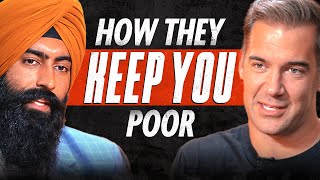
Jaspreet Singh talks with Lewis Howes about the money myths that hold people back. Singh shares misconceptions about wealth building and his own path to financial literacy, offering strategies for actually getting ahead.
Chapters
And the more I learned, the more I realized I was lied to. We're taught to go to school, to get a degree, to get a job so we can then get a job and climb the corporate ladder. But wealthy people don't do that. Wealthy people are not working to climb the corporate ladder. They're working to.
I think you gotta have a dream.
The school of greatness.
Really?
Yeah. Please welcome Lewis Howells.
What is the big thing that you wish everyone knew about money before they started making it?
Oh, man. Well, it goes back to, I guess, just the basics. Because most of us, myself included, are never taught a thing, a thing about money. We're told, go to school, get a degree, get a job, and now you figure it out. And then what happens for the majority of people is you end up broke, you end up struggling financially, and you can never figure out why. So the first thing is, what is it that you want to achieve in your life financially? And then you have to go out and figure it out yourself because unfortunately, school will never teach you this stuff.
So you didn't learn this in high school or University of Michigan or.
No, never.
Law school, they didn't teach you any of this stuff.
I went through high school, I went through college, I went through one year of grad school, and then I went through law school. And I never once learned to think about money, never once learned to think about budgeting. Never. Never once learned to think about building wealth, never once learned to think about investing my money, and never once learned to think about passive income. Yet here I am today with a law degree, and I haven't worked a single day as an attorney.
Why not?
Well, it doesn't make sense for me financially, and it's not my purpose. So I grew up in a traditional Indian house, right?
Doctor. Lawyer.
Well, for me, I had two options. Doctor or failure. Those are the two options that I had. My parents are immigrants from a state in India called Punjab, India. And my parents came to the country with very little. And so I saw my parents work their butt off every single day. If my dad got a Saturday and a Sunday off, it was considered a long weekend. And so I didn't get to spend a lot of time with my parents growing up. And they would always tell me that you have to go out and become successful. And I completely agreed because I wanted to give back to my parents. I wanted to help support them. And I figured, okay, if I want to become successful, I should follow the steps that. That we're told to become successful. What are those steps? Go to school, get a good degree, get a good job. For me, in my case, it was become a doctor. And along that way, it was in college, I realized that something's wrong, something's not adding up. And it actually happened. I was studying to get into medical school, and as I was studying, I started reading other business books and financial books. And I remember this. I was in the library studying, and I went on to Google, and I searched the richest people in America, and you see people like Steve Jobs, Warren Buffet, Bill Gates, Mark Zuckerberg. And I was like, huh? None of these people are doctors. None of these people went down that traditional route of getting a degree, doing a good job. Am I missing something? Because I thought that if you go to school, get a good degree, you can make a lot of money. And if you work harder in school, get better grades, you'll make even more money. So I thought it was just directly correlated, your grades, your income. And that's when I started questioning things. And I realized, oh, maybe this isn't right. And as you start to go down deeper and deeper down the rabbit hole, you start to realize, oh, my God, everything that I've been told is a lie. And so that kind of pushed me into this whole painful emotional journey of learning about money, learning about entrepreneurship, learning about what does it mean to become wealthy and how do you actually do it.
Right?
So that was kind of the initial phase for me, and then I had to go out and actually start learning it.
Yeah.
And the first real experience of that for me was I had this event planning company that I started in college. And the reason why I started it was because when I was in high school, I worked at Indian weddings, so I got to know a lot of the DJs, right? And. And when I was in high school, these DJs were like, hey, man, you know, a lot of people in high school, how about we host a teen party for your friends in high school? I was like, all right, that's fine. You know, why not? Started this little teen party business in high school, and I go to college. Don't know what to expect because my parents didn't go to university here. I think everybody goes to college to study hard and become this big thing in college. I get to college and everybody is partying. They're blowing their money that they don't have on alcohol. They're drinking. I don't drink. I don't smoke. I'm not into that party scene, but I need something to do on Friday nights. So I was like, why don't I just take this teen party business that I had in high school, bring it to college, and that's what I did my freshman year. I was 17 years old. I started knocking on the door of every club venue, bar, restaurant, asking if I could host a party here. Some would say, yeah, it's going to cost you $10,000. Some would say, yeah, it's going to cost you 20 grand. I don't have that money.
Right.
But then one or two said, you can do it here. We're not going to charge you a penny. Just give us half of the COVID charge, half of the money that you bring in. I said, okay, now I'm in business. So I started making a little bit of money doing this, and I had some cash saved up, and I'm starting to read these business books. And every business book said, wealthy people invest in real estate. I don't know what that means. I don't know any real estate investors. My parents aren't investors. And so I was like, okay, if wealthy people invest in real estate, maybe I should invest in real estate. And this was right after the 2008 crash. And I'm in Michigan, where real estate was hit extremely hard. So I was like, all right, you know, I would like to invest in real estate. I'm studying for my medical college admission test. I start going to Google because I'm bored. While I'm studying for this exam, I'm reading about the Forbes richest people. None of them are doctors. None of them are people that work the traditional path. And, you know, I have this idea to start investing in real estate. So I started looking at real estate in between my study sessions. And on August 22, I took the medical college admission test, the MCAT. August 23, I closed on my first real estate investment property. Wow.
How old were you?
I was 19.
Holy cow.
It was $8,000. Was the investment was the price of the condo.
The condo was eight grand.
Eight grand?
How'd you get a condo for eight grand?
This is right after the 2008 crash.
You got it on foreclosure or what?
It was out of foreclosure. That same condo was selling for about 150 grand just a few years prior.
Come on.
Yeah. And so I came in. It was actually listed on sale for 8,400. I made an offer for 4,000. They came down to $7,000. And I was still trying to push them lower, but then they said they had another offer on the table. I didn't want to lose it, So I said, I'll Give you eight grand, Right? So I bought it for eight grand, put in a few thousand dollars worth of work, and at least for $600 a month. And now all of a sudden, my mind was blown because I kind of had this idea of what entrepreneurship was. I had never heard that term until I came to college. But I. I was running this event planning company, and I'm starting to learn about this thing called entrepreneurship. And now I have this condo that's generating me this almost passive income. I say almost because I was making a lot of mistakes in the beginning, but now I'm like, wow, this investing thing is very unique because I never learned this in school. My teachers never taught me this. But why am I working so hard in school? I mean, I want to become a doctor so I can ultimately make money. Now I start having this. You know, I talked about an emotional dilemma. Why am I becoming a doctor? Okay, I want to make my parents happy. Check. I want to be successful. Check. Do I really want to be a doctor? Maybe. And now I'm starting to question my actual beliefs. Because if I become a doctor, how do you make money? You treat people. I kind of have this entrepreneurial mind. I want to become successful. How do you make more money? You treat more people. So it's like this kind of runs into a dilemma, because if I'm trying to maximize my income as a doctor, I gotta maximize how many patients I see. Maybe that means I don't get to give the best value to each individual patient. But as a human, I want to provide the most value possible. So I start to kind of face this dilemma where maybe I'm becoming a doctor for the wrong reasons.
Interesting.
And then I run this idea by my parents. I don't want to be a doctor. And they're like, absolutely not. My dad was angry. My mom was furious. It took my mom about a year and a half to believe that her son was not going to be a doctor.
Oh, man.
And I had. I mean, when I say it was. It was. It was tough. Like, my parents would tell all their friends, just not going to become a doctor.
Oh, wow, you're not becoming one.
I'm not going to become one. Now I'm getting calls from my family in India. I'm getting calls from my family across the street. What are you doing?
You're a disgrace to your family.
Exactly. Exactly. I heard that again and again and again, but I was like, this is not for me. And I started to realize that there's more to this thing. So now I started to Go down this financial education journey. And the more I learned, the more I realized I was lied to. Like, we're taught to go to school, to get a degree, to get a job, so we can then get a job and climb the corporate ladder. But wealthy people don't do that. Wealthy people are not working to climb the corporate ladder. They're working to own the corporate ladder. I didn't even realize that you could do that. Now you can climb the corporate ladder and work to own the corporate ladder at the same time. But it's a different mindset, right? Most of us are taught to get that degree so we can do one thing, Climb the corporate ladder, earn a bigger salary. But if you only rely on your salary, you're just one step away from being broke. Because if you lose your job, something happens to you. You can't work, or your company goes down. You lost your salary, and now you have no income coming in. And now what? You're scrambling for a job. Maybe you have some savings to help take care of you.
Or if you haven't been saving and you just spend on things all the time and you have no savings, then you're really screwed.
Yeah, you're going into credit card debt, and now you're trying to figure out, how do you make things work? And by then it's too late. This is where you got to be proactive. And now I'm just like, this is crazy. Why was I never taught this? I was never taught about wealth. I was never taught about investing. I was never taught about this sort of financial education. But why aren't we taught this? And that's when I realized it's very profitable to keep people financially uneducated. It's profitable to keep people poor.
Interesting. What would you say is the main system that keeps people poor?
Then it goes down to so many different things. The banks profit when you're financially uneducated because they will keep you saving money in the bank. They'll keep you in consumer debt. If the banks lived by their own advice, which is save money, the banks would be losing money. When you go and deposit $1,000 in the bank, that cash that you deposited is a liability for the bank. An asset is something that puts money in your pocket. A liability is something that takes money away from your pocket. So when the bank has your cash, it's a liability for them. They want to get rid of it as fast as possible. And the way they do that is by lending it out because it's an investment for the bank. They don't want to hold on to cash, but they want you to save your money.
You want you to give them cash.
Right.
And just leave it there.
Leave it there. And what's happening to your cash while it's there? It's losing value to inflation each and every day. Every day that you keep your cash in the bank, you're becoming poorer each and every day. Now, it's funny. I made a video on this in 2016. It was my first video to go viral. It was called, you're Guaranteed to Go Broke if youf do this. And I was talking about inflation at 2 to 3%. If you keep your cash in the bank, you're going broke every single day. Now here we are, 8.5%. 8.5%. And now people are starting to realize, wow, this inflation is a real problem. And so now when you keep your cash in the bank, the bank is paying you 0.01%, maybe 0.5% if you're lucky, and they're turning around, lending it for 5%, 6%. And so the bank does not want to keep the cash and savings because it's a liability for them. They want to keep you spending money on their credit card because now they'll get to earn 18 to 25% in interest every time you spend a dollar.
Wow.
Governments want you to be financially uneducated, because when you're financially uneducated, guess what? You are an employee, and you're a consumer. Who pays the highest taxes? Employees and consumers. Everybody knows that rich people don't pay taxes. It makes people angry. But a lot of times we don't understand why. Right. And we get angry at the wrong things and the wrong reasons.
Yeah. But the more you make as a business owner, until you're, like, uber rich, I feel like you're spending a lot on taxes.
You are, man. And you know what? And there's a lot of things that you can do legally to pay less money in taxes. And there's different ways that you can invest your money to pay less money in taxes. So I'll give you a couple examples. Let me start with this. Tax avoidance and tax evading are two similar words with two very different outcomes. This is one of the first things that you learn in law school. Tax evading is illegal. You go to jail. Yes, tax avoiding is legal. And then you get hated for doing that. But this is the way it works.
You're playing within the rules of the system.
And if you learn the IRS code, it's a rule book. And the people who understand the rule book are the people who have the money to hire the good accountants and the good attorneys.
But you're not an accountant. But have you studied the.
I have studied a lot of tax law. Really? Yeah. And so what happens is wealthy people will understand how this works, play within that system, and pay little to no money in taxes.
What are three things that people who are making half a million and above should be doing to avoid taxes better?
So let's start with. I'm going to assume that you have either some sort of your own income, you're a side hustler, or you are a business owner. Yes. So if you make half a million dollars, let's assume that's profit. You are taxed on income. So if you take out a salary, that's going to be taxed. Now, the question is, what is a tax deduction? Or the better question is, how can you make something a tax deduction? Because anything can be a tax deduction if you know how to make it a deduction. So that's the question that you have to ask yourself, because if you don't have an income, you don't have any tax. So this is what wealthy people are doing. So I'll give you an example of it being done. Then I'll show you how people can do it on a potentially smaller scale. Elon Musk, he is probably the biggest example of this. He never got paid a salary running and owning Tesla. He got paid in stock options. So these stock options were this even.
Before it was public?
I think it was around the time that it was public or maybe a little bit before. But he's been getting stock options for a long time. Sure, but the stock options that he gets or originally got were at $6 a share. So when the stock went up to $1,000 a share and he was given millions of these stock options, now he has, on paper, a lot of money, but that money isn't in his bank account. So what he does is instead of selling it and having an income, he goes to the bank and says, hey, I have these stock options which are worth billions of dollars. How about you give me a loan at 3%, 4%, 5% interest? No bank is going to say no to that because the value of this is so much billions of dollars. I mean, you can make the number smaller, but no bank is going to say no. He takes that loan, pays 3% to 4% to 5% interest on it, and if his company grows, his stock value grows by 6%. He just made a profit on it. He didn't have to take any money out, never took an income. He doesn't pay any taxes and is able to now spend his money, live free, buy whatever he wants, live rich and not pay a penny in tax.
So he didn't have to sell any of the stock, because if he sold it, he'd pay an income tax wherever you sell it. Instead, you get a loan out from the bank and you don't have to pay tax on that loan.
When you go and get a mortgage.
Loan, you're getting debt.
It's debt. It's not taxable, it's not income. If you go and refinance your home, it's not not income. It's cash that you have in your pocket, but it's not income. You're taxed on income. So now your job now as a business owner is strategically, how do you not have an income? Now you might say, well, I need money to spend. Sure, of course you do. But how can you now strategically use your income to pay for your lifestyle? Now, again, it's got to be within the rules. So talk to a tax advisor. But right now, after the pandemic, one of the things that the presidential administration wants to do is encourage people to eat out, eat at restaurants, because restaurants were hit so hard by the pandemic. So what do they do? They created a 100% deduction on food through 2022. So if you go out to eat with your team, it's a 100% deduction.
Write off.
It's a write off. I'm here in San Diego. Well, we're in LA right now, but I'm here on a two month business trip to San Diego with my business partner. I have to rent a car. I actually got a Ford Mustang because I always wanted a Ford Mustang when.
I was a kid.
That was like my dream car. So I got one here with a convertible.
Nice.
And you know, we have to go to business meetings, we have to go out and explore San Diego, do these things. My business partner is my wife. We're staying in an Airbnb in beautiful San Diego. Guess what these things are Tax deductions against my business. I'm here working. When you're an entrepreneur, everything is work. The question is, how do you spend your money? And in a way that is going to give you a tax write off. But you have to be smart here because you don't want to just blow $500,000 so you don't have to pay 150 grand in taxes. Right. Like, my accountant called me up last year and said, jaspreet, you need to go out and buy a G Wagon. I said, what? I don't want to buy G wagon. Why? He said, you know, there's this tax deduction going on saying if you go out and buy a heavy car, it's still going on right now. If you go out and buy a heavy car, you can deduct up to 100% of that value of that vehicle right now.
Really?
And because you're an influencer, you can potentially claim that as an influencer, you need a G wagon to help you support your lifestyle. The tax code allows this. And I was like, well, I don't want to go out and spend 150 grand for a car that I don't necessarily need just so I can save, let's just say, 50 grand on those taxes. So you have to be smart here and know what's right for you and not just spend your money to spend a dollar to save 25 cents. Right. So you just need to know the right strategies that can work for you. And these things change over time, which is why the best thing that you can do is go out and hire a tax accountant, a tax advisor, somebody that isn't just going to file your taxes, but someone that's going to help guide you and say, all right, here are some things that you could potentially spend your money on. Here are where there are more benefits coming this year, next year, things that you want to do. And so there's going to be times where it's going to be more beneficial for you to spend money. There's going to be times where it's going to be more beneficial for you to take in money. And, you know, it's all a game.
Yeah.
And this is what wealthy people understand. It's all a game. And a lot of people hate that, oh, this person's not paying taxes. That person's not paying taxes. But at the end of the day, what you have to remember is somebody else wrote the tax code.
Yeah.
All the people are doing is they're trying to learn, okay, this is what the tax code is. What do I do? And, you know, then you kind of get into the other philosophical questions. Who's going to do better with 100 grand, the government or me? If I have 100 grand in my pocket, I can go hire an employee or two. The government's going to, you know, spend that money wherever they spend it, and pennies will end up actually going to help people. I'm all for helping people. I think that's very Important. As soon as we hit a million subscribers on YouTube, what we did was I took my team, we went out to a teacher store, and essentially I asked them, hey, can we buy everything in your store? Wow. Because, you know, the whole. During the pandemic, people weren't going to class in person, and so a lot of these businesses were hurt. And I said, can I buy everything? And she said, well, we need some of this stuff for our teachers. I said, what can we buy? So then we went out and bought a big chunk of the store.
Mr. Beast style, Mr.
Beat style. It was a fun video. Took the team out kind of as a celebration. We bought a big chunk, took it out to a school in Detroit, gave it to them for free. And then I asked the principal there, a friend of mine, I said, how many teachers do you have? Okay. And I gave every one of his teachers a $500 check to help them help support their students. Giving is important, but, you know, it goes back to the tax question of who does a better job with their money. Right. Entrepreneurs who are working to create more jobs, who are working to produce more value, or the government, which, you know, may not be so good with their money. Absolutely. Yeah.
So you started doing the real estate thing early. Are you still a massive investor in real estate? What's your approach on it now?
Yeah, yeah. So this is an interesting question that you asked, especially right after the tax question. So real estate is one of the best tax games for investors. That's one of the reasons why wealthy people love investing in real estate, because not only can you get cash flow, but you also get tax benefits. I started investing in real estate when I was 19. On accident. I went through a lot of pain. I remember when I told my dad first, hey, dad, I want to go invest in real estate. He was like, you're stupid. Go study. Go become a doctor. So I started investing in real estate then, and I continued to buy homes. And I remember, because, remember, this is right after the 2008 crash. I was buying homes for, like, 30 grand in good areas. I remember home prices went up to $50,000. And I was like, that's a lot of money for a home. I didn't know anything else. Right. That's all I saw. And so to me, I was like, that's expensive. But I continued buying, and I still am buying, but not as much as I was before, because now I've been working on a couple other businesses. And so what I'm realizing is, okay, when I invest my money in real estate, my goal is to get a 7% cash on cash return on my money, Meaning for every dollar I invest, I want to get $0.07 back in cash flow, positive cash flow every year. If I invest 100 grand, I. I want $7,000 of profit every single year. Well, I'm an entrepreneur, so I'm working on a couple different companies, One of which is market Briefs. Now I'm in this position where what do I do with this cash? I can take this money, put it in real estate, get a 7, 8% return on my money, or I can put it in market Briefs, which would be a bigger tax deduction. Because now if I spend money in advertising, I spend money in marketing, I hire more employees, we have a smaller profit, but then I can grow the company significantly faster than 7% a year. So what I've been doing now is investing more of my money into market Briefs because it's something that I'm super passionate about. Like, I love real estate. I love revitalizing homes and buildings and really helping to build the neighborhoods through that. But market briefs had such a different value in the sense that we're making financial news accessible. Because I didn't grow up learning about money. And cnbc looked cool, but I never understood anything that was happening there. They have all these confusing terms that are going on. So it's a way to make financial education and what's going on with money more accessible to people. Because I'm realizing how important that is to me. Because the more and more I talk to people, the more that people listen to what I say, the more I hear, oh, my God, I wish I would have learned this when I was younger. Like, yeah, I know. Me too. And so it's like, it's important for me to help get that message out there because it's so needed. You know, we talk about, especially in Detroit, food deserts, where there's areas people can't get access to healthy food. But this money desert, this financial education desert, is. It's so widespread, where none of us are a thing about money. And it makes me angry because if I didn't accidentally start reading these business books, if I didn't accidentally start investing in real estate, I would be somewhere completely different. You know, I have a lot of friends who are doctors now. They're working their butt off. They're also paying the highest taxes. They're also trying to figure out how to afford my lifestyle. Because when you go and become a doctor, you make a good salary. But guess what? Now you have big student loans. You got to pay Back.
Yeah.
And now a lot of times, you want to live that doctor lifestyle. You want to have the G wagon, you want to have the ranger over, you want to have the nice car, you want to have the nice home. So now you graduate, you're 28, 29 years old, you have half a million dollars of student loans you got to pay back. You're making a few hundred grand a year, but. But you're working your butt off. It's very stressful. And now you have all these new expenses, your homes, your cars.
And how much does that 500,000 in student loan actually become after 30 years of paying it off?
Oh, man, over a million.
Really?
Yeah.
So it's really. It's not a half a million dollars in loans. It's a million dollars on loans that you're paying off for 30 years.
Yeah, right, exactly.
With the interest.
And let me, I want to add on that point, because the thing about student loans, you know, we talk about who do you trust? Where do you get your information from? Right? Everybody. The system says, go to school, get a degree. If you don't have money to get a degree, what do you do? Get student loans. I started looking deeper, right? He started asking the question, why the number one liability for young people nowadays are student loans. And the government always talks about how we have this huge student loan epidemic, this huge student loan problem, but the number one asset on the United States balance sheet are student loans.
Really?
This blew my mind. You go to Google, search this, the assets on the United States balance sheet, number one asset. You'll see student loans are their number one asset. So on one hand, we have people talking about the importance of higher education, the importance of going into debt to get your degree. And then at the same time, that's your number one, one asset. It's holding so many people back from buying a home, from living their lives, from doing things, investing their money, yet at the same time, it's keeping the government rich. Wow. This is where, you know that mindset, you have to start thinking a little bit differently and start asking questions to the status quo, to the system, to the way things are done. And, you know, if you're like me, you're going to get a little angry. You're going to get frustrated because you're going to realize, what the heck? Why are people not taught this? Why are we not taught how to use our money? Because nowadays people are paying 50 grand a year to get a good college degree. But at the same time, now YouTube is decentralizing education, free for free. And you can learn from anybody you want. If you don't like the way that I sound, hit the X button, go to somebody else.
Right, Exactly.
And it doesn't cost you a penny. You can learn from anybody, people who are actually doing what they teach. You can learn in the comfort of your home.
Now, Jaspredee, you've been. Your channel is really inspiring. And you've interviewed and also just done your own research individually on a lot of these different topics about money. You've interviewed the top people on bitcoin and cryptocurrency, investing in gold and stock trading and real estate and starting your own business and all these different things with all the information that you've brought into your life, all the mistakes around money, the successes around money, the wisdom you've learned, the things you've tried, maybe things you haven't tried.
Yeah.
If you could share five things you wish we all taught when we were younger about money.
Yeah.
With all this information that seems a little overwhelming and confusing, especially today with the NFT world and the crypto and all these different things and.
Yeah.
What do you wish we taught everyone from the ages of 10 to 25 different things around money?
First thing would be, what is money? Because money as we know it is fake. Our dollars are just pieces of paper. I grew up thinking that our paper dollars are like the Holy grail. You want to save this money because it is the most valuable thing there is. As I became older, I started to realize that that's not the case. Our paper dollars are just pieces of paper. It's fiat currency, which means it's issued by the government, and the value is backed through the strength of the government. Now, we're lucky here that the United States is the world's superpower. We have the world's strongest military. We have the world's strongest economy. But we can't stay on top forever. And you know, inflation is when the value of a dollar goes down. So these dollars, which many of us think that if we hoard this, we'll become wealthy, Saving money to wealth is actually keeping you poor, and it's making you poor each and every day. So the first thing you have to understand is, what is money? Second thing you got to understand is what do wealthy people work for? And most of us, the majority of us, are taught to work to get a job and climb that corporate ladder. But wealthy people are doing something completely different. They're working to own the corporate ladder. They're working for something called equity. And this thing really blew my mind. Because wealthy people are not working for that paycheck. They're working to own a piece of the company. That way they can get a piece of the profits. So the best way to understand this is a lot of times people complain about how much money I'm making. I wish my boss paid me more. And this is where, if you start to understand the system, you'll start to ask the right questions. See, a big company, you have to ask the question, who are they working for? Are they working to take care of their employees? Are they working to take care of their customers? Neither. They're working to take care of one person. They're shareholders. It's this concept called fiduciary duty. I learned this in law school. The executives of a company have a fiduciary duty not towards the employees, not towards the customers, but towards the shareholders, the owners of the company. Now, what that means, an easy example of this is you're going out to dinner with your girlfriend or your wife and. And you're on a date, and you get a text from one of your good friends say, hey, let's go play Fortnite. Right now. Your fiduciary duty at the moment is to be with your girlfriend, to be with your wife, to be with your partner, to spend time with him or her. If you go out and leave, you're gonna get in trouble, right? So it's, who is your alliance to. And the shareholders, the executives, CEO, and the executive's company. Their fiduciary duty is to the shareholders, the owners of the company. So what are they trying to do? They're working to drive up the valuation of the company. So once you start to understand that, you'll realize why there's this big discrepancy between what people are paid and what people want to be paid. And when you start to understand that, you're going to change what you do with your money. That's why I said a minute ago, or a little bit ago, wealthy people are working to climb, not climb the corporate ladder, but own the corporate ladder. So how do you get that equity, that ownership? You have to own a piece of the corporate ladder. Now, if you work for a public company, that means now you can take some of your income and you can buy stock in the company. Maybe they pay you with equity, maybe they give you some sort of revenue share. That's what we do in my companies. Or if your company doesn't do that, then you have to start taking this money that you're earning and you have to start investing it Into a place where you're getting equity. Maybe that means stocks, maybe that means real estate. It could be a number of different investments, but you have to work towards that equity. The third thing is that you have to think bigger. I know I grew up thinking that somebody who looks like me, somebody who's brown, somebody who wears a turban, somebody who didn't have entrepreneur investor parents could go out and do this. Because you think that somebody like me can't do this. My parents also told me that I couldn't do it. I didn't know anybody doing it. I didn't know any investors. But you have to be the one to take that first step. And once you start to take the first step, you're gonna learn and see the second step. Then you take the second step and you're like, oh, I can start a hundred dollar investment here. You don't have to start with, you know, hundreds of thousands or millions of dollars. Start with $100. Apps on the Internet make it so much more accessible. Anything is possible. If you live in America, you speak English, you have more opportunities than really anybody else in the world. People will literally risk their lives, risk their lives to come to this country because there's opportunity here. And so if you're here, you have the ability to understand what you and I are saying, and you have that technology to do it. You're blessed. Now what do you do with this? Right? You have to go out and start learning, you have to go out and start doing, and then the next thing you have to do.
Number four.
Number four is you have to understand the concept of debt. Because we live in this consumer culture and it's interesting where we want to live this flex lifestyle, right? I want to show off on Instagram, I want to show off my new car, my new Chanel Gucci purse. And we kind of get caught up where I need to live a certain lifestyle. That way people can think that I'm rich. But what you're doing now is you're living broke, making everybody else rich. So people think you're rich, your product rich, you have a lot of nice stuff, but you're broke. And so when you live that type of lifestyle, you are the reason why Gucci, Louis Vuitton, Chanel are making so much money, but it's keeping you broke. The richest person in the world, sometimes he's the second, sometimes he's the third. Is the CEO of Louis Vuitton.
No.
What? Really? Yeah. Bernard Arnault. And why? How did he get there? Because everybody wants to look rich. Everybody wants the Louis Vuitton. I saw this in the pandemic especially. We were in a recession in 2021, but luxury sale of products were breaking new records.
Really?
They're breaking records in 2021. Why is that? Stimulus checks went out, people had cash. And some people use that money to save, some people use that money to pay down debt, some people invested that money. But a big chunk of people took that money to places like Gucci, Louis Vuitton. And now you go and spend it.
You would think when the economy is, well, I guess when people are losing their jobs and there's financial uncertainty of the future, you'd think people would be saving or investing, not spending on luxury goods. Especially if you can't even go outside to flex it. You can only do it on social media in the company.
You don't need to go outside anymore. You can just do it on social media. And so if you don't have the cash to do it, people are going into debt to buy. And it's becoming easier and easier because of now. Things like buy now, pay later. It is one of the fastest growing industries in fintech. I love financial technology, but it breaks my heart. I mean, it just, it rips my heartstrings when I see the growth of this buy now, pay later. Because what does that mean? I can go out and buy anything I want, not pay for it today, pay it off over three months, and then if I don't, I get slapped with 25% interest. And if you are 18, or let's just say 21, I gave you $6,500. You never invested another penny, but you invested those $6,500 and you could get an 18% return on that money. And you retired 65, and you look at this investment portfolio, you would have over $11 million. Wow. Now everyone watching this saying, where the heck am I going to get 18% on my money?
Exactly.
But your credit card company is doing it every single day. $6,500 is what the average American household has in credit card debt right now. And you turn around paying these companies 18, 20, 25% a year, and they're the ones that are getting rich, not you. So what's happening? I bought a property in 2021, haven't bought anything in 2022 yet. But my focus now is building my business because I see a bigger opportunity there for me than real estate. That's why I've been kind of, I'm still involved in real estate, but not the way that I was years ago.
Because you can earn more with your business if you put the attention and the energy and the money into building the team and the resources and technology and those things.
And it's more fun because it's a lot more active for me. And then, you know, once this gets bigger, then I'll go back to real estate. But right now, like, for the last few years, I've been kind of phasing slowly away from real estate as I can transition more into the business because, you know, it's just more fun for me.
Yeah. Okay. So understanding debt was the fourth thing. What was the fifth thing you wish people learned from 10 to 20 years old about money?
You have to be willing to make mistakes, take risks and start. And this one is hard, and it sounds simple, but a lot of people that I know, a lot of people, they are so hesitant to making their first investment because what if I do something wrong? What if I make a mistake? What if my investment goes down? And so the simple thing is, that's.
Happened to me multiple times.
Yeah, but you learn every time, right? It's your tuition, it's your real tuition, and you have to be willing to try things because if you don't, you're going to get stuck in the game of what if. What if I lose money? What if it doesn't work out well? What if it goes up? What if you learn? I have made a lot of mistakes. I made a video on my YouTube channel where I went through my worst real estate deal ever. It was my third property that I ever bought. It was a home in the city of Detroit. And I made every mistake possible. Now I'm still in college. Right. I don't know what's going on exactly with real estate investing. And I mean, I bought the property, and I bought it because my contractor at the time told me that we can make a lot of money on this deal. We'll be able to rent it out. We could flip it if I wanted to. And he was like, don't even worry about getting a home inspection. Now. When I buy a property now, the first thing I do is I get a property inspection where somebody walks through the deal, makes sure a third party, an independent person, and they tell me, anything wrong with the property, in the foundation, in the plumbing, in really anything with the property. So I know what I'm getting myself into. And so he told me, don't do that. He said, don't worry. I already walked through. He's a contractor, so I figured he knows what he's Talking about, all you have to do is spend $5,500, and I will make sure this property is ready to go.
Wow.
So I said, okay, let's do it. So I bought the home. I gave him a check for half, maybe 2,500 or something around there. 3,000. And a week goes by, nothing starts. Two weeks go by, nothing starts. And I call him. I said, hey, man, what's going on? Like, I thought we were going to have this done in two weeks. Here we are two weeks later, and you haven't even brought your materials here. So I got caught up with something. Something's going wrong. And so now two more weeks go by. He brought some materials there. He started painting one wall, and that was it. And so, you know, I'm getting upset because now it's like, you know, every day that this property is now leased out, it's costing money.
Yeah.
And still nothing's getting done. Another two weeks go by, and now I'm like, okay, look, what's going on? We got to get this taken care of. Because now we're six weeks into this deal. You haven't done a single thing. You keep putting me off. You took my money, and nothing's happened. And so, long story short on that, he ran away. He was having financial difficulties. That's why he wanted me to close on this deal, because he needed some cash. And now he's gone. So now I have another property that somebody was working on, a manager, and he was having some issues at my property. He was causing some problems. So I figured, he's causing problems there. How about you come work at this property? And you need a home. You can live in this home for free.
Fix it up.
Just fix it up. And so he said, okay. So now I thought, all right, you know, I found a good deal here. I've got somebody who'll fix it up. He'll live there, take care of it, and it's going to cost me less money. And so now he's living in this property, and he's like, how about this? How about you just open up a charge account at Home Depot, and I'll just go buy stuff and take care of it at the home. I said, okay. So I go open up the charge account. He starts buying materials not to work on my home, but to work on other people's properties.
Oh, my gosh.
So now I'm like, dude, like, you're spending my money to go work on other people's properties so you can make double profits over there. You haven't Started any work on my home. You're not paying me rent. You have a dog that you're not taking care of, who's pooping everywhere in the property, and it's not being taken care of. And so now how do I get somebody out of this home? I got a evict him out of my own property. There's no lease in place. So now we're going to all these legal issues of how do we get this person out of the home. We get him out of the home. It took me months to get him out. The property now is destroyed. Oh, man, there's crap, little crap all over the home. He damaged the place, did not take care of it. And now it's like we have to start all over from negative to start fixing this property up. So now we start fixing it. I get a licensed and insured contractor. We're months into the deal, and he wants, I don't know, like, a lot more money, at least ten grand, if not more, to start doing the renovations. And we start digging deep, and we start to see problem after problem after problem. So now every cost keeps adding up. Now the home is ready to go. And I'm like, all right, fine. And everybody told me, jaspreet, don't license this home with the city of Detroit as a rental because nobody does it. And this is, you know, Again, after the 2008 crash, Detroit went through its bankruptcy. They were having their own issues. But I don't like to play games. I want to play by the rules. So I said, I'm going to get it rent. I'm going to get a license for rental. When you get a license for rental, they're going to send their own property inspectors out to the property, and they're going to inspect it and make sure that it's okay. So now the property inspectors come out and they say, I need to lift up the home. What do you mean, lift up the home? They're like, yeah, we need to raise the home. I don't even know that you could do that. Apparently you can. And it's very expensive. Wow. So I lift up the home, and then we start running the water in the property. And it turns out that the water is not draining to the main city line. Apparently, somebody previously living in this property had poured cement down the main drain. Now, in order to get this property working, we have to bust out the cement in the basement, take out this pipe, put in a new pipe, repour the cement, and then these property inspectors start disagreeing with one another. One person Says that you need a 10 foot electrical riser. So we make it 10ft. The next one comes says, why is it 10ft? It needs to be 13ft. I'm like, your first person said 10. And now they start fighting with each other. And we have to keep paying for these inspectors to come back. They keep charging me permit fees for everything. If I want to paint the window sills, it's $100 permit fee. And change the smoke detectors $75 permanent fee. So this goes on and on and on and on for months. Finally, now we're approved for rental. I was like, oh, my God. Like, this is the biggest headache of my life. We get a tenant in the property, we get licensed tenants in the property, and now we have the license. And the property inspectors just decides to go back to the property. They don't tell us, they just go back there. Even though we're fully licensed. They had no reason to go there. They knock on the door and apparently we didn't know this. The tenant was having a babysitting operation in a property. So now the inspector sees this, that the tenant is running an illegal babysitting operation. He tells us, he finds us, tells us we need to evict the tenant. And now we have to start this process all over again. So after that point, I was like, you know what? Just sell this property.
Wow.
Because this is the biggest headache. And that was the only deal I ever lost money on. But I learned a lot. It was my tuition. So you have to be willing to learn, be willing to make mistakes, and then be willing to grow from those mistakes. Go on and, you know, keep willing to go. Because the thing that I kept telling myself is, you know, there's a lot of real estate investors out there that have thousands of units. There's no way they're dealing with this. With every single one, they have a team. I just got to figure out how to do it. So that's the only way that I could get through that.
I think people. I also don't think people understand that investing can feel like a full contact sport at times. Can feel like you get punched in the gut, in the face and the ribs, over and over, over again like you did for almost a year. It sounds like with this one property, what if that was your first property? You might have said, screw this real estate investing thing. I'm never doing this again. I lost all my money. I'm just going to go back into doing something that is safe and secure, that I know it's not going to punch me in the mouth every day with another fine, fee and penalty or whatever it might be. So I think people also need to understand this is a risky thing.
Absolutely.
No, I've lost a lot of money. I've made a lot of money, lost a lot of money. It never feels good to lose money.
It doesn't.
It's emotionally charging. It's psychologically can mess with you if you're not mentally and spiritually prepared to understand, okay, it doesn't feel good to go from a few hundred thousand dollars to zero, you know, in weeks, like some people did with the stock market or something in the last year, or real estate or whatever it might be. With crypto going up and coming down, it's a big psychological high and low if you're not prepared for it. And so what have you done psychologically, mentally and emotionally to prepare for the big swings when you see, oh, my money just went up 10x in the last three months. Oh, I'm negative. Hundreds of thousands in a few weeks, or millions. What have you done to prepare for that mentally and spiritually and psychologically?
I'm glad you brought that up because one of the things that I say is that the psychology of investing is just as, if not more important than, than the actual how to's of investing. And that's especially true when it comes to something like the stock market. In real estate, it's tough. But the difference between real estate and the stock market is if you buy a, say, $200,000 home, it's not going to go to zero next week, next month, or really ever, because you have some land, you have a physical property, and the stock market, it can happen. And so there's a couple things that you can do.
You invest in stocks, too?
I invest my money in five places. Real estate, stocks, startups, cryptocurrency, and physical gold.
In that descending order of value, from the most to the least.
Yeah, I would say so. And then, you know, if you want to put my business in there, then that would be number one.
Startups number one, your business and startups number one.
Yeah, but I also invest in other startups as well, but kind of, I would say in that order. Yes, but in the stock market particularly, it is a liquid investment, meaning you can easily buy, you can easily sell. And that's what becomes a big psychological game, because every day people are watching that ticker.
I just made money. I just lost money.
What's Tesla doing today? Tesla's up $2, Tesla's down $4. And it can really drain you And I think most people who start off investing their money, they get sucked into that rat race. I did too. Because when I first started investing my money in the stock market, I was like, wow, this is fun. This is exciting. Oh, my God. It becomes like a drug. You become addicted to it. Because I was waking up every morning, I was like, I'm gonna become a day trader. I got it. And so, you know, I took a summer of when I was in college, and that's all I did. I would wake up before the market and I would read these stock charts and I would trade these penny stocks. And some days I would make $1,000, other days I would lose $1,000. And by the end of the summer, I don't think I made any money.
You just spent all this time.
I spent all my time. And I realized this is not for me. Like, I became so addicted to it. All you're doing is watching the numbers go up and down and ticker symbols and you're reading these forms. And so the first thing is you have to understand that your psychology is important. What I do is I understand. I'm not a trader. I don't trade, I don't flip. Even whether it comes to real estate, really, any of my investments.
You invest long term?
I invest long term, long term. So what does that mean? So I have two strategies when it comes to investing my money. I have an active strategy and I have a passive strategy. I'll start with the passive strategy because that's easy to understand. Every month, I passively invest my money into stocks, physical gold and cryptocurrency. Really? And so what that means is it's automatic payment consistent in each one. Yeah, all the time.
So you're doing index funds with stocks or what do you.
Stocks? I do ETFs, low cost ETFs, and I have ETFs to give me exposure to the S&P 500. That's kind of your safe. Your value. S&P 500 are the biggest 500 companies in the stock market. So that's the kind of the safe value play. I have some ETFs that gave me exposure to innovation, startups, growth, because I like that space. Much more risky, but you could see more potential upside risk means you could also see more downside. And then I also have ETFs that give me exposure to emerging markets. These are countries that are overseas countries like China, India, Korea, Brazil. Countries that are up and coming to give you some diversification, not just in companies, but also in dollars. Right. Diversifying out of the dollar. So Canada gives me that protection. So every week I have money that's leaving my account and being invested into these different ETFs. I don't care whether the market's up or down. It happens every week in physical gold. Every month I use an app for this. There's apps that allow you to do this. I have money that's withdrawn out of a bank account that buys me physical gold. Really? Now people are going to say, why gold? For me, it's real money. It's another way of saving real money. Because now If I have 50 grand of cash, would I rather save and bury that 50 grand of cash in my backyard or bury 50 grand of gold in my backyard? I'd rather bury the gold because I know that 50 grand of cash is guaranteed to lose value every single day. Gold is a store of value because it takes time, effort and labor to mine physical gold. And that time, effort and labor is represented through the physical piece of gold. So that's why I own it. It's not a huge piece of my portfolio, but it's kind of that insurance. That's the way I look at it. It's protection in case everything else goes wrong, that I have some physical gold. So I have that. And then I have my cryptocurrencies. Now I. I'm mainly in bitcoin. I have some ethereum, a couple other coins, but mainly Bitcoin. And every day I buy a little bit of cryptocurrency. Again, I know it's volatile. I know you can see big swings up, big swings down. I don't care. I'm buying it every single day. So that's my passive strategy where it doesn't matter what's going on in the market. I'm just going to keep buying no matter what's going on. Then my active strategy is now where I do more of the fundamental analysis, where I understand where am I actually investing my money. So this requires much more time and more effort on my end. So on the real estate side, I'm looking for deals that are paying me that 7% cash on cash return. And so I'm going to be analyzing the numbers, looking through properties, walk through a lot of deals, and when I find something, I will go out and buy it in the stock market, rather similar. I'm looking for companies that I believe in, that I believe are good. Fundamentally. Fundamentally means looking at the numbers, right? What do the revenues look like? Have the revenues been growing? How fast are they growing? 10% a year? 20% a year. What about the profits? But you also have to look a little bit deeper than just the profits because you want to see what's going on with the expenses. Where are they investing? Are their expenses going up because the cost of business is becoming more expensive, or are the expenses rising because they're investing more in their company? So you got to do a little bit of digging in there. And then in startups, obviously I invest in my own companies, but I also invest in startup companies. I love entrepreneurship. I am a huge fan of entrepreneurs. I love supporting other entrepreneurs because I never had that support when I was getting started as an entrepreneur. So one of the ways I can provide the support is through money, through investing in some of these entrepreneurs. So I invest in these startups. Fourth, cryptocurrency. If a big cryptocurrency crash happens, well, I already know what I want to own. I'll just come in and buy more with gold. I don't really actively buy gold, but that's the four ways that I actively invest my money.
Sure. And where are the three biggest revenue streams coming from for you?
Well, obviously business, and that's across the different businesses. And then the second one I would say is real estate. That gives me that passive cash flow. And those are my two real. When I talk about income, cash in my pocket, it comes from a business and it comes from real estate. That's where my cash comes from. Nice. Yeah, it's pretty simple.
And what's the number one revenue generator in your business? Is it from YouTube? Is it from the newsletter? Is it from some other course or coaching or.
So the business is divided up. I have a personal brand, which is Minority mindset. Right. That's me on YouTube. That's my blog. And then I have market briefs and market insiders. So number one would probably be my personal brand. And now I don't think that's going to last very long, though my personal brand is doing well because I built up this big following on YouTube, which was completely. It's funny, it's accidental. I never wanted to be a celebrity. I never wanted to be famous. I never wanted to be known. I started YouTube on accident. I was. You know, we talk about risks, making mistakes. I've always been an entrepreneur, and I went through a lot of different business ideas. And one idea that I had, it was in the year of my grad school. I was taking a class on public speaking, and my friend, my roommate at the time, he was like, you got to watch this show called Shark Tank. I was like, okay, I don't watch tv, he said, but watch this show called Shark Tank. And you know, it's all about people pitching business ideas. And this class that I was taking, we had a project where I was supposed to pitch a product to the class, kind of like Shark Tank. I was like, that's easy. I do this, like, with my friends all day and night long. That can't be hard. So I kept putting it off. Putting it off, putting it off. I'm a procrastinator, especially when it came to school, because my mind was always somewhere else. And so now one day I was late to class, like normal. I pick up my backpack and I started running because I was like, oh, I'm a couple minutes late and it's raining this day. And as I'm running to my class, I stepped in a pothole filled with water. Now my foot is soaked. I sit down, I'm like, I'm wet, My socks are wet, I'm uncomfortable. And the teacher goes, just breathe. It's your day. Your day for what? She's like, it's your day to present. And I was like, oh, my God, I forgot. And so, you know, obviously I don't tell her this, but I go stand in front of the class and I'm like, jaspreet, think of something, Anything, anything. Just think of something. And so the first thing that comes to my mind were my wet socks. So I go up in front of the class, no practice, no preparation. And I pitch this idea of water resistant socks. That way now you can be an athlete, you can walk around and not have to worry about stepping in puddles. I sat down, I was like, nice job, Jaspreet, but that's actually kind of a cool idea. So I go home and I start googling water resistant socks. And they had these really thick, uncomfortable looking things that people wore when they go fishing and stuff. But nothing made for athletes, people to wear in their regular life. So I was like, oh, maybe I'm onto something. So then I spent a lot of time trying to develop this technology, working with textile engineers, working with sock manufacturers, and I created a water resistant sock. And now I go to launch this company and I got approached by a marketing company, quote unquote marketing company. And they said they're going to help me blow up my sales, they're going to help me do all this stuff, they're going to help me make all this money. And I was really skeptical. And then they said, don't worry, we have a 100% money back. Guarantee if you're not completely satisfied, if we don't make our money back, you can get all of your money back. I said, okay, that sounds pretty good. So I gave him money. It was a few grand, I think, like $3,500, which is a lot of money. And the next day, after I gave them the money, I had a bad feeling in my stomach. I was like, you know, I'm a marketer. I like the way I can promote products. Just something didn't seem right. So I call up the guy and I say, hey, man, I know that we haven't started yet. Look, I just want to have my money back. You know, I want to end this on amicable terms before you guys spend any money. Let's just end it now. And he said, okay, no problem. Puts me on hold. And I was in the gym at the time, and I was really frustrated because I was between sets, and he puts me on hold for a long time. And then all of a sudden, the phone line goes beep, and I was like, oh, something's not right. So then I call up the other number I have. They don't pick up. I start emailing them, and I never hear from them again. Found out I got scammed. They were a fake company. So now I was irritated. I launched the company. We had an amazing launch. I think. I don't remember exactly, but in the first 30 days, we did over either $17,000 or $20,000 in sales right off of the gate. And I was still. I had this, like, kind of chip on my shoulder. I was like, that's not cool. Like, nobody supported me as an entrepreneur. Nobody wanted me to do this, especially when it came to the sock business. I mean, I. There were so many jokes thrown at me because they're like, oh, you left medicine to go sell socks? You know, I just. I was just so frustrated by it. And I was like, people don't see what I see. They don't have my vision. I want to do something to help other people like me. So I put out this course on Udemy. 7 bucks on how to launch a business without getting screwed over. I didn't really care about making money. I just wanted to help people because I was so angry. And people loved it. And they were like, dude, can you please start a social media page? Start an Instagram page. And I did it under the alias minority mindset. The whole idea being just thinking differently than the majority of people, because that's what I thought I always did from the point where I started hosting parties Instead of going to the parties to then buying real estate when everybody was out blowing their money they didn't have in college to now starting this company, I was like, yeah, I have this thing, Minority Mindset. So I called it that. And then I said, okay, I'll start an Instagram page just posting the same stuff, like, just here and there, like things that I wish I would have learned, known about starting a business and about investing and money that somebody, I wish someone would have taught me. And then everyone says, jaspreet, I like this. Can you make long form content? Can you create a blog? I was like, well, English is my second language. You're not going to like my writing. So no, I can't start a blog, but I don't mind talking, so I'll start a YouTube channel. So then I started this YouTube channel called Minority Mindset and that slowly, organically started to grow. And I never started it with the intention of making money. And it's funny, I tell that to people now and they're like, there's no way that's true. You have to have some idea of trying to make money. And I really didn't. I was recording the videos off my phone, so I had really no expenses. I think I spent like 30 bucks on a tripod. That was it. Like, I had no lights, I had no fancy equipment. And then I think we were close to 10,000 subscribers. And my buddy comes up to me, he says, how much money are you making from Minority Mindset? I'm like, I'm not making any money. He said, from your YouTube advertisements. I'm like, what are you talking about? He said, you know, you can have advertisements on your YouTube channel. I said, I have no idea what you're talking about. So he goes onto my YouTube channel with me, goes into the back end, the settings, and he's like, dude, just click one button, turn your monetization on. I said, I don't even know that you could do that. This is before that there was even monetization requirements. Anybody could monetize any videos, no matter how many subscribers, how many videos you had. So I was like, oh, I didn't know that I could do this. So, you know, I really started it just kind of with that goal of I want to put out that information that I wish somebody would have told me, kind of just like that helping hand, that, hey, it's okay. You're not the only one that thinks like this. It's okay to think a little bit differently. It's okay to try something different. So that was my whole goal. And then it started to grow, and then it became this kind of this bigger thing, and around a half a million or 600,000 subscribers. I was like, wait, I can actually, like, turn this into a business? So I went through this, like, you know, I'm an entrepreneur. I was like, okay, Minority Mindset. I'm going to turn it into a business. So I started these other products under Minority Mindset. I started this newsletter under Minority Mindset. I started, you know, these other educational things. And it started to get really confusing to me because I was like, what is Minority Mindset? I'd be walking down the street and people will come up to me and say, dude, your Minority Mindset, man, you really helped me out. You saved my life. You helped me get out of debt. And it made me feel really good. Like, I could not believe people knew who I was. I remember one time I was with my dad. We were in Arizona, and we were getting acai bowls, which are absolutely delicious, by the way. And we're in line, and this guy sees me walk into the store. He was riding his bicycle, and he races across the street to come inside of me, and he goes, chasprit. Minority. Maisa, is that you? And I was like, yeah. And my dad's right there, and he just puts his arms around me, hugs me, and he's like, dude, you changed my life. You helped me out so much. You got me out of this position. And I was like, oh, my God, no way. And my dad looks at me. He's like, people watch you.
You're not a doctor, and that's okay.
Yeah. And so it was like, that was, like, that realization that, oh, my God, people are actually paying attention. You don't obviously, you know, you see the comments, you see the subscribers.
Until you meet people in person, you really don't know.
Exactly. Exactly.
And that, like, it's a crazy feeling.
And, you know, that time especially just because, you know, I saw my dad light up, and he was like, I can't. Like, he was shocked. And that's when I was, you know, I can actually do something with this. So I was creating these products under it. But I was getting confused because what is Minority Mindset? Is it a company or is it me? And, you know, as the entrepreneur, I was like, I'm going to build a company. I'm going to turn this into something. But everybody assumed I'm Minority Mindset, which made it very hard to build a company out of it. And so this was 2021 in December. I Decided to go on a thinking trip. And I'd never done this before. And I really recommend this to anybody who can do this. I went to Boca Raton, Florida, and I was there for about a week. And I separated myself from technology, people, everything, and I lived in this, like really tiny little apartment and all I had was a bicycle and my notebook.
I've done this before. It's a game changer.
Oh, my God. And so what I would do is I ride my bike to the beach in the mornings. I sat there for a couple hours in my notepad and started writing down my thoughts. And from everything, not just business, you know, my mental health, spiritually, what do I want out of life, what's important to me, what's happiness? Just starting writing things down and, you know, I would get to the business financial stuff and I started asking Minority Mindset, question mark, what is it? Who is it? And it was at that week I realized I am Minority mindset. That's what everybody identifies me as. And it makes sense because that is who I've always been. But these companies, they're getting intertwined into something that's. They're being overshadowed. I can't give them the attention that they want. So after that, I came back to the office. This is the complete end of 2022. When I tell the team, sorry, 2021. I tell the team, as soon as we come back in 2022, we're going to change some things around. So the first week of 2022, we have an all hands meeting. I was like, here's what we're going to do. We're changing everything. We're going to take our newsletter, turn it into Market Briefs. We're going to launch this app, Market Insiders. We're going to do all this stuff and everyone's like, where did this come from? Right? And so we implemented all that. And then this is now early 2022. It took some time to implement. Market Briefs now becomes its own company, its own newsletter, where we're providing financial news that's accessible. I talk about accessibility of financial education. For me, that is the biggest thing because I never understood those big terms. What does the 10 year yield going up 40 basis points mean? It doesn't make any sense to somebody who's getting started. So I want to make things accessible. So that's what we do. We break it down in a fun, witty, email that you're actually going to want to read. You're going to look forward to reading this email and it's completely free and so we're going to create this into our own company. And we went through a lot of. I mean, it was a painful transition because we had issues with the email service providers. We had a company saying that, yeah, it'll work. We spent months transitioning. Over the first week that we're working with this company, they say, oh, sorry, you're promoting financial content. We don't allow financial education. We don't allow stock market. We don't allow cryptocurrency. We don't allow anything related to finance on our platform. I'm like, dude, you've been working with us for two months. I've talked to five people on your team. They know exactly what we're doing. And now you're telling us this. So we had to start the whole process over. So it was a big, you know, as a part of an entrepreneurial touch in the mouth, big mess. We go somewhere else. And now, like, it was April of 2022 where things finally went all right. We got it situated. Now let's. Now we're going all in. So, you know, you asked where is most of the revenue coming from? It was YouTube and it is, but I won't be long because, you know, I talk about how YouTube funded my business. I take the revenue from YouTube, I'm investing all of it back into my companies because I want to turn market Briefs into something big, man. Because it is needed. It is so important. Because if you're an investor, you need to know what's happening, and you want to be aware what's happening. You don't got time to go through Yahoo Finance, Wall Street Journal, Forbes, cnbc, all these different companies. And then you have to parse through all these headlines, see what's important. Then you have to dissect what's actually happening. We break it down in five minutes or less. We have really smart people working on this and then also just making it aware to people who were never given this financial education.
It's beautiful, man.
And so that's, you know, it's important to me.
In terms of the financial education side, what do you think is the difference between an abundance mindset and a poor mindset?
I'll give you an example. Okay. I bought my first real estate property when I was 19. Right after that, I was like, I want to be able to look at my own deals. You have to use a real estate agent to go look at properties. So when I was right after that, I was 20 years old, I went out, I got my real estate salesperson's license in college. So now I start helping people buy and sell homes. And I had this one couple that I worked with. They were looking for between a $400,000 and $500,000 home. And so I helped them for months go from property to property to property. They were very picky. So I spent months just going through this. We finally found them a property. It was somewhere between 400 and $500,000, within their budget, had everything they wanted. It was facing the right direction, it had the right color door, the rooms were the right sizes. Like, it was perfect. So now they're like, oh, Jaspreet, you did it. You found a property. Let's enter into a contract. And I said, okay. And I remember this because they sat me down in one of the bedrooms and said, we want to talk. So we want to put an offer on this property. We're ready to go forward, but there's only one condition. We want you to put half of a commission in the deal. I said, why? They said, well, you're 20 years old and you know, if I get three, typically you get 3% on the buyer side. So if it's a $15,500,000 property, that's 15 grand in commission between 12 and 15 grand. And so they were like, we don't think that you should. You know, 12 to 15 grand is worth it for just signing the papers to help us buy this home. Plus you're only in college. And I was like, okay. And I'm a hard head, right? Especially 20 years old. I was like, uh huh. Okay. So they're like, yeah, we think if you just put six grand into the deal, we'll move forward to the property and ready to buy it. And I was like, no, I'm not doing it. You can do it with somebody else. And I walked away. And a month later, they were not able to get the home because they weren't able to do the paperwork fast enough. They called me back up. The wife calls me and she says, jaspreet, we weren't able to make it work, but we found another property. Would you be willing to show it to us? I was like, no. So that was what a limiting mindset is. The first thing is you're looking at what somebody else is making instead of looking at what you could get. You're counting someone else's money instead of seeing what you can do yourself. So you're jumping over dollars to pick up pennies. And that's the first idea. You're so worried about what's going on around you, but instead, you should be focusing on you. What value do you get? The second part of that is a growth mindset. So I talk about living below your means, which is important, especially when you're in the early phases of trying to build your wealth. You need to be saving your money, investing your money. You too. We were kind of extreme, where it's like every penny we have is going to be invested. It's going to be put back into us, because this is our time to grind. But you don't have to be super extreme. But let's just say you're putting aside 25% of your income. So if you're making 40 grand a year, that's $10,000 put towards your savings and your investments. Now, what happens to most people is you say, okay, I realize this whole financial education thing, I'm learning about, this investing thing. I want to get more aggressive. I want to do more of this. How can I do more? Well, that's when you're trying to now squeeze more pennies out of your pie. You try to go from saving and investing 25% to 30% and 35%, but there's a limited piece, right? So what you should be doing is thinking, okay, I'm making 40 grand saving and putting aside 25%, fine, maybe I can do more if, you know, you're into that. Like, I'm gonna do whatever it takes, right? Which is fine. But the bigger thing is, how do I go from 40 grand to 400 grand and keep doing what I'm doing now? Because now if you're. If you get to from 40 to 400 and you save and invest 25%, that's $100,000 a lot more than the 10 grand you had before. You're still only living off of 75%. You have that same percentage, but it's so much bigger. It's that growth mindset. It's thinking bigger. And now everyone's going to sit here, they're saying, how am I supposed to go from 40 to 400? Well, the first step is understanding it's possible. Then you start learning. Then you start doing. You start making mistakes, and then you learn from mistakes and you fix them. But until you break through that mindset and you realize that it is possible I can do this no matter where I come from, what I look like, what my background is, it's possible. But I need the right education. YouTube has made it so much more accessible. Read books, you know, start learning, and then you start taking steps. It's not going to happen overnight, but you'll start taking steps towards that. And so it's about building that growth mindset of understanding that there's something that you can do.
I love this man. So much good information here. Lots of more questions I could ask about these things. But you've also got so many, so many great topics that you cover over on YouTube, Minority Mindset over on YouTube and theminoritymindset.com Also, MarketBriefs.com is the newsletter for people who want to sign up and learn more about these things, making complex ideas interesting and accessible, which is something we all want. I've got a couple final questions for you. This one is something I ask everyone at the end. It's called the Three Truths. So imagine a hypothetical scenario. It's your last day on Earth. You've actually made your parents proud, even though you weren't a doctor. But you've been doing the thing that you love doing for the rest of your life. But eventually it's the last day for you, many years away. And you've got to take all of your information with you, all of your content, your newsletter, your YouTube, anything you create, it's got to go with you. So no one has access to your information anymore. Your written words, your video, your audio message. But you have three lessons you could share with the world, and this is all we would have to remember you by. Three truths. What would you say would be those for you?
Yeah, first, I want to get to that. My parents are very happy now. My mom actually works with me now, too.
That's great.
Yeah. But getting onto that, now they can brag about you.
Yeah, exactly.
The first thing is think bigger. And the reason why I say that is because a lot of times we hear that think big. But when you're thinking big, you're probably 99% of the time not thinking big enough. You can think bigger. Cross it off, think even bigger. When I started YouTube, I never thought that we would hit 10,000 subscribers, let alone 100,000 subscribers, let alone a million subscribers. I used to joke around with my friends that if we hit 100,000 subscribers, I made it. If I hit a million subscribers, I'm going to shut the channel down. Because it's not possible that a million people are going to watch this weirdo on YouTube talking about guacamole, talking about financial education. There's not a million people that want to do that. I'm a big thinker. I'm an entrepreneur. I've always thought big. Yet here I am with these limiting beliefs of Myself, and I think I'm this person who thinks crazy, who thinks big. So if you're thinking big, you're not thinking big enough, because that's going to be your own limiting beliefs. Second, learn the rules to the game. The reason why so many people suck with money is because they don't understand the rules to the game. And this is why a lot of people get so angry. They get so angry about what other people achieve. They get so angry about everything else going on. But what you need to do, the best thing to do, is learn the system. I talk about how rich people don't pay taxes and how you can work to own the corporate ladder, and it makes people angry. But the reality is, this is the opportunity for you to figure out how can you do it yourself. This is what the system is. You can hate it, you can cry, you can scream, you can complain. That's what I used to do. I thought it was horrible. Money was a taboo topic when I was growing up, and I was like, it's unfair that people are doing this. And then I realized, what if I learned the rules and you can apply it to yourself? And third, be willing to make mistakes, Try. Anything is possible, but you have to be willing to try, make mistakes and keep getting better each and every day.
I love that, man.
It's a grind, but anything is possible, man. Just.
Bridget, I want to acknowledge you for a moment, man, for taking this mission on. I think a lot of people are scared to think about money, to talk about money, to save and invest. I think people are just scared of money in general. And the fact that you're diving into this, making this a part of your mission, to educate, to entertain, to inspire, to inform people through many different formats, again, from YouTube to social media to your newsletter and everything else you'll be creating in the future. I think it's really inspiring to see someone again from your background who may be someone who people wouldn't think would be talking about these things. And you're diving in and you're making it accessible with your unique perspective and personality. So I want to acknowledge you for making the minority mindset really something that people can grasp and understand and start applying small steps and hopefully making it bigger over time.
The thing is, money is a taboo topic, not just in my culture, but a lot of cultures. And the reason why it becomes so taboo is because we're insecure about our own money. And so we create these smoke screens. Don't talk about it. Don't worry about it. But at the end of the day we're all working for a paycheck. And if you don't think that's true, tell your boss not to pay you. Right? But the thing that you have to understand is how money plays a part in our lives. Because I'm not saying money is the most important thing or the only thing. It's one factor of our lives. You have to be physically healthy, mentally healthy, spiritually healthy. And when you have these things, that's when being financially healthy, being financially fit can have the biggest impact. Call it my quadrufit triangle. And it kind of goes in that order. Because if you are physically, if you're on your deathbed, you're morbidly obese, it doesn't matter if you have $10 million in the bank. The only thing you care about is being healthy. If you are mentally depressed, you're anxious, you're struggling with these mental issues, dude, more money is going to make you more miserable. You got to do whatever it takes. Go into rehab, go get a therapist, go do whatever it takes at whatever cost. Because more money is not going to fix that. And people try to think that I'm struggling with these mental health issues. If I go make a million dollars, I'll be happy. People will like me. That's a big lie. You're going to be more miserable. Then you have to be spiritually healthy. Spiritual health does not mean you have to be religious. For me, it's, what is your purpose? Why are you getting up every single day? What's the reason of getting out of the bed? And that's going to keep driving you to live a fulfilling life, whether it's for 10 grand or a million or 10 million, it doesn't matter. Once you have those three things, that's when being financially healthy has the biggest impact and the biggest power. Because now you can live a fulfilled and a happy life. And the money is just the icing, man. It's just icing on the cake. The cake is everything else. You can't take good icing, put it on a crappy cake and expect the cake to taste good. You got to build a good cake first, and then the icing just makes it that much better.
That's good principles, good foundation. I love that.
It's all about food. I love food.
Okay, final question for you. What's your definition of greatness?
Always striving for better. Always wanting to be a little bit better every single day.
Just breathe.
Thanks, man.
Appreciate it. Good stuff, man. One I would scrape off that.
You don't know anything. Two.
I would invest everything you can in you. It's tax deductible. You never lose it. A person's personal appreciation will always be bigger than any other asset class. I love that.
Okay.
Bitcoin can't match it. Real estate can't match it. My personal asset appreciation will always.
It is infinite.
More from Lewis







Secret Service Agent: Your Neutral Face Is Making People Distrust You (Here's How to Fix It)



