The Hidden Benefits of Fasting | Masterclass
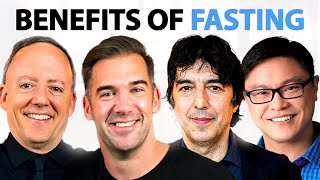
Dr. Alan Goldhamer, Dr. Valter Longo, and Dr. Jason Fung explain how fasting rewires your metabolism and reverses insulin resistance. Water-only fasting and fasting-mimicking diets trigger cellular repair, while intermittent fasting helps preserve muscle during fat loss.
Chapters
You are biologically designed for short-term pleasure seeking self-indulgent behavior. Fasting is an effective and efficient way of reversing and normalizing blood pressure. Now the problem is you can't fast forever. You have to feed, so you also.
Have to learn to eat a health promoting diet in order to sustain those results. Hey guys, thank you so much for being here. A quick message before we dive in. You may be watching the show but haven't taken a moment to click the subscribe button below. so if you've ever gained value from this show, it would mean so much to me if you click the subscribe button right now. And not only will this allow you to see these messages first, all this great content we have, you're gonna get notified first when it comes out. But the bigger our subscriber base grows, the more people we can impact, and the bigger the guests we can get on this show as well. So again, thank you so much, as always, for your support. It means the world to me. Make sure to click the subscribe button below. and let's dive into this conversation. What are the insane benefits of water only fasting? Because you've been doing this for 38 years with over 20,000 patients that have done water only fasting. What are the main benefits?
Well, you know, one of the first things that we look at is that there are certain conditions that are really common today. So, cardiovascular disease, high blood pressure, diabetes type 2, autoimmune diseases where the immune system yourself is attacking the body, rheumatoid arthritis, ulcerative colitis, ankylosing spondylitis, the psoriasis, the eczema, these conditions where it's your own body that's kind of working against you. And also certain types of cancer like lymphoma. And these conditions that are so common now are really thought to be unmanageable. Because if you go to a physician with high blood pressure, they're going to give you a medication that might be a diuretic or a beta-blocker or whatever, a combination of medications, and they're going to tell you right from the beginning, If you do what I tell you, you'll never get well.
Really?
You'll be on these meds for the rest of your life. Absolutely, they're telling you, you'll never get off these meds, you'll be on drugs forever, because they know that they're not actually dealing with the reasons that you've developed high blood pressure. The root. You're dealing with trying to manage the consequence of the root. And so our approach is a little different, because we're not interested in trying to come up with a pill, potion or powder and tell you, well, That's it. Just take these drugs and suffer the consequences.
Keep eating the same way, keep living the same lifestyle, keep lacking sleep, being stressed, eat all the processed foods, and.
You'Ll be on these drugs for the.
Rest of your life.
Well, live normally.
Yeah, right. Normal the way it is today. Well, two-thirds of people are now overweight or obese. So being overweight is normal. If you want it, doesn't mean it's healthy. Right. You don't necessarily, want to be normal if you want to be healthy because normal or average right now is in trouble. And it's in trouble because people are under the influence of the pleasure trap. There's this hidden force that's undermining people's health and happiness and they don't even realize it in many cases.
Delayed gratification is the key. That is the way, in my opinion. Not living in the instant pleasures of today but how can I distance myself from it as long as possible to be rewarded in other healthier, happier ways.
The problem, I think, I think is though that you are biologically designed for short-term pleasure seeking self-indulgent behavior. Those hits, those dopamine hits. Absolutely. The body, the brain rewards the body every time it engages in behavior that favors survival and reproduction. And those primary dominant behaviors are feeding behavior and sexual behavior. Because it's food and sex that are necessary for the species to survive, to get enough to eat, to not get eaten, live long enough to reproduce. And that dopamine-driven short-term response worked great through most of human history. But more recently, it's become a bit of a trap. And it's become a bit of a trap because we've changed our environment from an environment of scarcity where it was really hard to get enough to eat, people struggled. And now we live in an environment of abundance. And these highly processed foods are so appealing because they play off those ancient mechanisms.
The salt, the sugar, the process, nature of it, it's just delicious, but it's not good for you.
Well, you have to override that biology. If your goal is to survive long and well.
Yeah, not survive unwell, which is what we've trained our society to do. It's like, how can we extend our life on machines? That's not a weld of life, but how can we be happy, healthy, fulfilled, and then have a quicker death, right? It's like not suffer for as long as possible. but live as long, happy and healthy, and then turn off the lights.
Well, we talked about having a good life, a hopefully long life, but also a good death, the death where one night you go to sleep and you don't wake up, rather than spending the last 9.6 years unable to talk or move, lying in some nursing home bed waiting for people to come and change your diaper because you've had a stroke or you've had other debilitating illnesses that prevent you from actually making the last decade or two perhaps the best, most enriching time of your life rather than the worst, dependent on others around you, unable to really function properly. And that's the price we pay for short-term pleasure seeking self-indulgent behavior that doesn't necessarily cause an immediate problem, but definitely causes longer-term problems.
So what are these crazy benefits of water-only fasting? What are the main things you've seen.
People transform of these 20,000-plus cases? One of the biggest thing that fasting does, it's an efficient way of undoing the consequences of dietary excess. So people spend a long time accumulating the consequence of dietary excess and they can very rapidly reverse many of those consequences.
Such as what? What are the main things you see?
So the conditions like of that are caused by dietary excess, so high blood pressure for example. We did a study with 174 consecutive patients with high blood pressure and 174 people were able to lower their pressure enough to eliminate the need for medications. The medications for blood pressure cause chronic cough, fatigue, impotence and premature death. and yet they're routinely used because it's not recognized that blood pressure is a reversible and containable process. Really? Fasting is an effective and efficient way of reversing and normalizing blood pressure. Now, the problem is you can't fast forever. You have to feed, so you also have to learn to eat a health-promoting diet in order to sustain those results. But in terms of eliminating the risk factors, eliminating the need for medication, normalizing blood pressure, you can do that very predictably with medically supervised water only fasting.
What does it mean medically supervised? When you're just drinking water, I mean, what do you need, why do you need someone there to watch you? Is it like testing your blood sample? Is it just making sure you're not fatigued and in starvation mode?
We recognize that fasting can be done safely and should be done safely every day by every patient for 12 to 16 hours, depending on their goals. If they're trying to lose weight or gain weight, it may depend on the duration, but we recommend a period of 16 hours a day of fasting, eight hours a day of feeding. And by limiting the feeding window, as people like Walter Longo and others have pointed out, you may be able to induce some of the benefits that happen with long-term fasting cumulatively and also prevent perhaps some of the overeating and other things that contribute to dietary excess. So everybody can and should fast every day. In fact, everybody does fast every day. Right, and you're sleeping, you're not eating. You break it with break fast in the morning. It's an interesting process. So we're talking about maybe extending that natural period daily. so that you aren't necessarily eating three or four hours before you go to sleep. May improve your sleep quality, may improve digestion, may improve your muscle to fat ratios over time, and may induce changes that are beneficial. The thing that we do in addition is we'll extend that period much longer. The problem when you start talking about long-term fasting, and we're fasting people anywhere from two to 40 days on water only, is that first you need to make sure that the person is an appropriate candidate for that longer term intervention. People that have certain pathology, people on medication, people who have risk factors may be better off with a different approach than long-term water-only fasting. So first thing is a history and an examination to make sure there isn't any primary issues with kidney or cardiac function or medications that would contraindicate fasting.
What happens to the kidneys or the liver if you're water-only fasting?
So the kidneys and liver are main detoxifying organs in the body and particularly the kidneys. If kidney function isn't at least at some minimal level in our clinic, like we use creatinine levels of 2.0 as an arbitrary marker. If kidney function isn't adequate, then the rapid detoxification that occurs during fasting, where the body mobilizes and eliminates both endogenous and exogenous toxins into the bloodstream and then are processed by the kidneys, if the kidneys function isn't adequate, you could overload the kidney function and create problems there. Really? And so it's very important that people have minimal levels of clearance, and that's also the reason we make sure that people have adequate fluid intake and maintain electrolyte balance and hydration. So we're monitoring people's electrolytes to make sure that we don't get into problems with potassium or sodium or other things which could become a problem, especially in these longer fasts when we're going two.
Three, four, five weeks or longer.
Wow. What's the longest someone's been on a.
Water fast with you? Well, in our clinic, we limit fasting generally to 40 days. We've had a few patients who've had to go a little bit longer than that. But there's evidence in the literature of patients fasting in medically controlled settings for.
As long as a year or more.
So not that we would recommend that.
Is that just someone who's so obese that they're trying to, you know, get rid of all the complications and shed the weight and all those things?
There was a lot of work done in the 70s and 80s in treating supreme obesity with long-term fasting. But even a thin male, say a 70 kilogram male, could probably fast somewhere around up to 70 days if they're resting during the process. Not that they should necessarily do that.
They could survive.
But as far as nutrient reserves and adequacy, the body is pretty amazing. You know, the main burner of glucose for humans is our brain.
Is what, just thinking or what?
Cognitive activities, the brain, we have this ridiculously large brain in humans, two and a half times that say of a chimp. It's huge and it's our main burner of glucose. In fact, if it wasn't for our ability to change our brain fuels from sugar to fat, we couldn't have survived as a species the way we have. Because if we had wandered away from the tropics after a week or so, if spring came late, we would have died, in fact, We did. The humans that didn't have the ability to change brain from burning sugar to burning fat weren't able to survive. We know that because today virtually every human being has this ability to change its brain fuel from sugar, which is the normal fuel to burning ketones or beta-hydroxybutyric acid in particular. And that would suggest a biological adaptation, such an important adaptation that the species had to have it. So today humans can wander away from the tropics, spring can come late and we can survive despite our very large brain. and it's huge burning of glucose because we have this ability to fast. All we've done is taken this ancient biological process and applied it in a very unnatural situation, and that is a situation of dietary excess. No other animals maintain obesity. I mean, even whales, who you think of as kind of fat, are 9% body fat. Okay?
Really?
Yeah, they just hold it on the outside of their skin. They're lean mean machines, like all animals do, unless they get access to high hyperprocessed foods like humans eat. So if you feed human style hyperprocessed foods to animals, they also get fat. We add chemicals to our food specifically to induce dopamine stimulation in our brain. Those chemicals are salt, oil, and sugar. These are not foods, they're food byproducts. They're hyper-concentrated food byproducts. They're essentially chemicals we're putting in the food to stimulate more dopamine. Dopamine is the neurochemistry associated with pleasure. The more dopamine, the more pleasure, the more we like the food. That's what good tasting food means, because it stimulates more dopamine production. And the consequence of hyper-stimulating our brain with dopamine means we overeat and we become obese. And that's why two-thirds of people are overweight is because they've fooled their brain with chemicals they put in their feed. It works in rats, it works in mice, it works in humans. Put the chemicals in their feed, they overeat, they get fat, then they develop obesity, and metabolic syndrome. And if you have metabolic syndrome, you're more vulnerable to dying from heart disease, cancer, diabetes, and even viral infectious diseases like COVID. The higher your metabolic syndrome increases risk.
Of dying from all these things, all these downstream consequences. What about olive oil or avocado oil?
I hear these good oils, these fatty oils are supposed to help you in certain ways.
Is that?
Well, you have to be careful when we define these good oils. There are oils that are more harmful than, say, olive oil. So an oil being less harmful doesn't necessarily mean it's good. It's just less bad. So oils are all highly processed, fractionated foods with nine calories per gram and limited satiety feedback. So if we're talking about trying to lose or maintain optimum weight, oils would have a disadvantage compared to eating your fat from a whole food. So I would advocate, avocado oil, eat avocado. Not necessarily process it down, remove the fiber, a lot of the good components, and be left with the oil. And the same thing is true with sugar. You need carbohydrates as a primary fuel, but you eat whole food, whether it's fruits or vegetables or starches, not necessarily the highly processed, hyper-processed byproducts that we've created. If your goal is to avoid overeating dietary excess, obesity and the diseases of dietary excess.
Right.
What are the three main benefits that you see with pretty much everyone that goes through water only fasting? Three biggest things that you see, whether it be seven or 70 days. Well, you know, they look younger, is it the clear skin, is it they're burning fat, is it that internally their cells are changing? What's the three main benefits you see?
It's hard to different, there's so many benefits. It'd be hard to say which are the three doms. I can talk about some of the benefits that we see. Certainly, you see weight loss. You can't help that. The laws of physics and thermodynamics say if you don't eat, you're going to lose weight. We know that weight loss is about a pound a day. Now, that pound a day, average weight loss is a pound a day. Now, some of that's water, some of it's protein, some of it's fiber, some of it's glycogen, and some of it's fat.
And of that fat, some of it's.
Adipose tissue, some of it's visceral fat.
Visceral is what you want to burn, right?
Well, visceral fat is the one that's most associated with pathology. In fact, probably shouldn't be very much visceral fat. Visceral fat is what happens when the body has no place else to put fuel and so you'll store some additional visceral fat. The higher the visceral fat, generally the worse you are, simplistically speaking. And so we just did a study where we took a DEXA scanner that has software that allows to do precise whole body composition. So not just how much fat and protein there is, but how much visceral fat there is.
Internally and externally, right?
Exactly. So, visceral fat, typically you think about an apple or strung on the belly and around the organs, that internal fat.
So, a lot of visceral fat around the organs as well, right? That is not good for you.
Yeah, that's not thought to be very healthy.
I mean, the belly fat that people see is not good, obviously, but the stuff that's surrounding all the organs is you don't want to have a lot of that fat, right?
That's correct. And so the question is what can you do to get rid of it? Any type of dieting will cause various types of body changes, but the approach that's shown the most effective at mobilizing visceral fat is actually fasting. Fasting is the highest ratio of visceral fat to adipose tissue mobilization. For example, a typical patient in this study might lose 20% of their fat, but would lose over 50% of their visceral fat during a couple weeks of fasting. even though they only lose 4% of their lean tissue. And what's even more exciting is we look at, okay, what happens during fasting? Let's say, for example, a person loses 10 pounds. And we know some of that is water, some of it's fiber, glycogen, some of it's adipose tissue, some of it's visceral fat. Then what happens after fasting? So you lose 10 pounds, you might regain five pounds. You're going to gain about two pounds of glycogen because you have sugar stores in your muscles that'll be depleted within a couple days of fasting. You're going to rehydrate because there's a little physiological dehydration during fasting. you're going to put fiber back into your gut because your gut's not going to have had fiber being added to it. You're going to pump up your muscle cells again because you'll have depleted a little bit of glucose in order to maintain the glucose, the core glucose that your brain needed. And you're going to theoretically put back on fat. But after fasting, assuming a person adopts a whole plant food SOS free diet, what we found was weight comes off, weight comes back on. But the weight that comes back on is glycogen, water, fiber, and protein, not fat. Fat continues to drop.
I like that.
So we've been able to show, and this study will be coming out later this year, exactly what happens. And then we followed people at six weeks, brought them back in, reanalyze them, and we're able to demonstrate that not only can people lose their fat and visceral fat, but they can continue to lose their fat and visceral fat even free of living eating health promoting.
So the scale will go up some, but the fat will not go up. That's correct. So you gotta trick your mind and say, well, I'm not gaining all this weight. Like, you're gaining the necessary weight that your body needs to be stronger so you can have an active lifestyle and.
All these things, but not the fat back. Keep in mind, it's not weight per se that's the threat. It's excess fat. So, for example, if you work out, you might gain 10 or 20 pounds of lean tissue over time. That's not necessarily compromising your health just because you, quote, gained weight. Now, if you sit around on the couch and eat greasy, fatty, slimy, dead decaying flesh and highly processed foods and put on a lot of fat, particularly visceral fat, gain that same 20 pounds, that might be a problem. Right. So, we want to be careful not to be thinking just in terms of.
Weight, but in terms of body composition. Fasting has become this massive, more mainstream talked about thing. We were talking about this before. There's all these big fasting apps with millions of users. There's tons of fasting books. different types of fasting. There's water only fasting that you do for a few days. There's, you know, just calorie restricted fasting. There's the time restricted fasting. There's the fasting mimicking diet. There are all these different types of fasting. Can you break down maybe the pros and cons of some of these that you've seen?
Yeah.
And which one is most effective for us? Or is it something we just need to try and see what works for us.
I would definitely say no to your, your last question.
Right.
So, yeah, it's not about trying because it, it can do. Fasting is like eating.
Right.
Okay.
It can do a lot of good for you or a lot of damage.
Right.
And, and so I would say that you're starting to see lots of clinical studies and preclinical, so animal studies, and at a certain point you put it together and you get a good sense for what works and what doesn't work. It doesn't mean it's not by no means final, but you get a good sense. So I would say if you look at the daily type of fast, what clearly works and is not associated with any negative effects is 12 hours. 12 hours, 12 hours of time restriction.
A day. Don't eat for 12 hours.
Yeah, don't eat, say 8 a.m., 8 p.m., stop eating at 8 p.m. and no more food until next day 8 a.m. Okay? Okay. So that, I would say, I've never seen a negative study about this.
So if you eat, if you wake up, you eat between 8 and 8, you're good. Yeah.
Don't eat before 8 a.m., don't eat after 8 p.m. Yeah, so that's already a very good one. Another one, now if you go to 16 hours, say 16-8, you're starting to see lots of benefits, but you're starting to see lots of problems.
What type of problems?
Well, first of all, gallstone formation, right? Gallbladder operation, gallstone formation, they double between the people that fast for 10 hours, the people that fast for 18 hours, right?
Really?
Yeah.
So just to give you one, another one, study after study after study, and we've done the same study, somebody has published it before we get a chance to people skip breakfast. Most people that go 16 hours will skip breakfast. And the breakfast skippers tend to live less, have more cardiovascular disease, have more disease in general.
Okay, wait a minute. Let me break this down. So for years, I was always eating breakfast because I love breakfast. Then I heard about intermittent fasting, which is like skip the breakfast and eat at lunch and do the eight hour window, right? You're telling me now that the studies are showing that those that skip breakfast are living less and having more problems than if you eat breakfast and eat within the 12-hour window. No, if you just eat breakfast. Just eat breakfast.
Okay, so eating breakfast is against not eating breakfast. Gotcha. So just eating breakfast, what are the.
Studies showing now between not eating breakfast and eating breakfast?
Yeah, so the people that skip breakfast, they're living shorter with more diseases. Really? And then study after study after study, it's not one, you know, it's very consistent.
Is this for people you know, over 60 years old or... No, no, no.
Yeah, this is just looking at people, did they have breakfast or not? And then follow, you know, let's say for 20 years, the mortality of those that historically never ate breakfast.
Think of all the amazing things in life that are expressions of just you. For instance, the song you stream over and over again while you're in your 13th hour of gaming at 4:00 a.m. in the morning, with all the lights off, trying not to wake up your roommates, or the recommendations that you share with your friends on the top six comedy podcasts that are the best to listen to on your way to the gym and back, or even your new haircut, which may or may not be an epic bowl cut from the 90s and hopefully is. Everything that makes you, you, makes all the difference. State Farm believes insurance should work the same way. Your plan, your coverage, they need to be personalized to you and the ability to choose the plan you want by picking the options that fit you. like building your home and auto policies, is exactly what the State Farm personal price plan is all about. Getting the coverage you want at an affordable price just for you. So are you ready to make things personal? Call or go to statefarm.com today to create your State Farm personal price plan. Prices vary by state. Options selected by customer, availability and eligibility may vary. Are there other conditions around that where they were over stressed or they were, you know, didn't have good relationships or.
They are just for most of it, but it's possible. But my point to those that say, well, maybe it's something else, it's not the breakfast skipping. Yeah, I say, but if it's so beneficial to go 16 hours a day of fasting, why doesn't it at least bring you back to normal life?
Interesting. So, why is breakfast so important?
Well, nobody knows, but it could be that it's setting up the metabolism, right? It's setting up the metabolism to be you know, you know, like we were discussing earlier. So if it's affecting the way you burn fat, if it's affecting the way your insulin functions, etc. Etc. Eventually you can be more prone to, you know, insulin resistance, diabetes, cardiovascular disease, Etc. You don't need very much. And also the heart, right? So it could be the, the Ketone bodies, this continuous high lab. So when you fast, these Ketone bodies, this the word ketogenesis comes from. These byproducts of fat are going up in the bloodstream, right? And also fatty acids, right? The fat themselves. And these can alter the way your heart works and the way your brain works. So we don't know, but it is possible that by having lots of that all the time, now some of the systems now develop problems and not improve.
So, it's okay if you're doing like a week-long fast or a three-day fast to obviously skip the food or have less food during breakfast, but you're saying skipping breakfast on a consistent basis has proven that it's not a good thing.
Yeah, I mean obviously nobody did an experiment where they said, oh let's randomize that 10,000 people and you skip breakfast and you don't and wait 30 years, right? They cannot be done. But it's epidemiological studies. So, you know, you look at the databases and you say, the breakfast keepers, you know, are they doing better or worse than the non-breakfast keepers? And they're doing consistently worse. And this is why you want to say, okay, if you want to do 16 hours, talk to a doctor, fine. It could help you, you know, do it for a month or two, but then find something else. Yeah, find something else. Because, you know, it does have a beneficial effect. It can have could do lots of good things, but then eventually you don't want to keep it for 20 years.
Yeah.
So that's the sort of daily stuff. Once you get to alternate day fasting and all that, I think it's just crazy stuff, you know? It's just, you know, I always say I have a difficult time asking people to go from four coffees to three coffees to that, right? So when if you go to someone and say, oh, from now on, beside that, the potential long-term problems that we just discussed. So if 16 hours does that, what could happen if you don't eat every other day? But beside that, just the feasibility, the fact that people are actually going to do this, it's just extremely unlikely. You're looking at one person out of 100, maybe they can not eat every other day.
What about one day a month? Like I'm going to do a 24-hour fast one day a month.
Is that yeah, and nobody knows, right? Nobody knows. The problem with that, and this is why we My lab and my group has always focused on developing this fasting, making diet. Is that in the one day you don't quite get into the ketogenic mode, right?
In one day of fasting.
Yeah, in one day of fasting. So you struggle because most people.
Will.
Not view that positively. I mean, you know, tomorrow or next week, I'm not gonna have a day where I don't eat, right? it's a struggle and also you don't quite get so you're hungry for that 24 hours and you don't quite get into a fat, a starvation response mode. That's why we're saying probably the system, if you look at our history.
Most.
Likely we can't go back in time. Most likely In the summers, we had the job to get fat, right?
Fill up for winter.
Lots of fruit, honey, whatever you can get your hands on, eat as much as possible. And then the diabetes and pre-diabetes, the insulin resistance that then leads to diabetes, so insulin doesn't work as well, it was probably part of that process of making you store fat. put away as much fat as possible. So now, you know, this can be activated anytime of the year, right? Because people overeat all year long. And so probably not probably what we see now clinically is that when you do, let's say, five days of a fasting mimicking diet, or it could even be water only fasting, you unlock that. You seem to unlock that mode where and this is why the doctor that I was telling you about, you see him even using the longevity diet, but he's still not quite losing that insulin resistance until he does the fasting-mimicking diet. That changes, and you clearly see the slope of the glucose levels curve. And so, yeah, probably- and the fasting-mimicking.
Diet is around like 300 to 500 calories a day type of thing, is that right?
No, the fasting-mimicking diet is the one for regular people is 1100 calories on day one and then it goes 800 calories on day two, three, four, five.
Okay, gotcha. So it's 800 calories for the last four days. Gotcha. Okay.
Yeah, so then the possibility is considering that over 70% of Americans are either overweight or obese. Now we're saying if you intervened a couple of times a year at least and you remind the system we are not in summer mode, okay, let's go into winter mode. Let's go into, let's burn these fats.
Because.
You know, we're no longer having to store him. Yeah. So that, that could be the, the trick of the, the five days versus, let's say, one day a month.
Interesting.
Which may keep the system confused and not sure. Did we reach another phase here? Is it, do we need to go now? into a fat burning mode or can we stay in the fat accumulating mode?
So what's the difference between having the fasting mimicking process of five days, 800 to 1000 calories versus water only for five days?
I've done it, I can tell you the difference. I've done it one time with water.
Only for five days.
And I remember every day of it.
The pain of it, you mean?
Yeah, to me it was near torture. And we knew that that was true when we did the that I was telling you about the clinical trial, the first clinical trial in 2009, I think it was here, USC, on cancer patients, and we thought, somebody has cancer, they're not gonna argue with water-only fasting. They're gonna do it, right? We were sure, the oncologists were sure, let's go, let's do it. Nobody wanted to do it, right? So this is why we went to the government and said, we would like to develop a fasting mimicking diet. for cancer patients. That's where it comes from, right? So it comes from the refusal of cancer patients to... We're like, I'm gonna.
Eat no matter what. Well then, yeah.
It's just a safety issue. There's lots of things in food that are important to maintain high enough glucose level, high enough blood pressure, etc. So once you remove it, I think you know, people can do water only fasting, but probably in a specialized clinic, you know?
Right, right, right.
Yeah.
So if you go to a place, it is effective. It is effective.
If you're in a specialized clinic and you have.
Yeah, but watch out, right? Because again, as we were saying earlier, the devil is in detail. And if you go long enough, right? Especially if you're extreme and long, then the body goes into another response, which is thrifty mode.
So the body-- Thrifty mode, so it stops burning.
Yeah, then the body-- It keeps the fat. Let's say you go a couple of weeks without food at all. The body now has to intervene and say, we're gonna be in trouble soon enough, right?
So we're gonna keep that.
We're not gonna burn this. We're not gonna burn. And so now you could have, and we know this from long-term calorific studies, you could have probably, nobody's ever figured out what it is, but it's called epigenetic change. so there's a switch that turns on and say, okay, from now on and maybe for years, I'm now in a saving mode. I'm gonna save energy. So now if you, and this is why the, the technology is so important, right? So you wanna do all the things that we just talked about and don't, you wanna avoid all the bad things, right? You don't wanna get into thrifty mode. You wanna get into the ketogenic mode. You wanna burn the, start burning the fat. keep that long term and avoid the side effects, you know. Yeah, so all of this, even though people think, oh yeah, it's an old thing, people used to do it, you see how the purpose, it was not to get to 110 years of age healthy back 2000 years ago. The purpose, if you were lucky, is make it to 50 years of age, and have children. So now everything changed, right? So now we can just fast the old ways.
Right, right.
We have to know, we have to be respectful of the tradition and what we learn from all these old practices. But at the same time, we have to bring in the science, the clinical trials and say, okay, how do we, where do they match? You know, what's the common denominator between all these things?
Audi, really? exists in sort of one of two states. You're either in the fed state or you're in the fasted state. Okay? So when you're in the fed state, you're eating, insulin is going up, and as insulin goes up, its job, like its normal job, is to tell your body to store those calories. Okay? So you can store it as glycogen, which is sugar, or it can store it as body fat. But that's the point. So you launch your dinner. There's way more calories in that meal than you can use right at that Point. So you want to store that. So when you don't eat, which is anytime you don't eat is called fasting. So when you fast, that means your insulin is going to drop and that's the signal for your body to now start pulling those calories out of storage. Right? And that's the reason you don't die in your sleep every single night is because we have the ability to hold some of those calories in storage. So in the fed state, insulin goes up, you're storing calories or body fat. In the fasted state, you're not eating, your insulin's dropping, and you're using calories. So you're in one or the other. You can't do both at the same time. So if now you say, okay, I'm going to go...
When I'm eating, I'm storing. I'm not using calories. Is that right?
Every time I eat, I'll store. I'm not burning body fat. You're not burning body fat because you're putting in sugar, for example, and that sugar is going to signal that, hey, sugar's coming in.
Use the sugar that's coming in. Don't burn anything off my body. Keep all that stored fat, keep it. Just keep piling it on, right?
Exactly. So the only way that you can actually use the body fat is to let the insulin fall and not eat. So if you are now eating constantly, so the minute you get up, somebody tells you, oh, you have to eat. You can't skip breakfast, blah, blah, blah, blah. And then you have to snack all day long. So now if you look at studies, the average duration of how long people eat it's about 14 hours and 45 minutes. That's the average. So if you start eating at 8:00 a.m., you don't stop till 10:45 p.m. That's on average. That's the average.
14 hours, you mean a 14 hour span of eating from the start to finish, right? You may not be eating every moment, but you're eating every few hours within a 14 hour window.
It takes about four hours for you to switch over into the fasted state. that stay. So the point is that before where you'd eat breakfast, lunch, dinner, and by six o'clock you're done, boom, now you shift into using those calories and your mom would you say, oh, you need time to digest, right? That's what she sort of said. But the point was that you need to start using those calories that you stored up during your meal times. And that was the secret that they could stay relatively slim. Now, if you're eating constantly, then you never give your body a chance to switch over into that fasted start using those calories. The problem, of course, is that insulin stays high, which tends to keep your body storing calories. Your body, so the high insulin, for example, blocks fat burning. You can't burn your fat stores because your body's like, the instructions that I'm getting is to store energy, not use energy. I want to keep my stored energy for when there's a time that there's no food. The problem, of course, is that there's never a time there's no food, right? Every day is the same thing, right? 14 hours of eating. and no time of not eating. And that's the point. So now if you understand the problem, you can say, well, how am I going to change this? Well, it's simple. Increase the amount of time that you're not eating. And that's all intermittent fasting is. If you eat one meal a day, for example, or if you within an eight-hour window or a four-hour window or whatever, what you're doing is you're simply allowing your body to use the calories that have been stored, which is body fat predominantly, But that is precisely the reason you carry body fat. Like that body fat is not there for looks, it's there for you to use, right? And that's the whole point. What's so bad about using it? If you don't eat, you're gonna burn it. Well, so again, go back to the 70s and everybody says, oh, you can't fast, you can't fast. Well, you know, they're eating breakfast, lunch, dinner, and if you're a naughty boy, you got sent to bed without dinner. so you can tell you went from 12 o'clock to 8 A.M. 20 hours.
You look good the next day.
You're looking clean.
You got a six-pack it's burning fat.
Exactly. And nobody died. Nothing bad happens, right? There was nothing wrong with that. And hopefully you learned your lesson too, right? And that's the whole point, is that there's nothing wrong. It's a natural part of our human physiology. If we couldn't survive without eating. Like we would not be here today because when we were cavemen and cave women, there was no food every day. Exactly. They couldn't. There might be a stretch of three, four, five days where there was no food and therefore they had to survive on their own body fat, which they did. And that was the whole point. So let's let our body, you know, use it because that's the most natural thing to do.
What'S the process for you, your day-to-day life? Do you eat one meal a day, two meals a day? Do you fast every month for a day? Are you always doing intermittent fasting? Is there a downside to intermittent fasting? What's your process?
Yeah, I usually do a lot of sort of. I rarely eat breakfast, and I'll tell you that it didn't come. I mean, I started this in medical school, and that was mostly because I really wanted to just roll out of bed. go like, you know, I'd wake up literally like five minutes before I left the door. You know, I brush my teeth, put on some clothes and rolled out the door. I was, you know, it's just a, it's just that the way I was, right? And so I, I don't eat breakfast now because, again, people say you have to eat breakfast, you have to eat, but there's actually nothing magical about breakfast. If you don't eat breakfast, what's going to happen? Well, my body, which is now burning fat because I've had eight hours of sleep, it's gone into sort of fat burning mode because that's that's the storage form of calories or it's burning sugar, it's just going to keep doing it, right? There's nothing wrong with it. So a lot of times I try and confine myself to sort of an eating window of sort of six to eight hours. And then once in a while when I get very busy, I will do a 24-hour fast, which is a one meal a day. And then every so often I'll do a longer fast. And the longer fasts are actually not as bad as you might think, but they really disrupt your schedule sort of socially. It's a tough one because a lot of our socialization happens at meals. So I often have dinner with my family, for example, and doing those longer fasts is really, really disruptive to that sort of thing, which is why when you look at traditional societies, like if you look at, say, you know, during major religions, for example, there would be a period of fasting that's sort of universal.
So, you know, everyone's doing it, so no one's feeling exactly. Because stressed when they smell the food.
And they're like, exactly. So if you're, if it's like good Friday or during Lent or during Ramadan for Muslims or, you know, during Yom Kippur for Jews or whatever, everybody's fasting. So it's actually terrifically easy because you're not disrupting the sort of social fabric of your life there. Whereas nowadays, if you fast, and I've done this, it's just really hard to do. It's not physically. It's not hard, but it's hard. And I do it mostly, you know, when I, when I've gained a bit of weight, usually after the holidays and after a vacation, I will. sort of schedule a longer fast right after because I know that I can lose that weight very quickly, but that means I can enjoy myself. Like a couple years ago, I went on a cruise and really ate too much. That's a lot. I had a lot and I knew it. Then I could feel it in my pants were tight and stuff. So I did sort of a three or four day fast. And I'll tell you, by the next week, I was back to my normal weight. Well, that's great because a week but I got to enjoy the whole week prior where I really didn't look at what I was eating or how often I was eating or anything. I was like, this is my vacation, I'm doing this. But at the same time, I know, hey, I've got this next, you know, after this week, the week after, you know, very little to eat. And it gives you a great tool to use if you need it.
Before the interview continues, if you feel like you're not living your most authentic life, not leaning into your purpose and not living the life that your future self would be extremely proud of. I've written a new book called the Greatness Mindset, and I think you're going to love this. Through powerful stories, science-backed strategies and step-by-step guidance, the Greatness Mindset will help you overcome all the different challenges in your life to design the life of your dreams and then turn it into your reality. Make sure to click the link below in the description to get your copy today. Okay, let's get back to this video.
Okay.
Yeah, it's almost like either every day don't indulge and balance and create a schedule where you're only eating in a certain window of time, whether it be four, six, eight hours, which I'm hearing is kind of the, which would be a great standard to have between four and eight hours of a feeding time, is that right?
Yeah.
Yeah.
I mean, if you want to lose weight, you can do very well, of course. with a sort of standard 70s style, sort of 8 a.m. to 6 p.m. in a 14-hour fast every single night. Remember, they're doing 12 to 14 hours a day every single night without even thinking about it. Like, that's a secret because they don't even think about that. That's just a period of time that they're not eating, right? But now, of course, the traditions are different. You can eat anywhere you want. You can eat in the theater. You can eat at your desk. You can eat in a car, like in the 70s. stuff like that didn't exist. You didn't eat in a meeting in a boardroom, for example. Now you go to a meeting in a boardroom when there's food everywhere, donuts, donuts and cookies, right? Somebody's ordered a plate of bagels or something like that, right? It's like, well, why? We're having a meeting here, right? So that's the thing. So you could do very well with that kind of, you know, eight hour eating window, 10 hour eating window. You can do very well with it, but if you're not doing well, then you can extend it. And that's the beauty of it. You could extend it as much as you want.
Right.
So if you think about fasting, you could go three days, you could go five days, you could go 30 days. People do that all the time. But no food. No food, yes. If you think about fasting, so.
The.
Amount of energy that you need, so a pound of fat has 3,500 calories roughly. If you need about 1,800 calories. So that's for like a regular person, not like an athlete or somebody who's working out a lot. It takes about half a pound of fat per day. So if you're dealing with a lot of obese people, like 100 pounds overweight, you could go 200 days. You know, if you want to lose 100 pounds, you could go 200 days without eating before you get and survive and survive. Exactly.
And be okay.
Exactly. Be perfectly fine because this is a very efficient fat is an efficient store of calories. Right? It's very efficient. That's why we developed it.
It's to keep you alive when there's no food around.
Exactly.
So use it. Does it affect your digestive system? Does it mess with your metabolism if you don't eat after a certain amount of time? And what happens when you start eating again? Does that affect your, again, your stomach, your intestines, your colon, your metabolism?
What's affected there? And this is the interesting part is that everybody thinks that fasting is like the worst thing you could do. When you actually look at the science of what happens during fasting, it's actually one of the best things you can do for yourself from both a mental standpoint and a physiologic standpoint, assuming of course you're not malnourished, right? I mean, I'm assuming if you're the average American who's, you know, 10, 20, 30 pounds overweight, then this is something that actually has a lot of benefits. So there's a lot of sort of myths around it. One is that you're going to burn a lot of muscle. And the truth is that you don't. I mean, when you, you know, if your body, your body stores energy as body fat. So people say, oh, you're going to burn muscle. It's like, well, You've got to think that our body is so stupid that it stores energy as fat, but the minute you need it, it starts burning muscle. Why would our body be so stupid? And if it were so stupid, how did we survive? It's like if you save firewood all winter for the winter, and then as soon as it gets cold, you chop up your sofa and throw it into the fire. Why would you be so stupid? Our body's just the same. It's not that. you know, and I know and everybody knows that the way that you build muscle is that you exercise, right? So if you have, you know, lift heavy weights, then your muscles become stronger. It doesn't become stronger because you eat, right? That thing does nothing for building muscle. Like, otherwise we'd be, you know, the strongest nation on Earth, right? But we're not. We're the fattest nation on Earth. So that's the whole problem, right? I mean, you're confusing two completely different things. There is a point during fasting where there is a little bit of protein breakdown, and that's where people get very confused and say, well, you're burning muscle, but you're not. Protein is not the same as muscle. So our body has all kinds of protein, including all the connective tissue, like the skin and stuff that holds stuff in place. And some of that is often burned off. So, for example, when you look at those shows where people get surgery and they lose 150 pounds, they get all this floppy skin. That's not excess fat, that's excess protein. So that's, you know, it's functional tissue that you've never used up. So we actually see very little of that problem when people fast because there's a small period of time where they're actually using up the protein. Your body will maintain its musculature based on what exercise and stuff you're using. So another big myth, so muscle burning is one thing. The other big, big myth is people talk about as starvation mode or metabolic rate. So metabolic rate is the amount of energy that your body uses in a the number of calories you burn in a day. And this is what we see if you simply cut calories. So this is a standard medical advice. Cut 500 calories a day and you'll lose a pound of fat a week. What happens, of course, is that you cut 500 calories a day and then your body quickly reduces the amount of calories it uses by about 500 calories. So now you're actually not losing any weight. That's what happens all the time because--.
Why does it stop? why does it stop burning those calories?
Well, it stops burning the calories by reducing its metabolic rate. So the metabolic rate is the energy that your body uses to, say, generate body heat, your liver, your kidney, your heart, and so on. We've known this for a hundred years that if you simply restrict the number of calories but keep the foods very similar, what happens is that your body is going to start using less. So because it doesn't like running a deficit, right? It's just like if you normally make a hundred thousand dollars a year and you spend a hundred thousand $10,000 a year. Now you make 50,000, you don't keep spending a hundred, right? It's, it's, you're gonna, you're gonna get thrown into jail. So you reduce your expenditure same as a body. So it's getting less. So it's going to use less. And that's the natural reaction is, it's, it's important because it's a survival response.
It cannot do anything different. So it's almost like, so it's almost like you need to be extreme in your use.
Yeah.
In order for it to burn and kill off these cells that might be harmful to you, but if you just do a little bit, I'm going to eat a little bit less today, it's.
Not going to be that much. It doesn't work. And people assume that if you go to zero, which is fasting, say you fast for a full day, you have zero calories, you don't die, right? Because what happens is completely different. Now you've lowered your insulin, so you're changing the hormonal profile of the body. as you do that, you're now switching fuel sources. So instead of using food as your fuel, you're switching it into body fat, just like those hybrid cars where you go from gas to electric, right? So it's using food and then boom, it goes, okay, I have no food coming in. I need to switch over now into body fat. And then it goes, whoa, I have like 500,000 calories of body fat here. So why do I need to cut cut it down. And the point is that it doesn't because assuming if you have no body fat, of course it's a problem. But for people who have adequate stores of body fat, which is most of us, and truthfully most people do it for weight loss, too much body fat, then what happens is that there's so much there. Why wouldn't you use it? Because it's a fuel source. That's all it is. That's the way you have to look at the body fat. If you're eating all the time, you can never use your body fat. because your insulin's here, your insulin's high, you're using food. Then you get hungry, so you eat some more, right? You have a snack, you have a low-fat muffin, you stay here, you can only burn food. All that stuff over there, those 500,000 calories of body fat are completely inaccessible for your body. So if you simply dial it down like this and say, okay, instead of 2,000 calories, I'm going to eat 1,500, but I'm going to eat 10 times a day, keeping myself here. Now you only have 1500 coming in. You can only burn 1500. You can't access that. If you go to zero, you go boom, and then your body burns the full 2000. So they did a study, for example, where they took people and fasted them for four days and measured how many calories they're using. They also measure their VO2, which, as you know, is something that it's a measure of how much cellular work your body is doing. and what they found, so they measured the metabolic rate at time zero, then they measured it at four days of zero food, and they were burning 10% more calories than they were per day than they were when they were eating. The VO2 was 10% higher. You're doing more work. Your body is actually not shutting down, it's revving itself up. And again, there's a good physiologic reason for that, and we know that when insulin goes down, when you switch yourself into this sort of, you know, mode that you're burning fat, other hormones go up, including your sympathetic nervous system, which is your noradrenaline. So you're actually pumping your body up. The reason for that is sort of, again, it's a survival response. So imagine again, we're cave man and it's winter and there's no food. So if you don't eat for two days and you get weaker, you're never going to eat again. You're going to die because every day is going to be harder. You're going to circle the drain. So our body's just not that stupid, right? So what they do is that your body says, okay, there's no food coming in. Boom. I'm gonna switch you over to body fat and then I'm gonna pump you up so that you have energy. You go out there, you go kill that woolly mammoth.
You're focused, you're clear, you're in the zone, everything.
Exactly. And that's the reason that we actually pump ourselves up. And the mental aspects is actually fascinating because people also say, well, I have to eat because I have to concentrate. It's like your concentration is actually much higher when you don't eat. Think about when you had a huge Thanksgiving meal. Well, were you really sharp or did you really want to just lie down on the sofa and watch some football? You don't have any sort of focus. But if you think about animals, it's the same thing. Lions, they just eat, they just lounge around. But if you're the hungry wolf.
That.
Is a very dangerous animal because he's focused, ready to kill you. Same thing for us. Our level of concentration, our mental ability, mental agility goes up significantly when we're hungry. Like if you think, oh, you're hungry for this, hungry for that, that doesn't mean you're falling down lethargic. It means you're focused. So it's interesting because there is this book a few years ago called Unbroken, which is a biography of this fellow who got, who went to a prisoner of war camp in World War II Japan. and he was talking about starvation and he they were literally starving like there's they eat like almost nothing for the full day. And he's talking about how his his his other prisoners were doing these incredible mental feats. So one guy was reading a book entirely from memory. Another guy learned all of Norwegian in a week. And he so the guy says this is simply the mental clarity of starvation. so it was incredible. It was so widespread, everybody was starving, and they'd see these incredible feats that nobody else in the world could do all the time because your mental ability is ramped up to such a high degree. And then, you know, in the ancient Greece, the ancient mathematician Pythagoras, he would require his students to fast. You look at hunger during fasting. So they've done, again, studies where they fast people for 24 hours and they measure a hormone called ghrelin, which is the hunger. the higher it is, the hungrier you are. Turns out that our ghrelin peaks three times a day, breakfast, lunch, and dinner. So you get hungry at, you know, 12 o'clock, it's lunchtime, you get hungry. So it's a learned response. The question is, what happens if you don't eat? Does hunger keep going up and up and up? It doesn't. In fact, the ghrelin actually peaks and then it just falls. If you don't eat, it will actually just fall down and it will fall down within a couple of hours, right to baseline, which means that your level of hunger at 12:30, 1:00, you're hungry. No question about it. If you don't eat by 3:00, 4:00, that hunger level is actually the same whether you ate or you didn't eat. What happened? Well, your body simply took the calories it needed from your body fat. You took that meal from your body fat and your hunger went down. So that's really interesting. So if you know that it's a wave, right? You just have to let the sort of wave pass over you. I often tell people you will get hungry, okay? Don't pretend that you're not because you will. What you got to do is prepare for it and say, okay, well if you get hungry, then you either there's several things. One, stay busy. You know, keep doing stuff. Don't just think about how hungry you are. So we all have had this where we're, you know, working on some kind of, you know, doing work at work or if you're doing some kind of, you know, home renovation or something. I get this all the time where I'm like painting, you know, the house or something. something like that, right? And I'll just power right through because I just want to get it done. And I'm not hungry at all because I'm so busy, I'm so focused on doing the work that I just forgot about it, right? You see this all the time, you know, people who go to the casino and people who play video games, they just get so engrossed. So that's one strategy. The other strategy is to get something like green tea or coffee that you can drink by the time you finish, you know, a big cup of green tea. the hunger will have passed, but you know that it's going to pass and that's the point. You know it's not going to get worse and worse and worse and that's how you do it. What's even more interesting actually is if you look at multiple day studies where they fast people for three, four, five days, the ghrelin peaks and then after about two days it starts going down. So by day two, day three, as you get to day four, day five, the hunger almost completely disappears. It's actually fascinating if you've never done it. I've done a few of these four or five day fasts and it's interesting because there's actually no physical sense of hunger. There's a whole lot of, hey, that slice of pizza looks really good. I really want to eat it. But there's no actual physical hunger. So if I hadn't seen it, which is hard now, of course, with all the advertising and all this sort of stuff, I would actually, you know, gone and right by and done it. But the point is that the hunger is something that you have to learn how to deal with, that's not impossible. Because again, one of the big objections to people with fasting is that nobody can do it. Like it'll work. Sure, if you don't eat, you'll lose weight, but no way to do it. Well, you know that literally millions of people throughout history have done this. Look at Ramadan, you look at Yom Kippur, you look at Lent. Like when people say, okay, we're going to fast together because our strength is in our togetherness, right? you know, it's Good Friday, we're not going to eat for this amount of time. Well, that's how people did it, right? They supported each other. There was no food around. Somebody's not frying up, you know, his steak while you're trying to fast.
Or baking cookies, yeah.
Yeah, exactly. So that's how you do it, right? You get yourself a supportive community. You know, you figure out something that you really love to do that keeps you active during that time. And that's how you get through it, right? And while you do that, of course, your body uses up the body fat, so you're going to lose weight. It's going to use up the blood sugar, which is going to keep you from becoming diabetic. And insulin is going to fall, which is going to reduce your risk of cancer in the long term, as well as those other conditions, obesity and type 2 diabetes, which puts you at such high risk of cancer in the first place. You're doing all kinds of good stuff for your body, and it's completely free.
You don't have to spend money on it.
Yes. And this is the part that's crazy. is because if you think about the number of diseases that you can make better: heart attacks, strokes, cancer, diabetes, which is the leading cause of blindness, of kidney disease, of amputations, the secret to managing all of these things is not more medicine and surgery. It's less. It's actually within our grasp because fasting is free to every single person on earth. you can do it literally right now and start right now on the path to getting better. It's just a matter of having that knowledge to do it. The people tell you, oh, you can't do it. You can't do it. It's like, that's not true. We all used to do it, right? If you think about, you know, you know, a community of, like, you know, on Yom Kippur, like millions of Jews around the world are doing it or Ramadan, millions. Muslims are doing it or, you know, millions of Catholics are fasting during Good Friday. Like my priest used to tell me all the time during Lent, you know, fasting fast. Like, that's all he talked about practically. So it's, it's, it's such an incredible tool that we've just sort of forgotten about. And yet has more power than almost anything else to prevent all of the diseases. And we don't have to charge anybody anything. We're not trying to to sell anybody anything. We're just trying to tell you, yes, you can do it. Because if you have too much weight and it's putting you at risk of this cancer, then let your body burn off that sugar. Let your body burn off that fat.
A couple months ago, I did a four day fast where I just had water and a black coffee a day, and it felt incredible. First couple days was challenging, but by day three, I was like, I'm in the zone, and I felt good. I looked younger. I felt healthier. I was doing it more of, like, seeing what I could do in my mindset and seeing what it would do for my, you know, kind of cleaning out my system. I just so happened to lose seven and a half pounds. It was burning a lot of excess fat, but I just felt better. I felt more confident. I felt like, oh, I could do something challenging. which gave me more strength in my mind. It was a spiritual experience in a lot of ways. And I'm curious, what are the other myths about fasting that people are afraid of that, that you've debunked?
I mean, the, the point about being healthier is one of these things that people think it's super unhealthy for you. It's actually one of the healthiest things you can do as long as you're, again, not underweight. and you're doing it safely, right? You're not on a bunch of medications that need adjustment and that kind of thing. But there's this whole recent scientific sort of revolution into this process called autophagy, which has been, you know, very, very topical. People have been going crazy on it because in 2016, one of the Nobel prizes in medicine was awarded to one of the early researchers. And what it showed is that when you, and you turn down these nutrient sensors, then your body actually starts to activate a process called autophagy. And autophagy is where your body breaks down these sort of subcellular organelles and just gets rid of them. It breaks it down and recycles them. And everybody thinks, well, if you're breaking down stuff, that's bad for you. You're breaking down protein, it's bad for you. It's good for you because the first thing you need to do whenever you want to renovate, for example, say you want to renovate your bathroom, the first thing you got to do is throw out everything in there, right? That avocado green tub has to go. Otherwise, you can't put in a new tub, right? It's just the way it is. That's just so your body works the same way. The first thing you have to do is get rid of the old junky, old protein. You got to break it down.
You got to kill off those cells.
Yeah.
You got to destroy them, rip them off the body and let them whatever. Flush out your skin or whatever they do, right?
Exactly. The skin proteins, the connective tissue, all of that goes. And it's not like the body knows what it needs and doesn't need. What happens is that everything starts to go and then the stuff you need, like if you're still exercising, your body's like, Hey, I still need those muscles. I'm going to rebuild that. So that's the key that one of the things that activates during fasting is actually growth hormone. So if you fast for 24 hours, your growth hormone level is like four times what it is when you're eating.
Yeah.
And it sounds very strange. Why would growth hormone goes up? Well, it's because of this whole process where you want to break down stuff, as soon as you start to eat it, you want to rebuild all of it. So the Nobel Prize in Medicine, which is Dr. Osuni said, this is the body's intracellular recycling system. So it's not, let's flush out all our old stuff. It's not flush it out and rebuild into new stuff. But if you think about it, that's incredibly powerful because that's the whole process of rejuvenation, right? Get rid of the old stuff. bring in new stuff. It's like renovating your body, right? So all the cells in your body undergo this process of regeneration that you're not going to get if you are eating all the time. So this is this whole, you know, in people who are very interested in wellness, a lot of people are looking into this autophagy and so on. And you get this point where you're doing, you know, so you've done these longer fasts. It's like, wow, this is, you just feel, really good about yourself. You know, you're full of energy, right? And this is the thing that I thought very strange when I did my first sort of three or four day fasts. Like, I have a ton of energy. Like, I could feel like I could do anything. My friend who used to work, he's a doctor, and he worked a lot of nights and stuff. He said, it felt like my brain was like on fire. Like, I thought I could do anything and everything faster than I could and better than I could ever do it before. interesting. Another friend of mine who's a cardiologist, so he's a heart specialist, he says, you know, I used to, he played piano for his whole life. He says, there's always this piece that I couldn't play. And then as soon as I started fasting, I noticed that I could start to do it. Wow. That's incredible. Right. And, and the doctors, when I talk to the doctors, they actually instantly see the logic of what I'm talking about because they know the physiology, what happens in the human body. Because what I'm talking about, which is all the stuff we know about medical physiology is in contrast to all the stuff that people tell you about fasting, which is, oh, you can't do it, and it's dangerous, and it's really bad for you. Whereas the opposite is true, right? It's actually part of a natural cycle, right? It's feeding and fasting, feeding and fasting, right? You don't feed all the time, you don't fast all the time, but we've gone so far into that one thing. So, yeah, I mean, this whole point of autophagy is very, very interesting and very tropical. If you look at studies of longevity, for example, in animals, the only thing that really makes people, makes animals in the lab live longer is caloric restriction. And so even almost 100 years ago, people were talking about it and saying, well, you can try and restrict your calories, but if you do that day after day after day, it's really hard. So fasting may be a better way to go, which is something they figured out sort of ages ago, because if you look back, that's how people thought of fasting that people called it a cleanse, detoxification, reawakening, spiritual purification, that kind of thing. There's this whole sense of rebirth and something super healthy for you which got turned in the 80s into something really bad for you. It's strange how things work, but without any sort of scientific evidence and as we become as a nation, more overweight, it becomes even more important. And that's just one of these sort of fascinating things. So, you know, it's not like something I just made up. It's like literally the oldest dietary intervention in the books, right? I'm just rediscovering this and trying to tell people, hey, there's a lot of good medical science that tells you this is actually something that is applicable to what we're seeing today in our health care and you can do something like you don't need your doctor, you don't need your dietitian, you can do something about it right now for no money, right? And there's the science is all there, right? Imagine how much money you could save as a society if we got rid of this problem. And it's like, oh my God, like the, it's mind-blowing.
Well, I think that's part of the issue is the reason it's popular, I guess, is because businesses make a lot of money on medicine. Businesses make a lot of money on selling more food, not selling less food. And therefore, people want to make more money. And so they have to market their products. They have to market their medicines. They have to market their foods to try to sell more of it. Not to say, oh, just have a few of these. Just have a couple of cookies a day. No, they want to sell boxes of cookies, right? It's not like they got to make money. As in their mind, this is a business to be run and we need to sell more, more means more people need to eat sugar, refined sugar, breads, all these things, refined oils, refined meats, refined fats, all these things you said that are horrible for us to eat. The company's making them in order for them to survive financially, they need to sell more of these things to us, which is a challenge.
It's a real problem because if you look at, say, you know, the doctors and the dieticians, you go to conferences, They're sponsored by Kellogg's and, you know, the breakfast makers and so on. And it's crazy. I was watching the show the other day, one of these, you know, TLC shows with like these very heavy women. Anyway, they're trying to lose weight and they're taking these protein shakes. I'm thinking and they couldn't drink it. It was horrible stuff. They tasted really bad. So they spit it out. I'm thinking somebody's just trying to make a buck on you because you should just drink water. let your body use the fat and use the protein from your own body. Why would you want to drink two of these protein shakes a day, except that somebody wants to sell it to you? You're being played here. You're drinking this horrible, horrible tasting stuff and they're spitting it out. They couldn't take it. It's like, oh, this, the whole thing is so sad because it's like, if you knew, you could simply take nothing at all. and be far healthier and save yourself a lot of money. It's a sad, sad sort of state of affairs that we get into.
What would you say are the top four or five benefits of fasting then? If we had to recap that part of it, what would you say are the top five? I'm hearing it's free. That's one of them.
Yeah, so it's free. That's a huge thing. You really, you can add it to any diet because remember that it does not tell you what to eat when you're eating. It only tells you what the period of time that you're not eating. So whether you're a vegetarian or carnivore or paleo or keto or whatever you want to be, even if you want to eat fast food all day, it doesn't tell you you can't eat fast food. It tells you that during this period of time, don't eat. So you can add it to any diet, which is incredible, because now we're pulling on a completely different lever. That is, if you think about weight loss and nutrition in general, there's two levers. Right. We always think of the what you're eating, right? Eat more vegetables. That's great. But what if you don't like vegetables, right? Well, that lever doesn't work, right? So here's a completely different lever. You're talking about, well, there's this other thing I can do to lose weight or get healthier, right? So you can add it to any diet. It's completely flexible. That is to say, you can do it whenever you want, or if you don't want, if it's Christmas and you do not want to for these few days, then you don't have to. If they decide to fast longer after Christmas, then sure, you can do that. That's completely up to you. It's not like you're locked in. You know, the fourth thing is that it's very simple. So if you look at a lot of diets, that is to say, say you're on a paleo diet. It's a great diet, right? But it's like, this is paleo and this is paleo and this is not paleo, right? It's complex. or keto or whatever you want to be. So it's very difficult for some people to understand, and I've tried to explain sort of these differences because they'll always get confused and you always get the, is this keto or is this paleo or whatever? Whereas fasting is very simple. It's like you can drink water and tea and herbal tea say, that's it. Everything else you can't eat, right? So it's very simple to explain to somebody. It makes it very easy for them to follow. because it's very black and white. If you ate a peanut, that's not fasting, right? Yes, it's not a big deal, but at the same time, that's not fasting. And then the other thing is that it's powerful, right? Because if you follow any type of a diet, there's always a natural limit. So say here you want to lose weight, and so you say, I'm going to do a keto diet or a paleo diet or a vegetarian diet. So you do a vegetarian diet, and you lose a few pounds, but not as much as you want. more. Well, you can't go more vegetarian than vegetarian.
We're already vegetarian.
Exactly. So, what else are you going to do? There's nowhere else you can go. You can't go more keto or you can't go more paleo, whereas there's no actual upper limit to what you can do in terms of fasting. And it's powerful because you're eating zero, which means that it is, by definition, for weight loss, the most powerful diet there is. like absolutely, you cannot lose more than that.
If you put any calories in your body, no matter what diet you're on, you're not going to lose as much as if you had zero calories.
Exactly. So that's the whole thing. It is the most powerful diet. It's the most powerful diet.
The starvation should die.
But it's like, okay, well, why would you not want it? Right? If you have a lot of work to do, you want the best tool. That's it, right? This is the best tool. And somehow we said, Don't ever use this, right? It's like, why? If you use it, you'll actually get all these other benefits. So it's free, it's available, it's simple, you can do it with any diet, and it's powerful, and you actually don't have to stop. You can actually keep going. You can do a seven-day fast and take a little break, do another seven-day fast. And you can't go lower than zero. There's no it is possible physiologically to go less than zero. So it is the most powerful diet. So there's so many benefits and yet for years, I'll tell you when I started using it with patients in about seven or eight, seven years ago maybe, it was like the stuff we saw was just incredible.
What is part of this 45-day process? Is it multiple days of fasting throughout? Is it certain foods? what is it? What is the process like?
Well, it is a 45-day program and there's no really long fasts in the book. I mean, they're no longer than a day and a half, but because it's meeting people where they are. So some people have been fasting, they're ready for the challenges. Some people are like, I'm a standard American diet person. I've been a couch potato for 30 years. I need help so we can kind of meet all their needs. But I think it really speaks to the fact that we have to talk about lifestyle. We have to talk about, are you getting good good sleep? Are you managing your stress? And that's not five minutes of meditation once a week. And how many of us think that, you know, check the box, that's what's done it. And it's really talking to people about anti-inflammatory nutrition. Unfortunately, most of the foods that proliferate in the processed food industry are highly inflammatory. And I'm talking about like gluten and dairy. I always get, you know, the side eye from people like, no, not dairy. Sometimes in certain instances, sometimes grains, Processed sugars, alcohol. Alcohol is a big one, you know, unfortunately.
Alcohol is really bad.
Yeah.
Especially if you're having it consistently. I don't know. I think Andrew Huberman just did a whole, you know, breakdown masterclass on alcohol for the brain and the body. And he was essentially like, there is no benefit. You know, there's only bad things that can come from that. Not even like, oh, what about a little bit of wine every now and then? the resveratrol that's in the wine, but it's like it doesn't outweigh the alcohol itself having a little bit in that resveratrol or whatever. So I think I've never been drunk in my life or high and I'll have like maybe like a Bailey's on ice a couple times a year. It's like sip on but I'm like, yeah, I just feel like there is no added value.
Yeah.
You know, try to find something fast during that time, right? You'll get a lot more value for your body with that?
Well, and it's interesting because I feel like more and more people in the health and wellness space are either no longer drinking and never had problems with it, but just choose not to drink. And when I go to these events, like I was in an event in New York this past weekend, and most, if not all of us don't drink. And so, you know, I think it's a very personal decision. I know for women north of 40, all of a sudden, you know, they get hot flashes. They don't, I mean, who makes good choices when you've had too much to drink. You're not going to make good choices personally or with nutrition because you're going to crave the salty, sweet junk and your body processes alcohol as a toxin. So, it's one of those things that I'm glad that more and more experts and obviously Dr. Hibben is absolutely brilliant and I'm so glad that he's using his platform to help educate people because I think we've been convinced otherwise for a long period of time. Dr. Sure. Dr. Julie and certainly for me, being a former ER nurse in inner city Baltimore and working with thousands and thousands of patients, having those hard discussions about does alcohol serve you? And I think that's a really important point.
Yeah, and I get it. There's people that like their alcohol, they like their wine, all these things, I get it. Their tequila, the shots, they like going to the bar and having fun. And I just think, I mean it's kind of like with me with sugar, I love sugar but I know it's not good good for me. It doesn't do good things to my body. So I try to have days where I don't have any and then I have some and I'm like, okay, I'm just gonna enjoy this, but I know this is not benefiting me. This is not giving me any nutritional value. It's not helping my brain, my digestion, my heart, none of that. It might bring me some joy in the moment, right? Just like alcohol might for people, but you gotta understand the risks. And obviously, like, just being in moderation is, you know, the best thing. But I think, you know, what do you think is worse, sugar or alcohol?
I think it depends on the susceptibility of the individual. I don't drink alcohol anymore, but I was always someone that didn't drink a whole lot. So that wasn't a problem. But I think processed sugars, because we start people so young, I mean, think about what we do with children's birthday parties and every sporting event that, you know, you're constantly doling out sugar, we get people addicted really early on. I would imagine that processed sugars are really in almost everything. And so I think that is a greater issue. But I would be remiss if I said, you know, I personally have been impacted by alcoholism with a family member. And so for me, alcoholism holds a special spot in that I recognize a lot of people and it's not just alcohol. It could be any, it could be food addiction, it could be so many other things that it's, it's, people have uncomfortable feelings that they aren't comfortable processing or acknowledging. And so that might be why they.
Choose to, you know, numb a little bit.
Yeah.
Correct.
Yeah.
And so, no judgment. Yeah, of course.
Completely sympathetic to all that. But I would say processed sugars, for sure. And what if, what if someone's never fasted before, what do they need to understand as a potential effects that will happen with fasting, whether it be 16 hours, 24 hours or two days. What do people need to know before they do their first fast?
Yeah, I mean, I usually have kind of a graduated perspective. First, you stop snacking. It really is that simple. So, if someone is really starting from a place where they've been eating a standard American diet, they're not physically active, I'm like, We need to teach you to stop snacking because I promise you're not going to get hungry in between because we're going to teach you how to balance your macros. So you're going to have more protein with your meals so that you can get from breakfast to lunch and lunch and dinner and you're going to eventually get to a position where you can go from dinner to breakfast.
Now that freaks everyone out. Without having chips at night or something. Correct. It's so challenging when you're so used to it. You have dinner and you just want to have a couple, you know, some chips or something. something, a cookie or whatever it is before you go to bed.
Yeah.
And I think you have to replace that habit with something else.
Like tea.
Right.
I have a lot of people that have herbal tea at nighttime. They take a walk with their dogs. They call a friend. Maybe they've got a friend who's fasting with them. So it starts with no snacking, restructuring those macros. And then really the next step is going from dinner to breakfast.
Just dinner and that's it.
Right, right. But I think you have to kind of get yourself out of that head space. Think very clearly about why are you choosing to fast? Is it because you want to get healthier? I can't tell you how many people I meet who were like, I was told I had pre-diabetes. That was a powerful impetus to shake things up. Or, I've got young children at home or I've got a loved one I have to take care of. And so all of a sudden, people's priorities shift. It's like, I have to take care of me because other people depend on me. So getting very clear about your intentions because that's what you're going to need to reflect on when you are considering what the options will be. So for a lot of people, that evening snacking and I think the last two and a half years in particular, people have just been stressed and they don't know how to deal with the stress. And so stress eating has really become a huge issue. But I always remind people that we become less insulin sensitive as the day goes on. so you would be better off having an early breakfast than eating late at night. You know, that three-hour window before bed is really important. And so understanding- Dr. To not eat at night.
Dr.
Right.
That insulin sensitivity is lowered at nighttime. And so, you know, that late-night eating can really derail even if you're doing all the right things. So when someone's new to fasting, those are usually the first three things that we talk about. And then I say, listen, baby steps. We from 12 hours to 12 and a half. If you need a break, we do that, then we go to 13. And so really saying to people like you are eventually going to get to a point, but also explaining to them that if you are primarily using glucose as your primary fuel source, it's going to take you longer to become fat adapted to where your body is, your insulin levels are low enough they can go in and free up these fatty acids to fuel the body. so saying it could take four, six, eight weeks for that to happen, depending on how metabolically flexible someone is. I mean, some people are like a duck to water. It's two weeks, easy, no big deal. But more often than not, that's not the case. And just helping people understand that everyone's an individual. Some people, it's, you know, you take two steps forward and four back. It's all okay. It's part of the process. We want this to be sustainable. Yes. And there's no benefit to white knuckling it with fasting. Some people white-knuckle everything they do and I'm like, that is not the way to live.
No, it's not. It's not sustainable. What's the lifestyle approach you have now after these last few years of testing it and trying it and having case studies of other women? How do you live your life moving forward personally? Is it a fasting once a week? Is it every other day? What's your style?
I would say I've very intuitive. So depending on, you know, how hungry am I? Did I lift that day? What was my sleep like? Did my Oura ring bark at me and tell me my sleep score is in the toilet? Maybe that's not the day to push, you know, push the fasting envelope and push, you know, doing a heavy workout. So I tend to really listen to my body, but the consistent things are I don't eat after six o'clock at night, ideally. I do much better having an earlier feeding window. That works for me. It might not work for someone else. I really focus in on sleep. I eat a lot of protein. I always say I'm carnivore-ish. I like vegetables. I do eat carbs, but I carb cycle. And that's worked really well for me. I don't drink alcohol, and there's no judgment for those that do. I just know it was the only thing that gave me hot flashes and messed up my sleep and my sleep. Like on the hierarchy of important sleep is so high up there that to me, I'm like, it's not worth it.
To have a martini every six months.
It just isn't. What about sugar?
What's your sugar intake like? I'll be honest with you.
My vice in life is dark chocolate. That's my only, but that's really the one thing. And so I have a little bit of dark chocolate every day, but most of the time it's sweetened with stevia. And I don't have it on today, but I usually wear a continuous glucose monitor kind of episodically. And so for me, it's like that's my one vice. I don't eat dairy. I don't eat grains. I don't eat gluten.
I don't eat gluten and I haven't for a long time.
No bread, no cereals, no pastries. No, and I don't really love that.
Stuff, but my dark chocolate is my thing. I wish I had that disease where.
I didn't love bread and pastries. No, but I think for me, it's like you mentioned, the cost benefit. I don't feel good when I eat those things. And I put an autoimmune disease into.
Remission when I went gluten-free. Immune disease.
I did.
I had two.
And so, yeah. And so once you get leaky gut, that kind of opens up that, it's like once you have one, you're more prone to others. And for me, I was like, you know, I have to get myself together.
And so for 11 years, I've been gluten-free.
Wow.
So you eliminated certain foods where you're like, let's try this. And then it started to heal.
Yeah.
And then you're like, well, why go back on now?
Right.
And so for me, it's, you know, it's funny, like on vacation, will people say, oh, we have gluten-free bread might I have a piece of gluten-free bread? But I also recognize it sets up.
That I get that dopamine hit.
I'm like, oh, it tastes more. Exactly. It's so hard to have one. Yeah, and that's why, and so my kind of mindset now is it used to be moderation, not deprivation. But if you can't moderate, you eliminate. And so that's kind of how I.
Think, like each one of us has to decide. I don't know. I don't have moderation. It's either all in or all out.
Right, but you recognize that about yourself. That's really what's so important.
So challenging. I would love to get to the point where I can be like, okay, once or twice a week I can have a small taste of ice cream, not a whole bucket of ice cream or something. But once you have a little bit, it's so hard to trick your brain that you don't desire this so much. Once you get that massive-- putting the drug on your tongue and it just.
Rushes your whole body. It's casomorphin, so it's actually, and it's interesting, even Peter Attia loves ice cream. So my husband actually came home one day and said, I was listening to Peter Attia, and even he has a weakness for ice cream. He said, so I don't feel quite so bad. But ice cream in our house, not that I eat it, but like that is their crack.
Of course, yeah. Is there an ice cream that you could eat that's good for you? Like a protein ice cream that has.
No sugar or something?
I think it probably I mean, probably wouldn't taste the same, but you know.
I just try to get them like Aldi's, which is this organic ice cream and then I feel like, okay, now I'm like, listen guys, when the half gallon is gone, it's gone. And so the teenagers will sneak downstairs and they'll eat it. I mean, they'll literally just eat it out of the carton. And they'll do it to one another so that the one teenager will try to eat it so the other one can't eat it.
Then my husband will say, oh man, the teenage days when I had eight Dr. Peppers a day in the summer and now just ice cream all night.
Yeah, and they're impervious. Like my 17-year-old's six feet tall. The six-pack and yeah, always ridiculous. Plays football and he can eat anything he wants.
That's crazy. So you're kind of like an intuitive person right now. You'll fast. Are you doing intermittent fasting every other day?
How does that work? I do, I would say I fast most days. So it could be 14, it could be 18 hours. I can tell you when I came out from the East Coast, we had a 90-minute ground delay in Denver. And so, when I got to the hotel, I remember saying to my husband, I was like, normally I wouldn't eat this much food this late in the day, but I'm like, I ordered a double burger. I ordered hard-boiled eggs, and I just ate this massive meal. So, for me, I think a lot of it is based on what's going on with my schedule. I fast every day, but sometimes I fast only 12 or 13 hours.
It really depends on what's going on. And then you focus on the protein intake. How do I get my protein in. And usually when you eat enough protein, you don't feel as hungry.
That's the thing.
When we have carbs, we need more carbs.
Right.
And so I always say when you break your fast, protein and healthy fats or protein and carbs, it's never carbs naked. I use the term naked carbs, meaning you don't just sit down and eat a bowl of chips. You want to have a steak or a piece of chicken or a piece.
Of fish or some egg. And you can have some carbs with that.
Correct.
But eat the meat or the protein. protein first. So that's the first thing we should do once we break the fast, whether it's 14 hours or 24 hours, is have protein first.
Right.
And I think the other thing is that some people, and I'm certainly guilty of this, if I do a longer fast, the longer the fast, the lighter the meal when you break your fast. So when I used to do longer fasts, I would have bone broth because if I sat down and ate a meal, my stomach was like, no.
Like a four or five day fast.
Right.
To have very light meals. You know, might be soup, salad, soup. And there are people that are definitely more sensitive to when they break their fast. So I always say if you get digestive distress or you don't feel good, lighter meal, break it with something light and then eat a more substantial meal later.
What's the worst foods to eat after you fast?
Oh, I would say, you know, just sitting down and eating a bunch of processed carbs. Like, don't sit down and have a bowl of ice cream. You know, you're going to spike your blood sugar, spike your insulin. I would say the processed carbs, if you sat down and had some rice and had some chicken, I mean that would be fine. But I would say most of the processed foods because your appetite and satiety cues are not going to be clicked in. And I'm sure you probably have had experts that have talked about this, but the Bliss Point, the processed food industry hijacks your brain chemistry so you don't realize you can eat two bags of Cheetos. those and you don't feel it.
No, you don't.
It's crazy.
Right. And it's designed to be that way.
Oh, they taste so good. What are your three best strategies and or practices for fasting that people can practice for the next seven days? That is sustainable, maintainable, and doable. And it will also get added benefits.
Yeah, I mean, I think that the, in terms of fasting, one, make it a habit, right? So habits are what makes it easy, you know, tough stuff, not so tough, right? So if you are, you know, make it a habit to sort of do a 16 hour fast, right? So my eating window is between this and this. Do it consistently so that it feels normal to you. And therefore, when you step outside that, you feel a little bit uncomfortable, just like that day you don't brush your teeth, right? It's like you feel a a little bit like something's off here because that's a thing, right? So you do it consistently. And I think that's one of the big, you know, big things that happened in the 70s, that is they had that 14-hour period of fasting without thinking about it, right? So it was never onerous because they just did it, right? It's not like I have to not eat after dinner. That's just what I two, right? It's a huge shift in the way you think about things. Two is sort of staying busy so that you don't think about the food and there's, you know, certain things that you can do and something that are good and some things that aren't so good. So one of the things, of course, is trying to avoid the triggers. So if you decide, okay, once a week I'm gonna do a 24 hour fast, I'm gonna just one meal that's fine. But then you have to make sure that you schedule something into that period where you would be not eating. So, you know, if you're doing something else, you're not going to eat. For me, for example, for years, I would just schedule, you know, I would do writing, I would write like my books, or I'd do a podcast or something like that. So it's easy because if I'm, if it's 12 o'clock, I need to go do this podcast. I'm not thinking about lunch because I'm doing this podcast or I can go to the library or somewhere where it's quiet. Then I do some writing. I write my blog, right? And it's like, oh, okay, well, now I'm not missing it anymore, right? So put it on the schedule and make sure that you have something else that's going to sort of take your mind off that makes it easier for yourself, right? And that's, you know, that's the key. And then the third thing I think is to really plan ahead of time how you're going to deal with the hunger, right? Because if the hunger comes, you have to have a plan. Like you can't just show up.
What's the best plan that you do or that you recommend for people when they're hungry and they're just like, oh, I'm emotional or I'm having a challenging day or I'm sad or I'm so used to grabbing for the chips, the snacks, the cookies, the crunchies. what's the best practice to keep people's discipline at a high when they feel like all they want to do is munch?
Yeah, there's two things. If you're in a place where you can do it, do something active, especially outside, because of course then you're taking yourself away. So going out for a walk or a run is great because exercise, it does two things. First of all, you can schedule it. Second of all, when you're actually exercising, you'll almost never be hungry, right? Like think about the last time you played tennis or basketball or soccer. You're so fully into the game, you're not thinking, boy, I'm really hungry. Like almost never. Like almost, you almost can't do it, right? Like you know, you've done plenty of stuff. You never think in the middle of a boy, I could really use a burger, right? You're thinking, how am I gonna score, right? Or whatever you're doing, right? So putting a pickup game of whatever you like to play, right? Does wonders because you know the hunger is going to go away. You're taking the time where you're, you know, you're in the past, you would have taken something. So lunch hour, for example, you're taking that time and three. When you make a plan to play a game of tennis with your friend you're not gonna back out you're not gonna just say ah forget it. I'm gonna go for a pizza because you're gonna let your friend down so that keeps you accountable to yourself so it's like okay, so once a week and this is great when people are kind of say lose weight together It's like, okay, let's figure out what we like to play is it, you know? Yoga is it riding a bicycle is it going for a hike is it like whatever it is?
This.
Let's do it together and let's do it at a time so that we get through this period. Right. And that's how we help each other. Right. We help each other by doing these sorts of things. And, of course, that's sort of the secret of how people fasted in the past. Like, you think about groups of people. Now, there's all sorts of religious fasting Traditions. So around Lent, for example, around Ramadan, Yom Kippur, whatever it There's fasting. Well, literally millions of people are doing it. Why? Because they're doing it together. It's just a lot easier. If your family is not eating, you're a lot less likely to eat because it's just the norm. So, you know, doing things together in a supportive group, that's important. Like, it's the way we get things done. We're humans. We're social beings.
Earlier you talked about environment and willpower. How does someone develop more willpower or discipline when their environment continually challenges them to stay disciplined? Maybe they don't have the ability to remove all the sugary foods or they're working in an office where they can't say, Hey, can we get rid of this stuff? How does someone with a room full of distractions, manage to stay disciplined and have willpower?
Yeah, that's a tough one because, you know, I don't think, you know, a lot of people think obesity or weight gain is about lack of willpower. But again, I don't think it is. I think it's the change in sort of the norms, that is the eating norms and the environment, which is less and the processed food has led to that. So if you can, take yourself out of the environment, then you really have to look at alternative ways to, you know, again, you have to plan for it. So if you know that there's going to be something like, you know, in the meeting, there's going to be food, right? And you don't want to eat because you don't want to gain weight, then you have to decide what are you going to do to sort of counteract that. Maybe you're going to get a tea, right? And then that's all you'll have. So at least you'll have something to sip on. put in your mouth because you need something in there. It's just like the way people used to, when they stopped smoking, they chew gum, right? Because you need something in there to take away the sort of thing. So it still takes willpower, but it takes a little less because you're still getting something, right? Or you have to decide, okay, well, you have to decide what am I going to do to sort of minimize and maybe I'll set further away from where things are. You know, if you're sometimes you have these meetings where you're, you know, in the auditorium and the food's at the back, I'll sit at the front so that it's going to be embarrassing for me to get out and get some food because it's going to look so bad, right? Whereas if you're at the back, you just grab it and then go back to your seat, right? So there's ways, but it's really still about trying to figure out how you're going to mitigate those effects of what you're trying to do because the temptations are always going to be there. And you have to realize the foods are made to be tempting, like nobody's trying to make their foods not appetizing.
I feel like it's going to be a challenge. I mean, I feel like there's so many emotions that are tied towards the discipline of eating with all the marketing messages, with all the stress that people have. it feels good to eat and consume. It takes away some of the pain. It takes away some of the emotional challenges that people face. And I, you know, I can empathize with parents. I'm not a parent, so I can't speak into how it might feel having kids who are who maybe are a handful or maybe you have a lot of emotional and energy. And it's hard to manage that. It's hard to manage your job and your relationship. and your own health. And so I know a lot of parents probably know what's good for their kids, but they maybe give in sometimes because it's just easier to just give them candy and have some peace. Yeah. So I understand, even though I'm not a parent, but I can see how that challenge could come up. What can parents do? Because it seems like parents have a massive, control on what their kids eat, you know?
Yeah. Yeah.
Until a certain age.
Until a certain age. What can they do? I think that parents, on the one hand, there's a lot of challenges there, but on the other hand, they're very motivated. So that's good because they want to do good for their kids. Right.
So.
And I think that's where a lot of, you know, a lot of parents have actually made those changes. So trying to cut out sugary drinks, cut. about some of the snacking because remember back in, you know, not that long ago, it was all about giving snacks. So I had, you know, my kids are older now, but they used to play soccer at night, you know, and, and it was always like for freaking years. It was like, oh, at halftime, we have to give them some juice and cookies. Yeah.
Some oranges, yeah. Slices and stuff.
Yeah.
I was always thinking, I was thinking like I played soccer when I was a kid. I had so much fun and nobody chased me around trying to give me juice and cookies because I probably had water. Yeah. And I probably would have just asked, I probably would have preferred to play truthfully, right? Because there's so much fun, right? All these games are fun for kids. And so one is limiting using the drinks. So, you know, you see water has come back in sort of a big way, sparkling water, still water, like, you know, 15, 20 years ago, it was all juices and pop. Now you see water available everywhere. So that's good. Cutting down the sugar, cutting down the refined food. So making sure they have good choices. And the other thing, of course, is that if you're, again, if you're in a situation where you know there's going to be stuff that's tempting is to sort of spoil your appetite, right? Make sure you're eating something good before you go in where there's a lot of stuff that's bad, right? Because if you're full, you're going to be less tempted than eating other stuff. So if you're going into a place where there's just going to be tons of stuff, make sure you have a good dinner first or a good lunch first so that when you're going in, you're not like, oh, cookies, chips, right? And it's like, you know, so I think parents have already made some of those good changes. The thing about the snacks, which I thought was strange, was so this always happens, actually. So my, my, when my kids used to go on these field trips and stuff, you know, you'd get this letter to the parent, and it's like, we're going on a field trip to whatever Museum, you know, they're going to take the bus. Make sure you pack two snacks for them. like, why are they not eating lunch or am I not feeding them dinner? Like which one? Because there's no other reason that they need a snack. And the problem with this, and this was just a few years ago, is that it sort of institutionalizes the fact, right, that you should be eating all the time, right, but you shouldn't because there's no reason to. Why would you want somebody, remember when you eat, you're gonna store energy, which is body fat. There's no way around it, right? It's calories, especially these refined snacks. Snacks are the worst, actually, because they tend to be refined carbs because, like cookies, because they don't spoil, right? Nobody's packing a piece of salmon for snack, right? It's like a cookie, right? Or a cracker or something, right? So it institutionalizes the fact to parents and to kids that snacking is a good thing. eating and that you should eat two snacks in between sort of lunch and dinner, and it's healthy for you, but it's not. You really shouldn't, because that's the period of time that you should have been using the energy you, you ate at lunch. Remember, like, if you wanted an after-school snack in the past, in the 70s, and I grew up in the 70s, your mom would say, no, you're gonna ruin your dinner.
Right?
Right.
Want a bedtime snack? No, you should eat more at dinner. Right. And dinner, of course, was you know, the fully cooked meal, home cooked meal. It was the, the proteins and the fats and the, you know, the, the good stuff that you're cooking, you know, that you spent time cooking, not the packaged cookie that you put into the, you know, into the snack box. But, yeah, it's, it's trying to get back to those Basics. And I feel like we don't, we're just, we don't have to reinvent the wheel. You just have to look back at what we did in the 70s. and you'll get your blueprint for what you're supposed to be doing. Three snacks, unprocessed foods, cut the sugar, and make sure you have a period of time at night where you're going to use those calories that you took in during the day.
Here's the truth. The truth is we have pathogens, we have toxic heavy metals, and we have to learn about the foods that feed these pathogens. And we have to learn how to remove these pathogens, kill them off. We have to learn how to remove toxic heavy metals out of our system. And we have to learn how to use foods as medicine to do it. But when everybody's playing guessing games because they're removing gluten, but they don't know why they should, they'll end up eating gluten again because they don't know why they should even really remove it anyway.
So what does Spirit of Compassion tell you are the three to five things that you should never eat? Or eat very limited amounts like once a year.
The number one thing is eggs.
Don't eat eggs.
Don't eat eggs.
What?
Because the pathogens.
Oh no.
The virus.
I love eggs.
Look, take Shingles virus for one. Spirit of Compassion has taught me about what that virus does, right? as far as what symptoms it creates. The shingles virus, and science research doesn't know this, it creates trigeminal neuralgia. That's what it creates. So the shingles, you don't even have to have a rash anywhere in your body. You can have gum pain, jaw pain, neck pain, ear pain, head pain on the side of the head. You can have body pain. You can have all the shingles can do all of this, right? It can make your gums feel like they're burning. It can make your face feel like it's on fire. It can cause all these different things. And shingles virus feeds off of eggs. So when you're eating eggs every single day, you're eventually going to get the shingles virus if you have it, because everybody has the shingles virus in their system. Most everybody has one. It's going to be heightened. It's going to be heightened. Maybe you had an emotional experience that knocked you down really good. Maybe your immune system has been down because your Zinc deficient. That's a huge thing. That's why I'm always recommending zinc. And then you're eating eggs all day. Not all day. Some people eat them all day. But you eat eggs every day. Three, four times. That's the first food. Here's the thing.
So, eliminate and never eat eggs or have them once in a while.
There's a big part of big pharma that's really dark that people are unaware of. That dark part of big pharma is 80-90 years ago, they raise these viruses in labs using eggs as the virus's food. That's how it's done. Okay. So, you got your fibromyalgia, you got your autoimmune diagnosis, you got your chronic fatigue syndrome, your multiple sclerosis, you got your Hashimoto's thyroiditis, your eczema psoriasis, your rheumatoid arthritis or whatever you got going on, your Lyme disease now, because that's an autoimmune now, you got all these things. From eggs? No, what? The bugs that create all these illnesses were raised in labs and somehow escaped those labs 80, 90, 60 years ago. And these bugs were raised on eggs. Eggs was the food. So they took a really great survival food, right? You like eggs.
Yeah, I love them.
You love them, right?
Great survival food. They're easy. You make them in the morning. You know, you just fry them.
Yeah.
Yeah, the protein, right? All of that, they took that food, they ruined it for us. So that's one example.
Stay away from eggs. All eggs, even if they're like your own chickens, it doesn't matter.
Doesn't matter. Doesn't matter. Look, if they're your own chickens, it's great. If they're organic, great. If they're free range, great. All that's great. It's better, but it's still gonna feed if you look, if you don't have a chronic symptom, you don't have a chronic illness, you feel great. Nothing's going on in any level.
Eat the eggs.
Eat the eggs. And then if something comes up down.
The road, get rid of the eggs. Okay, so that's number one. What's the next food we should never eat?
Dairy products. All dairy. Feeds viruses. It feeds the bugs. Feeds the bugs. Milk. Goat's milk, sheep's milk, whatever you want. It just feeds, yeah, kefir.
Just it feeds the bugs.
Okay.
Yeah, milk, cheese, butter, a whole bit.
Butter? Yeah.
Come on, man.
So get the butter out of your coffee. That's the worst thing you could do if you're sick.
Even ghee?
Yeah.
Ghee is bad.
Yeah, it's not gonna be good.
The thing is-- Again, if you're not feeling any symptoms. None of this stuff is really bad if you don't have any of the-- Symptoms. Symptoms. If you're not dealing with all the pathogens everybody has, if you're not dealing with the streptococcus and the different groups of strep that everybody has in their system, and if you're not dealing with the different Epstein-Barrs and all of that. If you're not, I mean, if you're not dealing with anything, then you could probably get away with this stuff and you can eat it. Is it bad for you in other ways? Some of it could be, maybe, you know, whatever. And of course, you could always find a paid-for study that says eggs are good or this is good or that's good. Or, of course, you can always find a paid-for study. But that paid-for study and everything else around it all, nobody knows why why women and men and children are suffering like they are with the heart arrhythmias that are mysterious and the heart palpitations and all the different body pain and the migraines and the tingles and numbness and it ticks in the spasms. Nobody knows how any of that and the fatigue, nobody knows what's going on or causing all of that. So then, you know, hey, wait a minute, but there was a paid for study saying that it's really good for me and my to recommend it to them because it's a great protein source. Let me just eat them and then try to do my keto diet with eggs. Let me try to do this diet, maybe stay away from gluten. But in the end, and I have total respect for everybody that's trying to experiment. And you know, you'll see it on YouTube too. You'll see like a few years ago people being like, okay, I'm doing this and then all of a sudden, they're getting sick. Like it's showcasing now because we have a documented record we've never had before with people with symptoms. It's showcasing things now, like on social media, we're seeing it now where someone's like, okay, I'm loving my eggs. I'm doing it for like, you know, a year or whatever. And then a year later, you know, they're getting eczema and psoriasis and they don't know why. It's like things are act, we're seeing it now when we never even could see it before because, you know, social media showcasing this and everything. Documentation of everything. people's lives.
Okay, so we got no eggs, no dairy.
What else? Okay, those are the basics. Those are the two big ones.
To eliminate that, you should be.
Yeah, and gluten's your third basic. That's your third.
Those three. So anything that tastes good, eliminate.
Whether you want to stay animal protein, whether you want to be vegan and stay vegan and plant-based that's what you get rid of.
Whether you're, you know, gluten, dairy, eggs. Yeah, yeah, exactly. But you're saying meat is okay or plant-based is okay, or what's the ideal? Well, meat, here's the problem. What if I should tell you that you should be...
I'm a big supporter of plant-based. Huge supporter, okay?
Is Spirit of Compassion a big supporter?
Absolutely. Okay. Plant-based. I mean, total big supporter, okay? But I'm not anti the animal product crowd and what they're doing because I'm not against meat.
Either.
And I think that gets the plant pro, the plant based people mad at me that are, that love me. They're like, wait a minute, he's not against him. How come he's not against him? How come he's not fighting for staying away from, you know, animal products and stuff? Because the animal products, like, say, meat, right, doesn't feed a pathogen. So it doesn't feed a pathogen. So, so I, i can't take per I can't take it personally. You know, personally I like plant-based.
Yeah.
You know, better, like on a personal level, but I have nothing against animal protein. Here's how it works. Like years ago when I used to do all the readings, you know, I worked on one-on-one individuals, 250,000 individuals for the last 35 years.
People would come into your office, you would do a reading with them.
Yeah, and it doesn't matter if I like an animal product or not. It's not about what I like, it's about what is going on inside the body. So, spirit of compassion will be like, this person has this, so they need to get rid of this food. So, this person has, for example, HHV-6, cytomegalovirus or Epstein-Barr or they got a streptococcus and everybody's walking around these bugs, by the way. And, you Yeah, oh yeah, they are. It's just, it's really, it's unbelievable. And so Spirit will say, you have to remove this food. So it's not a personal thing where I have to all of a sudden pick a side. Just black and white. I get it, everybody's trying to get on somebody's team with a diet or a program that's working for them and then they stay with it and they try it and then they go against.
The other side, right?
You see it. Everybody's trying to get on somebody's team. that's the way, that's human nature. That's the way we are. But I can't do that. I can't get on just the plant-based team because I know through Spirit of Compassion that meat won't feed a virus.
There you go.
Dairy will. So then I'm like, no, both sides. Well, of course, vegans aren't going to.
Do dairy, but, but both sides.
They might do vegan.
Yeah.
But, you know, but they may want to do dairy someday. They may want. I mean, a lot of vegans break and they go on to cheese or they go into something. It's like, but if they know, no, wait a minute, this feeds this. The same thing with people that are eating animal protein, stay away from dairy so you're not feeding your pathogens to keep your Hashimoto's going and to keep your fibromyalgia going and your chronic fatigue syndrome going. So it's really important. I can't take a belief system.
Like, I can't side up with a belief system. Yeah, yeah, yeah.
Okay.
Yeah.
So those are the three main things. Is there anything else that we should be? And then it's without taking out the toxic heavy metals, taking out the mercury, aluminum, the copper.
Yeah.
Is that fish or is that.
If you don't have a lot of metals, you probably eat fish. You could have sardines, you could have trout, you could have salmon, you could have fish. If you're not dealing with a lot of metals, but if you've got symptoms and you're dealing with issues and you're struggling, yeah, keep eating fish.
More toxic metals.
Keep the extra metals out. Exactly. Keep them out. It's important. But getting the metals out of the body, bringing in the, if I can give tips to anybody out there watching this podcast, it's get on the celery juice.
Why celery juice have more benefits than water? Why does it help you cleanse the toxins?
I guess it's herbal medicine. It's an herb. It was missed by by everybody. Everybody thought it was just good for crudite, right? Or maybe throw a celery stick in somebody's smoothie or juice or something if it's kicking around. And Spirit of Compassion has taught me going all the way since I was a child that it's a miracle medicine.
Really?
Yeah.
Because it's an herbal medicine and has power that people don't know about, just like so many other foods have power. But this one particularly, it has a sodium cluster salt. So something called sodium sodium cluster salts. That's a pathogen killer. That's different than salt. It's different than sea salt or anything else. But it's a pathogen destroyer. It starts to break down the membrane that's around the pathogen. The virus has a sheath around it. It's cell sheath. And the sodium cluster salts and celery juice start to wear it down and break it down. And that's just one thing. meaning celery juice binds onto it binds onto byproduct that people have in their body. So toxins from pathogens, it binds onto it and pulls it out of their body. So that's just a couple of things. I mean, I can go, I wrote a book all about it.
I mean, those are just a couple of things. Okay, so celery juice being one, what.
Else should we be adding? Get the heavy metal detox, the medical medium heavy metal detox smoothie in you so you can remove the metals. so if you're somebody with eczema or psoriasis, or lichen sclerosus, or any kind of skin problem of any kind rosacea, did a ligo get the metals out?
Acne too?
Yeah, sure, definitely. It even helps with that because streptococcus causes severe cystic acne and that's what's behind that and it does feed on metals too a little bit. But what happens is that you want to get the metals out. Celery root The celery juice helps to flush the metals out once you've loosened them up with the heavy metal detox smoothie. So you want the medical medium heavy metal detox smoothie to pull that stuff out. That's one example. And these are just a couple of things you can do.
Get rid of your gluten, get rid of your eggs, get rid of your dairy, whatever side of the aisle you're on, whatever belief system you're in. Plant-based, you're in. Just get rid of those things and.
Add celery juice in the smoothie. And you should be healing yourself a lot more.
Moving forward.
How many calories should we be eating a day? What's like a healthy range?
You know what's funny about this? Your body is actually pretty good at telling you how much to eat. The problem is, we eat... I know your people watching right now are probably like, what are you talking about? That's not true. It is. The problem is we eat foods... About 70% of our diets are made up of foods that have been engineered, carefully engineered to make us overeat. there's a lot of money and science that goes into doing this. Ultra processed foods are very powerful at making us overeat.
Snack foods with salt and sugar and yeah.
Just a combination of things that, I mean everything from the texture to the mouth feel.
Tastes so good.
Yes. Just how it affects your body. So, they've done some really good studies on this. They've done studies where they'll take groups of people and not too many controlled studies in diet. So these are really good. They actually put them in a lab and they say, you guys over here, eat as much as you want. You guys over here, eat as much as you want. This group over here has whole natural foods. This group over here has ultra processed foods. And they even control for the macros. So proteins, fats, and carbs are pretty similar. Then they take the groups and they switch them. Okay? On average, and now we have multiple studies to show this, people will eat about 600 more calories a day from eating ultra processed foods. So to give another example, if I were to put five or six plain boiled potatoes, no salt, no butter, nothing, just plain boiled potatoes in front of you, and I told you to eat them in 30 minutes, it'd be really hard for you. After the second or third potato, you'd be gagging. You'd hit palate fatigue. Potatoes? Yeah, just plain, right? But if they gave you a family-sized.
Bag of potato chips, which has... Crush.
The whole bag with like 2,000 calories or something. Which has similar amounts of food in it, actually more calories because the oil soil, you'd be able to eat them. That's the power of ultra processed foods and how palatable they are. So, I used to do this with my clients, simply telling people the following, eat as much as you want, just avoid ultra processed foods. You would typically see a 10 to 15 pound weight loss. Wow. Just from that.
If you're eating whole foods, there's only so much you can eat.
You hit palate fatigue faster. It's far more satiating. You just eat more appropriately. Our bodies, there's this myth that we're wired to overeat. We're just wired to just eat like crazy and just become obese. That's not true. We're not wired to do that. Overeating was just as bad for us thousands of years ago as it was today. I mean, you could have digestive issues, you could have died from that. Our bodies are pretty good at regulating. This is more complex than what I'm saying, but these particular foods make you overeat. avoiding them and even telling yourself, I'll eat as much as I want, fruits, vegetables, nuts, seeds, meats, foods that have one or two ingredients, right? You'll find that your average calorie intake will probably decrease by about 5 to.
600, some people even more. A day.
A day. Wow.
On average.
And that's-- you'll lose weight. That's it. And then if you want to take it even a step further, if you add to that, here's a couple behavioral things that you could do. that make that even more effective. Whole natural foods, I'm not going to limit myself. And I like saying this because when we're in the mindset of limiting ourselves, it plays a lot of tricks on us and it's really hard. So don't limit yourself to see all natural foods. And then here's the second one. Don't eat while distracted. In other words, when you eat, don't be on your phone.
Don't watch TV.
Just sit down and eat your meal. Why? That results in about 10% reduction in caloric take just from doing that alone.
Why is that?
We're not in tune with our body's signals of satiety.
We're not focused and present on the food. Correct. So, we're distracted and we just keep.
Eating and eating and eating. Yes, we actually eat faster doing it that way as well. So, what happens is the signal of satiety doesn't get registered quite as quickly when we're distracted. Also, being distracted could cause emotional changes, stress, anxiety, whatever, which also create bad relationships with nutrition. One of the worst things you could do is eat while watching stressful news or something like that.
You're gonna eat more, you'll be stressed out.
Absolutely, right? So that's the second one. And they sound so simple, but they make such a huge impact on people. A third one you could do even, and this is another really easy one, is when you eat your meals, eat the protein first.
Over the vegetables?
Just eat the protein first, then eat everything else. Why is that? Protein is in comparison to carbohydrates and fats, very satiating. So it produces a lot of satiety, right? It satisfies you. And the second reason is, and we now have what are called CGMs, right? Continual glucose monitors. The data on them is coming back and it's pretty clear that if you eat protein first, the spike in blood sugar- yeah, blood sugar. Yeah, it's blunted. Now, why is that important? A spike and then subsequent drop in blood sugar tends to promote cravings. It tends to make us want to eat more to get that blood sugar back up. So, eating the protein first tends to result in through satiety and through the blunting effects of blood sugar tends to produce better satiety and make us eat less. So, those are three things right there, Louis, that if people just did those three things and didn't say to themselves, I got to restrict, I got to cut, I got whatever. They would find over time that they would just start to lose weight and they would eat more appropriately.
Wow. That's not working out more, that's not moving your body more, that's just through nutritional eating.
Yes. And to speak about moving more, the burning calories approach to weight loss is a losing— Really? Total losing strategy. Oh yeah, the data on that's very clear. Burning calories manually, Really, our bodies do a terrific job of adapting and of.
Storing fat, you're saying.
Dr. And slowing down its calorie burn. We have a range within our current lean body mass, okay? We have a range of calories our bodies can burn. So there's like more efficient, less efficient. And burning calories manually, at first your body's burning more calories, but eventually your body knows how to make up for that and make you burn less calories. So the studies on tons of exercise for weight loss are pretty clear. It's a terrible approach. Dr. Really? Dr. Now it's not to say you don't get health benefits. from moving more, you still get health benefits, but from a weight loss perspective, it's a terrible strategy. Now, there are some forms of exercise, one in particular, that can boost metabolic rate. What's that? Strength training. Lifting, yeah. Strength training is very effective. There was a study done with modern hunter-gatherers, the Hadza tribe of northern Tanzania. So they live the way that humans lived thousands of years ago, right? So they don't have electronics, they hunt, they gather, in comparison to the average Westerner, they're very active. Scientists went and studied them and through some pretty sophisticated testing, tested their metabolic rates. How many calories are they burning every single day? And what they found was they were burning generally the same amount of calories as the average Western couch potato. Really?
Yeah.
And now you think at first, well, that's crazy. They're moving so much. But actually it makes sense. Our bodies would not have if we burned 6,000 calories a day as Hunter-Gathers, we wouldn't be here. 6,000 calories in a Hunter-Gatherer society is hard to come by. So, our bodies learn to adapt. Now, strength training, on the other hand, tends to have a different effect. The main adaptation with strength training is to build muscle, the side effect of which is, and if you fuel it, you have to also feed your body appropriately to do this, but if you feed your body properly and strength training, the tendency is for the metabolism to boost or to go up. So, you can see through this process, and I've done this many, many times with people where they'll come and hire me, we'll lose 30 pounds and we can eat more at the end of this process than we did before the process. More calories or just more food? All of it.
Yeah.
Which...
They lose fat. Oh, yeah. They're leaner.
They're leaner.
They have a little bit more lean body mass, five to ten pounds depending on males female, but they're burning more calories than they went into. Now, why is this important? Well, it's a great buffer. If you have a fast metabolism today, this is a wonderful buffer against the challenges of modern living, which is sedentary and food everywhere, super accessible. So fast metabolism today is an asset, whereas 10,000 years ago it might have been a liability. So strength training does that. Now, strength training doesn't burn as many calories as running, but remember I said that really doesn't make a big difference because your body learns to adapt to that anyway. But the strength training does contribute to a faster metabolism over time or at the very least help prevent or mitigate the metabolic adaptation or slow down that tends to happen when we reduce calories to lose weight. And then there's more to that. Because of the muscle building process, you see the balancing of hormones, that we're all kind of looking for, like in men you see more testosterone, higher androgen receptor density, this is what testosterone attaches to, you see more appropriate levels of cortisol, a balancing of estrogen and progesterone. In women, growth hormone tends to be more youthful because when I tell my body to build muscle, my body organizes its hormones in a way to do so. And the hormone profile that contributes to muscle building just so happens to be the youthful hormone profile. that we're looking for. Interesting. So I tend to, when I recommend exercise to people, average person who I know, like, okay, maybe we'll get them to do this two days a week, you know, if we do a good job, I tell them, if you're gonna pick just one form, do strength training. That's gonna be the most effective one. And then if you add something else, then it'd be great if you added.
Some cardiovascular and some mobility or flexibility training.
Wow.
So if you can only choose one, strength training or cardio, you're saying strength training all day. A hundred 100%. 100%.
Building muscle.
Yeah. Yeah.
It's far more protective. It's going to boost your metabolism, which will make being obese harder. It balances out your hormones better. Muscle sticks around longer than the calorie burning effects of whatever you're getting from the form of exercise. Once you stop your workout, there's the calorie burn, which, like I said earlier, your body adapts to anyway. But when you build muscle, it sticks around for a little while before you start to it and you develop something called muscle memory, which I know you understand as an athlete, right? Have you ever broken a bone or anything like that? Okay. You take the cast off, muscle super or the arms. But very quickly it bounces back. There's something called muscle memory. So, if you build muscle and let's say you stop for whatever reason exercising and then you go back to working out, you'll gain that muscle back in a small fraction of the time. So, it's a more for lack of a better term, because there's no permanence when it comes to this, but it's a more permanent form of results or fitness, which just so happens to fit perfectly with the challenges of modern life. When you look at the average person and you're saying, okay, what are the challenges that are preventing them from being healthier? It's, okay, I'm surrounded by tons of food, I'm inactive, is there something that can protect me against inactivity, which muscle does very well, hormone balances now are rampant. And there's going to be times when even the most consistent average person, not Fitness fanatic, is going to not work out for a month or two. Is there something that'll help them bounce back faster? Strength training just, it just tends to do that.
What about training where it's half strength training and half cardio? It's like, you know, like an orange Theory or something like this where you're doing like 20, 30 minutes of lifting, kind of like in between. different sets, maybe not to failure or fatigue, but intense, you know, lifting and then some two to three miles of running with intervals. What does that do for the body, for weight loss, for metabolism?
Yeah. So I want to be clear. All forms of exercise, so long as they're applied appropriately, are going to benefit you. So all forms of exercise have benefit so long as they're not overdone or inappropriate for the individual. So that being said, strength training needs to be in order to reap the real benefits of strength training, it has to be applied in a particular way. Otherwise it ends up becoming cardio with weights. So if I did it like a bunch of circuits, even though I'm doing curls and presses and rows, really what I'm doing is just a lot of cardio. I'm just using weights. Okay. So if you really want to reap the benefits of strength training, you want to train in the way that builds strength and muscle. Now, I do want to be careful because I'm probably invoking images. of bodybuilders with veins coming out of their neck and they're, you mentioned it, right? Intensity, failure, lifting, whatever. That's not what most people need to do. Okay? Most people would derive tremendous benefits if they went to the gym and strength trained and they did traditional do a set, rest for a minute, do a set, rest for a minute. But the way that they did their set was practice. So, the exercise as a skill. That's what we're going to look at. So rather than I'm going to go in here to beat up my legs, I'm gonna go practice squats. Rather than I'm going to go hammer my shoulders, I'm going to practice overhead presses. This tends to lead to more appropriate applications of exercise and you see a more consistent, you know, strength gains, more consistent muscle gains and far less, far less risk injury. So intensity, although important factor to manipulate. People over apply it. They think that you're a failure on everything. Yeah, no, no, no, no. That's not the case. Like I said earlier, you need to have more energy at the end of your workout and you probably shouldn't feel sore or if you do feel a little sore the day after. And so for most people that's just like go in and get really good and practice these exercises that we know to be very effective. You're squatting, you're deadlifting, you're rowing, you're pressing, maybe some kind of a split stance exercise like a lunge, some kind of rotation, and just practice them and get good at them. And naturally over time, people will apply more intensity, add more load, and they'll see the results that come from that. But that's a very, very, it's a much more effective long-term approach versus the go to the gym, beat myself up attitude.
What about, I'm sure you've answered this, I don't know, a thousand times, but belly fat seems to be the thing a lot of people want to eliminate.
Right?
Is there a formula for eliminating belly fat?
Yeah, so or can you do it.
Lots of different ways or what's the best approach to doing it?
Yeah, so for the most part where we store or lose body fat is determined by our genetics. So a good rule of thumb is the first place that I store it is probably going to be the last place that I lose it. Now that being said, hormonal changes can change the distribution of body fat. that on your body. So if you see like women with very, very high cortisol, estrogen, progesterone imbalances, they'll start to notice more belly fat than they normally would. Men who's let's say testosterone is low, estrogen levels may be too high, they'll see more body fat level, more body fat storage and maybe the upper body, back of the arms, maybe in the lower body. So you'll start to see different patterns, but that's really that's really a small percentage of where we tend to store body fat. It tends, it's, it's largely determined by genetics. So the question is, how do I get rid of body fat? It's the same way that you get rid of any body fat. You have to create an energy imbalance, which to put it simply, and again, it's more complex than this, but to put it simply, you have to be able to burn more calories than you take in. And there's, there's, and we, we already talked about some of the effective ways to do that, but if if you can burn more than you take in, then you'll see body fat loss as a result. And building muscle is a great way to make that formula work for you. Because if you don't, what ends up happening is you cut calories, you do tons and tons of cardio, you cut calories, you lose 15 pounds, you're stuck. Okay, I guess I cut calories more. And you lose muscle, too.
Well, that's what happens, right?
Your body's adapting, so you end up losing muscle. So now you got to cut even more to lose that next 10 pounds. And then at the end of it, it's like, okay, I'm eating 1300 calories a day to maintain this 25 pound weight loss. This is unsustainable, and then you gain it back. So what you want to do is you want to say, okay, I definitely want to eat healthier, but not so little that I can't fuel muscle growth. And I want to strength train so that I can get my metabolism to learn how to burn more calories on its own. And in the process, it looks more like a snowball effect rather this quick weight loss with plateau. So you start to see the scale move a little bit and then it happens faster and faster and faster and then you feel better. And, I like to communicate this as well, which is especially to women, muscle is a lot more dense than body fat. So don't get too obsessed with the scale. If I could have everybody watching this lose 10 pounds of body fat and gain 10 pounds of muscle, their weight on the scale wouldn't change. but everybody would be smaller.
And their body composition would look a lot better, too.
Oh, you're gonna look different, but you're gonna be smaller because body fat just takes up more space. I used to have this trainer that worked for me. I used to love this. This was a great sales technique when I was a general manager. I'd have, if I had a new member, especially a woman who, you know, was apprehensive to lifting weights, I would invite my, this trainer that worked for me. And I'd say if you could guess her body weight within 10 pounds, pounds, I'll give you a free membership for a month. Wow. And they would look, and she was very petite, she was like 5'1 or whatever, and they would always guess like, oh, she's 100 pounds. She's 110 pounds. And I'd get her on the scale and she was 130 pounds. And I would prove my point, like she has a lot of muscle, but she's small because muscle is very dense. And then I'd have her explain to the potential member, tell them what you ate for breakfast. And they'd be, oh my God, you eat so much. Like, she's burning it off because she's got that muscle and it's far more sustainable. You want to be able to enjoy those weekends and you want to have that buffer to where if you do eat the occasional meal out or you eat a large meal, it's not going to kill you because your body burns it off. Quality is huge. I think a lot of problems develop because people eat really, really poor quality.
I think if the chicken or the hen had a healthy life and produces a healthy egg, I think.
More from Lewis







Secret Service Agent: Your Neutral Face Is Making People Distrust You (Here's How to Fix It)



