The SECRET BILLIONAIRE MINDSET - Learn How To THINK CORRECTLY | David Rubenstein & Lewis Howes
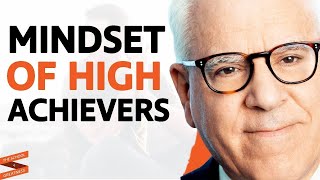
David Rubenstein, co-founder of Carlyle Group, talks with Lewis Howes about what separates successful people from the rest. He shares habits of billionaires he knows, why philanthropy matters to him, and what he'd tell younger leaders starting out.
Chapters
You can't do anything by yourself. You can't build an airplane by yourself. You can't play football by yourself. You need to have teammates. You have supporters, friends. How do you convince people to be your supporter to follow you? It's by talking well, communicating well, by writing well, or by leading by example. I think you gotta have a dream.
The School of Greatness.
Really? Yeah.
Please welcome Lewis Howes. Welcome everyone to the School of Greatness. Very excited about our guest today. His name's David Rubenstein, who's the co-founder of the Carlyle Group, one of the world's largest and most successful private investment firms managing over $230 billion in assets from 30 offices around the world. And you've got a new book out called How to Lead, which I'm very excited about because you have interviewed literally the world's greatest leaders, CEOs, thought leaders, and I'm excited to dive in about this. So, David, welcome to the School of Greatness. Thank you very much.
I appreciate your inviting me. Of course.
And you have, I've seen a lot of your content, I've seen a lot of your interviews. You, again, are connected to the most powerful leaders, the richest people in the world, the most successful leaders of our time. And I'm curious, just my first question is, who is the ultimate role model for you when it comes to leadership?
Well, the greatest leader this country has ever had, I wouldn't say that he can be a role model because I'm not in his league, but is Abraham Lincoln. he held the country together in a way that I don't think anybody else could have or would have even tried. So he's a great role model in that sense. In the business world, I'd say Jeff Bezos, Bill Gates are people that I know reasonably well and they've built incredible businesses in a relatively short period of time and I think have really shown people how to build a great business. In the government area today, Jim Baker, who was in my firm and is in the book, was somebody that I really admired what he did when he was in the Secretary of Treasury, Secretary of State, and also Chief of Staff. So those are some people I guess I admire and have role models and put them in that context. Yeah.
And if someone today is looking to increase their leadership skills, would you suggest that they follow people in their industry that they want to model, or would you suggest that they follow great leaders in a range of different industries?
I don't think it's an either or thing. I think if you're in one industry, people who in that industry have done well probably have some leadership traits that you might want to follow. But I think leadership traits are important to look for in other areas as well. So if you're a military leader, you might look at skills that people have in the political area or business area and vice versa. So I would say the most important thing is the kind of traits I talked about in the book. Those are the key things is learning how to fail and come back from that, learning how to communicate with people, learning how to share the credit, all those kind of things, and that they're applicable on any area of business or life.
You talk about farsighted leadership. What is farsighted, how did someone, what is farsighted leadership mean and how does someone develop a skill of doing that?
Well, as you know, in the business world today, people are obsessed if you're a publicly traded company with your stock price or your quarterly earnings. Farsighted leadership is people who are taking a look at things that are way down the road. A good example of that is Jeff Bezos. When his company went public, At one point, the stock really went down to about $6 a share after the internet bubble burst in '99 and 2000. And he didn't pay attention to Wall Street, which said, you got to get earnings. You got to get earnings. You're not earning anything. He said, no, no, no, I'm building the customer base. I'm building the brand, and I don't care about earnings. Earnings will come later. And he was right. But as he was looking three, four, five years down the road, and that's what you have to do if you really have ability to be a great leader. You have to have some foresight, not worry about what's happening today, tomorrow, next quarter, or even next year, but three or four or five, six years down the road.
When someone's a leader in business, what do you find? I'm hearing you talking about Bezos, and I know you've worked closely with Richard Branson, who's a master at branding and marketing, in my opinion, as well. How important is building brand as a business leader as opposed to just generating revenue?
Well, brand is really important and revenue will follow. If you develop a brand, the key thing is it takes a long time to develop it and it can take a short period of time to destroy it. So I think we've seen some people do great things to build their brand and then they make a terrible mistake and they destroy the brand. And so I think when I got started in the world really as a young lawyer, The first day in law firm, the head of the firm came in and said, the only thing you really have in life is your reputation. It takes a lifetime to build it and five minutes to destroy it. So don't do anything that's ethically improper. And what he was saying is, your reputation is your brand. You have a brand, I have a brand. It's taken us a while to get that brand. It's taken you a number of years to develop the brand you currently have. If you make a terrible mistake or something, it could destroy that brand. So you got to be very careful about your brand because it takes a long time to build them. and it can be destroyed overnight. For example, we've seen what's happened in Washington recently. Some people thought they were going to run for president next time. Now they're lucky if they can stay in the United States Senate.
Their brand has been destroyed, in my view.
Right.
You know, everyone wants to know what are the habits, the rituals, the routines of all these great leaders. You know, they asked me this as well from me interviewing a lot of world-class athletes to scientists and doctors and what's the routines and habits and everyone wants to learn those kind of those hacks, and I'm sure you get that question a lot. I'm curious, what are the routines and habits that you've interviewed from the people that you admire the most that you're actually not implementing in your business or in your life? Something you know you should be doing, but maybe you're not doing enough of yet? Well, Jeff Bezos, when I interviewed him.
Said he gets eight hours of sleep every night. That's indispensable for him. And I haven't been getting eight hours of sleep ever, practically. So I know I'm not doing that. He says he doesn't like to get into the office early and make early decisions and he doesn't really like to make any decision before 10:00 AM. So I've obviously avoided following that rule over the years. And he also says that he doesn't like to make any big decisions after 5:00 PM. It's tired. So I wish I had- you- make.
Big decisions in one hour?
Basically, and the couple makes a couple, he says he only makes a couple big decisions a day and just between like 10:00 and like 3:00 or 4:00, that's it. So, it obviously has worked.
But it sounds like you could, you know, I've heard a lot of people say, you know, get up early and do these things and actually go to work early and get ahead of everyone else. But I'm hearing one of the greatest business leaders right now saying, you know, actually, maybe he gets up early, but he's not making decisions and working that early.
Well, there's no doubt that you can work obsessively so that you're tired and you don't really not that productive. So the hours in don't necessarily mean the hours out are going to be that great. Now, Jeff is probably exaggerating a bit when he said that, but I think as a general rule of thumb, hard work produces better results than no work or modest work. And as a general rule of thumb, reasonable intelligence is better than not being intelligent at all. So I think you don't need to be a genius to build a great business, but I think hard work, reasonable intelligence, or two essentials, and Jeff and Bill Gates obviously had that.
Yeah, I mean, you have a very impressive resume. You have incredible results that have been constantly growing year after year in terms of financially in your business, but also philanthropically, and you're on the board of so many different prestigious boards of different places. what would you say has been the thing that has been a huge success that you've done and implemented year after year consistently, that you started to recognize in other leaders that they were doing as well? What were the things you really did?
Well, I basically think the most important thing to do is, and the most difficult thing to do is to figure out what makes you happy. Personal happiness is the most elusive thing in life. And so you have to figure out what you want to do, not what your parents want you to do or your, children want you to do or your partners, what you want to do. And if you were personally happy in what you're doing, a lot of other good things will flow from that. So I tried to figure out what I was going to be happy doing. And I wasn't happy practicing law. I had been happy working in the White House, but then that left when we lost the election in 1980. So I wasn't happy subsequently practicing law. I started a business in 1987 and I really loved it and I enjoyed it. And that was terrific for me. And then I decided to give away basically all my money when I signed the giving pledge a number of years ago. And I've been in the process of doing that. And I love the philanthropy and I love getting involved in helping other people. So those are the things that have made me very, very happy. And so figuring out what makes you happy without the benefit of a psychiatrist, there's nothing wrong with psychiatrists, but I haven't had one. But to figure out what makes you happy is an essential thing of getting started and what you want to do. And then when you figure out what's going to make you happy, you gotta figure out how to pursue that.
How many people have signed the Giving Pledge now, do you know?
About 215 or so, probably 80% or more of them are from the United States. We originally had 40, I think that signed it when we came up with it a couple of years ago. And the Giving Pledge is a nice thing, but I don't wanna overstate its value. I think it's good in getting attention to philanthropists and what people can do with philanthropy if they're smart. but there are only 215 people that have signed it. So what you really need to do is get everybody who's not quite as wealthy as those people to take some part of their wealth and give it away, not maybe as much as the other people are pledging to do, but do something that gives back to society. And I like to remind people that philanthropy is derived from an ancient Greek word that means loving humanity. It doesn't mean necessarily writing checks. So you can love people by giving your time, your energy, your ideas. The most valuable thing you can give is your time. because you have a very finite amount of that. You can't get more time. So I try to encourage people of all levels of wealth and of all age groups to get involved with something that they think is important in society, make humanity slightly better.
You've surrounded yourself with the richest people in the world. You've interviewed them, you're friends with them, you manage some of their money, all that stuff. What are the habits of a rich mindset way of thinking versus a fixed and poor mindset way of thinking? What are those habits that you really see or how are they thinking differently to attract more abundance financially?
Well, wealthy people generally, not talking about people that inherited it, but generally, and most people who are most admired business people or people that made it themselves, they kind of figured out how to do it. They tend to be very focused hardworking, reasonably intelligent, very persistent, and have some work habits that got them to the top. People that are not in that category tend to be people that are not as focused, not as hardworking, not as driven to achieve something in life, and there's nothing wrong with that. You can be very happy. Happiness is the most important thing. You can be very happy not being wealthy, not being a successful business person, just being a modest person and you have a nice family perhaps and you love your children, you spend time with your children and that gives you happiness, nothing wrong with that. The people who are the wealthiest people tend to be really heavily focused on one or two business objectives. They have a goal, they have an idea, they want to pursue it. And the money is a side product. Most people that I know who are very wealthy, they got there not by saying, I got to be rich, but by saying that, I want to prove my idea works and I'm going to work hard to prove it.
Yeah, they're more focused on how can I solve a problem or help ease pain in the marketplace in some way through an innovation or an idea or a process. What do you think are some habits or a way of thinking that people could implement in the first hour of their morning to help them to start to earn more financially, whether it be in their career, a side hustle, or in their business?
Well, I think in the first hour of the day, you know, try to find out what has happened overnight and respond to emails or other things that you have to respond to and then find out what's going on in the world, reading a paper, the equivalent of it, getting, and then figuring out what are the 2, 3, 4, 5 things you want to do that day. Because it's very easy, as you know, we get to go to the office or the equivalent of it in the COVID period of time and all of a sudden, you get calls, you get emails, you get interruptions, and you might say, by the end of the day, I haven't accomplished what I wanted to accomplish. Right. So you really have to say, what am I trying to accomplish today? And what are the ways I'm going to avoid being tempted out of those, those goals? And how do I stay focused on it?
And that's going to be very helpful. Have you always followed a similar routine like that for a long time consistently yourself personally, or have you adapted different means in the morning for yourself?
Well, I guess I probably because I never was sure of whether I was smart enough or good enough to get anywhere, I adapted the habit or adopted the habit early on of being a hard worker, which is to say spend a lot of time working. Whether, you know, I needed to do that, I don't know. Maybe I could have been socially more gregarious or more outgoing or maybe I could have done been a better athlete as you were. But I basically did a lot of working and that probably made me dull, but enabled me to focus on the kind of things I wanted to do. I would say as you get older in life, you realize that you want to make sure you smell the roses and do all the things you're going to do before it's too long and you won't be able to do them. And so, you're very young by my standards. I used to be the youngest person in the room. When I was at the White House, I was a top advisor to the president at 27 years old. Now I find I'm the oldest person in the room. And when you're the oldest person in the room, you're kind of wondering why you're still in the room, whether you should be doing something else. A lot of people my age, you know, retired. And when Social Security was set up, I think the retirement age was 65. But in that period of time, most people didn't live past 65. So now people are living to their mid-80s, maybe on a normal basis. and so people retiring later, but even if you, let's say, retire at 70, you've still got a long time to do things. And that's the time when you can say, do I want to keep working? Do I want to do other things? Now, my general rule of thumb is that people that retire, sometimes they drop dead right away. All of a sudden, their body doesn't have anything to work towards and that just relaxes too much. And you see people retiring the next day, they die. And I'm not exaggerating. I know many people that have retired and relatively quickly thereafter they died for whatever reason. Obviously, there are exceptions to that. In my case, I've observed that many people that I like as role models keep working. Warren Buffett is now 90 years old. He's still working. And Greenberg is 895. He's still working. So I think when you have a purpose, you go to the office every day or the equivalent under COVID and.
You'Re working, I think it can keep the body going. Yeah. And the mind. I mean, I've interviewed a few of the members of the giving pledge as well and always inspired by how these billionaires think and create and solve problems and innovate. I'm curious, do you ever have any regrets looking back and saying, oh, I wish I wouldn't have worked that hard. I've got a certain amount of money now, but I would have been happy with half as much or I still would have had an amazing life with less debt.
Well, I'm Jewish, so I guess I'm always regretting things. I'm always looking back. I'm never happy. Sure, I wish I had done a million things differently. In Carlyle, I had a chance to be an investor in Facebook when Mark Zuckerberg was at Harvard. I turned that down, had a chance to own a large piece of Amazon. I in effect turned that down. I turned down Netscape when Marc Andreessen was starting it. Recently, I had a chance to invest at a very, very low price pre-IPO at Moderna and I turned that down. So I've made a lot of mistakes and I have a lot of regrets. I wish I was a better athlete, more personable, better looking, more charming, a whole bunch of other things. I wish I could play a musical instrument. I wish I could speak a foreign language. I wish I'd climb Mount Everest. But within reason, I'm reasonably happy with what I did given my abilities. And the most important thing to me, is that one, my parents lived to see pretty much what I have done. So one of the greatest pleasures in life, I think, is a parent seeing a child accomplish something useful. And my parents did see it and I had the pleasure of helping them see that. And then of course I now have three children and I getting pleasure from seeing what they do and living, you know, trying to help them get raised in appropriate way. hopefully they'll be productive citizens as well. So those are some things that I've been happy with and I don't have any regrets about that. I just wish I had probably not wasted so much time watching television when I was younger or probably not play sports where I had no native ability. So I should have probably focused on sports where I could have done better or, you know, I'm sure I daydreamed too much when I was in high school or something or another, but on the whole, I'm reasonably happy with where I am in life. My challenge now is living as long as I can so I can get more things done, give away my money, see some grandchildren, see them grow up, and ultimately try to give back to the country. That's what I'm interested in.
If you could go back to 37 when you started the Carlyle Group, I think you said you were 37 around there.
That's correct.
So my age right now, what advice would you have someone in their 30s? going into kind of, you know, I feel like I've always been the youngest guy in the room in sports. I was always more skilled. And so I was on varsity when I was a freshman and sophomore and, you know, in college, I was the younger one playing with the upper classmen. And then I got into the business world kind of early, I would say, and I always felt like there was people who are 10, 20 years older than me that I was in those rooms. Now that I'm getting closer to 40, I'm like, I see all these young YouTubers and TikTokers who are starting to build and build businesses. I feel like I'm really becoming the older one at this stage. What advice would you have someone at 35 in that range of how to create a richer life while they build their business so that they don't have any regrets?
Well, I think that again, you have to figure out what makes you happy in life. And many times people don't know what makes you happy. I actually had no interest in making money. I came from a poor family. My father was a blue collar worker. I didn't have any interest in money. Nobody really talked about making money in my family. It wasn't something that was important to me. And I just wanted to work in politics and government where you don't make any money. So I realized later on though that the thing I had chosen to do, the law, wasn't that exciting to me. And so I made a mid-course correction when I was 37 and got in the business and I liked it. I think people should experiment. I tell my children to experiment with many different things. And then, you know, by the time you're in your mid-30s you should probably figure out what makes you happy and where you have some skills and then pursue something in that area. Though you can still obviously make mid-course corrections later on as well. I think that by the time you're 37 that you probably should have a reasonable sense of what your skills are, what you're good at, what you like. and then therefore probably pursue something in those areas where it takes advantage of them. But remembering that you should always have some outside interest. Just working all the time isn't going to make you happier necessarily. And so you should have some outside interest. You should learn how to get along with people, learn how to relax, learn how to keep your body in shape, how to keep your mind in shape, and just have a full and balanced life if it's possible to do so.
If there were, I know you don't really have any regrets, but you say you wish you would have done other things like playing music and learning a language and whatever, taking care of health maybe more as opposed to working as hard. If you could go back at 37 and you could say, okay, I want to commit to doing three things that I wish I would have done differently. Is that an instrument? Is that health? Is that relaxing, traveling? What are those three things you would have taken on differently? obviously hypothetical and you're happy where you're at, but what would you do?
Well, I wish I had probably been more involved in keeping my body in shape while I'm reasonably healthy. I'm, you know, I probably didn't exercise enough and, and I wasn't really, that didn't find a sport that I was good enough at to really stick with. So I wish I had been more involved in exercise and health kind of things. Secondly, I wish I had probably learned how to do something more creatively, like play a musical instrument or do something in the arts. I'm involved in the arts as a donor and so forth, but I don't have any artistic skills. And I, you know, be either be a painter, be a musician, be something that is more creative. I wish I had done that. And I wish I had spent more time, you know, probably as everybody says, with your children. You know, when you have children, when you're little kids, you can't do that much with them. You can change the diapers or you can run after them, teach them how to do some things. But when you're building your career, there's a temptation to kind of hand off the kids to others. And maybe in hindsight, I wish I had spent more time with my children now. Now, I have three children, all of whom have MBAs. And you can say I made a terrible mistake because there are no poets, there's no artists there. They're all MBAs and they're all in private equity. So you could say that either very successful or very unsuccessful depending on your point of view. But as you get older, you realize the most important thing in the world is relationships. So you want to have relationships with your children and ultimately your grandchildren and so forth. So if I could do it all over again, I'd do some things differently. But on the whole, I got lucky in life and it could be very well have been the case that I didn't get a job at the White House. start a firm like not mine, and I would today probably be just retired as a mediocre lawyer and living in, you know, somewhere in Florida playing shuffleboard. That didn't happen, so I'm reasonably happy with that. Yeah.
And what would you say? I mean, you have a lot of conversations with, you know, the wealthiest people in the world, but you're also friends with these people.
Right.
Just like I've been very fortunate to the people I interview, you know, I stay in touch with and I become friends with and hopefully I and stay friends with you, David, after this. But what are some of the behind closed door conversations that people actually open up about their regrets? They're really wealthy. Is it around? I wish I would have worked out more and been healthy because, you know, you know, a lot of people, a lot of people see Steve Jobs is like, okay, he would have given up all the money in the world to have more years of his life, you know?
Well, nobody who's wealthy ever says, I wish I was really a lot wealthier. Nobody says that because you realize how much money do you really need to spend and so forth. What people will say is, I wish I had spent more time smelling the roses. I wish I had spent more time with my children. I wish I had spent more time developing relationships around the world or around the country where I could get to know areas that I'm not an expert in. Nobody says, I need to make more money. I need to be higher in the Forbes 400 list. you know, people, you know, when you get to a certain point, look, all human beings as a general rule of thumb with the exception of 0.00001% want to live longer. Now, even people that have very unhealthy situations or are in poverty, nobody says as a general rule of thumb, I really don't like living, I want to die. Now, obviously people do commit suicide, it's a very small percentage of of the population. So why do people want to live longer? Well, there's a general rule of thumb. Life has a lot of pleasures to it and you can be happy and that's a good feeling. So people, I think what they most want to do when they get wealthy is figuring out how they can keep this good thing going for a while. So all of a sudden you see, you know, very wealthy people starting to have exercise classes or are trainer or, you know, they're working out more. or eating healthier and doing things that can enable them to live longer and have the benefits that they've worked for but have it longer. And that's what most people want. Now, at your age, the last thing you're thinking about is retirement or you're going to die soon and you better get things done. So, you're so young. But at some point when you're 67 or 77, you'll think about it a little bit differently. Yeah.
It's funny though, because time has a you have a different sense of time at different stages of your life. When I was like 9, 10 years old, I remember thinking someone in their 40, I was like, man, they're they're about to retire. They're old. They're, you know, it's they didn't look as healthy back then. When I was in the 80s and early 90s, it was like, oh, man, they're they're kind of over the hill. But now people are living way longer.
They're staying more active in their 50, 60, 70. Yes, of course, people live longer. When people came out of caves 400, 000 years ago, the average life expectancy was 20. At the beginning of the 20th century in 1900, the average life expectancy in the United States was 49.
No way.
49. So today people expect to live longer. Now, when I was a young boy, there was a president named Dwight Eisenhower. You probably don't remember him, but you may have seen pictures of him. And I used to say, boy, that is an old, old man. Old, old man. Okay, how old was he? Well, he was elected president at 62 and he left when he was 70. So he's younger than I am now. When I was in the White House, I was 33 at the last year, I'm sorry, 31, 31 years old, and we were running against Ronald Reagan, who was 69. And I said, President Carter, you don't have to worry because Ronald Reagan's so old, he's 69, he can't get out of bed in the morning. Now that's two years younger than me. I read the other day when John Kennedy was assassinated, In November 22nd, 1963, they told the speaker of the house who was next in line succession after the vice president, that he would be right after the vice president. He fainted when he was told this that he was next in line to be president of the United States if Lyndon Johnson was killed or something, and nobody knew whether Johnson was gonna be killed that day. Well, he fainted and they said he was an old, old man. It's not unexpected they would faint. How old was he? He was 71. so, you know, and I'm now at that age. So, you know, it's surprising. On the other hand, you have people like Warren Buffett, who are 90 years old, brain's still going strong. You just don't know exactly what it is, but clearly, you know, when you hit the age of 60, that you live more than you're going to live. And so, you know, you want to race to get things done. I'm doing what I call sprinting to the finish line, which is to say, I'm trying to get stuff done. that I never really did before, but I keep saying I better get it done because who knows when my brain is going to go away or the body is going to go away. So you're too young to remember this and most of your listeners and viewers are probably too young. But at some point you realize that something's going to go wrong. It's a funny thing. You have your spotty you've got that you were given by your parents and this brain you were given by your parents, but you don't know which of these body parts is going to check out at some point. It could be that cancer comes along. It could be your brain doesn't work and you just don't know. So you just got to keep going as long as you can, hoping that these things stay along with you as long as you really wanted to be there. Clearly, sometimes things aren't going to stay around and some body parts aren't going to work and you won't be able to do everything you want to do. So you want to get things done before then so you don't have regrets when you're looking back.
Wow. Yeah, I think when I remember growing up, when people hit 40, they hit the midlife back in the, you know, when I was in the my young years, when people hit 40, that's when they went through the crisis because I guess the expense, the expectancy was more around 70 or 80.
Look at, put it this way. If you were an NBA basketball player today, you would be called an old man. Right.
LeBron James is 35-36.
Okay, they're making fun of Roger Federer. He's 39 years old. How can he play tennis anymore? He's an old, old man. You know, dominating. Right, but in some sports, you're an old person. Sometimes there are some athletes who retire in their 20s. John McEnroe basically retired more or less when he was 29. Boris Bjorn Borg retired when he was 25, I think. So some of these athletes, they're old when they get to be older. If you were a professional athlete today in almost any sport, unless you're, you know, Tom Brady, you'd be considered an old man. Even though you're you're young. If you came to my investment firm, we would say, hey, this guy's young. He's too inexperienced. We can't give him too much responsibility.
If you're in the sporting world, all of a sudden, you're an aged person.
Yeah.
If you're a gymnast, you're 16, you're.
18 year old, you never retired 18. Jack Nicklaus considered to be maybe along with Tiger Woods, the greatest golfer of all time. What was his most impressive accomplishment? I interviewed him for my book. and he had a lot of accomplishments, of course. But the one that most amazed people is that he won the Masters when he was 46 years old. How can anybody get out of bed in the morning of that old when you're in the golf? But here he won it at 46 and, and Tiger Woods won it at 43 when he had all those back surgeries. And, but those guys for, in, in the golf world, 40 is kind of older. Remember, at 50, you can, you can play on the seniors tour.
Wow. Wow, yeah, this is fascinating. I'm curious, it just seems like this last three years really, there has been just what it feels like to me, a wave of ups and downs in especially in our country, ups and downs in the world, whether it be politically, whether it be society, whether it be our cultures, and new generations coming up, people trying to change old ways and create new ways. What advice do you have for the younger leaders in their teens and 20s for navigating, it just seems like everything's changing so quickly of like roles and responsibilities and politics and everything. What advice do you give to young people to be a leader during so much uncertainty and chaos and unknowns? How do they learn to lead and have farsightedness when everything's changing all the time?
You can't control everything, of course. But I think people who are, let's say, your age, if they want to be leaders, the skills that I think are very important that really people should focus on other than the obvious persistence and so forth is continue to learn. You know, we call college graduations commencements. Why is that? It's the end of college, but actually commencement, it means beginning. And it really means it's the beginning of life and the beginning of your education. 30% of people who graduate from college never read another book in their life. They think they're done. So learning, always learning. Figuring out secondly, how to improve your skill set. How can you write better? How can you talk better? Remember, communicating is the only way to influence people. People are only influenced if you can communicate with them. And how do you communicate with them? By writing, by talking, or by leading by example, doing things like that. Well, practicing those skills. I tell people, people often say to me, well, you're pretty good at making a speech. I said, well, I wasn't considered very good many years ago, but I took every invitation I could get and I just practiced. I made mistakes and eventually you get better at it. When you first started this program, I assume you weren't as good as you are now, right? You've learned a lot. So take advantage of things, learn how to perfect yourself and focus. My resume shows I've got lots of different things I'm doing. But I started focusing on one or two skill sets and then once you have those, people come to you and ask you to do more things. So if you're very good at something, people assume that you may be good at something related to it. You'll get more responsibility, more opportunities and so forth. and you can never meet too many people. Everybody is helped along the way by somebody, having contacts, making networking people. You never know who's going to call you up and say, here's a business deal, here's a job opportunity, here's somebody you should hire. And so, if you think about how you met your spouse, how you met your partner, how you met your business partners, it all came about through some kind of serendipity that came about because you met somebody who introduced you to somebody.
You'Re speaking my language. I'm nodding this whole time for those that are only listening and not watching on YouTube because I did all these things that you've been doing in my 20s after I was done playing arena football. I remember thinking, I don't have any skills. I was a pretty good athlete and that was my skill, but now I got injured and I couldn't play anymore and I was like, I have no real world skills. I'm afraid to speak in public, I'm afraid to speak in front of five people that I don't know, I'm afraid to build relationships, I'm afraid to learn new skills. I was afraid of everything. And I remember finding some great mentors early on that I was inspired by their way of being, their energy, their model of life and business and career. And I would just learn as much as I could from them. and one of the things that a mentor said who was a professional speaker, he was like, go to public speaking class every single week. Join Toastmasters. And that's something I did for a year every single week. And just the act, like you said, the consistency of doing it and failing over and over again and looking humiliated allowed me to gain confidence. And now I'm able to speak in public, and it's something I do. But these skills, you've got to. I've learned that you've got to do them by. By messing up. We're not going to be good.
Yeah, look, when I interview people, people often say, how do you do this without notes? Well, it's not that complicated. What I do is I prepare extensively, as you obviously do, and then I write out the questions that I want to ask the person, and then I kind of more or less memorize them, and so I can have a conversation. I kind of prepared, but I don't like to use notes because it kind of interrupts the flow. Same thing as when I'm making a speech. I don't use, even when I'm giving a commencement speech, I don't use paper. I will have written something out that it will be that I can give to somebody they want a written text, but then I will have memorized it and it since I wrote it, it will flow from my brain the same way when I'm speaking as when I wrote it. And then when you're looking at an audience, you get much better feedback when you're looking as opposed to looking down and up and down as you do when you're reading a text. And then people like I can speak for an hour on a that's not a subject. I'm usually speaking about subjects that I know something about without notes. It's not that hard to do. It just takes a little practice and you develop it. And I tell people to take advantage of speaking opportunities that you're given, but you can perfect yourself or whatever your skill set might be. Take advantage of all the opportunities you're given, perfect it. So some people can say, he's a really good writer or she's a really good speaker or something. And so you have something that people are talking about and you have a.
Skill set and then eventually you'll branch out and develop other skill sets. Yeah, I mean you're saying it's not that hard to do now because you've got decades of experience, but I remember being 25 and if someone would have said you need to prepare a five minute speech, it would have taken me a month to stress and analyze over and be fearful over and try to rewrite it all the time. But it does take practice and preparation. But the things that you said that I really love that I want people to think about here is learn to be a better communicator. orally, because that's how you influence people, learn how to write better. Those are two things that I really try to master. I mean, not master but improve on in my 20s. And then relationships. I've built my entire business and life on relationships. When you don't have any skills, if you have the ability to connect and just make people feel good about themselves and show value in some way, and you can do that through just listening to people, you can have incredible opportunities with the right relationships. Wouldn't you agree?
Yeah, I agree. Look, how does humanity move forward? You have people who are leaders, people who are followers, but in the end, the only way that something gets done is when somebody does something that somebody else asked them to do or requires them to do. Well, how do you know how to communicate with that person what you want them to do? If you're Albert Einstein, you say, here's E equals MC squared. he had to convince people he was right. And he figured out ways to do it. And whatever you're trying to do, you have to convince people because you can't do anything by yourself. You can't build an airplane by yourself. You can't play football by yourself. You need to have teammates. You have supporters, friends. How do you convince people to be your supporter to follow you? It's by talking well, communicating well, by writing well, or by leading by example. So if you're playing arena football and you can't talk to your teammates about what the play is gonna be 'cause you don't know how to talk, not very good. Or if you're not a good athlete and nobody's going to follow you because they think you're not a good athlete, you lead by example. You know, so you have to figure out how to communicate with people. Everything is communication. You can't do anything by yourself.
How did you really learn how to build quality relationships with these great leaders and high net worth people? What were some of those things that you said? Oh, actually people do like me. They do trust me, even though I'm just a lowly lawyer.
Right.
You know, former government assistant type of role. How did you start to build these deeper relationships with the highest net worth people in the world?
Well, I didn't start out saying, this is what I'm going to do, because if you start out thinking you're going to do that, you probably fall flat on your face. It's a concentric circle thing. I started doing some things and then it led to other things and it leads to other things. So, for example, BernoD Jordan, a very prominent person in Washington, D.C., asked me to succeed him as the president of the Economic Club of Washington, which had a very small membership and I was not even a member of it. And I was just supposed to get business people to come in and speak. And I realized relatively quickly that they weren't very good speakers. They were putting people to sleep. So I just came up with the idea of maybe I would interview them, make it a little more lively. And I developed a skill set of how to do it and a way of doing it. I did it for five, six, seven, eight years. then Bloomberg saw it and said, Hey, that's pretty funny and nice. Why don't you come on Bloomberg? And so I developed a skill set that people see around the world of how to do an interview. People like it. I'm not saying I'm perfect at it, but people like it and it's led to other things. And there's some people that I've interviewed, I've seen me do the interviews and they say, okay, he's a credible person. He's not going to embarrass me. Fine. Other people I've met through other circles and there's a general rule of thumb. I'm not trying to threaten people, obviously being polite to people, is helpful. Common courtesies are useful, but one thing will lead to another. You never know how you're going to meet somebody. You never know, like for the current thing you're doing right now with this podcast, I don't know how it started. I assume somebody recommended it that you do this and somebody introduced you to somebody and so forth and so on. I'll give you an example. In my case, Carlyle is a great investment firm, but it's not a secret. Anybody knows anything about it. I'm not the great investor there. I was the fundraiser, I was the strategist, I may have been the face of the firm, but I had somebody, when I was running around the world raising money, who was actually investing the money. How did I get that person? It was happenstance. Here's what happened. I was trying to recruit a woman to join our firm at the beginning, and I tried to convince her, and she said, Wait a second, you're going to start a private equity firm in Washington, you've never done buyouts before, you don't have any money raised yet, I don't think I want to join, leave my job as the treasurer of Gannett. And as I was leaving the door, she said, oh, by the way, David, there's a guy who's thinking of leaving his current job somewhere in Washington. Why don't you call him up? He might be a candidate. I never heard of this guy. I eventually called him up, and he became my partner, and he became one of the most famous private equity investors in the world. His name is Bill Conway, and he's the guy responsible for investing staggering sums of money at a very large rate of return. So it was just happenstance, but I hadn't gone to meet that woman. It might not have led to meeting.
Bill Conway and so forth and so on.
So you never can have too many contacts. You never can have too big a Rolodex.
Yeah, I love everything you're saying because I feel like I'm trying to be the young version of you. I'm trying to learn from you from all the years of experience that you have and the results that you have from my Rolodex. How do you manage then your contacts, either the weak ties, maybe people you only talk to once or twice a year that you know you met once or twice to the strong ties, to the high net worth, high influencer ties that you have. How do you manage that? Do you have a spreadsheet? Are you, is it more intuitive and gut?
Well, what I've done is, as I started developing, when I built, was building Carlyle, I was tunnel visions. I'm going to build this firm with the help of my partners. I'll run around and raise the money. Well, I was running around raising the money around the world. I was traveling, you know, 240 days a year. Well, you're meeting people around the world. You're always making contacts on people might have Turned out they went to school with you or they knew of you. And so you could develop this contacts and you kind of, you never know which one will come into use. And then I gradually went on a lot of nonprofit boards and maybe 30 of them. And they all have prominent people on them. And so you get to meet more and more people. And then, you know, the other things I've done, making speeches or interviewing people, you just never, you can make a lot of contacts. I didn't consciously say, I wanna have the biggest Rolodex in the world. But I do have a lot of good network now as a result of having done some of these things. And I don't try to abuse the relationships and don't ask people for things that are ridiculous. I also agreed to be the head of a lot of capital campaigns. And you had a lot of capital campaigns. You get to meet people and ask them for money. That's not the most pleasant thing from time to time, but you get to meet people. And obviously people come to ask me for money from time to time, too. And you just develop a network. And I think if people think you're a friendly person, a reasonable person, you're not yelling and screaming at them, and you're a person that they might admire, it's not that hard. And I'm sure you're in the process of doing that.
And how are you staying in contact and continuing to develop deeper relationships with their top 100 contacts?
Well, I don't sit down every day and say, I gotta call them. There's some people more systematic than I am, but I would say by doing a lot of the activities that I'm now doing, People sometimes are seeing them. So for example, before I started doing my television show, and then they make into a podcast and started doing other things, people may not have realized what I was doing. I'm not on any social media things because I don't really think I have the time or the skill set to do that. And I'm also be embarrassed if I went on Twitter and they reported that David Rubenstein has six followers, it'd be embarrassing. So I've been afraid that it would show how little influence I have. I have six followers. So I don't want anybody to say I have six followers and Kim Kardashian has 72 million followers. So I've stayed off social media, but I do have some of my shows go on YouTube and other things like that. But, you know, I just keep working at it. And, and, are you a texter?
Are you texting Bezos and Oprah?
I'm a last adopter. It's called a last adopter. When the technology is just about over and done, that's when you jump in. Right.
So, yeah.
So, are you getting handwritten letters?
Are you emailing? Are you calling? Are you texting? How do you kind of ping?
Well, I had a Blackberry for a long time and then my firm wouldn't support the iPhone when it came out because we only had Blackberry. Later, they said, We won't support the Blackberry anymore. We're only gonna do iPhone. So I had to finally get an iPhone, which I have now. And one time I couldn't get to work very well. I was in a meeting. I asked somebody if he would fix it for me. It was Tim Cook. And he said, David, I normally don't do tech support for people. Tech support for you. So he showed me how to work this thing. But I now have some of the technology devices that people use and so forth. But I wouldn't say I'm perfect at it. And I'm probably too old to be a great social media person. I, and maybe I don't use Facebook because I resent the fact that I turned Mark Zuckerberg down for money when he was looking for it and I.
Never got over that, I don't know. So, are you emailing people consistently?
I do, I get about 600 or 700 emails a day, so it's hard to respond to all of them. So I try to get as many as I can. I do have a team of people that look at them and help me figure out which ones I got to get back to, but as you know, it's easy to email yes, no, yes, no, responding to somebody, but they asked for a detailed answer. I got to think about it. So I'll think about it, put it off to the end of the day, then maybe I forget about it. And then as you know, if you haven't responded in 24 hours, people say, you don't love me anymore. How come you forget me? And you know, you have to respond right away. So it's interesting phenomenon. One of the good things about this I thought was this, with all these texts and everything, I could hide the fact that my handwriting is bad. See, my theory was that when they taught handwriting, it was a Jewish holiday, and I was out of school. And so I never really learned handwriting in the second grade. So the good news is that, you know, I don't have to write handwritten notes, but now it's come back. All of a sudden, the hottest thing is to do handwritten notes because everybody wants to say, I'm not just a technology person. I really like you. I really care about you. So they send me all these handwritten notes. So now I have to figure out how to respond because I, my handwriting is so bad. So I keep saying, look, I would give you a handwritten note, but it's like reading hieroglyphics. You couldn't do it, but people don't like that. So now I think I'm going to hire somebody who can write for me and pretend it's my signature because I don't want to have anybody might see how bad my handwriting is.
I'm similar, I have the handwriting of a kindergartener. I write and I sometimes can't even read my own handwriting what I was writing down in the past. You've mentioned the bitterness of not investing in Facebook and a couple of other things a few times now.
Right.
What are the things that you did invest in that were massive hits and massive wins that you're like, you know what? At least I got in on this and I got in on that. What are those?
Well, my firm has historically been a buyout firm. And the venture capital world is a world where probably 90% of your investments aren't going to work and maybe 10% are, and those 10% can be spectacularly successful. The buyout world is one where you want 90% of your investments to work and maybe 10% though. So in the venture capital world, you're looking for sometimes 10 times your money, 20 times your money, things are now with the most recently, a lot of these heroic deals that are a thousand times your money. So my firm has been basically a pretty good buyout firm investor. And so we've done deals where you make five times your money, a great deal, seven times, maybe eight times. I'll give you an example of one recently. One of my favorite investment was my mother's favorite investment. My mother used to get coffee every day at Dunkin Donuts. So, Carlyle bought Dunkin Donuts and we did it with a partner and I think we made three or four times our money, which is a pretty good deal. But I gave my mother these little coupons that enable you to go in and get coffee for free. at Dunkin Donuts. So she would go into her local Dunkin Donuts in Florida and say, by the way, my son gave me this. He's an owner of Dunkin Donuts. And of course, the person would roll their eyes thinking, my mother's crazy. But that was one I liked.
We did pretty well. Nice. If there's anyway, anything you can do.
To impress your mom is a good way. I was always trying to make her feel happy. But, you know, you can't, you know. Yes. So make, I was their only child and my mother was, I was just happy. So I tried to make her happy. So, and I would say to all your young people here, they're listening. When you're growing up, parents can be a bit of a bother a bit. And when you're a teenager, you don't want to listen to them for sure. But in the end, the people that care the most about your success are your parents, if you're fortunate enough to have parents. And the greatest thing you can have is the unconditional love and support of your parents as you're moving forward in life and nobody will love you or support you more. Try to remember to honor your parents at some point. I made some mistakes in that regard. My parents were very happy with my success, but they didn't want anything from me. They didn't want houses, they didn't want money. I had to force things on them, but they just were happy with what I had done. But interestingly, when my mother passed away a few years ago, when I went through her scrapbooks, it had nothing to do with anything that Carlyle had done. It was only my philanthropy. and she used to tell me, I'm really proud you're doing something useful with your life and your money and not just making more money. So that's what made her happy, but I didn't really honor her enough. And so I would say, with my father, my father passed away suddenly when he was 85, 85, you know, anything bad can happen. And so I hadn't really done anything. So I decided to honor him. He'd been Marine, and I went and redid the Iwo Jima Memorial, which honors Marines.
Wow.
And I wish he had been there to see it. I did it in his name. And then I realized I should do something for my mother. And I did something as well at the Smithsonian to honor my mother. And she was there and she had a dinner with Ruth Bader Ginsburg and my mother and we kind of honored her. But I'd like to remind people that it's easier to honor your parents when they're alive and harder when they're not around. And Bear Bryant, the famous Alabama football coach, did an AT&T ad once where he said, you know, Mother's Day is today. and you should call your mother and to thank her. I can't do that anymore because his mother just passed away. So, you know, I just remind people that are listening that, you know, one of the things you should do is try to honor your parents when you can and, you know, and don't try to, you know, ignore their interest in your success in life. Yeah.
It sounds like your mom and your parents were very proud of you. What was, what's the thing you've done to date? that you're the most proud of that you've done?
Well, everybody that answers that question will inevitably say if they have children, it's that you have children that seem to be good citizens and they're gonna be your ultimate legacy. And so I'm very proud of what my children have achieved so far. They're still young. I would say what I'm most proud of is the fact that my parents lived to see the benefits of what they had done to help raise me. And so they were proud. And the fact that they were proud was my greatest accomplishment in terms of being proud. Beyond that, I would say the fact that people think I have done some things to give back to our country. So it's not, nobody comes up to me and said, David, you're a great American. You built a great private equity firm. Nobody really says that. But if I buy the Magna Carta and give it to the US government, or I fix the Washington Monument, or I fix the Lincoln Memorial, people think that's a good thing to do. And so I guess I'm proud of, of doing some things that people think is useful for a citizen to do for their country. Yeah.
Who are the two or three people you've yet to interview or meet that you're really inspired by?
Well, as an interviewer, you will appreciate this. The interview format in which we're now conducting this conversation is relatively new in the grand scheme of history. I trace it back really as a form of information and entertainment to the late, the tonight show in the early 1950s when there was a guy named Steve Allen, then Jack Parr, and they would bring people out and they would interview them on television, which really hadn't been done before. And it was kind of information entertainment. They, we don't have interviews of William Shakespeare. There are no interviews of Plato. We don't have interviews of, of Henry VIII. We don't have interviews of, of William, of you know, Napoleon. I wish we did, but they didn't have that format then. So my biggest regret is that I can't go back in history and interview William Shakespeare and say, Will, did you really write these plays? Or Henry VIII, Henry, why didn't you just get prenups with your wives as opposed to having to chop them up? Or Cleopatra, who was a better lover, Mark Antony or Julius Caesar? You know, we love to have those kind of interviews. But on the people who are alive today, I hope to interview Joe Biden. I've known him for a long time, but I haven't, I've never interviewed him. I hope to interview the Pope at some point.
Wow.
And, you know, I guess I like to have a serious interview at some point when distance is behind us with Donald Trump. I've interviewed him before he was president, but not since he was president and say, okay, let's have an honest conversation. I have to have a lot of time passed because I don't know whether he'll be sufficiently reflective for a couple more years, but have him answer in a serious way questions if he can do that about certain things that have happened. But I guess I'd like to interview Joe Biden now. The Pope would be another one. I've interviewed a lot of other people I haven't put in the book. I've interviewed most of the living US presidents, I guess, at one point.
That's amazing. hopefully I can get to a fraction of the level you're at in terms of those interviews.
I'm sure you'll, but remember, I'm much older than you. When you're my age, you'll be 10 times bigger deal than I am, 10 times bigger. When I was your age, I was nothing. So you're already got a job.
Right. Who are the two people that you've interviewed that you think I should, that would be powerful for me to interview as well, that you think I should try to reach out to and find a way to have on that really impacted you? Well, I think, you know, the people.
That would be, I think Tiger Woods would be a great interview if you can get them. That'd be great. Tom Brady would be great if you can get them. I think Oprah Winfrey, I interviewed her. She's great if you can get her. Jeff Bezos, Bill Gates are both really interesting. Elon Musk, I have not interviewed him. I know him. I've met him a couple of times. I wouldn't say I know him. Met him a couple of times. But he's elusive and hard to get the pin down for an interview. Mark Zuckerberg, I have not interviewed him. He'd be great to interview as well. I'm on a board with him, but I never interviewed him.
How important is it for people to think about joining boards? I know you're a part of, I don't know, 7,000 boards and every museum board and school board, all these things. How important is for people to start thinking about that as they get get in their 30s and 40s and beyond. In terms of building the right relationships, is it a waste of time? Is it all add value eventually for you? Are you making those win-wins or is it just a time suck for you?
Well, there's no doubt in the nonprofit world, boards are very important as a way of networking. And I tell people to only go on the boards of nonprofits that you're really interested in the subject. If you're doing this for networking, I wouldn't think you'll enjoy it as much. You really want to feel like you're doing something because you were, you know, even if you don't get any benefit out of being on the board, you're contributing in some way, your time, your energy, money, whatever it might be. But I think I probably was too tunnel visioned early on. When I was building my firm, I was on no nonprofit boards. I didn't start going on the boards until I was 50 some years old. So in my 40s, I just avoided all that because I was building my firm. In hindsight, I wish I had done more when I was much younger. Maybe I'm catching up for it now. But I would say I think it's good to have one or two non-profit boards if you can get on good ones when you're in your late 30s or early 40s and network and they'll lead to other things. I think it's a good thing. It's a good skill set to learn. Yeah.
What would you say has been the greatest use of your time in terms of building quality relationships? Is it through your own business and the travel networking that comes from that? Is it through boards and associations? Is it through commencement speeches? Is it through Bloomberg show? Where is that best use of your time? Looking back, if you could think of that.
Well, I think probably running around the world for some 20 plus years talking to investors, because it gave me an opportunity to meet a different set of people. I'm meeting investors all over the world. I'm traveling all over the world. It gave me a lot of life experiences I didn't have. and network, but also it gave me more self-confidence and ability to feel more comfortable doing things I later did. I think the nonprofit boards have been very helpful as well in developing self-confidence, but also network. So there's some things I wish I hadn't done, but generally I'm pretty happy with what I did. I wish I had started a little bit earlier, but you can't correct every mistake you made in life.
Sure. You talk about building confidence. I've been fascinated with confidence and how to eliminate self-doubt for individuals because I believe that when we doubt ourselves, it doesn't matter how scared we are or how much experience we have, if we doubt, we're probably not going to reach our potential and achieve our goals. What would you say are some ways to overcome self-doubt and build confidence that you've learned?
Right. When I interviewed Donald Trump when he was thinking of running for president, and he came to the Economic Club of Washington, and I interviewed him, and he asked me to ask two questions in advance. One was if he was going to ask him, I was supposed to ask him if he was going to run for president. And I said, president, what? He told me I'm going to run for president of the United States. I said, there's no chance. Then he said, ask me if my hair is real, and then you can pull the hair, because people think it's fake, but I didn't want to pull the hair. I said, I'll ask you. But the only question I stumped him on, I said, Donald, do you ever have any like self-doubt about anything? And he said, what do you mean self-doubt? What is that? He didn't really know. And obviously he doesn't have a lot of self-doubt, I guess. Self-doubt and insecurities, you'll find everybody has them. Everybody. In fact, the people that seem the most arrogant are the ones that have the greatest insecurities and self-doubt. People who are very secure in themselves can make fun of themselves. John Kennedy was very secure in himself and he could make fun of me. Self-deprecating humor worked well for him. People that are secure can make a lot of self-deprecating jokes and so forth and don't have that many insecurities. Everybody has insecurities because everybody thinks they might be making a mistake. You might meet the most famous person in the world and they will say to you, Am I doing this right? Am I did it wrong? I made a mistake. I mean, everybody has some self-doubts. If they don't have any self-doubts about some things, then they're just so obtuse or arrogant that they're not going to get a good interview out of them.
Probably, in my view. And, what do you think are some ways that we can build confidence and eliminate some of that or overcome some of our self-doubt that holds us back?
Well, one is perfecting one or two skills so you're really good at something. You're a great tennis player, you're a great chess player, you're a great public speaker, a great interviewer, something you can say, I'm not great at this, I'm not great at that, but I'm really good at this. so you have some self-confidence there. And then eventually people will come to you and say, well, you're really good at this and you'll begin to feel more self-confident, then you might be able to take on some other responsibilities. So people began to say to me, you,'re a good interviewer. Then I said, okay, I'll do more interviewing and I got more confident in my ability to do that. So everybody has some skill set and you find what you're good at and try to perfect it to the extent you can. And I think everybody should try to find something they're really good at professionally and something they're really good at in a nonprofit, relaxing kind of way too.
I got a few final questions for you. But just curious, has there been anyone in the last five years that you interviewed that you were actually nervous for before the interview, or you were like, wow, this person, you've interviewed everyone, but like, okay, this person's really inspiring. Did you ever have any nerves previously?
That I had nerves or they had nerves.
You had nerves. You were nervous interviewing them, whether it be in front of a stage or not. But just in the presence of someone like that made you nervous.
Well, whenever you're doing an interview with a live audience, you realize you can make a mistake and say something wrong and people realize you're an idiot. So, you know, when I was interviewing Bill Clinton and George Bush together, I realized, you know, you screw up here, everybody's watching this. Right. But, you know, when I interviewed Jeff Bezos in front of 2,000 people, I realized if you make a mistake, people can know it right away. if I'm doing it for my TV show, I can edit out my stupid things so I can take care of that a bit. But I think anybody that says they don't have any nervousness is probably a little bit tone deaf. Everybody should have some nervousness. But as a general rule of thumb, when I'm interviewing people, I know the subject matter pretty well. If you ask me to interview somebody about nuclear physics tomorrow, I probably would be nervous about it because I don't really know nuclear physics that well. But I've been, people I've interviewed, sometimes they're nervous, more nervous than I am.
I don't know why.
They're afraid I'm going to ask them a trick question or something like that or ask them something. I don't really try to ever embarrass anybody or ask them things that are improper. I just wouldn't do that. It's not my style. I'm not 60 minutes or something like that. And not that they're 60 minutes is terrible, but they're trying to pin people down. I'm trying to make people have a good experience. And a couple of times I've interviewed people who've never been on television before. There's one or two business people that just, resisted television interviews. And so they were a little nervous and they were a little uptight for a while and took a while for them to get there. And sometimes some people have some bad, they've agreed to let me interview them and then something really bad about them has come out publicly and then you just don't know, you know, they're going to be so nervous about that and they've read it and they're going to ask them about it. But generally things work out okay.
What's a question you wish more people would ask you that they don't ask?
Well, do people mistake you for Clark Gable all the time? Or do people mistake you for George Clooney a lot? Does that happen a lot to you? I never got that question. No, I guess people, should they ask me, I guess.
What do you wish they would ask you more?
Well, I don't know. I guess people ask me pretty much, I've been asked almost everything, but, you know, you know, what really motivates you? I guess people have asked me everything. I don't know whether anybody's asked me, hasn't asked me some things I think they should ask me, but I guess maybe are you lucky? How did you get so lucky to be where you are right now? And I guess I have to come up with a good answer for that.
But that's the question. Do you feel like you're lucky and you're in the right What did you feel like?
I got lucky. I got lucky. A couple of things could have gone the other way. My firm could have folded early on or I turned out that on my non-profit, I didn't make that much money and I really couldn't be that active in the non-profit world or I turned out I was a terrible speaker or things like that. And I've been fortunate in some respects. I'll give you an example of something. When I was a very young boy, my best friend had a terrible stutter. and I always thought, well, am I going to get a stutter? And because I didn't know whether, you know, whether it's a contagious, how do you get a stutter? Do you hang out with your somebody and you get a stutter? I don't know. Joe Biden has eloquently talked about this. He had a stutter when he was young. And I always felt sorry for my friend who, you know, who was kind of born with a stutter. And, you know, I got lucky in not having some of those problems, you know, and I don't have a lot of physical problems or mental problems. So I'm obviously going to be always smarter and be a better athlete. But I was blessed by not having those kind of health related issues or all the kinds of issues and I got lucky in that respect.
Wow. Yeah, that's powerful. I'm curious. This is a question I asked everyone towards the end of my interviews. It's called the three truths question. So, I'd like you to imagine a hypothetical situation. It's your last day on earth and you can live as long as you want to live. But eventually, you gotta you've got to turn the lights off. And you've accomplished every dream you've set.
Out.
You'Ve done all the things that make you proud, you've done it all. But for whatever reason, hypothetically, you've got to take all of your content with you. So this book, How to Lead, all your other interviews, all the other content you've ever done, it's got to go with you to the next place. So no one has access to any of your information anymore. But you can leave behind three things you know to be true, three lessons you would leave with the world. You've got a piece of paper and a pen, you could write them down and this is all we would have to remember you by. What would you say are those three lessons or three truths you would share?
Well, one would be be true to yourself and try to do something that you want to do with your life and that will bring you personal happiness. and make you feel your life is worth having lived. Second, try to find ways to help other people because that is probably the greatest source of happiness in life. And three, try to do something that will make the Earth a better place than you found it when you were here and try to do something that makes civilization better than it was before you arrived on the face of the Earth. Those are the three things I guess I would say.
Well, David, before I ask the final question, I want to acknowledge you for the gift you've been to the world by constantly showing up and giving so much of your time. Someone who's as busy as yourself running a business, you've given so much time to serving others, to being on these boards, to giving your information away for interviewing people in a unique style so we get the greatest access of information out of great leaders. I'm just really grateful and acknowledge you for that gift that you've continually contributed to humanity and to society the way you do. You're giving your money away, you're contributing to philanthropy, you're trying to do things for the country in patriotic ways. So I really acknowledge you for all that. And glad we've had this conversation. Hopefully I can connect in the future and learn more.
Sure. Thank you very much for having me. And if I could do it all over again, I wish I could be an arena football player.
Exactly.
I played football when I was 10, 11 and 12 but then people got bigger than me and I just couldn't compete.
It's all good. We all have our skills. You've got this book How to Lead which is really powerful. I've had a lot of friends read this and be inspired by it who are running big businesses online and saying that this is some valuable information. I love watching your videos online. People can just Google your name on YouTube and see some of the incredible video interviews that were in this book as well on YouTube, which I highly recommend learning from not only the lessons of these great leaders, but also you as an interviewer and a host. It's really fascinating. I'm always inspired to see what great hosts are doing so I can learn to be better. So I want everyone to get this book, How to Lead Wisdom from the World's Greatest CEOs, Founders and Game Changers. I mean, you got Oprah, you got Bezos, you got, everyone, Gates, you got, everyone in this book that you've interviewed, Phil Knight, Richard Branson, all these great leaders. So make sure you check this out. This is the handbook for being a great leader and learning how to do this now and beyond. Final question for you, unless there's anything else I need to mention that we can support you or where we should go to support you next. Anything else?
No, I would just say the country is obviously going through a very cathartic and dangerous period of time now. And so I hope everybody will sit back and say, okay, what can I do to help this country? Without casting aspersions on anybody, the country has a really serious wake-up moment right now. And I think what we need to do is sit back and figure out what made this country great, what can we contribute to making it even greater, and try to put aside some of the partisan divide we have and try to focus on what we can do to make this country the greatest country on the face of the earth forever. So just think about that.
I love that. It's good insight. David, final question for you. What is your definition of greatness?
Well, I would say you. You're a great person. You're a great interviewer. You've done a terrific job on this interview. And I would say, in addition to that, I'd say greatness is basically doing something which other people admire that you have achieved, and you've done it in a way that people think is better than what the average person could do, and therefore they admire the greatness that you've brought about. So you have obviously been trying to train people and educate people about how to be great and doing that by having people of accomplishment on your show. I admire you for doing that. You're obviously very skilled at this. And if I was your age, when I was your age, I couldn't have done this. So, I don't know what you'll be like when you're my age. By then you'll be the master of all time. But right now you're in great shape and you look back on your arena football career and say, you know, I'm glad I did that, but I'm glad I'm doing this. And if you turn out to be.
Tom Brady, you might not be as happy as what you're, you're doing right now. That's true. That's very true. I'm always very grateful. I got injured playing arena football and it was devastating for a number of years, but I'm always looking back, I'm always like, this is what I was meant to do. You know, I was supposed to be there for a season of time, and now this is something that's so fulfilling for me. So, well, David, I appreciate you very much again. I want to make sure everyone gets the book. I appreciate it. How to lead.
And thank you for your time.
Thanks for your courtesies and their time. Appreciate it. If you're looking for more greatness in your life, make sure to check out this video right here. And also check out our free PDF, the three secrets to unlock the power of mind to help you change your life. Download it right here.
If it's something that you really, really want and you can afford and it doesn't really matter, you should just go get it.
More from Lewis







Secret Service Agent: Your Neutral Face Is Making People Distrust You (Here's How to Fix It)



