The Secret To Gaining Anything In Life | Adam Carolla
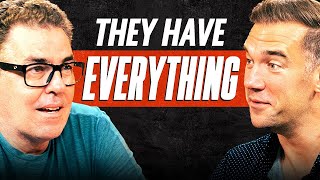
This is a YouTube video titled "The Secret To Gaining Anything In Life | Adam Carolla" created in August 2023. It features an extended interview with Adam Carolla discussing his early life, career struggles, and philosophy on comedy, criticism, and personal growth. The content is a monologue-style interview with Adam Carolla as the primary speaker, accompanied by an interviewer and occasional other speakers, focusing on his journey from carpentry to comedy and radio.
Chapters
The people I know who give the least have the least. The people I know that are the most tight fisted with not so much money, but their time. I think about the people who've done nothing for anybody else and have nothing. And then there's Jimmy who does everything for everyone else and has everything.
Wow.
And I realized, how does this work? Because it's not like, oh, I lend everyone a hundred dollars or I give everyone a hundred dollars. So I'm rich. How does it work? And it's like, oh, it's all relationship. It's all relationships.
I think you gotta have a dream.
The school Really?
Yeah.
Please welcome Norris Hou.
Welcome back, everyone, to the School of Greatness. Very excited about our guest. We have the inspiring Adam Corolla in the house. Good to see you, sir. Good to see you. Thank you for being here. You have, we were just talking about how you've been in LA for a long time and you've been leading the comedy. You've been tapped into TV and film. You've been, you know, one of the first in podcasting. You've been in this space for a while. you've seen a lot, you've said a lot, you've done a lot, and you know, I feel like everyone in this kind of community, or you've tapped in or interviewed them or connected in some way to a lot of people. So congrats on everything that you've created for yourself and the impact you've made.
Well, thanks.
Of course, yeah. I wanted to ask you a question because I watched a video that you did. I think it was on PragerU. That was many months ago. about really like criticism where the communities or audiences and having to be careful about what we say. You know, as comedians, I feel like comedians have had to learn how to mute themselves or really think differently about what they're gonna say. I think in all types of media forms, podcasting and things like that, social media, we've had to learn how to do things differently. I wanted to hear your thoughts on that, kind of just broad thoughts on where we are now after the last really five, six, seven years of more of cancel culture or just critics really speaking out against people's comedy, podcasting, words, media. I'm curious where you're at today on that.
I've always been pretty consistent in that I wanted to say what I wanted to say. I was a carpenter for a lot of years, and I've always kind of said, look, if I have to stop saying what I'm thinking or what I think is funny or what I think is relevant or important or just saying what I want to say, then I should get back into carpentry, which doesn't pay nearly as well. So I probably wouldn't. But I'm just saying I didn't become a comedian to vet all my jokes with folks that may be pearl clutchers or easily offended or disagree with the jokes that I'm making. It's kind of the opposite of being a comedian. And I believe the second you start second guessing yourself, especially on stage or into a microphone or even doing what we're doing now, when you start second guessing yourself, it's sort of like you'll get the yips, which is a sports term for a second baseman who's bouncing the ball to the first baseman. It's not a physical problem. It's the yips. It's. It's a mental problem that once the second baseman who's been fielding balls since he was Six, right? If he's playing in the major leagues. I mean, maybe five. I'm sure his dad was out in the yard with him when he was four, just field involved. And all of a sudden, eight years into being a professional baseball player, bounces one to the first baseman, and it's a 14-foot throw. Now he's got the yips. And if he gets that ball and he does that and he thinks about it, this one's going in the dirt, too. And I just never, you know, I never wanted that. So I.
Did you ever have that?
No, I. And so I've always had this sort of philosophy, which is I am not an. So I can act like an. Really?
What does that mean? Can you give me some context?
Donk. Don King was convicted for stomping a man to death. But he's got the little flag and only in America and the hair puff. So he has to push that forward. I'm not that overtly nice or enthusiastic and I rarely dance. But I've never done any harm to anybody. I'm sort of quietly maybe marginally generous, quietly, and just sort of take care of people around me. But I may act like a. Right. But I'm not.
So you're not a. But you might be a.
Where you say, I'm not interested in protecting some inner thing that I'm scared is going to get out, like an.
Image of you or something.
Yeah, I realize people. Most people think I'm a, but I'm not, so I can say whatever I want.
That's interesting. Have you ever felt worried or insecure or that you should be on guard when you were either on stage performing comedy or doing a show or a podcast where you're like, maybe I should be careful of what I'm saying because I'm getting criticized? Or was the criticism something that you would lean into because you would play with that?
I, you know, I don't know how to fully convey this, but I think COVID was probably a chapter that everyone went through and I went through it. And judging from my reaction to COVID, I would say I probably lean into the criticism or whatever it is. I put out a tweet. God, it's been almost three years now. And I basically put a tweet out and said, COVID kills old people and sick people and the rest of you got played. And who's getting played next? And then everyone ran up to me and said, you, got to take that tweet down. 'Cause everyone's pissed off. And I said, well, I'll take it down if it's untrue, but I'm not going to take it down just because, you know, people are pissed off and I never took it down. And I had, you know, a couple notable Hollywood types call me sort of as a friend and just go, hey, man, you take it down, like, because you're not doing yourself any favors. And I was like, No, really.
So do you appreciate them reaching out to you and saying, Hey, like, I do. Yeah, I see what you're doing and it's cool, but also, you know, you have more sensitivity or something.
Yeah, no, I get what they're, what they're doing.
But you just get it.
You just didn't. It's either true or it's not true.
Right.
And I guess that's the dance of like comedians, which is like kind of speaking some truth or truth into something, but it could be a sensitive topic for people.
Well, also, There's this thing where it's like, oh, come on, come on, man. And I'm like, my kids missed two years of school, Chad, for this thing that doesn't hurt them. So what do you mean, oh, come on? What about them?
Right.
What about everyone who's behind now? What about people who have languished at home and put on 30 pounds or committed suicide, depression? Oh, come on. Why is it always just one way street? It's like, oh, I hurt someone's feelings. All right, Mike, I was talking to my son the other day. It's like he's entering his senior year. I'm like, how much gold do you miss? He's like, I miss entire ninth grade. Wow. And like part of the 10th grade. I'm like, you miss seeing you have no ninth grade. You did not go to school for the ninth grade. If you were a football player and that was your senior year, I mean, when I played football my senior year, I was like, It was everything. Vision quest. Oh, I'm gonna be all valid. I'm gonna, I'm gonna hit the weight room. If you just cancel that season, I would have killed myself. Honestly. So don't give me, oh, come on, man. What about everyone else? You're f ing up. And so that was my approach to this. And in many other subjects that probably make me unpopular.
Right.
So when you get these, friends that reach out, that are maybe not trying to like judge you or put you down, but are trying to have your best interest and say, hey, you know, I want what's best for you and I don't want you to get harmed or your career or you need to get cancer or whatever it is. You'll appreciate that it sounds like you're grateful for their concern.
Everything for me is motivation, right? So if you're reaching out and your motivation is, is, oh, I like Adam. I care about him and I'm trying to offer some advice because I like him. Then I appreciate it. Yeah. If you, you know, if you woke up at five in the morning and came to my house and got my car keys and were taking my car out to get it professionally detailed for my birthday and you totaled it on the way home, I wouldn't be mad at you at all. you were trying to get my car detailed.
Right.
On the other hand, if you're just going to be lazy or whatever, then I don't have time for you. But it's. Everything is motivation.
Sure.
For me. Right. How.
How old were you when you got into. Started getting your comedy?
I was like. Well, I mean, the story is I had a 30th. the story since we have time.
Did you teach Jimmy Kimmel how to box or something? And then he yeah, yeah.
So, so I was like 21, 22 and I was like my, my life, I, I, I was sort of looking at the trajectory of my life and, and I didn't see anything good, you know, down the road. I was like working as a carpenter, probably kind of apprentice. I wasn't a, you know, it takes probably a decade to really be a carpenter. Like, I know that's three-quarter inch birch or half-inch birch.
I apply wood here. Yeah, I have no idea what it is.
Yeah.
If you get it for 10 years, you'd really know.
Yeah, yeah. It takes a little while, but I was probably about, I was probably about three years in, so I, you know, knew it was like 10 bucks an hour. and, you know, I was just kind of sitting around in my apartment, one bedroom, North Hollywood, Laurel Canyon, you know, for two roommates, no air conditioning, you.
Know, sleeping on sharing a futon.
In the valley, no AC. That's bold.
That's a risk.
No AC, man. Upstairs.
Oh, no. I couldn't facing the West.
Oh, no. That's no shame. Heat is insane. It was an oven. It was a God oven. And I was just sitting in there. you know, sweating through my shirt and I, and I was like, well, there's gotta be something better than this. Like, where's this going? And I was like, all right, where's the carpentry going? Like, I, I'm good with my hands. I, I, I picked it up. I could do it. I had a little bit of a knack for it, you know? And I was like, all right, so where are we going here? Like, by the time you're 30, what are we talking about here? 21, 22. I go, well, maybe I'm making 18 bucks an hour. Everything was by the hour. Incrementally, you had to get from 10 bucks to 12 bucks to 15 bucks to 18 bucks. And everything's just like, can we add a buck an hour every year and a half or something like that? And so I was like sitting around, I was like, and yeah, I was so broke that the notion of 25 bucks an hour, like one day, that sounded pretty healthy to me. But I still like it rains, you don't work, you don't get paid, you know, you leave your truck outside, they rip off your tools, you live in an apartment, you gotta bring the truck, you gotta bring the tools in the living room. And it's just like, it starts early. Everyone's a ****hole. It's like half the guy in California, I mean, in LA, half the guys don't speak English. So it's like you can't sit around and chew the fat. tell jokes, you know, at lunch. It was like, okay, I'm like, yeah, so. And then the guys who do speak English don't have any sense of humor either. So I'm like, what's this? And so I'm like, I. Well, I don't have any money. My family doesn't have any money. I don't. I don't really have a lot of choice. I gotta go to work every day as a carpenter, but. what else might I be doing in the future that is interesting or there's some air conditioning involved with it, you know, something. I mean, you think living an apartment this summer, I'm working in Chatsworth in a warehouse with no air or up on the roof kind of thing. Like, I mean, whenever the weather is, you're there. So I'm like, well, this sucks. And then I'm like, well, what else could I do? But, you know, doctor, lawyer, white collar. I could fill out an application. I don't have any real education. I don't have any credentials. Like, I, where am I going to work? I can't even know how to make a tie. I don't have a suit. Like, well, where would I work? I'm just a sort of knock around blue collar dude from North Hollywood. So I'm like, well, you have a sense of humor. And I'm like, all right. you can do you're funny, you could do something with something with comedy, some behind the scenes writer room, I, you know, writing for greeting cards, like funny greeting cards, you know, anything just to get some air conditioning and kind of get off the job site, you know? So I was like, all right, well, you're you're 22. you got eight years, so you got eight years to figure it out. Wow.
To, like, try the comedy thing, to figure out your lane or your avenue or.
And, and to, to, to, and to get some skill, like, all right, so you're funny. I mean, you know, being funny is like saying, I'm handy. Yeah, you're handy, but you don't know the nailing schedule on a sheer wall. You don't know what a Tico clip is or, like, an A35 or, you know, a dimtroking stud, a trimmer. header paralamp. You know, during the time I am in a pair.
No, no, I don't know.
You can be as handy as you want, but you don't know. You don't intrinsically know that stuff. You got to go learn it. And I was like, you can be as funny as you want, but if you don't know downstage, stage left, you know, if you're not composed on stage or you don't know how to put together a sat or something sat together, you don't know how to do anything, then. Then don't kid yourself, pardon the pun. So I was like, I gotta go get some training, I guess. So I started signing up for Groundlings classes and found my way and, you know, and Groundlings was like, you,'re funny, but you don't know what you're doing, and so you can't act. And so you gotta go take an acting class. Like, they're like, we'll let you out of basic. we'll put you in intermediate, but first you gotta come home, you gotta come back and prove that you passed a theater class. Wow. An acting class. And I was like, where do I go? What do you want me to do? Now, the only rub was I didn't have any money. So it's like, you know, the growlings and hack me class. I didn't have insurance on my pickup truck, you know, so I didn't have dental, medical. I was barely paying rent. So I was like, taking whatever beer money I had and just been like.
So acting class was a luxury.
Oh, yeah, everything, everything was sort of a luxury. And I literally didn't have car insurance, but was paying the groundlings to, like, take classes or the drama, whatever place and studio. Sure, sure. Everything. And, yeah, I couldn't act. I didn't know what the hell was going on. I I'd never been on stage and. nervous. I didn't know where to look. You know what I mean? Like, I.
You weren't a theater arts kid. You didn't go to, like, high school and. And take these classes there.
No, all I did was play sports in high school and, like, wrestle with dudes, you know, which is right. They just played sports, and I would say wrestle, but somewhere between wrestling and a full fist fight, like, it wasn't just wrestling, it was sort of. the ante was up. But that's all I did. And then I went on a construction site. So I was dealing with people that went to theater school and college and majored in this and that.
They had five years of reps already.
Yeah, and I also didn't know anything. I was uneducated, you know, so I didn't, you know, they'd be going, give us an activity. And they'd be like, you,'re making a topiary. and they go, oh, okay, here we go. And I'd be like, oh, what is that?
Yeah.
What's a topiary? Yeah, like I remember not knowing any of these things. Well, they take shrubs and shape them into- oh, you ever been to Disneyland?
Yes.
You like walk in and there's a ficus tree that looks like Donald Duck.
Okay, yes, it's a topiary. Gotcha, okay. Right. So how, how, was there ever a moment in those first few years of taking the, you know, standup classes, the acting classes where you're like, oh, this is too hard to learn these skills. And everyone is way more advanced than me, and I'm clueless half the time or part of the time. And I don't have the money to afford this stuff. Was there ever a point where you're like, I just need to stick to doing the carpentry stuff?
I had some EBS and some flows and some highs and some lows. Like when I got asked to leave the groundlings at a certain point. At the end, I was like rudderless and fully depressed.
Wow.
I didn't know what to do. But, well, I was like, look, I don't think carpentry is a viable option in that I wanted, I was like, I want to own a home one day. and I might like to have kids one day and a wife and I'm going to have to like support those kids and pay a mortgage and maybe support my wife and have insurance and a credit card or maybe we want to go on a vacation or something. I don't have a credit card. I don't have anything. And I just can't see carpenter doing that. Carpentry getting me that house and putting all that stuff.
What was this early 90s though?
Yeah, I mean, this is, the decision is probably made in, like, later 80s, but now into the early 90s, nothing's happening.
But I'm assuming if you're saying to yourself, I don't see this carpentry thing being able to support my vision, and you're saying, I'm going after comedy, I don't think parents or anyone else should say, that's the right path to go down. If you want to buy a home.
If you want to You know, it seems lower percentage.
It's like, take the safer, more surefire thing as opposed to try this comedy thing for 10 years. Maybe you make some money, you know, and figure it out.
Yeah, it's a lower percentage route.
It didn't seem like this is the surefire way, yeah.
Well, I didn't have to vet it with anybody because my parents were like, look, you're 18. you gotta leave. And that was sort of the last career-based conversation I had with them. So I did not, you know, there wasn't, they wouldn't have cared. It didn't really matter. They just, whatever I was or whatever I did, it didn't matter. Just as long as I didn't ask them for money.
In the late 80s, early 90s, who were the big people in comedy? whether it was stand-up or TV film or late night shows, who were like the icons at that time that you looked at.
That's why Andrew Dice Clay was blowing up. Seinfeld's always kind of a stalwart, you know, always there. Guys like Richard Lewis were doing a, making the rounds. I mean, a lot of names you probably wouldn't recognize because they had a kind of, had some heat then and.
Sort of died off now.
Yeah.
Literally or figuratively. Like, I mean, there's just so many names that, you know, cycled through, and a lot of them had shots on the Tonight Show and had their own game shows and stuff like that. You just haven't heard of them and haven't heard of them.
But who are the people you looked up to or you were like, wow, that's really inspiring what they've done in their career that you actually became friends with or worked with or have I.
Was always I always listened to the radio and I always loved the radio and I I listened to talk radio when I was younger and it didn't matter who was on. I would listen to a psychologist named David Viscott. I would listen to the Dean Adell, the doctor. I would listen. I tell Dennis Prager still on the radio. I go, I would listen to Religion on the Line, your first talk show, and I'm an atheist. and I would just listen because I'd say like, we had a rabbi, we got a priest, and we're gonna argue about religion. I'd go, good, let's hear it. And I'm not religious at all. I just always enjoyed hearing Dr. Ruth had a show on out here. I would just, you know, the real estate guy or the financial guy, I would just listen to talk radio. Always like talk. I would just listen to it like, I don't know, like when you're leaving and you think your dog's gonna get lonely, so you put the radio on or you put somebody, probably freaked out 'cause you think someone's trapped in a speaker. I mean, we don't really think of the downstream consequences of keeping our dogs company, but I just like voices, you know? And I would listen to morning radio because I drove my truck every morning. my construction hours are like morning radio hours. Morning radio 6 a.m to 10 a.m that's the shift. And then like they start playing music after that. A lot of stations. FF. I'd be getting into my truck at 6:15, 6:20, 6:00, you know, because I had a job and I work in a build a house in an avocado orchard in Simi Valley, you know, you gotta be rolled out. at 7 a.m. you got to leave it at six or house up in the hills of Malibu on Rambala Pacifico, you know, gotta leave at six or downtown to an earthquake rehab, you know, sitting in traffic. So I get in the car, turn on morning radio. I go right through. I get to the job sites, turn on the boom box or go to the warehouse cabinet shop. I was working at Chatsworth and industrial park and just walk in, you know. turn it on, finish listening, listen only. And I was like, I could do that. I could definitely do that. I'm never gonna do it. I'm not gonna get a chance to do it. But I can do it. And so for me, you know, it wasn't so much like comedy is low percentage and carpentry is a much higher. percentage gig. And so, you know, you were inquiring about me going, I want to get a house and have a family. So I'm going to do comedy.
Comedy is going to get me there.
Yeah. It sounds low percentage. And, and I'm gonna sound like a huge, but playing in the NFL, super low percentage. But it's not for Lawrence Taylor. For him, it's a good, it's a pretty good bet. He shouldn't work at Home Depot. He should be coming off the weak side, you know? Right.
And.
I felt like I had enough ability where it was like, yeah, it's one in every 2000 kids who played college football gets to the pros. And you go, that's low percent. It's not low percentage for Lawrence Taylor. he's setting his own percentage. You know what I mean? He's in charge. That's how I looked at it. Like, I'm in charge, right? Yeah. If you take 500 guys who wanna be a comedian, they go, we're only one of you is gonna succeed. Then no, I'm not doing that. But if you let me produce or create or let me come off the weak side, then I can make the team. Or at least I could make the team. I don't know that there's any, Right, right. Guarantees.
That's interesting because, you know, I feel like in every high school or every college, there's always like a couple of funny guys, right? It's like, okay, this is our funny guy who tells all the jokes. If we wanted someone to lighten the mood, there's always a couple of people that you could rely on. So there's thousands every year that come out of high school or thousands every year that come out of college who are like the funny person from their school around the country, right? But was there something inside of you that said, I have a belief in myself, even though I haven't really had these experiences? I'm getting kicked out of the standup club. I don't know what they're talking about with these theater concepts and lingo. Did you still just have this belief that, well, I can figure out my own weak side. I can figure out my own lane in this comedy world to make money? Or how did you believe in yourself enough to pursue it? until you started to make money.
I got kicked out of the groundlings just for groundlings, just for accuracy.
And what is the groundlings? It's.
It's an improv.
Improv is what I meant.
That's where all the.
I was thinking stand up. I said stand up. I meant improv.
Yeah, I know he did.
Yeah. But improv is improv. Got it.
For your viewers at home.
Sure, sure.
And I was. I've never been, I never really involve my own feelings in my assessment of myself. So I'm never right because it's me, or I'm never wrong because it's me. It's, I'm very compartmentalized and detached. So I have no ego and I grew up with not low self esteem. I grew up with no self esteem, which is not bad. I just didn't have any thoughts about myself. that were inaccurate. I just didn't get fluffed up by my family at all. I didn't think I was anything. So the good news about not having a bunch of free existing notions or feelings about yourself is I could judge myself pretty practically, you know, and, and I would say to people, you know, later on and all the time, but I don't know why it makes you But I was like, I was a good carpenter and I was funny. Like, I knew I was funny. Like, I knew I was a good carpenter. So I don't know. You can say, well, that's egotistic or you're full of yourself or whatever it is. And I was like, no, I listened to the morning radio shows when I drove my truck and I got to the shop and everything, and I would listen to everybody. And I was like, I'm faster than these guys are and I'm funnier than these guys are.
Interesting.
I could, I could fill in the joke faster than they could just drive my truck.
You would respond by yourself to what they were saying.
Yeah, like what would you say? What you're interviewing this person or that person, you know, you know, bang, bang, bang. And I was like, playing the game in my head. And so I was like, clubber lang, you know, just train it alone.
Right, that's cool. It's like, yeah, it's like, I think of that as like the people that watch Jeopardy and they're just responding before everyone else.
Right.
At home. You're watching at home and you're like, you know every answer before the person does. Right.
Now the difference is, is the question and with the hand up, so what happens when the spotlight is on? Exactly. Can you still do it? You will slow down a little bit in your answers. I've second guessed them there.
Yeah, yeah.
So I can tell you. But- you-'ve done Jeopardy? I've done other stuff like that.
Stuff like that.
You're like, oh crap, you knew. You can't.
Yeah.
Summon. Because you get like 10 seconds, you know, and you're like, so I was like, I have the ability to do this. And I've always been realistic, you know, with myself. I wanted to play football when I was younger. I played it as much as I could play it. I was a standout in high school, and then that was. It was pretty much it. And I was like, because you do not have the ability to do this. So you weren't at a higher level. You don't have that ability. You're not Lawrence Taylor. But if I knew how to do something or I felt like I have the ability that I'm not going to deny it, that's the way I felt. And so I just kept sort of plug it away, but I didn't really find a home. I knew I needed to find a specific sport to play other than just being athletic. I needed the sport to stand up, radio, the sport of comedy.
Yeah, the sport of comedy or the. The Avenue, the lane.
Yeah. Yeah.
That's like saying I'm funny. It's like saying I'm athletic. I mean, well, look, you. You may play baseball, but that doesn't mean you bowl. or ski well, right? You play football. Doesn't mean you're fast swimmer or something. You know what I mean? Like, you gotta pick your lane, you know? And I never knew what Lane.
So you tried a bunch of different stuff.
I picked all lanes.
How many years did it take until you felt like, oh, I'm actually making decent money, and I figured out my Lane or lanes that worked for me? How many years was that?
Well, it wasn't. It wasn't years. It was. Months, probably. Yeah. I didn't make, well, because I made no money for, you know, eight years or something, I just, I didn't get paid. Improv troops, acting classes, groundlings, open mics, any thing that anybody said sounded cool. you know, like, if you just went, hey, man, let's just go sit at the. Let's go sit at the diner and write sketches till four in the morning, just drinking free coffee refills on a couch. I'd be like, I'll bring my notebook, you know? What do you think about this? What do you think about that? You know, that's all I did was just for free. I never made a penny. I mean, like, I, you know, occasionally be some weird thing where, like, some guy would get a gig.
Yeah.
Like, we're gonna get in cowboy outfits, and we're going to the Gene Autry Museum, and they need us to do a funny little thing, you know, and I'll pay a hundred dollars, you know? And I go like, yeah, okay, let's, let's do it, you know? But, I mean, I, I taught comedy traffic school. It was a thing back in the day. Got paid. But I was a traffic. I was a traffic school teacher. But I, but my mind. I was in front of an audience, even though there were just people that were cited for speech. Right, right. And it was air conditioned, you know, getting paid, and I wasn't covered with stucco dust, you know, at the end of the day.
So.
But no, I didn't, yeah, I didn't, I didn't make any money.
So you were doing stuff you liked, you enjoyed, you were finding a talent and good at, but you weren't making money until how many years until you're making it?
Well, then when I was coming up on my 30th birthday was, was the problem.
And that was the timeline for you was like, okay, I got 80 years.
I just, I could have started at 21. I could have started at 22. I mean, I remember the apartment I was in, I was in my first apartment, so it was pretty early. But I was just like, look, you got until you're 30 because 30 sounded old enough to like, okay, no more. sharing futons and, you know, drinking Schaefer beer in the park, you know, ramen noodles.
Yeah.
Yeah. Ramen noodles and, you know, generic Captain Crunch and not even a real Captain Crunch. Yeah. No, everything was the half off Captain Crunch. Yeah. I was like, by the time you're 30, you gotta be doing something, doing something, you know, and so what did.
You decide to do?
Well, I was. a little earlier on, probably about a year, maybe a year and a half earlier, I, I, I like, I always like boxing, you know? And I was like, they were opening these gyms or like white collar boxing or whatever, like you teach lawyers and doctors how to box. That could be, that could be fun because I like it. I was so tired of construction that I just, I couldn't take it anymore. And, and, and I was like, I want to be around people and. smart people and people have money and people that drive some of a truck and everything. And I kind of made my way into a boxing gym. It's called Bodies in Motion. It used to be right up this, down Pico or something. Not far.
Is this like late 90s now or?
No, no, this is still early. This is like 90. Wow. 91, maybe whatever. I, I went into there, like, I talked to the guy and I'm like, Hey man, I, you know, I could really be a good boxing coach. And he's like, get out, get out of here. And he just told me to buzz off, you know, and, and I was like, why don't you give me a shot, you know? And he's like, we don't, we just hire ex champions and champions. And we hire real people. Like, we was like, I gotta have credentials. Cause this guy's a WBA, you know, welterweight, right?
You know?
You idiot walked off a construction site. That's not, those aren't credentials.
Bronze medalist in the Olympics.
This is a, yeah, and they fluff them up a little.
Oh, yeah.
But, so he just went, no, you know, and, and I remember I was, I was, I was looking at the club, at the fitness place, and I saw, like, speed bag stations with bag and the, you know, I saw a couple of them, like, they were sitting on the floor, like, against the wall. And he was, like, shooing me out of the place. And I was like, hey, those speed bags, you need those hung? And all of a sudden he was like, yeah. Like, well, I'm a carpenter. And he's like, oh, you are? And I'm like, yeah. And he's like, because I got some heavy bags that need to be to, and I'm like, well, I know how to do that. And he's like, oh, so let's talk. And I said, okay, you give me 10 bucks an hour, just flat out. And I mean, back then carpenters probably make it 15, 16 bucks an hour or something. I was like, give me 10 bucks an hour. Uh, what time is the gym close? Like 10 at night or whatever. I said, what time is it open? you know, six in the morning. I was like, I'll be here, 10 at night, six in the morning. I'll show up at night, I'll hang all this stuff. Just give me the keys and.
And.
You let me try teaching Bach.
Wow.
And the kind of is like, okay, sure. So I taught a little bit and then he wanted to open a place in, old town Pasadena. that was another place, but he did it like renovate or whatever. And he was like, you build that place for 10 bucks an hour and you can teach there. And I was like, I'll do it.
Holy cow.
And so I built it and so I taught there. But I would make $20 a class. So, and I was only teaching like five classes a week or something. But it was like in, in my world, I was doing something different. and I was kind of enjoying myself. It was fun. Fun to leave the class and put your mix tape on and all that stuff. And so I was like, all right, well, this feels better than, you know, being on a construction side. But I was still building cabinets and working for myself because I couldn't cut it on 100 bucks a week, you know, so I'd teach my morning boxing and then. Then go to the job and go build cabinets for somebody or something like that, and then I. I was driving over the hill, driving over Laurel Canyon, going up the hill, and I was just listening to Kevin and Bean on KROK, and they were talking about Jimmy the sports guy and Michael the maintenance man, and Jimmy said something offensive, and they got into an argument, and they're gonna have a boxing match. And then they're like, we need trainers, you know? And I was like, oh, my God. Oh, my God. I I don't think it was like, I could see the radio station. I could like, I, well, what is this like, this radio station? I listen to it every day. I don't know where it is. What's it, what's it like? You know, and so I kept, I got to the customer's house and I was like, can I use your phone? And she was nice and she's like, yeah. And I, I was calling the radio station. I just get Frank Murphy, the producer. I just get his answering machine. I'm like, I'm a boxing. Coach and I want to train someone and, you know, here's my home number, leave a message or whatever.
And.
They never called back. And some days were going by and I'd be listening, like, we need a boxing coach and guys were like calling in on air and stuff and I couldn't get anything going. They wouldn't return calls. They wouldn't do anything. So I just went, I found out where the radio station was. went before my 7 a.m. boxing class, or maybe it was like a 6 a.m. boxing class. I can't remember. It was early, like 6 37. And I went down there, I got into the building. It was like a commercial building and then just went up to the ninth floor. But the suite was locked where the radio station was. And I knew they were in there somewhere, but they're not the receptionists, you know? and then do, you know, business hours, 9 to 5, you know, like if you win tickets to YouTube.
You gotta pick them up.
You gotta pick them up, but you can't show up at 7, no one's there. And they're there, but the reception's isn't there, you know? So I was like, oh, no, I showed up at 5:30 in the morning one day and I couldn't get into the building. That's what happened. then I showed up the next day at like 6:30 or 7:00, I did get into the building, but I couldn't get into K Rock. And then I was just standing on the ninth floor by the elevators. And I knew that was the K Rock, like, Sui, but no one was gonna answer. And I was just like standing by the elevators, like, what do I do? Do I come back? Like, maybe I'll come back in two hours and someone will be there. But then what if I get into the suite, I like, says the receptionist's gonna go get the morning show. I don't think that's what they do. Like they're gonna just go leave a number and I'm just gonna leave. And I'm, and right as I'm sort of going over the machinations in my head, I'm like, where could I, how could I work this out? Some guy just comes out of the elevator and he starts like making a line for the back. of K Rock with the key card door, like the staff door. And I'm kind of walking with him and he's going in, you know, and I go, are you going into K Rock? And he's like, yeah. And I don't know to this day, I don't know if he's the vending machine repair guy or he's a phone screener or like whatever he is, he's just going in. And I go, hey, if you're going in there, just tell them the box and , there's a boxing coach and he's just, I'll just be by the elevators. I'll just be hanging here. So just tell him someone's here. And like, you know, I think the guy kind of just put his hand up or something. Like we didn't talk about it. He was like doing something. Yeah. And he just kind of went, yeah, he one door shut, you know? So I just went and stood by the elevators and I was probably out there about 10 or 15 minutes, 20 minutes, something like that. And then, at some point, some guy just came down the hall. This young guy, he's like, you the boxing coach? Like, yeah. And he goes, oh, okay. Uh, you want to teach me to box? I said, yeah. I said, who are you? You know, what's your name? He's like, oh, my name's Jimmy. Jimmy the sports guy. I said, okay, well, Jimmy the sports guy is going to fight Michael the maintenance man. I guess I just got Jimmy the sports guy. so I'll train you to box. And I said, when do you want to start? He said, how about today? And I was like, yeah, I'm at bodies in motion in Pasadena. Like, old town pastel meet you by the parking structure. Like at noon. He said, all right, I'll see you at noon. Okay. And then that guy turned out to be Jimmy Kimmel. Wow.
And.
I was pretty lucky that it wasn't Michael, the maintenance man who came out. But Jimmy did.
So Jimmy shows up that day and you start boxing.
Yeah.
And I'm gonna be turning 30 in like three weeks. Wow. And I'm like, I've got to figure out something with this guy.
So what happened with, how long were you training Jimmy Kimmel for this match? And then what evolved from that?
Probably had about three weeks, probably.
Few sessions a week or.
Well, Jimmy was my meal ticket, my life preserver. Like, I'm like, I gotta hang on this guy with both hands. He's a dude. He's in radio.
He's on radio.
He's on the radio.
He's making money.
He's making money now. He's making.
Yeah.
49, 000 a year. 44, 000. A dollar share. And he's living at a rented house in Reseda and driving a. RXC7 that's beta, you know?
But it's better than you.
But it's better than me. And he's in radio. And so I'm like, I gotta figure out a way to get this guy to think I'm super funny.
And not just a boxing coach.
Right.
Not just, oh, I showed up to like teach you and then this is all I do.
No, but I, I don't want him to think I'm not a boxing coach because I don't want him to think I'm just trying to springboard this into that. You know, I'm some guy who just said he was a boxing.
How many people have come up to you, you know, at a restaurant in LA and said, I'm an actor, I'm a writer. Let me show you my script, or let me do a set, or.
Yeah, yeah. Nobody, so many, nobody wants that. Right. So I, I I was pretty much 80% boxing and 20% funny for the first few sessions.
Right.
But then I started to move more toward comedy and as the boxing diminished, the comedy went up. And then we'd like train, he trained for 45 minutes or, I don't know, an hour or whatever, teach him a few things, and then go, they got this little cafe upstairs, they got cold Snapples, Just unwind, have a seat, drink a Snapple, you know, and he didn't want to train either. So I was like, yeah, let's go shoot this. Yeah, let's go grab a Snapple and cool off, you know. And next thing you know, we're sitting there for two hours. Comedy hour. It's comedy hour.
And I'm talking to him about, you're like, this is a radio show.
You're like, our conversation.
Yeah.
So, wow. I had him pretty convinced. after about, by the time the fight came around, he, he said, do you have anything like tape or anything I could see on you? Like, I don't exactly know, like, what your thing is, you know? And I had a tape, VHS tape of a Home Improvement sort of Comedy show that I did on Eagle Rock Public Access, you know? It was nothing. It was just a little public access, stupid Saturday thing. But it was, hey, it was something, you know? It was something. And I, like, brought it over to his house and I was like, it's just a public access thing, you know? It's not very professional, whatever. But you could kind of see what I'm like, you know, on camera, whatever. And he watched it. And because Jimmy's, you know, has a good eye. He was like, yeah, I get it. Like, I can see, I can see this. I can see what you're doing. I see what you're doing. I mean, there's no production and there's no set, there's no anything, but, but I get it. You know, I, he, he was discerning enough to kind of go, there's bits and pieces here or something. And then, he lost the fight. And then, he's like, you weren't that good of a trainer.
You better come back.
I was not that good a trainer. Right. Well, I was actually, I was a good trainer that I could teach people how to box, but we weren't getting it done in three weeks. Yeah, I was focusing on comedy. And so, when we were done with the fight on a Friday, Jim and I were friends. You know, he loved me. I loved him. I mean, he found somebody he could talk to and he liked comedy, comedy. He just liked me. I liked it, like, immediately, you know? And he was like, was he around the same age?
Thinking around 30?
He's a couple years younger than I. Yeah. And, and he was like, he's like three and a half years or something.
He was, he was like 26.
He was like 26 and I was turning 30, like, right about then. And I know what his birthday is. So he became a buddy. He had two kids and was married at 26. Before that. Wow. Right.
Yeah.
And I thought, God, this dude's got kids. And I'm living in La Crescenta in a rented house with three dudes, you know, and he's like, has a family and house and got put together. Yeah. And like, I think this guy's kind of responsible, has it going on. It sounded like my buddy from high school, you know? And so, you know, now the fight's over and this kind of the end of the, of the prom for me, you know? And I'm like, what could I do to, like, with the radio? Like something with the morning show or something to something to have, like, a.
Segment or be a correspondent or something.
I'll drive the van. I'll do whatever. I don't want to get in there, you know? I want to get in there.
And what'd he say?
He said, he said, what do you do? And then I said, I make things funnier. Like, I shoot the breeze. I'm back and forth. I'm on my feet, you know, I'm an improv guy, you know, I'd be in there making it, making it funnier, you know? And he just went, that's what Heaven and Bean do that. What do they need you for? What do they need you for? you think you're gonna sit like in between them and like make them funnier, that's their show and they don't need you for that. So you gotta come up with something other than that. And so he said, you gotta come up with a character. And if you come up with a character and it works and then it could be part a reoccurring thing and I'm like, I'm not really a character dude. I don't really do voices. I'm not that guy. Like, I'm just not a character guy. And he's like, well, it's better start. Figure it out. And I was like, all right.
That's your way in.
And he said, you can call in on Monday. I won't tell them who you are 'cause they'll think you're the boxing coach. That's not gonna work. So I'll just set it up. I'll tell them I got this thing's funny. Guy's gonna call in. They're not gonna know anything and just call in Monday and, you know, they're a little moody. Like, it may not, they may, it's probably, I've been on the other end of this a lot where it's like someone goes, how don't you want to grab that guy back? Or is it funny? And I'm like, yeah, didn't, no, didn't really land. It didn't really work.
And.
So I did it. you know, Monday morning, whatever. And I did a character, and it kind of worked. Like, it was, it was, like, worked enough, you know? And of course, I called Jimmy, like, the second. How'd it go? Yeah. What happened? Yeah. And, and he was like, yeah, they thought it was pretty, you know, that was pretty good. You know, it was okay. Like, could we try it next week? Can I try it again next week? Yeah, I think I can get him to. whatever next week. And so I did it the next week and then the next week and then it blew up and it became this super popular bit. And then I got Loveline and I got signed by William Morris like immediately. And one of the, everyone in Hollywood kind of listened to KROK and this bit became so successful and the character got so popular so fast that I literally got signed from William Morris, like a couple of months into it. And then I got Lovelined and then, and so there was no trajectory. I was like making zero. And I've looked at my statement, it's like Social Security, whatever they send you in the mail every 10 years. I was like, making $4,000 a year and $12,000 a year and zero a year because I was working under the table or whatever. And then it's like $36,000 a year was like my first sort of heroic thing. And then the next year was like $350,000. And then two years later it was like a million dollars. It was like, it was like they just went, but it was nothing before then. And when I started, I, I started for free, you know, and I did it for a while, months, probably. And I would, I would have a lot of my friends from the neighborhood kind of guys be like, what are they paying you? What are they paying you? And I'd be like, they're not paying me anything. And they're like, why are they paying you? They should be paying you. And so eventually we settled on, on 50 bucks a bit. And I remember telling my I'm friends, so now they're paying me. They're giving me 50 bucks a bit. They were like, 50 bucks a bit, you know, because they got, at that time, they're making 20 bucks an hour as a carpenter. Like, I thought this was show business, you know, making less than right for a day, you know? And I just remember super clearly when they were protesting 50 bucks. What kind of money is that? That's a big station, you know? I just, you're like, this is a dream for me.
I'm on the radio. I'm doing a bit.
I got William Morris. Yeah. I said, I should be paying them. And they didn't really understand what it meant. But I got signed by William Morris. I took over on Loveline and it was just sort of rocket ship as soon as, you know, two months later after I told them that. So I was like, and I knew instinctively this exposure is so great and people and, and it was, it was as I planned, not planned, but I walked in and I was funnier than everyone. And I was like, I knew it. I just needed, the reason it took off is because I was really good, but I just never had an audience or a place or a sport or whatever platform. Yeah. And then, and it is, and then I got in a love line and then they started syndicating and then it was like a hundred and whatever markets and then the TV shows, blah, blah, blah. But I was good, like I was ready to go. And I'd trained and I'd trained and I'd trained and I had no matches. And all of a sudden I met Jimmy. But it wasn't just me and Jimmy, it was just being exposed the second I got exposed. It just, everything just blew up.
Would you say he's one of your closest friends and colleagues over all the years?
Oh, yeah, for sure.
What would you say are the three lessons you've learned the most from him, from working with Jimmy and being friends with him and watching his career?
The number one lesson I've learned from him is when you make yourself of service for other people, you end up getting paid back. sort of tenfold. And it's, and I don't mean cosmically. I just mean, you know, Jimmy stuck his neck out for me. He helped me. He would show up at, you know, four in the morning with the radio station and help edit a bit I was doing or something like that. He was very magnanimous, very magnanimous. But at some point, I took over for Howard Stern. I signed a big radio deal. Jimmy was a producer and Jimmy was making hundreds of thousands of dollars, you know, mailbox money. And it's like, oh yeah, you did get, you did make some money. I mean, we're still not even.
Sure.
I owe him a lot more money, but he invested this time. And it wasn't, he did it because he believed in me or who, whatever he believes it. You know, he didn't do it for the money, but he put the time in and there was a payday after that. And it's about relationships. And the people I know who give the least have the least. The people I know that are the most tight-fisted, with not so much money.
But their time, time and teaching and mentorship and access and resources.
I think about the people, mostly family members of mine, who've done nothing for anybody else and have nothing. And then there's Jimmy who does everything for everyone else and has everything.
Wow.
And I realize, how does this work? 'Cause it's not like, oh, I lend everyone a hundred dollars or I give everyone a hundred dollars, so I'm rich. how does it work? And it's like, oh, it's all relationships. It's all relationships.
Wow. So that's a big lesson you learned from him.
What's.
What's another lesson you've either witnessed or he's taught you directly or indirectly, would you say?
I've learned a lot about pizza. Yes. Really? The first gift I ever got him was a pizza stone for his oven. Okay. He started building elaborate pizza oven, so. A lot of it's sort of pizza related.
Okay.
I've learned that show business and comedy is sort of part your God-given sense of humor and ability, but it's mostly about whatever qualities you would need to succeed in the roofing or siding business or whatever. Jimmy is not the most naturally gifted comedic mind I've ever met, which sounds like I'm downplaying it. I'm not. Jimmy's a funny dude, but there's a lot of funny guys. He brings the work ethic to the comedy.
Really?
A lot of comedians like to, you know, rip on loads and, you know, go to brunch and sort of hang out. Like, a lot of comedians were attracted to comedy because they didn't want to work. And they just were like, and there are a lot of those comedians, like, they're hanging out during the day. Jimmy's at work. Jimmy was always at work. He was at the, you know, radio station at five in the morning, you know, when we were doing the man show. bringing home a stack of writers submissions and reading every one of them and everything. It's like what you can do with ability, when that ability meets strong work ethic, you can conquer the world. Each one alone is not really gonna cut it in show business or comedy.
Right.
You'Ve probably seen a ton of comedians at standup over the years who are probably really funny. Like, you're like, wow, that was creative. That was, you know, a genius thing. Or you really had the timing down or whatever. You were working the crowd, and they were in it in the pocket, but they didn't have the work ethic to actually follow through and produce something or build the right relationships to make things happen. You've probably seen a lot of Funny people, right? Talented, funny people that didn't make it.
Yeah, for sure. I mean, I mean, you know, it helps to be semi sober and not, you know, go off the rails with, you know, cocaine or whatever. I mean, there's a, there's, there's sort of mitigating factors and circumstances, but, you know, not pissing people off, not being flaky. say, doing what you said you were going to do, being kind of dutiful, showing up, like having people be able to count on you to be there.
Right.
Not being a diva.
Not being a diva like you on Wednesday.
I need a fresh coffee. So that kind of a work ethic, which he has a, very strong. He has a kind of a accountants like work ethic with a sort of artist's mind.
That's cool.
You know what I mean? If you, you put those together.
You.
Got a pretty winning combination.
That's amazing. How long were you guys working on the man show for? Because that was a big show for a while.
We did four seasons, maybe a hundred and something, episode 100, a little over 100 episodes, I think, something like that.
You've done a lot of projects together. So what's it been 30 years? Like working with him and knowing him and helping each other and just being in the business together?
Well, yeah, it's easy for me because I was going to turn 30. So I know I have a marker where I met Jimmy because I'm always bad at, oh, how long did I do this? Like, you know, I, I'm like, I would say to Dr. Drew, when did I start Loveline? Was that 95? No, 96 or whatever. I'd be like, yeah, what a win. I'm not a marker of time, but because I was so consumed with turning 30 and not getting anywhere, I met Jimmy right when I turned 30 and I'm 59 now. So it'll be 30 years. 30 years.
Three decades.
Wow. Coming up.
Where do you think you'd be if you didn't show up to that radio station that day?
I mean, is, is Kevin and Bean put it, as I'm working on a K Rock documentary, they're like, you know, Adam was so funny, he would have ended up somewhere doing something. Again, I'm trying to sound like a s***. But they were like, he's super, like, the funniest guy I've ever met. So he would have figured in Jimmy the same way, like, He wasn't going to stay there at K Rock doing the sports for another 25 years. He would have been on to something. I would have been on to something too. God knows when. I mean, I don't know when, where, I don't know if I would have. I mean, I'm a kind of a strong believer in I may have, I would have found my way into radio. It's some way, somehow, 'cause I'm so interested. in it and always kind of circling around it, thinking about it a lot.
It's interesting though, 'cause if you maybe turn 30 and then 31 and 2, if you haven't had anything yet, you might have been like, you know what? I'm just gonna go full time into carpentry or boxing or whatever it is.
Yeah, I was like, I just wouldn't commit to not trying to do something creative. I was told, I used to pull up to the job site with my crappy pickup truck, you know, and, and I remember periodically, like, every couple of years, some guy had a new truck, you know, and if you had a new truck, that was, that was a big deal. You'd pull it up in that new truck because everyone was driving beaters. I'd buy my stuff out of the recycler, you know, old Datsuns, you know, 79, you know, miniature little Japanese trucks and stuff. And I, I remember a guy named Yan, it's about my age, only a couple years older. So foreman on the job. He just folded up this new Ford Ranger, you know, and V6. And it was like, oh, crew cab, you know, whatever. And I was like, wow, sweet. Yeah. And he was like, went down to, you know, Galpin Ford, and it's, you know. $289 a month. It's like, but you have to have full coverage insurance, like for your making payments and stuff. And he's like, yeah. And I was like, he's like, you should go get a truck, get a nice truck, get a new truck. And I was like, I, if I commit to that, then I'm, I'm not going to be able to, you know, I got to take my groundlings classes, do all my other stuff. I, I don't want to get, if I get to commit to this pain, then I have to get my contractor's license and you're getting your contractor's license. And everyone's like, get your contractor's license and start making some money and get a new truck. And I was like, I'm gonna get sucked into this thing. I'm gonna have bills. And then this is what I'm gonna be doing, like full time. And I'm not gonna be able to take off and go do this class or do this thing or do whatever. So I always kind of knew it. Like, I just, I don't wanna commit to this and I wanna commit to comedy. but I know it's not a high percentage thing and I don't know who's in it, but I just feel like I'll find a way. If I just keep walking forward, I'll find something.
This is the fascinating thing, though. This is part of your story that I really like is there's a lot of talented musicians or artists or athletes or just talented, smart people at different things who don't go to the station. they have. They, they take the classes. They work at 4 A.M. at the coffee shop, working with their friends on projects. They do their art in their living room. They do these things, but they don't put it out there. They don't risk it to that extent. Just that one extra step that you took. It's like I showed up and no one was there. I showed up the next day and no one was there. But I decided to stick around. Then I Told the guy, Hey, let them know I'm outside, I'll be here. And then you waited. Like you took an extra step that was unconventional at that time. My girlfriend, she's done over 40 movies. She's done a ton of movies in Mexico and also in the US. But she has a similar story where she was like, I didn't know how to get into acting, but I just showed up at the casting place and I just said, Hey, I think it would be great for a movie. and here's my paper, here's my headshot, whatever, and just talked to everyone and just said, Hey, do you have anything that I can do a casting for? If she didn't show up for that, she wouldn't have landed like her first big movie and then all the other things that came from that because she showed up to the office, the casting, without unannounced. And I think a lot of people don't show up unannounced.
Showing up is it's about seven or eight tenths of whatever it is. you're trying to do, you just have to show up.
Because you had the talent for years.
Yeah.
You were the funny, you're like, yeah, he would have finally figured it out and landed somewhere, but maybe one of, if you didn't put yourself out there in that way, if you didn't show up to the station.
Yeah, I was never that kind of guy. I was not proactive. I was kind of low self-esteem and I just kind of kept quiet stuff and I didn't put myself out there.
That's inspiring.
So I didn't do it, but I did it this time.
And you met Jimmy and look what happened from there. It's amazing.
Yeah, it's a journey, man.
Adam, I appreciate your time here. I've got a couple questions that I ask everyone at the end. Before I ask them, I just want to tell people to make sure they check out your show and adamcarolla.com, I think you got your tour dates on there. You got your podcast information. You got all the stuff you're working on there. I appreciate you having me on your show. I thought it was a lot of fun. It's just a funny time and everything that you guys talk about over there. So thanks for having me on your show.
Sure.
And I want people to follow that Adam Corolla show over on podcasts and check out your tour. If you thought this was interesting and funny and, you know, all that stuff, make sure to check out your website and check out your tours. Is there anywhere else we can send people to today to support and serve you?
No. Adamcorolla.com is where all the info is.
Yeah, that's great. I appreciate your honesty. I want to acknowledge you for your realness and your truth and sharing just all the lessons in the journey. You've been in this game for a long time. You've seen people come and go. You've gone through ups and downs, and I just appreciate your consistency. You show up, you work hard. You know, some people love you, some people don't like you, but. It sounds like you like you, which I think is good. It's like you...
I'm agnostic on myself, but I just realize my strengths and my foibles.
Yeah.
You know, and I just... You should be realistic with yourself, otherwise you're gonna get your ass kicked.
Sure. But you also realize, you're like, oh, this might be a little... But this is who I am and this is, you know, but I'm trying to be a good guy, so I just appreciate the realness. of you being who you say you are. And I acknowledge you for that. I acknowledge you for really leading the way in an industry that I felt like I was an early adopter in podcasting, but I remember seeing you and Rogan was really in some random tech podcasts early on that were leading the way. And so I really acknowledge you for inspiring me for seeing what's possible in the world of podcasting, seeing what's possible to share my voice in my own unique way. And there was only a few people that were doing that, and that was you. So I really acknowledge you for that model that you had. This is a question I ask everyone towards the end. Two final questions that I ask everyone towards the end. One is called the three truths. So this is a hypothetical scenario. You can answer it however you like. But I would like you to imagine that you get to live as long as you want. But it's the last day in your life. You get to experience and accomplish everything you want for as many years as possible, but then it's the last day. And for whatever reason on this last day hypothetical scenario, you've got to take all of your content with you. So books, podcasts, shows, there's no one has access to your content anymore or anything you've shared. But you get to leave behind three lessons to the world that you feel like, all right, this is all they have. of my content. I'm going to share these three lessons. I call it the three truths. What would those three truths be for you?
Whatever damage happens in your life or negative things that happen in your life, it will most likely be self-inflicted. Most everyone I know who's really had some bad times, it's all been either directly or indirectly their own doing. So you do a lot of externalizing, realize when stuff happens, there's a, if not direct, indirect path right back to you and your actions. So understand that. There's really almost no such thing as like, literally just, I was just sitting in my car and a drunk driver plowed into me. There's something that you could have been doing to avoid that in some way, even if it seems totally random. So kind of internalize that and use it is one. The other is the aforementioned Jimmy lesson, just be generous. and don't be generous because you're generous, be generous because you could do it because you're a narcissist. I mean, Jimmy's a narcissist. He's not magnanimous. He wants people to think of him and go, wow, I love that guy or owe that guy my career. I owe that guy. I want to help that guy. He likes it. It's healthy. It's fine. It's fine to go, I want to do this and don't look at it as being sort of out of pocket. It's you pay for dinner a couple of times and then your dinner gets paid for in perpetuity. So, you know, be that. And then I guess, Simple test.
Would.
Be the phone ring identification test, which is when the phone rings. Sorry, hearing it.
The phone literally just started ringing right when he said that.
When the phone rings and your name comes up and whomever sees it, what do they think? because we've all had that person or people where, like, the phone rings and you see it, and you're like, I'm just not really up to this right now. Or what do they want? They want something. I can't deal with this person. And then there's people you go, oh, cool. Oh, good. I get to. This person's calling. I get to talk to this person.
What?
Emotion do you elicit from others if your phone, if your name is popping up on their phone, what is their impulse gonna be? And the freest, you know, the freest anyone will be is just go, oh, that's you. Oh, okay. Yeah. What's happening? You know, like, it's a kind of interesting metaphor because we all have a scale. We have the people in our lives where they call, they go, oh, good. And then there's the people at the bottom where you're like, yes, I'm not picking that phone up. And then the ones like in the.
Middle where you're like, depends on your mood.
Yeah, they would.
I know.
I'm not up to this. I'll call them back or whatever. Like, you got to figure out where you rank. Yeah. And then try to adjust your ranking.
It's a great three truths. I appreciate it. Adam, final question. What is your definition of greatness?
I mean, personally for me, it's living up to your potential. I was talking to someone about this last night and they were like, what was your plan with show business or what was your plan with this or what's your plans? I said, I just wanted to live up to my potential. And they kept talking about money or ratings or something and I was like, no, I was a carpenter. I knew I could do comedy and it was bothering me that I wasn't realizing it and I wasn't living up to my potential. And that potential doesn't mean riches or accolades or Academy Awards or anything. It's just I was doing this, I thought I could be doing that, and I wasn't satisfied until I was doing that. And not because that was better or more noble, it was just, I knew I could do it and I was gonna be horribly unsatisfied in life because I felt I had this potential and I wasn't living up to it. And to me, that's the definition of a great life. If you can live up to your potential, even if your potential's not sexy or glamorous or anything, your potential's Maybe it's just being a great dad, you know what I mean? Like, maybe that's your potential. That's something to aspire to. There's no place in this world for hate. It doesn't serve you. Find love, find laughter, find happiness, and bathe in that. Get rid of that negative. It does not serve you.
More from Lewis







Secret Service Agent: Your Neutral Face Is Making People Distrust You (Here's How to Fix It)



