THERAPIST REVEALS Why Your Relationship Won’t Work (Do THIS to Heal YOURSELF & Find LASTING Love!)
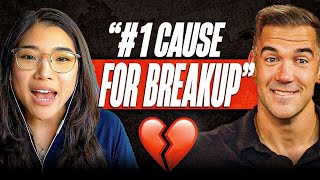
Licensed therapist Hasu Jo explains how childhood trauma shapes adult relationships and why people self-sabotage when they feel unworthy. She argues self-love is the foundation for healthy connections and that therapy works best when you're willing to sit with discomfort as a sign of growth.
Chapters
We generally accept the treatment and the love that we believe that we deserve.
Oh, that is powerful.
Anytime somebody's talking about the self-sabotage or self-sabotage, it happens because we're allowing treatment that we think that we deserve. And this can very often be rooted in trauma.
Are you able to love yourself if you still hold on to the shame and trauma of our past? Hmm. I think you gotta have a dream.
The School of Greatness. Really? Yeah. Please welcome Lewis Howes.
This episode is brought to you by BetterHelp. Hasu Jo is a licensed marriage and family therapist and the head of clinical operations at BetterHelp. And her clinical focus is on Asian American mental wellness, anxiety and stress management, relationships and family dynamics, and trauma relief. I'm very excited about this because a lot of people struggle getting into healthy, conscious relationships, getting into relationships and then developing it into marriages. It just seems like there's a lot of challenges in the world right now on how to navigate life in general, let alone relationships and all the different dynamics of marriage. And I wanted to ask you my first question is how can the different childhood traumas that we've experienced Affect our current relationship or ones we're about to get into if you can talk about that for a minute.
That's a big question and I do want to start by saying just because you experienced trauma as a child it does not mean that you are now having some issues in your relationship or if you're having issues in your relationship now it doesn't mean that it's a direct outcome of the trauma you experienced. And I say that because I don't want people to hear me and think that that they are doomed to a future of challenge in relationship if they've experienced something as a young person. But I will say trauma at any age. And for folks that need a refresher, trauma is an event or a series of events that really strips away your sense of safety in this world. And that can come from being a survivor of abuse. It could be because you are a witness of some kind of violence, some kind of life-threatening, very dangerous situation. something that feels really scary, something that is very scary, these things can get stored in our bodies. They get stored in our psyche. They get stored in the core of our identity and who we are if we don't process this stuff, if we don't heal from these things. So for a child, for a young kid who's still developing their worldview and their sense of self, trauma, whether that's abuse, whether it's witnessing violence, whether it's a significant loss of a loved one or anything in between, This can manifest in the child's worldview, thus leading to this child growing up into an adult who has learned not to trust the world because the world isn't a safe place, not to find safety in other people, and to potentially expect the worst from others. If anything, somebody that's gone through trauma as a young person, as a child, can even start to believe that they should expect the worst from themselves. When you think about kids, their thinking is very pure. Their thinking is pretty black and white a lot of the time. And to make sense of something bad happening to me as a little kid, it must be because I'm a bad person. So, you know, if this child does not grow into a person that's able to process or heal from this trauma, they hang onto that core idea that bad things happen to me because I'm a bad person and because I'm a bad person, I'm going to reenact this in my current relationships as an adult. I'm not gonna be able to communicate clearly because I'm a bad person. All this shame that's been piling on all these years, it can really turn into challenge in communication in the ways that you show up in a current relationship.
Do you think we should enter a new relationship if we have certain traumas that really make us more defensive, more guarded, hold back our feelings and our emotions, Should we even enter a new relationship before we actually address that trauma?
I don't know if there's an all-encompassing answer to this. I don't wanna say, no, don't do that. 'Cause I think there are plenty of people out there that have, and they have found incredible growth and healing while in relationship. It could be that their partner has helped them navigate something. All this to say, if you feel like you really hate yourself, which can take some time to uncover or figure out, It's going to be a difficult thing to expect anybody else to enjoy spending time with you when you can't even stand yourself. Right. So rather than saying, no, don't do it, I would just take some inventory of where you are, how you're feeling about your ability to communicate effectively, not only be respectful to your partner, but respectful to yourself. Because everything that we do, everything that we put out there, as output, whether that's our behavior, our words, the ways that we connect, the ways that we don't. This all, I think, really originates from how we feel about ourselves. People that love themselves, you can tell. People that have very low self-esteem, you can tell. We've gotten pretty good at identifying these things in other people. It can be very difficult to identify those things in ourselves. So I think it starts there as a practice of introspection.
And it seems like, for some reason, from my observation, when someone doesn't love or accept themselves or they have a low self-esteem, they want love from another person, but they're unable to receive it still because they don't believe that they're deserving of it or they're worthy of it. So they look for it from another partner. That other partner tries to give it to them, but they struggle receiving it. And so it's like they want it, but they can't have it. And it's right in front of them, and it doesn't matter how much harder someone tries to give them love or support in a relationship, they still either sabotage, defend, you know, do something to harm self or the relationship. I hear what you're saying that you can still find healing and growth and in the relationship, but I'm just such a believer that if we're not finding a way to create that self love, it's just gonna be hard to have a fruitful relationship. It's just gonna struggle.
I agree with you. And, you know, folks that are entering a relationship that have all this unresolved stuff, whether they realize it or not, some piece of them is going to expect for their partner to heal them. And that's a huge thing to put on any person, you know?
It's a big responsibility. That's a big weight. And then there's probably resentment in the case if they don't feel healed from their partner, whether it's, you know. So I guess I'm curious about the actions someone should take before entering a relationship. You know, if people have heard us on our show before and heard me talk about therapy and having coaching and support, How can someone really tap into therapy and what is the main benefit of therapy? Whether they are single and want to be in a relationship or they've already gotten to a relationship and they realize they don't want to mess it up.
Well, if you're single and you've already made the decision that you want to try therapy or you've started therapy and you're wondering, how is this thing going to help me? How is this thing going to help me figure myself out and show up a little bit healthier, a little bit in a more loving, kind, patient way in my current relationship, in my next relationship. Therapy is not just about getting you ready for a relationship. I don't want people to think that that's what that is. Therapy is somewhere that one can begin discovering their sense of self-worth.
Yes.
We talked about people that have low self-esteem. This is a good place to start figuring out how do you increase that level of self-esteem? how do you start discovering what your own value is in the world? We create those things internally. And you mentioned, you know, people that don't have that might start seeking it out from external sources, external validation. So I think single people specifically going into therapy, you can start learning about something called self-love. We hear about this all the time, but I think a lot of people have a difficult experience conceptualizing what it means to love yourself. It is much easier said than done, especially if you have lived your whole life not loving yourself, in fact, loathing yourself. Yes. Components of self-love include compassion, patience, understanding, kindness. I think these are some of the things that we will think of when somebody says, what is love? These are the things that we want to extend to somebody else, but for whatever reason can be so difficult to give to ourselves, especially when somebody feels like they do not deserve it.
Why do you think, based on a, I guess, a therapeutic analysis, why do you think so many people have grown up believing they're not deserving of love? Is it the traumas they experience that are stored in the memory and in the body at the same time that cause them to believe they're not lovable? Is it conditioning from something else? Or is it really they haven't learned how to navigate the traumas of the past? Big T or little T's, long traumas or smaller traumas. And it's stored in the body, it's stored in the memory, and it's causing a belief system of I'm not lovable or I'm not deserving.
Well, I think you just answered that question. I think for some people it's some combination of some of the things you said. For some people it's all of the above. Going back to this thing I talked about, a little kid having experienced abuse by the hands of somebody that they looked up to, that they they were hoping would be an unconditional provider. They make sense of that as that must have happened to me because I deserved it. Because my mom and dad are perfect. They're amazing. The only reason that they would do something bad to me is because I'm bad and I deserved it. And so if you don't resolve that by processing, find some kind of healing and find some kind of understanding that it wasn't your fault, then it makes a lot of sense to turn it to an adult that feels like, bad things happen to me because I'm bad. And then you start doing things like fulfilling this self-prophecy, right? Pushing people away, withdrawing, shutting down, being disrespectful, and then convincing yourself after the outcomes of that behavior. I knew this was gonna happen because I deserve bad things.
Right, right. This is fascinating because for many years, if I'm self diagnosing myself on my pattern of behavior and choices and relationships and all these different things, I would choose different relationships and partners based out of a wound. And somehow it would never work out, right? And it would kind of be like a struggle, 'cause I wanted it to work out and they wanted it to work out, but we weren't really choosing from the right healthy, conscious place. I'm curious, what is the main cause that most people break up in a relationship? Is it they lack a shared vision and values? Is it they don't know how to communicate with each other effectively, or they just hurt each other too much emotionally? What's kind of the main cause of a breakup that you see?
Well, all those things you listed, I've observed them in many relationships. It could be one of those are the primary reason for somebody, but if I take a bird's eye view of everything, trying to figure out what is that thing that's common in the breakup, It kind of boils down to they are not on the same page. And that could be for a variety of reasons, including the ones that you just listed or something else that we haven't discussed yet. In a successful relationship, what I recognize in myself, I'm putting myself in the position of being in a successful relationship, I recognize my own willingness to work on things with my partner. And I trust that my partner has their own willingness to work on things. if either of those things are ruptured, as in I notice that I no longer want to work on stuff or I'm not trusting that they want to work on stuff, I don't trust them to continue wanting to be with me. This is a significant break, I think, in the relationship that's hard to come back from. If both people are not on board to work on stuff and working on stuff looks different for every relationship, working on stuff is gonna play out very differently depending on what the issues are, what the challenges have been, what kind of traumas each of these people are bringing into the relationship, what their families of origin look like. And if you hear therapists talking about family of origin, talking about the people that raised you, the environment that you grew up in as a child, where you came up, this is going to be very different and unique to you as an individual than your partner. Even if you find somebody that you feel like we're vibing so much, we have so much in common, we have shared values, we have a shared dream about what we want to do with our lives, whatever happened in the first 18 to 26 years of your life is gonna be very different than your partners.
Right.
And now when you come together, you're trying to find a way to combine this stuff. And it can be really, really hard if you're unable to identify core pieces of the dynamics that shaped who you are.
And if someone has vastly different family of origin stories, even if you feel like, oh, we grew up in the same town and we have, like, similar cultures, you might have a different religious background or there might be different experiences that could be very different, but it could seem similar. But if someone has an extreme family of origin difference than their partner, but they're vibing, they're connecting, they're having a fun time together, there's chemistry, there's all these different things, what do they need to look out for in order to have the right conversations? Or is it a matter of just saying, okay, I accept you for this is your beliefs and your values, and I'm going to be okay with it and not try to change you. How do people navigate that in relationships?
When we figure that out, please let me know. Yeah, I'm kidding. But, you know, if if you're entering a relationship and chances are it's because of a lot of the stuff that you talked about at first, it's usually pretty good. And a lot of people have heard that phrase honeymoon phase.
Yes.
Endorphins are running high, oxytocin is rushing throughout your body. It's the stuff that makes you feel good, dopamine. You feel satisfied, you feel like you've achieved something. Couples that get together and initially just stay together because of the feel goods, they are, I think, neglecting something very important. How do we navigate when we feel bads? What do we each do when we're faced with challenges, when we get angry or upset or hurt by something? and this is like a key difference that I think people could benefit from exploring a little bit more when they first get together with someone. And I know it's difficult to do this very explicitly, just like over coffee, but it's like, how do you respond to anger? How do you respond to a disagreement? Some big differences I see in families of origin. Some families, when somebody's mad or when some kind of issue comes up, everybody withdraws, everybody shuts down and they don't talk about it.
Yeah.
And then they reconvene at some point and, you know, some families just rush things under the rug and they carry on as though nothing happened. And they do small gestures to let each other know that I'm okay now, are you okay? But they don't actually talk about it. And they move forward.
Was that your upbringing or your experience?
A little bit, a little bit. And then some families, some other families, when there's disagreements or challenges, they shout it out. They fight it out. They talk about it in the moment.
Right.
And it could be because the leaders of the family, the parents, or it could be some other significant people. They've decided we're gonna confront this right on and we're gonna challenge each other and get it sorted and we're not gonna go to bed angry. You know, all these different ways that families exist. I don't wanna say one is right, one is wrong, one's better or whatever.
But they are very different.
So if you come from a family that rushes things under the rug and then next week you just act like nothing happened and that's how you move on, but your partner comes from a family that they wanna talk about the problem right now, that's gonna be pretty challenging to navigate if you don't figure out first, how can we meet each other somewhere in the middle? so we can leave space for the different ways that both of us have learned to figure out conflict.
Yeah, it sounds like emotional agility is one of the skills or tools that so many of us could learn to master more of that will benefit us in every area of life, but obviously in our intimate relationships. I remember in all of my previous relationships, I'm currently engaged, but in all of my previous relationships, I never really had those hard conversations early on. It was a lot of what you talked about. This feels good. We're having fun. Let's keep feeling good. And whenever there was moments of, oh, this doesn't feel good. This feels kind of off. And I didn't know how to communicate and they didn't know how to communicate. It just, it just seemed to like continue to get worse and worse over time because we didn't have the tools. I didn't have the emotional agility. They did it. We didn't have the language. We didn't know how to communicate effectively. and create a safe space. And we both had our own traumas and all these different things that we brought to the table. In my current relationship to my fiance, when I entered the relationship with her, I made a request. I said, I would really love to, I said, I've been doing therapy and healing over these last couple of years from all my past. And I would really love to enter a relationship differently and do it in therapy. Are you open to this? And she was all in. And it was probably the best decision I've made in any relationship is to enter the relationship in couples therapy together. I was doing individually, she was doing individually for her own life. But our therapist was kind of like blown away that we were doing this because she was like, I've never seen this in like 30 years. It's usually when there's like challenges where people do this. and it has alleviated so many potential challenges that I see could have come up. And I'm very grateful for that. And I'm not saying it's all perfect, but it's been incredibly peaceful because we've entered therapy together. What are the main benefits that couples get out of entering therapy when there's nothing wrong? And also when there are challenges, like, what are the benefits of doing it when things are great and you feel good? versus, we're really struggling and we got to get some help.
Ooh, juicy question. While you're talking, I had a very similar reaction to what you shared about the therapists. Like, wow, this music to my ears to hear that people are entering a relationship, wanting to talk about the hard stuff right off the bat instead of waiting until a time where they've already lost respect for each other. Oh, and still waiting for a time that they've already said very hurtful things to each other that they cannot take back.
They can't take back. Yeah.
But couples entering therapy when things are feeling good, you still love each other, you still like each other. I think that's a huge benefit is both of you are still very much 100% wanting to make this work. And it's not coming from a place of we need to fix this. It's let's keep what is lovely about this thing that's blossoming between us going for as long as we both shall live, right? So, you know, in couples therapy, some of the benefits that come whether you're feeling good or even if you're not feeling so good, is you start diving a little bit deeper into your family of origin stuff. A lot of people haven't really explored that. For those that have been in individual therapy first and they're coming together, probably chances are that you did talk about some of these things, but now in couples therapy it's a chance to talk about it together where you can learn about these things of each other. And you start figuring out how your parents or whoever it was that raised you had some kind of contribution to how they molded your idea of what loving relationship is, your idea of how to resolve conflict, and you start kind of maybe exploring how their communication styles that weren't so healthy have impacted the way that you show up or don't show up in relationship. When you're in this feel-good state and you enter therapy together when nothing is wrong, it gives you a chance to be able to really process stuff that may have felt wrong in your individual lives together. You're at a pretty, what I say, healthy baseline of emotional focus. If you're not heightened, then you're able to process. I think all of us can relate to this in different contexts. For example, you show up for work or you go to school. If you're really upset by something, it's a little bit harder to focus and get into problem solving mode. It's a little bit more difficult to get your thoughts together so that you can put together whatever it is that you need for this assignment. But when you are in a good place, when you're mentally stable, when you're emotionally stable, when your needs are taken care of, it's a lot easier to go in there and get it, whatever that means. And it allows you to get to a place where you can learn how to focus on emotions when they become heightened, when you're not in a heightened place in that moment. It allows us to explore the impacts of our words, our behaviors on somebody else. versus focusing on what my intention was. Well, I didn't say that to hurt you. You know, like, it's easy to say that and get defensive when you yourself are very emotional.
Yes.
But if you and your partner can explore and discuss and talk about, this is the way that this kind of communication style affects me. It's a lot easier to say that and get into that when you're feeling fine.
When you're in a loving place. Yeah. And again, going back to kind of this emotional agility and learning how to navigate emotions with less triggering. And it's usually the traumas of our past that cause us these triggers, these feelings of, I'm not safe, you said this thing, I'm not safe, this doesn't feel good. As opposed to being able to distance ourselves from these emotions and look at it differently and not take things personally, we tend to self-sabotage. And that's why I believe that therapy is just such a wise tool and investment and Growing up as a man, as an athlete, as a male growing up in Ohio, I was never able to express my emotions of sadness or fear or worry or concern without being made fun of, or at least that's the memory that I have from just other kids in school and teammates just growing up in school. It just wasn't acceptable to express emotions in a healthy way. I'm not sure what that was like for you growing up, if you felt safe to be able to express your emotions, or if you were told, you know, don't cry or whatever it might be. But for me, it took me a long time to unwind and feel emotionally safe. And so I would self sabotage and I would be around people that would self sabotage because they didn't have the tools. And that's why I'm just a big fan of having therapy and guidance and support. It's not weak, it's wise. And if people go to betterhelp.com/lewis, they can learn more about this. But I'm curious, why do you think so many of us self-sabotage in relationships around love? We want love, but then we either push it away or sabotage it when there is a good thing that's happening or that seems to be happening. Why do we self-sabotage? Is it a lack of emotional agility? Is it that trauma stored within us that we haven't processed health yet? Is it we just don't know how to communicate our feelings?
I think a lot of that is probably involved in the answer. And you kind of hit on this answer earlier in our conversation already. We generally accept the treatment and the love that we believe that we deserve.
Oh, that is powerful.
Yeah, just a callback. You already said this and it's very true. Anytime somebody's talking about the self-saboteur or self-sabotage, It happens because we're allowing, like I said, the treatment that we think that we deserve. And this can very often be rooted in trauma. Trauma, unresolved, unhealed, leads to us feeling like we deserved it. You know, that there's an increasing shame around it too, that I'm a bad person, so bad things happen to me. That's the only way that I can make sense of this. And all of this makes it so important to get into a place where we can process our trauma, learn to exist, live, thrive harmoniously with the truths of terrible things having happened to us, but accepting, absorbing, embodying this idea that terrible things may have happened to us. But it's not because we're terrible, not because we deserved them, but because there are many things that happen in this world that are unexplainable, that are outside of our control. And we are never at fault. And I've said this so many times, we're not at fault for being the victims or survivors of anything terrible. We do have a level of self-responsibility to find healing. You know, somebody may have dug this giant hole and shoved you down there, but we can't expect that anybody, especially that person, is going to be the one to pull us back out. So we run around in this hole and we figure out what tools that we have in front of us, how we can train our bodies and our mind to climb on out of there. And I think all of us have the ability to do that. It can be very, very difficult, especially if the hole that has been dug is really, really deep. But I do feel that all of us do have this level of responsibility to get ourselves out without expecting somebody to pull us up. And of course, there's always going to be professional options to find somebody that can help pull you up, or rather help you discover the ways to get yourself out.
Absolutely, yes. When I'm thinking about shame, you mentioned shame and a lack of self-love, how much harder is it to have a healthy, thriving relationship when we associate ourselves with consistent shame and a lack of self-love? Say we're on a scale of self-love and acceptance of one to 10, and we are below a seven. on that scale consistently. We're at a four, five or six consistently as opposed to seven, eight, nine or ten. How much harder is it to have a loving, healthy relationship with another when we shame ourselves and have self-loathing as opposed to self-acceptance?
I mean, the simple answer is it's harder. It's definitely harder. I want to draw on an analogy if that helps people visualize this. You know, two people coming to a table, they bring their own cups. Let's say it's a time to think about what beverages we like, whether that's water, juice, tea, whatever it is. And, you know, if both of you are coming to the table with a full cup ready to sip your own stuff, then we're not so thirsty, then we're not so seeking of somebody to fill that cup for us. And we can love and extend kindness and patience and compassion out of the abundance of having enough for ourselves. Now, if you come to the table with an empty glass, some part of you, whether you realize it or not, which I kind of alluded to before, is going to expect for your partner to pour into your glass so that you also have something to drink so that you're not sitting there with an empty cup. Now, if you have an empty cup and your partner has some liquid in there, now you're expecting for this partner with a partially full cup to be able to fill both of yours. And this is going to deplete both of you. If you have an empty cup, your partner has a full cup, then your partner initially is going to be able to pour out of the abundance of love for themselves, but over time it will run out.
Yeah, yeah.
Until it's empty. Expecting your partner to fulfill all of your needs for validation, compassion, kindness, patience, entertainment, all these things means that at some point you're not providing any of that stuff for them. And anything that we do to another person that's kind, that's positive, that's wonderful, that's loving, it really, really starts with love for ourselves. It starts from really, really deep inside. And I think we can all think of examples of people who, you know, from our different observations, from the lives that we've lived, probably don't like themselves very much. And this we describe with low self-esteem or some of the behaviors that might come to mind are people that are constantly fishing for compliments, seeking external validation through a variety of different behaviors, sometimes reckless behaviors, These people can make exhausting partners. They can make questionable parents. And generally they can be very difficult to be around. And they probably feel that about themselves too. So if you yourself don't even like your own company, you don't like being around yourself, you don't like the person that you are, how really can you expect anybody else to want to be around you too? So loving yourself means treating yourself like somebody that you love, meaning speaking kindly, being respectful of this person's time. It also means behaving and speaking like someone you love. It could be that you don't love yourself because of what you observe in you. You know, if you're speaking in a way, behaving in a way of somebody that you feel like is, you know, not meeting the standards of some kind of behavior that you have, of course, it's going to be difficult to love yourself. So live the life of somebody that you would love. And that's how you get closer to actually being able to feel and say, I love myself. You want to live the life of somebody that is somebody that you love. Otherwise, it's very, very, very difficult to achieve this thing, this very intangible thing called self-love, self-worth.
-Right. -and do you think it's possible to take the actions necessary to love yourself on a day-to-day basis? Are you able to love yourself if you still hold on to the shame and trauma of our past. Or is it more of like surface level love? Okay, I'm doing the things, but I still in my core am tied onto this memory or this stored trauma in my body that makes me believe it's. I'm still not lovable. I can work out every day, I can drink water, I can sleep, I can say nice things, I can try to create these boundaries, but ah, is it possible to love ourselves still?
I think you already know the answer just based on the way you're asking this.
You've seen thousands of patients and people that have gone through this. I'm just curious based on your experience what you see there.
Like he said, some of these things, treating yourself like someone you love can be very surface level. The next level beyond that is being somebody that you can love. It's going to be very, very hard, if not impossible, for some people to really achieve this idea of self-love if they have not gone and resolved, processed, healed from these really deep core ideas about themselves that they're unlovable. How can you love the unlovable? So it's, yeah, very much up to us. And I don't think that we have to do it alone. I think we have to be responsible and maybe take the lead, just like in any other saying. Sports, for example, nobody on a team sport is expected to carry the team forever. When that starts happening, there's a problem. There's an issue going on and they got to figure out how to make sure all the players can work together collaboratively. Yes. One person is carrying everything. Something is wrong. And same thing for our own lives. We are not meant to, at least in my humble opinion, I don't think we are meant to navigate life completely in isolation or on our own. There's plenty of research out there that shows us that people are hardwired to connect with each other. So my huge encouragement to those that are starting this journey or in the middle of their journey of self-discovery, of figuring out how to love themselves, is lean on people, find support, and know that reaching out for assistance, empowerment from somebody else is not the same as solely relying on them for external validation. And there's so many different ways that one can lean on someone else, like having a strong support system, nurturing important relationships, and of course the option of finding professional help too.
Absolutely. I'm all about the professional help for me. It's one of the greatest investments that I can make in self is improving the quality of my emotions, improving the quality of my thoughts about me and about the world around me so that I'm not in suffering, but I'm more in service to my needs and to those around me in a peaceful, harmonious way versus a scarce, anxious, fearful way. But for those who maybe aren't ready to take the professional route yet, or they don't have the investment yet to make in having a therapist, a professional licensed therapist, what are two or three things that people can do on their own until they're ready to start processing and healing the traumas that they might have that they're aware of or that they're unaware of? What are a few things they could start to do on their own or with a friend in a safe environment if they weren't ready yet?
Well, thanks to, I think at this point millions of people like yourself, there's a lot of stuff online that people can research. So many people out there are now sharing a lot of really solid and good information for people to absorb on their own, on various social media platforms, on any kind of website, doing some research about, you know, how you're feeling, what you're going through. That can be the start of an acceptance that what you're experiencing is not in isolation, that you are not alone in your experience. and there are other people out there that will understand. And that can start getting you used to the idea that there are professionals out there that not only know how to understand where you're coming from, they have training, they have experience, expertise, education, research to back up different strategies, ways to help you figure out how to feel better, how to be better, how to live better. So I think it starts with research, and this is something that certainly anyone can try on their own. It can be very difficult if you're in a place that's, you know, very depressed. but that would be my encouragement. If somebody's watching this right now, it means they have a device that's connected to the internet. So use that device, you have all the information of the world at your fingertips. So it can start with a few just search engine keywords of how you're feeling, what you're going through. If you're not quite ready to make the leap into individual therapy, there's other options that aren't quite as focused on you, such as support groups. Peer support networks, there's a lot of in-person options, but there's plenty of stuff online now too. There's a ton of literature out there, books. People might have heard the phrase self-help, but a lot of people find healing and a lot of effective progress in self-growth and evolution through self-help, which comes in the form of books, videos, content that they can consume online. And even if not professional therapy, there's different kinds of professionals out there that can help you with all sorts of facets of wellness. this can look like looking at your physical Wellness because it's very much tied to your emotional, mental wealth and health. Life coaches, I think, are a really good option for folks that are feeling stuck about how to get to the next place in their life. Looking into people that can help with time management, organization skills, these kinds of things may feel like on the surface, but when you are unable to organize your life and manage your time effectively, it will lead to so many other challenges and problems in your life. So even looking into how to get help with that kind of stuff, I think, is really so true.
And when you, when When you organize your physical environment, your space, you feel better. You just feel clearer. Like now I have, I've taken this weight off of me and I can actually think clearer. You know, 10 years ago, I did a group workshop that was kind of the opener for me to feel safe to start sharing and talking about things. So you mentioned there's different community groups that you could do where it's not just solo focused, where you feel the pressure's on you. where you can connect with others, you can be in a safe environment and hear stories from people to start to get you to open up. If you were like me, that I never showed those emotions, it was just either frustration, anger, or joy. There was never like learning how to communicate. That opened the doorway for me to open and express my emotions in a healthier way 10 years ago. And for the last three and a half, four years, last night I did a 90-minute session with my therapist. and it's not always comfortable, you know, even though I'm comfortable doing it now, it's still uncomfortable at times. But the amount of peace and freedom that I create through the processing of sharing, getting the guidance, getting the support, getting the clarity when I feel unclear about certain things, it brings me so much peace. I sleep better at night. and I continue to do it because it continues to benefit me. So I'm just a big fan of investing in your own joy and your own happiness and your own personal growth. And that is a journey, the healing journey, as I'm sure you know, it doesn't happen after one day. It's a constant journey of processing. So I highly recommend that anyone watching or listening, sign up for a therapist, give it a try. BetterHelp.com/Lewis is where you can get signed up today for this. I'm just a big fan of what you and what everyone at BetterHelp is doing to serve people to help them process and become better human beings. So, I want people to get access to that@BetterHelp.com/Lewis. And, is there anything else that you would recommend if people haven't tried therapy yet on the best way to make sure they feel safe and comfortable when they get signed up at BetterHelp.
I want to help people know that you are going to get matched with a therapist, whether you're signing up on BetterHelp or using another option, some therapist is going to like be assigned to you, whether that's because you chose them off of a list or because they were chosen for you by some kind of intake coordinator or somebody making this matching process. And I want people to know that you're not you don't have to stay with this person.
You're not locked with that person.
Yeah. Yeah. You know, like, I think a lot of people enter a therapeutic relationship, or even when you go to the doctor's office, a lot of time we choose from a list, or our primary care physician is going to be chosen for us based on who's available, scheduling, all that kind of stuff. And sometimes I've noticed in myself, too, when I'm being matched with some kind of service provider or professional, there's a power Dynamic. So that other side is the authority. So some part of me feels like I gotta stay with them and a lot of us are socialized to try to accommodate or please. But in this case, folks, if you're signing up for therapy, you deserve to be with somebody that you feel safe with. If you're trying to expect yourself to dive deep into your trauma, dive deep into things that you may have not talked about or even figured out for yourself, you wanna feel safe first and foremost. You wanna feel like this person is somebody that you have confidence in. So if you don't feel those things initially when you're getting to know somebody, you have every right to change therapists until you find a good match for you. some people very have fortunate experiences and get the first therapist and have a great experience in that way. But it's not weird. It doesn't make you abnormal. It doesn't say anything about something that's wrong with you. If it doesn't work out the first time, the second time, even the third time, this is a really intimate relationship. It's a little bit different because you're paying the service provider. So it's not like your friend or your family member, but it is intimate. It would be a lie to say that it would not become super close. You're inviting this person into spaces that you haven't even gone into before. So you owe it to yourself to come with questions and you are allowed to be dissatisfied with their answers and move on to another person that's going to feel like somebody that you can really get into it with. So that would be my first thing. I think a lot of people are hesitant to try therapy because they're thinking, like, it's just not going to work out with that person. and based on the numbers, it might not work out with that person, and that's okay.
Right. Or they tried some in the past, and it didn't work, so they stopped. They didn't go back because it didn't work right away. And I've had different therapists in the past, and some of them work for a season also. Okay, this was three months, and then it, you know, I've. I've gone beyond the season, and I. And I look for someone else and for a different challenge that I feel safer with. With a different person. So you got to be. definitely make sure you feel great about it. And the reason why I keep doing it is because I keep feeling great about the person that I'm with, and I keep feeling safe and I feel served and not hiding, but actually like developing and growing in a healthy way. And so again, when you invest in it, make sure you feel safe, ask the questions. But it's also, you know, I remember when I first started, it was also scary. So that doesn't mean it's bad if it's a scary feeling that you're sharing something vulnerable or you're processing certain things and it can be scary, but it shouldn't feel bad. It shouldn't feel disconnected. So that'd be my thought.
Yeah, now I gotta add a little bit more. It shouldn't feel bad, but you're hitting on something. Sometimes when you start therapy, stuff starts feeling very painful before you get to a place of healing. And you mentioned this too, like sometimes it's uncomfortable. And to use analogy again of an athlete, athletes progress to the next level of physical achievement because they get uncomfortable for a while. You don't develop more muscle mass by lifting two pounds for the rest of your life, and you don't get faster by walking around a track for the rest of your life. People get a little bit uncomfortable to progress to the next level. And that's what I want to say about therapy too. Is this gonna be uncomfortable? You're unpacking stuff, talking about trauma, trying to figure stuff out that has, you know, blocked you from living the life that you want for a really long time. So once it starts getting really hard because it's feeling painful emotionally, that's a really good time to bring that up with your therapist instead of what we generally want to do, which is run away or shut down, withdraw, avoid, brush it under the rug. Sometimes, you know, facing it head on is part of the process. And I really encourage people to, you know, take notice of when something's uncomfortable and bring it up with their therapist because that's going to be part of your healing journey too.
100%. I'm so grateful for your wisdom and your experience and your lessons today. Thank you so much for sharing with us and coming back on this show to talk about these things that I just think are the things that give us the most peace and joy in our life. And that's what this is all about, to experience that love, that joy, and that growth. So thank you again for being here. I'm so grateful for you and can't wait to have you back on soon to talk more.
Thank you so much for having me.
Again, thank you guys so much for being here. I hope you found this valuable and enjoyed this information. Again, Huso Joe's input is general psychological information based on research and clinical experience. It's intended to be general and informational in nature. Also, just because you might have heard something on the show that sounds similar to what you're experiencing right now, beware of any self diagnosis. Diagnosis is not required to find relief, and you'll want to find a qualified professional to assess and explore diagnoses if that's important to you. And if you or your partner are in a crisis and uncertain of whether you can maintain safety in your relationship, make sure to reach out for support, crisis hotlines, local authorities, etc. Again, have a safety plan when you're in relationships. That can be done with a therapist also. I'm a big fan of therapy and having coaching. I hope you enjoyed this episode. Again, make sure to check out betterhelp.com/Lewis if you want to learn more. And again, have a great day. That is such a powerful thing to be able to admit to someone else that my health and who I am is a priority. And I think beautiful because it just sets the tone. And you and I now are in a healthy relationship. You know, we're both praying that we continue to grow with this person, the people that we're with. But at least it's healthy. We're ready.
More from Lewis







Secret Service Agent: Your Neutral Face Is Making People Distrust You (Here's How to Fix It)



