THESE are the Dangers of the GOOD LIFE!
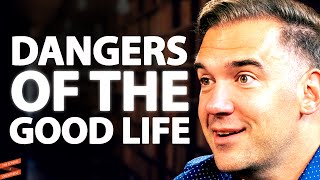
In this episode the host opens by urging viewers to subscribe before diving into a deep exploration of what he calls the "good life" – a state of comfort and safety that many strive for, yet often leaves people feeling unfulfilled. He frames the discussion around three core dangers that arise when comfort becomes the primary goal: (1) a lack of a meaningful mission, (2) an absent growth mindset, and (3) a deficit of self‑love caused by constant comparison. The episode weaves several illustrative stories – a fisherman who is content with his simple life, a tourist MBA who pushes for endless expansion, Jim Carrey’s father choosing safety over passion, and Sarah Blakely’s family celebrating daily failures – to highlight how comfort can mask scarcity thinking, fear of failure, and a loss of purpose. For each danger the host offers concrete remedies: defining a personal mission manifesto, deliberately embracing structured discomfort (short daily physical challenges, delayed gratification, and celebrating failure), and breaking the habit of comparison through self‑inventory exercises, solo dates, and journaling. He references his own book, The Greatness Mindset, which contains step‑by‑step worksheets (mission manifesto, inventory on page 158, and a game‑plan for the next 3‑6 months). The episode concludes by urging listeners to pursue not just a "good" life but a "great" life – one built on purpose, growth, and self‑love – and invites them to get the book for deeper guidance.
Chapters
Hey guys, thank you so much for being here. A quick message before we dive in. You may be watching the show but haven't taken a moment to click the subscribe button below. So if you've ever gained value from this show, it would mean so much to me if you click the subscribe button right now. And not only will this allow you to see these messages first, all this great content we have, you're gonna get notified first when it comes out. But the bigger our subscriber base grows, the more people we can impact and.
The bigger the guests we can get on this show as well.
So again, thank you so much as always for your support. It means the world to me. Make sure to click the subscribe button below and let's dive into this conversation.
Today we are going to talk about the dangers of the good life. Now, maybe you've worked your entire life to reach the good life. You've worked hard to reach a level of comfort and safety, and there's nothing wrong with that. But once you got there, did you feel like something was missing? Did you ever feel unfulfilled or there was something more out there for you? When we strive to reach comfort, our safety can often leave us with a scarcity mindset because we're afraid of losing what we worked so hard for. And I respect that. But I also believe that we were meant for so much more. We were meant to unlock our inner greatness, and live fulfilling lives full of love and peace. In this episode, I invite you to step out of your comfort zone. Maybe you are following a path that you think you're supposed to be doing, but you know it's not what you were born to do. Maybe you are on the right path for a season, and now your story has taken an unexpected turn. Wherever you are, you can choose to stay stuck or you can choose to break free. and that's what we're going to discuss in today's show. We'll cover the three dangers of the good life and ways around them. And it's possible not only to live a good life, but to live a great life. I'm so excited for today, so let's dive in.
So as we dive into this topic and this conversation, I want to share a quick story about the fisherman in a small village. And maybe you've heard this story before, but I just want to share it really quickly about Fishermen in a small village, that Taurus went to go visit this village and they saw this fisherman and they asked them how long it takes them to catch fish. And the fisherman replied saying not very long. And so the Taurus says, well, why don't you stay longer and catch more? And the fisherman said that their small catches were sufficient to meet their needs and those of their families. And the tourist said, well, what do you do with the rest of your time? And the fisherman replied, well, we sleep late, we fish some, we play with our kids, we take siestas with our wives. In the evenings, we go to the village to see our friends, we have a few drinks, we play the guitar, and sing a few songs. We have a full life. Then the tourist interrupted and said, well, I've got an MBA from Harvard and I can help you. and you should start by fishing longer every day. You can then sell the extra fish you catch, and with the extra revenue you can buy a bigger boat. And the fisherman said, well, after that, then what? Well, the extra money in the larger boat you'll bring, you can buy second one and then the third one and so on until you have an entire fleet of boats. And instead of selling your fish to a middleman, you can negotiate directly with the processing plants and maybe even open your own plant. You can then leave this little village and move to a bigger city in Mexico City or Los Angeles or New York City and from there you can direct your huge enterprise from that city. And the fishermen said, well, how long would that take? And the tourists replied, well, 20, maybe 25 years. And after that, well, afterwards you can Do some interesting things, the tourist said. When your business is really big, you can start buying and selling stocks and make even more millions. Millions? Really? Well, after that, then what do you do? Well, the tourist said, after that you'll be able to retire and live on a tiny village near the coast, sleep late, play with your children, catch a few fish, take siesta with your wife and spend your evenings drinking and enjoying your friends. The fisherman replied, well, with all due respect, sir, that's exactly what I'm doing right now. So what's the point of wasting 25 years? Now, I love this story because you've got to ask yourself, what type of life do you want? What type of life is a rich, abundant, full life? Where do you want to be spending your time? and understand the sacrifices you make no matter what you're going after. Now you can live in a small village, you can have a great family, you can do things on a daily basis that support that family, you can be a contribution to the community, and you can have a full rich life. But I feel like there's a few dangers to that life in this Society. There's a few dangers to that in this world. And it doesn't make you wrong or bad, it doesn't make you good and right. There's just some pros and cons. And there's also some pros and cons to the other extreme of, you know, working longer hours and buying a bigger boat and making more money and then having a fleet and then moving to a bigger city for bigger opportunities. There are certain pros and cons and opportunities and consequences to that as well. So I want you to understand what is a rich life to you. And when we talk about the good life, we're taught by modern culture different things that look like a good life. And again, I don't think there's a right or wrong, good or bad here. It's what do you want? What makes you feel like you're thriving, like you're growing, like you're making a difference in and based on what you feel you are supposed to do with your life. In Webster's dictionary, they define the good life as a happy and enjoyable life. And this definition is a little vague if we don't define happy and enjoyable for ourselves. We'll default to someone else's definition, we'll default to society's definition, and we'll be in a trap. We'll be in a trap by things that we don't want to do. So the fishermen wanted to stay in the village. They liked their life. They weren't looking to expand and grow, at least financially. We don't know if they were unable to grow and expand emotionally and spiritually. Maybe they were. But here's what I do know: without growth, it's hard to truly be fulfilled. Without expansion, it's hard to truly know what we're capable of. Without obstacles and certain challenges, it's hard to see what we're made of. The good life teaches you to be grateful, but is it gratitude or guilt that keeps us from seeking more for yourself? It teaches us to not ask for more than you are given, but what is wrong with having abundance for you and those that you love? And again, abundance can be spiritual, emotional, it can be experiences. It does not have to just be money and career. And sometimes the good life teaches us scarcity, that there is not enough to go around and we should hoard money, we should hide our gifts, and our talents. But who does that benefit? You know, I see the allure of the the fishermen in the small village. I've experienced that life. It's a pretty amazing life. It's pretty fun to just kind of do the same thing every day. Take it easy, relax, do the bare minimum. There's a piece to that. There is a joy to that. There's fun, there's play, there's not much stress. But there's also gifts inside of you, talents inside of you that you haven't maximized, that you haven't seen what you can create. You haven't at least even tried to fail because you're doing kind of like the bare minimum to survive and stay alive. Again, this is not a judgment, this is not a make wrong. This is not good or bad. This is just for me personally. There is something to see, to explore within each one of us. And the biggest danger in my mind is lacking a meaningful mission. Now, a meaningful mission is an underlying sense of purpose that gives your life greater significance. And I think we are living through a crisis of people not being clear on their meaningful mission. Therefore, they lack the alignment of motivation. They might have motivation to live up to some standard in society or keep up with their friends or make money because they're trying to look good, but it's not the right type of motivation. It's not a meaningful motivation. And so many people are comfortable. They have jobs, they have food, they have shelter, they have time to listen to a podcast like this and read books, but it may not be for a clear purpose or meaning to serve something greater, talents, gifts, uniqueness inside of them, and they lack this sense of meaning and purpose due to putting comfort above all else. Again, I am not saying that we shouldn't live a comfortable life. I love having comforts in my life, but I also know that when we live comfortably too consistently, when challenges come up in life, and they will, when society throws stress at you, When health challenges arise, when people around you are dealing with a challenge, we lack the emotional, physical, and mental strength to overcome the challenges. And that's why it's important to put ourselves through some type of structured pain, structured discomfort on a consistent basis. This doesn't mean you need to be in pain constantly. But you can be in physical discomfort 30 minutes a day to help build the strength to overcome challenges in the future. Having a meaningful mission enables you to end the temptation to wander aimlessly and label it success or comfort. Now, this is something I've talked about many times. I talk about it in the greatness mindset. When we are not clear on the direction we're heading, even if it's the wrong direction, if we're not clear on where we are heading, We are wandering aimlessly. And when we wander aimlessly, we typically do things that aren't the best for us or the best for others, or we're wasting time on things that aren't supporting our growth and development or service and contribution with others. And then we start to get anxious, we start to get stressed, we get depressed, we feel like something's wrong with us. And it's because we're not Aiming for a direction. And again, you might be going in the wrong direction right now, but at least you're moving somewhere. It's better to be going the wrong place than no place at all and standing still, because that's when the vultures of the world come and start to feed on the vultures in the physical world, the the vultures in your mind, the wrong thoughts that are going to hold you down, that are make you playing small and doubt yourself. They're going to start attacking your soul and people in the world are gonna start coming after you and trying to drag you and pull you and push you in a lot of different directions and waste your time. So that is danger number one, lacking a meaningful mission. And in my book, the Greatness Mindset, we give you the full strategy for developing and creating a meaningful mission. So if you haven't got a copy yet, make sure to check that out. Danger number two, This is a biggie, the lack of a growth mindset. You've heard this phrase about a growth mindset over fixed mindset before. If you've been listening to this show or you've been working on developing your personal growth for a while, you've probably heard the book Mindset, which is about this concept versus fixed and growth mindset. And as humans, we are motivated to grow and evolve. But at times we feel stagnant or that we're repeating the same day because we're too comfortable. Again, like I mentioned, comfort isn't a bad thing. I like feeling comfortable, but I feel comfortable because I'm constantly putting myself through discomfort. I'm delaying gratification. I'm not eating sugar all day. I'm delaying that gratification and doing it every once in a while. I'm working out. I'm getting up early as opposed to sleeping in and not moving my body at all because it feels more comfortable. I feel comfortable because I put myself through discomfort daily. It doesn't need to be extremes here, guys. We don't need to be like, I get up at 3:00 AM and I push myself for four hours until I'm nearly dead. I'm not talking about that. I'm talking about creating a structure and a system that works for you so you can have energy all day, so you can feel inspired, not exhausted. That's not what this is about. It's about creating a structure and a system that works for you to support you in feeling comfortable. And that might mean putting yourself through discomfort, delaying gratification, doing the challenging things that make you feel proud about yourself consistently and build your self-worth and self-confidence. Now, I love this story about Jim Carrey. Maybe you've heard this speech online, but Jim Carrey talked about a story of his father in a viral college commencement speech. And the speech goes a little something like this. He talked about his dad and how he could have been a great stand-up comedian. He had all the skills, all the tools. He was hilarious, but he chose accounting as a more practical profession. He was comfortable, was practical, was safe. Take care of his kids, family, you know, had time to do things that were good for him and his family. It was practical, it was safe. And when Jim was 12 years old, His dad lost the job. They struggled after that. Now, him choosing a comfortable, safe situation in life later in life caused extreme pain, sadness, loss, grief, and discomfort. So they struggled to make ends meet for a time, and he saw his family take up all sorts of odd jobs to pay the bills. Now, the lesson for him, for Jim Carrey, was you can fail at what you don't want to do. So you might as well take a chance on what you want. On page 167 of the Greatness Mindset, it says you are the only person who can give yourself what you want, and you must be willing to do the work every day. You see, because comfort keeps us safe from one of the greatest fears, and that is the fear of failure. I talk about this in chapter four. There are three main fears. The fear of failure is one of the biggest ones that we all face, that we all struggle with. Some people have this greater than the other two fears, but the fear of failure is a big one that we talk about in chapter four. And this fear of failure can prevent us from having a growth mindset. And what I mentioned earlier is the feeling and the experience of growing individually gives us the greatest sense of fulfilling. Not growing makes us feel uneasy, dissatisfied, and eventually uncomfortable with ourselves, not more comfortable because we're not growing. And what I would like to ask you is, what if we gave ourself Permission to fail on our journey of life, on our journey of greatness. And I really think greatness is allowing ourselves to fail constantly. Failure is the only way to grow. You don't grow unless you have failure in the gym. If you're trying to get a bigger muscle, you don't grow by moving it once. You grow the bicep by doing a curl, until you feel failure, until you cannot do another curl. And that way it breaks it down a little bit, you break down, you stop, then you have to recover, the body starts to generate, the muscle starts to build, and then it grows. That's what happens in life as well, psychologically, emotionally, physically. We've got to be willing to fail. Failure should be a thing we celebrate. be inspired by it, be motivated by it, because we know, hey, when I fail, it means I grow. The next thing that happens is I pause, I reflect, and boom, here's some type of opportunity, some type of experience where now I have wisdom, I have new lessons, I have new experiences where I get to grow into now. Failure should be celebrated, not feared. And a lot of time we are crippled, by this idea, well, if I fail, I'm not going to be good enough. I'm going to be made fun of. I'm going to be laughed at. People are not going to accept me. But that is not true. And maybe there have been situations or scenarios in your past where you have made mistakes and kids laughed at you. Okay, that will happen, but it doesn't mean you are a failure. when you make a mistake. It just means you made a mistake or you did something not to the best of your abilities yet. And for you, if you flip that script, if you flip that story in your mind, you'd say to yourself, man, this is something I should celebrate because on the other side of this, I have wisdom. Now I'm smarter, I'm more talented, I'm more educated. And you know what? I'm courageous. Most people lack the courage to actually try something because they're afraid of what people are going to think when they fail. But when you stay comfortable, that's when the biggest discomfort comes later in life, just like in the story with Jim Carrey. So give yourself permission to fail on a daily basis. I love the story of Sarah Blakely. I talk about Sarah Blakely a lot because when she was growing up, she's the founder of Spanx, which sold for over a billion dollars. And when she grew up, she told me the story on this podcast that her father every night at the dinner table would ask her, the kids, what did you fail at today? And he would celebrate them for sharing a story of failure. So when she got into her journey of being an entrepreneur, when she knew nothing, she had no clue what she was doing, she wasn't afraid to fail. She had challenges, she had obstacles, she had everyone telling her that this was the wrong thing and it's not going to work and it was a hard industry, but it didn't stop her from trying. The failures that happened over and over again gave her information, gave her experience, gave her courage to keep going. And I want you to have that same courage knowing that something beautiful and grand and great is on the other side. Now, danger number three is a lack of self-love due to comparison. I don't know about you, but in the past, I've struggled with comparison. Ah, are they bigger than me? Are they better than me? Are they doing it in a unique way that I could be doing? And, oh, I should be doing what they're doing in constant comparison. You know, many of us count on our culture, our friends, social media, and coworkers to tell us what the good life is. based on what they're posting, what they're talking about, where they're traveling to, how much money they're making. And as humans, we are comparison machines. Nod your head up and down if you relate to this. If this resonates, if this is like, yes, Louis, you're speaking my language. For some reason, I've allowed myself to be in comparison mode way too much, and now is the time to stop it. It's time to stop, my friend. You don't need to compare anymore. Here's a statistic. According to Finance Online, FOMO, or the fear of missing out, is experienced by 56% of people on social media. More than half the people on social media have this fear of missing out. Well, they did this trip, I need to go do this trip. They bought this type of car, I need to buy this thing. And I'm telling you, the danger with comparison is that it's often an act of violence against yourself when you compare yourself to someone or something else. Using your friend's idea of a successful career to shape yours? Ooh, that is dangerous. Using social media's idea of a happy relationship to decide yours? That is dangerous. Using someone else's idea of wealth to inform yours is dangerous as well. Goes back to the comparison about the fisherman and the tourist MBA who said, Hey, here's what you should be doing. Well, maybe the fisherman doesn't want to do that. Maybe there is ways that the fisherman can grow still in his village, but maybe he doesn't want to do this big, crazy thing that he really isn't a part of his meaningful mission. Another thing is all comparison isn't bad, but the kind that leaves you to abandon your truth, to abandon your emotional peace and forget your standard of your good life, that is bad. It's when it's taking you away and it's distracting you and it's causing you this anxiousness. If it's inspiring you and saying, oh, here's a model that actually inspires me. It's calling you force, calling you greater to overcome something, showing you what's possible that is inspiring. Not all comparison is bad, but you need to ask yourself, okay, why am I taking these actions? Is it because I see everyone else doing it and so I feel I'm supposed to? Or is it because that's what I truly want for a deeper reason? So I want you to ask yourself how you can start to reconnect with your standards so that you separate what you should want from what you really want. So here's an example. You know, should I buy a home or should I rent a home? You know, when you hear everyone saying, oh, you should buy, bye-bye, you know, because that's the lifestyle and you're not worthy unless you buy a home. For man, how many years? 20 years, I lived in an apartment. It wasn't until recently where I got my first home. For 20 years, I lived in an apartment and I rented a two-bedroom apartment. My first apartment was, well, 20 years ago I had an apartment for $125 a month. It was a little studio that I split it with someone else. We paid $250 a month total, but we split it for $125 each. Then my first apartment by myself was in 2008. so 14 years ago was my first apartment by myself and it was 495 a month, 495 a month. For me, that was the biggest stretch. I didn't have that money. It was like, man, can I afford this in three months? I don't know. But it got me thinking bigger by doing that. But over the years as I started to earn more people like, why don't you buy a home? Buy a home, buy a home. And I had a vision for the home that I wanted to buy. and I liked the flexibility of being in an apartment. I liked the flexibility. I was traveling a lot. I wanted to put my money in my business rather than in a home right away. So I wanted to have more cash so I could invest in growing the business. So I was clear on my vision and I didn't do something because everyone else was buying a home. I didn't jump into that. I was clear and made my decisions based on my mission, my meaningful mission. Another example would be working a nine to five versus starting a business, starting a side hustle, and oh, I see everyone else jumping their career ladder and working at these awesome companies. I should go do that versus seeing people, oh, all these side hustles and have multiple streams of income and do real estate and do stocks and do crypto and jumping into all these things because you see other people doing it. It's now choose the life that you want that excites you, that allows you to maximize your talents, your gifts. working with people that are enjoyable to work with in a community and that impact that you get to have together, all these different things. Another example might be building a relationship versus staying single for now to work on yourself. You'll see people posting photos about being married and engaged and all these things and thinking, oh, I should be engaged, that I should be married, and oh, what's wrong with me? Versus other people that say, you know, single life is the greatest and you're in a relationship and you're thinking, oh, maybe I should end this relationship and be single. You gotta ask yourself, don't compare to what others are posting. You don't know their stories. You don't know if it's true or not. You're just seeing the highlight reels, focus on your meaningful mission and what works for you for a good life. One of the best ways to stop comparing yourself to others is to know who you are, get to know you better. Take yourself out on a date. Take yourself to the movies alone. Take yourself out on a walk by yourself. Listen to yourself. Take a lone time to hear about you, to learn about you, ask yourself questions, journal about you. That might sound a little weird, but I'm telling you, when I was in my early 20s, I was afraid to be alone. I was so afraid of it, I needed to be around people all the time. I realized, wow, I'm really insecure. I don't feel like I'm valuable enough. I don't know how to be alone. That was a scary thing for me. And I said to myself, well, if I don't learn how to be alone now, I'll never do it. And this anxiety is going to make me feel afraid and anxious when I'm with people and when I'm not with people. So I started to go out on dates by myself. I took me to the movies. I took me to dinner. I took me for long walks on the beach, metaphorically. I lived in Ohio. I didn't have a beach, but I walked around little ponds. And for me, that was powerful. After six months of doing this, the first few times it was awkward. I felt like everyone was making fun of me for having dinner alone, for going to the movie and buying a ticket for one. It felt so uncomfortable and weird. Now I love it. I mean, I spent a lot of my time with my girlfriend Martha, but I love being alone. I love having alone time and taking a walk by myself. I could go to the gym by myself. I can go to the movies by myself. I can do whatever I need to do. And I feel good with me because I've gotten to know me. So get to know you and start taking inventory. And this is an exercise that we have on page 158 of the greatness mindset is to really start taking inventory of yourself. I want you to go through that full exercise on page 158 that'll help you get to know you better. I want you to write your meaningful mission manifesto. Again, we give you the full process in the Greatest Mindset. And if you find that you are constantly comparing yourself to others, it could mean that you are out of touch with your true purpose. or you haven't fully healed past wounds. I used to compare all the time in my twenties because I was not in a healing journey at that time. It wasn't until I hit 30 years old when I started to truly be on the journey of healing. It took a while and that journey continues now, but that allowed me to stop comparing little by little and start focusing on my mission versus comparing and jumping from thing to thing. Take some time to reflect on you, your life, and the behaviors that are leading you to negativity towards yourself. And just write them down. Write the things down that you're doing and write the things down that you want to change about those behaviors. For example, here are some prompts that you could use. These are behaviors I know I want to change. And then write some of them down. My highest self no longer spends time doing this. So paint yourself in the future of like the greatest version of you. Does your greatest version of you do these things with your time anymore? No. So write those things down that your greatest self wouldn't do. My highest self wants to spend time doing these things instead. So write the activities, the behaviors that your greatest or highest self likes to do instead. And my highest self wants to help others by doing this. Again, when we start to reframe these, when we start to take inventory, when we reflect, when we create a game plan, when we get clear about the direction we want to go, even if we're not clear, and listen, you don't have to be like, I know what I'm going to do for the rest of my life. This is not what that's about. It's about what do you want to do for the next three to six months to get out of this situation? Create the game plan for the current future, not the extended future. You don't have to know for the rest of my life, this is my purpose. My purpose has changed so many times over the last 40 years, I've lost count. I'm very clear on the direction that I'm heading now for many years to come, but my first 30 years, it was changing all the time, and that's okay. And then, after you do these examples and these exercises, I want you to write your meaningful mission manifesto again, that's on page 161. This manifesto for yourself in this season of life will help guide you as you build a new, more positive, more powerful, more abundant, more freeing identity. It will bring you back in alignment when you feel yourself drifting in someone else's lane. At the end of the day, we want to create a sense of peace, a sense of fulfillment, a sense of wholeness about who we are and the direction we're heading in our lives. That will give us a great sense of joy. And if you are a wise individual, you want to live a life filled with joy and adventure and wonder and curiosity and Fawn, fulfillment. And that doesn't always happen when you strive for living only a good life, living by the standards of society. It typically happens when you're willing to have courage, when you're willing to risk certain things, when you get out of your comfort zone, when you fail often, but you redefine failure as something to celebrate and acknowledge in a positive way. that's when it starts to happen.
And there you have it, the three dangers of the good life and how to overcome them. And I want to acknowledge you for all your hard work for getting here today and in this moment in your life. And whether you are living the good life or working towards it, it's important to ask yourself, is the good life a peaceful life? Is the good life full of love and abundance? And no matter what your answer is, don't let the good life stop you from healing old wounds. Don't let the illusion of safety stop you from chasing after the person you were meant to be for you. You are worthy of not just a good life, but the life of your dreams. And if you'd like some extra support on your journey to a great life, then I encourage you to pick up a copy of my new book, New York Times bestseller, the Greatness Mindset. It was 10 years in the making and the gift I would give to my younger self. Wherever you are, again, thank you for listening and watching. Thank you for being here and thank you for being you.
Ultimately, it's out of your control whether someone will or will not change. And it's not worth staying in a toxic situation holding on to the hope that you will, quote unquote, save them. Again, we want to be there for a partner. We want to lift them up. We want to empower people. We want to be a stand for the masterpiece that is in front of us in partnership, in union.
More from Lewis







Secret Service Agent: Your Neutral Face Is Making People Distrust You (Here's How to Fix It)



