Tony Robbins: “Motivation Won’t Save You!” Do THIS to Build Mission & Momentum
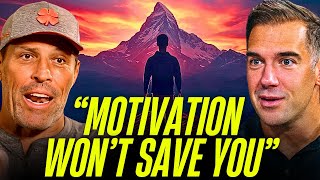
This content was created by Lewis Howes. This content was uploaded by Lewis Howes. This is a YouTube video titled "Tony Robbins: 'Motivation Won’t Save You!' Do THIS to Build Mission & Momentum" created on October 22, 2025. It features a conversation between Tony Robbins and Lewis Howes discussing topics such as success, mindset, personal growth, and strategies for overcoming challenges. They delve into the importance of having a mission, building habits, and the impact of identity on personal development.
Chapters
You could call success getting what you want. I don't define it that way, but that's how most people do. And that's not how human relationship works. And it sure as hell not how you build a business. Tony Robbins. He is one of the most respected.
Life and business strategists in the world. Inspirational speaker and best selling author Tony Robbins.
It's not a straight line unless a human built it because everything grows a little up and down like a stock, like anything else. And but if it really grows, it keeps growing, but it's a winding process. And so I think the problem is that people don't have something that they're wanting to serve more than themselves. Different events in my life that I'm grateful for. I usually pick two big ones and one small one. It could be as simple as a smile on my daughter's face, the wind against my skin. I'd love to plant the seed with everyone listening. And that is.
You'Ve been researching so much about mindset, about neuroscience, about the body, about nutrition, about all the different medical things that are out there. Is there something new that you do with your morning routine now that is different then. And what has really helped accelerate your productivity, your joy, your peace at this level with your morning routine?
Well, I have certain fundamentals that haven't changed. You know, I think I've shared with you before, the first thing I do every single morning is I go in freezing cold water. And I've shared this with many people. It's not because I'm a masochist, but because it moves the length of your body, as you well know. And when you jump in, it never feels good to go in, but getting out, you feel incredible. But I do it for a different reason. I do it to train my brain to say, when I say now, it means now. When I say go, we go. I don't stand there because it's cold and go maybe in a minute when I'm ready. And I think I've shared with you before. I don't think I've ever had a morning. I look forward to jumping in that water ever. But I always do it because I've trained my brain. This is how we work. And if you train your brain to do that every single day, then it'll do it on the more difficult and important things in life. But I also, then I do my priming I think you're familiar with, which is I do 10 minutes. And I pick 10 minutes because if I said do 20 minutes or 30, I don't have time. But if you don't have 10 minutes for your life, you don't have much of a life. So I do this 10 minute process, and if people want to know it rather than walk through it right now, they can go to Tony Robbins Priming. There's a video, it's free. But the essence of it is I change my body radically, and I do three things to make sure that my brain is primed. And what I mean by primed is most people think their thoughts are their thoughts, Louis. And you and I know better because you and I have read the studies, right? Priming is a psychological principle where you think thoughts and you think they're yours, but very often they're created by the environment. So one example was Harvard has done multiple studies on this. And one of the studies they did was taking people walking up to people. They hired two actors, they walked up to 100 people. They had to do the exact same thing, men and women. And what they did is they walk up with a cup of coffee in their hand, and they'd look at you and go, here, would you hold this for a second? Look down and reach in their pocket to pull out their phone. And most people then take the coffee. There's nobody there. You're not looking to give it back, right? And then they do what they're doing on the phone. They put it back in. They go, thank you so much. And they take their coffee back and they walk away. But then about 20 minutes later, if you're at a mall or school campus or whatever, a person comes by with a clipboard and they give you $20 and they say, listen, I know this sounds crazy, but if you'll give me 30 seconds of your time, the $20 is yours. I need you to read two minutes of this, literally this little story, and then just answer three questions for me. Here's the interesting part. Half the people have a reaction more than 80%. And half have a reaction, 80% difference. And here's the question, they read the same story, but half the people are handed hot coffee. Half the people handed iced coffee. The question they ask is, how would you describe the main character of the story after they read a few paragraphs? The people who are handed hot coffee say the person is warm and genuine. 81% of the people, 79 to 80, 79.8. It's almost a 1% difference. Natural variability. Who are giving the iced coffee, say the person is cold and uncaring. I could tell you 20 studies like that that would blow your mind. How your brain is conditioned or primed by the environment. And think about all that's gone on with COVID of the last two years and how many people's brains live in fear. And in my new health book, I put in there just to remind people, with COVID outside being 80 years old, the number one or having four or five comorbidities, number one factor, 80% of people die of COVID 79.8% are obese. That's something you can do something about. The second factor, according to the cdc, is fear. Because anxiety makes people get short of breath, they freak out, and their whole nervous system starts to go shut down. Your immune system can be shut down just by fear alone. And so this experience of life that we have, most people just don't understand that you are being primed all the time. And unless you prime yourself, you're going to be primed by the environment, which most people understand, that your brain right now is being conditioned and triggered whether you know it or not. If you're in any social network, it's being done continuously by algorithms. So I want to take control of my brain. So I do three quick things. One, I take three minutes of those 10 minutes after I've changed my body, and I focus on three different events in my life that I'm grateful for. I usually pick two big ones and one small one. It could be as simple as a smile on my daughter's face, the wind against my skin. But I really, I don't like, if you've ever been on a roller coaster and you remember the roller coaster over there, it's not the same as, remember going over the edge like you're there. So I do it in an associated way and it changes your biochemistry. Now it sounds pretty, you know, positive thinking. I'm going to be grateful. But there's a value to it because the two emotions that mess up your business, your life, your relationships, are anger and fear. And you can't be angry and grateful simultaneously. And you can't be fearful and grateful simultaneously. So by starting my day with that. And it's not some fake pump up positive thinking. They're real experiences. So it literally teaches your body to go in that state because otherwise the environment we're in right now, there's a whole lot of uncertainty and fear. Then real fast, I do this three minute process that's kind of like a blessing. And then three minutes, the last three minutes are called three to thrive, where I focus on three things I want to accomplish. But instead of thinking I want to accomplish, I See, feel and experience. It is done. I feel grateful. I celebrate it and it trains your brain. So in 10 minutes, I'm done. Third thing that I'll do, I immediately send a message or a text or an audio message to somebody as a sincere compliment. And I don't go, dude, great job, or wow, you're cool. I say, listen, I saw you on Tuesday with those kids and I saw you take that extra 20 minutes. No one else did. And I just want you to know I saw that. I thought that was incredible. So I'm always very specific so they know it's not just some positive thinking bull call. It's sincerely doing it. It makes me constantly look for the good in the people I work with. Fourth thing I do is whatever I don't want to do the most challenging part of the day, I want to go handle that problem. I want to handle that issue. Because after you do that, everything has momentum. So those four are my core now, my workouts, what I've done to be able to have more energy and vitality and strength. I just finished a book called Lifeforce, spent three years on it. And in there I give all the details of what to do, depending upon what your goals are and what your direction is, stage of life, what you're doing. Are you looking for more energy or more strength? Are you looking to extend the quality of your life? Are you dealing with a real disease? And you know, I did Money Master the Game, and I interviewed, you know, at the time, 50 of the smartest people in the world, financially, Ray dalio, Warren Buffett, etc. This time I interviewed 167 Nobel laureates, scientists, and the greatest regenerative doctors on the face of the earth. So there's nothing in here. That's my opinion. It is all science. And it's stuff that you would think would happen 20 or 30 years in the future that's happening either right now or the things that are coming in the next 12 to 36 months that the FDA is currently looking at for approval.
I want, I wanted to ask you a follow up to one thing you mentioned there, which I think a lot of people don't do, which I think you do incredibly well. I've seen you do this many times. You mentioned you reach out to someone, you'll text someone, you'll send a voice note or a video message, or maybe you're calling them or just saying hi to them and telling them you're acknowledging something that they're doing well, that you appreciate. I don't think that Many people do this. Why is this so important for you personally? And why do you think this would help so many people get out of themselves and overcome anxiety and stress if they did this even a couple of times a week? I know you do this every day, but just a couple texts a week. Why was this so valuable for people?
Well, number one, I love people, so I love to sincerely. If you just call someone to make a compliment and it's not sincere, anybody can feel that I don't do that. You know, it's like I pride myself on finding the goodness in people or the skill sets in people. And I also know that what is acknowledged tends to grow. So from standpoint of that, I want them to feel that feeling of being appreciated. I want them to know I see what's happening behind the camera, so to speak. You know, it's like that's what matters. It's not how everybody else sees you, it's how you really are. And then it also deepens every relationship you have when you sincerely acknowledge somebody and you notice something other people don't notice. And so it deepens the connection. And to me, quality of life is the quality of two things, your emotions and your relationships. And, you know, if my emotions are terrible, my relationships are going to be terrible. But if I have great emotions and I can extend that out to help other people, then it just makes me feel more alive. So I do it for me and them. It's a virtuous cycle, right?
Yeah. And I think if someone's feeling, you know, stressed, the easiest way to overcome that is do what you said, which is focus on the things you're grateful for and get out of yourself and start acknowledging someone else. And you'll, you'll, you'll build that deeper relationship and feel better in the process.
Now you got positive momentum, energy. Now you attack the most difficult thing of your day. And when you make that, your habit, the most difficult thing gets smaller and smaller because you're feeling stronger and stronger. Right. And then you have momentum. And so now you'll attack the next difficult thing. And it doesn't even feel feel difficult at that point. But the whole secret is most of us don't realize, depending on which researcher you buy into, somewhere between 45 and 55% of what we do is habitual. And the great thing about habit is you don't have to think so. I don't know about you, but the first time I tried to drive a stick shift car when I was a little kid, it's like I'm Supposed to do this, this, this watch, the rear view mirror and the, ah, it's too much. But once you learn it, most of driving, 99% of it's habits. So now your brain is free to do other things. That's the value of making something habitual. The weakness of making it habitual is you don't grow. Right. The weakness of making habitual is you don't feel fully alive. So it's like you gotta find that balance in your life. But if you can create habits that make you do the right things for your mind, your body, your emotion and for others, then let those take over. Then it becomes. It's like working out. You and I both are workout nuts. And it's like in the early days, it's hard to work out at this stage of my life or yours. If you didn't work out, I don't work out. My bet is you'd be pissed off and frustrated. Right. You need to work out. It's a part of who you are. Now in the beginning days is like the last thing I wanted to do. But once it's in your life, that now frees you up to use that energy for everything else that matters in your life.
Yeah, absolutely. Two and a half years ago I had the privilege of being in your, your island in Fiji and spending a about a week with a small group of people, Dean and a bunch of other guys and gals. We got to spend some time with you. And you had a prediction. You said winter is coming.
Yes, I did.
And Dean has told me that you have predicted many things over the last four decades in the economy and what's happening in the world and all these different crises. You're kind of on the front lines of access to the most brilliant people in the world, so you know what's happening before it happens. And you said to us, winter's coming. You probably knew this two years prior to that. And you said you don't know when exactly, but it's coming soon. And then, I don't know, four or five months later it hit. And it hit hard for a lot of people and it's still hitting hard. Like you're talking about over the last couple years. And I don't think it's going to slow down anytime soon. It seems like there might be some hope. And then boom, another wave, and then another wave of something, whatever it is. What did you learn from researching in the new book with all these different experts on how we can really take back control of our mind, our health in new ways to support us when the winter continues to hit. Because it doesn't seem like it's going away anytime soon.
You're hitting on a huge note. I'd love to plant the seed with everyone listening, and that is we're about halfway through winter. But my hope is this is the year where that part starts to change. But we're still in winter, meaning so many people have been conditioned to be fearful, so many businesses have been shut down, our children kept out of school for such a long period of time that there's after effects on that. And it's also. You want to be a student of history. Think of it this way for a second. When did mankind really become a dominant force on earth? When they made one distinction. I've shared this with you when we were private, I think I told you there's three skills that you want to master if you want an extraordinary life. No matter what decade we're in, you know, you've probably read Oxford and many other universities are doing these studies where they say half the jobs we have today will be gone by 2040. Which is. Which sounds like a long time, but it's 18 years from now, and that'll go like this. And so my grandkids, my daughter, it's like, what do I want to help them with? Well, the first skill you got to master to be great, you know, you're the school of greatness, is the ability to recognize patterns. When humanity recognized the pattern of the seasons, the whole world changed because we went from hunter gatherers, trying to survive from place to place where we're exposed to everything to. Wait a second. If we plant in the springtime, we protect in the summer, we reap in the fall. And then we hang on to some of that so we can live through the winter. That created communities for the first time and then eventually cities and states and countries. So that changed the world. What will change a person's life is when you realize there's also a set of seasons in your own life. Think of it this way. 0 to 21 is springtime. Things are easy to grow in springtime. You don't have to do that much growing as a kid happens naturally. And some people live a protected childhood, some of us not so much. But overall, life is supporting you. It's sending you, teaching you, sharing with you. Now when you get from, you know, 21 to 41 or 22 to 42, whatever range you want to talk about, some people get there at 16, some people get there at 25, you now are in the Real world. And now you go test what you learned in your springtime, and it's a hot summer, and you find out, holy, a relationship's different than I thought it was. When I'm in an intimate relationship, committed, it's not the thing I just envisioned so easily, or I'm not as bulletproof as I thought I was. I'm not president of the United States already and a billionaire, like I said I was going to be when I was 19. So you start to learn, test, figure out what's real. It's an important stage of life. 42, 43 to 62, 63 is the power of your life. It's the reaping time. If you worked hard in the spring and the summer and you put yourself out there and you planted, it's a reaping time. It's a time when you really become a leader. Just everyone's different, some sooner or later, but it's a great stage to understand. And then if you're lucky, you go from 63 to 83, and maybe 83 to 103 of the oldest living humans, 119. You have an extra extended final season of your life where you get to be the mentor, you get to share, you get to make a difference. And maybe towards the end of your life, people look out for you again after you looked out for everybody else. That's kind of the cycle of life. But then there's a third pattern, and that's the cycle of history. The most powerful people, by the way, have used not only pattern recognition, but the second skill, pattern utilization. They see a pattern and they use it. So you'd say, how did Jeff Bezos become the richest man in the world? And the answer is simple. He studied the growth in the Internet at an early stage and saw how explosive it was. It was like nothing else he could see. And he just figured any product books was the easy one to start with. But he got himself in, and then he started to learn the real secret. The convenience is what people value more than anything else. And when he honed in on that one distinction, he not only recognized the pattern, used the pattern. The people that are real masters create their own patterns, right? You play everybody else's music, and then eventually you get good enough, you can create your own music, right? So the similar thing happens. And so what's occurred is in humanity is you go through, there's this seasons in nature, there's seasons in my life, and then there's seasons in history. So watch this. This is what gives me great optimism. For everyone watching here, first of all, winter is not forever. No. You know, war lives forever. Nothing, Everything changes and everything ends and means something new occurs. You may not like it, but that's how life is. And the good news about winter is it's always followed by springtime. Historically, some winters are long, some are short, but they're always followed by springtime. What follows? The night. The daytime. What a cool way to set it up. If you were God or the universe, Right? So imagine for a second all of your listeners or viewers, and you think about it too. What if you're born in 1910? Now you know the seasons of a person's life. So from 1910, the next 19, 20 years of your life, you're going to be absorbing what was happening. World War I ends. The world looks like it's a great place. New technology, cars, radio. And then what happens? An explosion of abundance, the roaring twenties. And so you're a kid, you're 14, 15 years old, and you're like, I can't wait to get a car to go. But what happened when that person hit the next stage of life? 1920, 21 years old as they came of age. It's 1929, and suddenly people are jumping out of buildings. Total depression, dust bowl. Nobody's got jobs. It looks horrific. And it was horrific. But did they get a break? No. When they turned 29, it's 1939. So think about it. Now World War II breaks out. You and I don't remember. We weren't there. But anybody who was alive will tell you. It looked like the whole world was going to end. Hitler was sweeping across Europe, bombing London. It literally looked like the world as we know it was over. And this group of people, like millennials or Z Generation, a lot of people make fun of. And they go there. Whatever. Wallflowers. I forget the terms they use. And then the millennials in Z Generation argue about, you're old because you parked in the middle versus the side. I mean, it's bull. The same bullshit was happening then. These people are called flappers. They were irresponsible. But here's history. And one thought. Good times create weak people. Weak people create bad times. Bad times create strong people. Strong people create good times. That's the history of the world, over and over and over again.
You know, in entertainment, fame doesn't cut it. You need innovation, fun, originality. And that's exactly what DirecTV's new My Entertainment Pack delivers. Their genre packs have stolen the spotlight, making it the perfect time to enjoy the programming you love most. And with my entertainment, you're getting all the best. Disney plus Hulu and HBO. Max basic with ads plus over 50 fan favorite channels, FX, Food Network, Lifetime and a bunch more. That's like having front row seats to all your favorite shows and movies without ever leaving your couch. And here's the best part. It's normally 34.99amonth, but right now you can get it for just $29.99 per month for the first two months. That's less than a couple movie tickets and you don't even have to sneak in your snacks. And with the option to cancel anytime, there's no pressure. Just non stop entertainment from the real star of the show. DirecTV's My Entertainment. Visit directtv.com genrepacks to learn more. This is DirecTV like you've never seen it.
And so what happened is that generation who was weak became strong because the environment demanded it. They became the heroes. And think about how different the 1930s and 40s were versus after the war 45 through 50 up until Kennedy 63. That 20 year period was what a lot of people thought was the greatest time in America. Now certainly wasn't if you're African American, started to become better if you're a woman. But then think about after Kennedy died and Robert Kennedy is killed and Martin Luther King is killed. Think about the 60s and the 70s, how different they were than the 80s, 90s, 2000s. So we go through these seasons. I could show them to you. A thousand years of Roman history and you can see them. There's a book I highly recommend. Bill Clinton gave me this book called Generations when I was working with him 25 years ago. About a 700 page book. But the same authors, William Strauss and Neil High, wrote a smaller book which might be more helpful. And I call it's called the Fourth Turning. I read it in 1997 and it shows you the seasons of history and how everybody enters that. Like everyone's going to have winter, some are going to have it in their 20s, some are going to have in their 40s, some are going to have their 60s or 80s, some are going to have it when they're children. Then we all move through these seasons that are pretty much historic because the older person dies. Everybody loses that lesson. And then we tend to unfortunately have to relearn some lessons again. I want you to know that if it looks really horrible right now, if you follow those cycles, we're about halfway through winter. Winter usually starts with a financial winter, which was what I was referring to. I did not predict the pandemic, but there are pandemics, as there were 80 years ago. Right. But in addition to that, there's always a great war, and it could be a cyber war, could be a war with China. But there's no question we are not done with what we're going to deal with. In fact, I'm reading right now. One of the ways I stay on the cutting edge is I'm constantly studying history because people say it doesn't repeat itself, but it rhymes. This is a book that anybody who really wants to know where the world's going. It's Ray Dalio's newest book, the Changing World Order. I mean, it's incredible. It's 500 years of history. So my whole thing is leaders anticipate, losers react. If you can anticipate what's coming, you can really take advantage. If you wait till it hits you, you're in trouble. So I think we're in a time where it's going to be a better year. If you're willing to be better. Right. Winter can be a beautiful time, as you've heard me say before, you can freeze the death, or you can ski and snowboard and have a great time with your family and build something. And so then when spring comes, you can really take advantage. But if you look at the world, the most successful businesses started in a winter. 68% of the Fortune 1000 were started in either in a recession or a depression. I don't care if you're talking about Disney or Exxon in the depression, or pizza hut or FedEx in a recession or Apple in a recession. So this is your time. But you have to get your head straight, and you got to get your energy strong. And that's not easy when most people are shoved in their houses and isolated and heard nothing but fear. So you got to take back control.
Absolutely. One of the things in the sports arena that I learned growing up was if you stay ready, you don't have to get ready.
I love that.
And you, again, you've worked with, interviewed, you're friends with the top peak performers in the world and in all industries. You know them all. What are one or two practices, besides the one you talked about with your morning routine from peak performers that you've studied or maybe you've implemented, that keeps them prepared so they don't have to get ready, they stay ready.
I think, unfortunately, the real things are simple. That's why nobody does them. So if you took Ray Dalio or Warren Buffett, I mean, they're readers. I'm a constant reader. But I don't just read anything. I read something that I think can give me an edge of understanding. Because, I mean, look at it. Louis, you and I both know most people, Jim Rohn used to say, my teacher used to say most people major in minor things. You know, they know more about some actress's personal life than they know about their own physical body or their vitality or their energy or their emotion or their business or their career. And so what matters? A few subjects. Your body, because your energy matters. That energy is low. Everything I just said is worthless to you because you're just going to go, he's talking too fast, and there's a lot going on. And yeah, well, hopefully the future will be better because when you're low energy, you don't use your full intelligence or ability. And most of us have not moved so much because of the environment of COVID where everybody was pretty much locked down unless you live like I did in Florida. The point of the matter is, most people, that energy has been lower. So you need energy. You need emotion. If you don't know how to master your emotion, emotions start wars, Emotion creates peace. Emotion gets you laid. Emotion gets your children. Emotion is what can make that business work, fail. And most people don't know how to direct their own emotions. What's another lesson? You got to look at your own financial world. If you don't master it, it's going to create enormous stress. Your relationships are everything, as we've already said, your business or your career, or hopefully it's your mission. And then there's the spiritual side of life. So you can take a half dozen areas and go, let me find who's genius in this area and let me go learn from them. Let me go read, let me listen to podcasts. Let me be conscious about feeding my brain things that are going to give me not only inspiration, but insight and skill and tools. And everyone I know who is not only successful but is able to contribute back to society has a hunger to constantly improve at least one area of those six areas of life. And the most happy, the ones that hit multiple areas. And that's why one of the reasons I wrote Lifeforce, richest man in the graveyard, is not your goal. You know, it's like there's an old phrase that says, you know, a person who's healthy has a million dreams. A person's not healthy has one. You know, So I wanted to give people the cutting edge in that area because it's such A critical area of.
All these different areas of life. Mastering emotions, financial world, relationships. What do you. What do you think is the root of. Of people lacking what they really want in all those areas? Is it the confidence? Is it the skill set? Is it some. What else do they, you know, what is the root cause of holding them from really growing in all those areas?
I think it's a couple things. One is the biggest problem people have is they think they're not supposed to have any. And problems are the fuel for growth, right? And so, like, if you don't have any problems, you're either a liar or you might call them challenges. It feels better. I understand that. But, you know, anybody doesn't have problems, he's either totally asleep at the wheel or they don't have much of any kind of a life. No responsibility, nothing. They're building. So I think the first thing is this misnomer that if I have a problem, there's something wrong with me or my life. I think the second one is this delusion we've sold people on that getting what you want is going to make you happy. You could call success getting what you want. I don't define it that way, but that's how most people do. But then there's fulfillment. And fulfillment is living what you're made for. It's like, I think the biggest challenge people have, and the reason they're not able to respond to challenges, they're just thinking about themselves. And it's not that hard to meet your own needs. And it's nobody's fault. I mean, these little things in our pocket, these little mini computers we used to call phones, I mean, they're constantly conditioning you to instantly get what you want. And that's not how human relationship works. And that sure as hell not how you build a business, right? It's not a straight line. If you go to nature, you will not see a straight line unless a human built it. Because everything grows a little up and down like a stock, like anything else. But if it really grows, it keeps growing, but it's a winding process. And so I think the problem is that people don't have something that they're wanting to serve more than themselves. That's where my energy comes from. I don't have to work on a day of my life. Why the hell do I do all this crazy stuff? I got 105 companies now, and I got all these different industries because it's so much more interesting to be in the game of life and keep growing and expanding and being Challenged, that's what makes you feel alive and do. Are there problems with 105 companies? I can promise you. But if I thought my life was supposed to be problem free, I would be really stressed out. And if I was just doing it for me, I would have stopped a long time ago. It's like, I know you've asked me a lot of times about confidence. You just mentioned it again, like, is there a lack of confidence? No, it's a lack of mission. Right? Because what happens is when you have something you want to serve, if it's your child and everything's on the line, you won't come up with answers you'll never come up with for yourself. Right? So it's like having that sense of mission. And then I think the next problem is that people think they have to know how. I call it the tyranny of how like you get all excited, I'm going to do this. And then your brain goes, I've never done it before. Oh my God, what did I say? I don't know how to do this. And they tend to focus on how to do it. And when you start with how, you're screwed. Like Martin Luther King had no idea how when he did his I have a dream speech. In fact, his wife was the one that pushed him because he was uncertain, right? You know, the real history. It's pretty interesting. But the bottom line is he gets up there and he gives his vision of how it can be done. He talked about what needs to happen and why. If you can figure out what you want and why you want it. And you get strong enough for reasons, reasons that'll drive you late at night, it'll get you up early in the morning. And the reasons are different. Some people do it for nitty gritty reasons. Jim Rohn used to say, because, you know, some guy told him he borrowed money from this finance company, I forget the name of HFC Finance, whatever the hell it was. And you know, he hadn't been back since he borrowed the money. So they're calling him. In those days they could harass you in ways they can't today, right? They call him, show up and embarrass him in front of his neighbor. And so Jim Rohn, his first real chunk of money he told me he made because it's like he set this goal. It was his nitty gritty reason. His reason to get rich was so we could go down and pay this thing off. And he said he went to the bank and got it all in cash and in small Bills. And he bolted into this little HFC finance place. And the guy who borrowed the money was the fourth best back. And he said, I walked up there, I opened up this brief, and I dumped all the money all over his desk in small bills. And I said, count it, it's all there. I will never be back. He said he was startled because I hadn't been there since I borrowed the money, right? But he did it for that. He gritted it. Some people do it for their kid. Some people will do it. Like we almost all do it for something more than ourselves. Some people do it because they like winning. I know that about you, right? It's like, I like winning. I like being the best at what I do. So I'm not going to settle for less than that. Why would I, right? So you got to find your reasons. But if you know what you want and you get a big enough why, now you'll figure out how to do it. But if you start with how, you know, the small brain, the fear brain goes, oh, shit, I don't know what they do. I don't know where to go. I don't know what to do 90% of the time either, I know what and why. And then I try something, doesn't work. I try something else, and I'll do something else. Now I speed it up by learning from the best. So that's why, you know, money Master the game's a perfect example. My companies, you know, at the time were $100 million companies. I had one $500 million company. Now we're doing 7 billion. I took what I learned from these guys, I applied it not only to my investing, I applied it to my own businesses. Why do I reinvent the wheel when I just learned from the best on earth? I mean, somebody who's that good can tell you that little 2 millimeter thing that changes everything. So my life is really about learn from the best. But I don't start with the how. I start with the what and the why. And I think that's the mistake most people make. And then how do you get confident you do stuff? I mean, like, I'll give an example speaking, you know, it's supposedly outside of falling, like the second biggest fear people have, public speaking. And, you know, you've trained yourself so you don't feel that challenge. But I don't feel that challenge. I've done it a million times, but I didn't feel it early on. And the reason was I tried to explain to people, I'm not getting up thinking about How I'm doing. If I did, I'd probably be a horrible critic of myself because I can be brutal in those ways. I'm focused on how do I serve them, what do they need, what do they want, how can I serve? And when you're focused on others and how to serve them, there's no lack of confidence in you because if it's not working, you just change your approach. Because it's all about serving. People that are scared to speak are thinking constantly, how am I doing? Am I good enough? Am I strong enough? You'll never get confidence. Confidence comes from doing something. So much confidence is tying your shoes, right? Confidence. Michael Jordan making a thousand shots before you take a break. Every single day, six days a week. So you look at Jordan or you look at, you know, LeBron, or you look at anybody who's the best in the world at what they do and you go, aren't they lucky? But if you actually study them, you'll see they're doing things, they're practicing in private, things that make them certain in public. And they get rewarded for what they do in public. Yeah, and you got to do the same.
It's interesting because public speaking was probably my most terrifying thing. I wasn't even able to speak in front of like five people without stuttering and just kind of forgetting what I wanted to say. I couldn't get my message across. So I took a year of public speaking class with Toastmasters just to get reps in a group of people that are, you know, are going to give you positive feedback and in a safe environment so I could just get in front of a room, practice a five minute speech and know that I'm going to make mistakes. It's interesting what you said is 100% true about thinking about serving others because for, I think it was probably seven years I was, I was speaking on stages and I would still get nervous like a day or two before. It wasn't as bad as the first two years where it was like a week before. Now it was only like a day or two. And I called my, my coach at the time, his name's Chris Lee, and I said, I don't know why I'm speaking. I've been doing this for long enough now. Shouldn't I be not afraid anymore? And he said, you're thinking about messing up, missing the joke, forgetting what you're going to say in the first line. Forgetting you're thinking about how you're looking as opposed to serving people. And he said, exactly, you know, exactly what you just said, he's like, when you just know you're going to mess up, it's not going to be perfect. You're going to get. Forget that line that you really wanted to say, but just put all the energy on the audience, everything starts to change. And so your, your message speaks to me because I'm an example of that.
And it really, congratulations, because obviously you kick ass in that area now. But think about that. You just gave people the truth, right? How do you build confidence? Is action the biggest mistake? People think they're supposed to walk out and be good at it. And if they're not, because you know they don't want any part of it, I don't not look good, not be good. Because we live in this social media world where they compare themselves to people that are bullshitting. You know, I got a friend that owns a gym and we laugh about this all the time. He says, Tony at least two or three times. First time he told me, I couldn't believe it. But I saw it happen. One time I went to go pick him up, we were going to lunch, and he goes, look at this. And these people would come out, a woman or a man, they both do it and lay out all this stuff, take a million pictures of themselves and then leave. They didn't do any workout whatsoever. That's the bull. Social media, when filters on pictures. And so people compare themselves to not other humans. They compare to people in this bull story. And that's why so many people get depressed when they. You know, I'm sure you've seen the studies show the more time people spend on social media, usually the greater levels of frustration and anger and certainly depression for a lot of people have. Because you're comparing a world that doesn't matter. Plus you're being reinforced by these algorithms in ways that go beyond your conscious awareness.
What happens when we don't lean into our fears or we just allow our fears to stay inside of us, our insecurities to stay inside of us for years or decades, and we never actually learn to act on them and improve them. What happens to us if we just allow these fears to. To hold us back?
Well, what happens to a muscle if you don't use it? We say you lose it. You don't actually lose it, but it gets weaker and weaker, as you well know. Right. And what happens the minute you start making demands on it, especially if you haven't made demands in a while? It doesn't take much to see real muscle growth. Right? And so it's like if you, if you constantly live in fear, your world gets smaller and smaller and it tends to get more fearful. Like, who's more fearful? Someone has broken 10 bones in their body and healed them as a kid, or someone never broke a bone. You know, the answer is the kids that are overprotected are fearful all the time. But if you've gone out in the street and you know, you've gotten in a fight and you know you busted your arm or your hand or finger, or you played football or whatever the hell it is, or boxed or something, it's like, now it's like, I'm not afraid of that crap because you've lived it and there's no substitute. I always tell people a belief is a poor substitute for an experience. You think you know what China is, but I take you to China, you have a little different experience. And so almost everything I do is give someone an experience. That's the reason, you know, I did the firewalk. I still do, but did for so many years. I did before that. I used to do skydiving. But it's hard to get 15,000 people above the sky in New York in the middle of the night. So I had to come up with other tools. But the firewalk was again, giving you an experience of something that seemed difficult or impossible. And then you get yourself to do it, and your brain goes, wait a second, if I could do that, what else could I get myself to do? That psychological shift is the most important shift that people can make. It's a shift in your identity.
Why is identity so important for us to shape a positive, powerful identity?
Well, first of all, so everybody understands. What I mean by identity is we all have a way of identifying ourselves. We have a way of labeling ourselves. So most of us came up with our labels based on how we behaved. But really smart people can do stupid things. Really nice people can be mean, mean people can be nice. And so if you judge yourself too soon, and most people's identity, their labels for themselves, who they think they are, has been based on their past and often many years ago, and so they don't update it. So the metaphor I'd give for identity is like, it's your comfort zone, it's not your goals. So if you like, if you took a temperature in the room and said, 68 degrees is my comfort zone, physically, emotionally, financially, I want more in my relationship, I want more physically, energy wise, I want more financially, my career, but this is what I'm used to. And so what happens, people stay in their comfort Zone, for the most part. And then let's say something happens and you dip. You're a 68 degree, or that's your mentality. And you drop down to 62, 61, 60. Somewhere around 60 or 59, the heaters kick on and go, whoa, whoa, Whoa. You're a 68°. What the hell are you doing? We've all experienced that. All of a sudden, you go, I'm not going to live like this anymore. I'm not going to be in this relationship. I'm not going to be fat like this. Boom. And you get this drive, and you start to change. But what most people don't understand is it happens on the upper end, too. Meaning, let's say you got momentum. You start crushing it. You start doing even better than you think. You go from 68 to 70, 88, you're 98 degrees. Financially, emotionally, spiritually, whatever the metaphor is. And then what happens? You're going to say, hey, hey. Your brain goes, who the hell do you think you are? You're not a 98 degree, right? Get back to 68. And if nothing else, the heaters stop, you lose your drive, and that'll drift you back, and not enough. The air conditioner can kick on. You start to kind of sabotage yourself till you get back to your comfort zone. So unless you expand your identity, change is temporary. It's like when someone says to me, I stopped smoking. It's been eight days. I go, why are you counting? And I say, why are you counting? So you can tell people how long you lasted this time. Like if I went to somebody and I said to you, hey, you know, Louis, you want a cigarette? You're not gonna say, what brand is it? You know, no, I'm not a smoker. Notice how people. I'm not one of those. That's not my identity. Identity is the strongest force in the human personality. If you look Lance Armstrong, who has a mixed identity now, in the culture, this is a guy that had to win and found a way to win. So when he was told he had cancer in his lungs, in his brain, and in his testicles, and he rides a bike and he's going to die, his answer was, no. I'm a champion. I find the way. I will find the answer. And he did. Now, unfortunately, he bent the rules around the sport, and it kind of ruined his reputation, obviously. But that mentality, his identity, is why he survived. Other people told they have cancer and they're like, it's over. They give up. They start arranging their affairs. And so that Psychological difference is the number one thing I work with people on. Because unless you expand your identity, you're going to basically keep where you are. You might improve a little or not, you might go up and down a bit, but you're going to stay within a realm. If you're going to have an explosive breakthrough to another level, physically, mentally, financially, spiritually, then we got to not only give you the tools, we got to shift that internal sense of who you really are and have you find that you are more than anything that's ever happened to you, that you can handle whatever shows up, even if it's incredibly scary or uncomfortable.
One of the biggest challenge I see a lot of people having is the identity. When they start to have some success, they expand, they get to, you know, 80, 85, 90, 100 degrees. It start to really grow and expand. What would you say is one of the main factors to help people to continue to break through to a higher degree as opposed to going back into the comfort zone? Is it a habit? Is it a mindset? Is it a belief? Is it environment? You know, what are this, what are those things, would you say? Or a couple of things to help you continue and not fall back down.
It's, it's, I'm sorry to be a broken record, but it's just the truth. It's a purpose larger than yourself that keeps you going. If it's only to meet your own needs, you will drop back into your comfort zone. I've spent most of my life as a vagabond because I travel all over the earth. So in most years I travel to, you know, 115 cities. And as you know, most of my seminars are multi day seminars and I go to 12 to 16 countries, you know, like Australia, three times. And so all of a sudden Covid hits and I had to adapt. I found this way to adapt. And Now I'm just 10 dogs. I mean, my largest seminar is now 900,000 people versus 15,000. I was trying. I did one football stadium in 2019 with 38,000 people, 40,000 people. It was incredible. Now that's a tiny seminar, you know, because I couldn't put 900,000 people in any stadium, right? So all this good comes from that adaptation, right? Figuring out what to do. But I think the other part of it is, you know, during that same time, one of the great gifts was I could find a way to be home and still touch people's lives so deeply and do it in a way that was impactful. I could see it and feel it I'm in their home. I could see their children. I mean, it's been amazing. And now I do both. I do hybrid. I got a thousand people in front of me in 197 countries, all around me.
I just want to acknowledge you for constantly pushing the thermometer to the next level in your own life and just being on a mission to be in service to so many people, to help us in all these different areas of our life. It's really inspiring. And I'm just grateful for all the work that you do and again, the model you're creating for so many of us. Thank you, buddy. I'm very excited about this. I believe it's a five day challenge, the breakthrough challenge, which anytime you do anything for free, it's like people should be paying tens of thousands of dollars for this because they get so much value from you. You're there consistently showing up, giving your passion, giving your energy and wisdom. You know, over four decades of wisdom from learning and applying this and getting amazing results and, you know, learning from all your mistakes that you've made as well, that you've, that you've overcome. And this breakthrough challenge is really to help people take control back of their lives and develop a stronger mindset to get through the second half of winter. Because I'm sure it's going some, maybe some moments of ups and then some deeper downs and ups and downs throughout the way. So what can we expect with this challenge? How can we get signed up for it right now to make sure we don't miss out at all?
Let me tell you why I created it, and I'll tell you real quick how you can do it. It's free. There's no cost to it whatsoever. But what I wanted to mention, you just said something really important. I want to make sure people don't leave without winter. Doesn't mean every night is. Every day is dark and rainy or snowy and horrible. There's days that look like summer in the middle of winter. If you live in Florida, winter's a nice place, right? So in winter, I don't want to make people feel like it's all going to be horrible. It just means that the overall theme is more challenging than not. And that's where we're going to probably be. And we're going to face some bigger challenges going forward, and that's going to make us grow. And then that'll set us up for a beautiful springtime where things are much easier and more fun for a while, until you get the hot summer and then you go to fall. It's the cycle of life. But this all started in 2020, because before I figured out how to build these events where they could be done in people's homes and have a real transformational experience, people were home. And I was hearing about all the suicides and kids stuck at home and what was happening to the parents, and drug abuse going through the roof. All the things that we now know, they were happening then already. But I'm connected to it because I know so many people. And so I was like, I gotta do something. So I said, you know what? I'm just gonna do a one day free seminar, like three, four hours, total immersion, and help people, like get a new perspective. When you're in your house day after day, you lose perspective, you lose momentum, you lose energy. And I was like, that's bull. Everything I do is, you know, by total immersion. So, like, if you learn a language a little bit at a time, high school and college, few years later, you can't even speak the language. But if I said to you, I'm going to drop you in Rome for the next 12 weeks and I'm going to pick you up and you have no teacher, 12 weeks later, you're going to be speaking Italian really well. Because that's how the brain works with immersion. That's why I do seminars of immersion. So I said, you know what? I'm going to do five days, just 90 minutes a day. Usually goes two, two and a half hours. I gotta be honest, because I get into it and I really want to help people. I'm going to charge them nothing and I'm going to deliver to them in their home so that there's no cost, there's no travel, and I can reach them when they need it right now. And we had 430,000 people show up for the first one. The biggest event I've ever done. And then last year it looked like things were going to turn and you know, people are getting excited, vaccines going to go. And I was like, okay, I'll do one more and let's do it for people so they get momentum to take on this new experience. And we had 800 and something, 35,000 people, 40,000 people attend. So this year looks like we'll have about a million people. And I'm going to do it one final time because I really believe we're turning the corner on Covid, like we've talked about. But what it is, is five days and we're going to start with your energy, because without that, like this whole conversation we had is worthless. Because if you're tired or you're exhausted, or you just burn out, or you've been through it all, your brain just doesn't function the right way. So the first day is really about how we shift that energy in you. And then the next day is about your emotions, the next day's relationship. And the next thing's going to be your finance. The next day is going to be your career. And in five days, you get this massive burst of momentum and a whole new perspective, and you create a plan for the year year, not some New year's resolution. That six weeks later you're doing nothing. 20. And then you're part of our community. And I'll give you a fun story. I'll give you 100 stories, but this one's really fresh for me because I just saw this man. His name's Matt Intinzi. Matt was in a car accident, I believe it was a car accident. And he had an injury, a brain injury. He was put in bed. He was told he couldn't get off oxygen ever. He gained £700 in that bed. He couldn't even get up to go to the bathroom.
Oh, my gosh.
And this is over seven years. He was completely isolated, naked in bed for three of those years. And here's the beauty of this challenge. A buddy of his tells him, you got to do this challenge. You got no excuse. You got to know where to go. You're in your bed. I'll put this on a big screen in front of you here. We'll put it on a laptop. You got to attend this thing. And Eve thought it was all bs, but his buddy got him. His buddy sat beside him, set it up, made him watch. And the first day, he got so excited. I mean, he was so moved that he took this little like, I don't know, like a railing you'd use to hang curtains, like curtain railing. And he just started doing these little push up type things in the bed. Anyway, long story short, in six weeks he got off the oxygen, which they said he could never do. He stood for the first time. He made it to the bathroom on his own for the first time after eight weeks. Then he started losing weight and feeling stronger. And so finally, I don't remember what number he was at, but he lost £258 so far. But I called him up because, you know, you're part of our community after you do this. It doesn't end in the five days. And all these people around the world become your friends and he's getting all this support from people and he's showing videos of his improvement. So that's how I knew what's going on with him, because I'm tuning in too. So I reached out to him and I said, listen, you lose this much more weight and I will fly you to Palm Beach, Florida, and you come to my live unleash the Power within event. The first one we're doing live in two years, and you be my guest and you walk on the fire. And he got so excited and he went for it. Lost £258. But then he calls me up and goes, okay, I did what you said. I'm ready to come. I drove a car for the first time. I'm ready to travel for the first time. But he goes, I fell in love and I'm engaged. Can I bring my girl? He said, of course you can. So they just recently came here to Palm Beach. They walked the fire together. And Nike's inspiring other people. All this came because of a free challenge because, you know, somebody got him in there because there's no reason not to do it. So if you've ever wanted to experience my work, here's your chance. Love it.
Tony, thank you again so much for taking the time for being such an incredible teacher to so many of us and appreciate you being here. Tony, again, thank you so much.
Well, I mean, it's scary. It's yuck. Feels resistant. Fighting with reality, believing that life should be different. What? For me, that's absurd. Life is what it is. And it's just kinder when we, I suppose, can come to a place of acceptance with what is.
More from Lewis







Secret Service Agent: Your Neutral Face Is Making People Distrust You (Here's How to Fix It)



