Zedd: I DON’T Like What TikTok is Doing to the Music Industry (“It’s DEPRESSING to See!”)
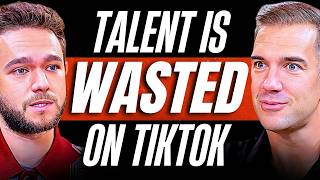
In a candid interview on Lewis Howes' "School of Greatness," Grammy‑winning producer Zedd (Anton Zaslavski) reflects on his lifelong creative process, the purpose behind his music, and how the industry has transformed under the pressure of TikTok and algorithmic platforms. He describes his intuitive, "mind‑less" piano sessions that later become songs, emphasizing that he makes music primarily for personal expression and therapeutic reasons, not for audience approval. Zedd critiques the current climate where musicians feel compelled to chase short‑form trends to stay relevant, noting the emotional toll of fluctuating social‑media metrics and the disconnect between online engagement numbers and real‑world fan support. He shares personal anecdotes about collaborations (e.g., with Max Martin, Muse, and the Irish whistle group Olam), the impact of the pandemic on his artistic choices, and his belief that authentic artistic decisions still resonate with listeners. The conversation then shifts to the role of AI in music production: Zedd outlines practical benefits (speeding up sound design, sample synthesis, mixing assistance) while warning that AI could eventually replicate his style, threatening the human emotional connection that defines his brand. Throughout, he stresses the importance of curating one’s media consumption, maintaining a positive informational diet, and reclaiming agency over how platforms influence perception. The interview weaves together themes of artistic integrity, industry economics, mental health, and technological evolution, offering a nuanced perspective on the modern music landscape.
Chapters
I know a lot of amazing musicians that spend their day recording TikToks. And personally, it feels depressing to see because they're so much better than chasing an algorithm. You know when you look at something and you zone off and you kind of see everything blurry? That's how my brain functions when I write music. I don't think at all. My hands just move themselves and all of a sudden you kind of like wake up from having played something really awesome.
He is a Grammy Award winning artist, a musical sensation, DJ, record producer and songwriter.
I think the connection to a human is much more powerful than the connection to something that's technically on paper better. Is handmade furniture obsolete because we have IKEA now? When I finally was playing Red Rocks for the first time, it was another one of these moments of like, I can't believe these dreams I set myself so high that I would never reach them. I end up actually reaching and it feels bizarre.
Did you ever feel like, oh, I'm not as relevant and I need to be playing the game of social media or... Yeah, I have.
I'll be honest.
Hey everyone, Lewis Howes here. Thank you so much for being here. We have a massive guest and a big episode with the one and only Zed. And if you want to know what it's like being at the top of your industry, going from a nobody to having hit after hit and rising to success, fame, and incredible results in your life, Zed walks us through the entire process today. He also shares about the biggest challenges that he's faced while reaching success, fame, and wealth, and what you can be aware of on your journey to success as well. So many good nuggets in here. Make sure to like this video, click the subscribe button because we have some massive guests coming up soon, and I wanna make sure you're the first to be notified. So again, without further ado, welcome Zed. Welcome back everyone to the School of Greatness. Very excited about our guests. We have the inspiring Grammy award-winning Incredible individual, Zed in the House. My man, good to see you.
Good to see you. Thanks for having me.
You go by Zed, but your name's Anton, so we'll flip back and forth today. But a lot of people have listened to your music for the last, you know, decade plus. And it's been their theme song for a lot of people. Your music has been their life. They play it on repeat. They dance to it. They get into relationships to it. They go through breakups with your music. It's like help people throughout their entire lives for the last decade plus. And you have, I was telling you off camera that you, even though you're not aware of it, you bring healing light to the world. And you were like, huh, I don't really think about it that way, but your music, when people are dancing, they are at one of the highest frequencies of energy they can be in. So when you have anxiety, stress, depression, thoughts of suicide, or whatever it might be that are holding you back, and you move your body, you dance to something that feels electric, that feels spiritual, you release all of the stress, the pain, the worry that you're having in your life. Now, if you're doing it on drugs and, you know, medicating yourself, maybe you're diminishing a little bit of like that spiritual high, but the energy you bring to people heals. And so I wanna acknowledge you first for being a creative source of healing energy for the world. and I know you said that's not the way you think about it because you don't make art for others. What did you say to me off camera?
Yeah, it really feels really awesome to hear that, to hear you say that, because it's not really how I think about my own music and my art and my craft. I'm not a doctor. I'm not here to heal others or to help others. I'm genuinely still doing the same thing I did when I was four years old, I sit piano and piano and I just play. And the difference is that now I record and release and back then I recorded and played it for my parents. Now to hear that my music has some sort of healing aspect to people or like you said, people find each other, meet each other, get married, maybe have their, you know, dance or whatever to my music is really awesome because I never think about it this way. I've also never thought about myself as somebody who's famous, and I don't think I ever will. And it sometimes feels really nice to hear that. And to hear people tell me their personal stories, which, you know, happens all the time where I meet somebody and they will just tell me, you know, what my music means to them. It feels really awesome. It feels healing to me to hear that, because it's never been my intention to make something to achieve something or anything other than kind of make music as therapy for myself. I set myself goals, sometimes really hard to reach ones, especially with this album that I just released, Telos. And my goal is just to fulfill whatever, you know, I want to achieve with this project. Then to hear that it's really healing to people or that they were able to dance or meet somebody is really awesome. It's a bonus. It's definitely not why I do it.
So what would you say is the purpose of you creating music today? Because you've been so successful. You've won Grammy. You're up for another Grammy. You've won every other award under the sun. You've got billions of streams. Why keep making music today?
What's the purpose? The purpose for me to make music is just like the purpose of any hobby that anybody has. I've made music since I was a little kid, and it's been my way of of communicating emotion. So, you know, I'm not the one singing the words, so I'm not the one expressing something in words. The way I express my feelings is through notes and chords and melodies and song structures and sound design. So it's a little bit of a more subtle way to express feelings, but a lot of the times it just comes out of natural I will sit behind a piano and I will just play without a plan. There's no, I'm gonna write a song like this or I'm gonna write a song that does that. It's just mindless you shot. You know when you look at something and you zone off and you kind of see everything blurry? That's how my brain functions when I write music. I don't think at all. My hands just move themselves and all of a sudden you kind of like wake up from having played something really awesome. Now you don't know what you plate necessarily because your fingers just move along. It's kind of like, think about it mathematically, it's kind of like motions, movements, and your fingers move and all of a sudden you're like, whoa, that was cool. And then you kind of go back and try to find what you just.
Played because you don't really know what you just played.
Because you're not recording it at this time. You're not like recording sound. Usually. Sometimes I do hit record and I just zone out and play and then it's easy to go back. But most of the times if I'm in my room and I have a piano in my room, I kind of zone out and just play and then you kind of wake up from having played something that catches your attention. So something that was good enough or different enough to catch your attention, then you go back and try to figure out what was this that I just played. And then if it's interesting, I will record it and I'll send it to my manager and I just, he stores everything.
Wow.
Because one day I might want to go back and revisit it and I just send him, you know, little video clips of me playing the piano. So that's how most Songs start and then they can go into very many different directions. They could become just a song on my album. Like a lot of the songs on my album currently have started in 20, one started in 2015.
Wow.
And it took nearly a decade to finish. One could become something for a TV show. One could become a single, one could become a song for somebody else like we briefly spoke. I made a song with Max Martin or a couple, they started that way. They just started as, I'll do something, and then I feel like, this doesn't fit the direction I'm going. Max, do you like this song? What else could you do? Maybe somebody else could use it. But the purpose of creating music is just to create for the sake of creating.
It's so interesting you say that because I had Rick Rubin on, I don't know if you know producer Rick Rubin. And that's what he talked about a lot, is like, don't create your music or your art for an audience. Creating it for yourself is the the best way that you can put art out. And in a world where, you know, I'm not a musician or an artist in that form, I feel like I create my own art in a different way, but I'm not a traditional artist. But in the last five years, it feels like everything has changed for a lot of musicians, let's say, because of either TikTok or social media, where they feel like you have to chase a trend and make it for a platform take off instead of what am I truly feeling? What is my life about right now? What do I want to express myself through the tonality, the expression, the musicality, the harmonies, the sound design? And it seems like most people are chasing trends or platform acceptance versus how am I truly feeling? And I'm making this for me. And it sounds like that's what you've done over the last nine years is stayed true to what is my expression, whether anyone listens to this or not. But how do you go about thinking, I needed to do somewhat well so that I make some money from this, or it's commercially acceptable because I'm a commercial artist, versus I'm making art for me and it doesn't matter if anyone listens to it.
It's a really difficult question to answer because I understand everybody's perspectives. I think it's easy for me to say that I make music for myself because I've achieved most things that I wanted to achieve. And I get the benefit of having a dedicated fan base that is open enough to listen to something new or different. And a good example is my album Telos because, like I mentioned to you, I make music for myself, so the features might be bizarre for people who know me from the middle. Some of the artists are dead. Some of them are unknown. Like most people will not have heard of the Olan, which is an Irish whistle pipe band that I love and I was obsessed with throughout the pandemic. Honestly, my most listened to artist over the last two years. And they make very different music, but they inspired me and they kind of pulled me through the pandemic and really kind of showed me, wow, music can be so much deeper than I thought it was at the time. And the pandemic was kind of a dark time, and I was not inspired to make music whatsoever. And then I heard the Olem and it kind of sparked all these things. So It was important for me to make a song with the own because they kind of pulled me through a dark time. So I didn't go to the artists that are the biggest that would give me the most exposure. I went to the artists that mean something to me personally.
That gave you the most heart.
That gave me the most heart or like, I've always wanted to make a song with Muse, for example. A band that I grew up with. My very first concert with my band when I was younger was a cover of Muse. That was the very first song we performed on stage.
What was the song?
Plugin baby.
Okay.
So for me to make a song with Muse is kind of like a full circle moment of being able to work with the artists that brought me here. Like I wouldn't be sitting in that studio writing that song if it wasn't for Muse.
Wow.
So that whole album for me is it's easy to make music for yourself when I'm speaking from my point of view, when you've had success in the past. When I started making music, the algorithm didn't exist the way it does today. So when somebody, and I know a lot of amazing musicians that spend their day recording TikToks.
Really?
And personally, it feels depressing to see because I feel like they're so much better than chasing an algorithm. And I know that because they're talented musicians. But I also understand that that's what you need to do in order to make money to be able to continue.
Stay relevant or something or.
Or become relevant even. You know, it's. It's a really difficult. We're living in a really difficult social media controlled world where art becomes the back seat to something else.
Interesting.
And to me, that's really a difficult pill to swallow because I don't want music to. More and more go to the direction of it is the background to a video. But how much attention does the average listener even have to listen to a whole album?
Very few people can do that, right?
Most people don't even know the full song of the clip that they know inside out.
It's like 10 seconds.
That's pretty sad. And I know a lot of songs from clips, and I've never heard the whole song. And I don't even know who the artist is. It's just, I know the clip that I've seen, right? So I kind of know the video.
You know the sound of the 10 seconds or whatever. And then there's something behind that. But you don't know the beginning, the middle, the end.
Not at all. That could be the beginning. That could be the end. That could be the middle. You don't know. I wouldn't even know. And the reason is that platforms, you know, I also understand the platforms. They're there to make money and make the shareholders happy. But it is inherently doing something to the world of music that I don't like. It makes, it forces artists to really spend their day creating TikToks and not spend their day trying to be creative and make music because that's what's gonna make their music, that's what's gonna get their music heard. So if the artist can't afford living from just making the art, can you really blame them for filming TikToks?
Right. It's tricky.
It's a really tricky situation and I really don't like that we live in this world and I'm really, really lucky that I can Make art for the sake of art because I've built my platform at a time when the algorithms didn't really fully control it yet. A lot more things were editorial, a lot more things were, you know, you follow a person so you see what they post. And I feel like, what is even the purpose of following anybody?
That's interesting.
Or subscribing because you see what the algorithm shows you anyway.
Exactly.
It's a tricky thing. So I definitely understand artists who feel the need to sort of, yeah, I don't know the right words to say it, but they feel the need to play the game. Yeah. To get exposure, but tricky balance.
I mean, have you ever felt like, because you've been on the scene for almost 15 years where you've kind of taken, you blew up around 15 years ago, roughly you're in your early 20s, you know. and you had just a rocket to success with your music and relevancy, right? As an artist, like you became very relevant in your early 20s. Did you ever feel like, oh, I'm not as relevant and I need to be playing the game of social media or doing these specific collabs that maybe I don't really care about, but that's a big upcoming artist, so I need to be on the train of the collab game. Have you ever thought about that or is that-.
I have, I'll be honest. I remember sort of seeing your go-to social media numbers, right? For the listener or viewer who like doesn't know how social media was 10 years ago, let's just say a post, anything you post gets 100,000 likes. For an example, on XYZ platform, I remember specifically It was like the same ish number. If it's a new song, it's a little bit more. If it's just a random photo, it's a little less. And all of a sudden it dipped by half. Really? The next day. And I was so confused. I was like, did I say something wrong? Is that song not interesting? And all of a sudden, all your numbers go down. But that also translates to ticket sales because less people see you post it and they are, when they see you played a show in their city, they're like, why didn't you I didn't even know you were playing a show here, but I'm sitting there like, but I just posted the same thing.
Interesting.
And I saw the numbers just kind of trickling down. Now you can always say, well, maybe you're just less relevant than you were before, but it's always weird when that happens overnight. And to me, that's usually a sign that there's some change in an algorithm and that it prefers something else. And I think it's way more extreme now than it was 10 years ago. those changes, the sort of reach that you had back then was astronomically higher than the one you have today according to the followers you have. So if you have 10 million followers, I remember times when, I don't know, even 10% of your followers would see a post. I feel like in today's world that's probably amazing.
It'd be, yeah, anomaly now. It's like 1% of your followers.
It's mostly other people that see your posts, not your followers. It's all so algorithmic and the issue with things being algorithmic in my mind is that what's being rewarded is repetition because something goes viral, everybody wants to go viral so everybody will do the same thing that went viral and it kind of almost wants you to copy and everybody will do the same thing. A lot of people complain about AI kind of doing bad to the world, and I'm not here to argue one way or another, but we're kind of doing the same thing by just forcing ourselves to do the same trend over and over, and somebody does something creative, everybody copies it. That's such a non-creative way of art in general. And your art doesn't have to be music. Your art could be just creating content. being funny, but if you have to kind of play that game, at some point everybody kind of has to be like, okay, we can't do this, otherwise we're all going to suffer from that. Yeah, it's a really difficult, I don't know how that affects you and what you do or if it does at all.
100%. If I'm seeing other people in my industry interview someone maybe or talk about a certain topic that's taking off, I feel like, oh, do I need to do the same thing or do I need to interview the same person and ask them similar things? But is that original or am I just kind of, going with the trend. So I'm always trying to, it's a both and. I'm like, okay, that is an interesting person. Let me have them on, even though maybe they'd been everywhere already. But what's the new thing I can gain from them?
Yeah.
So I try to really say, what is a perspective that they haven't shared? And one of the questions I asked you before we started rolling was, what's something that people don't ask you they wish they asked you? What's on your heart and mind lately.
That you haven't talked about?
Right. I'm trying to get just a little bit of information to say, what's really interesting to you besides just saying the same things every time about, tell me about this song. Tell me about this person you worked with. You said these things a million times probably. And so my goal is to connect to you emotionally and as a human being to see what speaks to your heart. I truly, yeah, you're welcome. And I truly believe whether people who are watching me who have no clue who you are, that's what they want. And people who are your fans or followers, that's what they want as well. they've heard you maybe say all these other things with the music shows.
Yeah.
You know, tell me how you produced this song. Okay, cool.
Yeah, yeah, yeah.
And but what's interesting to me is like you had so much success at an early age. I know the weight that that carries for someone in their early 20s to have fame, money and attention. And and you just said when something is consistent, say 100,000 likes every post or whatever, and then it goes in half. you start to have this level of doubt or insecurity that you said, did I say something wrong? Did I do something wrong? Do they not like me anymore? Am I less relevant? Is there a younger person coming up who's more talented than me? What are they doing that I'm not doing? You start to question. So Mike, my question for you would be then, how did you learn to navigate the self-doubt while being on the top in the industry? But maybe things going in half or less people showing up to shows for a season of time in your career. How did you navigate the emotional doubt?
Yeah, and to answer this question, I kind of didn't really finish where I was going with this. Sure, go ahead. But essentially, you see numbers go down, you start doubting yourself. You think you maybe did something wrong or everything you said, there might be somebody who's more relevant. So, a fun way to kind of close that question is that I just played a tour, I just came off tour, and we're on the, you can call it the lowest point of engagement possible.
Right now you are.
Right now.
Really?
I think every day I wake up, it will always be the lowest point of engagement because except for the things that go viral, it's just not the natural way social media, it's not the way social media works anymore.
The platforms have changed.
The platforms have changed. So it's kind of normal. The irony is that we had the most successful tour we've ever played with the most tickets sold and we underbooked venues because we didn't-- that's great, thank you. No, it really is. And it kind of reminded me that all those numbers, they just don't represent the real world and they don't represent how people feel. It's a lot of echo chambers and you start doubting yourself and you kind of have to let go of what those numbers say because they don't really represent life. So we take those numbers and kind of do our best to gauge how much interest there is in each city. And then we realize there's a lot more interest and people aren't liking and people aren't commenting, but they're there.
They're showing up.
They're showing up and they might even find their own ways to know that you're playing a tour. So that was kind of a moment for me recently, or the most recent, when I was like, oh, those social media numbers don't really represent life.
So you had your biggest tour ever?
Ever. And by the engagement, I was like, I sometimes ask myself, how do people find out that I play shows? If you don't see it, I don't know. I really don't. But there's probably other ways. And I remember thinking this way back.
Word of mouth, or people just talking to each other.
Word of mouth, and people follow their venues, or people follow their own channels. And this is a really interesting thing about social media or the internet in general. I feel like the greatest thing about the internet compared to not having the internet was that we felt internationally connected. You can have friends anywhere in the world, right? If you can't afford to travel, you can still be connected to anybody, anywhere. Yet I feel like we've never been more separated. And I don't mean this just like because there's distancing, but I feel like Our internet is different per person. Your internet, your view of the world is so different from mine because everybody gets shown something else. And I think a moment I realized this was this previous election because I have my feed and I've noticed that everything I see in my Twitter feed has nothing to do with any of my interests.
That's so funny. Why do they push another agenda that you don't care about?
And I feel like at some point Twitter did ask about your interests to better cater it to you, but yet everything I see is like the opposite of what I want to see. So my view of the world and who's going to become president was one way. And somebody on my team was like, no, it's the exact opposite way. But I'm like, are we seeing the same things? And I think the answer is no, we're not. Everybody sees their own things. so while we're so connected and we use the same platforms, we all live in our own little microcosm of what we see, of what the platform, you know, can make the most ad revenue off. We don't really see the same world. That's why there's so much division, too, is because everybody sees their own version of reality. And how often do you see, like, just like, it's so obvious, like you just believe all the lies. And everybody says that about each other. It's like, well, Maybe it's not that easy. Maybe it's pretty damn hard to figure out what's real and what's not because.
We all see different things. 100%. One of the things that I appreciate about my father, who's no longer here, when I was a kid growing up, he would always turn the commercials off. When we were watching sports or TV together, he would turn the commercials off because he didn't want us to be targeted with messaging that he didn't believe our brains needed as like seven-year-old kids, specifically around medications, drugs. He didn't want us to be programmed like, so many people are sick in the world and you're gonna get sick too. So you need this medication. He didn't want us to think that way. And so still today, I don't watch commercials. And this is an American TV thing?
It was just my dad.
You know, it's just my dad. I don't know how many people that did this, but my dad just didn't like the American commercials.
'Cause there's a lot of medication commercials.
Probably, I don't know. I don't know what the stats are.
But I would say at least a third of commercials. Really?
100%. At least a third.
I've never watched American television, so I'm very unaware.
I mean, turn off the commercials if you do, because at least a third are either food, like fast food, which is making you need the medication. You eat it all the time.
Right, it's everywhere.
If you're eating it all the time, have fast food once in a while, sure. But if it's clear, every day fast food is gonna make you sick. And then you need the medication to take care of the sickness. That's their solution. And so we just wouldn't watch it. And I curate my social media like that. I only have programming of positive content, positive messages, positive people that I respect that are like saying something as a reminder to positively influence me.
That's awesome.
Otherwise, I will not watch it.
Yeah.
Like if it's anything about, unless there's one random thing here and there, but it's like I program my feeds.
That's awesome.
Or I delete something that I don't like or I'll remove it or I'll just whatever, swipe away or whatever it is. Yeah. And I think we need to take power back and responsibility back on what we're consuming. That's true. And how we're programming ourselves or allowing platforms to program us and create some type of barriers and boundaries around it. Turn it off, unfollow, whatever it is. Even if they feed you other things you don't want, you can probably say, Remove this type of content over and over and hopefully they won't share it.
Right. But it's not even that easy, though. I love what you're doing. I love the suggestion a lot. I love being fed more positive and inspiring content instead of dividing and sad and brutal content. With, of course, the exception that we all want to know what's going on in the world.
Be informed but not entertained.
Right, interesting.
Because when... Give me a newsletter that's telling me 5,000 people died today in this country. Cool, I'm sad that this happened and that's unfortunate and I'm aware now. Don't show me the visuals.
Yeah, yeah, yeah.
Because then I'm being entertained and then in my whole my body and my nervous system feels like this is happening everywhere all the time.
Yeah.
And it's like, it's a heightened emotion. If you see that every second, you're killing, anger, screaming, you're in fight or flight constantly. Educate me, inform me through the written word, but don't show me visually.
Right. Wow.
All the time. I'm sure you're gonna see moments here and there, but it's like minimize that.
The issue is that the way platforms make their money is by seconds spent on X platform, right?
100%.
So it's this loop we're in. Like how are we gonna, as a society, how are we gonna break out of a loop where the wrong things are being rewarded? And then the next person benefits of your wrong. It's basically a circle of wrong. I mean, I don't have a solution. Maybe we could use AI to help us figure this out.
Exactly.
But it does feel like a strange loop we're finding ourselves in because And part of the AI conversation, I mean, AI is scary, right? It is because- For you as an.
Artist and a musician, what is the benefit of AI versus the scary part of AI for you?
The benefit of AI is that there's a lot of tasks that go into producing a song that are incredibly time intensive. And you sit there and go through 400 snare drums until you find the one that you like. And you could just say, find me four snare drums like X. and you don't have to spend the time. There's a lot of these tasks that you have to do, clean up, remove all the silence. I mean, you name it, right? There's a lot of things that AI can be super helpful with.
And it's been beneficial for you already.
On your- I think, I just hate calling it AI, but we've used AI as- Software tools. Yeah, yeah, yeah. Right, it's always been there. Like, I've always used AI, for example, an equalizer that shows me the frequencies that I need to cut. It's essentially AI, sure, you can- name it that or not. So I've used AI my whole career and the more AI tools there are, as an example, you give me a random sound, a cowbell, your mug, right? And I want to be able to synthesize that sound. I would have to have extensive knowledge of how to create that sound digitally from nothing. There's no software that lets you throw in any sound you want. It will re-synthesize it to the point where you can change and alter anything about it. That's something that was completely impossible my entire life. And now I can actually play and not sample it. I'm saying like resynthesize it. There's a little bit of a nerd talk, but essentially it's really amazing. It lets us be so creative with something. That's a perfect example of AI being super helpful to me. One way AI is scary is that anybody can now write make me a song that sounds like Zed. but make it better?
Oh no.
And it will do it.
That's crazy. Right?
So that's of course scary. And every single time somebody clicks generate, it gets better because it learns off itself.
Oh my gosh.
But it's also fascinating. I mean, I have no idea how this will shape things. I also think that the human element in anything in civilization is something that will never want to get lost.
Yeah, it also goes back to like, you built a brand, right? Zed. People think of a feeling and an emotion when they see or hear Zed. They know there's going to be, for most people, I think, a spiritual, whether they're thinking consciously or not, there's a spiritual experience inside of them when they see Zed, or they hear the sound. They remember the feeling. You get Chills thinking about it. They remember the feeling the first time they hear it. or that night in Vegas, or when you came to their city and they had their girlfriend and their boyfriend and they had this incredible emotional, euphoric experience for two hours. And they maybe never felt that ever in their life again. And so when you build a brand, Zed, with the feeling of awe, it's hard to create something more powerful than the combination of a brand and the feeling together. than just ChatGPT saying, Make me a better song than Zed.
Right, because there's probably, there's definitely better songs than the ones I make. But what you started our conversation with is that a lot of people have met their partners or danced or relieved stress or, you know, got over something during a show of mine or while a song of mine was playing. That connection to a human, I think is so much stronger than knowing that a randomly generated song has, you know, is technically better, sounds better, is mixed cleaner, which I'm sure all of these things are true. And throughout my whole career, with the exception of one song that was out of my hands, I have mixed every single song I've ever released. And I'm not the best mixer. You know, I have a lot of things.
More from Lewis







Secret Service Agent: Your Neutral Face Is Making People Distrust You (Here's How to Fix It)



