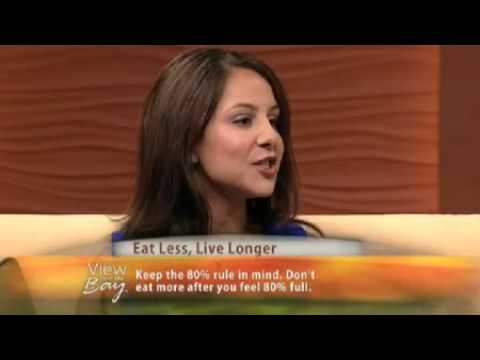
In this ABC interview, Lily Sarafan, CEO of Home Care Assistance and co‑author of Happy to 102: The Best‑Kept Secrets to a Long and Happy Life, shares practical, evidence‑based strategies to delay Alzheimer’s disease and other age‑related illnesses. She explains that while genetics accounts for about one‑third of longevity, two‑thirds are driven by modifiable lifestyle factors. Drawing on research from Okinawa—the world’s longest‑living population—she outlines five key lifestyle domains: a heart‑healthy, plant‑rich diet with omega‑3s and the “80 % rule” of eating until only 80 % full; regular physical activity such as walking and strength‑building to maintain muscle and prevent falls; cognitive stimulation through puzzles, daily word learning, and socially engaging games like bridge; vigilant monitoring for early Alzheimer’s signs (e.g., wandering, forgetfulness) and consulting geriatric professionals; and the importance of a positive mindset toward aging. Sarafan also emphasizes the superiority of home care over institutional facilities for maintaining independence, reducing fall risk, and providing one‑on‑one support. Throughout, she encourages listeners of all ages—especially seniors—to adopt these simple changes immediately, noting that even small adjustments can improve heart health, brain function, and overall longevity. The interview concludes with a plug for her book and website for further tips.
Chapters
Right now we're gonna delay Alzheimer's and other chronic illnesses just by making some simple changes. Please welcome one of the authors of this book, Happy to 102: The Best-Kept Secrets to a Long and Happy Life. Welcome, Lily Sarafan. Hi, Lily!
Hi!
How are you?
I'm fine. Welcome to the show.
Thanks for being here.
Nice to have you back. So why did you decide to write this book, you and your co-authors?
Well, at the time we were in the process of developing a caregiver training program geared towards those caring for seniors, but we came across such a wealth of information that applies to people of all generations That we decided it was too empowering to keep to ourselves, and that's why we put it in the form of a book.
And you studied some people in Japan because they were living long lives, right?
That's right. Folks may not know that Okinawa, Japan is home to the longest living and healthiest people on earth. It's a place where heart disease and cancer and Alzheimer's, what we consider age-related diseases, simply don't exist.
Is it the rice?
I was gonna say, is it the fish?
Sushi!
Sushi! Absolutely. The fatty fish is definitely a part of the diet along with 4 other areas of lifestyle factors That contribute to their incredible health.
So it's not genetics. It could be lifestyle changes?
That's exactly right. In fact, 1/3 of your longevity is based on genetics, but guess what that means? 2/3 is based on lifestyle factors, things that we can modify starting tomorrow.
So you're never too young.
You're absolutely never too young. In fact, so many of the tips that we outline in Happy to 102 are geared toward those even already in their 80s or 90s.
Wow.
Okay, so let's just talk about some of the categories you have in the book. Healthy diet. What should we— what kind of changes should we What can we do to delay Alzheimer's and other illnesses?
Well, a great rule of thumb is if it's good for your heart, it's good for your brain. So that means your cholesterol, your blood pressure, upping the antioxidants and omega-3s, just replacing some of your snacks, defaulting to fruits and vegetables as opposed to a heavy meat diet. It is amazing. Not only does that make you look good and feel good, but it helps you to delay the onset of dementia.
Huh.
Is there some things you can do like exercises that, you know, not be a couch potato, for example?
Absolutely. People may know that physical activity helps their heart and helps them feel better, but I spoke about it last time, it affects the memory region of your brain. So physical activity again can help you delay the onset of dementia, which is something that I know everyone is concerned with today.
So people in their 60s, 70s, and 80s, I mean, what kind of exercise are you talking about? Walking, or what can they do?
Sure, and so it could be something as simple as walking. What happens in fact is not only does muscle loss contribute to a lack of physical activity, but also a fear of falling, since it is a leading cause of death for people already in their 70s or 80s. And you can address that in a few Wearing sturdy shoes, a wide-rimmed hat to reduce glare, or having a professional caregiver with you so that you can feel safe at all times.
Okay. And then how can we sharpen our minds? Do those games work? Like, you know, the crossword puzzles?
You know, you might think that's too good to be true, too easy to be true, but I'd have to tell you that that's exactly right. Crossword puzzles, Sudoku, memory exercises, even just remembering what you ate each day can definitely improve cognitive function.
Can you go backwards? I mean, somebody who's already started with symptoms, symptoms, is there some way to, you know, slow it down? Yeah.
Now this is something that, you know, I have an uncle suffering from Alzheimer's. I'm sure it's of interest for a lot of people. Here's the great news for those early-stage Alzheimer's folks. Yes, you can slow down the progression of the disease with the lifestyle factors that we outline in our book.
You know, I saw one tip that was so interesting. You said memorize a new word every single day.
That's right.
We should do that.
We should get the dictionary out.
Yeah.
In fact, it's something that you should start As young as possible. And if you can't think of the word yourself, there are all those great word of the day programs online. You can have it emailed right into your inbox.
Okay. What about doing some social activities? Does that help with brain function?
It really does. And it's something that folks who are a little bit younger don't worry about as much because we tend to be more social. But in their 80s or 90s, social isolation is so common. What we love to recommend are games like bridge because it's a combination of social ties and mental stimulation.
Okay.
Get them both taken care of at one time in a fun environment.
That's a good idea.
If you have someone in your family or in your friends If you have a friend or a family member or a friend group that you think might be starting with this, I mean, how can you notice? What are the signs?
How can you know the symptoms of the disease? Well, it can be simple things like wandering, forgetfulness, you know, finding maybe even little scratches on the car that indicate that perhaps someone was confused when driving in the day or at night. And the best thing to do is just to consult with your geriatric physician or healthcare professional.
Now, do we want to live to 102?
You said— this was interesting because you said when we were talking about this earlier, you said, I don't want to live to 102. And I said, that's because you're your age. At my age, I'm thinking 102 is looking pretty good.
You know, I think it's a major misconception that at some point in life people become tired of living. And this is something that I'm going to put out there. If someone says, I'm tired of living, we consider it suicidal thinking.
What?
We have to start developing the same mindset for those in their 80s and 90s.
What about in your 30s? I just want to take a break. I don't want to be upset.
No, it's a major misconception. If those in their 70s knew it was possible with a few lifestyle changes to live another 30, 40%, that in itself would give them the positive outlook on life that it requires to live a life of healthy longevity.
Let's also talk about home care, and that's very important to living to 102. Why is that?
Well, home care in many ways. One, it's the best way to maintain independence for those already in their 80s or 90s. If you're suffering from some form of dementia, keeping clients or seniors in a familiar home environment is incredibly important. It also reduces the risk of falling or infection. So all of those things combined make home care the best alternative.
Versus just being at a facility.
That's exactly right. Where it's unknown to them. Well, at a facility there are a few things. You typically have one caregiver for every 12 residents. versus one-on-one in home care. So that's just another factor that contributes to the importance of home care as our senior care solution.
And the expense of it, I'm sure. Oh yeah, more expensive.
Yeah, I have one more tip that I want to talk about. It was the 80% rule. That's something I could apply.
What's that rule?
That's exactly right.
The 80% rule comes from Okinawa, Japan, and it has to do with eating. It has to do with eating until you're 80% full. And it's such a simple rule of thumb, but it's That's so important because what we tend to do if we overeat is we overmetabolize our system, sort of like a car. We just run it down. So to stay fit and healthy and keep your blood pressure and cholesterol in check, it's important to follow that 80% rule.
To stop eating when you're still a little bit hungry.
Just a little bit hungry. Because remember, it takes the brain about 20 minutes to register how full you are.
Oh, I could probably drop 10 pounds doing that.
Yeah, before your wedding.
Yeah, before my wedding. I will need that. Lily Sarafan, the book is Happy to 102. Thank you so much. She's got more tips on her website and more information.