In this ABC interview, Lily Sarafan, co‑author of Happy to 102 and CEO of Home Care Assistance, explains how simple, evidence‑based lifestyle changes can delay Alzheimer’s disease and extend both lifespan and healthspan. She begins by noting a New York Times projection that over one million U.S. centenarians will exist by 2050, prompting a proactive search for the habits that enable such longevity. Sarafan outlines the five core domains from her book—nutrition, physical activity, mental stimulation, social ties, and sense of purpose—emphasizing that genetics accounts for only one‑third of healthy aging while two‑thirds are modifiable. She offers concrete examples: eat until 80 % full, increase omega‑3 intake via almonds, blueberries, salmon, and tuna; engage in consistent, moderate exercise (at least three times a week, adjusted for age); practice daily mental challenges like Sudoku; maintain strong community and family connections; and cultivate purpose. She cites Okinawa, Japan, as a real‑world model where these lifestyle factors have eliminated many age‑related diseases. Sarafan stresses that it’s never too late to adopt these habits, especially for older adults, and introduces the Balanced Care Method—a caregiver training program delivered through Home Care Assistance and detailed on balancedcaremethod.com—to help families and professionals embed these principles in the lives of seniors. The interview concludes with a reminder that the tips are available on the show’s website.
Chapters
You can delay Alzheimer's and other chronic illnesses just by making some simple changes. Here with some of the best-kept secrets to living a longer and happier life is one of the authors of Happy to 102. Please welcome Lily Sarafan. Hi, Lily.
Hi, Lily. Welcome to the show.
Nice to meet you. Nice to meet you. Great to be here. So where did this all come about?
Well, Jim and Kathy Johnson, my co-authors, and I are fortunate to work in the senior care industry, so we already had an elevated interest in topics like aging. It was about a year and a half ago that we saw a staggering statistic in the New York Times, and that is by the year 2050, there will be over 1 million centenarians, people over the age of 100, living in the United States alone.
Wow.
So you need to find out their secrets.
That's right. And like a lot of people, we saw that and said, well, I wonder if I'll be one of those who gets to live to 100. But the more and more we looked into the lives of these centenarians around the world, we realized it's less a matter of I wonder if I'll be one of those and more a matter of what will I do proactively To ensure that I can live the longest, happiest, healthiest life possible.
And these are some simple things we can do, what, on a daily basis?
That's right.
So can you list some of the categories in your book?
Absolutely. And one thing that people might want to know is, well, most of this must be dictated by genetics. Well, they should know that scientists and researchers have determined that only 1/3 of this enviable lifestyle is based on genetics and 2/3 lifestyle factors.
Oh, okay.
And the 5 areas that we focused on Nutrition, physical activity, mental stimulation, social ties, and sense of purpose.
Okay, so give us a quick example of what we can do in each category.
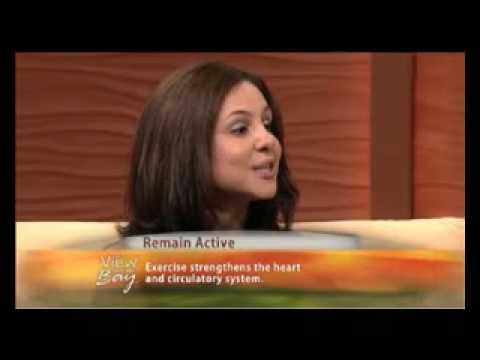
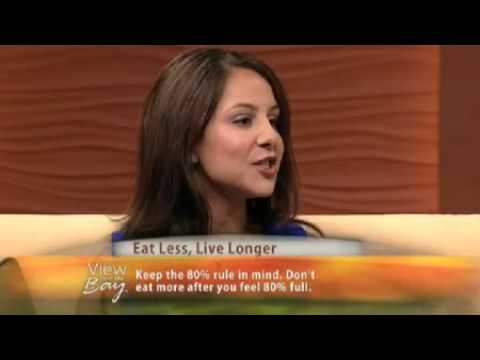
Sure, so nutrition defaults to the eat until you're 80% full. Increase those omega-3s, snack on the almonds and blueberries, replace your red meats with your salmon and tuna. In physical activity, it's less about doing something strenuous and more about being consistent, and I'll speak a little bit later about how that specifically impacts Alzheimer's.
Will these beneficial changes not only extend your lifespan but improve the quality of that life? Will you still be healthy as you get old?
Absolutely, and that's what we've coined healthy longevity. It's not just about lifespan, it's also about healthspan.
Okay, so what's another category and tell us an example?
So social ties, it's about especially as people get older in the geriatric population, there's a lot of social isolation. It's about continuing those connections with community, with family that helps you maintain that positive outlook that you need to actually live that longer lifespan.
So when you feel happier, you live Longer and healthier. Okay. And then what about your mental skills? How do you keep a sharp mind?
So everyone knows that your brain tends to shrink a little bit over time, but what they may not know is there are specific things you can do to delay the onset of dementia. So for instance, physical activity has been shown to impact the hippocampus, which is the memory region of your brain. Increasing omega-3s in your diet, exact same thing. And best of all, just by doing something simple like 30 to 60 minutes of Sudoku, or memory exercises before you go to bed has been shown to have a direct impact on delaying Alzheimer's and dementia.
And when you say physical activity, how much are you talking about and how regularly?
So regularly, I'd say at least 3 times a week, and it's going to differ based on generation and population. Someone in their 20s and 30s can probably stand to exercise 4 or 5 times a week. For our clients throughout North America in their 80s or 90s, it can be as simple as taking a walk around the block.
Okay, just a few times a week.
That works so much.
Exactly. The same things that prolong your life can also delay Alzheimer's. That's what it sounds like. And you studied a lot of people, you said in Japan?
In Okinawa, Japan.
Why did you pick that region?
Well, you may or may not know that Okinawa is actually home to the longest living and healthiest people in the world. So if you're going to mimic someone, mimic the best. And when you learn that it's lifestyle factors, what researchers have done is go into Okinawa and see that heart disease, cancer, stroke, Alzheimer's, what we always consider to be age-related diseases are unheard of in Okinawa.
And it's because they're doing these simple tips that you're talking about?
That's exactly right. It's part of their lifestyle, a sense of purpose, a positive commitment, eating healthy, and guess what? There's no word for retirement.
Huh.
Is it ever too late to get started? I mean, if you're in your middle to late years, can you still turn things around?
Absolutely. In fact, that was the inspiration for all of this, is we wanted to develop a caregiver training program so that family caregivers and professional caregivers can actually instill these principles in the lives of those who are already in their 80s or 90s.
Is that what the Balanced Care Method is?
Exactly, that's the Balanced Care Method.
And then how do you participate or get involved in that?
So if people are interested in the Balanced Care Method because they're family caregivers, they can learn a lot of information on balancedcaremethod.com, and the caregivers that we train through Home Care Assistance across North America are also trained in the Balanced Care Method.
Okay, Lily Sarafan, thank you so much. And by the way, we have some of her tips, actually a list of them, on our website, so go there.