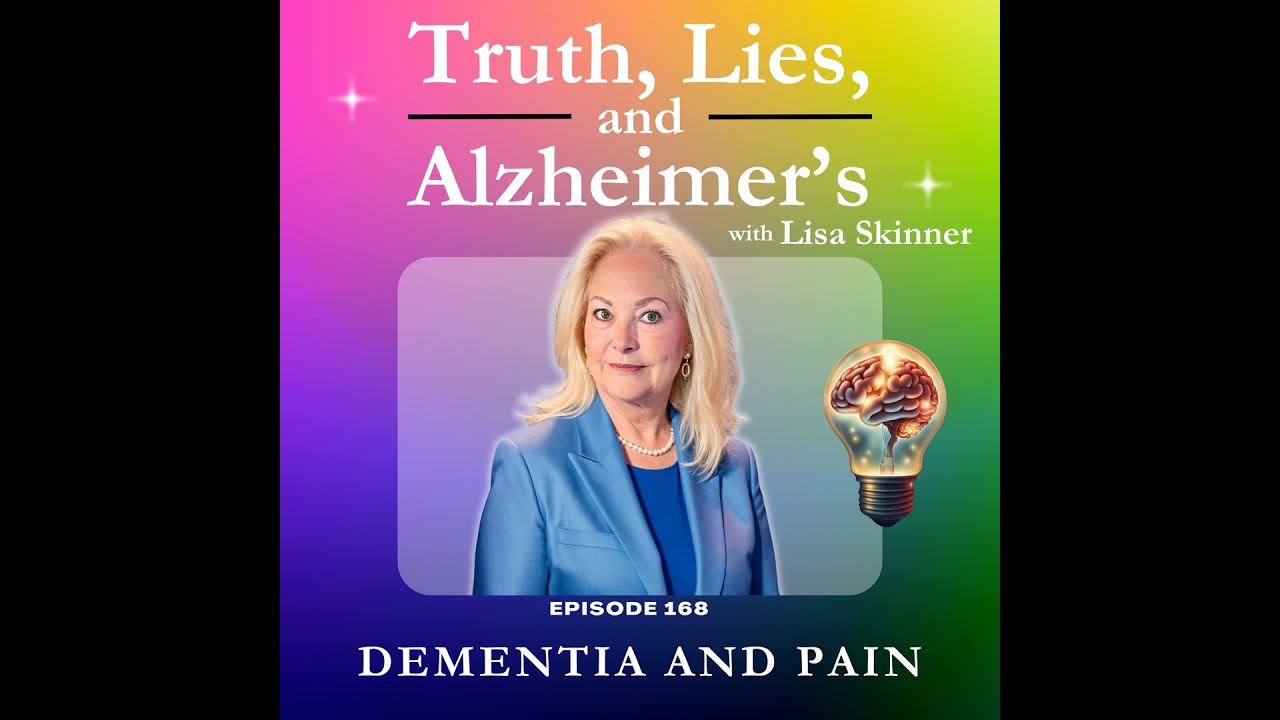
Lisa Skinner, a dementia care expert with 30+ years of experience, explains how to recognize and manage pain in people with cognitive impairment. People with dementia often can't report pain directly, so caregivers must watch for behavioral changes like agitation or withdrawal. Assessment tools like the Abbey Pain Scale and PACSLAC help identify pain; treatment ranges from physical therapy and environmental changes to medications like acetaminophen and topical agents.
Chapters
Are you caring for a loved one with dementia? You don't have to figure this out all on your own. Welcome to Truth, Lies Alzheimer's, the show that helps you reimagine a new relationship with your loved one, a relationship a little more free of stress and anxiety. Join host Lisa Skinner and her 30+ years of experience as she guides you on a new path to a better relationship with those you care for. Here's Lisa.
Hello everybody and welcome to a new episode of The Truth, Lies Alzheimer's Show. I'm Lisa Skinner, your host, and today we are talking about Dementia and pain. Now, do y'all know that pain is a universal human experience for all of us? Yet in people living with dementia, recognizing and addressing pain unfortunately becomes profoundly more complex. Cognitive changes can obscure the typical signs of pain. Alter pain perception, and complicate communication about one's distress. So that's exactly what I'm sharing here today. What is known about the relationship between dementia and pain, including common causes, signals that caregivers and clinicians should monitor, strategies to alleviate pain, communication approaches for individuals who cannot articulate their experience, the interplay with other health conditions, and I'm gonna offer you suggestions for practical considerations that caregivers, families, and healthcare teams can implement. The goal is to provide a clinically grounded, empathetic overview that can inform daily care, care planning, and interdisciplinary collaboration. I'm going to start by telling you about the intersection of dementia and pain. So that includes a prevalence of pain in dementia. And a good way to describe that for everybody is that people with dementia frequently experience pain, and oftentimes it's actually from chronic conditions such as arthritis, dental disease, back pain, neuropathies, cancer, and/or post-surgical states. Now, the problem is, is that pain often goes underrecognized in this population due to communication barriers and due to their cognitive impairment and a tendency to attribute distress to dementia itself. Not recognizing it being a different underlying situation. So all of this really makes it quite difficult for people living with dementia to not only express what they're feeling, but for the caregivers and the family members to interpret or even understand that they are feeling some degree of pain or discomfort. So this is interesting. According to Dementia UK, some people believe that individuals living with dementia cannot even feel pain. And I've heard this for decades, but this is absolutely not true. People with dementia surely do experience pain. They just might not be able to recognize that they're feeling pain or express or manage it the same way people do who do not live with cognitive impairment. So let's talk about pain perception and aging. Now, aging in itself and not even factoring in cognitive impairment, already can alter our ability to sense pain danger. And there's a technical word for it. It's called nociception. In other words, it's the way our reflexes react that would cause us, for example, to pull our hand away from heat. Before we even feel the pain. Age also alters the way our brains respond to pain processing. In other words, the complex emotional and cognitive interpretation of that stimulus by our brain. So like touching a hot stove. Now, some older adults do become more sensitive to certain stimuli, while others may have altered pain thresholds. Dementia can further modulate these processes, sometimes blunting overt reactions to pain or conversely intensifying their agitation as a proxy for their discomfort. It definitely will get— will have an impact on their ability to function because pain can worsen functional decline, mood disturbances, sleep disruption, appetite changes, and an overall quality of life. In dementia, untreated pain may exacerbate their agitation. Aggression, withdrawal, and even their repetitive questioning, leading to inappropriate pharmacological responses if pain is misread as a behavioral problem. So some of the common causes and sources of pain in people with dementia are as follows. It's caused by musculoskeletal problems. It can be caused by osteoarthritis, by having spinal stenosis, degenerative joint disease, and also soft tissue injuries. These are all prevalent as mobility may decline and activity patterns shift. It could be neuropathic pain. So conditions such as diabetic neuropathy, post-therapeutic neuralgia, or chemotherapy-induced neuropathy can cause burning, tingling, and even shooting pains. Sometimes we don't even stop to think that the people we love with dementia may be experiencing Dental and/or orofacial pain, dental decay, gum disease, and even ill-fitting dentures, or temporomandibular joint disorders. That's extremely painful. These can all cause significant discomfort, but may be overlooked in people living with dementia. Then there's the skin and pressure-related pain causes, which include pressure ulcers, skin tears, skin burns, or dermatitis. They're all more likely with immobility or reduced sensation when you live with dementia. There's visceral pain, like in your gallbladder, having gallbladder disease, having kidney stones, living disorders, pancreatitis, or a gastrointestinal condition that can produce pain that is difficult to localize in those with limited communication. Well, that sure certainly stands to reason. We also have to take into consideration an infection or an inflammatory process that's happening, like a urinary tract infection. Pneumonia is extremely common in the elderly population, or even cellulitis that often presents with subtler signs in dementia, but the pain can accompany a systemic illness. Person can have cancer or a malignancy and it'd be experiencing pain from tumors or metastases, may be present with guarded movement, fatigue, or decreased appetite rather than explicit verbal reports, which they are no longer capable of doing. It could be caused by post-operative and procedural pain like surgeries or invasive diagnostics. This can leave the patients with lingering discomfort and altered recovery trajectories. They could be living with chronic conditions with overlapping symptoms like endometriosis and fibromyalgia. Or neuropathic syndromes that may contribute to chronic pain that intensifies with age or with dementia progression. Now, some of the signs and indicators of a person experiencing pain with dementia is pay attention to their nonverbal cues. These are crucial. When verbal communication is so limited. Look for a constellation of behavioral and physiological changes rather than a single symptom like fidgeting, agitation, or restlessness. They can exhibit their discomfort with facial expressions, grimacing, frowning, a clenched jaw, tightened eyebrows, or agitation when a body region is touched. You can, um, witness obvious and severe mood changes or being uncharacteristically quiet for that particular person. Physical symptoms such as a change in room temperature or, uh, temperature outside, and maybe displaying increased pulse, sweating, flushing, or even appearing pale can all be signs of pain and/or physical discomfort in people with dementia. Also look for a visible injury such as swollen joints, cuts or bruises, pressure sores, or even mouth ulcers. Now, we often hear mild to severe vocalizations from people living with dementia when they are experiencing pain and/or discomfort. They could be sighing, they could be moaning, groaning, or even experience— you'll see sudden changes in their tone or in the the loudness of their voice or their yelling, however it is they're trying to vocalize that something is wrong. Now, look for signs via body language, like guarding a limb, rubbing or massaging a particular area of their body. They become extremely restless for out of nowhere. They start pacing. And even becoming withdrawn from activities could be a sign. So changes in routine behaviors, we can see increased agitation and/or ill— irritability. Again, withdrawal from favorite activities. We can notice changes in their sleeping patterns, reduced appetite, or increased somatic complaints like They're, they're trying to tell you that they are nauseous, that they're dizzy, and without a clear cause, or reacting with fear or distress during personal care such as bathing or dressing, which can even escalate to verbal or physical aggression. It can show that they are having difficulty standing, sitting, or walking, changes in their gait that become noticeable, an increased need for assistance with transfers, or being less willing to move altogether. We can detect elevated heart rates, them sweating, pupil dilation. Flushed skin, particularly around the suspected pain site. And then we can see and hear behavioral expressions that may be misinterpreted. They're displaying their agitation or aggression that can be a reflection of their pain and discomfort. Or an unmet need rather than just plain willful misbehavior. And we really don't see that a lot in people living with dementia. They're trying to tell us something. Calling or shouting out or groaning or rubbing or twitching. So there is variability across individuals living with dementia. The progression and individual differences mean that pain expression can and does at times change over time. What signals distress today may differ from signals 6 months later. So be mindful of that. And then I mentioned earlier, holding a particular part of their body. Noticing changes in their appetite, such as refusing food. And just as a quick reminder, if you have a chance, stop by our website. You'll find us at mindingdementia.com. So we've covered quite a few things up to now, but I'm going to pick up where we left off when we went to the break, and I'm going to go over some approaches to alleviating pain in people living with dementia. So one of the things that's available out there is a comprehensive assessment, or actually you want to have your primary care physician or your loved one or the person you're caring for periodically update a comprehensive assessment and documentation of their medical condition. So that should include having the physician review medical history, current— their current medications, comorbidities. And what that means is any other medical conditions that they have with the cognitive disease that they are living with. Also, recent changes in function or mood. There are actually— this is what I started to say a second ago, but there are pain scales that have been adapted for dementia and they are used for as an observational tool appropriate to the person's current cognitive level. And one of the more popular ones that you can Google and probably download, I believe, is the Abbey Pain Scale. There's also a Facial Effective— Affective Scale. There's the PACSLAC assessment checklist. It's a pain assessment checklist for seniors with Dementia, or one that's called the MOBID/2. It's a Mobility-Indensed Pain Assessment Tool. And these tools rely on behaviors, cues, and caregiver input rather than based on self-reporting. So It really is a multidimensional approach that combines caregiver observations, clinicians' assessments that are regularly updated, and possibly objective biomarkers when relevant to build a probable pain profile for our loved ones and the folks that we care for living with dementia. Now, in addition to that, there are non-pharmacological strategies, and we can all talk to our physicians regarding what they recommend based on each individual. But here are some of the ones that they might recommend. Physical therapies, and that would include gentle range of motion exercises. Guided walking, aquatic therapy if feasible, and posture/alignment adjustments to reduce musculoskeletal strain as recommended by a professional. Don't try to, you know, implement any of these things that I just mentioned without the guidance of some medical professional a physical therapist, a physician, because they can be harmful, especially in the elderly population. They can do some harm. There's also things to take into consideration that will help with physical comfort measures, like using warm or cold compresses, comfortable seating, pressure-relieving cushions, Proper footwear can make a huge difference, and supportive positioning during care activities. Again, talk to the physician to get recommendations on what they think would be helpful. Repositioning and mobility aids. So regular repositioning to prevent ulcers. And discomfort, use of assistive devices to reduce strain on their joints. You can, you know, talk to their physician about activity modification that might be better for that particular person's medical problems or physical problems. So what we would want to do in that regard is to adapt activities to minimize their pain triggers. For example, break tasks into shorter steps, pace activities to match their tolerance. We also want to consider environmental modifications like adjuncts, warm lighting, comfortable noise levels, familiar surroundings, and predictable routines that can reduce their stress level that also compound their pain perception. All of these things have a huge impact on people living with dementia that we don't even relate to, but they do. There are mind-body interventions that we've talked about so many times, like gentle music, massage therapy, with consent and safety, of course. Guided relaxation techniques, aromatherapy may offer symptomatic relief or improved mood under a physician's recommendation and guidance, please. Now, we want to always be mindful of sleep optimization. Because adequate, adequate sleep does support pain thresholds and recovery. So we need to make sure we're addressing any sleep disorders they may have. And nighttime discomfort. It is not uncommon for people living with dementia to wander around at night. Their circadian rhythms are completely thrown off and they a lot of times can't distinguish between daytime and nighttime hours. There are pharmacological options that must be discussed with careful oversight by the physician, and they will usually recommend starting with an analgesic by class, such as Tylenol or acetaminophen. So they often want to start with a first line for mild to moderate musculoskeletal pain. Monitor for liver function and interactions with other medications they may be taking. And then they might increase that or try an anti-inflammatory drug, an NSAID such as ibuprofen or naproxen, but with caution due to gastrointestinal side effects in some people. Renal side effects in some people, cardiovascular risks, particularly in older adults that already have some other medical conditions. So, we— the doctor, you know, will probably take into consideration gastroprotection measures where appropriate. Some of the topical agents they might have you use is capsaicin, lidocaine patches for localized pain with fewer systemic effects, opioids sometimes for moderate to severe pain or cancer-related pain with careful, careful dosing, monitoring for sedation, delirium, constipation, and of course, mood changes, which happen frequently when using drugs of that caliber, especially with dementia. There are other types of analgesics they may prescribe, antidepressants, anticonvulsants, neuropathic pain, monitoring for sedation or cognitive effects. And then of course there are non-pharmacologic to the pharmacologic considerations. Starting low and going slow. Reassess regularly for efficacy, adverse effects, and interactions with other CNS active medications. And again, I just want to emphasize that we really have to watch for signs and signals that something might not be working the way it's supposed to be working because many times mid to later stage, they are not going to be capable of telling us they're not feeling well. They're having some type of medical reaction to a medication or anything that they have been given. Okay. Pain management plans involve the physicians, the nurses, the pharmacists, the caregivers in a cohesive and collective collaborative structured plan with clear indications of when to reassess or escalate the treatment. So some of the things again that we really need to pay attention to as family members and care partners, Monitoring for adverse effects. We are their eyes and ears. We have to be because most times they're not, they're not capable of expressing what's happening with them at any given moment of any given day. Sedation. Look for confusion, delirium risk, constipation. Intestinal bleeding, kidney function problems, liver function problems. Be very vigilant for drug-drug interactions, especially with polypharmacy common in older adults. That means they're taking 5 or more medications a day. Palliative and comfort-focused care. So in late dementia or advanced disease, always, always, always prioritize their comfort. Be mindful of dignity, their dignity, and the goal of symptom relief. Early integration of palliative care can and does support both the patients and families and caregivers. And regular reassessment of goals of care in alignment with the patients themselves, keeping in mind their values and previously expressed preferences that should have been documented with the family and, you know, anybody involved in the care. So those things have already been identified and will be honored. Here are some non-pharmacological and environmental strategies to minimize pain. Positioning and ergonomics would include proper alignment during their transferring, use of cushions and supportive surfaces. Heat, cold therapy would mean timely application. To affected areas where appropriate and safe. Gentle therapies, again, that would include massage with their consent, warm baths, hydrotherapy, uh, if available. Um, and then offering short, enjoyable activities to prevent overexertion and fatigue that may masquerade as pain. Boundary setting, clear communication with the care team about limits and tolerance to interventions. And then, of course, how pain interacts with their other health conditions, like, for example, depression and anxiety. Pain and mood disorders can worsen and exacerbate each other. Addressing mental health can modulate pain perception. Poor sleep can amplify pain sensitivity, so improving sleep quality can reduce their pain experiences or even the perception of the pain. Cognitive and Impairment and pain expression. Dementia can blunt— I don't know if any of you are aware of this, but dementia can actually blunt or alter pain expressions, making it essential to rely on observational tools like the pain scale that I mentioned and caregiver reporting. Now, other chronic diseases such as diabetes, cardiovascular disease, and cancer does and can complicate pain profiles and treatment choices, requiring careful medication management and risk assessment. And then finally, if your loved one or the person that you're caring for does have a history of alcohol or drug use, or again, polypharmacy, polypharmacy, which means that they are taking 5 or more prescription medications a day. These can definitely influence the analgesic choices, meaning medication, and adverse effect profiles. And then a few communication tips for pain when the person with dementia cannot tell you. So I'm gonna go over these real quickly before we wrap this episode up today. Establish a pain reporting framework. Identify a primary caregiver or point of contact who can observe, document, and escalate the concerns. Use standardized observational tools like that, those pain scales that I mentioned earlier to document signals across different times of day and activities. Also, build a routine assessment schedule, regular pain review during care routines. For example, what their pain level seems to be like after physical therapy, during bathing, before bedtime, after bedtime. Detecting different fluctuations, use proxy reporting effectively, and maintain a pain diary. And when you do this, include notes on observational facial expressions, their agitation levels, withdrawal, changes in appetite or sleep, and any response to interventions. So that is what I wanted to share with you and give you hopefully some valuable nuggets and information about the pain that people with dementia do live with and the things that we actually need to, to do to help them with identifying that they do have some pain or discomfort going on and then how to handle it. So I hope you all enjoyed today's episode and for being here on the Truth Lies, or at the Truth Lies and Alzheimer's Show. And I'm Lisa Skinner, your host, and again, I appreciate everybody for taking the time to be here today and for your willingness to to be open-minded and learn more about what it's really like to live with one of these neurodegenerative diseases that cause dementia and how we as family members and care partners and healthcare providers can provide each one of these individuals with a higher quality of life. While they're progressing through these diseases. So take care for now. Thanks again for being here, and I will be back next week with another new episode for you.
Bye-bye. Thank you for listening to Truth, Lies Alzheimer's. We hope you found something in today's episode that helps. We understand that caring for a loved one with dementia can be the challenge of a lifetime, but you don't You don't have to do it alone. If you're ready for exclusive access to even more great content and resources, head on over to Facebook and join Lisa Skinner's Minding Dementia support group. We're a community of like-minded caregivers, and we're here to help.
More from Lisa



Fidget Apron for Elderly, Sensory Aprons, Products for Elderly Demo with Lisa Skinner

Skil-Care Sensory Gel Pad for Light Box, Mini Fidgets, Set of Five Pieces for use with Dementia






