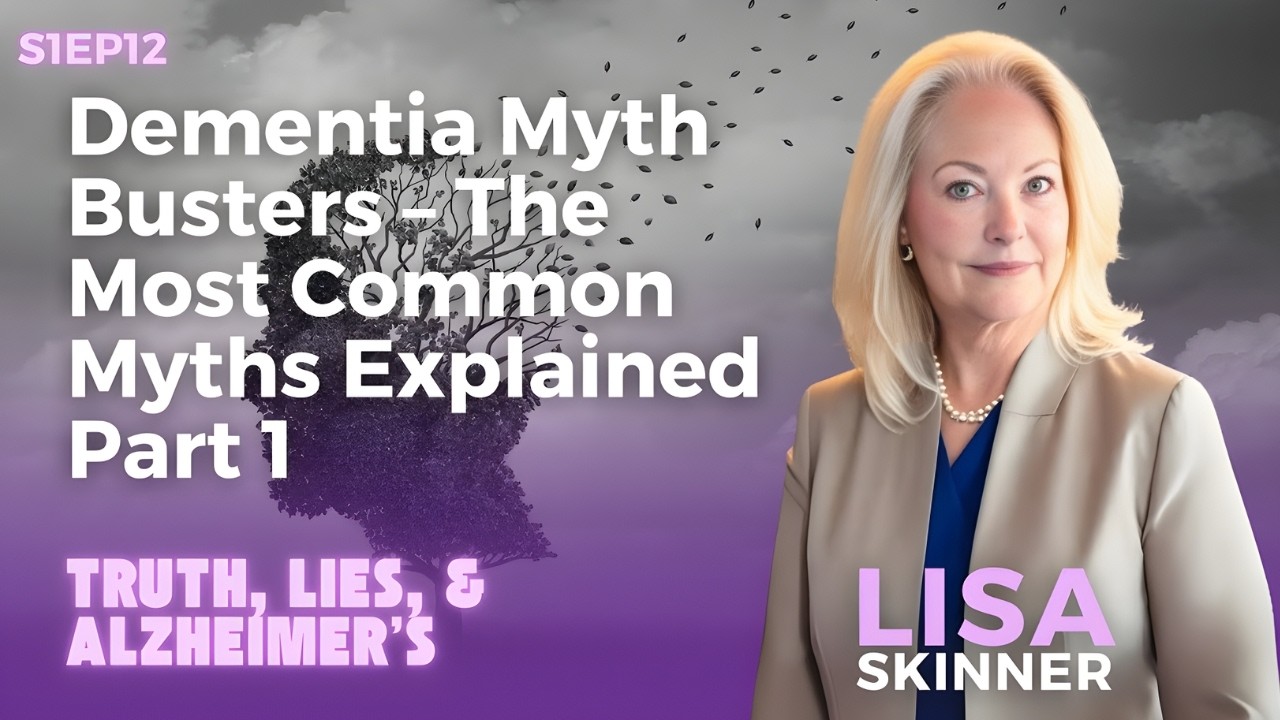
In this episode of the "Truth, Lies Alzheimer's" television show, host Lisa Skinner systematically debunks a series of pervasive myths about dementia and Alzheimer’s disease. She begins by rejecting the notion that memory loss is a normal part of aging, emphasizing that progressive memory impairment signals possible neurodegenerative disease and warrants medical evaluation. She clarifies that Alzheimer’s is rarely caused by a single gene; most cases are sporadic, with risk influenced by a combination of genetic factors (e.g., APOE4), lifestyle, and vascular health. The fatal nature of Alzheimer’s, the existence of early‑onset cases, and the wide variability in disease progression are highlighted, underscoring the need for personalized care plans. Skinner dispels the belief that a lack of family history eliminates risk, noting that non‑genetic factors play a major role. She confirms there is currently no cure or single pill that halts the disease, and that existing medications provide modest symptom relief but are not universally effective. The episode expands the clinical picture beyond memory loss, describing impacts on language, reasoning, behavior, mood, sleep, and daily functioning. It refutes the idea that dementia is an inevitable, untreatable part of aging, presenting evidence that modifiable vascular and lifestyle factors can reduce risk or delay onset. She stresses that interventions—cognitive stimulation, physical activity, social engagement, structured routines, and appropriate medical care—can improve quality of life even after diagnosis. Diagnostic myths are addressed: brief memory tests are screening tools, not definitive diagnoses; imaging and biomarkers aid but do not guarantee 100 % accuracy; and a comprehensive, multimodal assessment is required. Concerns about medication safety are clarified, noting most approved drugs are non‑addictive and have manageable side‑effects when supervised. The host also challenges stereotypes that people with dementia cannot learn new things, cannot engage in complex activities, or inevitably become aggressive; she provides practical strategies for behavioral management and emphasizes person‑centered care. Throughout, Skinner’s tone is conversational yet instructional, aiming to replace misinformation with evidence‑based guidance and to empower caregivers and the public. The episode concludes with a call to subscribe to her newsletter for ongoing dementia‑friendly tips.
Chapters
Welcome once again to the Truth, Lies Alzheimer's television show. I have another brand new episode planned for everyone today. We're going to be taking a sledgehammer and busting myths that have been circulating around for decades. And every single one of them bugs the heck out of me. Uh, they just irritate me because they fuel the fire of people not clearly understanding, um, the truth about living with these diseases, and that irritates me. So it's time to dispel these myths and really focus on the accurate information and the truthful information, it's going to be so much more beneficial for everybody. So I am glad you are here with me today listening to my myth-busting episode. There's actually going to be a second part because there are so many of them that exist out there that I just want to share with everybody. So The first myth that I want to share with you is that memory loss is just a part of normal aging and nothing for anybody to worry about. Well, that is not the truth. Now, while aging can bring some natural changes in memory, significant or progressive memory loss that interferes with daily life is not normal. Period, and can be a sign of one of the brain diseases developing in your brain that causes dementia, and that includes Alzheimer's disease. It is the most common form of brain disease. Now, other disorders including depression, thyroid issues, medications, sleep disorders, they can also cause memory problems and should definitely be evaluated. Now, why is this misleading? Because it confuses age-related changes with pathological decline. So the key point here for everybody is seek medical evaluation if memory loss progresses, if it's starting to become more frequent and more severe, if it impacts your independence or includes being really confused about things, if you're all of a sudden noticing in your loved one or even in, in yourself that you're having difficulty with planning or getting lost in familiar places, So number 2 is that Alzheimer's disease is caused by a single gene or is purely genetic. Well, most cases are not directly caused by a single gene. That's a fact. There are rare early onset familial forms that cause— are caused by specific genetic mutations. For example, the APP gene, the PSEN1 and the PSEN2. Now, the majority of cases are sporadic and influenced by a combination of genetic risk factors like the APOE4 gene, and you've heard me talk about that one. Also, we got to factor in lifestyle and, and environmental factors. And this is misleading because it really oversimplifies the causes and may end up causing undue guilt or fatalism. In other words, believing that all events are predetermined and unavoidable, making human actions and efforts to change the outcome futile. That can happen to us in these false beliefs. Genetics can influence risk, that is true, but lifestyle and vascular health also play a major role in increasing or minimizing somebody's risk of developing Alzheimer's disease. Here's another myth for you: Alzheimer's disease is not fatal. And sometimes people say it's just old age brain decay. And the truth of that matter is that Alzheimer's is a progressive neurodegenerative disease that ultimately leads to severe cognitive and functional decline and is fatal. Complications such as infections, falls, and malnutrition contribute to our mortality. And this is misleading because it downplays the severity and the prognosis, or the outcome, of Alzheimer's disease. So key point here for you: early planning and symptom management are extremely important. Number 4: Only older people get Alzheimer's disease. Well, actually, the vast majority of cases do occur in people age 65 and older. The older you get, the higher your risk becomes of developing it. But actually, in a small percentage of people, they do develop early onset Alzheimer's disease, and that shows up under the age of 65. Other forms of dementia can affect younger individuals as well. I recently read about a patient who was diagnosed with early onset at 19 years old. That was the youngest I've ever heard anybody being diagnosed. Before, it was 30-something. So why is this myth misleading? Because it totally ignores the younger onset forms and the broader spectrum of dementia. Key point: early onset forms are rare, but they are real, and the risk increases with age. Next one: Alzheimer's disease progresses the same for everyone. That's not true. We have a saying in my world of dementia: you've met one person with dementia, you've met one person with dementia. Everybody progresses through it differently. And one of the reasons why is because there are about 100 known brain diseases that cause similar symptoms to what we see in Alzheimer's disease. Some people even have what we call mixed dementia. So they have more than one brain disease that is attacking one part of their brain at the same time as another. And it's more common than you would think. The disease progression varies widely among individuals in rate and in pattern. Some have a relatively slow decline over years, others experience faster progression. And again, it depends on what the brain disease is that's doing the damage. So, and the symptoms can also vary. Alzheimer's disease, its hallmark is short-term memory loss, but that's not the case necessarily with like frontotemporal dementia. Hallmark of that is different, but symptoms do vary in individuals affecting memory, language, visuospatial skills, and behaviors that we see, and they may also fluctuate. This is misleading because this is not a one-size-fits-all expectation. That's inaccurate. So the key point to this myth is to consider that personalized care plans are really essential. Next one: if there's no family history, you won't get Alzheimer's disease. Well, the truth of that matter is that family history does increase risk but is not a prerequisite to developing it. It doesn't discriminate. Actually, anybody can develop Alzheimer's disease. Um, most people with it have no known family history. Non-genetic factors, which are age, cardiovascular health, diabetes, smoking, exercise, and diet, do significantly influence the risk of developing it. And this is misleading because it ignores the non-genetic risk factors that we are well aware increase a person's risk to developing brain disease. So the key point here is that healthy lifestyle reduces risk and also can delay onset for many people. Next one: there is a cure or a single pill that will stop Alzheimer's. Well, unless this has happened in the last 24 hours, no. The truth is there is currently No cure. I know that's sad. Some medications can help with symptoms temporarily and modestly slow the progression in some people, not in all, but they do not— and don't let anybody tell you otherwise— they do not halt the underlying disease yet. We haven't— we're not there yet. Research is of course ongoing with several therapeutic approaches always under study, always clinical trials going on. I mean, we're desperately trying to find something that can help cure or treat these very heartbreaking diseases, but we haven't gotten there yet. And I think the obvious reason why that's a misleading myth is because it creates false hope about a quick fix. We just don't have one. The key point is that treatment focuses on symptom management, quality of life, and safety, and that we can provide when people are living with these brain diseases. Another myth is that Alzheimer's disease only affects memory. No, the truth is that while memory problems are prominent and it is the hallmark of Alzheimer's, it still, including Alzheimer's, impacts other cognitive domains like language and reasoning, visuospatial skills, behaviors, behavioral changes, mood changes, sleep disturbances, and functional functional impairment are all common with dementia, which when I say dementia, I'm referring to the symptomology. This is misleading in that it narrows expectations of symptoms that people develop. Comprehensive assessment covers cognition, function, behavior, and daily living. Next one: dementia is just a normal part of aging and cannot be prevented. I think this is, uh, similar to one that I've already gone through, just worded a little differently. But the truth is dementia is not an inevitable part of aging, which we know is a fact, though risk does increase with age. I know I've told you guys this before, but currently by the time any of us are 85 years old, 1 in 3 of us will be living with one of the brain diseases that causes dementia. So for every 5 years that we age, starting at the age of 65, the risk increases considerably. Uh, that's a fact. Some risk factors are modifiable. In other words, they can be treated, changed, managed. Um, that includes cardiovascular health, can be treated by your physician, obesity, physical activity— you do have control over that— smoking, diabetes, and depression. Prevention or delay may be possible through risk-reducing strategies, and I can tell you I have seen that happen in people, not in everybody, but in some people. But it is misleading because it implies that nothing can be done. And now we know that's not true. The key point is that all the studies that have been done over the decades that I've been involved, healthy lifestyle choices has proven to influence our risk of developing Alzheimer's disease. It's not a guarantee, but it does minimize our risk. Now, if someone has dementia, there is nothing you can do to help. That's another myth. But the truth for that one is that while dementia is progressive, Many interventions can improve the quality of our lives, can improve our safety, mood, sleep, and daily functioning. Now, non-pharmacological approaches including cognitive stimulation, physical activity, social engagement, structured routines, and appropriate medical treatment can all help. Care planning and caregiver support are really important. And this is misleading because it implies passivity. Person-centered care, which is what I specialize in, adaptable routines, and support services matter greatly. The next one I want to share with you is that memory tests that are given to you by your physician are definitive diagnoses. No. As a matter of fact, the truth is many of these brain diseases, including Alzheimer's, are not definitively diagnosable or conclusively diagnosable. The doctors have to spend a lot of time and go through a lot of assessment to go through a process of elimination of what it's not to come to the conclusion that, okay, this is now looking like Alzheimer's disease. So routine screening or brief cognitive tests are initial tools for our physicians, but a definitive diagnosis typically requires a a very comprehensive assessment including a history, repeated testing, medical evaluation, imaging, and some genetic or laboratory tests. We know that dementia can be caused by multiple conditions needing differential diagnosis, and this is misleading because it overstates the decisiveness of initial tests. Bottom line is we do not have anything today, right now, that can conclusively tell us that a person has Alzheimer's disease. And diagnosis is a process. It's a huge process. It's not just a single test. Another myth circulating around is that medicines for Alzheimer's disease are addictive or dangerous with no benefits. The truth for that is that most approved medications have been studied for safety and can be beneficial for some people. Some people can't tolerate them, and some people that I've seen over the decades, it just flat out doesn't work for slowing down the progression of the disease. It's an individual case-by-case situation. Now, like all medications, they— some do have potential side effects and require medical supervision in some individuals. They are not generally addictive, and this is misleading because it confuses side effects within with dependence or lack of efficacy. So what you want to do is always discuss the risk and benefits with your physician tailored to your medical history and all the other assessments that your doctor should be including in trying to determine what's creating your symptoms. Dementia only affects memory and is not related to other health issues. Nope. Dementia is linked with broader health factors, including cardiovascular health. Diabetes, obesity, sleep disorders, depression, hearing loss. We now know that hearing loss increases our risk of developing Alzheimer's disease significantly, but it's treatable, right? You can wear hearing aids and minimize that from being a really high-risk factor for you. And then of course Lifestyle factors. These can influence our risk. It can influence the progression and overall well-being, and it's misleading because it isolates cognitive symptoms from physical health. Holistic health management is— can be a very important component to managing the symptoms that show up with brain diseases.
We have enough information. Just Google it or AI it. What the world needs today is courage and wisdom. The courageous ones have moved lead us forward. These are the fearless, the ones with determination, the resilient ones. They have grit and rise to meet the challenges and opportunities. They encourage, empower, and enlighten us to all glow up, shift our thinking, step into our greatness. Yes, these are the ones who have led the way. Now listen to the courageous ones of today and step into your courage.
Another myth: People with dementia cannot learn new things or engage in complex activities. The truth is, people with dementia can often learn and engage in meaningful activities, especially with tailored approaches, repetition, and support. Remaining engaged can help quality of life and may slow functional decline. Now, this is misleading because it underestimates in certain individuals their ability to retain information. Some people just make a blanket statement by saying, oh, you can't learn anything new when you live with dementia. And that's not true for everybody. It is true for a lot of people, but not for everybody. Another myth: dementia automatically leads to aggressive or violent behavior. Oh my gosh, I see people post post comments in some of these dementia care support groups, and a lot of them believe that eventually their loved one or the person they're caring for— well, we haven't reached that aggressive or violent behavior stage yet. I'm still waiting for it. Well, guess what? Most people with dementia are not violent. That's the truth. Behavioral and psychological symptoms can occur. I've seen it. I've seen it a lot, such as agitation or aggression, but these are very often due to somebody being uncomfortable and they can't tell you, or something is bothering them that is environmental, or they have an unmet need and, um, they can't articulate it to you. So it shows up and manifests in the form of behavior, and they can definitely be managed and diffused with proper care strategies. That's what I teach. This is misleading because it stigmatizes people with dementia, and I know that to be true. I know people believe that right and left even today. Hasn't changed much in 50 years since my grandmother was diagnosed with senile dementia. The key point here is to assess for triggers, provide calm environments, and seek professional strategies when you experience behavioral changes in your loved one or the person you're caring for, we now have the techniques and the strategies and the skills to just completely turn these situations around to being harmonious and, um, you know, a lot less stressful for everybody involved. Another myth here is that tests like brain scans can diagnose Alzheimer's with 100% accuracy. No, nothing will give us 100% accuracy. Now, PET scans can see things in the imaging, but it's not 100% accurate. It does show some, like, atrophy or shrinkage, Um, but we don't have anything today that is 100% accurate. Imaging and biomarkers can support a diagnosis and help distinguish between types of dementia, but again, no single test is definitive in all cases yet. A diagnosis typically combines clinical evaluation imaging, labs, and sometimes biomarker data. This is misleading because it overclaims certainty. And the key point here is that diagnosis is without question multimodal and context-dependent. Next one: only older people get diagnosed with dementia. People under 65 never get it. This is a little repetitive, but again, early onset dementia, and the difference is, is early onset is diagnosed before the age of 65. The more common form of dementia is diagnosed starting at the age of 65. And it does exist, but it is less common. It can significantly impact families and work, as some of you probably already know, and may involve different symptom patterns. This is a misleading myth that exists out there because it ignores a real minority group of people who may develop early onset dementia. By believing that Oh, it couldn't be that, they're too young. That's not the case. The key point is seek evaluation when persistent cognitive changes occur at any age. There is a form of dementia that's caused by traumatic brain injuries, and we're seeing more and more former professional football players develop it before the age of 65. So there's case in point there, or a car accident, a concussion, those types of things. So that will do it for today's episode of The Truth Lies in Alzheimer's television show. I'm Lisa Skinner, your host. I will be back next week with another brand new episode. For you. And I want to thank everybody for listening. Please stay connected by, um, subscribing to our newsletter, and you can do that by going to mindingdementia.com. And in this weekly newsletter that we publish and send out to all of our subscribers, you will receive ongoing dementia-friendly tips, strategies, and resources. So have a great rest of your week. Stay happy, stay healthy, and I will be back next week with another new episode for you. Bye for now.