Unboxing Vintage Victorian Stamps – Rare GB Stamps & Postmarks Revealed
In this inaugural Liverpool Stamps unboxing, host Stephen Jones opens a box of Victorian British stamps sent from a US collector who specializes in Penny Red cancels. He explains that the entire collection is for sale and invites viewers to purchase items of interest. The video walks through a wide variety of stamps, highlighting underprints (J&C Boyd, Oxford Union Society, Newspaper Branch), overprints (Malta, Constantinople, Cyprus, Inland Revenue), and foreign branch cancellations. He examines numerous cancellation types—Dundee circle, Dublin spoon, night mail, sort‑and‑tender, more‑to‑pay, blue postmarks, continental mail, and roller cancellations—detailing their rarity and visual features. Special items such as a Madeleine Smith trial postmark, Kirkwood roller cancels, a D‑in‑diamond ship cancel, and foreign‑branch (FB) marks are showcased. Condition notes cover missing perforations, pinholes, specimen gum, and marginal inscriptions. Throughout, the presenter comments on plate numbers, stamp condition, and market value, while encouraging feedback, corrections, and requests for higher‑resolution scans. The video concludes with a preview of remaining material and a call for viewer engagement.
Chapters
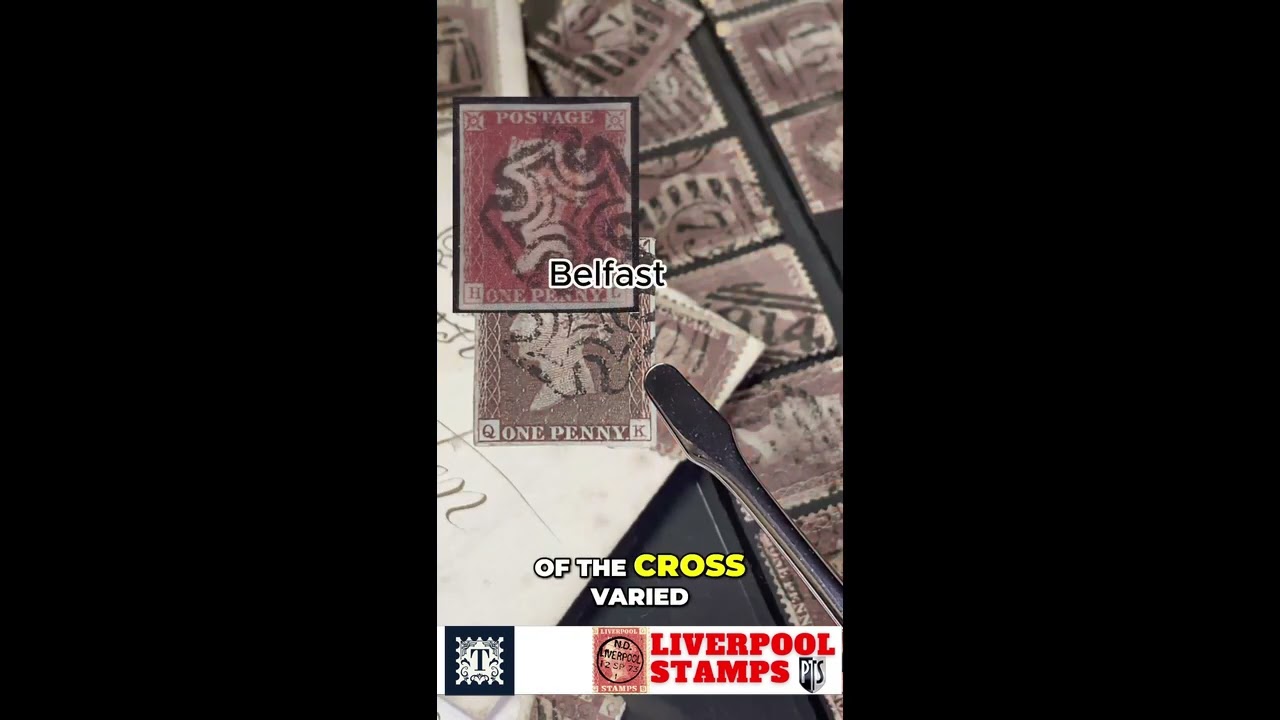
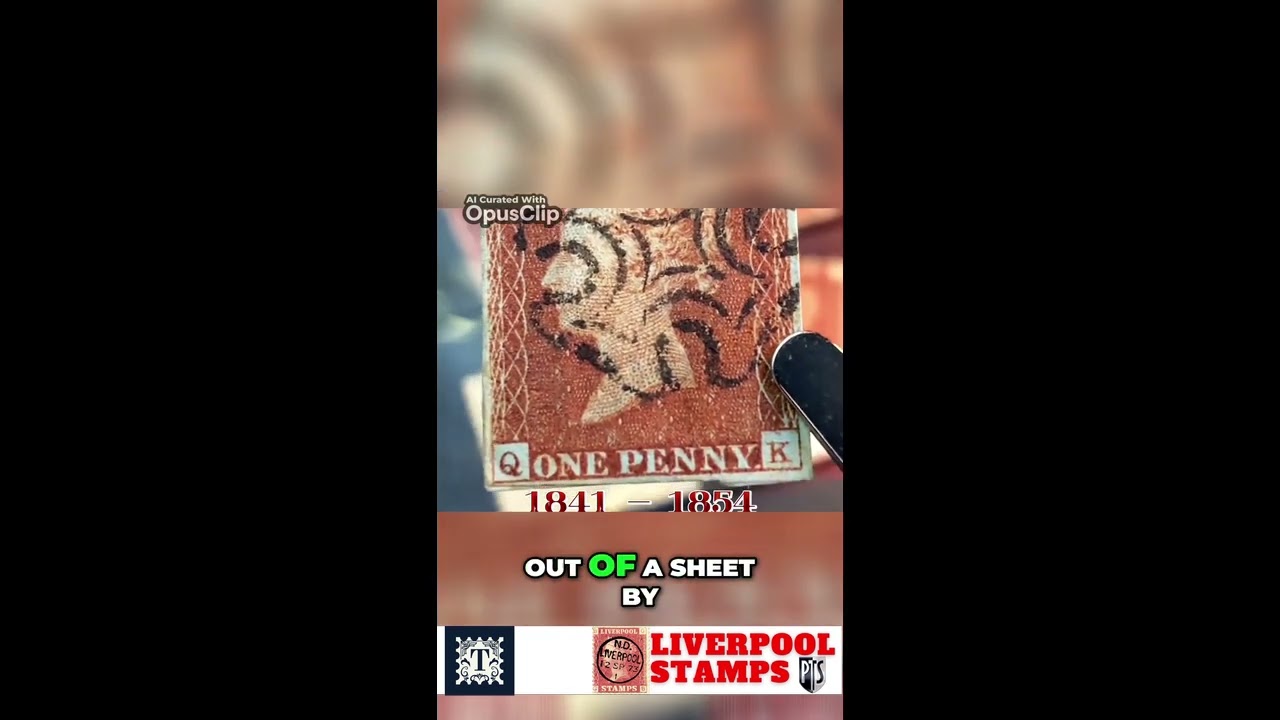
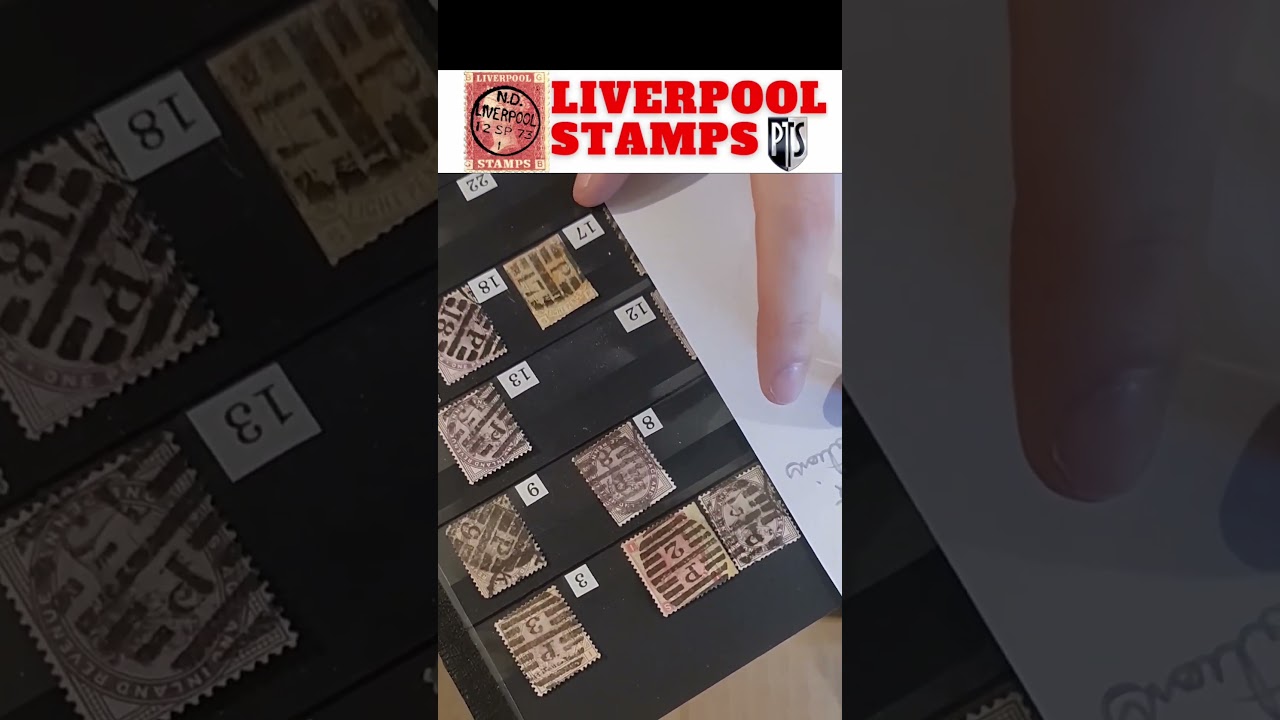
Hello everyone, welcome to the first ever Liverpool Stamps unboxing video. We've got a nice little package here that came from North Carolina in USA. It arrived earlier this week, um, came from a good buddy of ours who was a Penny Red collector. He specializes in the cancels, mostly the British Victorian cancels, mostly on the Penny Reds. So I expect to find some nice little goodies in this. He sent us it over to, to help him sell it. He wants to get rid of all this, all of his, uh, stock, or a lot of his Penny Dread stock. So everything you see in this will be for sale. So if you like what you see, let me know, and, uh, it could be yours. So let's go ahead and pop it open. Now what have we got here? Straight away I can see some underprints, J&C Boyd and Co. A couple J&C Boyd and Co on the prints. That one looks quite nice. They both look nice actually, but that one looks rather nice. Let's take it out, have a look. Most of the piths are there, maybe one tiny little pith missing at the bottom there, if you can see that. Try and zoom in on Yeah, see that there? Little tiny pair missing. Or it may just be folded actually. Take it out, see if we can plate it. Hey, it's quite nice, that, isn't it? Oh yeah, it does look like it's folded over there. And can we plate it? 119, 149, it looks like. Can you see that? 149, is that— looks like 149. I'll get my magnifying glass out later. All right, so we got 2 J&C Boyd and Co. on the prints. Uh, the other one doesn't look like it's in the best of conditions. It's missing half its piths up that long one side, but still it's not ugly. Plate 102, it says. So 2 underprints, a 3rd underprint. Here we go. OUS, is that? Yeah, Oxford Union Society. See if we can get it out and take a look. Yeah, again, it's not in the best of conditions, but you know, can we plate this one? 204, it looks like to me. Yeah, 204 for sure. Lovely, 2 nice underprints. Put that back in there, zoom out a little bit. Lovely, yeah, I'm happy with that. They'll sell well, everyone likes an underprint, don't they? Oh, look at this, NPB, is that? Yeah, Newspaper Branch. A block of 2, 4, 6, 8, 10, 12, 14. Plate 206, it says. See if we can— yep, he's only— no, he's wrong, it's 205 there. What was it? Yeah, 205, 205 there. So I need to write— change that. But that's really nice, that huge block. I've never seen a block that big with NPB on it. A NPB, if you can make that out. A, and you can see there, NPB. What's this one? Oh, so this is, this is quite unique. I've only seen a handful of these before. A penny red but franked with a French franc. You can tell it's French because it's got the dots. It's a load of dots, it's like a little matrix of dots. Looks like there's a number 27 there, if you can see that. It's in good condition, most of the perfs are there, a little cut at the top, but it's not going to devalue it by, by a lot. Lovely. So straight off the bat, this is a really nice little box of stamps. A25, which means it was franked in Malta, and you can, you can just about make out It says Malta, A-L-T-A. Another penny red with a foreign franc, a big C for Constantinople. What else have we got here? Okay, a penny red on a piece of COVID I'll turn the flash off. Ah, that's much better, isn't it? Penny red on a cover, or on part of a cover, with a big Castle Street cancel. All right, what's this? Oh, a dotted duplex, is it? Dotted CDS there for Dundee circle cancellation on a plate 197. It's not a bad stamp there. I think plate 197 is quite hard to find as well, so And a dotted Dundee's cancel is pretty hard to find too. Now what we've got here is a strip of 3 imperf penny reds. Imperf because they don't have perforations, and in fact they've got quite wide margins all along the edge of the stamps. So that's— each one of them is a nice 4 margin. Imperforated penny red star. But what's special about this is it's got a vertical strip roll cancellation going all the way up, usually done with a sterling roller or something like that. It says— oh, lovely. What have we got here? Oh, Travel and Post Office, TPO. Cancel on a nice SG43, SG44 Penny Red with 4 corner letters. Again, most of the paths are there, if not all. Looks like maybe some down there are missing a little bit. Well, they could just be folded. No, it does look like they're cut. And also the top left is a bit trimmed, a teeny bit. bit, but hey, on the whole it looks like a good stamp. Dublin spoon cancels. Yeah, on a nice 2D blue there. That's got to be worth a few bob. Not a hell of a lot, but you know, more than your average 2D blue. What's iconic about the Dublin spoon cancels is you'll often see this diamond, and it's usually covered by these arcs. You'll usually find these little arcs inside the diamond. Let me see if I can— oh no, it just makes it worse. But yeah, oh yeah, there's more here. Yeah, you can see it much better on this one. You can see the diamond Which would go there, and these arcs, the same on that one, and you can just about make it out on that one. Lovely Dublin spoon cancels, you don't see many of them. Now what's this one? A vertical roller cancellation. Lovely, like the Stirling one we just seen before, but this one's got a number within, inside the, the cancel, inside the diamond, which is pretty rare. Lovely. This is a nice little collection, this, of rare cancels. Night Mail. I don't know if you can make that out. Let's see if we can turn the flash on and zoom in a little bit. Yeah, you can. Nice. Night Mail there. Night Mail. So these cancels were put on mail that were within sorting carriages traveling up and down the country. So mail— so sorting carriages would take a load of mail from your post office or from your local post office, sort it on a carriage, and frank it in the middle of the night. What's this one here? Oh yeah, another sort and tender from the Landisil. Never heard of it, to be honest. Landisil sort and tender, never heard of that before, so it could be quite rare. You can just— you can make out there sort and tender in a circle cancel. Looks like there it says tender as well. So 2 nice sorting tenders, different types of cancels. This one's not inside a circle, this one is with inside a circle. Hmm, what have we got here? More to pay, more to pay cancel. Yeah, that was obviously used on letters that didn't have enough postage stamps on On where the duty was not paid in full. There was more to pay. They hadn't paid enough for that letter. Maybe it weighed too much. Maybe it was going quite far away. What are these expertising marks? Okay, these little teeny. Don't know if you can make them out. Just about. Yeah, I'm zooming into this one. That little MS there. And the little male sign, is that, or female sign? One of them. I think it's female actually, that one. But either way, that little mark there and that little mark there are little expertizing marks. Early newspaper cancellation anyway, like we've seen before. Nowadays— well, not nowadays, but before they started using NPB to denote newspaper branches, they were using these sort of little oval dotted cancellations. They're quite unique, they stand out. That's a newspaper cancellation, one of the early ones. Oh yeah, yeah, there's a couple more cancellations. Looks like a sort of— looks a bit like Tiger Bread or hedgehog, hedgehog bread, you know what I mean? Same, same with that one. That shows that it was from a newspaper. What are these? Penny red stars. Oh, blue! Oh, nice blue cancellations. You don't see them often, especially not on perforated SG43s and SG44s. Oh, that's a star, but that one's not. If you don't know if you can see them with the— you can't really see it without the light, but Believe me when I say they're actually blue postmarks cancellations instead of black. You quite often find blue cancellations on the penny blacks, the really early stamps, the first stamps produced. In fact, you'll often see quite a variety of colors of postmarks on the penny blacks, but on the penny reds you only really ever see Black cancellations. So it's quite rare to see a nice blue cancellation on a penny red, especially a late penny red and a penny red with 4 corner letters. More blue cancellations. That one's nice and vivid. That's a nice— if you can see that blue cancel. Same with that one. Early CDS for Leamington. Leamington CDS on a plate 111. It's in good condition, all the perfs are there. Lovely. CDSs are Real collector's item. A lot of people like to collect CDSs. Late fee from Ludgate Circus. Never heard of it, but a late fee anyway. Oh, Ludgate. Ludgate Circus, it says in there, if you can make that out. Ludgate. Okay, circus. I've never, never heard of it. Like, oh wow, what we got here? Parcel postmarks. Parcel postmarks on the surface-printed Victorian stamps, like 3D roses, 2.5 rosy mauves. P2, P2 on a 3D rose. That's got to be— someone will love that. Someone will snatch that off me. 2.5D lilac. And then the rest of the Inland Revenue stamps. Oh, except for this 8 pence. I can only count about three or four pips on it in total, but you know, it's not every day you find a parcel postmark on a 8D straw. Is that 8D? Oh, Madeleine Smith, the Madeleine Smith trial of Glasgow. Hey, we got a few of them. Now Madeline Smith, he's got a little write-up here with it. I believe Madeline Smith was, uh, yeah, accused of murder. I think she was accused of murdering her husband in the Victorian era. Um, I don't quite know a hell of a lot about it. He's got the Wikipedia article for it telling you all about Madeline Smith, who she was. And you can often find these— well, not often, it's quite rare to find them, but You can sometimes find these penny reds with a Madeleine Smith postmark, Madeleine Smith Glasgow postmark on it. You'll see this, you'll see Glasgow, the date, um, the Glasgow numeral within a little box. You know that's the Madeleine Smith trial postmark. What have we got here? Kirkwood Roller. Kirkewood revolver cancellation machines. Kirkwoods of Edinburgh come out with a roller machine to easily cancel postmarks. Now Edinburgh, the numeral cancel for Edinburgh is 131, but they came out with a roller machine. You just roll this machine over the, over the postage stamp, because sometimes some letters were— had a couple postage stamps on them. So what they do was roll this machine across the postage stamps and cancel them. Much easier than hand stamping. Wow, what's this? D in a diamond. I've never seen that before. I don't know what that is. D A block of four penny reds. Yeah, there's a little bit of writing here. Let me just read that. I'll show you what the show you this while I have a little gander at this. Upright ovals with the letters B, F, H, or P were intended to cancel adhesives on letters which had. Ah, right. Okay. So these this little D in a diamond apparently. Was used for a particular town, either Hull, Falmouth, or Plymouth. It says here, or Bristol. So ships with letters would arrive in one of them four towns: Plymouth, Hull, Falmouth, or Bristol. Oh no, I'm slotted without service. Oh, I don't know, I'll have to do a bit of research about that. It looks like this block of fourpenny reds were originally on a letter. The letter was sent via ship to a British town. And as a result, the letter was cancelled with this spoon, this oval cancel with a D in the diamond to show you that it was travel, that the letter was travelled by a ship. I believe that's what it says, but I'll have to— I've never seen that before, but so I'll have to do a bit of research on that. But yeah, nice little collection so far. Ooh, foreign branches. FB, foreign branch. It's— if you can see them, there's quite a lot and they're all in pretty good condition. FB was used as a cancellation for letters that were traveling abroad at Outside of Britain, FB Foreign Branch. Lovely. Well, what have we here? Oh Jesus! Oh look at them! Look at the state of some of them. Look at that one. Look at the terrible paraffin errors on this. What a shame. They must have had Stevie Wonder working on the. Printing press that day. How could you let that go out the factory? Especially them two. Look at the stays of them. Ah, and now I've got them. What we got here? London subdistricts. Giant circle with a load of different letters in and and. And numbers to denote what post office within the London subject district it came from, as well as the date. Hmm, we've got a couple more here. What are these? I've never seen these. Brummell. I've never seen them. Anyone know what they are? He must be quite rare because he's only got a handful of them. That's a nice one, innit? I've never seen them before. Most of this stuff I've never seen before, to be honest, or I've never, never actually been able to hold one. I've never had one. I may have seen them online, but most of this, most of this stuff I've never actually had myself. Some nice barred cancels, really clear barred cancels. Most likely inspectors' cancels, maybe for training. Lovely. Some more Scottish roller cancels. Like I said before, they'd use a machine and they just roll over the stamps, roll over the stamps, roll over all the stamps on there. A particular letter, because sometimes it could be 4 or 5 stamps or even more on a letter. So instead of hand stamping each, each stamp with a cancel, they'd just use a little roller machine and roll all the way over each one of the stamps. It's just, it was just easier for the post office clerks to cancel them, cancel a load of stamps on one letter at once. Yeah, and here we have some Penny Reds with pinholes in. They're quite common, Penny Reds with pinholes in. It does reduce the value of them significantly. These will probably be classed as space fillers or seconds, even though some of them have got quite nice perforations on. Nobody wants a stamp with a pinhole. But why do a lot of stamps have pinholes in? Well, the reason a lot of— mostly Penny Reds at least— have pinholes in is because Victorian people or early Edwardian people would often create Christmas decorations out of Penny Reds because they were so cheap. They're a penny. So they'd put a— they'd get a bundle of Penny Reds, stab, stab them right through the middle, put a piece of string through them, and create what's known as a, a stamp snake. You'd have a snake, like a bit of tinsel, like modern-day tinsel. You'd have a load of stamps, 100 Penny Reds, with a big piece of string going right through the middle of them. And it would look like a piece of tinsel, and it was an early Christmas decoration. Now, what have we got here? Manuscript cancels, is that? Yeah, manuscript handwritten cancellations. Manuscript, Latin for handwritten, basically. They're quite nice. They're like a little sig— often they're like signatures, but sometimes you'll just see a cross, which is a shame. But on the odd occasion, you'll see a nice signature like them 2 there. Lovely. More parcel. Um, Cancellations, a big P and a number underneath. P6, P7, P4, P5. These were used obviously on parcels, large packages, not little envelopes, but large packages. Oh, the Hofstadter. Hosta postmarks. I mean, to be honest, right off the bat I can tell you most of them aren't actually hostas. I mean, that's not for sure, that probably isn't, but that— but a few of them are actually. Yeah, let me show you. I mean, that's a— I mean, that's a hosta. That's what a hosta looks like. Big CDS, big, big circle. And then these little, these little lines coming off it, diagonal lines coming off it, not going all the way through it but coming off one side of the circle. Like for example this one here, that's a nice hosta cancel. Or this one, that's a, that's a really clear hosta cancel. Above it we have Continental Mail, mail that was scheduled for delivery on the European continent. Continental Mail, if you can see that. Oh, that's a night mail. Let's see if we can find a continent. Here we go, there's a continental one. That's quite nice, isn't it? Continental male. Hmm, what we got on the back? All right, just a— oh yeah, 5 Sort and tender, sort and carriages. More sort and carriages and sort and tenders. Mmm, lovely. Oh yeah, Dover to London sort and carriage. And an even earlier one. Oh, what a cool little collection. Big Rs for registered mail. Registered mail was insured. It was like our modern-day insured mail, signed and tracked. Well, they had registered mail. That's a nice little strip. And what have we got here? Some more, more cards. Red inspector's marks on some postage stamps. Let's see if you can make that out. I might need the flash. No, it makes it worse. I don't know if you can make that out, but there's a red mark, red ring around there. That was an inspector's mark, and you can just about make out one there. Inspector's mark there. Too late cancellation on part of a piece. Looks like it's full margin. Yeah, definitely full margin as well. That's a nice little stamp. Oh hey, I'm well impressed with that. It's a— yeah, I'll put it that way— 3 half pence red stamp, which is quite rare in itself. But not only that, it's It's a mint specimen and it's in great condition. Let's see the back of it. Is there any gum? No, no gum, but what you'd expect that with, with these specimen 3 half pences. So it's not like It reduces the value or anything because there's no gum on it. Hey, that's a lovely stamp. Lovely. As you can see, up next we've got another penny red, 4 letters from 4-corner letter penny red with a Cyprus overprint. As you can imagine, these were intended for use in the British colony of Cyprus. Again, it's got pretty much all its pith. It's not the most centered stamp in the world, but Certainly not the worst. Yeah, it's very nice that they're quite easy to find, the Cyprus overprints. They're not particularly rare, but it's a nice— it's nice to have a collection of Cyprus overprints. Oh right, what's this? An IR official. Wow, IR official overprint, which was used— IR stands for Inland Revenue, so it was a sort of— so it was used for, I suppose, tax purposes. IR official overprint with a 2D surcharge. Now you don't see them every day, do you, on a 4-corner lettered 1D penny red? And I want to say it's mint, but I can't be sure. It does look mint, doesn't it? See the back. Oh, it's not the best of stamps, but still, look at that. It's lovely, that, from the front anyway. Wow, what a collection we've got here. We've got everything, really. We've got a bit of everything. Madeline Smith over Prince, under Prince, Perthens. Another specimen, a 1D penny red 4-corner lettered specimen. Mint, of course, probably without any gum. Like I say, it's quite normal to find these without any gum. On the back. Oh no. Oh, it has. It does actually have some gum. Oh, it does. That's really nice that you can. Don't know if you can. Yeah, you can just make out the gum. Hey, all the paths are there. What a lovely stamp that is. What plate is it? Let's have a look. 207, plate 207. Wow, what's this? This is an overprint. Is that an OUS? Yeah, it is OUS. Oxford Union Society overprint. So we've got an OUS overprint and an OUS underprint. Let's take it out. Plate 162, it says. Uh, no, that's definitely wrong. It looks like a plate 83. Look at that, that's quite nice. No US overprint. Don't know if you can see, it looks like there's a marginal watermark as well running down the center of it. Oh no, no, it's just the overprint, obviously. Lovely, another nice stamp. I like the overprints and underprints, they're my favorite— overprints on and underprints. Oh, Liverpool! A nice CDS of a Liverpool Exchange. Let's have a look, let's get this out. Look at that, perfect condition. All the paves are there. Exactly what you want to see for a penny red on, on a piece of COVID Oh wow, look at that block! Look at that for a block of, block of penny reds. I'm not gonna get it out. No point damaging it because you can see what— I mean, that's all there is to see really, isn't it? See if we can turn the flash off, see if it makes it any better. There we go, look at that. Hey, that's nice. Plate 174, that is, apparently. Oh, I've seen these once or twice. That symbol, I can't remember what it what it's for. What's this? Oh, London District. Oh yeah, I think I. I think they all have a W C in, but the M and the A can change depending on what post office it went through. I have to do a bit of research on that. I'm not 100. Oh, missing—that's it. Missing mark. The M. The M must be always there. Yeah. I'm not too sure what they were used for. Missing postmarks. Oh yeah, no, I do. I think they. I think. I think they. They were used when a letter went missing. Within the post, within the post office or the sorting carriages or whatever, and then they find it a few days later. So they stick one of them marks on some nice London subdistricts. Not London, sorry. Post offices within England and Wales. Various towns, a lot of London ones, but a lot of different CDSs. Bristol, Too Late. See what else we've got in this. So I should do it that way. Dover. Keswick. Carlisle. Hey, they're nice. What's this one? Northwood. Lower Northwood. Charing Cross. Hmm, well, that's all for now, I think. There might be a few other bits which I might save for another day. I think the video has gone on long enough. I'll give you a quick sneak peek of what's left. Some nice margins with marginal inscriptions. More Penny Reds. Yeah, there's quite a lot left, so maybe we'll save that for another video. But I hope you enjoyed our first unboxing video. Like I say, all of this is for sale, so if you want any of it, let me know. If any, any of those stamps caught your eye, just let me know and I'll send you some better scans. And I hope you enjoyed the video. If there's anything we could have done better, let me know in the comments. If there's any mistakes I made— there probably was— again, let me know in the comments. Please do correct us. I don't want to be spreading misinformation. And that's that. Thanks for watching the unboxing video.
More from Stephen



The Fascinating History of Victorian Postage Stamps: The Penny Red and Early Line Engraved Stamps