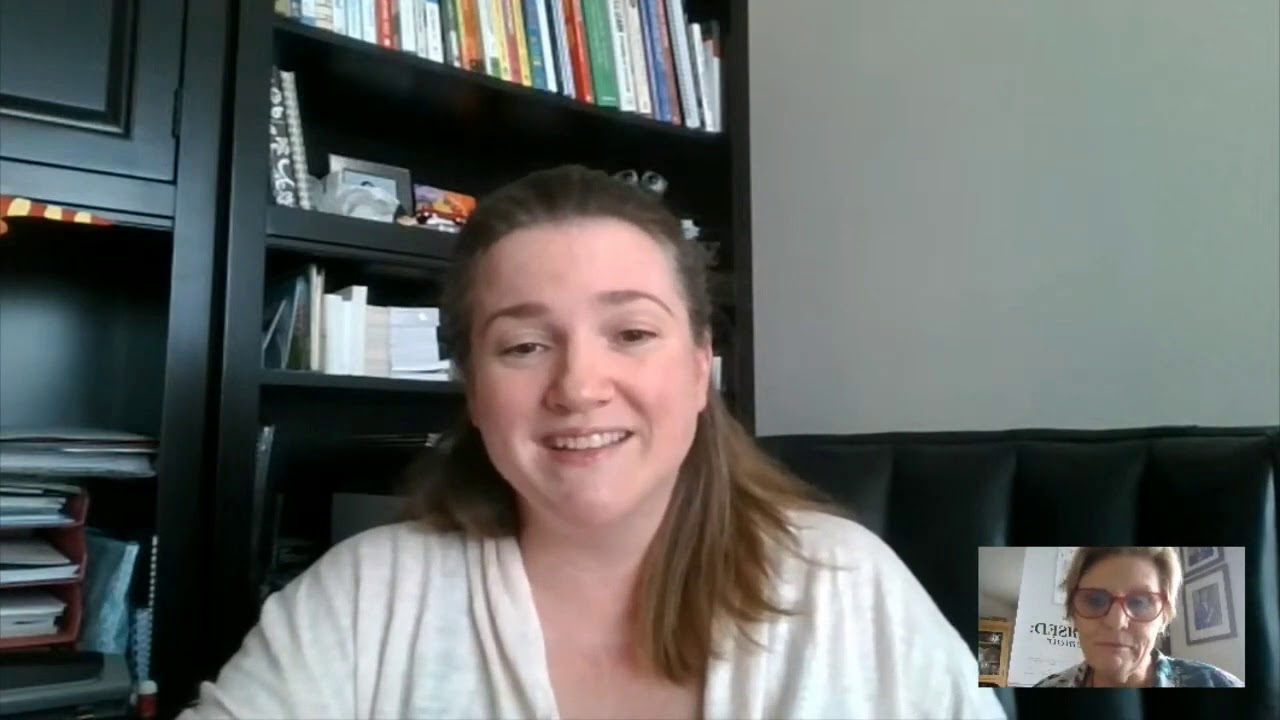
In this livestream episode of "When Learning Is Trauma" (Week 7), host Lois Letchford interviews parent‑advocate Ashley Sullivan Roberts about her son Graham’s journey with dyslexia and dysgraphia. Ashley recounts early signs of reading difficulty (inability to blend letters, lack of phonemic awareness) that were missed in preschool and private school, leading to a formal diagnosis only after Graham hit a reading wall in first grade. The delayed diagnosis caused profound emotional trauma for Graham—self‑esteem crises, self‑harm, and a sense of being "stupid"—and ripple effects for the whole family. Ashley describes how schools often blamed the child, offered superficial progress reports, and failed to adjust instruction despite clear evidence of struggle. She critiques the practice of labeling children as "specific learning disability" or "learning disabled" merely to access services, arguing that dyslexia is a language‑processing disorder, not a deficit, and that the label can become a self‑fulfilling prophecy. The conversation covers systemic issues: teacher condescension, lack of individualized attention in large classes, ARD/IEP meetings that dismiss handwriting concerns, and even abusive practices in some schools. Ashley shares her advocacy work, co‑founding the Dyslexia Initiative, and creating a blog ("A Mom’s Journey, My Dyslexic Life") to empower parents with legal, linguistic, and instructional knowledge. She details concrete interventions—intensive reading programs, handwriting specialists, keyboarding practice, and the importance of motivation and choice in reading. The interview also touches on broader cultural attitudes toward dyslexic learners, the need for teacher training, and the paradox of technology replacing handwriting while not addressing underlying skill gaps. The episode ends with both hosts urging listeners to reconsider labeling, support dyslexic children with evidence‑based instruction, and connect with advocacy resources.
Chapters
Hello, I am Lois Letchford. Welcome to my livestream, When Learning Is Trauma, week 7. Mother Ashley Roberts talks the cost of delaying diagnosis. Hello, I'm Lois Letchford, author of the book Reversed: A Memoir and literacy problem solver, and people will watch this later, we hope. And today I am welcoming Ashley Sullivan Roberts from Houston. Welcome, Ashley.
Hello, Lois, my friend. How are you?
I'm so pleased we've met.
Oh my gosh, that was so much fun.
It was. Ashley is a wife, mother, and parent advocate. She began the journey with her 7-year-old son who was diagnosed with dyslexia and dysgraphia at age She knows that her child needs her to stand up for him and to fight for him. In the beginning, she says, the fight for my child, I felt terribly alone, and I did not want anyone else to feel the same way, and I felt compelled to pay my growing knowledge forward, and that has brought me full circle and founding board member of Dyslexia Initiative. What else would you like to say, Ashley?
Well, that's kind of a— kind of my bio, you know, I'm 4 years down the dyslexia road, if you will, at this point, but lifetime journey. I just didn't know I was on it. You know, he showed all the signs in pre-K-4. I mean, just absolutely textbook, but we didn't know what we didn't know. And here we are, he's 11 now in 6th grade, and it just, it never ends. It just, it, it, you know, sometimes it's fun, sometimes it's hard. Um, he's fascinating, wonderful, amazing, everything you would ever want a kid to be, right?
I remember you telling me that your father-in-law, you would consider dyslexic.
Yes, very profoundly so.
And he ended up being?
He worked for NASA. Yeah, he was a computer engineer for NASA. He worked on the space shuttle, um, We have a coin about this big around, which is made out of metal from one of the space shuttles. Only the people that worked on them were issued this commemorative piece by NASA, and we have it. And it's, yeah, I mean, his dyslexia was in no way, shape, or form a hindrance to him at all. He couldn't spell to save his life, but he was an absolutely brilliant Man. Um, and just, yeah, that he was— what a fascinating career to have too.
Yeah, but he managed to obviously get through school. Yes.
Um, he went to, you know, a relatively challenging private school here in Houston. He had a college degree from, you know, a very good university. And yeah, he worked hard his whole life. He started off as a radio operator. You know, like a, like a home, you know, in his home he had his own radio. Uh, when he passed away, I mean, I went through drawers and drawers and drawers of instruction manuals and wires and, you know, pieces for radio operation toolbox or whatever it was. It was, it was amazing what we found.
Yeah. Yeah. And so what symptoms did Graham show in the early years?
Um, so when he was in pre-K-4, he couldn't blend.
Yeah.
He was in a Montessori program. And of course, in Montessori, they're trying to, you know, ramp up your skills a little bit faster. And so they had done the single letters, and they felt that he understood the single letters, but he couldn't blend anything. When he was diagnosed 2 years later, when he hit the wall at the end of first grade, he was diagnosed officially the summer between first grade and second grade. What we learned was he could not tell you all of the sounds of the letters of the alphabet.
Yeah.
So he had been, you know, just miraculously faking it Um, he, you know, no, no correlation between the shape of the letter makes this sound over here at all. So no, of course he couldn't blend 2 letters.
No. It's a big one, that, isn't it?
Yeah, it is, you know. And trying to read a book with him was just so painful. So, so painful, you know, because he would try so hard to sound out the words, but he just couldn't.
Yeah. Do you feel they could have done more earlier?
That I could have done more earlier or they could have—
Well, you can— I mean, parents can't do any more than what they're doing, can you?
Right.
You know, so—
You know, the interesting thing was, and a lot of Montessori people will die when I say this, but his— the woman that ran the Montessori that he went to yelled at me. That he couldn't blend two letters into a sound. You know, it was she she was appalled that he couldn't do it. You know, there and looking back, that was such an opportunity for her to say something.
Yeah.
And she didn't. But you know, very probably she didn't know enough to understand to to say anything at all. Um, we had him in one of the top private schools here in town, and the fact that they let him go 2 years without saying anything.
Yeah.
They kept implying that maybe he wasn't smart enough to be there, but when I would challenge them and say, are you telling me he's not smart enough? Oh no, no, no, no, no. And he's very sweet.
Yeah.
And I have 2 years worth of report cards where they tell me what an amazing decoder he's becoming. How well his fluency is coming along, how amazing his automaticity is becoming. And I'm just, you know, it's all— it was all a lie.
What surprises me is they are willing to say to you, the child's not getting it, but nothing changed in their classroom.
Nothing. That's— and he was one of Total of 14 children in a classroom. Because he was in a private school, it was a 1 to 14 ratio. Yeah. So, but it was deeply balanced literacy entrenched, deeply, deeply entrenched.
I throw my hands up because whatever you call it, you've got to be saying to yourself as a teacher, is the child getting it and understanding, or are they not? And then what else do I have to do? I mean, we're immediately into a blame game. The child has the problem. And then we're back to, well, what's the philosophy about teaching reading? Do we only teach this percentage of children?
Right. You know, and what you just said is absolutely what Rick LaVoy says, you know, and he's put in his books as well. With special needs, the very first thing that we do is we blame the victim. Yeah, we don't look at why there there it just automatically must absolutely be the victim's fault. And like you know when we were speaking on Thursday, you know one of the first things that they go to as well is behavior. Yes, when behavior is a symptom, not Not a cause, but no, instead it's a causal factor and everything else must be— must, of course, be a symptom.
The only thing they said about Nicholas was that he withdraws and you can't teach a child who withdraws.
Right.
And so, again, you're right, they're just looking at the behaviour. But what you've chosen to talk about today is the The cost of delaying diagnosis. I mean, the cost. And we're not even talking financial terms.
No. No. I mean, it was— and I think that that's what a lot of people don't get, is the emotional trauma that has ripple effects for the rest of the person's life, or it can. You know, some, some people, some people, you know, they find a way to heal their trauma. But depending upon when you're diagnosing the child, you know, what happens, the environment, the people that they're interacting with, that trauma can be small, that trauma can be overwhelming. And that last— First off, you do that to a small child. Which, that's one of the most shocking things about it, is the willingness to inflict trauma onto a small child. But then you are creating a situation where, of course, this trauma has lifelong effects. Lifelong effects.
And from what I'm learning, it's not just impact on the child, but on the family.
Yeah.
And this series came about because I spoke to Nicholas after he got his PhD and said, Nicholas, tell me what happened in first grade. He cried. He couldn't even put words together to say, this is what happened. I mean, and that's where it stuck. But it wasn't only Nicholas. When I was telling the story, other mothers contacted me and said, my son was locked in a cupboard, and he only told me when he graduated.
I have a friend who told me just a couple of days ago that she found out in the last 2 schools that her child has attended— lying to you, one of them was a dyslexic-centric school— that her child was beaten.
Your child— sorry, I missed that.
That her child was beaten. 2 prior schools, one of them specifically being a dyslexic-centric school, the child was spanked and slapped by the people that ran these schools. One of them was a public, one of them, of course, the dyslexic school, was a private school. What is wrong with people that they think That that's okay. You know, it's—
And that the child is going to learn better for doing that.
Right.
Martin Bloomfield was on last week. I mean, he's our age and he was spanked and slapped continuously throughout his education and he called it torture.
Yeah.
You know, and Martin— blows me away is, you know, oh, how, how are we going to teach these kids when that's our first response?
Right.
And we're not looking at what else. And the other comment that Martin made was that if we don't teach the teachers to be kind to the children, what are we telling the other children in the class?
Right.
You know, it's okay to treat these children Like they're different and they're not accepting them and, and everything else that goes on with it.
Absolutely.
That's a tough one.
Yeah, well, and you know, adults lead by example. So if adults are setting that kind of an example, of course the children are going to follow that example.
Yeah.
You know, I think that they did that really well in the film Michael, you know, because they— you have the scene where the teacher is verbally abusing Him, calling him stupid. So is it any surprise that he's chased out of the school by 2 little boys calling him stupid?
Yeah, yeah.
I mean, and he can't, he can't act out to the teacher.
No.
So of course he acts out to the children.
Yeah. And then what do you do? You go home. And then what are you faced with at home? The mother's getting the phone call, something happening, something else is happening. And the child's really losing— it's got no safe place to do anything. Right.
Absolutely none.
So how has your boy, how's Graham coped? And how have you coped? And what have we done about it?
You know, we— I think as you go along the journey, you find different things. That create trauma. Um, some things don't create trauma that you expect to create trauma. Some things do create trauma that you don't expect to create trauma.
Yeah.
Um, you know, like there's a, there's a, there's a cartoon that's floating around social media right now where a child goes to a library and picks out a book and the librarian hands him the book. And then the teacher comes storming into the library with the child and the book and says, what do you mean giving him this book? It's above his reading level. And the librarian's like, I don't care. She's like, but what about our policy? He's like, policies are made to be broken. And, you know, she's, she's challenging him because the book is above the child's ability, and he's— the librarian's pushing back on her going, who are you to say what the child is and isn't capable of? Um, you know, the, the— he was mostly happy in kindergarten and first grade. Everything peaked quickly, suddenly, overwhelmingly the night that he hit the wall. He was violent to himself.
At age 7?
Age 7, barely 7, barely 7 years old. He was— it was 2 months after his 7th birthday. Yeah. Um, you know, I don't know how he Didn't knock himself out from hitting his head on the counter as many times as he did, as hard as he did. But he kept slamming his head on the counter, screaming, "I'm stupid! I'm stupid! I'm stupid! I'm stupid!" The immediate thing that we did was because we put him in an extremely intensive reading intervention program as fast as we could. That initial success that he had there went a long way to, you know, flipping that story around for him of believing that he was stupid.
Yeah.
Fortunately, he was in a— yes, what they did to him was incredibly cruel, but at the same time, if this sentence makes any sense, he was still in a loving environment at school. So I think if it hadn't been quite the loving environment that it was, then the trauma would have been more severe.
Yeah.
But here's kind of the weird thing about it is, you know, he went from being this child who, you know, just kind of flowed with life to he's taken on a lot of my kind of personality. So when he sees certain things, he's like, "My mom's not gonna like that you said that to me, and I'm gonna tell her, and she's gonna come up here, and she's gonna tell you how it's really gonna go. So you want to keep doing this?" And I'm like, "Oh my God, I love it." So those are the phone calls that I get. You know, can you speak to your child about respectfulness, please? Like. Well, you know, he had a point.
Yes. Yes.
And what I tried to tell him is, you know, okay, but you still need to understand you're the child and they're the adults and you need to sort of, you know, keep some of that in, come home, tell me, and then let me go deal with that. It's not, you know, right now it's my job to do that. It's not your job to do that. While you do need to stand up to yourself to a certain extent, don't be Don't be belligerent.
And don't come across as rude.
Right. Yeah. So he's taken on a lot of spunk, you know. He does self-advocate. He self-advocates for himself well. To, you know, in some ways he's the class clown.
Yeah.
You know, and that makes me sad, um, because I know that it's a deflection. Mechanism, just like it is with most of our kids. But you know, we did we did therapy. We talked to him a lot. You know, I always I'm very open. I'm very honest with him. He knows exactly what I'm doing. He knows exactly what I'm saying. I will say though two things. One is back to this cartoon about the librarian, right? So it wasn't this past grade. I think it was the grade before. Gosh, maybe it was even this past grade. I can't remember. It was the first time he went to the library and he picked out a book on his own that was very advanced for him, but it's the first time he was ever, ever, ever excited about a book.
Yeah.
And he loves, he loves to be read to. I read to him all the time. I mean, we have these—we take these great adventures with these books. But he had picked out this book, and he wanted to read this book. He was very excited about this book, and he's all like lit up. Mom, let me tell you about the book that I'm reading. I mean, just wow! And you know, he's just animated. He's telling me, telling me, telling me. And I was just—I was swallowing my tears because I didn't want him to see me cry from the happiness that I was. Yeah, and then like two or three days go by, and I pick him up, and he gets in the car, and he's like, and I'm like, what's wrong? He's like, they took the book away from me. And I said, what do you mean they took the book away from you? And he said, they said it was too hard for me, and then I can't read it, and so they took the book away from me. And then he started to cry. And I was like, oh, hell no. And we had an emergency ARD meeting over that because I was just like, no, you're not going to take a book away from him. How dare you take a book away from him? Well, you know, based on Just Write Readers. And I went, okay, well, first, here's where all of your knowledge is flawed.
Yeah.
But then I went, and second, don't you ever take a book away from a dyslexic child.
Yeah.
How dare you? You can't do that.
I noticed that when my children were in school, and particularly with the AR program, you're supposed to read within this range. And the whole thing, what they are ignoring with all of that is motivation for the child to read.
Right.
You know, we cannot send kids to school and expect you're only going to read this bit. In theory, that's okay, but it's not practical. And we are teaching, you know, we're motivating, we're attempting to motivate children, and choice is critical.
Well, and I find that to be extremely entertaining because what is one of the primary hallmarks of balanced literacy? To make reading engaging and to make the child a lover of reading, but you're gonna limit them?
Yeah.
So you do all of this talking about, you know, creating a world of books, a world of literature, a love of this, a love of that, but you're gonna limit it? So you want love, but only by this definition? When you don't even really understand this definition to begin with, because it's— it's— there's nothing to, to back up the theory behind that definition. There's no science, there's no logic, there's absolutely nothing. But you've managed to sell this and push this down the throats of our children.
It blows my mind. It blows my mind. Because one of the things we did, certainly when Nicholas was in that age range, was that was the one thing we threw out the window.
Yeah.
We— and we listened and listened and listened to a whole range of books.
Yeah.
You know, from lower to higher, and, and just the enjoyment, the sheer enjoyment was massive. One of the things we wanted to talk about was that label. We don't say dyslexic in schools, we say— what's acceptable?
Learning disabled.
Or specific learning disability. Yeah. And the impact and implications of that.
So yes, so specific learning disability, learning disability, which, like we were discussing, you have to have the label in order to get services, accommodations within school. There's nothing disabled about you. But you have to label yourself as disabled in order to access what you need and the curriculums that you need. And the irony in that is— sorry, my dog is scratching himself. The irony in that is, is that they're making dyslexia a disability because they do not believe that it, that it can be remediated. There is almost no push to get the child reading on grade level or at the level with their peers. It's acceptable for the child to be reading significantly below where they should be. We have high school, high school seniors graduating, graduating and being handed diplomas that can barely read on a 2nd grade level. And that's happening far too many times. Yeah.
Yeah.
So this, this belief that you have to tap into a label of a disability in order to access services that they refuse to give, and thereby they create the disability because they refuse to teach to it. The irony that exists within this is absolutely overwhelming. And that was, you know, earlier I said that there were 2 things. So that was the second thing. Was, uh, recently my son heard me having a conversation similar to this. It may have even been the time that you called me and, and we were discussing doing this. And he, you know, he chewed on it for a couple days, and then he walks into my office and he's got tears in his eyes, and he says, Mom, am I disabled?
Hmm.
And, you know, I was frozen in terror because I was like, okay, what conversation did you overhear? Whoever was talking, what was the context of the conversation? What did it say? I'm trying to replay everything in my head. And then I was like, stop, stop the hamster wheel and focus on what he's saying. He's asking you if he's disabled. And I looked at him and I said, no, you're not.
Yeah.
But the reality is, is that your school believes that you are and they're going to not help you Get what you need, which is going to create a disability for others, but not for you, because you're going to succeed because your dad and I are going to do everything in our power to make sure that you do.
Yeah.
But if we left it up to your school alone, yes, it would become a disability for you as an adult. And that upset him even more. He was like, why? Why would anybody want to do that to me? What did I do? And I was like, you didn't do anything. Yeah, you just happened to be born with dyslexia. Yeah, that's your sin. And as far as they're concerned, the philosophy—
learning and learning problems dwell in activities and cultural practices and not in the heads of individuals. Isn't going anywhere. No one's heard it, you know. Why not? And it's like, you know, you're going back to your kindergarten and grade 1. He can't blend. Well, what are we going to do to help him blend? Right? What else are we going to do? How else are we going to teach him? That's the conversation we have to have.
Yes, but that wasn't any of the conversations that they were having. They just wanted him to read more. They wanted me to read to him more.
Yeah, that's not the problem.
Reading to him was just miraculously going to cure—
Everything.
Everything. His stubbornness, his, you know, whatever.
Yeah, yeah. His stubbornness. His stubbornness. Yeah, so we're back to blaming the child, which is what we've said all along, which is the thing we've got to get out of.
Right.
You know, and really start to examine the teaching. And as a non-teacher, it's very hard As a parent who's a non-teacher, it's very hard to go to school and say, well, what are you going to change? Right? I can do that now. And you've got this whole list of things that you can do to make— to help the child blend and play with these words. So why aren't you doing it? I mean, that's the question we have to come back with, which is now very difficult to ask.
So I'm gonna, I'm gonna tell you a little bit of a story. And this will probably really Bite me in the butt for sharing this.
Yes.
It really will. And I'm going to preface this story by saying I love teachers. I really, really, I love teachers. You know, there, there is no other career, or there are very few careers that a person intentionally enters from a place of wanting to give back. Yeah. It's an altruistic choice to want to become a teacher, just like it's an altruistic choice to want to become a nurse, an EMT, a firefighter, a policeman. These are people who are wanting to serve their community. This is why this might bite me. So, um, my undergraduate degree is in English. The College of Education was right next door to my college. We didn't respect the College of Education. It was the easiest degree to get in order to graduate. So there were English majors who switched to education and graduated faster.
Yeah.
Because they switched over to the College of Education. In general, and This is back in my university days, you know, I didn't know any better. I was a really arrogant kid. You know, it was— but that, that was the pervasive belief on the campus. Not a single college respected the College of Education.
Wow.
Now, again, to become a teacher, to choose to be a teacher is an extraordinarily altruistic choice. It is a sacrifice.
Yeah.
They all need to be praised and held up and honored. However, here's the flip side of that. I have been so condescended to and shamed and mistreated and spoken to like I am absolutely Cletus the Slack-Jawed Yokel. by people in education as I'm sitting there trying to work for my child.
Yeah.
I have been spoken to like I just absolutely cannot add 2 and 2 together.
Yeah.
And I'm sitting here going, I'm so— I'm, I'm what? You're condescending me? Yeah. Wait, what? Yeah. Why are you condescending me? Yeah, I don't get it. You know, at one point I looked at somebody and I said, do you have any idea what I do for work? And they said no. And I said, I manage 3 quarters of a billion dollars in spend. You want to keep the attitude up?
Really?
So we're just like, I'm Blown away, but I sat there. I continue to sit there. I continue to smile. I continue to take condescending statements with grace. I don't fight back. Yeah, yeah. You know, I've been yelled at. Um, I you know, a school administrator. Actually yelled at me once. I mean, it's it's it's it's disgusting. I know many parents who you know the level of abuse that they have had to put up with is mind-blowing. The retaliation. Yeah. I had a mother ask me once. It was um. I was maybe a year into my blog, and my blog is very personal because my blog is really and truly about— that's my fight for my son. That has nothing to do with anything else. That is my fight for my son.
Yeah.
So I don't name names, you know, but I put a lot out there in that blog. And I had a mom call me and say, I can't believe you just wrote this. And I said, what do you mean? She said, They're going to plant drugs on him. You understand that, right? They're going to plant drugs on your kid and have him arrested and drag him out and expel him just to punish you. Are you stupid? And I went, if somebody is actually going to go that far as a means of retaliation, bring it on, because I'm going to rain hell if somebody is really going to go that far. But that happens. You know, we don't talk about it, but it happens. It's one of the dirty little secrets. And that's the criminal part of it. That's the unfortunate part of it, you know.
Parents are— That's all new to me. That's amazing. And I can imagine if our skin colour was changed, it would be 10 times worse.
Oh my God. Oh my God. I mean, there's no— You know, and at the end of the day, do I really think somebody's going to try to plant drugs on my son in order to retaliate against me? I know, because I think that you would have to really have underestimated who I am as a person to go that far, you know. But have I seen the main district council show up at parent-teacher meetings in order to intimidate parents?
Yeah.
Yeah. Yeah. Have I, you know, do I have more stories than I can count about the chief district counsel calling up a parent and saying unconscionable things off the record when they're not being recorded?
Yeah.
Yeah. You know, that's so unethical. That's dirty.
You blow my mind because, I mean, I, I'm not in this field at all. You know, I'm on the teaching side, but, but I can imagine.
I've seen massively orchestrated attacks against advocates, advocates who serve parents. Yeah, massively orchestrated attacks that, you know, I wrote a piece recently called McCarthyism and Dyslexia that had specifically to do With an attack against an advocate, there there's another specific instance, and I'm not going to say the URL where this is. Where it was another extremely orchestrated attack against an advocate, where people went in anonymously. Mind you, every entry is anonymous and said. Yeah, the most hateful, pornographically abusive type of comments against an advocate. I wish I was making this up. Yes, I wish this was not true.
Yes, yes, yes, because who wants to think—
I, I was not— I was raised to believe That everybody wants to be a good person. Yeah. That everybody is a good person. Yeah. That this level of insanity, cruelty, evilness does not does not exist. But what I've seen as an advocate happen over the last four years to to others, not to us, fortunately. God, not to us. But what I've seen happen to others is just mind-blowing. And I really— I thought that I was the kind of person who couldn't be surprised anymore.
Wow.
Oh, Ashley. But the level of— the level of cruelty in order to deny a child, yeah, right to literacy. I mean, it's next level. I mean, this, this is, this is like, this is like a pen— what, what did you call it? What— or not you, what were they called like back in the day? Like penny novels, or like, you know, the cliffhangers where you've got, you know, the bad guy with the black hat and the white guy and the white— or the good guy. Sorry, I'm I said it all wrong. I said the black guy in the black hat. I meant the bad guy in the black hat, the good guy in the white hat. Yeah, that's what I meant. You know, you knew he was evil because, you know, the guy in the black hat could, you know, he twisted his mustache, you know, and he had the gun. And, you know, everything was about good versus evil. Education isn't about educating our children. Again, teachers are the most amazing people, and to me, they are just as much caught up in this cycle as our children are.
Yes, yes, yes, yes.
They absolutely are.
I think that's part of the problem. And they're not given— you know, my big deal is that when I was teaching in Texas, I had time between each student. to reflect and think. I was driving, but that time was my reflection time. Ah, and that's what you're not given in a classroom. And that then reduces what you can do and what you can't do. And then you're reduced to a, let's use this, let's use this program.
I think it's easier in elementary school, of course, because, yes, you have the same teacher throughout the day. So you have the same teacher-to-student ratio. Teachers got the same kids, the kids got the same teacher. So it's easier for them to find a way to sort of meld together and hopefully work.
Yeah.
Right? But in later grades, the teacher's with the child for 45 minutes. That's it.
Yeah. Yeah.
And the child has to deal with 7 to 8 different teachers across the course of the day for 45 minutes apiece.
Yeah.
Um, you know, I was— every, every one of his teachers that I've spoken to so far this year is really and truly, they've been an absolutely incredible person. Um, one, one teacher in particular, she said, I've read it, I've read his IEP all the way through. I know that he has accommodations. Unfortunately, I haven't been able to pick him out of the mass because I have 48 kids in a class. And I'm like, you have 48 students? She said, because I'm both face-to-face and virtual at exactly the same time, I have 48 students in a class. I said, how are you supposed to serve my son if you have 48 kids in your class? She said, I don't know. She wants to, you know. She can remember details about his IEP.
Yeah, but she doesn't know the child.
No, she has no idea out of the 48 which one is my son. Because he also has never asked a question in class, and so he's not standing out, out of the 48.
But you're not seeing them all the time either.
Right.
With virtual and online and whatever else is happening around the place. Oh, Ashley, this has been an eye-opener for me. So we've got to just keep saying, for parents, know that your child can be taught to read.
Absolutely, 100%.
And that when they do say there's a problem, it's— the question is, what are you going to do about it? Learning and learning problems dwell in activities and cultural practices and not in the heads of individuals. Yep. The label learning disabled is one that we really have to question, and I think that's why people are saying say dyslexia, because it gives us a chance to say let's look at the learning. Am I right?
Yeah, I mean, you know, I know that Shevitzes are big proponents of having a 14th classification added to IDEA. Because the way that Bennett Shaywitz has put it specifically is, think of specific learning disability as saying communicable disease.
Yeah.
Saying dyslexia is akin to saying strep throat.
Yeah.
We know exactly— first, we know how to teach reading.
Yeah.
We know from a scientific basis exactly how the brain learns how to read. For our dyslexic children, we know how our dyslexic children, the kinds of supports that they need.
Yeah.
So saying specific learning disability when it is dyslexia does not benefit the dyslexic child.
Yeah.
You know, but then you can get into the whole, if you actually went to the science of reading, how many of your dyslexic kids would actually need services? Is it 3%? Is it 5%? Is it, you know, it's, that's, that's another completely different rabbit hole. But yeah, no, I don't think anybody in the community likes the word disability.
Yeah.
Because disability, disability, and this is not taking away from the disability community at all, because we need to honor everybody and their own individuality and exactly as they're made. But with dyslexia, there's nothing wrong with them, but we're calling them disabled. Because again, it's the only way for them to access the curriculum, the accommodations, the services that they need in order to be able to learn.
There's nothing wrong with them. I mean, that's the key, isn't it? And it's a different way of thinking, and it's a different way of learning, and it's a language disability. Not a learning disability.
And that's, you know, a lot of people get that wrong as well. You know, they think that dyslexia is just reading. Yeah. They don't understand how it's all connected, tied together. You know, gosh, what was that word? Oh, remember. So my son perpetually always said, Remember.
Ah.
And it drove my husband up the wall. So my son would go, remember, and my husband would go, remember, remember, remember, remember, remember. And, you know, at one point my son goes, I hear it right in my head, but you're telling me that I'm saying it wrong. And I drug my husband to hear the Shaywitzes speak. And Sally Shaywitz got up and she said, it's a language processing disorder. Yeah, it is not just reading. And she talked about all of the facets that it, that it impacts. My husband turned around and looked at me. He said, I will never correct him again. And I said, thank you for finally understanding. He's hearing remember, he's saying remember.
And then, then you can translate that to writing. There's going to be a problem. Correct.
Especially, I mean, yeah, I mean, add in the dysgraphia. I mean, yeah.
Oh, Ashley, this has been phenomenal to talk about this and think about it. Take a breath. And, you know, where can people find you? I think you're easy to find now.
I— yeah, just a minute.
Sorry. We've got a question before we ask. How's your son doing now? Thank you, Isaac. I forgot.
He is doing— he's doing well. Um, his read— he reads really, really well. Uh, his comprehension is above grade level. Um, his— he's insecure about his spelling, but his spelling is really, really— is, is very well. Yeah. Um, mom and son are working on his writing ability.
Yeah, I've seen some of your stuff.
Well, and I'm a little bit further behind than I should be, but you know, that's mom trying to balance work and the things that I do with trying to be a supportive mother as well. Um, but we're working on his writing ability and, um, I've hired a new tutor specifically to— oh, you're gonna love this— I've hired a new tutor specifically to help him with his handwriting.
Ah.
Because again, he's dysgraphic and so he has always We in the English language, we write— and I'm probably backwards for everybody— we write left to right, top to bottom. Yeah, he shapes his letters right to left, bottom to top. So the quality of his handwriting is also extremely poor.
Yeah, and he's now 11.
He's now 11. And so now I've hired A wonderful, wonderful, wonderful handwriting specialist to work with him. Yeah. Mind you, I ask every single year in the ARD meetings, the IEP meetings, I'm sorry, about his handwriting. And the answer was always, well, we can read his handwriting, so it's not an issue. So now I've engaged this, you know, handwriting specialist specifically Specifically to work with him on his handwriting because we were always focused on his dyslexia, and he completed his dyslexia remediation this summer. And you know, we we have spent a ton of money on his remediation, but we were not blessed with enough means that we can have multiple tutors at the same time for various different things. Yeah. Um, but she said the window to fix his what did she call it? Um, not uh. I'm completely blank on the word.
Fine motor coordination? No?
No, it starts with an S. It's one word. It starts with an S. I'm completely blanking. But to reverse how he writes back to what the normal way is, that door is closed.
Yeah. Yeah. I agree.
We'll never correct it. Yep. She can improve his legibility.
Yeah.
And so they're working on that, but she said, we'll never— he will always write backwards.
Yeah.
That's just what he's going to do. She said, they denied you in the window of opportunity to be able to fix it because they could read it.
I, I worked with kids when I was teaching that were doing— now let me think about it. N, starting like a— like from the right, going backwards and doing a hump, then you do a straight stick, then you pick up the pencil and then come down. I mean, I went— and the effort it takes to change these sorts of things for children, like you say, once they get to 11, it's too late. You've got years of 6, 7, and 8 to do that. 6 and 7.
Right.
Even 8's too late.
So I'm going to see if I can do this. Yeah, piece of mail. Yeah, stamp. So we write down, and I'm going to do it badly, over and over. Yes, like, yes, yes, it goes.
Yep, yep, yep, yep.
And yeah, you can't read it, but you could follow my pen.
Yep, I have a little video clip on that and the importance of getting that right. As you say, left to right, top to bottom, from day one, from when they pick up a pencil, is critical. Critical.
And that, that was always the annoying thing, was, you know, his kindergarten report cards tell me about how he holds his pen correctly. He's always held his pen correctly, but he writes backwards. Yeah, his handwriting's illegible.
So have you done keyboarding skills?
We're working on those.
Yeah. Because I think as, you know, as the world has changed dramatically, I mean, my husband's writing is terrible now. But he does everything on the keyboard. Yeah. So handwriting has reduced.
It has. And, you know, I mean, you know me, I'm a huge advocate that Electronics shouldn't replace from a remediation point of view that, you know, we need to be doing all of the remediation. They need to learn how to spell. They need to learn how to, uh, the handwriting piece. They need to be explicitly taught how to write. They need to explicitly be taught how to read.
Yeah.
So, you know, it's— I always, I always use the, you know, when the zombie apocalypse comes, but, you know, I, I make it funny, but You know, not that I believe that zombies are going to take over the earth or anything like that, but my point is that I hope that the technology never fails.
Yes, yes.
You know, I, I hope that— you know, I, I live in hurricane country.
Yep, yep.
You can lose power for weeks down here. I hope you don't have to read anything.
Yes.
I hope you don't have to write anything.
Yes.
While you have absolutely no power at all. You know, what about people that are in earthquake country or tornado country? Or, you know, y'all had a huge storm last week. Marion was at your house because she had no internet.
That's for sure. That's for sure. Ah, anyway, it's time to wrap it up. Thank you, Ashley. Thank you for all that you have done and all you're doing. And thank you for sharing your insights. And we'll take away check out that, that learning disabled label, think about what it's actually saying.
Definitely.
Tell us, next week, we've got Raja Mahaba from the Jonathan Foundation talking to us, another mother being pushed to do extraordinary things. Tell us where to find you.
So you can find me at, you can find me one of two places. The first is the Dyslexia Initiative is a nonprofit that I've created with two of my friends. We are working to empower parents by educating them about what this world is, all of the language, the laws, advocacy, reading, absolutely everything, trying to break the language down in a way that makes it more accessible and more meaningful to all parents. And by— I believe that information is power, and so by doing this, I hope that we build up our parents and create a stronger advocacy community through as many parents as we can. The second place that you can get ahold of me is A Mom's Life, My Dyslexic Journey. Is it? Did I get it backwards?
Either way, we'll find it. Mom's Life, My Dyslexic Journey. I think you're right.
I absolutely might have. I, now I'm like freaking out that I got it completely backwards. And it's my own blog. What is wrong with me? A Mom's Journey, My Dyslexic Life. I said it right.
Yes, I haven't been able to write for my blog in a couple of months, but, um, well, I'm jealous of your writing ability, believe me.
I'm jealous of your book because I think your book is— you know, I connected with you right after I read your book, and I read your book early in the days right after you got it published, and You know, I made a whole lot of memes out of your book for people that I shared on the Dyslexia Initiative. And I was like, I have to meet you. Because I want to go beat up that teacher with you when you walked out and drove off and turned around and came back. And I was like, no, you are not going to treat him like that.
Yes.
You know, but the experiences that you were sharing within the book were just, you know, I was connecting with you in such a way because I was, you know, I live and breathe that with you. I think any dyslexic mother is going to live and breathe that story with you.
So thank you for writing that book. Oh, thank you. Thank you. You know, thank you. It's now on an audio version. I've read it. It's coming out on Friday, I think, on the 15th. Thursday, Thursday or Friday this week you'll be able to do it.
So order it.
Listen to me, it's an abridged version. I did it in Houston. My son Isaac was a huge help, huge help. So, and he says— I remember when you began that audio version. Uh, while you're here, my son tells me smash the like button. Not just hit it, smash it. And you can reach me on my website, loislatchford.com. Find me on Facebook at Lois Latchford and Twitter. And subscribe, subscribe to the channel. All of those things helps us enormously.
And buy your book.
And buy my book, please. And buy it and share it and, and write a review on it because it all helps.
I've given mine to somebody. I don't even have your book anymore because I loaned it to somebody who never gave it back to me.
Oh, that's what happens, isn't it? And check out my videos on YouTube with my channel and then share my book. Thank you, Ashley. Thank you. And we'll be talking again soon, I think.
Yes, I hope so.
I can't remember, but you know. Okay, stop. I'm being told stop, stop, stop. Thank you.
Thank you. Okay, bye. Bye.
And be sure to like, comment, and subscribe to my channel because those things help the YouTube algorithm know that my videos are wanted and liked by everyone. Thank you.
More from Lois


Overcoming Adversity: A Dyslexic Learner's Journey to Success | When Learning is Trauma #shorts

Redefining Success, Beyond Grades in Education | When Learning is Trauma #shorts

Turning Awareness into Action for Dyslexic Learners | When Learning is Trauma #shorts

Why Dyslexia Goes Unnoticed: A Systemic Issue | When Learning is Trauma #shorts

The Long-Term Impact of Unrecognized Dyslexia | When Learning is Trauma #shorts

The Heartbreaking Reality of School for Some Kids When Learning is Trauma #shorts



