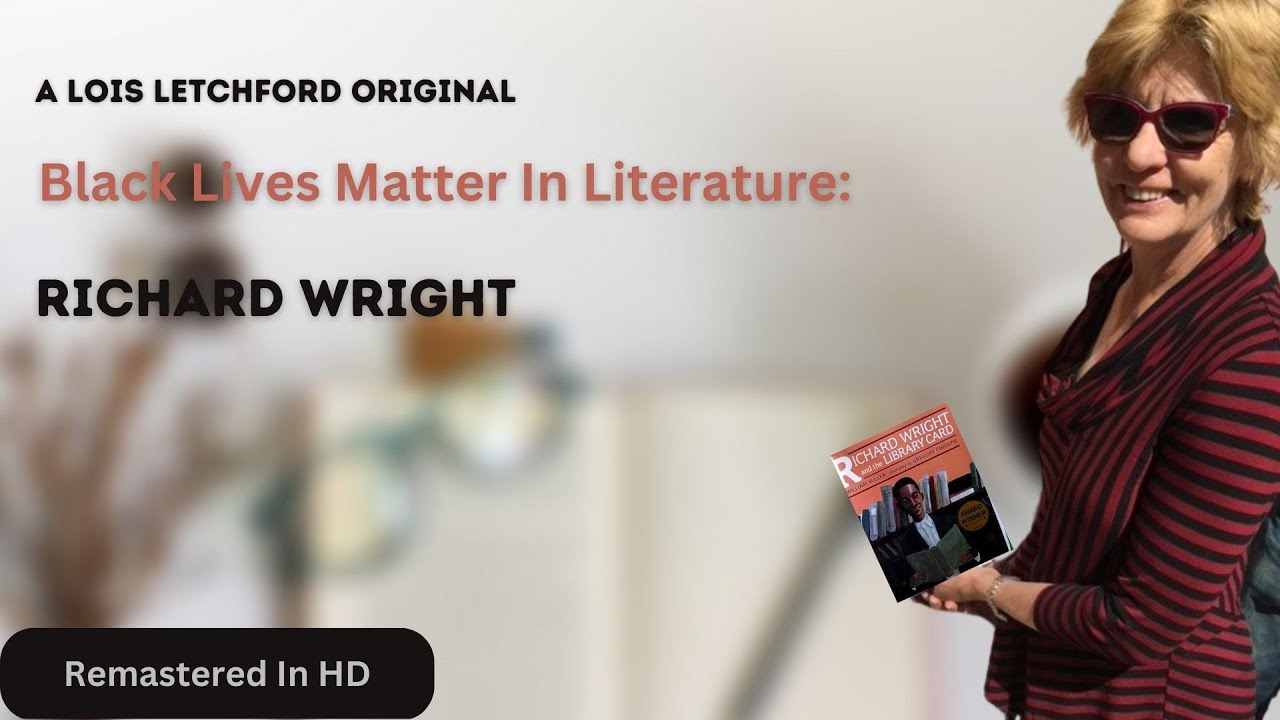
In this short monologue, literacy specialist Lois Letchford explains her approach to teaching reading to disengaged African‑American boys, using an 8‑year‑old repeat‑second‑grader as a case study. She selects Richard Wright’s autobiographical story “The Library Card,” which is far above the child’s reading level, and rewrites the narrative in simple language placed beside the original illustrations, highlighting key ideas such as Wright’s love of words, his struggle to access a segregated library, and his eventual success as a writer. The adapted story sparks the child’s curiosity; he returns home excited, tells his mother and grandfather about Wright, and even proposes locating Wright’s granddaughter. Letchford emphasizes that before teaching letters and sounds, educators must first secure genuine engagement with literature that reflects the learner’s identity. The video concludes with a brief call to like and subscribe.
Chapters
Hello, I'm Lois Letchford, the Literacy Problem Solver, and I'm here to talk about teaching African American boys literacy. Students come to me at all ages, and my goal is to have them engaged in literature so that they see themselves. And my little boy was 8, repeating second grade, and how do you engage a child? Who is disengaged. I do it by showing them that they too are in literature. And the book I chose was Richard Wright and the Library Card. And as you can see, the text is far too complicated for a child who is non-reading. So what did I do is that I chose to rewrite the words, and I simply put it in beside the picture and said, Richard Wright loved words. And then I said he loved the stories his mothers told. Richard became a very good reader, but Richard could not go to the library. Libraries were only for white people. And you can adapt the text to what level you want to meet the needs of your child. So we talk about the pictures, but we read what we need to read. Richard found a friend in Mr. Falk, a white man. Can I use your library card? Richard asked Mr. Falk. Yes, said Mr. Falk. Richard went to the library. He read. Many, many books. Richard started to write. Richard became an author of many books. And that's my simple story of Richard Wright and the library card for an 8-year-old boy. What happened next was amazing. Because he went home and the next day he came back to me and he said, my mummy knew of Richard Wright and my granddaddy knew about Richard Wright too. The fact that the child left my classroom thinking and talking about the stories we had written was so important to starting him on the road to reading. Not only that, but he came back and we talked about Richard Wright and his story. A lot of talking happens around the reading. And he wrote, we are going to try and find Richard Wright's granddaughter. And for a child who has been disengaged, the first thing we have to have is engagement. Before we start with letters and sounds, We have to have engagement. Thank you. Lois Letchford. Hit like, hit subscribe, and enjoy my clip. Thank you. Good.