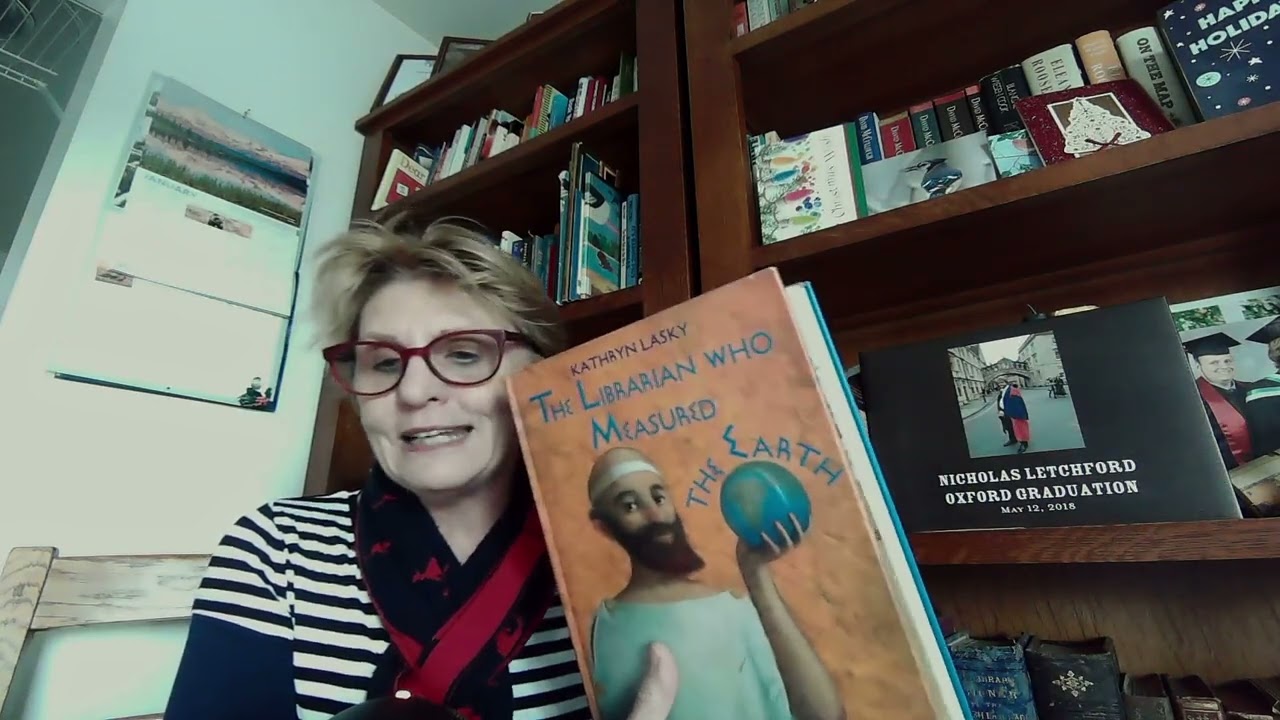
In this instructional YouTube video, author and literacy advocate Lois Letchford explains how simple poems and carefully chosen books can ignite children’s curiosity about world exploration and history while simultaneously supporting their academic, social, and emotional development. She begins with a short poem about Captain Cook’s quest to fill a gap on the world map, using it to introduce the broader story of mapping—from ancient scholars like Eratosthenes and Ptolemy in Alexandria, through Columbus, to Cook’s Pacific voyages that completed the mapping of Australia and New Zealand. Letchford highlights specific titles such as The Librarian Who Measured the Earth and a book on Tutankhamun to illustrate how literature conveys both factual knowledge and language skills. She recounts a personal trip to Alexandria and Aswan, linking the historic importance of wells and the Library of Alexandria to the narrative of lost knowledge. Throughout, she stresses pedagogical practices: encouraging children to ask and write down questions, allowing ample time for discussion, and fostering a love of learning that creates an emotionally safe space, ultimately improving academic success. The video concludes with a call to action for viewers to like, subscribe, and share the learning journey.
Chapters
Hello, I'm Lois Letchford, author of the book Reversed: A Memoir and literacy problem solver, talking to you about Egypt and the power of content. And when children fail first grade, recognise that they fail socially, academically, and emotionally. Turning that around takes huge effort. And today I'm still talking about Egypt. Nicholas and I learned about Captain Cook through a poem. The poem was, Captain Cook had a notion there was a gap in the map in the great big ocean. He took a look without the help of any book, hoping to find a quiet little nook. Captain Cook had a notion there was a gap in the map in the great big ocean. He took a long, long look and filled a whole book that caused the world to look. Simple poems are full of big ideas, and this is a perfect example. of a simple poem with a big idea. Captain Cook did in fact go across the whole Pacific Ocean with unknown destination, pretty much unknown destination. He mapped New Zealand, he mapped the east coast of Australia, completing the eastern mapping of Australia. While we were doing this, this is when Niccol asked the questions Who came before Captain Cook? And I said, that's Columbus. And he said, and who came before Columbus? And I knew that this boy was someone who had a phenomenal brain. And it was through searching who came before Columbus that we became intrigued with the mapping of the world. And the history of world mapping, because it just didn't happen overnight. It took a lot of work and a lot of thinking by the people at the time who were at the edge of their technology, and they did, to me, just amazing things. So Nicholas and I could explore that, and then we used books. We used books to help us with all our knowledge, and this series I showed you, this one I've Tutankhamun with Howard Carter, and this is the one I wish I'd sailed with Captain Cook. These books fed Nicholas's knowledge. They're not only his knowledge for, for about the world, but also the knowledge of language. Why are we reading? Because I want to learn about these most amazing people. And what you don't know, when you start this journey of learning, where do you end up? Captain Cook had maps from 1740, 1750. His latest world map— I'll put up a picture of it— showed most of the world. Where did Cook get a lot of his knowledge, and where did Columbus get a lot of their knowledge? And it led us to actually to this book, another book. Books are so important in my teaching. The Librarian Who Measured the Earth. This was written a long time ago and it's quite a long book, but it tells the story of a famous mathematician, or what they call a polymath, who lived in 350 AD, and who lived in the town of Alexandria. Why is this important?
Because we then went to visit the towns that are mentioned in this book, both Alexandria and Aswan. Nicholas had meetings in Aswan, and we saw a well Because wells became important. And if you read this book, you'll know why wells in Alexandria and Aswan became important to the world. And how it ties into the story of Captain Cook, Christopher Columbus, Eratosthenes, and another guy called Ptolemy. There's so many questions to ask. Write down kids' questions. Share knowledge. Explore knowledge with them. And certainly if you— this all takes time. There's no question about it. It takes time to find the books, to read the books, and talk about them. But always give kids time to talk and ask questions. Then write their questions down. Write some of their chats down. You don't have to write it all down, but a little paragraph is perfect. And this is the guy. What's his name again?
His name is Eratosthenes, and I think he was the 3rd librarian of Alexandria Library, the Great Library in Alexandria, which was destroyed in the 4th century AD, and knowledge, all of the knowledge from prehistory, was lost. Just such a horrific time in history. To destroy knowledge like that. But anyway, enjoy the book and just have your kids love learning because the love of learning creates an emotional safe space that allows them to become academically successful and it spills over into the social, the social world of theirs. Thank you. Hit like, hit subscribe, and share this journey.