Don Winn, Lois Letchford & Lisa McCarty 'When Learning is Trauma'
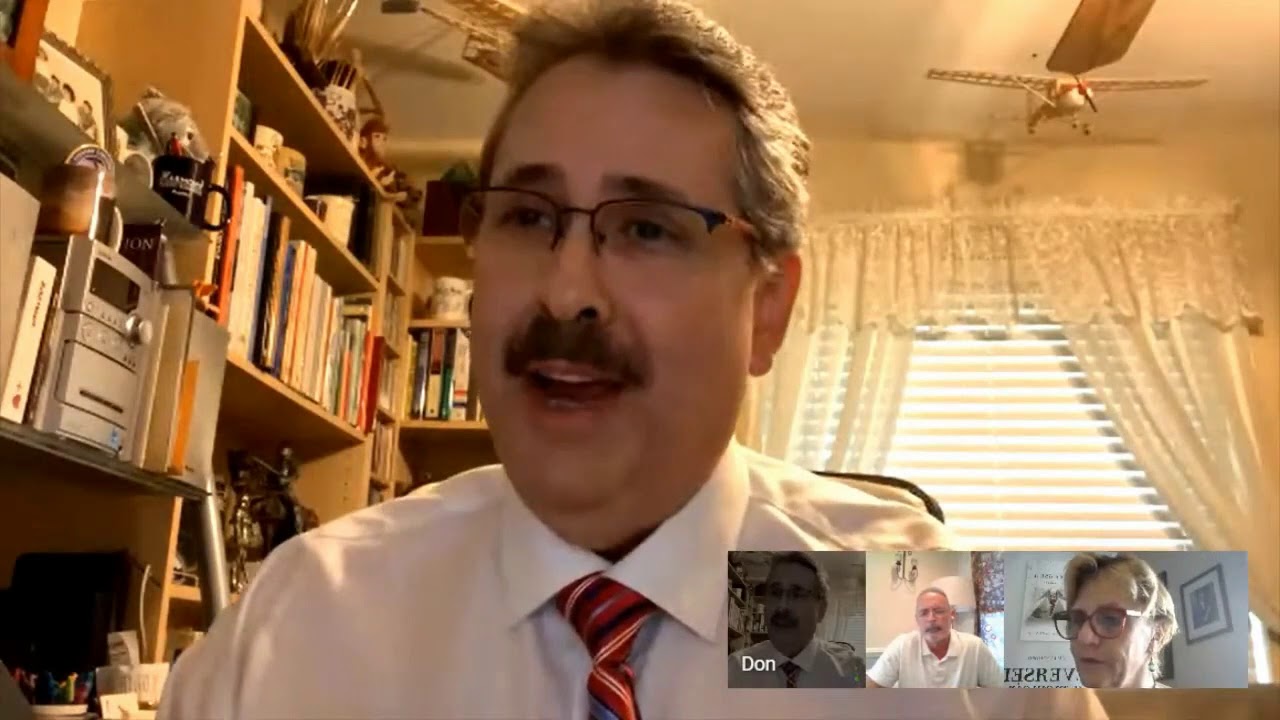
This content was created by Lois Letchford. This content was uploaded by Lois Letchford. This is a YouTube livestream episode titled "Don Winn, Lois Letchford & Lisa McCarty 'When Learning is Trauma'" (posted 2021-08-03). It's a hosted conversation led by Lois Letchford with guest Don Winn (author and lived-experience expert on dyslexia) and contributor Justin (Liesl's husband), discussing dyslexia and related conditions (dyscalculia, dysgraphia, dyspraxia), the social and emotional trauma of learning, school transitions, parental advocacy, accommodations, and practical strategies for supporting children. Don Winn shares personal history, references relevant research, and offers advice for parents and educators.
Chapters
Hello, I am Lois Letchford. Welcome to my livestream and my series, When Learning Is Trauma. On week 5, I'm talking to author Don Wynne, When Learning to Read Is Not Enough for Dyslexics. Start again! Welcome, Don. Thank you for joining us today. You're the author of the Cardboard Box series and a number of books on dyslexia. Thank you for joining us. For When Learning Is Trauma. Now, you went to school as an undiagnosed dyslexic.
That is correct.
Tell us what you remember from school.
Um, my memory of school is not a pleasant one. I have to say kindergarten was okay back then. Because I grew up in the '60s, little was known about dyslexia. In kindergarten, probably unlike today, the main thing that we did was play with blocks and coloring and, you know, things like that, more for socialization. But it wasn't until I started first grade that things just went haywire. I was not grasping what the teacher was, was was trying to convey to us. I wasn't learning to read. I wasn't recognizing the letters and sounds and so forth. And I struggled throughout first grade. And the teacher knew that there was something was wrong. My parents knew something was wrong. I was— I had anxiety. I was nervous all the time. I started getting sick a lot. And I was losing weight. I was very thin. But nothing was ever done beyond that. They just knew, well, you know, he's struggling. So they decided to keep me back a second year. Now, you can keep a child back another year and repeat the same process over again. But if it was a flawed process, that doesn't work. And so I was still struggling. And it was about that time that there was a special ed teacher that was taking an extension course on dyslexia. That's what I understood. And when my first grade teacher was describing my difficulties, she recognized that, you know, it sounds like he has dyslexia. And so she met with my parents. She actually invited my parents and myself over to her house. It was on a Saturday. And she put me in a room with a big bowl of Cheetos. Probably the worst thing you could give to a 1-year-old kid. Because I had yellow everywhere, or orange everywhere at that point. But, uh, they were probably visited for a good hour or two, and I have no idea what they talked about because they never talked with me about it. Uh, they just made a decision that for an hour a day they would take me out of the first grade class and she would work on me. The special ed teacher, her name was Mrs. Davis. She would work on me one-on-one for an hour a day, and she, she helped me to read, and I'll always be grateful for that. And so she got me where I was able to start reading on my own. The problem was— and there was more than one problem— I also had some of the sibling conditions besides just difficulty decoding the written word. I had dyscalculia. Dysgraphia. I couldn't— what I was thinking in my head, I couldn't put it on paper. I couldn't organize it on paper. And a little bit of dyspraxia. I was a very clumsy kid. And so you combine all of those things, I was, I was a big mess.
And how did the dyspraxia show itself?
I was always very accident-prone. I was always tripping over things, bumping into things. I wasn't very coordinated. You know, all kids have to learn how to be coordinated. You know, they have to learn that. For someone with dyspraxia, depending on the severity, they may have— be very slow about gaining, gaining a little bit of the ability to be able to function physically, or they may have trouble all of their life. Mine wasn't too bad, and so But it still, it still caused me problems early on. You know, the big problem was they got me reading and then they put me on the 2nd grade and that was it. All I had was a label, dyslexia, and all these other sibling conditions were never discussed, never recognized, and I struggled with that. So from that day on, yes, I was reading, But I had anxiety. I was struggling. I was not a good student, and I, I hated school. I loved learning. I hated school for that reason. Every time I would get up, I just loathed having to go to school, and I would— I'd be sick a lot. And these were legitimate illnesses because the emotional pain can cause physical ailments. Uh, you know, it's, it's just like, uh, if you, if you were told you have acoustic neuroma And that was all you ever knew, could you do anything about it? Would you understand it? Could you, could you be able to say, okay, that's why I'm the way I am? No. The same way with dyslexia. It's so important that not only the parent but the child understands what their learning style is and why they struggle the way they do, that they're not broken, they're just different. And that they're given the emotional and social support to be able to, and also the accommodation to be able to do the work. And it may mean that the work is done in a little different way than it is with other kids. The important thing is that they learn and they enjoy the process of learning. When they're in pain, when they're in emotional pain, it just is like physical pain. Learning is severely stifled. And there was actually— since I wrote my book, Raising a Child with Dyslexia, there was actually a study that was in— let me think.
Cool.
It was published in Educational Psychologist. It was how brain development is inherently social and emotional and what it means for education. It's quite an interesting study. And the takeaway from the study is this, that brain development that supports learning depends on social experience. In other words, in order for learning to be supported and to be optimal, the child's emotional state and social experience also needs to be optimal. When you have anxiety, when the parents are not involved, when there's not a social connection there, when there's not that support, learning is going to be severely stifled and limited. And so this, this was a powerful study, and it really shows the importance that parents be involved with their child and that the child understands and is able to accept that, you know, I'm not broken. I just have a different way of learning it, and I can do it.
What you were saying was— is exactly the same as what Lenore Hall said last week, that physical— that the isolation in a classroom and the social and emotional development, if they're not there, nothing is going to happen. And that's what you have borne out, isn't it? That's what you live with.
Yes, absolutely.
Yeah. How did you get through the school experience then?
I didn't, I didn't go through it gracefully. It's just like dyspraxia where you're constantly bumping into things. My school, especially my early school years, my public school years, it was nothing but one big trauma. And then when I was about 11 years old, my mother suffered from mental illness and she ended up leaving the family. And so at that point, we went from the school system, at least I was familiar with, and we started hopping around. You know, we moved from one state to another. I was in 5th grade for half a year, and if I struggled before, I went from maybe getting Cs to now I was getting Ds and Fs because I had even more emotional trauma.
Yeah.
And so not only did the school system not recognize my dyslexia and its sibling conditions, I had all of the the pain from my parents' divorce, the separation, the things my dad was going through, and then being bounced from one school after another. And so by the time I was in the 9th grade, and we were— I was raised in Colorado, part of 5th grade in Ohio, then we went to Oklahoma and I spent a year there. We went back to Colorado. This time I was in Arvada. And so by the time I was in the 9th grade, it was like I was such an emotional basket case that I just couldn't do public school anymore. And so that's when I came to Texas, and I went to the Texas Rehabilitation Commission at that point because I figured, okay, school's not working. Maybe if I learned a trade, maybe they could help me with that. Well, they, uh, they put me through a battery of tests. I had a complete physical, I had psychological, I had academic, I had it all, just to kind of figure out, okay, where, where are you in the stream of things? And then the, the counselor that was assigned to me, his name was Michael, and he was such a kind man.
Wow.
And, and just to show how, uh, emotionally needy I was, I would even have dreams where he was in that dream.
Yeah.
Because he was, he was a comfort to me.
Yeah.
Because he, he was so kind to me. But he was, he was looking at all these test results and he says, you know, I, you know, a lot of your, your, uh, your scores are, you know, in college level. I said, you know, why is it that— why is it you don't want to go back to school? And, you know, my, my heart sank to my stomach at that point because I was thinking, I can't go back to public school. It's a trauma to me.
Yes.
I tried to explain that to him. Well, they didn't force me to go to public school, but he said, you need to be doing something other than just a trade like carpentry. He said, what about computers? So they arranged with the school district at that time because I was still 15 and I was too young to drop out of school. to have permission to drop out of school. They sent me to business college where I started learning computers. I went to school with mostly people coming back from Vietnam that were on the GI Bill. They wanted to be there. Instead of being teased and ridiculed by other kids, I was with a group of adults that just really— I took a shine to and they took a shine to me. We got along great. I loved the environment there. I took computers like a duck to water. One that I didn't have to spell accurately to do that.
Yes.
I did very well with that. I continued working with computers. I went to a technical college after that. I graduated that. By the time I was 19, I was contracting at IBM. Um, I still had all of the, the, um, the issues with dyslexia. I always felt like I was faking my way through, even when I was succeeding in things. And this is such a big concern for children that don't understand, uh, dyslexia, because they can start carrying around This shame. They can start carrying around with them this baggage that will inhibit their growth throughout their adult life. And my early adult life was like that. I still had a lot of anxiety because I felt like even though I was doing the work, I felt like they're going to discover me, that I'm kind of faking it, and that I don't know how long I can keep doing it because I had anxiety that was really unwarranted.
Yeah.
Yeah.
Because I didn't understand it. And it wasn't until— it wasn't until I was in my mid-30s, closer to 40, I was really closer to 40, that I began to understand and learn about what dyslexia is and what dyslexia isn't. And that was very eye-opening for me because at that point, uh, I started, um, kind of a new path in my life A path of discovery, and also trying to make peace with myself. And it's still an ongoing process. There's a lot of times I kind of feel like I'm still faking it because those were the pathways that were developed early on in life.
You've said a lot of things there, but before we go on, I want to reintroduce Justin because we missed him earlier. Justin is Liesl's husband, who only found out 2 years ago that he also lives with dyslexia. Justin, what have you got to say?
Hello, hopefully my audio is working now. I had to bounce off and restart the computer. So yes, it was a couple of years ago when we figured out, or 2 years, or our youngest son's dyslexia a couple of years ago, that 2 and 2 added up. And, you know, I discovered that I was also having the same issue and have my entire life. So it's, it really has, you know, been a huge eye-opener. And as Don's saying, you know, sometimes you fake it until you get there and get what you need. Just Try not to become subservient to the anxiety, which is a tremendous power. And, you know, can defeat relatively easily if, if it's allowed to. I live with anxiety for certain aspects and what I do every single day. And just like any heavy object in your road, you've got to go at that object to go through it to get from point A to point B. And even though it can be heavy. You've got to make that effort to lift it. Sometimes somebody will see you struggling with it and give you that helping hand to get it out of the way. And other times you just have to continue to battle it and battle it until you flip it out over, you know, out of your way. So, you know, and it's, it's been successful for me, just to put my head down and continue forward. You know, but I know that You know, anxiety works differently for different people. And one question I did want to ask Don is, with anxiety and children, you know, different forms of acting out or against that can be displayed. You know, other than, you know, a social regression, what other forms have you seen? that anxiety take place in different children?
Oh yeah, anxiety can take on a number of different forms. It could, like I mentioned earlier, physical illnesses. You know, if a child is sick a lot, you know, stomachaches, headaches, even strep throat. I had strep throat a lot. I had a lot of stomachaches. It could be that they They kind of check out or they zone to maybe today video games where that's their focus because it's a way of escape. And so they could have a lot of unhealthy behaviors as they get older. They could gravitate towards alcohol and drugs. We've heard of kids as young as 10 years old that start taking substances. To help them cope. It could be inappropriate relationships. It can just— it could be acting out. It could be fighting. It could be anger. It could take so many forms. So as a parent, when you notice that your child is just not acting appropriately, instead of just looking at the behavior, it's good to say, okay, what may be causing that behavior? And in some cases, it may be that there's— they're dealing with dyslexia and sibling conditions or even some other learning differences that hasn't been diagnosed and accommodated. They haven't received that social and emotional support, that support from their parents. They don't get it from their parents, they're going to look elsewhere. They're going to look to their peers. They're going to do escape— things to escape. And most of the time it's unhealthy things.
Wow.
Thank you.
Don, I was thinking about your moving from school to school to school, because one of the things that we think will help children is moving them to another school. I question that. For just the same reasons as what you're saying. So tell us more about moving and the implications.
Well, from my own experience, it was not a good thing. Now, there may actually be a valid reason for a parent to want to move their child. For instance, let's say the— their child's unique learning style or abilities is the particular school he's attending or she's attending, they're not able to work with the child. They don't have the programs their child needs, but another school might. So there might be valid reasons to move the child. But in my case, I was actually— I was stable. At least they, they kind of had at least the label of dyslexia, even though the teachers didn't know what it was. I was making Cs. I was doing okay, maybe occasional B, but I was kind of passing. But as soon as I started moving and the change in environment, the change in schools, the teacher, that's when it went from Cs down.
Yeah.
For a lot of kids, that's not a good thing unless there's a valid reason where they're going to get the academic support an accommodation they need at the new school. If not, then a lot of times it's not a healthy thing.
And, and you're going in, the first thing children are looking for is the social engagement.
Yes.
And the emotional engagement before you even get to the learning.
Correct.
So they've got to build up their friendships, they've got to get to know other kids, and that all takes brain power.
That's right.
Before we've started, any learning along the way, and then you are different on top of that.
Absolutely. When you think about it, from kindergarten through at least part of first grade, I had a stable environment. I had friends that I knew. I knew all of them. I knew the ones that liked me and knew the ones that did not like me. We had our little groups and we had our playtimes. We were outside running around. We had that social engagement that was stable. You take a child out of that who's struggling in other areas and put them in a new situation, it's just going to make it a whole lot more difficult for that child.
Wow. It gives you a lot to— gives us as parents a lot to think about when we make these decisions. How are we going to help the child going forward? Are you also suggesting the child should be involved in these conversations?
Absolutely. I think you should always— now, there are times when a parent needs to make a decision, an informed decision, that the child may not necessarily agree with, but you should always have that child as part of the conversation. A parent, both parents if possible, need to have an open dialogue with their child every day and have— and I refer to it as a safe time. Because I don't know any parent that doesn't want their child to be open and honest with them. If there's anything that's bothering them, anything that's going on, even at school or in other places, to be able to come to them and talk to them. A parent expects that. But if a child doesn't feel like there's a line of communication that's open, they don't, they don't feel safe. Or as soon as they do open up, if the parent just jumps on the child or corrects them right away, what's the, what's the result? Well, they're just not going to want to talk to the parent anymore.
Yeah.
And so there needs to be that safe space where you allow the child to express their feelings. Now here's the hard thing. The child says something that the parent knows, okay, that's not good, or that needs to be redirected or adjusted, or maybe it pushes the parent's buttons. The parent at this case needs to be very disciplined and push the pause button on their own emotions and then say, okay, I'm not going to address it right now. Just let the child talk. The parent needs to take time to think about what the child said, and then at another more appropriate time, when the parent has calmed down and has been able to think through it, to lovingly then redirect the child. But during that safe time, it's important for the parent to let the child talk and express themselves. If you do that, you do that every day, and, and the child can see, okay, I can tell my parent anything during this time, then you don't have to worry so much whether the child's going to come and let you know when there's a problem.
What you were saying is exactly what Lenore said last week. You know, take a big breath, just listen, and don't say— don't respond, and certainly don't jump down their throats because that stops everything. Yes. Justin, I wanted to bring you back in the conversation here because you moved a child from once— you've moved your children from school to school. How have they survived and coped?
Well, we moved, uh, they've only actually— well, with the exception of Karen, the youngest, who, uh, well, he's, he's twice moved now. Uh, all 3 just moved, uh, from 2 different schools. Um, They were, you know, relatively young when they moved from the first school into the second school. Uh, they're— all 3 of them are— I'd say I consider them very socially active. Uh, so they really never had a whole lot of issues making friends and such. Um, our oldest, who is, uh, not dyslexic, uh, you know, managed just fine, had, had his rebellious issues with authority and whatnot, but He's making out just fine these days. So with the exception of, you know, the dyslexia in the younger 2, you know, socially they made out fine. You know, they— my middle son, you know, he gravitated because of his dyslexia and not being diagnosed and not having any you know, real support system, uh, you know, gravitated towards, uh, you know, a crowd that was not so, uh, you know, so good. Uh, you know, you take and you gravitate towards wherever it's easiest and wherever you're going to be accepted. Um, and, you know, we're working, uh, very successfully right now through, uh, the trauma from that. Uh, Karen, the youngest, um, you know, went from school number 2 into school number where again he's become, you know, rather socially accepted, uh, and now is getting the educational support that he needs, which is, uh, the added benefit. Um, you know, so I consider ourselves, uh, fairly lucky, um, you know, to be at the point where, where we are right now, uh, in success. And also, uh, as Otto as it would seem, also going through those traumas and those learning experiences, uh, to better help, uh, our youngest and also help the, the people and other parents and everybody else that are— is around us, uh, because we have experienced, you know, both sides of the coin. Um, you know, so it's been overall, uh, an optimist view. has been positive, uh, for what we've been through.
Yeah, that's, that's amazing because, you know, as you said, you've seen both sides of the coin.
Yes.
You know, you live with it. Yeah, go on.
And, and I've lived it myself, but, you know, obviously only now, uh, with the definition of what it is, being able to go at it, uh, that much faster with that much more education, uh, and No, absolutely no wonder, uh, as far as why this is happening. So, uh, yeah, we're, we're fortunate. Yeah.
Don, when I was reading on your website, one of the things struck me. You said children are starved of genuine nourishment for effective ways for teaching. Could you explain more, please?
Well, just looking at this current COVID situation where kids are expected to learn at home via the internet, you know, distance learning, here's a problem that my wife has observed. She's in an office where the secretarial staff, where their kids— they can't just leave their kids home, so they bring their kids with them. And they have a common area where they have the kids homeschooling. And she said it's nothing but a catfight every day. The kids are upset and they're frustrated. The parents get upset and frustrated. And the end result is no learning is taking place. And here's, here's what—
Lost you. Just lost you. Just—
Sorry, my cell phone went off there. So here's, here's what happened. They're, they're giving, uh, the teachers are saying, okay, I want you to read a couple chapters, uh, on various topics, or, you know, several, a few pages, whatever it might be, and then I want you to write a 500-word paper on each topic. Now, if a child has dyslexia, dysgraphia, or some other processing issue, they're not going to be able to do that. That is not a reasonable request. And especially when a child is off by themselves in a corner in front of a computer, they're expected, okay, we have to read all this and I have to write a 500-word essay. It wasn't happening.
Yeah.
And so it's so important, one, that the parent Parents are engaged with their children to understand their feelings. And that's where we all go back to that social and emotional support. And if they understand, okay, this is not working for my child, and then it's important for the parent to understand the child's— their child's dyslexic challenges, what they are. How can they advocate for their child and support their child if they don't understand it themselves? Parent needs to understand it, and then they need to make sure the school is providing them with, um, with a reasonable accommodation, a workload that they can do, and within a reasonable amount of time. Uh, I don't know about, uh, others, but I can't spend that much time at one time in front of the computer.
Yeah.
I have to take a break. And some of these kids are expected to sit in front of their little monitor from 9 in the morning until 3 in the afternoon. Okay, now there's some kids that might be able to do that, but not all of them can. And so there's a lot of stress, a lot of stress, a lot of anxiety.
You know, we have so many mediums that we can use. The last thing we should be advocating is sit and read that. And then write about it. I mean, that's, that's something that comes from ancient history almost. You know, why aren't we using the medium of YouTube and, and all that's available? But then we have security issues too. So, you know, I understand the balance, but there's a long way to go there.
Yeah.
Yes, and you would think that— of course, when I grew up, very little was known about dyslexia. A lot more is known about dyslexia today, and yet there's still so much ignorance about it, especially in the school system. There are so many teachers, you ask them, do you know what dyslexia is? Oh yeah, I know what dyslexia is. But you ask them to explain it or describe it, or do you have any students with it, they just kind of give you a blank look.
Or what strategies do you use with them?
Yes, absolutely. And so there's still a lot of ignorance about it, and the bottom line is the children are still slipping through the cracks.
Yeah, and we still have a wait-to-fail approach.
Absolutely.
Which you wrote about, you write about that.
Yes.
Because it's what happened with you, it's what happened with me, and we're all old.
That's right. I can't, I can't go back and redo my, my life again, but if I can, if I can help other parents with young children to avoid the same problems that my parents had with me and what I had, that's worth a lot right there.
One thing I'd like to say with, uh, going back to your point about the, you know, parents understanding and, and being an open book and, and speaking with their children is, you know, to, you know, a little bit of an outside thought is, you know, with kids that are from the age of 5 to 18, uh, they do have, for lack of a better term, a, uh, a set of stepparents, uh, which are the, uh, teachers at school. Um, so You know, we can be as understanding and all the communication we want and taking the pauses when there's, you know, something, uh, going amiss, but there's another set of parents there that have these kids for 50% of their time, um, that also need to understand that too. So a lot of times what we found in, in our journey here is, you know, We, we're doing it one way as, you know, True Parents, and they're doing it a completely other way, uh, which also is, you know, lending a tremendous amount of anxiety to the entire situation. Uh, but then the child is looking at all of us as the adult authority figure, uh, which is giving, in my opinion, the parents the under— you know, the, the lesser of the two hands. Um, and that the children are gonna, you know, shut down a little bit more often than, you know, because I don't think they have the, you know, really the ability to distinguish, okay, my parents are the good guy and these people that are coming down my throat aren't the good guys. So, you know, I— how do you feel about that? Do you find that, uh, to be true?
Yeah, I think that it's so easy when the child is in pain, the parent's frustrated, where they kind of look at each other as being the problem. And the fact is that neither may be the problem. The problem is they're just not— they're both not understanding each other.
Yeah.
The parent just wants to help. Most parents just want to help their child. And they just don't understand how. And the children don't see that when they're in pain. They just see that the parent is just making my anxiety worse. And so, and that's where that divide between the parent and the child strengthens. And you don't want that to happen. You want to bring them together.
That's a phenomenal answer because you're absolutely right. You know, we're not understanding it and clash. And then the first thing we have to do is stop and take a step back, I think, and support the child more before we do anything else.
That's right. And one of the things that I suggest to parents that when they get into, like, like in my wife's office, where they get this shouting match and then tears happen, Is when— if that happens, when there's this little clash that happens between parent and child, okay, that's the time to take a break. A change of scenery. Okay, outside of the education. Okay, let's go for a walk together. Let's talk about something else, not the education. Let's leave that aside. Let's reconnect. Uh, that may not— uh, if you haven't done that for a while, uh, That may take a little time to regain that, that time. But if you start doing that, whenever, whenever it starts to heat up, take a break, change your pace, get out of that environment, give your child time to calm down. So that, that way they'll open up with you. You know, one of the things that came from that study That I mentioned about, about learning being dependent on emotional and social environment. One of the things that it mentioned, that when, when the parent engages the child in meaningful, in meaningful ways— Let me illustrate it this way. Think of a crying baby that's up past her bedtime. Obviously, the baby is distraught about something. It's just crying, crying its little eyes out. And the distraught dad who's, you know, when you hear the baby, you're distraught. It could be a mom, but I'm going to use a dad in this instance. Lifts and hugs his baby and then whispers soothingly to her, lays her head where she can hear his heart beat, and Sings her to sleep. Now, what happens during this time is significant. See, in the minutes that follow, both the baby's and the parent's blood pressure lowers, stress hormones normalize, and hormones involved in bonding and social affiliation, oxytocin, increase. So over the course of these minutes, both the parent and the baby undergo physiological changes.
Changes.
Changes that influence not only their immune function, but also brain structure, especially in regions associated with learning and memory. So by the parent taking charge of it, stepping back and calming the situation, they both benefit. Both the parent and the child benefits because that's what we talked about. Learning is not going to take place When there's pain, when there's anxiety, you have to push the pause button.
That's brilliant. That is brilliant. Do you have the author of that study or authors?
I can, I can email you the, the study.
Yeah, because what you were saying, you know, is exactly what happened with Nicholas with his learning. You know, we had to put away the pain. And we totally changed it. And it changed his whole world. You know, as you've read with my book Reversed, that there was this total time of, there's no stress, let's just do the things that are fun. And that's when he started asking questions I couldn't answer. And that was, you know, relaxed situation and allowing him to think. And I did that with all of my students then. They've got to be in an environment where they are content. And we have a question. What advice do you have? I think you've answered it. What advice do you have for children going through academic trauma and learning disabilities?
So, well, the advice would be First of all, the parent needs to understand it, understand what's going on, and then engage the child appropriately to help the child understand and listen to their feelings. Let them express whatever emotional difficulty that they have. Unless they understand how the child feels, they're not going to be able to address it. You know, it's, it's just like And this happens in so many households that a parent has educational expectations for their child, and all they look at is the end result. Oh, you got a D? Well, you're not working hard enough. Well, you can't do that. You have to say, okay, what is your learning environment? What is it you're feeling? How are you managing with the schoolwork? Is it in the right format for you to be able to learn optimally? And until you address all of that, the grades are going to take care of themselves. You have to back up. Don't just look at the end result and say you're just not working hard enough. You need to get on that. You need to get to work. You need to go back and help them through the process. Help them emotionally, socially, And make sure that they have the right accommodation for their work.
That's a phenomenal answer. And it, you know, like I said before, it ties in with all the other things we've been talking about when learning is trauma. Kids don't learn when they're in pain. And then we as parents have to stop, take a breath, and reflect before we respond. And give them that— what is so emotionally safe place to share their thoughts and feelings, even when they are pressing your buttons.
Yeah, absolutely. And you know that when the child's not doing well, what's going to help them to do better? By vilifying them? By disciplining them? By shaming them? No, that's just going to have the opposite effect. If they're not doing well, you need to say, well, Let's kind of help you along. You can do this. Let me help you. Let's see what's going on with you. And really get to know your child and then support them. By doing that, they're going to be in a much better position then to accomplish the work.
That's an incredible statement, a way of summing up all that we're talking about in learning is trauma. You know, we're talking about academic papers. The 3 of us have all lived it to some extent, so we're not just talking about academically. We live it.
Yeah.
Have you got anything else to finish off with? Did you want to leave us with any more thoughts?
Yeah, yeah, I, I appreciate what you said about living it because I can't tell you, uh, how many people or how many you know, comments that I've seen, you know, like on boards and so forth. This is, well, what are your credentials to be able to, uh, to be an expert on this subject? And I always say, well, let's see, I spent— I'm close to 60 now. I spent, uh, about the last 55 years on this subject. I've lived it. Yeah, there's, there's no better expert than someone that has lived through it.
Yeah.
Now it's just like hiring somebody that maybe has had some education but no experience, but then you have someone that has 20, 30 years of experience doing the work. Who's going to know it better?
Yeah.
The person that has the experience. And so we've all lived it.
Yeah.
And, you know, in my book, Raising a Child with Dyslexia: What Every Parent Needs to Know, I focus, you know, I talk a little bit about what dyslexia is and isn't. and, uh, you know, accommodation, all of that stuff. But primarily the book is on social and emotional support for the child. That should come first and foremost, because unless there is that emotional environment for them to learn, learning is not going to take place. You could have all the accommodation in the world, you can have the best teachers, you can have the best schools, But if the child is not in a good place emotionally and socially, they're not going to thrive. And so the book mostly deals with that, helping your child to succeed by addressing their emotional and social needs.
Thank you, Don. Thank you for joining us today. Justin, did you want to finish and say anything else? Did you want to—
I just would like to finish, and everybody that's listening, is, uh, there's a lot to know. Uh, every, every Monday we, we do the segments and, you know, we cover bits and pieces of dyslexia— what it is, what it means, how it affects people. Um, you know, your own education, uh, you know, we need to learn, uh, we need to learn what it's about, what it is, what it isn't. As Don said, uh, and so we can be our own powers in moving this forward for the success of our children.
Thank you. Thank you, Justin. Thank you for joining us today. And next week, Lisa will be back with us. Don, where can people find you and your books?
Very easy. My name is an easy one. You can go to my website, D-O-N-W-I-N dot com. That's donwyn.com. I also have Facebook, Instagram, Twitter, all the usual, but you can, you can get to all that from my website. It's a website slash blog, and so you can also see all my articles on dyslexia. That's donwyn.com.
Perfect, because I've been there today to get more information and just to get your thinking, which has been phenomenal. And ties in with all that we've been doing over the last 5 weeks. So thank you for joining us today. Hit like, hit subscribe, check out my website at loislatchford.com. And I'm on Twitter and LinkedIn and Facebook. Thank you, Lois. And next week, we have another international guest, and it's Martin Bloomfield, who failed his way through school and only as an adult was diagnosed with dyslexia. So thank you all for joining us, and we'll be in touch. Thank you.
Thank you.
And be sure to like, comment, and subscribe to my channel because those things help the YouTube algorithm know that my videos are wanted and liked by everyone. Thank you.
More from Lois


Overcoming Adversity: A Dyslexic Learner's Journey to Success | When Learning is Trauma #shorts

Redefining Success, Beyond Grades in Education | When Learning is Trauma #shorts

Turning Awareness into Action for Dyslexic Learners | When Learning is Trauma #shorts

Why Dyslexia Goes Unnoticed: A Systemic Issue | When Learning is Trauma #shorts

The Long-Term Impact of Unrecognized Dyslexia | When Learning is Trauma #shorts

The Heartbreaking Reality of School for Some Kids When Learning is Trauma #shorts



