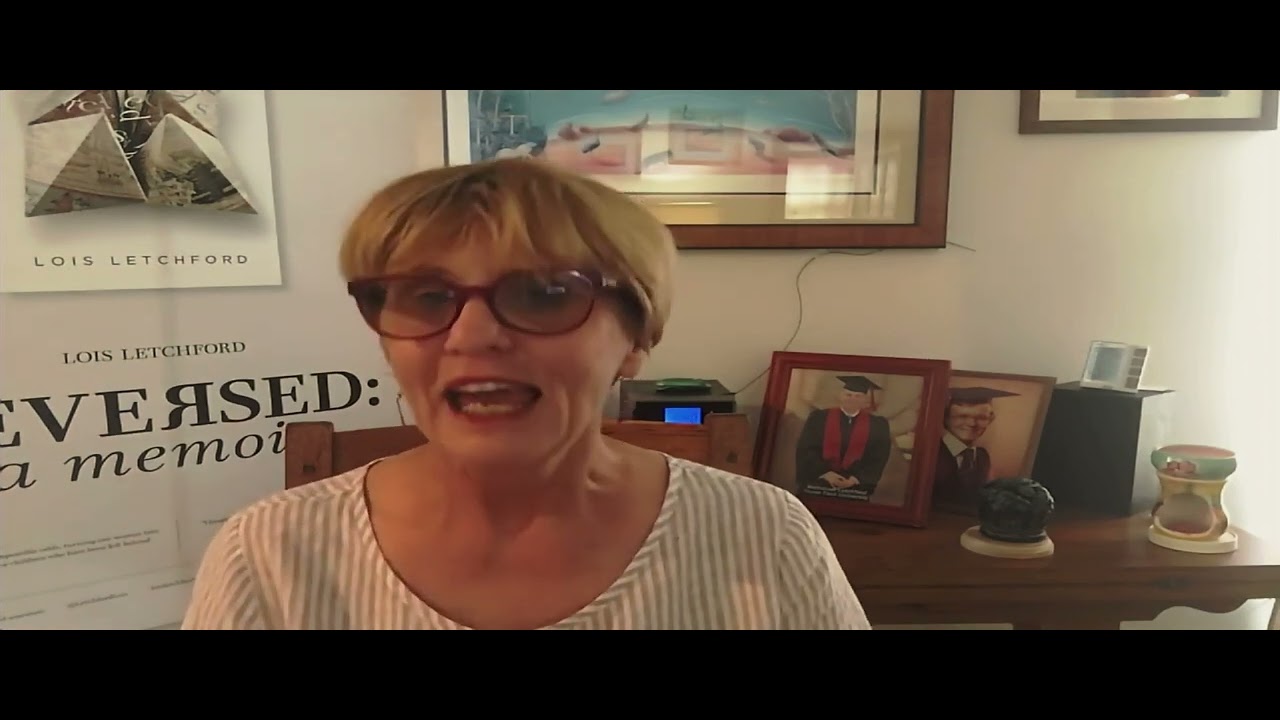
Lois Letchford, author of Reversed: A Memoir, teaches reading to dyslexic and struggling students using multi-sensory methods: simple poems, illustration, imagery, sound, taste, and emotion. She describes her "box lesson" and how she developed these techniques with her first student, her son Nicholas.
Chapters
Hello, I'm Lois Letchford and I'm the author of the book Reversed: A Memoir and The Literacy Problem Solver. And I wanted to share with you today Gabriel Wayner's thoughts from Forever Fluent and how I use the same sort of thing with students who are dyslexic or vulnerable students or those who are just simply struggling with learn to read. So what did he talk about? He talked about making language alive, bringing language alive, giving language life. So how do we do that? I gave language life by writing poems. My first student was actually my son Nicholas, and he was 7 years old when I worked with him, and it looked as if he had no memory for words, letters, or sounds. And when that's your starting point, what do you do? So I started to write very simple poems for him, which we then illustrated, which we then talked about. Which we then looked at in our environment. Through the writing of poems, we're building knowledge. We've got engagement and we've got enjoyment. That's the starting point of giving language life. The second part is that every word needs to make connections. Connections through— firstly through pictures, or pictures and images, through sounds, through taste. And surprisingly, through emotion. Emotion is actually a critical part of learning to read because when children are stressed, the brain actually shuts down. It closes up and we don't want that. Nothing goes in or nothing comes out. When children are relaxed and enjoying life, then the brain really starts to work and work effectively. You may have seen some videos of my box lesson. My box lesson encompasses these strategies effectively. We're giving them an image, a sound, a taste, and engagement, and my students never forget that lesson, and they never forget the words that are attached to that lesson, and that's what we're working on. So it becomes a critical component of how students learn to read. So thank you. Lois Letchford, author of the book Reversed: A Memoir. Grab a copy, but also don't forget to hit like and subscribe to this channel. Thank you. Thank you.