Hilerbrand Pelzer III, Lois Letchford & Lisa McCarty 'When Learning is Trauma'
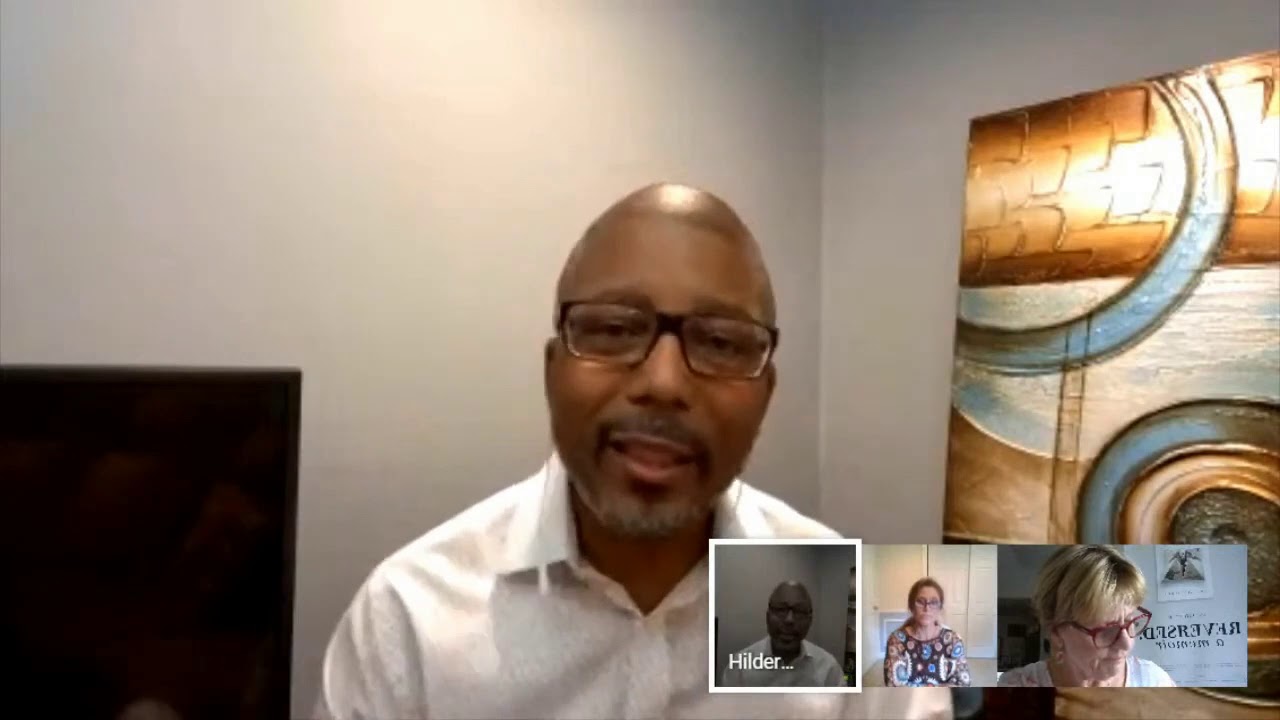
In this livestream episode of the series “When Learning Is Trauma,” host Lois Letchford interviews educator and former prison administrator Hildebrand Pelzer III, joined by co‑host Lisa McCarty. Pelzer shares his personal journey from a sports‑management student to a health‑and‑physical‑education teacher, principal, and district leader working in both traditional schools and the Pennsylvania juvenile correctional system. He describes how trauma, stress, and undiagnosed dyslexia create a cycle where struggling readers fall out of love with school, leading to behavioral issues and the school‑to‑prison pipeline. The conversation highlights the lack of dyslexia training for teachers, the need for early screening, culturally relevant texts, and high‑expectation, rigorous instruction rather than “dumbing down.” Pelzer stresses the importance of relationships, restorative discipline, and using the lived experiences of incarcerated youth to inform teacher preparation programs. He references his TEDx talk “What Incarcerated Youth Can Teach Teachers,” his book Unlocking Potential, and provides contact information for further engagement. The episode concludes with a call to improve equity, teacher education, and to bring the voices of marginalized learners into the classroom.
Chapters
Hello, my name is Lois Letchford. Welcome to my livestream. The series is When Learning Is Trauma. Week 2 of 10 is Hildebrand Peltzner III. Welcome to our seminar series When Learning Is Trauma, and with Lisa and Lois Letchford, and today we welcome Hildebrand Peltzner. And just let me give a little introduction, who says he is Interconnected pathway of educational problems and solutions from the classroom to the district level. What an experience. Welcome, Hildebrand.
Thank you. Thank you for having me, and thank you for inviting me to be a part of your series.
I know you have worked in prisons, so you must be well connected with trauma Trauma, stress, struggling readers.
Definitely that is a part of the prison system. That is a part of children who are incarcerated as well as adults. You hit it on the head. Trauma, stress, and struggling reading.
Can you tell us some of the stories from your background that Tell us these stories.
Yeah, so I have a lot of stories. That's one thing about this experience. I have a lot of stories and they serve as metaphors for a lot of different things. But the most prominent one is my why. So why am I even in education? So although my parents, my mother and father, are retired educators, I was exposed to education through them. My father is a retired guidance counselor. and my mother's a retired principal. And so education was always a part of my life, but I didn't think I was going to go into education necessarily. I wanted to go into sports management. But coming out of college, one of my early jobs was a job at a youth development center for male juveniles, boys in the Commonwealth of Pennsylvania. And it was in that setting that I was exposed to education from a teacher perspective and classrooms and those type of things. These were teenagers, and their experience with education was really, really traumatizing. It traumatized me, the experiences that I saw them having with reading, the way they navigated school, the way they didn't want to go to school, the way they hated school, the way they were fearful of school. All of those things was something that I was not used to coming up as a child through college and to adulthood. And so that exposure really got me to really think about maybe education is the career I want to be in.
And then did you— you worked as a principal, assistant principal, you were a teacher first?
Yeah, I went to school for health and physical education. So when I came out of college, And so over the years, I was a health and physical education teacher in not only the juvenile correctional setting, but a middle school setting and a high school setting. I was an assistant principal of a high school, and I was a principal of several high schools. Simon Gratz High School in Philadelphia, small— which is a large high school. I had a small high school and alternative school, and I also had the school inside the Philadelphia prison system. And over— worked at the district level and also elementary school principal.
So how did you go from sports and sports education to into becoming principal? Like, what led you into that? What did you see?
Maybe you could— Yeah, the principal, the actual principal of the school, the school was Bensalem Youth Development Center. It was one of 9 youth development centers in the Commonwealth of Pennsylvania for incarcerated juveniles. But it was the principal. And so I used to stay in— the teachers would go out for lunch. We would go out for lunch because it was a secure facility, so we never stayed inside to eat. There was no teacher's lounge or anything like that, and we used to go out to eat lunch. But from time to time, I would sit in with the principal and talk to him about the things that I was seeing, just to get his perspective on it, like, you know, learn more about incarcerated youth.
Mm-hmm.
Learn more about just the correctional setting, learn more about the the the the students that I was coming in contact with, learn about strategies, all those kind of things. We used to have these talks, and he in fact was a health and physical education guy also who went into administration. So I knew that I could make this transition from health and physical education to a principal. But he said something one day. Uh, that was very, uh, profound, and it was deep. He asked me if I wanted to run a gym as a career or run a school. And right, and so the way he put it was like, run a gym. Like, he didn't say be a health and physical ed, run a department and all that. He said, do you want to run a gym or you want to run a school?
Mm-hmm.
And running a school just sounded so much better than running a gym. And so I went back to school for education administration. I left sports management. I was taking a couple of courses. And so I was just early into the master's program for that, and I switched over into education administration. But it was the principal who would give me wise counsel, give me insight, give me a different perspective on this aspect of education that I was really unfamiliar with, and that was incarcerated education.
So when you came up to this position, you must have come across some interesting reading instruction or people that left you thinking, what's going on here?
Yeah, so I saw, I saw kids who wrote in graffiti, right? That's how they, they wrote, in graffiti, like you would see people tagging buildings and things like that. I would see students who couldn't spell, right? basic words that I would think everybody could spell, like the, you know, is. I used to see students who, when we got deep into— and I didn't know a lot back then about standards, academic standards, but I do now. But back then, when we talked about drawing conclusions, and guys would be drawing pictures.
Yeah.
You know. So things like that. The principal, he was unique though. He used to teach us the importance of appreciating any type of work product that the students would give you, and he would talk about not marking it up. He would talk about really seeing through the effort that they was making to learn, or at least try to learn, and then work backwards and try to help them get to the point they needed to be. Typically, If you saw the work that was coming in, you would look at it and say, what is this? And mark it up and maybe turn it back. But he wanted to make certain that we understood the effort that they were making to show us that they wanted to learn.
One of the things that struck me when I was listening to you talk today was you said, these children are smart.
Yes.
They were.
Not only were they smart, they were brave, right? So, and courageous, right? So the way they lived was not something that I would ever think that I could be a part of, you know, but they were living, you know, trying to survive. And part of that survival mechanism also resulted them resulted in them committing crimes and going to jail and those type of things. So, but to do the type of crimes that they were doing, they thought about it. They comprehended it. They planned it. They understood details. They understood logistics. They understood leadership. They understood how to delegate. And so I would hear these stories from them. I learned a lot from them about the things they were into. And I always found that if they just had maybe an opportunity that I had with my parents and the way I grew up, that they would be geniuses.
Yeah, geniuses. Lisa, you were asking us some questions.
Oh, yeah. So it's been our experience, at least for my sons that— having dyslexic sons, that the school doesn't really know what to do with these people. They don't really know how to identify them, or maybe they do and they don't identify them. And so I think you mentioned, like, the importance of early screening or early identification of these kids that are struggling in this way, because we know that we can help them, but if we're not identifying who they are— You know, how are you going to— how are you going to help them feel good about what they're doing in the classroom?
Right. So then, and even now, again, I think I know more now than I knew then. It's just about the process of education. But even then, one thing is that is the same. We don't talk a lot about dyslexia in school. There's not a lot of training on dyslexia. There's not a lot of consideration that this reading problem that children are having with letters and sounds and things like that may be dyslexia, right? So you don't hear a lot about it. And so teachers are not, not exposed to it. There's not a lot of training on it. And so even when we talk about Tier 1 teaching or Tier 2 teaching and we talk about interventions and those type of things, We never talk about perhaps it's dyslexia and how are we using early screenings to screen and find out whether that is the issue or not. And so not having that type of exposure, I think, has caused us to miss the opportunity to help a lot of children. And so when I think back on the students that I had at that time, That they probably were dyslexic. I didn't know anything about it, right? Uh, even though the principal was a mentor and, and one of the reasons why I got into being a principal, he never talked about that. And so, uh, as I went through, uh, traditional public schools, high school, assistant principal, principal, is not something that was really, uh, heavily exposed.
Right. And you mentioned how smart a lot of these kids are, and dyslexic students really are smart. A lot of them can get around some of these difficulties in school and with what I would call compensatory mechanisms. And some of them can, you know, slip through until the work gets to a certain point and they can't hold on anymore.
Yeah.
And then usually the bottom falls out and a lot of kids just say, ah, forget it. So in your experience with— I know you know a lot about the school-to-prison pipeline, you know, identifying who these kids are that are struggling even though maybe on a standardized test their scores are like Okay, what do you think about what happens to these kids once they— once the bottom falls out? Are these the types of kids that are getting into trouble or, you know, going to prison for—
Yeah, you know, I used the term before, they fall out of love with school. And so the fact that we're not helping them or recognizing early that it's dyslexia and doing something about that type of treatment or giving them support educationally in that area, what happens is they're not learning, right? And so they fall out of love with education. They're not learning, they're not progressing, they're not learning how to read, they're not keeping up with their peers who are moving on from grade to grade. And eventually that love— because they want to learn.
Yeah.
That love, they look for something else to love.
Yeah.
Right?
And that something else may be getting in trouble. In my case with the young people, it was crime. But when we look at them just getting in trouble, that's how schools respond to them. We respond, you got in trouble. And so we focus on behavior now. We focus on discipline and code of conduct and what you did wrong behaviorally. But we forgot that they got into that because they fell out of love with education. They fell out of love with the fact that they're struggling readers.
Yeah.
And so now we focus on behavior, and folks look at the school-to-prison pipeline from a behavior standpoint. But we forgot that it was the fact that I couldn't read, therefore I couldn't do math. The teacher may not have been trained or able to help me the way they needed to help me. And so I fall out of love and I go on to other things. And those other things are real behavior, crime, serious situations, because these young people early on in my career, this wasn't their first time incarcerated.
Yeah.
They were 14, 15, 16 years old and had been incarcerated 2, 3, 4 times.
Yeah.
You know? And so this is something that's very serious that we miss. Wow.
I can't even comment because the thought that we're just leaving children behind and then straight away, you know, we look at the behaviours and not looking at what else we have to do within the classroom just staggers me.
Yeah. You know, after you're arrested and incarcerated 2 and 3 times, you get used to it. You know, it becomes a way of life. Jail, I always say this and folks look at me sideways sometimes when I say it, but jail becomes a program.
Yes.
Right? And so we all look for these constructive, positive programs that will give us discipline and structure and those type of things. And the students that I'm referring to, they found jail to be that structure. And so it becomes a program that I couldn't get in school, I didn't get the structure in school. I didn't get the help in school. But now I'm in jail and I get this structure. That's that incarcerated structure for them. And that's the deep part about it.
Hildebrand, when you were teaching in the prison system, was the teaching different in the prison system than it was in school for these children?
So it depends on how you look at it. So let's go back. I'll go to my early years when I first came in as an educator in the late '80s and '90s. I didn't know then if it was different, right? I saw school. I saw science, social studies, math, physical education, career and technical programs. But what I saw was the principal making certain that his professional development was related to correctional education setting. Or that we appreciated the incarcerated student. So teachers went to school for what they go to school for, and perhaps they teach in a correctional setting. So, you know, it wasn't like their reading program was any different than, say, in a traditional setting, but the type of students we had, we, we learned about it. Fast forward that to when I was the principal of the Philadelphia prison system. The teachers— so I brought with me a background and experience that I learned over time, over the years, that I need to make certain the teachers appreciated the correctional setting and what that meant for a student who was incarcerated. And then I looked at educationally what the teachers didn't have. So I looked at that they weren't up on the curriculum. I looked at they weren't up on assessments. I looked at they weren't giving rigorous lesson plans and aligning it with standards. So then I looked at what was wrong educationally.
Right.
But the key to both of those experiences is really appreciating the correctional setting because it is a community. And so if we always talk about the school community and, and being collaborative within the school community, We talk about that as traditional educators, but I looked at that same in the incarcerated setting. What resources were in that community that I could leverage? And it's other people in that setting, social workers, faith-based, correctional officers, social workers, and how could I leverage those resources that understood the correctional setting To help me organize a school.
Yeah, okay, because my thinking, you know, I teach these children that get left behind on the wayside. One of the things that we forget about with teaching, with reading instruction, is the cultural appropriateness of the textbooks that we use. Could you talk something about, about the Cultural appropriateness of finding texts which are culturally appropriate for your students?
Yeah, so we have to do a better job of that. All right, so finding books that students, depending on their cultural background, whether that's African American or Latino, whatever the case is, finding texts, books of people who represent them or something that they could link on to.
Yeah.
Right? And want to learn and want to read. And the fact that they want to read or hear about it, then that would engage them in reading, that would engage them in writing, that would engage them in talking about it. And so it's important to have those type of literatures and texts. in school settings. There's not a lot of that. There's more effort to include multicultural literature in schools. You know, it's not new. It's more prominent now than maybe it was in the past, but it's still not enough.
Yeah.
A lot of times when schools purchase curriculum, in my opinion, certain books come with that curriculum.
Yeah.
And we begin to use those books and those texts with that curriculum. And those books and texts may not necessarily be culturally relevant. And so, but we use them instead of trying to find other books that could link with the standard and use the text that is more culturally relevant.
I have taught a number of African American boys, and what struck me about the literature that they had been exposed to was that it was white, it was middle class, and it was female, and it was alienating.
Yeah.
And when I changed the instruction and used their characters, Within those, use the same story structure but change the characters to meet, to be them. That's when the learning occurred.
That's that link. That's, that's what they— because remember, they want to learn. They have some sense. It's just someone, the educator, has to connect this, and that's the lesson planning. So teachers and educators, principals, have to make that connection. And not dumb it down. You know, we're still talking about aligning things to the standards, grade-level standards, but being more creative about what texts or books we'll use to make that come alive for them.
Yeah. Well, I think you hit on something right there when you said don't dumb it down, because that's a huge problem for these kids. They're already feeling their self-esteem is lower, and now teachers and educators aren't really expecting too much of them.
Right.
And they're not expecting too much of themselves, maybe. And can you talk a little bit more about that?
Yeah.
And this, and this, you know, right now the word that's out there a lot now is equity.
Yeah.
Being equitable, giving children equitable access. So one of the things as folks look at what equity really means, Expectations is one way to be equitable, right? High expectations, meaning we want them to learn. We know they can learn. We want this to be on grade level. What happens sometimes, we dumb it down because we don't want any problems.
Mm-hmm.
You know, maybe the child has some behavioral concern that we're aware of. Again, remember, they fell out of love with education. And so we want to make it easy for them. We want to give them instant success instead of giving them rigor, giving them an academic headache, you know, and really getting them to critically think. Yeah, academic headache. You know, you want their head to be hurting with knowledge. And so it's important not to dumb it down. It's important to stay with grade level. Expose them to that and find ways where they may have some gaps in learning to provide small one-on-one or small group type of instruction, but not, not allow them to live there.
Yeah.
Not allow them to live in remediation or intervention, you know, but really give them what they need and find creative ways to differentiate, scaffold, whatever the case is. to make certain that what they are missing, they get. Expectation. And that's the expectation, how we plan the lessons, what we expect them to learn.
So much comes up to my, you know, in my mind, because when you say expectation, I really get a little bit tired of the word expectation because everyone says, oh yes, we have high expectations. But the reality is they don't.
They don't. And you can see it in what's delivered. So expectation is— yes, it's a word, high expectation. It sounds good. It's like saying we want all children to learn.
Yeah.
People say that to me all the time until I start talking about incarcerated kids, and then they're like, oh, right? But we want all children to learn, no child left behind, you know, high expectations. We say these great things, quotes, clichés, or whatever the case may be, but it's the old saying, action speaks louder than words. So what are we putting in front of kids? What kind of work products are they producing? How are we looking at those work products and really giving them some critical feedback that's going to help them get even better? And so action speaks louder than words. And so what we put in front of kids— that includes the teacher.
Yeah.
Is the teacher a strong resource? trained. You asked earlier about dyslexia. If teachers are not aware of dyslexia or early warning signs, then that's not being equitable. You know, that's not being, you know, high quality. And so we have to look at all of those things when we talk about high expectations.
Because dyslexia has often been called, you know, a middle-class disease, hasn't it? And so children who are minority don't get labeled dyslexic, they get labeled learning disabled.
That's right, they get labeled learning disabled. Um, you know, um, again, you, you don't hear a lot about it. Yeah, you know, I will be quite honest, while as an educator you, you hear it, you know it, you know it's out there, Is amazing to me.
So then we do get back to teacher training, right, and how we're going to input this into every teacher's backpack, really, so that they have access to it.
Yeah, yeah, that's important. So teacher preparation programs, right, with the teacher preparation programs, we're still focusing on the science of reading, the 5 components, is that being taught in the in-service teacher preparation programs and trying to get that right, let alone talk about dyslexia.
Yeah.
So we're trying to get it right so that teachers are exposed to the 5 components of reading. We haven't gotten that right yet, and therefore dyslexia gets put on the back burner.
Well, last, last week we were talking to Dr. Steven Dykstra, and he's a clinical psychologist, and he was talking about how he's worked with kids who, from the time they were in school, maybe even up into and including older childhood, had no idea that they were dyslexic. Nobody ever explained it to them. Yeah. And so not knowing that, and then you have a child that's sitting in school isn't keeping up. You know, they've fallen out of love with education.
Yeah.
Maybe they want to try to find some self-esteem. You know, they're in these, what the kids call the dummy classes, and they know that. They want to have some— they want their peers to respect them. Maybe some of these kids are going out and they're, you know, being respected in their misbehaviors, whatever. But not to know— the child not to know what this is, that the nature— that the reason that they're struggling is because of something like this. I mean, we find that they don't— they're never told that. And as you're saying, the teachers don't know this information, the administrators, it's not in the school.
Right. And to add to that, great point, to add to that, student, teacher, administrator, so now we're unable to even explain it to a parent, right, who sees something is wrong, right, because they live with the child, right, and they see the child growing and stumbling or not reading at level or whatever the case may be. And reading at level, I mean, you might have students who are, they're, you know, they're making growth and those kind of things. But when you start going 2, 3 years behind, you know, parents see that. But you need to be able to explain it to parents because sometimes they don't know what questions to ask. They might just say something's going on here, something's wrong here. But to be able to explain it to parents and really come out with some type of, um, uh, I'm going to use the word evaluation, but I want to use like a prescription or a treatment of how to help them. Parents need that too. Parents need that, right?
And a lot of— and it is a genetic problem in most cases, and sometimes the parents were dealing with this and they didn't know why. And as we discussed, it's a whole circle. It's a cycle of, um, basically failure, right? Um, I, I'd be more interested in you also telling our listeners about your TED Talk or where they can look that up.
Awesome. The TED Talk, wonderful experience. So the TED Talk, it's a TEDx talk. You can Google my name or the title to the TED Talk, What Incarcerated Youth Can Teach Teachers. I did it this year earlier in the spring, maybe February, March, and the talk is really about 3 things. It's a leadership story that talks about how I got into education, and then it talks about what kept me in education, and really was the, the reading difficulties of the students that I had seen or worked with and how that really urged me and pushed me into education. And then while I'm in education as an educational leader, what I'm also seeing is that Our teachers who truly want to do their very best. Teachers are our best resources. They want to do their very best but are still missing training opportunities. And so here we're talking about dyslexia, but let alone understanding how to teach reading, right? And we're giving this heavy burden on elementary school teachers who not only have to teach reading, but they have to teach math. They have to teach science, right? So we can have a whole nother discussion on how to teach math, right? And focusing on concepts and those type of things. But the TED Talk, um, I ended it with what I thought would be a great idea to work with universities and colleges around how to improve their new teacher preparation programs. And to improve it I believe they should be exposed to incarcerated youth. They should be exposed to incarcerated youth's experiences and their real stories about their reading challenges, their reading problems, and hear how they weren't helped.
Yeah.
And they can tell it from their own words. And so the TED Talk turned out to be very phenomenal, exciting, got a lot of feedback from it. And folks can go on YouTube, Google my name, Hilda Brant-Pellzer III, and you will thoroughly enjoy it.
I totally agree with you that teachers should be in with those who have failed. Because my philosophy is, if we can teach the most damaged children, every child will be taught more effectively.
Yeah. You know, we look for easy ways out. We look for things that are not going to give us a lot of stress.
Yeah.
And over the years, you know, I've always thought about, you know, what if, what if I wasn't in looking at struggling learners or wanting to be a part of that? You know, would I have less stress? And probably so. But one of the things I find with working with struggling learners, reluctant learners, is that there's a reason behind that struggle. There's a reason behind that reluctancy. And right there is where the work is.
Yeah.
That's how you change lives, to really get down to the root of why someone is not being successful. And I've found that work to be so rewarding. You learn a lot from it. You're able to give insight to others, train others, but you also learn about what's wrong with education and where some of the improvements need to be. And so incarcerated youth, in my opinion, show us where we need to improve schools and where we need to improve education.
Yeah. That's fantastic.
Yeah.
Tell us more about that, because you've just said that, you know, you've got to start questioning.
Yeah.
What's going on? What went wrong? What did you notice?
Yeah. So again, I go back to the school-prison pipeline theory, right? So they fall out of love. We focus so much on behavior. We focus so much— I mean, you can get grants and funding for climate and safety and behavior and all those type of things. You don't really get that much for academics, teacher training, and those kind of things. And so what struggling learners, not just incarcerated youth, but just struggling learners in general, they're telling us, I'm not learning.
Yeah.
I haven't learned. I need to learn. They dare us to teach them. And what happens is that's where the work is. That's where the improvement is. We have to improve instruction, teacher training, lesson planning, curriculum development, all of those kind of things to make learning happen for them instead of focusing on other things that we— it's easy to suspend somebody. It's easy to fail. You just don't have to do anything to fail. But it's so hard to build lives. It's so hard It takes work. It takes grit. And that's what we miss a lot. And struggling learners, reluctant learners, but especially incarcerated youth, in my opinion, have shown me that's where the work is. And if you can do that kind of work, you can help others.
But you've just said it there, you know, the children are crying out, I'm not learning. And then You know, and they dare us to teach them. Well, some do and some just cry. And that's where the trauma happens. And we're losing—
Yeah, that's the trauma.
Yeah.
That's the trauma. And that's how they communicate. So they may communicate in a way that's very negative.
Yeah.
So I'm not going to put aside the fact that children have done some terrible things. In, in schools, whether that's hitting, uh, throwing chairs, um, breaking glass, whatever the case is. But the principal at my first school— and I talk about this in my book— he would always model for us how to mend those relationships and not hold those relationships over the kid. But understand that that kid was communicating. And I didn't understand it then when I was in my early 20s. I had another co-teacher of mine. We were always— we were real tight, and we never understood why the principal would always put us in these situations to have to have conversations or brainstorm with kids that had— that did something wrong. We felt like we were— they did something wrong to us, so they should be punished. That's how you thought. when we were there. But he taught us that you have to mend these relationships, and he would model for us how to do that. And so over the years, I tried to do that for other teachers and other folks, because it's easy to suspend. That's what the code of conduct says. They did this, you do this to them. Instead of saying, but they're your kid.
Yeah.
They're your student. You know, how do you want to deal with this situation? And to make it better, and that's that relationship. So they don't talk a lot about student-teacher relationships in that perspective, but that's what it really is, student-teacher relationships.
Last week we had Dr. Steve Dykstra, and he said exactly the same thing, build relationships.
Yeah, and you know, it's relationships. Yeah, critical component, relationships. You have to, you know, it goes back to all children want to learn, or all children can learn. No Child Left Behind, all those kind of clichés. But again, action speaks louder than words. They're your kids and they did something wrong. They did something terrible. And yes, I'm not saying they shouldn't be held accountable or there should be some consequence or those kind of things, but you can't hate them.
Yeah.
You can't stop loving them. You can't, you know, not want to have anything to do with them because they are children. They are somebody else's children. They're your children for that school day anyway. And if you really want to teach them, then you're going to deal with some of the things that they don't know how to deal with to help them move forward.
Hildebrand, thank you so much for your time. Now, if people want to connect with you, where's the best way to do it besides Googling?
Yeah, yes. So I have a website, uh, HildebrandPelzer3, all one word, HildebrandPelzer3.com, my website. Please go to my website. Uh, my website was just, uh, redone, so I'm excited about my new website. So HildebrandPelzer3.com. Also Facebook, just put in Hildebrand Pelzer 3rd. Um, I actually have 3 Facebook pages. I have a personal one, anybody can reach me there, but I also have one that I promote a lot of my TED Talk and other speaking, and then I have one for my book, Unlocking Potential by Hilda Brand-Pelzer. Um, Twitter @HP3Potential, HP3Potential, and, uh, LinkedIn. I'm also on LinkedIn. You can reach me there.
Fantastic. Well, I've taken a lot away from this. One, we have to identify earlier across the colleges that we want teacher education to be— my words are more curious, but more effective teacher education. And finally, you know, use our incarcerated youth to teach us.
Yes, yes, use them. Don't be afraid of them and don't be, um, so overwhelmed with what they did. Be, be about what they need to learn.
Yeah.
Right. I used to say it at the Philadelphia prison system that education— folks, here's that, that, that thing again. Folks say we want to rehabilitate them, you know, they should be re— okay, well, education can do that. And if we leverage education in a more powerful way, we can help a lot of young people.
Certainly. Thank you. Thank you so much.
Thank you.
Thank you both. And I've got to thank you, my son Isaac and his buddy Chris, for helping me put this on, or the technology would have overwhelmed me.
Thank you, Chris. Thank you so much. Thank you.
And next week— thank you. Next week we have From— I was going to say Nigeria, but it's from Ghana. Rosalind Kiri-Nartley talking about going through life with learning difficulties. She was 17 before she learned to read. It's a worldwide problem.
Worldwide.
So thank you, thank you for connecting, and I'll check your website.
All right.
And contact me on Facebook and Twitter and LinkedIn. And my website. Thank you.
Bye-bye. Bye.
And be sure to like, comment, and subscribe to my channel because those things help the YouTube algorithm know that my videos are wanted and liked by everyone. Thank you.
More from Lois


Overcoming Adversity: A Dyslexic Learner's Journey to Success | When Learning is Trauma #shorts

Redefining Success, Beyond Grades in Education | When Learning is Trauma #shorts

Turning Awareness into Action for Dyslexic Learners | When Learning is Trauma #shorts

Why Dyslexia Goes Unnoticed: A Systemic Issue | When Learning is Trauma #shorts

The Long-Term Impact of Unrecognized Dyslexia | When Learning is Trauma #shorts

The Heartbreaking Reality of School for Some Kids When Learning is Trauma #shorts



