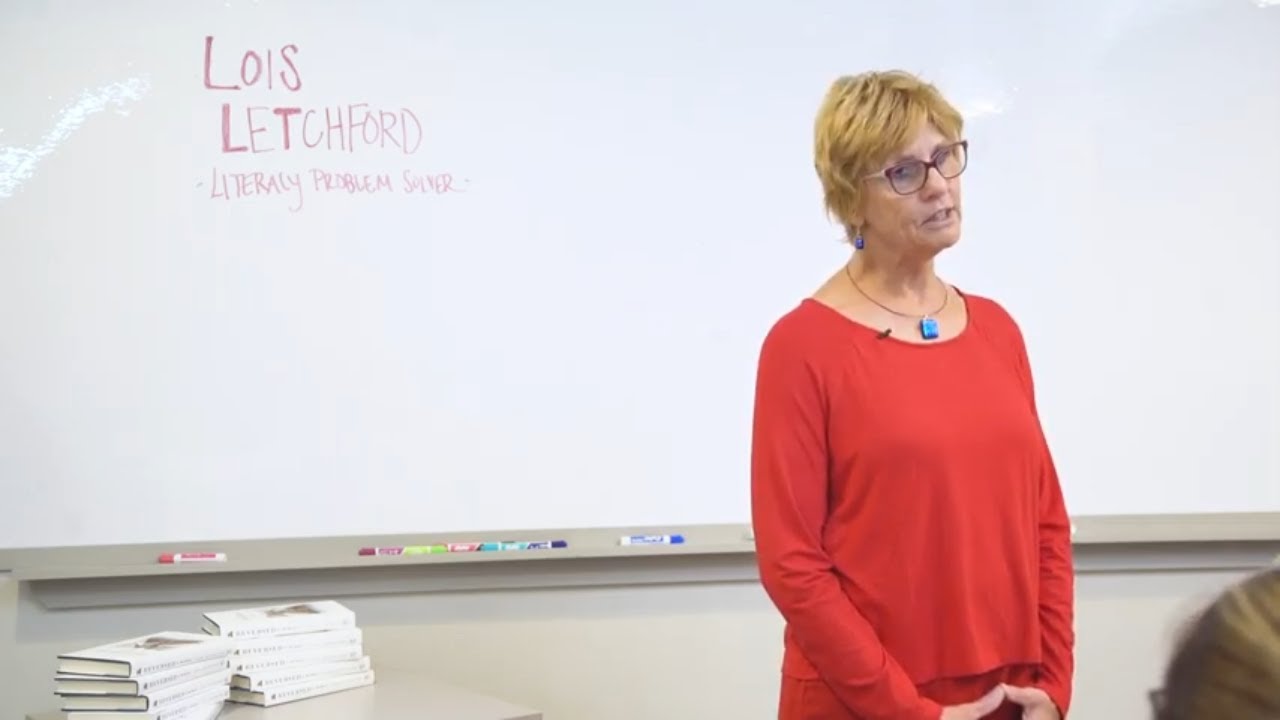
In this presentation, Lois Letchford, a literacy specialist and author of Reversed: A Memoir, argues that children who struggle to read are not inherently defective but are "instructionally disabled"—the result of ineffective teaching methods. She recounts how a school diagnostician labeled her son as the "worst child" she had ever seen, a moment that propelled her into a career teaching reading to students who had failed conventional programs. Letchford emphasizes that teachers, as the most influential professionals in education, have the power to change outcomes by controlling what and how they teach. She introduces her MAPS philosophy—Mindset, Active learning, Play, Success—as a framework for transforming non‑readers into confident readers, leading them out of special education and onto paths that include high‑school graduation and college. The talk concludes with a call to educators worldwide to adopt this approach, reject limiting labels, and recognize their capacity to teach every child to read.
Chapters
When I lost the excuses, I found my results. I'm here because children fail in classrooms every day, which is really quite distressing. And when children fail, the first thing we do is test, and we look at the results and say, they can't do it, they've got too many weaknesses. Then we give them labels, and the label will be dyslexic, learning disabled, specific language impairment. Developmental language disorder. And all of those things focus on the child with the deficit being on the child. And it says, well, that's it. I prefer to believe that our children are instructionally disabled. Now most children do learn to read in the classroom, but these who are sitting down the bottom who struggle are the ones that we're required to do additional things for. And so it's the instruction that we work on. The school diagnostician called my son the worst child I've seen in 20 years of teaching. Her goal was to put him in a box. He was 7 years old. Instead, she empowered me to say, you can call him the worst child you've seen in 20 years of teaching, but then don't expect him to learn like everyone else. Her words put me on a path to become a reading specialist, learning to teach children who'd failed all reading programs. We cannot change the children who come towards us or who turn up in our classroom, but we can control what we teach and how we teach. Teachers are amongst the most influential people on this planet. We influence the lives of thousands of students every day. Our goal must be to teach the children to read. The children I taught came to me with no words. They left as readers. They left special education, graduated high school, and often from college. Teachers, we have the power to change the world. The acronym for my philosophy is MAPS. M-A-P-S. M is for mindset— how we think and what we think. How we think and what we think influences the way we deal with the children who struggle. A is active learning. Active learning is what skilled readers do. They engage in making meaning of all the words on print. I want my unskilled readers to to be exactly the same. P is for play. I want my students to play with words, thoughts, ideas, sounds, to be engaged and have fun with their learning. And finally, S is success. Student success occurs on a daily basis, building to long-term success. Teachers are the ones in charge of the teaching instruction. They are there to meet the needs of the child, not the other way around. I'm Lois Letchford. I am the literacy problem solver and author of the book Reversed: A Memoir. I talk to parents, to teachers and educators around the world, inspiring them that they too can teach those children who were once labelled.