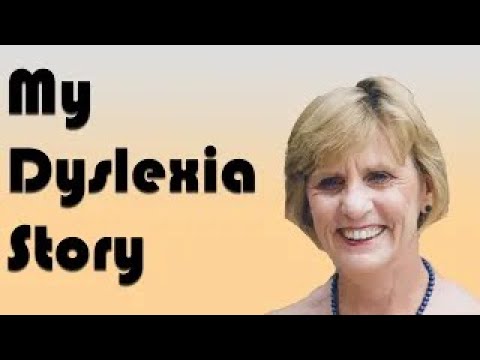
In this video Lois Letchford shares her lifelong struggle with undiagnosed dyslexia, describing how early school experiences labeled her as "not very smart" despite her hard work. She recounts a turning point when moving to a high‑school environment that emphasized community productions, subject‑based reading, and inquiry, which sparked deeper comprehension. Later, a multisensory anatomy lesson—using a box of leg bones—demonstrated how tactile, visual teaching can transform learning for dyslexic students. Drawing from these experiences, Lois explains her current work as a literacy advocate and "literacy problem solver," emphasizing that many students experience learning‑related trauma. She promotes her seminar series "When Learning Is Trauma," featuring guests like Rosalind Abigail Kiranatli from Ghana, to discuss global impacts of reading difficulties. Throughout, she argues that reading is both a science (required skills) and an art (engaging delivery), urging educators to reflect on how their own learning experiences shape their teaching and to ensure every child receives equitable reading instruction.
Chapters
Hello, I'm Lois Letchford, author of the book Reversed: A Memoir and literacy problem solver, sharing my story of dyslexia and why I have become such a literacy advocate. I struggled to read in school. That was my first point. I was never identified. I could read words, so that allowed me to go under the radar. But I could not comprehend. And it was really obvious when we had the SRA reading series, when we were asked to answer those questions, I could not do it. And no one helped me. No one ever said, something's not quite right here. They just said very simply, in their own minds, the girl is not very smart. And that message came across to me. You're not very smart. Despite working very hard, I got the message, you're not very smart. So I read with limited comprehension and I put in so much effort all the time, every day in school, just to survive and feel like I could do something. However, over the period of time, just by doing it again and doing it and Talking, you do get slightly better. But my big jump came when I moved from elementary school to high school. During the time when I was in school, elementary school or primary school in Australia was from grade one to grade seven. High school was from grade eight to grade twelve. So I went into grade eight and I was in the dummy class, and my sister moved schools and said. To my mother, Lois has to move to this other school too. So there I went to a proper high school from grade 8, from grade 9 really when I went there, to grade 12, and it really transformed my life. And I ask myself why. What happened there that made such a difference? The first was the school itself was different, that everyone was going somewhere. The second was that the school put on school productions, school plays, musicals, and teachers, students, everyone was involved. And that gave the school a role within the community. And we as students were part of it. And that was incredible. And then you're always learning, you're always reading, you're always writing, you're always making meaning. And you're performing. That all adds. It's a curricular activity, extracurricular activity, but it also adds to your learning. The subjects I did, the histories, the sciences, I was asked to read more. And now I'm not just reading anything. I'm reading with subject knowledge. You're being given background knowledge. And I remember I had to start to ask questions. And we were looking at the topic of imperialism. And this is something that is still in my brain. I had to ask myself, what is imperialism? And then I had to search for the answer. And that's what good readers do. They ask questions and they look for answers. And that's what I did. It— what happens when you start doing this, start looking at content, is you're not just reading for that minute or that reading passage or to answer questions. You're reading, you're thinking, you're reflecting, and the thoughts stay with you. And that's when reading really starts to take hold, when you're given time to reflect and to think about your reading. And that's exactly what I want my students to do. With that background, I gained enough points or enough— good enough results to go to a teacher's college at the time and become a physical education teacher. I still struggled. I still put in a huge amount of work for very average results. But then again, I looked at how I was being taught in the college, and it was one lecture You know, 30 or 40 students in a class, stand up, talk, sprout it. And I am not an auditory learner. I really struggled with anatomy and even more with physiology. Because again, I'm not really an auditory learner and it was a real effort for me to get through those subjects. However, I did survive. I did become a physical education teacher and I worked there for a couple of years. And then I went back To school. I did a few other things, but I eventually went back to school and came up with a different sort of learning altogether where I had to do anatomy again. And this time I was working in a smaller group. I was working with the teacher. The first thing he did for our anatomy lesson was to bring in a box of bones. All the leg bones. The way he talked, he talked and held the bone up. He pointed to the areas of the bone that he was talking about. The multisensory teaching that he was doing transformed my learning. And that really became significant and has stuck with me. He changed the teaching and I started to think, oh, I'm not as low as what people think. I'm not as low as what I think. I can do this. And that becomes a critical component of learning and teaching. However, you've also got the component that teachers learn from the way they were taught. Mm-hmm. And the way they learn. And that's what I learnt that long ago. If he can change the teaching for this, it can transform learning for others. And that was really significant for me and played a huge role when my son comes along and I'm expected to— and he's not learning, and then I'm expected to teach him. So there are new outcomes. The learning experiences of teachers influence the way they teach and learn. It's worth thinking about— teachers, if you're listening— what learning experiences have impacted the way you teach today? Are you teaching the way you were taught? No. Or are you thinking, this is not working for my student? What role does your learning have in teaching children today? It's a really critical component of learning because many of our students struggled in school. Many students with dyslexia, they not only struggle, but they have been traumatised That's the word, traumatized by their learning. It's significant because it's trauma stays with children and they often, particularly if they have a language disorder, cannot then articulate what has happened. So this leads me to what I'm actually doing on a series and that's Uh, seminar series, When Learning Is Trauma, every Monday, 4 PM Eastern Daylight Time in the eastern United States, where we're talking about learning is trauma, where people, adults, are now talking about their childhood experiences, where psychologists are saying, this is what happens when children fail in school. Mm-hmm. This is the impact of it, and of educators who see the results of children who have sat in the classrooms and failed for too many days. Very similar to what has happened to me. So this week, we are talking to Rosalind Abigail Kiranatli from Ghana, who failed her way through school. And I spoke to her last week, and she said. I was nearly 17 and I'm still in middle school. My peers are younger than me, or my classmates are younger than me, and that is humiliating in itself. And she could not read. When people do not read, It's traumatic. So Rosalyn is going to share her experiences, and her topic is going through life with learning difficulties, because learning difficulties do not go away. We may learn to read, we may learn to write, but they— we still live with whatever we've got in our brains that limits that early learning in the beginning. So we talk to Rosalyn at 4 PM tomorrow. From Ghana. This is not just a Western society's problem. It is now a world problem because we recognise that every child must learn to read and write. And if we take that to heart, what are we doing about it? Because we have people from all cultures and a whole variety who have to learn to read. What are we going to do? So join us tomorrow. Thank you. As we talk about when learning is trauma, and I look at how I learned to read and now how I teach other children. That's why I'm here, because I teach the most challenged children to read. How do I do it? What do I do that's, that's really makes me different? And makes me the literacy problem solver, that I can take a child and say, I know what's wrong and I know what I have to do. And so we remember that reading is both a science— there are certain things that we are required to do and children are required to learn— but it's also an art. It's a matter of, yes, I have to do things, how am I going to do it to engage this child? In learning to read. That's why I'm here. It's Lois Letchford. Hit like, hit subscribe, and always, if you've read the book Reversed, please connect with me. Please tell me what you thought, what you think of it, what you liked about it, what you didn't like about it. Because it is my story, and I'm very aware that our family was extremely privileged in having my son learn to read. And that in itself makes me say no child should ever have to have that level of privilege to learn to read. Learning to read must come to each child in the school they are in, in the class they are in, in the home they are in, and it's our job to do it. So that's me, Lois Letchford. Thank you for joining me today. Hit like, hit subscribe, connect with me, and let me know if you've read the book Reversed: A Memoir. Thank you.