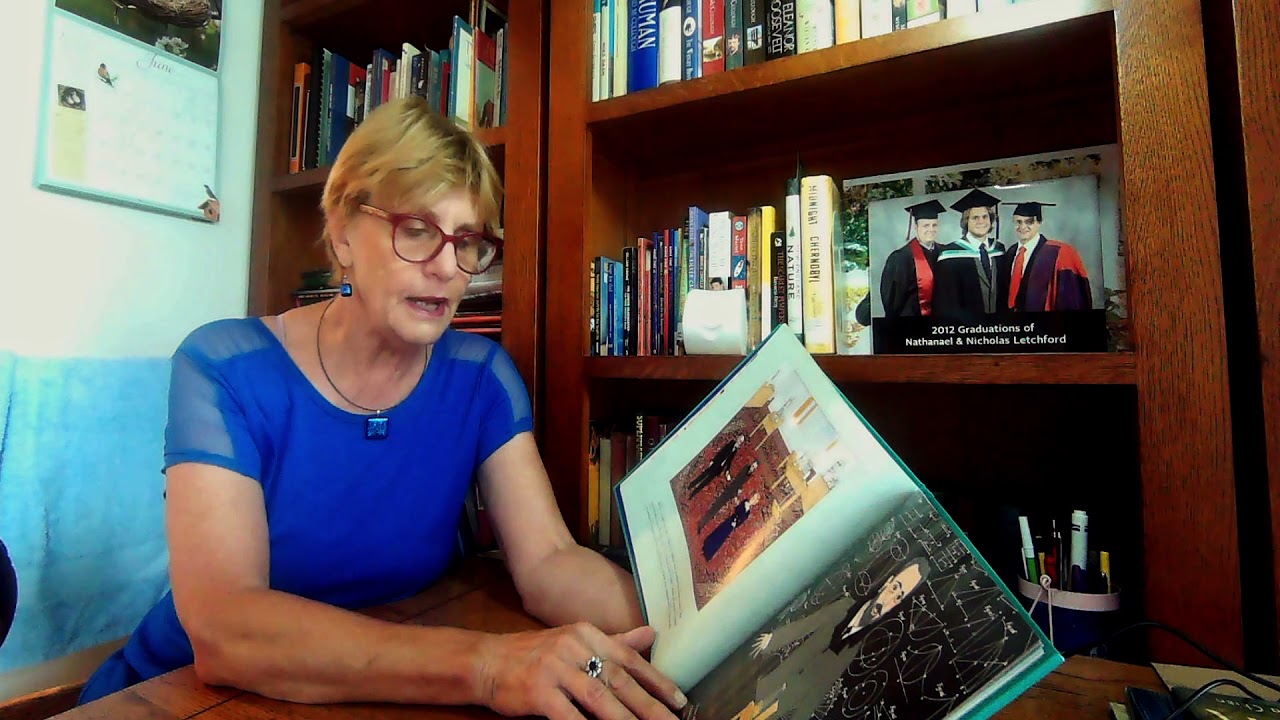
In this narrated YouTube video, Lois Letchford presents a biographical overview of Marie Curie’s early life, education, scientific breakthroughs, and personal challenges up to 1911. The story begins with Curie’s birth in Warsaw (1867), her family background, and the hardships of living under Russian occupation, including the loss of her sister and mother. It describes her self‑directed learning, the financial constraints that led her sister Bronya to study in Paris while Marie worked to support her, and Marie’s eventual move to Paris in 1891 to study at the Sorbonne under the name Marie Sklodowska. The narrative follows her academic achievements in physics and mathematics, her meeting and marriage to Pierre Curie, and their collaborative work on radioactivity. Detailed accounts are given of their experiments with uranium, thorium, and pitchblende, leading to the discovery of the elements polonium and radium and the coining of the term “radioactive.” The video highlights the health hazards they faced, the development of radium’s medical applications, and their receipt of the 1903 Nobel Prize in Physics. After Pierre’s tragic death in 1906, Marie assumes his teaching duties, becomes the first female professor at the Sorbonne, and continues her research, culminating in a second Nobel Prize in Chemistry in 1911 for the discovery of radium and polonium. The video ends with a call to return for part two.
Chapters
Hello, I am Lois Letchford, reading this week about people who changed the world in science. I am Lois Letchford. I'm the author of The Reverser Memoir. I'm founder of Teaching Students with Dyslexia with Russell Brandbocklin and Kushboo. And please hit like if you like these videos, hit subscribe and share it with others. But this week I'm reading about Māori Curie. Let's go. Marie Curie. On November 7th, 1867, Maria Szamelina Sawicki was born at 16 Fryderyk Street in Warsaw, Poland. Her family nicknamed her Maja, but one day She would be known by another name, Madame Marie Curie, one of the greatest scientists who ever lived. Her mother was the principal of a school for girls and her father was a maths and physics teacher. One of Maria's earliest memories was of her father's cabinet full of scientific instruments. Maria didn't know what the instruments were for, but they fascinated her. Surrounded by 3 older sisters and a brother who all loved books, Maya figured out how to read at just 4 years old. Maya loved to learn and was always at the top of her class, even though she was 2 years younger than the other children. Life in Polden was very difficult. Warsaw was occupied by Tsarist Russia and the Polish people had no freedom. Maya did all her lessons in Russian, but she also spoke fluent Polish and French. Life at home was also difficult. Maya was 8 when her older sister Zoya died of a disease called typhus. Just 2 years later, her mother died of tuberculosis. A lung disease. Maja began doing many of the jobs her mother had done at home, but she also started to work even harder on her lessons. Because girls in Poland were not allowed to go to university, Maja and her sister Bronia wanted to study in Paris, but their family did not have enough money for both of them to go. The 2 sisters made a deal. Bronya would go to Paris to study medicine while Manya worked to support her. Then after Bronya finished school, she would help Meier as Meier completed her studies. In 1886, Meier worked as a governess to the children of the wealthy family who owned a beet sugar factory north of Warsaw. She also taught poor local children to read and write. On her own, Maria did not stop learning. She dreamed of Paris and Sorbonne, a famous university where she could attend formal classes, learn from brilliant professors, and even use a laboratory for her experiments. When Bronya completed her studies in 1890, She kept her promise to Mania. She became engaged to a fellow medical student, invited her younger sister to live with them in Paris, but Maya decided that she preferred to live on her own. She came to Paris from Poland on a train ride that took 40 hours. In November 1891, Maya enrolled at the Savon as Marie Soboldowski. By the time she had forgotten some of her French, but she didn't have much money. But she was excited. Her dreams were finally coming true. In 1893, she graduated first in her class with an advanced degree in physics and a scholarship for the next year. In 1894, she graduated second in her class with a degree in mathematics. While completing these degrees, Marie met another brilliant mind. She was introduced to Pierre Curie by a friend and fellow Polish physicist. Pierre immediately recognized her brilliance. Marie was impressed by his work. Pierre and his brother Jacques had made important discoveries while studying electricity, magnetism, heat, and crystals. Together they invented the electrometer, an instrument that measured electricity given off by crystals and other types of matter. Their ideas are used today in mobile phones, quartz watches, and record players. Although Pierre was much older than Marie, they fell in love and were married in 1895. They celebrated by bicycling through the French countryside When they returned, Marie studied to become a teacher and Pierre eventually became a professor in Paris. Marie continued to research, run the household, cook and clean, and in 1897 she gave birth to their daughter Irene. The new mother was busy, but that did not slow her down. Thankfully, Pierre's father came to help with the baby. With a child at home, Marie needed a place to continue her experiments. At Pierre's School of Physics and Industrial Chemistry, there was a leaky old shed that was cold and damp, but it was empty and it was hers. There, Marie decided to study the mysterious energy Given off by a metallic element called uranium. She began her research by looking for other things that gave off some invisible rays. She soon found the element thorium did too. Her research was so successful that Pierre left his work to join hers. Marie knew— now knew any solid matter that contained uranium Or thorium gave off rays, but nobody knew the cause. Marie decided to find out. She started by looking for something unseen, a new element unlike any other known to man. A mineral called pitchblende contained both uranium and thorium, so the Curies ordered several tonnes to test Marie's theory. First, she grounded the rock to powder and then dissolved it in acid over and over again to separate all the different elements that made up the pitchblende. After everything was finally removed, Marie and Pierre found the pitchblende gave off radiation much greater than could be explained by the remaining uranium. Marie and Pierre realized that their discovery not— discovered not one but two new elements. They called the first new metal polonium in honor of Marie's hometown, Poland. The second element they called radium. They also created the word radioactive. to describe substances that emitted rays or radium. Marie wrote about her— their findings, and other scientists were doubtful and demanded that the couple prove their results by figuring out the new element's atomic weight. For 4 years, Marie and Pierre worked on this tricky problem. They removed all the known elements from the purified pitch braid until one day the only thing left was a tiny speck in a little glass container. They were not quite sure what to make of it. In bed that night, the 2 scientists tossed and turned, wondering if Something had gone wrong. Marie and Pierre decided they couldn't sleep until they had figured it out. They headed back to the lab in the middle of the night. It was pitch black as they stumbled inside, except for one spot. There on the table, glowing in the darkness, was a tiny speck of light from Marie's little glass container. The cure! The Curies finally had their pure radium. Although they had managed to isolate only a tiny amount of radium, Marie was able to calculate its atomic weight. They continued working in the old shed, but soon some interesting and painful problems arose. Although radiation from uranium had seemed harmless, radium was much, much stronger. Everything in the shed became radioactive. Marie and Pierre developed blisters and sores on their hands that would not heal for months. If they tried to carry a small tube of radium in their jacket pockets, it would burn their skins right through the glass and fabric. They realised that radium's ability to burn skin might have a surprising use. If it could burn healthy flesh, it might also be able to burn away unhealthy parts. Parts that had cancer. Marie and Pierre had stumbled upon one of the greatest contributions to the world of medicine. modern medicine. The year 1903 ended with the Curies receiving the most prestigious award of all, the Nobel Prize in Physics. The following year, the Curies had their second daughter, Eve. Pierre accepted a teaching job at Sorbonne. Although Pierre began to feel weak, a hint of Beyond the unknown dangers of radium, the hard work and research seemed to be paying off. The growing family was happy. On Thursday, April 19th, 1906, everything changed. It was a rainy afternoon when Pierre stepped out of a meeting with fellow professors, not wanting to get too wet. He decided to run to his next appointment. As he crossed the busy narrow street, Pierre accidentally stepped into traffic and was struck by a wagon which killed him instantly. Although Marie was devastated, she refused to let her sadness interfere with her work. Instead, she took over Pierre's class and became the first female professor at Sorbonne. Marie continued her juggling act of teaching, research, and caring for her daughters. She even found time to prove once and for all that radium and polonium existed after Lord Kelvin, a British scientist, challenged her findings. On November 7th, 1911, Marie was awarded a second Nobel Prize, this time for chemistry, for the discovery of the elements radium and polonium. Marie travelled to Stockholm to receive the medal from the King of Sweden himself, making her the first person to win the Nobel Prize twice. I'll stop there for today. Come back tomorrow and listen to part 2 of the story of Marie Curie. Hit like, hit subscribe, and share it with your friends.