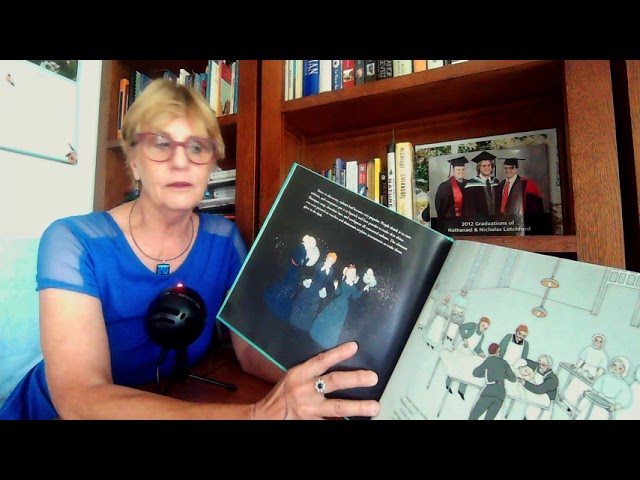
The video recounts Marie Curie’s contributions during and after World War I. In 1914, recognizing that rapid X‑ray diagnosis could save lives, Curie converted a truck into a mobile X‑ray unit and later organized a fleet of twenty “Little Curies” that X‑rayed over one million wounded soldiers by the war’s end. In 1921 she traveled to the United States, received a gram of radium worth $100,000, and was honored by President Warren Harding. The narrative then describes the 1920s craze for radium in consumer products—lipstick, toothpaste, watches, and even food—leading to the tragic “radium girls” who painted luminous dials, inadvertently poisoned themselves, and highlighted the dangers of radiation. By the mid‑1920s scientists began to recognize radiation’s dual capacity to kill and cure, but Curie’s own health had already suffered from prolonged exposure; she died on July 4, 1934, in the French Alps. The video concludes by emphasizing Curie’s lasting scientific legacy: pioneering cancer treatment, enabling her daughter Irène’s work on nuclear energy, and her belief that humanity would ultimately harness atomic discoveries for good.
Chapters
Madame Curie. Marie Curie, part 2. In the summer of 1914, France went to war. The German army began closing in on Paris, and many soldiers were injured and dying. Marie understood that x-raying soldiers quickly often meant the difference between life and death. Marie had a truck turned into a mobile x-ray machine That could drive to the wounded and X-ray them. Eventually, she organised a fleet of 20 X-ray ambulances called Little Curies. By the end of World War I in 1918, more than 1 million wounded men had been X-rayed thanks to Marie Curie. For all her work, Marie was invited to travel to America to accept a gram of radium worth $100,000 for her research. When she arrived in the spring of 1921, she received a hero's welcome and was honoured at the White House by President Warren Harding. Since its discovery, radium had become very popular. People drank it to cure arthritis, and companies put it in lipstick and face powder to make skin shine. Shampoo, soap, chocolate bars, and toothpaste all contained radium. The element was even painted on watches and aluminium airplane instruments to make them glow in the dark. Factory workers who painted these watches and instruments were called radium girls, as they painted They would moisten the tips of their toothbrush in their mouths again and again to keep a very fine point. Some of the girls painted their teeth and fingernails with the glowing paint for fun. But eventually the girls began to notice that they were sneezing into their handkerchiefs, and their handkerchiefs glowed in the dark. Then they started to lose their teeth, and they accidentally poisoned themselves with radium. By the mid-1920s, scientists recognised the dangers of radioactivity. They realised that radiation given off from radium could both kill and cure. Although scientists began using protection when working with radium, Marie had already started to become ill from all her years of exposure. On July 4th, 1934, Marie Curie died in the French Alps at the age of 66. Marie Curie's tireless research came at great cost, but her discoveries also greatly improved life. She and her husband had successfully developed a new weapon in the fight against cancer. And Marie's ideas about the atom helped her daughter Irene unlock the power of nuclear energy. Marie was convinced that humanity would draw more good than evil from these new discoveries, and so throughout her life's work, she never hesitated in the pursuit of knowledge. And that's the story. There's lots of times, dates, and places to check out in this book, and you can make a timeline of Marie Curie's life— when she lived, what achievements that she gained throughout her life, when she died, what else was going on in the world at this time, because it's mentioned World War I, and that depends on where you live, what dates it began and what dates It ended, but she had a major impact on our world, and she changed the way we see medicine and radiation. Thank you for like— for watching. Hit like, hit subscribe, and share it with others.