Lois Letchford: Social Justice - Thank You Mr. Falker
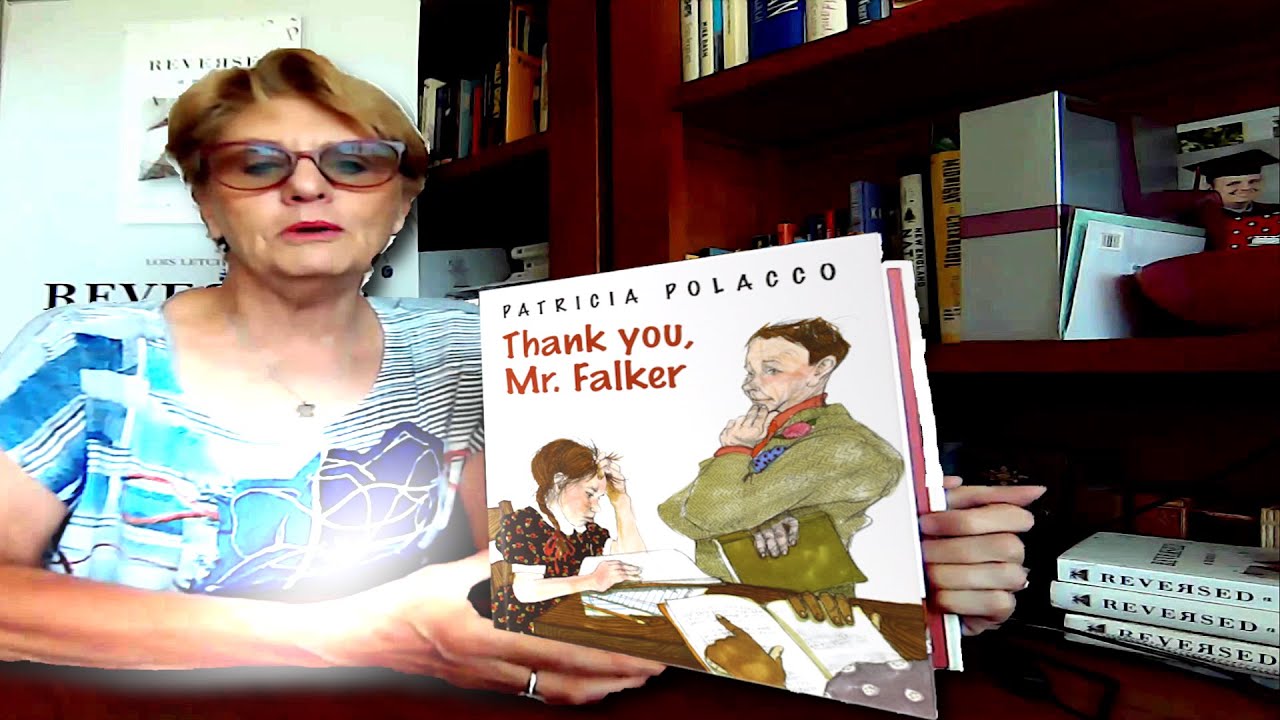
In this YouTube video, author and memoirist Lois Letchford reads aloud Patricia Polacco’s autobiographical picture‑book “Thank You, Mr. Faulkner.” The narrative follows young Tricia (Polacco) as she struggles with reading, faces bullying, and feels “dumb” throughout elementary school. Her grandparents provide love and metaphorical encouragement, comparing knowledge to honey made by bees. After moving to a new school, Tricia meets a compassionate teacher, Mr. Faulkner, whose patient, creative methods—drawing, sponge‑letter games, sand circles, and individualized instruction—help her finally decode words and experience the joy of reading. The breakthrough is symbolized by Tricia tasting honey while holding the book, linking sweetness to knowledge. The story ends with Tricia, now an adult author, reuniting with Mr. Faulkner decades later and thanking him for changing her life. Lois concludes the reading with a call to like, subscribe, and share the channel.
Chapters
I am Lois Letchford, author of the book Reversed: A Memoir, and reading to you from some of my favourite books. And this one was given to me in 2001 by my very first student in Lubbock. Thank you, Mr. Faulkner. Written by Patricia Polacco, and his inscription was, thank you for all the time you have given me. So, thank you, Mr. Faulkner. If you ever get the opportunity, there is a YouTube clip of Patricia Polacco talking about this book and this teacher, and she still remembers much of the incident that revolved around this book. The grandpa held a jar of honey so that all the family could see, then dipped a label into it and drizzled honey over the COVID The little girl had just turned 5. Stand up, little one, he cooed. I did this for your mother, for your uncles, and for your older brother, and now you. Then he handed the book to her. Taste. She dipped her finger into the honey and put it into her mouth. What is that taste? The grandma asked. Sweet. Then all of the family said in a single voice, yes, and so is knowledge. But knowledge is like the bee that made that sweet honey. You have to chase it through the pages of a book. The little girl knew that the promise to read was at last hers. Soon she was going To learn to read. Tricia, the littlest girl in the family, grew up loving books. Her schoolteacher mother read to her every night. Her red-headed brother brought his books home from school and shared them. And whenever she visited the family farm, her grandfather or grandmother read to her by the stone fireplace. When she turned 5 and went to kindergarten, most of all she hoped to read. Each day she saw the kids in first grade across the hall reading, and before the year was over, some of the kids in her own class began to read. Not Tricia. Still, she loved being at school because she could draw. The other kids would crowd around her and watch her do magic with the crayons. In first grade, you'll learn to read, her brother said. In first grade, Tricia sat in the circle with the other kids. They were all holding Our Neighbourhood, their first reader, sounding out letters and words. They said, b-b-oh boy, la-la, oh look! The teacher smiled at them. When they put all the sounds together and got the word right. But when Tricia looked at the page, all she saw were wiggling shapes. And when she tried to sound out words, the other kids laughed at her. Tricia, what are you looking at in the book? they'd say. I'm reading, she'd say back to them. But her teacher would move on to the next Always when it was her turn to read, her teacher had to help her with every single word. And while the other kids moved up into the second reader and the third reader, she stayed alone in our neighbourhood. Tricia began to feel different. She began to feel dumb. The harder words got for the little girl, the more and more time she spent drawing. How she loved to draw! Or just sitting and dreaming. And when she could, going for walks with her grandmother. One summer day, she and her grandma were walking together in the small woods behind the farm. It was twilight. The air was sweet and warm. Fireflies were just coming up from the grasses. As they walked, Trisha said, Grandma, do you think I'm different? Of course, her grandma answered. To be different is a miracle of life. You see all of those little fireflies? Everyone is different. Do you think I'm smart? Tricia didn't feel smart. Her grandmother hugged her. You're the smartest, quickest, dearest little thing ever. Right then, the little girl felt safe in her grandmother's arms. Reading didn't matter so much. Tricia's grandma used to say the Stars were holes in the sky. They were the light of heaven coming from the other side, and she used to say that someday she would be on the other side where the light comes from. One evening they lay on the grass together and counted the lights from heaven. You know, Grandma said, all of us will go there someday. Hang on to the grass and you'll lift Right off the ground, and there you'll be! They laughed and hung on to the grass. But it was not long after that night that her grandmother must have let go of the grass, because she went to where the lights were on the other side, and not long after that Trish's grandpa let go of the grass too. School seemed harder now. Reading was just plain torture. When Sue Ellen read her page, or Tommy Bob read his page, they read so easily that Trishelle would watch the top of their heads to see if something was happening in their heads that wasn't happening in hers. The numbers were the hardest of all to read. She never added anything right. Line the numbers up before you add them, the teacher would say. But when Tricia tried, the numbers looked like a stack of blocks, wobbly and ready to fall. She just knew she was dumb. Then one day, her mother announced that she had gotten a teaching job in California, a long way from the family farm. Even though her grandma and grandpa were gone, the little girl didn't want to move. Maybe though the teachers and the kids at a new school wouldn't know how dumb she was. And she and her mother and brother moved across the country in the two-tone 1945 Plymouth. It took 5 days. At the new school, it was the same. When she tried to read, she stumbled over words. Cuh, cat. Rrr, ran. She was reading like a baby in 3rd grade. And when the teacher read along with them and called on Tricia for an answer, she gave the wrong answer. Every time. Hey, dummy! A boy called out to her on the playground. How come you're so dumb? Kids stood nearby and they laughed. Trisha could feel the tears burning in her eyes. How she longed to go back to her grandparents' farm in Michigan. Now Trisha wanted to go to school less and less. I have a sore throat, she'd say to her mother. Or, I have a stomachache. She dreamed more and more and drew more and more. And she hated, hated school. Then when Trisha started 5th grade, the school was all abuzz. There was a new teacher. He was tall and elegant. Everybody loved his striped coat and his slick grey pants. He wore the neatest clothes. All the usual teacher's pets gathered around him— Stevie Jo and Alice Marie, Davy and Michael Lee. But right from the start, it didn't seem to matter to Mr Faulkner which kids were the cutest, or the smartest, or the best at anything. Mr Faulkner would stand behind Tricia whenever she was drawing and whisper, this is brilliant! Absolutely brilliant! Do you know how talented you are? When he said this, even the kids who teased her would turn around in their seats and look at her drawings. And they still laughed whenever she gave the wrong answer. Then one day she had to stand up and read, which she hated. She was stumbling through the pages in Charlotte's Web and the page was going fuzzy when the kids began to laugh out loud. Mr. Faulkner, in his play jacket and his butterfly tie, said, Stop! Are you all so perfect that you can look at another person and find fault with her? That was the last day anyone laughed out loud or made fun of her, except Eric. He had sat behind Tricia for 2 whole years. But he seemed almost to hate her. Trish didn't know why. He waited by the door in the classroom for her and pulled her hair. He waited on the playground, leaned in her face and called her toad. Trisha was afraid to turn any corner for fear Eric would be there. She felt completely alone. The only time she was really happy was when she was around Mr Faulkner. He let her erase the blackboards. Only the best students got to do that. He patted her on the back when she got something right, and he looked hard and mean at any child who teased her. But the nicer Mr Faulkner was to Tricia, The worse Eric treated her. He got all the other kids to wait for her on the playground or in the cafeteria or even in the bathroom and to jump out and call her stupid and ugly. And Tricia began to believe them. And she discovered that if she asked to go to the bathroom just before recess, she could hide under the inside stairwell during free time. and not have to go outside at all. In that dark place, she felt completely safe. One day at recess, Eric followed her to her secret hiding place. Have you become a mole? He laughed and pulled her out of the hall and danced around her. Dumbbell, dumbbell, Maggedy Ol' Dumbbell. Tricia buried her head in her arms and curled up in a ball. Suddenly she heard footsteps. It was Mr Faulkner. He marched Eric down to the office. When he came back, he found Tricia. I don't think you'll have to worry about that boy again, he said softly. What was he teasing you about, little one? I don't know, Tricia. Shrugged. Tricia was sure Mr Faulkner believed that she could read. She had learned to memorise what the kid next to her was reading, and she would wait for Mr Faulkner to help her with a sentence. Then she'd say the same thing that he did. Good, he would say. Then one day Mr Faulkner asked her to stay after school and help wash the blackboards. He put on music and brought out the sandwiches as they worked and talked. All at once he said, let's play a game. I'll shout out letters. You can write them on the board with the wet sponge as quickly as you can. A! he shouted. She wiped a watery A. 8! he shouted. She made a watery 8. 14! 3! D! M! Q! he shouted. He shouted out many letters and numbers. Then he walked up behind her, and together they looked at the board. It was a watery mess. Tricia knew that none of her letters or numbers looked the way they should. She threw the sponge down and tried to rub. But Mr. Faulkner caught her and caught her arm and sank to his knees in front of her. You poor baby, he said. You think you're dumb, don't you? How awful for you to be so lonely and afraid. She sobbed. But little one, Don't you understand? You don't see letters or numbers the way other people do. And you've gotten through school all this time and fooled many, many good teachers. He smiled at her. That took cunning and smartness and such, such bravery. Then he stood up and finished washing the board. We're going to change all that, girl. We're going to read. I promise you. Look at that. Every day after school she met with Mr Faulkner and Miss Plessy, the reading teacher. They did a lot of things she didn't even understand at first. She made circles in sand and then big sponge circles on the board going from left to right and right to left. Another day she flicked letters on a screen and Tricia shouted them out loud. Still other days they worked with wooden blocks and built words. Letters, letters, letters. Words, words, words. Always sounding them out and that felt good. And though she read words, she hadn't read a whole sentence and deep down she still felt dumb. Then one spring day— had it been 3 months or 4 months since they started Mr Faulkner put a book in front of her. She'd never seen it before. He picked a paragraph in the middle of the page and pointed at it. Almost as if it were magic, or as if a light poured into her brain, the words and sentences started to take shape on the page as they never had before. She marched them off. To— Slowly she read the sentence. Then another. And another. And finally she read a paragraph and she understood the whole thing. She didn't notice that Mr Faulkner and Miss Blessie had tears in their eyes. That night, Tricia ran home without stopping to catch her breath. She bounded up the front steps, threw open the front door, and ran through the dining room to the kitchen. She climbed up on the cupboard and grabbed a jar of honey. Then she went into the living room and found the book on the shelf, the very book that her grandpa had shown her so many years ago. She spooned honey on the COVID and tasted the sweetness and said to herself, The honey is sweet and so is knowledge, but knowledge is like the bee who made honey and it has to be chased Through the pages of a book. Then she held the book, honey and all, close to her chest. She could feel tears roll down her cheeks, but they weren't tears of sadness. She was happy. So very happy. The rest of the year became an odyssey of discovery and adventure. For a little girl. She learned to love school. I know because that little girl was me, Patricia Polacco. She saw Mr. Faulkner again some 30 years later at a wedding. I walked up to him and introduced myself. At first he had difficulty placing me. Then I told him who I was and how he changed my life so many years ago. He hugged me. And asked me what I do for a living. Why, Mr Faulkner, I answered, I make books for children. Thank you, Mr Faulkner. Thank you. Thank you for listening. Hit like, hit subscribe, and share to grow the channel. Thank you.
More from Lois


Overcoming Adversity: A Dyslexic Learner's Journey to Success | When Learning is Trauma #shorts

Redefining Success, Beyond Grades in Education | When Learning is Trauma #shorts

Turning Awareness into Action for Dyslexic Learners | When Learning is Trauma #shorts

Why Dyslexia Goes Unnoticed: A Systemic Issue | When Learning is Trauma #shorts

The Long-Term Impact of Unrecognized Dyslexia | When Learning is Trauma #shorts

The Heartbreaking Reality of School for Some Kids When Learning is Trauma #shorts



