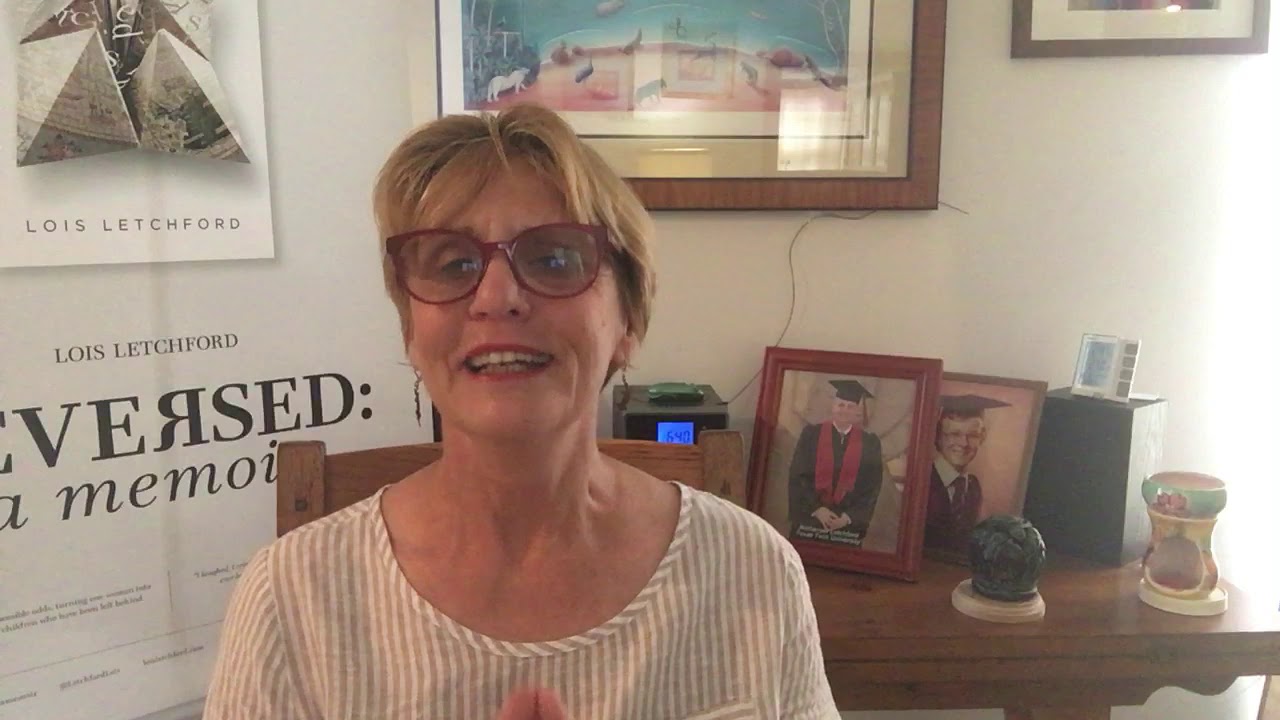
This content was created by Lois Letchford. This content was uploaded by Lois Letchford. This is a YouTube video titled "Lois Letchford Speaks of Gabriel Wyner \"Give Language Life\"" (created 2020-07-13) featuring Lois Letchford — author of Reversed: A Memoir and The Literacy Problem Solver — speaking directly to camera. She summarizes Gabriel Wyner's Fluent Forever approach to learning oral languages (give language life; connect words to images, sounds, tastes, emotions; teach grammar through stories) and explains she uses the same strategies to teach children and dyslexic or struggling readers. She invites viewers to subscribe/like/share and notes a follow-up video demonstrating application of these methods to reading instruction.
Chapters
Hello, I'm Lois Letchford. I'm the author of the book Reversed: A Memoir and The Literacy Problem Solver. And I'm here to talk to you today about a video clip I saw this week by Gabriel Wyner on— and he talks about learning an oral language. He was an opera singer who had to learn languages to sing, you know, German, French and Italian. And what he did is he created a program called Fluent Forever. And I listened to him and I thought, what he says is what we have to do for children who struggle with reading. And in fact, what he did was exactly what I did, not only with my son but with other students as well. So what does he say to do? He said the first thing you have to do is give a language life. Give language life. And then he said the second is that every word needs to be connected to images, to sounds, to tastes, to emotions. And the more we do that, the better. And the third thing he says, every bit of grammar can't be learned in an abstract sort of way, grammatical code. Give it a story. Give it a story, he said. And he shows how he learned languages doing this particular way, using this. And this is what I do with all of my students. Now, my students are the ones who have been in school for many years and have failed. And I look at them and I say, why? Why? Why? Because they are often articulate. My students, students can do all sorts of things and yet they've sat in the classroom and not succeeded in their home language. And we have to ask why. What else do we have to do? So next video I'm going to take a look at how I transferred these exact same strategies to teaching students, dyslexic students, for vulnerable students and students who were given no hope of learning to read. So that's me, Lois Letchford. Hit subscribe, hit like, and enjoy my videos, and please share them. Thank you.


