Lois Letchford talks with Lisa McCarty, nurse and mother from Pennsylvania Dyslexia
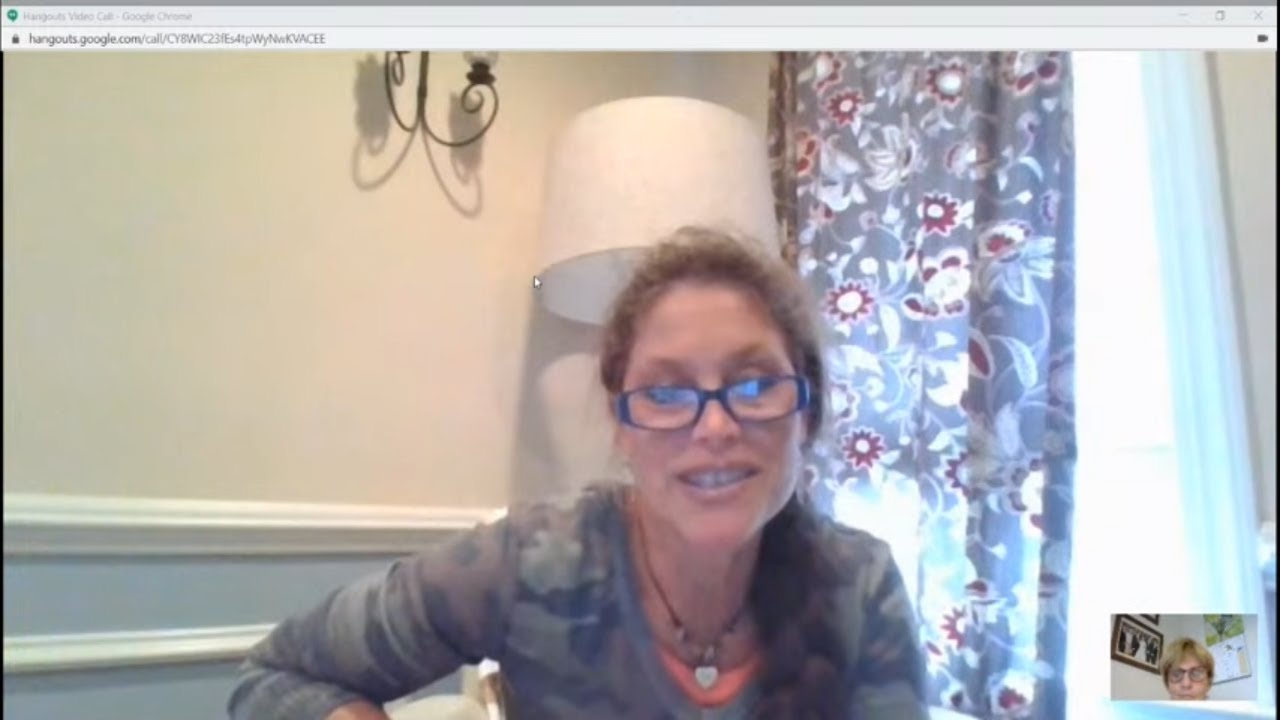
Lois Letchford and Lisa McCarty, an ER nurse and dyslexia advocate, discuss how schools traumatize struggling readers. Lisa's middle son dropped out and self-medicated; her younger son was harmed by Wilson Reading interventions. They argue IEPs reduce instruction to checklists and standardized tests ignore phonemic awareness.
Chapters
Lisa.
Yes.
Short sentences and off you go. Introduce yourself.
See if anyone's listening. My name is Lisa McCarty and I'm a nurse by trade. I got into the dyslexia community because of personal reasons and Lois asked me to do this project. So we're going to be discussing when learning is trauma.
That's brilliant, that's brilliant! I am Lois Letchford. I consider myself a literacy problem solver and author of the book Reversed: A Memoir. I'm here because my son failed first grade and failed dramatically, which was incredibly sad. In 2018, he received his PhD in applied mathematics from Oxford University, and that year I Spoke to him and said, Nicholas, tell me what happened in first grade, thinking, you know, my son's articulate, he's confident, it'll be all fine. My son cried and his tongue went round in his mouth. I was actually videotaping him and I turned it off or I deleted it because it was so horrific to see and I didn't ever want to be tempted to show it to anyone else. So when I saw that, I realized this has really been a traumatic occasion. And I was speaking to my sister Lenore, and she told me about the consequences of trauma on the brain. So it's been a long time in coming, and then I heard you talk in one of your talks in your car about mental health and dyslexia, and I— it's starting to click over a long period of time. Now I'm rambling.
No, I want to hear this story. Go.
Over a long period of time, you realize how traumatic this event was for Nicholas. And I'm seeing more and more of trauma and learning disabilities and dyslexia coming together. So we— it's not enough to say our children are not reading or not, but we have to consider their socio— their emotional health while we are teaching them.
Yes. Yeah, I do a lot of focusing on the emotional impact of this. And, you know, I was an ER nurse for 13 years, and now I'm— my passion really is working with folks who have substance use disorders. So that's my new passion, is working at inpatient treatment for these folks. And there's such a link between some early childhood experiences with the learning. And it's not even just early childhood experiences. You know, folks that are grown up, they're still affected by this, the impact that the learning in that environment had on them. And so I'm really passionate about that. In my own family, I tell people that I have a classic failure story. And then a near-miss story. I have 3 sons and 2 of them are dyslexic. So my middle son, he's the failure story in the academic setting where he dropped out of school. He got into trouble. He was self-medicating himself with substances. And that's why this is so personal to me. So I was just real— that's why I did those thoughts while driving. They're kind of silly.
Thought we'd get to that.
I wanted to bring awareness to it, you know. I don't want families to continue with this. It's, it's a shame.
Well, you, you know, we talk about the teaching and the impact of these, you know, on the brain, because the teaching Nicholas had was absolutely extreme. And we— he learned to, to love learning. And I, you know, we had him in England for 6 months in '95, and it was a transformative time because learning for him and teaching for me really became so exciting. And I often see teaching of children who are dyslexic and not succeeding being exposed to the worst teaching— dull, boring, repetitive.
Mm-hmm.
As opposed to, okay, we've got these kids, How are we going to give them now the best teaching possible? The best.
And I like to make the point that teachers have an incredibly hard job, and we were talking about this. So, you know, a lot of the— just the way our education system is set up is it's tough for anybody, but it's super tough for those kids that learn differently.
Yes.
Because you don't have time to individualize things, and the IEPs that these kids have, it's It's kind of a joke. I mean, you can't expect a teacher to have 20-some kids in a class and then they are expected to know absolutely everything that's on these individual plans. And the kids unfortunately just sort of get lost. And that's a problem. That's upsetting. So I like to make sure that a lot of my story is a little bit negative in the school system because I've been through a lot. That's not unusual for parents to, you know, to be angry at the school system and sometimes angry at teachers. But I think, to be fair, they are really— they're stuck in this system too.
Yes.
And they're also not learning the things that they need to learn in their higher education courses. So we've got a lot of work to do. A lot of work to do.
You know, but I'd really— you know, the focus to me has really got to change because, you know, the IEPs are there trying to make schools accountable, and then we dot every point and, you know, dot every i and cross every t in the hope of getting these kids through a, you know, relatively complex system, but we minimise it to, has the child learned these 3 things? Which means it's just like standardised testing.
Right, right.
We're going to only teach you those 3 things that are on your IEP. And that's a significant disadvantage. I don't think that helps us get through the process, really.
Right.
But, you know, I come from really quite a holistic approach about teaching reading too, you know, because the first thing we have to have is engagement. And if we don't have engagement, it doesn't matter what we're trying to teach them, we've lost them.
Right. And I worry about that because a lot of the kids— and this is one of the reasons we're talking about this— A lot of the kids get pinned as behavioral problems or they're just not paying attention, right? But they're struggling. And once they get that sense of failure over and over again, they start to check out.
Yeah.
I mean, there's different personalities. Some people maybe try harder and some people give up. But once they start to feel that learned helplessness, what do you do?
Yeah.
How can you reengage them?
And that's—
you talk about— go ahead.
That's what happened to Nicholas in grade 1, and he just sat in the classroom and totally withdrew. And the first thing we tend to do is blame the child.
Right. That's a problem.
Yes.
Yes. And I've seen that on several evaluations that I've read on other kids. You know, I help other families that are going through some of these things, so I've read a lot of evaluations. And it seems to be a common theme that they really— I'm trying not to be negative about the school, but it really seems like they try to paint a picture to fit a narrative that essentially says this is the kid's fault. So on one of the evaluations, the psychologist was saying, well, he's just not paying attention to doing these tests. But the child was frustrated and kept saying, like, are we done yet? Are we done yet? Because he kept— he was evaluated several times.
Yes.
I mean, for one, you know, you're pulled out of class and you already feel different. Now you feel really super different because people are evaluating you constantly. And he just sort of gave up. And then they said, well, see, he just gives up. Well, he's frustrated. You know, it was— there was no accountability. on the school's end to say, well, this child's struggling in these areas and we haven't tried anything else to help them. And then we just say, well, this— the, you know, the child is the one that's at fault.
Yes.
So, I mean, I— and I think that it's, it's, it's not a one-way street. I mean, we talk about trauma-informed care.
Yeah.
And so the idea being— and probably your, your sister can say, you That trauma changes the brain.
Yes.
And so we're very, we're very quick to say, well, since these traumatic events have affected these children so that now they have trouble learning, what we don't then say is, well, look at the kids sitting in the classroom that are having trouble learning and how is that affecting them? That's traumatic.
Yes.
You know, it goes both ways. I'm all for the kids that have had such terrible experiences in their lives and how hard it is for them to then put the energy forth to learn in school. But some kids are starting out in school with, you know, perfectly fine, non-traumatic things going on at home, but are having trouble learning. And they're the ones that then start to feel like the whole experience of learning Is traumatic.
Yes, yes. There was a picture— there was a picture on Facebook about how the brain says— and my sister describes the brain like the hand too— that, you know, when, when it's shut down, you can't— nothing goes in and nothing goes out. And really and truly, that's where Nicholas was in first grade. And how important it is that you've got to be in a relaxed state to take in information and give it out. And if you're not— if you're not— if you're under a pressure cooker system, the brain is not going to be functioning to the effect, you know, it should be. So that really has to come— the first thing is, have we engaged this child in reading and writing and in an environment where they are content and can do the work?
And where they feel success?
Yes, yes. Yeah.
You know, somebody once said, and I don't remember who it was, that they, they can't take pride in their successes, so then they start to take pride in their failures. Yeah. So that's when you start to see these kids who are the class clowns. And I talk about this all the time on the Thoughts While Driving that I do. You see the class clowns, you see the kids that are sitting there looking like they don't care, and they've got their hoodies pulled up over their, over their eyes, or they're absent, or they have to go to the nurse, or they keep asking to go to the bathroom. With all these behaviors. And it's not usually the kid and the behavior that's the problem. It's why, why is this behavior happening? They're trying to—
Yes.
You know, to form some sort of identity and to also escape the troubles that they're having, that if they're not getting a lot of what I call wins—
Yes.
Academically in the classroom, you know, that's what they need. They need somebody that recognizes where the problem is and then helps them to get those wins. So they can be engaged. Otherwise, you're just gonna say—
Wins. The heck with it. Because, you know, for all of the work on learning disabilities and dyslexia in particular, it's a language problem. It's a failure to understand language, irrespective of how competent the child is in talking. It's a failure to understand the written language.
Mm-hmm.
And we don't really acknowledge that. And because I've specialized in teaching these children who are so low, you know, I— the problems are like, you know, enormous to me. And I'm working with a 16-year-old yesterday, a 16-year-old, and I asked him to give me a sentence with the word T-O, and he said something like, I've got 2 frogs. 16. Now why is that? It's because it's something that has been ignored within the teaching. And for 4, he said, I've got 4 dogs. There's that— that failure at such a level falls on the school. We have not acknowledged the failure that happens in the language as well as in phonemic awareness. And this— yes.
Yeah.
It's not a one— it's not the problem is phonemic awareness, and he's been practicing phonemic awareness exercises. That's not the problem.
Right.
Well, it is, but it's not the only—
It's a big part of the problem, but it's not the end story.
That's right.
And that's what I started to see. And one of the reasons it took me so long to figure out that my son was still struggling so much was because once he got into— I knew he was dyslexic in the 4th grade.
Yeah.
This is my youngest son. I knew he was dyslexic in the 4th grade, and we talked to the school about this, and of course they said, oh, we don't use that term, you know, this isn't whatever. But once he got into 6th grade, I— they, they, they told me that he was going to receive the Wilson Reading Instruction. So at the time, what I knew about the Wilson Reading Instruction was that it was beneficial for a dyslexic student. So I that the school understood what the nature of the problem was and that they'd be able to help him. Well, this was pretty naive of me on several accounts, but I did— I trusted the school. As I mentioned, I was a nurse. I don't know how to teach somebody how to read. Well, I'm learning now, but at the time, all I knew was that the Wilson Reading Instruction was something you would use for a dyslexic student. And so one of the things he really struggled with, which should have been a giant red flag, was that he couldn't sound out a nonsense word to save his life. So the Wilson instruction, although it helped with that part, it wasn't addressing all of the issue. It wasn't addressing the fact that he didn't recognize words, you know, quickly and easily, and that cuts down on fluency. And then, of course, as all these problems are compounding, now they don't want to read. So the more you're not reading, the more you're not exposed to the very thing that you need to keep up in the classroom, and it just snowballs.
Yeah.
And it really wasn't until the 8th grade that I realized that he still had a problem.
Yeah.
One of the things I wanted to mention, um, was that one, one problem with my son, and I'm trying to undo this, but it's tough, is that he has this learned helplessness. So in, in a, in the public school where they weren't recognizing the nature of this problem, they basically, um, would help him do the work. Like, they weren't trying to— he, he wasn't the one that they— that was was doing a lot of the work. Couldn't do something, he'd just give up and they would do it for him. And I still see this when we were reading together and I, every now and then, I'll stop and ask a question of a word that I'm not sure he understands.
Yeah.
Because his reading has been— he hasn't had a lot of opportunity to read, so some of his vocabulary is lacking. And so I'll stop and I'll ask questions. And the The first thing he does, it's like a knee-jerk reaction, is to say, I don't know.
Yeah.
And what I realized was, for one, he— that's just a habit of his.
Yes.
He's used to somebody coming to his, you know, rescue and telling him the answer. The other problem is, and you touched on this about the problem with language processing, is that sometimes it's just that it takes him longer to figure out what am I asking him.
Yes.
And in a public school setting, I'm not bashing public schools, but let's be honest, they're busier. They have less time per student. They don't have time to sit around and wait for the kid to answer them. So I realized that he has trouble, and I asked him about this. He confirmed it, that he needs time to process what I asked him. So now when I ask him something, I ask him, and we're all very patient and we wait. And we're trying to undo that knee-jerk reaction to just say, I don't know, because he does know and he can think about it. But that's why these kids get such a bad rap in school, because the teachers think they, they're not paying attention.
Yeah.
When it's— if you understand the nature of dyslexia and where those weaknesses are, and also where the strengths are, you can help them. You can help them figure out how they learn.
When Nicholas did his, um, live on TV When Nicholas did his PhD, they do an oral exam nightmare with, you know, 2 examiners and him, or 3 examiners. I can't remember the detail. But that's a pressure cooker situation.
Mm-hmm.
And what he had to do to get through it was he said, can I write the question down? And then he would say, is this what you meant by this question?
Right.
And that's, that's a strategy I think that we have to give children to process it and say, is this what you mean?
Right.
By that. And yeah.
And sometimes you have to— I keep telling my son now, he's at a private high school or a private school that deals with language-based problems like dyslexia. And I keep telling him, Here's your opportunity for you to figure out also how you learn. Yes, because everybody's different. And I know you've mentioned before, you know, you can't expect to teach a child with a prepackaged program because none of them are the same. And so, you know, what might work well for one kid maybe doesn't work well for someone else, or as an adult, you've found a trick that works for you, but you've got to be able to explore that.
Yes. Yes.
They're all individuals, and especially these, these people with the learning differences, they're different.
Yeah.
And I think that's a terrific idea. I mean, I think that's great that your son figured out that that was helpful.
He didn't figure it out.
Oh, he didn't figure it out?
No, he, he had tutoring. One of the things he had was tutoring to help him get through this oral exam because it's— the oral exam is known to be really quite challenging for the normal people. And so one of the accommodations he had was to have tutoring help him get through it. Because what happens if you don't answer the particular question under these situations is you talk about something you don't quite have the knowledge you need, and one of the professors will have, and then you'll get hounded on that, and then you're off topic, and then you've lost the plot, basically. And you can't do that. So it's actual skill to answer the question that you have been asked. You know, when you watch that with politicians in particular, Dr. Fauci the other day was having a discussion with some lawmaker, one of the senators, about what's right and what's wrong. And Fauci kept saying, this is my area of expertise, that isn't. This is my area.
Right.
And that's what they learn to do.
Right, right.
You know, right. So, yeah.
Well, and I think another problem with these people with the language-based problems is sometimes they don't quite understand what has been said.
Oh, I totally agree. Totally.
And you take a kid like my son who now has a reduced reading experience because it's so friggin hard for him that he doesn't want to do it.
Yeah.
And now he doesn't have the same vocabulary or even You know, there's multiple definitions of a word, maybe. You know, maybe the word run could mean running down the street, but it could also mean paint running down a wall or a run in your stocking. I think the Reading League was the ones that brought this up. And if you don't have a rich reading experience, you might not know that. I mean, I've said things to him where I thought it made sense.
Yes.
You know, and he's like, I don't know what you're talking about because Because he just hasn't had the same experience, and that's a problem. So, so when the child's sitting in the, in the classroom and they've got this blank stare on their face because they don't know what you've said, it's maybe not necessarily that they're just not paying attention. Maybe they are paying attention, but they don't know what you said.
There's, you know, there was an academic paper that I read in 1990 written by Brian Camborne, and it was called Beyond the Beyond the Deficit Theory. And he said children fail, among other things, for 2 reasons. One is they're given incomplete demonstrations. And that's what you said about the word run. You're given incomplete demonstrations. And the second is that you're given demonstrations that you cannot connect with. So the teacher's—
Yeah, that's true.
You're talking about—
That I know.
Yes. And I'm writing this writing program, the reading writing program at the moment. And I thought of the word kind, you know, and kind. And immediately in your mind, in isolation, you think of, I'm being kind to you, caring.
Mm-hmm.
And I— one of the tasks I have in my writing program is to take that word kind and find it in the text that we are reading, which I've chosen Aliens Ate My Homework. It comes up on about the first page or the second page, and it's kind of insects And I thought, well, this is classic because it's that change in meaning. When you see a word in isolation, you think, ah, noun. Now it's changed. And that's what we want. You know, that's what— you know, we try and simplify everything and try and monitor everything, but we— these harder things, are harder to pinpoint, and because they're harder to pinpoint, we don't do them. We go for the things that are simplistic. How many letters and sounds does the child know? How many words do they know? And we can identify all of those things. Like you've just said, we can't identify the nuances of language. It's harder to do that, and it multiplies.
It does multiply. I mean, it really does, because, you know, these are the kids that, again, if you're not being exposed to the different words—
Yes.
And then let's be honest, when we're talking, we don't tend to use the same words that we would then be writing with. I mean, as, you know, texts get harder, maybe little kids' books are different, but as texts get harder, you, you, you don't, you don't write usually the way you're speaking. And so they're not getting the same opportunity to know some of these things. And, you know, that's— I don't know if it's a problem also because in our public schools, as I mentioned, there's too much for these teachers to do. I mean, there's no time.
Yes.
Yes. You know, to be able to do things. That's one problem. But the other problem, as we've mentioned, is that the higher ed Colleges have to get on board and start helping with some of these things that we now know. Again, I work in the medical field. There's no way we are still giving you medications that we used to use in the 1950s. Why? Because we've made progress.
Yeah.
And we know that there's better ways of doing X, Y, and Z, or better medications. And so it's always funny to me that the education system seems to be the last system to be You know, they're not keeping up with the things that we know, and they keep doing the same old same old. It needs to change. It needs to change for the teachers.
It needs— what they have done, I think, you know, in accountability for teachers, it's they've got to be accountable. They've got to be accountable. And the testing is only one component of a of what's happening in the classrooms, and I think you mentioned it yesterday, the expectations of what teachers are teaching now. You know, it's gone from teaching reading and writing and to doing, and I think the list goes on and on and on and on and on and on and on, so that reading and writing is one of maybe 20 things that they're expected to do.
Well, I used to think that this— before I understood dyslexia, I used to think, and this goes back to the guilt that I feel as a mom, because my middle son, I didn't realize this was having these struggles.
Yeah.
And so when I think back on some of his trouble, what I thought was the problem with standardized tests, and they are a problem because for several reasons, but I thought that was the problem, you know, that we're trying to teach to the test and these kids are, you know, they're becoming anxious and depressed and all this kind of stuff. And one of my son's friends had to go for tutoring after school just to do better on a standardized test. And I thought, well, that's silly because he's missing out on sports and things like that. So I used to think the only problem was the standardized test until I realized more about dyslexia.
Yeah.
But that still remains a problem for several reasons. And you touched on this background knowledge. If you have a different background and you're teaching to a standardized test, well, how engaging is that for these students? I mean, it's a— yes, a lot, a lot has to change and there is multifactorial. Yeah, we got a lot of work to do.
But the problem, you know, anyway, yeah, what we'll have to do is really keep an eye on the time. Have you got a timer that you can see?
Yeah, I see 4:34 and I think we started a little bit after 4.
We've been streaming for 31 minutes. Because I think, you know, particularly for some people like Steve Dijkstra, because it's, you know, it'll be in the middle of his workday. So that—
Are we keeping this 30 minutes?
Well, I don't— you know, for someone like him, I think we should. For people who maybe are a bit more flexible, we can go on a bit longer. Because 30 minutes isn't long when you're talking to experts.
True. Oh, and find out, I guess, individually, what do they prefer? I mean, if they want to keep going.
Yes.
And, and discuss more if people have questions or whatever. But other people maybe have— maybe they've squeezed us in.
Yes.
And they only have 30 minutes.
Yeah.
Yeah.
So, yeah, we'll ask. I'll ask. And I'll— we'll talk to Martin. We'll practice with him to make sure That it all works. We'll just keep practicing till we get it.
You're— so I'd be interested to know from the guys in the other room if you, you went off. What I'm seeing, what I'm hearing is a mismatch again. Yes, caught up now, but there was a period of time just a few seconds ago where your voice wasn't matching your mouth movements.
I agree. I agree.
But now you're back on. Have you noticed my video doing that at all? Have I frozen?
Well, I, you know, I'm a bit confused about the number of screens I'm supposed to be looking at.
How many screens do you have? I have one.
Well, I have one screen, but I've got a picture of you and I've got a picture of me. And, and the picture of me— yeah, it's now live. It's an insert, but you know, anyway, I'll ask the boys to see what's happening. So, okay, that's a function of the internet, I'm told. Oh, Lisa, we can do this again.
Just— All right, you want to try the Zoom platform next, or do you like this one?
Let's try Zoom.
Yeah, because you can do the Zoom too.
If we do Zoom, how do people connect with it? Do I have to send the link? You have to send the link. I've lost you.
Who, me?
Yeah.
No, I'm here.
Oh, good.
I'm here.
If we do Zoom, if we do Zoom, we'll have to send the link that everyone clicks on. I don't know what this one is. I'll have to work out how to do this. It'll be the same sort of thing. Click on this link at that time.
Well, maybe also ask the different speakers what do they prefer, because, well, I don't think we have to stay with one thing. What if somebody is more familiar with Zoom or somebody's more familiar with Hangouts? I've never heard of Hangouts, um, but it seems fine. I don't know, what do I know? Well, yeah, yeah, yeah. Well, so that's possible. Yeah, and we'll see what they think because apparently you can do this with with Zoom too. I've, I've seen that. Um, there might be less— some of them may have more or less features.
Yes.
Where you could, like with, with Zoom, you can have the person talking is— has the full screen and then it can switch, or you can have it separated or whatever. I don't know if anybody has a preference. What I see— I don't know what it looks like on YouTube. Are we side by side?
I'll have a look. I'll have a look. We can arrange it. Well, it's live though. He said you can arrange it whatever way you like, but it's live. Well, my meetings on Webex are live. My meetings on Zoom are live. My meetings on BlueJeans are live. You can arrange it any way you like. You can arrange it any way you like. Okay.
Well, it doesn't matter to me. I just didn't know if someone had a preference.
But anyway.
Okay. Cool. Sounds good.
Well, this is brilliant. This is a really good start. I'll delete yesterday's. I'll leave this up for 24 hours to see if anyone watches it, because you never know who watches what.
Well, now we'll try not rambling.
Yes.
Well, we don't really have like an actual topic. Like, we're trying to cover absolutely everything and just sort of, um, you know, we don't have— right now we don't have a topic.
That's right. But it's just good to get the talk going and to decide I missed all that.
Who, me?
Yeah, I missed it.
What I said?
Yeah.
I just said we didn't— we're just sort of rambling along because we're not— we didn't have like an actual sort of an introduction to who we are.
Yes, yes. And one of the things I want to do when we talk to people is to take notes so that when I put it on LinkedIn I'll put only— I'll put the link up and what we've talked about, a summary, a small summary.
Okay, that sounds good. I started taking notes on Steve already. There's some things that, uh, some of the points that he makes, and there's some other folks that I wasn't quite too familiar with. But Don Winn, uh, funny story, my mom just sent me something from him. She has no idea that he's gonna be one of the speakers. And I saw that, and he's talking about anxiety, like what are we doing to kids, why are they so anxious. And she just sent that to me. I'm gonna, I'm gonna read through that. But I thought that was funny because I didn't know who Don Nguyen was necessarily. So I'm learning a lot about a lot of different people and more resources and things to go to. So this is exciting.
Oh, it's brilliant. It's— well, thank you, Lisa.
All right, I'll talk— we'll talk tomorrow. No, not tomorrow, Thursday.
Let's do Thursday, 4 o'clock.
Okay, sounds good.
Yeah, thank you. Bye.
Thank you. See you later.
More from Lois


Overcoming Adversity: A Dyslexic Learner's Journey to Success | When Learning is Trauma #shorts

Redefining Success, Beyond Grades in Education | When Learning is Trauma #shorts

Turning Awareness into Action for Dyslexic Learners | When Learning is Trauma #shorts

Why Dyslexia Goes Unnoticed: A Systemic Issue | When Learning is Trauma #shorts

The Long-Term Impact of Unrecognized Dyslexia | When Learning is Trauma #shorts

The Heartbreaking Reality of School for Some Kids When Learning is Trauma #shorts



