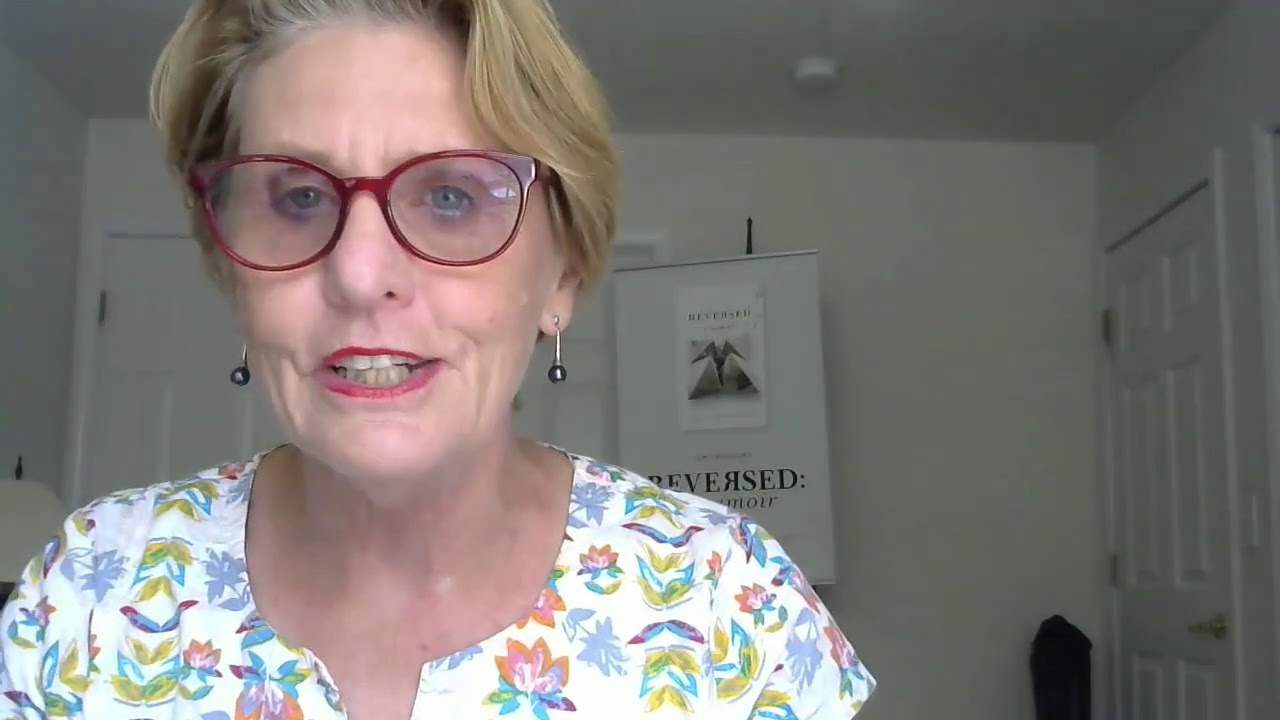
In this monologue, author and literacy consultant Lois Letchford explains her constructivist approach to early reading instruction. She begins with phonetic pattern blocks such as /ock/, /lock/, and /block/, presenting them visually and verbally. She then brings in tangible objects—a rock, a block, a sock—to let students physically match the word to the item, encouraging them to say “I get it.” Letchford uses simple, concrete actions (e.g., “put the rock on the block,” “block the hole in the box with the sock”) to prompt students to interpret meaning through manipulation. When students misinterpret, she guides them back to rereading the phrase until the intended meaning emerges. She also highlights morphological awareness by showing how adding –ing changes a word’s meaning (rock → rocking chair, block → blocking). The lesson culminates with a phrase like “block the doorway,” where students must recognize that the block is not to be placed in front of the doorway but used to block the opening, reinforcing comprehension through repeated oral rehearsal. Throughout, she emphasizes active engagement, shared experience, and the excitement of teaching reading, ending with a call to like and subscribe.
Chapters
Hello, I'm Lois Letchford, author of the book Reversed: A Memoir and The Literacy Problem Solver. How do I become a constructivist when we have to teach children such basic things as learning to read and teach them to decode? I begin with the simplest of tasks. I use patterns like pattern of the /ock/ and the /lock/ and the /block/ pattern. Showing them the pattern to start with. Then I go on to using objects, real objects, so that they see a rock and that they see a block. My students are now actively involved in not only reading words but connecting the real object to the word on the page. So I want students To be saying, I get it. That's what I promote all the time. So they're also thinking because I start with the simple, the obvious—the rock on the block. Put the rock on the block. Put it in front of the block. Whatever. They find it fairly simple. Find the sock. There's my sock. Next question is: block the hole in the box with the sock. Some of my students have actually picked up the block, picked up the sock, and tried put the block inside the sock. Then you have to go back to rereading and rereading it as a phrase as we do. Block what? Block the hole in the box. There's the hole in the box with the sock. There's the sock. What do I have to do? Is that blocking it? No, that's just covering it. I've got to muddle it up and put it in so it blocks the hole in the box with the sock. Once my students have done that, I know they understand it. We've created a community of a shared experience where they know what blocking the hole in the box is, and I know that they know it. They are actively engaged in this process, and that's a critical component of what I'm doing. That's with block. What about with the word rock? Because we have a rock. What is that? That's a rocking chair, and this is a rocking horse. It only takes adding an -ing to a word and we have totally Changed its meaning. And that's the other thing I want my students to know, that a rock is not just a rock that you pick up off the ground. And the same with the word block, because at the very end of this lesson, my students have to read the words block the doorway. And if you want to see confusion, look at my students, because they look at this block, they look at the doorway, And they know they have to do something. They pick up the block and put the block in front of the doorway. And they know that's not right. All the time I just continue to repeat, block the doorway, block the doorway, until they get it. Teaching reading is so exciting. Thank you. Hit like, hit subscribe, and I'll see you tomorrow. Bye.