Martin Bloomfield, Lois Letchford & Lisa McCarty 'When Learning is Trauma'
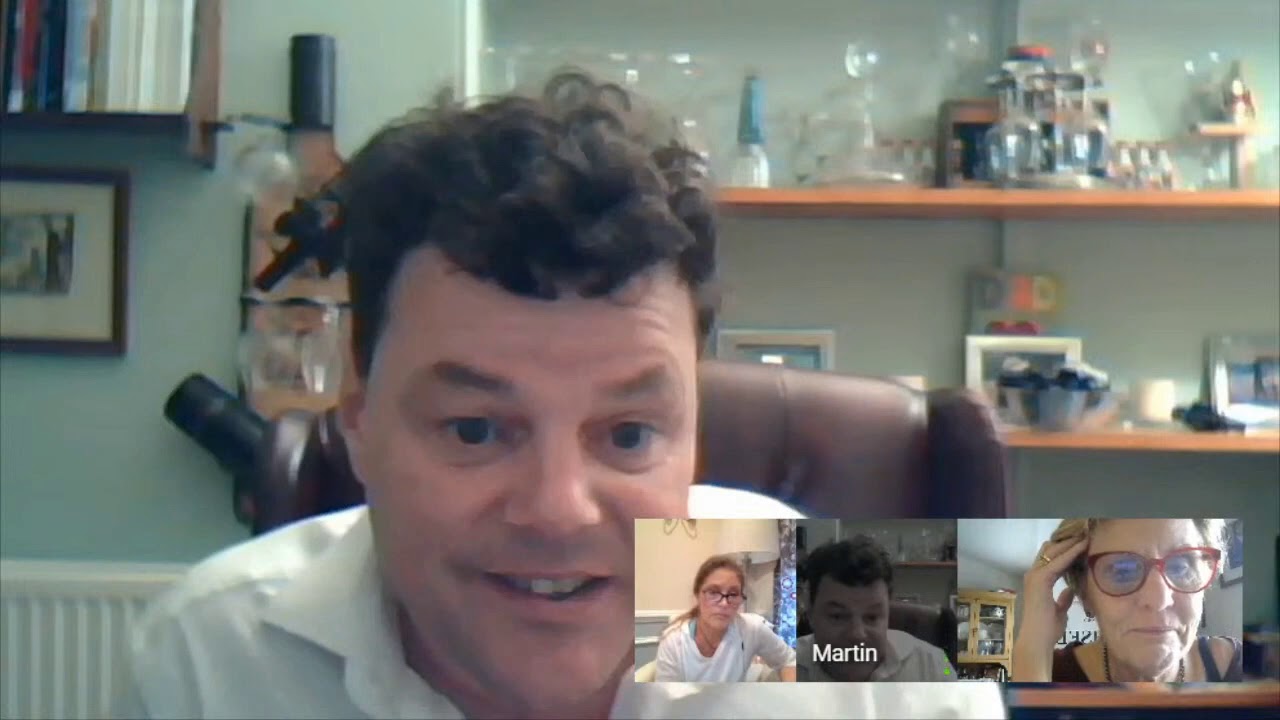
In this live‑stream interview hosted by Lois Letchford with guest Martin Bloomfield and co‑host Lisa McCarty, the conversation explores how conventional schooling can become traumatic for neurodivergent learners, especially those with dyslexia. Bloomfield recounts his own experience of being a low‑performing student, receiving no early identification of dyslexia, and the long‑term consequences of that neglect—including chronic unemployment, lower health literacy, reduced life expectancy, and higher rates of homelessness and incarceration. The discussion introduces the "Matthew Effect" – the cumulative advantage that typical learners accrue while dyslexic learners fall further behind – and links it to learned helplessness. Participants critique systemic failures: inadequate teacher training, lack of practical neurodiversity tools, and policies that offer superficial accommodations (e.g., extra exam time) without addressing foundational learning gaps. They argue that teacher mindset, inclusive pedagogy, and genuine dialogue (rather than polarized social‑media debates) are essential for change. Bloomfield promotes a forthcoming free SEN Toolkit to support teachers, and the hosts emphasize the need for a generational shift toward love, listening, and inclusion in education.
Chapters
Hello, I am Lois Letchford. Welcome to my live stream and week 6 with Martin Bloomfield from England. When equality for opportunity became an opportunity for equity. There we go. Hello, Martin.
I hear you've had a busy day.
I have had a busy day. Yes, it's now what is it? Nine o'clock in the evening for me. So it's. It's great.
Thank you. Yes, yes. So where have you been talking today?
Uh, just, um, just various places in England and one in Germany.
Just—
this is, this is the world of Zoom. I don't know whether you remember in the 1980s, you, you might not remember, there was a TV program called Max Headroom. And Max Headroom was effectively a computer-generated face on a screen, and I feel that I've become Max Headroom recently. I exist online now.
Turn the volume up. Welcome, Martin. Thank you for joining us for When Learning Is Trauma. Learning should never be trauma. However, it is. And Martin's a prime example of living with torturous learning. And, and what amazes me, Martin, is you've come out and you're still human. Which is—
Yeah, it took a while, but yeah.
It took a while.
Yeah.
It took a while. So he's a relentless optimist. And let me read your bio, which I have here. You've worked in the field of intercultural ethics and dyslexia awareness for over 20 years. You hold visiting lectureships positions in Britain, Germany, France, Russia, and Switzerland, and you train teachers from around the European Union. You're currently authoring a chapter in innovative teaching for early years education. You're a finalist in the Innovation for Enterprise Award And you sit on various international advisory committees for inclusion and neurodiversity. You're currently driving the pan-European projects to provide consistent and interculturally acceptable measuring tools for dyslexia assessments across the EU. And you run Dyslexia Bites and you are completing your PhD in In philosophy. That's a huge amount, a huge amount. The topic you've chosen for today is When Equity of Opportunity Became an Opportunity for Equity. Have I got that right?
Yeah, close enough, close enough. When Equality of Opportunity Becomes an Opportunity for Equality, but it's close enough, it really is. I mean, it's really interesting. I mean, let's start with, with your introduction of me, and, and thank you. I mean, it makes me sound really impressive, so thank you very much. The truth is, yeah, I mean, I, I, I've taught, I've worked in education, uh, I'm a researcher, I'm coming to the end of my PhD. And yet, if you'd taken my schoolwork and the results I was getting at school as the measuring stick of how capable I am in this field, you'd have got a completely different answer. So as it were, I believe quite passionately that I'm, I'm going to complete my PhD, um, with, with all the help that I, uh, that everybody who does a PhD has. You know, no one does it alone. But, um, yeah, um, and I, I've gone to conferences, I've presented internationally, um, I'm about to be published. But if If I then look back and, and remember 20% in exams at school, or sometimes less than 10%. I remember one exam, I was— I got 9% in an exam.
9%!
No one gets 9% in an exam. I got 11% in an exam. I was constantly getting 18, 19, 20, 25% maximum in exams. Everybody around me was on, I don't know, 60%, 70%.
Yeah.
And, and, and I was convinced that I was incapable of achieving anything academically. And one of the reasons I was convinced I was incapable of achieving anything academically was that those people who were, as it were, academically responsible for me— my teachers, the school heads— they, they gave me absolutely no indication that, that these grades I was getting were not reflective of my levels of intelligence. I'm not saying I was intelligent, but, you know, it was as though the grades I was getting were reflecting my levels of intelligence, and the grades were really, really low.
Yeah.
Um, and if I'd accepted that, if I'd accepted that, I would have suffered, genuinely suffered. And when you're at school and you go to your careers days— I don't know whether they still have them, but when I was at school, we had careers days. Certainly once you hit about 15 years old and you'd go to a careers advisor and they would basically— it felt at the time as though it was their job to lower my expectations of myself.
Yes, yes, yes.
That's basically what they were there for. They were there to lower my self-expectation. And what you realize is you look back on your school days and you realize that in almost every respect the teachers, the school heads, the careers guidance people, their, their job was to, as it were, to lower expectations of myself in my own eyes.
Yeah.
In my own eyes. And if you take a child and you try to convince a child that that child cannot do something, and that child has been taught that adults know things and the child doesn't know things, then the child is likely to believe the adults.
Yeah.
And the child is likely to go through life believing that she or he cannot achieve.
Yeah.
And I was, I was fortunate in that I had, um, first of all, an environment at home where, where, where, where I was supposed to achieve at school. So not achieving didn't feel normal. It felt like I was failing. But at least I knew that I had something to aim for. And at the same time, um, because, you know, you know, family circumstances or whatever, I was what we call in England very bloody-minded.
Yeah.
Which is a kind of a forward-thinking stubbornness, if you like.
Yeah.
Stubbornness is I refuse to do it, bloody-mindedness is I refuse to give up. And, and yeah, I was a very bloody-minded child who refused to accept That when my teachers told me I was not academic— academically capable, I refused to accept they were correct.
That's amazing.
That's amazing.
I've just got to write this down because I take notes as we do it and we put it together at the end.
Yeah, yeah, sure.
What sticks in my mind is how easily my son's story could have reflected yours. The problem we also have, and I don't— I think this might have been your case as well, that the testing we did also showed, also showed he couldn't do anything. And so you've got now low expectation, you've got teachers saying you can't do anything, Mm-hmm. And never are we looking at how we teach these children.
Yeah, yeah. And here's the thing, here's the thing, um, and it has real-world consequences. It has real-world consequences. First of all, let's just talk about my consequences and compare it with a colleague of mine. I'm working with a colleague who is— I'm not going to say what he earns, it's not my job to even know, to be honest with you. I don't really know, but I have an idea. He is a fairly high earner, he's successful, he's respected, and he's brilliant. I love him. He's also dyslexic, and yet he was recognized and he got intervention and he got accommodation and people found out how he learned. I'm dyslexic, I wasn't recognized.
Yeah.
I became long-term unemployed. I've spent more time in my life unemployed than employed. I'm now 50 years old. Um, I didn't, I didn't have a job, and I left school at 19, nearly 20, because, you know, most people would leave school at sort of 16, 17, 18. It took me longer to leave school because I was held back years, I dropped out, you know, this kind of thing. When I finally dropped— when I finally left school, I was unemployed for 3 years, didn't get to university until I was 23.
Yeah.
Left university when I was 30 and have since then, for 20 years, spent, I would say, more time unemployed than employed. And one of the reasons is that when you're at school, these school years are formative, not only for your own character and personality, But in terms of what you're able to achieve, first of all, because of the qualifications you get.
Yeah.
If you then go on to university late like I did, you're a late starter. I was a starter in the jobs market at 30 years old. Other people were starting in the jobs market 10 years before I was, and therefore I was already 10 years behind everybody else. Now we talk about mature people trying to get jobs in the job market, Well, it's true, it's harder. And when you go into, when you go into an area such as I did, which was, which is English teaching, and the reason I went into English teaching was that, you know, I, you know, I wanted to become a teacher because I wanted to make up for what teachers had done to me. But at the same time, and I had lots of connections with overseas people and overseas students, it just felt natural. Certain types of jobs and not maybe secure. And so you end up in an insecure—
Yeah.
Uh, spectrum, getting older and older and older.
Yeah.
Um, and so on the one hand, there are real-world consequences, but then there's the other kind of real-world consequence, and this is the really important one. The other kind of real-world consequences are those young children, those young children who are— and let's, let's take it directly to the subject of this— who are traumatized, who are emotionally damaged by an education system that doesn't get them.
Yeah.
Emotionally damaged. I mean, you just think, you just imagine a young child who's close to you. Think of, you know, your own son or grandson or daughter or granddaughter or niece or nephew. Think of that young child that you love, and then imagine that child heartbroken at the thought of going to school. Imagine that child feeling physically sick at the thought of going to school. Imagine that child terrified at the thought of going to school. That's obscene. The fact that we're putting children into that position is obscene, quite frankly. And we know we can't do this for— Well, for as long as people have been thinking about education, but we haven't changed the structures of education. We haven't changed the system. We've allowed it to continue. Because it's just easiest like that.
And it's— yeah, sorry, Lisa, you go on.
No, but I just wanted to ask, Martin, did you say that you were not recognized as dyslexic until later?
Yeah, I wasn't recognized as dyslexic till I was 30.
See, that resonates with me, everything that you've said, and one of my major speaking points is always these unsupported, unrecognized dyslexic learners in a system that doesn't, as you say, get them. is dangerous. And I've seen that in my own house. I've seen that in circles that I run in. And I just wanted to clarify that, that you said that you had a friend or an acquaintance that was recognized and supported and wound up doing, you know, maybe you both did well, but your journey has been a little bit more or a lot more traumatic.
You know.
And it's taken a longer time.
Yeah, I mean, it equips you with certain, certain strengths, but it also exhausts you. He's a lovely man, but I bet— in fact, I know, we've spoken about it— he doesn't look back on his school days with that certain, with that same sense of mortification, of misery, of trauma, of I mean, here's the thing. I occasionally bump into old school peers, people that I knew at school, and they'll recognize me and go, Martin, how are you doing? What are you doing now? I don't know who they are. And one of the reasons I don't know who they are— this is really interesting— um, I have blanked much of school psychologically. I can't remember it.
Yes.
My mind has basically tried to protect me from my— from this memory of school days. I don't know the people I went to school with, I can't remember half the teachers, most of the teachers, um, and when I think about school I understand why, because that feeling of fear and nausea and unhappiness comes welling back inside me.
Yeah.
And, and if you like, I was that child who was missed and I was that child that, that that, that we now have to take care of in the future.
Yes.
That these, these children— I mean, children— these children who cannot fight for themselves have got to be looked after by those of us who can. Why, why was I not assessed as being dyslexic? Very, very simple. You ask most teachers what dyslexia is and they won't know. They'll think it's reading backwards or Or words moving around in front of your eyes or something. They won't understand what dyslexia is because it's not on the syllabus. There's maybe a week of dyslexia awareness training or a module that's optional or, or, or something. Teachers are not equipped. They're not given the training, they're not given the time, they're not given the money. And, and how are they supposed to, to know? And so yeah, it's hardly surprising that I was not recognized, but on the other hand, once we accept that I wasn't recognized, I'm not an individual, I'm not a unique case. How many more?
And we're talking, you know, you're, as you said, you're 50. If it had changed in the next last 20 or 30 years, it would— I wouldn't have as much of a problem. But you would read the stuff on Facebook, and it's the same thing again and again and again. Very little has changed. And I think that's the part that's also distressing. And we're putting people through the same thing you went through.
And one of the things we've got to be very, very careful of is this thing that I keep coming back to, that lots and lots of teachers know about dyslexia, but very few teachers know anything about dyslexia, or very few teachers know enough about dyslexia. And there is an attitude that, oh yeah, I've heard of dyslexia, I'm now aware, because there's a lot of awareness being raised. And it's great that the awareness is being raised, but the awareness has got to be turned into something helpful.
Yes.
The awareness has got to be turned into tools, the awareness has got to be turned into new behaviours, the awareness has got to be changed into changing the way that we educate people, into changing the way that we grade people, into changing the way, the way that we demand things from children when they're in school. Because until it is, as my old dad used to say, fine words butter no parsnips. It's all very well saying we understand about dyslexia, but there has to be the change.
Yeah. I mean, that's why I'm here. That's why I'm here. I'm here because I couldn't believe what happened with Nicholas. And it goes back to you, you know, all that is seen is the slow child. They cannot see the same child who's capable, just like you, of getting a PhD. And that's where we're writing children off at the age of 6. And—
And when I give dyslexia— sorry, I was just to say, when I give dyslexia awareness workshops, one of the things I often begin them with is getting the participants, often teachers but it doesn't have to be, to write down various things they associate with dyslexia. And then we look at them and we say, are they positive things or are they negative things? Overwhelmingly they're negative things. Overwhelmingly it's all, oh, they can't do this, or it's difficult for them to do that, or they do this badly, or whatever. And so the overwhelming perception that teachers and others have of dyslexia is a negative perception. And where we have core beliefs that are negative, then our behaviors reflect those negative beliefs. It's just the way it is.
Yeah, sorry, it might be the other way around though. It might be the culture of the school that's assuming that you have to be good at this narrow set of skills, right? That, that's then saying, well, they're bad at these things, so therefore that's a negative thing to be dyslexic. And I'm pulling my hair out, and I've got a lot of hair, To say, you know, it's not like that. My own husband was 52 when he found out he was dyslexic, and yet he's successful in his business, and I would argue because of the way he thinks. But that skill set is not important in our schools. And as Martin said, you know, it's sort of the— it's the way we've always done it. It's kind of the easy way, and it has to change. That entire mindset has to change.
And, and what we're doing is we're judging children on whether they can conform to the demands of this narrow skill set.
Yes.
And so what happens when you're at school, you are judged on chiefly on your grades. That's what, that's, that's what school is there for. You are judged on your grades. If you don't achieve the grades, you are therefore, if you like, negatively judged. And what we're, what we're doing is we're basically saying to children, this is something that you never chose, you never chose to be judged on this. If you can't do it, somehow it's your fault. Why do we do that?
Martin, can I ask real quick, when you mentioned, I think you used the term bloody-minded, which I'm from America, I've never heard that, but I like how you described it. How is it that you were able to say to yourself, hey, I can do this, and you went and you really dug in and you tried to make it known that you could do these when so many kids go the other way and shut down and say, you know what, I'm done with this, and they don't.
What—
how did you— what was it in you that said, no, they're wrong, I can do this?
Yeah, and this is a word I used recently in this conversation. It's the environment as much as anything else. I was lucky. I had an environment which was nurturing. My family life was very positive. Um, in many, many respects. And so I was told that I was valued at home. And so when I was at school and I wasn't valued, it was basically a choice of one or the other. Do I believe these people? Do I believe these people? And, and I also— and this is another thing— various reasons I had a, um, a healthy, a healthy disrespect for authority. And so when an authority figure told me something, I, I was never going to necessarily accept that. I still have a healthy disrespect for authority. One of the reasons I've been long-term unemployed in my life. But yeah, so I suppose, um, with a sort of a healthy disrespect for authority and a background of being told that I wasn't worthless, um, and, and if you like, these two things came together, and it's the only way I can describe it. it is, I was fortunate, I was privileged, and there are children out there who don't have that background, children out there who are not privileged in that respect and who, who, who are not in the lucky position, in the fortunate position that they can make that choice against their teachers.
Yeah.
And that's, that's the, the difficulty. I think also Um, I mean, it's difficult to describe other than I also— there was always something inside me that made me think that the teachers were wrong.
Hmm.
Now this is, this is really interesting. When teachers told me that this is the, the way to do it, I wouldn't think like that. I would say no, and I, I was always quite critical, think I would always think quite critically in that respect. I would always often disagree with the teachers on their methodology, on their answers, on what they thought was best. I mean, obviously I couldn't get away with it, you know, at school you get, you know, punished if you try, but, but I, I didn't always believe my teachers about a good many things. Now why that is, I couldn't tell you, but, um, but I didn't. And so I had this groundwork for also for a survival strategy. Um, when teachers told me, and they did, that I wasn't clever, one of the things I immediately did is in my brain I separated. And I remember the, the image that I used to separate it. I had this image in my brain. Um, there is a difference between cleverness and intelligence.
Yeah.
If cleverness is the ability to, to, to, to listen to what the teacher says, retain that knowledge, and then regurgitate it onto the page in a, in an academically acceptable way, sure, I'm not clever. But that doesn't, that doesn't describe me. There must be a different way of describing my thinking. And I remember thinking cleverness is, is that, the ability to, to listen, learn, and regurgitate. Intelligence, on the other hand, is the ability to think for yourself, to think differently, to think creatively. And I remember as a young boy, as a young teenager, 14 years old, telling myself this, 13 years old, telling myself this, because it was the only thing that made sense.
Yeah.
The only thing that made sense of this disjunct between what the teachers are telling me and what my schoolwork was proving, and this view that I had of myself. But I wasn't worthless, and there had to be something that made sense of that. There had to be. And, and, and I would come up with all these little sort of, uh, sort of epicycles of, of, of, of arguments that said, okay, yeah, maybe not clever, but then intelligent, and this kind of intelligence. And I would, I would do that over and over again because I had to.
Yeah, you said it there, Martin. You had to. You know, we were talking to the author Don Winn last week, and he kept saying about how learning is emotional as well as academic. And what you were saying is, you know, the emotion that went with learning was so negative, yet you could still work out that you weren't doing this, but you were still intelligent. I mean, that's phenomenal to me.
Yeah.
But, you know, It's horrendous, the implication that has on your whole life.
Oh, absolutely. Here's something, um, I, I, um, I recently split from a partner. I don't want to be too, uh, too personal about this, but one of the reasons is that I don't want to have children. And, and people keep asking me the question, why don't you want to have children? And to me, that question is is as nonsensical as saying to somebody who does want to have children, why do you want to have children? It's just a nonsensical question. But if you're going to try to find a cause for this, if you're going to try to find some root cause, one of those root causes is childhood was so unpleasant, so traumatic, because you spend most of childhood being traumatized. You spend most of childhood being humiliated, having your hopes crushed. having their innocence destroyed. And when I think of childhood, that's what I think of. Now, that might not be the reason, but I'll tell you what, if you want to ask me what kind of repercussions it has into, into adult life, my view of childhood is exceptionally negative because my view of childhood is my memory of my own childhood.
Mm-hmm.
And my own childhood was crushed. It was, it was Depressing. It was humiliating. It was frightening. Frightening to be frightened to go to school because you know what's coming.
I get frustrated.
I get frustrated with people that can't see the connection between anxiety and depression and the things that are going on for some kids at school. They say, oh well, no, it's something else. It's not something else. And you've lived this. I have family members that have lived this, and it's dangerous. And you know, it's amazing to me that you got through school with such a resolve and with such fire to say, "No, no, they're wrong." But a lot of kids can't do that. A lot of kids and a lot of parents—I was one of them—buy into the fact that nope, you have to be good at school, and if you're not good at this skill set, you know, I had kids that just would, you know, trying to get them to school. Going to school was a nightmare, and I did not like it, and it's dangerous. I appreciate hearing your story because it really speaks to those people that don't understand that this is really traumatic for some kids and families.
And when adults, when families, when teachers, when school heads, when they see children rebelling against going to school, instead of labeling them as naughty children. No one ever sits down and goes, my God, why can't we listen to this child? What's going on that makes this child so frightened of going to school?
Yeah.
What's— what, you know, it's almost like— it's almost like taking somebody with claustrophobia and go, get in that box! You would never do that, and yet we do this with children. And, and then we, we, we claim that school days are the best days of your life. I, I, I, I, that, that's, that saying makes no sense to me. Absolutely no sense.
They're only the best days of your life if you conform. The moment you can't do what's asked, we're in trouble. We have a question, well, we have a comment from Cassandra who's in Scotland. I don't know if you can see it. She says, I'm a late diagnosed dyslexic, currently a student I'm a teacher in Scotland, originally from Yorkshire, feeling like I'm shouting into a vacuum discussing dyslexia with my cohort. What can I do to end this? I feel like I'm stuck on repeat.
Yeah.
We're all stuck on repeat, do it again.
We're all stuck on repeat. Is it Sharon? Sorry, I didn't catch the name.
Cassandra.
Cassandra, I'm so sorry, Cassandra. Good to hear you're from Yorkshire, from a good York man myself. Yeah, a couple of things. First of all, first of all, just to advertise something, this will be free, so I'm not going to make any money out of this, but a group of colleagues and I are creating something called the SEN Toolkit, the SEN Toolkit. You can find it, or you will find it, on sentoolkit.com. It will be free mindset-changing and neurodiversity teaching toolkit available to anyone and everyone who wants it. It will help people understand neurodiversity, where dyslexia, ASD, ADHD, different types of ADHD fit into the classroom, and how our understanding, how our mindsets affect that. So it really goes towards helping teachers change mindsets. It will be going live very soon. The website's already there, but there's not much on it yet. Second thing is that what we've been trained out of— this is interesting— what we're trained out of at school so often is the question why. I mean, I don't know whether you remember when you're at school, you're taught not to ask why. Don't ask why, just accept. Stop asking why, you're a nuisance. That kind of thing. One of the things that I like to do when I, when I, when I'm confronted by people who don't get it or don't want to get it or who think there's nothing to get is to ask this question: why? What is it that, that's causing them blockages? And listen to them, because a lot of the time they're coming from a very reasonable background of things they've learned, things they've been told. Um, you, you hear things— I mean, there was that ridiculous article in The Guardian recently that suddenly everybody online was going, oh my goodness, there's no such thing as dyslexia. You get this all the time. What we need to do is ask those people why, why do you think that? Let's, let's have a conversation about this. And, and it's that opening up the dialogue that's probably the most important thing we can do.
You know, I trained as a reading specialist after Nicholas after I taught Nicholas, and what rocked me was the amount of information that's available in the libraries from, you know, 1990s to now. It's there, the information is there, but as teachers, we go back to our background rather than looking at what do I have to do and take this information for that child that's struggling in my classroom.
And here's the killer: teachers, 99% of teachers are good, good people and they really want to do their best regardless of their opinions on neurodiversity or their opinions on this teaching methodology or that teaching methodology, whatever particular stance and perspectives they have, they want to do their best but they are overworked and they are under-resourced. How many teachers do you know who have the time to go to the library and learn? Not only learn about, let's say, dyslexia, but just decide which books they need to read to learn about dyslexia. How many teachers do you know who have got that luxury? And the answer is, of course, none.
That's right.
We all know teachers who are overworked and under-resourced, who are stressed, many of whom then have their own young families to bring up when they get home in the evening. Their lives are difficult and they're not provided with the training from day one. When they're in teacher training college, there is a nod and a wink to neurodiversity and dyslexia, nothing more in-depth than that.
Yeah.
In most experience, most of my experience, and as I said, I've worked with teachers from all around the European Union and often beyond as well, and there is almost no neurodiversity training.
Yeah.
Those people who have neurodiversity training are lucky, but often they're working within structures where the training they've been given won't fit. And so they might have been given training in neurodiversity, dyslexia, and ADHD, and yet when the structures they're working within won't allow them to to manifest this training, to actualize this training, what are they going to do about it? You know, they've got a job to do, they've got too much work, too many children, the class sizes are too big for them, by the way, we know this. And at the same time, it also depends on where they're teaching.
Yes.
So a lot of people are teaching in, for instance, socioeconomically deprived areas, and there are all sorts of extra problems that come with that. A lot of people are teaching in areas with migrant families from very different cultures, and these migrant families have got their own problems in the background, and their cultures sometimes collide in the classroom so that not everybody expects the learning process to be the same kind of thing. So some cultures come from, for instance, high teacher dominant societies, and others come from low teacher dominant societies, and the teacher has got to then juggle this, and where you've got neurodiversity—
On top.
Intersecting with culture, intersecting with money, intersecting with maybe families getting divorced at home or something like that. I mean, I know that when my mum and dad got divorced, my learning, what it was, suffered sadly because my emotional life suffered. And when your emotional life suffers, everything around you suffers. And so teachers have got to compete with this and contend with this. We need to get it right from the beginning, because if we don't, then we're going to be failing children from, from the very beginning. And here's the thing, if we fail children from the very beginning, you ask most schools and say, what provision do you have for dyslexia? Most schools will begin by saying, well, we, we allow an extra half hour in the exams. or we give a scribe in the exams. Well, okay, apart from the fact that when I was at school that would have just been another half an hour to humiliate myself because I couldn't do exams and I still can't do exams, more than that's going on. If the child is dyslexic, the chances are that child will have been missing out on learning from the age of 5 or 6, and if your solution to that is give them half an hour when they're 16, I mean, any mathematician will be able to tell you that that's not a good equation. It's simply not. If you're falling behind, let's say that all the other children are in cars that are going 100 kilometers an hour or 70 miles an hour, and you're in a car that's going 40 miles an hour, 60 kilometers an hour or something. The gap between you and everybody else widens and continues to widen. And then if someone says, come, come the exam time, oh yeah, we'll put you 20 yards up the road— so what? It hasn't solved the issue that have been causing you the learning difficulties. And not your learning difficulty, but probably the difficulties in learning as you've gone through school life. Um, the, uh, the, um, the apostle— was he apostle or disciple? Matthew. Um, Matthew, Mark, Luke, and John, the Gospel writers.
The Matthew Effect.
Matthew Effect, yeah. He talked about the parable of the miners where the rich get richer and the poor get poorer. And the Matthew Effect effectively translates into if you learn slowly, then everything you learn, you will learn slowly. Those other people in the classroom, they will be learning, let's say, twice as much as you're learning.
Yeah.
For every chunk of learning that they have, and for each one of those 2 new pieces of learning, they'll get 2 new pieces of learning, and you can draw a tree that grows exponentially. For dyslexic people, you learn one thing and then one more thing on top of that and one more thing on top of that. The gap between the, the haves and the have-nots, the, the, the people who learn in a standard school-appropriate way and those of us who learn in neurodivergent ways will widen and widen and widen. And it's not just the amount you learn of the subjects you're taught, there's more to it than that. It's the depth of what you learn.
Yes.
And it's the ability to, to connect the different pieces of learning together. Because if you only have 5 things that you've learned and somebody else has 500 things that she's learned, she'll be able to connect more things together than you'll be able to connect. And therefore the difference in, as it were, academically measurable intelligence will grow exponentially. And when it comes to an exam, it is quite frankly nothing more than insulting to say, here's an extra half an hour. It's an insult. Yeah. And it's washing your hands of the problem.
No, you're absolutely right, Matthew. No, you're absolutely right, Matthew. Too many M's. Matthew, Matthew. You know what I'm saying?
At the same time as well, by the way, I didn't mean to interrupt, but at the same time, we also know of things such as Seligman's learned helplessness, where the idea is that if you somehow come to believe that you can't, you won't. You know, they all— you know, if you think you can or you think you can't, you're probably right, sort of chestnut. And therefore, if your learning is going to be made harder because your neurodiverse style means you don't learn in the way that the school will teach you, then the Matthew Effect will kick in. But at the same time, if you're also suffering from learned helplessness, you'll fall further behind.
In all areas?
Absolutely, in all areas. And emotionally, you'll close off because it's humiliating and you don't want that humiliation. You'll become— often you'll become slightly surly or maybe even slightly aggressive. So you'll either become introverted and depressed, or you become extroverted and aggressive, because children don't have, um, well-developed coping mechanisms. These things develop with age, and so the damage has already been done by the time a child is 8.
Yeah.
And, and saying, well, you're 16 now, here's an extra half an hour— I don't know why anybody thinks that might help. Somebody's got to show me some— somebody's got to show me some theory that says that extra half an hour will make up for the 8 years of school.
Well, that doesn't cost any money. The extra half hour is free. And we've seen that in our experience that, you know, to change the whole system is going to take time and a lot of money. And as you said in the beginning, they just, you know, they want to keep it the way it's always been. easier that way, and we can't do that because there's too much at stake.
Absolutely, Lisa. And I hear this over and over again from school heads, from educational authorities, from teachers— this sentence: it's too hard, change is too hard. And I always then say, finish that sentence, because what you mean is change is too hard for me. And yet, if being a teacher, if being an educator It's about making life easy for me, then I'm in the wrong job. If you like, when we say change is too hard, we really say change is too hard for us, but actually not changing is too hard for the children.
And everybody, yes.
And, and well, let's think. If you take a child, let's say, I mean, I started school when I was 4 and a half, I think. A lot of kids start school when they're 5, some start school when they're 6, Whenever you start school, let's say you start school at the age of 6. Between the age of 6 and the age of 16, that's when you're sort of bound to school. That's when you're kind of legally obliged to attend education. That's 10 years. No teacher would look at a 6-year-old and go, well, this 6-year-old doesn't understand quadratic equations and chromatology and all that kind of stuff. this 6-year-old doesn't understand tectonic plate movement, we failed, let's give up. You know, you, you develop a child's academic abilities and you, you work on developing that child piecemeal, slowly, step by step. And we know that, you know, when we've developed a child's ability to read, then the child gets other abilities that we can then develop and then develop. The number of people that will say, the number of teachers in schools that people say, well, we tried that but it didn't work. How long did you try it for? Well, 6 months. But you would never say about a child, well, we tried to teach the child for 6 months, didn't work, so we gave up. No one would say that. Well, you know, and so yeah, you're right, this, this idea of change, change within school, you have to benchmark it and you have to set long-term goals, and these goals have got to be part of an overarching theory of what you want your education to look like.
You know, when I start teaching children and to work with teachers, one of the first things I want to look at is the teacher mindset. Because when you believe that that child cannot do what you ask, you failed them instantly.
Yeah.
And if you take that same child and think, well, that child's a future rocket scientist, we change the outcome for that child and for the rest of the class.
Yeah.
You know, and what you're saying too, Martin, is that it's not changing it just for the years in school, it's changing the lifelong outcomes because you're then not delayed going into work and university and all the rest of it. Because I'm aware of of what you're saying about, um, being employed and paying into your Social Security and all those things. Because if you don't now pay in, they're now stopping you from collecting things at the end. And you haven't worked this long here, that and the other. And it's your fault.
Yeah. I'm looking forward to no pension. Yeah. And the reason I'm looking forward to no pension is I haven't paid enough into my National Insurance contributions. And I can't afford a private pension because I've been unemployed too like. And if you're like, you can't expect those people at the bottom— and I'm not at the bottom, you know, I'm not saying that at all— you can't expect those people at the bottom, those people who have been failed at school, who have been failed by the schooling system, to give up their food.
Yeah.
In order to provide for themselves, because the system which should have provided for them has failed them from the beginning.
And even—
and that failure from the beginning, it goes into the adult life, it goes into pensions, it goes into health insurance if you live in a country that requires you to pay for health insurance. It goes into all of these things.
Yes.
People with dyslexia generally have lower what they call health literacy. Now, health literacy is a really important thing, is that literacy that's involved with health. So it involves the ability to read health documents, the ability to read online notices from your GP, your surgeon, and it also involves your ability to connect the dots, as it were, between these different pieces of health advice. People with low health literacy have, on average, and this is shocking, I think it's something like, if I remember this If I remember the statistic correctly, and I'm not far off, something like a 26-year lower life expectancy. Dyslexia kills, or rather failing to accommodate for people kills them. It kills them.
And then you put the, the other half are in prison, so is that all, you know, the consequences are—
Twice the number of young homeless people have got dyslexia?
I missed that, say that again.
Sorry, yes, sorry, yeah, you said prison, absolutely, round about 50%, we don't know exactly but most studies put it at something like 50%, maybe slightly more, of prisoners have got dyslexia. More are illiterate and we know that the vast majority of illiterate people have probably got some form of dyslexia. We also know that something like twice the number of homeless people have got dyslexia. And so, yeah, I mean, it's—
The outcomes are not good.
The outcomes are not good. And one of the reasons the outcomes are not good is, imagine if you go to school and school is traumatic. Yeah, you're a child, you're— let's say you're 8 years old. 8-year-old children are beautiful people, but they are not emotionally resilient in the way that perhaps they might be expected to be. A child of 8 years old goes to school, feels traumatized, feels anxious, feels upset. What happens? She takes that home with her, that trauma, that anxiety, that depression. She takes that home with her, and then that then affects her home life.
Yes, yes.
It's not simply that there's school and then, oh, you can— yeah, once you're outside school, it's all happy. It is It affects your whole life. It affects your relationship with your parents. It affects your relationship with your brother and your sister. It affects your relationship with your friends. It affects what, what you want to do. It affects your play. It affects your sport. It affects your physical health. It affects absolutely everything. Everything. Depressed children don't want to go and play football with their friends in the street. They don't. We know this. Anxiety-ridden children find it harder to make friends. We know this. And it affects all of this. It doesn't simply affect your, your immediate grades in maths and English.
Yeah, yeah.
Martin, was there a shift in your thinking between not knowing you're dyslexic and then finding out that you were?
Yeah, yeah, yeah, yeah.
What?
Um, there's a number of shifts. The first shift, and this, this is really interesting, the word I will come up with is trust. Trust is very, very important. How did I find out I was dyslexic? Well, I had friends and I trusted them. Um, I was fortunate enough in a way to go to a university that nobody else wanted to to go to. The university I went to is in the middle of Wales, a place called Coleg Prifysgol Dewi Sant, St. David's University College in Llanberis. Now, in those days it was a wonderful place. I can't speak for it now, I'm not there, but in those days it was a wonderful place and it was very, very small. There was about 1,000 students in a village of about 3,000 people. I mean, it was it was very small, so it was intimate, and it was like a humanities college.
Got it.
But Lambeth, at the time when I was there, and this is in the, well, throughout the 1990s, Lambeth had 12 pubs, but it had no clubs, it had no bowling alleys, it had no cinemas, it had no McDonald's, it had nothing that you would expect students to normally want. And what this meant was that no one wanted to go there. And because no one wanted to go there, we have this system in Britain called Clearing. Now, not everybody who went to Lambeth went on Clearing. Clearing is the system where you don't pass your A-levels, you don't get the A-level results you want, and they put your name into a hat, pick it out, and say, oh well, Lambeth has loads of spare places, do you want to go to Lambeth? And, and enough people that I knew in Lambeth had made it on clearing. In other words, they had failed their exams when they were in school, but clearly they were intelligent people. I mean, clearly they were intelligent people. These people I knew were, were sharp. They were— sometimes their intellects were sharp, sometimes their intellects were bludgeoning, but they were intelligent people. And therefore because there was this, this, this, this disjunct between the intelligence of the people who were in Lambeth and the exam results that they were getting, there was a very well-resourced dyslexia unit. And I knew that a lot of my friends— No, a lot of my friends said they were dyslexic, they'd been to this dyslexia unit. Now I denied their dyslexia. I would say, you're no more dyslexic than I am, because I thought that dyslexia was one thing, and it was just wrong. And it was just trust. They eventually persuaded me to get myself assessed. They eventually persuaded me to get myself assessed, and I did get myself assessed. So that was the first shift, this shift of trust. The second thing was when I was assessed, it wasn't what I expected at all. And this is really interesting. I was expecting those things that I associated with dyslexia, and, and that's not what I got. For instance, one thing that I got, you know, there's lots of, um, left-right sequencing things. I, I was clearly— I clearly had no idea about my left and my right, and it explains why if you hand me a knife and a fork, I'll swap them over a number of times before I realize which feels right in which hand. It explains why I kept— when I got sacked from my job as a waiter because I kept putting the knives and forks in the wrong place. I have no idea what my left and my right are. They gave me a test, fascinating, um, and it's— I, I remember it clearly. The psychologist, educational psychologist, gave me a piece of paper, and on this piece of paper there was a circle, and in the circle there was a square, and bisecting the square, um, at a diagonal angle was a straight line, and touching that was a tangent with a triangle on the end of it. I remember it clearly. She gave it to me, she took it away, and she said, draw it. And I went, okay, and I drew it. Like you always do. And she took that out. 2 weeks later when I saw her again, she brought back the original piece of paper and said, do you remember this? And I went, yeah, I remember that. Had my own grubby paw prints on it, my fingerprints, whatever, the sweat that had poured off me. I don't know what it was. It had this on it. And then, you know, it was, it was clearly the same piece of paper, you know, I recognized it. Then she handed me what I'd drawn And this is where it gets interesting. I looked at what I'd drawn side by side with the original piece of paper, and I saw that I had drawn the mirror image of what she'd given me.
Ah.
But that's not the weird thing. This is where it gets really weird. The more I looked at it, the less certain I was that it was a mirror image. I didn't know anymore. And suddenly this realization, oh my God, dyslexia isn't simply about getting your Bs and Ds the wrong way around.
Yeah.
There's a whole range of sequencing and left-right confusions and, and that, that, that I hadn't even considered. And it makes me— and it made me understand that, you know, when I was, for instance, in a pub and I was standing at the bar and I saw the word Guinness written behind the bar, and then I suddenly thought, oh, hang on, that's a mirror, the word word Guinness is behind me, that I was reading it perfectly normally in a mirror, but actually it was a reflection of the real world, of the real word. It kind of started to explain that my entire life I'd been seeing things the wrong way round. And by the way, I want to make perfectly clear, this isn't a talent of mine. I'm not saying it as, oh, I can read backwards. It's more that I don't know which way round some Yes. And this permeates my entire life. One of the things that then happened to me is I felt ashamed, absolutely ashamed of myself for being dyslexic.
Yeah.
And I went through 6 months, 6 months of shame. I had a very good girlfriend at the time who was really supportive and was so positive to me, and I needed that. Yeah, because I, you know, it— yeah, so I went from, like, the shame of school to the shame of finding out I was dyslexic, and it was, it was a really weird shift of shame, as it were. And, and yeah.
I didn't expect you to say that, actually. I thought you would say that you were relieved. To find out that your difficulties had a name. But that's interesting that you felt it as shame.
Yeah, and now I can look back and I can go, right, now I understand why I had difficulties. But that moment of transition from thinking I was normal— I'm going to use that word— thinking I was normal to finding out I was dyslexic, partly because of the connotations The word dyslexic had.
Yes, the misunderstanding. We've got one question here, what do you think should the first step should be for educating people about dyslexia? All that we're doing.
Me too.
What do you think?
Yeah, all that we're doing. I think one of the, one of the things is that, I'm going to be very honest and this may make me very, very unpopular at the moment. Twitter is full of people who shout an awful lot, and what you get on social media is you get one side or the other. You get dyslexia as the superpower, dyslexia as the disability, and never the twain shall meet. And these two sides get very angry with each other because those who say it's a superpower, if somebody says no, it's a disability, screaming match starts, and vice versa. What we need is we need a dialogue, we need a discussion where people listen to each other. That's the first thing, because without that— I mean, the philosopher Richard Rorty once said, when somebody says something I disagree with, my first reaction is not to say you're wrong, my first reaction is to say that's interesting, tell me more.
Yes.
And I think that's one of the most important things we can do. So in that respect, there has to be some form of societal shift into how we react when people say things we disagree with.
Yeah.
But because of the nature of social media, um, social media is not a nuanced, uh, medium of communication. I mean, on Twitter you've only got 140 characters, or however many it is. How many, you know, how many sophisticated arguments can you make with 140 40 characters, and yet you try to make a sophisticated argument, somebody else shouts, you're a fascist, or whatever, and suddenly they get all the airtime. And so one of the problems is that social media has turned the discourse into a shouting match. Another of the problems is that I think, and I'm serious, it starts with teachers. If teachers can be trained properly, then they can they can make their awareness filter down into the schools. Not wanting to, to bang on about this, one of the principles of the SEND toolkit is that we are all in this together, we are all inclusive. It's not about me as a teacher trying to help you as the poor dyslexic, poor autistic, poor ADHD child. It's all of us in this together, inclusive, helping each other understand each other. And if that's what we can make our teaching, this idea of inclusivity and understanding rather than labeling and describing— so many times people label dyslexia, they say this is what dyslexia is, they define it. And in defining it, you restrict your own view and you restrict the ability of those people that you're defining. Instead of saying, this is what dyslexia is, why not say, okay, what does that mean for you? How does that fit into your context? And how does that relate to me and how I behave to you?
That's a good point. It's like a collaboration needs to happen.
Absolutely, absolutely.
Interesting, I like that. Martin, this is phenomenal because I think, you know, what you've said about social media is what worries me about the science of reading. It's a soundbite and we end up being soundbites and that doesn't help the discussion or the comprehension. And I think the other thing, what you're saying to me about this understanding and sharing ideas, is once teachers start to teach the children who are the lowest, that information doesn't go away.
That's there forever and it will impact every other child that Yeah, that teacher models behaviour, that teacher models love, yeah, that teacher models understanding, and that teacher models behaviour, love, and understanding to all those other children. It will take a generation, but it will only take a generation. A generation isn't that long.
Yeah.
It will, it will take a generation of teachers to model love and to model listening and to model inclusivity. And in order to do that, we need to be able to train the teachers. Yes, because if we don't train the teachers, what are they modelling? They're lost.
Yeah, and they go back to how they were taught.
Absolutely, yeah, absolutely, go back to how they were taught. Yeah, yeah, and yeah, I mean, here's the thing. Who else could it start with? Well, the idea is it has to start with modelling listening and modelling loving and modelling inclusion and inclusivity with young children. Who best to start there than teachers?
Wow, that's— Martin, now time's up. It's bedtime for you now, well and truly. But that's a phenomenal way to finish. Who else? Who else could it start with? What a better way to show love and inclusion and respect for every neurodiverse person. It's not just about test scores, and it is about emotional engagement in the classroom.
Yeah.
What a way to finish.
Thank you, thank you, and thank you for this opportunity. I've absolutely loved it. I love all our conversations, but this has been great fun, and it's been really nice meeting you as well, both of you. You know, one of the great things about, about the digital age, Lisa, is that I can meet you in ways I wouldn't be able to meet you otherwise. So thank you.
Yeah, I'm just really thrilled that we met, and this conversation's It's been fantastic. I really thank you for joining us.
Yeah, no, it's, it's a genuine pleasure and an honor as well. It really is. And anybody who's— Martin, talk about your favorite subject for an hour. I mean, yeah.
Well, I just hope lots of people listen to it. They like it, hit like, hit subscribe, and share it. I've got to lower my voice so I don't get feedback. And, and share that we can teach children to read and learning should never be traumatic. Never be traumatic. Well, thank you and we'll talk to you again soon. Thank you, Lisa. You can reach me at loislatchford.com and I'm on Twitter and LinkedIn. Martin, and Facebook. Martin, where can people reach you?
Well, you can reach me on Facebook, you can reach me on Twitter @bytesdyslexia, B-Y-T-E-S dyslexia, or you can find my website at dyslexiabytes, B-Y-T-E-S dyslexiabytes.org, or you can find me on YouTube at youtube.com/dyslexiabytes if you want, and sendtoolkit.com, that's coming live very soon. Soon. Free neurodiversity teaching training.
I can't wait for that.
And Lisa, where can we reach you?
Well, I'm on YouTube now apparently, but not really. I'm on Lois Lectures YouTube. Um, Facebook mostly. I'm mostly on Facebook, and I'm with Decoding Dyslexia Pennsylvania, and I work with several other dyslexia associations. So I'm out there.
Perfect. And next week— for the next 3 weeks actually, we are talking to mothers whose children have struggled in school and their reactions. So next week is Ashley Sullivan Roberts. Like, share, and subscribe. My son has to tell me what to say.
We'll get it down by the end.
Brained dead. Thank you, thank you, and we'll talk again soon. We'll collaborate on Thank you, Martin. Thank you, Lisa.
Good night.
Good night. Uh, how do I press stop? And be sure to like, comment, and subscribe to my channel because those things help the YouTube algorithm know that my videos are wanted and liked by everyone. Thank you.
More from Lois


Overcoming Adversity: A Dyslexic Learner's Journey to Success | When Learning is Trauma #shorts

Redefining Success, Beyond Grades in Education | When Learning is Trauma #shorts

Turning Awareness into Action for Dyslexic Learners | When Learning is Trauma #shorts

Why Dyslexia Goes Unnoticed: A Systemic Issue | When Learning is Trauma #shorts

The Long-Term Impact of Unrecognized Dyslexia | When Learning is Trauma #shorts

The Heartbreaking Reality of School for Some Kids When Learning is Trauma #shorts



