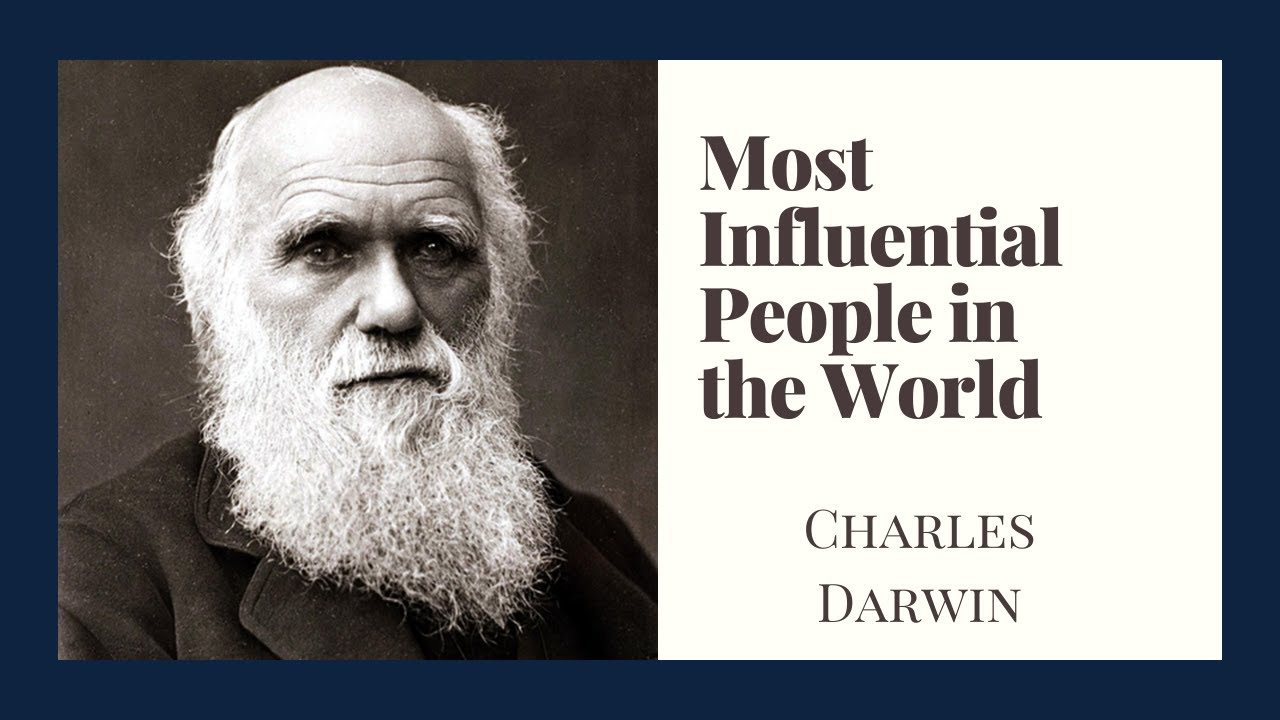
In this narrated segment, author and literacy advocate Lois Letchford presents a concise biography of Charles Darwin, focusing on his early life, education, and the formative five‑year voyage aboard HMS Beagle. Letchford describes Darwin’s strained relationship with his father, his disengagement from medicine, his apprenticeship in taxidermy under John Edmonstone, and his unfulfilling theological studies at Cambridge. She highlights the pivotal appointment as the Beagle’s naturalist, the ship’s arduous journey around the globe, and Darwin’s systematic collection of specimens, especially the Galápagos tortoises, mockingbirds, and finches. The narrative explains how John Gould’s later analysis of the finches revealed distinct species, prompting Darwin to conceive natural selection as a mechanism of evolution, explicitly rejecting Lamarckian inheritance. Letchford also recounts Darwin’s coral‑reef theory, derived from observations of volcanic islands subsiding beneath the sea. Interwoven are personal contrasts—Darwin’s anti‑slavery stance versus Captain FitzRoy’s pro‑slavery views—and anecdotes about Darwin’s willingness to try exotic foods. The segment ends with a call to action for viewers to engage further with the series.
Chapters
Hello, I'm Lois Letchford. I'm the author of the book Reversed: A Memoir. I'm a literacy problem solver and co-founder of Teaching Students with Dyslexia. Reading from the book Eureka! About Scientists Who Changed the World. And no articles of this or series like this would be complete without Talking about Charles Darwin, who was born in 1809 and died in 1882, and he's a naturalist who, through elucidating the mechanics of evolution, made possible the modern biological sciences. Today, Charles Darwin is one of the most revered but also one of the most loathed of all scientists. He offered the first rigorous explanation of what drives evolution. He was born on February 12th, 1809. His father, Robert Darwin, a wealthy physician, didn't think young Charles was ever going to amount to anything. You care for nothing except shooting, dogs, and rat catching. You will be a disgrace to yourself and your family. At school, Charles was happiest studying nature specimens and doing science experiments. His nickname was Gas. Despairingly, Robert Darwin pulled his son out of school and employed him as an assistant. Charles proved to have some talent at this and so was dispatched to Edinburgh University to study medicine. Unfortunately, Charles spent much of his time Goofing off. The clincher came as part of his studies. He witnessed a couple of surgical operations. There was no anaesthetic in those days, so the hapless patients suffered agonies during surgery. This experience turned Charles off medicine entirely. Attending a lecture by John James Audubon, stirred a new interest in him— taxidermy. He took lessons in bird taxidermy from a former slave called John Edmonstone, and the 2 became fast friends. As they worked, Edmonstone taught him a great deal more about natural history. Robert Darwin concluded the Edinburgh experiment was another failure. Next, he sent Charles to Christ College, Cambridge, to study theology with the aim of him becoming a vicar. Yet again, Charles was bored. One of the things he did was join the Glutton Club, which met weekly to eat odd foods. Apparently, the club disbanded in dismay after trying to eat a tawny owl, which was by all accounts disgusting. However, all through his life, Darwin showed a willingness to try anything once, food-wise. But while at Cambridge, Darwin started attending lectures given by a botany professor, as well as informal gatherings. There were important consequences of this friendship. In 1831, Robert FitzRoy, skipper of exploratory ship called the Beagle, offered a position of the ship's naturalist on an upcoming 2-year voyage around the world. The professor didn't want the job and proposed Darwin went instead. After some negotiation, Darwin Darwin was signed on for the expedition in the Beagle. The HMS Beagle was quite a small ship and a class nicknamed coffin because of its propensity for sinking. Darwin must have felt the name particularly apt because within hours of the Beagle setting sail, he was suffering from the most horrible seasickness. Frequently during the Beagle's voyage, which eventually lasted 5 years, instead of 2. He had to retreat to his cabin for days, capable of not much else but lying on his bunk moaning. Seasickness was not fun. When he wasn't puking aboard, his job aboard the Beagle was twofold. He was expected to be the ship's naturalist and serve as a companion to Captain FitzRoy. FitzRoy was an interesting character, and he He pioneered modern meteorology and the term weather forecasting. But he and Darwin were in many ways like chalk and cheese. In particular, FitzRoy enthusiastically supported slavery, while Darwin vehemently opposed it. The voyage of the Beagle took it all the way down the east coast of South America and up the west coast. From there it sailed to Australia, going along the southern coast of the continent, then to the Cape of Good Hope in the southern tip of South Africa, so he could formally claim the ship had gone all the way around the world. All through the voyage Darwin was collecting species specimens, notes and drawings, and shipped them home to Henslow, his professor in Cambridge. who arranged for the specimens to be examined by experts. One of those experts was ornithologist John Gould. Famously, one of the Beagle's ports of call was the Galápagos Islands, an archipelago on the equator a few hundred miles west of Ecuador and renowned for its giant The governor— the vice governor there told Darwin you could tell which island a tortoise was, was from simply by examining its shell. Darwin himself noticed the archipelago's mockingbirds varied from island to island, and likewise the islands' bird finches. Although it's a bit about the finches that's best known today, it wasn't a discovery Darwin made himself. He thought the differences were just variations within a single species, and he didn't even make proper notes. It was only after he returned home that he learned from John Gould that the finches he'd collected were in fact different species. Darwin immediately recognised the importance of this. The obvious explanation was that, as with the tortoises, the finches had spread from one island to the next along the archipelago, perhaps aboard human vessels. Each island's finch population was then effectively isolated from the next by the barrier of the sea. Breeding in isolation, The finches in each population became subtly different from those of the others until, over a long period of time, they formed distinct species. Here was an example of evolution in action. Evolution, although not the word itself, was an idea very much in vogue in the 19th century. Before Darwin, the most important hypothesis The first attempt to explain evolution came from the French biologist who thought the characteristics animals acquired during their lifetime could be passed on to offspring. For example, giraffes had long necks because generations of giraffe had stretched their necks to eat topmost leaves and had passed down the stretchedness to their offspring. It was Darwin's genius that enabled him to show this idea was wrong And to unravel what was really going on. Also, during the voyage of the Beagle, Darwin saw coral reefs, and he developed a theory to explain how they form. He said that the coral initially colonized the shores of volcanic islands. Over time, as the islands gradually subsided beneath the waves, the coral grew upward to keep their heads above the water, as it were. Eventually, the island is lost to view, leaving only a ring of coral above the surface. Darwin's explanation has since been shown to be perfectly correct. This one I'll do in 2 parts, so hit like, hit subscribe, share it with others, and find out more about Charles Darwin.