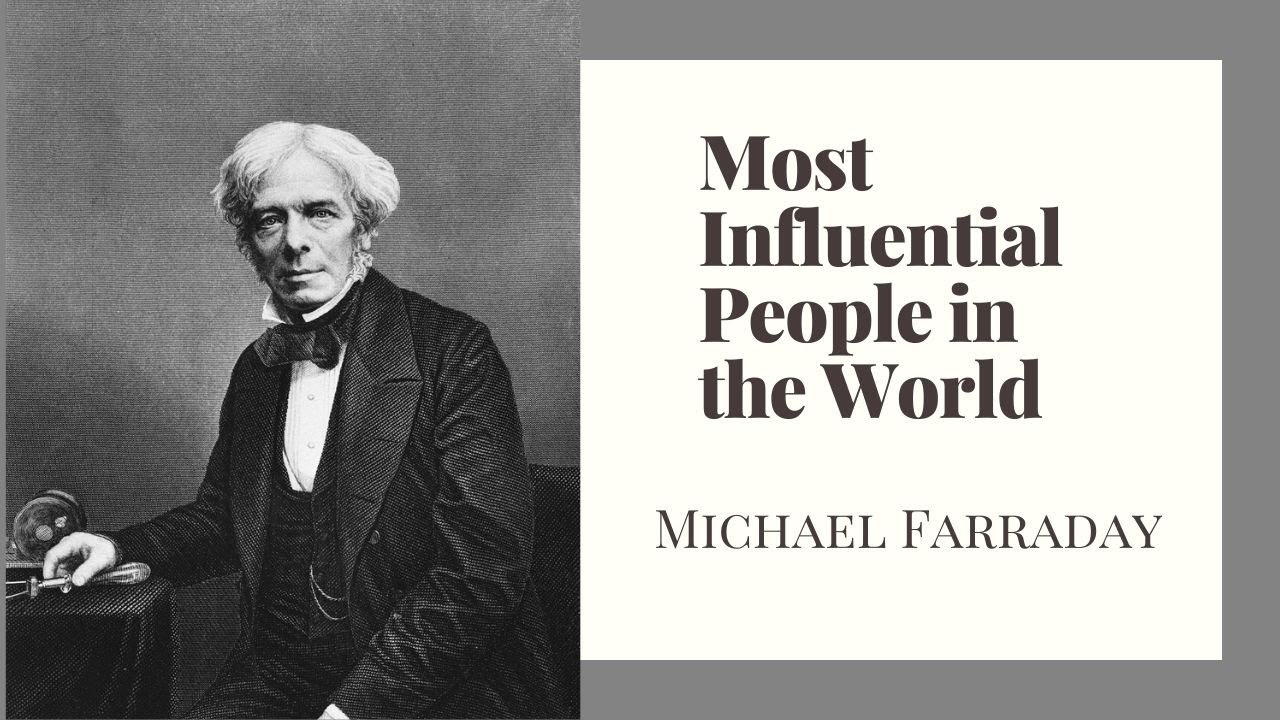
In this YouTube video, narrator Lois Letchford reads a passage from the children's book Eureka! that profiles the life and achievements of Michael Faraday (1791‑1867). The narration begins with an overview of Faraday’s status as a brilliant experimental scientist who uncovered the fundamentals of electromagnetism, invented the transformer, electric motor, generator, and contributed to chemistry (benzene, electrolysis) while also debunking spiritualist fraud. It then traces his humble origins as the son of a blacksmith in Newington Butts, his apprenticeship as a bookbinder, and his self‑directed education through public lectures at the Philosophical Society. A pivotal moment occurs when a customer gives him tickets to Sir Humphry Davy’s Royal Institution lectures, prompting Faraday to seek a scientific career. After initial rejections, Davy later hires him as a laboratory assistant, exposing him to European scientific circles and involving him in the invention of the miner’s safety lamp. Returning to the Royal Institution, Faraday makes his first major discovery in 1821, demonstrating the link between electricity and magnetism, and builds a primitive electric motor. Despite holding incorrect notions about electricity and refusing to use mathematics, he discovers electromagnetic induction in 1831, creating the first transformer and electric generator. The narration also notes his devout Christian faith, his view that wealth was sinful, and his efforts to expose spiritualist fraud. The video concludes with a typical YouTube call‑to‑action encouraging viewers to like, subscribe, and share.
Chapters
Hello, I am Lois Letchford, author of the book Reversed: A Memoir, and reading to children from the book Eureka! about scientists who changed the world. And today we have another name that you may or may not know, Michael Faraday, born in 1791 to 1867. A brilliant man. Brilliant experimenter who revealed the mysteries of electromagnetism and the fraudulence of spiritual mediums. Arguably the greatest experimental science of the 19th century, if not all time, Michael Faraday discovered electromagnetism, induction, benzene. And the laws of electrolysis, invented the transformer, the electric motor, and the electric generator, investigated polarizing light, and even took time out to debunk spiritualism. What a beginning! He coined the words electrode, anode, and cathode throughout his life. He was a devout Christian which held onto the acclamation of wealth was sinful. However, Michael Faraday was born to a blacksmith in Newington Butts, a hamlet that's since been absorbed by London. After a basic education, he was apprenticed to a London bookbindery where he had the opportunity to read widely. He soon developed a passion for science. To learn more, he attended public science lectures when he could find them, a favourite haunt being the city's Philosophical Society. When his apprenticeship was up, a friendly customer gave him a set of tickets for lectures given at the Royal Institution by the great chemist Sir Humphry Davy. Faraday decided to switch careers from bookbinding to science. He was— he first approached Joseph Banks, President of the Royal Society, who rebuffed him. He then tried Davy, who essentially told him to stick to his day job. However, Davy remembered the eager young man when, the following year, the Royal Institution had a vacancy for a laboratory assistant. assistant. After Davy damaged his eyesight in a laboratory accident, Faraday served also as his note keeper. Additionally, Davy took him on an extended tour of Europe in 1813 to 1815, giving him the chance to meet such distinguished figures as other physicists. Back in London, Faraday rejoined The Royal Institution, where his star began to rise. He also helped Davy in the invention of the miner's safety lamp. In 1821, he made his first major scientific, scientific discovery. A Danish physicist had found that a wire carrying an electric current deflected the needle of a compass, thereby showing that magnetism and electricity are 2 faces of the same phenomenon— electromagnetism. This seems very obvious to us now, but at the time it was a paradigm shift. Paradigm shift. Every scientist in sight started experimenting on electromagnetism. And Faraday was no exception. He theorized that the electricity-bearing wire must produce lines of magnetic force, a magnetic field in other words, and to demonstrate this he set up a complicated piece of apparatus that was in effect the first electric motor. Although practical electric motors Use, use a very different design, they rely on the principle Faraday worked out. The irony is that Faraday succeeded in this and other electrical experiments despite having entirely erroneous ideas of what electricity actually was. He thought electricity was a type of vibration. That put molecules of an object under stress, that stress could be conveyed to the molecules of the air and thus to those of an adjacent object. He also did his investigations without any reliance on mathematics, which he despised. He was the last scientist of any note not to use maths in his work. Faraday reasoned that if electric currents had created a magnetic field, then surely a magnetic field should be capable of generating an electric current. It took some years, starting in 1824, to get the notation to work, but in 1831 he did so, producing the first transformer and thereby discovering The principle of electromagnetic induction. The electricity can be created in a circuit by altering magnetic field around it. Soon after, following the same line of investigation, he produced the world's first electric generator. And that's the beginning of the story of Michael Faraday. It goes on, it tells of others who were also Studying in the field at the time. But it's— this one is Michael Faraday. Hit like, hit subscribe, share it, and find out more about these people who stepped out and changed our world.