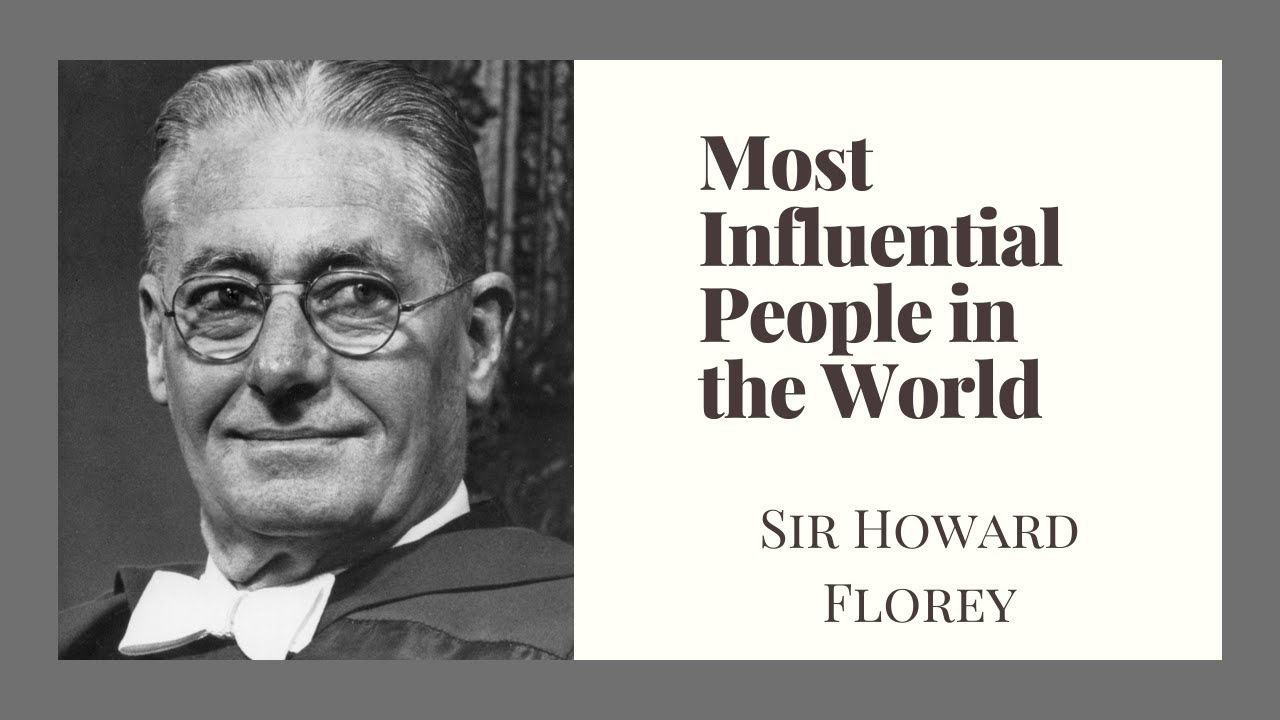
In this narrated excerpt, Lois Letchford introduces Howard Florey (1898‑1968), an Australian bacteriologist who, together with biochemist Ernst Chain, transformed Alexander Fleming’s accidental discovery of penicillin into a usable drug. Letchford explains that while Fleming’s 1928 observation of mold‑killed bacteria earned him popular credit, he could not purify or mass‑produce penicillin. Florey’s team at Oxford’s Sir William Dunn School of Pathology extracted penicillin as a yellow powder, demonstrated its efficacy in mice at extreme dilution, and faced massive production hurdles—only four ounces were made in 18 months during World War II. Early human trials were limited to terminally ill patients; the first subject showed rapid improvement but died when the supply ran out. Letchford frames these facts within a broader narrative about scientific credit, the wartime context, and the eventual antibiotic revolution, concluding with a brief promotion of her memoir.
Chapters
Hello, I'm Lois Letchford, author of the book Reversed: A Memoir, and reading about people who changed the world in science. And today I wanted to read about Howard Florey, who lived from 1898 to 1968, and he was an Australian bacteriologist who brought antibiotics to the world. If you ask people who is responsible for the discovery of penicillin, 99% will say the Scottish man Alexander Fleming and tell you that one day he noticed a funny growth in a dish and the rest is history. It's true as far as it goes, but it's misleading. Fleming discovered Oscar deserves full credit for spotting an interesting phenomenon when others might not have noticed. But the people who discovered how to make and use penicillin, and who thereby stand the— started the antibiotic revolution that saved untold millions of lives, were Howard Florey and his young colleague Ernest It was in 1928 when Florey was researching the bacterium in St. Mary's Hospital, London, that Alexander Fleming noticed that some of the Petri dishes he was using to cultivate the bacteria had been contaminated by little spots of green mould. And any bacteria colonized near the mold had died out. Realizing that anything that had killed bacteria, disease-causing bacteria, might be useful, he experimented with the mold, identifying it as penicillin. It's similar to the one of the molds that grows in old bread. Naming it penicillin and finding that it killed some strains of bacteria. But not others. He also discovered that despite its bacterial properties, it was harmless to experimental animals. Pluckily, one of his assistants ate some to demonstrate that it was harmless to humans too. And that was more or less where Fleming left it. This wasn't the first antibacterial agent he discovered. In 1922, he found that tears, snot, saliva, and other bodily fluids contained an enzyme that acts as a catalyst in breaking down bacterial walls, so helping the body defend itself against infection. Fleming passed his samples of penicillin to researchers at Sir William Dunn School of Pathology at Oxford University, and seems thereafter to have more or less have been forgotten. The team who received the samples found little use for penicillin in their current research progress, but luckily recorded its properties and kept it on file. Fleming's problem with penicillin had been that he didn't know how to purify or to produce it in any quantity. Working with Ernest Chain, a German-born biochemist, Florey was able to extract penicillin in the form of yellow powder. He and his team then discovered that an even— an extraordinarily diluted solution of the powder, 1 part in a million, was effective in wiping out Streptococcal infection in mice, leaving the mice unharmed. There was still the difficulty of producing the stuff in quantity. It took Florey's team about 18 months to produce just 4 ounces of the powder. To make matters worse, World War II was underway and all the commercial laboratories were focusing on producing vaccines. The shortage of penicillin was to have tragic effects when it came to testing the drug on humans. Naturally, Florey selected only terminally ill patients as experimental subjects. The first 5 was a postmaster dying from infection of his face and lungs. In just a few days, he was very much better. Better and looked to be on the road to a miraculous recovery. Alas, a few weeks later he died and Florey didn't have enough penicillin for a full course of treatment. And so that's the Florey who started the discovery of penicillin. Check it out. And I'm reading from the book Eureka! Find Out About Scientists Who Changed the World. Thank you. Hit like, hit subscribe, and check out my book, Reversed: A Memoir, the story of a child who failed first grade and his journey towards a PhD. Thank you.