Nicolaus Copernicus was born in 1473 Poland and became convinced the Earth orbits the Sun after observing Mars's retrograde motion. He drafted his heliocentric theory around 1512 but hid it for decades, fearing Church persecution, finally publishing De revolutionibus in 1543 just before he died. His idea faced resistance until Galileo's telescopes and Newton's gravity theory proved him right.
Chapters
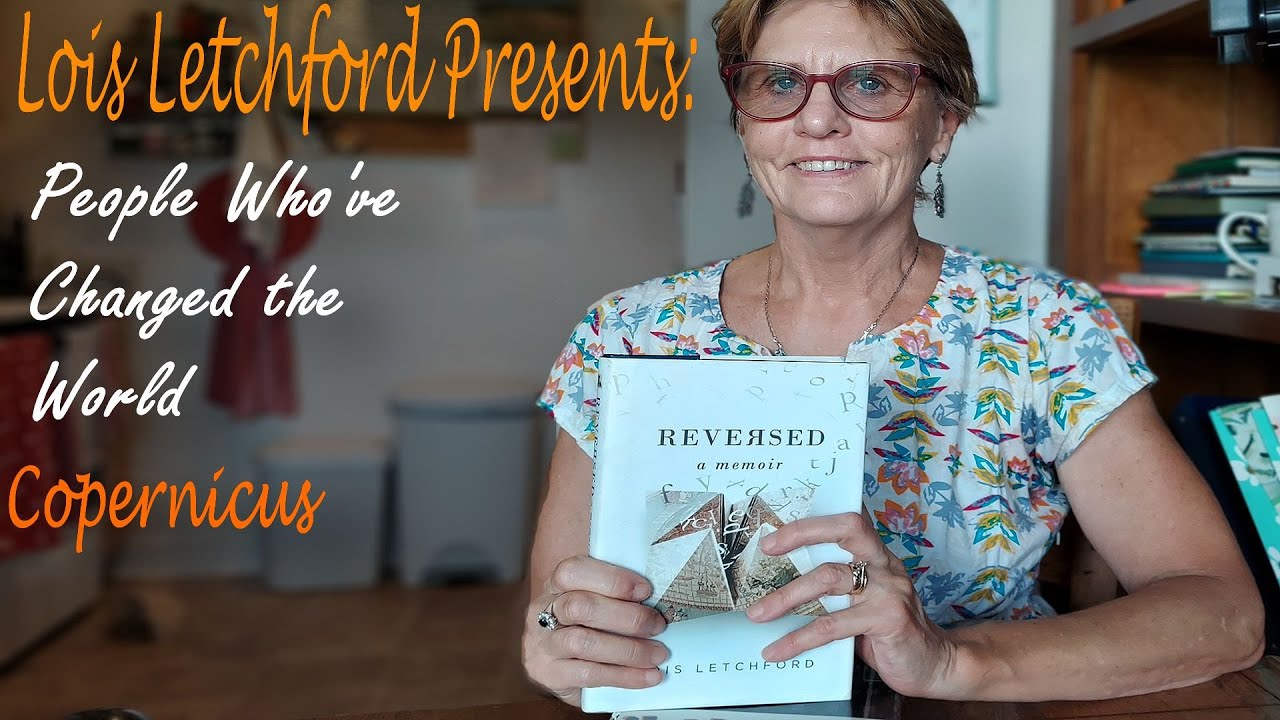
Hello, I'm Lois Letchford, author of the book Reverse to Memoir and a literacy problem solver, sharing a series of books with you titled People Who Changed the World. And today I'm reading about Nicolaus Copernicus by Dennis Brindle Fradian. These people amaze me. Because of the amount of work they did with such simple instruments. And Copernicus was born in February 19th, 1473. Think about the world in 1473. Columbus only mapped America and went across the Atlantic in 1492. The Gutenberg Bible going from A scribe writing out a text to printing happened in 1442. So this was the 15th century, late 1400s, where the world was starting to change. So, Nicolaus Copernicus. Perhaps the man is gazing at the sky one night when he thinks of an answer. Memories from his childhood find the solution. The man's name is Nicolaus Copernicus. In time, he will challenge the way people viewed the universe for ages. Nicolaus was born in February 19th, 1473, in Toruń, Poland. His last name wasn't yet Copernicus though. It was Kopernik, something also written Kopernik in an age when little attention was paid to spelling. I imagine very few people also were reading and writing at this time. Nicolaus was the youngest of 4 children. His father was a merchant and a banker. The family owned a large home in Turin and a summer house near the grapevines outside of town. During the winter, young Copernicus and his sister and brother skated on the frozen Vistula During the summer, they played tag and ran races. Nicholas learned to ride a horse and travel with his family by wagon. To a person moving fast, someone moving more slowly can appear to be going backward. Years later, everyday observations would help him Make a great discovery. Nicholas was only 10 when his father died. His mother also died around then. His brother Lucas, a clergyman who later became a bishop, adopted Nicholas, his brother, and 2 sisters. Uncle Lucas was so stern that people claimed he was never seen to laugh. But he raised his sister's 4 children And made sure they became something in this world. Uncle Lucius decided Nicholas, who was quiet and thoughtful, should become a clergyman like himself. He enrolled Nicholas at the Cathedral School in Warlock, Poland, 40 miles from Turin. At this time, Nicholas reported that he helped a teacher named Abbasteus build a sundial. For the Wee Clock Cathedral, a sundial keeps track of time. It does this by measuring the changes angle of the shadow cast by the sun as it crosses the sky. Perhaps building this first sundial interested Nicholas in astronomy, the study of stars, planets, and other heavenly bodies. When Nicholas was only 18, his uncle sent sent him to university in Kraków, Poland. In those days, scholars often took on fancy names. The youth from Turin changed his name to Copernicus. Nick. He sometimes signed his name, Love School. He attended colleges in Poland and Italy until he was 33 years old. He studied Latin, canon law, church law, and medicine, but his favourite subject was astronomy. His astronomy professors taught Nicolaus many things that were later proved to be wrong. Students of Nicolaus's day were taught that the Earth was a special body at the centre of the universe that stood motionless while all heavenly bodies circled People had believed that since ancient times. Astronomy teachers had many arguments to support the idea. It was impossible for the Earth to move, they said. Wouldn't we feel dizzy if the Earth was spinning or moving through space? Wouldn't we be thrown off the Earth's surface? Wouldn't a ball tossed into the sky be left behind and land miles away? Wouldn't clouds and birds be left behind if the earth moved? Besides, anyone could see that the heavenly bodies circled the earth. Each morning the sun rose in the east. It travelled across the sky all day before setting in the west. At night, the moon and stars also crossed the sky, as did the 5 known planets— Mercury, Venus, Mars, Jupiter, and Saturn. The backward loops Mars and other planets sometimes made puzzled astronomers. Still, they saw no reason to doubt the old-age idea that the Earth was the centre of the universe. In his studies, Nicolaus read about the ancient Greek astronomer named The heavenly bodies don't really circle the Earth, Aristarchus had claimed. They only seem to do this because the Earth spins. Besides spinning, the Earth also travels around the sun, Aristarchus added. For holding such ideas, Aristarchus was believed to have lost his mind. Nicholas thought about what his tithes teachers said and about what the crackpot Aristarchus had claimed. While reading his books, Nicholas made notes in his margins as ideas came to him. When no paper was available, he wrote his ideas on calendars and even on walls. His notes showed that by age 20, he was starting to think that the crazy Aristarchus had been right. Nicholas finally finished college in 1506. He spent the rest of his life working as a clergyman and physician. Most of the time, he was situated in Poland's Freiburg Cathedral, Near the Baltic Sea. The cathedral resembled a castle. For his living space, Nicholas chose a tower with an open view of the sky. His church duties included conducting service, collecting taxes, and overseeing lands. As a physician, he became known for treating the local poor people. In the early 1500s, doctors knew very little of disease. A medical book still exists which Copernicus wrote. He must have felt hopeless about treating a patient, for those words mean God help in Polish. At the end of the day's work, he observed the heavens from his tower. One of his observations was dated June 5th, 1512. That night he observed Mars, which was in the middle— in the midst of one of its backward loops. As usual, he wondered, why does the red planet do that? Perhaps he was gazing at Mars when the answer came to him. There was a logical reason for the red planet's backward loops, Copernicus realized. He recalled his childhood observation that a slow-moving object can appear to go backwards from the vantage point of a passing faster object. Wouldn't the same thing be true of planets? Earth must be stand— must not be standing still at the center of the universe as everyone believed. Instead, it and the other planets orbit the sun like the crackpot Aristarchus had said. Earth is closer to the sun than Mars and faster than the red planet. At times, Earth overtakes and passes Mars as both planets orbit the sun. At those times, Mars appears to make a backward loop in the sky for a few months. Once he realized that Earth was a planet orbiting the sun, Everything else fell into place. Why do all the heavenly bodies seem to circle above us? For the same reason an ice skater doing a spin can have the illusion that everything is spinning around them. The stars only appear to cross the sky from east to west each night because the Earth is spinning. For the same reason, the sun only appears to cross the sky each day. If the Earth spins like a top and orbits the Sun, why don't we feel the motion or get thrown into space? Because the Earth is huge and smooth and moves smoothly. Why don't clouds, birds, or a ball tossed in the air get left behind as the Earth moves? Because the surroundings, the Earth, moves along with it. Around 1512, Copernicus wrote a booklet stating that the Earth is a planet orbiting the Sun. He called it the Little Commentary. As a Catholic churchman, he had to be cautious. The church insisted that the Earth was the center A clergyman who disputed this could be punished. So instead of having his booklet printed in large numbers, he wrote just several copies by hand and showed them to a few friends. Check out the punishment for anyone who disagreed. with the Catholic Church at that time. Upon completing the little commentary, Nicholas began a much longer work. Night after night, he viewed the heavens from his tower and worked on his book. For 30 years, he wrote and rewrote his work. He wanted to publish it but kept delaying for fear of punishment. By the church. By 1541, he was 68 years old. That was considered quite elderly at the time. Besides, Copernicus was suffering from a serious heart condition. Realizing that it would be wrong for his ideas to die with him, he unlocked the drawer where he kept his manuscript. At long last, he sent it to a publisher. By then, He was so ill it appeared he would not see— live to see his book come off the presses. But he clung to life until May 24th, 1543. On that day, a messenger rushed to his bedside with the first printed copy. He held his book in his hands. Within a few hours, He died at the age of 70 in the tower where he had spent much of his life. Copernicus's masterpiece, Concerning the Revolution of the Heavenly Spheres, was one of the most important books ever written. It offered the best argument that had ever been made that the Earth is a planet. In a famous passage, he wrote that the planets revolve around the sun. He continued, how could this light be given a better place to illuminate the whole temple of God? Let it in truth guide the circulatory family of planets, including the Earth. What a picture! So simple, so clear, so beautiful. At first, Copernicus' great book changed few minds. People were slow to let go of the idea that the Earth was the centre of everything. Religious leaders especially opposed what came to be called the Copernican system— the idea that the Earth spins and orbits the Sun with other planets. In the year 1600, the Italian scholar Giordano Bruno was burned to death in Rome, partly for teaching Copernicus's ideas. That was the punishment. But the truth couldn't be held back forever. Little by little, proof of the Copernicus system was found. In the winter of 1609-1610, Galileo Galilei of Italy became the first scientist to make astronomical discoveries with a telescope. While viewing Jupiter, Galileo saw 4 moons orbiting the giant planet. Here was proof that at least some heavenly bodies didn't orbit the Earth. Then in 1687, the English scientist Isaac Newton published a book describing how the Sun's gravitation holds the planets in their orbits. Newton's book finally convinced the world that Copernicus had been right. The Earth spins and orbits the Sun. When asked about his achievements, Newton made a famous comment. If I had seen further than others, he said, it was because I stood upon the shoulders Newton meant that he had built on the work of Copernicus and other astronomers. The same could be said of Copernicus, who had enlarged upon the work of Aristarchus. In the mid-1900s, astronomers— astronauts in space saw the Earth's spins and moves around the sun. Then in the 1990s, there was a great new breakthrough. Astronomers discovered that, like the sun, other stars are orbited by planets. These astronomers too have stood on the shoulders of a giant, Nicolaus Copernicus. What a wonderful statement. Standing on the shoulders of giants. Thank you. Hit like, hit subscribe, and share it with others. This is quite a long book, so enjoy it and find out more about other scientists who changed the world and changed our thinking. Thank you.
More from Lois


Overcoming Adversity: A Dyslexic Learner's Journey to Success | When Learning is Trauma #shorts

Redefining Success, Beyond Grades in Education | When Learning is Trauma #shorts

Turning Awareness into Action for Dyslexic Learners | When Learning is Trauma #shorts

Why Dyslexia Goes Unnoticed: A Systemic Issue | When Learning is Trauma #shorts

The Long-Term Impact of Unrecognized Dyslexia | When Learning is Trauma #shorts

The Heartbreaking Reality of School for Some Kids When Learning is Trauma #shorts



