Raja Marhaba, Lois Letchford 'When Learning is Trauma'
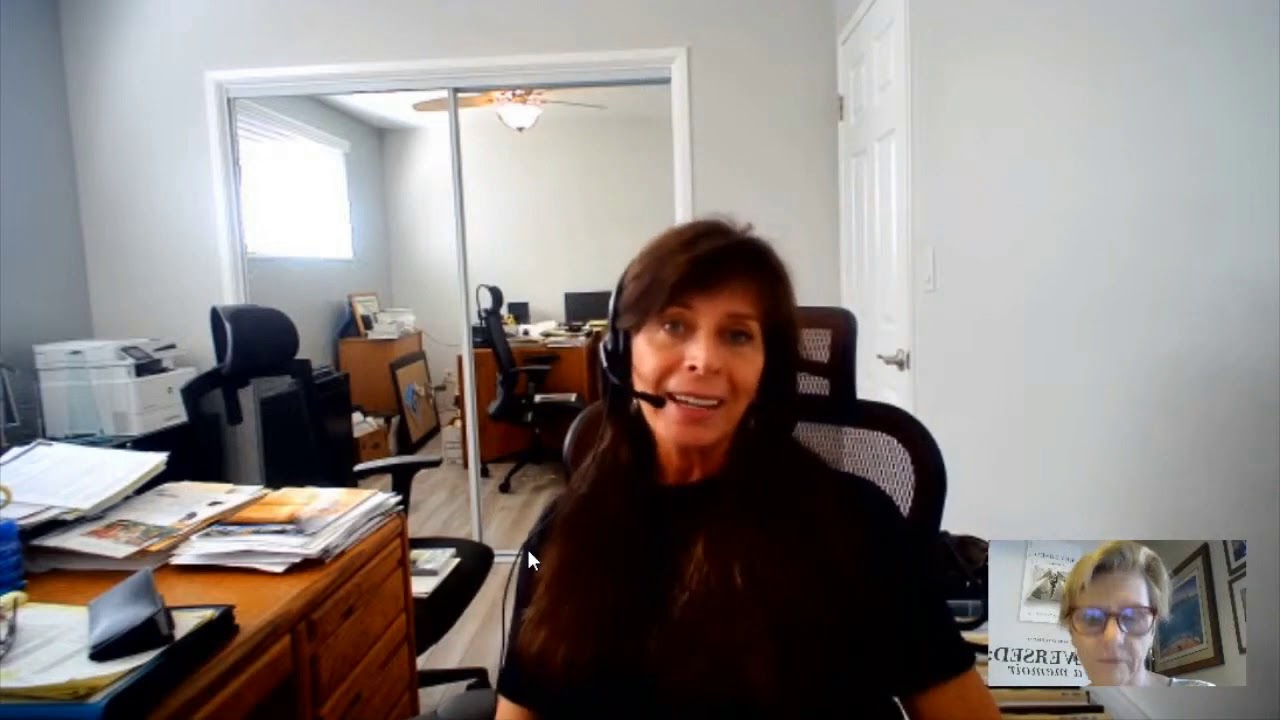
Raja Marhaba spent eight years fighting California school districts over her sons' learning disabilities, documenting everything like a lawyer to force them to provide services. She sold her home and had a nervous breakdown during the battle, but both sons eventually thrived. She now runs the Jonathan Foundation to help other families navigate the same fight.
Chapters
Hello, I am Lois Letchford. Welcome to my livestream. This week we're talking to Raja Mahaba, and her topic is what to do when learning is trauma. She said that. Hello, Raja. Welcome. It's 4 o'clock, nearly 4 o'clock. We've got another minute to go. I am delighted to actually meet you. After all of your— I've heard from you.
The pleasure is all mine.
We, you know, we have so much in common.
Yes, we do.
So much in common. And I sent you that piece to read. I really enjoyed writing it.
I read it. It's beautiful. You're a great writer. I will edit the part you want me to, but it keeps rolling, so it's good. It keeps the audience attention.
Yes. Yeah, so anyway, welcome to Unlearning Is Trauma. I have to acknowledge the assistance my son gives me and your son, my son and his friend, to, you know, to put this on, because without them it wouldn't happen.
Sure.
I am Lois Letchford. I'm the author of the book Reversed: A Memoir and a literacy problem solver. Lisa cannot be with us today as she is working. She works in mental health. And she's working with people with who have implications from dyslexia. I love her. Because it's a lifelong condition. And today we have Raja Mahabharata from California. What to do when learning is trauma is what she has chosen to spoke about— speak about. Raja's son both struggled with learning to read, and her experience turned her into a parent and She consults with fellow parents of children with learning disabilities, and she invites and encourages parents to document, keep a running log, and videotape children's success and regression. She believes parents should become mini paralegals. She never wants to put the school district against a family, but unite in a way against COVID, not against each other. What a phenomenal introduction.
Thank you for that. It's been quite a journey.
I don't want to go back through your story because we did a long session, 1-hour session, you taking us through all that you did for your sons and the legal battles you had. How long was that journey?
8 years. 8 years of hell.
You said it. We—
yeah, 8 years of royal hell. For a novice mom that had no idea what she was walking into, it was very difficult.
That's part of the problem, you know, none of us know what we're going into.
No, we don't know what we're going into. We are at the mercy of the school district when we ask the teachers for help, and then they want to assess because they think there are some issues going on with our children. Then we go into an IEP room, and then we hear everything they say, we believe everything they say, and It goes trial and error from there.
Trial and error. And I think that's the problem we have. It's not only trial and error, but we live with the consequences.
Yes, we, we, you and I, the parents, um, pay the consequences, but our children pay the highest price possible for a free and appropriate public education. They're the ones that are sacrificed. Yeah, I, I watched that. I was very, very impressed with him that entire, um, video, and he's absolutely correct. I wish I knew now what— then what I know now, and I— it would have made life so much easier. But, you know, 20 years ago, the system is broken. 20 years later, I'm fighting the same fight for hundreds of families with the same broken system and no improvement.
It just makes me take a breath and say, wow, that's amazing.
It has not changed. I go into many IEPs. I meet with many different school districts. I advocate nationally as well as locally. And it's the same situation. There are districts that have well-versed IEP team members and districts that don't have well-versed IEP team members. There are districts that have assessors that only, you know, work on a template, do whatever the template tells them to do, get the scoring, write a little summary, and then submit to the parents. And that's not the most efficient way to assess. And although I'm not a psychologist, I've seen hundreds of psychoeducational assessments And I've seen errors where a psychoeducational assessment would have some other child's name blended in within the report. And yes, which tells me it was a template, it was cut and pasted, they forgot to delete the child's name. But now you question, are the tests accurate?
That's phenomenal.
Yeah, it's just, it has not changed. I think school staff need to be better trained in IEP meetings with IDEA 2004 Act, with how to write assessments, what's a good assessment. And I'm not just saying this is limited to psychoeducational assessments. I found errors with speech and language, with occupational therapy, many related service assessments as well. And so, you know, the, the team might say, oh, that was just an error, I'll fix it. But then I have to question as an advocate, were those true scores of my child, or was it really an error? I don't know. Yeah.
And where are the scores now? And what scores are correct?
The schools are not assessing. Some are. I attended a webinar not too long ago, and some schools in California are starting to assess. LAUSD is not assessing at all. And I think it's a crying shame because these kids are continually placed on hold. There's loss of learning. And I'm talking general ed and special ed kids, not only general, you know, special education children, because you have general ed kids that Maybe borderline, you know, to be eligible, but were never assessed, fell through the cracks. And now it's the big test with distant learning, and they will fall through the cracks. And so when the schools open up again and do full-blown assessments, my question is, are they complete and comprehensive assessments? Are they a screening tool? What are they looking for? What tests are they giving these children to figure out whether there was a loss of learning or not?
That's— I cannot think what's going to happen, you know, when schools come back, how long that will take. And this, you know, the buildup of loss of learning and the implications for that and how they're going to deal with it.
The schools have a big challenge. The parents have a big challenge. You have parents at home that need to work, parents that don't have the time to sit and educate their children and be an educator, if you will, because that's You have teachers on the other side in a video with the children trying to control 30 children through a video, which has to be challenging for them because I'm not sure who's sitting with the child on the other side of that video for the teacher to take control of. I'm sure the teacher has his or her own, you know, personal situations with COVID with financials, with their own children trying to teach them. You know, it is so devastating on both sides, and that's why I say there needs to be collaboration. And I think that's what we're seeing. between the school districts and the parents. It's not one against the other. But I'm not sure what that magic formula is or how it would look like for that to happen.
And you're right, you're so dependent on parent resources. You know, like you say, if you've got 2 parents working and 2 children at home, what happens?
It's a problem. I have a parent that actually sent me an email and told me, my child is not doing well. He has autism. He cannot do the distant learning. And the teacher— and he complained to the teacher, and the teacher's response was, you know, I have my own problems. I don't have time for your child. I have 200 other students. And in the beginning, I was upset with the teacher's response, all in email written. And then I had to take a step back and think, well, that teacher has the same situation the parents have. And is the school district providing the teacher with daycare? Does the teacher have 2 or 3 students? Does the teacher have special ed and general ed? You know, children, you know, it's an unknown. And so we, the parents, when we're trying to do distance learning, we're faced with the same exact situation that the teachers are. So there's frustration on both sides.
And the whole Zoom meeting, the whole way we're now teaching is totally new for everyone. No one's been trained in this.
No. And then you have a lot of technology, you know, issues. You have an overwhelming— everybody's on the internet where they never was. You have disconnects, you have kids that can't get back on the Zoom session because it's overloaded. I know some school districts are limiting it to an hour, so, you know, they get cut off in an hour. And I have parents that told me they have a 2-hour Zoom session and then they have like a half-hour lunch and another 2-hour Zoom session with the teachers. But then the parents have to do the homework, the classwork, whatever the projects are after the fact. So the parents, it's not just a 3 or 4-hour— I'm going to be a teacher for my children because I have to monitor them during distant learning. Well, now, after that, you have to do the homework, the classwork. Wait, you have a husband, you have to do cooking, you have to do cleaning. It's extremely overwhelming for families.
So what do you recommend? What would you suggest?
I think school districts need to open up assessing virtually and in person, whatever they can. I think all children are being affected by this, not just the special needs children. special ed children. I know there are some school districts that are only focusing on severely developmentally delayed, disabled special ed children, but are not focusing on the dyslexic children, on the, you know, the children that have maybe speech and language deficits or occupational deficits. They're just going to the most important, most severe cases and saying, okay, we'll do assessments for them and help them. But then what happens to the other group of children that are— being placed on hold. I think there has to be more of an open communication between districts and families. I think the union needs to collaborate with the district because I think it has a lot to do with it as well, um, because I don't know what the unions want and what the superintendents of the schools can't provide. And then, you know, they're obligated by IDEA Act 2004. The law has not changed. The law will not change anytime soon. And so whether there's a failure of FAPE in an IEP or a 504 plan, that's going to be a big issue because at some point the families are going to say, hey, we have a loss of learning. We're going to due process. We documented everything. That's why I want parents to be mini paralegals because I want them to document, videotape, do a writing log, a date, a summary of what happened, just the details because that's going to go to your attorney. If you're fed up with it as a parent and you want to get help for your child, then your attorney will put a case together and go against the school district. There's going to be a whole bunch of due process. And the other part of it is, if the school district will work with the families and give the services, they could save a ton of money on legal fees on their end, and they could save the parents a ton of money on legal fees on their end. And all they have to do is give a service. That's all they have to do. And if they can come to a meeting of the minds, it would be great. But then you have this big gorilla, which is money. And the schools say that they're underfunded by the government for IDEA. But then the law's not changing. So we're at a standstill. We have a problem.
Now, you just said something. You said, what do we want parents to do? To go to the school district and say, my child's struggling, what are you— what advice did you give parents? And you started to say it. Document.
Yes, document. I think that's the number one key for families is to document, because when you go back to the school, there should be an open conversation between the families and the school district to begin with, without going even to a due process, because you'd like to avoid a due process. But at least if you go to the school district with your documentation and say, I've been technically the teacher at home for my child, and here's the deficits, and here's where he's supposed to be or she's supposed to be with standards, you know, grade-level standards. They're not meeting grade-level curriculum. Here's what my child can do. Here's the proof of what my child can do. Here's my log of the struggles that my child has. And by the way, here's a video of the behaviors that happens during the distant learning and after the distant learning. The school cannot dispute that. So the school's going to have to come to a collaboration with the parents. And if the school doesn't want to, guess what? You go to the attorney. There are attorneys that would take cases on a pro bono basis and get the money from the school district versus from the parents. There are attorneys that are going to charge a retainer fee, so you just have to do your homework and due diligence and interview attorneys and see if you can get the right attorney to work for you.
So the first thing is, like you said, videotape when they're Zooming before, during, and after. You said document, do a daily log if you can of what the child has achieved. What else are you recommending in documentation?
Any therapies. I know some school districts are doing related services, whether it's speech and language, occupational therapy. Now, you have to understand, if they do physical therapy— if, I don't know, some districts may— the parent is going to be that therapist with the instruction of the individual on the other end of the video, right, the Zooming. So they give the parent instructions, do A, B, and C to your child. And so we're putting so much work and tension and pressure on the parent to execute what the teachers or the therapists should be executing for these children. There should be in-person. I mean, you know, if I own a construction company, I have to go to work. I have employees that I need to make sure that they abide by the COVID safety plan. I have to do distant distance in my office. I have to do distance in the construction site. I have to monitor if one of my employees gets sick and I have to file a claim and I have to do quarantine. Districts need to do the same thing. It's being done. Yes, there are risks, but do we just stop everything because we don't want to do any of the above and we raise illiterate children? Because that's what we're doing right now. We are nationwide raising illiterate children with distant learning. Because not every child, special ed or general ed, has the ability, the capability, and the skill to be able to do the distant learning. And whether they are elementary, middle, or high, or even college— because I have college students that are struggling. I have college students that were 4.0 and now they're about a 2.0. There's a big problem here.
That's a huge drop.
Yes, yes.
And that is directly related to the online learning?
Yes, I have students that— as a matter of fact, a friend of mine came to visit yesterday. She says, my son was doing so great in class, he did wonderful, 4.0, and now he's struggling online learning in college. I have a niece that made Hopkins, University of Hopkins, in She can't— Yes, she can't even go to school. She has to learn from home. I mean, we've totally changed the way we used to know education, the way we used to know life. So what I'm saying is, instead of battling each other with the school districts, the school districts need to sit with parents, not just school districts, and they need to come up With some sort of collaboration. Maybe the school district should come up with a parent-teacher committee, right? And the parents are involved in saying what the needs are, and the teachers can say, this is all we can give. And, you know, you have a principal, you have a superintendent, you do have IDEA law. I mean, there's a way to bring this together if both parties are willing to have a meeting of the minds.
And we have to really work together.
That's so important.
To stop the lawsuits and to have the— it's not even to stop the lawsuits. The first thing has to be the child. Is the child learning?
Absolutely. And you won't know that until school opens up. You might know that now when they're learning. You know, some kids are very capable of doing online learning and some are not. And that's where you're going to have a problem. And, you know, why initiate due process against the school and incur marriage trauma in your home? Put your typical children on hold, the general ed children on hold, because your special ed child is taking all your time because you have to devote to that child. What if you have 2 or 3 other children in the household? Now you gotta make money, and how are you gonna pay for this in the lawsuit? Now let's go to the other side with the school districts. They incur legal expense.
Yeah.
You know, they're, they're, you know, The giant that has the, the money bank, if you will, and the parents don't have the money bank. But why is the school district paying attorneys in the hundreds of thousands of dollars to fight parents not to get services for their children when the school district attorneys, or the school cannot pay the school district's attorneys, do not do a due process? They would save so much more money on legal fees if they would just give the service to the family.
Yes, yes. We have a question, I think it's an appropriate time to ask it. What would you say is the biggest challenge for students enrolled in virtual learning?
Focusing and attention. It's a big challenge. There's teachers that— I've had an educational therapist that told me, Raja, my problem is I'm trying to teach this child, but I can't put my hand through the computer and redirect the child. And if someone's not sitting next to the child to help him or her focus, it's a problem. And if the parent puts a sibling next to the child and the sibling gets distracted on their cell phone or doing something else, they're not redirecting the child. I think focusing and redirection has to be the number one.
Yeah. And you're right, it goes back to attention, because if you don't have attention, we have nothing.
Yeah. And how many children have ADHD? Inattentive and attentive. There has to be some sort of formula. What that is, I'm not sure. But it's very problematic.
Yes. Well, I know, you know, taking the conversation a little bit on a direction, I know, you know, the— your lawsuits and the stress that you had cost you your marriage.
Yes, it Well, you have to understand, we have a construction business. Uh, I have 2 children in due process, 8 years of due process. Uh, I can't tell you the hell we went through with the due process to collect the evidence. That's why I'm saying documentation is key. Um, I was transcribing IEPs and giving them to the attorneys, 60, 70-page IEPs. I ended up buying transcription equipment because I used to do it on a handheld Recorder, write everything down, type it, and then give it to the attorneys. Because I'm talking 20-plus years back, we were not as sophisticated as we are now.
Yes.
I used to go to the libraries, ask— I didn't even know there were psychologists, you know. Once I found out that there are psychologists and attorneys and advocates— back then everything was on paper. We did not have the luxury we have today to do a Google search. So everything I did in my hardship was on paper, and it was very difficult. So it just— it tore my marriage because my ex-husband wanted, you know, money to go towards the business, but the attorneys took the money for the children. So what do you do? Do you grow the business? Do you pay for the children? And I'm talking an exuberant amount of money, like a lot of money.
Yes.
So, you know, so you have that one thing, plus you're a wife. Do you become— do you stay a wife for your husband, or do you— does the attention go to your children? Do you cook the dinner timely and still take care of the children and adhere to the attorneys and talk to the teachers and collect the evidence and try to put a case together to give to the attorney so that you can go fight the school district to get services for your children. Then you have a business that needs to grow because that, that was what we had endeavored. That's what we had envisioned, especially my ex-husband. It was impeded by the money not going into the business, coming out of the business, going into the lawsuits. So he couldn't grow the business the way he wanted to.
Yeah.
And then you have other stuff that happens. I mean, I, I, uh, you know, personally, I, I sustained a full-blown nervous breakdown. He sustained a fire accident that was life-threatening. We had an 8-year due process lawsuit. My family had tremendous tragedy which impacted the marriage. And so the icing on the cake was an 8-year lawsuit that took everything away from us, and it should never have happened that way.
And it's not only physical loss and financial loss, it's mental implications which you can't even contemplate, document— not even document, measuring.
You can't measure it. No, what's lost is lost. And when the whole lawsuit was done with the 8 years of hell that I've gone through with the system and trying to protect my children and give them the best that I can possibly give them humanly, I was to my husband, okay, you know, I'm ready to be a wife. Well, you know, the 8 years he had a new circle of friends. He, you know, men— with all respect to men out there, but, you know, we are human and we can only handle so much stress that's placed on our table, whether we're women or we're a man.
Yeah.
But for a mom that's trying to keep it all together, and I'm talking personally, and still try to fight for my marriage, and when I'm done fighting the system, I go to my ex-husband, I'm ready to be your wife 100%, and he says, oh, I got this group of people I'm with, or I'm doing this now, I don't have time for this. You know, what do we do as moms? We pay the price. Why? Because we will do— we're the mama bears. We're going to do everything within our ability to fight for those children. And some men are awesome and supportive, and some, they just don't have the ability to do that.
Yeah, you know, that's what we're talking about really, is the cost goes way beyond what we're seeing, and it's way beyond whether children read or don't read, onto the family, and you suggested even the siblings. Everyone is impacted.
Yes, my older son Omar, at the age of 11, he ran away from home, and I was devastated, and I had still been going through my nervous breakdown at the time, and I had called my mother-in-law and said, you know, my son just left. He's been gone 2 hours now. I don't know where he is. Can you come? Help me drive around to get him. We drove for hours and couldn't find him. Finally, we parked in front of the house, and I was just bawling crying. I, I didn't know where my son was. It wasn't 24 hours. I could not call the police. And all of a sudden, here comes my son walking up the street to, to my car, and he looks into my car window, and he goes, Mom, why are you crying? And I said, oh my God, oh my God, you're safe! And he goes, what do you mean? I go, I thought, I thought you were gone. I thought I lost And his words, and I don't forget it, will never forget it until today, is, Mom, you mean you love me?
Yeah.
My 11-year-old, who was typical at the time, who I did not know that he was having all these problems— I mean, he, he had a 504 plan, he did not have an IEP, so we didn't know that he had the problems Jonathan had, that he was sustaining. And then I said, oh my God. You know, I do love you. How could you say that? And then he says, I, I didn't think— like, he, he literally thought at the age of 11 that I didn't love him because all my attention went to Jonathan and not to him and my husband and the business and the house. Like, it, it— I didn't see it. I was so blinded with all the other distractions in my life. And then I asked him and I said, where did you go? He walked maybe 20 blocks away from home to a gas station. He bought a can of soda. He sat on the footsteps of the gas station. You have to step up when you go into the building. And he started drinking a soda. And this old man sat next to him and started to have a conversation with him. And he's— and the man's asking him, what do you do? And he said, I have all these problems.
11-year-old.
And, and so the man starts telling him You know, asking him, you know, to express what's going on. And so he's telling him his problems, and the man looked at him and he goes, I bet you your mom's worried sick about you. You need to go home. That's the only reason why he came home. And when my son told that story to me, I said to him, you know, you are so lucky to be alive. And he goes, why? I go, because that man turned out to be an angel, and he could have been the devil, and you would have been gone forever. And so when I say the siblings are the forgotten ones, The ones that are non-special education, you know, special ed children, they are the forgotten ones because we're so involved in this hurricane of turmoil that we're trying to put everything together and make everybody happy and do the right thing that we forget that the typical siblings who are, I believe, to be my saving grace because there was nothing wrong with him.
Yeah.
I was so wrong. Yeah, I was wrong.
Yeah, yeah. And but it takes over everything, takes over our whole lives.
It does. I, I had no life. I, I think for the 8 years of my life that, uh, the school district and I were at it, all I did was tape record, uh, document, transcribe, submit evidence, go to hearing, meet with therapies, meet with attorneys, uh, you know, pay— you have to pay for the assessments, then you to pay for the therapy so that you can have the assessments. Then you have to go to something called a non-public school that the school district pays for, and it could be very costly, anywhere from $11,000 to $55,000 a year for the— for your child to be in a school with 10 to 15 children so that your child can focus and access grade-level curriculum because he could not or she could not do it in, in a typical public school setting. So, I mean, and the lawyers would tell me, you have to incur the expense. The child has to regress 2, 3 years because if they don't, we don't have a case. This is how we build a case. And sometimes I can kick myself in the butt for going the length that I went to do all this, because if I had to do it over again, I would put all that money into reading programs and help my kids and not pay the attorneys, uh, if I had to do it all again. And I, and I understand, I understand the system. And I understand the frustration of the parents. I've walked the walk, and I understand the frustration of my children because I witnessed them.
Yes.
But what's the magic formula? Lois, what's the magic formula?
And, you know, you think about a reading tutor. I thought of my son, sending my son to a reading tutor who we could not have afforded at the time. My son would have sat there and stared at the floor. And wouldn't have cooperated because he was too tired and too stressed after school. I would have been cranky with the boy for not cooperating, and they would have said to me, well, he can't do it. And so here's my money would have gone. I'm thankful we didn't have the opportunity to go down that route because that's another nightmare.
It was an 8-year nightmare. Yeah.
Um, I was thinking as you talked, you can hear That your brain had no time to do anything but think of, how am I going to get through this?
Yeah, I used to go— I'm a faith— I'm a woman of faith, so I used to go to church and pray all the time. Actually, there was one time that I had a 7-digit lawsuit over my head. I have a marriage on the brink. I have children that need help, and they're on hold because they don't get services until you settle all your lawsuits. That's just the way the system works. I went to church and I actually prayed to God to take my soul just to get me out of the mess that I was in. And if he took my soul and saved my children and saved the hell that I was in, he can have it. I made a pact with him. And years later, I think I said, I'm still on this earth and God hasn't taken my soul, so there has to be another purpose for me in life. And that's why the Jonathan Foundation was formed. I'm like, well, okay, if you don't want to take me, what do you want me to do? I've already given it to you. I said take it, and, and he gave me my children. I'm in a much better place today. They're grown up, they're success stories, you know. So there's, there's a reason for our pain, and, and we all have pain in our life, and we have to try to figure out what is the pain, um, taking us to. What's the purpose for the pain? And once you figure out the purpose for the pain is, then you could do something and give back.
Which is what you have done with the Jonathan Foundation. Tell us about that.
The Jonathan Foundation, um, was opened up in 2001, but I was unable to do fundraising because I was still in an 8-year due process lawsuit. And so in 2014, I went to a very good friend of mine and I said, I think it's time to do something with the foundation because my kids are in a good place. Everything is settled. We won the lawsuits. We're okay. They're success stories. Omar Jr. did not go to college because he was bullied by his 6th grade teacher, and he has a disrespect for teachers because of that incident. And so, but he, you know, twice exceptional, IQ over 145, both children, but learning disabled, both children. Jonathan is very competitive within himself. And he, he went to Mopar College and graduated with a 3.999 GPA with a 5th grade reading level for a dyslexic child, which was to me, you know, he was fighting himself. He's competitive within himself. So he accomplished that goal. And so when I went to one of my friends and said, I need help, we need to do something because the system is not changing. And he says, you know, go to 10 people that you really trust and you care for and see if they would become board members. And so I did, and I chose families that were affected by special education in some way, whether directly or indirectly. They became my board members, and we started to put our first fundraiser at the Petersen Museum. And I had over, believe it or not, 230 families show up, and to the point where the fire department came and said, it's beyond our capacity, we're going to have to to close the doors. Too many people are here. And granted, the— when you do fundraisers, you want people with deep pockets and money, right? Because they're going to donate to the cause, and then you're able to do whatever you need to do for the cause. But these families did not have deep pockets. These families wanted to unite with each other. They wanted to hear other people's stories. They wanted to know if they were alone in this or there are other people experiencing the same thing. And that meant to me more than any money I could raise that day with my board. So, um, later on we, we did— we improved on our fundraising. I mean, it was our first one, so again, trial and error, you know, you do what worked and didn't work and you kind of tweak it. And we kept on doing this and now we're in a better place. And what we do now is raise money for assessments, psychoeducational assessments, because through going through my lawsuits, paying the attorneys, the attorneys always said we need a current psychoeducational assessment because we're not comfortable with the school district assessment. We don't believe they're complete and comprehensive. So you need a private assessment to rebuttal the school district's assessment. And so they cost anywhere from $4,500 to $10,000 these days, believe it or not. So when you go back to my lawsuit, when the lawyer would say you need a psychoeducational for Omar and a psychoeducational for Jonathan, and back then they were $4,000 or $5,000, $10,000 out, you need $10,000, $20,000 retainer fees. We need more money because We're going to court now. Where do the parents— I'm middle class and I couldn't afford it.
Yeah.
The only thing that saved me is I owned a house and I had to sell my house so that I can pay the attorneys and move into a low-income neighborhood so that I can sustain, because I could not sustain my lifestyle the way it was. What happens to families that do not own a house and cannot sell a house and don't have equity and cannot do any of the above?
Yeah.
Yeah.
And they're the people you now help with the Jonathan Foundation.
Yes.
Yes. Wow. I mean, it's mind-blowing, really, the amount of money involved in all of this special education literacy framework. Because my husband's a professor. We, when my children were small, did not have the money to pay a private tutor, let alone pay the private tutor who's going to teach the child.
Yeah, Lyndon Woodbell. I had to— the lawyer said, oh, the psychologist also, you need Lyndon Woodbell for both kids. Guess what? Jonathan was about $18,000 and Omar Jr. was $12,000 on top of the legal fees, on top of the therapies, on top of the assessments. Why wouldn't my marriage fall apart?
Yeah.
I crushed my ex-husband's dreams.
Yeah.
Right? He was building a business in the future and I crushed it.
Yeah.
Because I put my kids ahead of everything, and I had no idea— and excuse my French— the pile of shit I was stepping into when I initiated a due process against the system that took me to Ninth Circuit Federal Court. I went against the, the second biggest school district in the nation, and they took me, a middle-class mom, to Ninth Circuit Federal Court. I still can't comprehend that today. Why would you do that? Why? Why would they do that to a family and tear us apart?
My mind just boggles. I can't even comment because it's— the mental stress of doing that blows my mind. I couldn't do it. And what do you gain?
I gained— all I gained, honestly, were my children. I lost my marriage, my business. I still work with my ex-husband. That's been very difficult. It's, you know, it's got its own challenges. Um, my fulfillment, my happiness is the Jonathan Foundation. Why? Because it's my give back to families. It's my give back to stop the bleeding. You know, you don't have to go through what I went through. I don't tell families, oh, you need to go to due process, because I know that it can go from settlement mediation to a full-blown hearing. I, I walked that walk. So I mean, if the only time I would even, you know, tell a family it's time for DP is if they Exhausted all remedies, you know, they did everything they can, the child is falling behind, or the child is in high school, got a year or two left to go, time is ticking, we don't have time to play this game with the school district anymore, I will send them to an attorney. So, you know, we, we need to do something now because we're going to lose this child.
Yeah, yeah. Take a big breath. I mean, that's where, you know, if you listen to our first recording, you tell of the story that you had through the lawsuits and, and all that you did to get your boys educated. Since we've been talking about them, can you tell us where they are now?
Oh my goodness, they are— I light up with them. Uh, Omar Jr. is in technology. He's, he's a development, software development, in my opinion, expert without a credential. So can he get the 6 digits that a credentialed software development child, student, young man can? Maybe not. Is he worth it? 100%. He's worked for many companies. He moved out of my house at the age of 19 into Orange County, and I live in Northridge. And he ended up— he wanted out of the house because we had a lot of challenges with my ex-husband and him. And, you know, sometimes there's a parent that understands all this and the other parent doesn't understand all this, right? So my ex didn't understand all this. So I told him, I will move you out if you land a job and you keep it. I will co-sign an apartment for you. I will co-sign a car for you. I will relocate you and you can have your independence. And so I ended up meeting with a friend of mine in technology and I said, hey, my son's graduated high school. He's got no college degree. He's an IT savvy whiz. I don't know what to do with him. He has no skill. Can you teach him? And he says, Raja, this is what I'll do for you. I'll teach him under one of these circumstances. One, if he can't cut the mustard, he's out. Two, I need to pay him, and I told him not to pay my son, to give him a skill without salary. He says, I want to pay him because I want to be able to reprimand him when he does wrong, to teach him. And he says, three, our relationship does not change.
Yeah.
I was like, I'm okay with all that. And so I relocated him to Orange County. I did everything. I co-signed for everything for him. And I said to him, if you can get this job to become a full-time job, you can stay out here and spread your wings and fly. You don't need to have a college degree. I don't think all of us are, are meant for college. Some of us are, some of us are not. And so he, he was so driven because he wanted his independence. He not only Won the respect of his boss, his boss's partner. They gave him a really nice pay. He ended up staying in Orange County for 7 years. He ended up getting his own car with his own money without his mother co-signing, his own apartment with his own money without his mother co-signing. So yes, he was a success story because, I mean, don't we want our kids to be able to incur their bills and pay their bills and manage their bills so that we don't have that obligation anymore as parents? and for them to be independent. So he did really well. And Jonathan ended up going to Morpaw College because he was very competitive. So he was competing with himself and he ended up graduating with 3.9, my opinion, 4.0 GPA. And then I have him now, he superintends our job for our construction company and the jobs are pretty large. So he, we do work for the federal government and he actually manages 26 subcontractors on 2, 3 different projects in one building. And this kid has earned the respect of architects, engineers, subcontractors, when in the beginning— and mind you, he's 29 years old and he's been doing this for the past 5, 6 years. So when he started, nobody respected him because they looked down upon him as just being a kid. But he has such a gift with high comprehension and memory.
Yeah.
So if he can look at plans And someone tells him how to read the plans, the kid got it. And so he was— now, now the engineers, the architects, the PMs for the projects go to him and they ask him questions and he delegates to the subcontractors. And, you know, my ex-husband is the PM for our company. And so there's collaboration and I could not be more proud of both of them for their accomplishments.
That's incredible. So the fight was worth it to keep them together as people.
Absolutely. I saved 2 lives within my own children, and I've advocated for over 300 children pro bono since I started advocating with the Jonathan Foundation. Yes.
We have a question, and it says, what are your thoughts on programs such as Apple Swift Playground and Tyler, is it, that teach children to program and work with computers at a young age? I've never heard of these things.
I've never heard of the programs, but I have to tell you, everything is technology now. And I'm actually asking my son to come up with an app for the Jonathan Foundation. I'm throwing it out there where, you know, how they do the gaming and both our sons, our children, they do gaming. And so I said, what if you came up with a gaming app that whenever, instead of shooting people, You know, you get letters and you put the letters into words and the words into sentences and you teach them. And so the kids would be learning as they game. So I'm okay with all that. I think, I think go for it. Just monitor how much time your child spends on, on the computer. I think it's really important. So, because there is also like an addictive aspect to it. If they're too long on the computer, they can get addicted to the gaming and the computers. And so I think they need to be monitored, but absolutely.
That's, that's fantastic. Yeah. Our time's coming to an end. We've been talking for 45 minutes already.
Wow.
So I just want to reiterate what's so important is when your child struggles is document, document, document, and you document through video and audio, as well as writing and any other way that you possibly can, work samples.
Absolutely. Absolutely.
Any other forms of documentation that you would recommend?
No, the video, the— like a diary log, the date, the time, the summary of what happened, name of the teacher, what the session was, what the conflict was. Even when you do homework in the evening, did it take 3 hours to do homework or did it take 1 hour? And if it took 3 hours, why? Video it. We have technology, use it to your benefit.
Yeah. Yeah. So document, keep your family together. And I think, yes, as I listened to you, I thought, I bet there wasn't a time for a movie. There wasn't a time for let's take a break, we're going to have an hour of not talking about that. No, not thinking about that.
It was 24/7 how to fight for these children or what the lawyer said that angered me or what the school said that angered me, and what argument I had with my, my ex-husband, or the lawyer wanted $20,000 and I'm like, hey husband, give me $20,000, I gotta pay, we're going to hearing. And that, that was a huge fight. So there was, there was no time to breathe. I could breathe now.
Yes.
Not breathe then.
Yes. Yeah. So we, you know, if you are a parent in this situation, give yourself timeout.
You absolutely need timeout. Go take a walk, have an outlet. I have an outlet now. I did not have an outlet Yeah.
But you know, it was all-consuming. I remember it being all-consuming.
Yeah, yeah, it's obsessive.
And don't forget about your siblings. They're the 3 takeaways from today. Don't forget about the siblings and the family unit. We're in it together. And the more communication you can have with the schools, the better.
That, that is number one. Um, and it's either you're going to have a school district that's collaborative Or a school district that's not, but your documentation is your backup. But communicate with them prior to taking any legal action because you want to give them an opportunity to do the right thing for your child.
And the less stress and the less conflict we can have, everyone is better off.
And then you won't be walking through my shoes. You don't have to have my journey. Let me— I paid the price for all the families out there. I paid that price. So learn from my experience. Don't do what I did. Do what I do now.
Yeah, yeah, yeah, that's important. Sounds fascinating. Is there any way you can contact them? I will send you the email of Chris who's talking to me and you've sent Isaac, my son Isaac's email. So we'll do that. Raja, thank you very much for your time and your insights today.
Thank you for having me.
How can people contact you or connect with you?
You can go to the Jonathan Foundation website, www.thejonathanfoundation.org, and Jonathan is spelled J-O-N-A-T-H-A-N. We have videos on— I won L'Oréal Woman of Worth 2019 award last year, and so the video, you should— I recommend seeing it because it's a documentary of parents talking about their experiences. And then there's resources there, there's an email there, there's a phone number there so you can reach me anyway through the website in any, any format.
Fantastic. And you can reach me at loislechford.com. I'm available on Twitter @LechfordLois and on Facebook. And next week— and order the book Reversed: A Memoir, which I keep forgetting about.
It's right there behind you.
And not just press the like button, smash the like button. And the subscribe button because that helps enormously. And there was something else I was going to say, and that's next week we have another mother on. And next week is week 9 of week 10 of our 10-week series, and it's Colleen Trilongo from San Francisco area coming to join us to share with you. So thank you very much. Thank you, Raja, and stay in touch, connect, and share with all of us. Thank you.
Thank you.
We will overcome this.
Yes, ma'am.
Thank you. Let me end stream. And be sure to like, comment, and subscribe to my channel because those things help the YouTube algorithm know that my videos are wanted and liked by everyone. Thank you.
More from Lois


Overcoming Adversity: A Dyslexic Learner's Journey to Success | When Learning is Trauma #shorts

Redefining Success, Beyond Grades in Education | When Learning is Trauma #shorts

Turning Awareness into Action for Dyslexic Learners | When Learning is Trauma #shorts

Why Dyslexia Goes Unnoticed: A Systemic Issue | When Learning is Trauma #shorts

The Long-Term Impact of Unrecognized Dyslexia | When Learning is Trauma #shorts

The Heartbreaking Reality of School for Some Kids When Learning is Trauma #shorts



